40 Results for "

Nav1.2

" in MedChemExpress (MCE) Product Catalog:
Products (40)

40 Results for "Nav1.2" in MCE Product Catalog:

  • Isoforms Recommended:
Cat. No.: HY-P1220
CAS No.: 526224-73-7
Target:  

Sodium Channel

Research Areas:  

Neurological Disease

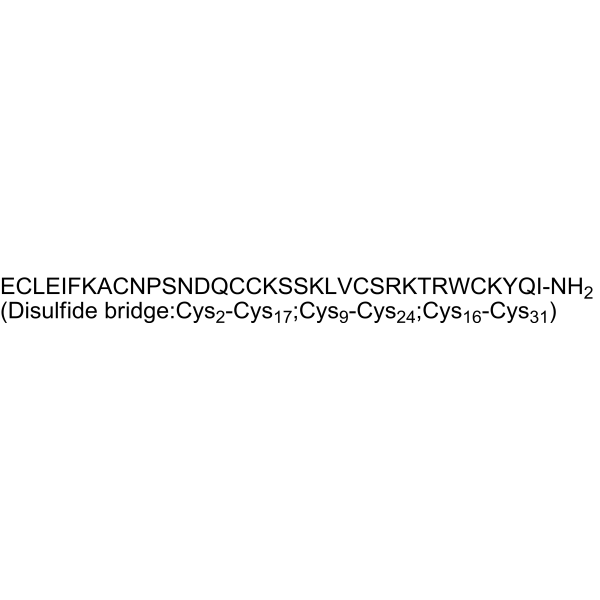
Huwentoxin-IV is a potent and selective sodium channel blocker, inhibits neuronal Nav1.7, Nav1.2, Nav1.3 and Nav1.4 with IC50s of 26, 150, 338 and 400 nM, respectively. Huwentoxin-IV preferentially blocks peripheral nerve subtype Nav1.7 by binding neurotoxin receptor site 4. Huwentoxin-IV has analgesic effects on animal models of inflammatory and neuropathic pain .
loading...
    loading...
Elsunersen sodium
0 Images
DNA, d([2′-O-(2-methoxyethyl)](m5rC-sp-m5rC-rA-m5rC-rG-rA)-m5C-sp-A-sp-T-sp-A-sp-T-sp-T-sp-T-sp-T-sp-T-sp-m5C-sp-[2′-O-(2-methoxyethyl)]m5rU-[2′-O-(2-methoxyethyl)]rA-sp-[2′-O-(2-methoxyethyl)]m5rC-sp-[2′-O-(2-methoxyethyl)]rA), sodium salt
Cat. No.: HY-177629A
Synonyms: PRAX-222 sodium
Elsunersen sodium is an antisense oligonucleotide that selectively decreases expression of the gene for the voltage-gated sodium channel Nav1.2 (SCN2A). It is used for the study of SCN2A developmental and epileptic encephalopathy (SCN2A-DEE). SCN2A-DEE is
loading...
    loading...
Cat. No.: HY-P5795
Research Areas:  

Neurological Disease

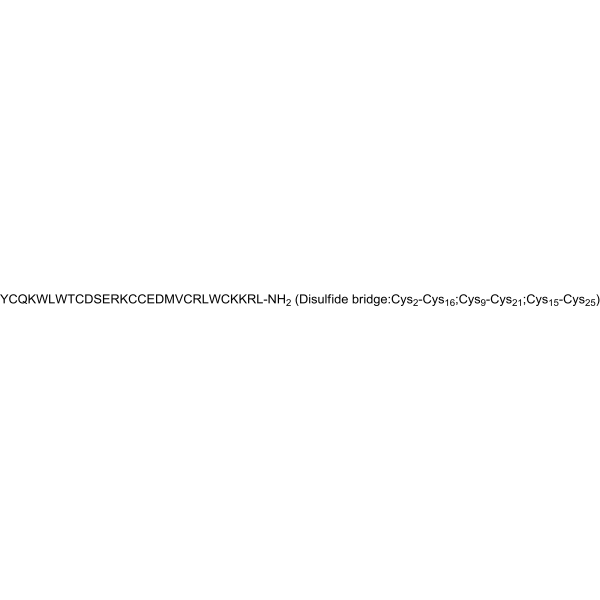
GsAF-I is a potent Nav and hERG1 channels blocker with IC50s of 0.36, 0.6, 1.28, 0.33, 1.2, 0.04 and 4.8 μM against Nav1.1, Nav1.2, Nav1.3, Nav1.4, Nav1.6, Nav1.7 and hERG1, respectively .
loading...
    loading...
Cat. No.: HY-P5811
Synonyms: CcoTx1; β-TRTX-cm1a
Target:  

Sodium Channel

Research Areas:  

Neurological Disease

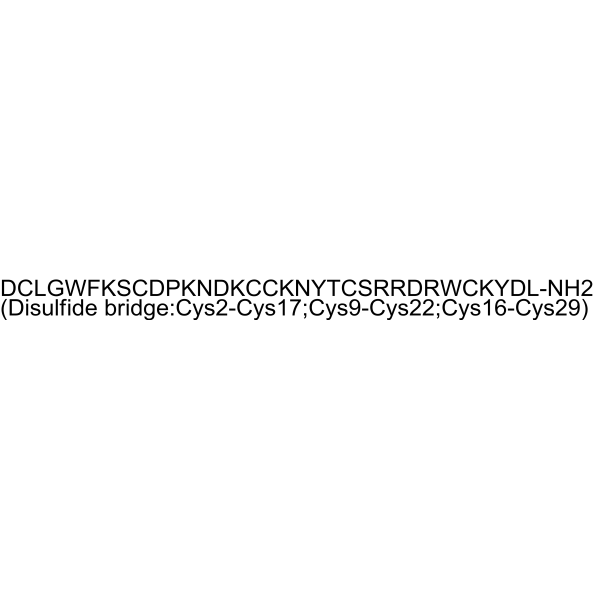
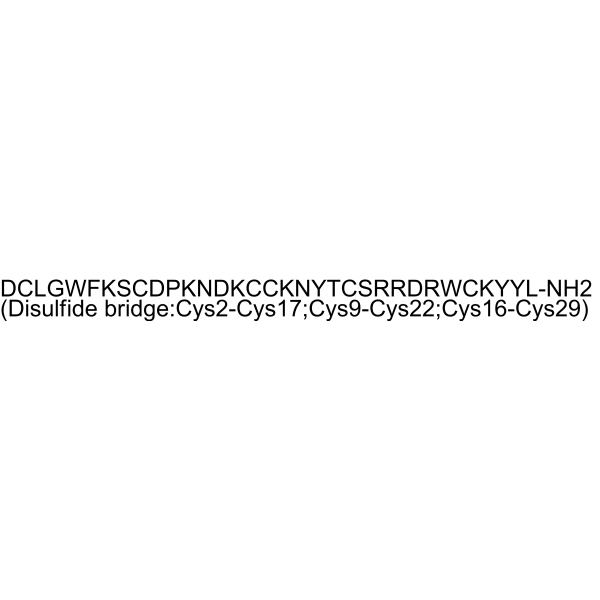
Ceratotoxin-1 (CcoTx1), a peptide toxin, is an voltage-gated sodium channel subtypes inhibitor. Ceratotoxin-1 inhibits Nav1.1/β1, Nav1.2/β1, Nav1.4/β1, and Nav1.5/β1 with IC50 of 523 nM, 3 nM, 888 nM, and 323 nM, respectively. Ceratotoxin-1 also inhibits Nav1.8/β1 .
loading...
    loading...
Cat. No.: HY-P1218A
Target:  

Sodium Channel

Research Areas:  

Neurological Disease

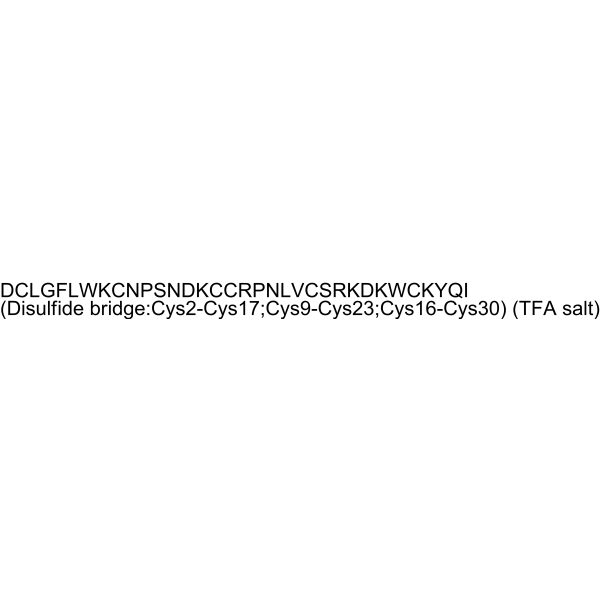
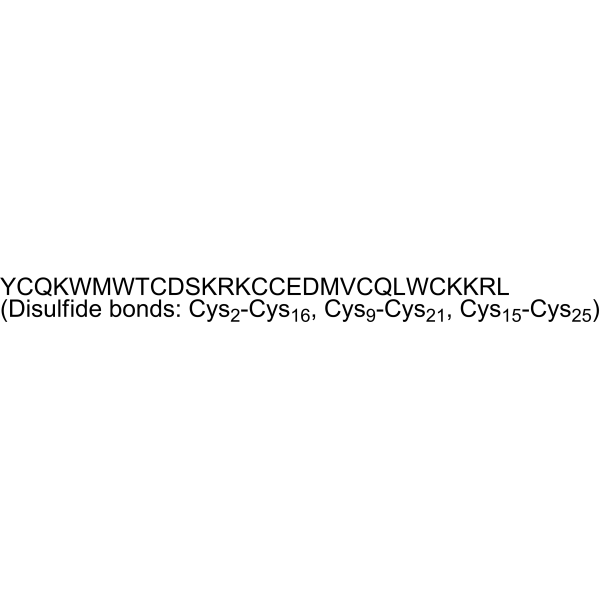
Phrixotoxin 3 TFA is a potent blocker of voltage-gated sodium channels, with IC50s of 0.6, 42, 72, 288, 610 nM for NaV1.2, NaV1.3, NaV1.4, NaV1.1 and NaV1.5, respectively. Phrixotoxin 3 TFA modulates voltage-gated sodium channels with properties similar to those of typical gating-modifier toxins, both by causing a depolarizing shift in gating kinetics and by blocking the inward component of the sodium current .
loading...
    loading...
Cat. No.: HY-189470
Nav1.2-IN-4 is a blood-brain barrier-penetrant NaV1.2 inhibitor (IC50 = 31.21 μM). Nav1.2-IN-4 preferentially blocks the inactivated state of the neuronal voltage-gated sodium channel NaV1.2, inhibiting persistent and resurgent sodium currents associated with epileptogenesis. Nav1.2-IN-4 restores the GABA-glutamate balance by enhancing GABA and reducing glutamate. Nav1.2-IN-4 reduces oxidative stress in brain tissue by increasing GSH and decreasing MDA. Nav1.2-IN-4 protects mice against MES-induced tonic hindlimb extensor seizures and attenuates hippocampal neuronal degeneration in the PTZ kindling model. Nav1.2-IN-4 can be used for research on epilepsy .
loading...
    loading...
Cat. No.: HY-189469
Research Areas:  

Neurological Disease

Nav1.2-IN-3 is a blood-brain barrier-penetrant and potent voltage-gated sodium channel NaV1.2 inhibitor with an IC50 of 16.93 μM. Nav1.2-IN-3 preferentially blocks the inactivated state of the channel, inhibits neuronal hyperexcitability, and alleviates oxidative stress. Nav1.2-IN-3 can be used for research on epilepsy .
loading...
    loading...
Cat. No.: HY-P5801
Synonyms: μ-TrTx-Phlo1a
Target:  

Sodium Channel

Research Areas:  

Neurological Disease

Phlo1a (μ-TrTx-Phlo1a) is a peptide toxin contains 35-amino acid residues. Phlo1b is a selective Nav1.7 inhibitor. Phlo1a has a weak inhibitory effect on Nav1.2 and Nav1.5 .
loading...
    loading...
Cat. No.: HY-P5800
Synonyms: μ-TrTx-Phlo1b
Target:  

Sodium Channel

Research Areas:  

Neurological Disease

Phlo1b (μ-TrTx-Phlo1b) is a peptide toxin contains 35-amino acid residues. Phlo1b is a selective Nav1.7 inhibitor. Phlo1b has a weak inhibitory effect on Nav1.2 and Nav1.5 .
loading...
    loading...
Cat. No.: HY-170930
Research Areas:  

Neurological Disease

Anticonvulsant agent 9 (compound 4f) is an α1β2γ2 GABAA receptors activator. Anticonvulsant agent 9 activatesα1β2γ2 GABAA receptors with an EC50 of 1.24 μM. Anticonvulsant agent 9 inhibits the inactivation of Nav1.2 channels. Anticonvulsant agent 9 exhibits significant anticonvulsant activities .
loading...
    loading...
Cat. No.: HY-P5164
Target:  

Sodium Channel

Research Areas:  

Neurological Disease

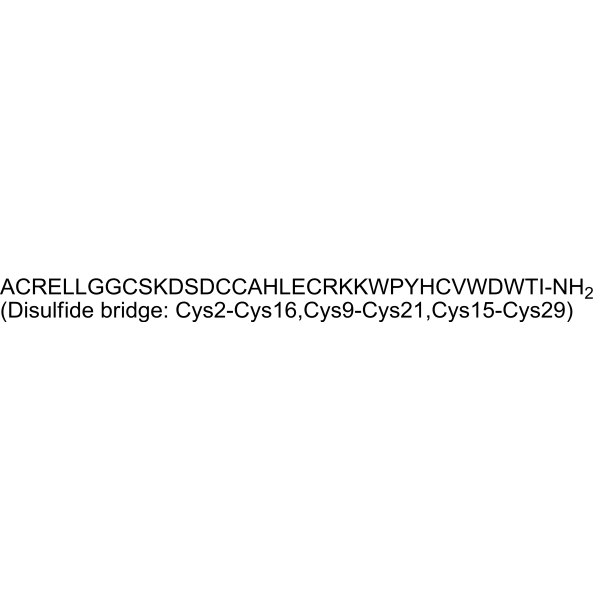
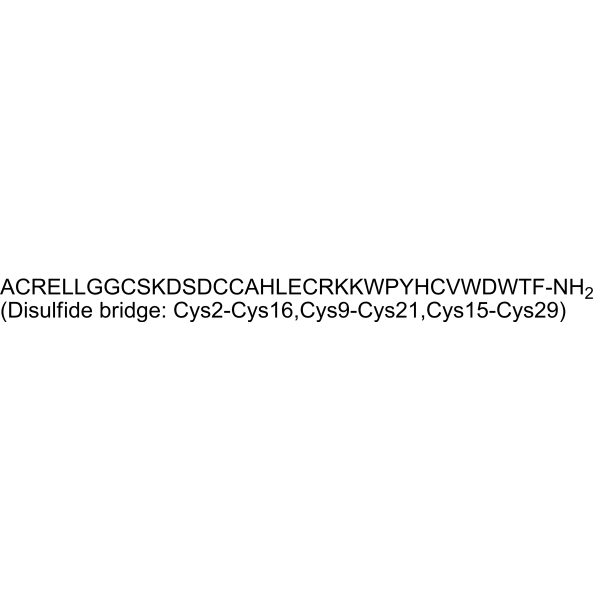
GrTx1 is a peptide toxin originally isolated from the venom of the spider Grammostola rosea. GrTx1 blocks sodium channel, with IC50s of 0.63 μM, 0.23 μM, 0.77 μM, 1.29 μM, 0.63 μM and 0.37 μM for Nav1.1, Nav1.2, Nav1.3, Nav1.4, Nav1.6 and Nav1.7, repectively . GrTx1 can be used for neurological disease research .
loading...
    loading...
Cat. No.: HY-RS12530
Research Areas:  

Others

Scn2a Mouse Pre-designed siRNA Set A contains three designed siRNAs for Scn2a gene (Mouse), as well as a negative control, a positive control, and a FAM-labeled negative control.

loading...
    loading...
Cat. No.: HY-RS12529
Research Areas:  

Others

SCN2A Human Pre-designed siRNA Set A contains three designed siRNAs for SCN2A gene (Human), as well as a negative control, a positive control, and a FAM-labeled negative control.

loading...
    loading...
Cat. No.: HY-RS12531
Research Areas:  

Others

Scn2a Rat Pre-designed siRNA Set A contains three designed siRNAs for Scn2a gene (Rat), as well as a negative control, a positive control, and a FAM-labeled negative control.

loading...
    loading...
Cat. No.: HY-P5810
CAS No.: 880885-98-3
Synonyms: CcoTx2; β-TRTX-cm1b
Target:  

Sodium Channel

Research Areas:  

Neurological Disease

Ceratotoxin-2 (CcoTx2) is a voltage-gated sodium channel blocker with IC50s of 8 nM and 88 nM against Nav1.2/β1 and Nav1.3/β1, respectively .
loading...
    loading...
Cat. No.: HY-B0364AR
CAS No.: 536-43-6
Synonyms: Dyclocaine hydrochloride (Standard)
Dyclonine hydrochloride (Standard) (Dyclocaine hydrochloride (Standard)) is the analytical standard of Dyclonine hydrochloride (HY-B0364A). This product is intended for research and analytical applications. Dyclonine hydrochloride (Dyclocaine hydrochloride) is an orally active, blood-brain barrier-permeable piperidine phenylacetone small molecule commonly used as a local anesthetic. Dyclonine hydrochloride acts as a highly selective allosteric antagonist of TRPV3; it also reversibly inhibits G9a, ALDH2 and ALDH3A1, non-competitively blocks AChE. Dyclonine hydrochloride activates the Nrf2/ARE pathway, relieves the epigenetic silencing of FXN, blocks Aβ42 aggregation, and promotes remyelination and reparative polarization of microglia. Dyclonine hydrochloride alleviates pruritus via TRPV3 inhibition; it is used in studies of neurodegenerative disease models based on its AChE inhibitory, antioxidant and remyelinating effects; it sensitizes drug-resistant tumors through ALDH inhibition, and combined use with protease inhibitors induces more tumor cell apoptosis; it inhibits Candida albicans in vitro. Dyclonine hydrochloride can be used for research on multiple diseases including neurodegenerative diseases, cancer and pruritic dermatitis .
loading...
    loading...
Cat. No.: HY-B0364AS
Synonyms: Dyclocaine-d9 hydrochloride
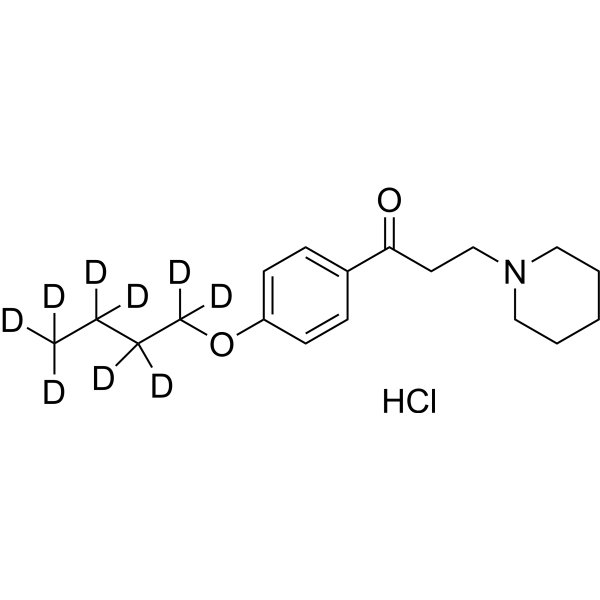
Dyclonine-d9 hydrochloride (Dyclocaine-d9 hydrochloride) is the deuterated-labeled Dyclonine hydrochloride (HY-B0364A). Dyclonine hydrochloride (Dyclocaine hydrochloride) is an orally active, blood-brain barrier-permeable piperidine phenylacetone small molecule commonly used as a local anesthetic. Dyclonine hydrochloride acts as a highly selective allosteric antagonist of TRPV3; it also reversibly inhibits G9a, ALDH2 and ALDH3A1, non-competitively blocks AChE. Dyclonine hydrochloride activates the Nrf2/ARE pathway, relieves the epigenetic silencing of FXN, blocks Aβ42 aggregation, and promotes remyelination and reparative polarization of microglia. Dyclonine hydrochloride alleviates pruritus via TRPV3 inhibition; it is used in studies of neurodegenerative disease models based on its AChE inhibitory, antioxidant and remyelinating effects; it sensitizes drug-resistant tumors through ALDH inhibition, and combined use with protease inhibitors induces more tumor cell apoptosis; it inhibits Candida albicans in vitro. Dyclonine hydrochloride can be used for research on multiple diseases including neurodegenerative diseases, cancer and pruritic dermatitis .
loading...
    loading...
Cat. No.: HY-184776
CAS No.: 586-60-7
Synonyms: Dyclocaine
Dyclonine (Dyclocaine) is an orally active, blood-brain barrier-permeable piperidine phenylacetone small molecule commonly used as a local anesthetic. Dyclonine acts as a highly selective allosteric antagonist of TRPV3; it also reversibly inhibits G9a, ALDH2 and ALDH3A1, non-competitively blocks AChE. Dyclonine activates the Nrf2/ARE pathway, relieves the epigenetic silencing of FXN, blocks Aβ42 aggregation, and promotes remyelination and reparative polarization of microglia. Dyclonine alleviates pruritus via TRPV3 inhibition; it is used in studies of neurodegenerative disease models based on its AChE inhibitory, antioxidant and remyelinating effects; it sensitizes drug-resistant tumors through ALDH inhibition, and combined use with protease inhibitors induces more tumor cell apoptosis; it inhibits Candida albicans in vitro. Dyclonine can be used for research on multiple diseases including neurodegenerative diseases, cancer and pruritic dermatitis .
loading...
    loading...
Cat. No.: HY-189066
CAS No.: 3138159-82-4
Target:  

Sodium Channel

Research Areas:  

Neurological Disease

Nav1.7-IN-23 is an orally active, selective NaV1.7 inhibitor. Nav1.7-IN-23 exhibits electrophysiological regulatory effects in mouse dorsal root ganglion neurons. Nav1.7-IN-23 can be used for the research of acute pain, chronic inflammatory pain and neuropathic pain .
loading...
    loading...
Cat. No.: HY-183566
CAS No.: 2417328-24-4
Target:  

Sodium Channel

Research Areas:  

Neurological Disease

MK-5661 is an orally potent NaV1.8 voltage-gated sodium channel inhibitor with an EC50 of 4.3 nM. MK-5661 selectively inhibits peripheral nociceptive signaling mediators. MK-5661 reduces capsaicin-induced spontaneous nociceptive behaviors in humanized rats and attenuates capsaicin-induced skin flushing responses in rhesus monkeys. MK-5661 is applicable for pain-related research .
loading...
    loading...

