94 Results for "

surface polymerization

" in MedChemExpress (MCE) Product Catalog:
Products (94)

94 Results for "surface polymerization" in MCE Product Catalog:

Cat. No.: HY-168940B
CAS No.: 139729-28-5
NH2-PEG5000-COOH is a compound composed of an NH2 group, PEG units (MW = 2000) and a carboxyl group (-COOH) . NH2-PEG-COOH is widely used for surface modification and functionalization of polymer carriers or nanoparticles .
loading...
    loading...
Cat. No.: HY-B0426A
CAS No.: 140462-76-6
Synonyms: ALO4943A; KW4679
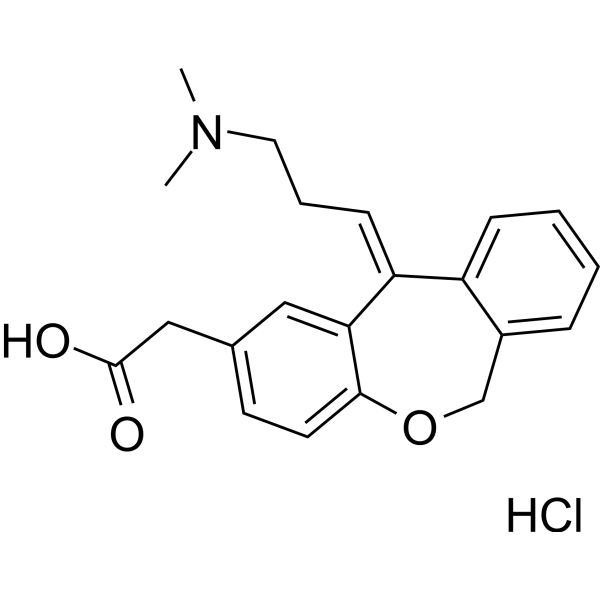
Olopatadine hydrochloride (ALO4943A; KW4679) is an orally active histamine H1 receptor antagonist and mast cell stabilizer. Olopatadine hydrochloride exerts antiallergic effects by blocking histamine H1 receptor-mediated activities. Olopatadine hydrochloride inhibits exocytosis, chemokine release, F-actin polymerization, CXCL10-induced calcium influx, and T cell chemotactic activity. Olopatadine hydrochloride also reduces the expression levels of CXCR3 on the surface of CD4 + and CD8 + T cells. Olopatadine hydrochloride inhibits scratching behavior, improves dermatitis scores, and suppresses intraepidermal neurite outgrowth. Olopatadine hydrochloride simultaneously decreases the levels of inflammatory markers, growth factors, histamine, and specific IgE, while increasing the expression of ErbB3A/HER3A. Olopatadine hydrochloride can be used in research related to seasonal pollinosis, chronic rhinitis, urticaria, allergic conjunctivitis, alopecia areata, and atopic dermatitis .
loading...
    loading...
Cat. No.: HY-W243303O
CAS No.: 9003-01-4
Poly(acrylic acid) (Mv 1250000) (viscous liquid) is a polyacrylic acid with a molecular weight of 1250000 (an anionic polymer), which can be used as a corrosion inhibitor and surface stabilizer. Poly(acrylic acid) can be used to construct an anionic nanogel to encapsulate positively charged enzymes and to modify MoS₂ nanoparticles to build a transdermal drug delivery system .
loading...
    loading...
Cat. No.: HY-151651
CAS No.: 125607-09-2
Purity:  99.26%
Synonyms: Spacer Phosphoramidite 18
Target:  

Phosphoramidites

Research Areas:  

Others

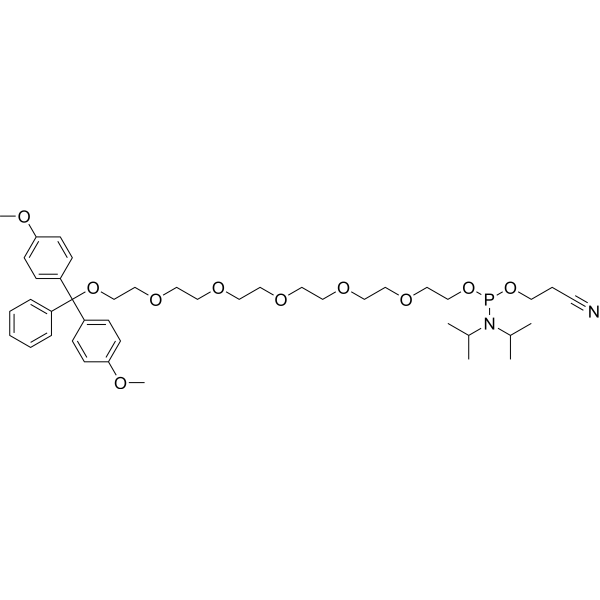
Hexaethylene glycol phosphoramidite (Spacer Phosphoramidite 18) is an amide reagent used for oligonucleotide synthesis. Hexaethylene glycol phosphoramidite serves as a linker for the synthesis of nucleotide chains and qPCR probes .
loading...
    loading...
Cat. No.: HY-W062109
CAS No.: 113806-05-6
Target:  

Histamine Receptor CXCR

Research Areas:  

Inflammation/Immunology

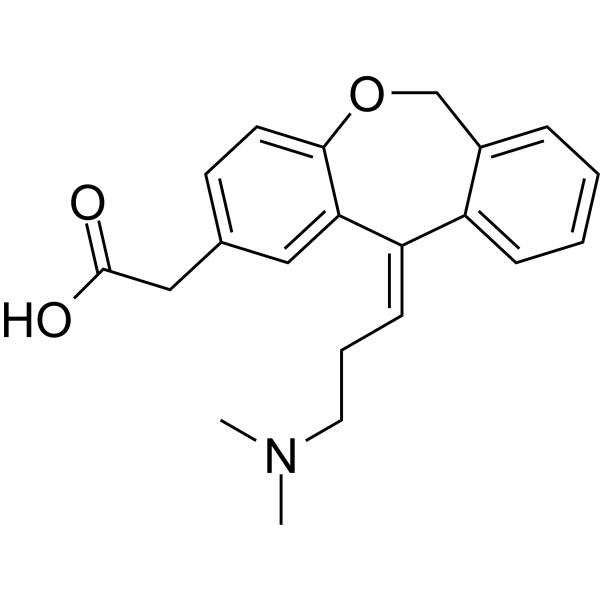
Olopatadine (ALO4943A; KW4679) is an orally active histamine H1 receptor antagonist and mast cell stabilizer. Olopatadine exerts antiallergic effects by blocking histamine H1 receptor-mediated activities. Olopatadine inhibits exocytosis, chemokine release, F-actin polymerization, CXCL10-induced calcium influx, and T cell chemotactic activity. Olopatadine also reduces the expression levels of CXCR3 on the surface of CD4 + and CD8 + T cells. Olopatadine inhibits scratching behavior, improves dermatitis scores, and suppresses intraepidermal neurite outgrowth. Olopatadine simultaneously decreases the levels of inflammatory markers, growth factors, histamine, and specific IgE, while increasing the expression of ErbB3A/HER3A. Olopatadine can be used in research related to seasonal pollinosis, chronic rhinitis, urticaria, allergic conjunctivitis, alopecia areata, and atopic dermatitis .
loading...
    loading...
Cat. No.: HY-139201C
CAS No.: 27964-99-4
Synonyms: PDLHB (MW 1000-5000)
Poly-D-lysine hydrobromide (MW 1000-5000) (PDLHB (MW 1000-5000)) is a synthetic cationic polypeptide polymer commonly used as a cell adhesion promoter and surface coating molecule. Poly-D-lysine hydrobromide is also known as a calcium-sensing receptor (CaSR) agonist peptide .
loading...
    loading...
Cat. No.: HY-W687022A
CAS No.: 9002-86-2
Synonyms: Polyvinyl chloride
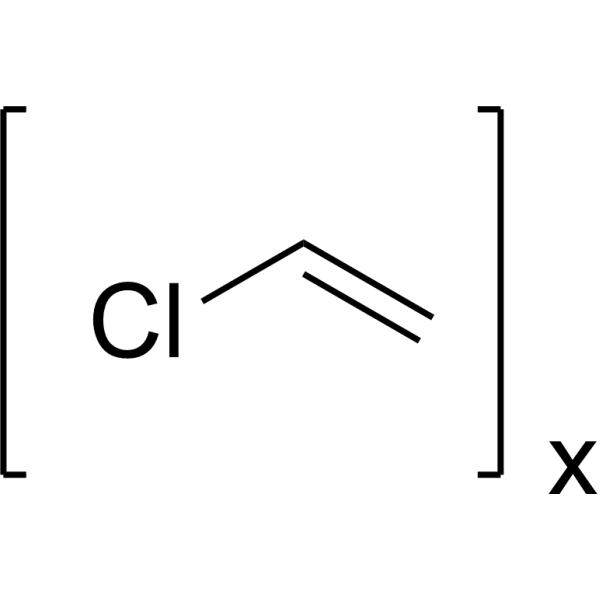
Chloroethene polymer (Polyvinyl chloride) is an orally active vinyl chloride polymer. Chloroethene polymer is cytotoxic, reproductively toxic, and an endocrine disruptor. Chloroethene polymer can be used in the research of packaging inner surfaces, food wrapping paper, agricultural crop coverings, and plastic bottles .
loading...
    loading...
Cat. No.: HY-D2004
CAS No.: 1430816-27-5
ATTO 488 streptavidin is a fluorescent reagent that specifically targets and binds to biotin (biotin), formed by the conjugation of ATTO 488 with streptavidin (HY-P3152). ATTO 488 streptavidin enables visualization of the activity of streptavidin immobilized on the surface of polymeric nanoparticles, or acts as a fluorescent probe to detect the selective binding and internalization process of anti-HB-EGF/NA with cells expressing HB-EGF (with no such effect on cells that do not express this receptor). ATTO 488 streptavidin effectively verifies the function of streptavidin conjugated to the surface of nanoparticles and is suitable for research related to atherosclerotic cardiovascular diseases .
loading...
    loading...
Cat. No.: HY-140696D
CAS No.: 9004-74-4
Purity:  99.61%
Synonyms: mPEG10000-Hydroxy; Polyethylene glycol monomethyl ether 10000
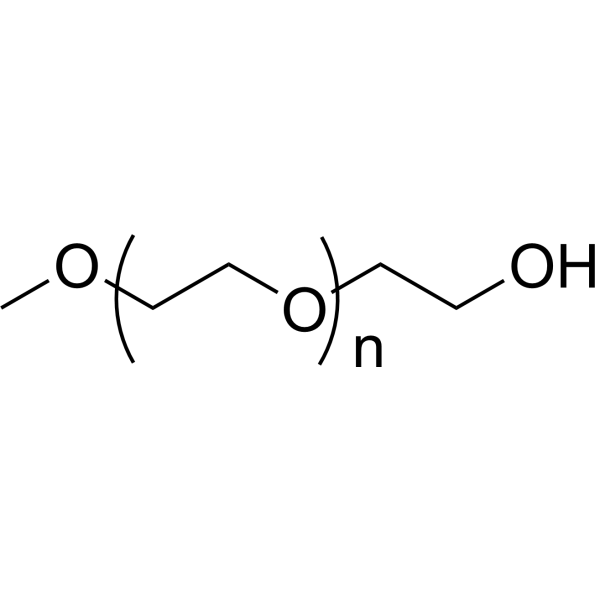
m-PEG10000-OH (mPEG10000-Hydroxy; Polyethylene glycol monomethyl ether 10000) is a hydroxyl-terminated methoxylated polyethylene glycol (PEG-based) compound that serves as a linker for PROTACs. m-PEG10000-OH is applicable to research on healthcare-associated infections .
loading...
    loading...
Cat. No.: HY-W243303B
CAS No.: 9003-01-4
Poly(acrylic acid) (Mv 3000000) is a polyacrylic acid (an anionic polymer) with a molecular weight of 3000000. Poly(acrylic acid) (Mv 3000000) can be used as a corrosion inhibitor and surface stabilizer .
loading...
    loading...
Cat. No.: HY-168940
CAS No.: 139729-28-5
NH2-PEG1000-COOH is a compound composed of an NH2 group, PEG units (MW = 1000) and a carboxyl group (-COOH) . NH2-PEG-COOH is widely used for surface modification and functionalization of polymer carriers or nanoparticles .
loading...
    loading...
Cat. No.: HY-W243303D
CAS No.: 9003-01-4
Poly(acrylic acid) (MW 1250000) is a polyacrylic acid with a molecular weight of 1250000 (an anionic polymer), which can be used as a corrosion inhibitor and surface stabilizer. Poly(acrylic acid) can be used to construct an anionic nanogel to encapsulate positively charged enzymes and to modify MoS2 nanoparticles to build a transdermal drug delivery system .
loading...
    loading...
Cat. No.: HY-155927
CAS No.: 474922-82-2
Synonyms: 14:0 PEG1000 PE ammonium; 1,2-Dimyristoyl-sn-glycero-3-phosphoethanolamine-N-[methoxy(polyethylene glycol)-1000] ammonium
Target:  

Liposome

Research Areas:  

Others

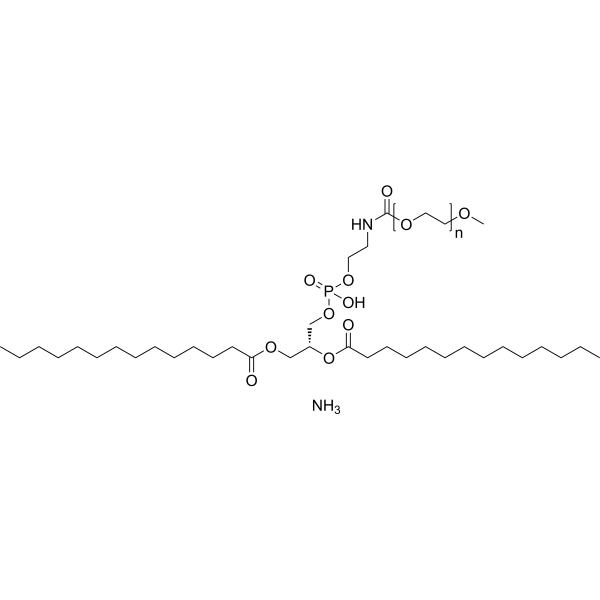
DMPE-PEG1000 ammonium (14:0 PEG1000 PE ammonium) is a methoxy-capped PEGylated phospholipid containing two C14 lipid chains and a PEG1000 group. DMPE-PEG1000 can be incorporated as a PEG-lipid component into conjugated polymer nanoparticles for nanoparticle surface modification. DMPE-PEG1000 ammonium is applicable for researches related to PEGylated nanoparticle preparation and fluorescence imaging .
loading...
    loading...
Cat. No.: HY-W344875
CAS No.: 8061-51-6
Sodium ligninsulfonate is a natural polymer compound with good surface activity, which can be used as a stabilizer for liposomes, a promoter for nanocrystal production, and a dispersant for nanoparticle preparation.
loading...
    loading...
Cat. No.: HY-W243303L
CAS No.: 9003-01-4
Research Areas:  

Others

Poly(acrylic acid) (MW 8000000) is a polyacrylic acid with a molecular weight of 2000. Poly(acrylic acid) (MW 8000000) is an anionic polymer. Poly(acrylic acid) (MW 8000000) can be as a corrosion-mitigating and surface-stabilizing agent.
loading...
    loading...
Cat. No.: HY-168940H
CAS No.: 139729-28-5
NH2-PEG5000-COOH is a compound composed of an NH2 group, PEG units (MW = 5000) and a carboxyl group (-COOH) . NH2-PEG-COOH is widely used for surface modification and functionalization of polymer carriers or nanoparticles .
loading...
    loading...
Cat. No.: HY-144013A
CAS No.: 474922-77-5
Synonyms: DSPE-mPEG350 ammonium; 1,2-Distearoyl-sn-glycero-3-phosphoethanolamine-N-[methoxy(polyethylene glycol)-350] ammonium
Target:  

Liposome

Research Areas:  

Others

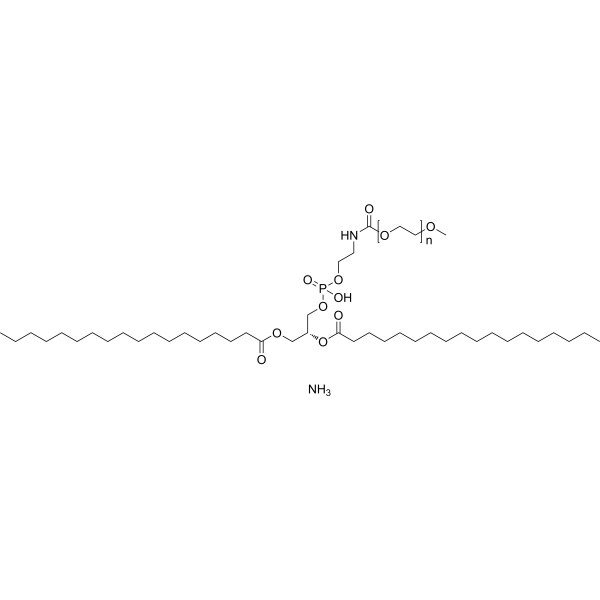
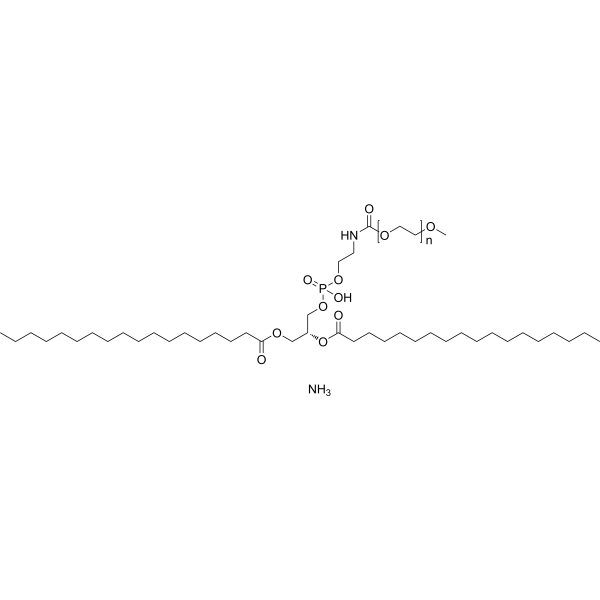
18:0 mPEG350 PE (ammonium) is a PEG lipid functional end group used in the synthesis of liposomes (LPs) for the design of conjugated polymer nanoparticles. Through biotin modification and carboxyl terminus, lipid nanoparticles (LNPs) further coupling with other biomolecules can be achieved. Functionalized nanoparticles can be used for targeted labeling of specific cellular proteins. With streptavidin as a linker, biotinylated PEG lipid-conjugated polymer nanoparticles are able to bind to biotinylated antibodies on cell surface receptors, yielding the utility of fluorescence-based imaging and sensing.
loading...
    loading...
Cat. No.: HY-144013B
CAS No.: 474922-77-5
Synonyms: DSPE-mPEG550 ammonium; 1,2-Distearoyl-sn-glycero-3-phosphoethanolamine-N-[methoxy(polyethylene glycol)-550] ammonium
Target:  

Liposome

Research Areas:  

Others

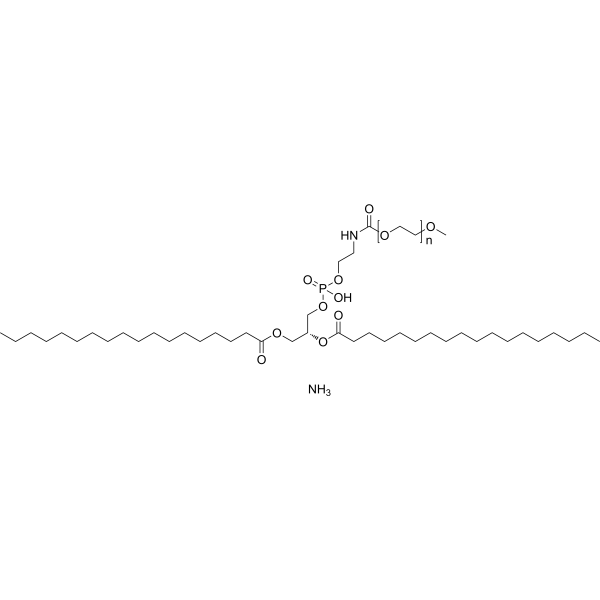
18:0 mPEG550 PE (ammonium) is a PEG lipid functional end group used in the synthesis of liposomes (LPs) for the design of conjugated polymeric nanoparticles. Through biotin modification and carboxyl terminus, lipid nanoparticles (LNPs) further coupling with other biomolecules can be achieved. Functionalized nanoparticles can be used for targeted labeling of specific cellular proteins. With streptavidin as a linker, biotinylated PEG lipid-conjugated polymer nanoparticles are able to bind to biotinylated antibodies on cell surface receptors, yielding the utility of fluorescence-based imaging and sensing.
loading...
    loading...
Cat. No.: HY-144013C
CAS No.: 474922-77-5
Synonyms: DSPE-mPEG750 ammonium; 1,2-Distearoyl-sn-glycero-3-phosphoethanolamine-N-[methoxy(polyethylene glycol)-750] ammonium
Target:  

Liposome

Research Areas:  

Others

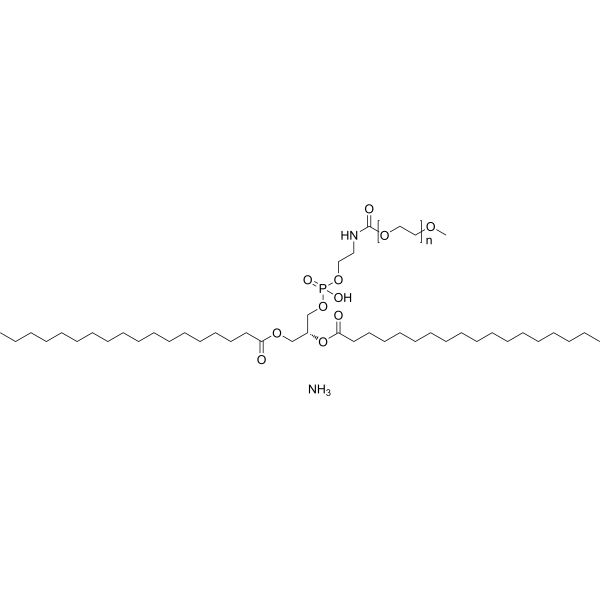
18:0 mPEG750 PE (ammonium) is a PEG lipid functional end group used in the synthesis of liposomes (LPs) for the design of conjugated polymeric nanoparticles. Through biotin modification and carboxyl terminus, lipid nanoparticles (LNPs) further coupling with other biomolecules can be achieved. Functionalized nanoparticles can be used for targeted labeling of specific cellular proteins. With streptavidin as a linker, biotinylated PEG lipid-conjugated polymer nanoparticles are able to bind to biotinylated antibodies on cell surface receptors, yielding the utility of fluorescence-based imaging and sensing.
loading...
    loading...
Cat. No.: HY-144013D
CAS No.: 474922-77-5
Synonyms: DSPE-mPEG1000 ammonium; 1,2-Distearoyl-sn-glycero-3-phosphoethanolamine-N-[methoxy(polyethylene glycol)-1000] ammonium
Target:  

Liposome

Research Areas:  

Others

18:0 mPEG1000 PE (ammonium) is a PEG lipid functional end group used in the synthesis of liposomes (LPs) for the design of conjugated polymeric nanoparticles. Through biotin modification and carboxyl terminus, lipid nanoparticles (LNPs) further coupling with other biomolecules can be achieved. Functionalized nanoparticles can be used for targeted labeling of specific cellular proteins. With streptavidin as a linker, biotinylated PEG lipid-conjugated polymer nanoparticles are able to bind to biotinylated antibodies on cell surface receptors, yielding the utility of fluorescence-based imaging and sensing.
loading...
    loading...

