33 Results for "

bronchial obstructive

" in MedChemExpress (MCE) Product Catalog:
Products (33)

33 Results for "bronchial obstructive" in MCE Product Catalog:

Cat. No.: HY-W173257
CAS No.: 7597-60-6
Synonyms: 6-Amino-5-1,3-dimethyl-5-(formamido)uracil
Target:  

Others

Theophylline EP impurity C is an alkaloid with anti-bronchial smooth muscle spasm activity. Theophylline EP impurity C can be used to assess the purity and quality of compounds. Theophylline EP impurity C has potential clinical value in the suppression of asthma and chronic obstructive pulmonary disease.
loading...
    loading...
Cat. No.: HY-17360S
CAS No.: 1127226-56-5
Synonyms: BA679 BR-d3
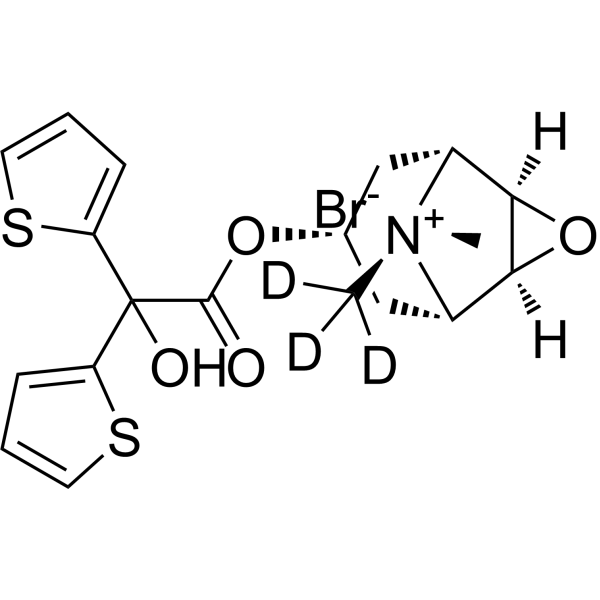
Tiotropium-d3 (bromide) is the deuterium labeled Tiotropium (Bromide). Tiotropium bromide (BA-679 BR) is a long-acting anticholinergic bronchodilator. Tiotropium bromide blocks the action of acetylcholine at muscarinic M1, M2, and M3 receptors, prevents bronchoconstriction, and dilates bronchial airways. Tiotropium bromide is applicable to research related to chronic obstructive pulmonary disease and asthma .
loading...
    loading...
Cat. No.: HY-B1719AR
CAS No.: 50-10-2
Research Areas:  

Inflammation/Immunology

Oxyphenonium (bromide) (Standard) is the analytical standard of Oxyphenonium (bromide). This product is intended for research and analytical applications. Oxyphenonium bromide is an antiacetylcholine compound. Oxyphenonium bromide is an antagonist of mAChR. Oxyphenonium bromide protects against the bronchial obstructive effects .
loading...
    loading...
Cat. No.: HY-17647R
CAS No.: 1620458-09-4
Synonyms: ETX0914 (Standard); AZD0914 (Standard)
Oxyphenonium (bromide) (Standard) is the analytical standard of Oxyphenonium (bromide). This product is intended for research and analytical applications. Oxyphenonium bromide is an antiacetylcholine compound. Oxyphenonium bromide is an antagonist of mAChR. Oxyphenonium bromide protects against the bronchial obstructive effects .
loading...
    loading...
Cat. No.: HY-120246
CAS No.: 1346653-91-5
GS-5759 is both a β₂-adrenergic receptor agonist and a PDE4 inhibitor. GS-5759 increases intracellular cAMP levels by activating the β₂ receptor, promoting bronchial dilation. GS-5759 inhibits PDE4 activity, reduces cAMP degradation, and enhances anti-inflammatory effects. GS-5759 exhibits potent bronchial dilation and anti-inflammatory capabilities in animal models. GS-5759 can be used for research on respiratory diseases such as chronic obstructive pulmonary disease (COPD) .
loading...
    loading...
Cat. No.: HY-B1810S
CAS No.: 1325559-14-5
Synonyms: C-78-d9
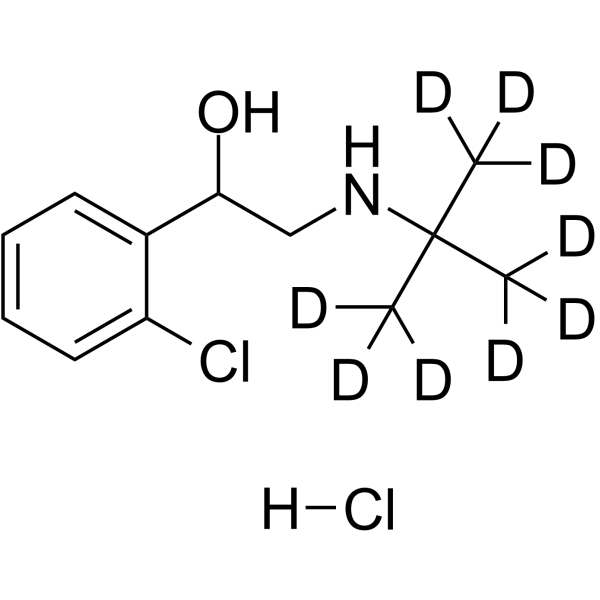
Tulobuterol-d9 (hydrochloride) is the deuterium labeled Tulobuterol. Tulobuterol (C-78 free base) is a long-acting β2-adrenoceptor agonist, which reduces the frequency of exacerbations of chronic obstructive pulmonary disease and bronchial asthma. Tulobuterol is also a sympathomimetic agent used as a transdermal patch, and increases normal diaphragm muscle strength .
loading...
    loading...
Cat. No.: HY-B1810R
CAS No.: 41570-61-0
Synonyms: C-78 free base (Standard)
Tulobuterol (Standard) is the analytical standard of Tulobuterol. This product is intended for research and analytical applications. Tulobuterol (C-78 free base) is a long-acting β2-adrenoceptor agonist, which reduces the frequency of exacerbations of chronic obstructive pulmonary disease and bronchial asthma. Tulobuterol is also a sympathomimetic agent used as a transdermal patch, and increases normal diaphragm muscle strength .
loading...
    loading...
Cat. No.: HY-B1037B
CAS No.: 149234-08-2
Synonyms: Albuterol adipate; AH-3365 adipate
Target:  

Adrenergic Receptor ERK

Research Areas:  

Inflammation/Immunology Cancer

Salbutamol (Albuterol) adipate is an orally active short-acting β2-adrenergic receptor agonist. Salbutamol adipate promotes tumorigenesis in gastric cancer cells through the β2-AR/ERK/EMT pathway. Salbutamol adipate can relax bronchial smooth muscle and is used to study bronchospasm induced by asthma and chronic obstructive pulmonary disease .
loading...
    loading...
Cat. No.: HY-17360R
CAS No.: 136310-93-5
Synonyms: BA679 BR (Standard)
Research Areas:  

Neurological Disease

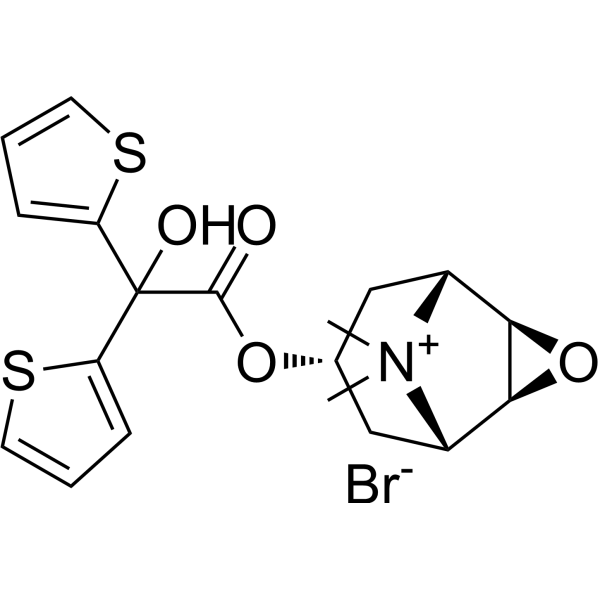
Tiotropium (Bromide) (Standard) is the analytical standard of Tiotropium (Bromide). This product is intended for research and analytical applications. Tiotropium bromide (BA-679 BR) is a long-acting anticholinergic bronchodilator. Tiotropium bromide blocks the action of acetylcholine at muscarinic M1, M2, and M3 receptors, prevents bronchoconstriction, and dilates bronchial airways. Tiotropium bromide is applicable to research related to chronic obstructive pulmonary disease and asthma .
loading...
    loading...
Cat. No.: HY-W011733R
CAS No.: 56776-01-3
Synonyms: C-78 (Standard)
Tulobuterol (hydrochloride) (Standard) is the analytical standard of Tulobuterol (hydrochloride). This product is intended for research and analytical applications. Tulobuterol hydrochloride (C-78) is a long-acting β2-adrenoceptor agonist, which reduces the frequency of exacerbations of chronic obstructive pulmonary disease and bronchial asthma. Tulobuterol hydrochloride is also a sympathomimetic agent used as a transdermal patch, increases normal diaphragm muscle strength . Tulobuterol hydrochloride inhibit rhinovirus replication and modulate airway inflammation .
loading...
    loading...
Cat. No.: HY-L223
861 compounds

Antitussive and antiasthmatic method is a type of treatment strategy in traditional Chinese medicine, mainly used to alleviate symptoms such as coughing and asthma. These symptoms may be caused by various factors, such as: Bronchial asthma, chronic obstructive pulmonary disease, asthmatic bronchitis, cough-induced asthma, and others. Based on existing research in traditional Chinese medicine, many types of Chinese medicinal herbs showed antitussive and antiasthmatic effects. For example: Ardisiae Japonicae Herba, Ginkgo Semen, Amygdalus Communis Vas, Farfarae Flos, Viticis Cannabifoliae Fructus, Eriobotryae Folium etc. Therefore, the active ingredients derived from these traditional Chinese medicine have high medicinal value and have the potential to be developed into drugs for related diseases.

MCE can provide 861 active ingredients that can be obtained from traditional Chinese medicine with antitussive and antiasthmatic functions, which can be applied to drug development and research on disease mechanisms.

Cat. No.: HY-101140AR
CAS No.: 1799974-69-8
Research Areas:  

Inflammation/Immunology

KI696 isomer (Standard) is the analytical standard of KI696 isomer (HY-101140A). This product is intended for research and analytical applications. KI696 isomer is an isomer of KI696 (HY-101140). KI696 is a selective KEAP1/NRF2 protein-protein interaction inhibitor with a human Kd value of 1.3 nM. KI696 acts by competitively occupying the NRF2-binding pocket of the KEAP1 Kelch domain. KI696 blocks KEAP1-mediated ubiquitination and degradation of NRF2, promotes the translocation of NRF2 to the nucleus, activates the expression of downstream antioxidant genes, increases intracellular glutathione levels, and alleviates oxidative stress-induced cell damage and inflammatory cell infiltration in the lungs. KI696 reduces ozone-induced pulmonary oxidative damage and inflammatory cell accumulation in rats, and upregulates pulmonary antioxidant genes. KI696 can be used in research related to chronic obstructive pulmonary disease, oxidative stress and inflammation .
loading...
    loading...
Cat. No.: HY-101140R
CAS No.: 1799974-70-1
KI696 (Standard) is the analytical standard of KI696 (HY-101140). This product is intended for research and analytical applications. KI696 is a selective KEAP1/NRF2 protein-protein interaction inhibitor with a human Kd value of 1.3 nM. KI696 acts by competitively occupying the NRF2-binding pocket of the KEAP1 Kelch domain. KI696 blocks KEAP1-mediated ubiquitination and degradation of NRF2, promotes the translocation of NRF2 to the nucleus, activates the expression of downstream antioxidant genes, increases intracellular glutathione levels, and alleviates oxidative stress-induced cell damage and inflammatory cell infiltration in the lungs. KI696 reduces ozone-induced pulmonary oxidative damage and inflammatory cell accumulation in rats, and upregulates pulmonary antioxidant genes. KI696 can be used in research related to chronic obstructive pulmonary disease, oxidative stress and inflammation .
loading...
    loading...

