




121 Results for "

node

" in MedChemExpress (MCE) Product Catalog:
Products (121)

121 Results for "node" in MCE Product Catalog:

Cat. No.: HY-121186
CAS No.: 42864-78-8
Purity:  98.98%
Synonyms: SOM3355
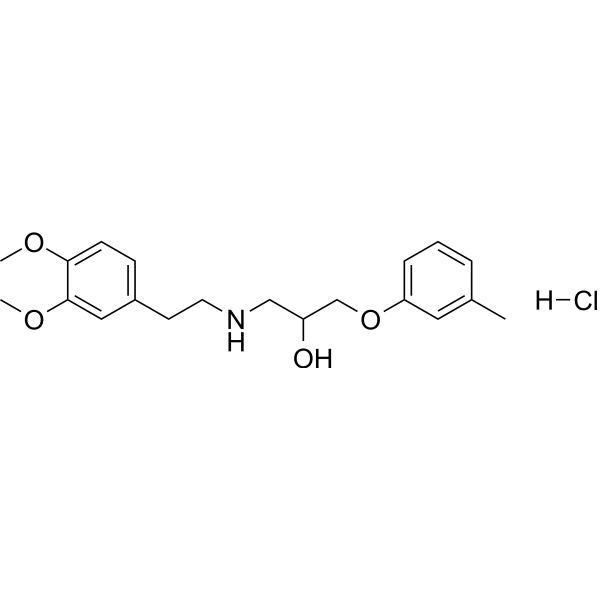
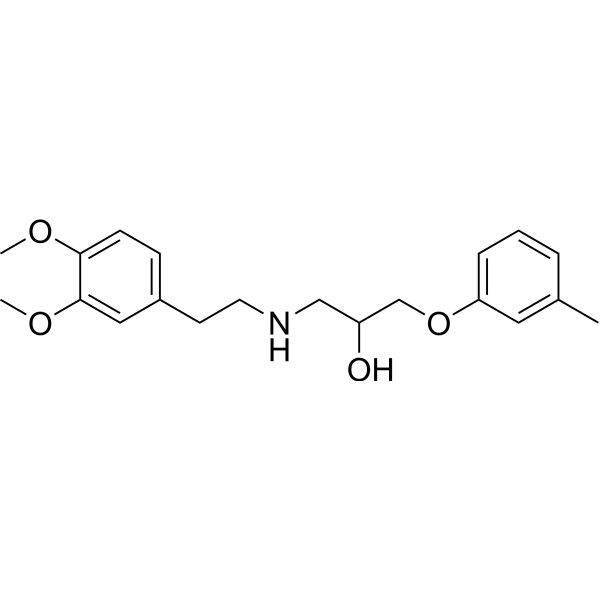
Bevantolol hydrochloride (SOM3355) is a selective β1-adrenergic receptor antagonist, with an IC50 of 35 nM for β1-adrenergic receptor and an IC50 of 60 nM for VMAT2. Bevantolol hydrochloride blocks β1-adrenergic receptors, exerts partial agonistic effects on α-adrenoceptor, inhibits calcium currents in the sinoatrial and atrioventricular nodes as well as sodium currents in cardiomyocytes, delays repolarization, and shortens the action potential duration of Purkinje cells. Bevantolol hydrochloride reduces peripheral vascular resistance, increases subendocardial blood flow, inhibits VMAT2, elevates the serum HDL/LDL ratio, and does not affect glomerular filtration rate or cause cold extremities. Bevantolol hydrochloride is applicable to research related to angina pectoris, hypertension, arrhythmia, and Huntington's disease .
loading...
    loading...
Cat. No.: HY-W248594
CAS No.: 134127-48-3
Target:  

Fluorescent Dye

연구분야:  

Others

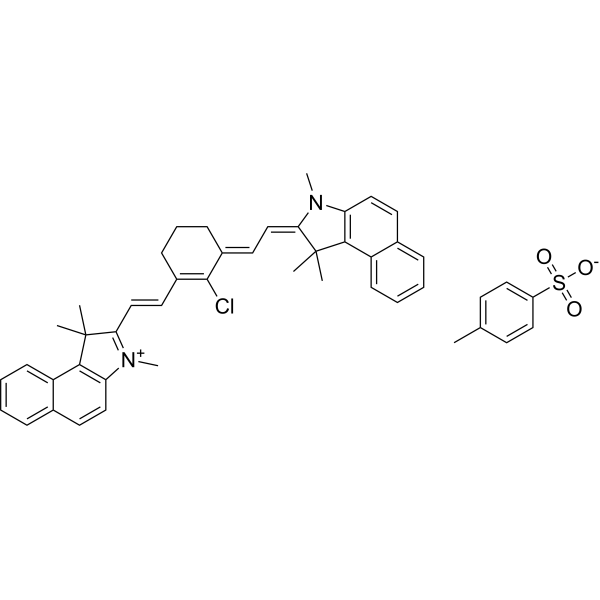
IR 813 tosylate is a near-infrared (NIR) fluorescent dye and can be used for visualizing regional lymph nodes in mice .
loading...
    loading...
Cat. No.: HY-W440835E
연구분야:  

Inflammation/Immunology

DSPE-PEG5000-DBCO is a phospholipid PEG polymer that combines a hydrophobic phospholipid (DSPE), a hydrophilic polyethylene glycol spacer with a molecular weight of 5000 Da, and a reactive click chemistry terminal group (DBCO). DSPE-PEG-DBCO migrates to lymph nodes via the endogenous albumin transport system, implants bioorthogonal DBCO docking sites, and enables the enrichment of azide-functionalized vesicles in lymph nodes mediated by click chemistry. DSPE-PEG-DBCO can be used in studies related to atherosclerosis .
loading...
    loading...
Cat. No.: HY-126395
CAS No.: 3536-49-0
Purity:  99.99%
Target:  

Fluorescent Dye

연구분야:  

Others

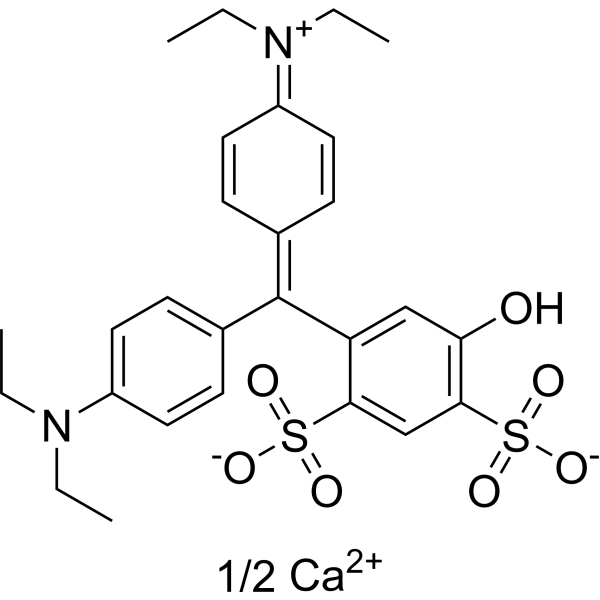
Patent Blue V calcium salt is a triarylmethane dye used for tissue staining and lymphatic tracing, mainly applied by topical injection or eye drops. Patent Blue V calcium salt has affinity for specific tissues (such as corneal endothelium, lymphatic system), and stains the target structure by adsorption or binding, assisting in precise operation during surgery. Patent Blue V calcium salt is mainly used in ophthalmic surgery (such as graft staining for Descemet's membrane endothelial keratoplasty) and lymphatic drainage localization for sentinel lymph node biopsy of tumors .
loading...
    loading...
Cat. No.: HY-P99650
CAS No.: 2367001-70-3
Synonyms: WT1

연구분야:  

Cancer

Grisnilimab (WT1) is an IgG2a monoclonal antibody targeting CD7. Grisnilimab only binds to lymphoid tissues and T lymphocytes, with no off-target binding to normal tissues. Grisnilimab can be used to synthesize the immunotoxin WT1-SMPT-dgRTA, which exerts cytotoxic effects on T-lymphoblastic leukemia cells. Grisnilimab is applicable to relevant research on leukemia .
loading...
    loading...
Cat. No.: HY-P99806
CAS No.: 499212-74-7
Synonyms: ACA-11; CLN-IgG; CLNH-11

Target:  

Inhibitory Antibodies

연구분야:  

Cancer

Pritumumab is a natural human IgG1kappa mAb originally isolated from a regional draining lymph node of a patient with cervical carcinoma. Pritumumab recognizes vimentin expressing on the cell surface of the malignant tumor. Pritumumab can be used for glioblastoma research .
loading...
    loading...
Cat. No.: HY-128421
CAS No.: 505-52-2
Purity:  99.93%
Synonyms: Brassylic Acid
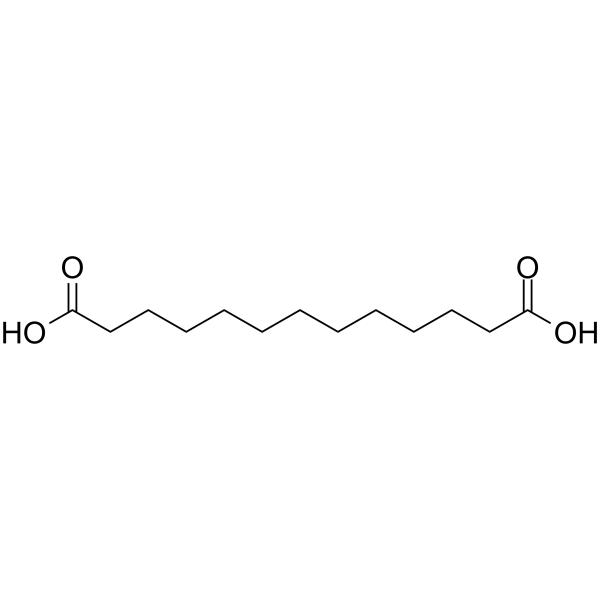
Tridecanedioic acid is an endogenous metabolite. Tridecanedioic acid is an endogenous metabolite. Tridecanedioic acid is related to the metabolic regulation of non-alcoholic fatty liver disease (NASH) and may be an important node molecule in the intestinal microbiota-host metabolism interaction network. Tridecanedioic acid is significantly accumulated in tolerant cabbage-type rapeseed varieties and has a lower content in sensitive varieties. It plays an important role in the defense response against the infection of the small cabbage moth (Plutella xylostella). Tridecanedioic acid can be used as a biomarker for plant insect resistance or a diagnostic marker for metabolic diseases .
loading...
    loading...
Cat. No.: HY-P990150

Target:  

Interleukin Related

연구분야:  

Inflammation/Immunology

Anti-Mouse TSLP Antibody (28F12) is an anti-mouse TSLP IgG2a monoclonal antibody. Anti-Mouse TSLP Antibody (28F12) weakens skin inflammation and allergic reactions by reducing Treg cells and lymph node cells. Anti-Mouse TSLP Antibody (28F12) can be used for research on allergic conditions .
loading...
    loading...
Cat. No.: HY-P991191

연구분야:  

Cancer

REGN5054 is a fully human monoclonal IgG1 antibody that binds specifically to human and cynomolgus CD8 expressed on T cells .
loading...
    loading...
Cat. No.: HY-112537S2
D-Glucose 6-phosphate- 13C is 13C labeled D-Glucose 6-phosphate (HY-112537). D-Glucose 6-phosphate is a key central node metabolite in glucose metabolism. It serves as the initiating metabolite for glycolysis and the pentose phosphate pathway, as well as a substrate for glycogen synthesis. D-Glucose 6-phosphate acts as a metabolic stress signal, which activates the mTOR pathway to promote protein synthesis, especially when phosphoglucose isomerase (PGI) is inhibited, thereby participating in cardiac remodeling processes. D-Glucose 6-phosphate can be used in research related to non-insulin-dependent diabetes mellitus and heart failure.
loading...
    loading...
Cat. No.: HY-157269
CAS No.: 1069110-72-0
Target:  

Hapten

연구분야:  

Inflammation/Immunology

J10-1 is a hapten small molecule. J10-1 accelerates peptide exchange in MHC class II molecules in an HLA-DM-independent manner, and its effect is not affected by the polymorphism of the P1 pocket of MHC class II molecules. J10-1 enhances the processes of peptide dissociation, peptide binding and peptide association of MHC class II molecules on the surface of B cells. J10-1 can be used for research on immunoregulation .
loading...
    loading...
Cat. No.: HY-139351
CAS No.: 8030-53-3
Purity:  93.17%
Synonyms: GA4+7
연구분야:  

Others

Gibberellins A4/A7 (GA4+7) is a gibberellin mixture and male flower inducer with stem-regulating activity. Gibberellins A4/A7 induces the production of male flowers in female cucumber lines. Gibberellins A4/A7 reduces the mechanical damage sensitivity of female cucumber lines under field conditions in Michigan .
loading...
    loading...
Cat. No.: HY-168887
CAS No.: 3084542-49-1
Target:  

STING

연구분야:  

Cancer

ZSA-51 is a potent and orally active STING agonist. ZSA-51 shows anticancer activity. ZSA-51 remodeles immune microenvironment both in tumor and lymph node .
loading...
    loading...
Cat. No.: HY-153482
CAS No.: 1415935-22-6
Purity:  99.22%
연구분야:  

Cancer

ATU027 is a siRNA, which silences expression of protein kinase N3 (PKN3) in the vascular endothelium. ATU027 has previously been shown to inhibit local tumor invasion as well as lymph node and pulmonary metastasis in mouse cancer models.
loading...
    loading...
Cat. No.: HY-P3269
CAS No.: 178805-91-9
Target:  

Calcium Channel

연구분야:  

Cardiovascular Disease

Calciseptine is a natural polypeptide toxin found in the venom of the black mamba snake (Dendroaspis p. polylepis). Calciseptine is a highly effective and selective blocker of the L-type channel of the Cav1.2 subtype, with an IC50 value of 92 nM. Calciseptine has no effect on Cav3.1, Cav2.2, Cav2.1, Cav1.1, voltage-sensitive sodium channels and potassium channels. Calciseptine exhibits negative inotropic and negative relaxant effects on mice, and does not affect heart rate or the action potential of sinoatrial node pacemaker cells. Calciseptine can be used for research on cardiovascular diseases[1].
loading...
    loading...
Cat. No.: HY-A0249
CAS No.: 59170-23-9
Synonyms: SOM3355 free base
Bevantolol (SOM3355 (free base)) is a selective β1-adrenergic receptor antagonist, with an IC50 of 35 nM for β1-adrenergic receptor and an IC50 of 60 nM for VMAT2. Bevantolol blocks β1-adrenergic receptors, exerts partial agonistic effects on α-adrenoceptor, inhibits calcium currents in the sinoatrial and atrioventricular nodes as well as sodium currents in cardiomyocytes, delays repolarization, and shortens the action potential duration of Purkinje cells. Bevantolol reduces peripheral vascular resistance, increases subendocardial blood flow, inhibits VMAT2, elevates the serum HDL/LDL ratio, and does not affect glomerular filtration rate or cause cold extremities. Bevantolol is applicable to research related to angina pectoris, hypertension, arrhythmia, and Huntington's disease .
loading...
    loading...
Cat. No.: HY-P11026
Synonyms: DOTA-PEG4-TMVP1446
Target:  

VEGFR

연구분야:  

Cancer

DOTA-TMVP1446 is a VEGFR-3 targeting peptide. DOTA-TMVP1446 labeled with 68Ga accurately detectes the status of lymph node metastasis, even in micrometastatic tumors, in the B16-F10 tumor mice model. DOTA-TMVP1446 can be used as a radiotracer for cancer-metastatic sentinel lymph nodes (m-SLN) imaging .
loading...
    loading...
Cat. No.: HY-153482A
Purity:  99.22%
연구분야:  

Cancer

ATU027 sodium is a siRNA, which silences expression of protein kinase N3 (PKN3) in the vascular endothelium. ATU027 sodium has previously been shown to inhibit local tumor invasion as well as lymph node and pulmonary metastasis in mouse cancer models.
loading...
    loading...
Cat. No.: HY-151801
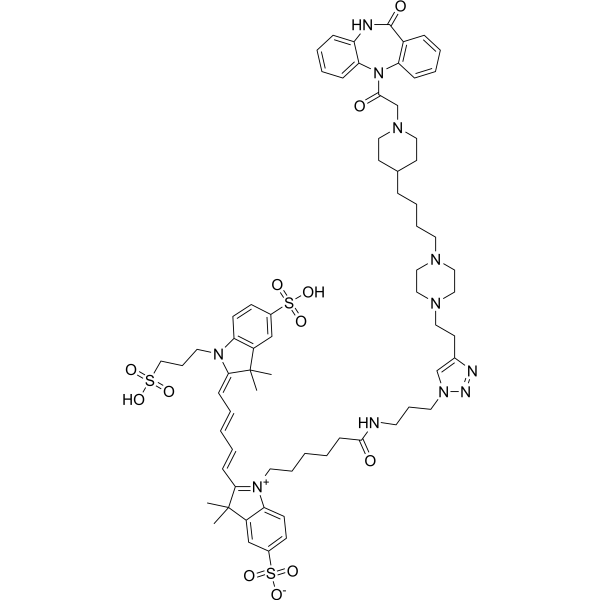
DIBA-Cy5 is a fluorescent DIBA antagonist made up be DIBA-alkyne binding Cyanine5 fluorophores (Cy5) and polyethylene glycol (PEG) biomolecules. DIBA-Cy5 can serve as a fluorescent ligand, suitable for probe attachment through click chemistry. DIBA-Cy5 exerts a high binding affinity to type-2 mAChR (M2R) with the Kd value of 1.80 nM, can directly stain M2R receptors in the sinoatrial node of a mouse heart .
loading...
    loading...
Cat. No.: HY-128421R
CAS No.: 505-52-2
Synonyms: Brassylic Acid (Standard)
Tridecanedioic acid (Standard) is the analytical standard of Tridecanedioic acid (HY-128421). This product is intended for research and analytical applications. Tridecanedioic acid is an endogenous metabolite. Tridecanedioic acid is an endogenous metabolite. Tridecanedioic acid is related to the metabolic regulation of non-alcoholic fatty liver disease (NASH) and may be an important node molecule in the intestinal microbiota-host metabolism interaction network. Tridecanedioic acid is significantly accumulated in tolerant cabbage-type rapeseed varieties and has a lower content in sensitive varieties. It plays an important role in the defense response against the infection of the small cabbage moth (Plutella xylostella). Tridecanedioic acid can be used as a biomarker for plant insect resistance or a diagnostic marker for metabolic diseases.
loading...
    loading...

