
777 Results for "

dose-dependent

" in MedChemExpress (MCE) Product Catalog:
Products (777)

777 Results for "dose-dependent" in MCE Product Catalog:

Cat. No.: HY-179502
Anti-inflammatory agent 107 is an orally active anti-inflammatory agent. Anti-inflammatory agent 107 inhibits and NF-κB with a superior binding affinity of -9.4578 kcal/mol. Anti-inflammatory agent 107 reduces levels of inflammatory biomarkers (TNF-α, IL-6, INF-γ, NF-κβ, C-reactive protein and Erythrocyte Sedimentation Rate) and enhances the endogenous antioxidant defense system by elevating SOD (Superoxide Dismutase), CAT (Catalase) and GSH (Glutathione) activities. Anti-inflammatory agent 107 not induces liver toxicity and demonstrates hepatoprotective effects. Anti-inflammatory agent 107 dose-dependently ameliorates leukocyte infiltration and tissue edema. Anti-inflammatory agent 107 can be used for anti-inflammatory research .
loading...
    loading...
Cat. No.: HY-181663
Target:  

PD-1/PD-L1 JAK

Research Areas:  

Cancer

PJ27 is a dual PD-1/PD-L1/JAK1 inhibitor, with an IC50 of 414 nM against PD-1/PD-L1, an IC50 of 786 nM against JAK1, a Ka of 294 nM for human PD-1/PD-L1, and a Ka of 473 nM for murine PD-1/PD-L1. PJ27 promotes the infiltration of CD3 +CD8 + and CD3 +CD4 + cells into the tumor microenvironment and exerts a significant immune activation effect. PJ27 inhibits tumor growth in a dose-dependent manner in the LLC lung cancer mouse model. PJ27 is applicable to relevant research on lung cancer .
loading...
    loading...
Cat. No.: HY-182372
CAS No.: 1638153-78-2
Target:  

Epoxide Hydrolase

Research Areas:  

Neurological Disease

SH-11037 is a potent inhibitor of soluble epoxide hydrolase (sEH) and docks to the substrate binding cleft in the sEH hydrolase domain. SH-11037 dose-dependently suppresses angiogenesis in the choroidal sprouting assay ex vivo and inhibited ocular developmental angiogenesis in zebrafish larvae. SH-11037 reduces choroidal neovascularisation lesion volume in the laser-induced CNV mouse model. SH-11037 synergises with anti-VEGF treatments in vitro and in vivo. SH-11037 induces G2/M phase blockade and retains retinal endothelial cell viability at active concentrations without overt toxicity. SH-11037 can be used for the research of retinal neovascularization and ocular neovascularization .
loading...
    loading...
Cat. No.: HY-183074
Target:  

CDK Interleukin Related

Research Areas:  

Inflammation/Immunology

RO8323 is an orally active, selective CDK8/CDK19 inhibitor, with an IC50 of 2 nM against CDK8 and 3 nM against CDK19. RO8323 promotes regulatory T cell differentiation, inhibits effector T cell generation, reverses the Teff/Treg ratio, upregulates IL-10 production in myeloid cells, and suppresses the production of TNF-α, IL-6 and IL-12. RO8323 enhances immune reconstitution and prolongs cardiac allograft survival in a dose-dependent manner. RO8323 can be used in the research of chronic graft-versus-host disease, cardiac allograft rejection, acute graft-versus-host disease and experimental autoimmune encephalomyelitis .
loading...
    loading...
Cat. No.: HY-187960
CAS No.: 247131-06-2
JTV-803 is a selective and competitive direct factor Xa (FXa) inhibitor with a Ki of 19 nM and an IC50 of 81 nM against human FXa, and its action is independent of antithrombin III (ATIII). JTV-803 exhibits significantly higher selectivity for human FXa than for thrombin, plasmin, and trypsin. JTV-803 produces sustained ex vivo anti-FXa inhibitory activity in vivo. JTV-803 prolongs aPTT and PT, prevents dialyzer thrombosis, and is cleared during dialysis. JTV-803 dose-dependently attenuates coagulation activation, maintains plasma ATIII activity, reduces glomerular fibrin deposition, and improves survival rate . JTV-803 can be used for research related to thrombosis and hemodialysis anticoagulation .
loading...
    loading...
Cat. No.: HY-B0661D
CAS No.: 94666-07-6
Synonyms: YM12617 free base; (Rac)-LY253351 free base
(Rac)-Tamsulosin (YM12617 (free base); (Rac)-LY253351 (free base)) is an isomer of Tamsulosin (HY-B0661). (Rac)-Tamsulosin is a sulfonamide phenethylamine derivative and a competitive antagonist of selective post-synaptic α1-adrenoceptors. (Rac)-Tamsulosin inhibits CYP3A4 activity in a non-competitive, enantiomer-specific manner, with an IC50 and Ki of 6.75 μM. (Rac)-Tamsulosin produces dose-dependent hypotension, preferentially antagonizing α1-adrenoceptor-mediated pressor responses, and inhibits α2-adrenoceptor-mediated pressor responses at high doses. (Rac)-Tamsulosin can be used in research related to various diseases such as metabolism .
loading...
    loading...
Cat. No.: HY-B1067
CAS No.: 2508-72-7
Synonyms: Phenazoline hydrochloride
Target:  

Histamine Receptor HBV

Research Areas:  

Neurological Disease Endocrinology

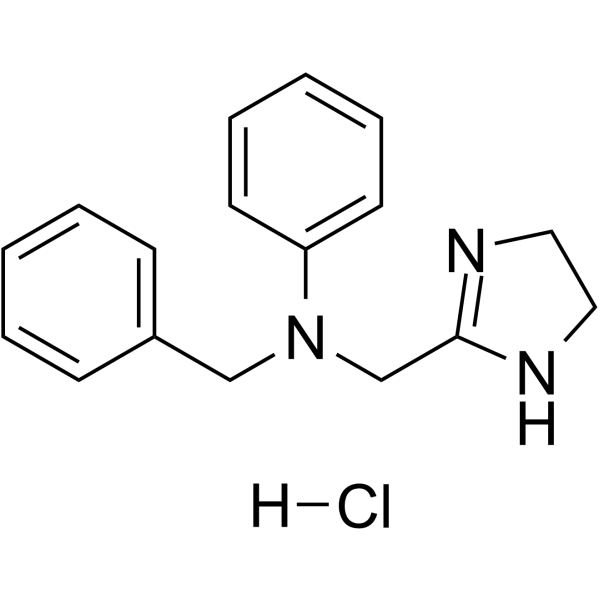
Antazoline hydrochloride is a histamine H1 receptor antagonist with anticholinergic and antiviral properties. Antazoline hydrochloride can prevent histamine from acting on target cells through a reversible competition effect on histamine receptor sites of these cells. Antazoline hydrochloride can exert an antiallegic effect and prevent the occurrence of physiological reactions from the effect of blocking as well as inhibiting H1 receptor. Antazoline hydrochloride can effectively reduce HBV DNA in the extracellular supernatant in a dose-dependent manner, with EC50 of 2.910 μmol/L in HepAD38 cells. Antazoline hydrochloride also has a significant inhibitory effect on HBV DNA in the extracellular supernatant of Huh7 cells (EC50 = 2.349 μmol/L). Antazoline hydrochloride has anti-arrhythmic effect in acute myocardial infarctions. Antazoline hydrochloride can be studied in research for cardiovascular diseases, and HBV .
loading...
    loading...
Cat. No.: HY-B1777AR
CAS No.: 306-67-2
Spermine (tetrahydrochloride) (Standard) is the analytical standard of Spermine (tetrahydrochloride). This product is intended for research and analytical applications. Spermine tetrahydrochloride is a polyamine nitric oxide donor that can provide nitric oxide to platelets and inhibit platelet activation to a certain extent concentration-dependently. Spermine tetrahydrochloride occurs in mammalian tissues, plants, bacteria, ribosomes and bacteriophage. Spermine tetrahydrochloride inhibits primary human embryo lung fibroblasts in vitro. Spermine is a natural antioxidant and anti-inflammatory agent. Spermine is known to inhibit some bacterial cultures, especially strains of Staphylococcus aureus. Spermine induces neurotoxicity in the striarum dose-dependently. Spermine can reversibly inhibits DNA synthetic response, mixed lymphocyte response and the induction of cytolytic lymphocyte response in primary cultures of murine spleen cells .
loading...
    loading...
Cat. No.: HY-B1777AS
CAS No.: 1173022-85-9
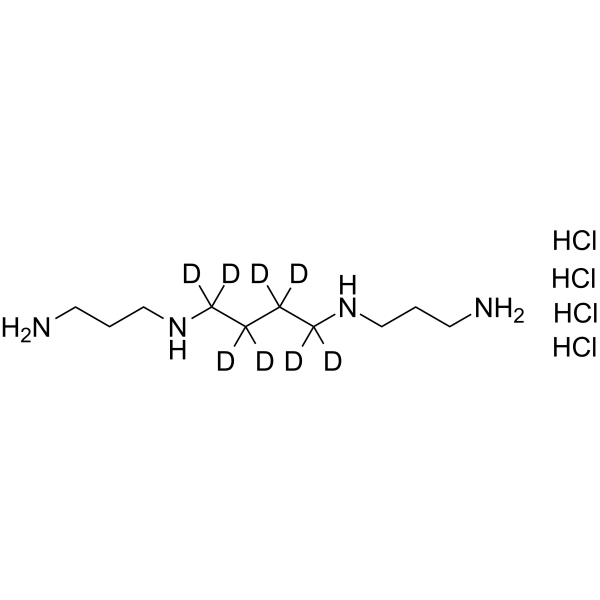
Spermine-d8 (tetrahydrochloride) is the deuterium labeled Spermine tetrahydrochloride. Spermine tetrahydrochloride is a polyamine nitric oxide donor that can provide nitric oxide to platelets and inhibit platelet activation to a certain extent concentration-dependently. Spermine tetrahydrochloride occurs in mammalian tissues, plants, bacteria, ribosomes and bacteriophage. Spermine tetrahydrochloride inhibits primary human embryo lung fibroblasts in vitro. Spermine is a natural antioxidant and anti-inflammatory agent. Spermine is known to inhibit some bacterial cultures, especially strains of Staphylococcus aureus. Spermine induces neurotoxicity in the striarum dose-dependently. Spermine can reversibly inhibits DNA synthetic response, mixed lymphocyte response and the induction of cytolytic lymphocyte response in primary cultures of murine spleen cells .
loading...
    loading...
Cat. No.: HY-N17778
CAS No.: 139493-38-2
(2R,3R)-7,3',4'-Trihydroxy-5-methoxy-flavanonol is a flavonoid and a selective inhibitor of human liver cancer cell growth, with an IC50 of 38.6 μg/mL (121.5 μM). (2R,3R)-7,3',4'-Trihydroxy-5-methoxy-flavanonol inhibits cancer cell growth with dose-dependent cytotoxic activity, and its anticancer activity is comparable to that of Cisplatin (HY-17394). (2R,3R)-7,3',4'-Trihydroxy-5-methoxy-flavanonol can be used in research on liver cancer and other types of cancer.
loading...
    loading...
Cat. No.: HY-P11291
Research Areas:  

Metabolic Disease

NNC0165-1273 is a selective NPY Y2 receptor agonist with a Ki of 2 nM and an EC50 of 5.0 nM. NNC0165-1273 blocks Ghrelin-induced cFos expression. NNC0165-1273 reduces nocturnal food intake, attenuates feeding behavior, induces early satiety, and causes dose-dependent decreases in body weight and fat mass in diet-induced obese mice. When used in combination with Semaglutide (HY-114118), NNC0165-1273 reduces preference for high-fat diet, promotes body weight loss, and produces sustained weight loss effects in diet-induced obese rats. NNC0165-1273 can be used in studies related to diet-induced obesity .
loading...
    loading...
Cat. No.: HY-P11291B
Research Areas:  

Metabolic Disease

NNC0165-1273 acetate is a selective NPY Y2 receptor agonist with a Ki of 2 nM and an EC50 of 5.0 nM. NNC0165-1273 acetate blocks Ghrelin-induced cFos expression. NNC0165-1273 acetate reduces nocturnal food intake, attenuates feeding behavior, induces early satiety, and causes dose-dependent decreases in body weight and fat mass in diet-induced obese mice. When used in combination with Semaglutide (HY-114118), NNC0165-1273 acetate reduces preference for high-fat diet, promotes body weight loss, and produces sustained weight loss effects in diet-induced obese rats. NNC0165-1273 acetate can be used in studies related to diet-induced obesity .
loading...
    loading...
Cat. No.: HY-P2970
CAS No.: 37189-34-7
Stem bromelain (EC 3.4.22.32) is a cysteine protease and antibacterial agent. Stem bromelain can be isolated from the stem of the pineapple (Ananas comosus). Stem bromelain induces dose-dependent secretion of IL-12p70, and IL-6, induces Apoptosis, causes cleavage of full-length PARP protein, Caspase 3, and Caspase 9, increases Bax, and decreases Bcl-2. Stem bromelain possesses various fibrinolytic, antiedema, antithrombotic, and anti-inflammatory activities. Stem bromelain also exhibits in vivo antitumor and antileukemic activities, as well as antimetastatic effects. Stem bromelain has antimycobacterial activity. Stem bromelain provides protection against lead poisoning .
loading...
    loading...
Cat. No.: HY-P991261

Target:  

Interleukin Related

Research Areas:  

Inflammation/Immunology

CJM112 is a fully human IgG1/κ monoclonal antibody inhibitor targeting IL-17A, which binds to IL-17A and the IL-17AF heterodimer with high affinity, with KD values of 5.7 pM and <11 pM, respectively. CJM-112 exerts anti-inflammatory effects by neutralizing IL-17A, and reduces the Psoriasis Area and Severity Index in a time- and dose-dependent manner. CJM-112 also exhibits anti-inflammatory activity and improves disease severity in studies of hidradenitis suppurativa. CJM-112 shows favorable biosafety and tolerability. CJM-112 can be used in studies related to psoriasis and hidradenitis suppurativa .
loading...
    loading...
Cat. No.: HY-P991944

Target:  

CCR

Research Areas:  

Cancer

ZL-1218 is a selective humanized IgG1 antibody, targeting CCR8. ZL-1218 induces antibody-dependent cellular cytotoxicity (ADCC), leading to NK cell-mediated depletion of CCR8-expressing regulatory T cells (Tregs). ZL-1218 blocks the binding of the CCR8 ligand CCL1 to CCR8 and reduces Treg recruitment by inhibiting the chemotaxis of CCR8 + cells. ZL-1218 reduces intratumoral Treg levels in a dose-dependent manner. ZL-1218 exerts enhanced antitumor activity when combined with the anti-PD-1 antibody. ZL-1218 can be used for solid tumour research .
loading...
    loading...
Cat. No.: HY-W017141S
CAS No.: 588732-63-2
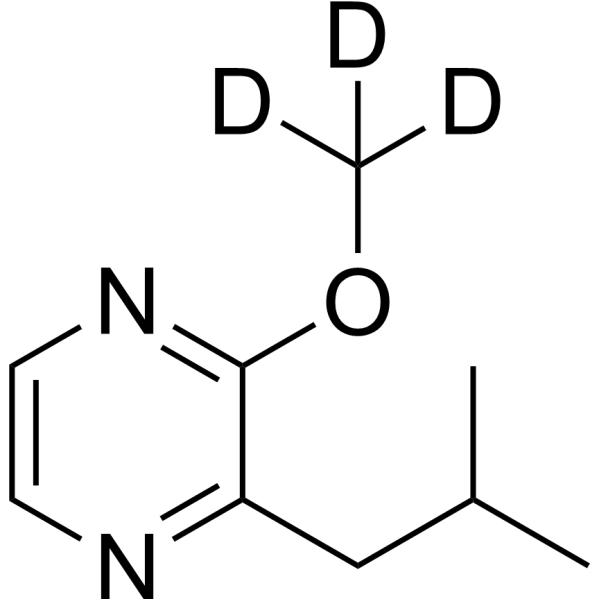
2-Isobutyl-3-methoxypyrazine-d3 is the deuterium labeled 2-Isobutyl-3-methoxypyrazine. 2-Isobutyl-3-methoxypyrazine is a male-specific aggregation pheromone released by the Portuguese leaf beetle Labidostomis lusitanica. 2-Isobutyl-3-methoxypyrazine induces dose-dependent electroantennographic responses in the antennae of both male and female Labidostomis lusitanica, with the overall response intensity of females being higher than that of males. 2-Isobutyl-3-methoxypyrazine induces positive chemotactic behavior, and exerts a repellent effect on male Labidostomis lusitanica at high doses. 2-Isobutyl-3-methoxypyrazine can be used in insect ecology research .
loading...
    loading...
Cat. No.: HY-124726
CAS No.: 946293-78-3
Purity:  99.78%
Target:  

Autophagy

Research Areas:  

Neurological Disease Cancer

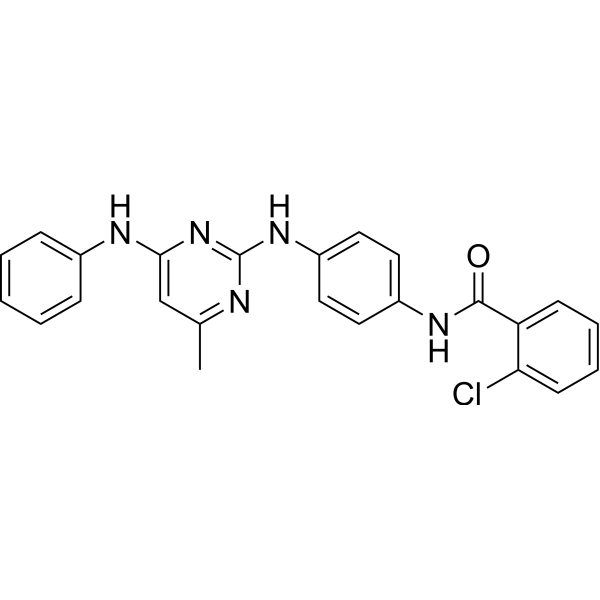
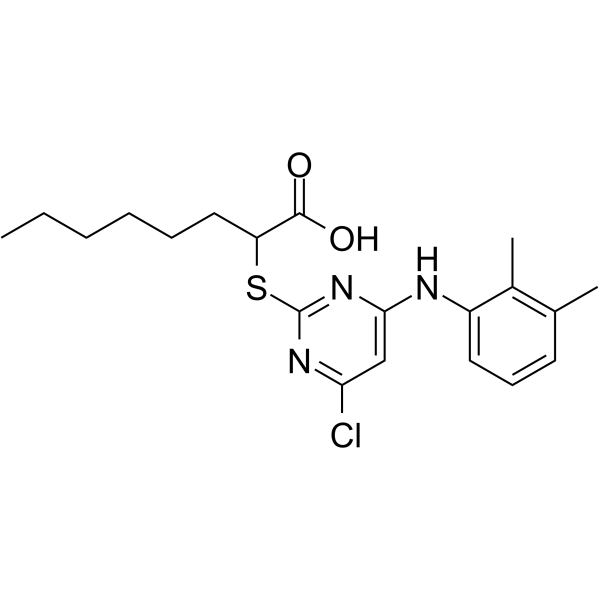
Aumitin is a diaminopyrimidine-based autophagy inhibitor which inhibits mitochondrial respiration by targeting complex I. Aumitin inhibits starvation- and rapamycin induced autophagy dose dependently with IC50s of 0.12 μM and 0.24 μM, respectively .
loading...
    loading...
Cat. No.: HY-100658R
CAS No.: 839712-25-3
Didesmethyl cariprazine (Standard) is the analytical standard of Didesmethyl cariprazine (HY-100658). This product is intended for research and analytical applications. Didesmethyl cariprazine is an orally active, BBB-permeable metabolite of Cariprazine (HY-14763). Didesmethyl cariprazine is a partial agonist at the D2 and D3 receptors, full agonist at the 5-HT1A receptor, and antagonist at the human 5-HT2B receptor (Ki: 1.41 nM (human D2L), 0.056 nM (human D3), 1.7 nM (human 5-HT1A), 0.52 nM (human 5-HT2B)). Didesmethyl cariprazine dose-dependently inhibits the spontaneous activity of rat midbrain dopaminergic neurons .
loading...
    loading...
Cat. No.: HY-107830R
CAS No.: 1448-36-8
Methyl cholate (Standard) is the analytical standard of Methyl cholate. This product is intended for research and analytical applications. Methyl cholate is a bile acid analog and a specific inhibitor of TcdB toxin from Clostridioides difficile. Methyl cholate exerts a stronger selective inhibitory effect on TcdB than on TcdA. Methyl cholate induces conformational stabilization by binding to a unique site of TcdB, thereby blocking the binding of the toxin to host receptors and its self-processing process. Methyl cholate effectively protects human fibroblasts from TcdB-induced cytopathic effects. Methyl cholate exhibits dose-dependent anti-hepatic fibrosis activity in both cellular and zebrafish models, and significantly reduces the expression levels of α-SMA and COL-I. Methyl cholate is suitable for in-depth research in the fields of Clostridioides difficile infection and hepatic fibrosis .
loading...
    loading...
Cat. No.: HY-111140
CAS No.: 916482-17-2
Purity:  99.74%
Research Areas:  

Inflammation/Immunology

YS121 is a dual inhibitor of microsomal prostaglandin E2 synthase-1 (mPGES-1; IC50 = 3.4 μM) and 5-lipoxygenase (5-LOX; IC50 = 6.5 μM). YS121 exhibits direct, reversible, and specific binding to mPGES-1 (KD = 10-14 μM) . YS121 dose-dependently reduces PGE2 production with an EC50 of 12 μM in IL-1β-stimulated A549 cells . YS121 (compound 9) activates PPAR-α and -γ (EC50 = 1 and 3.6 μM, respectively) . YS121 exhibits anti-inflammatory efficiency in human whole blood as well as in vivo. YS121 can be used for pleurisy research .
loading...
    loading...

