725 Results for "

Calcium Channel

" in MedChemExpress (MCE) Product Catalog:
Products (725)

725 Results for "Calcium Channel" in MCE Product Catalog:

Cat. No.: HY-P4121
CAS No.: 1898254-09-5
Target:  

Potassium Channel

Research Areas:  

Inflammation/Immunology Cancer

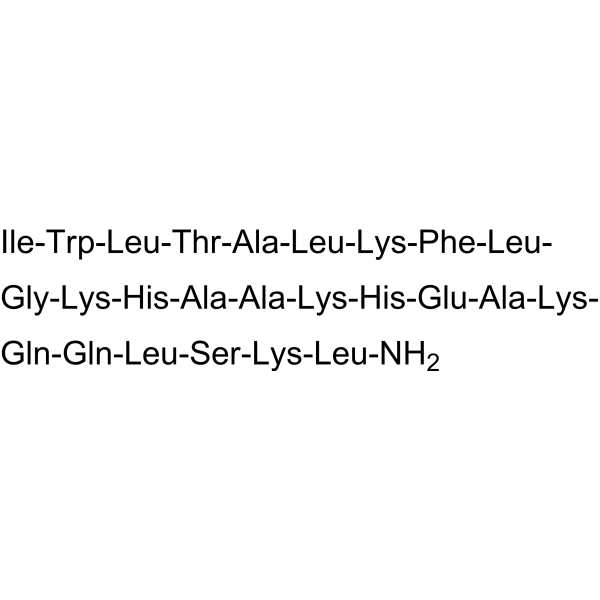
L17E is an attenuated cationic amphiphilic lytic (ACAL) peptide that can be used to deliver a variety of macromolecules, including proteins, antibodies, and DNA nanostructures. L17E inserts and cleaves the membrane structure through electrostatic interaction, enabling intracellular escape. The efficiency of L17E-mediated delivery is strongly correlated with the expression level of KCNN4 (the gene encoding the calcium-activated potassium channel KCa3.1). L17E also promotes the cellular uptake of macromolecules by inducing micropinocytosis. L17E can be further optimized and improved through dimerization strategies and in combination with other delivery systems, such as nuclear localization signal peptides and cell membrane-coated nanoparticles .
loading...
    loading...
Cat. No.: HY-100607AR
CAS No.: 144481-98-1
Synonyms: ONO1101 hydrochloride (Standard)
Landiolol (ONO1101) hydrochloride (Standard) is the analytical standard of Landiolol hydrochloride (HY-100607A). This product is intended for research and analytical applications. Landiolol (ONO1101) hydrochloride is a highly selective, ultra-short-acting competitive inhibitor of β1 adrenergic receptors. Landiolol hydrochloride specifically blocks cardiac β1 receptors, reducing heart rate and myocardial oxygen consumption. Landiolol hydrochloride inhibits TNF-α-induced excessive mitochondrial oxygen consumption and reactive oxygen species production in a sepsis model, alleviating renal injury. Landiolol hydrochloride has little effect on cardiac ion channels (such as L-type calcium current and inward rectifier potassium current) and has a weak negative inotropic effect. Landiolol hydrochloride can be used for perioperative tachycardia control and protection studies of sepsis-related acute kidney injury .
loading...
    loading...
Cat. No.: HY-100607S
Synonyms: ONO1101-d8
Landiolol-d8 (ONO1101-d8) is the deuterium labeled Landiolol (HY-100607). Landiolol (ONO1101) is a highly selective, ultra-short-acting competitive inhibitor of β1 adrenergic receptors. Landiolol specifically blocks cardiac β1 receptors, reducing heart rate and myocardial oxygen consumption. Landiolol inhibits TNF-α-induced excessive mitochondrial oxygen consumption and reactive oxygen species production in a sepsis model, alleviating renal injury. Landiolol has little effect on cardiac ion channels (such as L-type calcium current and inward rectifier potassium current) and has a weak negative inotropic effect. Landiolol can be used for perioperative tachycardia control and protection studies of sepsis-related acute kidney injury .
loading...
    loading...
Cat. No.: HY-126720
CAS No.: 807370-75-8
Purity:  ≥99.0%
Target:  

Endogenous Metabolite

Research Areas:  

Metabolic Disease

N-Lignoceroyl Taurine is an arachidonoyl amino acid and taurine conjugate with a fatty acid that can be isolated from bovine brain. N-Lignoceroyl Taurine is one of several novel taurine-conjugated fatty acids discovered during mass spectrometry lipidomic analysis of the brain and spinal cord of wild-type and fatty acid amide hydrolase (FAAH) knockout mice. N-Lignoceroyl Taurine levels were 23-26-fold higher in FAAH -/- mice compared to wild-type mice, suggesting that FAAH utilizes N-Lignoceroyl Taurine as a substrate. However, in vitro experiments with purified FAAH showed that N-Lignoceroyl Taurine was hydrolyzed 2,000-fold slower in FAAH compared to oleoylethanolamide. N-Acyl Taurines with polyunsaturated acyl chains can activate members of the transient receptor potential (TRP) calcium channel family, including TRPV1 and TRPV4.
loading...
    loading...
Cat. No.: HY-132184S
CAS No.: 1881277-30-0
Synonyms: 5,6-EET-d11; (±)5,6-EpETrE-d11
5,6-Epoxyeicosatrienoic acid-d11 (5,6-EET-d11) is deuterium labeled 5,6-Epoxyeicosatrienoic acid. 5,6-Epoxyeicosatrienoic acid is one of the four major epoxyeicosatrienoic acid (EET) isomers metabolized from Arachidonic acid (HY-109590). 5,6-Epoxyeicosatrienoic acid induces peripheral vasodilation and lowers blood pressure by inhibiting T-type calcium channels (Cav3.2: IC50 = 0.54 μM). 5,6-Epoxyeicosatrienoic acid causes vasoconstriction in hypoxic pulmonary blood vessels via activating Rho kinase in a membrane depolarization-dependent manner. 5,6-Epoxyeicosatrienoic acid induces mechanical pain by activating TRPA1. 5,6-Epoxyeicosatrienoic acid can be used in studies related to hypoxic pulmonary vasoconstriction, mechanical hyperalgesia and hypertension.
loading...
    loading...
Cat. No.: HY-187618
CAS No.: 1508276-29-6
Target:  

TRP Channel

Research Areas:  

Metabolic Disease

GRC-17536 is a TRPA1 antagonist with selective inhibition of TRPA1-mediated calcium influx .GRC-17536 binds to TRPA1 binding site 2 to inhibit channel activity .GRC-17536 reduces irritant-induced cough responses and citric acid-induced cough responses .GRC-17536 exhibits antitussive activity .GRC-17536 has poor pharmacokinetic and bioavailability properties, leading to discontinued development after a Phase IIa study .GRC-17536 can be used for the research of painful diabetic polyneuropathy, peripheral diabetic neuropathy, asthma, and chronic cough .
loading...
    loading...
Cat. No.: HY-B0612B
CAS No.: 185197-71-1
Research Areas:  

Neurological Disease

(S)-Lercanidipine is a calcium channel blocker with antihypertensive and neuroprotective activities. (S)-Lercanidipine reduces oxidative stress and protects auditory sensory hair cells from noise-induced damage. (S)-Lercanidipine showed significant protective effects on cell viability in in vitro experiments, especially at low concentrations. (S)-Lercanidipine has been found to effectively reduce the hearing threshold of mice after noise stimulation and protect the survival of outer hair cells. The antioxidant properties of (S)-Lercanidipine are reflected in its increased expression of antioxidant enzyme genes and decreased expression of oxidative enzyme genes. (S)-Lercanidipine administration is effective in reducing noise-induced hearing loss both before and after noise exposure. (S)-Lercanidipine may alleviate noise-induced hearing loss and protect the survival of outer hair cells through its antioxidant mechanism .
loading...
    loading...
Cat. No.: HY-W709349
CAS No.: 33400-45-2
Synonyms: D 9998 hydrochloride
Flupirtine (D 9998) hydrochloride is an orally active, blood-brain barrier-crossing non-opioid analgesic and neuroprotective agent. Flupirtine hydrochloride is a neuronal potassium channel opener (Kv7 activator), a NMDA receptor antagonist and a GABA receptor activator. Flupirtine hydrochloride stabilizes blood-brain-barrier integrity, reduces oxidative stress and brain leukocyte infiltration, enhances angioneurogenesis, suppresses calcium influx, stabilizes neuronal resting membrane potential, and counteracts focal cerebral ischemia. Flupirtine hydrochloride exhibits analgesic, muscle relaxant properties, protects neurons from excitotoxic, ischemic, or cytokine-mediated death. Flupirtine hydrochloride functions as a non-opioid analgesic without antipyretic or antiphlogistic properties, shows no relevant affinity to opiate receptor. Flupirtine hydrochloride can be used for the research of focal cerebral ischemia, pain, Alzheimer’s disease, or multiple sclerosis .
loading...
    loading...
Cat. No.: HY-W012908
CAS No.: 609-36-9
Research Areas:  

Infection Cancer

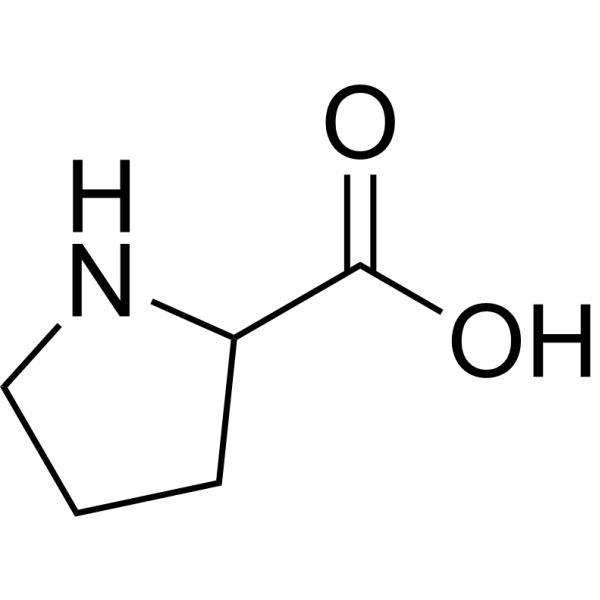
DL-Proline is a racemic mixture of D-Proline and L-Proline, belonging to cyclic imino acids with a five-membered ring structure. DL-Proline serves as a key structural unit in peptide synthesis. DL-Proline stabilizes β-turn conformations and affects the secondary structure of peptide segments. DL-Proline exhibits biological activities such as regulating peptide segment conformations and enhancing cyclic peptide stability. DL-Proline can be used in research on diseases related to peptide structure and function, including cancer and bacterial infections .
loading...
    loading...
Cat. No.: HY-W012908S
CAS No.: 65807-21-8
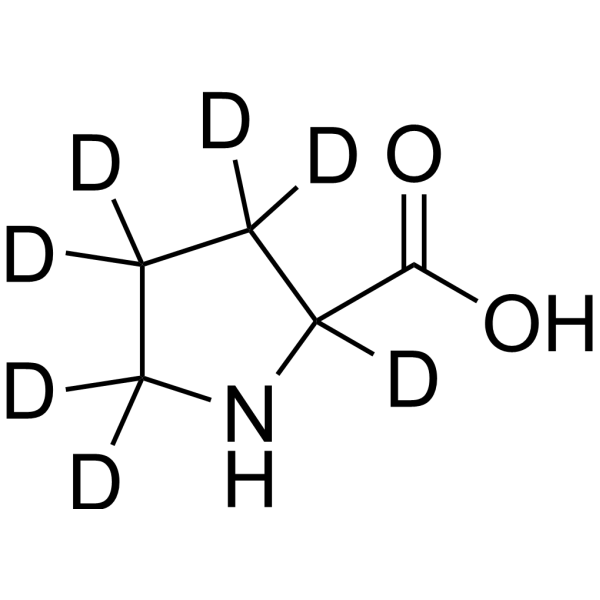
DL-Proline-d7 is the deuterated-labeled DL-Proline (HY-W012908). DL-Proline is a racemic mixture of D-Proline and L-Proline, belonging to cyclic imino acids with a five-membered ring structure. DL-Proline serves as a key structural unit in peptide synthesis. DL-Proline stabilizes β-turn conformations and affects the secondary structure of peptide segments. DL-Proline exhibits biological activities such as regulating peptide segment conformations and enhancing cyclic peptide stability. DL-Proline can be used in research on diseases related to peptide structure and function, including cancer and bacterial infections .
loading...
    loading...
Cat. No.: HY-W012908S1
CAS No.: 282729-06-0
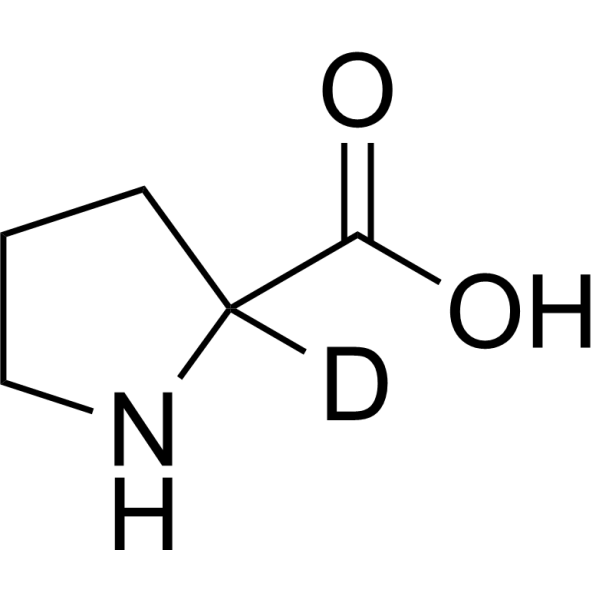
DL-Proline-2-d1 is the deuterated-labeled DL-Proline (HY-W012908). DL-Proline is a racemic mixture of D-Proline and L-Proline, belonging to cyclic imino acids with a five-membered ring structure. DL-Proline serves as a key structural unit in peptide synthesis. DL-Proline stabilizes β-turn conformations and affects the secondary structure of peptide segments. DL-Proline exhibits biological activities such as regulating peptide segment conformations and enhancing cyclic peptide stability. DL-Proline can be used in research on diseases related to peptide structure and function, including cancer and bacterial infections .
loading...
    loading...
Cat. No.: HY-W012908S2
CAS No.: 784086-28-8
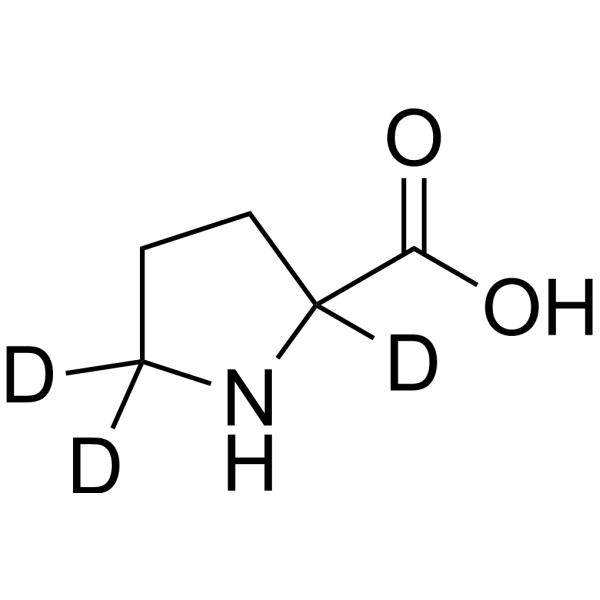
DL-Proline-d3 is the deuterated-labeled DL-Proline (HY-W012908). DL-Proline is a racemic mixture of D-Proline and L-Proline, belonging to cyclic imino acids with a five-membered ring structure. DL-Proline serves as a key structural unit in peptide synthesis. DL-Proline stabilizes β-turn conformations and affects the secondary structure of peptide segments. DL-Proline exhibits biological activities such as regulating peptide segment conformations and enhancing cyclic peptide stability. DL-Proline can be used in research on diseases related to peptide structure and function, including cancer and bacterial infections .
loading...
    loading...
Cat. No.: HY-101840AR
CAS No.: 1345839-28-2
Synonyms: L593754 hydrochloride (Standard); MH 12-43 hydrochloride (Standard); Ethylisopropylamiloride hydrochloride (Standard)
EIPA (hydrochloride) (Standard) is the analytical standard of EIPA (hydrochloride). This product is intended for research and analytical applications. EIPA (L593754) hydrochloride is an orally active TRPP3 channel inhibitor with an IC50 of 10.5 μM. EIPA hydrochloride also enhances autophagy by inhibiting Na+/H+-exchanger 3 (NHE3). EIPA hydrochloride inhibits macropinocytosis as well. EIPA hydrochloride can be used in the research of inflammation and cancers, such as gastric cancer, colon carcinoma, pancreatic carcinoma .
loading...
    loading...
Cat. No.: HY-101840R
CAS No.: 1154-25-2
Synonyms: L593754 (Standard); MH 12-43 (Standard); Ethylisopropylamiloride (Standard)
EIPA (Standard) is the analytical standard of EIPA. This product is intended for research and analytical applications. EIPA (L593754) is an orally active TRPP3 channel inhibitor with an IC50 of 10.5 μM. EIPA also enhances autophagy by inhibiting Na+/H+-exchanger 3 (NHE3). EIPA inhibits macropinocytosis as well. EIPA can be used in the research of inflammation and cancers, such as gastric cancer, colon carcinoma, pancreatic carcinoma .
loading...
    loading...
Cat. No.: HY-131507
CAS No.: 3614-30-0
Target:  

mAChR

Research Areas:  

Metabolic Disease

Emepronium bromide is an antispasmodic agent for the bladder and a muscarinic receptor ligand, with an IC50 of 236 nM. Emepronium bromide is applicable to research related to bladder diseases .
loading...
    loading...
Cat. No.: HY-110230
CAS No.: 1324717-75-0
Synonyms: D 9998-d4 hydrochloride
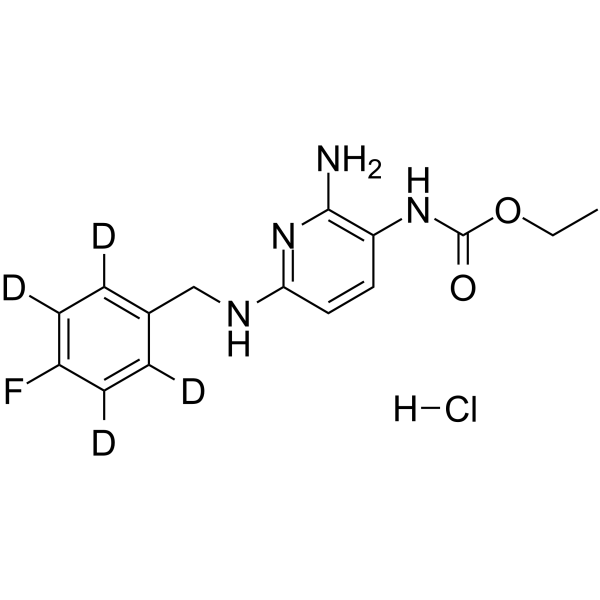
Flupirtine-d4 (D 9998-d4) hydrochloride is the deuterium labeled Flupirtine hydrochloride (HY-W709349). Flupirtine hydrochloride is an orally active, blood-brain barrier-crossing non-opioid analgesic and neuroprotective agent. Flupirtine hydrochloride is a neuronal potassium channel opener (Kv7 activator), a NMDA receptor antagonist and a GABA receptor activator. Flupirtine hydrochloride stabilizes blood-brain-barrier integrity, reduces oxidative stress and brain leukocyte infiltration, enhances angioneurogenesis, suppresses calcium influx, stabilizes neuronal resting membrane potential, and counteracts focal cerebral ischemia. Flupirtine hydrochloride exhibits analgesic, muscle relaxant properties, protects neurons from excitotoxic, ischemic, or cytokine-mediated death. Flupirtine hydrochloride functions as a non-opioid analgesic without antipyretic or antiphlogistic properties, shows no relevant affinity to opiate receptor. Flupirtine hydrochloride can be used for the research of focal cerebral ischemia, pain, Alzheimer’s disease, or multiple sclerosis .
loading...
    loading...
Cat. No.: HY-17001R
CAS No.: 75507-68-5
Synonyms: D 9998 Maleate (Standard)
Flupirtine Maleate (Standard) is the analytical standard of Flupirtine Maleate (HY-17001). This product is intended for research and analytical applications. Flupirtine Maleate is an orally active, blood-brain barrier-crossing non-opioid analgesic and neuroprotective agent. Flupirtine Maleate is a neuronal potassium channel opener (Kv7 activator), a NMDA receptor antagonist and a GABA receptor activator. Flupirtine Maleate stabilizes blood-brain-barrier integrity, reduces oxidative stress and brain leukocyte infiltration, enhances angioneurogenesis, suppresses calcium influx, stabilizes neuronal resting membrane potential, and counteracts focal cerebral ischemia. Flupirtine Maleate exhibits analgesic, muscle relaxant properties, protects neurons from excitotoxic, ischemic, or cytokine-mediated death. Flupirtine Maleate functions as a non-opioid analgesic without antipyretic or antiphlogistic properties, shows no relevant affinity to opiate receptor. Flupirtine Maleate can be used for the research of focal cerebral ischemia, pain, Alzheimer’s disease, or multiple sclerosis .
loading...
    loading...
Cat. No.: HY-B1239A
CAS No.: 1679-76-1
Synonyms: Cycloadiphene; Hexahydroadiphenine
Drofenine (Cycloadiphene; Hexahydroadiphenine) is an brain-penetrant antispasmodic agent. Drofenine is a Kv2.1 channel inhibitor with human IC50 of 9.53 μM. Drofenine is a butyrylcholinesterase (BChE) inhibitor with Ki of 0.003 mM, and is a TRPV3 activator. Drofenine blocks Kv2.1-dependent potassium efflux, inhibits Kv2.1/JNK/NF-κB and IkBa/NF-kB signaling, suppresses Kv2.1 mRNA/protein expression. Drofenine suppresses oligomeric -induced microglial NLRP3 inflammasome activation and neuronal Tau hyperphosphorylation, improves cognitive impairment, promotes neurite outgrowth. Drofenine induces calcium influx in keratinocytes and exert cytotoxicity against keratinocytes. Drofenine ameliorates diabetic peripheral neuropathy -like pathology. Drofenine can be used for the researches of Alzheimer's disease, diabetic peripheral neuropathy and smooth muscle spasm .
loading...
    loading...
Cat. No.: HY-W709349S
Synonyms: D 9998-d6 hydrochloride
Flupirtine-d6 (D 9998-d6) hydrochloride is the deuterium labeled Flupirtine hydrochloride (HY-W709349). Flupirtine hydrochloride is an orally active, blood-brain barrier-crossing non-opioid analgesic and neuroprotective agent. Flupirtine hydrochloride is a neuronal potassium channel opener (Kv7 activator), a NMDA receptor antagonist and a GABA receptor activator. Flupirtine hydrochloride stabilizes blood-brain-barrier integrity, reduces oxidative stress and brain leukocyte infiltration, enhances angioneurogenesis, suppresses calcium influx, stabilizes neuronal resting membrane potential, and counteracts focal cerebral ischemia. Flupirtine hydrochloride exhibits analgesic, muscle relaxant properties, protects neurons from excitotoxic, ischemic, or cytokine-mediated death. Flupirtine hydrochloride functions as a non-opioid analgesic without antipyretic or antiphlogistic properties, shows no relevant affinity to opiate receptor. Flupirtine hydrochloride can be used for the research of focal cerebral ischemia, pain, Alzheimer’s disease, or multiple sclerosis .
loading...
    loading...
Cat. No.: HY-L145
930 compounds

The majority of hypertensive patients have primary (or essential) hypertension, that is, hypertension in which secondary causes are not present. Management aims to control arterial pressure, prevent end-organ damage (cerebrovascular, cardiovascular, and renal), and reduce the risk of premature death.

Antihypertensive drugs may be divided into two broad groups, the first group being those which directly or indirectly block the renin–angiotensin system (RAS), for example, ACEIs, angiotensin receptor antagonists (ARAs), direct renin inhibitors (DRIs), and to a lesser extent β-blockers. The second group of drugs works by increasing water and sodium excretion, thereby reducing intravascular volume, or by causing vasodilatation through non-RAS pathways, for example, diuretics and calcium channel blockers (CCBs).

MCE offers a unique collection of 930 compounds with identified and potential antihypertensive activity. MCE Antihypertensive Compound Library is critical for antihypertensive drug discovery and development.

