114 Results for "

interference

" in MedChemExpress (MCE) Product Catalog:
Products (114)

114 Results for "interference" in MCE Product Catalog:

Cat. No.: HY-121244
CAS No.: 117-52-2
Coumafuryl is a kind of coumarin rodenticide. Coumafuryl inhibits the metabolic cycle of vitamin K that causes the interference with protein biosynthesis of vitamin K-dependent coagulant factors (II, VII, IX, and X factors) in the liver .
loading...
    loading...
Cat. No.: HY-B0993A
CAS No.: 155319-91-8
Research Areas:  

Cancer

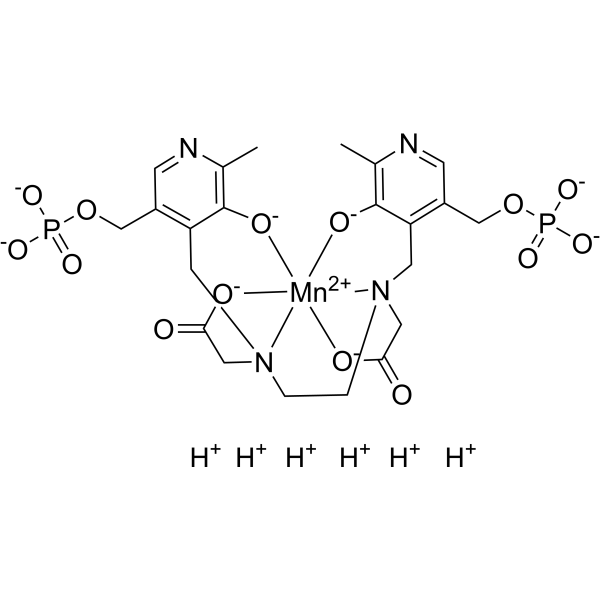
Mangafodipir, hepatocellular-specific contrast agent, is an efficacious inhibitor of CIPN (chemotherapy-induced peripheral neuropath) and other conditions caused by cellular oxidative stress. Mangafodipir shows no negative interference with the tumoricidal activity of chemotherapy .
loading...
    loading...
Cat. No.: HY-D0151
CAS No.: 174568-67-3
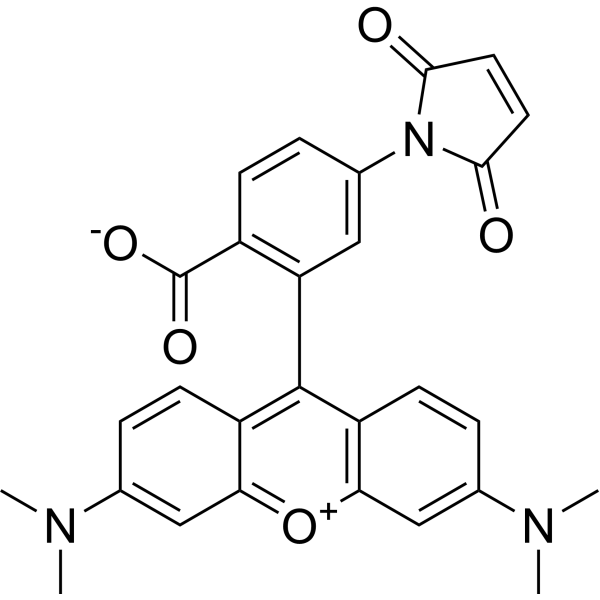
Tetramethylrhodamine-5-maleimide is a fluorescent probe with high specificity for cysteine thiol (SH) groups. Tetramethylrhodamine-5-maleimide has high sensitivity, responds rapidly to negatively charged nanoparticles, and shows a concentration-dependent decrease in fluorescence intensity, but it is susceptible to interference from humic acids .
loading...
    loading...
Cat. No.: HY-152103
Target:  

Fluorescent Dye

Research Areas:  

Others

CB2-H is a dual-channel fluorescent probe for the simultaneous detection of HOCl and ONOO -. CB2-H enables the concurrent detection of HOCl and ONOO - at two independent channels without spectral cross-interference and can be applied for dual-channel fluorescence imaging of endogenously produced HOCl and ONOO - in living cells and zebrafish under different stimulants .
loading...
    loading...
Cat. No.: HY-Y0740S
CAS No.: 19486-71-6
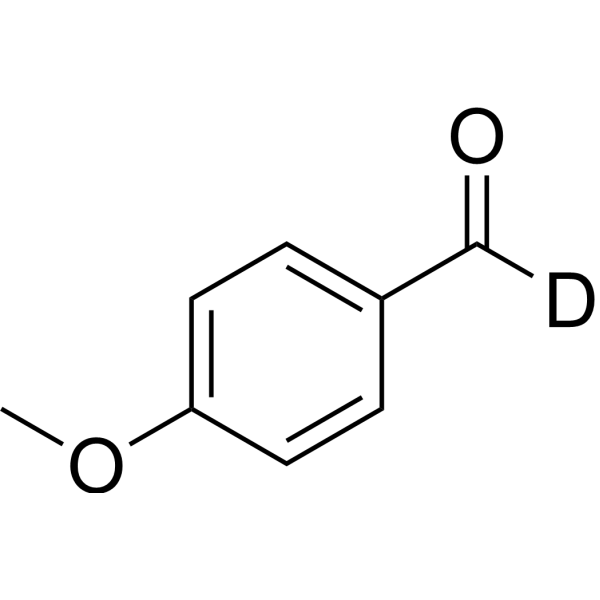
4-Methoxybenzaldehyde-d1 is the deuterium labeled 4-Methoxybenzaldehyde . 4-Methoxybenzaldehyde is a naturally occurring fragrant phenolic compound. 4-Methoxybenzaldehyde has been found in many plant species including horseradish, anise, star anise. 4-Methoxybenzaldehyde is a possible neurotoxicant and it has shown effects that include mortality, attractancy, and interference with host seeking .
loading...
    loading...
Cat. No.: HY-Y0740S1
CAS No.: 342611-04-5
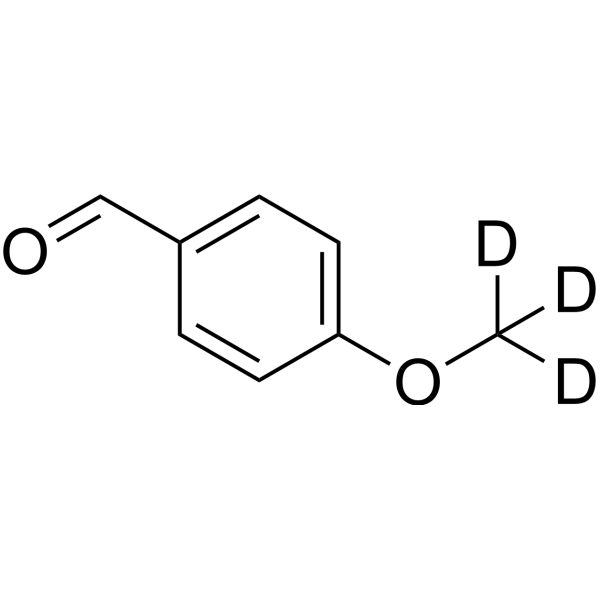
4-Methoxybenzaldehyde-d3 is the deuterium labeled 4-Methoxybenzaldehyde . 4-Methoxybenzaldehyde is a naturally occurring fragrant phenolic compound. 4-Methoxybenzaldehyde has been found in many plant species including horseradish, anise, star anise. 4-Methoxybenzaldehyde is a possible neurotoxicant and it has shown effects that include mortality, attractancy, and interference with host seeking .
loading...
    loading...
Cat. No.: HY-D2204
CAS No.: 2956720-62-8
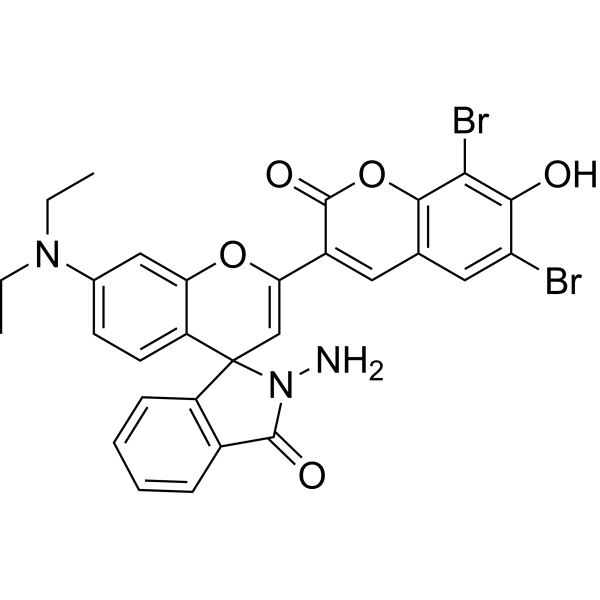
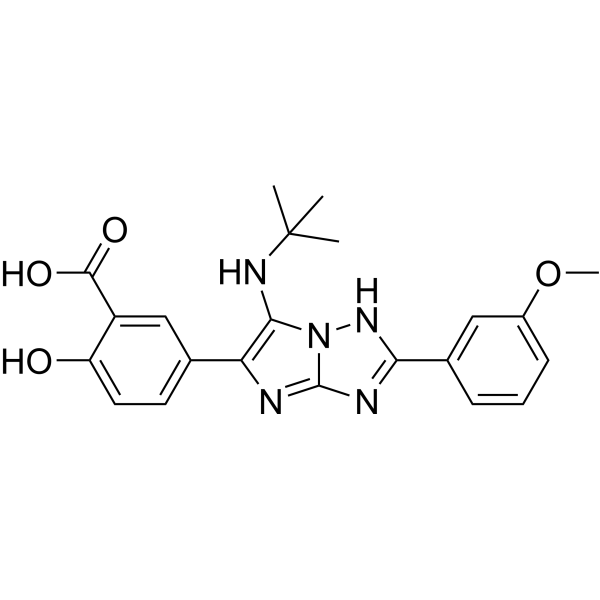
SHP1-IN-1 (compound 5p) is a fluorescent probe for the protein tyrosine phosphatase SHP1 containing the Src homology 2 domain. SHP1-IN-1 has SHP1 inhibitory activity, selectivity for Fe 3+ ions and good fluorescence properties. SHP1-IN-1 exhibits aggregation post-quenching (ACQ) effect, good interference immunity and low detection limit (5.55 μM) .
loading...
    loading...
Cat. No.: HY-B2106DR
CAS No.: 9002-92-0
Synonyms: Decaethylene glycol monododecyl ether (C12E10) (Standard); Polidocanol (10) (Standard)
Polyoxyethylene (10) lauryl ether (Standard) is the analytical standard of Polyoxyethylene (10) lauryl ether. This product is intended for research and analytical applications. Polyoxyethylene (10) lauryl ether is a non-ionic surfactant. Polyoxyethylene (10) lauryl ether exhibits unique properties in dissolving liposomes and exerts the minimal interference with endotoxin detection. Polyoxyethylene (10) lauryl ether forms hybrid liposomes with Dimyristoylphosphatidylcholine (DMPC) (HY-109541), which can inhibit the proliferation of human promyelocytic leukemia cells without the administration of any drugs.
loading...
    loading...
Cat. No.: HY-D0233S
CAS No.: 1173023-92-1
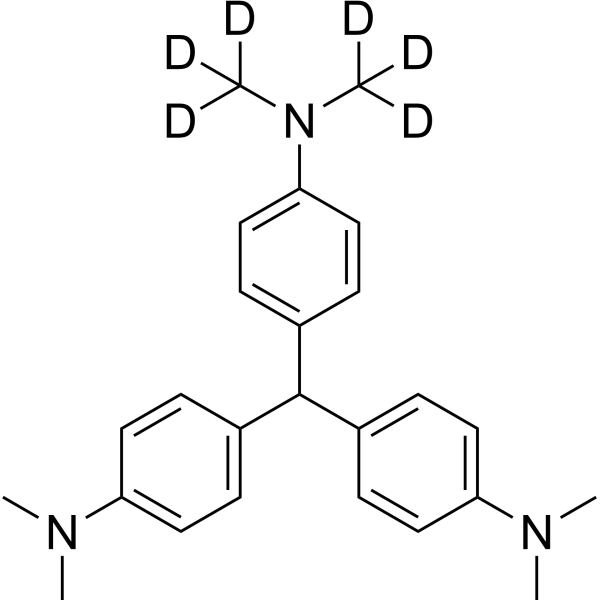
Leucocrystal violet-d6 is the deuterium labeled Leucocrystal violet (HY-D0233). Leucocrystal violet is a cationic triarylmethane dye. Leucocrystal violet generates a colored purple product in the presence of hydrogen peroxide and horseradish peroxidase, or when oxidized by periodate under the catalysis of horseradish peroxidase. Leucocrystal violet serves as a chromogenic reagent for the determination of submicrogram-level hydrogen peroxide, with no interference from tryptophan, persulfate or chromate. Leucocrystal violet reacts with blood to produce a purple/violet color in the presence of hydrogen peroxide; it forms a very weak fluorophore when acting with whole blood in an unbuffered solution, with a maximum absorption wavelength of 630 nm and a maximum fluorescence emission wavelength of 665 nm upon excitation at 630 nm. Leucocrystal violet is widely used for staining blood residues on porous and non-porous materials.
loading...
    loading...
Cat. No.: HY-108292R
CAS No.: 66532-86-3
Research Areas:  

Cancer

Propacetamol (hydrochloride) (Standard) is the analytical standard of Propacetamol (hydrochloride). This product is intended for research and analytical applications. Propacetamol hydrochloride is a potent, peptidic inhibitor targeting thrombin and granzyme GZMK. Propacetamol hydrochloride specifically blocks the activities of thrombin and GZMK, thereby inhibiting thrombin-mediated PAR-1 cleavage, as well as downstream inflammatory and procoagulant signaling pathways. Through stabilizing IκB proteins, blocking NF-κB activation and reducing systemic levels of proinflammatory/procoagulant biomarkers, Propacetamol hydrochloride exerts multiple effects including anti-inflammatory, antithrombotic, barrier repair, and inhibition of atherosclerotic plaque progression. Propacetamol hydrochloride binds to platelets without interference from kininogen, effectively limiting acute thrombus growth and reducing eosinophil infiltration and goblet cell hyperplasia in asthma models. Propacetamol hydrochloride is an important tool molecule for investigating the mechanisms of atherosclerosis, asthma and related thromboinflammatory diseases .
loading...
    loading...
Cat. No.: HY-D0233R
CAS No.: 603-48-5
Leucocrystal violet (Standard) is the analytical standard of Leucocrystal violet (HY-D0233). This product is intended for research and analytical applications. Leucocrystal violet is a cationic triarylmethane dye. Leucocrystal violet generates a colored purple product in the presence of hydrogen peroxide and horseradish peroxidase, or when oxidized by periodate under the catalysis of horseradish peroxidase. Leucocrystal violet serves as a chromogenic reagent for the determination of submicrogram-level hydrogen peroxide, with no interference from tryptophan, persulfate or chromate. Leucocrystal violet reacts with blood to produce a purple/violet color in the presence of hydrogen peroxide; it forms a very weak fluorophore when acting with whole blood in an unbuffered solution, with a maximum absorption wavelength of 630 nm and a maximum fluorescence emission wavelength of 665 nm upon excitation at 630 nm. Leucocrystal violet is widely used for staining blood residues on porous and non-porous materials.
loading...
    loading...
Cat. No.: HY-162775
CAS No.: 50566-97-7
Target:  

Bacterial Antibiotic

Research Areas:  

Infection

TST1N-224 is a potent response regulator VraRC inhibitor. TST1N-224 can disrupt VraRC-DNA complex formation (IC50=60.2 μM). TST1N-224 exhibits interference with VraRC binding to its cognate DNA through a fast-on-fast-off binding mechanism (KD=23.4 μM). TST1N-224 predominantly interacts with the α9- and α10-helixes of the DNA-binding domain of VraR. TST1N-224 inhibits the growths of S. aureus (SA; MIC>126 μM), Methicillin-resistant S. aureus (MRSA; MIC>126 μM), and Vancomycin-intermediate S. aureus (VISA; MIC=63 μM). TST1N-224, an antimicrobial agent, evidently enhances the susceptibility of VISA to both Vancomycin (HY-B0671) and Methicillin (HY-B0974) .
loading...
    loading...
Cat. No.: HY-121244S
Coumafuryl-d3 is the deuterium labeled Coumafuryl (HY-121244). Coumafuryl is a kind of coumarin rodenticide. Coumafuryl inhibits the metabolic cycle of vitamin K that causes the interference with protein biosynthesis of vitamin K-dependent coagulant factors (II, VII, IX, and X factors) in the liver .
loading...
    loading...
Cat. No.: HY-147425D
Synonyms: FAM labled SLN360 sodium
FAM labled Zerlasiran sodium is a FAM labled Zerlasiran sodium (HY-147425A). Zerlasiran sodium is a siRNA targeting apolipoprotein A (ApoA). Zerlasiran sodium targets hepatic ApoA synthesis via RNA interference to degrade encoding mRNA. Zerlasiran sodium can be used for the research of atherosclerotic cardiovascular disease and elevated ApoA levels .
loading...
    loading...
Cat. No.: HY-E71200
Research Areas:  

Others

16S rRNA (adenine1408-N1)-Methyltransferase (EC 2.1.1.180) provides a panaminoglycoside-resistant nature through interference with the binding of aminoglycosides toward the A site of 16S rRNA through N1-methylation at position adenine1408.
loading...
    loading...
Cat. No.: HY-147425E
Synonyms: Cy3 labled SLN360 sodium
Cy3 labled Zerlasiran sodium is a Cy3 labled Zerlasiran sodium (HY-147425A). Zerlasiran sodium is a siRNA targeting apolipoprotein A (ApoA). Zerlasiran sodium targets hepatic ApoA synthesis via RNA interference to degrade encoding mRNA. Zerlasiran sodium can be used for the research of atherosclerotic cardiovascular disease and elevated ApoA levels .
loading...
    loading...
Cat. No.: HY-147425C
Synonyms: SLN360 sodium scrambled negative control
Zerlasiran (SLN360) sodium scrambled negative control is the sequence scrambled negative control of Zerlasiran sodium (HY-147425A). Zerlasiran sodium is a siRNA targeting apolipoprotein A (ApoA). Zerlasiran sodium targets hepatic ApoA synthesis via RNA interference to degrade encoding mRNA. Zerlasiran sodium can be used for the research of atherosclerotic cardiovascular disease and elevated ApoA levels .
loading...
    loading...
Cat. No.: HY-180427
CAS No.: 27127-62-4
Viscosin is a cyclic lipopeptide compound produced by the Pseudomonas genus. Viscosin exerts its antibacterial effect through two mechanisms: membrane permeabilization and interference with cell wall synthesis. Viscosin shows significant antibacterial activity against various Gram-positive bacteria, but has no inhibitory effect on fungi. Viscosin can be used for the study of bacterial infections .
loading...
    loading...
Cat. No.: HY-187086
CAS No.: 116754-87-1
Target:  

Others

Research Areas:  

Cardiovascular Disease

Iodofiltic acid is a terminal p-iodophenyl-substituted β-methyl-branched long-chain fatty acid and myocardial fatty acid metabolism inhibitor. Iodofiltic acid inhibits myocardial fatty acid metabolism via steric or chemical interference due to 3-position methyl branching. Iodofiltic acid shows significant myocardial uptake and prolonged retention in rats, with low in vivo deiodination and high blood levels .
loading...
    loading...
Cat. No.: HY-K0002

MCE Bacterial Protein Extraction Reagent integrates both lysozyme and nuclease activities and is specifically formulated for E. coli lysis. It efficiently disrupts the peptidoglycan layer under mild conditions to rapidly release intracellular proteins. Simultaneously, the incorporated nucleases degrade genomic DNA/RNA, significantly reducing lysate viscosity and minimizing nucleic-acid interference, thereby preserving the native conformation and functional integrity of target proteins to the greatest extent.

loading...
    loading...

