287 Results for "

Distribution

" in MedChemExpress (MCE) Product Catalog:
Products (287)

287 Results for "Distribution" in MCE Product Catalog:

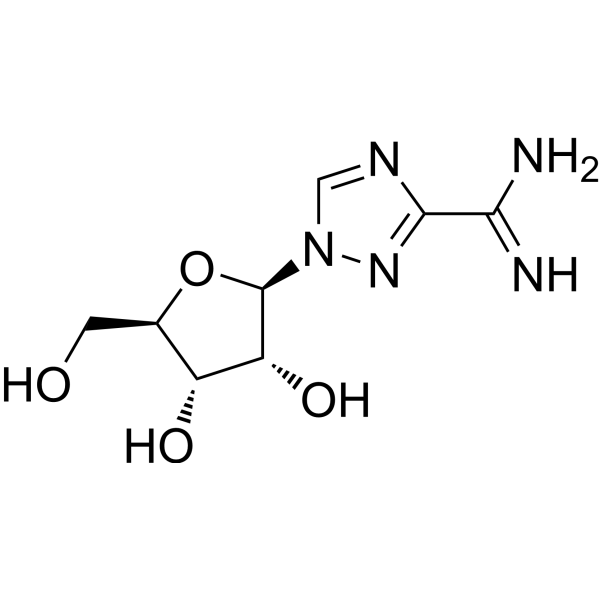
Cat. No.: HY-10545
CAS No.: 119567-79-2
Target:  

HBV HCV

Research Areas:  

Infection

Taribavirin is an orally active inosine monophosphate dehydrogenase inhibitor, has activity against a wide range of viruses, especially the hepatitis C virus and influenza virus. Taribavirin, is a ribavirin proagent, is designed to concentrate within the liver to target HCV-infected hepatocytes while minimizing distribution within red blood cells (RBCs) and the development of hemolytic anemia .
loading...
    loading...
Cat. No.: HY-157695
CAS No.: 799268-64-7
Synonyms: C18(Plasm)-22:6-PC; PC(P-18:0/22:6); 18:0p/22:6-PC
Target:  

Endogenous Metabolite

Research Areas:  

Others

1-(1Z-Octadecenyl)-2-docosahexaenoyl-sn-glycero-3-phosphocholine (C18(Plasm)-22:6-PC) is a phospholipid identified in fish viscera by lipidomics strategy. It has different content and distribution in different fish species and can be used as an indicator of fish species differentiation.
loading...
    loading...
Cat. No.: HY-165116
CAS No.: 206059-98-5
Synonyms: 18:0p/22:6-PE; C18(Plasm)-22:6-PE; PE(P-18:0/22:6)
Target:  

Endogenous Metabolite

Research Areas:  

Others

1-1(Z)-Octadecenyl-2-docosahexaenoyl-sn-glycero-3-PE (18:0p/22:6-PE) is a lipid identified in rat brain tissue by mass spectrometry imaging with specific structural and distribution characteristics, and isomers of different fatty acid chains can be identified by improved methods.
loading...
    loading...
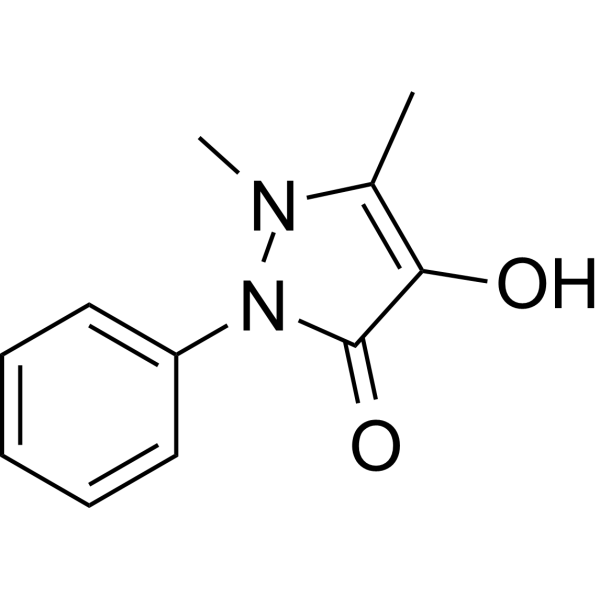
Cat. No.: HY-B2150
CAS No.: 1672-63-5
Synonyms: 4-Hydroxyphenazone; NSC 174055
Target:  

Drug Metabolite

Research Areas:  

Others

4-Hydroxyantipyrine (4-Hydroxyphenazone; NSC 174055) is the major metabolite of Antipyrine (HY-B0171), can be as a biodistribution promoter. 4-Hydroxyantipyrine can increase distribution of concentration ratio of Citicoline and Antipyrine in the brain .
loading...
    loading...
Cat. No.: HY-154632
Research Areas:  

Others

Omega 3 fatty acid triglycerides can be used as an excipient. Pharmaceutical excipients, or pharmaceutical auxiliaries, refer to other chemical substances used in the pharmaceutical process other than pharmaceutical ingredients. Pharmaceutical excipients generally refer to inactive ingredients in pharmaceutical preparations, which can improve the stability, solubility and processability of pharmaceutical preparations. Pharmaceutical excipients also affect the absorption, distribution, metabolism, and elimination (ADME) processes of co-administered drugs .
loading...
    loading...
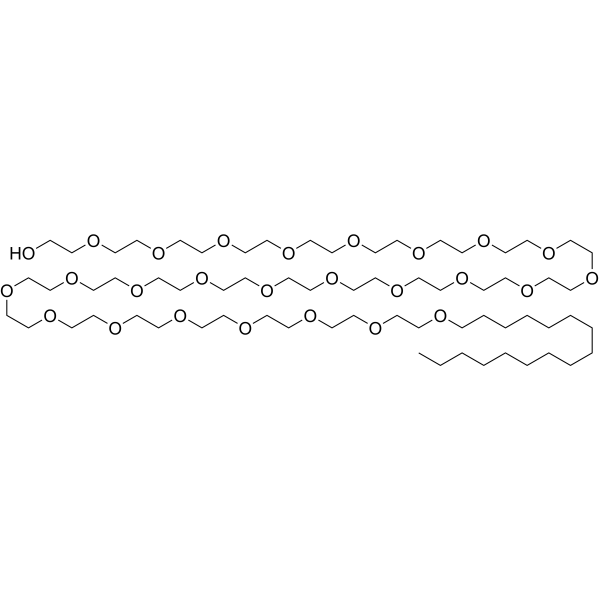
Cat. No.: HY-W127624B
CAS No.: 874945-84-3
Research Areas:  

Others

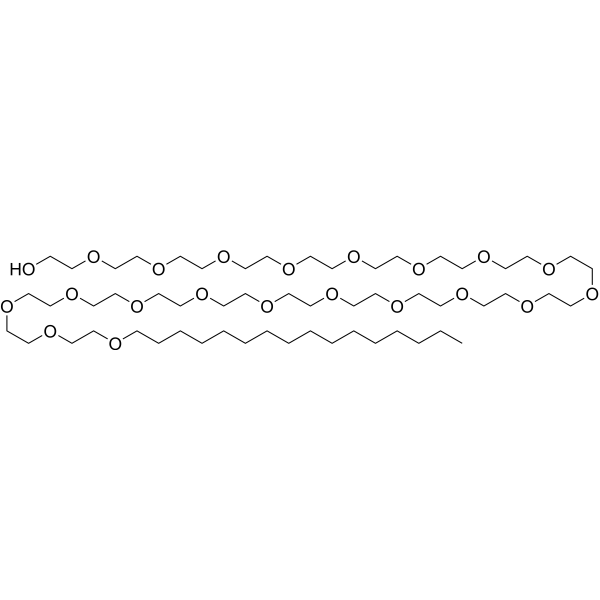
PEG 25 cetostearyl ether can be used as an excipient. Pharmaceutical excipients, or pharmaceutical auxiliaries, refer to other chemical substances used in the pharmaceutical process other than pharmaceutical ingredients. Pharmaceutical excipients generally refer to inactive ingredients in pharmaceutical preparations, which can improve the stability, solubility and processability of pharmaceutical preparations. Pharmaceutical excipients also affect the absorption, distribution, metabolism, and elimination (ADME) processes of co-administered drugs .
loading...
    loading...
Cat. No.: HY-W127624C
CAS No.: 198563-32-5
Research Areas:  

Others

PEG 20 cetostearyl ether can be used as an excipient. Pharmaceutical excipients, or pharmaceutical auxiliaries, refer to other chemical substances used in the pharmaceutical process other than pharmaceutical ingredients. Pharmaceutical excipients generally refer to inactive ingredients in pharmaceutical preparations, which can improve the stability, solubility and processability of pharmaceutical preparations. Pharmaceutical excipients also affect the absorption, distribution, metabolism, and elimination (ADME) processes of co-administered drugs .
loading...
    loading...
Cat. No.: HY-W142428
CAS No.: 3055-93-4
Synonyms: Diethylene glycol monododecyl ether
Research Areas:  

Others

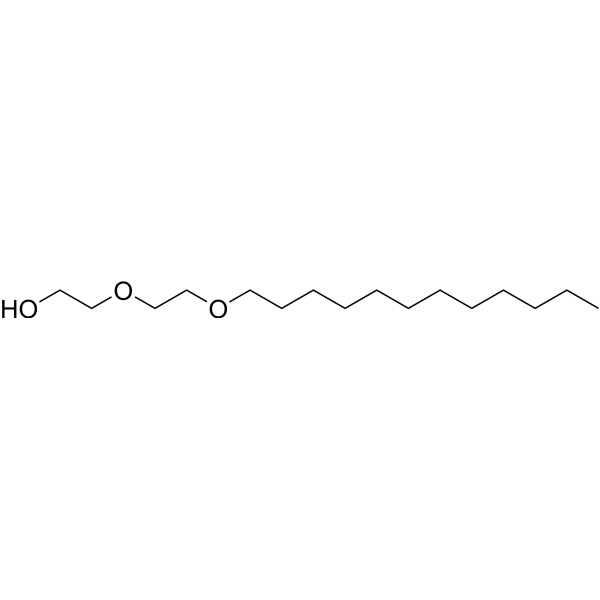
PEG 2 lauryl ether can be used as an excipient. Pharmaceutical excipients, or pharmaceutical auxiliaries, refer to other chemical substances used in the pharmaceutical process other than pharmaceutical ingredients. Pharmaceutical excipients generally refer to inactive ingredients in pharmaceutical preparations, which can improve the stability, solubility and processability of pharmaceutical preparations. Pharmaceutical excipients also affect the absorption, distribution, metabolism, and elimination (ADME) processes of co-administered drugs .
loading...
    loading...
Cat. No.: HY-W131101
CAS No.: 26658-19-5
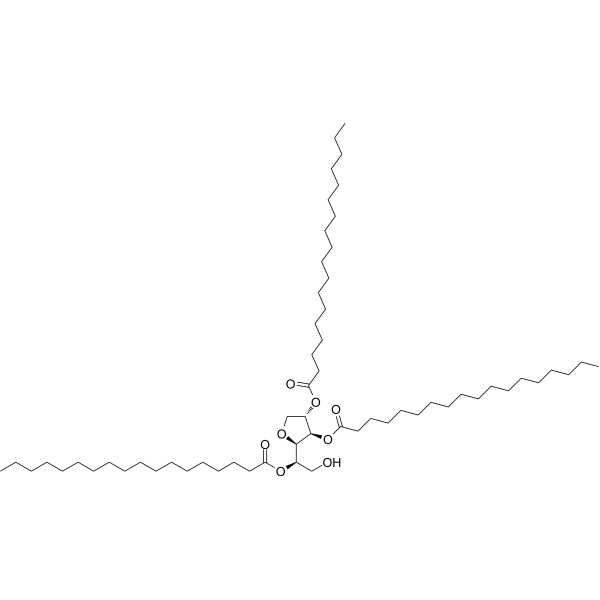
Sorbitan tristearate is a non-ionic surfactant, with a synergistic effect on skin permeability. Sorbitan tristearate can be used as an excipient, such as emulsifier. Pharmaceutical excipients, or pharmaceutical auxiliaries, refer to other chemical substances used in the pharmaceutical process other than pharmaceutical ingredients. Pharmaceutical excipients generally refer to inactive ingredients in pharmaceutical preparations, which can improve the stability, solubility and processability of pharmaceutical preparations. Pharmaceutical excipients also affect the absorption, distribution, metabolism, and elimination (ADME) processes of co-administered drugs .
loading...
    loading...
Cat. No.: HY-154703
CAS No.: 12511-31-8
Research Areas:  

Others

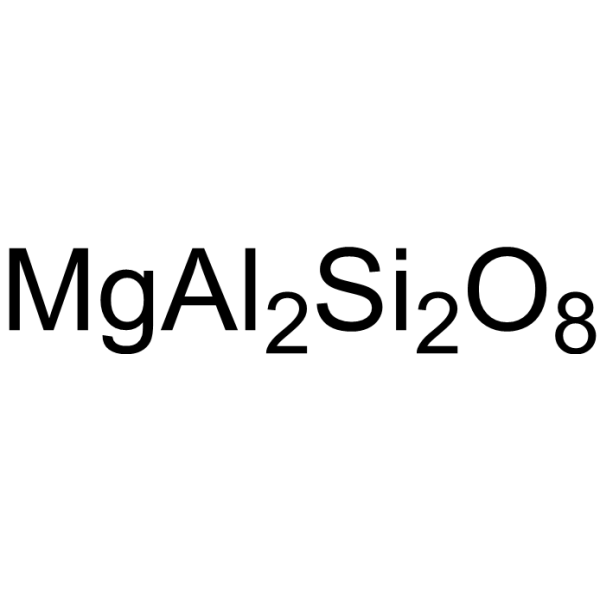
Aluminum magnesium silicate can be used as an excipient, such as adsorbent, stabilizer, suspending agent, disintegrant for tablet and capsule, binder for tablet, thickener. Pharmaceutical excipients, or pharmaceutical auxiliaries, refer to other chemical substances used in the pharmaceutical process other than pharmaceutical ingredients. Pharmaceutical excipients generally refer to inactive ingredients in pharmaceutical preparations, which can improve the stability, solubility and processability of pharmaceutical preparations. Pharmaceutical excipients also affect the absorption, distribution, metabolism, and elimination (ADME) processes of co-administered drugs .
loading...
    loading...
Cat. No.: HY-27979
CAS No.: 9010-88-2
Research Areas:  

Others

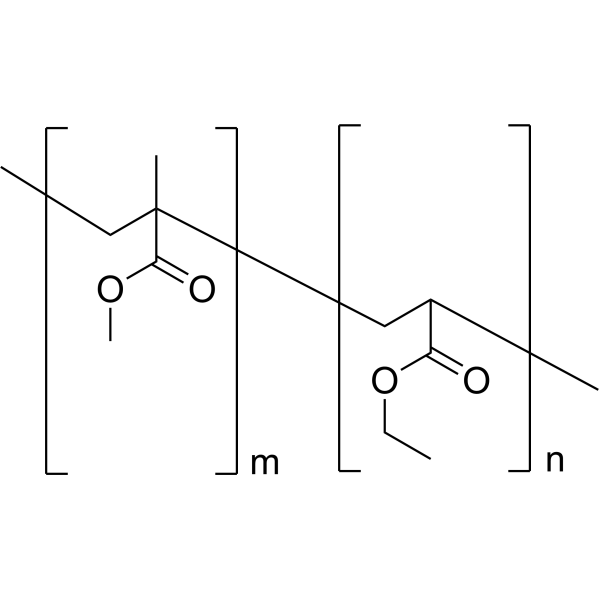
Ethyl acrylate-methyl methacrylate copolymer can be used as an excipient, such as sustained-release coating materials, matrix sustained-release tablet binders and retarders. Pharmaceutical excipients, or pharmaceutical auxiliaries, refer to other chemical substances used in the pharmaceutical process other than pharmaceutical ingredients. Pharmaceutical excipients generally refer to inactive ingredients in pharmaceutical preparations, which can improve the stability, solubility and processability of pharmaceutical preparations. Pharmaceutical excipients also affect the absorption, distribution, metabolism, and elimination (ADME) processes of co-administered drugs .
loading...
    loading...
Cat. No.: HY-19478
CAS No.: 263248-16-4
Target:  

Cholinesterase (ChE)

Research Areas:  

Neurological Disease

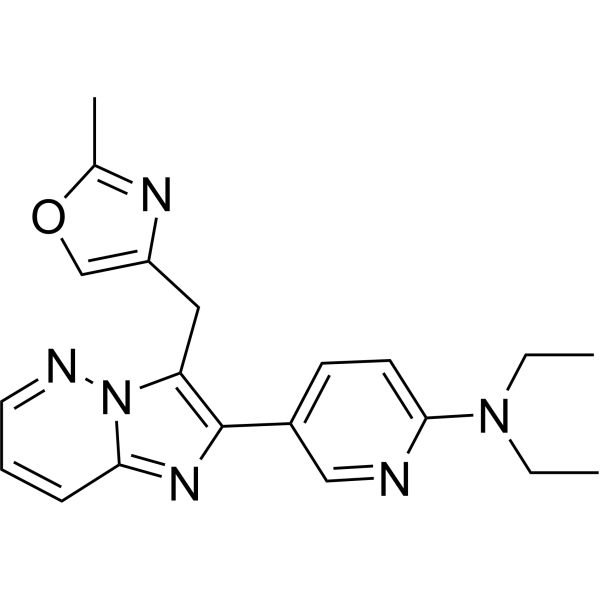
TAK-802 is an orally active and potent acetylcholinesterase inhibitor. TAK-802’s distribution in red blood cells has a significant concentration dependence, with the distribution ratio decreasing as the concentration increases. TAK-802 exhibits significant nonlinear pharmacokinetic behavior .
loading...
    loading...
Cat. No.: HY-B0204B
CAS No.: 118428-37-8
Synonyms: (-)-UD-CG115
Research Areas:  

Cardiovascular Disease

(-)-Pimobedan is an isomer of pimobedan. It has the property of stereoselective partitioning or distribution into erythrocytes. The clearance of (-)-pimobedan from erythrocytes is significantly lower than that of (+)-pimobedan, which is entirely due to its stereoselective distribution into erythrocytes. This stereoselective property of (-)-pimobedan may explain the phenomenon previously reported that it produces a 1.5-fold greater contractile force than the (+)-isomer in detergent-treated myocardial specimens of guinea pigs and dogs. These properties suggest that (-)-pimobedan may have unique advantages in terms of in vivo distribution and pharmacological action, which may have important implications for its clinical use.
loading...
    loading...
Cat. No.: HY-169483
CAS No.: 2633013-75-7
PDIC-NC is a STING agonist. PDIC-NC is cytotoxic to tumor cells and induces ROS explosion, apoptosis and autophagy. PDIC-NC has lung specific distribution and can be used in the study of lung cancer .
loading...
    loading...
Cat. No.: HY-P991037
CAS No.: 2699034-69-8
Synonyms: GNR 055

Target:  

Steroid Sulfatase

Research Areas:  

Metabolic Disease

Verenafusp alfa (GNR 055) is a recombinant fusion protein of iduronate-2-sulfatase and a monoclonal antibody Fab fragment to human insulin receptor for distribution of the enzyme into brain. Verenafusp alfa can be used for the study of mucopolysaccharidosis type II (MPS II) .
loading...
    loading...
Cat. No.: HY-155507
CAS No.: 3040017-61-3
Target:  

c-Myc

Research Areas:  

Cancer

c-Myc inhibitor 11 (Compound 67e) is a c-MYC inhibitor (pEC50: 6.4). c-Myc inhibitor 11 has high clearance levels, moderate volume of distribution and short half-life in rat pharmacokinetic assay. c-Myc inhibitor 11 can be used for cancer research .
loading...
    loading...
Cat. No.: HY-B2150S
CAS No.: 65566-65-6
Synonyms: 4-Hydroxyphenazone-d3; NSC 174055-d3
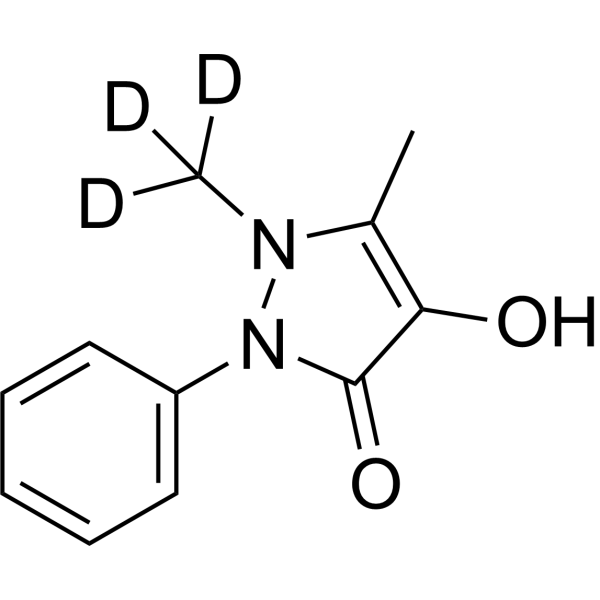
4-Hydroxyantipyrine-d3 is the deuterium labeled 4-Hydroxyantipyrine. 4-Hydroxyantipyrine is the major metabolite of Antipyrine, can be as a biodistribution promoter. 4-Hydroxyantipyrine can increase distribution of concentration ratio of Antipyrine in the brain .
loading...
    loading...
Cat. No.: HY-10116
CAS No.: 885616-78-4
Target:  

PI3K mTOR

Research Areas:  

Cancer

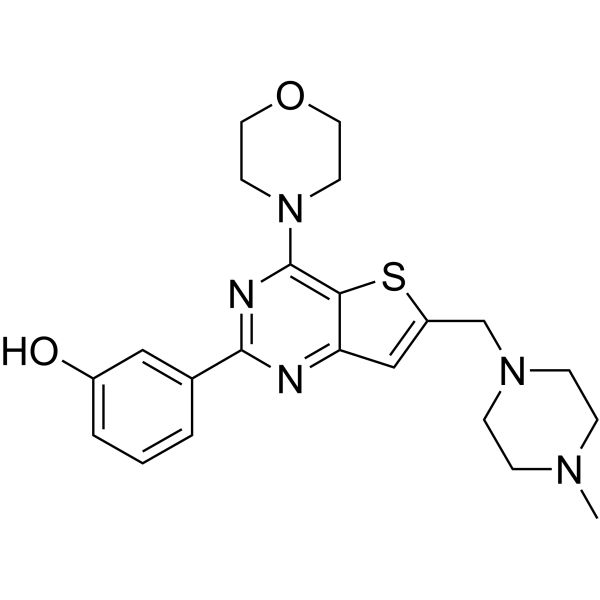
PI-540 is a bicyclic thienopyrimidine derivative and an orally active PI3K inhibitor. PI-540 has anti-cancer cell proliferation properties and high tissue distribution. PI-540 can inhibit different isoforms of PI3K, with IC50s of 10 nM (P110α), 3510 nM (P110β), 410 nM (P110δ), and 33110 nM (P110γ). PI-540 also inhibits mTOR (IC50: 61 nM) and DNA-PK (IC50: 525 nM) .
loading...
    loading...
Cat. No.: HY-B2106C
CAS No.: 2765321-63-7
Research Areas:  

Others

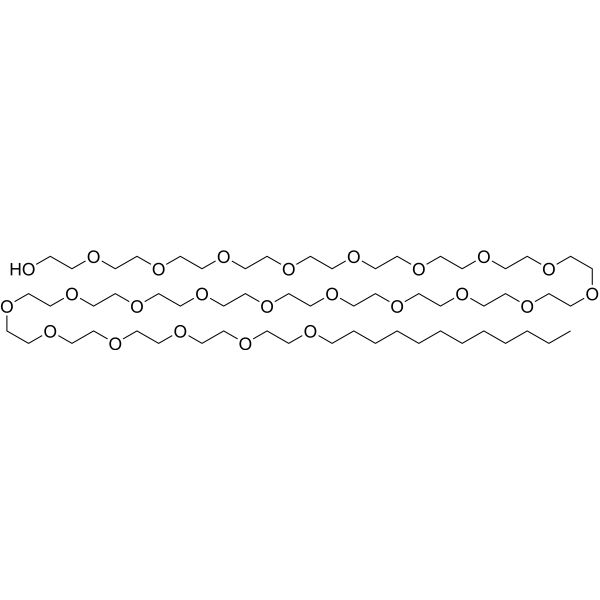
PEG 23 lauryl ether can be used as an excipient. Pharmaceutical excipients, or pharmaceutical auxiliaries, refer to other chemical substances used in the pharmaceutical process other than pharmaceutical ingredients. Pharmaceutical excipients generally refer to inactive ingredients in pharmaceutical preparations, which can improve the stability, solubility and processability of pharmaceutical preparations. Pharmaceutical excipients also affect the absorption, distribution, metabolism, and elimination (ADME) processes of co-administered drugs .
loading...
    loading...
Cat. No.: HY-W127624D
CAS No.: 13149-83-2
Research Areas:  

Others

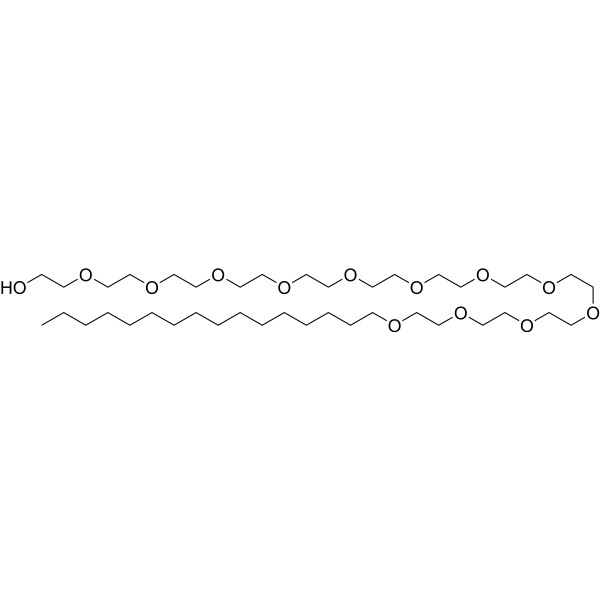
PEG 12 cetostearyl ether can be used as an excipient. Pharmaceutical excipients, or pharmaceutical auxiliaries, refer to other chemical substances used in the pharmaceutical process other than pharmaceutical ingredients. Pharmaceutical excipients generally refer to inactive ingredients in pharmaceutical preparations, which can improve the stability, solubility and processability of pharmaceutical preparations. Pharmaceutical excipients also affect the absorption, distribution, metabolism, and elimination (ADME) processes of co-administered drugs .
loading...
    loading...

