
95 Results for "

surface polymerization

" in MedChemExpress (MCE) Product Catalog:
Products (95)

95 Results for "surface polymerization" in MCE Product Catalog:

Cat. No.: HY-155933
CAS No.: 474922-90-2
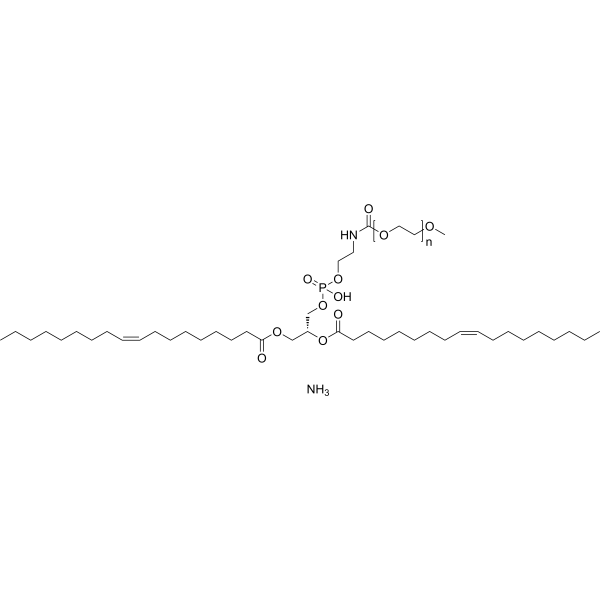
Synonyms: DOPE-PEG3000 ammonium; 1,2-Dioleoyl-sn-glycero-3-phosphoethanolamine-N-[methoxy(polyethylene glycol)-3000] ammonium
Target:  

Liposome

Research Areas:  

Others

18:1 PEG3000 PE ammonium (DOPE-PEG3000 ammonium) is a PEG lipid functional end group used in the synthesis of liposomes (LPs) for the design of conjugated polymer nanoparticles. Through biotin modification and carboxyl terminus, lipid nanoparticles (LNPs) further coupling with other biomolecules can be achieved. Functionalized nanoparticles can be used for targeted labeling of specific cellular proteins. With streptavidin as a linker, biotinylated PEG lipid-conjugated polymer nanoparticles are able to bind to biotinylated antibodies on cell surface receptors, yielding the utility of fluorescence-based imaging and sensing.
loading...
    loading...
Cat. No.: HY-P5552
CAS No.: 709611-59-6
Target:  

Bacterial Fungal

Research Areas:  

Infection

Melimine is an antimicrobial peptide with broad-spectrum antimicrobial activity against Gram-negative/Gram-positive bacteria, fungi and protozoa. Melimine neutralizes endotoxin activity by interacting with the phosphate groups of lipid A, depolarizes and permeabilizes the cytoplasmic membrane of *Pseudomonas aeruginosa*, and induces bacterial lysis. Melimine exerts additive antiviral effects against H1N1 and MHV-1 when used in combination with RK610. Melimine retains its antimicrobial activity when conjugated to polymer and titanium surfaces. Melimine can be used in infection-related research .
loading...
    loading...
Cat. No.: HY-151744
CAS No.: 1993119-45-1
Target:  

ADC Linkers

Research Areas:  

Others

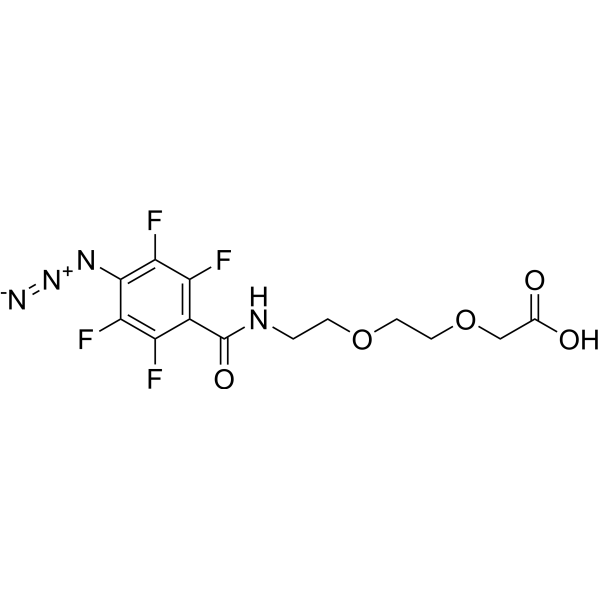
N3-TFBA-O2Oc is a click chemistry reagent containing an azide group and an aryl group. Aryl azides are well-known precursors of nitrenes and have been introduced by Fleet et al. as versatile photoaffinity labeling agents to probe biological receptors. This type of compounds has been used as photo-cross linker (λmax=258 nm) in estrogen receptor studies and for direct surface coating of carbon and organic based polymers . N3-TFBA-O2Oc is a click chemistry reagent, it contains an Azide group and can undergo copper-catalyzed azide-alkyne cycloaddition reaction (CuAAc) with molecules containing Alkyne groups. It can also undergo strain-promoted alkyne-azide cycloaddition (SPAAC) reactions with molecules containing DBCO or BCN groups.
loading...
    loading...
Cat. No.: HY-W016174S
CAS No.: 180802-01-1
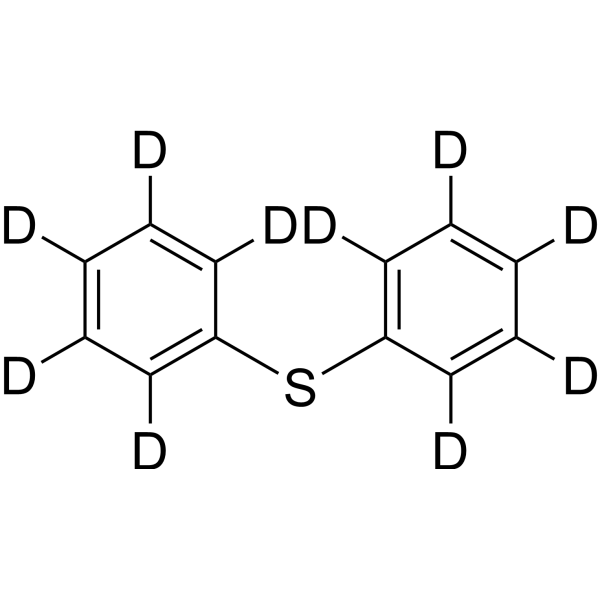
Diphenyl sulfide-d1 is the d1-labeled Diphenyl sulfide (HY-W016174). Diphenyl sulfide is an additive for organic photovoltaic devices. Diphenyl sulfide modulates vertical composition distribution of PTB7-Th:PC71BM photoactive layers, promoting enrichment of PTB7-Th at the upper surface and PC71BM at the bottom. Diphenyl sulfide promotes ordered molecular packing and crystallinity of PTB7-Th:PC71BM photoactive layers, including more compact π−π stacking of PTB7-Th. Diphenyl sulfide improves exciton dissociation, charge transport, and charge collection in PTB7-Th:PC71BM-based inverted polymer solar cells. Diphenyl sulfide acts as a solvent additive to improve the photovoltaic performance of inverted organic photovoltaic devices .
loading...
    loading...
Cat. No.: HY-B0426AR
CAS No.: 140462-76-6
Synonyms: ALO4943A (Standard); KW4679 (Standard)
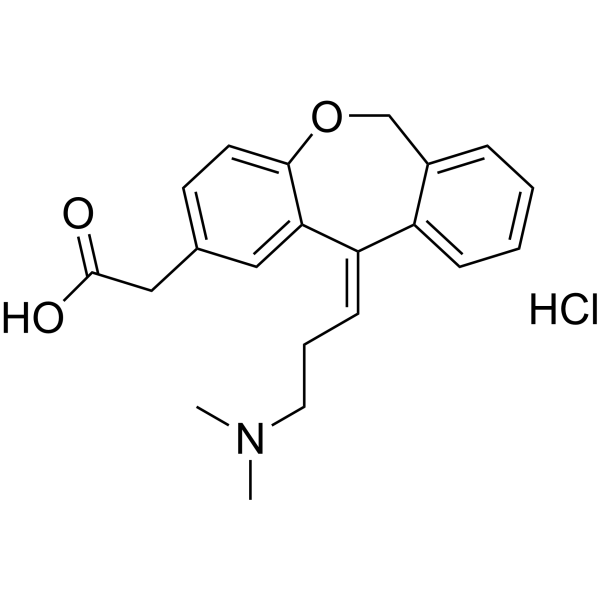
Olopatadine (hydrochloride) (Standard) is the analytical standard of Olopatadine (hydrochloride). This product is intended for research and analytical applications. Olopatadine hydrochloride (ALO4943A; KW4679) is an orally active histamine H1 receptor antagonist and mast cell stabilizer. Olopatadine hydrochloride exerts antiallergic effects by blocking histamine H1 receptor-mediated activities. Olopatadine hydrochloride inhibits exocytosis, chemokine release, F-actin polymerization, CXCL10-induced calcium influx, and T cell chemotactic activity. Olopatadine hydrochloride also reduces the expression levels of CXCR3 on the surface of CD4 + and CD8 + T cells. Olopatadine hydrochloride inhibits scratching behavior, improves dermatitis scores, and suppresses intraepidermal neurite outgrowth. Olopatadine hydrochloride simultaneously decreases the levels of inflammatory markers, growth factors, histamine, and specific IgE, while increasing the expression of ErbB3A/HER3A. Olopatadine hydrochloride can be used in research related to seasonal pollinosis, chronic rhinitis, urticaria, allergic conjunctivitis, alopecia areata, and atopic dermatitis .
loading...
    loading...
Cat. No.: HY-B0426AS
CAS No.: 1331635-21-2
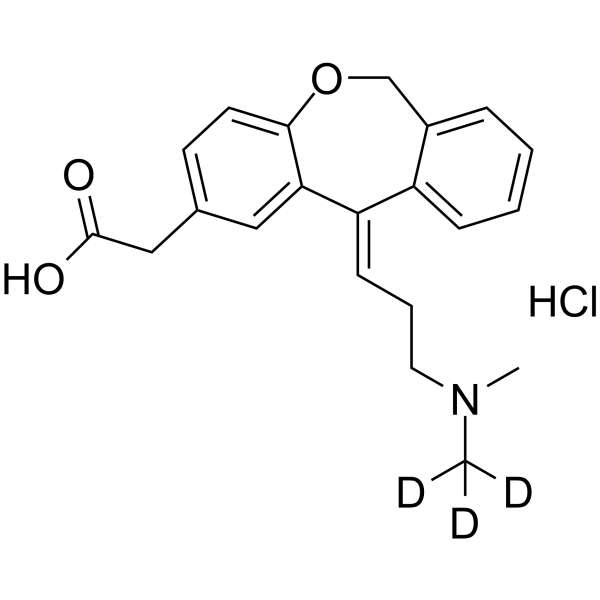
Olopatadine-d3 hydrochloride (ALO4943A-d3) is the deuterium labeled Olopatadine hydrochloride. Olopatadine hydrochloride (ALO4943A; KW4679) is an orally active histamine H1 receptor antagonist and mast cell stabilizer. Olopatadine hydrochloride exerts antiallergic effects by blocking histamine H1 receptor-mediated activities. Olopatadine hydrochloride inhibits exocytosis, chemokine release, F-actin polymerization, CXCL10-induced calcium influx, and T cell chemotactic activity. Olopatadine hydrochloride also reduces the expression levels of CXCR3 on the surface of CD4 + and CD8 + T cells. Olopatadine hydrochloride inhibits scratching behavior, improves dermatitis scores, and suppresses intraepidermal neurite outgrowth. Olopatadine hydrochloride simultaneously decreases the levels of inflammatory markers, growth factors, histamine, and specific IgE, while increasing the expression of ErbB3A/HER3A. Olopatadine hydrochloride can be used in research related to seasonal pollinosis, chronic rhinitis, urticaria, allergic conjunctivitis, alopecia areata, and atopic dermatitis .
loading...
    loading...
Cat. No.: HY-W440952
Research Areas:  

Others

Stearic acid-PEG5000-Mal enables surface modification of various substrate through reaction between hydroxyl and ethoxyl silane. The polymer can be used for click chemistry with alkyne containing molecule.
loading...
    loading...
Cat. No.: HY-W440950
Target:  

Liposome

Research Areas:  

Others

Stearic acid-PEG2000-Mal enables surface modification of various substrate through reaction between hydroxyl and ethoxyl silane. The polymer can be used for click chemistry with alkyne containing molecule.
loading...
    loading...
Cat. No.: HY-168940C
CAS No.: 139729-28-5
NH2-PEG10000-COOH is a compound composed of an NH2 group, PEG units (MW = 10000) and a carboxyl group (-COOH) . NH2-PEG-COOH is widely used for surface modification and functionalization of polymer carriers or nanoparticles .
loading...
    loading...
Cat. No.: HY-168940I
CAS No.: 139729-28-5
NH2-PEG20000-COOH is a compound composed of an NH2 group, PEG units (MW = 20000) and a carboxyl group (-COOH) . NH2-PEG-COOH is widely used for surface modification and functionalization of polymer carriers or nanoparticles .
loading...
    loading...
Cat. No.: HY-147207C
Target:  

Liposome

Research Areas:  

Others

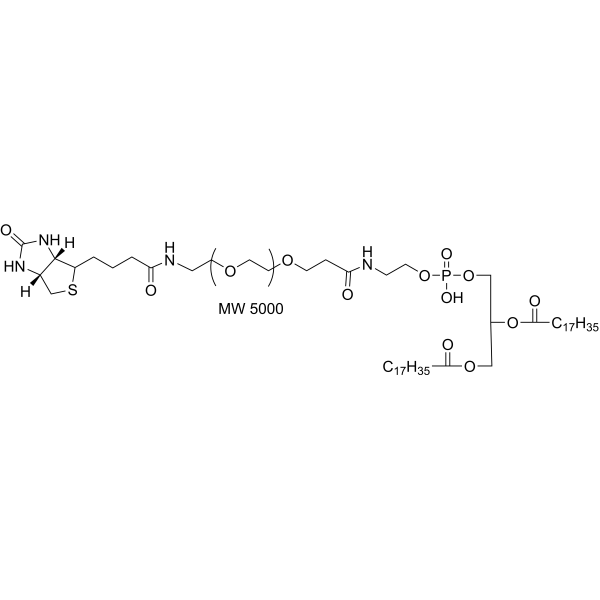
Phospholipid-PEG5000-Biotin is a phospholipid PEG derivative, can be used for modify liposome and cells surface, and pancreatic islets for cell transplantation. Phospholipid is a class of lipid containing a hydrophilic “head” and two hydrophobic “tails”; PEG is a hydrophilic and water-soluble polymer with low toxicity; Biotin is an enzyme co-factor, can be used for labeling protein .
loading...
    loading...
Cat. No.: HY-147207A
Target:  

Liposome

Research Areas:  

Others

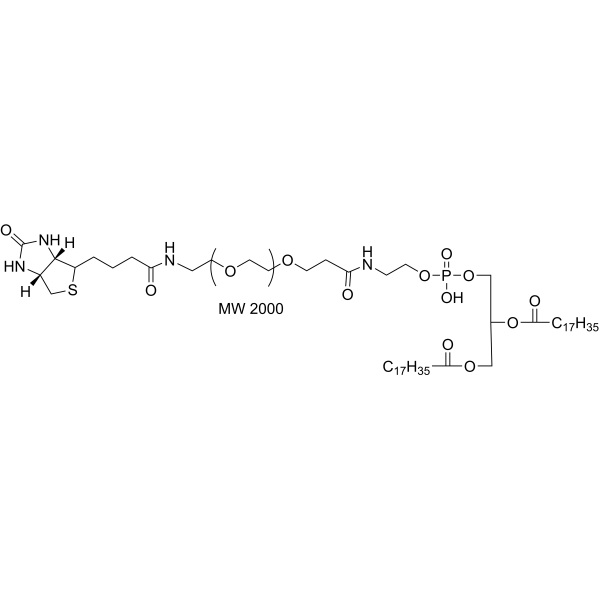
Phospholipid-PEG2000-Biotin is a Biotin labeled phospholipid PEG derivative, can be used for modify liposome and cells surface, and pancreatic islets for cell transplantation. Phospholipid is a class of lipid containing a hydrophilic "head" and two hydrophobic "tails" ; PEG is a hydrophilic and water-soluble polymer with low toxicity; Biotin is an enzyme co-factor, can be used for labeling protein .
loading...
    loading...
Cat. No.: HY-B0426AS2
Synonyms: ALO4943A-d6 hydrochloride; KW4679-d6 hydrochloride
Olopatadine-d6 (ALO4943A-d6; KW4679-d6) hydrochloride is deuterium-labeled Olopatadine (hydrochloride) (HY-B0426A). Olopatadine hydrochloride (ALO4943A; KW4679) is an orally active histamine H1 receptor antagonist and mast cell stabilizer. Olopatadine hydrochloride exerts antiallergic effects by blocking histamine H1 receptor-mediated activities. Olopatadine hydrochloride inhibits exocytosis, chemokine release, F-actin polymerization, CXCL10-induced calcium influx, and T cell chemotactic activity. Olopatadine hydrochloride also reduces the expression levels of CXCR3 on the surface of CD4 + and CD8 + T cells. Olopatadine hydrochloride inhibits scratching behavior, improves dermatitis scores, and suppresses intraepidermal neurite outgrowth. Olopatadine hydrochloride simultaneously decreases the levels of inflammatory markers, growth factors, histamine, and specific IgE, while increasing the expression of ErbB3A/HER3A. Olopatadine hydrochloride can be used in research related to seasonal pollinosis, chronic rhinitis, urticaria, allergic conjunctivitis, alopecia areata, and atopic dermatitis .
loading...
    loading...
Cat. No.: HY-117007
CAS No.: 106-91-2
Research Areas:  

Others

Glycidyl methacrylate is a bifunctional monomer containing both a polymerizable methacrylate double bond and a reactive epoxy group. Glycidyl methacrylate can be introduced into polymer backbones via free radical polymerization, and its epoxy group undergoes ring-opening reactions with nucleophilic groups such as amines, carboxylic acids and thiols, thus being used for the preparation of functional polymers, surface-grafted materials and crosslinkable biomaterials. Glycidyl methacrylate is applicable to research related to polymer chemistry, biomaterials, surface modification and drug delivery materials .
loading...
    loading...
Cat. No.: HY-W268106
CAS No.: 6874-60-8
Research Areas:  

Others

Decylphosphonic acid is a metal oxide surface modifier and corrosion inhibitor. Decylphosphonic acid is promising for research of metal protection, anti-corrosion coatings, and emulsion polymerization .
loading...
    loading...
Cat. No.: HY-186069
CAS No.: 532931-48-9
Research Areas:  

Others

NHS-Phosphine is an amine-reactive compound that can be used to derivatize primary amines of proteins or amine-coated polymer surfaces for ligation to azide-tagged molecules .
loading...
    loading...
Cat. No.: HY-184640
Carboxylated magnetic microspheres are magnetic microspheres with abundant carboxyl functional groups on their surface. They are usually composed of superparamagnetic materials (such as Fe3O4) and polymer materials, with polystyrene microspheres as the core.
loading...
    loading...
Cat. No.: HY-W440949
Research Areas:  

Others

Stearic acid-PEG1000-Mal enables surface modification of various substrate through reaction between hydroxyl and ethoxyl silane. The polymer can be used for click chemistry with alkyne containing molecule.
loading...
    loading...
Cat. No.: HY-W440951
Research Areas:  

Others

Stearic acid-PEG3400-Mal enables surface modification of various substrate through reaction between hydroxyl and ethoxyl silane. The polymer can be used for click chemistry with alkyne containing molecule.
loading...
    loading...
Cat. No.: HY-184856
CAS No.: 25232-41-1
Research Areas:  

Others

Poly(4-vinylpyridine) is a pyridine-functionalized polymer with pH responsiveness. Poly(4-vinylpyridine) is widely used in fields such as catalysis, water treatment and surface modification. Poly(4-vinylpyridine) serves as a pH-sensitive polymer shell in Au@p4VP core@shell nanocomposites, endowing them with biocompatibility .
loading...
    loading...

