920 Results for "

Oral Bioavailability

" in MedChemExpress (MCE) Product Catalog:
Products (920)

920 Results for "Oral Bioavailability" in MCE Product Catalog:

Cat. No.: HY-13238R
CAS No.: 1051375-16-6
Synonyms: S/GSK1349572 (Standard)
Research Areas:  

Infection

Dolutegravir (Standard) is the analytical standard of Dolutegravir. This product is intended for research and analytical applications. Dolutegravir (S/GSK1349572) is a highly potent and orally bioavailable HIV integrase strand transfer inhibitor with an IC50 of 2.7 nM for HIV-1 integrase-catalyzed strand transfer. Dolutegravir (S/GSK1349572) inhibits HIV-1 viral replication with an IC50 of 0.51 nM in peripheral blood mononuclear cells. Dolutegravir retains a high potency against the HIV-1 Y143R, N155H, and G140S/Q148H mutants (EC50=3.6-5.8 nM) .
loading...
    loading...
Cat. No.: HY-B0531R
CAS No.: 322-79-2
Triflusal (Standard) is the analytical standard of Triflusal (HY-B0531). This product is intended for research and analytical applications. Triflusal is an orally bioavailable, blood-brain barrier-permeable dual Cyclooxygenase-1 (COX-1)/cAMP phosphodiesterase inhibitor. Triflusal inhibits platelet aggregation, NF-κB activation, iNOS activity, and prostaglandin synthesis in ischaemic tissue. Triflusal stimulates neutrophil nitric oxide production, eNOS protein expression, and cNOS activity. Triflusal alleviates cerebral ischemic injury in rats and ameliorates pathological lesions and related gene expression in transgenic Alzheimer’s disease models. Triflusal can be used for the research of thromboembolic/ischemic cardiovascular and cerebrovascular diseases, and Alzheimer’s disease .
loading...
    loading...
Cat. No.: HY-184290
CAS No.: 3062852-59-6
Research Areas:  

Neurological Disease Cancer

PRMT5-IN-56 is a PRMT5⋅MTA complex inhibitor with an IC50 of 0.2 nM, oral activity, and blood-brain barrier penetration. PRMT5-IN-56 inhibits PRMT5 methyltransferase activity in an MTA-cooperative manner, suppresses symmetrical dimethylarginine levels in MTAP-deficient cells. PRMT5-IN-56 suppresses proliferation of MTAP-deleted cancer cells with high selectivity over MTAP-wild type cells. PRMT5-IN-56 induces dose-dependent tumor growth inhibition in subcutaneous xenograft models, inhibits intracranial tumor progression, and prolongs survival in orthotopic brain xenograft models. PRMT5-IN-56 exhibits high intrinsic permeability, good oral bioavailability, and a high brain-to-plasma ratio. PRMT5-IN-56 can be used for the research of MTAP-deleted cancers and glioblastoma .
loading...
    loading...
Cat. No.: HY-100014R
CAS No.: 1905481-36-8
Research Areas:  

Cancer

KDM5A-IN-1 (Standard) is the analytical standard of KDM5A-IN-1 (HY-100014). This product is intended for research and analytical applications. KDM5A-IN-1 is a potent, orally bioavailable pan-histone lysine demethylases 5 (KDM5) inhibitor with IC50s of 45 nM, 56 nM and 55 nM for KDM5A, KDM5B and KDM5C, respectively, and with an EC50 value of 960 nM for PC9 H3K4Me3. KDM5A-IN-1 is significantly less potent against other KDM5B enzymes (1A, 2B, 3B, 4C, 6A, 7B) .
loading...
    loading...
Cat. No.: HY-10847BR
CAS No.: 215804-67-4
Synonyms: SB-277011A hydrochloride (Standard)
SB-277011 hydrochloride (Standard) is the analytical standard of SB-277011 (hydrochloride) (HY-10847B). This product is intended for research and analytical applications. SB-277011 hydrochloride (SB-277011A hydrochloride) is a potent, selective, orally bioavailable and brain penetrate dopamine D3 receptor (D3R) antagonist with Ki values of 10.7 nM and 11.2 nM at rodent and human D3R, respectively. SB-277011 hydrochloride displays 80- to 100-fold selectivity over other dopamine receptors with pKis of 8.0, 6.0, <5.2, and 5.9 for D3, D2, 5-HT1B, and 5-HT1D receptors, respectively .
loading...
    loading...
Cat. No.: HY-119202
CAS No.: 357263-14-0
Synonyms: (S)-BMS-806
Target:  

HIV

Research Areas:  

Infection

(S)-BMS-378806 ((S)-BMS-806) is an orally bioavailable HIV-1 inhibitor with activity against gp120-CD4 interactions. (S)-BMS-378806 exhibits micromolar inhibition of HIV-1 gp120-CD4 binding. The design and synthesis of (S)-BMS-378806 was based on a comprehensive study of protein-ligand interactions, which guided the identification and design of novel symmetrical N,N'-disubstituted aminoureas and thioureas. (S)-BMS-378806, synthesized in aqueous media using microwave irradiation, was validated for its inhibitory activity in HIV-1 gp120-CD4 capture ELISA .
loading...
    loading...
Cat. No.: HY-13270R
CAS No.: 141430-65-1
Synonyms: E7010 (Standard)
ABT-751 (Standard) is the analytical standard of ABT-751. This product is intended for research and analytical applications. ABT-751 (E7010) is a novel, highly orally bioavailable sulfonamides antimitotic compound and tubulin binder. It prevents tubulin aggregation by binding to the colchicine site on β-tubulin, leading to cell cycle arrest in G2/M phase and inducing apoptosis, thus effectively preventing cell division. ABT-751 induces autophagy by inhibiting the AKT/MTOR signaling pathway. ABT-751 showed significant inhibition against various types of cancer cells, including lung, gastric, colon, and breast cancer .
loading...
    loading...
Cat. No.: HY-13342AS
CAS No.: 2468771-43-7
Purity:  92.56%
Synonyms: YN968D1-d8 free base
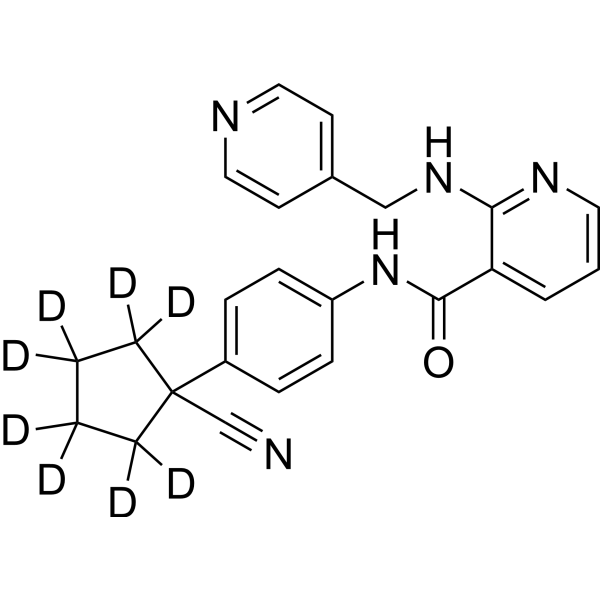
Apatinib-d8 (free base) is the deuterium labeled Apatinib free base . Apatinib free base (YN968D1 free base) is an orally bioavailable tyrosine kinase inhibitor, which selectively targets VEGFR-2 (IC50=1 nM). Apatinib free base (YN968D1 free base) is an anti-angiogenic drug for the research of advanced or metastatic gastric cancer. Apatinib free base (YN968D1 free base) potently inhibits Ret, c-Kit and c-Src with IC50s of 13, 429 and 530 nM, respectively. It also inhibits cellular phosphorylation of VEGFR-2, c-kit and PDGFRβ .
loading...
    loading...
Cat. No.: HY-164049
CAS No.: 2490544-50-6
Research Areas:  

Inflammation/Immunology

TG8-260 is a second-generation EP2 antagonist developed to alleviate the pathology of central nervous system and peripheral diseases driven by inflammation. TG8-260 can reduce neuroinflammation and gliosis in the hippocampus of rats after pilocarpine-induced persistent epileptic status. Pharmacokinetic data of TG8-260 showed that its plasma half-life was 2.14 hours and its oral bioavailability was 77.3%. TG8-260 is also a potent inhibitor of CYP450 and shows antagonistic activity in inhibiting EP2 receptor-mediated inflammatory gene expression in BV2-hEP2 microglia, which is suitable for studying anti-inflammatory pathways in animal models of peripheral inflammatory diseases .
loading...
    loading...
Cat. No.: HY-16622A
CAS No.: 1005407-76-0
Target:  

LPL Receptor

Research Areas:  

Others

GSK1842799, an alkyl-substituted biaryl amino alcohol, is a selective S1P1 modulator developed for multiple sclerosis (MS). Upon phosphorylation, GSK1842799-P exhibited subnanomolar S1P1 agonist activity with over 1000-fold selectivity over S1P3. The compound showed good oral bioavailability, rapid in vivo conversion to GSK1842799-P, and significant lymphocyte count reduction at 0.1 mg/kg. It matched FTY720 efficacy at 3 mg/kg in the mouse EAE model and achieved comparable plasma levels to FTY-720 phosphate in cynomolgus monkeys. With favorable ADME, PK/PD properties, and toxicology, GSK1842799 advanced to further clinical development .
loading...
    loading...
Cat. No.: HY-168715
CAS No.: 2894017-46-8
Research Areas:  

Cancer

SHP2-IN-33 (Compound D13) is an allosteric inhibitor of SHP2 with an IC50 of 1.2 μM. In cellular studies, SHP2-IN-33 demonstrates antiproliferative activity with an IC50 of 38 μM against Huh7 cells by arresting the G0/G1 cell cycle, promoting apoptosis (Apoptosis), and suppressing the MAPK signaling pathway. In an in vivo Huh7 xenograft mouse model, SHP2-IN-33 exhibits significant antitumor activity and favorable pharmacokinetics, including 54% oral bioavailability and a half-life of 10.57 hours. SHP2-IN-33 is a promising compound for studying tumor diseases associated with SHP2 .
loading...
    loading...
Cat. No.: HY-184414
Research Areas:  

Cancer

BMS-135-L-Lys is a dual-cation prodrug derived from CK2 inhibitor BMS-135 (HY-181022) through esterification with L-lysine using a secondary alcohol. BMS-135-L-Lys achieves enhanced solubility by maintaining protonation of the ε-amino group of the Lys side chain at intestinal pH. BMS-135-L-Lys is released in situ by intestinal wall esterase from the parent drug, significantly increasing the oral bioavailability of the parent drug and overcoming the non-linear pharmacokinetic problem when the dose of the parent drug is increased. BMS-135-L-Lys can be used in related research on colon cancer and lung cancer .
loading...
    loading...
Cat. No.: HY-184414A
Research Areas:  

Cancer

BMS-135-L-Lys TFA is a dual-cation prodrug derived from CK2 inhibitor BMS-135 (HY-181022) through esterification with L-lysine using a secondary alcohol. BMS-135-L-Lys TFA achieves enhanced solubility by maintaining protonation of the ε-amino group of the Lys side chain at intestinal pH. BMS-135-L-Lys TFA is released in situ by intestinal wall esterase from the parent drug, significantly increasing the oral bioavailability of the parent drug and overcoming the non-linear pharmacokinetic problem when the dose of the parent drug is increased. BMS-135-L-Lys TFA can be used in related research on colon cancer and lung cancer .
loading...
    loading...
Cat. No.: HY-184414B
Research Areas:  

Cancer

BMS-135-L-Lys dihydrochloride is a dual-cation prodrug derived from CK2 inhibitor BMS-135 (HY-181022) through esterification with L-lysine using a secondary alcohol. BMS-135-L-Lys dihydrochloride achieves enhanced solubility by maintaining protonation of the ε-amino group of the Lys side chain at intestinal pH. BMS-135-L-Lys dihydrochloride is released in situ by intestinal wall esterase from the parent drug, significantly increasing the oral bioavailability of the parent drug and overcoming the non-linear pharmacokinetic problem when the dose of the parent drug is increased. BMS-135-L-Lys dihydrochloride can be used in related research on colon cancer and lung cancer .
loading...
    loading...
Cat. No.: HY-188081
CAS No.: 3112733-78-2
Research Areas:  

Cancer

YH-36400 is an orally bioavailable inhibitor of HIF-1α and HIF-2α. YH-36400 disrupts the dimerization of HIF-1α and HIF-1β and triggers proteasomal degradation, thereby inhibiting the transcriptional activities of HIF-1 and HIF-2. YH-36400 reduces the expression of PD-L1 and CD73, reprograms the tumor immune microenvironment, inhibits angiogenesis, and can be used in combination with immune checkpoint blockade therapy. YH-36400 is applicable to research related to breast cancer, lung cancer, melanoma, pancreatic cancer, colorectal cancer, prostate cancer, and head and neck squamous cell carcinoma .
loading...
    loading...
Cat. No.: HY-B0197AR
CAS No.: 143388-64-1
Synonyms: GR-85548A hydrochloride (Standard)
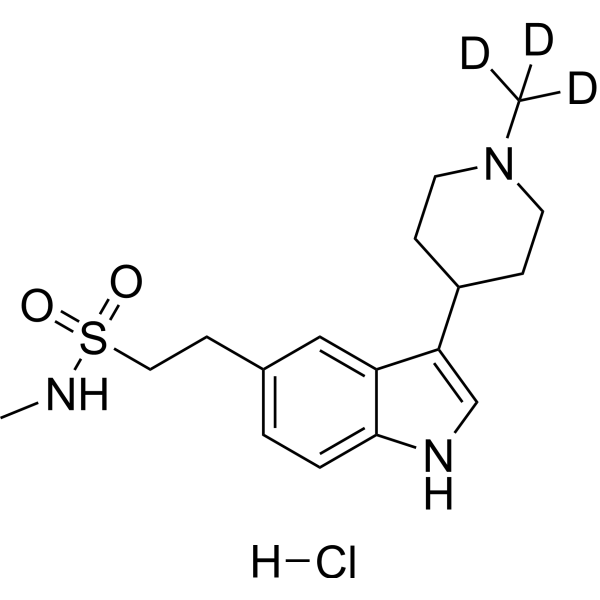
Naratriptan (GR-85548A) hydrochloride (Standard) is the analytical standard of Naratriptan hydrochloride (HY-B0197A). This product is intended for research and analytical applications. Naratriptan is a selective 5-HT1B/1D receptor agonist. Naratriptan is peripherally active and has good oral bioavailability, inducing cranial artery vasoconstriction by activating 5-HT1B/1D receptors (EC50=0.11 μM for dog basilar artery). Naratriptan also inhibits trigeminal nerve-mediated dural neurogenic plasma extravasation and reduces sterile inflammation. Naratriptan is mainly used in the research of acute migraine, targeting cranial vascular and neuroinflammatory mechanisms .
loading...
    loading...
Cat. No.: HY-B0197AS
CAS No.: 1190021-64-7
Synonyms: GR-85548A d3
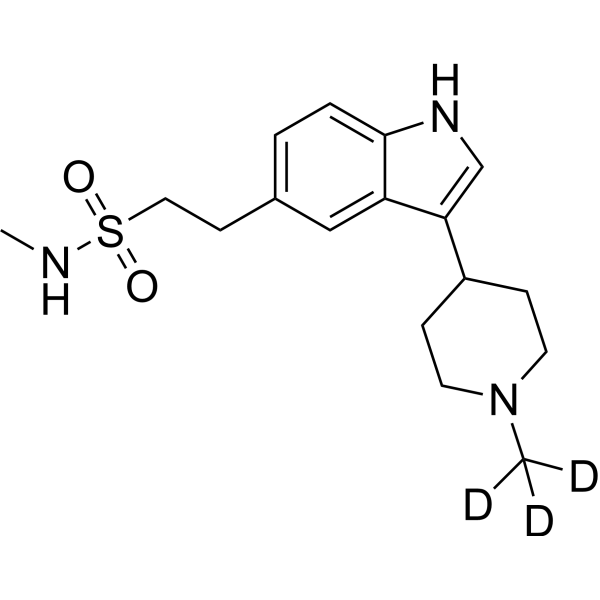
Naratriptan-d3 (GR-85548A-d3) is the deuterium labeled Naratriptan hydrochloride (HY-B0197A). Naratriptan hydrochloride is a selective 5-HT1B/1D receptor agonist. Naratriptan hydrochloride is peripherally active and has good oral bioavailability, inducing cranial artery vasoconstriction by activating 5-HT1B/1D receptors (EC50=0.11 μM for dog basilar artery). Naratriptan hydrochloride also inhibits trigeminal nerve-mediated dural neurogenic plasma extravasation and reduces sterile inflammation. Naratriptan hydrochloride is mainly used in the research of acute migraine, targeting cranial vascular and neuroinflammatory mechanisms .
loading...
    loading...
Cat. No.: HY-B0197S
CAS No.: 1190043-69-6
Synonyms: GR-85548A-d3-1
Naratriptan-d3 (GR-85548A-d3) is the deuterium labeled Naratriptan (HY-B0197). Naratriptan is a selective 5-HT1B/1D receptor agonist. Naratriptan is peripherally active and has good oral bioavailability, inducing cranial artery vasoconstriction by activating 5-HT1B/1D receptors (EC50=0.11 μM for dog basilar artery). Naratriptan also inhibits trigeminal nerve-mediated dural neurogenic plasma extravasation and reduces sterile inflammation. Naratriptan is mainly used in the research of acute migraine, targeting cranial vascular and neuroinflammatory mechanisms .
loading...
    loading...
Cat. No.: HY-L0121V
10,000 compounds

Natural products are an attractive source with varied structures that exhibit potent biological activities, and desirable pharmacological profiles. The core scaffold of a natural product can also provide a biologically validated framework upon which to display diverse functional groups. Inspired by bioactive natural products, natural product-like compounds, occupying the same chemical space, are ideally suited to explore and to facilitate understanding of biological pathways.

MCE 10K Natural Product-like Compound Library consists of 10,000 natural product-like compounds. Each compound has scaffold of natural products or Tanimoto coefficient >0.6 with natural products. The natural-likeness scoring of these compounds is >-2. What’s more, compounds in the library are drug-like and readily available for re-supply, making it a powerful tool for new drug research and development. It can be widely applied in high-throughput screening (HTS) and high-content screening (HCS).

Cat. No.: HY-L905
4,813 compounds

Natural products are an attractive source with varied structures that exhibit potent biological activities, and desirable pharmacological profiles. The core scaffold of a natural product can also provide a biologically validated framework upon which to display diverse functional groups. Inspired by bioactive natural products, natural product-like compounds, occupying the same chemical space, are ideally suited to explore and to facilitate understanding of biological pathways.

MCE 5K Natural Product-like Compound Library consists of 4,813 natural product-like compounds. Each compound has scaffold of natural products or Tanimoto coefficient >0.6 with natural products. The natural-likeness scoring of these compounds is >-2. What’s more, compounds in the library are drug-like and readily available for re-supply, making it a powerful tool for new drug research and development. It can be widely applied in high-throughput screening (HTS) and high-content screening (HCS).

