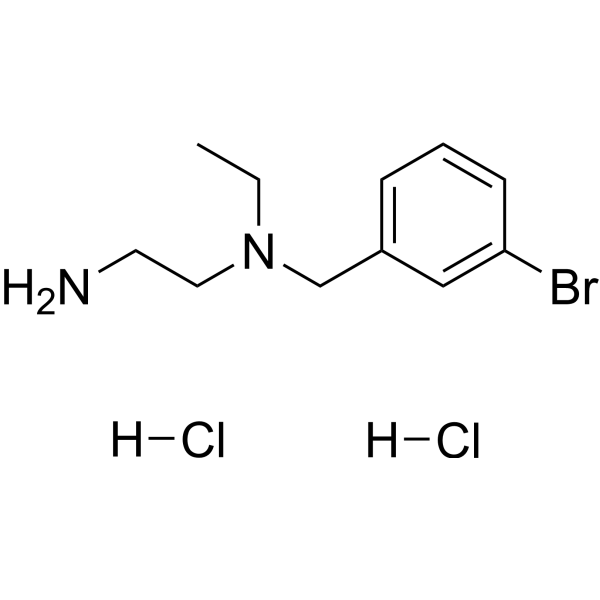
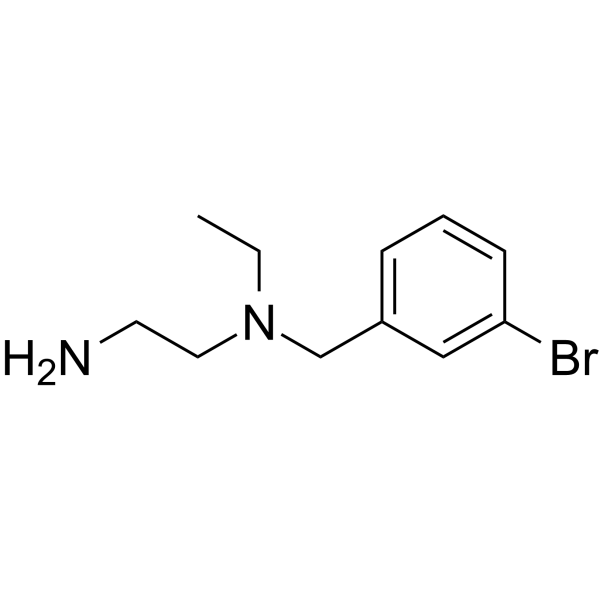

1. Search Result
Search Result
Results for "

retinal neurons

" in MedChemExpress (MCE) Product Catalog:

11

Inhibitors & Agonists

2

Biochemical Assay Reagents

2

Peptides

3

Natural
Products

Targets Recommended:
Cat. No. Product Name Target Research Areas Chemical Structure
  • HY-Y0669
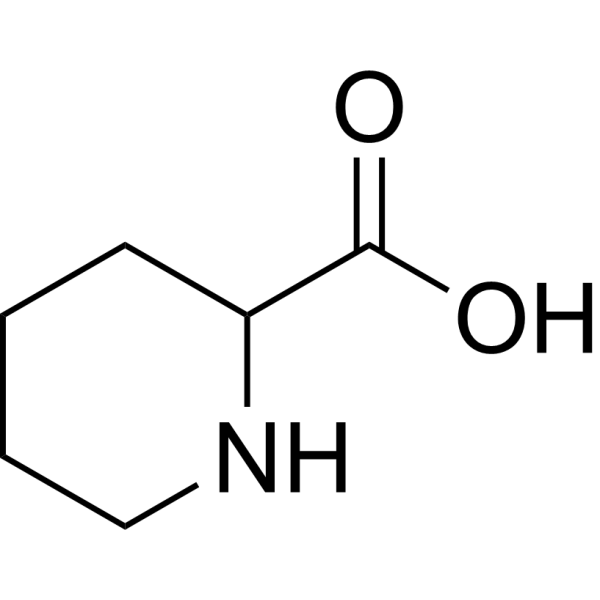
    Pipecolic acid
    2 Publications Verification

    Endogenous Metabolite YAP Glutathione Peroxidase Ferroptosis Neurological Disease Metabolic Disease Inflammation/Immunology
    Pipecolic acid is an orally bioavailable, blood-brain barrier-permeable metabolite of lysine with antioxidant, inhibitor, and inducer activity. Pipecolic acid modulates the YAP-GPX4 signaling pathway, reduces retinal vascular tube formation, and mitigates ferroptosis. Pipecolic acid potentiates voltage-sensitive Ca 2+ channel currents and induces neuronal apoptosis. Pipecolic acid can be used for the research of diabetic retinopathy .
    Pipecolic acid
  • HY-112624I

    Dextran 3; Dextran D3; Dextran T3(MW 2400-3600)

    Bacterial Others
    Dextran T3 (Dextran 3; Dextran T3(MW 2400-3600)) is a neural tracer and intestinal permeability probe that can move anterogradely and retrogradely in neuronal axons by passive diffusion. Dextran T3 (MW 3,000) is able to permeate across the intestinal epithelial cell membrane in the presence of cholera toxin-induced cytoskeletal disturbance. Dextran T3 (MW 3,000) is used as a fluorescent marker to rapidly label developing neurons (such as Xenopus retinal ganglion cells) and to assess intestinal barrier function. It can be used to study axonal transport in neuroanatomy and permeability changes in intestinal pathophysiology. The Dextran series of compounds are also natural polysaccharide drug carriers that can be connected to drugs through covalent bonding methods such as ester bonds, amide bonds or click chemistry, or self-assembled to form carriers such as nanoparticles and hydrogels. Dextran is biodegradable and biocompatible, and can achieve targeted delivery and controlled release of drugs. Dextran derivatives can prolong the half-life of drugs, increase local concentrations, and reduce the activity of immune clearance .
    Dextran T3 (MW 3,000)
  • HY-W040045
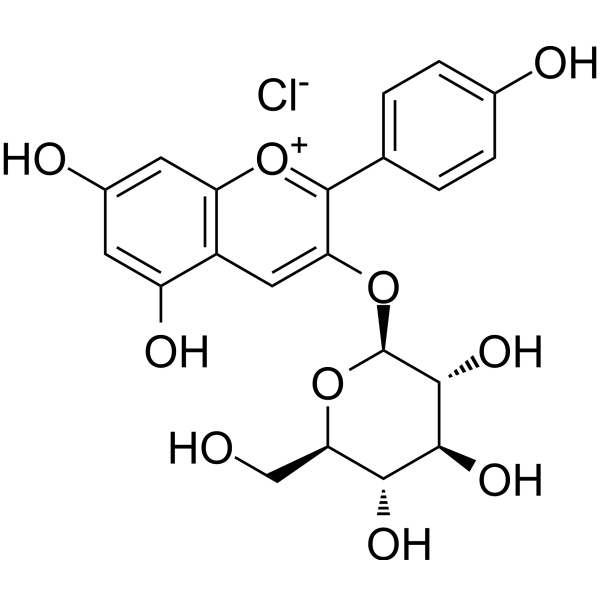
    Callistephin chloride
    1 Publications Verification

    Pelargonidin-3-O-glucoside chloride

    Reactive Oxygen Species (ROS) COX NO Synthase p38 MAPK TNF Receptor Apoptosis Neurological Disease Metabolic Disease Inflammation/Immunology Cancer
    Callistephin (Pelargonidin 3-O-glucoside) chloride is an anthocyanin. Callistephin chloride regulates the expression of inflammatory (reducing iNOS/TNF-α/COX-2) and apoptosis-related proteins by inhibiting p38 phosphorylation, and enhances the protective effect of Isoflurane (HY-A0134) on microglial cell damage. Callistephin chloride significantly reduces ROS levels, eliminates DPPH free radicals, protects retinal pigment epithelial cells, and inhibits lipid peroxidation. Callistephin chloride can alleviate glutamate excitotoxicity, reduce neuronal apoptosis, and protect cerebellar granule neurons. Callistephin chloride can inhibit the proliferation and metastasis of breast cancer cells by inducing apoptosis .
    Callistephin chloride
  • HY-139192
    Brophenexin
    3 Publications Verification

    NMDAR/TRPM4-IN-2

    iGluR TRP Channel ERK Neurological Disease
    Brophenexin (compound 8) is a potent NMDAR/TRPM4 interaction interface inhibitor. Brophenexin shows neuroprotective activity. Brophenexin prevents NMDA-induced cell death and mitochondrial dysfunction in hippocampal neurons, with an IC50 of 2.1 μM. Brophenexin protects mice from MCAO-induced brain damage and NMDA-induced retinal ganglion cell loss .
    Brophenexin
  • HY-P10019

    NLY01

    GCGR Neurological Disease Inflammation/Immunology
    Pegsebrenatide (NLY01) is a blood-brain barrier-penetrant GLP-1R agonist. Pegsebrenatide alleviates retinal inflammation and neuronal death secondary to ocular hypertension . Pegsebrenatide significantly delays onset and reduces disease severity in experimental autoimmune encephalomyelitis . Pegsebrenatide inhibits the formation of A1 reactive astrocytes in nerve cells and reduces the loss of retinal ganglion cells and dopaminergic neurons. Pegsebrenatide exerts neuroprotective effects in a mouse model of Parkinson's disease by directly preventing microglia-mediated conversion of astrocytes to the A1 neurotoxic phenotype. Pegsebrenatide can be used for research on glaucoma, Parkinson's disease, and multiple sclerosis .
    Pegsebrenatide
  • HY-139192A
    Brophenexin free base
    3 Publications Verification

    NMDAR/TRPM4-IN-2 free base

    iGluR TRP Channel ERK Neurological Disease
    Brophenexin free base (compound 8) is a potent NMDAR/TRPM4 interaction interface inhibitor. Brophenexin free base shows neuroprotective activity. Brophenexin free base prevents NMDA-induced cell death and mitochondrial dysfunction in hippocampal neurons, with an IC50 of 2.1 μM. Brophenexin free base protects mice from MCAO-induced brain damage and NMDA-induced retinal ganglion cell loss .
    Brophenexin free base
  • HY-W040045R

    Pelargonidin-3-O-glucoside chloride (Standard)

    Reference Standards Reactive Oxygen Species (ROS) COX NO Synthase p38 MAPK Apoptosis TNF Receptor Neurological Disease Inflammation/Immunology Cancer
    Callistephin (Pelargonidin 3-O-glucoside) chloride (Standard) is the analytical standard of Callistephin chloride (HY-W040045). This product is intended for research and analytical applications. Callistephin chloride is an anthocyanin. Callistephin chloride regulates the expression of inflammatory (reducing iNOS/TNF-α/COX-2) and apoptosis-related proteins by inhibiting p38 phosphorylation, and enhances the protective effect of Isoflurane (HY-A0134) on microglial cell damage. Callistephin chloride significantly reduces ROS levels, eliminates DPPH free radicals, protects retinal pigment epithelial cells, and inhibits lipid peroxidation. Callistephin chloride can alleviate glutamate excitotoxicity, reduce neuronal apoptosis, and protect cerebellar granule neurons. Callistephin chloride can inhibit the proliferation and metastasis of breast cancer cells by inducing apoptosis.
    Callistephin chloride (Standard)
  • HY-P11409

    Apoptosis Caspase Neurological Disease
    Prion Protein (118-135), human is the 118-135 fragment of human prion protein. Prion Protein (118-135), human induces Apoptosis. Prion Protein (118-135), human stimulates caspase-3 and -9 activities. Prion Protein (118-135), human is cytotoxic to retinal neurons. Prion Protein (118-135), human exerts neurotoxic effects .
    Prion Protein (118-135), human
  • HY-N18471

    5,7-DHP

    Monoamine Oxidase 5-HT Receptor Cardiovascular Disease Neurological Disease
    5,7-Dihydroxytryptamine (5,7-DHP) is an autofluorescent (λex≈365 nm), selective neurotoxin and a transport substrate for MAO-A and 5-HT. 5,7-Dihydroxytryptamine can specifically target and damage central and peripheral 5-HTergic neurons, while affecting 5-HT-related pathways and neurotransmitter balance. 5,7-Dihydroxytryptamine can be used to establish 5-HTergic neuron injury models for studies on neural development, neurodegenerative diseases, as well as mechanisms related to platelet function and retinal neurons .
    5,7-Dihydroxytryptamine
  • HY-N18471A

    5,7-DHP hydrobromide

    Monoamine Oxidase 5-HT Receptor Neurological Disease
    5,7-Dihydroxytryptamine (5,7-DHT) hydrobromide is an autofluorescent (Ex ≈ 365 nm), selective neurotoxin and a transport substrate for MAO-A and 5-HT. 5,7-Dihydroxytryptamine hydrobromide can specifically target and damage central and peripheral 5-HTergic neurons, while affecting 5-HT-related pathways and neurotransmitter balance. 5,7-Dihydroxytryptamine hydrobromide can be used to establish 5-HTergic neuron injury models for studies on neural development, neurodegenerative diseases, as well as mechanisms related to platelet function and retinal neurons .
    5,7-Dihydroxytryptamine hydrobromide
  • HY-N18471B

    5,7-DHP creatinine sulfate

    Monoamine Oxidase 5-HT Receptor Cardiovascular Disease Neurological Disease
    5,7-Dihydroxytryptamine creatinine sulfate (5,7-DHT) is an autofluorescent (Ex ≈ 365 nm), selective neurotoxin and a transport substrate for MAO-A and 5-HT. 5,7-Dihydroxytryptamine creatinine sulfate can specifically target and damage central and peripheral 5-HTergic neurons, while affecting 5-HT-related pathways and neurotransmitter balance. 5,7-Dihydroxytryptamine creatinine sulfate can be used to establish 5-HTergic neuron injury models for studies on neural development, neurodegenerative diseases, as well as mechanisms related to platelet function and retinal neurons .
    5,7-Dihydroxytryptamine creatinine sulfate

Inquiry Online

Your information is safe with us. * Required Fields.

Salutation


Country or Region *

Applicant Name *


Organization Name *

Department *


Email Address *


Product Name *

Cat. No.


Requested quantity *

Phone Number *


Remarks

Inquiry Online

Inquiry Information

Product Name:
Cat. No.:
Quantity:
MCE Japan Authorized Agent:

