From 11:00 pm to 12:00 pm EST ( 8:00 pm to 9:00 pm PST ) on January 6th, the website will be under maintenance. We are sorry for the inconvenience. Please arrange your schedule properly.
N3-C3-NHS ester is a noncleavable ADC linker used in the synthesis of antibody-drug conjugates (ADCs). N3-C3-NHS ester is a click chemistry reagent, it contains an Azide group and can undergo copper-catalyzed azide-alkyne cycloaddition reaction (CuAAc) with molecules containing Alkyne groups. It can also undergo strain-promoted alkyne-azide cycloaddition (SPAAC) reactions with molecules containing DBCO or BCN groups.
N3-PEG4-C2-NH2 (PROTAC Linker 20) is a PEG-based PROTAC linker can be used in the synthesis of PROTACs . N3-PEG4-C2-NH2 is a click chemistry reagent, it contains an Azide group and can undergo copper-catalyzed azide-alkyne cycloaddition reaction (CuAAc) with molecules containing Alkyne groups. It can also undergo strain-promoted alkyne-azide cycloaddition (SPAAC) reactions with molecules containing DBCO or BCN groups.
N3-C5-NHS ester is a noncleavable ADC linker used in the synthesis of antibody-drug conjugates (ADCs). N3-C5-NHS ester is a click chemistry reagent, it contains an Azide group and can undergo copper-catalyzed azide-alkyne cycloaddition reaction (CuAAc) with molecules containing Alkyne groups. It can also undergo strain-promoted alkyne-azide cycloaddition (SPAAC) reactions with molecules containing DBCO or BCN groups.
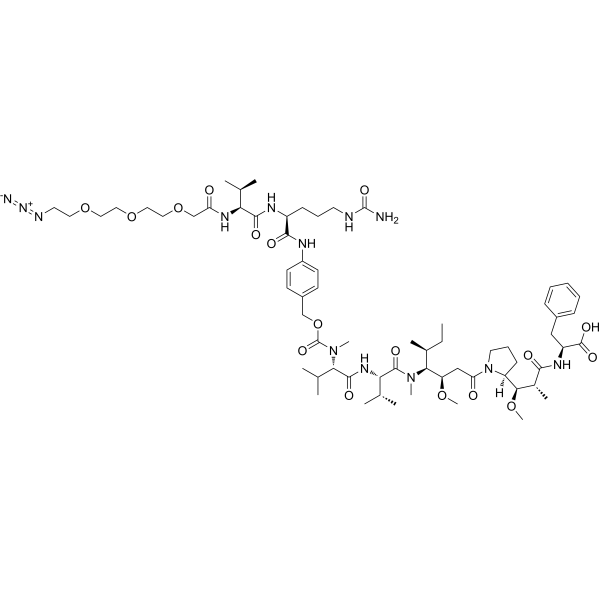
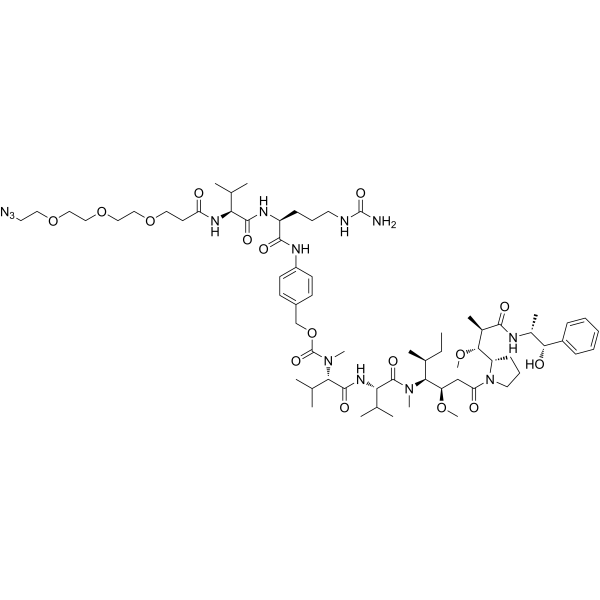
N3-PEG3-vc-PAB-MMAE is a synthesized agent-linker conjugate for ADC that incorporates the MMAE (a tubulin inhibitor ) and 3-unit PEG linker. N3-PEG3-vc-PAB-MMAE shows potent antitumor activity. N3-PEG3-vc-PAB-MMAE is a click chemistry reagent, it contains an Azide group and can undergo copper-catalyzed azide-alkyne cycloaddition reaction (CuAAc) with molecules containing Alkyne groups. It can also undergo strain-promoted alkyne-azide cycloaddition (SPAAC) reactions with molecules containing DBCO or BCN groups.
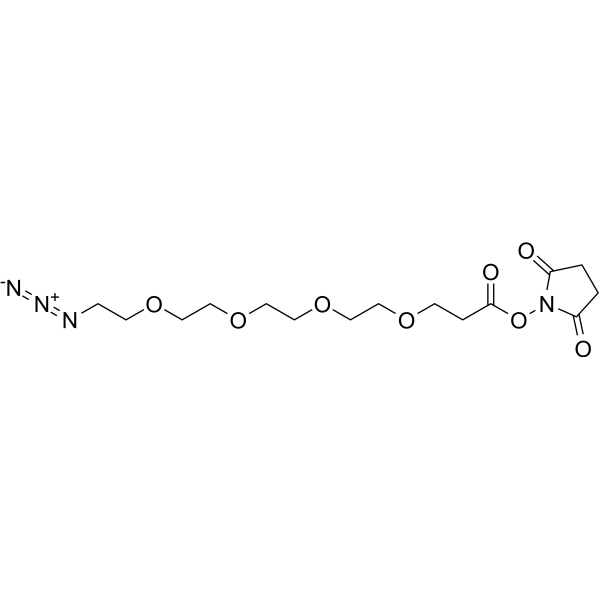
N3-PEG4-C2-NHS ester is a nonclaevable 4-unit PEG linker used in the synthesis of antibody-drug conjugates (ADCs). N3-PEG4-C2-NHS ester is a click chemistry reagent, it contains an Azide group and can undergo copper-catalyzed azide-alkyne cycloaddition reaction (CuAAc) with molecules containing Alkyne groups. It can also undergo strain-promoted alkyne-azide cycloaddition (SPAAC) reactions with molecules containing DBCO or BCN groups.
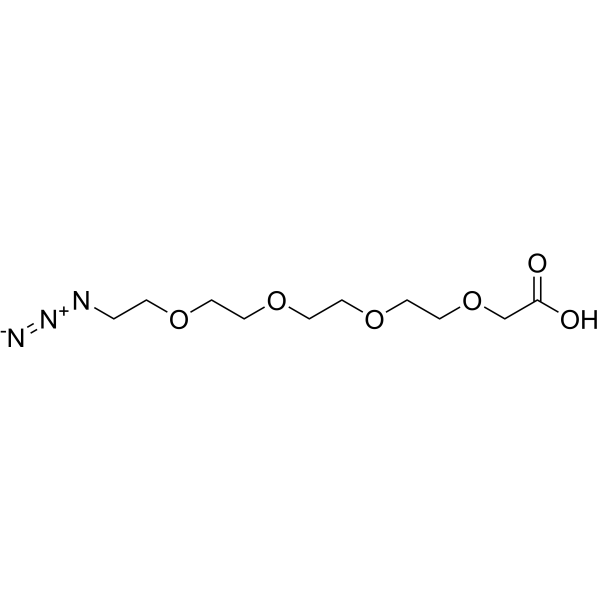
N3-PEG3-CH2COOH (PROTAC Linker 14) is a PEG-based PROTAC linker can be used in the synthesis of PROTACs . N3-PEG3-CH2COOH is a click chemistry reagent, it contains an Azide group and can undergo copper-catalyzed azide-alkyne cycloaddition reaction (CuAAc) with molecules containing Alkyne groups. It can also undergo strain-promoted alkyne-azide cycloaddition (SPAAC) reactions with molecules containing DBCO or BCN groups.
N3-PEG3-CH2CH2COOH a PEG-based PROTAC linker can be used in the synthesis of BI-3663 (HY-111546), BI-4216 and BI-0319. Azido-PEG3-acid is also a non-cleavable 3 unit PEG ADC linker used in the synthesis of antibody-drug conjugates (ADCs). N3-PEG3-CH2CH2COOH is a click chemistry reagent, it contains an Azide group and can undergo copper-catalyzed azide-alkyne cycloaddition reaction (CuAAc) with molecules containing Alkyne groups. It can also undergo strain-promoted alkyne-azide cycloaddition (SPAAC) reactions with molecules containing DBCO or BCN groups.
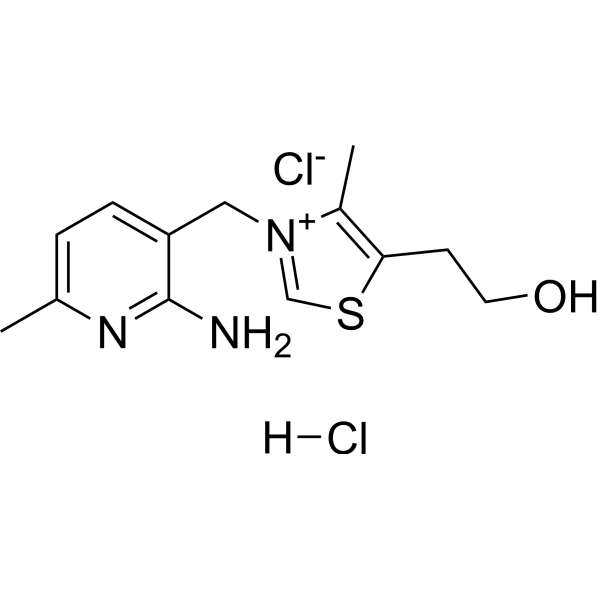
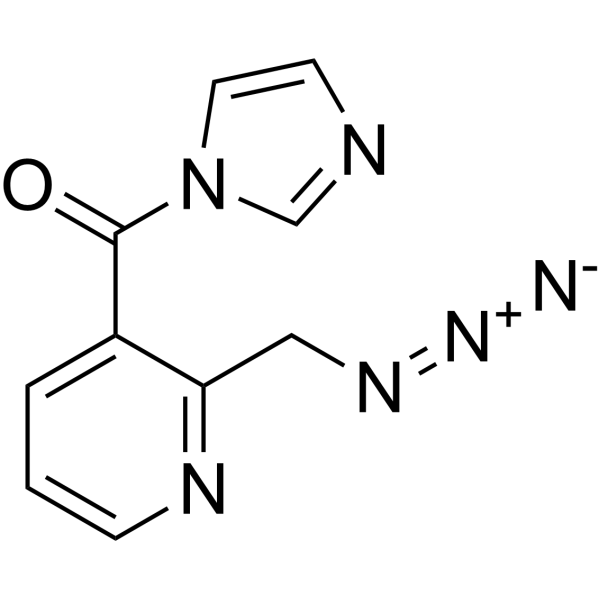
N3PT (N3-pyridyl thiamine) is a potent and selective transketolase inhibitor. N3PT is pyrophosphorylated and then binds to transketolase with an Kd value of 22 nM (Apo-TK, transketolase lacking bound thiamine) .
N3-C2-NHS ester is a noncleavable ADC linker used in the synthesis of antibody-drug conjugates (ADCs). N3-C2-NHS ester is a click chemistry reagent, it contains an Azide group and can undergo copper-catalyzed azide-alkyne cycloaddition reaction (CuAAc) with molecules containing Alkyne groups. It can also undergo strain-promoted alkyne-azide cycloaddition (SPAAC) reactions with molecules containing DBCO or BCN groups.
N3-C4-NHS ester is a noncleavable ADC linker used in the synthesis of antibody-drug conjugates (ADCs). N3-C4-NHS ester is a click chemistry reagent, it contains an Azide group and can undergo copper-catalyzed azide-alkyne cycloaddition reaction (CuAAc) with molecules containing Alkyne groups. It can also undergo strain-promoted alkyne-azide cycloaddition (SPAAC) reactions with molecules containing DBCO or BCN groups.
N3-PEG3-C2-NHS ester is a nonclaevable 3-unit PEG linker used in the synthesis of antibody-drug conjugates (ADCs). N3-PEG3-C2-NHS ester is a click chemistry reagent, it contains an Azide group and can undergo copper-catalyzed azide-alkyne cycloaddition reaction (CuAAc) with molecules containing Alkyne groups. It can also undergo strain-promoted alkyne-azide cycloaddition (SPAAC) reactions with molecules containing DBCO or BCN groups.
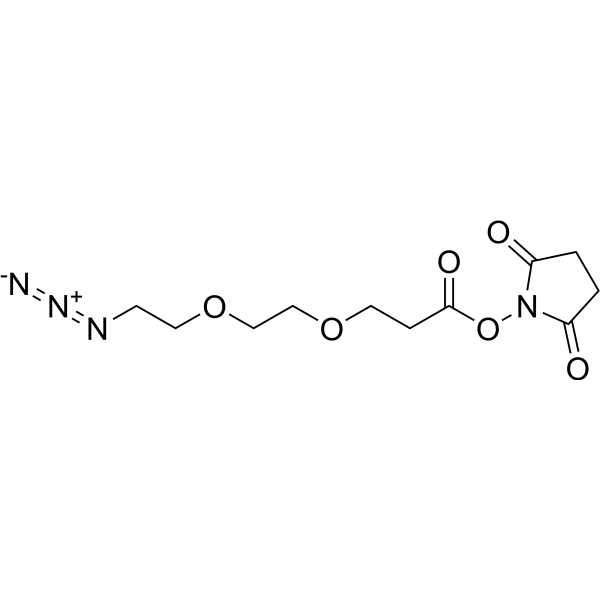
N3-PEG2-C2-NHS ester is a nonclaevable 2-unit PEG linker used in the synthesis of antibody-drug conjugates (ADCs). N3-PEG2-C2-NHS ester is a click chemistry reagent, it contains an Azide group and can undergo copper-catalyzed azide-alkyne cycloaddition reaction (CuAAc) with molecules containing Alkyne groups. It can also undergo strain-promoted alkyne-azide cycloaddition (SPAAC) reactions with molecules containing DBCO or BCN groups.
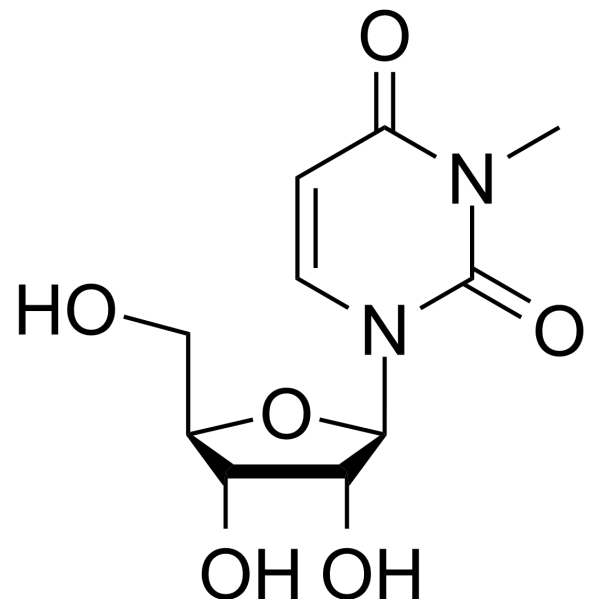
3-Methyluridine (m 3U; N3-Methyluridine) is a methylated nucleotide present in ribosomal RNA (rRNA), mainly targeting specific base sites of RNA molecules such as 23S rRNA. 3-Methyluridine can introduce a methyl group at the N3 position of uracil, affecting the secondary structure stability and base pairing ability of RNA, and regulating ribosome function. For example, it affects ribosomal subunit binding and tRNA interaction. 3-Methyluridine is often used as a key raw material for the synthesis of modified nucleotides, and is used to construct RNA oligonucleotides containing methylation modifications to study the effects of RNA methylation on gene expression and drug resistance [3].
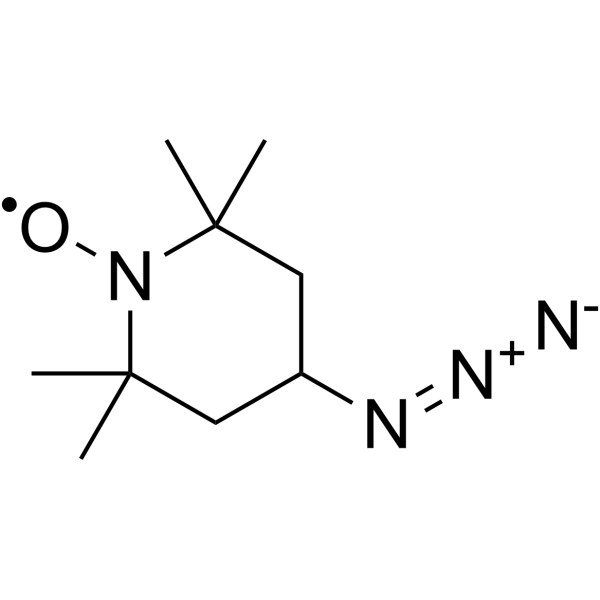
N3-TEMPO is a click chemistry reagent containing an azide group. Click chemistry has great potential for use in binding between nucleic acids, lipids, proteins, and other molecules, and has been used in many research fields because of its beneficial characteristics, including high yield, high specificity, and simplicity . It contains an azide group and can undergo copper-catalyzed azide-alkyne cycloaddition (CuAAc) with molecules containing alkyne groups. It can also undergo ring strain-promoted alkyne-azide cycloaddition (SPAAC) with molecules containing DBCO or BCN groups.
N3-PEG3-VC-PAB-MMAF (Comp T-88-5) is a drug-linker conjugate containing the ADC linker N3-PEG3-VC-PAB and the tubulin inhibitor MMAF . N3-PEG3-VC-PAB-MMAF is a click chemistry reagent, it contains an Azide group and can undergo copper-catalyzed azide-alkyne cycloaddition reaction (CuAAc) with molecules containing Alkyne groups. It can also undergo strain-promoted alkyne-azide cycloaddition (SPAAC) reactions with molecules containing DBCO or BCN groups.
N3-PEG8-Phe-Lys-PABC-Gefitinib is a agent-linker conjugate for ADC with potent antitumor activity by using the anti-tumor agent, Gefitinib (HY-50895) (orally active EGFR tyrosine kinase inhibitor), linked via the cleavable linker N3-PEG8-Phe-Lys-PABC. N3-PEG8-Phe-Lys-PABC-Gefitinib is a click chemistry reagent, it contains an Azide group and can undergo copper-catalyzed azide-alkyne cycloaddition reaction (CuAAc) with molecules containing Alkyne groups. It can also undergo strain-promoted alkyne-azide cycloaddition (SPAAC) reactions with molecules containing DBCO or BCN groups.
N3-PEG4-C2-Pfp ester is a nonclaevable 4-unit PEG linker used in the synthesis of antibody-drug conjugates (ADCs). N3-PEG4-C2-Pfp ester is a click chemistry reagent, it contains an Azide group and can undergo copper-catalyzed azide-alkyne cycloaddition reaction (CuAAc) with molecules containing Alkyne groups. It can also undergo strain-promoted alkyne-azide cycloaddition (SPAAC) reactions with molecules containing DBCO or BCN groups.
N3-Gly-Gly-Gly-OH is a click chemistry reagent containing an azide group. N3-Gly-Gly-OH undergoes copper-catalyzed azide-alkyne cycloaddition (CuAAc) with molecules containing an alkyne group. N3-Gly-Gly-OH also undergoes strain-promoted alkyne-azide cycloaddition (SPAAC) with molecules containing DBCO or BCN groups. N3-Gly-Gly-Gly-OH can be used to construct peptide-like ADC linkers via click chemistry .
N3-Methyl-2’-O-methyluridine is a uridine analogue. Uridine has potential antiepileptic effects, and its analogs can be used to study anticonvulsant and anxiolytic activities, as well as to develop new antihypertensive agents .
N3-Gly-Gly-Gly-OH is a oligo-Gly click chemistry reagent containing an azide group. Oligo-Gly also has been used as linker to combine different subunits of dimeric or oligomeric proteins or to create artificial multi-domain proteins. By modification into Gly-Gly-Gly-Ser motifs high solubility can be achieved [3]. N3-Gly-Gly-Gly-OH is a click chemistry reagent, it contains an Azide group and can undergo copper-catalyzed azide-alkyne cycloaddition reaction (CuAAc) with molecules containing Alkyne groups. It can also undergo strain-promoted alkyne-azide cycloaddition (SPAAC) reactions with molecules containing DBCO or BCN groups.
N3-D-Dap(Fmoc)-OH is a click chemistry reagent. N3-D-Dap(Fmoc)-OH can be used as a component for coupling by click reaction and as an orthogonally protected diaminocarboxylic acid derivative. N3-D-Dap(Fmoc)-OH contains an azide group and can undergo copper-catalyzed azide-alkyne cycloaddition (CuAAc) with molecules containing alkyne groups. N3-D-Dap(Fmoc)-OH can also undergo ring strain-promoted alkyne-azide cycloaddition (SPAAC) with molecules containing DBCO or BCN groups .
N3-L-Val-OH (CHA) is a click chemistry containing an azide group, a valine derivative. N3-L-Val-OH (CHA) can also be used as a synthetic intermediate for Valaciclovir (Valacyclovir) . It contains an azide group and can undergo copper-catalyzed azide-alkyne cycloaddition (CuAAc) with molecules containing alkyne groups. It can also undergo ring strain-promoted alkyne-azide cycloaddition (SPAAC) with molecules containing DBCO or BCN groups.
N3-L-Orn(Fmoc)-OH is a Fmoc-protected ornithine derivative, can be used as a click chemistry reagent. It contains an azide group and can undergo copper-catalyzed azide-alkyne cycloaddition (CuAAc) with molecules containing alkyne groups. It can also undergo ring strain-promoted alkyne-azide cycloaddition (SPAAC) with molecules containing DBCO or BCN groups.
N3-CMC is a click chemistry reagent. N3-CMC containing an azide group can undergo ring strain-promoted alkyne-azide cycloaddition (SPAAC) with molecules containing DBCO or BCN groups. N3-CMC can also undergo copper-catalyzed azide-alkyne cycloaddition (CuAAc) with molecules containing alkyne groups. N3-CMC reacts specifically with the pseudouridine (Ψ)-containing RNA, and biotin is subsequently conjugated to the N3-CMC-Ψ RNA via click chemistry, quantitatively analyzing the dynamic changes of Ψ .
N3-Gly-Gly-OH DCHA is a click chemistry reagent containing an azide group. N3-Gly-Gly-OH DCHA undergoes copper-catalyzed azide-alkyne cycloaddition (CuAAc) with molecules containing an alkyne group. N3-Gly-Gly-OH DCHA also undergoes strain-promoted alkyne-azide cycloaddition (SPAAC) with molecules containing DBCO or BCN groups. N3-Gly-Gly-OH DCHA can be used to construct peptide-like ADC linkers via click chemistry .
N3-VC-PAB-PNP is the intermediate of bicyclic peptide ligand STING conjugates . N3-VC-PAB-PNP is a click chemistry reagent, it contains an Azide group and can undergo copper-catalyzed azide-alkyne cycloaddition reaction (CuAAc) with molecules containing Alkyne groups. It can also undergo strain-promoted alkyne-azide cycloaddition (SPAAC) reactions with molecules containing DBCO or BCN groups.
N3-L-Lys(Boc)-OH is a click chemistry reagent containing an azide group . N3-L-Lys(Boc)-OH is a click chemistry reagent, it contains an Azide group and can undergo copper-catalyzed azide-alkyne cycloaddition reaction (CuAAc) with molecules containing Alkyne groups. It can also undergo strain-promoted alkyne-azide cycloaddition (SPAAC) reactions with molecules containing DBCO or BCN groups.
N3-L-Lys(Fmoc)-OH is a click chemistry reagent containing an azide group . N3-L-Lys(Fmoc)-OH is a click chemistry reagent, it contains an Azide group and can undergo copper-catalyzed azide-alkyne cycloaddition reaction (CuAAc) with molecules containing Alkyne groups. It can also undergo strain-promoted alkyne-azide cycloaddition (SPAAC) reactions with molecules containing DBCO or BCN groups.
N3-TOTA-Suc is a click chemistry reagent containing an azide group. Click chemistry is a powerful chemical reaction with excellent bioorthogonality features: biocompatible, rapid and highly specific in biological environments . N3-TOTA-Suc is a click chemistry reagent, it contains an Azide group and can undergo copper-catalyzed azide-alkyne cycloaddition reaction (CuAAc) with molecules containing Alkyne groups. It can also undergo strain-promoted alkyne-azide cycloaddition (SPAAC) reactions with molecules containing DBCO or BCN groups.
N3-D-Dab(Boc)-OH is a click chemistry reagent containing an Azide . N3-D-Dab(Boc)-OH is a click chemistry reagent, it contains an Azide group and can undergo copper-catalyzed azide-alkyne cycloaddition reaction (CuAAc) with molecules containing Alkyne groups. It can also undergo strain-promoted alkyne-azide cycloaddition (SPAAC) reactions with molecules containing DBCO or BCN groups.
N3-L-Cit-OH DCHA is a click chemistry reagent containing an azide group. N3-L-Cit-OH DCHA can be used to construct peptidomimetic ADC linkers using Click-chemistry . It contains an azide group and can undergo copper-catalyzed azide-alkyne cycloaddition (CuAAc) with molecules containing alkyne groups. It can also undergo ring strain-promoted alkyne-azide cycloaddition (SPAAC) with molecules containing DBCO or BCN groups.
N3-L-Lys(Mtt)-OH is a click chemistry reagent containing an azide group. N3-L-Lys(Mtt)-OH can introduce azide functions into the amino acid building block of peptide sequences at the N-terminal position. It contains an azide group and can undergo copper-catalyzed azide-alkyne cycloaddition (CuAAc) with molecules containing alkyne groups. It can also undergo ring strain-promoted alkyne-azide cycloaddition (SPAAC) with molecules containing DBCO or BCN groups.
N3-D-Lys(Fmoc)-OH is a click chemistry reagent containing an azide group. Click chemistry is a powerful chemical reaction with excellent bioorthogonality features: biocompatible, rapid and highly specific in biological environments . N3-D-Lys(Fmoc)-OH is a click chemistry reagent, it contains an Azide group and can undergo copper-catalyzed azide-alkyne cycloaddition reaction (CuAAc) with molecules containing Alkyne groups. It can also undergo strain-promoted alkyne-azide cycloaddition (SPAAC) reactions with molecules containing DBCO or BCN groups.
N3-L-Dap(Boc)-OH is a click chemistry reagent containing an azide group. Click chemistry is a powerful chemical reaction with excellent bioorthogonality features: biocompatible, rapid and highly specific in biological environments . N3-L-Dap(Boc)-OH is a click chemistry reagent, it contains an Azide group and can undergo copper-catalyzed azide-alkyne cycloaddition reaction (CuAAc) with molecules containing Alkyne groups. It can also undergo strain-promoted alkyne-azide cycloaddition (SPAAC) reactions with molecules containing DBCO or BCN groups.
N3-PEG3400-NH2 (Azide-PEG3400-Amine) is a hetero-bifunctional PEG product with an azide and an amine group at the PEG terminus. N3-PEG3400-NH2 is an important cross-linker with PEG chains. The azide can be used for molecular conjugation through chemical reactions, and the amine can react with carboxylic acid or NHS ester .
N3-PEG3-CH2CH2-Boc is a cleavable 3 unit PEG ADC linker used in the synthesis of antibody-drug conjugates (ADCs) . N3-PEG3-CH2CH2-Boc is also a PEG- and Alkyl/ether-based PROTAC linker that can be used in the synthesis of PROTACs . N3-PEG3-CH2CH2-Boc is a click chemistry reagent, it contains an Azide group and can undergo copper-catalyzed azide-alkyne cycloaddition reaction (CuAAc) with molecules containing Alkyne groups. It can also undergo strain-promoted alkyne-azide cycloaddition (SPAAC) reactions with molecules containing DBCO or BCN groups.
N3-L-Cys(Trt)-OH (CHA) is a click chemistry reagent containing an azide group. It contains an azide group and can undergo copper-catalyzed azide-alkyne cycloaddition (CuAAc) with molecules containing alkyne groups. It can also undergo ring strain-promoted alkyne-azide cycloaddition (SPAAC) with molecules containing DBCO or BCN groups.
N3-Gly-Gly-Gly-Gly-Gly-OH is a click chemistry reagent containing an azide group. It contains an azide group and can undergo copper-catalyzed azide-alkyne cycloaddition (CuAAc) with molecules containing alkyne groups. It can also undergo ring strain-promoted alkyne-azide cycloaddition (SPAAC) with molecules containing DBCO or BCN groups.
N3-PEG11-CH2CH2Br is a PEG linker containing a bromine and an azide group. The hydrophilic PEG spacer increases solubility in aqueous media. The azide group can react with alkyne, BCN, DBCO via Click Chemistry to yield a stable triazole linkage. The bromine (Br) is a very good leaving group for nucleophilic substitution reactions.
N3-PEG5-aldehyde is a cleavable 5 unit PEG ADC linker used in the synthesis of antibody-drug conjugates (ADCs) . N3-PEG5-aldehyde is a click chemistry reagent, it contains an Azide group and can undergo copper-catalyzed azide-alkyne cycloaddition reaction (CuAAc) with molecules containing Alkyne groups. It can also undergo strain-promoted alkyne-azide cycloaddition (SPAAC) reactions with molecules containing DBCO or BCN groups.
N3-PEG1000-NH2 (Azide-PEG1000-Amine) is a hetero-bifunctional PEG product with an azide and an amine group at the PEG terminus. N3-PEG1000-NH2 is an important cross-linker with PEG chains. The azide can be used for molecular conjugation through chemical reactions, and the amine can react with carboxylic acid or NHS ester .
N3-PEG8-Phe-Lys-PABC-Gefitinib TFA is a agent-linker conjugate for ADC with potent antitumor activity by using the anti-tumor agent, Gefitinib (HY-50895) (orally active EGFR tyrosine kinase inhibitor), linked via the cleavable linker N3-PEG8-Phe-Lys-PABC. N3-PEG8-Phe-Lys-PABC-Gefitinib TFA is a click chemistry reagent, it contains an Azide group and can undergo copper-catalyzed azide-alkyne cycloaddition reaction (CuAAc) with molecules containing Alkyne groups. It can also undergo strain-promoted alkyne-azide cycloaddition (SPAAC) reactions with molecules containing DBCO or BCN groups.
N3-O2Oc-O2Oc-OH is a click chemistry reagent containing an azide . N3-O2Oc-O2Oc-OH is a click chemistry reagent, it contains an Azide group and can undergo copper-catalyzed azide-alkyne cycloaddition reaction (CuAAc) with molecules containing Alkyne groups. It can also undergo strain-promoted alkyne-azide cycloaddition (SPAAC) reactions with molecules containing DBCO or BCN groups.
N3-TFBA-O2Oc is a click chemistry reagent containing an azide group and an aryl group. Aryl azides are well-known precursors of nitrenes and have been introduced by Fleet et al. as versatile photoaffinity labeling agents to probe biological receptors. This type of compounds has been used as photo-cross linker (λmax=258 nm) in estrogen receptor studies and for direct surface coating of carbon and organic based polymers [3]. N3-TFBA-O2Oc is a click chemistry reagent, it contains an Azide group and can undergo copper-catalyzed azide-alkyne cycloaddition reaction (CuAAc) with molecules containing Alkyne groups. It can also undergo strain-promoted alkyne-azide cycloaddition (SPAAC) reactions with molecules containing DBCO or BCN groups.
N3-Cyanoethyl-5’-O-(4,4’-dimethoxytrityl)-2’-O-methyluridine is a uridine analog. Uridine has potential antiepileptic effects, and its analogs can be used to study anticonvulsant and anxiolytic activities, as well as to develop new antihypertensive agents .
N3-Gly-Aeg(Fmoc)-OH is a click chemistry reagent containing an azide group. PNA building-block that can be further modified using Click-chemistry . It contains an azide group and can undergo copper-catalyzed azide-alkyne cycloaddition (CuAAc) with molecules containing alkyne groups. It can also undergo ring strain-promoted alkyne-azide cycloaddition (SPAAC) with molecules containing DBCO or BCN groups.
N3-PhAc-OH is a click chemistry reagent containing an azide group. Click chemistry has great potential for use in binding between nucleic acids, lipids, proteins, and other molecules, and has been used in many research fields because of its beneficial characteristics, including high yield, high specificity, and simplicity . It contains an azide group and can undergo copper-catalyzed azide-alkyne cycloaddition (CuAAc) with molecules containing alkyne groups. It can also undergo ring strain-promoted alkyne-azide cycloaddition (SPAAC) with molecules containing DBCO or BCN groups.
N3-PEG1000-N3 is a click chemistry reagent, it contains an Azide group and can undergo copper-catalyzed azide-alkyne cycloaddition reaction (CuAAc) with molecules containing Alkyne groups. It can also undergo strain-promoted alkyne-azide cycloaddition (SPAAC) reactions with molecules containing DBCO or BCN groups .
N3-PC (Azido-PC) is a photoactivatable phosphatidylcholine that can be used in the synthesis of cell membrane structures. N3-PC (Azido-PC) is a click chemistry reagent containing an azide group .
N3-PEG2000-NH2 is a hetero-bifunctional PEG product with an azide and an amine group at the PEG terminus. N3-PEG2000-NH2 is an important cross-linker with PEG chains. The azide can be used for molecular conjugation through chemical reactions, and the amine can react with carboxylic acid or NHS ester .
N3-Cystamine-Suc-OSu is a click chemistry reagent containing an azide group. N3-Cystamine-Suc-OSu can be used for the research of various biochemical . It contains an azide group and can undergo copper-catalyzed azide-alkyne cycloaddition (CuAAc) with molecules containing alkyne groups. It can also undergo ring strain-promoted alkyne-azide cycloaddition (SPAAC) with molecules containing DBCO or BCN groups.
N3-L-Cit-OH is a click chemistry reagent containing an azide group. N3-L-Cit-OH can be used to construct peptidomimetic ADC linkers using Click-chemistry . It contains an azide group and can undergo copper-catalyzed azide-alkyne cycloaddition (CuAAc) with molecules containing alkyne groups. It can also undergo ring strain-promoted alkyne-azide cycloaddition (SPAAC) with molecules containing DBCO or BCN groups.
N3-Allyluridine is a uridine analog. Uridine has potential antiepileptic effects, and its analogs can be used to study anticonvulsant and anxiolytic activities, as well as to develop new antihypertensive agents .
N3-PEG24-Hydrazide is a PEG-based PROTAC linker that can be used in the synthesis of PROTACs . N3-PEG24-Hydrazide is a click chemistry reagent, it contains an Azide group and can undergo copper-catalyzed azide-alkyne cycloaddition reaction (CuAAc) with molecules containing Alkyne groups. It can also undergo strain-promoted alkyne-azide cycloaddition (SPAAC) reactions with molecules containing DBCO or BCN groups.
N3-PEG16-Hydrazide is a PEG-based PROTAC linker that can be used in the synthesis of PROTACs . N3-PEG16-Hydrazide is a click chemistry reagent, it contains an Azide group and can undergo copper-catalyzed azide-alkyne cycloaddition reaction (CuAAc) with molecules containing Alkyne groups. It can also undergo strain-promoted alkyne-azide cycloaddition (SPAAC) reactions with molecules containing DBCO or BCN groups.
N3-PEG6-Propanehydrazide is a PEG-based PROTAC linker that can be used in the synthesis of PROTACs . N3-PEG6-Propanehydrazide is a click chemistry reagent, it contains an Azide group and can undergo copper-catalyzed azide-alkyne cycloaddition reaction (CuAAc) with molecules containing Alkyne groups. It can also undergo strain-promoted alkyne-azide cycloaddition (SPAAC) reactions with molecules containing DBCO or BCN groups.
N3-PEG3-Propanehydrazide is a PEG-based PROTAC linker that can be used in the synthesis of PROTACs . N3-PEG3-Propanehydrazide is a click chemistry reagent, it contains an Azide group and can undergo copper-catalyzed azide-alkyne cycloaddition reaction (CuAAc) with molecules containing Alkyne groups. It can also undergo strain-promoted alkyne-azide cycloaddition (SPAAC) reactions with molecules containing DBCO or BCN groups.
N3-(Butyn-3-yl)uridine is a uridine analog. Uridine has potential antiepileptic effects, and its analogs can be used to study anticonvulsant and anxiolytic activities, as well as to develop new antihypertensive agents . N3-(Butyn-3-yl)uridine is a click chemistry reagent, it contains an Alkyne group and can undergo copper-catalyzed azide-alkyne cycloaddition (CuAAc) with molecules containing Azide groups.
N3-D-Lys(Boc)-OH is a click chemistry reagent containing an Azide . N3-D-Lys(Boc)-OH is a click chemistry reagent, it contains an Azide group and can undergo copper-catalyzed azide-alkyne cycloaddition reaction (CuAAc) with molecules containing Alkyne groups. It can also undergo strain-promoted alkyne-azide cycloaddition (SPAAC) reactions with molecules containing DBCO or BCN groups.
N3-L-Dab(Boc)-OH is a click chemistry reagent containing an azide group. N3-L-Dab(Boc)-OH can be used for the research of various biochemical . It contains an azide group and can undergo copper-catalyzed azide-alkyne cycloaddition (CuAAc) with molecules containing alkyne groups. It can also undergo ring strain-promoted alkyne-azide cycloaddition (SPAAC) with molecules containing DBCO or BCN groups.
N3-Aminopseudouridine is a purine nucleoside analog. Purine nucleoside analogs have broad antitumor activity targeting indolent lymphoid malignancies. Anticancer mechanisms in this process rely on inhibition of DNA synthesis, induction of apoptosis, etc .
N3-Ethyl pseudouridine is a purine nucleoside analogue. Purine nucleoside analogs have broad antitumor activity targeting indolent lymphoid malignancies. Anticancer mechanisms in this process rely on inhibition of DNA synthesis, induction of apoptosis, etc .
N3-PEG20000-NH2 (Azide-PEG20000-Amine) is a hetero-bifunctional PEG product with an azide and an amine group at the PEG terminus. N3-PEG20000-NH2 is an important cross-linker with PEG chains. The azide can be used for molecular conjugation through chemical reactions, and the amine can react with carboxylic acid or NHS ester .
N3-PEG10000-NH2 (Azide-PEG10000-Amine) is a hetero-bifunctional PEG product with an azide and an amine group at the PEG terminus. N3-PEG10000-NH2 is an important cross-linker with PEG chains. The azide can be used for molecular conjugation through chemical reactions, and the amine can react with carboxylic acid or NHS ester .
N3-PEG12-Hydrazide is a PEG-based PROTAC linker that can be used in the synthesis of PROTACs . N3-PEG12-Hydrazide is a click chemistry reagent, it contains an Azide group and can undergo copper-catalyzed azide-alkyne cycloaddition reaction (CuAAc) with molecules containing Alkyne groups. It can also undergo strain-promoted alkyne-azide cycloaddition (SPAAC) reactions with molecules containing DBCO or BCN groups.
N3-PEG4-amido-Lys(Fmoc)-acid is a cleavable 4 unit PEG ADC linker used in the synthesis of antibody-drug conjugates (ADCs) . N3-PEG4-amido-Lys(Fmoc)-acid is a click chemistry reagent, it contains an Azide group and can undergo copper-catalyzed azide-alkyne cycloaddition reaction (CuAAc) with molecules containing Alkyne groups. It can also undergo strain-promoted alkyne-azide cycloaddition (SPAAC) reactions with molecules containing DBCO or BCN groups.
N3-PEG8-CH2COOH is a PEG-based PROTAC linker can be used in the synthesis of PROTACs . N3-PEG8-CH2COOH is a click chemistry reagent, it contains an Azide group and can undergo copper-catalyzed azide-alkyne cycloaddition reaction (CuAAc) with molecules containing Alkyne groups. It can also undergo strain-promoted alkyne-azide cycloaddition (SPAAC) reactions with molecules containing DBCO or BCN groups.
N3-PEG5000-SCM (Azide PEG5000 Succinimidyl Carboxymethyl Ester) is a linear heteroterminal bifunctional PEG product with succinimidyl carbonate and azide groups.
N3-PEG2000-SCM (Azide PEG2000 Succinimidyl Carboxymethyl Ester) is a linear heteroterminal bifunctional PEG product with succinimidyl carbonate and azide groups.
N3-PEG2-C2-PFP ester is a nonclaevable 2-unit PEG linker used in the synthesis of antibody-drug conjugates (ADCs). N3-PEG2-C2-PFP ester is a click chemistry reagent, it contains an Azide group and can undergo copper-catalyzed azide-alkyne cycloaddition reaction (CuAAc) with molecules containing Alkyne groups. It can also undergo strain-promoted alkyne-azide cycloaddition (SPAAC) reactions with molecules containing DBCO or BCN groups.
N3-PEG3-C2-PFP ester is a nonclaevable 3-unit PEG linker used in the synthesis of antibody-drug conjugates (ADCs). N3-PEG3-C2-PFP ester is a click chemistry reagent, it contains an Azide group and can undergo copper-catalyzed azide-alkyne cycloaddition reaction (CuAAc) with molecules containing Alkyne groups. It can also undergo strain-promoted alkyne-azide cycloaddition (SPAAC) reactions with molecules containing DBCO or BCN groups.
N3-Methyl-5-methyluridine is a purine nucleoside analog. Purine nucleoside analogs have broad antitumor activity targeting indolent lymphoid malignancies. Anticancer mechanisms in this process rely on inhibition of DNA synthesis, induction of apoptosis, etc .
N3-[(Pyrid-4-yl)methyl]uridine is a uridine analog. Uridine has potential antiepileptic effects, and its analogs can be used to study anticonvulsant and anxiolytic activities, as well as to develop new antihypertensive agents .
N3-[(Tetrahydro-2-furanyl)methyl]uridine is a uridine analogue. Uridine has potential antiepileptic effects, and its analogs can be used to study anticonvulsant and anxiolytic activities, as well as to develop new antihypertensive agents .
N3-Pen-Dtpp is a click chemistry reagent containing an azide group. It contains an azide group and can undergo copper-catalyzed azide-alkyne cycloaddition (CuAAc) with molecules containing alkyne groups. It can also undergo ring strain-promoted alkyne-azide cycloaddition (SPAAC) with molecules containing DBCO or BCN groups.
N3-Pen-Dde is a click chemistry reagent containing an azide group. It contains an azide group and can undergo copper-catalyzed azide-alkyne cycloaddition (CuAAc) with molecules containing alkyne groups. It can also undergo ring strain-promoted alkyne-azide cycloaddition (SPAAC) with molecules containing DBCO or BCN groups.
N3-Methyl-2’-O-(2-methoxyethyl)uridine is a uridine analogue. Uridine has potential antiepileptic effects, and its analogs can be used to study anticonvulsant and anxiolytic activities, as well as to develop new antihypertensive agents .
N3-(4-Nitrobenzyl)uridine is a uridine analog. Uridine has potential antiepileptic effects, and its analogs can be used to study anticonvulsant and anxiolytic activities, as well as to develop new antihypertensive agents .
N3-(2-Methoxy)ethyluridine is a uridine analogue. Uridine has potential antiepileptic effects, and its analogs can be used to study anticonvulsant and anxiolytic activities, as well as to develop new antihypertensive agents .
N3-[3-(tert-Butoxycarbonyl)amino]propyluridine is a uridine analog. Uridine has potential antiepileptic effects, and its analogs can be used to study anticonvulsant and anxiolytic activities, as well as to develop new antihypertensive agents .
N3-D-Orn(Boc)-OH is a Boc-protected pentanoic amino acid derivative, can be used as a click chemistry reagent and has been used to synthesis antibody-drug conjugates (ADC) . It contains an azide group and can undergo copper-catalyzed azide-alkyne cycloaddition (CuAAc) with molecules containing alkyne groups. It can also undergo ring strain-promoted alkyne-azide cycloaddition (SPAAC) with molecules containing DBCO or BCN groups.
N3-D-Orn(Boc)-OH (CHA) is a Boc-protected pentanoic amino acid derivative, can be used as a click chemistry reagent and has been used to synthesis antibody-drug conjugates (ADC) . It contains an azide group and can undergo copper-catalyzed azide-alkyne cycloaddition (CuAAc) with molecules containing alkyne groups. It can also undergo ring strain-promoted alkyne-azide cycloaddition (SPAAC) with molecules containing DBCO or BCN groups.
N3-PEG5000-NH2 is a hetero-bifunctional PEG product with an azide and an amine group at the PEG terminus. N3-PEG5000-NH2 is an important cross-linker with PEG chains. The azide can be used for molecular conjugation through chemical reactions, and the amine can react with carboxylic acid or NHS ester .
N3-PEG40000-NH2 (Azide-PEG40000-Amine) is a hetero-bifunctional PEG product with an azide and an amine group at the PEG terminus. N3-PEG40000-NH2 is an important cross-linker with PEG chains. The azide can be used for molecular conjugation through chemical reactions, and the amine can react with carboxylic acid or NHS ester .
N3-PEG10000-SCM (Azide PEG10000 Succinimidyl Carboxymethyl Ester) is a linear heteroterminal bifunctional PEG product with succinimidyl carbonate and azide groups.
N3-PEG1000-SCM (Azide PEG1000 Succinimidyl Carboxymethyl Ester) is a linear heteroterminal bifunctional PEG product with succinimidyl carbonate and azide groups.
N3-PEG20000-SCM (Azide PEG20000 Succinimidyl Carboxymethyl Ester) is a linear heteroterminal bifunctional PEG product with succinimidyl carbonate and azide groups.
N3-PEG3400-SCM (Azide PEG3400 Succinimidyl Carboxymethyl Ester) is a linear heteroterminal bifunctional PEG product with succinimidyl carbonate and azide groups.
N3-PEG40000-SCM (Azide PEG40000 Succinimidyl Carboxymethyl Ester) is a linear heteroterminal bifunctional PEG product with succinimidyl carbonate and azide groups.
N3-Methylcytidine phosphoramidite [5′-O-DMT2′-O-TBDMS-m3 CAc] is a phosphoramidite monomer. Phosphoramidites can be used in the synthesis of oligonucleotides .
3-Methyluridine (Standard) is the analytical standard of 3-Methyluridine. This product is intended for research and analytical applications. 3-Methyluridine (m3U; N3-Methyluridine) is a methylated nucleotide present in ribosomal RNA (rRNA), mainly targeting specific base sites of RNA molecules such as 23S rRNA. 3-Methyluridine can introduce a methyl group at the N3 position of uracil, affecting the secondary structure stability and base pairing ability of RNA, and regulating ribosome function. For example, it affects ribosomal subunit binding and tRNA interaction. 3-Methyluridine is often used as a key raw material for the synthesis of modified nucleotides, and is used to construct RNA oligonucleotides containing methylation modifications to study the effects of RNA methylation on gene expression and drug resistance [3].
N3-PEG2-CH2CO2-NHS is a PEG derivative containing an azide group and an NHS ester. The azide group can react with alkyne, BCN, DBCO via Click Chemistry to yield a stable triazole linkage. The NHS ester can be used to label the primary amines (-NH2) of proteins, amine-modified oligonucleotides, and other amine-containing molecules.
N3-1,4-trans-CHC-OH is a click chemistry reagent containing an azide group. It contains an azide group and can undergo copper-catalyzed azide-alkyne cycloaddition (CuAAc) with molecules containing alkyne groups. It can also undergo ring strain-promoted alkyne-azide cycloaddition (SPAAC) with molecules containing DBCO or BCN groups.
N3,5-Dimethyl-2’-O-(2-methoxyethyl) uridine is a purine nucleoside analog. Purine nucleoside analogs have broad antitumor activity targeting indolent lymphoid malignancies. Anticancer mechanisms in this process rely on inhibition of DNA synthesis, induction of apoptosis, etc .
N3-L-Leu-OH (BHA) is a click chemistry reagent. Click chemistry has great potential for use in binding between nucleic acids, lipids, proteins, and other molecules, and has been used in many research fields because of its beneficial characteristics, including high yield, high specificity, and simplicity . It contains an azide group and can undergo copper-catalyzed azide-alkyne cycloaddition (CuAAc) with molecules containing alkyne groups. It can also undergo ring strain-promoted alkyne-azide cycloaddition (SPAAC) with molecules containing DBCO or BCN groups.
N3-Aca-Aca-OH is a click chemistry reagent containing an azide group. Click chemistry has great potential for use in binding between nucleic acids, lipids, proteins, and other molecules, and has been used in many research fields because of its beneficial characteristics, including high yield, high specificity, and simplicity . It contains an azide group and can undergo copper-catalyzed azide-alkyne cycloaddition (CuAAc) with molecules containing alkyne groups. It can also undergo ring strain-promoted alkyne-azide cycloaddition (SPAAC) with molecules containing DBCO or BCN groups.
N3-L-Dab(Fmoc)-OH is a click chemistry reagent containing an azide group. Click chemistry has great potential for use in binding between nucleic acids, lipids, proteins, and other molecules, and has been used in many research fields because of its beneficial characteristics, including high yield, high specificity, and simplicity . It contains an azide group and can undergo copper-catalyzed azide-alkyne cycloaddition (CuAAc) with molecules containing alkyne groups. It can also undergo ring strain-promoted alkyne-azide cycloaddition (SPAAC) with molecules containing DBCO or BCN groups.
Azide-PEG10000-OPSS (N3-PEG10000-OPSS) is a compound composed of an azide group, PEG, and o-dithiopyridine (OPSS) and can be used for drug delivery. Azide-PEG10000-OPSS is a click chemistry reagent. It contains an Azide group and can undergo a copper-catalyzed azido-yne cycloaddition reaction (CuAAc) with molecules containing an Alkyne group. It can also undergo ring-strain-driven acetylene-azidocycloaddition (SPAAC) reactions with molecules containing DBCO or BCN groups.
Azide-PEG1000-OPSS (N3-PEG1000-OPSS) is a compound composed of an azide group, PEG, and o-dithiopyridine (OPSS) and can be used for drug delivery. Azide-PEG1000-OPSS is a click chemistry reagent. It contains an Azide group and can undergo a copper-catalyzed azido-yne cycloaddition reaction (CuAAc) with molecules containing an Alkyne group. It can also undergo ring-strain-driven acetylene-azidocycloaddition (SPAAC) reactions with molecules containing DBCO or BCN groups.
Azide-PEG3400-OPSS (N3-PEG3400-OPSS) is a compound composed of an azide group, PEG, and o-dithiopyridine (OPSS) and can be used for drug delivery. Azide-PEG3400-OPSS is a click chemistry reagent. It contains an Azide group and can undergo a copper-catalyzed azido-yne cycloaddition reaction (CuAAc) with molecules containing an Alkyne group. It can also undergo ring-strain-driven acetylene-azidocycloaddition (SPAAC) reactions with molecules containing DBCO or BCN groups.
Azide-PEG600-OPSS (N3-PEG600-OPSS) is a compound composed of an azide group, PEG, and o-dithiopyridine (OPSS) and can be used for drug delivery. Azide-PEG600-OPSS is a click chemistry reagent. It contains an Azide group and can undergo a copper-catalyzed azido-yne cycloaddition reaction (CuAAc) with molecules containing an Alkyne group. It can also undergo ring-strain-driven acetylene-azidocycloaddition (SPAAC) reactions with molecules containing DBCO or BCN groups.
Azide-PEG5000-OPSS (N3-PEG5000-OPSS) is a compound composed of an azide group, PEG, and o-dithiopyridine (OPSS) and can be used for drug delivery. Azide-PEG5000-OPSS is a click chemistry reagent. It contains an Azide group and can undergo a copper-catalyzed azido-yne cycloaddition reaction (CuAAc) with molecules containing an Alkyne group. It can also undergo ring-strain-driven acetylene-azidocycloaddition (SPAAC) reactions with molecules containing DBCO or BCN groups.
Azide-PEG2000-OPSS (N3-PEG2000-OPSS) is a compound composed of an azide group, PEG, and o-dithiopyridine (OPSS) and can be used for drug delivery. Azide-PEG2000-OPSS is a click chemistry reagent. It contains an Azide group and can undergo a copper-catalyzed azido-yne cycloaddition reaction (CuAAc) with molecules containing an Alkyne group. It can also undergo ring-strain-driven acetylene-azidocycloaddition (SPAAC) reactions with molecules containing DBCO or BCN groups.
Azide-PEG400-OPSS (N3-PEG400-OPSS) is a compound composed of an azide group, PEG, and o-dithiopyridine (OPSS) and can be used for drug delivery. Azide-PEG400-OPSS is a click chemistry reagent. It contains an Azide group and can undergo a copper-catalyzed azido-yne cycloaddition reaction (CuAAc) with molecules containing an Alkyne group. It can also undergo ring-strain-driven acetylene-azidocycloaddition (SPAAC) reactions with molecules containing DBCO or BCN groups.
N3-(2S)-[2-(tert-Butoxycarbonyl)amino-3-(tert-butoxy carbonyl)]propyluridine is a uridine analog. Uridine has potential antiepileptic effects, and its analogs can be used to study anticonvulsant and anxiolytic activities, as well as to develop new antihypertensive agents .
N33-TEG-COOH (N3-TEG-COOH) is a PEG-based PROTAC linker can be used in the synthesis of PROTACs . N33-TEG-COOH is a click chemistry reagent, it contains an Azide group and can undergo copper-catalyzed azide-alkyne cycloaddition reaction (CuAAc) with molecules containing Alkyne groups. It can also undergo strain-promoted alkyne-azide cycloaddition (SPAAC) reactions with molecules containing DBCO or BCN groups.
4-Azido-2,3,5,6-tetrafluorobenzoic Acid (N3-TFBA) is a click chemistry reagent containing an azide group. 4-Azido-2,3,5,6-tetrafluorobenzoic Acid is a complex with FAM-labeled DNA probe. 4-Azido-2,3,5,6-tetrafluorobenzoic Acid can be used as versatile photoaffinity labeling agents to probe biological receptors. It contains an azide group and can undergo copper-catalyzed azide-alkyne cycloaddition (CuAAc) with molecules containing alkyne groups. It can also undergo ring strain-promoted alkyne-azide cycloaddition (SPAAC) with molecules containing DBCO or BCN groups.
N3-1,4-cis-CHC-OH is a click chemistry reagent containing an azide group. Click chemistry has great potential for use in binding between nucleic acids, lipids, proteins, and other molecules, and has been used in many research fields because of its beneficial characteristics, including high yield, high specificity, and simplicity . It contains an azide group and can undergo copper-catalyzed azide-alkyne cycloaddition (CuAAc) with molecules containing alkyne groups. It can also undergo ring strain-promoted alkyne-azide cycloaddition (SPAAC) with molecules containing DBCO or BCN groups.
N33-TEG-COOH (Standard) is the analytical standard of N33-TEG-COOH (HY-108370). This product is intended for research and analytical applications. N33-TEG-COOH (N3-TEG-COOH) is a PEG-based PROTAC linker can be used in the synthesis of PROTACs . N33-TEG-COOH is a click chemistry reagent, it contains an Azide group and can undergo copper-catalyzed azide-alkyne cycloaddition reaction (CuAAc) with molecules containing Alkyne groups. It can also undergo strain-promoted alkyne-azide cycloaddition (SPAAC) reactions with molecules containing DBCO or BCN groups.
N-(3-Hydroxytetradecanoyl)-DL-homoserine lactone (N-(3-oxodecanoyl)-homoserine lactone) is a member of N-Acyl homoserine lactone (AHL) from V. alginolyticus strains. N-(3-Hydroxytetradecanoyl)-DL-homoserine lactone is used for biofilm formation and has antibacterial activity .
Azido-PEG2-C2-amine (N3-PEG2-CH2CH2NH2) is a PEG-based PROTAC linker that can be used in the synthesis of PROTACs . Azido-PEG2-C2-amine is also a non-cleavable 2 unit PEG ADC linker used in the synthesis of antibody-drug conjugates (ADCs) . Azido-PEG2-C2-amine is a click chemistry reagent, it contains an Azide group and can undergo copper-catalyzed azide-alkyne cycloaddition reaction (CuAAc) with molecules containing Alkyne groups. It can also undergo strain-promoted alkyne-azide cycloaddition (SPAAC) reactions with molecules containing DBCO or BCN groups.
N-(3-Oxohexanoyl)-L-homoserine lactone (OHHL; N-(3-Oxohexanoyl)homoserine lactone) is a specific agonist of LuxR-type transcription factor CarR with a Kd of 1.8 μM. N-(3-Oxohexanoyl)-L-homoserine lactone activates CarR by inducing protein multimerization, promoting its binding to target DNA sequences in the carR-carA intergenic region, thereby upregulating the transcription of carbapenem biosynthesis genes. N-(3-Oxohexanoyl)-L-homoserine lactone acts as a quorum sensing signal molecule, enabling bacteria to coordinate the production of carbapenem antibiotics in a cell density-dependent manner. N-(3-Oxohexanoyl)-L-homoserine lactone is used to study bacterial quorum sensing mechanisms, especially the secondary metabolism and virulence factor regulatory pathways of Erwinia carotovora and Yersinia enterocolitica[3].
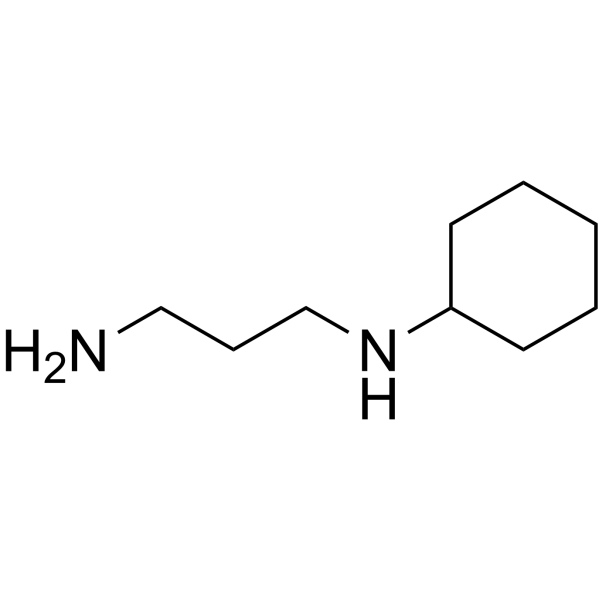
N-(3-Aminopropyl)cyclohexylamine, a cyclohexylamine derivative, acts as a selective and competitive inhibitor of spermine synthase. N-(3-Aminopropyl)cyclohexylamine can be used for the research of neurological diseases .
N-(3-Aminopropyl)acetamide is the building block. N-(3-Aminopropyl)acetamide could be used for synthesis of Polyfluorosulfonamido amine, which is the material for surfactants, electronics elements, pharmaceutical- and pesticide intermediates .
N-(3-Fluoranthyl)maleimide is a thiol fluorescent probe with a lifetime of 20 nsec. N-(3-Fluoranthyl)maleimide has a maximum excitation wavelength of 370 nm and can be used to study the time-dependent processes of biopolymers .
N-3-Hydroxybutyryl-L-homoserine lactone (3-OH-C4-HSL) is an acyl-homoserine lactone, that can be isolated from Vibrionaceae. N-3-Hydroxybutyryl-L-homoserine lactone is a signaling molecule that is involved in bacterial quorum sensing (QS). N-3-Hydroxybutyryl-L-homoserine lactone senses the density of bacterial population, regulates the cellular process, such as bioluminescence, biofilm formation, and exo-enzyme production .
N-(3-Hydroxyoctanoyl)-DL-homoserine lactone (Compound 40) is a competitive inhibitor of the quorum sensing receptor LuxR with an IC50 value of 4 μM. N-(3-Hydroxyoctanoyl)-DL-homoserine lactone shows selective inhibition toward quorum sensing systems in Gram-negative bacteria like Pseudomonas aeruginosa. N-(3-Hydroxyoctanoyl)-DL-homoserine lactone is promising for research of bacterial infections .
N-(3-Methylphenyl)anthranilic acid is an aldo-keto reductase 1C3(AKR1C3)and AKR1C2 inhibitor with IC50 values of 0.24 μM and 0.38 μM, respectively. N-(3-Methylphenyl)anthranilic acid shows no inhibition of COX-1 or COX-2. N-(3-Methylphenyl)anthranilic acid can be used for the research of castration resistant prostate cancer .
N-(3-Chloro-4-hydroxyphenyl)acetamide (Standard) is the analytical standard of N-(3-Chloro-4-hydroxyphenyl)acetamide. This product is intended for research and analytical applications.
N-(3-Oxobutanoyl)-L-homoserine lactone (3-oxo-C4-HSL) is a carbapenem antibiotic biosynthesis autoregulator in Erwinia carotovora ATCC 39048. N-(3-Oxobutanoyl)-L-homoserine lactone induces expression of rhiI in R. leguminosarum .
N3Ac-OPhOMe is a click chemistry reagent containing azido and p-methoxyphenyl ester groups, which can be used for biomolecule conjugation and organic synthesis .
N-(3-Indolylacetyl)-L-alanine (Indoleacetylalanine) is an indoleacetylamino acid. N-(3-Indolylacetyl)-L-alanine appears to increase callus growth and reduces the ability of growths to differentiate into shoots of Phalaenopsis orchids .
N-3-Hydroxydecanoyl-DL-Homoserine lactone is a bacterial quorum-sensing molecule. N-3-Hydroxydecanoyl-DL-Homoserine lactone activates the transcription factor SdiA (EC50 = 0.6 µM), which detects N-acyl homoserine lactones (AHLs), and exerts its effect in Salmonella enterica (S. enterica) 12.
N-(3-Methoxybenzyl)stearamide a natural product from Lepidium meyenii (Maca), inhibits human and mouse soluble epoxide hydrolase (hsEH and msEH) with IC50s of 0.001 and <0.001 μg/nM, respectively .
N-(3-Oxopentanoyl)-L-homoserine lactone is an autoinducer, a kind of chemical signal molecule which passively diffuses across the bacterial envelope and accumulates intracellularly at high bacterial densities. It may bind to a protein related to the LuxR protein of V. fischeri and causes cell density-dependent gene expression. N-(3-Oxopentanoyl)-L-homoserine can be used for research of quorum sensing .
N-(3-Hydroxyoctanoyl)-L-homoserine lactone (compound 11), a hydroxyl-containing N-acyl l-homoserine lactone (AHL) ligand, is a competitive AbaR and LasR inhibitor .
N-(3,5-Dimethyl-1-adamantyl)formamide (Standard) is the analytical standard of N-(3,5-Dimethyl-1-adamantyl)formamide. This product is intended for research and analytical applications.
N-3-Hydroxydecanoyl-L-homoserine lactone is a type of N-acyl-L-homoserine lactone (AHL), which is a class of signaling molecules in bacterial quorum sensing systems, and it has a weak activating effect on AbaR .
N-(3-Methylbutyl)adenosine is an adenosine analog. Adenosine analogs mostly act as smooth muscle vasodilators and have also been shown to inhibit cancer progression. Its popular products are adenosine phosphate, Acadesine (HY-13417), Clofarabine (HY-A0005), Fludarabine phosphate (HY-B0028) and Vidarabine (HY-B0277) .
N-(3-Oxotetradecanoyl)-DL-homoserine lactone (Standard) is the analytical standard of N-(3-Oxotetradecanoyl)-DL-homoserine lactone. This product is intended for research and analytical applications. N-(3-Oxotetradecanoyl)-DL-homoserine lactone, a member of N-Acyl homoserine lactone (AHL) from gram-negative bacteria, is a quorum sensing (QS) signaling molecule[1][2].
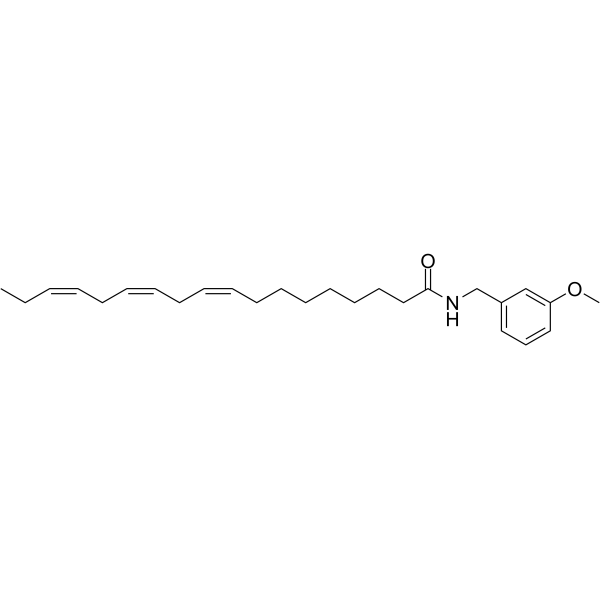
N-(3-Methoxybenzyl)-(9Z,12Z,15Z)-octadecatrienamide is a macamide isolated from Maca (Lepidium meyenii Walp.) N-(3-Methoxybenzyl)-(9Z,12Z,15Z)-octadecatrienamide induces mesenchymal stem cells osteogenic differentiation and consequent bone formation through activating the canonical Wnt/β‐catenin signaling pathway. N-(3-Methoxybenzyl)-(9Z,12Z,15Z)-octadecatrienamide can be used for the research of osteoporosis .
N-(3-Indolylacetyl)-L-alanine-d4 (Indoleacetylalanine-d4) is the deuterium labeled N-(3-Indolylacetyl)-L-alanine (HY-W141858). N-(3-Indolylacetyl)-L-alanine is an indoleacetylamino acid. N-(3-Indolylacetyl)-L-alanine appears to increase callus growth and reduces the ability of growths to differentiate into shoots of Phalaenopsis orchids .
N-3-Oxo-hexadecanoyl-L-Homoserine lactone (3-Oxo-C16-AHL) is a signaling molecule to coordinate group behaviors at high densities in many bacteria. N-3-Oxo-hexadecanoyl-L-Homoserine lactone adsorbs to and promotes the remodeling of lipid membranes in ways that could underpin cell-cell or host-cell interactions .
N-3-oxo-hexadec-11Z-enoyl-L-Homoserine lactone is a biochemical reagent that can be used as a biological material or organic compound for life science related research.
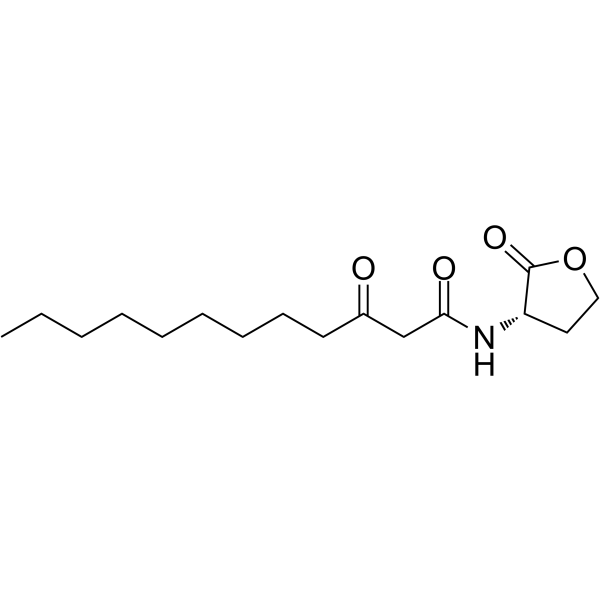
N-3-oxo-dodecanoyl-L-Homoserine lactone (3-oxo-C12-HSL) is a bacterial quorum-sensing signaling molecule produced by P. aeruginosa and strains of the B. cepacia complex .Quorum sensing is a regulatory system used by bacteria for controlling gene expression in response to increasing cell density.N-3-oxo-dodecanoyl-L-Homoserine lactone induces the production of IL-8 in 16HBE human bronchial epithelial cells [3].
N-(3-Oxotetradecanoyl)-DL-homoserine lactone, a member of N-Acyl homoserine lactone (AHL) from gram-negative bacteria, is a quorum sensing (QS) signaling molecule .
N-(3-Indolylacetyl)glycine- 13C2, 15N is the 13C- and 15N-labeled Indole-3-acetylglycine (HY-W317414). Indole-3-acetylglycine is a biochemical assay reagent.
N-(3-Hydroxy-7-cis tetradecenoyl)-L-Homoserine lactone is an N-acyl-homoserine lactone (AHL) signaling molecule primarily secreted by Gram-negative bacteria for quorum sensing. It can be used to study bacterial quorum sensing mechanisms and their behavioral characteristics in the environment .
N-(3-Oxooctanoyl)-DL-homoserine lacton is a member of N-Acyl homoserine lactone (AHL) from gram-negative bacteria, with stereochemistry-dependent growth regulatory activity for roots .
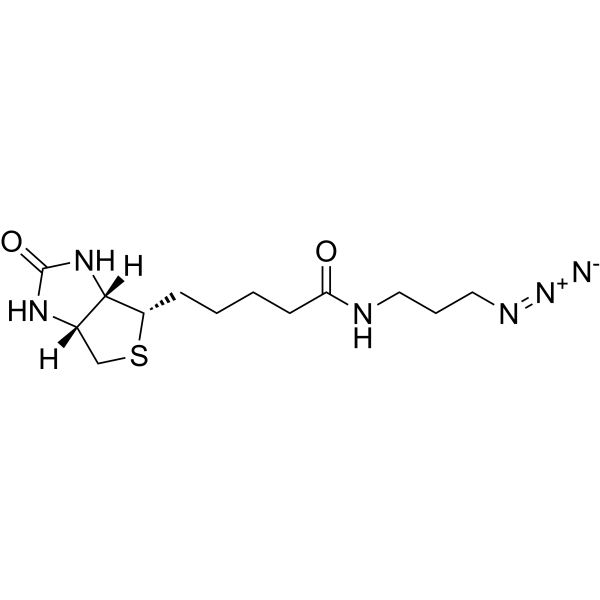
Biotin-azide (N-(3-Azidopropyl)biotinamide) is a form of biotin with a terminal azide group. Biotin-azide can be used to prepare various biotinylated conjugates via Click Chemistry . Biotin-azide is a click chemistry reagent, it contains an Azide group and can undergo copper-catalyzed azide-alkyne cycloaddition reaction (CuAAc) with molecules containing Alkyne groups. It can also undergo strain-promoted alkyne-azide cycloaddition (SPAAC) reactions with molecules containing DBCO or BCN groups.
Guanoxyfen (N-(3-Phenoxypropyl)guanidine) nitrate is a compound that exhibits potent inhibitory activity against the serine protease enzyme TMPRSS2, which plays a crucial role in the infectivity of coronaviruses. Guanoxyfen nitrate is also an effective inhibitor of vasoconstrictor responses to sympathetic nerve stimulation.
N-[3-chloro-4-[(3-fluorophenyl)methoxy]phenyl]-6-iodo-quinazolin-4-amine is a quinazoline derivative that has also been used in the design, synthesis and biological evaluation of quinazoline-phosphoramidate mustard conjugates as anticancer drugs.
3-Oxo-C8-HSL (N-(3-Oxooctanoyl)-l-homoserine lactone) is an autoinducer pheromone. 3-Oxo-C8-HSL is a TraR-regulated promoter. 3-Oxo-C8-HSL significantly stimulates tra gene expression .
2'-Azido-2'-deoxyuridine (N3dUrd) is a ribonucleotide reductase inhibitor. 2'-Azido-2'-deoxyuridine has anti-cancer activity . 2'-Azido-2'-deoxyuridine is a click chemistry reagent, it contains an Azide group and can undergo copper-catalyzed azide-alkyne cycloaddition reaction (CuAAc) with molecules containing Alkyne groups. It can also undergo strain-promoted alkyne-azide cycloaddition (SPAAC) reactions with molecules containing DBCO or BCN groups.
(R)-4-Benzyl-3-propionyloxazolidin-2-one-d3(N-3-propionyl-(4R)-benzyl-2-oxazolidinone-d3) is the deuterium labeled (R)-4-Benzyl-3-propionyloxazolidin-2-one (HY-W008773).
Azide-PEG2-Tos is a small PEG linker featuring an azide and a tosylate. Tosylates are good leaving groups which are easily displaced by nucleophiles while azide is a click chemistry handle which is used to react with terminal alkynes or strained cyclooctynes.
Azido-PEG16-acid is a PEG-based PROTAC linker that can be used in the synthesis of PROTACs . Azido-PEG16-acid is a click chemistry reagent, it contains an Azide group and can undergo copper-catalyzed azide-alkyne cycloaddition reaction (CuAAc) with molecules containing Alkyne groups. It can also undergo strain-promoted alkyne-azide cycloaddition (SPAAC) reactions with molecules containing DBCO or BCN groups.
Azido-PEG11-acid is a PEG-based PROTAC linker that can be used in the synthesis of PROTACs . Azido-PEG11-acid is a click chemistry reagent, it contains an Azide group and can undergo copper-catalyzed azide-alkyne cycloaddition reaction (CuAAc) with molecules containing Alkyne groups. It can also undergo strain-promoted alkyne-azide cycloaddition (SPAAC) reactions with molecules containing DBCO or BCN groups.
4-Epitetracycline (hydrochloride) (Standard) is the analytical standard of 4-Epitetracycline (hydrochloride). This product is intended for research and analytical applications. 4-Epitetracycline hydrochloride is an epimer of Tetracycline (HY-A0107). Tetracycline can undergo epimerization in solution to 4-Epitetracycline hydrochloride, which shows a much lower antibiotic activity .
Ald-C2-PEG4-azide is a PEG-based PROTAC linker that can be used in the synthesis of PROTACs . Ald-C2-PEG4-azide is a click chemistry reagent, it contains an Azide group and can undergo copper-catalyzed azide-alkyne cycloaddition reaction (CuAAc) with molecules containing Alkyne groups. It can also undergo strain-promoted alkyne-azide cycloaddition (SPAAC) reactions with molecules containing DBCO or BCN groups.
Δ7(Z)-C14-HSL (Compound 12) is an immunosuppressive agent that can inhibit the proliferation of mouse splenic cells with an IC50 of 17 μM. Δ7(Z)-C14-HSL can be used for further studying its potential as a molecular mechanism in TNF-R-driven immune diseases, especially autoimmune diseases such as psoriasis, rheumatoid arthritis, and type 1 diabetes .
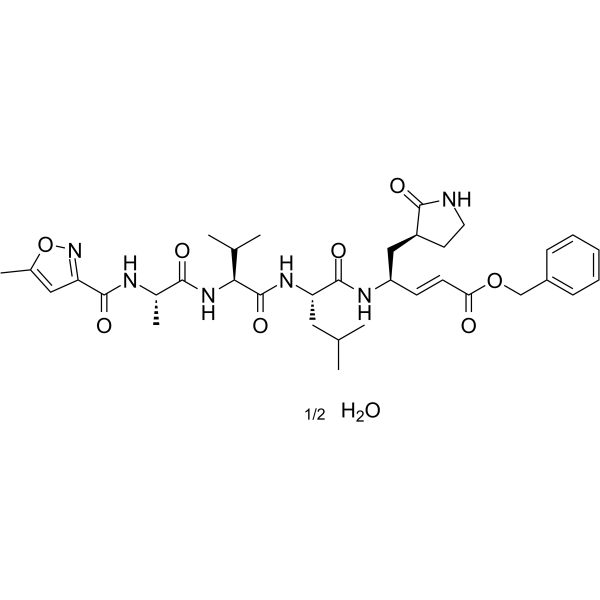
Mpro inhibitor N3 hemihydrate is a potent inhibitor of SARS-CoV-2 Mpro with an EC50 of 16.77 μM for SARS-CoV-2. Mpro inhibitor N3 hemihydrate specifically inhibits Mpro from multiple coronaviruses, including SARS-CoV and MERS-CoV. Mpro inhibitor N3 hemihydrate displays inhibition against HCoV-229E, FIPV, and MHV-A59 with individual IC50 of 4.0 μM, 8.8 μM, and 2.7 μM, respectively .
Mpro inhibitor N3 is a potent SARS-CoV-2 MPro inhibitor with an EC50 value of 16.77 µM. Mpro inhibitor N3 shows antiviral activities against HCoV-229E, FIPV, IBV and MHV-A59 [3].
Sulfo Cy7-N3 is a Sulfo Cy7-azide, which is a fluorescent dye. Sulfo Cy7-N3 can be used in cell imagine by Click reaction. It contains an azide group and can undergo copper-catalyzed azide-alkyne cycloaddition (CuAAc) with molecules containing alkyne groups. It can also undergo ring strain-promoted alkyne-azide cycloaddition (SPAAC) with molecules containing DBCO or BCN groups.
Angiopep-2 azide is a peptide derivative of Angiopep-2 (HY-P2341) bearing a side chain azide (N3) group. Angiopep-2 exhibits high blood-brain barrier (BBB) penetration capability and can be used for brain compound delivery .
Resolvin D5 n-3 DPA is a Docosapentaenoic acid (DPA) derived specialized proresolving lipid mediator (SPM). Resolvin D5 n-3 DPA is a GPR101, GPR12, and GPR84 agonist with EC50s of 4.6 pM, 14 pM, and 1.5 pM, respectively. Resolvin D5 n-3 DPA possesses potent pro-resolution and anti-inflammatory actions. Resolvin D5 n-3 DPA reduces cell adhesion onto TNF-α-activated human endothelial monolayers. Resolvin D5 n-3 DPA displays potent leukocyte-directed activities, upregulating the ability of neutrophils and macrophages to phagocytose bacteria. Resolvin D5 n-3 DPA can be used for the study of intestinal inflammation [3].
ICG PEG1000 N3 is a Indocyanine green (ICG) (HY-D0711)-azide fluorescent dye used to label for protein and nucleic acid. ICG PEG1000 N3 is a click chemistry reagent, it contains an Azide group and can undergo copper-catalyzed azide-alkyne cycloaddition reaction (CuAAc) with molecules containing Alkyne groups. It can also undergo strain-promoted alkyne-azide cycloaddition (SPAAC) reactions with molecules containing DBCO or BCN groups (Ex/Em=785/813 nm).
ICG PEG10000 N3 is a Indocyanine green (ICG) (HY-D0711)-azide fluorescent dye used to label for protein and nucleic acid. ICG PEG10000 N3 is a click chemistry reagent, it contains an Azide group and can undergo copper-catalyzed azide-alkyne cycloaddition reaction (CuAAc) with molecules containing Alkyne groups. It can also undergo strain-promoted alkyne-azide cycloaddition (SPAAC) reactions with molecules containing DBCO or BCN groups (Ex/Em=785/813 nm).
ICG PEG3400 N3 is a Indocyanine green (ICG) (HY-D0711)-azide fluorescent dye used to label for protein and nucleic acid. ICG PEG3400 N3 is a click chemistry reagent, it contains an Azide group and can undergo copper-catalyzed azide-alkyne cycloaddition reaction (CuAAc) with molecules containing Alkyne groups. It can also undergo strain-promoted alkyne-azide cycloaddition (SPAAC) reactions with molecules containing DBCO or BCN groups (Ex/Em=785/813 nm).
ICG PEG2000 N3 is a Indocyanine green (ICG) (HY-D0711)-azide fluorescent dye used to label for protein and nucleic acid. ICG PEG2000 N3 is a click chemistry reagent, it contains an Azide group and can undergo copper-catalyzed azide-alkyne cycloaddition reaction (CuAAc) with molecules containing Alkyne groups. It can also undergo strain-promoted alkyne-azide cycloaddition (SPAAC) reactions with molecules containing DBCO or BCN groups (Ex/Em=785/813 nm).
ICG PEG5000 N3 is a Indocyanine green (ICG) (HY-D0711)-azide fluorescent dye used to label for protein and nucleic acid. ICG PEG5000 N3 is a click chemistry reagent, it contains an Azide group and can undergo copper-catalyzed azide-alkyne cycloaddition reaction (CuAAc) with molecules containing Alkyne groups. It can also undergo strain-promoted alkyne-azide cycloaddition (SPAAC) reactions with molecules containing DBCO or BCN groups (Ex/Em=785/813 nm).
Resolvin D2 n-3 DPA is a specialized proresolving mediator (SPM). Resolvin D2 n-3 DPA (1 nM) can reduce the chemotaxis and adhesion of human neutrophils induced by TNF-α. Resolvin D2 n-3 DPA (100 ng/mouse; intravenous injection) can reduce neutrophil infiltration in the peritoneum and the levels of IL-6 and the chemokine (C-C motif) ligand 2 (CCL2) in a mouse model of inflammation induced by zinc oxide .
Cyclo[K(N3)larllt] is a seven-membered cyclic peptide targeting EGFR, with a Kd value of 5.09 μM, and exhibits binding selectivity toward homologous proteins HER2 and HER3. Cyclo[K(N3)larllt] has no cytotoxicity and shows no growth inhibitory effect on cancer cells overexpressing EGFR. Cyclo[K(N3)larllt] can serve as a ligand for EGFR-targeted fluorescent conjugates, which is applicable to the detection of cancers with EGFR overexpression. Cyclo[K(N3)larllt] can be used in the research of colorectal cancer .
YIGSR-Lys(N3) is a peptide that can inhibit the tumour growth and metastasis of leukaemic cells. YIGSR blocks the cellular binding to laminin I via a 67-kDa laminin-binding protein, and inhibits shear-induced increase in eNOS expression of laminin cells . YIGSR-Lys(N3) is a click chemistry reagent, it contains an Azide group and can undergo copper-catalyzed azide-alkyne cycloaddition reaction (CuAAc) with molecules containing Alkyne groups. It can also undergo strain-promoted alkyne-azide cycloaddition (SPAAC) reactions with molecules containing DBCO or BCN groups.
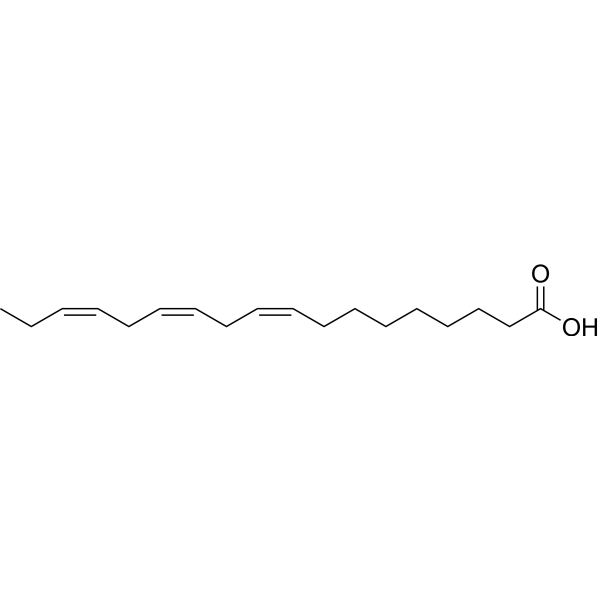
α-Linolenic acid sodium (ALA; C18:3 (9Z,12Z,15Z); C18:3n-3) is an essential fatty acid that cannot be synthesized by humans. α-Linolenic acid sodium can affect the process of thrombotic through the modulation of PI3K/Akt signaling. α-Linolenic acid sodium possess the anti-arrhythmic properties and is related to cardiovascular disease and cancer .
RB-PEG5000-N3 (Rhodamine B-PEG5000-N3) is a fluorescent dye composed of Rhodamine B (HY-Y0016), PEG and azide group (N3). RB-PEG5000-N3 is a click chemistry reagent, it contains an Azide group and can undergo copper-catalyzed azide-alkyne cycloaddition reaction (CuAAc) with molecules containing Alkyne groups. It can also undergo strain-promoted alkyne-azide cycloaddition (SPAAC) reactions with molecules containing DBCO or BCN groups (Ex/Em=546/610 nm) .
RB-PEG1000-N3 (Rhodamine B-PEG1000-N3) is a fluorescent dye composed of Rhodamine B (HY-Y0016), PEG and azide group (N3). RB-PEG1000-N3 is a click chemistry reagent, it contains an Azide group and can undergo copper-catalyzed azide-alkyne cycloaddition reaction (CuAAc) with molecules containing Alkyne groups. It can also undergo strain-promoted alkyne-azide cycloaddition (SPAAC) reactions with molecules containing DBCO or BCN groups (Ex/Em=546/610 nm) .
RB-PEG2000-N3 (Rhodamine B-PEG2000-N3) is a fluorescent dye composed of Rhodamine B (HY-Y0016), PEG and azide group (N3). RB-PEG2000-N3 is a click chemistry reagent, it contains an Azide group and can undergo copper-catalyzed azide-alkyne cycloaddition reaction (CuAAc) with molecules containing Alkyne groups. It can also undergo strain-promoted alkyne-azide cycloaddition (SPAAC) reactions with molecules containing DBCO or BCN groups (Ex/Em=546/610 nm) .
RB-PEG600-N3 (Rhodamine B-PEG600-N3) is a fluorescent dye composed of Rhodamine B (HY-Y0016), PEG and azide group (N3). RB-PEG600-N3 is a click chemistry reagent, it contains an Azide group and can undergo copper-catalyzed azide-alkyne cycloaddition reaction (CuAAc) with molecules containing Alkyne groups. It can also undergo strain-promoted alkyne-azide cycloaddition (SPAAC) reactions with molecules containing DBCO or BCN groups (Ex/Em=546/610 nm) .
RB-PEG3400-N3 (Rhodamine B-PEG3400-N3) is a fluorescent dye composed of Rhodamine B (HY-Y0016), PEG and azide group (N3). RB-PEG3400-N3 is a click chemistry reagent, it contains an Azide group and can undergo copper-catalyzed azide-alkyne cycloaddition reaction (CuAAc) with molecules containing Alkyne groups. It can also undergo strain-promoted alkyne-azide cycloaddition (SPAAC) reactions with molecules containing DBCO or BCN groups (Ex/Em=546/610 nm) .
RB-PEG400-N3 (Rhodamine B-PEG400-N3) is a fluorescent dye composed of Rhodamine B (HY-Y0016), PEG and azide group (N3). RB-PEG400-N3 is a click chemistry reagent, it contains an Azide group and can undergo copper-catalyzed azide-alkyne cycloaddition reaction (CuAAc) with molecules containing Alkyne groups. It can also undergo strain-promoted alkyne-azide cycloaddition (SPAAC) reactions with molecules containing DBCO or BCN groups (Ex/Em=546/610 nm) .
RB-PEG10000-N3 (Rhodamine B-PEG10000-N3) is a fluorescent dye composed of Rhodamine B (HY-Y0016), PEG and azide group (N3). RB-PEG10000-N3 is a click chemistry reagent, it contains an Azide group and can undergo copper-catalyzed azide-alkyne cycloaddition reaction (CuAAc) with molecules containing Alkyne groups. It can also undergo strain-promoted alkyne-azide cycloaddition (SPAAC) reactions with molecules containing DBCO or BCN groups (Ex/Em=546/610 nm) .
NH2-C5-PEG4-N3-L-Lysine-PEG3-N3 is a cleavable 7 unit PEG ADC linker used in the synthesis of antibody-drug conjugates (ADCs) . NH2-C5-PEG4-N3-L-Lysine-PEG3-N3 is a click chemistry reagent, it contains an Azide group and can undergo copper-catalyzed azide-alkyne cycloaddition reaction (CuAAc) with molecules containing Alkyne groups. It can also undergo strain-promoted alkyne-azide cycloaddition (SPAAC) reactions with molecules containing DBCO or BCN groups.
PLLA5000-PEG2000-N3 is a polylactic acid derivative used for encapsulating hydrophobic drugs. PLLA5000-PEG2000-N3 can be used in drug delivery research .
PLLA4000-PEG2000-N3 is a polylactic acid derivative used for encapsulating hydrophobic drugs. PLLA4000-PEG2000-N3 can be used in drug delivery research .
PLLA3000-PEG2000-N3 is a polylactic acid derivative used for encapsulating hydrophobic drugs. PLLA3000-PEG2000-N3 can be used in drug delivery research .
PLLA10000-PEG3000-N3 is a polylactic acid derivative used for encapsulating hydrophobic drugs. PLLA10000-PEG3000-N3 can be used in drug delivery research .
PLLA5000-PEG3000-N3 is a polylactic acid derivative used for encapsulating hydrophobic drugs. PLLA5000-PEG3000-N3 can be used in drug delivery research .
PLLA10000-PEG5000-N3 is a polylactic acid derivative used for encapsulating hydrophobic drugs. PLLA10000-PEG5000-N3 can be used in drug delivery research .
PLLA10000-PEG2000-N3 is a polylactic acid derivative used for encapsulating hydrophobic drugs. PLLA10000-PEG2000-N3 can be used in drug delivery research .
PLLA2000-PEG1000-N3 is a polylactic acid derivative used for encapsulating hydrophobic drugs. PLLA2000-PEG1000-N3 can be used in drug delivery research .
PLLA3000-PEG1000-N3 is a polylactic acid derivative used for encapsulating hydrophobic drugs. PLLA3000-PEG1000-N3 can be used in drug delivery research .
PLLA2000-PEG3000-N3 is a polylactic acid derivative used for encapsulating hydrophobic drugs. PLLA2000-PEG3000-N3 can be used in drug delivery research .
PLLA5000-PEG5000-N3 is a polylactic acid derivative used for encapsulating hydrophobic drugs. PLLA5000-PEG5000-N3 can be used in drug delivery research .
PLLA1000-PEG2000-N3 is a polylactic acid derivative used for encapsulating hydrophobic drugs. PLLA1000-PEG2000-N3 can be used in drug delivery research .
PLLA4000-PEG1000-N3 is a polylactic acid derivative used for encapsulating hydrophobic drugs. PLLA4000-PEG1000-N3 can be used in drug delivery research .
PLLA3000-PEG3000-N3 is a polylactic acid derivative used for encapsulating hydrophobic drugs. PLLA3000-PEG3000-N3 can be used in drug delivery research .
PLLA2000-PEG2000-N3 is a polylactic acid derivative used for encapsulating hydrophobic drugs. PLLA2000-PEG2000-N3 can be used in drug delivery research .
PLLA10000-PEG1000-N3 is a polylactic acid derivative used for encapsulating hydrophobic drugs. PLLA10000-PEG1000-N3 can be used in drug delivery research .
PLLA1000-PEG1000-N3 is a polylactic acid derivative used for encapsulating hydrophobic drugs. PLLA1000-PEG1000-N3 can be used in drug delivery research .
PLLA1000-PEG5000-N3 is a polylactic acid derivative used for encapsulating hydrophobic drugs. PLLA1000-PEG5000-N3 can be used in drug delivery research .
PLLA3000-PEG5000-N3 is a polylactic acid derivative used for encapsulating hydrophobic drugs. PLLA3000-PEG5000-N3 can be used in drug delivery research .
PLLA4000-PEG5000-N3 is a polylactic acid derivative used for encapsulating hydrophobic drugs. PLLA4000-PEG5000-N3 can be used in drug delivery research .
PLLA2000-PEG5000-N3 is a polylactic acid derivative used for encapsulating hydrophobic drugs. PLLA2000-PEG5000-N3 can be used in drug delivery research .
PLLA1000-PEG3000-N3 is a polylactic acid derivative used for encapsulating hydrophobic drugs. PLLA1000-PEG3000-N3 can be used in drug delivery research .
PLLA5000-PEG1000-N3 is a polylactic acid derivative used for encapsulating hydrophobic drugs. PLLA5000-PEG1000-N3 can be used in drug delivery research .
PLLA4000-PEG3000-N3 is a polylactic acid derivative used for encapsulating hydrophobic drugs. PLLA4000-PEG3000-N3 can be used in drug delivery research .
DSPE-N3 is a lipid. DSPE-N3 can be used for the research of various biochemical . DSPE-N3 is a click chemistry reagent, it contains an Azide group and can undergo copper-catalyzed azide-alkyne cycloaddition reaction (CuAAc) with molecules containing Alkyne groups. It can also undergo strain-promoted alkyne-azide cycloaddition (SPAAC) reactions with molecules containing DBCO or BCN groups.
Dopamine-PEG13-N3 (Dopamine-PEG-Azide) is a compound composed of dopamine, PEG segments and an azide group (-N3). Dopamine-PEG13-N3 can be used as a crosslinker to connect different materials together to build new composite materials and improve the performance of materials. Dopamine-PEG13-N3 is a click chemistry reagent. It contains an azide group and can undergo copper-catalyzed azide-alkyne cycloaddition reaction (CuAAc) with molecules containing an alkyne group.
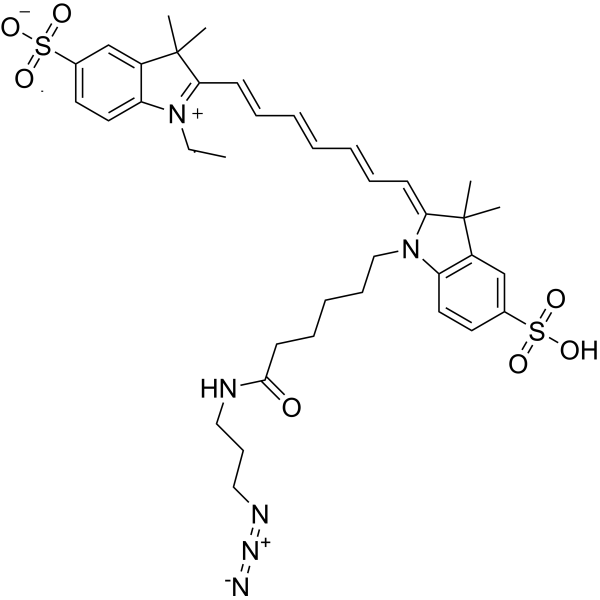
CY7-N3 (Sulfo-Cyanine7-N3) is a water-soluble NIR dye azide for Click Chemistry. It contains an azide group and can undergo copper-catalyzed azide-alkyne cycloaddition (CuAAc) with molecules containing alkyne groups. It can also undergo ring strain-promoted alkyne-azide cycloaddition (SPAAC) with molecules containing DBCO or BCN groups.
CY5-N3 (Sulfo-Cyanine5-azide) is a Cy5-azide, which is a fluorescent dye (ex/em: 646/662 nm). CY5-N3 is cell membrane permeable and can be used for live cell imaging. CY5-N3 can be used in cell imagine by Click reaction .
α-Linolenic acid (ALA (free base); C18:3 (9Z,12Z,15Z) (free base); C18:3n-3 (free base)) is an essential fatty acid that cannot be synthesized by humans. α-Linolenic acid can affect the process of thrombotic through the modulation of PI3K/Akt signaling. α-Linolenic acid possess the anti-arrhythmic properties and is related to cardiovascular disease and cancer .
NAI-N3 (Standard) is the analytical standard of NAI-N3 (HY-103006). This product is intended for research and analytical applications. NAI-N3 is a RNA acylation reagent that enables RNA purification. NAI-N3 is a dual-function SHAPE (selective 2-hydroxyl acylation and profiling experiment) probe (RNA structure probe and enrichment) . It contains an azide group and can undergo copper-catalyzed azide-alkyne cycloaddition (CuAAc) with molecules containing alkyne groups. It can also undergo ring strain-promoted alkyne-azide cycloaddition (SPAAC) with molecules containing DBCO or BCN groups.
Dopamine-PEG2000-N3 (Dopamine-PEG2000-Azide) is a compound composed of dopamine, PEG segments and an azide group (-N3). Dopamine-PEG2000-N3 can be used as a crosslinker to connect different materials together to build new composite materials and improve the performance of materials. Dopamine-PEG2000-N3 is a click chemistry reagent. It contains an azide group and can undergo copper-catalyzed azide-alkyne cycloaddition reaction (CuAAc) with molecules containing an alkyne group.
Dopamine-PEG5000-N3 (Dopamine-PEG5000-Azide) is a compound composed of dopamine, PEG segments and an azide group (-N3). Dopamine-PEG5000-N3 can be used as a crosslinker to connect different materials together to build new composite materials and improve the performance of materials. Dopamine-PEG5000-N3 is a click chemistry reagent. It contains an azide group and can undergo copper-catalyzed azide-alkyne cycloaddition reaction (CuAAc) with molecules containing an alkyne group.
Dopamine-PEG1000-N3 (Dopamine-PEG1000-Azide) is a compound composed of dopamine, PEG segments and an azide group (-N3). Dopamine-PEG1000-N3 can be used as a crosslinker to connect different materials together to build new composite materials and improve the performance of materials. Dopamine-PEG1000-N3 is a click chemistry reagent. It contains an azide group and can undergo copper-catalyzed azide-alkyne cycloaddition reaction (CuAAc) with molecules containing an alkyne group.
Dopamine-PEG10000-N3 (Dopamine-PEG10000-Azide) is a compound composed of dopamine, PEG segments and an azide group (-N3). Dopamine-PEG10000-N3 can be used as a crosslinker to connect different materials together to build new composite materials and improve the performance of materials. Dopamine-PEG10000-N3 is a click chemistry reagent. It contains an azide group and can undergo copper-catalyzed azide-alkyne cycloaddition reaction (CuAAc) with molecules containing an alkyne group.
Dopamine-PEG3400-N3 (Dopamine-PEG3400-Azide) is a compound composed of dopamine, PEG segments and an azide group (-N3). Dopamine-PEG3400-N3 can be used as a crosslinker to connect different materials together to build new composite materials and improve the performance of materials. Dopamine-PEG3400-N3 is a click chemistry reagent. It contains an azide group and can undergo copper-catalyzed azide-alkyne cycloaddition reaction (CuAAc) with molecules containing an alkyne group.
Fmoc-L-MeLys(N3)-OH is a click chemistry reagent containing an azide. Fmoc-L-MeLys(N3)-OH is a SPPS building-block for the introduction of N-Me-Lys that can be modified at the N3-group using Click-chemistry . Fmoc-L-MeLys(N3)-OH is a click chemistry reagent, it contains an Azide group and can undergo copper-catalyzed azide-alkyne cycloaddition reaction (CuAAc) with molecules containing Alkyne groups. It can also undergo strain-promoted alkyne-azide cycloaddition (SPAAC) reactions with molecules containing DBCO or BCN groups.
Dopamine-PEG-N3 (Dopamine-PEG-Azide is a compound composed of dopamine, PEG segments and an azide group (-N3). Dopamine-PEG-N3 can be used as a crosslinker to connect different materials together to build new composite materials and improve the performance of materials. Dopamine-PEG-N3 is a click chemistry reagent. It contains an azide group and can undergo copper-catalyzed azide-alkyne cycloaddition reaction (CuAAc) with molecules containing an alkyne group.
mPEG2000-N3 can be used to modify proteins, peptides, and other materials. The azide group can react with alkynes in aqueous solution catalyzed by copper. It can also be easily reduced to an amine group. PEGylation can increase solubility and stability and reduce the immunogenicity of peptides and proteins. mPEG2000-N3 can also inhibit the nonspecific binding of charged molecules to the modified surface .
mPEG20000-N3 can be used to modify proteins, peptides, and other materials. The azide group can react with alkynes in aqueous solution catalyzed by copper. It can also be easily reduced to an amine group. PEGylation can increase solubility and stability and reduce the immunogenicity of peptides and proteins. mPEG20000-N3 can also inhibit the nonspecific binding of charged molecules to the modified surface .
mPEG5000-N3 can be used to modify proteins, peptides, and other materials. The azide group can react with alkynes in aqueous solution catalyzed by copper. It can also be easily reduced to an amine group. PEGylation can increase solubility and stability and reduce the immunogenicity of peptides and proteins. mPEG5000-N3 can also inhibit the nonspecific binding of charged molecules to the modified surface .
mPEG1000-N3 can be used to modify proteins, peptides, and other materials. The azide group can react with alkynes in aqueous solution catalyzed by copper. It can also be easily reduced to an amine group. PEGylation can increase solubility and stability and reduce the immunogenicity of peptides and proteins. mPEG1000-N3 can also inhibit the nonspecific binding of charged molecules to the modified surface .
mPEG40000-N3 can be used to modify proteins, peptides, and other materials. The azide group can react with alkynes in aqueous solution catalyzed by copper. It can also be easily reduced to an amine group. PEGylation can increase solubility and stability and reduce the immunogenicity of peptides and proteins. mPEG40000-N3 can also inhibit the nonspecific binding of charged molecules to the modified surface .
mPEG3400-N3 can be used to modify proteins, peptides, and other materials. The azide group can react with alkynes in aqueous solution catalyzed by copper. It can also be easily reduced to an amine group. PEGylation can increase solubility and stability and reduce the immunogenicity of peptides and proteins. mPEG3400-N3 can also inhibit the nonspecific binding of charged molecules to the modified surface .
mPEG10000-N3 can be used to modify proteins, peptides, and other materials. The azide group can react with alkynes in aqueous solution catalyzed by copper. It can also be easily reduced to an amine group. PEGylation can increase solubility and stability and reduce the immunogenicity of peptides and proteins. mPEG10000-N3 can also inhibit the nonspecific binding of charged molecules to the modified surface .
Chol-N3 is a bioorthogonal-based chol probe. Chol-N3 can combine with super-resolution fluorescence microscopy (SRM), providing direct visualization of nanoscale lipid heterogeneity in the cell surface of resting living cells . Chol-N3 is a click chemistry reagent, it contains an Azide group and can undergo copper-catalyzed azide-alkyne cycloaddition reaction (CuAAc) with molecules containing Alkyne groups. It can also undergo strain-promoted alkyne-azide cycloaddition (SPAAC) reactions with molecules containing DBCO or BCN groups.
TAMRA-PEG7-N3 is a TAMRA (HY-135640) dye derivative containing 7 PEG units. TAMRA-PEG7-N3 undergoes copper-catalyzed azide-alkyne cycloaddition (CuAAc) with molecules containing an alkynyl group (N3). It also undergoes strain-promoted alkyne-azide cycloaddition (SPAAC) with molecules containing DBCO or BCN groups. It contains an azide group and can undergo copper-catalyzed azide-alkyne cycloaddition (CuAAc) with molecules containing alkyne groups. It can also undergo ring strain-promoted alkyne-azide cycloaddition (SPAAC) with molecules containing DBCO or BCN groups.
TAMRA-PEG2-N3 is a TAMRA (HY-135640) dye derivative containing 4 PEG units. TAMRA-PEG2-N3 undergoes copper-catalyzed azide-alkyne cycloaddition (CuAAc) with molecules containing an alkynyl group (N3). It also undergoes strain-promoted alkyne-azide cycloaddition (SPAAC) with molecules containing DBCO or BCN groups. It contains an azide group and can undergo copper-catalyzed azide-alkyne cycloaddition (CuAAc) with molecules containing alkyne groups. It can also undergo ring strain-promoted alkyne-azide cycloaddition (SPAAC) with molecules containing DBCO or BCN groups.
Cy3-N3 is a Cy3-azide fluorescent dye used to label for protein and nucleic acid. Cy3-N3 is a click chemistry reagent, it contains an Azide group and can undergo copper-catalyzed azide-alkyne cycloaddition reaction (CuAAc) with molecules containing Alkyne groups. It can also undergo strain-promoted alkyne-azide cycloaddition (SPAAC) reactions with molecules containing DBCO or BCN groups (Ex/Em = 548/563 nm).
SN38-PAB-Lys(MMT)-oxydiacetamide-PEG8-N3 is a Drug-Linker Conjugate for ADC. SN38-PAB-Lys(MMT)-oxydiacetamide-PEG8-N3 consists of the anti-cancer agent SN38 (HY-13704) and a linker Lys(MMT)-PAB-oxydiacetamide-PEG8-N3 (HY-131157). SN38-PAB-Lys(MMT)-oxydiacetamide-PEG8-N3 can be used for synthesis of ADCs . SN38-PAB-Lys(MMT)-oxydiacetamide-PEG8-N3 is a click chemistry reagent, it contains an Azide group and can undergo copper-catalyzed azide-alkyne cycloaddition reaction (CuAAc) with molecules containing Alkyne groups. It can also undergo strain-promoted alkyne-azide cycloaddition (SPAAC) reactions with molecules containing DBCO or BCN groups.
Fmoc-Abu(3-N3) (Fmoc-Abu(3-N3)-OH) (2R,3R) is a click chemistry reagent containing an azide group. Fmoc-Abu(3-N3) (2R,3R) can be used for the research of various biochemical . It contains an azide group and can undergo copper-catalyzed azide-alkyne cycloaddition (CuAAc) with molecules containing alkyne groups. It can also undergo ring strain-promoted alkyne-azide cycloaddition (SPAAC) with molecules containing DBCO or BCN groups.
Methyltetrazine-PEG8-N3 is a PEG-based PROTAC linker that can be used in the synthesis of PROTACs . Methyltetrazine-PEG8-N3 is a click chemistry reagent, it contains an Azide group and can undergo copper-catalyzed azide-alkyne cycloaddition reaction (CuAAc) with molecules containing Alkyne groups. It can also undergo strain-promoted alkyne-azide cycloaddition (SPAAC) reactions with molecules containing DBCO or BCN groups.
DSPE-PEG46-N3 is a PEG-based PROTAC linker that can be used in the synthesis of PROTACs . DSPE-PEG46-N3 is a click chemistry reagent, it contains an Azide group and can undergo copper-catalyzed azide-alkyne cycloaddition reaction (CuAAc) with molecules containing Alkyne groups. It can also undergo strain-promoted alkyne-azide cycloaddition (SPAAC) reactions with molecules containing DBCO or BCN groups.
Iodo-PEG3-N3 is a PEG-based PROTAC linker that can be used in the synthesis of PROTACs . Iodo-PEG3-N3 is a click chemistry reagent, it contains an Azide group and can undergo copper-catalyzed azide-alkyne cycloaddition reaction (CuAAc) with molecules containing Alkyne groups. It can also undergo strain-promoted alkyne-azide cycloaddition (SPAAC) reactions with molecules containing DBCO or BCN groups.
Propargyl-PEG6-N3 is a PEG-based PROTAC linker that can be used in the synthesis of PROTACs . Propargyl-PEG6-N3 is a click chemistry reagent, it contains an Azide group and can undergo copper-catalyzed azide-alkyne cycloaddition reaction (CuAAc) with molecules containing Alkyne groups. It can also undergo strain-promoted alkyne-azide cycloaddition (SPAAC) reactions with molecules containing DBCO or BCN groups.
DMPE-PEG5000-N3 (DMPE-PEG5000-Azide) is a conjugate composed of DMPE, PEG chains, and terminal azido groups (-N3). DMPE-PEG5000-Azide is a click chemistry reagent used for the targeted modification of liposomes/nanoparticles.
DPPE-PEG3400-N3 (DPPE-PEG3400-Azide) is a conjugate composed of DPPE, PEG chains, and terminal azido groups (-N3). DPPE-PEG3400-Azide is a click chemistry reagent used for the targeted modification of liposomes/nanoparticles.
DPPE-PEG5000-N3 (DPPE-PEG5000-Azide) is a conjugate composed of DPPE, PEG chains, and terminal azido groups (-N3). DPPE-PEG5000-Azide is a click chemistry reagent used for the targeted modification of liposomes/nanoparticles.
DMPE-PEG1000-N3 (DMPE-PEG1000-Azide) is a conjugate composed of DMPE, PEG chains, and terminal azido groups (-N3). DMPE-PEG1000-Azide is a click chemistry reagent used for the targeted modification of liposomes/nanoparticles.
DMPE-PEG3400-N3 (DMPE-PEG3400-Azide) is a conjugate composed of DMPE, PEG chains, and terminal azido groups (-N3). DMPE-PEG3400-Azide is a click chemistry reagent used for the targeted modification of liposomes/nanoparticles.
DPPE-PEG2000-N3 (DPPE-PEG2000-Azide) is a conjugate composed of DPPE, PEG chains, and terminal azido groups (-N3). DPPE-PEG2000-Azide is a click chemistry reagent used for the targeted modification of liposomes/nanoparticles.
DMPE-PEG2000-N3 (DMPE-PEG2000-Azide) is a conjugate composed of DMPE, PEG chains, and terminal azido groups (-N3). DMPE-PEG2000-Azide is a click chemistry reagent used for the targeted modification of liposomes/nanoparticles.
DPPE-PEG10000-N3 (DPPE-PEG10000-Azide) is a conjugate composed of DPPE, PEG chains, and terminal azido groups (-N3). DPPE-PEG10000-Azide is a click chemistry reagent used for the targeted modification of liposomes/nanoparticles.
DPPE-PEG1000-N3 (DPPE-PEG1000-Azide) is a conjugate composed of DPPE, PEG chains, and terminal azido groups (-N3). DPPE-PEG1000-Azide is a click chemistry reagent used for the targeted modification of liposomes/nanoparticles.
DMPE-PEG10000-N3 (DMPE-PEG10000-Azide) is a conjugate composed of DMPE, PEG chains, and terminal azido groups (-N3). DMPE-PEG10000-Azide is a click chemistry reagent used for the targeted modification of liposomes/nanoparticles.
Fmoc-DAP-N3 is a click chemistry reagent containing an azide group. Fmoc-DAP-N3 is a short, linear spacer molecule with Fmoc protected amino function. Fmoc-DAP-N3 can be used in click conjugation and amid bond formation either with small molecules or for bioconjugation with proteins and antibodies . It contains an azide group and can undergo copper-catalyzed azide-alkyne cycloaddition (CuAAc) with molecules containing alkyne groups. It can also undergo ring strain-promoted alkyne-azide cycloaddition (SPAAC) with molecules containing DBCO or BCN groups.
(S,R,S)-AHPC-PEG2-N3 (Standard) is the analytical standard of (S,R,S)-AHPC-PEG2-N3 (HY-103599). This product is intended for research and analytical applications. (S,R,S)-AHPC-PEG2-N3 is a synthesized E3 ligase ligand-linker conjugate that incorporates the (S,R,S)-AHPC based VHL ligand and 2-unit PEG linker. (S,R,S)-AHPC-PEG2-N3 can be used for the synthesis of PROTACs .
FITC-PEG1000-N3 is an azide fluorescent dye containing polyethylene glycol (PEG) and FITC (HY-66019). FITC-PEG1000-N3 is a click chemistry reagent, it contains an Azide group and can undergo copper-catalyzed azide-alkyne cycloaddition reaction (CuAAc) with molecules containing Alkyne groups. It can also undergo strain-promoted alkyne-azide cycloaddition (SPAAC) reactions with molecules containing DBCO or BCN groups.
FITC-PEG3400-N3 is an azide fluorescent dye containing polyethylene glycol (PEG) and FITC (HY-66019). FITC-PEG3400-N3 is a click chemistry reagent, it contains an Azide group and can undergo copper-catalyzed azide-alkyne cycloaddition reaction (CuAAc) with molecules containing Alkyne groups. It can also undergo strain-promoted alkyne-azide cycloaddition (SPAAC) reactions with molecules containing DBCO or BCN groups.
FITC-PEG10000-N3 is an azide fluorescent dye containing polyethylene glycol (PEG) and FITC (HY-66019). FITC-PEG10000-N3 is a click chemistry reagent, it contains an Azide group and can undergo copper-catalyzed azide-alkyne cycloaddition reaction (CuAAc) with molecules containing Alkyne groups. It can also undergo strain-promoted alkyne-azide cycloaddition (SPAAC) reactions with molecules containing DBCO or BCN groups.
FITC-PEG5000-N3 is an azide fluorescent dye containing polyethylene glycol (PEG) and FITC (HY-66019). FITC-PEG5000-N3 is a click chemistry reagent, it contains an Azide group and can undergo copper-catalyzed azide-alkyne cycloaddition reaction (CuAAc) with molecules containing Alkyne groups. It can also undergo strain-promoted alkyne-azide cycloaddition (SPAAC) reactions with molecules containing DBCO or BCN groups.
FITC-PEG400-N3 is an azide fluorescent dye containing polyethylene glycol (PEG) and FITC (HY-66019). FITC-PEG400-N3 is a click chemistry reagent, it contains an Azide group and can undergo copper-catalyzed azide-alkyne cycloaddition reaction (CuAAc) with molecules containing Alkyne groups. It can also undergo strain-promoted alkyne-azide cycloaddition (SPAAC) reactions with molecules containing DBCO or BCN groups.
Hynic-PEG3-N3 is a cleavable 3 unit PEG ADC linker used in the synthesis of antibody-drug conjugates (ADCs) . Hynic-PEG3-N3 is a click chemistry reagent, it contains an Azide group and can undergo copper-catalyzed azide-alkyne cycloaddition reaction (CuAAc) with molecules containing Alkyne groups. It can also undergo strain-promoted alkyne-azide cycloaddition (SPAAC) reactions with molecules containing DBCO or BCN groups.
H-L-Lys(4-N3-Z)-OH hydrochloride is a click chemistry reagent containing an azide group. H-L-Lys(4-N3-Z)-OH hydrochloride contains a lysine-modified azide moiety and as a bioorthogonal ligation handle. H-L-Lys(4-N3-Z)-OH hydrochloride is an infrared probe and a photo-affinity reagent . It contains an azide group and can undergo copper-catalyzed azide-alkyne cycloaddition (CuAAc) with molecules containing alkyne groups. It can also undergo ring strain-promoted alkyne-azide cycloaddition (SPAAC) with molecules containing DBCO or BCN groups.
3′-O-N3-dATP trisodium (3′-O-Azidomethyl dATP trisodium) is the trisodium salt form of 3′-O-N3-dATP. 3′-O-N3-dATP trisodium is a modified nucleotide, which is utilized for DNA polymerase. 3′-O-N3-dATP trisodium acts as reversible terminator with enhanced raman scattering (SERS) at 2125 cm -1, which determines the DNA sequences continuously .
Boc-HyNic-PEG2-N3 is a PEG-based PROTAC linker that can be used in the synthesis of PROTACs . Boc-HyNic-PEG2-N3 is a click chemistry reagent, it contains an Azide group and can undergo copper-catalyzed azide-alkyne cycloaddition reaction (CuAAc) with molecules containing Alkyne groups. It can also undergo strain-promoted alkyne-azide cycloaddition (SPAAC) reactions with molecules containing DBCO or BCN groups.
(S,R,S)-AHPC-PEG1-N3 (Standard) is the analytical standard of (S,R,S)-AHPC-PEG1-N3 (HY-103600). This product is intended for research and analytical applications. (S,R,S)-AHPC-PEG1-N3 (VH032-PEG1-N3) is a synthesized E3 ligase ligand-linker conjugate that incorporates the (S,R,S)-AHPC based VHL ligand and 1-unit PEG linker used in PROTAC technology. (S,R,S)-AHPC-PEG1-N3 is a click chemistry reagent, it contains an Azide group and can undergo copper-catalyzed azide-alkyne cycloaddition reaction (CuAAc) with molecules containing Alkyne groups. It can also undergo strain-promoted alkyne-azide cycloaddition (SPAAC) reactions with molecules containing DBCO or BCN groups.
LCL-PEG3-N3 is a decoy oligonucleotide ligand for E3 ligase which can be used for developing chimeric molecules LCL-ER(dec), degrading the estrogen receptor . LCL-PEG3-N3 is a click chemistry reagent, it contains an Azide group and can undergo copper-catalyzed azide-alkyne cycloaddition reaction (CuAAc) with molecules containing Alkyne groups. It can also undergo strain-promoted alkyne-azide cycloaddition (SPAAC) reactions with molecules containing DBCO or BCN groups.
LCL-PEG3-N3 (hydrochloride) is a decoy oligonucleotide ligand for E3 ligase which can be used for developing chimeric molecules LCL-ER(dec), degrading the estrogen receptor . LCL-PEG3-N3 (hydrochloride) is a click chemistry reagent, it contains an Azide group and can undergo copper-catalyzed azide-alkyne cycloaddition reaction (CuAAc) with molecules containing Alkyne groups. It can also undergo strain-promoted alkyne-azide cycloaddition (SPAAC) reactions with molecules containing DBCO or BCN groups.
Fmoc-EDA-N3 is a click chemistry reagent containing an azide group . Fmoc-EDA-N3 is a click chemistry reagent, it contains an Azide group and can undergo copper-catalyzed azide-alkyne cycloaddition reaction (CuAAc) with molecules containing Alkyne groups. It can also undergo strain-promoted alkyne-azide cycloaddition (SPAAC) reactions with molecules containing DBCO or BCN groups.
H-L-Tyr(3-N3)-OH is a click chemistry reagent containing an azide . H-L-Tyr(3-N3)-OH is a click chemistry reagent, it contains an Azide group and can undergo copper-catalyzed azide-alkyne cycloaddition reaction (CuAAc) with molecules containing Alkyne groups. It can also undergo strain-promoted alkyne-azide cycloaddition (SPAAC) reactions with molecules containing DBCO or BCN groups .
Sulfo Cy5.5-N3 is a Sulfo Cy5.5-azide, which is a fluorescent dye. Sulfo Cy5.5-N3 can be used in cell imagine by Click reaction. It contains an azide group and can undergo copper-catalyzed azide-alkyne cycloaddition (CuAAc) with molecules containing alkyne groups. It can also undergo ring strain-promoted alkyne-azide cycloaddition (SPAAC) with molecules containing DBCO or BCN groups.
(α-D-Mannopyranosyloxy)3-N3 is a type of N-acetylgalactosamine (GalNAc) that exhibits liver-targeting properties and can be used in the synthesis of oligonucleotides .
Thalidomide-C4-N2-C2-N3 is an E3 ligase ligand. Thalidomide-C4-N2-C2-N3 can bind to a target protein ligand with a linker to form a PROTAC molecule, PROTAC sEH-degrader-4 (HY-179166) .
Rhodamine-N3 chloride is an azide-rhodamine fluorescent dye that can be used to label biomolecules containing alkyne groups . Rhodamine-N3 chloride is a click chemistry reagent, it contains an Azide group and can undergo copper-catalyzed azide-alkyne cycloaddition reaction (CuAAc) with molecules containing Alkyne groups. It can also undergo strain-promoted alkyne-azide cycloaddition (SPAAC) reactions with molecules containing DBCO or BCN groups (Ex/Em = 544/576 nm).
(S,R,S)-AHPC-PEG2-N3 is a synthesized E3 ligase ligand-linker conjugate that incorporates the (S,R,S)-AHPC based VHL ligand and 2-unit PEG linker. (S,R,S)-AHPC-PEG2-N3 can be used for the synthesis of PROTACs .
(S,R,S)-AHPC-C2-PEG4-N3 (VH032-C2-PEG4-N3) is a synthesized E3 ligase ligand-linker conjugate that incorporates the (S,R,S)-AHPC based VHL ligand and 4-unit PEG linker used in PROTAC technology. (S,R,S)-AHPC-C2-PEG4-N3 can be used in the synthesis of vRucaparib-TP4 (HY-130647). vRucaparib-TP4 a highly potent PARP1 degrader with a half-maximal degrading concentration (DC50) of 82 nM . (S,R,S)-AHPC-C2-PEG4-N3 is a click chemistry reagent, it contains an Azide group and can undergo copper-catalyzed azide-alkyne cycloaddition reaction (CuAAc) with molecules containing Alkyne groups. It can also undergo strain-promoted alkyne-azide cycloaddition (SPAAC) reactions with molecules containing DBCO or BCN groups.
Fmoc-L-Lys(4-N3-Z)-OH is a click chemistry reagent containing an azide group. Fmoc-L-Lys(4-N3-Z)-OH acts as Lysine building-block for SPPS containing an Azide moiety as a bioorthogonal ligation handle, an infrared probe and a photo-affinity reagent. It can be decaged by trans-cyclooctenols via a strain-promoted 1,3-dipolar cycloaddition . Fmoc-L-Lys(4-N3-Z)-OH is a click chemistry reagent, it contains an Azide group and can undergo copper-catalyzed azide-alkyne cycloaddition reaction (CuAAc) with molecules containing Alkyne groups. It can also undergo strain-promoted alkyne-azide cycloaddition (SPAAC) reactions with molecules containing DBCO or BCN groups.
Me-(S,R,S)-AHPC-CO-C5-N3 is an E3 ligase ligand-linker conjugate composed of a VHL ligand (HY-112078) and a linker (HY-W123015). Me-(S,R,S)-AHPC-CO-C5-N3 can be used for synthesis of PROTACs, such as PROTAC CG167 (HY-173009) .
Cy3-PEG2000-N3 is a Cy3 (HY-D0822)-azide fluorescent dye used to label for protein and nucleic acid. Cy3-PEG2000-N3 is a click chemistry reagent, it contains an Azide group and can undergo copper-catalyzed azide-alkyne cycloaddition reaction (CuAAc) with molecules containing Alkyne groups. It can also undergo strain-promoted alkyne-azide cycloaddition (SPAAC) reactions with molecules containing DBCO or BCN groups.
Cy5-PEG3400-N3 is a Cy5 (HY-D0821)-azide fluorescent dye used to label for protein and nucleic acid. Cy5-PEG3400-N3 is a click chemistry reagent, it contains an Azide group and can undergo copper-catalyzed azide-alkyne cycloaddition reaction (CuAAc) with molecules containing Alkyne groups. It can also undergo strain-promoted alkyne-azide cycloaddition (SPAAC) reactions with molecules containing DBCO or BCN groups.
Cy3-PEG10000-N3 is a Cy3 (HY-D0822)-azide fluorescent dye used to label for protein and nucleic acid. Cy3-PEG10000-N3 is a click chemistry reagent, it contains an Azide group and can undergo copper-catalyzed azide-alkyne cycloaddition reaction (CuAAc) with molecules containing Alkyne groups. It can also undergo strain-promoted alkyne-azide cycloaddition (SPAAC) reactions with molecules containing DBCO or BCN groups.
Cy5-PEG2000-N3 is a Cy5 (HY-D0821)-azide fluorescent dye used to label for protein and nucleic acid. Cy5-PEG2000-N3 is a click chemistry reagent, it contains an Azide group and can undergo copper-catalyzed azide-alkyne cycloaddition reaction (CuAAc) with molecules containing Alkyne groups. It can also undergo strain-promoted alkyne-azide cycloaddition (SPAAC) reactions with molecules containing DBCO or BCN groups.
Cy5-PEG10000-N3 is a Cy5 (HY-D0821)-azide fluorescent dye used to label for protein and nucleic acid. Cy5-PEG10000-N3 is a click chemistry reagent, it contains an Azide group and can undergo copper-catalyzed azide-alkyne cycloaddition reaction (CuAAc) with molecules containing Alkyne groups. It can also undergo strain-promoted alkyne-azide cycloaddition (SPAAC) reactions with molecules containing DBCO or BCN groups.
Cy3-PEG3400-N3 is a Cy3 (HY-D0822)-azide fluorescent dye used to label for protein and nucleic acid. Cy3-PEG3400-N3 is a click chemistry reagent, it contains an Azide group and can undergo copper-catalyzed azide-alkyne cycloaddition reaction (CuAAc) with molecules containing Alkyne groups. It can also undergo strain-promoted alkyne-azide cycloaddition (SPAAC) reactions with molecules containing DBCO or BCN groups.
Cy3-PEG5000-N3 is a Cy3 (HY-D0822)-azide fluorescent dye used to label for protein and nucleic acid. Cy3-PEG5000-N3 is a click chemistry reagent, it contains an Azide group and can undergo copper-catalyzed azide-alkyne cycloaddition reaction (CuAAc) with molecules containing Alkyne groups. It can also undergo strain-promoted alkyne-azide cycloaddition (SPAAC) reactions with molecules containing DBCO or BCN groups.
Cy5-PEG5000-N3 is a Cy5 (HY-D0821)-azide fluorescent dye used to label for protein and nucleic acid. Cy5-PEG5000-N3 is a click chemistry reagent, it contains an Azide group and can undergo copper-catalyzed azide-alkyne cycloaddition reaction (CuAAc) with molecules containing Alkyne groups. It can also undergo strain-promoted alkyne-azide cycloaddition (SPAAC) reactions with molecules containing DBCO or BCN groups.
3′-O-N3-dATP (3′-O-Azidomethyl dATP) is a modified nucleotide, which is utilized for DNA polymerase. 3′-O-N3-dATP acts as reversible terminator with enhanced raman scattering (SERS) at 2125 cm -1, which determines the DNA sequences continuously .
NAI-N3 is a RNA acylation reagent that enables RNA purification. NAI-N3 is a dual-function SHAPE (selective 2-hydroxyl acylation and profiling experiment) probe (RNA structure probe and enrichment) . It contains an azide group and can undergo copper-catalyzed azide-alkyne cycloaddition (CuAAc) with molecules containing alkyne groups. It can also undergo ring strain-promoted alkyne-azide cycloaddition (SPAAC) with molecules containing DBCO or BCN groups.
PTAD-PEG4-N3 is a cleavable 4 unit PEG ADC linker used in the synthesis of antibody-drug conjugates (ADCs) . PTAD-PEG4-N3 is a click chemistry reagent, it contains an Azide group and can undergo copper-catalyzed azide-alkyne cycloaddition reaction (CuAAc) with molecules containing Alkyne groups. It can also undergo strain-promoted alkyne-azide cycloaddition (SPAAC) reactions with molecules containing DBCO or BCN groups.
H2N-PEG2-N3 (TosOH) is a click chemistry reagent containing an Azide. N3-PEG2-Amine is used as a Click-chemistry linker in various applications . It contains an azide group and can undergo copper-catalyzed azide-alkyne cycloaddition (CuAAc) with molecules containing alkyne groups. It can also undergo ring strain-promoted alkyne-azide cycloaddition (SPAAC) with molecules containing DBCO or BCN groups.
(S,R,S)-AHPC-NHCO-C-O-C5-N3 is a conjugate of ligand for E3 ligase (HY-125845) and linker (HY-161792). (S,R,S)-AHPC-NHCO-C-O-C5-N3 can be utilized for synthesis of PROTAC SARS-CoV-2 Mpro degrader-3 (HY-161789) .
(S,R,S)-AHPC-PEG4-N3 (Standard) is the analytical standard of (S,R,S)-AHPC-PEG4-N3 (HY-103601). This product is intended for research and analytical applications. (S,R,S)-AHPC-PEG4-N3 is a synthesized E3 ligase ligand-linker conjugate that incorporates the (S,R,S)-AHPC based VHL ligand and 4-unit PEG linker used in PROTAC technology. (S,R,S)-AHPC-PEG4-N3 is a click chemistry reagent, it contains an Azide group and can undergo copper-catalyzed azide-alkyne cycloaddition reaction (CuAAc) with molecules containing Alkyne groups. It can also undergo strain-promoted alkyne-azide cycloaddition (SPAAC) reactions with molecules containing DBCO or BCN groups.
(S,R,S)-AHPC-PEG1-N3 (VH032-PEG1-N3) is a synthesized E3 ligase ligand-linker conjugate that incorporates the (S,R,S)-AHPC based VHL ligand and 1-unit PEG linker used in PROTAC technology. (S,R,S)-AHPC-PEG1-N3 is a click chemistry reagent, it contains an Azide group and can undergo copper-catalyzed azide-alkyne cycloaddition reaction (CuAAc) with molecules containing Alkyne groups. It can also undergo strain-promoted alkyne-azide cycloaddition (SPAAC) reactions with molecules containing DBCO or BCN groups.
Fmoc-Abg(N3)-OH is a click chemistry reagent containing an azide group. Fmoc-Abg(N3)-OH has the potential to synthesize peptide nucleic acids (PNA) and peptoids. It contains an azide group and can undergo copper-catalyzed azide-alkyne cycloaddition (CuAAc) with molecules containing alkyne groups. It can also undergo ring strain-promoted alkyne-azide cycloaddition (SPAAC) with molecules containing DBCO or BCN groups.
Lys(MMT)-PAB-oxydiacetamide-PEG8-N3 is a cleavable antibody agent conjugate linker used in the synthesis of antibody-drug conjugates (ADCs) . Lys(MMT)-PAB-oxydiacetamide-PEG8-N3 is a click chemistry reagent, it contains an Azide group and can undergo copper-catalyzed azide-alkyne cycloaddition reaction (CuAAc) with molecules containing Alkyne groups. It can also undergo strain-promoted alkyne-azide cycloaddition (SPAAC) reactions with molecules containing DBCO or BCN groups.
β-D-tetraacetylgalactopyranoside-PEG1-N3 is a cleavable 1 unit PEG ADC linker used in the synthesis of antibody-drug conjugates (ADCs) . β-D-tetraacetylgalactopyranoside-PEG1-N3 is a click chemistry reagent, it contains an Azide group and can undergo copper-catalyzed azide-alkyne cycloaddition reaction (CuAAc) with molecules containing Alkyne groups. It can also undergo strain-promoted alkyne-azide cycloaddition (SPAAC) reactions with molecules containing DBCO or BCN groups.
Cy5.5-PEG3400-N3 is a Cy5.5 (HY-D0924)-azide fluorescent dye used to label for protein and nucleic acid. Cy5.5-PEG3400-N3 is a click chemistry reagent, it contains an Azide group and can undergo copper-catalyzed azide-alkyne cycloaddition reaction (CuAAc) with molecules containing Alkyne groups. It can also undergo strain-promoted alkyne-azide cycloaddition (SPAAC) reactions with molecules containing DBCO or BCN groups.
Cy5.5-PEG10000-N3 is a Cy5.5 (HY-D0924)-azide fluorescent dye used to label for protein and nucleic acid. Cy5.5-PEG10000-N3 is a click chemistry reagent, it contains an Azide group and can undergo copper-catalyzed azide-alkyne cycloaddition reaction (CuAAc) with molecules containing Alkyne groups. It can also undergo strain-promoted alkyne-azide cycloaddition (SPAAC) reactions with molecules containing DBCO or BCN groups.
Cy5.5-PEG5000-N3 is a Cy5.5 (HY-D0924)-azide fluorescent dye used to label for protein and nucleic acid. Cy5.5-PEG5000-N3 is a click chemistry reagent, it contains an Azide group and can undergo copper-catalyzed azide-alkyne cycloaddition reaction (CuAAc) with molecules containing Alkyne groups. It can also undergo strain-promoted alkyne-azide cycloaddition (SPAAC) reactions with molecules containing DBCO or BCN groups.
Cy5.5-PEG2000-N3 is a Cy5.5 (HY-D0924)-azide fluorescent dye used to label for protein and nucleic acid. Cy5.5-PEG2000-N3 is a click chemistry reagent, it contains an Azide group and can undergo copper-catalyzed azide-alkyne cycloaddition reaction (CuAAc) with molecules containing Alkyne groups. It can also undergo strain-promoted alkyne-azide cycloaddition (SPAAC) reactions with molecules containing DBCO or BCN groups.
Thalidomide-O-amido-C4-N3 (Standard) is the analytical standard of Thalidomide-O-amido-C4-N3 (HY-103615). This product is intended for research and analytical applications. Thalidomide-O-amido-C4-N3 is a synthetic E3 ligase ligand-linker conjugate, consisting of a cereblon ligand based on Thalidomide (HY-14658) and a linker.
Z-L-Dbu(N3)-OH is a click chemistry reagent containing an Azide . Z-L-Dbu(N3)-OH is a click chemistry reagent, it contains an Azide group and can undergo copper-catalyzed azide-alkyne cycloaddition reaction (CuAAc) with molecules containing Alkyne groups. It can also undergo strain-promoted alkyne-azide cycloaddition (SPAAC) reactions with molecules containing DBCO or BCN groups.
alpha-Man-TEG-N3 is a click chemistry reagent containing an azide group . alpha-Man-TEG-N3 is a click chemistry reagent, it contains an Azide group and can undergo copper-catalyzed azide-alkyne cycloaddition reaction (CuAAc) with molecules containing Alkyne groups. It can also undergo strain-promoted alkyne-azide cycloaddition (SPAAC) reactions with molecules containing DBCO or BCN groups.
Dimethyl 3-hydroxyphthalate-amido-C4-N3 is an E3 ligase ligand-linker conjugate containing a CRBN-based ligand and linker, which can be used to synthesize PROTAC.
PROTAC BRD4 Degrader-5-CO-PEG3-N3 is a PROTAC-linker Conjugate for PAC, comprises the BRD4 degrader (MZ 1 (HY-107425) analog) and PEG-based linker. PROTAC BRD4 Degrader-5-CO-PEG3-N3 is a click chemistry reagent, it contains an Azide group and can undergo copper-catalyzed azide-alkyne cycloaddition reaction (CuAAc) with molecules containing Alkyne groups. It can also undergo strain-promoted alkyne-azide cycloaddition (SPAAC) reactions with molecules containing DBCO or BCN groups. PROTAC BRD4 Degrader-5-CO-PEG3-N3 can be used for the research of HER2-positive breast cancer .
Amino-PEG4-bis-PEG3-N3 is a cleavable 7 unit PEG ADC linker used in the synthesis of antibody-drug conjugates (ADCs) . Amino-PEG4-bis-PEG3-N3 is a click chemistry reagent, it contains an Azide group and can undergo copper-catalyzed azide-alkyne cycloaddition reaction (CuAAc) with molecules containing Alkyne groups. It can also undergo strain-promoted alkyne-azide cycloaddition (SPAAC) reactions with molecules containing DBCO or BCN groups.
Fmoc-D-Lys(N3)-OH is a click chemistry reagent containing an azide group. Fmoc-D-Lys(N3)-OH can be used for the research of various biochemical . It contains an azide group and can undergo copper-catalyzed azide-alkyne cycloaddition (CuAAc) with molecules containing alkyne groups. It can also undergo ring strain-promoted alkyne-azide cycloaddition (SPAAC) with molecules containing DBCO or BCN groups.
H-L-Orn(N3)-OH (hydrochloride) is a click chemistry reagent containing an azide group. H-L-Orn(N3)-OH (hydrochloride) can be used for the research of various biochemical . It contains an azide group and can undergo copper-catalyzed azide-alkyne cycloaddition (CuAAc) with molecules containing alkyne groups. It can also undergo ring strain-promoted alkyne-azide cycloaddition (SPAAC) with molecules containing DBCO or BCN groups.
Z-D-Dbu(N3)-OH is a click chemistry reagent containing an azide group. Z-D-Dbu(N3)-OH can be used for the research of various biochemical . It contains an azide group and can undergo copper-catalyzed azide-alkyne cycloaddition (CuAAc) with molecules containing alkyne groups. It can also undergo ring strain-promoted alkyne-azide cycloaddition (SPAAC) with molecules containing DBCO or BCN groups.
beta-Lac-TEG-N3 is a click chemistry reagent containing an azide group. beta-Lac-TEG-N3 can be used for the research of various biochemical . It contains an azide group and can undergo copper-catalyzed azide-alkyne cycloaddition (CuAAc) with molecules containing alkyne groups. It can also undergo ring strain-promoted alkyne-azide cycloaddition (SPAAC) with molecules containing DBCO or BCN groups.
Fmoc-D-Dbu(N3)-OH is a click chemistry reagent containing an Azide . Fmoc-D-Dbu(N3)-OH is a click chemistry reagent, it contains an Azide group and can undergo copper-catalyzed azide-alkyne cycloaddition reaction (CuAAc) with molecules containing Alkyne groups. It can also undergo strain-promoted alkyne-azide cycloaddition (SPAAC) reactions with molecules containing DBCO or BCN groups.
cis-Fmoc-Pro(4-N3)-OH is a proline derivative . cis-Fmoc-Pro(4-N3)-OH is a click chemistry reagent, it contains an Azide group and can undergo copper-catalyzed azide-alkyne cycloaddition reaction (CuAAc) with molecules containing Alkyne groups. It can also undergo strain-promoted alkyne-azide cycloaddition (SPAAC) reactions with molecules containing DBCO or BCN groups.
(S,R,S,R)-AHPC-Me-CO-C7-N3 is a synthesized E3 ligase ligand-linker conjugate that incorporates the (S,R,S,R)-AHPC-Me based VHL ligand and a linker used in PROTAC technology. (S,R,S,R)-AHPC-Me-CO-C7-N3 can be connected to the ligand for protein by a linker to form PROTAC EZH2 Degrader-28 (HY-181355) .
Silane-PEG2000-N3 (Silane-PEG2000-azide) is a PEG derivative composed of silane, PEG units, and azide groups, which can be used to modify glass, silicon, or other surfaces by reacting hydroxyl groups with ethoxy (methoxy) silanes. Silane-PEG2000-N3 contains an azide group and can undergo copper-catalyzed azide-alkyne cycloaddition (CuAAc) with molecules containing alkyne groups. It can also undergo ring strain-driven alkyne-azide cycloaddition (SPAAC) with molecules containing DBCO or BCN groups .
Silane-PEG5000-N3 (Silane-PEG5000-azide) is a PEG derivative composed of silane, PEG units, and azide groups, which can be used to modify glass, silicon, or other surfaces by reacting hydroxyl groups with ethoxy (methoxy) silanes. Silane-PEG5000-N3 contains an azide group and can undergo copper-catalyzed azide-alkyne cycloaddition (CuAAc) with molecules containing alkyne groups. It can also undergo ring strain-driven alkyne-azide cycloaddition (SPAAC) with molecules containing DBCO or BCN groups .
Silane-PEG10000-N3 (Silane-PEG10000-azide) is a PEG derivative composed of silane, PEG units, and azide groups, which can be used to modify glass, silicon, or other surfaces by reacting hydroxyl groups with ethoxy (methoxy) silanes. Silane-PEG10000-N3 contains an azide group and can undergo copper-catalyzed azide-alkyne cycloaddition (CuAAc) with molecules containing alkyne groups. It can also undergo ring strain-driven alkyne-azide cycloaddition (SPAAC) with molecules containing DBCO or BCN groups .
Silane-PEG1000-N3 (Silane-PEG1000-azide) is a PEG derivative composed of silane, PEG units, and azide groups, which can be used to modify glass, silicon, or other surfaces by reacting hydroxyl groups with ethoxy (methoxy) silanes. Silane-PEG1000-N3 contains an azide group and can undergo copper-catalyzed azide-alkyne cycloaddition (CuAAc) with molecules containing alkyne groups. It can also undergo ring strain-driven alkyne-azide cycloaddition (SPAAC) with molecules containing DBCO or BCN groups .
Amino-PEG6-amido-bis-PEG5-N3 is a cleavable 11 unit PEG ADC linker used in the synthesis of antibody-drug conjugates (ADCs) . Amino-PEG6-amido-bis-PEG5-N3 is a click chemistry reagent, it contains an Azide group and can undergo copper-catalyzed azide-alkyne cycloaddition reaction (CuAAc) with molecules containing Alkyne groups. It can also undergo strain-promoted alkyne-azide cycloaddition (SPAAC) reactions with molecules containing DBCO or BCN groups.
Silane-PEG3400-N3 (Silane-PEG3400-azide) is a PEG derivative composed of silane, PEG units, and azide groups, which can be used to modify glass, silicon, or other surfaces by reacting hydroxyl groups with ethoxy (methoxy) silanes. Silane-PEG3400-N3 contains an azide group and can undergo copper-catalyzed azide-alkyne cycloaddition (CuAAc) with molecules containing alkyne groups. It can also undergo ring strain-driven alkyne-azide cycloaddition (SPAAC) with molecules containing DBCO or BCN groups .
Ald-Ph-PEG4-bis-PEG3-N3 is a cleavable 6 unit PEG ADC linker used in the synthesis of antibody-drug conjugates (ADCs) . Ald-Ph-PEG4-bis-PEG3-N3 is a click chemistry reagent, it contains an Azide group and can undergo copper-catalyzed azide-alkyne cycloaddition reaction (CuAAc) with molecules containing Alkyne groups. It can also undergo strain-promoted alkyne-azide cycloaddition (SPAAC) reactions with molecules containing DBCO or BCN groups.
H-L-Lys(N3-Gly)-OH is a click chemistry containing an azide group, a lysine derivative. H-L-Lys(N3-Gly)-OH can be incorporated into proteins for click modifications . It contains an azide group and can undergo copper-catalyzed azide-alkyne cycloaddition (CuAAc) with molecules containing alkyne groups. It can also undergo ring strain-promoted alkyne-azide cycloaddition (SPAAC) with molecules containing DBCO or BCN groups.
H-L-Lys(N3-Gly)-OH hydrochloride is a click chemistry containing an azide group, a lysine derivative. H-L-Lys(N3-Gly)-OH hydrochloride can be incorporated into proteins for click modifications . It contains an azide group and can undergo copper-catalyzed azide-alkyne cycloaddition (CuAAc) with molecules containing alkyne groups. It can also undergo ring strain-promoted alkyne-azide cycloaddition (SPAAC) with molecules containing DBCO or BCN groups.
CRBN ligand-895-PEG2-N3 (Compound 15) is a synthetic E3 ligase linker conjugate that can be used for the synthesis of PROTACs, such as PROTAC HDAC8 Degrader-4 (HY-181024) .
N1,N3-bis(2,3-dihydroxypropyl)-5-nitroisophthalamide (Standard) is the analytical standard of N1,N3-bis(2,3-dihydroxypropyl)-5-nitroisophthalamide. This product is intended for research and analytical applications.
(2S,3S)-H-Abu(3-N3)-OH (hydrochloride) is a click chemistry reagent containing an azide group . (2S,3S)-H-Abu(3-N3)-OH (hydrochloride) is a click chemistry reagent, it contains an Azide group and can undergo copper-catalyzed azide-alkyne cycloaddition reaction (CuAAc) with molecules containing Alkyne groups. It can also undergo strain-promoted alkyne-azide cycloaddition (SPAAC) reactions with molecules containing DBCO or BCN groups.
(2S,3R)-H-Abu(3-N3)-OH (hydrochloride) is a click chemistry reagent containing an azide group . (2S,3R)-H-Abu(3-N3)-OH (hydrochloride) is a click chemistry reagent, it contains an Azide group and can undergo copper-catalyzed azide-alkyne cycloaddition reaction (CuAAc) with molecules containing Alkyne groups. It can also undergo strain-promoted alkyne-azide cycloaddition (SPAAC) reactions with molecules containing DBCO or BCN groups.
(S,R,S)-AHPC-PEG2-C5-N3 is a synthesized E3 ligase ligand-linker conjugate. (S,R,S)-AHPC-PEG2-C5-N3 is a click chemistry reagent, it contains an Azide group and can undergo copper-catalyzed azide-alkyne cycloaddition reaction (CuAAc) with molecules containing Alkyne groups. It can also undergo strain-promoted alkyne-azide cycloaddition (SPAAC) reactions with molecules containing DBCO or BCN groups .
(R,S,S)-VH032-PEG5-N3 is an E3 ligase ligand-linker conjugate comprising a VHL ligand based on VH032 and a 5-unit PEG linker. (R,S,S)-VH032-PEG5-N3 is a click chemistry reagent. It contains an azide group and can undergo copper-catalyzed azido-azynylene cycloaddition (CuAAc) with molecules containing an alkyne group. It can also undergo ring-strain-driven alkyne-azido cycloaddition (SPAAC) with molecules containing DBCO or BCN groups.
N1,N3-Bis(cyanomethyl)pseudouridine is a purine nucleoside analogue. Purine nucleoside analogs have broad antitumor activity targeting indolent lymphoid malignancies. Anticancer mechanisms in this process rely on inhibition of DNA synthesis, induction of apoptosis, etc .
(2S,4R)-Fmoc-L-Pro(4-N3)-OH is a click chemistry reagent containing an azide . (2S,4R)-Fmoc-L-Pro(4-N3)-OH is a click chemistry reagent, it contains an Azide group and can undergo copper-catalyzed azide-alkyne cycloaddition reaction (CuAAc) with molecules containing Alkyne groups. It can also undergo strain-promoted alkyne-azide cycloaddition (SPAAC) reactions with molecules containing DBCO or BCN groups.
tBu-MTX-CO-NH-C2-O-C2-N3 (Compound 4a) is an azide compound, which can be used as a drug intermediate for the construction of chemical inducers of dimerisation.
(2S,3R)-Fmoc-Abu(3-N3)-OH is a click chemistry reagent containing an azide group. (2S,3R)-Fmoc-Abu(3-N3)-OH can be used for the research of various biochemical . It contains an azide group and can undergo copper-catalyzed azide-alkyne cycloaddition (CuAAc) with molecules containing alkyne groups. It can also undergo ring strain-promoted alkyne-azide cycloaddition (SPAAC) with molecules containing DBCO or BCN groups.
Pomalidomid-C6-PEG3-butyl-N3 is a click chemistry reagent containing an azide group. Pomalidomid-C6-PEG3-butyl-N3 also is a crosslinker-E3 ligase ligand conjugate, which be used in click reactive protein degrader building block for PROTAC research.
Pomalidomid-C6-PEG3-butyl-N3 also can be used in the template for synthesis of targeted protein degrader . It contains an azide group and can undergo copper-catalyzed azide-alkyne cycloaddition (CuAAc) with molecules containing alkyne groups. It can also undergo ring strain-promoted alkyne-azide cycloaddition (SPAAC) with molecules containing DBCO or BCN groups.
(2R,4S)-H-D-Pro(4-N3)-OH is a click chemistry reagent containing an azide group . (2R,4S)-H-D-Pro(4-N3)-OH is a click chemistry reagent, it contains an Azide group and can undergo copper-catalyzed azide-alkyne cycloaddition reaction (CuAAc) with molecules containing Alkyne groups. It can also undergo strain-promoted alkyne-azide cycloaddition (SPAAC) reactions with molecules containing DBCO or BCN groups.
(2R,4R)-H-D-Pro(4-N3)-OH (hydrochloride) is a click chemistry reagent containing an azide group . (2R,4R)-H-D-Pro(4-N3)-OH (hydrochloride) is a click chemistry reagent, it contains an Azide group and can undergo copper-catalyzed azide-alkyne cycloaddition reaction (CuAAc) with molecules containing Alkyne groups. It can also undergo strain-promoted alkyne-azide cycloaddition (SPAAC) reactions with molecules containing DBCO or BCN groups.
(2R,4S)-Boc-D-Pro(4-N3)-OH is a click chemistry reagent containing an azide . (2R,4S)-Boc-D-Pro(4-N3)-OH is a click chemistry reagent, it contains an Azide group and can undergo copper-catalyzed azide-alkyne cycloaddition reaction (CuAAc) with molecules containing Alkyne groups. It can also undergo strain-promoted alkyne-azide cycloaddition (SPAAC) reactions with molecules containing DBCO or BCN groups.
(2S,4R)-H-L-Pro(4-N3)-OH (hydrochloride) is a click chemistry reagent containing an azide group. (2S,4R)-H-L-Pro(4-N3)-OH (hydrochloride) can be used for the research of various biochemical studies . It contains an azide group and can undergo copper-catalyzed azide-alkyne cycloaddition (CuAAc) with molecules containing alkyne groups. It can also undergo ring strain-promoted alkyne-azide cycloaddition (SPAAC) with molecules containing DBCO or BCN groups.
(2S,4R)-H-L-Pro(4-N3)-OH is a click chemistry reagent containing an azide group. (2S,4R)-H-L-Pro(4-N3)-OH can be used for the research of various biochemical studies . It contains an azide group and can undergo copper-catalyzed azide-alkyne cycloaddition (CuAAc) with molecules containing alkyne groups. It can also undergo ring strain-promoted alkyne-azide cycloaddition (SPAAC) with molecules containing DBCO or BCN groups.
Cy7.5 PEG-N3 is a CY7.5 (HY-D0926)-azide fluorescent dye used to label for protein and nucleic acid. Cy7.5 PEG-N3 is a click chemistry reagent, it contains an Azide group and can undergo copper-catalyzed azide-alkyne cycloaddition reaction (CuAAc) with molecules containing Alkyne groups. It can also undergo strain-promoted alkyne-azide cycloaddition (SPAAC) reactions with molecules containing DBCO or BCN groups (Ex/Em = 770/820 nm).
2’,3’,5’-Tri-O-acetyl-5,N3-dimethyluridine is a thymidine analog. Analogs of this series have insertional activity towards replicated DNA. They can be used to label cells and track DNA synthesis .
Phenol-amido-C1-PEG3-N3 (PROTAC Linker 21) is an PEG-based PROTAC linker can be used in the synthesis of PROTACs . Phenol-amido-C1-PEG3-N3 is a click chemistry reagent, it contains an Azide group and can undergo copper-catalyzed azide-alkyne cycloaddition reaction (CuAAc) with molecules containing Alkyne groups. It can also undergo strain-promoted alkyne-azide cycloaddition (SPAAC) reactions with molecules containing DBCO or BCN groups.
4-Arm PEG10000-Azide (4-Arm PEG10000-N3) is a multi-arm PEG derivative with an azide group at each end of four arms attached to a pentaerythritol core .
4-Arm PEG20000-Azide (4-Arm PEG20000-N3) is a multi-arm PEG derivative with an azide group at each end of four arms attached to a pentaerythritol core .
4-Arm PEG40000-Azide (4-Arm PEG40000-N3) is a multi-arm PEG derivative with an azide group at each end of four arms attached to a pentaerythritol core .
(2R,4S)-Boc-D-Pro(4-N3)-OH DCHA is a click chemistry reagent containing an azide . (2R,4S)-Boc-D-Pro(4-N3)-OH (DCHA) is a click chemistry reagent, it contains an Azide group and can undergo copper-catalyzed azide-alkyne cycloaddition reaction (CuAAc) with molecules containing Alkyne groups. It can also undergo strain-promoted alkyne-azide cycloaddition (SPAAC) reactions with molecules containing DBCO or BCN groups.
(S,R,S)-AHPC-PEG3-N3 is a synthesized E3 ligase ligand-linker conjugate that incorporates the (S,R,S)-AHPC based VHL ligand and 3-unit PEG linker used in PROTAC technology. (S,R,S)-AHPC-PEG3-N3 is a click chemistry reagent, it contains an Azide group and can undergo copper-catalyzed azide-alkyne cycloaddition reaction (CuAAc) with molecules containing Alkyne groups. It can also undergo strain-promoted alkyne-azide cycloaddition (SPAAC) reactions with molecules containing DBCO or BCN groups.
(S,R,S)-AHPC-PEG4-N3 is a synthesized E3 ligase ligand-linker conjugate that incorporates the (S,R,S)-AHPC based VHL ligand and 4-unit PEG linker used in PROTAC technology. (S,R,S)-AHPC-PEG4-N3 is a click chemistry reagent, it contains an Azide group and can undergo copper-catalyzed azide-alkyne cycloaddition reaction (CuAAc) with molecules containing Alkyne groups. It can also undergo strain-promoted alkyne-azide cycloaddition (SPAAC) reactions with molecules containing DBCO or BCN groups.
H-D-Orn(N3)-OH hydrochloride is a drug intermediate that can be introduced at the 5' end of oligonucleotides with a protected C6 amino linker by MMT, facilitating the subsequent deprotection and coupling of functional groups such as dyes and biotin.
N,N-Bis(PEG2-N3)-N-amido-PEG2-thiol is a cleavable 4 unit PEG ADC linker used in the synthesis of antibody-drug conjugates (ADCs) . N,N-Bis(PEG2-N3)-N-amido-PEG2-thiol is a click chemistry reagent, it contains an Azide group and can undergo copper-catalyzed azide-alkyne cycloaddition reaction (CuAAc) with molecules containing Alkyne groups. It can also undergo strain-promoted alkyne-azide cycloaddition (SPAAC) reactions with molecules containing DBCO or BCN groups.
2’-Deoxy-N3-methylcytidine is a purine nucleoside analog. Purine nucleoside analogs have broad antitumor activity targeting indolent lymphoid malignancies. Anticancer mechanisms in this process rely on inhibition of DNA synthesis, induction of apoptosis, etc .
(4R,5S)-Nutlin carboxylic acid-NHC2-PEG2-N3 is a synthesized E3 ligase ligand-linker conjugate that incorporates the (4R,5S)-Nutlin carboxylic acid based MDM2 ligand and a linker used in PROTAC technology. (4R,5S)-Nutlin carboxylic acid-NHC2-PEG1-N3 can be connected to the ligand for protein by a linker to form PROTAC EZH2 Degrader-30 (HY-181359) .
(4R,5S)-Nutlin carboxylic acid-NHC2-PEG1-N3 is a synthesized E3 ligase ligand-linker conjugate that incorporates the (4R,5S)-Nutlin carboxylic acid based MDM2 ligand and a linker used in PROTAC technology. (4R,5S)-Nutlin carboxylic acid-NHC2-PEG1-N3 can be connected to the ligand for protein by a linker to form PROTAC EZH2 Degrader-29 (HY-181357) .
UDP-6-azido-6-Deoxy-D-Glc (UDP-α-6N3-glucose) is a nucleotide sugar. UDP-α-6 N3-glucoside can be used in the selective labeling of 5-hmC in genomic DNA .
2’-Deoxy-N3-methylcytidine hydriodide is a purine nucleoside analog. Purine nucleoside analogs have broad antitumor activity targeting indolent lymphoid malignancies. Anticancer mechanisms in this process rely on inhibition of DNA synthesis, induction of apoptosis, etc .
Boc-L-Tyr(PEG(3)-N3)-OH is a click chemistry agent containing azide. It contains an azide group and can undergo copper-catalyzed azide-alkyne cycloaddition (CuAAc) with molecules containing alkyne groups. It can also undergo ring strain-promoted alkyne-azide cycloaddition (SPAAC) with molecules containing DBCO or BCN groups.
(S)-(S,R,S,R)-AHPC-Me-N3-C6-COOH (Compound 12) is an E3 ligase ligand-linker conjugate containing an E3 ligase ligand (HY-170348) and a PROTAC linker (HY-W586116). (S)-(S,R,S,R)-AHPC-Me-N3-C6-COOH can be used for synthesis of PROTAC, such as CXJ2080 (HY-183070) .
Sulfo-Cy5-N3 is a click chemistry reagent containing an azide group. Cy5 is a red fluorescent label dye for imaging (Ex/Em=642/670 nm) . It contains an azide group and can undergo copper-catalyzed azide-alkyne cycloaddition (CuAAc) with molecules containing alkyne groups. It can also undergo ring strain-promoted alkyne-azide cycloaddition (SPAAC) with molecules containing DBCO or BCN groups.
Thalidomide-O-amido-C4-N3 is a synthetic E3 ligase ligand-linker conjugate, consisting of a cereblon ligand based on Thalidomide (HY-14658) and a linker .
3’,5’-Di-O-acetyl-2’-deoxy-5,N3-dimethyluridine is a purine nucleoside analog. Purine nucleoside analogs have broad antitumor activity targeting indolent lymphoid malignancies. Anticancer mechanisms in this process rely on inhibition of DNA synthesis, induction of apoptosis, etc .
Demethyl-sapanisertib-C2-amide-PEG7-C2-N3 (Compound 10c) is an azide group linker used for coupling, which can be employed in the synthesis of "Rapa-Link" compounds, such as M-1111 (HY-176948), an mTOR inhibitor .
(S,R,S)-AHPC-C6-PEG3-butyl-N3 is a click chemistry reagent containing an azide group. (S,R,S)-AHPC-C6-PEG3-butyl-N3 serves as crosslinker-E3 ligase ligand conjugate, Click reactive protein degrader building block for PROTAC research, Template for synthesis of targeted protein degrader, VH032 conjugate . (S,R,S)-AHPC-C6-PEG3-butyl-N3 is a click chemistry reagent, it contains an Azide group and can undergo copper-catalyzed azide-alkyne cycloaddition reaction (CuAAc) with molecules containing Alkyne groups. It can also undergo strain-promoted alkyne-azide cycloaddition (SPAAC) reactions with molecules containing DBCO or BCN groups.
Pomalidomide-PEG1-C2-N3 is a synthesized E3 ligase ligand-linker conjugate that incorporates the Pomalidomide based cereblon ligand and 1-unit PEG linker used in PROTAC technology. Pomalidomide-PEG1-C2-N3 can be used to design a selective CDK6 PROTAC degrader CP-10. CP-10 induces the degradation of CDK6 with an DC50 of 2.1 nM . Pomalidomide-PEG1-C2-N3 is a click chemistry reagent, it contains an Azide group and can undergo copper-catalyzed azide-alkyne cycloaddition reaction (CuAAc) with molecules containing Alkyne groups. It can also undergo strain-promoted alkyne-azide cycloaddition (SPAAC) reactions with molecules containing DBCO or BCN groups.
Boc-L-Tyr(PEG(3)-N3)-OH DCHA is a click chemistry reagent containing an azide group. It contains an azide group and can undergo copper-catalyzed azide-alkyne cycloaddition (CuAAc) with molecules containing alkyne groups. It can also undergo ring strain-promoted alkyne-azide cycloaddition (SPAAC) with molecules containing DBCO or BCN groups.
2’,3’,5’-Tri-O-acetyl-N3-methyluridine is a uridine analog. Uridine has potential antiepileptic effects, and its analogs can be used to study anticonvulsant and anxiolytic activities, as well as to develop new antihypertensive agents .
N1,N3,N5-Tris(4-dodecylhexadecyl)benzene-1,3,5-tricarboxamide is an analogue of TT3 (HY-148049). TT3 is an ionizable lipid-like materials for mRNA delivery .
H-L-Dbu(N3)-OH is a click chemistry reagent containing an azide group . It contains an azide group and can undergo copper-catalyzed azide-alkyne cycloaddition (CuAAc) with molecules containing alkyne groups. It can also undergo ring strain-promoted alkyne-azide cycloaddition (SPAAC) with molecules containing DBCO or BCN groups.
DPPE-PEG1-azide (DPPE-PEG1-N3) is a PEG-modified lipid containing an azide group. DPPE-PEG1-azide can undergo a copper-catalyzed azide-alkyne cycloaddition reaction (CuAAc) with molecules containing an alkynyl group. It can also undergo ring strain-driven alkyne-azide cycloaddition (SPAAC) reactions with molecules containing DBCO or BCN groups .
DPPE-PEG5-azide (DPPE-PEG5-N3) is a PEG-modified lipid containing an azide group. DPPE-PEG5-azide can undergo a copper-catalyzed azide-alkyne cycloaddition reaction (CuAAc) with molecules containing an alkynyl group. It can also undergo ring strain-driven alkyne-azide cycloaddition (SPAAC) reactions with molecules containing DBCO or BCN groups .
(2S)-N3-IsoSer is a click chemistry reagent, a chiral alpha-hydroxypropinoic acid, containing azide group. It contains an azide group and can undergo copper-catalyzed azide-alkyne cycloaddition (CuAAc) with molecules containing alkyne groups. It can also undergo ring strain-promoted alkyne-azide cycloaddition (SPAAC) with molecules containing DBCO or BCN groups.
(2R,3S)-Fmoc-Abu(3-N3)-OH is a click chemistry reagent containing an azide group . It contains an azide group and can undergo copper-catalyzed azide-alkyne cycloaddition (CuAAc) with molecules containing alkyne groups. It can also undergo ring strain-promoted alkyne-azide cycloaddition (SPAAC) with molecules containing DBCO or BCN groups.
2’-Deoxy-2’-fluoro-N3-(4-nitrobenzyl)uridine is a purine nucleoside analog. Purine nucleoside analogs have broad antitumor activity targeting indolent lymphoid malignancies. Anticancer mechanisms in this process rely on inhibition of DNA synthesis, induction of apoptosis, etc .
2’-Deoxy-2’-fluoro-N3-(3-aminopropyl)uridine is a purine nucleoside analog. Purine nucleoside analogs have broad antitumor activity targeting indolent lymphoid malignancies. Anticancer mechanisms in this process rely on inhibition of DNA synthesis, induction of apoptosis, etc .
2’-Deoxy-2’-fluoro-N3-(n-dodecyl)uridine is a purine nucleoside analog. Purine nucleoside analogs have broad antitumor activity targeting indolent lymphoid malignancies. Anticancer mechanisms in this process rely on inhibition of DNA synthesis, induction of apoptosis, etc .
2’-Deoxy-2’-fluoro-N3-(4-hydroxybenzyl)uridine is a purine nucleoside analog. Purine nucleoside analogs have broad antitumor activity targeting indolent lymphoid malignancies. Anticancer mechanisms in this process rely on inhibition of DNA synthesis, induction of apoptosis, etc .
Boc-D-Orn(N3)-OH (CHA) is a click chemistry reagent containing an azide group. It contains an azide group and can undergo copper-catalyzed azide-alkyne cycloaddition (CuAAc) with molecules containing alkyne groups. It can also undergo ring strain-promoted alkyne-azide cycloaddition (SPAAC) with molecules containing DBCO or BCN groups.
Boc-L-Lys(N3)-OH CHA is a click chemistry reagent containing an azide . It contains an azide group and can undergo copper-catalyzed azide-alkyne cycloaddition (CuAAc) with molecules containing alkyne groups. It can also undergo ring strain-promoted alkyne-azide cycloaddition (SPAAC) with molecules containing DBCO or BCN groups.
(2R,4S)-Fmoc-D-Pro(4-N3)-OH is a click chemistry reagent containing an azide group. It contains an azide group and can undergo copper-catalyzed azide-alkyne cycloaddition (CuAAc) with molecules containing alkyne groups. It can also undergo ring strain-promoted alkyne-azide cycloaddition (SPAAC) with molecules containing DBCO or BCN groups.
(2R,4R)-Boc-D-Pro(4-N3)-OH is a click chemistry reagent containing an azide group. It contains an azide group and can undergo copper-catalyzed azide-alkyne cycloaddition (CuAAc) with molecules containing alkyne groups. It can also undergo ring strain-promoted alkyne-azide cycloaddition (SPAAC) with molecules containing DBCO or BCN groups.
(2R,4S)-H-D-Pro(4-N3)-OH hydrochloride is a click chemistry reagent containing an azide group. It contains an azide group and can undergo copper-catalyzed azide-alkyne cycloaddition (CuAAc) with molecules containing alkyne groups. It can also undergo ring strain-promoted alkyne-azide cycloaddition (SPAAC) with molecules containing DBCO or BCN groups.
N4-Benzoyl-5’-O-DMTr-2’-O-(N3-trifluoroacetyl) aminopropyl cytidine 3’-CED phosphoramidite is a phosphorite monomer that can be used in the synthesis of oligonucleotides.
2’-Deoxy-2’-fluoro-N3-(n-dodecyl)-beta-D-arabinouridine is a uridine analogue. Uridine has potential antiepileptic effects, and its analogs can be used to study anticonvulsant and anxiolytic activities, as well as to develop new antihypertensive agents .
Biotin-PEG10-azide (Biotin-PEG10-N3) is a PEG derivative composed of biotin, 10 PEG units, and an azide group. Biotin can form a stable non-covalent bond with streptavidin. It contains an azide group and can undergo copper-catalyzed azide-alkyne cycloaddition (CuAAc) with molecules containing alkyne groups. It can also undergo ring strain-driven alkyne-azide cycloaddition (SPAAC) with molecules containing DBCO or BCN groups.
4-Arm-PEG2000-Azide (4-Arm-PEG2000-N3) is a PEG derivative composed of a PEG unit and an azide group. It contains an azide group and can undergo copper-catalyzed azide-alkyne cycloaddition reaction (CuAAc) with molecules containing alkyne groups. It can also undergo ring strain-driven alkyne-azide cycloaddition reaction (SPAAC) with molecules containing DBCO or BCN groups .
Fmoc-Aeg(N3)-OH is a click chemistry reagent containing an Azide. Alkylating the Nitrogen of an amide bond results in peptoid structures, which leads to conformational restrains, like N-methylation and allows backbone derivatisation. Altering cytotoxicity, bacterial cell selectivity and receptor pharmacology through formation of peptoid derivatives have been published for Cilengitide, Piscidin 1, and MC3, MC4 and MC5 receptor agonist. This building block enables design of macrocycles through intermolecular crosslinking or backbone stabilization through intermolecular ring-closure. This compound is a potential building block for the construction of (customized) peptide nucleic acids (PNAs) and for peptoid synthesis . Fmoc-Aeg(N3)-OH is a click chemistry reagent, it contains an Azide group and can undergo copper-catalyzed azide-alkyne cycloaddition reaction (CuAAc) with molecules containing Alkyne groups. It can also undergo strain-promoted alkyne-azide cycloaddition (SPAAC) reactions with molecules containing DBCO or BCN groups.
(2S)-N3-IsoSer DCHA is a click chemistry reagent, a chiral alpha-hydroxypropinoic acid, containing azide group . It contains an azide group and can undergo copper-catalyzed azide-alkyne cycloaddition (CuAAc) with molecules containing alkyne groups. It can also undergo ring strain-promoted alkyne-azide cycloaddition (SPAAC) with molecules containing DBCO or BCN groups.
Boc-D-Lys(N3)-OH is a Boc-protected amino acid derivative, can be used as a click chemistry reagent and an intermediate for synthesis of linkers . It contains an azide group and can undergo copper-catalyzed azide-alkyne cycloaddition (CuAAc) with molecules containing alkyne groups. It can also undergo ring strain-promoted alkyne-azide cycloaddition (SPAAC) with molecules containing DBCO or BCN groups.
2’-Deoxy-2’-fluoro-N3-[(pyrid-2-yl)methyl]uridine is a uridine analogue. Uridine has potential antiepileptic effects, and its analogs can be used to study anticonvulsant and anxiolytic activities, as well as to develop new antihypertensive agents .
2’-Deoxy-2’-fluoro-N3-(4-nitrobenzyl)-beta-D-arabinouridine is a purine nucleoside analogue. Purine nucleoside analogs have broad antitumor activity targeting indolent lymphoid malignancies. Anticancer mechanisms in this process rely on inhibition of DNA synthesis, induction of apoptosis, etc .
2’-Deoxy-2’-fluoro-N3-[3-(tert-butoxycarbonyl) amino]propyluridine is a purine nucleoside analog. Purine nucleoside analogs have broad antitumor activity targeting indolent lymphoid malignancies. Anticancer mechanisms in this process rely on inhibition of DNA synthesis, induction of apoptosis, etc .
3’,5’-Di-O-acetyl-2’-deoxy-N3-methyl uridine is a purine nucleoside analog. Purine nucleoside analogs have broad antitumor activity targeting indolent lymphoid malignancies. Anticancer mechanisms in this process rely on inhibition of DNA synthesis, induction of apoptosis, etc .
Nutlin-C1-amido-PEG4-C2-N3 is a synthesized E3 ligase ligand-linker conjugate that incorporates the Nutlin 3 based MDM2 ligand and 4-unit PEG linker used in PROTAC technology. Nutlin-C1-amido-PEG4-C2-N3 is a click chemistry reagent, it contains an Azide group and can undergo copper-catalyzed azide-alkyne cycloaddition reaction (CuAAc) with molecules containing Alkyne groups. It can also undergo strain-promoted alkyne-azide cycloaddition (SPAAC) reactions with molecules containing DBCO or BCN groups.
DSPE-PEG8-azide (DSPE-PEG8-N3) is an azide containing lipid that can be used to form micelles as nanoparticles for drug delivery. DSPE-PEG8-azide is a click chemistry reagent, it contains an Azide group and can undergo copper-catalyzed azide-alkyne cycloaddition reaction (CuAAc) with molecules containing Alkyne groups. It can also undergo strain-promoted alkyne-azide cycloaddition (SPAAC) reactions with molecules containing DBCO or BCN groups .
DSPE-PEG1-azide (DSPE-PEG1-N3) is an azide containing lipid that can be used to form micelles as nanoparticles for drug delivery. DSPE-PEG1-azide is a click chemistry reagent, it contains an Azide group and can undergo copper-catalyzed azide-alkyne cycloaddition reaction (CuAAc) with molecules containing Alkyne groups. It can also undergo strain-promoted alkyne-azide cycloaddition (SPAAC) reactions with molecules containing DBCO or BCN groups .
DSPE-PEG3-azide (DSPE-PEG3-N3) is an azide containing lipid that can be used to form micelles as nanoparticles for drug delivery. DSPE-PEG3-azide is a click chemistry reagent, it contains an Azide group and can undergo copper-catalyzed azide-alkyne cycloaddition reaction (CuAAc) with molecules containing Alkyne groups. It can also undergo strain-promoted alkyne-azide cycloaddition (SPAAC) reactions with molecules containing DBCO or BCN groups .
2’-Deoxy-2’-fluoro-N3-[(pyrid-4-yl)methyl]uridine is a purine nucleoside analog. Purine nucleoside analogs have broad antitumor activity targeting indolent lymphoid malignancies. Anticancer mechanisms in this process rely on inhibition of DNA synthesis, induction of apoptosis, etc .
Fmoc-L-Lys(N3-Gly)-OH is a click chemistry reagent containing a lysine-containing azidoacetyl group building-block for SPPS and can be used for various biochemical studies . It contains an azide group and can undergo copper-catalyzed azide-alkyne cycloaddition (CuAAc) with molecules containing alkyne groups. It can also undergo ring strain-promoted alkyne-azide cycloaddition (SPAAC) with molecules containing DBCO or BCN groups.
Biotin-C5-Azide (DecarboxyBiotin-N3) is a biotin reagent and can be used to prepare biotinylated conjugates . Biotin-C5-Azide is a click chemistry reagent, it contains an Azide group and can undergo copper-catalyzed azide-alkyne cycloaddition reaction (CuAAc) with molecules containing Alkyne groups. It can also undergo strain-promoted alkyne-azide cycloaddition (SPAAC) reactions with molecules containing DBCO or BCN groups.
2’-Deoxy-2’-fluoro-N3-[(pyrid-4-yl)methyl]-beta-D-arabinouridine is a purine nucleoside analog. Purine nucleoside analogs have broad antitumor activity targeting indolent lymphoid malignancies. Anticancer mechanisms in this process rely on inhibition of DNA synthesis, induction of apoptosis, etc .
N4-Benzoyl-5’-O-DMTr-2’-O-(N3-trifluoroacetyl) aminopropyl cytidine is a purine nucleoside analog. Purine nucleoside analogs have broad antitumor activity targeting indolent lymphoid malignancies. Anticancer mechanisms in this process rely on inhibition of DNA synthesis, induction of apoptosis, etc .
2’-Deoxy-2’-fluoro-N3-[(pyrid-2-yl)methyl]-beta-D-arabinouridine is a purine nucleoside analogue. Purine nucleoside analogs have broad antitumor activity targeting indolent lymphoid malignancies. Anticancer mechanisms in this process rely on inhibition of DNA synthesis, induction of apoptosis, etc .
Biotin-C1-PEG3-C3-amido-C5-Gly-Arg-Gly-N3 TFA is used for detection of modification site for N-myristoylated and GPI-anchored proteins in blood-stage P. falciparum . Biotin-C1-PEG3-C3-amido-C5-Gly-Arg-Gly-N3 (TFA) is a click chemistry reagent, it contains an Azide group and can undergo copper-catalyzed azide-alkyne cycloaddition reaction (CuAAc) with molecules containing Alkyne groups. It can also undergo strain-promoted alkyne-azide cycloaddition (SPAAC) reactions with molecules containing DBCO or BCN groups.
Me-PMeOx(100)-N3 (MW 8.5kDa) is a click chemistry reagent. Click chemistry has great potential for use in binding between nucleic acids, lipids, proteins, and other molecules, and has been used in many research fields because of its beneficial characteristics, including high yield, high specificity, and simplicity . It contains an azide group and can undergo copper-catalyzed azide-alkyne cycloaddition (CuAAc) with molecules containing alkyne groups. It can also undergo ring strain-promoted alkyne-azide cycloaddition (SPAAC) with molecules containing DBCO or BCN groups.
Me-PMeOx(50)-N3 (MW 4.3kDa) is a click chemistry reagent. Click chemistry has great potential for use in binding between nucleic acids, lipids, proteins, and other molecules, and has been used in many research fields because of its beneficial characteristics, including high yield, high specificity, and simplicity . It contains an azide group and can undergo copper-catalyzed azide-alkyne cycloaddition (CuAAc) with molecules containing alkyne groups. It can also undergo ring strain-promoted alkyne-azide cycloaddition (SPAAC) with molecules containing DBCO or BCN groups.
2’-Deoxy-2’-fluoro- N3-(2S)-(2-amino-3-carbonyl)-propyluridine is a purine nucleoside analog. Purine nucleoside analogs have broad antitumor activity targeting indolent lymphoid malignancies. Anticancer mechanisms in this process rely on inhibition of DNA synthesis, induction of apoptosis, etc .
(S)-N3-HABA (DCHA) is a click chemistry reagent. Click chemistry has great potential for use in binding between nucleic acids, lipids, proteins, and other molecules, and has been used in many research fields because of its beneficial characteristics, including high yield, high specificity, and simplicity . It contains an azide group and can undergo copper-catalyzed azide-alkyne cycloaddition (CuAAc) with molecules containing alkyne groups. It can also undergo ring strain-promoted alkyne-azide cycloaddition (SPAAC) with molecules containing DBCO or BCN groups.
alpha-GalNAc-TEG-N3 is a click chemistry reagent. Click chemistry has great potential for use in binding between nucleic acids, lipids, proteins, and other molecules, and has been used in many research fields because of its beneficial characteristics, including high yield, high specificity, and simplicity . It contains an azide group and can undergo copper-catalyzed azide-alkyne cycloaddition (CuAAc) with molecules containing alkyne groups. It can also undergo ring strain-promoted alkyne-azide cycloaddition (SPAAC) with molecules containing DBCO or BCN groups.
(2S)-N3-HABA is a click chemistry reagent. Click chemistry has great potential for use in binding between nucleic acids, lipids, proteins, and other molecules, and has been used in many research fields because of its beneficial characteristics, including high yield, high specificity, and simplicity . It contains an azide group and can undergo copper-catalyzed azide-alkyne cycloaddition (CuAAc) with molecules containing alkyne groups. It can also undergo ring strain-promoted alkyne-azide cycloaddition (SPAAC) with molecules containing DBCO or BCN groups.
8-Azido-ATP (8-N3-ATP) trisodium, a photoreactable nucleotide analog, is useful for the identification of proteins, such as DNA-dependent RNA polymerase. 8-Azido-ATP trisodium is a click chemistry reagent that contains an Azide group and can undergo copper-catalyzed azide-alkyne cycloaddition reaction (CuAAc) with molecules containing Alkyne groups. 8-Azido-ATP trisodium can also undergo strain-promoted alkyne-azide cycloaddition (SPAAC) with molecules containing DBCO or BCN groups .
N1-Methyl-N3-[(2S)-2-(t-butoxycarbonyl)amino-3-(t-butoxycarbonyl)] propylpseudouridine is a purine nucleoside analogue. Purine nucleoside analogs have broad antitumor activity targeting indolent lymphoid malignancies. Anticancer mechanisms in this process rely on inhibition of DNA synthesis, induction of apoptosis, etc .
(2R,4R)-Fmoc-D-Pro(4-N3)-OH (cis-4-Azido-N-Fmoc-D-proline) is a click chemistry reagent containing an azide group . It contains an azide group and can undergo copper-catalyzed azide-alkyne cycloaddition (CuAAc) with molecules containing alkyne groups. It can also undergo ring strain-promoted alkyne-azide cycloaddition (SPAAC) with molecules containing DBCO or BCN groups.
(2S,4S)-H-L-Pro(4-N3)-OH (hydrochloride) is a click chemistry reagent. Click chemistry has great potential for use in binding between nucleic acids, lipids, proteins, and other molecules, and has been used in many research fields because of its beneficial characteristics, including high yield, high specificity, and simplicity . It contains an azide group and can undergo copper-catalyzed azide-alkyne cycloaddition (CuAAc) with molecules containing alkyne groups. It can also undergo ring strain-promoted alkyne-azide cycloaddition (SPAAC) with molecules containing DBCO or BCN groups.
Boc-L-Lys(N3)-OH is a click chemistry reagent containing an azide group. Click chemistry has great potential for use in binding between nucleic acids, lipids, proteins, and other molecules, and has been used in many research fields because of its beneficial characteristics, including high yield, high specificity, and simplicity . It contains an azide group and can undergo copper-catalyzed azide-alkyne cycloaddition (CuAAc) with molecules containing alkyne groups. It can also undergo ring strain-promoted alkyne-azide cycloaddition (SPAAC) with molecules containing DBCO or BCN groups.
Z-L-Dap(N3)-OH is a click chemistry reagent containing an azide group. Click chemistry has great potential for use in binding between nucleic acids, lipids, proteins, and other molecules, and has been used in many research fields because of its beneficial characteristics, including high yield, high specificity, and simplicity . It contains an azide group and can undergo copper-catalyzed azide-alkyne cycloaddition (CuAAc) with molecules containing alkyne groups. It can also undergo ring strain-promoted alkyne-azide cycloaddition (SPAAC) with molecules containing DBCO or BCN groups.
H-L-Dbu(N3)-OH is a click chemistry reagent containing an azide group. Click chemistry has great potential for use in binding between nucleic acids, lipids, proteins, and other molecules, and has been used in many research fields because of its beneficial characteristics, including high yield, high specificity, and simplicity . It contains an azide group and can undergo copper-catalyzed azide-alkyne cycloaddition (CuAAc) with molecules containing alkyne groups. It can also undergo ring strain-promoted alkyne-azide cycloaddition (SPAAC) with molecules containing DBCO or BCN groups.
2’-Deoxy-2’-fluoro-N3-(2S)-(2-amino-3-carbonyl] propyl-beta-D-arabinouridine is a purine nucleoside analog. Purine nucleoside analogs have broad antitumor activity targeting indolent lymphoid malignancies. Anticancer mechanisms in this process rely on inhibition of DNA synthesis, induction of apoptosis, etc .
2’-Deoxy-2’-fluoro-N3-(2S)-[2-(tert-butoxy-carbonyl)-amino-3-carbonyl]propyluridine is a purine nucleoside analog. Purine nucleoside analogs have broad antitumor activity targeting indolent lymphoid malignancies. Anticancer mechanisms in this process rely on inhibition of DNA synthesis, induction of apoptosis, etc .
(2S,4S)-H-L-Pro(4-N3)-OH is a click chemistry reagent containing an azide group. Click chemistry has great potential for use in binding between nucleic acids, lipids, proteins, and other molecules, and has been used in many research fields because of its beneficial characteristics, including high yield, high specificity, and simplicity . It contains an azide group and can undergo copper-catalyzed azide-alkyne cycloaddition (CuAAc) with molecules containing alkyne groups. It can also undergo ring strain-promoted alkyne-azide cycloaddition (SPAAC) with molecules containing DBCO or BCN groups.
H-(Gly)3-Lys(N3)-OH (hydrochloride) is a click chemistry reagent. Click chemistry has great potential for use in binding between nucleic acids, lipids, proteins, and other molecules, and has been used in many research fields because of its beneficial characteristics, including high yield, high specificity, and simplicity . It contains an azide group and can undergo copper-catalyzed azide-alkyne cycloaddition (CuAAc) with molecules containing alkyne groups. It can also undergo ring strain-promoted alkyne-azide cycloaddition (SPAAC) with molecules containing DBCO or BCN groups.
4-(2-Azidoethyl)phenol (Ph_N3) is a clickable APEX2 probe. 4-(2-Azidoethyl)phenol (Ph_N3) exhibits reliable labeling ability and enabled two biotinylation routes for downstream analysis .
Fmoc-L-Lys(N3-Aca-DIM)-OH is a click chemistry reagent containing an azide group. Used as a SPPS building-block for the “helping hand” strategy for purification of highly insoluble peptides. Solubilizing residues are attached to the Lys side-chains using Click-chemistry. The solubilizing tag can be removed with 1M hydrazine or hydroxylamine solution . It contains an azide group and can undergo copper-catalyzed azide-alkyne cycloaddition (CuAAc) with molecules containing alkyne groups. It can also undergo ring strain-promoted alkyne-azide cycloaddition (SPAAC) with molecules containing DBCO or BCN groups.
Boc-D-Lys(N3)-OH CHA is a click chemistry reagent containing an azide group. Click chemistry has great potential for use in binding between nucleic acids, lipids, proteins, and other molecules, and has been used in many research fields because of its beneficial characteristics, including high yield, high specificity, and simplicity . It contains an azide group and can undergo copper-catalyzed azide-alkyne cycloaddition (CuAAc) with molecules containing alkyne groups. It can also undergo ring strain-promoted alkyne-azide cycloaddition (SPAAC) with molecules containing DBCO or BCN groups.
Notch3 Mouse Pre-designed siRNA Set A contains three designed siRNAs for Notch3 gene (Mouse), as well as a negative control, a positive control, and a FAM-labeled negative control.
Fmoc-L-Asn(EDA-N3)-OH is a click chemistry reagent containing an azide group. This building block is reported in literature for the modification of Amanitin via Click Chemistry. Alpha-Amanitin is the deadliest member of the amatoxin peptide family produced by the death-cap mushroom A. phalloides. It is an orally available, rigid, bicyclic octapeptide and one of the most lethal known natural products (LD50 = 50-100 μg/kg) acting as highly selective allosteric inhibitor of the RNA polymerase II . It contains an azide group and can undergo copper-catalyzed azide-alkyne cycloaddition (CuAAc) with molecules containing alkyne groups. It can also undergo ring strain-promoted alkyne-azide cycloaddition (SPAAC) with molecules containing DBCO or BCN groups.
(±)-N-3-Benzylnirvanol is a racemic mixture of (+)-N-3-Benzylnirvanol and (-)-N-3-Benzylnirvanol. (+)-N-3-Benzylnirvanol and (–)-N-3-Benzylnirvanol are potent and selective cytochrome P450 inhibitors with Ki values of 0.25 and 5.3 μM for CYP2C19, respectively .
BG-DBCO is a DBCO-conjugated Benzylguanine. BG-DBCO, SNAP-E3 fusion protein and Ligand-N3 form a protein complex. BG-DBCO is conjugated with JQ1-N3-C10 to obtain BG-JQ1. BG-JQ1, administered together with SIAH1-SN mRNA, effectively inhibits the growth of small cell carcinoma of the adrenocortical gland .
(R)-N-3-Benzylnirvanol is the R-isomer of (±)-N-3-Benzylnirvanol (HY-137258). (±)-N-3-Benzylnirvanol is a racemic mixture of (+)-N-3-Benzylnirvanol and (-)-N-3-Benzylnirvanol. (+)-N-3-Benzylnirvanol and (–)-N-3-Benzylnirvanol are potent and selective cytochrome P450 inhibitors with Ki values of 0.25 and 5.3 μM for CYP2C19, respectively .
Docosahexaenoyl serotonin (DHA-5-HT) is an endogenous n-3 fatty acid-serotonin conjugate. Docosahexaenoyl serotonin is an inhibitor of IL-17. Docosahexaenoyl serotonin has anti-inflammatory activity .
N3-[(Pyrid-2-yl)methyl]uridine is a uridine analogue. Uridine has potential antiepileptic effects, and its analogs can be used to study anticonvulsant and anxiolytic activities, as well as to develop new antihypertensive agents .
Antimalarial agent 14 (Compound N3) is a potent inhibitor of mitochondrial electron transport. Antimalarial agent 14 can serve as an anti-malarial agent .
(S)-(+)-N-3-Benzylnirvanol ((+)-N-3-Benzylnirvanol) is a selective and competitive cytochrome P450 (CYP) isoform CYP2C19 inhibitor with a Ki of 250 nM. (S)-(+)-N-3-Benzylnirvanol has low activity against CYP1A2, CYP2A6, CYP2C8, CYP2C9, CYP2D6, CYP2E1, and CYP3A4 .
Docosapentaenoic acid (22n-3) sodium is a component of phospholipids. Docosapentaenoic acid 22n-3 sodium has inhibitory activity against α-amylase and α-glucosidase, with IC50s value of 17 μg/mL and 22 μg/mL, respectively. Docosapentaenoic acid 22n-3 sodium increases cell vitality. Docosapentaenoic acid 22n-3 sodium has a weak anti-inflammatory effect [3].
Docosapentaenoic acid (22n-3) is a component of phospholipids. Docosapentaenoic acid 22n-3 has inhibitory activity against α-amylase and α-glucosidase, with IC50s value of 17 μg/mL and 22 μg/mL, respectively. Docosapentaenoic acid 22n-3 increases cell vitality. Docosapentaenoic acid 22n-3 has a weak anti-inflammatory effect [3].
Rimeporide- 15N3 (hydrochloride) (EMD-87580- 15N3 (hydrochloride)) is 15N labeled Rimeporide hydrochloride. Rimeporide hydrochloride (EMD-87580 hydrochloride) is a potent and selective inhibitor of the Na +/H + exchanger (NHE-1).
1-Azidodecane is a compound with an azide head and a 10-carbon tail. The azide (N3) group can react with alkyne, BCN, DBCO via Click Chemistry to yield a stable triazole linkage.
Deoxycytidine triphosphate- 15N3,d14 (dCTP- 15N3,d14 dilithium; 2′-Deoxycytidine-5′-triphosphate- 15N3,d14) dilithium is deuterium and 15N labeled Deoxycytidine triphosphate (HY-101400). Deoxycytidine triphosphate (dCTP) is a nucleoside triphosphate that can be used for DNA synthesis. Deoxycytidine triphosphate has many applications, such as real-time PCR, cDNA synthesis, and DNA sequencing.
UDP-6N3Gal, a derivative UDP-Galactose (HY-150524), is a 6-azido-modified uridine diphosphate galactose. UDP-6N3Gal can label cell surface glycoproteins and can be used in the research of glycosylation imaging .
Cytidine 5′-monophosphate- 15N3,d12 (5'-Cytidylic acid- 15N3,d12 dilithium; 5'-CMP- 15N3,d12) dilithium is deuterium and 15N labeled Cytidine 5'-monophosphate (HY-W009162). Cytidine 5'-monophosphate (5'-Cytidylic acid) is a nucleotide which is used as a monomer in RNA. Cytidine 5'-monophosphate consists of the nucleobase cytosine, the pentose sugar ribose, and the phosphate group.
Octyl azide (1-Azidooctane) is a compound with an azide head and a 8-carbon tail. The azide (N3) group can react with alkyne, BCN, DBCO via Click Chemistry to yield a stable triazole linkage.
3-Acetyl-28-N–(3–guanidinobutoxy)-oleanolic acid (compound J1) is a potent antimicrobial agent. 3-Acetyl-28-N–(3–guanidinobutoxy)-oleanolic acid shows anti-gram-positive bacteria and fungi activity. 3-Acetyl-28-N–(3–guanidinobutoxy)-oleanolic acid can be used as antibiotic adjuvants. 3-Acetyl-28-N–(3–guanidinobutoxy)-oleanolic disrupts the bacterial cell membrane, inserts into the DNA, and binds to DNA gyrase. 3-Acetyl-28-N–(3–guanidinobutoxy)-oleanolic reduces microbial count in a mouse MRSA skin infection model and accelerates wound healing .
Deoxycytidine triphosphate- 15N3 (dCTP- 15N3 dilithium; 2′-Deoxycytidine-5′-triphosphate- 15N3) dilithium is 15N labeled Deoxycytidine triphosphate (HY-101400). Deoxycytidine triphosphate (dCTP) is a nucleoside triphosphate that can be used for DNA synthesis. Deoxycytidine triphosphate has many applications, such as real-time PCR, cDNA synthesis, and DNA sequencing.
Varenicline-15N3 Hydrochloride (CP 526555-15N3 Hydrochloride) is the 15N labeled isotope of Varenicline hydrochloride (HY-10020). Varenicline (CP 526555) is an orally active partial agonist of α4β2 nicotinic acetylcholine receptor (α4β2 nAChR, IC50 = 250 nM), which is the principal mediator of nicotine dependence. Varenicline is also a partial agonist of α6β2 nAChR and a full agonist of α6β2 nAChR. Varenicline blocks the direct agonist effects of nicotine on nAChR while stimulates nAChR in a more moderate way, being widely used as an aid of smoking cessation [3] .
[(5-Azidopentyl)oxy](tert-butyl)dimethylsilane is a silane compound with a terminal azide group. The trimethylsilane is commonly used for surface modifications. The terminal azide (N3) group can react with alkyne, BCN, DBCO via Click Chemistry.
Cytidine 5′-monophosphate- 15N3 (5'-Cytidylic acid- 15N3 dilithium; 5'-CMP- 15N3) dilithium is 15N labeled Cytidine 5'-monophosphate (HY-W009162). Cytidine 5'-monophosphate (5'-Cytidylic acid) is a nucleotide which is used as a monomer in RNA. Cytidine 5'-monophosphate consists of the nucleobase cytosine, the pentose sugar ribose, and the phosphate group.
Cytidine-5'-triphosphate- 15N3,d14 (Cytidine triphosphate- 15N3,d14 dilithium; 5'-CTP- 15N3,d14) dilithium is deuterium and 15N labeled Cytidine-5'-triphosphate (HY-125818). Cytidine 5′-triphosphate (Cytidine triphosphate; 5'-CTP) is a nucleoside triphosphate and serves as a building block for nucleotides and nucleic acids, lipid biosynthesis. Cytidine triphosphate synthase can catalyze the formation of cytidine 5′-triphosphate from uridine 5′-triphosphate (UTP). Cytidine 5′-triphosphate is an essential biomolecule in the de novo pyrimidine biosynthetic pathway in T. gondii.
4-N3Pfp-NHS ester is a noncleavable ADC linker used in the synthesis of antibody-drug conjugates (ADCs) . 4-N3Pfp-NHS ester is a click chemistry reagent, it contains an Azide group and can undergo copper-catalyzed azide-alkyne cycloaddition reaction (CuAAc) with molecules containing Alkyne groups. It can also undergo strain-promoted alkyne-azide cycloaddition (SPAAC) reactions with molecules containing DBCO or BCN groups.
ATU027 is a siRNA, which silences expression of protein kinase N3(PKN3) in the vascular endothelium. ATU027 has previously been shown to inhibit local tumor invasion as well as lymph node and pulmonary metastasis in mouse cancer models.
ATU027 sodium is a siRNA, which silences expression of protein kinase N3(PKN3) in the vascular endothelium. ATU027 sodium has previously been shown to inhibit local tumor invasion as well as lymph node and pulmonary metastasis in mouse cancer models.
Nisinic acid (C24:6n-3) is a very long chain polyunsaturated fatty acid (VLCPUFA) that is a component of triglycerides and cholesterol esters in mouse and rat testis .
Epeleuton-d5 (15(S)-HEPE-d5 ethyl ester) is deuterium labeled Epeleuton. Epeleuton is a second-generation synthetic N-3 fatty acid derivative with activity in patients with non-alcoholic fatty liver disease, although it did not reach the primary endpoints of alanine aminotransferase and liver stiffness, but it can significantly reduce triglycerides, glycated hemoglobin, plasma glucose and inflammatory markers .
1-((4-Azidobutoxy)methyl)-4-methoxybenzene is a compound with a methyl phenol group and a butyl tail ending in a terminal azide. The azide (N3) group can react with alkyne, BCN, DBCO via Click Chemistry to yield a stable triazole linkage.
Cytidine-5'-triphosphate- 15N3 (Cytidine triphosphate- 15N3 dilithium; 5'-CTP- 15N3) dilithium is 15N labeled Cytidine-5'-triphosphate (HY-125818). Cytidine 5′-triphosphate (Cytidine triphosphate; 5'-CTP) is a nucleoside triphosphate and serves as a building block for nucleotides and nucleic acids, lipid biosynthesis. Cytidine triphosphate synthase can catalyze the formation of cytidine 5′-triphosphate from uridine 5′-triphosphate (UTP). Cytidine 5′-triphosphate is an essential biomolecule in the de novo pyrimidine biosynthetic pathway in T. gondii.
1,5-Dihexadecyl N-(3-carboxy-1-oxopropyl)-L-glutamate is a lipid used in the synthesis of phospholipid vesicles. 1,5-Dihexadecyl N-(3-carboxy-1-oxopropyl)-L-glutamate works with other lipids to convert polydisperse vesicles into vesicles of uniform size by freeze-thaw and extrusion techniques. 1,5-Dihexadecyl N-(3-carboxy-1-oxopropyl)-L-glutamate can enhance protein encapsulation efficiency for drug delivery and biochemical applications .
11-Azido-1-undecanol is a compound with an azide head and a undecanol tail. The azide (N3) group can react with alkyne, BCN, DBCO via Click Chemistry to yield a stable triazole linkage. The hydroxyl group enables further derivatization or replacement with other reactive functional groups.
mmu-miR-466n-3p mimics are small, chemically synthesized double-stranded RNAs that mimic endogenous miRNAs and enable miRNA functional analysis by up-regulation of miRNA activity.
Deoxycytidine triphosphate- 13C9, 15N3 (dCTP- 13C9, 15N3 dilithium; 2′-Deoxycytidine-5′-triphosphate- 13C9, 15N3) dilithium is 13C and 15N-labeled Deoxycytidine triphosphate (HY-101400). Deoxycytidine triphosphate (dCTP) is a nucleoside triphosphate that can be used for DNA synthesis. Deoxycytidine triphosphate has many applications, such as real-time PCR, cDNA synthesis, and DNA sequencing.
2'-Deoxycytidine-5'-monophosphoric acid- 15N3,d12 dilithium is deuterium and 15N labeled 2'-Deoxycytidine-5'-monophosphoric acid (HY-W009216). 2'-Deoxycytidine-5'-monophosphoric acid is an endogenous metabolite.
Guanidine- 13C, 15N3 (hydrochloride)is the 13C-labeled and 15N-labeled Guanidine hydrochloride. Guanidine hydrochloride (Guanidinium chloride) a strong chaotrope, is also a strong denaturant of proteins .
N-[(3-Methoxyphenyl)methyl]adenosine is an adenosine analog. Adenosine analogs mostly act as smooth muscle vasodilators and have also been shown to inhibit cancer progression. Its popular products are adenosine phosphate, Acadesine (HY-13417), Clofarabine (HY-A0005), Fludarabine phosphate (HY-B0028) and Vidarabine (HY-B0277) .
Cytidine 5′-monophosphate- 13C9, 15N3 (5'-Cytidylic acid- 13C9, 15N3 dilithium; 5'-CMP- 13C9, 15N3) dilithium is 13C and 15N-labeled Cytidine 5'-monophosphate (HY-W009162). Cytidine 5'-monophosphate (5'-Cytidylic acid) is a nucleotide which is used as a monomer in RNA. Cytidine 5'-monophosphate consists of the nucleobase cytosine, the pentose sugar ribose, and the phosphate group.
Melamine- 15N3 is a 15N-labeled Melamine. Melamine is a metabolite?of?cyromazine. Melamine is a intermediate for the synthesis of melamine resin and plastic materials .
Tazobactam- 15N3 sodium is the 15N labeled isotope of Tazobactam sodium (HY-W009168) . Tazobactam sodium is an antibiotic of the beta-lactamase inhibitor class.
1-Butanol, 4-azido-, 1-benzoate (4-Azidobutyl benzoate) is a compound with an ethyl benzoate head and a terminal azide group. The ethyl benzoate protected carboxyl group can be deprotected under acidic conditions. Azide (N3) group can react with alkyne, BCN, DBCO via Click Chemistry.
(E)-N-(3-Methoxyphenyl) cinnamamide (Compound 5h) is a weakly selective inhibitor of MMP-2 and MMP-9, with weak inhibitory activity against hMMP-2 and hMMP-9, showing IC50 values of 1674.81 nM and 1658.63 nM, respectively, and low selectivity for MMP-1. (E)-N-(3-Methoxyphenyl) cinnamamide is applicable for cancer research .
Biotin-PEG2-CH2CH2N3 is a PEG-based PROTAC linker that can be used in the synthesis of PROTACs . Biotin-PEG2-CH2CH2N3 is a click chemistry reagent, it contains an Azide group and can undergo copper-catalyzed azide-alkyne cycloaddition reaction (CuAAc) with molecules containing Alkyne groups. It can also undergo strain-promoted alkyne-azide cycloaddition (SPAAC) reactions with molecules containing DBCO or BCN groups.
HS-PEG5-CH2CH2N3 is a PEG-based PROTAC linker that can be used in the synthesis of PROTACs . HS-PEG5-CH2CH2N3 is a click chemistry reagent, it contains an Azide group and can undergo copper-catalyzed azide-alkyne cycloaddition reaction (CuAAc) with molecules containing Alkyne groups. It can also undergo strain-promoted alkyne-azide cycloaddition (SPAAC) reactions with molecules containing DBCO or BCN groups.
HS-PEG7-CH2CH2N3 is a PEG-based PROTAC linker that can be used in the synthesis of PROTACs . HS-PEG7-CH2CH2N3 is a click chemistry reagent, it contains an Azide group and can undergo copper-catalyzed azide-alkyne cycloaddition reaction (CuAAc) with molecules containing Alkyne groups. It can also undergo strain-promoted alkyne-azide cycloaddition (SPAAC) reactions with molecules containing DBCO or BCN groups.
HS-PEG11-CH2CH2N3 is a PEG-based PROTAC linker that can be used in the synthesis of PROTACs . HS-PEG11-CH2CH2N3 is a click chemistry reagent, it contains an Azide group and can undergo copper-catalyzed azide-alkyne cycloaddition reaction (CuAAc) with molecules containing Alkyne groups. It can also undergo strain-promoted alkyne-azide cycloaddition (SPAAC) reactions with molecules containing DBCO or BCN groups.
L-Histidine- 15N3 is the 15N-labeled L-Histidine. L-Histidine is an essential amino acid for infants. L-Histidine is an inhibitor of mitochondrial glutamine transport.
mmu-miR-466n-3p inhibitors are chemically-modified oligonucleotides that hybridize with mature miRNAs. The miRNA inhibitors have full-length nucleotide 2'-methoxy modification. The miRNA inhibitors strongly compete with mature miRNAs to prevent the complementary pairing of miRNAs and their target genes, thereby inhibiting miRNAs from functioning.
Amiloride- 15N3 (hydrochloride) is the 15N labeled Amiloride hydrochloride . Amiloride hydrochloride (MK-870 hydrochloride) is an inhibitor of both epithelial sodium channel (ENaC ) and urokinase-type plasminogen activator receptor (uTPA [3]). Amiloride hydrochloride is a blocker of polycystin-2 (PC2;TRPP2 ) channel.
Kevetrin (hydrochloride)- 13C2, 15N3 is the 13C-labeled and 15N-labeled Kevetrin (hydrochloride). Kevetrin hydrochloride is a small molecule and activator of the tumor suppressor protein p53, with potential antineoplastic activity.
N-Ethyl-N-(3-sulfopropyl)-m-anisidine sodium (ESPA) is a Trinder's reagent and a highly water-soluble aniline derivative. N-Ethyl-N-(3-sulfopropyl)-m-anisidine sodium has a relatively high absorption wavelength at 540 nm and can be widely used in diagnostic tests and biochemical experiments .
Boc-NH-PEG11-CH2CH2N3 is a PEG-based PROTAC linker that can be used in the synthesis of PROTACs . Boc-NH-PEG11-CH2CH2N3 is a click chemistry reagent, it contains an Azide group and can undergo copper-catalyzed azide-alkyne cycloaddition reaction (CuAAc) with molecules containing Alkyne groups. It can also undergo strain-promoted alkyne-azide cycloaddition (SPAAC) reactions with molecules containing DBCO or BCN groups.
Boc-NH-PEG23-CH2CH2N3 is a PEG-based PROTAC linker that can be used in the synthesis of PROTACs . Boc-NH-PEG23-CH2CH2N3 is a click chemistry reagent, it contains an Azide group and can undergo copper-catalyzed azide-alkyne cycloaddition reaction (CuAAc) with molecules containing Alkyne groups. It can also undergo strain-promoted alkyne-azide cycloaddition (SPAAC) reactions with molecules containing DBCO or BCN groups.
L-Histidine- 15N3,d5 hydrochloride hydrate is the deuterium and 15N labeled L-Histidine hydrochloride hydrate (HY-W014423). L-Histidine hydrochloride hydrate is an endogenous metabolite. L-Histidine hydrochloride hydrate scavenges hydroxyl radicals and singlet oxygen, regulate the absorption of zinc, copper and iron, exhibits anti-inflammatory and antioxidant activities. L-Histidine hydrochloride hydrate is blood brain barrier penetrable [3].
seco-CBI dimer is a DNA alkylating agent and a prodrug of Duocarmycin, which can serve as a payload for synthesizing antibody-drug conjugates (ADCs). seco-CBI dimer binds to the minor groove of A-T-rich regions in DNA, alkylates the N3 position of adenine residues, and induces DNA strand breaks. seco-CBI dimer can be used in the research of non-Hodgkin's lymphoma .
Seco-DUBA hydrochloride is a DNA-targeting cytotoxic agent. Seco-DUBA hydrochloride binds to the minor groove of A-T-rich DNA regions, alkylates the adenine N3 residue, and undergoes spontaneous spirocyclization to generate active DUBA (HY-160969). Seco-DUBA hydrochloride exerts cytotoxic activity against human cancer cells. The reduced hydrophobicity of Seco-DUBA hydrochloride supports the development of antibody-drug conjugates .
N-[(3-(Anilinomethylene)-2-chloro-1-cyclohexen-1-yl)methylene]aniline hydrochloride is a molecular building block that can be used for the synthesis of other active compounds .
(-)-N-[3',4'-Dihydroxy-(E)-cinnamoyl]-L-tyrosine (Caffeoyl-N-tyrosine) is an N-phenylpropenoylamino acid compound that can be isolated from cocoa beans. (-)-N-[3',4'-Dihydroxy-(E)-cinnamoyl]-L-tyrosine is involved in cocoa flavor formation.
mmu-miR-466n-3p agomirs are chemically-modified double-strand miRNA mimics with modified mature miRNA strand: 2 phosphorothioates at the 5' end, 4 phosphorothioates at the 3' end, 3' end cholesterol group, and full-length nucleotide 2'-methoxy modification. They are designed to mimic endogenous miRNAs and recommended for miRNA functional studies. Compared with miRNA mimics, they exhibits enhanced cellular uptake, stability and regulatory activity in vivo.
L-Histidine- 15N3 hydrochloride hydrate is the 15N-labeled L-Histidine hydrochloride hydrate (HY-W014423). L-Histidine hydrochloride hydrate is an endogenous metabolite. L-Histidine hydrochloride hydrate scavenges hydroxyl radicals and singlet oxygen, regulate the absorption of zinc, copper and iron, exhibits anti-inflammatory and antioxidant activities. L-Histidine hydrochloride hydrate is blood brain barrier penetrable [3].
Orexin B, human- 13C18, 15N3 (Human orexin B- 13C18, 15N3) TFA is the 13C- and 15N-labeled Orexin B, human (HY-P1339). Orexin B, human is the agonist for Orexin Receptor, with Kis of 420 nM and 36 nM for OX1 and OX2. Orexin B, human participates in the regulation of appetite, wakefulness, cardiovascular function and neuroendocrine .
(S,R,S)-AHPC-Me-CO-CH2-PEG3-NH2 is a synthesized E3 ligase ligand-linker conjugate that incorporates the a VHL ligand and a linker. (S,R,S)-AHPC-Me-CO-CH2-PEG3-NH2 can be used in PROTAC BRD4 Degrader-5 (HY-133737) and PROTAC BRD4 Degrader-5-CO-PEG3-N3 (HY-133736) .
Cyanine7 DBCO (Cy7 DBCO) is a near-infrared fluorescent dye and an efficient bio-orthogonal quencher. Cyanine7 DBCO is formed by covalent connection of the near-infrared fluorescent dye Cy7 and the dibenzocyclooctyne (DBCO) functional group. After reacting with N3-Cy5-COOH, the fluorescence of Cy5 decreases by 90% within 90 minutes, and rapid signal attenuation can be observed within 2-5 minutes. Cyanine7 DBCO can be used for the study of deep tissue imaging and receptor-targeted therapeutic strategies .
Cytidine diphosphate- 15N3 dilithium is 15N labeled Cytidine diphosphate (HY-113400). Cytidine diphosphate is a nucleoside diphosphate that acts as a carrier for phosphorylcholine, diacylglycerol, and other molecules during phospholipid synthesis.
Ac-rC Phosphoramidite- 15N3 is 15N labeled Ac-rC Phosphoramidite (HY-W042357). Ac-rC Phosphoramidite is used for the oligoribonucleotide phosphorodithioate modification (PS2-RNA).
L-Histidine- 13C6, 15N3,d5 hydrochloride hydrate is the deuterium, 13C-, and 15-labeled L-Histidine hydrochloride hydrate (HY-W014423). L-Histidine hydrochloride hydrate is an endogenous metabolite. L-Histidine hydrochloride hydrate scavenges hydroxyl radicals and singlet oxygen, regulate the absorption of zinc, copper and iron, exhibits anti-inflammatory and antioxidant activities. L-Histidine hydrochloride hydrate is blood brain barrier penetrable [3].
Azido-erythro-sphingosines is an intermidate for synthesis of lipid molecules with two hydroxyl groups and a terminal azide group. Azide (N3) group can react with alkyne, BCN, DBCO via Click Chemistry. The hydroxyl groups enable further derivatization or replacement with other reactive functional groups. Azido-erythro-sphingosine is a derivative of Sphingosine, which is a selective inhibitor of protein kinase C activity and phorbol dibutyrate binding in vitro in human platelets.
Neu5GcAc[1Me,478Ac,9N3]-β-SPh is a biochemical reagent that can be used as a biological material or organic compound for life science related research. Neu5GcAc[1Me,478Ac,9N3]-β-SPh is a click chemistry reagent, it contains an Azide group and can undergo copper-catalyzed azide-alkyne cycloaddition reaction (CuAAc) with molecules containing Alkyne groups. It can also undergo strain-promoted alkyne-azide cycloaddition (SPAAC) reactions with molecules containing DBCO or BCN groups.
N-[3-(2-Furyl)acryloyl]-Phe-Gly-Gly (FAPGG) is a specific substrate of angiotensin converting enzyme (ACE) with a Ki of 2.546×10 -4 M. It is used as a chromogenic probe for quantitative detection of ACE activity. N-[3-(2-Furyl)acryloyl]-Phe-Gly-Gly can be hydrolyzed by ACE to generate N-[3-(2-furyl)acryloyl]-Phe (FAP) and Gly-Gly, and the ACE inhibitory effect is monitored by photometry. FAPGG competitively binds to the active center of ACE and is a key tool for screening ACE inhibitors such as Captopril (HY-B0368) and Dioscorin. Its reversible mechanism of action supports hypertension research and drug development targeting the renin-angiotensin system .
Histamine- 15N3 is the 15N3-labeled Histamine (HY-B1204). Histamine is the agonist for histamine receptor and a vasodilator. Histamine is an organic nitrogen compound that participates in local immune responses, regulates intestinal physiological functions, and acts as a neurotransmitter. Histamine affects p38 MAPK/Akt signaling pathway, exhibits antitumor, antioxidant and anti-inflammatory activities. Histamine can be used in the research of acute myeloid leukemia, malignant melanoma, and renal cell carcinoma [3] .
mmu-miR-466n-3p antagomirs are chemically-modified oligonucleotides that hybridize with mature miRNAs. The miRNA antagomirs have 2 phosphorothioates at the 5' end, 4 phosphorothioates at the 3' end, 1 cholesterol group at the 3' end, and full-length nucleotide 2'-methoxy modification. The miRNA antagomirs strongly compete with mature miRNAs to prevent the complementary pairing of miRNAs and their target genes, thereby inhibiting miRNAs from functioning. Stability of miRNA antagomirs appears to be significantly higher than miRNA inhibitors, they exhibits enhanced cellular uptake, stability and regulatory activity in vivo.
N,N-Dimethyl-N-(3-(trimethoxysilyl)propyl)tetradecan-1-aminium chloride is a cationic surfactant of the silylated quaternary ammonium salt type, possessing dual functions of antibacterial activity and silane coupling. N,N-Dimethyl-N-(3-(trimethoxysilyl)propyl)tetradecan-1-aminium chloride can be used as a cationic silane coupling agent, antibacterial surface treatment agent, and disinfectant.
Melamine- 15N3, 13C3 is a 13C- and 15N-labeled Melamine (HY-Y1117). Melamine is a metabolite of cyromazine. Melamine is a intermediate for the synthesis of melamine resin and plastic materials .
Paraxanthine- 13C4, 15N3 is the 13C-labeled and 15N-labeled Paraxanthine. Paraxanthine, a caffeine metabolite, provides protection against Dopaminergic cell death via stimulation of Ryanodine Receptor Channels.
Spermine(N3BBB) is a click chemistry reagent containing an azide group and can be used for various biochemical studies . It contains an azide group and can undergo copper-catalyzed azide-alkyne cycloaddition (CuAAc) with molecules containing alkyne groups. It can also undergo ring strain-promoted alkyne-azide cycloaddition (SPAAC) with molecules containing DBCO or BCN groups.
N-[3-[3-(Dimethylamino)-1-oxo-2-propenyl]phenyl]-N-ethylacetamide-d3 is the deuterium labeled N-[3-[3-(Dimethylamino)-1-oxo-2-propenyl]phenyl]-N-ethylacetamide .
Amiloride- 15N3 (MK-870- 15N3) is 15N labeled Amiloride. Amiloride (MK-870) is an inhibitor of both epithelial sodium channel (ENaC ) and urokinase-type plasminogen activator receptor (uTPA ). Amiloride is a blocker of polycystin-2 (PC2; TRPP2[3]) channel.
L-Histidine- 13C6, 15N3 hydrochloride is the 13C and 15N labled L-Histidine (HY-N0832). L-Histidine is an essential amino acid for infants. L-Histidine is an inhibitor of mitochondrial glutamine transport.
Cytosine- 13C2, 15N3 is the 13C-labeled and 15N-labeled Cytosine. Cytosine is one of the four main bases found in DNA and RNA. Cytosine modifications exhibit circadian oscillations that are involved in epigenetic diversity and aging .
2'-Deoxycytidine-5'-monophosphoric acid- 13C9, 15N3 dilithium is 13C and 15N-labeled 2'-Deoxycytidine-5'-monophosphoric acid (HY-W009216). 2'-Deoxycytidine-5'-monophosphoric acid is an endogenous metabolite.
L-Histidine- 13C6, 15N3 is 13C and 15N-labeled L-Histidine (HY-N0832). L-Histidine is an essential amino acid for infants. L-Histidine is an inhibitor of mitochondrial glutamine transport.
Atrazine- 13C3, 15N3 is the 13C-labeled and 15N-labeled Atrazine. Atrazine is principally used for control of certain annual broadleaf and grass weeds. Atrazine inhibits photophosphorylation but typically does not result in lethality or permanent cell damage in the short term .
L18I is a PROTAC targeting Btk that can reduce inflammation in autoimmune diseases such as lupus erythematosus induced by BM12 splenocytes. L18I is composed of PROTAC target protein ligand IBT6A (HY-13036A) (red part), PROTAC Linker Propargyl-PEG3-alcohol (HY-41921) (balck part) and E3 ubiquitin ligase ligand Lenalidomide-Br (HY-43722) (blue part), of which the active control of the target protein ligand is IBT6A-CO-ethyne (HY-163963), and the conjugate of E3 ubiquitin ligase ligand + Linker is Lenalidomide-C3-PEG3-N3 (HY-163964) [1] .
Cytidine 5′-monophosphate- 15N3 (disodium) is the 15N labeled Cytidine 5'-monophosphate disodium . Cytidine 5'-monophosphate (5'-Cytidylic acid) disodium is a nucleotide which is used as a monomer in RNA. Cytidine 5'-monophosphate disodium consists of the nucleobase cytosine, the pentose sugar ribose, and the phosphate group .
Cytidine diphosphate- 13C9, 15N3 dilithium is 13C and 15N-labeled Cytidine diphosphate (HY-113400). Cytidine diphosphate is a nucleoside diphosphate that acts as a carrier for phosphorylcholine, diacylglycerol, and other molecules during phospholipid synthesis.
L-Histidine- 13C6, 15N3 hydrochloride hydrate is the 13C- and 15N-labeled L-Histidine hydrochloride hydrate (HY-W014423). L-Histidine hydrochloride hydrate is an endogenous metabolite. L-Histidine hydrochloride hydrate scavenges hydroxyl radicals and singlet oxygen, regulate the absorption of zinc, copper and iron, exhibits anti-inflammatory and antioxidant activities. L-Histidine hydrochloride hydrate is blood brain barrier penetrable [3].
Ac-rC Phosphoramidite- 13C9, 15N3 is 13C and 15N-labeled Ac-rC Phosphoramidite (HY-W042357). Ac-rC Phosphoramidite is used for the oligoribonucleotide phosphorodithioate modification (PS2-RNA).
Uric acid- 13C, 15N3 is the 13C-labeled and 15N-labeled Uric acid. Uric acid, scavenger of oxygen radical, is a very important antioxidant that help maintains the stability of blood pressure and antioxidant stress. Uric acid can remove reactive oxygen species (ROS) such as singlet oxygen and peroxynitrite, inhibiting lipid peroxidation .
pGk13a is an amphipathic membrane-labeling probe containing an azide group, which can bind to fluorophores. pGk13a enables high-resolution imaging of cell membranes in the ultrastructure expansion microscopy (umExM) technique, facilitating the observation of membrane-associated structures and proteins. pGk13a is applicable to neuronal structure research .
pGk13a TFA is an azide (azide group can be combined with fluorophore)-containing amphiphilic membrane labeling probe. pGk13a TFA enables high-resolution imaging of cell membranes in the ultrastructural membrane expansion microscopy (umExM) technique, facilitating the observation of membrane-associated structures and proteins. pGk13a TFA can be used for neuronal structural studies .
TFE-IDAtp1-LinA is a highly potent amphiphilic carrier, containing a trifluoroethyl-iminodiacetic acid analog of Stp. TFE-IDAtp1-LinA, formed nanoparticles with Cas9 RNP/ssDNA, achieved enhanced green fluorescent protein knockouts with an ED50 of 0.38 nM Cas9/sgRNA ribonucleoproteins (RNP) .
Guanfacine- 13C, 15N3 is the 13C and 15N labeled Guanfacine . Guanfacine is an orally active noradrenergic α2A agonist and has high selective for the α2A receptor subtype. Guanfacine has effects in producing hypotension and sedation. Guanfacine can be used for the research of a variety of prefrontal cortex (PFC) cognitive disorders, including tourette's syndrome and attention deficit hyperactivity disorder (ADHD) [3] .
1-Methylxanthine- 13C4, 15N3 is the 13C-labeled and 15N-labeled 1-Methylxanthine. 1-Methylxanthine, a caffeine derivative, is an essential human urinary metabolite of caffeine and theophylline (1,3-dimethylxanthine, TP) . 1-Methylxanthine enhances the radiosensitivity of tumor cells .
beta-Lac-EO-N3 is a click chemistry reagent. Click chemistry has great potential for use in binding between nucleic acids, lipids, proteins, and other molecules, and has been used in many research fields because of its beneficial characteristics, including high yield, high specificity, and simplicity . It contains an azide group and can undergo copper-catalyzed azide-alkyne cycloaddition (CuAAc) with molecules containing alkyne groups. It can also undergo ring strain-promoted alkyne-azide cycloaddition (SPAAC) with molecules containing DBCO or BCN groups.
DMT-dC(ac) Phosphoramidite- 13C9, 15N3 is the 13C- and 15N-labeled DMT-dC(ac) Phosphoramidite (HY-138586). DMT-dC(ac) Phosphoramidite (compound 30f) is a phosphoramidite derivative that can be used for the oligonucleotide synthesis .
Trimethyl[3-(trimethoxysilyl)propyl]ammonium (N-[3-(Trimethoxysilyl)propyl]-N,N,N-trimethylammonium) chloride (50% in methanol) is a functional organic silane coupling agent and quaternary ammonium salt cationic functional monomer, which can be used for functionalizing mesoporous silica with electrochemical modified electrodes or surface chemical modification .
1,3-Dimethyluric acid- 13C4, 15N3 is the 13C-labeled and 15N-labeled 1,3-Dimethyluric acid. 1,3-Dimethyluric acid is a product of theophylline metabolism in man. 1,3-Dimethyluric acid is one of the purine components in urinary calculi.
Guanfacine- 15N3, 13C2 is 15N and 13C labeled Guanfacine (HY-17416A). Guanfacine is an orally active noradrenergic α2A agonist and has high selective for the α2A receptor subtype. Guanfacine has effects in producing hypotension and sedation. Guanfacine can be used for the research of a variety of prefrontal cortex (PFC) cognitive disorders, including tourette's syndrome and attention deficit hyperactivity disorder (ADHD) [3].
Orexin A- 13C18, 15N3 (human, rat, mouse) ((Hypocretin-1- 13C18, 15N3 (human, rat, mouse)) TFA is the 13C- and 15N-labeled Orexin A (human, rat, mouse) (HY-106224). Orexin A (human, rat, mouse) (Hypocretin-1 (human, rat, mouse)), a 33 amino acid excitatory neuropeptide, orchestrates diverse central and peripheral processes. Orexin A (human, rat, mouse) binds and activates two types of G protein-coupled receptors, the orexin-1 receptor (OX1R) and the orexin-2 receptor (OX2R). Orexin A (human, rat, mouse) has a role in the regulation of feeding behavior. Orexin A (human, rat, mouse) is an effective anti-nociceptive and anti-hyperalgesic agent in mice and rats .
Lamivudine- 13C, 15N3 (BCH-189- 13C, 15N3) is 13C and 15N labeled Lamivudine. Lamivudine (BCH-189) is an orally active nucleoside reverse transcriptase inhibitor (NRTI). Lamivudine can inhibit HIV reverse transcriptase 1/2 and also the reverse transcriptase of hepatitis B virus. Lamivudine salicylate can penetrate the CNS .
Fmoc-His(Trt)-OH- 15N3 is the 15N labeled Fmoc-His(Trt)-OH (HY-W010712). Fmoc-His (Trt)-OH is a histidine derivative. Fmoc-His(Trt)-OH has trityl (Trt) group to protect the side-chain of His. Fmoc-His(Trt)-OH has Fmoc group to protect -αNH2. Fmoc-His(Trt)-OH can be used for solid phase synthesis of peptides, providing protection against racemization and by-product formation [3].
3-Iodo-4-methyl-N-[3-(4-methyl-1H-imidazol-1-yl)-5-(trifluoromethyl)phenyl]benzamide-d3 is the deuterium labeled 3-Iodo-4-methyl-N-[3-(4-methyl-1H-imidazol-1-yl)-5-(trifluoromethyl)phenyl]benzamide .
BGC1614 is a Nectin-4-targeting bicyclic toxin conjugate (BTC) belonging to the category of peptide-drug conjugates (PDCs). BGC1614 exhibits strong targeted binding ability to Nectin-4, with an KD of 3.859 × 10 -7 M. BGC1614 exhibits superior antitumor efficacy in nude mice bearing PC-3 and N87 tumor xenografts. BGC1614 can be used for research related to Nectin-4-overexpressing tumors (such as prostate cancer, gastric cancer) .
2-Amino-N-(3-methyl-2-buten-1-yl)adenosine is an adenosine analogue. Adenosine analogs mostly act as smooth muscle vasodilators and have also been shown to inhibit cancer progression. The popular products in this series are adenosine phosphate, Acadesine (HY-13417), Clofarabine (HY-A0005), Fludarabine phosphate (HY-B0028) and Vidarabine (HY-B0277) .
Duocarmycin A is an antitumor antibiotic and DNA alkylating agent with broad-spectrum antibacterial activity, which can serve as a payload for synthesizing antibody-drug conjugates (ADCs). Duocarmycin A selectively binds to the AT-rich minor groove of DNA, forms covalent adducts by alkylating the adenine N3 residue, thereby disrupting DNA structure and inhibiting its replication and transcription. Duocarmycin A induces apoptosis, sub-G1 phase accumulation and chromatin condensation, reduces the levels of pro-caspase-3/9, and induces p53-independent p21 expression. Duocarmycin A is widely used in the research of various malignancies, including leukemia, sarcoma, glioblastoma, as well as multiple solid tumor models such as lung cancer, breast cancer, and colorectal cancer [3].
N-methyl-N-((3R,4R)-4-methylpiperidin-3-yl)-7H-pyrrolo[2,3-d]pyrimidin-4-amine (Standard) is the analytical standard of N-methyl-N-((3R,4R)-4-methylpiperidin-3-yl)-7H-pyrrolo[2,3-d]pyrimidin-4-amine. This product is intended for research and analytical applications.
Angiotensin I- 13C19, 15N3 (human, mouse, rat) is the 13C and 15N labeled Angiotensin I (human, mouse, rat) (HY-P1032). Cellulose (Pectin glycosidase) is a natural high molecular weight polysaccharide found in many plants and organisms. It is widely used in manufacturing industries, such as in paper making, textiles, food and medicine, etc. As a renewable resource, Cellulose is biodegradable and sustainable, and can also be used to manufacture chemicals such as Cellulose Esters, Cellulose Acetate and Cellulose Nitrate. In addition, Cellulose is often used as a food additive to increase the stability and quality of food .
Histamine- 13C5, 15N3 (Ergamine- 13C5, 15N3) is the 13C and 15N labeled isotope of Histamine (HY-B1204). Histamine is the agonist for histamine receptor and a vasodilator. Histamine is an organic nitrogen compound that participates in local immune responses, regulates intestinal physiological functions, and acts as a neurotransmitter. Histamine affects p38 MAPK/Akt signaling pathway, exhibits antitumor, antioxidant and anti-inflammatory activities. Histamine can be used in the research of acute myeloid leukemia, malignant melanoma, and renal cell carcinoma [3] .
N-Methyl-N-((3R,4R)-4-methylpiperidin-3-yl)-7H-pyrrolo[2,3-d]pyrimidin-4-amine dihydrochloride is a drug intermediate for synthesis of various active compounds.
2'-Deoxycytidine- 15N3 is the 15N labeled 2'-Deoxycytidine . 2'-Deoxycytidine, a deoxyribonucleoside, could inhibit biological effects of Bromodeoxyuridine (Brdu) .
2'-Deoxycytidine- 13C, 15N3 (Deoxycytidine- 13C, 15N3) is 13C and 15N labeled 2'-Deoxycytidine. 2'-Deoxycytidine, a deoxyribonucleoside, can inhibit biological effects of Bromodeoxyuridine (Brdu). 2'-Deoxycytidine is essential for the synthesis of nucleic acids, that can be used for the research of cancer .
AalphaC- 15N3 (2-Amino-α-carboline- 15N3) is 15N labeled AalphaC. AalphaC (AαC) is a potential carcinogen with carcinogenic activity. AalphaC is an important biomarker in tobacco smoke and is associated with tobacco smoke exposure. Urinary concentrations of AalphaC are significantly higher in dedicated smokers than in non-smokers, indicating its importance in monitoring tobacco exposure. AalphaC levels increase significantly with increasing serum nicotine levels, indicating its close relationship with tobacco use. In addition, consuming high-temperature cooked beef significantly increases the amount of AalphaC in urine, while consuming vegetables is associated with a decrease in AalphaC concentrations. Smoking half a pack of cigarettes is associated with a significant increase in the amount of AalphaC, which further confirms the biological activity of AalphaC and its association with dietary habits .
Cytidine- 15N3 is the 15N labeled Cytidine . Cytidine is a pyrimidine nucleoside and acts as a component of RNA. Cytidine is a precursor of uridine. Cytidine controls neuronal-glial glutamate cycling, affecting cerebral phospholipid metabolism, catecholamine synthesis, and mitochondrial function [3] .
3-Hydroxykynurenine- 13C3, 15N (3-Hydroxy-DL-kynurenine- 13C3, 15N) is the 13C and 15N labeled 3-Hydroxykynurenine (HY-113294) . 3-Hydroxykynurenine, a metabolite of tryptophan, is a potential endogenous neurotoxin whose increased levels have been described in several neurodegenerative disorders. 3-Hydroxykynurenine induces neuronal apoptosis .
2'-Deoxycytidine-5'-monophosphoric acid- 15N3 is the 15N labeled 2'-Deoxycytidine-5'-monophosphoric acid . 2'-Deoxycytidine-5'-monophosphoric acid is an endogenous metabolite.
(±)7(8)-DiHDTE is a metabolite of Docosapentaenoic acid (22n-3) (HY-113159). Docosapentaenoic acid (22n-3) is a component of phospholipids. Docosapentaenoic acid 22n-3 has inhibitory activity against α-amylase and α-glucosidase with IC50s of 17 and 22 μg/mL, respectively. Docosapentaenoic acid 22n-3 increases cell vitality. Docosapentaenoic acid 22n-3 has a weak anti-inflammatory effect [3].
Cytidine- 13C9, 15N3 is the 13C and 15N labeled Cytidine . Cytidine is a pyrimidine nucleoside and acts as a component of RNA. Cytidine is a precursor of uridine. Cytidine controls neuronal-glial glutamate cycling, affecting cerebral phospholipid metabolism, catecholamine synthesis, and mitochondrial function [3] .
Remternetug (LY3372993) is a monoclonal antibody that targets pyroglutamylated amyloid β fibrils (N3pG-Aβ). Remternetug specifically binds to N3pG-Aβ, thereby clearing amyloid plaques in the brain and reducing amyloid burden. Remternetug can be used in research related to Alzheimer's disease .
The azide function is widely used for coupling to alkyne-containing fragments via the renowned Click reaction. Polyglycine fragments containing up to 7 glycines are reported to bind to surfaces and have potential application in nanotechnology constructs: constructs of Gly7-NHCH2-fragment containing peptides bind on mica surface in aqueous solution . It contains an azide group and can undergo copper-catalyzed azide-alkyne cycloaddition (CuAAc) with molecules containing alkyne groups. It can also undergo ring strain-promoted alkyne-azide cycloaddition (SPAAC) with molecules containing DBCO or BCN groups.
tert-butyl N-[(3R)-pyrrolidin-3-yl]carbamate is a biochemical reagent that can be used as a biological material or organic compound for life science related research.
TMB-PS(102062-36-2) is N-(3-sulfopropyl)-3,3',5,5'-tetramenthylbenzidine sodium salt; White - pale yellow crystalline powder, soluble in water, can be used under neutral, acidic and alkaline conditions.
(R)-1-(naphthalen-1-yl)-N-(3-(trifluoromethyl)benzyl)ethanamine hydrochloride (Standard) is the analytical standard of (R)-1-(naphthalen-1-yl)-N-(3-(trifluoromethyl)benzyl)ethanamine hydrochloride. This product is intended for research and analytical applications.
((2R,3S,4R,5R)-5-(4-Amino-2-oxopyrimidin-1(2H)-yl)-3,4-dihydroxytetrahydrofuran-2-yl)methyl phosphate- 13C9, 15N3 (sodium) is the 13C and 15N labeled Sodium ((2R,3S,4R,5R)-5-(4-amino-2-oxopyrimidin-1(2H)-yl)-3,4-dihydroxytetrahydrofuran-2-yl)methyl phosphate .
8-Azido-ATP, a photoreactable nucleotide analog, is useful for the identification of proteins, such as DNA-dependent RNA polymerase . 8-Azido-ATP is a click chemistry reagent, it contains an Azide group and can undergo copper-catalyzed azide-alkyne cycloaddition reaction (CuAAc) with molecules containing Alkyne groups. It can also undergo strain-promoted alkyne-azide cycloaddition (SPAAC) reactions with molecules containing DBCO or BCN groups.
Eicosapentaenoyl-L-carnitine chloride is a long-chain acylcarnitine composed of Eicosapentaenoic Acid (HY-B0660) and L-Carnitine (HY-B0399). The levels of Eicosapentaenoyl-L-carnitine chloride are increased in the eyes of mice fed a diet high in n-3/n-6 polyunsaturated fatty acids (PUFAs) in a mouse model of myopia induced by out-of-focus lenses .
Chrolactomycin is found in the strain of Streptomyces sp.569N-3. The IC50 of Chrolactomycin for ACHN, A431, McF-7 and T24 cells are 1.2 μM, 1.6 μM, 0.69 μM and 0.45 μM, respectively. Chrolactomycin has only anti-Gram-positive bacteria activity with the MIC of 5.2-10.4 μg/mL .
(R)-1-(naphthalen-1-yl)-N-(3-(trifluoromethyl)benzyl)ethan-1-amine (Standard) is the analytical standard of (R)-1-(naphthalen-1-yl)-N-(3-(trifluoromethyl)benzyl)ethan-1-amine. This product is intended for research and analytical applications.
8-Azido-ATP (8-Azidoadenosine 5'-triphosphate) tetrasodium, a photoreactable nucleotide analog, is useful for the identification of proteins, such as DNA-dependent RNA polymerase. 8-Azido-ATP tetrasodium is a click chemistry reagent that contains an Azide group and can undergo copper-catalyzed azide-alkyne cycloaddition reaction (CuAAc) with molecules containing Alkyne groups. 8-Azido-ATP tetrasodium can also undergo strain-promoted alkyne-azide cycloaddition (SPAAC) with molecules containing DBCO or BCN groups .
β-Alanine- 15N is the 15N-labeled β-Alanine. β-Alanine is a non-essential amino acid that is shown to be metabolized into carnosine, which functions as an intracellular buffer.
2-Chloro-N-methyl-N-((3R,4R)-4-methylpiperidin-3-yl)-7H-pyrrolo[2,3-d]pyrimidin-4-amine (Standard) is the analytical standard of 2-Chloro-N-methyl-N-((3R,4R)-4-methylpiperidin-3-yl)-7H-pyrrolo[2,3-d]pyrimidin-4-amine. This product is intended for research and analytical applications.
(R)-tert-Butyl (1-benzylpiperidin-3-yl)carbamate (Standard) is the analytical standard of (R)-tert-Butyl (1-benzylpiperidin-3-yl)carbamate. This product is intended for research and analytical applications.
3',5'-Di-O-benzyl Entecavir- 13C2, 15N (The intermediate of Entecavir hydrate- 13C2, 15N) is the 13C- and 15N-labeled 2-Amino-9-((1S,3R,4S)-4-(benzyloxy)-3-((benzyloxy)methyl)-2-methylenecyclopentyl)-1H-purin-6(9H)-one (HY-W105415).
3-Hydroxykynurenine- 13C2, 15N (3-Hydroxy-DL-kynurenine- 13C2, 15N) hydrochloride is the 13C and 15N labeled 3-Hydroxykynurenine hydrochloride (HY-113294) . 3-Hydroxykynurenine, a metabolite of tryptophan, is a potential endogenous neurotoxin whose increased levels have been described in several neurodegenerative disorders. 3-Hydroxykynurenine induces neuronal apoptosis .
Diacetamide is shown to form a variety of new compounds with a general formula [M(C4H7O2N) 3](ClO4)2, where M = Mn(II), Fe(II), Co(II), Ni(II), or Zn(II). Diacetamide ligands can be used in uranium extraction from wastewater. Diacetamide can be used for amidase synthesis [3].
β-Alanine- 13C3, 15N is the 13C- and 15N-labeled β-Alanine. β-Alanine is a non-essential amino acid that is shown to be metabolized into carnosine, which functions as an intracellular buffer.
Liothyronine- 13C9, 15N is the 13C and 15N labeled Liothyronine . Liothyronine is an active form of thyroid hormone. Liothyronine is a potent thyroid hormone receptors TRα and TRβ agonist with Kis of 2.33 nM for hTRα and hTRβ, respectively [3] .
tau-0N4R-IN-1 (Compound 6T) is an BBB-penetrable inhibitor of tau 0N4R oligomerization. tau-0N4R-IN-1 effectively inhibits the fibrosis of tau 0N4R, 2N3R, and 2N4R, exhibits an anti-seeding effect on tau in vitro, reduces the oligomerization of α-syn dose-dependently, and prevents formation of α-syn inclusions. tau-0N4R-IN-1 is stable in mouse microsomes and reduces Aβ plaques in brain tissues from AD patients. tau-0N4R-IN-1 has good pharmacokinetic properties in mice .
N-[3-(2-Furyl)acryloyl]-Phe-Gly-Gly (FAPGG) is a specific substrate of angiotensin converting enzyme (ACE) with a Ki of 2.546×10 -4 M. It is used as a chromogenic probe for quantitative detection of ACE activity. N-[3-(2-Furyl)acryloyl]-Phe-Gly-Gly can be hydrolyzed by ACE to generate N-[3-(2-furyl)acryloyl]-Phe (FAP) and Gly-Gly, and the ACE inhibitory effect is monitored by photometry. FAPGG competitively binds to the active center of ACE and is a key tool for screening ACE inhibitors such as Captopril (HY-B0368) and Dioscorin. Its reversible mechanism of action supports hypertension research and drug development targeting the renin-angiotensin system .
CY5-N3 (Sulfo-Cyanine5-azide) is a Cy5-azide, which is a fluorescent dye (ex/em: 646/662 nm). CY5-N3 is cell membrane permeable and can be used for live cell imaging. CY5-N3 can be used in cell imagine by Click reaction .
Cy3-N3 is a Cy3-azide fluorescent dye used to label for protein and nucleic acid. Cy3-N3 is a click chemistry reagent, it contains an Azide group and can undergo copper-catalyzed azide-alkyne cycloaddition reaction (CuAAc) with molecules containing Alkyne groups. It can also undergo strain-promoted alkyne-azide cycloaddition (SPAAC) reactions with molecules containing DBCO or BCN groups (Ex/Em = 548/563 nm).
Rhodamine-N3 chloride is an azide-rhodamine fluorescent dye that can be used to label biomolecules containing alkyne groups . Rhodamine-N3 chloride is a click chemistry reagent, it contains an Azide group and can undergo copper-catalyzed azide-alkyne cycloaddition reaction (CuAAc) with molecules containing Alkyne groups. It can also undergo strain-promoted alkyne-azide cycloaddition (SPAAC) reactions with molecules containing DBCO or BCN groups (Ex/Em = 544/576 nm).
4-Azido-2,3,5,6-tetrafluorobenzoic Acid (N3-TFBA) is a click chemistry reagent containing an azide group. 4-Azido-2,3,5,6-tetrafluorobenzoic Acid is a complex with FAM-labeled DNA probe. 4-Azido-2,3,5,6-tetrafluorobenzoic Acid can be used as versatile photoaffinity labeling agents to probe biological receptors. It contains an azide group and can undergo copper-catalyzed azide-alkyne cycloaddition (CuAAc) with molecules containing alkyne groups. It can also undergo ring strain-promoted alkyne-azide cycloaddition (SPAAC) with molecules containing DBCO or BCN groups.
Sulfo-Cy5-N3 is a click chemistry reagent containing an azide group. Cy5 is a red fluorescent label dye for imaging (Ex/Em=642/670 nm) . It contains an azide group and can undergo copper-catalyzed azide-alkyne cycloaddition (CuAAc) with molecules containing alkyne groups. It can also undergo ring strain-promoted alkyne-azide cycloaddition (SPAAC) with molecules containing DBCO or BCN groups.
Cyanine7 DBCO (Cy7 DBCO) is a near-infrared fluorescent dye and an efficient bio-orthogonal quencher. Cyanine7 DBCO is formed by covalent connection of the near-infrared fluorescent dye Cy7 and the dibenzocyclooctyne (DBCO) functional group. After reacting with N3-Cy5-COOH, the fluorescence of Cy5 decreases by 90% within 90 minutes, and rapid signal attenuation can be observed within 2-5 minutes. Cyanine7 DBCO can be used for the study of deep tissue imaging and receptor-targeted therapeutic strategies .
CY7-N3 (Sulfo-Cyanine7-N3) is a water-soluble NIR dye azide for Click Chemistry. It contains an azide group and can undergo copper-catalyzed azide-alkyne cycloaddition (CuAAc) with molecules containing alkyne groups. It can also undergo ring strain-promoted alkyne-azide cycloaddition (SPAAC) with molecules containing DBCO or BCN groups.
Cy5.5-PEG10000-N3 is a Cy5.5 (HY-D0924)-azide fluorescent dye used to label for protein and nucleic acid. Cy5.5-PEG10000-N3 is a click chemistry reagent, it contains an Azide group and can undergo copper-catalyzed azide-alkyne cycloaddition reaction (CuAAc) with molecules containing Alkyne groups. It can also undergo strain-promoted alkyne-azide cycloaddition (SPAAC) reactions with molecules containing DBCO or BCN groups.
ICG PEG3400 N3 is a Indocyanine green (ICG) (HY-D0711)-azide fluorescent dye used to label for protein and nucleic acid. ICG PEG3400 N3 is a click chemistry reagent, it contains an Azide group and can undergo copper-catalyzed azide-alkyne cycloaddition reaction (CuAAc) with molecules containing Alkyne groups. It can also undergo strain-promoted alkyne-azide cycloaddition (SPAAC) reactions with molecules containing DBCO or BCN groups (Ex/Em=785/813 nm).
ICG PEG1000 N3 is a Indocyanine green (ICG) (HY-D0711)-azide fluorescent dye used to label for protein and nucleic acid. ICG PEG1000 N3 is a click chemistry reagent, it contains an Azide group and can undergo copper-catalyzed azide-alkyne cycloaddition reaction (CuAAc) with molecules containing Alkyne groups. It can also undergo strain-promoted alkyne-azide cycloaddition (SPAAC) reactions with molecules containing DBCO or BCN groups (Ex/Em=785/813 nm).
TAMRA-PEG7-N3 is a TAMRA (HY-135640) dye derivative containing 7 PEG units. TAMRA-PEG7-N3 undergoes copper-catalyzed azide-alkyne cycloaddition (CuAAc) with molecules containing an alkynyl group (N3). It also undergoes strain-promoted alkyne-azide cycloaddition (SPAAC) with molecules containing DBCO or BCN groups. It contains an azide group and can undergo copper-catalyzed azide-alkyne cycloaddition (CuAAc) with molecules containing alkyne groups. It can also undergo ring strain-promoted alkyne-azide cycloaddition (SPAAC) with molecules containing DBCO or BCN groups.
TAMRA-PEG2-N3 is a TAMRA (HY-135640) dye derivative containing 4 PEG units. TAMRA-PEG2-N3 undergoes copper-catalyzed azide-alkyne cycloaddition (CuAAc) with molecules containing an alkynyl group (N3). It also undergoes strain-promoted alkyne-azide cycloaddition (SPAAC) with molecules containing DBCO or BCN groups. It contains an azide group and can undergo copper-catalyzed azide-alkyne cycloaddition (CuAAc) with molecules containing alkyne groups. It can also undergo ring strain-promoted alkyne-azide cycloaddition (SPAAC) with molecules containing DBCO or BCN groups.
ICG PEG2000 N3 is a Indocyanine green (ICG) (HY-D0711)-azide fluorescent dye used to label for protein and nucleic acid. ICG PEG2000 N3 is a click chemistry reagent, it contains an Azide group and can undergo copper-catalyzed azide-alkyne cycloaddition reaction (CuAAc) with molecules containing Alkyne groups. It can also undergo strain-promoted alkyne-azide cycloaddition (SPAAC) reactions with molecules containing DBCO or BCN groups (Ex/Em=785/813 nm).
TMB-PS(102062-36-2) is N-(3-sulfopropyl)-3,3',5,5'-tetramenthylbenzidine sodium salt; White - pale yellow crystalline powder, soluble in water, can be used under neutral, acidic and alkaline conditions.
RB-PEG5000-N3 (Rhodamine B-PEG5000-N3) is a fluorescent dye composed of Rhodamine B (HY-Y0016), PEG and azide group (N3). RB-PEG5000-N3 is a click chemistry reagent, it contains an Azide group and can undergo copper-catalyzed azide-alkyne cycloaddition reaction (CuAAc) with molecules containing Alkyne groups. It can also undergo strain-promoted alkyne-azide cycloaddition (SPAAC) reactions with molecules containing DBCO or BCN groups (Ex/Em=546/610 nm) .
RB-PEG1000-N3 (Rhodamine B-PEG1000-N3) is a fluorescent dye composed of Rhodamine B (HY-Y0016), PEG and azide group (N3). RB-PEG1000-N3 is a click chemistry reagent, it contains an Azide group and can undergo copper-catalyzed azide-alkyne cycloaddition reaction (CuAAc) with molecules containing Alkyne groups. It can also undergo strain-promoted alkyne-azide cycloaddition (SPAAC) reactions with molecules containing DBCO or BCN groups (Ex/Em=546/610 nm) .
RB-PEG600-N3 (Rhodamine B-PEG600-N3) is a fluorescent dye composed of Rhodamine B (HY-Y0016), PEG and azide group (N3). RB-PEG600-N3 is a click chemistry reagent, it contains an Azide group and can undergo copper-catalyzed azide-alkyne cycloaddition reaction (CuAAc) with molecules containing Alkyne groups. It can also undergo strain-promoted alkyne-azide cycloaddition (SPAAC) reactions with molecules containing DBCO or BCN groups (Ex/Em=546/610 nm) .
RB-PEG3400-N3 (Rhodamine B-PEG3400-N3) is a fluorescent dye composed of Rhodamine B (HY-Y0016), PEG and azide group (N3). RB-PEG3400-N3 is a click chemistry reagent, it contains an Azide group and can undergo copper-catalyzed azide-alkyne cycloaddition reaction (CuAAc) with molecules containing Alkyne groups. It can also undergo strain-promoted alkyne-azide cycloaddition (SPAAC) reactions with molecules containing DBCO or BCN groups (Ex/Em=546/610 nm) .
FITC-PEG1000-N3 is an azide fluorescent dye containing polyethylene glycol (PEG) and FITC (HY-66019). FITC-PEG1000-N3 is a click chemistry reagent, it contains an Azide group and can undergo copper-catalyzed azide-alkyne cycloaddition reaction (CuAAc) with molecules containing Alkyne groups. It can also undergo strain-promoted alkyne-azide cycloaddition (SPAAC) reactions with molecules containing DBCO or BCN groups.
FITC-PEG3400-N3 is an azide fluorescent dye containing polyethylene glycol (PEG) and FITC (HY-66019). FITC-PEG3400-N3 is a click chemistry reagent, it contains an Azide group and can undergo copper-catalyzed azide-alkyne cycloaddition reaction (CuAAc) with molecules containing Alkyne groups. It can also undergo strain-promoted alkyne-azide cycloaddition (SPAAC) reactions with molecules containing DBCO or BCN groups.
FITC-PEG10000-N3 is an azide fluorescent dye containing polyethylene glycol (PEG) and FITC (HY-66019). FITC-PEG10000-N3 is a click chemistry reagent, it contains an Azide group and can undergo copper-catalyzed azide-alkyne cycloaddition reaction (CuAAc) with molecules containing Alkyne groups. It can also undergo strain-promoted alkyne-azide cycloaddition (SPAAC) reactions with molecules containing DBCO or BCN groups.
FITC-PEG5000-N3 is an azide fluorescent dye containing polyethylene glycol (PEG) and FITC (HY-66019). FITC-PEG5000-N3 is a click chemistry reagent, it contains an Azide group and can undergo copper-catalyzed azide-alkyne cycloaddition reaction (CuAAc) with molecules containing Alkyne groups. It can also undergo strain-promoted alkyne-azide cycloaddition (SPAAC) reactions with molecules containing DBCO or BCN groups.
FITC-PEG400-N3 is an azide fluorescent dye containing polyethylene glycol (PEG) and FITC (HY-66019). FITC-PEG400-N3 is a click chemistry reagent, it contains an Azide group and can undergo copper-catalyzed azide-alkyne cycloaddition reaction (CuAAc) with molecules containing Alkyne groups. It can also undergo strain-promoted alkyne-azide cycloaddition (SPAAC) reactions with molecules containing DBCO or BCN groups.
Sulfo Cy5.5-N3 is a Sulfo Cy5.5-azide, which is a fluorescent dye. Sulfo Cy5.5-N3 can be used in cell imagine by Click reaction. It contains an azide group and can undergo copper-catalyzed azide-alkyne cycloaddition (CuAAc) with molecules containing alkyne groups. It can also undergo ring strain-promoted alkyne-azide cycloaddition (SPAAC) with molecules containing DBCO or BCN groups.
Cy3-PEG2000-N3 is a Cy3 (HY-D0822)-azide fluorescent dye used to label for protein and nucleic acid. Cy3-PEG2000-N3 is a click chemistry reagent, it contains an Azide group and can undergo copper-catalyzed azide-alkyne cycloaddition reaction (CuAAc) with molecules containing Alkyne groups. It can also undergo strain-promoted alkyne-azide cycloaddition (SPAAC) reactions with molecules containing DBCO or BCN groups.
Cy3-PEG10000-N3 is a Cy3 (HY-D0822)-azide fluorescent dye used to label for protein and nucleic acid. Cy3-PEG10000-N3 is a click chemistry reagent, it contains an Azide group and can undergo copper-catalyzed azide-alkyne cycloaddition reaction (CuAAc) with molecules containing Alkyne groups. It can also undergo strain-promoted alkyne-azide cycloaddition (SPAAC) reactions with molecules containing DBCO or BCN groups.
Cy3-PEG5000-N3 is a Cy3 (HY-D0822)-azide fluorescent dye used to label for protein and nucleic acid. Cy3-PEG5000-N3 is a click chemistry reagent, it contains an Azide group and can undergo copper-catalyzed azide-alkyne cycloaddition reaction (CuAAc) with molecules containing Alkyne groups. It can also undergo strain-promoted alkyne-azide cycloaddition (SPAAC) reactions with molecules containing DBCO or BCN groups.
Cy5-PEG5000-N3 is a Cy5 (HY-D0821)-azide fluorescent dye used to label for protein and nucleic acid. Cy5-PEG5000-N3 is a click chemistry reagent, it contains an Azide group and can undergo copper-catalyzed azide-alkyne cycloaddition reaction (CuAAc) with molecules containing Alkyne groups. It can also undergo strain-promoted alkyne-azide cycloaddition (SPAAC) reactions with molecules containing DBCO or BCN groups.
Cy5.5-PEG3400-N3 is a Cy5.5 (HY-D0924)-azide fluorescent dye used to label for protein and nucleic acid. Cy5.5-PEG3400-N3 is a click chemistry reagent, it contains an Azide group and can undergo copper-catalyzed azide-alkyne cycloaddition reaction (CuAAc) with molecules containing Alkyne groups. It can also undergo strain-promoted alkyne-azide cycloaddition (SPAAC) reactions with molecules containing DBCO or BCN groups.
Cy5.5-PEG5000-N3 is a Cy5.5 (HY-D0924)-azide fluorescent dye used to label for protein and nucleic acid. Cy5.5-PEG5000-N3 is a click chemistry reagent, it contains an Azide group and can undergo copper-catalyzed azide-alkyne cycloaddition reaction (CuAAc) with molecules containing Alkyne groups. It can also undergo strain-promoted alkyne-azide cycloaddition (SPAAC) reactions with molecules containing DBCO or BCN groups.
Cy5.5-PEG2000-N3 is a Cy5.5 (HY-D0924)-azide fluorescent dye used to label for protein and nucleic acid. Cy5.5-PEG2000-N3 is a click chemistry reagent, it contains an Azide group and can undergo copper-catalyzed azide-alkyne cycloaddition reaction (CuAAc) with molecules containing Alkyne groups. It can also undergo strain-promoted alkyne-azide cycloaddition (SPAAC) reactions with molecules containing DBCO or BCN groups.
Cy7.5 PEG-N3 is a CY7.5 (HY-D0926)-azide fluorescent dye used to label for protein and nucleic acid. Cy7.5 PEG-N3 is a click chemistry reagent, it contains an Azide group and can undergo copper-catalyzed azide-alkyne cycloaddition reaction (CuAAc) with molecules containing Alkyne groups. It can also undergo strain-promoted alkyne-azide cycloaddition (SPAAC) reactions with molecules containing DBCO or BCN groups (Ex/Em = 770/820 nm).
Sulfo Cy7-N3 is a Sulfo Cy7-azide, which is a fluorescent dye. Sulfo Cy7-N3 can be used in cell imagine by Click reaction. It contains an azide group and can undergo copper-catalyzed azide-alkyne cycloaddition (CuAAc) with molecules containing alkyne groups. It can also undergo ring strain-promoted alkyne-azide cycloaddition (SPAAC) with molecules containing DBCO or BCN groups.
ICG PEG10000 N3 is a Indocyanine green (ICG) (HY-D0711)-azide fluorescent dye used to label for protein and nucleic acid. ICG PEG10000 N3 is a click chemistry reagent, it contains an Azide group and can undergo copper-catalyzed azide-alkyne cycloaddition reaction (CuAAc) with molecules containing Alkyne groups. It can also undergo strain-promoted alkyne-azide cycloaddition (SPAAC) reactions with molecules containing DBCO or BCN groups (Ex/Em=785/813 nm).
ICG PEG5000 N3 is a Indocyanine green (ICG) (HY-D0711)-azide fluorescent dye used to label for protein and nucleic acid. ICG PEG5000 N3 is a click chemistry reagent, it contains an Azide group and can undergo copper-catalyzed azide-alkyne cycloaddition reaction (CuAAc) with molecules containing Alkyne groups. It can also undergo strain-promoted alkyne-azide cycloaddition (SPAAC) reactions with molecules containing DBCO or BCN groups (Ex/Em=785/813 nm).
BG-DBCO is a DBCO-conjugated Benzylguanine. BG-DBCO, SNAP-E3 fusion protein and Ligand-N3 form a protein complex. BG-DBCO is conjugated with JQ1-N3-C10 to obtain BG-JQ1. BG-JQ1, administered together with SIAH1-SN mRNA, effectively inhibits the growth of small cell carcinoma of the adrenocortical gland .
N-(3-Fluoranthyl)maleimide is a thiol fluorescent probe with a lifetime of 20 nsec. N-(3-Fluoranthyl)maleimide has a maximum excitation wavelength of 370 nm and can be used to study the time-dependent processes of biopolymers .
RB-PEG2000-N3 (Rhodamine B-PEG2000-N3) is a fluorescent dye composed of Rhodamine B (HY-Y0016), PEG and azide group (N3). RB-PEG2000-N3 is a click chemistry reagent, it contains an Azide group and can undergo copper-catalyzed azide-alkyne cycloaddition reaction (CuAAc) with molecules containing Alkyne groups. It can also undergo strain-promoted alkyne-azide cycloaddition (SPAAC) reactions with molecules containing DBCO or BCN groups (Ex/Em=546/610 nm) .
RB-PEG400-N3 (Rhodamine B-PEG400-N3) is a fluorescent dye composed of Rhodamine B (HY-Y0016), PEG and azide group (N3). RB-PEG400-N3 is a click chemistry reagent, it contains an Azide group and can undergo copper-catalyzed azide-alkyne cycloaddition reaction (CuAAc) with molecules containing Alkyne groups. It can also undergo strain-promoted alkyne-azide cycloaddition (SPAAC) reactions with molecules containing DBCO or BCN groups (Ex/Em=546/610 nm) .
RB-PEG10000-N3 (Rhodamine B-PEG10000-N3) is a fluorescent dye composed of Rhodamine B (HY-Y0016), PEG and azide group (N3). RB-PEG10000-N3 is a click chemistry reagent, it contains an Azide group and can undergo copper-catalyzed azide-alkyne cycloaddition reaction (CuAAc) with molecules containing Alkyne groups. It can also undergo strain-promoted alkyne-azide cycloaddition (SPAAC) reactions with molecules containing DBCO or BCN groups (Ex/Em=546/610 nm) .
Cy5-PEG3400-N3 is a Cy5 (HY-D0821)-azide fluorescent dye used to label for protein and nucleic acid. Cy5-PEG3400-N3 is a click chemistry reagent, it contains an Azide group and can undergo copper-catalyzed azide-alkyne cycloaddition reaction (CuAAc) with molecules containing Alkyne groups. It can also undergo strain-promoted alkyne-azide cycloaddition (SPAAC) reactions with molecules containing DBCO or BCN groups.
Cy5-PEG2000-N3 is a Cy5 (HY-D0821)-azide fluorescent dye used to label for protein and nucleic acid. Cy5-PEG2000-N3 is a click chemistry reagent, it contains an Azide group and can undergo copper-catalyzed azide-alkyne cycloaddition reaction (CuAAc) with molecules containing Alkyne groups. It can also undergo strain-promoted alkyne-azide cycloaddition (SPAAC) reactions with molecules containing DBCO or BCN groups.
Cy5-PEG10000-N3 is a Cy5 (HY-D0821)-azide fluorescent dye used to label for protein and nucleic acid. Cy5-PEG10000-N3 is a click chemistry reagent, it contains an Azide group and can undergo copper-catalyzed azide-alkyne cycloaddition reaction (CuAAc) with molecules containing Alkyne groups. It can also undergo strain-promoted alkyne-azide cycloaddition (SPAAC) reactions with molecules containing DBCO or BCN groups.
Cy3-PEG3400-N3 is a Cy3 (HY-D0822)-azide fluorescent dye used to label for protein and nucleic acid. Cy3-PEG3400-N3 is a click chemistry reagent, it contains an Azide group and can undergo copper-catalyzed azide-alkyne cycloaddition reaction (CuAAc) with molecules containing Alkyne groups. It can also undergo strain-promoted alkyne-azide cycloaddition (SPAAC) reactions with molecules containing DBCO or BCN groups.
Biotin-azide (N-(3-Azidopropyl)biotinamide) is a form of biotin with a terminal azide group. Biotin-azide can be used to prepare various biotinylated conjugates via Click Chemistry . Biotin-azide is a click chemistry reagent, it contains an Azide group and can undergo copper-catalyzed azide-alkyne cycloaddition reaction (CuAAc) with molecules containing Alkyne groups. It can also undergo strain-promoted alkyne-azide cycloaddition (SPAAC) reactions with molecules containing DBCO or BCN groups.
tert-butyl N-[(3R)-pyrrolidin-3-yl]carbamate is a biochemical reagent that can be used as a biological material or organic compound for life science related research.
1,5-Dihexadecyl N-(3-carboxy-1-oxopropyl)-L-glutamate is a lipid used in the synthesis of phospholipid vesicles. 1,5-Dihexadecyl N-(3-carboxy-1-oxopropyl)-L-glutamate works with other lipids to convert polydisperse vesicles into vesicles of uniform size by freeze-thaw and extrusion techniques. 1,5-Dihexadecyl N-(3-carboxy-1-oxopropyl)-L-glutamate can enhance protein encapsulation efficiency for drug delivery and biochemical applications .
DSPE-N3 is a lipid. DSPE-N3 can be used for the research of various biochemical . DSPE-N3 is a click chemistry reagent, it contains an Azide group and can undergo copper-catalyzed azide-alkyne cycloaddition reaction (CuAAc) with molecules containing Alkyne groups. It can also undergo strain-promoted alkyne-azide cycloaddition (SPAAC) reactions with molecules containing DBCO or BCN groups.
Dopamine-PEG2000-N3 (Dopamine-PEG2000-Azide) is a compound composed of dopamine, PEG segments and an azide group (-N3). Dopamine-PEG2000-N3 can be used as a crosslinker to connect different materials together to build new composite materials and improve the performance of materials. Dopamine-PEG2000-N3 is a click chemistry reagent. It contains an azide group and can undergo copper-catalyzed azide-alkyne cycloaddition reaction (CuAAc) with molecules containing an alkyne group.
mPEG2000-N3 can be used to modify proteins, peptides, and other materials. The azide group can react with alkynes in aqueous solution catalyzed by copper. It can also be easily reduced to an amine group. PEGylation can increase solubility and stability and reduce the immunogenicity of peptides and proteins. mPEG2000-N3 can also inhibit the nonspecific binding of charged molecules to the modified surface .
Trimethyl[3-(trimethoxysilyl)propyl]ammonium (N-[3-(Trimethoxysilyl)propyl]-N,N,N-trimethylammonium) chloride (50% in methanol) is a functional organic silane coupling agent and quaternary ammonium salt cationic functional monomer, which can be used for functionalizing mesoporous silica with electrochemical modified electrodes or surface chemical modification .
Biotin-PEG10-azide (Biotin-PEG10-N3) is a PEG derivative composed of biotin, 10 PEG units, and an azide group. Biotin can form a stable non-covalent bond with streptavidin. It contains an azide group and can undergo copper-catalyzed azide-alkyne cycloaddition (CuAAc) with molecules containing alkyne groups. It can also undergo ring strain-driven alkyne-azide cycloaddition (SPAAC) with molecules containing DBCO or BCN groups.
N-Ethyl-N-(3-sulfopropyl)-m-anisidine sodium (ESPA) is a Trinder's reagent and a highly water-soluble aniline derivative. N-Ethyl-N-(3-sulfopropyl)-m-anisidine sodium has a relatively high absorption wavelength at 540 nm and can be widely used in diagnostic tests and biochemical experiments .
Dopamine-PEG-N3 (Dopamine-PEG-Azide is a compound composed of dopamine, PEG segments and an azide group (-N3). Dopamine-PEG-N3 can be used as a crosslinker to connect different materials together to build new composite materials and improve the performance of materials. Dopamine-PEG-N3 is a click chemistry reagent. It contains an azide group and can undergo copper-catalyzed azide-alkyne cycloaddition reaction (CuAAc) with molecules containing an alkyne group.
N3-PEG3400-NH2 (Azide-PEG3400-Amine) is a hetero-bifunctional PEG product with an azide and an amine group at the PEG terminus. N3-PEG3400-NH2 is an important cross-linker with PEG chains. The azide can be used for molecular conjugation through chemical reactions, and the amine can react with carboxylic acid or NHS ester .
Dopamine-PEG13-N3 (Dopamine-PEG-Azide) is a compound composed of dopamine, PEG segments and an azide group (-N3). Dopamine-PEG13-N3 can be used as a crosslinker to connect different materials together to build new composite materials and improve the performance of materials. Dopamine-PEG13-N3 is a click chemistry reagent. It contains an azide group and can undergo copper-catalyzed azide-alkyne cycloaddition reaction (CuAAc) with molecules containing an alkyne group.
N3-PEG1000-NH2 (Azide-PEG1000-Amine) is a hetero-bifunctional PEG product with an azide and an amine group at the PEG terminus. N3-PEG1000-NH2 is an important cross-linker with PEG chains. The azide can be used for molecular conjugation through chemical reactions, and the amine can react with carboxylic acid or NHS ester .
Silane-PEG3400-N3 (Silane-PEG3400-azide) is a PEG derivative composed of silane, PEG units, and azide groups, which can be used to modify glass, silicon, or other surfaces by reacting hydroxyl groups with ethoxy (methoxy) silanes. Silane-PEG3400-N3 contains an azide group and can undergo copper-catalyzed azide-alkyne cycloaddition (CuAAc) with molecules containing alkyne groups. It can also undergo ring strain-driven alkyne-azide cycloaddition (SPAAC) with molecules containing DBCO or BCN groups .
4-Arm PEG40000-Azide (4-Arm PEG40000-N3) is a multi-arm PEG derivative with an azide group at each end of four arms attached to a pentaerythritol core .
N1,N3,N5-Tris(4-dodecylhexadecyl)benzene-1,3,5-tricarboxamide is an analogue of TT3 (HY-148049). TT3 is an ionizable lipid-like materials for mRNA delivery .
DSPE-PEG3-azide (DSPE-PEG3-N3) is an azide containing lipid that can be used to form micelles as nanoparticles for drug delivery. DSPE-PEG3-azide is a click chemistry reagent, it contains an Azide group and can undergo copper-catalyzed azide-alkyne cycloaddition reaction (CuAAc) with molecules containing Alkyne groups. It can also undergo strain-promoted alkyne-azide cycloaddition (SPAAC) reactions with molecules containing DBCO or BCN groups .
DSPE-PEG1-azide (DSPE-PEG1-N3) is an azide containing lipid that can be used to form micelles as nanoparticles for drug delivery. DSPE-PEG1-azide is a click chemistry reagent, it contains an Azide group and can undergo copper-catalyzed azide-alkyne cycloaddition reaction (CuAAc) with molecules containing Alkyne groups. It can also undergo strain-promoted alkyne-azide cycloaddition (SPAAC) reactions with molecules containing DBCO or BCN groups .
N3-PEG1000-N3 is a click chemistry reagent, it contains an Azide group and can undergo copper-catalyzed azide-alkyne cycloaddition reaction (CuAAc) with molecules containing Alkyne groups. It can also undergo strain-promoted alkyne-azide cycloaddition (SPAAC) reactions with molecules containing DBCO or BCN groups .
PLLA5000-PEG2000-N3 is a polylactic acid derivative used for encapsulating hydrophobic drugs. PLLA5000-PEG2000-N3 can be used in drug delivery research .
PLLA4000-PEG2000-N3 is a polylactic acid derivative used for encapsulating hydrophobic drugs. PLLA4000-PEG2000-N3 can be used in drug delivery research .
Dopamine-PEG5000-N3 (Dopamine-PEG5000-Azide) is a compound composed of dopamine, PEG segments and an azide group (-N3). Dopamine-PEG5000-N3 can be used as a crosslinker to connect different materials together to build new composite materials and improve the performance of materials. Dopamine-PEG5000-N3 is a click chemistry reagent. It contains an azide group and can undergo copper-catalyzed azide-alkyne cycloaddition reaction (CuAAc) with molecules containing an alkyne group.
Dopamine-PEG1000-N3 (Dopamine-PEG1000-Azide) is a compound composed of dopamine, PEG segments and an azide group (-N3). Dopamine-PEG1000-N3 can be used as a crosslinker to connect different materials together to build new composite materials and improve the performance of materials. Dopamine-PEG1000-N3 is a click chemistry reagent. It contains an azide group and can undergo copper-catalyzed azide-alkyne cycloaddition reaction (CuAAc) with molecules containing an alkyne group.
Dopamine-PEG10000-N3 (Dopamine-PEG10000-Azide) is a compound composed of dopamine, PEG segments and an azide group (-N3). Dopamine-PEG10000-N3 can be used as a crosslinker to connect different materials together to build new composite materials and improve the performance of materials. Dopamine-PEG10000-N3 is a click chemistry reagent. It contains an azide group and can undergo copper-catalyzed azide-alkyne cycloaddition reaction (CuAAc) with molecules containing an alkyne group.
Dopamine-PEG3400-N3 (Dopamine-PEG3400-Azide) is a compound composed of dopamine, PEG segments and an azide group (-N3). Dopamine-PEG3400-N3 can be used as a crosslinker to connect different materials together to build new composite materials and improve the performance of materials. Dopamine-PEG3400-N3 is a click chemistry reagent. It contains an azide group and can undergo copper-catalyzed azide-alkyne cycloaddition reaction (CuAAc) with molecules containing an alkyne group.
mPEG1000-N3 can be used to modify proteins, peptides, and other materials. The azide group can react with alkynes in aqueous solution catalyzed by copper. It can also be easily reduced to an amine group. PEGylation can increase solubility and stability and reduce the immunogenicity of peptides and proteins. mPEG1000-N3 can also inhibit the nonspecific binding of charged molecules to the modified surface .
mPEG3400-N3 can be used to modify proteins, peptides, and other materials. The azide group can react with alkynes in aqueous solution catalyzed by copper. It can also be easily reduced to an amine group. PEGylation can increase solubility and stability and reduce the immunogenicity of peptides and proteins. mPEG3400-N3 can also inhibit the nonspecific binding of charged molecules to the modified surface .
N3-PEG2000-NH2 is a hetero-bifunctional PEG product with an azide and an amine group at the PEG terminus. N3-PEG2000-NH2 is an important cross-linker with PEG chains. The azide can be used for molecular conjugation through chemical reactions, and the amine can react with carboxylic acid or NHS ester .
N3-PEG20000-NH2 (Azide-PEG20000-Amine) is a hetero-bifunctional PEG product with an azide and an amine group at the PEG terminus. N3-PEG20000-NH2 is an important cross-linker with PEG chains. The azide can be used for molecular conjugation through chemical reactions, and the amine can react with carboxylic acid or NHS ester .
N3-PEG10000-NH2 (Azide-PEG10000-Amine) is a hetero-bifunctional PEG product with an azide and an amine group at the PEG terminus. N3-PEG10000-NH2 is an important cross-linker with PEG chains. The azide can be used for molecular conjugation through chemical reactions, and the amine can react with carboxylic acid or NHS ester .
N3-PEG5000-SCM (Azide PEG5000 Succinimidyl Carboxymethyl Ester) is a linear heteroterminal bifunctional PEG product with succinimidyl carbonate and azide groups.
N3-PEG2000-SCM (Azide PEG2000 Succinimidyl Carboxymethyl Ester) is a linear heteroterminal bifunctional PEG product with succinimidyl carbonate and azide groups.
Silane-PEG2000-N3 (Silane-PEG2000-azide) is a PEG derivative composed of silane, PEG units, and azide groups, which can be used to modify glass, silicon, or other surfaces by reacting hydroxyl groups with ethoxy (methoxy) silanes. Silane-PEG2000-N3 contains an azide group and can undergo copper-catalyzed azide-alkyne cycloaddition (CuAAc) with molecules containing alkyne groups. It can also undergo ring strain-driven alkyne-azide cycloaddition (SPAAC) with molecules containing DBCO or BCN groups .
Silane-PEG10000-N3 (Silane-PEG10000-azide) is a PEG derivative composed of silane, PEG units, and azide groups, which can be used to modify glass, silicon, or other surfaces by reacting hydroxyl groups with ethoxy (methoxy) silanes. Silane-PEG10000-N3 contains an azide group and can undergo copper-catalyzed azide-alkyne cycloaddition (CuAAc) with molecules containing alkyne groups. It can also undergo ring strain-driven alkyne-azide cycloaddition (SPAAC) with molecules containing DBCO or BCN groups .
Silane-PEG1000-N3 (Silane-PEG1000-azide) is a PEG derivative composed of silane, PEG units, and azide groups, which can be used to modify glass, silicon, or other surfaces by reacting hydroxyl groups with ethoxy (methoxy) silanes. Silane-PEG1000-N3 contains an azide group and can undergo copper-catalyzed azide-alkyne cycloaddition (CuAAc) with molecules containing alkyne groups. It can also undergo ring strain-driven alkyne-azide cycloaddition (SPAAC) with molecules containing DBCO or BCN groups .
DPPE-PEG1-azide (DPPE-PEG1-N3) is a PEG-modified lipid containing an azide group. DPPE-PEG1-azide can undergo a copper-catalyzed azide-alkyne cycloaddition reaction (CuAAc) with molecules containing an alkynyl group. It can also undergo ring strain-driven alkyne-azide cycloaddition (SPAAC) reactions with molecules containing DBCO or BCN groups .
DPPE-PEG5-azide (DPPE-PEG5-N3) is a PEG-modified lipid containing an azide group. DPPE-PEG5-azide can undergo a copper-catalyzed azide-alkyne cycloaddition reaction (CuAAc) with molecules containing an alkynyl group. It can also undergo ring strain-driven alkyne-azide cycloaddition (SPAAC) reactions with molecules containing DBCO or BCN groups .
4-Arm-PEG2000-Azide (4-Arm-PEG2000-N3) is a PEG derivative composed of a PEG unit and an azide group. It contains an azide group and can undergo copper-catalyzed azide-alkyne cycloaddition reaction (CuAAc) with molecules containing alkyne groups. It can also undergo ring strain-driven alkyne-azide cycloaddition reaction (SPAAC) with molecules containing DBCO or BCN groups .
DSPE-PEG8-azide (DSPE-PEG8-N3) is an azide containing lipid that can be used to form micelles as nanoparticles for drug delivery. DSPE-PEG8-azide is a click chemistry reagent, it contains an Azide group and can undergo copper-catalyzed azide-alkyne cycloaddition reaction (CuAAc) with molecules containing Alkyne groups. It can also undergo strain-promoted alkyne-azide cycloaddition (SPAAC) reactions with molecules containing DBCO or BCN groups .
Biotin-C1-PEG3-C3-amido-C5-Gly-Arg-Gly-N3 TFA is used for detection of modification site for N-myristoylated and GPI-anchored proteins in blood-stage P. falciparum . Biotin-C1-PEG3-C3-amido-C5-Gly-Arg-Gly-N3 (TFA) is a click chemistry reagent, it contains an Azide group and can undergo copper-catalyzed azide-alkyne cycloaddition reaction (CuAAc) with molecules containing Alkyne groups. It can also undergo strain-promoted alkyne-azide cycloaddition (SPAAC) reactions with molecules containing DBCO or BCN groups.
N-3-oxo-hexadec-11Z-enoyl-L-Homoserine lactone is a biochemical reagent that can be used as a biological material or organic compound for life science related research.
Neu5GcAc[1Me,478Ac,9N3]-β-SPh is a biochemical reagent that can be used as a biological material or organic compound for life science related research. Neu5GcAc[1Me,478Ac,9N3]-β-SPh is a click chemistry reagent, it contains an Azide group and can undergo copper-catalyzed azide-alkyne cycloaddition reaction (CuAAc) with molecules containing Alkyne groups. It can also undergo strain-promoted alkyne-azide cycloaddition (SPAAC) reactions with molecules containing DBCO or BCN groups.
PLLA3000-PEG2000-N3 is a polylactic acid derivative used for encapsulating hydrophobic drugs. PLLA3000-PEG2000-N3 can be used in drug delivery research .
PLLA10000-PEG3000-N3 is a polylactic acid derivative used for encapsulating hydrophobic drugs. PLLA10000-PEG3000-N3 can be used in drug delivery research .
PLLA5000-PEG3000-N3 is a polylactic acid derivative used for encapsulating hydrophobic drugs. PLLA5000-PEG3000-N3 can be used in drug delivery research .
PLLA10000-PEG5000-N3 is a polylactic acid derivative used for encapsulating hydrophobic drugs. PLLA10000-PEG5000-N3 can be used in drug delivery research .
PLLA10000-PEG2000-N3 is a polylactic acid derivative used for encapsulating hydrophobic drugs. PLLA10000-PEG2000-N3 can be used in drug delivery research .
PLLA2000-PEG1000-N3 is a polylactic acid derivative used for encapsulating hydrophobic drugs. PLLA2000-PEG1000-N3 can be used in drug delivery research .
PLLA3000-PEG1000-N3 is a polylactic acid derivative used for encapsulating hydrophobic drugs. PLLA3000-PEG1000-N3 can be used in drug delivery research .
PLLA2000-PEG3000-N3 is a polylactic acid derivative used for encapsulating hydrophobic drugs. PLLA2000-PEG3000-N3 can be used in drug delivery research .
PLLA5000-PEG5000-N3 is a polylactic acid derivative used for encapsulating hydrophobic drugs. PLLA5000-PEG5000-N3 can be used in drug delivery research .
PLLA1000-PEG2000-N3 is a polylactic acid derivative used for encapsulating hydrophobic drugs. PLLA1000-PEG2000-N3 can be used in drug delivery research .
PLLA4000-PEG1000-N3 is a polylactic acid derivative used for encapsulating hydrophobic drugs. PLLA4000-PEG1000-N3 can be used in drug delivery research .
PLLA3000-PEG3000-N3 is a polylactic acid derivative used for encapsulating hydrophobic drugs. PLLA3000-PEG3000-N3 can be used in drug delivery research .
PLLA2000-PEG2000-N3 is a polylactic acid derivative used for encapsulating hydrophobic drugs. PLLA2000-PEG2000-N3 can be used in drug delivery research .
PLLA10000-PEG1000-N3 is a polylactic acid derivative used for encapsulating hydrophobic drugs. PLLA10000-PEG1000-N3 can be used in drug delivery research .
PLLA1000-PEG1000-N3 is a polylactic acid derivative used for encapsulating hydrophobic drugs. PLLA1000-PEG1000-N3 can be used in drug delivery research .
PLLA1000-PEG5000-N3 is a polylactic acid derivative used for encapsulating hydrophobic drugs. PLLA1000-PEG5000-N3 can be used in drug delivery research .
PLLA3000-PEG5000-N3 is a polylactic acid derivative used for encapsulating hydrophobic drugs. PLLA3000-PEG5000-N3 can be used in drug delivery research .
PLLA4000-PEG5000-N3 is a polylactic acid derivative used for encapsulating hydrophobic drugs. PLLA4000-PEG5000-N3 can be used in drug delivery research .
PLLA2000-PEG5000-N3 is a polylactic acid derivative used for encapsulating hydrophobic drugs. PLLA2000-PEG5000-N3 can be used in drug delivery research .
PLLA1000-PEG3000-N3 is a polylactic acid derivative used for encapsulating hydrophobic drugs. PLLA1000-PEG3000-N3 can be used in drug delivery research .
PLLA5000-PEG1000-N3 is a polylactic acid derivative used for encapsulating hydrophobic drugs. PLLA5000-PEG1000-N3 can be used in drug delivery research .
PLLA4000-PEG3000-N3 is a polylactic acid derivative used for encapsulating hydrophobic drugs. PLLA4000-PEG3000-N3 can be used in drug delivery research .
mPEG20000-N3 can be used to modify proteins, peptides, and other materials. The azide group can react with alkynes in aqueous solution catalyzed by copper. It can also be easily reduced to an amine group. PEGylation can increase solubility and stability and reduce the immunogenicity of peptides and proteins. mPEG20000-N3 can also inhibit the nonspecific binding of charged molecules to the modified surface .
mPEG5000-N3 can be used to modify proteins, peptides, and other materials. The azide group can react with alkynes in aqueous solution catalyzed by copper. It can also be easily reduced to an amine group. PEGylation can increase solubility and stability and reduce the immunogenicity of peptides and proteins. mPEG5000-N3 can also inhibit the nonspecific binding of charged molecules to the modified surface .
mPEG40000-N3 can be used to modify proteins, peptides, and other materials. The azide group can react with alkynes in aqueous solution catalyzed by copper. It can also be easily reduced to an amine group. PEGylation can increase solubility and stability and reduce the immunogenicity of peptides and proteins. mPEG40000-N3 can also inhibit the nonspecific binding of charged molecules to the modified surface .
mPEG10000-N3 can be used to modify proteins, peptides, and other materials. The azide group can react with alkynes in aqueous solution catalyzed by copper. It can also be easily reduced to an amine group. PEGylation can increase solubility and stability and reduce the immunogenicity of peptides and proteins. mPEG10000-N3 can also inhibit the nonspecific binding of charged molecules to the modified surface .
N3-PEG5000-NH2 is a hetero-bifunctional PEG product with an azide and an amine group at the PEG terminus. N3-PEG5000-NH2 is an important cross-linker with PEG chains. The azide can be used for molecular conjugation through chemical reactions, and the amine can react with carboxylic acid or NHS ester .
DMPE-PEG5000-N3 (DMPE-PEG5000-Azide) is a conjugate composed of DMPE, PEG chains, and terminal azido groups (-N3). DMPE-PEG5000-Azide is a click chemistry reagent used for the targeted modification of liposomes/nanoparticles.
DPPE-PEG3400-N3 (DPPE-PEG3400-Azide) is a conjugate composed of DPPE, PEG chains, and terminal azido groups (-N3). DPPE-PEG3400-Azide is a click chemistry reagent used for the targeted modification of liposomes/nanoparticles.
DPPE-PEG5000-N3 (DPPE-PEG5000-Azide) is a conjugate composed of DPPE, PEG chains, and terminal azido groups (-N3). DPPE-PEG5000-Azide is a click chemistry reagent used for the targeted modification of liposomes/nanoparticles.
DMPE-PEG1000-N3 (DMPE-PEG1000-Azide) is a conjugate composed of DMPE, PEG chains, and terminal azido groups (-N3). DMPE-PEG1000-Azide is a click chemistry reagent used for the targeted modification of liposomes/nanoparticles.
DMPE-PEG3400-N3 (DMPE-PEG3400-Azide) is a conjugate composed of DMPE, PEG chains, and terminal azido groups (-N3). DMPE-PEG3400-Azide is a click chemistry reagent used for the targeted modification of liposomes/nanoparticles.
DPPE-PEG2000-N3 (DPPE-PEG2000-Azide) is a conjugate composed of DPPE, PEG chains, and terminal azido groups (-N3). DPPE-PEG2000-Azide is a click chemistry reagent used for the targeted modification of liposomes/nanoparticles.
DMPE-PEG2000-N3 (DMPE-PEG2000-Azide) is a conjugate composed of DMPE, PEG chains, and terminal azido groups (-N3). DMPE-PEG2000-Azide is a click chemistry reagent used for the targeted modification of liposomes/nanoparticles.
DPPE-PEG10000-N3 (DPPE-PEG10000-Azide) is a conjugate composed of DPPE, PEG chains, and terminal azido groups (-N3). DPPE-PEG10000-Azide is a click chemistry reagent used for the targeted modification of liposomes/nanoparticles.
DPPE-PEG1000-N3 (DPPE-PEG1000-Azide) is a conjugate composed of DPPE, PEG chains, and terminal azido groups (-N3). DPPE-PEG1000-Azide is a click chemistry reagent used for the targeted modification of liposomes/nanoparticles.
DMPE-PEG10000-N3 (DMPE-PEG10000-Azide) is a conjugate composed of DMPE, PEG chains, and terminal azido groups (-N3). DMPE-PEG10000-Azide is a click chemistry reagent used for the targeted modification of liposomes/nanoparticles.
N3-PEG40000-NH2 (Azide-PEG40000-Amine) is a hetero-bifunctional PEG product with an azide and an amine group at the PEG terminus. N3-PEG40000-NH2 is an important cross-linker with PEG chains. The azide can be used for molecular conjugation through chemical reactions, and the amine can react with carboxylic acid or NHS ester .
N3-PEG10000-SCM (Azide PEG10000 Succinimidyl Carboxymethyl Ester) is a linear heteroterminal bifunctional PEG product with succinimidyl carbonate and azide groups.
N3-PEG1000-SCM (Azide PEG1000 Succinimidyl Carboxymethyl Ester) is a linear heteroterminal bifunctional PEG product with succinimidyl carbonate and azide groups.
N3-PEG20000-SCM (Azide PEG20000 Succinimidyl Carboxymethyl Ester) is a linear heteroterminal bifunctional PEG product with succinimidyl carbonate and azide groups.
N3-PEG3400-SCM (Azide PEG3400 Succinimidyl Carboxymethyl Ester) is a linear heteroterminal bifunctional PEG product with succinimidyl carbonate and azide groups.
N3-PEG40000-SCM (Azide PEG40000 Succinimidyl Carboxymethyl Ester) is a linear heteroterminal bifunctional PEG product with succinimidyl carbonate and azide groups.
Silane-PEG5000-N3 (Silane-PEG5000-azide) is a PEG derivative composed of silane, PEG units, and azide groups, which can be used to modify glass, silicon, or other surfaces by reacting hydroxyl groups with ethoxy (methoxy) silanes. Silane-PEG5000-N3 contains an azide group and can undergo copper-catalyzed azide-alkyne cycloaddition (CuAAc) with molecules containing alkyne groups. It can also undergo ring strain-driven alkyne-azide cycloaddition (SPAAC) with molecules containing DBCO or BCN groups .
4-Arm PEG10000-Azide (4-Arm PEG10000-N3) is a multi-arm PEG derivative with an azide group at each end of four arms attached to a pentaerythritol core .
4-Arm PEG20000-Azide (4-Arm PEG20000-N3) is a multi-arm PEG derivative with an azide group at each end of four arms attached to a pentaerythritol core .
Azide-PEG10000-OPSS (N3-PEG10000-OPSS) is a compound composed of an azide group, PEG, and o-dithiopyridine (OPSS) and can be used for drug delivery. Azide-PEG10000-OPSS is a click chemistry reagent. It contains an Azide group and can undergo a copper-catalyzed azido-yne cycloaddition reaction (CuAAc) with molecules containing an Alkyne group. It can also undergo ring-strain-driven acetylene-azidocycloaddition (SPAAC) reactions with molecules containing DBCO or BCN groups.
Azide-PEG1000-OPSS (N3-PEG1000-OPSS) is a compound composed of an azide group, PEG, and o-dithiopyridine (OPSS) and can be used for drug delivery. Azide-PEG1000-OPSS is a click chemistry reagent. It contains an Azide group and can undergo a copper-catalyzed azido-yne cycloaddition reaction (CuAAc) with molecules containing an Alkyne group. It can also undergo ring-strain-driven acetylene-azidocycloaddition (SPAAC) reactions with molecules containing DBCO or BCN groups.
Azide-PEG3400-OPSS (N3-PEG3400-OPSS) is a compound composed of an azide group, PEG, and o-dithiopyridine (OPSS) and can be used for drug delivery. Azide-PEG3400-OPSS is a click chemistry reagent. It contains an Azide group and can undergo a copper-catalyzed azido-yne cycloaddition reaction (CuAAc) with molecules containing an Alkyne group. It can also undergo ring-strain-driven acetylene-azidocycloaddition (SPAAC) reactions with molecules containing DBCO or BCN groups.
Azide-PEG600-OPSS (N3-PEG600-OPSS) is a compound composed of an azide group, PEG, and o-dithiopyridine (OPSS) and can be used for drug delivery. Azide-PEG600-OPSS is a click chemistry reagent. It contains an Azide group and can undergo a copper-catalyzed azido-yne cycloaddition reaction (CuAAc) with molecules containing an Alkyne group. It can also undergo ring-strain-driven acetylene-azidocycloaddition (SPAAC) reactions with molecules containing DBCO or BCN groups.
Azide-PEG5000-OPSS (N3-PEG5000-OPSS) is a compound composed of an azide group, PEG, and o-dithiopyridine (OPSS) and can be used for drug delivery. Azide-PEG5000-OPSS is a click chemistry reagent. It contains an Azide group and can undergo a copper-catalyzed azido-yne cycloaddition reaction (CuAAc) with molecules containing an Alkyne group. It can also undergo ring-strain-driven acetylene-azidocycloaddition (SPAAC) reactions with molecules containing DBCO or BCN groups.
Azide-PEG2000-OPSS (N3-PEG2000-OPSS) is a compound composed of an azide group, PEG, and o-dithiopyridine (OPSS) and can be used for drug delivery. Azide-PEG2000-OPSS is a click chemistry reagent. It contains an Azide group and can undergo a copper-catalyzed azido-yne cycloaddition reaction (CuAAc) with molecules containing an Alkyne group. It can also undergo ring-strain-driven acetylene-azidocycloaddition (SPAAC) reactions with molecules containing DBCO or BCN groups.
Azide-PEG400-OPSS (N3-PEG400-OPSS) is a compound composed of an azide group, PEG, and o-dithiopyridine (OPSS) and can be used for drug delivery. Azide-PEG400-OPSS is a click chemistry reagent. It contains an Azide group and can undergo a copper-catalyzed azido-yne cycloaddition reaction (CuAAc) with molecules containing an Alkyne group. It can also undergo ring-strain-driven acetylene-azidocycloaddition (SPAAC) reactions with molecules containing DBCO or BCN groups.
N-[3-(2-Furyl)acryloyl]-Phe-Gly-Gly (FAPGG) is a specific substrate of angiotensin converting enzyme (ACE) with a Ki of 2.546×10 -4 M. It is used as a chromogenic probe for quantitative detection of ACE activity. N-[3-(2-Furyl)acryloyl]-Phe-Gly-Gly can be hydrolyzed by ACE to generate N-[3-(2-furyl)acryloyl]-Phe (FAP) and Gly-Gly, and the ACE inhibitory effect is monitored by photometry. FAPGG competitively binds to the active center of ACE and is a key tool for screening ACE inhibitors such as Captopril (HY-B0368) and Dioscorin. Its reversible mechanism of action supports hypertension research and drug development targeting the renin-angiotensin system .
pGk13a TFA is an azide (azide group can be combined with fluorophore)-containing amphiphilic membrane labeling probe. pGk13a TFA enables high-resolution imaging of cell membranes in the ultrastructural membrane expansion microscopy (umExM) technique, facilitating the observation of membrane-associated structures and proteins. pGk13a TFA can be used for neuronal structural studies .
cis-Fmoc-Pro(4-N3)-OH is a proline derivative . cis-Fmoc-Pro(4-N3)-OH is a click chemistry reagent, it contains an Azide group and can undergo copper-catalyzed azide-alkyne cycloaddition reaction (CuAAc) with molecules containing Alkyne groups. It can also undergo strain-promoted alkyne-azide cycloaddition (SPAAC) reactions with molecules containing DBCO or BCN groups.
Angiopep-2 azide is a peptide derivative of Angiopep-2 (HY-P2341) bearing a side chain azide (N3) group. Angiopep-2 exhibits high blood-brain barrier (BBB) penetration capability and can be used for brain compound delivery .
N-(3-Indolylacetyl)-L-alanine (Indoleacetylalanine) is an indoleacetylamino acid. N-(3-Indolylacetyl)-L-alanine appears to increase callus growth and reduces the ability of growths to differentiate into shoots of Phalaenopsis orchids .
pGk13a is an amphipathic membrane-labeling probe containing an azide group, which can bind to fluorophores. pGk13a enables high-resolution imaging of cell membranes in the ultrastructure expansion microscopy (umExM) technique, facilitating the observation of membrane-associated structures and proteins. pGk13a is applicable to neuronal structure research .
BGC1614 is a Nectin-4-targeting bicyclic toxin conjugate (BTC) belonging to the category of peptide-drug conjugates (PDCs). BGC1614 exhibits strong targeted binding ability to Nectin-4, with an KD of 3.859 × 10 -7 M. BGC1614 exhibits superior antitumor efficacy in nude mice bearing PC-3 and N87 tumor xenografts. BGC1614 can be used for research related to Nectin-4-overexpressing tumors (such as prostate cancer, gastric cancer) .
Orexin B, human- 13C18, 15N3 (Human orexin B- 13C18, 15N3) TFA is the 13C- and 15N-labeled Orexin B, human (HY-P1339). Orexin B, human is the agonist for Orexin Receptor, with Kis of 420 nM and 36 nM for OX1 and OX2. Orexin B, human participates in the regulation of appetite, wakefulness, cardiovascular function and neuroendocrine .
TFE-IDAtp1-LinA is a highly potent amphiphilic carrier, containing a trifluoroethyl-iminodiacetic acid analog of Stp. TFE-IDAtp1-LinA, formed nanoparticles with Cas9 RNP/ssDNA, achieved enhanced green fluorescent protein knockouts with an ED50 of 0.38 nM Cas9/sgRNA ribonucleoproteins (RNP) .
YIGSR-Lys(N3) is a peptide that can inhibit the tumour growth and metastasis of leukaemic cells. YIGSR blocks the cellular binding to laminin I via a 67-kDa laminin-binding protein, and inhibits shear-induced increase in eNOS expression of laminin cells . YIGSR-Lys(N3) is a click chemistry reagent, it contains an Azide group and can undergo copper-catalyzed azide-alkyne cycloaddition reaction (CuAAc) with molecules containing Alkyne groups. It can also undergo strain-promoted alkyne-azide cycloaddition (SPAAC) reactions with molecules containing DBCO or BCN groups.
Orexin A- 13C18, 15N3 (human, rat, mouse) ((Hypocretin-1- 13C18, 15N3 (human, rat, mouse)) TFA is the 13C- and 15N-labeled Orexin A (human, rat, mouse) (HY-106224). Orexin A (human, rat, mouse) (Hypocretin-1 (human, rat, mouse)), a 33 amino acid excitatory neuropeptide, orchestrates diverse central and peripheral processes. Orexin A (human, rat, mouse) binds and activates two types of G protein-coupled receptors, the orexin-1 receptor (OX1R) and the orexin-2 receptor (OX2R). Orexin A (human, rat, mouse) has a role in the regulation of feeding behavior. Orexin A (human, rat, mouse) is an effective anti-nociceptive and anti-hyperalgesic agent in mice and rats .
Cyclo[K(N3)larllt] is a seven-membered cyclic peptide targeting EGFR, with a Kd value of 5.09 μM, and exhibits binding selectivity toward homologous proteins HER2 and HER3. Cyclo[K(N3)larllt] has no cytotoxicity and shows no growth inhibitory effect on cancer cells overexpressing EGFR. Cyclo[K(N3)larllt] can serve as a ligand for EGFR-targeted fluorescent conjugates, which is applicable to the detection of cancers with EGFR overexpression. Cyclo[K(N3)larllt] can be used in the research of colorectal cancer .
Angiotensin I- 13C19, 15N3 (human, mouse, rat) is the 13C and 15N labeled Angiotensin I (human, mouse, rat) (HY-P1032). Cellulose (Pectin glycosidase) is a natural high molecular weight polysaccharide found in many plants and organisms. It is widely used in manufacturing industries, such as in paper making, textiles, food and medicine, etc. As a renewable resource, Cellulose is biodegradable and sustainable, and can also be used to manufacture chemicals such as Cellulose Esters, Cellulose Acetate and Cellulose Nitrate. In addition, Cellulose is often used as a food additive to increase the stability and quality of food .
Remternetug (LY3372993) is a monoclonal antibody that targets pyroglutamylated amyloid β fibrils (N3pG-Aβ). Remternetug specifically binds to N3pG-Aβ, thereby clearing amyloid plaques in the brain and reducing amyloid burden. Remternetug can be used in research related to Alzheimer's disease .
α-Linolenic acid (ALA (free base); C18:3 (9Z,12Z,15Z) (free base); C18:3n-3 (free base)) is an essential fatty acid that cannot be synthesized by humans. α-Linolenic acid can affect the process of thrombotic through the modulation of PI3K/Akt signaling. α-Linolenic acid possess the anti-arrhythmic properties and is related to cardiovascular disease and cancer .
Docosapentaenoic acid (22n-3) is a component of phospholipids. Docosapentaenoic acid 22n-3 has inhibitory activity against α-amylase and α-glucosidase, with IC50s value of 17 μg/mL and 22 μg/mL, respectively. Docosapentaenoic acid 22n-3 increases cell vitality. Docosapentaenoic acid 22n-3 has a weak anti-inflammatory effect [3].
3-Methyluridine (m 3U; N3-Methyluridine) is a methylated nucleotide present in ribosomal RNA (rRNA), mainly targeting specific base sites of RNA molecules such as 23S rRNA. 3-Methyluridine can introduce a methyl group at the N3 position of uracil, affecting the secondary structure stability and base pairing ability of RNA, and regulating ribosome function. For example, it affects ribosomal subunit binding and tRNA interaction. 3-Methyluridine is often used as a key raw material for the synthesis of modified nucleotides, and is used to construct RNA oligonucleotides containing methylation modifications to study the effects of RNA methylation on gene expression and drug resistance [3].
N-(3-Oxotetradecanoyl)-DL-homoserine lactone, a member of N-Acyl homoserine lactone (AHL) from gram-negative bacteria, is a quorum sensing (QS) signaling molecule .
N-(3-Oxooctanoyl)-DL-homoserine lacton is a member of N-Acyl homoserine lactone (AHL) from gram-negative bacteria, with stereochemistry-dependent growth regulatory activity for roots .
N-(3-Oxotetradecanoyl)-DL-homoserine lactone (Standard) is the analytical standard of N-(3-Oxotetradecanoyl)-DL-homoserine lactone. This product is intended for research and analytical applications. N-(3-Oxotetradecanoyl)-DL-homoserine lactone, a member of N-Acyl homoserine lactone (AHL) from gram-negative bacteria, is a quorum sensing (QS) signaling molecule[1][2].
N-(3-Methoxybenzyl)-(9Z,12Z,15Z)-octadecatrienamide is a macamide isolated from Maca (Lepidium meyenii Walp.) N-(3-Methoxybenzyl)-(9Z,12Z,15Z)-octadecatrienamide induces mesenchymal stem cells osteogenic differentiation and consequent bone formation through activating the canonical Wnt/β‐catenin signaling pathway. N-(3-Methoxybenzyl)-(9Z,12Z,15Z)-octadecatrienamide can be used for the research of osteoporosis .
Chrolactomycin is found in the strain of Streptomyces sp.569N-3. The IC50 of Chrolactomycin for ACHN, A431, McF-7 and T24 cells are 1.2 μM, 1.6 μM, 0.69 μM and 0.45 μM, respectively. Chrolactomycin has only anti-Gram-positive bacteria activity with the MIC of 5.2-10.4 μg/mL .
4-Epitetracycline (hydrochloride) (Standard) is the analytical standard of 4-Epitetracycline (hydrochloride). This product is intended for research and analytical applications. 4-Epitetracycline hydrochloride is an epimer of Tetracycline (HY-A0107). Tetracycline can undergo epimerization in solution to 4-Epitetracycline hydrochloride, which shows a much lower antibiotic activity .
3-Methyluridine (Standard) is the analytical standard of 3-Methyluridine. This product is intended for research and analytical applications. 3-Methyluridine (m3U; N3-Methyluridine) is a methylated nucleotide present in ribosomal RNA (rRNA), mainly targeting specific base sites of RNA molecules such as 23S rRNA. 3-Methyluridine can introduce a methyl group at the N3 position of uracil, affecting the secondary structure stability and base pairing ability of RNA, and regulating ribosome function. For example, it affects ribosomal subunit binding and tRNA interaction. 3-Methyluridine is often used as a key raw material for the synthesis of modified nucleotides, and is used to construct RNA oligonucleotides containing methylation modifications to study the effects of RNA methylation on gene expression and drug resistance [3].
(-)-N-[3',4'-Dihydroxy-(E)-cinnamoyl]-L-tyrosine (Caffeoyl-N-tyrosine) is an N-phenylpropenoylamino acid compound that can be isolated from cocoa beans. (-)-N-[3',4'-Dihydroxy-(E)-cinnamoyl]-L-tyrosine is involved in cocoa flavor formation.
The hemagglutinin HA1 protein is essential for attachment of virions to host cells by binding to sialic acid-containing receptors, inducing virion internalization via clathrin-dependent or clathrin- and caveolin-independent pathways.As a class I viral fusion protein, HA1 determines host range restriction and virulence, mediating fusion between the virion membrane and the endosomal membrane.HA/Hemagglutinin Protein, H5N3 (BAG07130, HEK293, His) is the recombinant Virus-derived HA/Hemagglutinin protein, expressed by HEK293 , with C-His labeled tag.
The hemagglutinin HA1 protein is essential for attachment of virions to host cells by binding to sialic acid-containing receptors, inducing virion internalization via clathrin-dependent or clathrin- and caveolin-independent pathways.As a class I viral fusion protein, HA1 determines host range restriction and virulence, mediating fusion between the virion membrane and the endosomal membrane.HA/Hemagglutinin Protein, H1N3 (ABB20429, sf9, His) is the recombinant Virus-derived HA/Hemagglutinin protein, expressed by Sf9 insect cells , with C-His labeled tag.
The hemagglutinin HA1 protein is essential for attachment of virions to host cells by binding to sialic acid-containing receptors, inducing virion internalization via clathrin-dependent or clathrin- and caveolin-independent pathways.As a class I viral fusion protein, HA1 determines host range restriction and virulence, mediating fusion between the virion membrane and the endosomal membrane.HA/Hemagglutinin Protein, H1N3 (ABB20429, HEK293, His) is the recombinant Virus-derived HA/Hemagglutinin protein, expressed by HEK293 , with C-His labeled tag.
Avian influenza virus (AIV) belongs to the genus Orthomyxovirus and contains eight single-stranded negative-sense RNA segments (PB2, PB1, PA, HA, NP, NA, M, and NS). The haemagglutinin (HA) protein presents as a homotrimer in which each monomer consists of two di-sulfide-linked HA1 and HA2 subunits after the cleavage of the HA0 precursor. The HA protein, which is responsible for receptor binding and membrane fusion, plays a key role in the influenza virus entry pathway. HA/Hemagglutinin Protein, H7N3 (CAF33017, sf9, His) is the recombinant Virus-derived HA/Hemagglutinin protein, expressed by Sf9 insect cells , with C-His labeled tag.
Influenza A virus is a single-stranded, negative-sense, segmented RNA virus of the family Orthomyxoviridae. Its genome harbours eight viral RNA (vRNA) segments encoding at least 17 proteins. HA functions as the receptor binding glycoprotein that binds to cell-surface sialylated glycoproteins. H10N3 avian influenza viruses (AIVs) bind to α-2, 3-linked sialic acids with high affinity and to α-2, 6-linked sialic acids with affinity. HA/Hemagglutinin Protein, H10N3 (BAF46762, sf9, His) is the recombinant Virus-derived HA/Hemagglutinin protein, expressed by Sf9 insect cells , with C-His labeled tag.
Influenza A virus is a single-stranded, negative-sense, segmented RNA virus of the family Orthomyxoviridae. Its genome harbours eight viral RNA (vRNA) segments encoding at least 17 proteins. HA functions as the receptor binding glycoprotein that binds to cell-surface sialylated glycoproteins. H10N3 avian influenza viruses (AIVs) bind to α-2, 3-linked sialic acids with high affinity and to α-2, 6-linked sialic acids with affinity. HA/Hemagglutinin Protein, H10N3 (BAF46762, HEK293, His) is the recombinant Virus-derived HA/Hemagglutinin protein, expressed by HEK293 , with C-His labeled tag.
Influenza A virus is a single-stranded, negative-sense, segmented RNA virus of the family Orthomyxoviridae. Its genome harbours eight viral RNA (vRNA) segments encoding at least 17 proteins. HA functions as the receptor binding glycoprotein that binds to cell-surface sialylated glycoproteins. H10N3 avian influenza viruses (AIVs) bind to α-2, 3-linked sialic acids with high affinity and to α-2, 6-linked sialic acids with affinity. HA/Hemagglutinin Protein, H10N3 (ACT84107, sf9, His) is the recombinant Virus-derived HA/Hemagglutinin protein, expressed by Sf9 insect cells , with C-His labeled tag.
The hemagglutinin HA1 protein is essential for attachment of virions to host cells by binding to sialic acid-containing receptors, inducing virion internalization via clathrin-dependent or clathrin- and caveolin-independent pathways. As a class I viral fusion protein, HA1 determines host range restriction and virulence, mediating fusion between the virion membrane and the endosomal membrane. HA/Hemagglutinin Protein, H16N3 (AAV91217, sf9, His) is the recombinant Virus-derived HA/Hemagglutinin protein, expressed by Sf9 insect cells , with C-His labeled tag.
The hemagglutinin HA1 protein is essential for attachment of virions to host cells by binding to sialic acid-containing receptors, inducing virion internalization via clathrin-dependent or clathrin- and caveolin-independent pathways.As a class I viral fusion protein, HA1 determines host range restriction and virulence, mediating fusion between the virion membrane and the endosomal membrane.HA1/Hemagglutinin Protein, H5N3 (BAG07130, HEK293, His) is the recombinant Virus-derived HA1/Hemagglutinin protein, expressed by HEK293 , with C-His labeled tag.
The hemagglutinin HA1 protein is essential for attachment of virions to host cells by binding to sialic acid-containing receptors, inducing virion internalization via clathrin-dependent or clathrin- and caveolin-independent pathways.As a class I viral fusion protein, HA1 determines host range restriction and virulence, mediating fusion between the virion membrane and the endosomal membrane.HA1/Hemagglutinin Protein, H1N3 (ABB20429, HEK293, His) is the recombinant Virus-derived HA1/Hemagglutinin protein, expressed by HEK293 , with C-His labeled tag.
Avian influenza virus (AIV) belongs to the genus Orthomyxovirus and contains eight single-stranded negative-sense RNA segments (PB2, PB1, PA, HA, NP, NA, M, and NS). The haemagglutinin (HA) protein presents as a homotrimer in which each monomer consists of two di-sulfide-linked HA1 and HA2 subunits after the cleavage of the HA0 precursor. The HA protein, which is responsible for receptor binding and membrane fusion, plays a key role in the influenza virus entry pathway. HA1/Hemagglutinin Protein, H7N3 (CAF33017, HEK293, His) is the recombinant Virus-derived HA1/Hemagglutinin protein, expressed by HEK293 , with C-His labeled tag.
The hemagglutinin HA1 protein is essential for attachment of virions to host cells by binding to sialic acid-containing receptors, inducing virion internalization via clathrin-dependent or clathrin- and caveolin-independent pathways. As a class I viral fusion protein, HA1 determines host range restriction and virulence, mediating fusion between the virion membrane and the endosomal membrane. HA/Hemagglutinin Protein, H16N3 (529a.a, AAV91217, HEK293, His) is the recombinant Virus-derived HA/Hemagglutinin protein, expressed by HEK293 , with C-His labeled tag.
The hemagglutinin HA1 protein is essential for attachment of virions to host cells by binding to sialic acid-containing receptors, inducing virion internalization via clathrin-dependent or clathrin- and caveolin-independent pathways.As a class I viral fusion protein, HA1 determines host range restriction and virulence, mediating fusion between the virion membrane and the endosomal membrane.HA1/Hemagglutinin Protein, H7N3 (ACA25329, HEK293, His) is the recombinant Virus-derived HA1/Hemagglutinin protein, expressed by HEK293 , with C-His labeled tag.
Influenza A virus is a single-stranded, negative-sense, segmented RNA virus of the family Orthomyxoviridae. Its genome harbours eight viral RNA (vRNA) segments encoding at least 17 proteins. HA functions as the receptor binding glycoprotein that binds to cell-surface sialylated glycoproteins. H10N3 avian influenza viruses (AIVs) bind to α-2, 3-linked sialic acids with high affinity and to α-2, 6-linked sialic acids with affinity. HA1/Hemagglutinin Protein, H10N3 (BAF46762, HEK293, His) is the recombinant Virus-derived HA1/Hemagglutinin protein, expressed by HEK293 , with C-His labeled tag.
Influenza A virus is a single-stranded, negative-sense, segmented RNA virus of the family Orthomyxoviridae. Its genome harbours eight viral RNA (vRNA) segments encoding at least 17 proteins. HA functions as the receptor binding glycoprotein that binds to cell-surface sialylated glycoproteins. HA1/Hemagglutinin Protein, H10N3 (AGO87051, HEK293, His) is the recombinant Virus-derived HA1/Hemagglutinin protein, expressed by HEK293 , with C-His labeled tag.
Influenza A virus is a single-stranded, negative-sense, segmented RNA virus of the family Orthomyxoviridae. Its genome harbours eight viral RNA (vRNA) segments encoding at least 17 proteins. HA functions as the receptor binding glycoprotein that binds to cell-surface sialylated glycoproteins. H10N3 avian influenza viruses (AIVs) bind to α-2, 3-linked sialic acids with high affinity and to α-2, 6-linked sialic acids with affinity. HA1/Hemagglutinin Protein, H10N3 (ACT84107, HEK293, His) is the recombinant Virus-derived HA1/Hemagglutinin protein, expressed by HEK293 , with C-His labeled tag.
The hemagglutinin HA1 protein is essential for attachment of virions to host cells by binding to sialic acid-containing receptors, inducing virion internalization via clathrin-dependent or clathrin- and caveolin-independent pathways.As a class I viral fusion protein, HA1 determines host range restriction and virulence, mediating fusion between the virion membrane and the endosomal membrane.HA1/Hemagglutinin Protein, H16N3 (AAV91217, HEK293, His) is the recombinant Virus-derived HA1/Hemagglutinin protein, expressed by HEK293 , with C-His labeled tag.
The hemagglutinin HA1 protein is essential for attachment of virions to host cells by binding to sialic acid-containing receptors, inducing virion internalization via clathrin-dependent or clathrin- and caveolin-independent pathways. As a class I viral fusion protein, HA1 determines host range restriction and virulence, mediating fusion between the virion membrane and the endosomal membrane. HA1/Hemagglutinin Protein, H12N3 (ACV86810, HEK293, His) is the recombinant Virus-derived HA1/Hemagglutinin protein, expressed by HEK293 , with C-His labeled tag.
Tau/0N3R protein is encoded by the Tau/0N3R gene and undergoes regulated alternative splicing to produce different mRNA species.Its expression varies in the nervous system according to the maturation and type of neurons.Fetal-tau/0N3R Protein, Human (His) is the recombinant human-derived Fetal-tau/0N3R protein, expressed by E.coli , with N-6*His labeled tag.
Tau/0N3R protein is encoded by the Tau/0N3R gene and undergoes regulated alternative splicing to produce different mRNA species. Its expression varies in the nervous system according to the maturation and type of neurons. Tau/0N3R Protein, Human (His, solution) is the recombinant human-derived Tau/0N3R protein, expressed by E. coli , with N-His labeled tag.
Uric acid- 13C, 15N3 is the 13C-labeled and 15N-labeled Uric acid. Uric acid, scavenger of oxygen radical, is a very important antioxidant that help maintains the stability of blood pressure and antioxidant stress. Uric acid can remove reactive oxygen species (ROS) such as singlet oxygen and peroxynitrite, inhibiting lipid peroxidation .
Tazobactam- 15N3 sodium is the 15N labeled isotope of Tazobactam sodium (HY-W009168) . Tazobactam sodium is an antibiotic of the beta-lactamase inhibitor class.
Paraxanthine- 13C4, 15N3 is the 13C-labeled and 15N-labeled Paraxanthine. Paraxanthine, a caffeine metabolite, provides protection against Dopaminergic cell death via stimulation of Ryanodine Receptor Channels.
L-Histidine- 13C6, 15N3 is 13C and 15N-labeled L-Histidine (HY-N0832). L-Histidine is an essential amino acid for infants. L-Histidine is an inhibitor of mitochondrial glutamine transport.
L-Histidine- 13C6, 15N3 hydrochloride hydrate is the 13C- and 15N-labeled L-Histidine hydrochloride hydrate (HY-W014423). L-Histidine hydrochloride hydrate is an endogenous metabolite. L-Histidine hydrochloride hydrate scavenges hydroxyl radicals and singlet oxygen, regulate the absorption of zinc, copper and iron, exhibits anti-inflammatory and antioxidant activities. L-Histidine hydrochloride hydrate is blood brain barrier penetrable [3].
β-Alanine- 13C3, 15N is the 13C- and 15N-labeled β-Alanine. β-Alanine is a non-essential amino acid that is shown to be metabolized into carnosine, which functions as an intracellular buffer.
Cytidine 5′-monophosphate- 13C9, 15N3 (5'-Cytidylic acid- 13C9, 15N3 dilithium; 5'-CMP- 13C9, 15N3) dilithium is 13C and 15N-labeled Cytidine 5'-monophosphate (HY-W009162). Cytidine 5'-monophosphate (5'-Cytidylic acid) is a nucleotide which is used as a monomer in RNA. Cytidine 5'-monophosphate consists of the nucleobase cytosine, the pentose sugar ribose, and the phosphate group.
2'-Deoxycytidine- 15N3 is the 15N labeled 2'-Deoxycytidine . 2'-Deoxycytidine, a deoxyribonucleoside, could inhibit biological effects of Bromodeoxyuridine (Brdu) .
Cytidine- 15N3 is the 15N labeled Cytidine . Cytidine is a pyrimidine nucleoside and acts as a component of RNA. Cytidine is a precursor of uridine. Cytidine controls neuronal-glial glutamate cycling, affecting cerebral phospholipid metabolism, catecholamine synthesis, and mitochondrial function [3] .
3-Hydroxykynurenine- 13C2, 15N (3-Hydroxy-DL-kynurenine- 13C2, 15N) hydrochloride is the 13C and 15N labeled 3-Hydroxykynurenine hydrochloride (HY-113294) . 3-Hydroxykynurenine, a metabolite of tryptophan, is a potential endogenous neurotoxin whose increased levels have been described in several neurodegenerative disorders. 3-Hydroxykynurenine induces neuronal apoptosis .
Melamine- 15N3 is a 15N-labeled Melamine. Melamine is a metabolite?of?cyromazine. Melamine is a intermediate for the synthesis of melamine resin and plastic materials .
L-Histidine- 15N3 is the 15N-labeled L-Histidine. L-Histidine is an essential amino acid for infants. L-Histidine is an inhibitor of mitochondrial glutamine transport.
3-Hydroxykynurenine- 13C3, 15N (3-Hydroxy-DL-kynurenine- 13C3, 15N) is the 13C and 15N labeled 3-Hydroxykynurenine (HY-113294) . 3-Hydroxykynurenine, a metabolite of tryptophan, is a potential endogenous neurotoxin whose increased levels have been described in several neurodegenerative disorders. 3-Hydroxykynurenine induces neuronal apoptosis .
Liothyronine- 13C9, 15N is the 13C and 15N labeled Liothyronine . Liothyronine is an active form of thyroid hormone. Liothyronine is a potent thyroid hormone receptors TRα and TRβ agonist with Kis of 2.33 nM for hTRα and hTRβ, respectively [3] .
2'-Deoxycytidine-5'-monophosphoric acid- 15N3 is the 15N labeled 2'-Deoxycytidine-5'-monophosphoric acid . 2'-Deoxycytidine-5'-monophosphoric acid is an endogenous metabolite.
β-Alanine- 15N is the 15N-labeled β-Alanine. β-Alanine is a non-essential amino acid that is shown to be metabolized into carnosine, which functions as an intracellular buffer.
Guanidine- 13C, 15N3 (hydrochloride)is the 13C-labeled and 15N-labeled Guanidine hydrochloride. Guanidine hydrochloride (Guanidinium chloride) a strong chaotrope, is also a strong denaturant of proteins .
Amiloride- 15N3 (hydrochloride) is the 15N labeled Amiloride hydrochloride . Amiloride hydrochloride (MK-870 hydrochloride) is an inhibitor of both epithelial sodium channel (ENaC ) and urokinase-type plasminogen activator receptor (uTPA [3]). Amiloride hydrochloride is a blocker of polycystin-2 (PC2;TRPP2 ) channel.
Orexin B, human- 13C18, 15N3 (Human orexin B- 13C18, 15N3) TFA is the 13C- and 15N-labeled Orexin B, human (HY-P1339). Orexin B, human is the agonist for Orexin Receptor, with Kis of 420 nM and 36 nM for OX1 and OX2. Orexin B, human participates in the regulation of appetite, wakefulness, cardiovascular function and neuroendocrine .
L-Histidine- 13C6, 15N3,d5 hydrochloride hydrate is the deuterium, 13C-, and 15-labeled L-Histidine hydrochloride hydrate (HY-W014423). L-Histidine hydrochloride hydrate is an endogenous metabolite. L-Histidine hydrochloride hydrate scavenges hydroxyl radicals and singlet oxygen, regulate the absorption of zinc, copper and iron, exhibits anti-inflammatory and antioxidant activities. L-Histidine hydrochloride hydrate is blood brain barrier penetrable [3].
Cytosine- 13C2, 15N3 is the 13C-labeled and 15N-labeled Cytosine. Cytosine is one of the four main bases found in DNA and RNA. Cytosine modifications exhibit circadian oscillations that are involved in epigenetic diversity and aging .
Guanfacine- 13C, 15N3 is the 13C and 15N labeled Guanfacine . Guanfacine is an orally active noradrenergic α2A agonist and has high selective for the α2A receptor subtype. Guanfacine has effects in producing hypotension and sedation. Guanfacine can be used for the research of a variety of prefrontal cortex (PFC) cognitive disorders, including tourette's syndrome and attention deficit hyperactivity disorder (ADHD) [3] .
Orexin A- 13C18, 15N3 (human, rat, mouse) ((Hypocretin-1- 13C18, 15N3 (human, rat, mouse)) TFA is the 13C- and 15N-labeled Orexin A (human, rat, mouse) (HY-106224). Orexin A (human, rat, mouse) (Hypocretin-1 (human, rat, mouse)), a 33 amino acid excitatory neuropeptide, orchestrates diverse central and peripheral processes. Orexin A (human, rat, mouse) binds and activates two types of G protein-coupled receptors, the orexin-1 receptor (OX1R) and the orexin-2 receptor (OX2R). Orexin A (human, rat, mouse) has a role in the regulation of feeding behavior. Orexin A (human, rat, mouse) is an effective anti-nociceptive and anti-hyperalgesic agent in mice and rats .
Histamine- 13C5, 15N3 (Ergamine- 13C5, 15N3) is the 13C and 15N labeled isotope of Histamine (HY-B1204). Histamine is the agonist for histamine receptor and a vasodilator. Histamine is an organic nitrogen compound that participates in local immune responses, regulates intestinal physiological functions, and acts as a neurotransmitter. Histamine affects p38 MAPK/Akt signaling pathway, exhibits antitumor, antioxidant and anti-inflammatory activities. Histamine can be used in the research of acute myeloid leukemia, malignant melanoma, and renal cell carcinoma [3] .
Cytidine- 13C9, 15N3 is the 13C and 15N labeled Cytidine . Cytidine is a pyrimidine nucleoside and acts as a component of RNA. Cytidine is a precursor of uridine. Cytidine controls neuronal-glial glutamate cycling, affecting cerebral phospholipid metabolism, catecholamine synthesis, and mitochondrial function [3] .
((2R,3S,4R,5R)-5-(4-Amino-2-oxopyrimidin-1(2H)-yl)-3,4-dihydroxytetrahydrofuran-2-yl)methyl phosphate- 13C9, 15N3 (sodium) is the 13C and 15N labeled Sodium ((2R,3S,4R,5R)-5-(4-amino-2-oxopyrimidin-1(2H)-yl)-3,4-dihydroxytetrahydrofuran-2-yl)methyl phosphate .
Rimeporide- 15N3 (hydrochloride) (EMD-87580- 15N3 (hydrochloride)) is 15N labeled Rimeporide hydrochloride. Rimeporide hydrochloride (EMD-87580 hydrochloride) is a potent and selective inhibitor of the Na +/H + exchanger (NHE-1).
Deoxycytidine triphosphate- 15N3,d14 (dCTP- 15N3,d14 dilithium; 2′-Deoxycytidine-5′-triphosphate- 15N3,d14) dilithium is deuterium and 15N labeled Deoxycytidine triphosphate (HY-101400). Deoxycytidine triphosphate (dCTP) is a nucleoside triphosphate that can be used for DNA synthesis. Deoxycytidine triphosphate has many applications, such as real-time PCR, cDNA synthesis, and DNA sequencing.
Cytidine 5′-monophosphate- 15N3,d12 (5'-Cytidylic acid- 15N3,d12 dilithium; 5'-CMP- 15N3,d12) dilithium is deuterium and 15N labeled Cytidine 5'-monophosphate (HY-W009162). Cytidine 5'-monophosphate (5'-Cytidylic acid) is a nucleotide which is used as a monomer in RNA. Cytidine 5'-monophosphate consists of the nucleobase cytosine, the pentose sugar ribose, and the phosphate group.
Deoxycytidine triphosphate- 15N3 (dCTP- 15N3 dilithium; 2′-Deoxycytidine-5′-triphosphate- 15N3) dilithium is 15N labeled Deoxycytidine triphosphate (HY-101400). Deoxycytidine triphosphate (dCTP) is a nucleoside triphosphate that can be used for DNA synthesis. Deoxycytidine triphosphate has many applications, such as real-time PCR, cDNA synthesis, and DNA sequencing.
Varenicline-15N3 Hydrochloride (CP 526555-15N3 Hydrochloride) is the 15N labeled isotope of Varenicline hydrochloride (HY-10020). Varenicline (CP 526555) is an orally active partial agonist of α4β2 nicotinic acetylcholine receptor (α4β2 nAChR, IC50 = 250 nM), which is the principal mediator of nicotine dependence. Varenicline is also a partial agonist of α6β2 nAChR and a full agonist of α6β2 nAChR. Varenicline blocks the direct agonist effects of nicotine on nAChR while stimulates nAChR in a more moderate way, being widely used as an aid of smoking cessation [3] .
Cytidine 5′-monophosphate- 15N3 (5'-Cytidylic acid- 15N3 dilithium; 5'-CMP- 15N3) dilithium is 15N labeled Cytidine 5'-monophosphate (HY-W009162). Cytidine 5'-monophosphate (5'-Cytidylic acid) is a nucleotide which is used as a monomer in RNA. Cytidine 5'-monophosphate consists of the nucleobase cytosine, the pentose sugar ribose, and the phosphate group.
Cytidine-5'-triphosphate- 15N3,d14 (Cytidine triphosphate- 15N3,d14 dilithium; 5'-CTP- 15N3,d14) dilithium is deuterium and 15N labeled Cytidine-5'-triphosphate (HY-125818). Cytidine 5′-triphosphate (Cytidine triphosphate; 5'-CTP) is a nucleoside triphosphate and serves as a building block for nucleotides and nucleic acids, lipid biosynthesis. Cytidine triphosphate synthase can catalyze the formation of cytidine 5′-triphosphate from uridine 5′-triphosphate (UTP). Cytidine 5′-triphosphate is an essential biomolecule in the de novo pyrimidine biosynthetic pathway in T. gondii.
Epeleuton-d5 (15(S)-HEPE-d5 ethyl ester) is deuterium labeled Epeleuton. Epeleuton is a second-generation synthetic N-3 fatty acid derivative with activity in patients with non-alcoholic fatty liver disease, although it did not reach the primary endpoints of alanine aminotransferase and liver stiffness, but it can significantly reduce triglycerides, glycated hemoglobin, plasma glucose and inflammatory markers .
Cytidine-5'-triphosphate- 15N3 (Cytidine triphosphate- 15N3 dilithium; 5'-CTP- 15N3) dilithium is 15N labeled Cytidine-5'-triphosphate (HY-125818). Cytidine 5′-triphosphate (Cytidine triphosphate; 5'-CTP) is a nucleoside triphosphate and serves as a building block for nucleotides and nucleic acids, lipid biosynthesis. Cytidine triphosphate synthase can catalyze the formation of cytidine 5′-triphosphate from uridine 5′-triphosphate (UTP). Cytidine 5′-triphosphate is an essential biomolecule in the de novo pyrimidine biosynthetic pathway in T. gondii.
Deoxycytidine triphosphate- 13C9, 15N3 (dCTP- 13C9, 15N3 dilithium; 2′-Deoxycytidine-5′-triphosphate- 13C9, 15N3) dilithium is 13C and 15N-labeled Deoxycytidine triphosphate (HY-101400). Deoxycytidine triphosphate (dCTP) is a nucleoside triphosphate that can be used for DNA synthesis. Deoxycytidine triphosphate has many applications, such as real-time PCR, cDNA synthesis, and DNA sequencing.
2'-Deoxycytidine-5'-monophosphoric acid- 15N3,d12 dilithium is deuterium and 15N labeled 2'-Deoxycytidine-5'-monophosphoric acid (HY-W009216). 2'-Deoxycytidine-5'-monophosphoric acid is an endogenous metabolite.
N-(3-Indolylacetyl)glycine- 13C2, 15N is the 13C- and 15N-labeled Indole-3-acetylglycine (HY-W317414). Indole-3-acetylglycine is a biochemical assay reagent.
Kevetrin (hydrochloride)- 13C2, 15N3 is the 13C-labeled and 15N-labeled Kevetrin (hydrochloride). Kevetrin hydrochloride is a small molecule and activator of the tumor suppressor protein p53, with potential antineoplastic activity.
L-Histidine- 15N3,d5 hydrochloride hydrate is the deuterium and 15N labeled L-Histidine hydrochloride hydrate (HY-W014423). L-Histidine hydrochloride hydrate is an endogenous metabolite. L-Histidine hydrochloride hydrate scavenges hydroxyl radicals and singlet oxygen, regulate the absorption of zinc, copper and iron, exhibits anti-inflammatory and antioxidant activities. L-Histidine hydrochloride hydrate is blood brain barrier penetrable [3].
L-Histidine- 15N3 hydrochloride hydrate is the 15N-labeled L-Histidine hydrochloride hydrate (HY-W014423). L-Histidine hydrochloride hydrate is an endogenous metabolite. L-Histidine hydrochloride hydrate scavenges hydroxyl radicals and singlet oxygen, regulate the absorption of zinc, copper and iron, exhibits anti-inflammatory and antioxidant activities. L-Histidine hydrochloride hydrate is blood brain barrier penetrable [3].
Cytidine diphosphate- 15N3 dilithium is 15N labeled Cytidine diphosphate (HY-113400). Cytidine diphosphate is a nucleoside diphosphate that acts as a carrier for phosphorylcholine, diacylglycerol, and other molecules during phospholipid synthesis.
Ac-rC Phosphoramidite- 15N3 is 15N labeled Ac-rC Phosphoramidite (HY-W042357). Ac-rC Phosphoramidite is used for the oligoribonucleotide phosphorodithioate modification (PS2-RNA).
Histamine- 15N3 is the 15N3-labeled Histamine (HY-B1204). Histamine is the agonist for histamine receptor and a vasodilator. Histamine is an organic nitrogen compound that participates in local immune responses, regulates intestinal physiological functions, and acts as a neurotransmitter. Histamine affects p38 MAPK/Akt signaling pathway, exhibits antitumor, antioxidant and anti-inflammatory activities. Histamine can be used in the research of acute myeloid leukemia, malignant melanoma, and renal cell carcinoma [3] .
Melamine- 15N3, 13C3 is a 13C- and 15N-labeled Melamine (HY-Y1117). Melamine is a metabolite of cyromazine. Melamine is a intermediate for the synthesis of melamine resin and plastic materials .
N-[3-[3-(Dimethylamino)-1-oxo-2-propenyl]phenyl]-N-ethylacetamide-d3 is the deuterium labeled N-[3-[3-(Dimethylamino)-1-oxo-2-propenyl]phenyl]-N-ethylacetamide .
Amiloride- 15N3 (MK-870- 15N3) is 15N labeled Amiloride. Amiloride (MK-870) is an inhibitor of both epithelial sodium channel (ENaC ) and urokinase-type plasminogen activator receptor (uTPA ). Amiloride is a blocker of polycystin-2 (PC2; TRPP2[3]) channel.
L-Histidine- 13C6, 15N3 hydrochloride is the 13C and 15N labled L-Histidine (HY-N0832). L-Histidine is an essential amino acid for infants. L-Histidine is an inhibitor of mitochondrial glutamine transport.
2'-Deoxycytidine-5'-monophosphoric acid- 13C9, 15N3 dilithium is 13C and 15N-labeled 2'-Deoxycytidine-5'-monophosphoric acid (HY-W009216). 2'-Deoxycytidine-5'-monophosphoric acid is an endogenous metabolite.
Atrazine- 13C3, 15N3 is the 13C-labeled and 15N-labeled Atrazine. Atrazine is principally used for control of certain annual broadleaf and grass weeds. Atrazine inhibits photophosphorylation but typically does not result in lethality or permanent cell damage in the short term .
Cytidine 5′-monophosphate- 15N3 (disodium) is the 15N labeled Cytidine 5'-monophosphate disodium . Cytidine 5'-monophosphate (5'-Cytidylic acid) disodium is a nucleotide which is used as a monomer in RNA. Cytidine 5'-monophosphate disodium consists of the nucleobase cytosine, the pentose sugar ribose, and the phosphate group .
Cytidine diphosphate- 13C9, 15N3 dilithium is 13C and 15N-labeled Cytidine diphosphate (HY-113400). Cytidine diphosphate is a nucleoside diphosphate that acts as a carrier for phosphorylcholine, diacylglycerol, and other molecules during phospholipid synthesis.
Ac-rC Phosphoramidite- 13C9, 15N3 is 13C and 15N-labeled Ac-rC Phosphoramidite (HY-W042357). Ac-rC Phosphoramidite is used for the oligoribonucleotide phosphorodithioate modification (PS2-RNA).
1-Methylxanthine- 13C4, 15N3 is the 13C-labeled and 15N-labeled 1-Methylxanthine. 1-Methylxanthine, a caffeine derivative, is an essential human urinary metabolite of caffeine and theophylline (1,3-dimethylxanthine, TP) . 1-Methylxanthine enhances the radiosensitivity of tumor cells .
1,3-Dimethyluric acid- 13C4, 15N3 is the 13C-labeled and 15N-labeled 1,3-Dimethyluric acid. 1,3-Dimethyluric acid is a product of theophylline metabolism in man. 1,3-Dimethyluric acid is one of the purine components in urinary calculi.
Guanfacine- 15N3, 13C2 is 15N and 13C labeled Guanfacine (HY-17416A). Guanfacine is an orally active noradrenergic α2A agonist and has high selective for the α2A receptor subtype. Guanfacine has effects in producing hypotension and sedation. Guanfacine can be used for the research of a variety of prefrontal cortex (PFC) cognitive disorders, including tourette's syndrome and attention deficit hyperactivity disorder (ADHD) [3].
Lamivudine- 13C, 15N3 (BCH-189- 13C, 15N3) is 13C and 15N labeled Lamivudine. Lamivudine (BCH-189) is an orally active nucleoside reverse transcriptase inhibitor (NRTI). Lamivudine can inhibit HIV reverse transcriptase 1/2 and also the reverse transcriptase of hepatitis B virus. Lamivudine salicylate can penetrate the CNS .
Fmoc-His(Trt)-OH- 15N3 is the 15N labeled Fmoc-His(Trt)-OH (HY-W010712). Fmoc-His (Trt)-OH is a histidine derivative. Fmoc-His(Trt)-OH has trityl (Trt) group to protect the side-chain of His. Fmoc-His(Trt)-OH has Fmoc group to protect -αNH2. Fmoc-His(Trt)-OH can be used for solid phase synthesis of peptides, providing protection against racemization and by-product formation [3].
(R)-4-Benzyl-3-propionyloxazolidin-2-one-d3(N-3-propionyl-(4R)-benzyl-2-oxazolidinone-d3) is the deuterium labeled (R)-4-Benzyl-3-propionyloxazolidin-2-one (HY-W008773).
Angiotensin I- 13C19, 15N3 (human, mouse, rat) is the 13C and 15N labeled Angiotensin I (human, mouse, rat) (HY-P1032). Cellulose (Pectin glycosidase) is a natural high molecular weight polysaccharide found in many plants and organisms. It is widely used in manufacturing industries, such as in paper making, textiles, food and medicine, etc. As a renewable resource, Cellulose is biodegradable and sustainable, and can also be used to manufacture chemicals such as Cellulose Esters, Cellulose Acetate and Cellulose Nitrate. In addition, Cellulose is often used as a food additive to increase the stability and quality of food .
2'-Deoxycytidine- 13C, 15N3 (Deoxycytidine- 13C, 15N3) is 13C and 15N labeled 2'-Deoxycytidine. 2'-Deoxycytidine, a deoxyribonucleoside, can inhibit biological effects of Bromodeoxyuridine (Brdu). 2'-Deoxycytidine is essential for the synthesis of nucleic acids, that can be used for the research of cancer .
AalphaC- 15N3 (2-Amino-α-carboline- 15N3) is 15N labeled AalphaC. AalphaC (AαC) is a potential carcinogen with carcinogenic activity. AalphaC is an important biomarker in tobacco smoke and is associated with tobacco smoke exposure. Urinary concentrations of AalphaC are significantly higher in dedicated smokers than in non-smokers, indicating its importance in monitoring tobacco exposure. AalphaC levels increase significantly with increasing serum nicotine levels, indicating its close relationship with tobacco use. In addition, consuming high-temperature cooked beef significantly increases the amount of AalphaC in urine, while consuming vegetables is associated with a decrease in AalphaC concentrations. Smoking half a pack of cigarettes is associated with a significant increase in the amount of AalphaC, which further confirms the biological activity of AalphaC and its association with dietary habits .
3',5'-Di-O-benzyl Entecavir- 13C2, 15N (The intermediate of Entecavir hydrate- 13C2, 15N) is the 13C- and 15N-labeled 2-Amino-9-((1S,3R,4S)-4-(benzyloxy)-3-((benzyloxy)methyl)-2-methylenecyclopentyl)-1H-purin-6(9H)-one (HY-W105415).
N-(3-Indolylacetyl)-L-alanine-d4 (Indoleacetylalanine-d4) is the deuterium labeled N-(3-Indolylacetyl)-L-alanine (HY-W141858). N-(3-Indolylacetyl)-L-alanine is an indoleacetylamino acid. N-(3-Indolylacetyl)-L-alanine appears to increase callus growth and reduces the ability of growths to differentiate into shoots of Phalaenopsis orchids .
DMT-dC(ac) Phosphoramidite- 13C9, 15N3 is the 13C- and 15N-labeled DMT-dC(ac) Phosphoramidite (HY-138586). DMT-dC(ac) Phosphoramidite (compound 30f) is a phosphoramidite derivative that can be used for the oligonucleotide synthesis .
3-Iodo-4-methyl-N-[3-(4-methyl-1H-imidazol-1-yl)-5-(trifluoromethyl)phenyl]benzamide-d3 is the deuterium labeled 3-Iodo-4-methyl-N-[3-(4-methyl-1H-imidazol-1-yl)-5-(trifluoromethyl)phenyl]benzamide .
Biotin-azide (N-(3-Azidopropyl)biotinamide) is a form of biotin with a terminal azide group. Biotin-azide can be used to prepare various biotinylated conjugates via Click Chemistry . Biotin-azide is a click chemistry reagent, it contains an Azide group and can undergo copper-catalyzed azide-alkyne cycloaddition reaction (CuAAc) with molecules containing Alkyne groups. It can also undergo strain-promoted alkyne-azide cycloaddition (SPAAC) reactions with molecules containing DBCO or BCN groups.
Azido-PEG2-C2-amine (N3-PEG2-CH2CH2NH2) is a PEG-based PROTAC linker that can be used in the synthesis of PROTACs . Azido-PEG2-C2-amine is also a non-cleavable 2 unit PEG ADC linker used in the synthesis of antibody-drug conjugates (ADCs) . Azido-PEG2-C2-amine is a click chemistry reagent, it contains an Azide group and can undergo copper-catalyzed azide-alkyne cycloaddition reaction (CuAAc) with molecules containing Alkyne groups. It can also undergo strain-promoted alkyne-azide cycloaddition (SPAAC) reactions with molecules containing DBCO or BCN groups.
N3-C3-NHS ester is a noncleavable ADC linker used in the synthesis of antibody-drug conjugates (ADCs). N3-C3-NHS ester is a click chemistry reagent, it contains an Azide group and can undergo copper-catalyzed azide-alkyne cycloaddition reaction (CuAAc) with molecules containing Alkyne groups. It can also undergo strain-promoted alkyne-azide cycloaddition (SPAAC) reactions with molecules containing DBCO or BCN groups.
N3-PEG4-C2-NH2 (PROTAC Linker 20) is a PEG-based PROTAC linker can be used in the synthesis of PROTACs . N3-PEG4-C2-NH2 is a click chemistry reagent, it contains an Azide group and can undergo copper-catalyzed azide-alkyne cycloaddition reaction (CuAAc) with molecules containing Alkyne groups. It can also undergo strain-promoted alkyne-azide cycloaddition (SPAAC) reactions with molecules containing DBCO or BCN groups.
N3-C5-NHS ester is a noncleavable ADC linker used in the synthesis of antibody-drug conjugates (ADCs). N3-C5-NHS ester is a click chemistry reagent, it contains an Azide group and can undergo copper-catalyzed azide-alkyne cycloaddition reaction (CuAAc) with molecules containing Alkyne groups. It can also undergo strain-promoted alkyne-azide cycloaddition (SPAAC) reactions with molecules containing DBCO or BCN groups.
NH2-C5-PEG4-N3-L-Lysine-PEG3-N3 is a cleavable 7 unit PEG ADC linker used in the synthesis of antibody-drug conjugates (ADCs) . NH2-C5-PEG4-N3-L-Lysine-PEG3-N3 is a click chemistry reagent, it contains an Azide group and can undergo copper-catalyzed azide-alkyne cycloaddition reaction (CuAAc) with molecules containing Alkyne groups. It can also undergo strain-promoted alkyne-azide cycloaddition (SPAAC) reactions with molecules containing DBCO or BCN groups.
N3-PEG3-vc-PAB-MMAE is a synthesized agent-linker conjugate for ADC that incorporates the MMAE (a tubulin inhibitor ) and 3-unit PEG linker. N3-PEG3-vc-PAB-MMAE shows potent antitumor activity. N3-PEG3-vc-PAB-MMAE is a click chemistry reagent, it contains an Azide group and can undergo copper-catalyzed azide-alkyne cycloaddition reaction (CuAAc) with molecules containing Alkyne groups. It can also undergo strain-promoted alkyne-azide cycloaddition (SPAAC) reactions with molecules containing DBCO or BCN groups.
N3-PEG4-C2-NHS ester is a nonclaevable 4-unit PEG linker used in the synthesis of antibody-drug conjugates (ADCs). N3-PEG4-C2-NHS ester is a click chemistry reagent, it contains an Azide group and can undergo copper-catalyzed azide-alkyne cycloaddition reaction (CuAAc) with molecules containing Alkyne groups. It can also undergo strain-promoted alkyne-azide cycloaddition (SPAAC) reactions with molecules containing DBCO or BCN groups.
N3-PEG3-CH2COOH (PROTAC Linker 14) is a PEG-based PROTAC linker can be used in the synthesis of PROTACs . N3-PEG3-CH2COOH is a click chemistry reagent, it contains an Azide group and can undergo copper-catalyzed azide-alkyne cycloaddition reaction (CuAAc) with molecules containing Alkyne groups. It can also undergo strain-promoted alkyne-azide cycloaddition (SPAAC) reactions with molecules containing DBCO or BCN groups.
N3-PEG3-CH2CH2COOH a PEG-based PROTAC linker can be used in the synthesis of BI-3663 (HY-111546), BI-4216 and BI-0319. Azido-PEG3-acid is also a non-cleavable 3 unit PEG ADC linker used in the synthesis of antibody-drug conjugates (ADCs). N3-PEG3-CH2CH2COOH is a click chemistry reagent, it contains an Azide group and can undergo copper-catalyzed azide-alkyne cycloaddition reaction (CuAAc) with molecules containing Alkyne groups. It can also undergo strain-promoted alkyne-azide cycloaddition (SPAAC) reactions with molecules containing DBCO or BCN groups.
N3-C2-NHS ester is a noncleavable ADC linker used in the synthesis of antibody-drug conjugates (ADCs). N3-C2-NHS ester is a click chemistry reagent, it contains an Azide group and can undergo copper-catalyzed azide-alkyne cycloaddition reaction (CuAAc) with molecules containing Alkyne groups. It can also undergo strain-promoted alkyne-azide cycloaddition (SPAAC) reactions with molecules containing DBCO or BCN groups.
N3-C4-NHS ester is a noncleavable ADC linker used in the synthesis of antibody-drug conjugates (ADCs). N3-C4-NHS ester is a click chemistry reagent, it contains an Azide group and can undergo copper-catalyzed azide-alkyne cycloaddition reaction (CuAAc) with molecules containing Alkyne groups. It can also undergo strain-promoted alkyne-azide cycloaddition (SPAAC) reactions with molecules containing DBCO or BCN groups.
N3-PEG3-C2-NHS ester is a nonclaevable 3-unit PEG linker used in the synthesis of antibody-drug conjugates (ADCs). N3-PEG3-C2-NHS ester is a click chemistry reagent, it contains an Azide group and can undergo copper-catalyzed azide-alkyne cycloaddition reaction (CuAAc) with molecules containing Alkyne groups. It can also undergo strain-promoted alkyne-azide cycloaddition (SPAAC) reactions with molecules containing DBCO or BCN groups.
N3-PEG2-C2-NHS ester is a nonclaevable 2-unit PEG linker used in the synthesis of antibody-drug conjugates (ADCs). N3-PEG2-C2-NHS ester is a click chemistry reagent, it contains an Azide group and can undergo copper-catalyzed azide-alkyne cycloaddition reaction (CuAAc) with molecules containing Alkyne groups. It can also undergo strain-promoted alkyne-azide cycloaddition (SPAAC) reactions with molecules containing DBCO or BCN groups.
N3-TEMPO is a click chemistry reagent containing an azide group. Click chemistry has great potential for use in binding between nucleic acids, lipids, proteins, and other molecules, and has been used in many research fields because of its beneficial characteristics, including high yield, high specificity, and simplicity . It contains an azide group and can undergo copper-catalyzed azide-alkyne cycloaddition (CuAAc) with molecules containing alkyne groups. It can also undergo ring strain-promoted alkyne-azide cycloaddition (SPAAC) with molecules containing DBCO or BCN groups.
4-Azido-2,3,5,6-tetrafluorobenzoic Acid (N3-TFBA) is a click chemistry reagent containing an azide group. 4-Azido-2,3,5,6-tetrafluorobenzoic Acid is a complex with FAM-labeled DNA probe. 4-Azido-2,3,5,6-tetrafluorobenzoic Acid can be used as versatile photoaffinity labeling agents to probe biological receptors. It contains an azide group and can undergo copper-catalyzed azide-alkyne cycloaddition (CuAAc) with molecules containing alkyne groups. It can also undergo ring strain-promoted alkyne-azide cycloaddition (SPAAC) with molecules containing DBCO or BCN groups.
N33-TEG-COOH (N3-TEG-COOH) is a PEG-based PROTAC linker can be used in the synthesis of PROTACs . N33-TEG-COOH is a click chemistry reagent, it contains an Azide group and can undergo copper-catalyzed azide-alkyne cycloaddition reaction (CuAAc) with molecules containing Alkyne groups. It can also undergo strain-promoted alkyne-azide cycloaddition (SPAAC) reactions with molecules containing DBCO or BCN groups.
Angiopep-2 azide is a peptide derivative of Angiopep-2 (HY-P2341) bearing a side chain azide (N3) group. Angiopep-2 exhibits high blood-brain barrier (BBB) penetration capability and can be used for brain compound delivery .
N3-PEG3-VC-PAB-MMAF (Comp T-88-5) is a drug-linker conjugate containing the ADC linker N3-PEG3-VC-PAB and the tubulin inhibitor MMAF . N3-PEG3-VC-PAB-MMAF is a click chemistry reagent, it contains an Azide group and can undergo copper-catalyzed azide-alkyne cycloaddition reaction (CuAAc) with molecules containing Alkyne groups. It can also undergo strain-promoted alkyne-azide cycloaddition (SPAAC) reactions with molecules containing DBCO or BCN groups.
N3-PEG8-Phe-Lys-PABC-Gefitinib is a agent-linker conjugate for ADC with potent antitumor activity by using the anti-tumor agent, Gefitinib (HY-50895) (orally active EGFR tyrosine kinase inhibitor), linked via the cleavable linker N3-PEG8-Phe-Lys-PABC. N3-PEG8-Phe-Lys-PABC-Gefitinib is a click chemistry reagent, it contains an Azide group and can undergo copper-catalyzed azide-alkyne cycloaddition reaction (CuAAc) with molecules containing Alkyne groups. It can also undergo strain-promoted alkyne-azide cycloaddition (SPAAC) reactions with molecules containing DBCO or BCN groups.
N3-PEG4-C2-Pfp ester is a nonclaevable 4-unit PEG linker used in the synthesis of antibody-drug conjugates (ADCs). N3-PEG4-C2-Pfp ester is a click chemistry reagent, it contains an Azide group and can undergo copper-catalyzed azide-alkyne cycloaddition reaction (CuAAc) with molecules containing Alkyne groups. It can also undergo strain-promoted alkyne-azide cycloaddition (SPAAC) reactions with molecules containing DBCO or BCN groups.
N3Ac-OPhOMe is a click chemistry reagent containing azido and p-methoxyphenyl ester groups, which can be used for biomolecule conjugation and organic synthesis .
N3-Gly-Gly-Gly-OH is a click chemistry reagent containing an azide group. N3-Gly-Gly-OH undergoes copper-catalyzed azide-alkyne cycloaddition (CuAAc) with molecules containing an alkyne group. N3-Gly-Gly-OH also undergoes strain-promoted alkyne-azide cycloaddition (SPAAC) with molecules containing DBCO or BCN groups. N3-Gly-Gly-Gly-OH can be used to construct peptide-like ADC linkers via click chemistry .
N3-Gly-Gly-Gly-OH is a oligo-Gly click chemistry reagent containing an azide group. Oligo-Gly also has been used as linker to combine different subunits of dimeric or oligomeric proteins or to create artificial multi-domain proteins. By modification into Gly-Gly-Gly-Ser motifs high solubility can be achieved [3]. N3-Gly-Gly-Gly-OH is a click chemistry reagent, it contains an Azide group and can undergo copper-catalyzed azide-alkyne cycloaddition reaction (CuAAc) with molecules containing Alkyne groups. It can also undergo strain-promoted alkyne-azide cycloaddition (SPAAC) reactions with molecules containing DBCO or BCN groups.
N3-D-Dap(Fmoc)-OH is a click chemistry reagent. N3-D-Dap(Fmoc)-OH can be used as a component for coupling by click reaction and as an orthogonally protected diaminocarboxylic acid derivative. N3-D-Dap(Fmoc)-OH contains an azide group and can undergo copper-catalyzed azide-alkyne cycloaddition (CuAAc) with molecules containing alkyne groups. N3-D-Dap(Fmoc)-OH can also undergo ring strain-promoted alkyne-azide cycloaddition (SPAAC) with molecules containing DBCO or BCN groups .
N3-L-Val-OH (CHA) is a click chemistry containing an azide group, a valine derivative. N3-L-Val-OH (CHA) can also be used as a synthetic intermediate for Valaciclovir (Valacyclovir) . It contains an azide group and can undergo copper-catalyzed azide-alkyne cycloaddition (CuAAc) with molecules containing alkyne groups. It can also undergo ring strain-promoted alkyne-azide cycloaddition (SPAAC) with molecules containing DBCO or BCN groups.
N3-L-Orn(Fmoc)-OH is a Fmoc-protected ornithine derivative, can be used as a click chemistry reagent. It contains an azide group and can undergo copper-catalyzed azide-alkyne cycloaddition (CuAAc) with molecules containing alkyne groups. It can also undergo ring strain-promoted alkyne-azide cycloaddition (SPAAC) with molecules containing DBCO or BCN groups.
N3-Aca-Aca-OH is a click chemistry reagent containing an azide group. Click chemistry has great potential for use in binding between nucleic acids, lipids, proteins, and other molecules, and has been used in many research fields because of its beneficial characteristics, including high yield, high specificity, and simplicity . It contains an azide group and can undergo copper-catalyzed azide-alkyne cycloaddition (CuAAc) with molecules containing alkyne groups. It can also undergo ring strain-promoted alkyne-azide cycloaddition (SPAAC) with molecules containing DBCO or BCN groups.
N3-Gly-Gly-OH DCHA is a click chemistry reagent containing an azide group. N3-Gly-Gly-OH DCHA undergoes copper-catalyzed azide-alkyne cycloaddition (CuAAc) with molecules containing an alkyne group. N3-Gly-Gly-OH DCHA also undergoes strain-promoted alkyne-azide cycloaddition (SPAAC) with molecules containing DBCO or BCN groups. N3-Gly-Gly-OH DCHA can be used to construct peptide-like ADC linkers via click chemistry .
N3-VC-PAB-PNP is the intermediate of bicyclic peptide ligand STING conjugates . N3-VC-PAB-PNP is a click chemistry reagent, it contains an Azide group and can undergo copper-catalyzed azide-alkyne cycloaddition reaction (CuAAc) with molecules containing Alkyne groups. It can also undergo strain-promoted alkyne-azide cycloaddition (SPAAC) reactions with molecules containing DBCO or BCN groups.
N3-L-Lys(Boc)-OH is a click chemistry reagent containing an azide group . N3-L-Lys(Boc)-OH is a click chemistry reagent, it contains an Azide group and can undergo copper-catalyzed azide-alkyne cycloaddition reaction (CuAAc) with molecules containing Alkyne groups. It can also undergo strain-promoted alkyne-azide cycloaddition (SPAAC) reactions with molecules containing DBCO or BCN groups.
N3-L-Lys(Fmoc)-OH is a click chemistry reagent containing an azide group . N3-L-Lys(Fmoc)-OH is a click chemistry reagent, it contains an Azide group and can undergo copper-catalyzed azide-alkyne cycloaddition reaction (CuAAc) with molecules containing Alkyne groups. It can also undergo strain-promoted alkyne-azide cycloaddition (SPAAC) reactions with molecules containing DBCO or BCN groups.
N3-TOTA-Suc is a click chemistry reagent containing an azide group. Click chemistry is a powerful chemical reaction with excellent bioorthogonality features: biocompatible, rapid and highly specific in biological environments . N3-TOTA-Suc is a click chemistry reagent, it contains an Azide group and can undergo copper-catalyzed azide-alkyne cycloaddition reaction (CuAAc) with molecules containing Alkyne groups. It can also undergo strain-promoted alkyne-azide cycloaddition (SPAAC) reactions with molecules containing DBCO or BCN groups.
N3-D-Dab(Boc)-OH is a click chemistry reagent containing an Azide . N3-D-Dab(Boc)-OH is a click chemistry reagent, it contains an Azide group and can undergo copper-catalyzed azide-alkyne cycloaddition reaction (CuAAc) with molecules containing Alkyne groups. It can also undergo strain-promoted alkyne-azide cycloaddition (SPAAC) reactions with molecules containing DBCO or BCN groups.
N3-L-Cit-OH DCHA is a click chemistry reagent containing an azide group. N3-L-Cit-OH DCHA can be used to construct peptidomimetic ADC linkers using Click-chemistry . It contains an azide group and can undergo copper-catalyzed azide-alkyne cycloaddition (CuAAc) with molecules containing alkyne groups. It can also undergo ring strain-promoted alkyne-azide cycloaddition (SPAAC) with molecules containing DBCO or BCN groups.
N3-L-Lys(Mtt)-OH is a click chemistry reagent containing an azide group. N3-L-Lys(Mtt)-OH can introduce azide functions into the amino acid building block of peptide sequences at the N-terminal position. It contains an azide group and can undergo copper-catalyzed azide-alkyne cycloaddition (CuAAc) with molecules containing alkyne groups. It can also undergo ring strain-promoted alkyne-azide cycloaddition (SPAAC) with molecules containing DBCO or BCN groups.
N3-D-Lys(Fmoc)-OH is a click chemistry reagent containing an azide group. Click chemistry is a powerful chemical reaction with excellent bioorthogonality features: biocompatible, rapid and highly specific in biological environments . N3-D-Lys(Fmoc)-OH is a click chemistry reagent, it contains an Azide group and can undergo copper-catalyzed azide-alkyne cycloaddition reaction (CuAAc) with molecules containing Alkyne groups. It can also undergo strain-promoted alkyne-azide cycloaddition (SPAAC) reactions with molecules containing DBCO or BCN groups.
N3-L-Dap(Boc)-OH is a click chemistry reagent containing an azide group. Click chemistry is a powerful chemical reaction with excellent bioorthogonality features: biocompatible, rapid and highly specific in biological environments . N3-L-Dap(Boc)-OH is a click chemistry reagent, it contains an Azide group and can undergo copper-catalyzed azide-alkyne cycloaddition reaction (CuAAc) with molecules containing Alkyne groups. It can also undergo strain-promoted alkyne-azide cycloaddition (SPAAC) reactions with molecules containing DBCO or BCN groups.
N3-PEG3-CH2CH2-Boc is a cleavable 3 unit PEG ADC linker used in the synthesis of antibody-drug conjugates (ADCs) . N3-PEG3-CH2CH2-Boc is also a PEG- and Alkyl/ether-based PROTAC linker that can be used in the synthesis of PROTACs . N3-PEG3-CH2CH2-Boc is a click chemistry reagent, it contains an Azide group and can undergo copper-catalyzed azide-alkyne cycloaddition reaction (CuAAc) with molecules containing Alkyne groups. It can also undergo strain-promoted alkyne-azide cycloaddition (SPAAC) reactions with molecules containing DBCO or BCN groups.
N3-L-Cys(Trt)-OH (CHA) is a click chemistry reagent containing an azide group. It contains an azide group and can undergo copper-catalyzed azide-alkyne cycloaddition (CuAAc) with molecules containing alkyne groups. It can also undergo ring strain-promoted alkyne-azide cycloaddition (SPAAC) with molecules containing DBCO or BCN groups.
N3-Gly-Gly-Gly-Gly-Gly-OH is a click chemistry reagent containing an azide group. It contains an azide group and can undergo copper-catalyzed azide-alkyne cycloaddition (CuAAc) with molecules containing alkyne groups. It can also undergo ring strain-promoted alkyne-azide cycloaddition (SPAAC) with molecules containing DBCO or BCN groups.
N3-PEG11-CH2CH2Br is a PEG linker containing a bromine and an azide group. The hydrophilic PEG spacer increases solubility in aqueous media. The azide group can react with alkyne, BCN, DBCO via Click Chemistry to yield a stable triazole linkage. The bromine (Br) is a very good leaving group for nucleophilic substitution reactions.
N3-L-Dab(Fmoc)-OH is a click chemistry reagent containing an azide group. Click chemistry has great potential for use in binding between nucleic acids, lipids, proteins, and other molecules, and has been used in many research fields because of its beneficial characteristics, including high yield, high specificity, and simplicity . It contains an azide group and can undergo copper-catalyzed azide-alkyne cycloaddition (CuAAc) with molecules containing alkyne groups. It can also undergo ring strain-promoted alkyne-azide cycloaddition (SPAAC) with molecules containing DBCO or BCN groups.
N3-1,4-cis-CHC-OH is a click chemistry reagent containing an azide group. Click chemistry has great potential for use in binding between nucleic acids, lipids, proteins, and other molecules, and has been used in many research fields because of its beneficial characteristics, including high yield, high specificity, and simplicity . It contains an azide group and can undergo copper-catalyzed azide-alkyne cycloaddition (CuAAc) with molecules containing alkyne groups. It can also undergo ring strain-promoted alkyne-azide cycloaddition (SPAAC) with molecules containing DBCO or BCN groups.
N3-PEG5-aldehyde is a cleavable 5 unit PEG ADC linker used in the synthesis of antibody-drug conjugates (ADCs) . N3-PEG5-aldehyde is a click chemistry reagent, it contains an Azide group and can undergo copper-catalyzed azide-alkyne cycloaddition reaction (CuAAc) with molecules containing Alkyne groups. It can also undergo strain-promoted alkyne-azide cycloaddition (SPAAC) reactions with molecules containing DBCO or BCN groups.
N3-PEG8-Phe-Lys-PABC-Gefitinib TFA is a agent-linker conjugate for ADC with potent antitumor activity by using the anti-tumor agent, Gefitinib (HY-50895) (orally active EGFR tyrosine kinase inhibitor), linked via the cleavable linker N3-PEG8-Phe-Lys-PABC. N3-PEG8-Phe-Lys-PABC-Gefitinib TFA is a click chemistry reagent, it contains an Azide group and can undergo copper-catalyzed azide-alkyne cycloaddition reaction (CuAAc) with molecules containing Alkyne groups. It can also undergo strain-promoted alkyne-azide cycloaddition (SPAAC) reactions with molecules containing DBCO or BCN groups.
N3-O2Oc-O2Oc-OH is a click chemistry reagent containing an azide . N3-O2Oc-O2Oc-OH is a click chemistry reagent, it contains an Azide group and can undergo copper-catalyzed azide-alkyne cycloaddition reaction (CuAAc) with molecules containing Alkyne groups. It can also undergo strain-promoted alkyne-azide cycloaddition (SPAAC) reactions with molecules containing DBCO or BCN groups.
N3-TFBA-O2Oc is a click chemistry reagent containing an azide group and an aryl group. Aryl azides are well-known precursors of nitrenes and have been introduced by Fleet et al. as versatile photoaffinity labeling agents to probe biological receptors. This type of compounds has been used as photo-cross linker (λmax=258 nm) in estrogen receptor studies and for direct surface coating of carbon and organic based polymers [3]. N3-TFBA-O2Oc is a click chemistry reagent, it contains an Azide group and can undergo copper-catalyzed azide-alkyne cycloaddition reaction (CuAAc) with molecules containing Alkyne groups. It can also undergo strain-promoted alkyne-azide cycloaddition (SPAAC) reactions with molecules containing DBCO or BCN groups.
N3-Gly-Aeg(Fmoc)-OH is a click chemistry reagent containing an azide group. PNA building-block that can be further modified using Click-chemistry . It contains an azide group and can undergo copper-catalyzed azide-alkyne cycloaddition (CuAAc) with molecules containing alkyne groups. It can also undergo ring strain-promoted alkyne-azide cycloaddition (SPAAC) with molecules containing DBCO or BCN groups.
N3-PhAc-OH is a click chemistry reagent containing an azide group. Click chemistry has great potential for use in binding between nucleic acids, lipids, proteins, and other molecules, and has been used in many research fields because of its beneficial characteristics, including high yield, high specificity, and simplicity . It contains an azide group and can undergo copper-catalyzed azide-alkyne cycloaddition (CuAAc) with molecules containing alkyne groups. It can also undergo ring strain-promoted alkyne-azide cycloaddition (SPAAC) with molecules containing DBCO or BCN groups.
2'-Azido-2'-deoxyuridine (N3dUrd) is a ribonucleotide reductase inhibitor. 2'-Azido-2'-deoxyuridine has anti-cancer activity . 2'-Azido-2'-deoxyuridine is a click chemistry reagent, it contains an Azide group and can undergo copper-catalyzed azide-alkyne cycloaddition reaction (CuAAc) with molecules containing Alkyne groups. It can also undergo strain-promoted alkyne-azide cycloaddition (SPAAC) reactions with molecules containing DBCO or BCN groups.
Azido-PEG11-acid is a PEG-based PROTAC linker that can be used in the synthesis of PROTACs . Azido-PEG11-acid is a click chemistry reagent, it contains an Azide group and can undergo copper-catalyzed azide-alkyne cycloaddition reaction (CuAAc) with molecules containing Alkyne groups. It can also undergo strain-promoted alkyne-azide cycloaddition (SPAAC) reactions with molecules containing DBCO or BCN groups.
RB-PEG5000-N3 (Rhodamine B-PEG5000-N3) is a fluorescent dye composed of Rhodamine B (HY-Y0016), PEG and azide group (N3). RB-PEG5000-N3 is a click chemistry reagent, it contains an Azide group and can undergo copper-catalyzed azide-alkyne cycloaddition reaction (CuAAc) with molecules containing Alkyne groups. It can also undergo strain-promoted alkyne-azide cycloaddition (SPAAC) reactions with molecules containing DBCO or BCN groups (Ex/Em=546/610 nm) .
RB-PEG1000-N3 (Rhodamine B-PEG1000-N3) is a fluorescent dye composed of Rhodamine B (HY-Y0016), PEG and azide group (N3). RB-PEG1000-N3 is a click chemistry reagent, it contains an Azide group and can undergo copper-catalyzed azide-alkyne cycloaddition reaction (CuAAc) with molecules containing Alkyne groups. It can also undergo strain-promoted alkyne-azide cycloaddition (SPAAC) reactions with molecules containing DBCO or BCN groups (Ex/Em=546/610 nm) .
RB-PEG600-N3 (Rhodamine B-PEG600-N3) is a fluorescent dye composed of Rhodamine B (HY-Y0016), PEG and azide group (N3). RB-PEG600-N3 is a click chemistry reagent, it contains an Azide group and can undergo copper-catalyzed azide-alkyne cycloaddition reaction (CuAAc) with molecules containing Alkyne groups. It can also undergo strain-promoted alkyne-azide cycloaddition (SPAAC) reactions with molecules containing DBCO or BCN groups (Ex/Em=546/610 nm) .
RB-PEG3400-N3 (Rhodamine B-PEG3400-N3) is a fluorescent dye composed of Rhodamine B (HY-Y0016), PEG and azide group (N3). RB-PEG3400-N3 is a click chemistry reagent, it contains an Azide group and can undergo copper-catalyzed azide-alkyne cycloaddition reaction (CuAAc) with molecules containing Alkyne groups. It can also undergo strain-promoted alkyne-azide cycloaddition (SPAAC) reactions with molecules containing DBCO or BCN groups (Ex/Em=546/610 nm) .
N3-PC (Azido-PC) is a photoactivatable phosphatidylcholine that can be used in the synthesis of cell membrane structures. N3-PC (Azido-PC) is a click chemistry reagent containing an azide group .
PLLA5000-PEG2000-N3 is a polylactic acid derivative used for encapsulating hydrophobic drugs. PLLA5000-PEG2000-N3 can be used in drug delivery research .
PLLA4000-PEG2000-N3 is a polylactic acid derivative used for encapsulating hydrophobic drugs. PLLA4000-PEG2000-N3 can be used in drug delivery research .
N3-Cystamine-Suc-OSu is a click chemistry reagent containing an azide group. N3-Cystamine-Suc-OSu can be used for the research of various biochemical . It contains an azide group and can undergo copper-catalyzed azide-alkyne cycloaddition (CuAAc) with molecules containing alkyne groups. It can also undergo ring strain-promoted alkyne-azide cycloaddition (SPAAC) with molecules containing DBCO or BCN groups.
N3-L-Cit-OH is a click chemistry reagent containing an azide group. N3-L-Cit-OH can be used to construct peptidomimetic ADC linkers using Click-chemistry . It contains an azide group and can undergo copper-catalyzed azide-alkyne cycloaddition (CuAAc) with molecules containing alkyne groups. It can also undergo ring strain-promoted alkyne-azide cycloaddition (SPAAC) with molecules containing DBCO or BCN groups.
N3-PEG24-Hydrazide is a PEG-based PROTAC linker that can be used in the synthesis of PROTACs . N3-PEG24-Hydrazide is a click chemistry reagent, it contains an Azide group and can undergo copper-catalyzed azide-alkyne cycloaddition reaction (CuAAc) with molecules containing Alkyne groups. It can also undergo strain-promoted alkyne-azide cycloaddition (SPAAC) reactions with molecules containing DBCO or BCN groups.
N3-PEG16-Hydrazide is a PEG-based PROTAC linker that can be used in the synthesis of PROTACs . N3-PEG16-Hydrazide is a click chemistry reagent, it contains an Azide group and can undergo copper-catalyzed azide-alkyne cycloaddition reaction (CuAAc) with molecules containing Alkyne groups. It can also undergo strain-promoted alkyne-azide cycloaddition (SPAAC) reactions with molecules containing DBCO or BCN groups.
N3-PEG6-Propanehydrazide is a PEG-based PROTAC linker that can be used in the synthesis of PROTACs . N3-PEG6-Propanehydrazide is a click chemistry reagent, it contains an Azide group and can undergo copper-catalyzed azide-alkyne cycloaddition reaction (CuAAc) with molecules containing Alkyne groups. It can also undergo strain-promoted alkyne-azide cycloaddition (SPAAC) reactions with molecules containing DBCO or BCN groups.
N3-PEG3-Propanehydrazide is a PEG-based PROTAC linker that can be used in the synthesis of PROTACs . N3-PEG3-Propanehydrazide is a click chemistry reagent, it contains an Azide group and can undergo copper-catalyzed azide-alkyne cycloaddition reaction (CuAAc) with molecules containing Alkyne groups. It can also undergo strain-promoted alkyne-azide cycloaddition (SPAAC) reactions with molecules containing DBCO or BCN groups.
N3-(Butyn-3-yl)uridine is a uridine analog. Uridine has potential antiepileptic effects, and its analogs can be used to study anticonvulsant and anxiolytic activities, as well as to develop new antihypertensive agents . N3-(Butyn-3-yl)uridine is a click chemistry reagent, it contains an Alkyne group and can undergo copper-catalyzed azide-alkyne cycloaddition (CuAAc) with molecules containing Azide groups.
N3-D-Lys(Boc)-OH is a click chemistry reagent containing an Azide . N3-D-Lys(Boc)-OH is a click chemistry reagent, it contains an Azide group and can undergo copper-catalyzed azide-alkyne cycloaddition reaction (CuAAc) with molecules containing Alkyne groups. It can also undergo strain-promoted alkyne-azide cycloaddition (SPAAC) reactions with molecules containing DBCO or BCN groups.
N3-L-Dab(Boc)-OH is a click chemistry reagent containing an azide group. N3-L-Dab(Boc)-OH can be used for the research of various biochemical . It contains an azide group and can undergo copper-catalyzed azide-alkyne cycloaddition (CuAAc) with molecules containing alkyne groups. It can also undergo ring strain-promoted alkyne-azide cycloaddition (SPAAC) with molecules containing DBCO or BCN groups.
N3-PEG12-Hydrazide is a PEG-based PROTAC linker that can be used in the synthesis of PROTACs . N3-PEG12-Hydrazide is a click chemistry reagent, it contains an Azide group and can undergo copper-catalyzed azide-alkyne cycloaddition reaction (CuAAc) with molecules containing Alkyne groups. It can also undergo strain-promoted alkyne-azide cycloaddition (SPAAC) reactions with molecules containing DBCO or BCN groups.
N3-PEG4-amido-Lys(Fmoc)-acid is a cleavable 4 unit PEG ADC linker used in the synthesis of antibody-drug conjugates (ADCs) . N3-PEG4-amido-Lys(Fmoc)-acid is a click chemistry reagent, it contains an Azide group and can undergo copper-catalyzed azide-alkyne cycloaddition reaction (CuAAc) with molecules containing Alkyne groups. It can also undergo strain-promoted alkyne-azide cycloaddition (SPAAC) reactions with molecules containing DBCO or BCN groups.
N3-PEG8-CH2COOH is a PEG-based PROTAC linker can be used in the synthesis of PROTACs . N3-PEG8-CH2COOH is a click chemistry reagent, it contains an Azide group and can undergo copper-catalyzed azide-alkyne cycloaddition reaction (CuAAc) with molecules containing Alkyne groups. It can also undergo strain-promoted alkyne-azide cycloaddition (SPAAC) reactions with molecules containing DBCO or BCN groups.
N3-PEG2-C2-PFP ester is a nonclaevable 2-unit PEG linker used in the synthesis of antibody-drug conjugates (ADCs). N3-PEG2-C2-PFP ester is a click chemistry reagent, it contains an Azide group and can undergo copper-catalyzed azide-alkyne cycloaddition reaction (CuAAc) with molecules containing Alkyne groups. It can also undergo strain-promoted alkyne-azide cycloaddition (SPAAC) reactions with molecules containing DBCO or BCN groups.
N3-PEG3-C2-PFP ester is a nonclaevable 3-unit PEG linker used in the synthesis of antibody-drug conjugates (ADCs). N3-PEG3-C2-PFP ester is a click chemistry reagent, it contains an Azide group and can undergo copper-catalyzed azide-alkyne cycloaddition reaction (CuAAc) with molecules containing Alkyne groups. It can also undergo strain-promoted alkyne-azide cycloaddition (SPAAC) reactions with molecules containing DBCO or BCN groups.
N3-Pen-Dtpp is a click chemistry reagent containing an azide group. It contains an azide group and can undergo copper-catalyzed azide-alkyne cycloaddition (CuAAc) with molecules containing alkyne groups. It can also undergo ring strain-promoted alkyne-azide cycloaddition (SPAAC) with molecules containing DBCO or BCN groups.
N3-Pen-Dde is a click chemistry reagent containing an azide group. It contains an azide group and can undergo copper-catalyzed azide-alkyne cycloaddition (CuAAc) with molecules containing alkyne groups. It can also undergo ring strain-promoted alkyne-azide cycloaddition (SPAAC) with molecules containing DBCO or BCN groups.
N3-D-Orn(Boc)-OH is a Boc-protected pentanoic amino acid derivative, can be used as a click chemistry reagent and has been used to synthesis antibody-drug conjugates (ADC) . It contains an azide group and can undergo copper-catalyzed azide-alkyne cycloaddition (CuAAc) with molecules containing alkyne groups. It can also undergo ring strain-promoted alkyne-azide cycloaddition (SPAAC) with molecules containing DBCO or BCN groups.
N3-D-Orn(Boc)-OH (CHA) is a Boc-protected pentanoic amino acid derivative, can be used as a click chemistry reagent and has been used to synthesis antibody-drug conjugates (ADC) . It contains an azide group and can undergo copper-catalyzed azide-alkyne cycloaddition (CuAAc) with molecules containing alkyne groups. It can also undergo ring strain-promoted alkyne-azide cycloaddition (SPAAC) with molecules containing DBCO or BCN groups.
N3-1,4-trans-CHC-OH is a click chemistry reagent containing an azide group. It contains an azide group and can undergo copper-catalyzed azide-alkyne cycloaddition (CuAAc) with molecules containing alkyne groups. It can also undergo ring strain-promoted alkyne-azide cycloaddition (SPAAC) with molecules containing DBCO or BCN groups.
N3-L-Leu-OH (BHA) is a click chemistry reagent. Click chemistry has great potential for use in binding between nucleic acids, lipids, proteins, and other molecules, and has been used in many research fields because of its beneficial characteristics, including high yield, high specificity, and simplicity . It contains an azide group and can undergo copper-catalyzed azide-alkyne cycloaddition (CuAAc) with molecules containing alkyne groups. It can also undergo ring strain-promoted alkyne-azide cycloaddition (SPAAC) with molecules containing DBCO or BCN groups.
Cyclo[K(N3)larllt] is a seven-membered cyclic peptide targeting EGFR, with a Kd value of 5.09 μM, and exhibits binding selectivity toward homologous proteins HER2 and HER3. Cyclo[K(N3)larllt] has no cytotoxicity and shows no growth inhibitory effect on cancer cells overexpressing EGFR. Cyclo[K(N3)larllt] can serve as a ligand for EGFR-targeted fluorescent conjugates, which is applicable to the detection of cancers with EGFR overexpression. Cyclo[K(N3)larllt] can be used in the research of colorectal cancer .
Azide-PEG2-Tos is a small PEG linker featuring an azide and a tosylate. Tosylates are good leaving groups which are easily displaced by nucleophiles while azide is a click chemistry handle which is used to react with terminal alkynes or strained cyclooctynes.
Azido-PEG16-acid is a PEG-based PROTAC linker that can be used in the synthesis of PROTACs . Azido-PEG16-acid is a click chemistry reagent, it contains an Azide group and can undergo copper-catalyzed azide-alkyne cycloaddition reaction (CuAAc) with molecules containing Alkyne groups. It can also undergo strain-promoted alkyne-azide cycloaddition (SPAAC) reactions with molecules containing DBCO or BCN groups.
Ald-C2-PEG4-azide is a PEG-based PROTAC linker that can be used in the synthesis of PROTACs . Ald-C2-PEG4-azide is a click chemistry reagent, it contains an Azide group and can undergo copper-catalyzed azide-alkyne cycloaddition reaction (CuAAc) with molecules containing Alkyne groups. It can also undergo strain-promoted alkyne-azide cycloaddition (SPAAC) reactions with molecules containing DBCO or BCN groups.
RB-PEG2000-N3 (Rhodamine B-PEG2000-N3) is a fluorescent dye composed of Rhodamine B (HY-Y0016), PEG and azide group (N3). RB-PEG2000-N3 is a click chemistry reagent, it contains an Azide group and can undergo copper-catalyzed azide-alkyne cycloaddition reaction (CuAAc) with molecules containing Alkyne groups. It can also undergo strain-promoted alkyne-azide cycloaddition (SPAAC) reactions with molecules containing DBCO or BCN groups (Ex/Em=546/610 nm) .
RB-PEG400-N3 (Rhodamine B-PEG400-N3) is a fluorescent dye composed of Rhodamine B (HY-Y0016), PEG and azide group (N3). RB-PEG400-N3 is a click chemistry reagent, it contains an Azide group and can undergo copper-catalyzed azide-alkyne cycloaddition reaction (CuAAc) with molecules containing Alkyne groups. It can also undergo strain-promoted alkyne-azide cycloaddition (SPAAC) reactions with molecules containing DBCO or BCN groups (Ex/Em=546/610 nm) .
RB-PEG10000-N3 (Rhodamine B-PEG10000-N3) is a fluorescent dye composed of Rhodamine B (HY-Y0016), PEG and azide group (N3). RB-PEG10000-N3 is a click chemistry reagent, it contains an Azide group and can undergo copper-catalyzed azide-alkyne cycloaddition reaction (CuAAc) with molecules containing Alkyne groups. It can also undergo strain-promoted alkyne-azide cycloaddition (SPAAC) reactions with molecules containing DBCO or BCN groups (Ex/Em=546/610 nm) .
N3-PEG2-CH2CO2-NHS is a PEG derivative containing an azide group and an NHS ester. The azide group can react with alkyne, BCN, DBCO via Click Chemistry to yield a stable triazole linkage. The NHS ester can be used to label the primary amines (-NH2) of proteins, amine-modified oligonucleotides, and other amine-containing molecules.
Azide-PEG10000-OPSS (N3-PEG10000-OPSS) is a compound composed of an azide group, PEG, and o-dithiopyridine (OPSS) and can be used for drug delivery. Azide-PEG10000-OPSS is a click chemistry reagent. It contains an Azide group and can undergo a copper-catalyzed azido-yne cycloaddition reaction (CuAAc) with molecules containing an Alkyne group. It can also undergo ring-strain-driven acetylene-azidocycloaddition (SPAAC) reactions with molecules containing DBCO or BCN groups.
Azide-PEG1000-OPSS (N3-PEG1000-OPSS) is a compound composed of an azide group, PEG, and o-dithiopyridine (OPSS) and can be used for drug delivery. Azide-PEG1000-OPSS is a click chemistry reagent. It contains an Azide group and can undergo a copper-catalyzed azido-yne cycloaddition reaction (CuAAc) with molecules containing an Alkyne group. It can also undergo ring-strain-driven acetylene-azidocycloaddition (SPAAC) reactions with molecules containing DBCO or BCN groups.
Azide-PEG3400-OPSS (N3-PEG3400-OPSS) is a compound composed of an azide group, PEG, and o-dithiopyridine (OPSS) and can be used for drug delivery. Azide-PEG3400-OPSS is a click chemistry reagent. It contains an Azide group and can undergo a copper-catalyzed azido-yne cycloaddition reaction (CuAAc) with molecules containing an Alkyne group. It can also undergo ring-strain-driven acetylene-azidocycloaddition (SPAAC) reactions with molecules containing DBCO or BCN groups.
Azide-PEG600-OPSS (N3-PEG600-OPSS) is a compound composed of an azide group, PEG, and o-dithiopyridine (OPSS) and can be used for drug delivery. Azide-PEG600-OPSS is a click chemistry reagent. It contains an Azide group and can undergo a copper-catalyzed azido-yne cycloaddition reaction (CuAAc) with molecules containing an Alkyne group. It can also undergo ring-strain-driven acetylene-azidocycloaddition (SPAAC) reactions with molecules containing DBCO or BCN groups.
Azide-PEG5000-OPSS (N3-PEG5000-OPSS) is a compound composed of an azide group, PEG, and o-dithiopyridine (OPSS) and can be used for drug delivery. Azide-PEG5000-OPSS is a click chemistry reagent. It contains an Azide group and can undergo a copper-catalyzed azido-yne cycloaddition reaction (CuAAc) with molecules containing an Alkyne group. It can also undergo ring-strain-driven acetylene-azidocycloaddition (SPAAC) reactions with molecules containing DBCO or BCN groups.
Azide-PEG2000-OPSS (N3-PEG2000-OPSS) is a compound composed of an azide group, PEG, and o-dithiopyridine (OPSS) and can be used for drug delivery. Azide-PEG2000-OPSS is a click chemistry reagent. It contains an Azide group and can undergo a copper-catalyzed azido-yne cycloaddition reaction (CuAAc) with molecules containing an Alkyne group. It can also undergo ring-strain-driven acetylene-azidocycloaddition (SPAAC) reactions with molecules containing DBCO or BCN groups.
Azide-PEG400-OPSS (N3-PEG400-OPSS) is a compound composed of an azide group, PEG, and o-dithiopyridine (OPSS) and can be used for drug delivery. Azide-PEG400-OPSS is a click chemistry reagent. It contains an Azide group and can undergo a copper-catalyzed azido-yne cycloaddition reaction (CuAAc) with molecules containing an Alkyne group. It can also undergo ring-strain-driven acetylene-azidocycloaddition (SPAAC) reactions with molecules containing DBCO or BCN groups.
PLLA3000-PEG2000-N3 is a polylactic acid derivative used for encapsulating hydrophobic drugs. PLLA3000-PEG2000-N3 can be used in drug delivery research .
PLLA10000-PEG3000-N3 is a polylactic acid derivative used for encapsulating hydrophobic drugs. PLLA10000-PEG3000-N3 can be used in drug delivery research .
PLLA5000-PEG3000-N3 is a polylactic acid derivative used for encapsulating hydrophobic drugs. PLLA5000-PEG3000-N3 can be used in drug delivery research .
PLLA10000-PEG5000-N3 is a polylactic acid derivative used for encapsulating hydrophobic drugs. PLLA10000-PEG5000-N3 can be used in drug delivery research .
PLLA10000-PEG2000-N3 is a polylactic acid derivative used for encapsulating hydrophobic drugs. PLLA10000-PEG2000-N3 can be used in drug delivery research .
PLLA2000-PEG1000-N3 is a polylactic acid derivative used for encapsulating hydrophobic drugs. PLLA2000-PEG1000-N3 can be used in drug delivery research .
PLLA3000-PEG1000-N3 is a polylactic acid derivative used for encapsulating hydrophobic drugs. PLLA3000-PEG1000-N3 can be used in drug delivery research .
PLLA2000-PEG3000-N3 is a polylactic acid derivative used for encapsulating hydrophobic drugs. PLLA2000-PEG3000-N3 can be used in drug delivery research .
PLLA5000-PEG5000-N3 is a polylactic acid derivative used for encapsulating hydrophobic drugs. PLLA5000-PEG5000-N3 can be used in drug delivery research .
PLLA1000-PEG2000-N3 is a polylactic acid derivative used for encapsulating hydrophobic drugs. PLLA1000-PEG2000-N3 can be used in drug delivery research .
PLLA4000-PEG1000-N3 is a polylactic acid derivative used for encapsulating hydrophobic drugs. PLLA4000-PEG1000-N3 can be used in drug delivery research .
PLLA3000-PEG3000-N3 is a polylactic acid derivative used for encapsulating hydrophobic drugs. PLLA3000-PEG3000-N3 can be used in drug delivery research .
PLLA2000-PEG2000-N3 is a polylactic acid derivative used for encapsulating hydrophobic drugs. PLLA2000-PEG2000-N3 can be used in drug delivery research .
PLLA10000-PEG1000-N3 is a polylactic acid derivative used for encapsulating hydrophobic drugs. PLLA10000-PEG1000-N3 can be used in drug delivery research .
PLLA1000-PEG1000-N3 is a polylactic acid derivative used for encapsulating hydrophobic drugs. PLLA1000-PEG1000-N3 can be used in drug delivery research .
PLLA1000-PEG5000-N3 is a polylactic acid derivative used for encapsulating hydrophobic drugs. PLLA1000-PEG5000-N3 can be used in drug delivery research .
PLLA3000-PEG5000-N3 is a polylactic acid derivative used for encapsulating hydrophobic drugs. PLLA3000-PEG5000-N3 can be used in drug delivery research .
PLLA4000-PEG5000-N3 is a polylactic acid derivative used for encapsulating hydrophobic drugs. PLLA4000-PEG5000-N3 can be used in drug delivery research .
PLLA2000-PEG5000-N3 is a polylactic acid derivative used for encapsulating hydrophobic drugs. PLLA2000-PEG5000-N3 can be used in drug delivery research .
PLLA1000-PEG3000-N3 is a polylactic acid derivative used for encapsulating hydrophobic drugs. PLLA1000-PEG3000-N3 can be used in drug delivery research .
PLLA5000-PEG1000-N3 is a polylactic acid derivative used for encapsulating hydrophobic drugs. PLLA5000-PEG1000-N3 can be used in drug delivery research .
PLLA4000-PEG3000-N3 is a polylactic acid derivative used for encapsulating hydrophobic drugs. PLLA4000-PEG3000-N3 can be used in drug delivery research .
CY7-N3 (Sulfo-Cyanine7-N3) is a water-soluble NIR dye azide for Click Chemistry. It contains an azide group and can undergo copper-catalyzed azide-alkyne cycloaddition (CuAAc) with molecules containing alkyne groups. It can also undergo ring strain-promoted alkyne-azide cycloaddition (SPAAC) with molecules containing DBCO or BCN groups.
CY5-N3 (Sulfo-Cyanine5-azide) is a Cy5-azide, which is a fluorescent dye (ex/em: 646/662 nm). CY5-N3 is cell membrane permeable and can be used for live cell imaging. CY5-N3 can be used in cell imagine by Click reaction .
Fmoc-L-MeLys(N3)-OH is a click chemistry reagent containing an azide. Fmoc-L-MeLys(N3)-OH is a SPPS building-block for the introduction of N-Me-Lys that can be modified at the N3-group using Click-chemistry . Fmoc-L-MeLys(N3)-OH is a click chemistry reagent, it contains an Azide group and can undergo copper-catalyzed azide-alkyne cycloaddition reaction (CuAAc) with molecules containing Alkyne groups. It can also undergo strain-promoted alkyne-azide cycloaddition (SPAAC) reactions with molecules containing DBCO or BCN groups.
mPEG2000-N3 can be used to modify proteins, peptides, and other materials. The azide group can react with alkynes in aqueous solution catalyzed by copper. It can also be easily reduced to an amine group. PEGylation can increase solubility and stability and reduce the immunogenicity of peptides and proteins. mPEG2000-N3 can also inhibit the nonspecific binding of charged molecules to the modified surface .
mPEG20000-N3 can be used to modify proteins, peptides, and other materials. The azide group can react with alkynes in aqueous solution catalyzed by copper. It can also be easily reduced to an amine group. PEGylation can increase solubility and stability and reduce the immunogenicity of peptides and proteins. mPEG20000-N3 can also inhibit the nonspecific binding of charged molecules to the modified surface .
mPEG5000-N3 can be used to modify proteins, peptides, and other materials. The azide group can react with alkynes in aqueous solution catalyzed by copper. It can also be easily reduced to an amine group. PEGylation can increase solubility and stability and reduce the immunogenicity of peptides and proteins. mPEG5000-N3 can also inhibit the nonspecific binding of charged molecules to the modified surface .
mPEG1000-N3 can be used to modify proteins, peptides, and other materials. The azide group can react with alkynes in aqueous solution catalyzed by copper. It can also be easily reduced to an amine group. PEGylation can increase solubility and stability and reduce the immunogenicity of peptides and proteins. mPEG1000-N3 can also inhibit the nonspecific binding of charged molecules to the modified surface .
mPEG40000-N3 can be used to modify proteins, peptides, and other materials. The azide group can react with alkynes in aqueous solution catalyzed by copper. It can also be easily reduced to an amine group. PEGylation can increase solubility and stability and reduce the immunogenicity of peptides and proteins. mPEG40000-N3 can also inhibit the nonspecific binding of charged molecules to the modified surface .
mPEG3400-N3 can be used to modify proteins, peptides, and other materials. The azide group can react with alkynes in aqueous solution catalyzed by copper. It can also be easily reduced to an amine group. PEGylation can increase solubility and stability and reduce the immunogenicity of peptides and proteins. mPEG3400-N3 can also inhibit the nonspecific binding of charged molecules to the modified surface .
mPEG10000-N3 can be used to modify proteins, peptides, and other materials. The azide group can react with alkynes in aqueous solution catalyzed by copper. It can also be easily reduced to an amine group. PEGylation can increase solubility and stability and reduce the immunogenicity of peptides and proteins. mPEG10000-N3 can also inhibit the nonspecific binding of charged molecules to the modified surface .
Chol-N3 is a bioorthogonal-based chol probe. Chol-N3 can combine with super-resolution fluorescence microscopy (SRM), providing direct visualization of nanoscale lipid heterogeneity in the cell surface of resting living cells . Chol-N3 is a click chemistry reagent, it contains an Azide group and can undergo copper-catalyzed azide-alkyne cycloaddition reaction (CuAAc) with molecules containing Alkyne groups. It can also undergo strain-promoted alkyne-azide cycloaddition (SPAAC) reactions with molecules containing DBCO or BCN groups.
TAMRA-PEG7-N3 is a TAMRA (HY-135640) dye derivative containing 7 PEG units. TAMRA-PEG7-N3 undergoes copper-catalyzed azide-alkyne cycloaddition (CuAAc) with molecules containing an alkynyl group (N3). It also undergoes strain-promoted alkyne-azide cycloaddition (SPAAC) with molecules containing DBCO or BCN groups. It contains an azide group and can undergo copper-catalyzed azide-alkyne cycloaddition (CuAAc) with molecules containing alkyne groups. It can also undergo ring strain-promoted alkyne-azide cycloaddition (SPAAC) with molecules containing DBCO or BCN groups.
TAMRA-PEG2-N3 is a TAMRA (HY-135640) dye derivative containing 4 PEG units. TAMRA-PEG2-N3 undergoes copper-catalyzed azide-alkyne cycloaddition (CuAAc) with molecules containing an alkynyl group (N3). It also undergoes strain-promoted alkyne-azide cycloaddition (SPAAC) with molecules containing DBCO or BCN groups. It contains an azide group and can undergo copper-catalyzed azide-alkyne cycloaddition (CuAAc) with molecules containing alkyne groups. It can also undergo ring strain-promoted alkyne-azide cycloaddition (SPAAC) with molecules containing DBCO or BCN groups.
Cy3-N3 is a Cy3-azide fluorescent dye used to label for protein and nucleic acid. Cy3-N3 is a click chemistry reagent, it contains an Azide group and can undergo copper-catalyzed azide-alkyne cycloaddition reaction (CuAAc) with molecules containing Alkyne groups. It can also undergo strain-promoted alkyne-azide cycloaddition (SPAAC) reactions with molecules containing DBCO or BCN groups (Ex/Em = 548/563 nm).
SN38-PAB-Lys(MMT)-oxydiacetamide-PEG8-N3 is a Drug-Linker Conjugate for ADC. SN38-PAB-Lys(MMT)-oxydiacetamide-PEG8-N3 consists of the anti-cancer agent SN38 (HY-13704) and a linker Lys(MMT)-PAB-oxydiacetamide-PEG8-N3 (HY-131157). SN38-PAB-Lys(MMT)-oxydiacetamide-PEG8-N3 can be used for synthesis of ADCs . SN38-PAB-Lys(MMT)-oxydiacetamide-PEG8-N3 is a click chemistry reagent, it contains an Azide group and can undergo copper-catalyzed azide-alkyne cycloaddition reaction (CuAAc) with molecules containing Alkyne groups. It can also undergo strain-promoted alkyne-azide cycloaddition (SPAAC) reactions with molecules containing DBCO or BCN groups.
Fmoc-Abu(3-N3) (Fmoc-Abu(3-N3)-OH) (2R,3R) is a click chemistry reagent containing an azide group. Fmoc-Abu(3-N3) (2R,3R) can be used for the research of various biochemical . It contains an azide group and can undergo copper-catalyzed azide-alkyne cycloaddition (CuAAc) with molecules containing alkyne groups. It can also undergo ring strain-promoted alkyne-azide cycloaddition (SPAAC) with molecules containing DBCO or BCN groups.
Methyltetrazine-PEG8-N3 is a PEG-based PROTAC linker that can be used in the synthesis of PROTACs . Methyltetrazine-PEG8-N3 is a click chemistry reagent, it contains an Azide group and can undergo copper-catalyzed azide-alkyne cycloaddition reaction (CuAAc) with molecules containing Alkyne groups. It can also undergo strain-promoted alkyne-azide cycloaddition (SPAAC) reactions with molecules containing DBCO or BCN groups.
DSPE-PEG46-N3 is a PEG-based PROTAC linker that can be used in the synthesis of PROTACs . DSPE-PEG46-N3 is a click chemistry reagent, it contains an Azide group and can undergo copper-catalyzed azide-alkyne cycloaddition reaction (CuAAc) with molecules containing Alkyne groups. It can also undergo strain-promoted alkyne-azide cycloaddition (SPAAC) reactions with molecules containing DBCO or BCN groups.
Iodo-PEG3-N3 is a PEG-based PROTAC linker that can be used in the synthesis of PROTACs . Iodo-PEG3-N3 is a click chemistry reagent, it contains an Azide group and can undergo copper-catalyzed azide-alkyne cycloaddition reaction (CuAAc) with molecules containing Alkyne groups. It can also undergo strain-promoted alkyne-azide cycloaddition (SPAAC) reactions with molecules containing DBCO or BCN groups.
Propargyl-PEG6-N3 is a PEG-based PROTAC linker that can be used in the synthesis of PROTACs . Propargyl-PEG6-N3 is a click chemistry reagent, it contains an Azide group and can undergo copper-catalyzed azide-alkyne cycloaddition reaction (CuAAc) with molecules containing Alkyne groups. It can also undergo strain-promoted alkyne-azide cycloaddition (SPAAC) reactions with molecules containing DBCO or BCN groups.
DMPE-PEG5000-N3 (DMPE-PEG5000-Azide) is a conjugate composed of DMPE, PEG chains, and terminal azido groups (-N3). DMPE-PEG5000-Azide is a click chemistry reagent used for the targeted modification of liposomes/nanoparticles.
DPPE-PEG3400-N3 (DPPE-PEG3400-Azide) is a conjugate composed of DPPE, PEG chains, and terminal azido groups (-N3). DPPE-PEG3400-Azide is a click chemistry reagent used for the targeted modification of liposomes/nanoparticles.
DPPE-PEG5000-N3 (DPPE-PEG5000-Azide) is a conjugate composed of DPPE, PEG chains, and terminal azido groups (-N3). DPPE-PEG5000-Azide is a click chemistry reagent used for the targeted modification of liposomes/nanoparticles.
DMPE-PEG1000-N3 (DMPE-PEG1000-Azide) is a conjugate composed of DMPE, PEG chains, and terminal azido groups (-N3). DMPE-PEG1000-Azide is a click chemistry reagent used for the targeted modification of liposomes/nanoparticles.
DMPE-PEG3400-N3 (DMPE-PEG3400-Azide) is a conjugate composed of DMPE, PEG chains, and terminal azido groups (-N3). DMPE-PEG3400-Azide is a click chemistry reagent used for the targeted modification of liposomes/nanoparticles.
DPPE-PEG2000-N3 (DPPE-PEG2000-Azide) is a conjugate composed of DPPE, PEG chains, and terminal azido groups (-N3). DPPE-PEG2000-Azide is a click chemistry reagent used for the targeted modification of liposomes/nanoparticles.
DMPE-PEG2000-N3 (DMPE-PEG2000-Azide) is a conjugate composed of DMPE, PEG chains, and terminal azido groups (-N3). DMPE-PEG2000-Azide is a click chemistry reagent used for the targeted modification of liposomes/nanoparticles.
DPPE-PEG10000-N3 (DPPE-PEG10000-Azide) is a conjugate composed of DPPE, PEG chains, and terminal azido groups (-N3). DPPE-PEG10000-Azide is a click chemistry reagent used for the targeted modification of liposomes/nanoparticles.
DPPE-PEG1000-N3 (DPPE-PEG1000-Azide) is a conjugate composed of DPPE, PEG chains, and terminal azido groups (-N3). DPPE-PEG1000-Azide is a click chemistry reagent used for the targeted modification of liposomes/nanoparticles.
DMPE-PEG10000-N3 (DMPE-PEG10000-Azide) is a conjugate composed of DMPE, PEG chains, and terminal azido groups (-N3). DMPE-PEG10000-Azide is a click chemistry reagent used for the targeted modification of liposomes/nanoparticles.
Fmoc-DAP-N3 is a click chemistry reagent containing an azide group. Fmoc-DAP-N3 is a short, linear spacer molecule with Fmoc protected amino function. Fmoc-DAP-N3 can be used in click conjugation and amid bond formation either with small molecules or for bioconjugation with proteins and antibodies . It contains an azide group and can undergo copper-catalyzed azide-alkyne cycloaddition (CuAAc) with molecules containing alkyne groups. It can also undergo ring strain-promoted alkyne-azide cycloaddition (SPAAC) with molecules containing DBCO or BCN groups.
FITC-PEG1000-N3 is an azide fluorescent dye containing polyethylene glycol (PEG) and FITC (HY-66019). FITC-PEG1000-N3 is a click chemistry reagent, it contains an Azide group and can undergo copper-catalyzed azide-alkyne cycloaddition reaction (CuAAc) with molecules containing Alkyne groups. It can also undergo strain-promoted alkyne-azide cycloaddition (SPAAC) reactions with molecules containing DBCO or BCN groups.
FITC-PEG3400-N3 is an azide fluorescent dye containing polyethylene glycol (PEG) and FITC (HY-66019). FITC-PEG3400-N3 is a click chemistry reagent, it contains an Azide group and can undergo copper-catalyzed azide-alkyne cycloaddition reaction (CuAAc) with molecules containing Alkyne groups. It can also undergo strain-promoted alkyne-azide cycloaddition (SPAAC) reactions with molecules containing DBCO or BCN groups.
FITC-PEG10000-N3 is an azide fluorescent dye containing polyethylene glycol (PEG) and FITC (HY-66019). FITC-PEG10000-N3 is a click chemistry reagent, it contains an Azide group and can undergo copper-catalyzed azide-alkyne cycloaddition reaction (CuAAc) with molecules containing Alkyne groups. It can also undergo strain-promoted alkyne-azide cycloaddition (SPAAC) reactions with molecules containing DBCO or BCN groups.
FITC-PEG5000-N3 is an azide fluorescent dye containing polyethylene glycol (PEG) and FITC (HY-66019). FITC-PEG5000-N3 is a click chemistry reagent, it contains an Azide group and can undergo copper-catalyzed azide-alkyne cycloaddition reaction (CuAAc) with molecules containing Alkyne groups. It can also undergo strain-promoted alkyne-azide cycloaddition (SPAAC) reactions with molecules containing DBCO or BCN groups.
FITC-PEG400-N3 is an azide fluorescent dye containing polyethylene glycol (PEG) and FITC (HY-66019). FITC-PEG400-N3 is a click chemistry reagent, it contains an Azide group and can undergo copper-catalyzed azide-alkyne cycloaddition reaction (CuAAc) with molecules containing Alkyne groups. It can also undergo strain-promoted alkyne-azide cycloaddition (SPAAC) reactions with molecules containing DBCO or BCN groups.
Hynic-PEG3-N3 is a cleavable 3 unit PEG ADC linker used in the synthesis of antibody-drug conjugates (ADCs) . Hynic-PEG3-N3 is a click chemistry reagent, it contains an Azide group and can undergo copper-catalyzed azide-alkyne cycloaddition reaction (CuAAc) with molecules containing Alkyne groups. It can also undergo strain-promoted alkyne-azide cycloaddition (SPAAC) reactions with molecules containing DBCO or BCN groups.
H-L-Lys(4-N3-Z)-OH hydrochloride is a click chemistry reagent containing an azide group. H-L-Lys(4-N3-Z)-OH hydrochloride contains a lysine-modified azide moiety and as a bioorthogonal ligation handle. H-L-Lys(4-N3-Z)-OH hydrochloride is an infrared probe and a photo-affinity reagent . It contains an azide group and can undergo copper-catalyzed azide-alkyne cycloaddition (CuAAc) with molecules containing alkyne groups. It can also undergo ring strain-promoted alkyne-azide cycloaddition (SPAAC) with molecules containing DBCO or BCN groups.
Boc-HyNic-PEG2-N3 is a PEG-based PROTAC linker that can be used in the synthesis of PROTACs . Boc-HyNic-PEG2-N3 is a click chemistry reagent, it contains an Azide group and can undergo copper-catalyzed azide-alkyne cycloaddition reaction (CuAAc) with molecules containing Alkyne groups. It can also undergo strain-promoted alkyne-azide cycloaddition (SPAAC) reactions with molecules containing DBCO or BCN groups.
LCL-PEG3-N3 is a decoy oligonucleotide ligand for E3 ligase which can be used for developing chimeric molecules LCL-ER(dec), degrading the estrogen receptor . LCL-PEG3-N3 is a click chemistry reagent, it contains an Azide group and can undergo copper-catalyzed azide-alkyne cycloaddition reaction (CuAAc) with molecules containing Alkyne groups. It can also undergo strain-promoted alkyne-azide cycloaddition (SPAAC) reactions with molecules containing DBCO or BCN groups.
LCL-PEG3-N3 (hydrochloride) is a decoy oligonucleotide ligand for E3 ligase which can be used for developing chimeric molecules LCL-ER(dec), degrading the estrogen receptor . LCL-PEG3-N3 (hydrochloride) is a click chemistry reagent, it contains an Azide group and can undergo copper-catalyzed azide-alkyne cycloaddition reaction (CuAAc) with molecules containing Alkyne groups. It can also undergo strain-promoted alkyne-azide cycloaddition (SPAAC) reactions with molecules containing DBCO or BCN groups.
Fmoc-EDA-N3 is a click chemistry reagent containing an azide group . Fmoc-EDA-N3 is a click chemistry reagent, it contains an Azide group and can undergo copper-catalyzed azide-alkyne cycloaddition reaction (CuAAc) with molecules containing Alkyne groups. It can also undergo strain-promoted alkyne-azide cycloaddition (SPAAC) reactions with molecules containing DBCO or BCN groups.
H-L-Tyr(3-N3)-OH is a click chemistry reagent containing an azide . H-L-Tyr(3-N3)-OH is a click chemistry reagent, it contains an Azide group and can undergo copper-catalyzed azide-alkyne cycloaddition reaction (CuAAc) with molecules containing Alkyne groups. It can also undergo strain-promoted alkyne-azide cycloaddition (SPAAC) reactions with molecules containing DBCO or BCN groups .
Rhodamine-N3 chloride is an azide-rhodamine fluorescent dye that can be used to label biomolecules containing alkyne groups . Rhodamine-N3 chloride is a click chemistry reagent, it contains an Azide group and can undergo copper-catalyzed azide-alkyne cycloaddition reaction (CuAAc) with molecules containing Alkyne groups. It can also undergo strain-promoted alkyne-azide cycloaddition (SPAAC) reactions with molecules containing DBCO or BCN groups (Ex/Em = 544/576 nm).
(S,R,S)-AHPC-PEG2-N3 is a synthesized E3 ligase ligand-linker conjugate that incorporates the (S,R,S)-AHPC based VHL ligand and 2-unit PEG linker. (S,R,S)-AHPC-PEG2-N3 can be used for the synthesis of PROTACs .
(S,R,S)-AHPC-C2-PEG4-N3 (VH032-C2-PEG4-N3) is a synthesized E3 ligase ligand-linker conjugate that incorporates the (S,R,S)-AHPC based VHL ligand and 4-unit PEG linker used in PROTAC technology. (S,R,S)-AHPC-C2-PEG4-N3 can be used in the synthesis of vRucaparib-TP4 (HY-130647). vRucaparib-TP4 a highly potent PARP1 degrader with a half-maximal degrading concentration (DC50) of 82 nM . (S,R,S)-AHPC-C2-PEG4-N3 is a click chemistry reagent, it contains an Azide group and can undergo copper-catalyzed azide-alkyne cycloaddition reaction (CuAAc) with molecules containing Alkyne groups. It can also undergo strain-promoted alkyne-azide cycloaddition (SPAAC) reactions with molecules containing DBCO or BCN groups.
Fmoc-L-Lys(4-N3-Z)-OH is a click chemistry reagent containing an azide group. Fmoc-L-Lys(4-N3-Z)-OH acts as Lysine building-block for SPPS containing an Azide moiety as a bioorthogonal ligation handle, an infrared probe and a photo-affinity reagent. It can be decaged by trans-cyclooctenols via a strain-promoted 1,3-dipolar cycloaddition . Fmoc-L-Lys(4-N3-Z)-OH is a click chemistry reagent, it contains an Azide group and can undergo copper-catalyzed azide-alkyne cycloaddition reaction (CuAAc) with molecules containing Alkyne groups. It can also undergo strain-promoted alkyne-azide cycloaddition (SPAAC) reactions with molecules containing DBCO or BCN groups.
NAI-N3 is a RNA acylation reagent that enables RNA purification. NAI-N3 is a dual-function SHAPE (selective 2-hydroxyl acylation and profiling experiment) probe (RNA structure probe and enrichment) . It contains an azide group and can undergo copper-catalyzed azide-alkyne cycloaddition (CuAAc) with molecules containing alkyne groups. It can also undergo ring strain-promoted alkyne-azide cycloaddition (SPAAC) with molecules containing DBCO or BCN groups.
PTAD-PEG4-N3 is a cleavable 4 unit PEG ADC linker used in the synthesis of antibody-drug conjugates (ADCs) . PTAD-PEG4-N3 is a click chemistry reagent, it contains an Azide group and can undergo copper-catalyzed azide-alkyne cycloaddition reaction (CuAAc) with molecules containing Alkyne groups. It can also undergo strain-promoted alkyne-azide cycloaddition (SPAAC) reactions with molecules containing DBCO or BCN groups.
H2N-PEG2-N3 (TosOH) is a click chemistry reagent containing an Azide. N3-PEG2-Amine is used as a Click-chemistry linker in various applications . It contains an azide group and can undergo copper-catalyzed azide-alkyne cycloaddition (CuAAc) with molecules containing alkyne groups. It can also undergo ring strain-promoted alkyne-azide cycloaddition (SPAAC) with molecules containing DBCO or BCN groups.
(S,R,S)-AHPC-NHCO-C-O-C5-N3 is a conjugate of ligand for E3 ligase (HY-125845) and linker (HY-161792). (S,R,S)-AHPC-NHCO-C-O-C5-N3 can be utilized for synthesis of PROTAC SARS-CoV-2 Mpro degrader-3 (HY-161789) .
(S,R,S)-AHPC-PEG1-N3 (VH032-PEG1-N3) is a synthesized E3 ligase ligand-linker conjugate that incorporates the (S,R,S)-AHPC based VHL ligand and 1-unit PEG linker used in PROTAC technology. (S,R,S)-AHPC-PEG1-N3 is a click chemistry reagent, it contains an Azide group and can undergo copper-catalyzed azide-alkyne cycloaddition reaction (CuAAc) with molecules containing Alkyne groups. It can also undergo strain-promoted alkyne-azide cycloaddition (SPAAC) reactions with molecules containing DBCO or BCN groups.
Fmoc-Abg(N3)-OH is a click chemistry reagent containing an azide group. Fmoc-Abg(N3)-OH has the potential to synthesize peptide nucleic acids (PNA) and peptoids. It contains an azide group and can undergo copper-catalyzed azide-alkyne cycloaddition (CuAAc) with molecules containing alkyne groups. It can also undergo ring strain-promoted alkyne-azide cycloaddition (SPAAC) with molecules containing DBCO or BCN groups.
Lys(MMT)-PAB-oxydiacetamide-PEG8-N3 is a cleavable antibody agent conjugate linker used in the synthesis of antibody-drug conjugates (ADCs) . Lys(MMT)-PAB-oxydiacetamide-PEG8-N3 is a click chemistry reagent, it contains an Azide group and can undergo copper-catalyzed azide-alkyne cycloaddition reaction (CuAAc) with molecules containing Alkyne groups. It can also undergo strain-promoted alkyne-azide cycloaddition (SPAAC) reactions with molecules containing DBCO or BCN groups.
β-D-tetraacetylgalactopyranoside-PEG1-N3 is a cleavable 1 unit PEG ADC linker used in the synthesis of antibody-drug conjugates (ADCs) . β-D-tetraacetylgalactopyranoside-PEG1-N3 is a click chemistry reagent, it contains an Azide group and can undergo copper-catalyzed azide-alkyne cycloaddition reaction (CuAAc) with molecules containing Alkyne groups. It can also undergo strain-promoted alkyne-azide cycloaddition (SPAAC) reactions with molecules containing DBCO or BCN groups.
Z-L-Dbu(N3)-OH is a click chemistry reagent containing an Azide . Z-L-Dbu(N3)-OH is a click chemistry reagent, it contains an Azide group and can undergo copper-catalyzed azide-alkyne cycloaddition reaction (CuAAc) with molecules containing Alkyne groups. It can also undergo strain-promoted alkyne-azide cycloaddition (SPAAC) reactions with molecules containing DBCO or BCN groups.
alpha-Man-TEG-N3 is a click chemistry reagent containing an azide group . alpha-Man-TEG-N3 is a click chemistry reagent, it contains an Azide group and can undergo copper-catalyzed azide-alkyne cycloaddition reaction (CuAAc) with molecules containing Alkyne groups. It can also undergo strain-promoted alkyne-azide cycloaddition (SPAAC) reactions with molecules containing DBCO or BCN groups.
PROTAC BRD4 Degrader-5-CO-PEG3-N3 is a PROTAC-linker Conjugate for PAC, comprises the BRD4 degrader (MZ 1 (HY-107425) analog) and PEG-based linker. PROTAC BRD4 Degrader-5-CO-PEG3-N3 is a click chemistry reagent, it contains an Azide group and can undergo copper-catalyzed azide-alkyne cycloaddition reaction (CuAAc) with molecules containing Alkyne groups. It can also undergo strain-promoted alkyne-azide cycloaddition (SPAAC) reactions with molecules containing DBCO or BCN groups. PROTAC BRD4 Degrader-5-CO-PEG3-N3 can be used for the research of HER2-positive breast cancer .
Amino-PEG4-bis-PEG3-N3 is a cleavable 7 unit PEG ADC linker used in the synthesis of antibody-drug conjugates (ADCs) . Amino-PEG4-bis-PEG3-N3 is a click chemistry reagent, it contains an Azide group and can undergo copper-catalyzed azide-alkyne cycloaddition reaction (CuAAc) with molecules containing Alkyne groups. It can also undergo strain-promoted alkyne-azide cycloaddition (SPAAC) reactions with molecules containing DBCO or BCN groups.
Fmoc-D-Lys(N3)-OH is a click chemistry reagent containing an azide group. Fmoc-D-Lys(N3)-OH can be used for the research of various biochemical . It contains an azide group and can undergo copper-catalyzed azide-alkyne cycloaddition (CuAAc) with molecules containing alkyne groups. It can also undergo ring strain-promoted alkyne-azide cycloaddition (SPAAC) with molecules containing DBCO or BCN groups.
H-L-Orn(N3)-OH (hydrochloride) is a click chemistry reagent containing an azide group. H-L-Orn(N3)-OH (hydrochloride) can be used for the research of various biochemical . It contains an azide group and can undergo copper-catalyzed azide-alkyne cycloaddition (CuAAc) with molecules containing alkyne groups. It can also undergo ring strain-promoted alkyne-azide cycloaddition (SPAAC) with molecules containing DBCO or BCN groups.
Z-D-Dbu(N3)-OH is a click chemistry reagent containing an azide group. Z-D-Dbu(N3)-OH can be used for the research of various biochemical . It contains an azide group and can undergo copper-catalyzed azide-alkyne cycloaddition (CuAAc) with molecules containing alkyne groups. It can also undergo ring strain-promoted alkyne-azide cycloaddition (SPAAC) with molecules containing DBCO or BCN groups.
beta-Lac-TEG-N3 is a click chemistry reagent containing an azide group. beta-Lac-TEG-N3 can be used for the research of various biochemical . It contains an azide group and can undergo copper-catalyzed azide-alkyne cycloaddition (CuAAc) with molecules containing alkyne groups. It can also undergo ring strain-promoted alkyne-azide cycloaddition (SPAAC) with molecules containing DBCO or BCN groups.
Fmoc-D-Dbu(N3)-OH is a click chemistry reagent containing an Azide . Fmoc-D-Dbu(N3)-OH is a click chemistry reagent, it contains an Azide group and can undergo copper-catalyzed azide-alkyne cycloaddition reaction (CuAAc) with molecules containing Alkyne groups. It can also undergo strain-promoted alkyne-azide cycloaddition (SPAAC) reactions with molecules containing DBCO or BCN groups.
cis-Fmoc-Pro(4-N3)-OH is a proline derivative . cis-Fmoc-Pro(4-N3)-OH is a click chemistry reagent, it contains an Azide group and can undergo copper-catalyzed azide-alkyne cycloaddition reaction (CuAAc) with molecules containing Alkyne groups. It can also undergo strain-promoted alkyne-azide cycloaddition (SPAAC) reactions with molecules containing DBCO or BCN groups.
(S,R,S,R)-AHPC-Me-CO-C7-N3 is a synthesized E3 ligase ligand-linker conjugate that incorporates the (S,R,S,R)-AHPC-Me based VHL ligand and a linker used in PROTAC technology. (S,R,S,R)-AHPC-Me-CO-C7-N3 can be connected to the ligand for protein by a linker to form PROTAC EZH2 Degrader-28 (HY-181355) .
Amino-PEG6-amido-bis-PEG5-N3 is a cleavable 11 unit PEG ADC linker used in the synthesis of antibody-drug conjugates (ADCs) . Amino-PEG6-amido-bis-PEG5-N3 is a click chemistry reagent, it contains an Azide group and can undergo copper-catalyzed azide-alkyne cycloaddition reaction (CuAAc) with molecules containing Alkyne groups. It can also undergo strain-promoted alkyne-azide cycloaddition (SPAAC) reactions with molecules containing DBCO or BCN groups.
Ald-Ph-PEG4-bis-PEG3-N3 is a cleavable 6 unit PEG ADC linker used in the synthesis of antibody-drug conjugates (ADCs) . Ald-Ph-PEG4-bis-PEG3-N3 is a click chemistry reagent, it contains an Azide group and can undergo copper-catalyzed azide-alkyne cycloaddition reaction (CuAAc) with molecules containing Alkyne groups. It can also undergo strain-promoted alkyne-azide cycloaddition (SPAAC) reactions with molecules containing DBCO or BCN groups.
H-L-Lys(N3-Gly)-OH is a click chemistry containing an azide group, a lysine derivative. H-L-Lys(N3-Gly)-OH can be incorporated into proteins for click modifications . It contains an azide group and can undergo copper-catalyzed azide-alkyne cycloaddition (CuAAc) with molecules containing alkyne groups. It can also undergo ring strain-promoted alkyne-azide cycloaddition (SPAAC) with molecules containing DBCO or BCN groups.
H-L-Lys(N3-Gly)-OH hydrochloride is a click chemistry containing an azide group, a lysine derivative. H-L-Lys(N3-Gly)-OH hydrochloride can be incorporated into proteins for click modifications . It contains an azide group and can undergo copper-catalyzed azide-alkyne cycloaddition (CuAAc) with molecules containing alkyne groups. It can also undergo ring strain-promoted alkyne-azide cycloaddition (SPAAC) with molecules containing DBCO or BCN groups.
CRBN ligand-895-PEG2-N3 (Compound 15) is a synthetic E3 ligase linker conjugate that can be used for the synthesis of PROTACs, such as PROTAC HDAC8 Degrader-4 (HY-181024) .
(2S,3S)-H-Abu(3-N3)-OH (hydrochloride) is a click chemistry reagent containing an azide group . (2S,3S)-H-Abu(3-N3)-OH (hydrochloride) is a click chemistry reagent, it contains an Azide group and can undergo copper-catalyzed azide-alkyne cycloaddition reaction (CuAAc) with molecules containing Alkyne groups. It can also undergo strain-promoted alkyne-azide cycloaddition (SPAAC) reactions with molecules containing DBCO or BCN groups.
(2S,3R)-H-Abu(3-N3)-OH (hydrochloride) is a click chemistry reagent containing an azide group . (2S,3R)-H-Abu(3-N3)-OH (hydrochloride) is a click chemistry reagent, it contains an Azide group and can undergo copper-catalyzed azide-alkyne cycloaddition reaction (CuAAc) with molecules containing Alkyne groups. It can also undergo strain-promoted alkyne-azide cycloaddition (SPAAC) reactions with molecules containing DBCO or BCN groups.
(S,R,S)-AHPC-PEG2-C5-N3 is a synthesized E3 ligase ligand-linker conjugate. (S,R,S)-AHPC-PEG2-C5-N3 is a click chemistry reagent, it contains an Azide group and can undergo copper-catalyzed azide-alkyne cycloaddition reaction (CuAAc) with molecules containing Alkyne groups. It can also undergo strain-promoted alkyne-azide cycloaddition (SPAAC) reactions with molecules containing DBCO or BCN groups .
(2S,4R)-Fmoc-L-Pro(4-N3)-OH is a click chemistry reagent containing an azide . (2S,4R)-Fmoc-L-Pro(4-N3)-OH is a click chemistry reagent, it contains an Azide group and can undergo copper-catalyzed azide-alkyne cycloaddition reaction (CuAAc) with molecules containing Alkyne groups. It can also undergo strain-promoted alkyne-azide cycloaddition (SPAAC) reactions with molecules containing DBCO or BCN groups.
tBu-MTX-CO-NH-C2-O-C2-N3 (Compound 4a) is an azide compound, which can be used as a drug intermediate for the construction of chemical inducers of dimerisation.
(2S,3R)-Fmoc-Abu(3-N3)-OH is a click chemistry reagent containing an azide group. (2S,3R)-Fmoc-Abu(3-N3)-OH can be used for the research of various biochemical . It contains an azide group and can undergo copper-catalyzed azide-alkyne cycloaddition (CuAAc) with molecules containing alkyne groups. It can also undergo ring strain-promoted alkyne-azide cycloaddition (SPAAC) with molecules containing DBCO or BCN groups.
Pomalidomid-C6-PEG3-butyl-N3 is a click chemistry reagent containing an azide group. Pomalidomid-C6-PEG3-butyl-N3 also is a crosslinker-E3 ligase ligand conjugate, which be used in click reactive protein degrader building block for PROTAC research.
Pomalidomid-C6-PEG3-butyl-N3 also can be used in the template for synthesis of targeted protein degrader . It contains an azide group and can undergo copper-catalyzed azide-alkyne cycloaddition (CuAAc) with molecules containing alkyne groups. It can also undergo ring strain-promoted alkyne-azide cycloaddition (SPAAC) with molecules containing DBCO or BCN groups.
(2R,4S)-H-D-Pro(4-N3)-OH is a click chemistry reagent containing an azide group . (2R,4S)-H-D-Pro(4-N3)-OH is a click chemistry reagent, it contains an Azide group and can undergo copper-catalyzed azide-alkyne cycloaddition reaction (CuAAc) with molecules containing Alkyne groups. It can also undergo strain-promoted alkyne-azide cycloaddition (SPAAC) reactions with molecules containing DBCO or BCN groups.
(2R,4R)-H-D-Pro(4-N3)-OH (hydrochloride) is a click chemistry reagent containing an azide group . (2R,4R)-H-D-Pro(4-N3)-OH (hydrochloride) is a click chemistry reagent, it contains an Azide group and can undergo copper-catalyzed azide-alkyne cycloaddition reaction (CuAAc) with molecules containing Alkyne groups. It can also undergo strain-promoted alkyne-azide cycloaddition (SPAAC) reactions with molecules containing DBCO or BCN groups.
(2R,4S)-Boc-D-Pro(4-N3)-OH is a click chemistry reagent containing an azide . (2R,4S)-Boc-D-Pro(4-N3)-OH is a click chemistry reagent, it contains an Azide group and can undergo copper-catalyzed azide-alkyne cycloaddition reaction (CuAAc) with molecules containing Alkyne groups. It can also undergo strain-promoted alkyne-azide cycloaddition (SPAAC) reactions with molecules containing DBCO or BCN groups.
(2S,4R)-H-L-Pro(4-N3)-OH (hydrochloride) is a click chemistry reagent containing an azide group. (2S,4R)-H-L-Pro(4-N3)-OH (hydrochloride) can be used for the research of various biochemical studies . It contains an azide group and can undergo copper-catalyzed azide-alkyne cycloaddition (CuAAc) with molecules containing alkyne groups. It can also undergo ring strain-promoted alkyne-azide cycloaddition (SPAAC) with molecules containing DBCO or BCN groups.
(2S,4R)-H-L-Pro(4-N3)-OH is a click chemistry reagent containing an azide group. (2S,4R)-H-L-Pro(4-N3)-OH can be used for the research of various biochemical studies . It contains an azide group and can undergo copper-catalyzed azide-alkyne cycloaddition (CuAAc) with molecules containing alkyne groups. It can also undergo ring strain-promoted alkyne-azide cycloaddition (SPAAC) with molecules containing DBCO or BCN groups.
Phenol-amido-C1-PEG3-N3 (PROTAC Linker 21) is an PEG-based PROTAC linker can be used in the synthesis of PROTACs . Phenol-amido-C1-PEG3-N3 is a click chemistry reagent, it contains an Azide group and can undergo copper-catalyzed azide-alkyne cycloaddition reaction (CuAAc) with molecules containing Alkyne groups. It can also undergo strain-promoted alkyne-azide cycloaddition (SPAAC) reactions with molecules containing DBCO or BCN groups.
(2R,4S)-Boc-D-Pro(4-N3)-OH DCHA is a click chemistry reagent containing an azide . (2R,4S)-Boc-D-Pro(4-N3)-OH (DCHA) is a click chemistry reagent, it contains an Azide group and can undergo copper-catalyzed azide-alkyne cycloaddition reaction (CuAAc) with molecules containing Alkyne groups. It can also undergo strain-promoted alkyne-azide cycloaddition (SPAAC) reactions with molecules containing DBCO or BCN groups.
(S,R,S)-AHPC-PEG3-N3 is a synthesized E3 ligase ligand-linker conjugate that incorporates the (S,R,S)-AHPC based VHL ligand and 3-unit PEG linker used in PROTAC technology. (S,R,S)-AHPC-PEG3-N3 is a click chemistry reagent, it contains an Azide group and can undergo copper-catalyzed azide-alkyne cycloaddition reaction (CuAAc) with molecules containing Alkyne groups. It can also undergo strain-promoted alkyne-azide cycloaddition (SPAAC) reactions with molecules containing DBCO or BCN groups.
(S,R,S)-AHPC-PEG4-N3 is a synthesized E3 ligase ligand-linker conjugate that incorporates the (S,R,S)-AHPC based VHL ligand and 4-unit PEG linker used in PROTAC technology. (S,R,S)-AHPC-PEG4-N3 is a click chemistry reagent, it contains an Azide group and can undergo copper-catalyzed azide-alkyne cycloaddition reaction (CuAAc) with molecules containing Alkyne groups. It can also undergo strain-promoted alkyne-azide cycloaddition (SPAAC) reactions with molecules containing DBCO or BCN groups.
H-D-Orn(N3)-OH hydrochloride is a drug intermediate that can be introduced at the 5' end of oligonucleotides with a protected C6 amino linker by MMT, facilitating the subsequent deprotection and coupling of functional groups such as dyes and biotin.
N,N-Bis(PEG2-N3)-N-amido-PEG2-thiol is a cleavable 4 unit PEG ADC linker used in the synthesis of antibody-drug conjugates (ADCs) . N,N-Bis(PEG2-N3)-N-amido-PEG2-thiol is a click chemistry reagent, it contains an Azide group and can undergo copper-catalyzed azide-alkyne cycloaddition reaction (CuAAc) with molecules containing Alkyne groups. It can also undergo strain-promoted alkyne-azide cycloaddition (SPAAC) reactions with molecules containing DBCO or BCN groups.
(4R,5S)-Nutlin carboxylic acid-NHC2-PEG2-N3 is a synthesized E3 ligase ligand-linker conjugate that incorporates the (4R,5S)-Nutlin carboxylic acid based MDM2 ligand and a linker used in PROTAC technology. (4R,5S)-Nutlin carboxylic acid-NHC2-PEG1-N3 can be connected to the ligand for protein by a linker to form PROTAC EZH2 Degrader-30 (HY-181359) .
(4R,5S)-Nutlin carboxylic acid-NHC2-PEG1-N3 is a synthesized E3 ligase ligand-linker conjugate that incorporates the (4R,5S)-Nutlin carboxylic acid based MDM2 ligand and a linker used in PROTAC technology. (4R,5S)-Nutlin carboxylic acid-NHC2-PEG1-N3 can be connected to the ligand for protein by a linker to form PROTAC EZH2 Degrader-29 (HY-181357) .
Boc-L-Tyr(PEG(3)-N3)-OH is a click chemistry agent containing azide. It contains an azide group and can undergo copper-catalyzed azide-alkyne cycloaddition (CuAAc) with molecules containing alkyne groups. It can also undergo ring strain-promoted alkyne-azide cycloaddition (SPAAC) with molecules containing DBCO or BCN groups.
Sulfo-Cy5-N3 is a click chemistry reagent containing an azide group. Cy5 is a red fluorescent label dye for imaging (Ex/Em=642/670 nm) . It contains an azide group and can undergo copper-catalyzed azide-alkyne cycloaddition (CuAAc) with molecules containing alkyne groups. It can also undergo ring strain-promoted alkyne-azide cycloaddition (SPAAC) with molecules containing DBCO or BCN groups.
Thalidomide-O-amido-C4-N3 is a synthetic E3 ligase ligand-linker conjugate, consisting of a cereblon ligand based on Thalidomide (HY-14658) and a linker .
Demethyl-sapanisertib-C2-amide-PEG7-C2-N3 (Compound 10c) is an azide group linker used for coupling, which can be employed in the synthesis of "Rapa-Link" compounds, such as M-1111 (HY-176948), an mTOR inhibitor .
(S,R,S)-AHPC-C6-PEG3-butyl-N3 is a click chemistry reagent containing an azide group. (S,R,S)-AHPC-C6-PEG3-butyl-N3 serves as crosslinker-E3 ligase ligand conjugate, Click reactive protein degrader building block for PROTAC research, Template for synthesis of targeted protein degrader, VH032 conjugate . (S,R,S)-AHPC-C6-PEG3-butyl-N3 is a click chemistry reagent, it contains an Azide group and can undergo copper-catalyzed azide-alkyne cycloaddition reaction (CuAAc) with molecules containing Alkyne groups. It can also undergo strain-promoted alkyne-azide cycloaddition (SPAAC) reactions with molecules containing DBCO or BCN groups.
Pomalidomide-PEG1-C2-N3 is a synthesized E3 ligase ligand-linker conjugate that incorporates the Pomalidomide based cereblon ligand and 1-unit PEG linker used in PROTAC technology. Pomalidomide-PEG1-C2-N3 can be used to design a selective CDK6 PROTAC degrader CP-10. CP-10 induces the degradation of CDK6 with an DC50 of 2.1 nM . Pomalidomide-PEG1-C2-N3 is a click chemistry reagent, it contains an Azide group and can undergo copper-catalyzed azide-alkyne cycloaddition reaction (CuAAc) with molecules containing Alkyne groups. It can also undergo strain-promoted alkyne-azide cycloaddition (SPAAC) reactions with molecules containing DBCO or BCN groups.
Boc-L-Tyr(PEG(3)-N3)-OH DCHA is a click chemistry reagent containing an azide group. It contains an azide group and can undergo copper-catalyzed azide-alkyne cycloaddition (CuAAc) with molecules containing alkyne groups. It can also undergo ring strain-promoted alkyne-azide cycloaddition (SPAAC) with molecules containing DBCO or BCN groups.
H-L-Dbu(N3)-OH is a click chemistry reagent containing an azide group . It contains an azide group and can undergo copper-catalyzed azide-alkyne cycloaddition (CuAAc) with molecules containing alkyne groups. It can also undergo ring strain-promoted alkyne-azide cycloaddition (SPAAC) with molecules containing DBCO or BCN groups.
(2S)-N3-IsoSer is a click chemistry reagent, a chiral alpha-hydroxypropinoic acid, containing azide group. It contains an azide group and can undergo copper-catalyzed azide-alkyne cycloaddition (CuAAc) with molecules containing alkyne groups. It can also undergo ring strain-promoted alkyne-azide cycloaddition (SPAAC) with molecules containing DBCO or BCN groups.
(2R,3S)-Fmoc-Abu(3-N3)-OH is a click chemistry reagent containing an azide group . It contains an azide group and can undergo copper-catalyzed azide-alkyne cycloaddition (CuAAc) with molecules containing alkyne groups. It can also undergo ring strain-promoted alkyne-azide cycloaddition (SPAAC) with molecules containing DBCO or BCN groups.
Boc-D-Orn(N3)-OH (CHA) is a click chemistry reagent containing an azide group. It contains an azide group and can undergo copper-catalyzed azide-alkyne cycloaddition (CuAAc) with molecules containing alkyne groups. It can also undergo ring strain-promoted alkyne-azide cycloaddition (SPAAC) with molecules containing DBCO or BCN groups.
Boc-L-Lys(N3)-OH CHA is a click chemistry reagent containing an azide . It contains an azide group and can undergo copper-catalyzed azide-alkyne cycloaddition (CuAAc) with molecules containing alkyne groups. It can also undergo ring strain-promoted alkyne-azide cycloaddition (SPAAC) with molecules containing DBCO or BCN groups.
(2R,4S)-Fmoc-D-Pro(4-N3)-OH is a click chemistry reagent containing an azide group. It contains an azide group and can undergo copper-catalyzed azide-alkyne cycloaddition (CuAAc) with molecules containing alkyne groups. It can also undergo ring strain-promoted alkyne-azide cycloaddition (SPAAC) with molecules containing DBCO or BCN groups.
(2R,4R)-Boc-D-Pro(4-N3)-OH is a click chemistry reagent containing an azide group. It contains an azide group and can undergo copper-catalyzed azide-alkyne cycloaddition (CuAAc) with molecules containing alkyne groups. It can also undergo ring strain-promoted alkyne-azide cycloaddition (SPAAC) with molecules containing DBCO or BCN groups.
(2R,4S)-H-D-Pro(4-N3)-OH hydrochloride is a click chemistry reagent containing an azide group. It contains an azide group and can undergo copper-catalyzed azide-alkyne cycloaddition (CuAAc) with molecules containing alkyne groups. It can also undergo ring strain-promoted alkyne-azide cycloaddition (SPAAC) with molecules containing DBCO or BCN groups.
Fmoc-Aeg(N3)-OH is a click chemistry reagent containing an Azide. Alkylating the Nitrogen of an amide bond results in peptoid structures, which leads to conformational restrains, like N-methylation and allows backbone derivatisation. Altering cytotoxicity, bacterial cell selectivity and receptor pharmacology through formation of peptoid derivatives have been published for Cilengitide, Piscidin 1, and MC3, MC4 and MC5 receptor agonist. This building block enables design of macrocycles through intermolecular crosslinking or backbone stabilization through intermolecular ring-closure. This compound is a potential building block for the construction of (customized) peptide nucleic acids (PNAs) and for peptoid synthesis . Fmoc-Aeg(N3)-OH is a click chemistry reagent, it contains an Azide group and can undergo copper-catalyzed azide-alkyne cycloaddition reaction (CuAAc) with molecules containing Alkyne groups. It can also undergo strain-promoted alkyne-azide cycloaddition (SPAAC) reactions with molecules containing DBCO or BCN groups.
(2S)-N3-IsoSer DCHA is a click chemistry reagent, a chiral alpha-hydroxypropinoic acid, containing azide group . It contains an azide group and can undergo copper-catalyzed azide-alkyne cycloaddition (CuAAc) with molecules containing alkyne groups. It can also undergo ring strain-promoted alkyne-azide cycloaddition (SPAAC) with molecules containing DBCO or BCN groups.
Boc-D-Lys(N3)-OH is a Boc-protected amino acid derivative, can be used as a click chemistry reagent and an intermediate for synthesis of linkers . It contains an azide group and can undergo copper-catalyzed azide-alkyne cycloaddition (CuAAc) with molecules containing alkyne groups. It can also undergo ring strain-promoted alkyne-azide cycloaddition (SPAAC) with molecules containing DBCO or BCN groups.
Nutlin-C1-amido-PEG4-C2-N3 is a synthesized E3 ligase ligand-linker conjugate that incorporates the Nutlin 3 based MDM2 ligand and 4-unit PEG linker used in PROTAC technology. Nutlin-C1-amido-PEG4-C2-N3 is a click chemistry reagent, it contains an Azide group and can undergo copper-catalyzed azide-alkyne cycloaddition reaction (CuAAc) with molecules containing Alkyne groups. It can also undergo strain-promoted alkyne-azide cycloaddition (SPAAC) reactions with molecules containing DBCO or BCN groups.
DSPE-PEG1-azide (DSPE-PEG1-N3) is an azide containing lipid that can be used to form micelles as nanoparticles for drug delivery. DSPE-PEG1-azide is a click chemistry reagent, it contains an Azide group and can undergo copper-catalyzed azide-alkyne cycloaddition reaction (CuAAc) with molecules containing Alkyne groups. It can also undergo strain-promoted alkyne-azide cycloaddition (SPAAC) reactions with molecules containing DBCO or BCN groups .
DSPE-PEG3-azide (DSPE-PEG3-N3) is an azide containing lipid that can be used to form micelles as nanoparticles for drug delivery. DSPE-PEG3-azide is a click chemistry reagent, it contains an Azide group and can undergo copper-catalyzed azide-alkyne cycloaddition reaction (CuAAc) with molecules containing Alkyne groups. It can also undergo strain-promoted alkyne-azide cycloaddition (SPAAC) reactions with molecules containing DBCO or BCN groups .
Fmoc-L-Lys(N3-Gly)-OH is a click chemistry reagent containing a lysine-containing azidoacetyl group building-block for SPPS and can be used for various biochemical studies . It contains an azide group and can undergo copper-catalyzed azide-alkyne cycloaddition (CuAAc) with molecules containing alkyne groups. It can also undergo ring strain-promoted alkyne-azide cycloaddition (SPAAC) with molecules containing DBCO or BCN groups.
Biotin-C5-Azide (DecarboxyBiotin-N3) is a biotin reagent and can be used to prepare biotinylated conjugates . Biotin-C5-Azide is a click chemistry reagent, it contains an Azide group and can undergo copper-catalyzed azide-alkyne cycloaddition reaction (CuAAc) with molecules containing Alkyne groups. It can also undergo strain-promoted alkyne-azide cycloaddition (SPAAC) reactions with molecules containing DBCO or BCN groups.
Biotin-C1-PEG3-C3-amido-C5-Gly-Arg-Gly-N3 TFA is used for detection of modification site for N-myristoylated and GPI-anchored proteins in blood-stage P. falciparum . Biotin-C1-PEG3-C3-amido-C5-Gly-Arg-Gly-N3 (TFA) is a click chemistry reagent, it contains an Azide group and can undergo copper-catalyzed azide-alkyne cycloaddition reaction (CuAAc) with molecules containing Alkyne groups. It can also undergo strain-promoted alkyne-azide cycloaddition (SPAAC) reactions with molecules containing DBCO or BCN groups.
Me-PMeOx(100)-N3 (MW 8.5kDa) is a click chemistry reagent. Click chemistry has great potential for use in binding between nucleic acids, lipids, proteins, and other molecules, and has been used in many research fields because of its beneficial characteristics, including high yield, high specificity, and simplicity . It contains an azide group and can undergo copper-catalyzed azide-alkyne cycloaddition (CuAAc) with molecules containing alkyne groups. It can also undergo ring strain-promoted alkyne-azide cycloaddition (SPAAC) with molecules containing DBCO or BCN groups.
Me-PMeOx(50)-N3 (MW 4.3kDa) is a click chemistry reagent. Click chemistry has great potential for use in binding between nucleic acids, lipids, proteins, and other molecules, and has been used in many research fields because of its beneficial characteristics, including high yield, high specificity, and simplicity . It contains an azide group and can undergo copper-catalyzed azide-alkyne cycloaddition (CuAAc) with molecules containing alkyne groups. It can also undergo ring strain-promoted alkyne-azide cycloaddition (SPAAC) with molecules containing DBCO or BCN groups.
(S)-N3-HABA (DCHA) is a click chemistry reagent. Click chemistry has great potential for use in binding between nucleic acids, lipids, proteins, and other molecules, and has been used in many research fields because of its beneficial characteristics, including high yield, high specificity, and simplicity . It contains an azide group and can undergo copper-catalyzed azide-alkyne cycloaddition (CuAAc) with molecules containing alkyne groups. It can also undergo ring strain-promoted alkyne-azide cycloaddition (SPAAC) with molecules containing DBCO or BCN groups.
alpha-GalNAc-TEG-N3 is a click chemistry reagent. Click chemistry has great potential for use in binding between nucleic acids, lipids, proteins, and other molecules, and has been used in many research fields because of its beneficial characteristics, including high yield, high specificity, and simplicity . It contains an azide group and can undergo copper-catalyzed azide-alkyne cycloaddition (CuAAc) with molecules containing alkyne groups. It can also undergo ring strain-promoted alkyne-azide cycloaddition (SPAAC) with molecules containing DBCO or BCN groups.
(2S)-N3-HABA is a click chemistry reagent. Click chemistry has great potential for use in binding between nucleic acids, lipids, proteins, and other molecules, and has been used in many research fields because of its beneficial characteristics, including high yield, high specificity, and simplicity . It contains an azide group and can undergo copper-catalyzed azide-alkyne cycloaddition (CuAAc) with molecules containing alkyne groups. It can also undergo ring strain-promoted alkyne-azide cycloaddition (SPAAC) with molecules containing DBCO or BCN groups.
(2R,4R)-Fmoc-D-Pro(4-N3)-OH (cis-4-Azido-N-Fmoc-D-proline) is a click chemistry reagent containing an azide group . It contains an azide group and can undergo copper-catalyzed azide-alkyne cycloaddition (CuAAc) with molecules containing alkyne groups. It can also undergo ring strain-promoted alkyne-azide cycloaddition (SPAAC) with molecules containing DBCO or BCN groups.
(2S,4S)-H-L-Pro(4-N3)-OH (hydrochloride) is a click chemistry reagent. Click chemistry has great potential for use in binding between nucleic acids, lipids, proteins, and other molecules, and has been used in many research fields because of its beneficial characteristics, including high yield, high specificity, and simplicity . It contains an azide group and can undergo copper-catalyzed azide-alkyne cycloaddition (CuAAc) with molecules containing alkyne groups. It can also undergo ring strain-promoted alkyne-azide cycloaddition (SPAAC) with molecules containing DBCO or BCN groups.
Boc-L-Lys(N3)-OH is a click chemistry reagent containing an azide group. Click chemistry has great potential for use in binding between nucleic acids, lipids, proteins, and other molecules, and has been used in many research fields because of its beneficial characteristics, including high yield, high specificity, and simplicity . It contains an azide group and can undergo copper-catalyzed azide-alkyne cycloaddition (CuAAc) with molecules containing alkyne groups. It can also undergo ring strain-promoted alkyne-azide cycloaddition (SPAAC) with molecules containing DBCO or BCN groups.
Z-L-Dap(N3)-OH is a click chemistry reagent containing an azide group. Click chemistry has great potential for use in binding between nucleic acids, lipids, proteins, and other molecules, and has been used in many research fields because of its beneficial characteristics, including high yield, high specificity, and simplicity . It contains an azide group and can undergo copper-catalyzed azide-alkyne cycloaddition (CuAAc) with molecules containing alkyne groups. It can also undergo ring strain-promoted alkyne-azide cycloaddition (SPAAC) with molecules containing DBCO or BCN groups.
H-L-Dbu(N3)-OH is a click chemistry reagent containing an azide group. Click chemistry has great potential for use in binding between nucleic acids, lipids, proteins, and other molecules, and has been used in many research fields because of its beneficial characteristics, including high yield, high specificity, and simplicity . It contains an azide group and can undergo copper-catalyzed azide-alkyne cycloaddition (CuAAc) with molecules containing alkyne groups. It can also undergo ring strain-promoted alkyne-azide cycloaddition (SPAAC) with molecules containing DBCO or BCN groups.
(2S,4S)-H-L-Pro(4-N3)-OH is a click chemistry reagent containing an azide group. Click chemistry has great potential for use in binding between nucleic acids, lipids, proteins, and other molecules, and has been used in many research fields because of its beneficial characteristics, including high yield, high specificity, and simplicity . It contains an azide group and can undergo copper-catalyzed azide-alkyne cycloaddition (CuAAc) with molecules containing alkyne groups. It can also undergo ring strain-promoted alkyne-azide cycloaddition (SPAAC) with molecules containing DBCO or BCN groups.
H-(Gly)3-Lys(N3)-OH (hydrochloride) is a click chemistry reagent. Click chemistry has great potential for use in binding between nucleic acids, lipids, proteins, and other molecules, and has been used in many research fields because of its beneficial characteristics, including high yield, high specificity, and simplicity . It contains an azide group and can undergo copper-catalyzed azide-alkyne cycloaddition (CuAAc) with molecules containing alkyne groups. It can also undergo ring strain-promoted alkyne-azide cycloaddition (SPAAC) with molecules containing DBCO or BCN groups.
4-(2-Azidoethyl)phenol (Ph_N3) is a clickable APEX2 probe. 4-(2-Azidoethyl)phenol (Ph_N3) exhibits reliable labeling ability and enabled two biotinylation routes for downstream analysis .
Fmoc-L-Lys(N3-Aca-DIM)-OH is a click chemistry reagent containing an azide group. Used as a SPPS building-block for the “helping hand” strategy for purification of highly insoluble peptides. Solubilizing residues are attached to the Lys side-chains using Click-chemistry. The solubilizing tag can be removed with 1M hydrazine or hydroxylamine solution . It contains an azide group and can undergo copper-catalyzed azide-alkyne cycloaddition (CuAAc) with molecules containing alkyne groups. It can also undergo ring strain-promoted alkyne-azide cycloaddition (SPAAC) with molecules containing DBCO or BCN groups.
Boc-D-Lys(N3)-OH CHA is a click chemistry reagent containing an azide group. Click chemistry has great potential for use in binding between nucleic acids, lipids, proteins, and other molecules, and has been used in many research fields because of its beneficial characteristics, including high yield, high specificity, and simplicity . It contains an azide group and can undergo copper-catalyzed azide-alkyne cycloaddition (CuAAc) with molecules containing alkyne groups. It can also undergo ring strain-promoted alkyne-azide cycloaddition (SPAAC) with molecules containing DBCO or BCN groups.
Fmoc-L-Asn(EDA-N3)-OH is a click chemistry reagent containing an azide group. This building block is reported in literature for the modification of Amanitin via Click Chemistry. Alpha-Amanitin is the deadliest member of the amatoxin peptide family produced by the death-cap mushroom A. phalloides. It is an orally available, rigid, bicyclic octapeptide and one of the most lethal known natural products (LD50 = 50-100 μg/kg) acting as highly selective allosteric inhibitor of the RNA polymerase II . It contains an azide group and can undergo copper-catalyzed azide-alkyne cycloaddition (CuAAc) with molecules containing alkyne groups. It can also undergo ring strain-promoted alkyne-azide cycloaddition (SPAAC) with molecules containing DBCO or BCN groups.
[(5-Azidopentyl)oxy](tert-butyl)dimethylsilane is a silane compound with a terminal azide group. The trimethylsilane is commonly used for surface modifications. The terminal azide (N3) group can react with alkyne, BCN, DBCO via Click Chemistry.
4-N3Pfp-NHS ester is a noncleavable ADC linker used in the synthesis of antibody-drug conjugates (ADCs) . 4-N3Pfp-NHS ester is a click chemistry reagent, it contains an Azide group and can undergo copper-catalyzed azide-alkyne cycloaddition reaction (CuAAc) with molecules containing Alkyne groups. It can also undergo strain-promoted alkyne-azide cycloaddition (SPAAC) reactions with molecules containing DBCO or BCN groups.
Biotin-PEG2-CH2CH2N3 is a PEG-based PROTAC linker that can be used in the synthesis of PROTACs . Biotin-PEG2-CH2CH2N3 is a click chemistry reagent, it contains an Azide group and can undergo copper-catalyzed azide-alkyne cycloaddition reaction (CuAAc) with molecules containing Alkyne groups. It can also undergo strain-promoted alkyne-azide cycloaddition (SPAAC) reactions with molecules containing DBCO or BCN groups.
HS-PEG5-CH2CH2N3 is a PEG-based PROTAC linker that can be used in the synthesis of PROTACs . HS-PEG5-CH2CH2N3 is a click chemistry reagent, it contains an Azide group and can undergo copper-catalyzed azide-alkyne cycloaddition reaction (CuAAc) with molecules containing Alkyne groups. It can also undergo strain-promoted alkyne-azide cycloaddition (SPAAC) reactions with molecules containing DBCO or BCN groups.
HS-PEG7-CH2CH2N3 is a PEG-based PROTAC linker that can be used in the synthesis of PROTACs . HS-PEG7-CH2CH2N3 is a click chemistry reagent, it contains an Azide group and can undergo copper-catalyzed azide-alkyne cycloaddition reaction (CuAAc) with molecules containing Alkyne groups. It can also undergo strain-promoted alkyne-azide cycloaddition (SPAAC) reactions with molecules containing DBCO or BCN groups.
HS-PEG11-CH2CH2N3 is a PEG-based PROTAC linker that can be used in the synthesis of PROTACs . HS-PEG11-CH2CH2N3 is a click chemistry reagent, it contains an Azide group and can undergo copper-catalyzed azide-alkyne cycloaddition reaction (CuAAc) with molecules containing Alkyne groups. It can also undergo strain-promoted alkyne-azide cycloaddition (SPAAC) reactions with molecules containing DBCO or BCN groups.
Boc-NH-PEG11-CH2CH2N3 is a PEG-based PROTAC linker that can be used in the synthesis of PROTACs . Boc-NH-PEG11-CH2CH2N3 is a click chemistry reagent, it contains an Azide group and can undergo copper-catalyzed azide-alkyne cycloaddition reaction (CuAAc) with molecules containing Alkyne groups. It can also undergo strain-promoted alkyne-azide cycloaddition (SPAAC) reactions with molecules containing DBCO or BCN groups.
Boc-NH-PEG23-CH2CH2N3 is a PEG-based PROTAC linker that can be used in the synthesis of PROTACs . Boc-NH-PEG23-CH2CH2N3 is a click chemistry reagent, it contains an Azide group and can undergo copper-catalyzed azide-alkyne cycloaddition reaction (CuAAc) with molecules containing Alkyne groups. It can also undergo strain-promoted alkyne-azide cycloaddition (SPAAC) reactions with molecules containing DBCO or BCN groups.
Cyanine7 DBCO (Cy7 DBCO) is a near-infrared fluorescent dye and an efficient bio-orthogonal quencher. Cyanine7 DBCO is formed by covalent connection of the near-infrared fluorescent dye Cy7 and the dibenzocyclooctyne (DBCO) functional group. After reacting with N3-Cy5-COOH, the fluorescence of Cy5 decreases by 90% within 90 minutes, and rapid signal attenuation can be observed within 2-5 minutes. Cyanine7 DBCO can be used for the study of deep tissue imaging and receptor-targeted therapeutic strategies .
Neu5GcAc[1Me,478Ac,9N3]-β-SPh is a biochemical reagent that can be used as a biological material or organic compound for life science related research. Neu5GcAc[1Me,478Ac,9N3]-β-SPh is a click chemistry reagent, it contains an Azide group and can undergo copper-catalyzed azide-alkyne cycloaddition reaction (CuAAc) with molecules containing Alkyne groups. It can also undergo strain-promoted alkyne-azide cycloaddition (SPAAC) reactions with molecules containing DBCO or BCN groups.
Spermine(N3BBB) is a click chemistry reagent containing an azide group and can be used for various biochemical studies . It contains an azide group and can undergo copper-catalyzed azide-alkyne cycloaddition (CuAAc) with molecules containing alkyne groups. It can also undergo ring strain-promoted alkyne-azide cycloaddition (SPAAC) with molecules containing DBCO or BCN groups.
pGk13a is an amphipathic membrane-labeling probe containing an azide group, which can bind to fluorophores. pGk13a enables high-resolution imaging of cell membranes in the ultrastructure expansion microscopy (umExM) technique, facilitating the observation of membrane-associated structures and proteins. pGk13a is applicable to neuronal structure research .
TFE-IDAtp1-LinA is a highly potent amphiphilic carrier, containing a trifluoroethyl-iminodiacetic acid analog of Stp. TFE-IDAtp1-LinA, formed nanoparticles with Cas9 RNP/ssDNA, achieved enhanced green fluorescent protein knockouts with an ED50 of 0.38 nM Cas9/sgRNA ribonucleoproteins (RNP) .
beta-Lac-EO-N3 is a click chemistry reagent. Click chemistry has great potential for use in binding between nucleic acids, lipids, proteins, and other molecules, and has been used in many research fields because of its beneficial characteristics, including high yield, high specificity, and simplicity . It contains an azide group and can undergo copper-catalyzed azide-alkyne cycloaddition (CuAAc) with molecules containing alkyne groups. It can also undergo ring strain-promoted alkyne-azide cycloaddition (SPAAC) with molecules containing DBCO or BCN groups.
The azide function is widely used for coupling to alkyne-containing fragments via the renowned Click reaction. Polyglycine fragments containing up to 7 glycines are reported to bind to surfaces and have potential application in nanotechnology constructs: constructs of Gly7-NHCH2-fragment containing peptides bind on mica surface in aqueous solution . It contains an azide group and can undergo copper-catalyzed azide-alkyne cycloaddition (CuAAc) with molecules containing alkyne groups. It can also undergo ring strain-promoted alkyne-azide cycloaddition (SPAAC) with molecules containing DBCO or BCN groups.
8-Azido-ATP, a photoreactable nucleotide analog, is useful for the identification of proteins, such as DNA-dependent RNA polymerase . 8-Azido-ATP is a click chemistry reagent, it contains an Azide group and can undergo copper-catalyzed azide-alkyne cycloaddition reaction (CuAAc) with molecules containing Alkyne groups. It can also undergo strain-promoted alkyne-azide cycloaddition (SPAAC) reactions with molecules containing DBCO or BCN groups.
8-Azido-ATP (8-Azidoadenosine 5'-triphosphate) tetrasodium, a photoreactable nucleotide analog, is useful for the identification of proteins, such as DNA-dependent RNA polymerase. 8-Azido-ATP tetrasodium is a click chemistry reagent that contains an Azide group and can undergo copper-catalyzed azide-alkyne cycloaddition reaction (CuAAc) with molecules containing Alkyne groups. 8-Azido-ATP tetrasodium can also undergo strain-promoted alkyne-azide cycloaddition (SPAAC) with molecules containing DBCO or BCN groups .
DSPE-N3 is a lipid. DSPE-N3 can be used for the research of various biochemical . DSPE-N3 is a click chemistry reagent, it contains an Azide group and can undergo copper-catalyzed azide-alkyne cycloaddition reaction (CuAAc) with molecules containing Alkyne groups. It can also undergo strain-promoted alkyne-azide cycloaddition (SPAAC) reactions with molecules containing DBCO or BCN groups.
N3-Methyl-2’-O-methyluridine is a uridine analogue. Uridine has potential antiepileptic effects, and its analogs can be used to study anticonvulsant and anxiolytic activities, as well as to develop new antihypertensive agents .
2’-Deoxy-N3-methylcytidine hydriodide is a purine nucleoside analog. Purine nucleoside analogs have broad antitumor activity targeting indolent lymphoid malignancies. Anticancer mechanisms in this process rely on inhibition of DNA synthesis, induction of apoptosis, etc .
ATU027 is a siRNA, which silences expression of protein kinase N3(PKN3) in the vascular endothelium. ATU027 has previously been shown to inhibit local tumor invasion as well as lymph node and pulmonary metastasis in mouse cancer models.
2’-Deoxy-2’-fluoro-N3-(4-nitrobenzyl)-beta-D-arabinouridine is a purine nucleoside analogue. Purine nucleoside analogs have broad antitumor activity targeting indolent lymphoid malignancies. Anticancer mechanisms in this process rely on inhibition of DNA synthesis, induction of apoptosis, etc .
ATU027 sodium is a siRNA, which silences expression of protein kinase N3(PKN3) in the vascular endothelium. ATU027 sodium has previously been shown to inhibit local tumor invasion as well as lymph node and pulmonary metastasis in mouse cancer models.
N3-Cyanoethyl-5’-O-(4,4’-dimethoxytrityl)-2’-O-methyluridine is a uridine analog. Uridine has potential antiepileptic effects, and its analogs can be used to study anticonvulsant and anxiolytic activities, as well as to develop new antihypertensive agents .
N1,N3,N5-Tris(4-dodecylhexadecyl)benzene-1,3,5-tricarboxamide is an analogue of TT3 (HY-148049). TT3 is an ionizable lipid-like materials for mRNA delivery .
N3-Allyluridine is a uridine analog. Uridine has potential antiepileptic effects, and its analogs can be used to study anticonvulsant and anxiolytic activities, as well as to develop new antihypertensive agents .
N3-(Butyn-3-yl)uridine is a uridine analog. Uridine has potential antiepileptic effects, and its analogs can be used to study anticonvulsant and anxiolytic activities, as well as to develop new antihypertensive agents . N3-(Butyn-3-yl)uridine is a click chemistry reagent, it contains an Alkyne group and can undergo copper-catalyzed azide-alkyne cycloaddition (CuAAc) with molecules containing Azide groups.
N3-Aminopseudouridine is a purine nucleoside analog. Purine nucleoside analogs have broad antitumor activity targeting indolent lymphoid malignancies. Anticancer mechanisms in this process rely on inhibition of DNA synthesis, induction of apoptosis, etc .
N3-Ethyl pseudouridine is a purine nucleoside analogue. Purine nucleoside analogs have broad antitumor activity targeting indolent lymphoid malignancies. Anticancer mechanisms in this process rely on inhibition of DNA synthesis, induction of apoptosis, etc .
N3-Methyl-5-methyluridine is a purine nucleoside analog. Purine nucleoside analogs have broad antitumor activity targeting indolent lymphoid malignancies. Anticancer mechanisms in this process rely on inhibition of DNA synthesis, induction of apoptosis, etc .
N3-[(Pyrid-4-yl)methyl]uridine is a uridine analog. Uridine has potential antiepileptic effects, and its analogs can be used to study anticonvulsant and anxiolytic activities, as well as to develop new antihypertensive agents .
N3-[(Tetrahydro-2-furanyl)methyl]uridine is a uridine analogue. Uridine has potential antiepileptic effects, and its analogs can be used to study anticonvulsant and anxiolytic activities, as well as to develop new antihypertensive agents .
N1,N3-Bis(cyanomethyl)pseudouridine is a purine nucleoside analogue. Purine nucleoside analogs have broad antitumor activity targeting indolent lymphoid malignancies. Anticancer mechanisms in this process rely on inhibition of DNA synthesis, induction of apoptosis, etc .
N3-Methyl-2’-O-(2-methoxyethyl)uridine is a uridine analogue. Uridine has potential antiepileptic effects, and its analogs can be used to study anticonvulsant and anxiolytic activities, as well as to develop new antihypertensive agents .
N3-(4-Nitrobenzyl)uridine is a uridine analog. Uridine has potential antiepileptic effects, and its analogs can be used to study anticonvulsant and anxiolytic activities, as well as to develop new antihypertensive agents .
N3-(2-Methoxy)ethyluridine is a uridine analogue. Uridine has potential antiepileptic effects, and its analogs can be used to study anticonvulsant and anxiolytic activities, as well as to develop new antihypertensive agents .
2’,3’,5’-Tri-O-acetyl-5,N3-dimethyluridine is a thymidine analog. Analogs of this series have insertional activity towards replicated DNA. They can be used to label cells and track DNA synthesis .
2’-Deoxy-N3-methylcytidine is a purine nucleoside analog. Purine nucleoside analogs have broad antitumor activity targeting indolent lymphoid malignancies. Anticancer mechanisms in this process rely on inhibition of DNA synthesis, induction of apoptosis, etc .
N3-[3-(tert-Butoxycarbonyl)amino]propyluridine is a uridine analog. Uridine has potential antiepileptic effects, and its analogs can be used to study anticonvulsant and anxiolytic activities, as well as to develop new antihypertensive agents .
3’,5’-Di-O-acetyl-2’-deoxy-5,N3-dimethyluridine is a purine nucleoside analog. Purine nucleoside analogs have broad antitumor activity targeting indolent lymphoid malignancies. Anticancer mechanisms in this process rely on inhibition of DNA synthesis, induction of apoptosis, etc .
2’,3’,5’-Tri-O-acetyl-N3-methyluridine is a uridine analog. Uridine has potential antiepileptic effects, and its analogs can be used to study anticonvulsant and anxiolytic activities, as well as to develop new antihypertensive agents .
2’-Deoxy-2’-fluoro-N3-(4-nitrobenzyl)uridine is a purine nucleoside analog. Purine nucleoside analogs have broad antitumor activity targeting indolent lymphoid malignancies. Anticancer mechanisms in this process rely on inhibition of DNA synthesis, induction of apoptosis, etc .
2’-Deoxy-2’-fluoro-N3-(3-aminopropyl)uridine is a purine nucleoside analog. Purine nucleoside analogs have broad antitumor activity targeting indolent lymphoid malignancies. Anticancer mechanisms in this process rely on inhibition of DNA synthesis, induction of apoptosis, etc .
2’-Deoxy-2’-fluoro-N3-(n-dodecyl)uridine is a purine nucleoside analog. Purine nucleoside analogs have broad antitumor activity targeting indolent lymphoid malignancies. Anticancer mechanisms in this process rely on inhibition of DNA synthesis, induction of apoptosis, etc .
2’-Deoxy-2’-fluoro-N3-(4-hydroxybenzyl)uridine is a purine nucleoside analog. Purine nucleoside analogs have broad antitumor activity targeting indolent lymphoid malignancies. Anticancer mechanisms in this process rely on inhibition of DNA synthesis, induction of apoptosis, etc .
N3,5-Dimethyl-2’-O-(2-methoxyethyl) uridine is a purine nucleoside analog. Purine nucleoside analogs have broad antitumor activity targeting indolent lymphoid malignancies. Anticancer mechanisms in this process rely on inhibition of DNA synthesis, induction of apoptosis, etc .
N4-Benzoyl-5’-O-DMTr-2’-O-(N3-trifluoroacetyl) aminopropyl cytidine 3’-CED phosphoramidite is a phosphorite monomer that can be used in the synthesis of oligonucleotides.
2’-Deoxy-2’-fluoro-N3-(n-dodecyl)-beta-D-arabinouridine is a uridine analogue. Uridine has potential antiepileptic effects, and its analogs can be used to study anticonvulsant and anxiolytic activities, as well as to develop new antihypertensive agents .
2’-Deoxy-2’-fluoro-N3-[(pyrid-2-yl)methyl]uridine is a uridine analogue. Uridine has potential antiepileptic effects, and its analogs can be used to study anticonvulsant and anxiolytic activities, as well as to develop new antihypertensive agents .
2’-Deoxy-2’-fluoro-N3-[3-(tert-butoxycarbonyl) amino]propyluridine is a purine nucleoside analog. Purine nucleoside analogs have broad antitumor activity targeting indolent lymphoid malignancies. Anticancer mechanisms in this process rely on inhibition of DNA synthesis, induction of apoptosis, etc .
3’,5’-Di-O-acetyl-2’-deoxy-N3-methyl uridine is a purine nucleoside analog. Purine nucleoside analogs have broad antitumor activity targeting indolent lymphoid malignancies. Anticancer mechanisms in this process rely on inhibition of DNA synthesis, induction of apoptosis, etc .
2’-Deoxy-2’-fluoro-N3-[(pyrid-4-yl)methyl]uridine is a purine nucleoside analog. Purine nucleoside analogs have broad antitumor activity targeting indolent lymphoid malignancies. Anticancer mechanisms in this process rely on inhibition of DNA synthesis, induction of apoptosis, etc .
N3-(2S)-[2-(tert-Butoxycarbonyl)amino-3-(tert-butoxy carbonyl)]propyluridine is a uridine analog. Uridine has potential antiepileptic effects, and its analogs can be used to study anticonvulsant and anxiolytic activities, as well as to develop new antihypertensive agents .
2’-Deoxy-2’-fluoro-N3-[(pyrid-4-yl)methyl]-beta-D-arabinouridine is a purine nucleoside analog. Purine nucleoside analogs have broad antitumor activity targeting indolent lymphoid malignancies. Anticancer mechanisms in this process rely on inhibition of DNA synthesis, induction of apoptosis, etc .
N4-Benzoyl-5’-O-DMTr-2’-O-(N3-trifluoroacetyl) aminopropyl cytidine is a purine nucleoside analog. Purine nucleoside analogs have broad antitumor activity targeting indolent lymphoid malignancies. Anticancer mechanisms in this process rely on inhibition of DNA synthesis, induction of apoptosis, etc .
2’-Deoxy-2’-fluoro-N3-[(pyrid-2-yl)methyl]-beta-D-arabinouridine is a purine nucleoside analogue. Purine nucleoside analogs have broad antitumor activity targeting indolent lymphoid malignancies. Anticancer mechanisms in this process rely on inhibition of DNA synthesis, induction of apoptosis, etc .
2’-Deoxy-2’-fluoro- N3-(2S)-(2-amino-3-carbonyl)-propyluridine is a purine nucleoside analog. Purine nucleoside analogs have broad antitumor activity targeting indolent lymphoid malignancies. Anticancer mechanisms in this process rely on inhibition of DNA synthesis, induction of apoptosis, etc .
N1-Methyl-N3-[(2S)-2-(t-butoxycarbonyl)amino-3-(t-butoxycarbonyl)] propylpseudouridine is a purine nucleoside analogue. Purine nucleoside analogs have broad antitumor activity targeting indolent lymphoid malignancies. Anticancer mechanisms in this process rely on inhibition of DNA synthesis, induction of apoptosis, etc .
2’-Deoxy-2’-fluoro-N3-(2S)-(2-amino-3-carbonyl] propyl-beta-D-arabinouridine is a purine nucleoside analog. Purine nucleoside analogs have broad antitumor activity targeting indolent lymphoid malignancies. Anticancer mechanisms in this process rely on inhibition of DNA synthesis, induction of apoptosis, etc .
2’-Deoxy-2’-fluoro-N3-(2S)-[2-(tert-butoxy-carbonyl)-amino-3-carbonyl]propyluridine is a purine nucleoside analog. Purine nucleoside analogs have broad antitumor activity targeting indolent lymphoid malignancies. Anticancer mechanisms in this process rely on inhibition of DNA synthesis, induction of apoptosis, etc .
Notch3 Mouse Pre-designed siRNA Set A contains three designed siRNAs for Notch3 gene (Mouse), as well as a negative control, a positive control, and a FAM-labeled negative control.
N3-[(Pyrid-2-yl)methyl]uridine is a uridine analogue. Uridine has potential antiepileptic effects, and its analogs can be used to study anticonvulsant and anxiolytic activities, as well as to develop new antihypertensive agents .
N-(3-Methylbutyl)adenosine is an adenosine analog. Adenosine analogs mostly act as smooth muscle vasodilators and have also been shown to inhibit cancer progression. Its popular products are adenosine phosphate, Acadesine (HY-13417), Clofarabine (HY-A0005), Fludarabine phosphate (HY-B0028) and Vidarabine (HY-B0277) .
mmu-miR-466n-3p mimics are small, chemically synthesized double-stranded RNAs that mimic endogenous miRNAs and enable miRNA functional analysis by up-regulation of miRNA activity.
N-[(3-Methoxyphenyl)methyl]adenosine is an adenosine analog. Adenosine analogs mostly act as smooth muscle vasodilators and have also been shown to inhibit cancer progression. Its popular products are adenosine phosphate, Acadesine (HY-13417), Clofarabine (HY-A0005), Fludarabine phosphate (HY-B0028) and Vidarabine (HY-B0277) .
2-Amino-N-(3-methyl-2-buten-1-yl)adenosine is an adenosine analogue. Adenosine analogs mostly act as smooth muscle vasodilators and have also been shown to inhibit cancer progression. The popular products in this series are adenosine phosphate, Acadesine (HY-13417), Clofarabine (HY-A0005), Fludarabine phosphate (HY-B0028) and Vidarabine (HY-B0277) .
N3-Methylcytidine phosphoramidite [5′-O-DMT2′-O-TBDMS-m3 CAc] is a phosphoramidite monomer. Phosphoramidites can be used in the synthesis of oligonucleotides .
mmu-miR-466n-3p inhibitors are chemically-modified oligonucleotides that hybridize with mature miRNAs. The miRNA inhibitors have full-length nucleotide 2'-methoxy modification. The miRNA inhibitors strongly compete with mature miRNAs to prevent the complementary pairing of miRNAs and their target genes, thereby inhibiting miRNAs from functioning.
mmu-miR-466n-3p agomirs are chemically-modified double-strand miRNA mimics with modified mature miRNA strand: 2 phosphorothioates at the 5' end, 4 phosphorothioates at the 3' end, 3' end cholesterol group, and full-length nucleotide 2'-methoxy modification. They are designed to mimic endogenous miRNAs and recommended for miRNA functional studies. Compared with miRNA mimics, they exhibits enhanced cellular uptake, stability and regulatory activity in vivo.
mmu-miR-466n-3p antagomirs are chemically-modified oligonucleotides that hybridize with mature miRNAs. The miRNA antagomirs have 2 phosphorothioates at the 5' end, 4 phosphorothioates at the 3' end, 1 cholesterol group at the 3' end, and full-length nucleotide 2'-methoxy modification. The miRNA antagomirs strongly compete with mature miRNAs to prevent the complementary pairing of miRNAs and their target genes, thereby inhibiting miRNAs from functioning. Stability of miRNA antagomirs appears to be significantly higher than miRNA inhibitors, they exhibits enhanced cellular uptake, stability and regulatory activity in vivo.
Inquiry Online
Your information is safe with us. * Required Fields.
Western blot analysis of extracts from THP-1(lane 2(20μg), Jurkat (lane 3(20μg) and NIH3T3(lane 4(20μg) using FOXO1A (HY-P80132) Rabbit mAb. Proteins were transferred
to a PVDF membrane and blocked with 5% non-fat milk in TBST for 2 hour at room temperature. The primary antibody (1/1000) and Loading control antibody (Beta Actin, HY-P80438, 1/10000) was
used in 5% non-fat milk in TBST at 4°C overnight. Goat Anti-Mouse/Rabbit IgG-HRP Secondary Antibody (1/10000) was used for 1 hour at room temperature.
Western blot analysis of extracts from THP-1(lane 2(20μg), Jurkat (lane 3(20μg) and NIH3T3(lane 4(20μg) using FOXO1A (HY-P80132) Rabbit mAb. Proteins were transferred
to a PVDF membrane and blocked with 5% non-fat milk in TBST for 2 hour at room temperature. The primary antibody (1/1000) and Loading control antibody (Beta Actin, HY-P80438, 1/10000) was
used in 5% non-fat milk in TBST at 4°C overnight. Goat Anti-Mouse/Rabbit IgG-HRP Secondary Antibody (1/10000) was used for 1 hour at room temperature.
Western blot analysis of extracts from THP-1(lane 2(20μg), Jurkat (lane 3(20μg) and NIH3T3(lane 4(20μg) using FOXO1A (HY-P80132) Rabbit mAb. Proteins were transferred
to a PVDF membrane and blocked with 5% non-fat milk in TBST for 2 hour at room temperature. The primary antibody (1/1000) and Loading control antibody (Beta Actin, HY-P80438, 1/10000) was
used in 5% non-fat milk in TBST at 4°C overnight. Goat Anti-Mouse/Rabbit IgG-HRP Secondary Antibody (1/10000) was used for 1 hour at room temperature.
Western blot analysis of extracts from THP-1(lane 2(20μg), Jurkat (lane 3(20μg) and NIH3T3(lane 4(20μg) using FOXO1A (HY-P80132) Rabbit mAb. Proteins were transferred
to a PVDF membrane and blocked with 5% non-fat milk in TBST for 2 hour at room temperature. The primary antibody (1/1000) and Loading control antibody (Beta Actin, HY-P80438, 1/10000) was
MedchemExpress Validation 03
Western blot analysis of extracts from THP-1(lane 2(20μg), Jurkat (lane 3(20μg) and NIH3T3(lane 4(20μg) using FOXO1A (HY-P80132) Rabbit mAb. Proteins were transferred
MedchemExpress Validation 04
Western blot analysis of extracts from THP-1(lane 2(20μg), Jurkat (lane 3(20μg) and NIH3T3(lane 4(20μg) using FOXO1A (HY-P80132) Rabbit mAb. Proteins were transferred
to a PVDF membrane and blocked with 5% non-fat milk in TBST for 2 hour at room temperature. The primary antibody (1/1000) and Loading control antibody (Beta Actin, HY-P80438, 1/10000) was
used in 5% non-fat milk in TBST at 4°C overnight. Goat Anti-Mouse/Rabbit IgG-HRP Secondary Antibody (1/10000) was used for 1 hour at room temperature.
MedchemExpress Validation
Western blot analysis of extracts from THP-1(lane 2(20μg), Jurkat (lane 3(20μg) and NIH3T3(lane 4(20μg) using FOXO1A (HY-P80132) Rabbit mAb. Proteins were transferred
to a PVDF membrane and blocked with 5% non-fat milk in TBST for 2 hour at room temperature. The primary antibody (1/1000) and Loading control antibody (Beta Actin, HY-P80438, 1/10000) was
used in 5% non-fat milk in TBST at 4°C overnight. Goat Anti-Mouse/Rabbit IgG-HRP Secondary Antibody (1/10000) was used for 1 hour at room temperature.
Western blot analysis of extracts from THP-1(lane 2(20μg), Jurkat (lane 3(20μg) and NIH3T3(lane 4(20μg) using FOXO1A (HY-P80132) Rabbit mAb. Proteins were transferred
to a PVDF membrane and blocked with 5% non-fat milk in TBST for 2 hour at room temperature. The primary antibody (1/1000) and Loading control antibody (Beta Actin, HY-P80438, 1/10000) was
used in 5% non-fat milk in TBST at 4°C overnight. Goat Anti-Mouse/Rabbit IgG-HRP Secondary Antibody (1/10000) was used for 1 hour at room temperature.
MedchemExpress Validation
Western blot analysis of extracts from THP-1(lane 2(20μg), Jurkat (lane 3(20μg) and NIH3T3(lane 4(20μg) using FOXO1A (HY-P80132) Rabbit mAb. Proteins were transferred
to a PVDF membrane and blocked with 5% non-fat milk in TBST for 2 hour at room temperature. The primary antibody (1/1000) and Loading control antibody (Beta Actin, HY-P80438, 1/10000) was
used in 5% non-fat milk in TBST at 4°C overnight. Goat Anti-Mouse/Rabbit IgG-HRP Secondary Antibody (1/10000) was used for 1 hour at room temperature.
MedchemExpress Validation
Western blot analysis of extracts from THP-1(lane 2(20μg), Jurkat (lane 3(20μg) and NIH3T3(lane 4(20μg) using FOXO1A (HY-P80132) Rabbit mAb. Proteins were transferred
to a PVDF membrane and blocked with 5% non-fat milk in TBST for 2 hour at room temperature. The primary antibody (1/1000) and Loading control antibody (Beta Actin, HY-P80438, 1/10000) was
used in 5% non-fat milk in TBST at 4°C overnight. Goat Anti-Mouse/Rabbit IgG-HRP Secondary Antibody (1/10000) was used for 1 hour at room temperature.
MedchemExpress Validation
Western blot analysis of extracts from THP-1(lane 2(20μg), Jurkat (lane 3(20μg) and NIH3T3(lane 4(20μg) using FOXO1A (HY-P80132) Rabbit mAb. Proteins were transferred
to a PVDF membrane and blocked with 5% non-fat milk in TBST for 2 hour at room temperature. The primary antibody (1/1000) and Loading control antibody (Beta Actin, HY-P80438, 1/10000) was
used in 5% non-fat milk in TBST at 4°C overnight. Goat Anti-Mouse/Rabbit IgG-HRP Secondary Antibody (1/10000) was used for 1 hour at room temperature.
MedchemExpress Validation
Western blot analysis of extracts from THP-1(lane 2(20μg), Jurkat (lane 3(20μg) and NIH3T3(lane 4(20μg) using FOXO1A (HY-P80132) Rabbit mAb. Proteins were transferred
to a PVDF membrane and blocked with 5% non-fat milk in TBST for 2 hour at room temperature. The primary antibody (1/1000) and Loading control antibody (Beta Actin, HY-P80438, 1/10000) was
used in 5% non-fat milk in TBST at 4°C overnight. Goat Anti-Mouse/Rabbit IgG-HRP Secondary Antibody (1/10000) was used for 1 hour at room temperature.
MedchemExpress Validation
Western blot analysis of extracts from THP-1(lane 2(20μg), Jurkat (lane 3(20μg) and NIH3T3(lane 4(20μg) using FOXO1A (HY-P80132) Rabbit mAb. Proteins were transferred
to a PVDF membrane and blocked with 5% non-fat milk in TBST for 2 hour at room temperature. The primary antibody (1/1000) and Loading control antibody (Beta Actin, HY-P80438, 1/10000) was
used in 5% non-fat milk in TBST at 4°C overnight. Goat Anti-Mouse/Rabbit IgG-HRP Secondary Antibody (1/10000) was used for 1 hour at room temperature.
MedchemExpress Validation
Western blot analysis of extracts from THP-1(lane 2(20μg), Jurkat (lane 3(20μg) and NIH3T3(lane 4(20μg) using FOXO1A (HY-P80132) Rabbit mAb. Proteins were transferred
to a PVDF membrane and blocked with 5% non-fat milk in TBST for 2 hour at room temperature. The primary antibody (1/1000) and Loading control antibody (Beta Actin, HY-P80438, 1/10000) was
used in 5% non-fat milk in TBST at 4°C overnight. Goat Anti-Mouse/Rabbit IgG-HRP Secondary Antibody (1/10000) was used for 1 hour at room temperature.
MedChemExpress values your privacy and your trust is important to us. We use cookies to enhance your website experience. Some cookies are necessary to run the website.
Privacy and Cookie Policy