1. Search Result
Search Result
Results for "

2C protein

" in MedChemExpress (MCE) Product Catalog:

82

Inhibitors & Agonists

1

Screening Libraries

1

Fluorescent Dyes

1

Biochemical Assay Reagents

1

Peptides

6

Inhibitory Antibodies

4

Natural
Products

168

Recombinant Proteins

6

Isotope-Labeled Compounds

31

Antibodies

4

Oligonucleotides

Cat. No. Product Name Target Research Areas Chemical Structure
  • HY-N6785
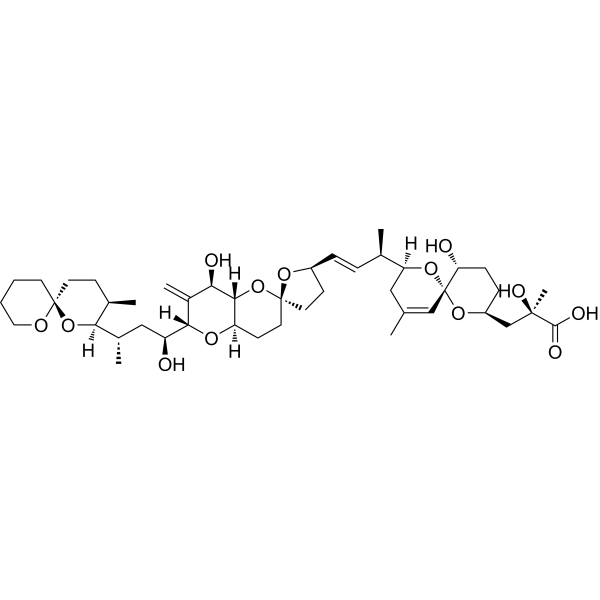
    Okadaic acid
    20+ Cited Publications

    Phosphatase Apoptosis Neurological Disease Cancer
    Okadaic acid, a marine toxin, is an inhibitor of protein phosphatases (PP). Okadaic acid has a significantly higher affinity for PP2A (IC50=0.1-0.3 nM), and inhibits PP1 (IC50=15-50 nM), PP3 (IC50=3.7-4 nM), PP4 (IC50=0.1 nM), PP5 (IC50=3.5 nM), but does not inhibit PP2C. Okadaic acid increases of phosphorylation of a number of proteins by inhibiting PP, and acts a tumor promoter. Okadaic acid induces tau phosphorylation .
    Okadaic acid
  • HY-19545A
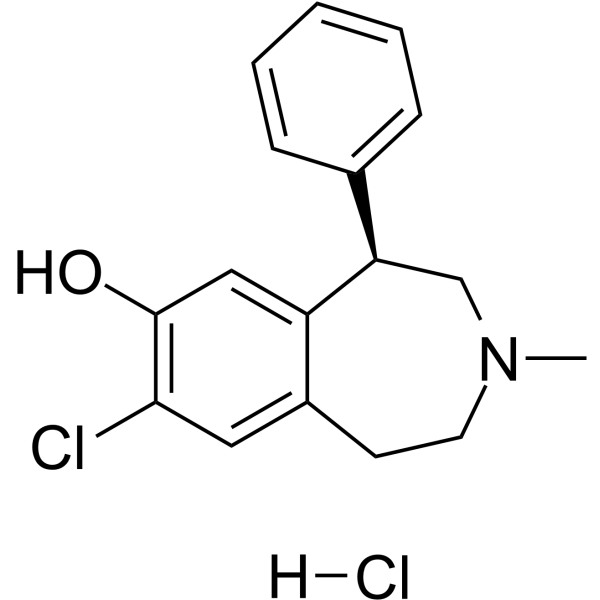
    SCH-23390 hydrochloride
    Maximum Cited Publications
    31 Publications Verification

    R-(+)-SCH-23390 hydrochloride

    Dopamine Receptor 5-HT Receptor Potassium Channel Neurological Disease
    SCH-23390 hydrochloride (R-(+)-SCH-23390 hydrochloride) is a potent and selective dopamine D1-like receptor antagonist with Kis of 0.2 nM and 0.3 nM for the D1 and D5 receptor, respectively. SCH-23390 hydrochloride is a potent and high efficacy human 5-HT2C receptor agonist with a Ki of 9.3 nM. SCH-23390 hydrochloride also binds with high affinity to the 5-HT2 and 5-HT1C receptors. SCH-23390 hydrochloride inhibits G protein-coupled inwardly rectifying potassium (GIRK) channels with an IC50 of 268 nM .
    SCH-23390 hydrochloride
  • HY-N6785A
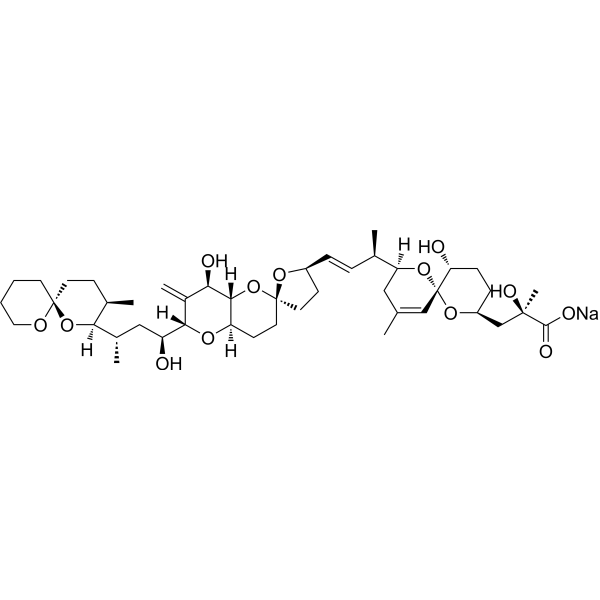
    Okadaic acid sodium
    20+ Cited Publications

    Phosphatase Apoptosis Neurological Disease Cancer
    Okadaic acid sodium, a marine toxin, is an inhibitor of protein phosphatases (PP). Okadaic acid (sodium) has a significantly higher affinity for PP2A (IC50=0.1-0.3 nM), and inhibits PP1 (IC50=15-50 nM), PP3 (IC50=3.7-4 nM), PP4 (IC50=0.1 nM), PP5 (IC50=3.5 nM), but does not inhibit PP2C. Okadaic acid sodium increases of phosphorylation of a number of proteins by inhibiting PP, and acts a tumor promoter. Okadaic acid sodium induces tau phosphorylation .
    Okadaic acid sodium
  • HY-13756S
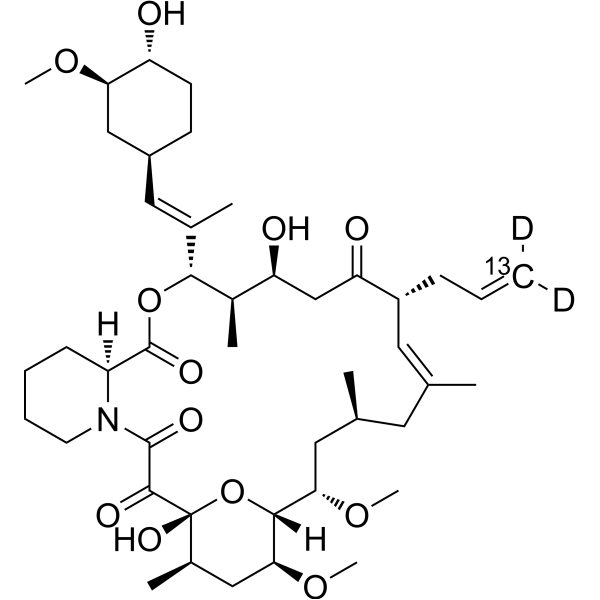
    Tacrolimus-13C,d2
    1 Publications Verification

    FK506-13C,d2; Fujimycin-13C,d2; FR900506-13C,d2

    Phosphatase FKBP Bacterial Autophagy Antibiotic Infection Inflammation/Immunology Cancer
    Tacrolimus- 13C,d2 is a 13C-labeled and deuterium labeled Tacrolimus. Tacrolimus (FK506), a macrocyclic lactone, binds to FK506 binding protein (FKBP) to form a complex. Tacrolimus inhibits calcineurin phosphatase, which inhibits T-lymphocyte signal transduction and IL-2 transcription. Immunosuppressive properties .
    Tacrolimus-13C,d2
  • HY-N0247
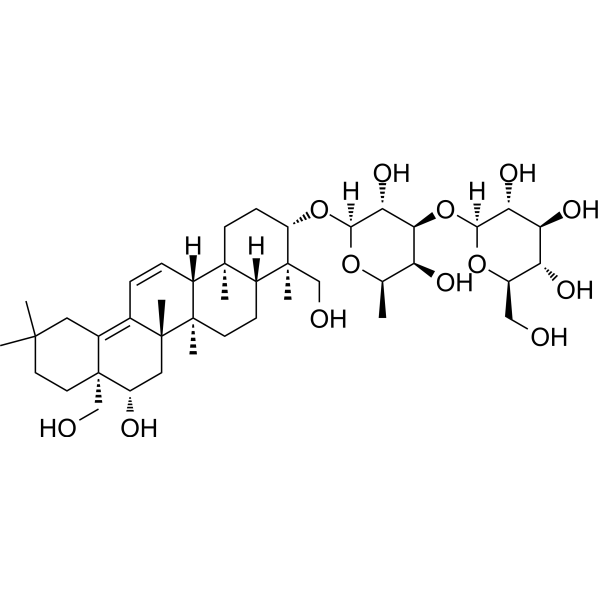
    Saikosaponin B1
    2 Publications Verification

    Hedgehog Smo STAT Interleukin Related TNF Receptor Inflammation/Immunology Cancer
    Saikosaponin B1 is a bioactive constituent of Radix Bupleuri. Saikosaponin B1 is an agonist of the 5-HT2C receptor with an EC50 of 147.41 μM. Saikosaponin B1 inhibits the Hedgehog (Hh) signaling pathway by targeting the transmembrane protein SMO. Sailosaponin B1 can reduce liver fibrosis. Saikosaponin B1 has anti-cancer activities thus can be studies in research for cancers such as Medulloblastoma (MB) .
    Saikosaponin B1
  • HY-148794

    IkT-148009

    c-Met/HGFR Bcr-Abl Neurological Disease Cancer
    Risvodetinib (IkT-148009) is an orally active, selective and brain-penetrant protein tyrosine kinase inhibitor, displaying excellent target efficacy against c-Abl1, c-Abl2/Arg with IC50 values of 33 nM, 14 nM, respectively. Risvodetinib suppresses c-Abl activation and substantially protects dopaminergic neurons from degeneration in mouse models of both inherited and sporadic Parkinson’s disease (PD), which is promising for research in the field of PD .
    Risvodetinib
  • HY-40178

    PROTAC Linkers Cancer
    NH2-C4-NH-Boc (compound 15) is a PROTAC linker, which refers to the Alkyl/ether composition. NH2-C4-NH-Boc can be used in the synthesis of a series of PROTACs. PROTACs contain two different ligands connected by a linker; one is a ligand for an E3 ubiquitin ligase and the other is for the target protein. PROTACs exploit the intracellular ubiquitin-proteasome system to selectively degrade target proteins .
    NH2-C4-NH-Boc
  • HY-147294

    ACT-539313

    Orexin Receptor (OX Receptor) Cytochrome P450 Neurological Disease
    Nivasorexant (ACT-539313) is an orally active, blood-brain barrier penetrant, selective orexin OX1R inhibitor. Nivasorexant specifically blocks central OX1Rs without affecting OX2Rs, and exhibits competitive inhibitory activity against CYP2C8, CYP2C9, CYP2C19 and CYP3A4 (IC50 values are 25 μM, 8.6 μM, 1.6 μM, 19 μM/44 μM, respectively). Nivasorexant significantly reduces binge-like eating behavior of highly palatable food in rat models and has long-acting properties. Nivasorexant shows no relevant off-target activity against over 130 selected proteins, exhibits favorable safety profiles, and can be used for studies related to binge eating disorder .
    Nivasorexant
  • HY-15565
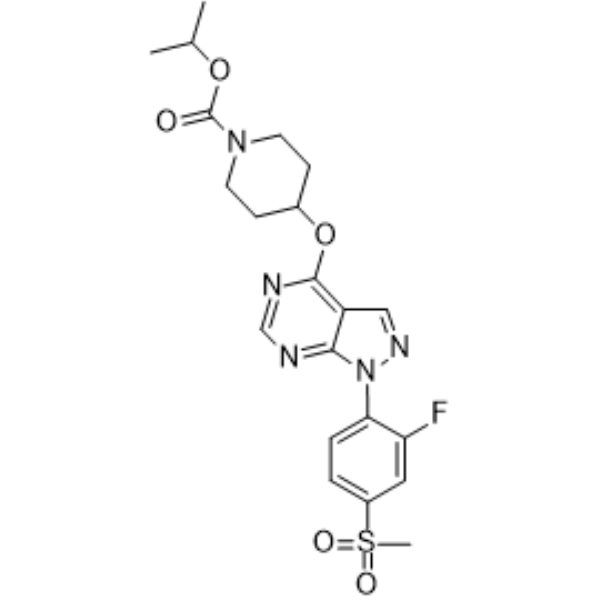
    APD668
    2 Publications Verification

    GPR119 Cytochrome P450 Potassium Channel Metabolic Disease
    APD668 is a potent, selective and orally active agonist of G-protein coupled receptor GPR119, with EC50s of 2.7 nM and 33 nM for hGPR119 and rGPR119, respectively. APD668 shows no significant inhibition of any of the five major CYP isoforms with the exception of CYP2C9 (Ki=0.1 μM). APD668 can be used for the research of steatohepatitis and diabetes .
    APD668
  • HY-149265

    Reactive Oxygen Species (ROS) TrxR Ferroptosis Apoptosis Cancer
    ROS-generating agent 1 (Compound 2c) covalently modifies the Sec-498 residue of TrxR to generate ROS. ROS-generating agent 1 reduces intracellular TrxR protein level. ROS-generating agent 1 results in ROS-dependent apoptosis and ferroptosis of NCI-H460 cells. ROS-generating agent 1 has anti-cancer activities .
    ROS-generating agent 1
  • HY-19820A
    NSC45586 sodium
    1 Publications Verification

    Akt Ser/Thr Protease Apoptosis MMP Cardiovascular Disease Neurological Disease Inflammation/Immunology
    NSC45586 sodium is an inhibitor of PHLPP. NSC45586 sodium targets the PP2C phosphatase domains of PHLPP1 and PHLPP2, blocks the phosphatase activity of PHLPP, increases the expression level of FOXO1 in the nucleus, and reduces the protein expression of PHLPP1. NSC45586 sodium activates the AKT survival signaling pathway, enhances IGF-1-induced AKT activation, and inhibits the phosphorylation of AKT/ERK under basal conditions. NSC45586 sodium reduces staurosporine-induced neuronal death, preserves notochord cell morphology and KRT19 expression, inhibits cell apoptosis (apoptosis), improves the viability and proliferation of nucleus pulposus cells, upregulates the expression of ACAN/SOX9, and downregulates the expression of MMP13. NSC45586 sodium binds tightly to bovine serum albumin (bovine serum albumin), and exerts a more significant effect on nucleus pulposus in male individuals. NSC45586 sodium can be used in studies related to global cerebral ischemia and intervertebral disc degeneration .
    NSC45586 sodium
  • HY-120161

    3'-Hexylsulfanylabscisic acid

    ABA Receptor Phosphatase Others
    AS6 (3'-Hexylsulfanylabscisic acid) is a PYL antagonist with a Kd value of 0.48 μM for Arabidopsis PYL5. AS6 binds to PYL proteins, and its S-hexyl chain blocks PP2C binding via steric hindrance. AS6 alleviates the inhibitory effect of ABA on seed germination in Arabidopsis and lettuce .
    AS6
  • HY-122725B

    E3 Ligase Ligand-Linker Conjugates Cancer
    Lenalidomide-C5-NH2 hydrochloride is an E3 ligase ligand-linker conjugate. Lenalidomide-C5-NH2 hydrochloride can be coupled to a target protein ligand via a linker to form a PROTAC molecule—such as a PROTAC degrader for MDM2 .
    Lenalidomide-C5-NH2 hydrochloride
  • HY-115760
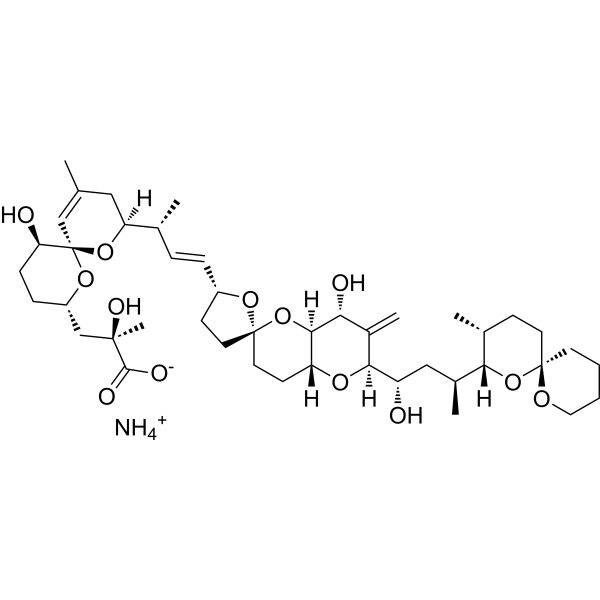
    Okadaic acid ammonium salt
    20+ Cited Publications

    Phosphatase Neurological Disease Cancer
    Okadaic acid ammonium salt, a marine toxin, is an inhibitor of protein phosphatases (PP). Okadaic acid ammonium salt has a significantly higher affinity for PP2A (IC50=0.1-0.3 nM), and inhibits PP1 (IC50=15-50 nM), PP3 (IC50=3.7-4 nM), PP4 (IC50=0.1 nM), PP5 (IC50=3.5 nM), but does not inhibit PP2C. Okadaic acid ammonium salt increases of phosphorylation of a number of proteins by inhibiting PP, and acts as a tumor promoter. Okadaic acid ammonium salt induces tau phosphorylation .
    Okadaic acid ammonium salt
  • HY-135331
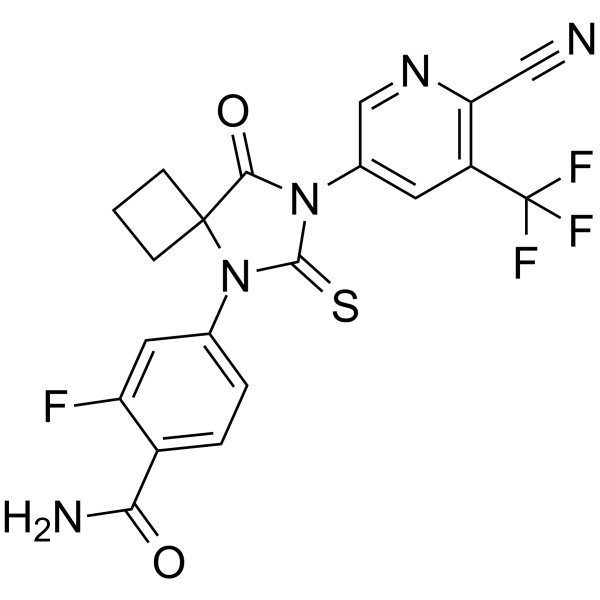
    N-Desmethyl-Apalutamide
    1 Publications Verification

    Androgen Receptor Cytochrome P450 Cancer
    N-Desmethyl Apalutamide is an active metabolite of Apalutamide. N-Desmethyl Apalutamide is a less potent antagonist of the androgen receptor and is responsible for one-third of the activity of Apalutamide. The formation of N-Desmethyl Apalutamide mediated predominantly by CYP2C8 and CYP3A4. N-Desmethyl Apalutamide is moderate to strong CYP3A4 and CYP2B6 inducer and has an excellent plasma-proteins bound concentration .
    N-Desmethyl-Apalutamide
  • HY-150795

    TGF-beta/Smad PI3K Akt ERK JNK Others
    SY-LB-35 is a potent bone morphogenetic protein (BMP) receptor agonist. SY-LB-35 can stimulate significant increases in cell number and cell viability in the C2C12 myoblast cell line, and causes shifts towards the S and G2/M phases of the cell cycle. SY-LB-35 stimulates canonical Smad and non-canonical PI3K/Akt, ERK, p38 and JNK intracellular signaling pathways .
    SY-LB-35
  • HY-164288

    TDI-006570

    Cyclic GMP-AMP Synthase STING Neurological Disease Inflammation/Immunology
    TDI-6570 (TDI-006570) is a blood-brain barrier-permeable, orally active cGAS inhibitor with an IC50 of 1.64 μM. TDI-6570 exhibits high gastrointestinal absorption and a long brain half-life in mice, and shows no toxicity to primary neurons. By inhibiting the cGAS-STING-IFN signaling pathway, TDI-6570 reduces STING levels and the activation of TBK1, blocks double-stranded DNA-induced cGAS activation and downstream interferon-stimulated gene expression, thereby reducing tau protein spread and improving synaptic loss. TDI-6570 reverses memory deficits, increases the amplitude of long-term potentiation, enhances the MEF2C transcriptional network, restores PSD-95 and vGAT punctate structures, and significantly improves cognitive resilience. TDI-6570 can be applied to the research of Alzheimer's disease, Parkinson's disease, systemic lupus erythematosus, as well as various central nervous system and autoimmune diseases .
    TDI-6570
  • HY-170669

    PROTACs CRM1 Apoptosis NF-κB Cancer
    PROTAC XPO1 degrader-1 (Compound 2c) is an XPO1 degrader. PROTAC XPO1 degrader-1 exhibits anti-proliferative effects, can induce cell apoptosis, inhibit NF-κB activity, and cause cell cycle arrest in the G1 phase. PROTAC XPO1 degrader-1 can be used in research on hematological malignancies (Pink: Target Protein Ligand (HY-170672); Black: Linker (HY-W010525); Blue: E3 Ligase Ligand (HY-170671); E3 Ligase Ligand-Linker Conjugate (HY-170673)) .
    PROTAC XPO1 degrader-1
  • HY-124648

    DNA/RNA Synthesis Inflammation/Immunology
    SMN-C2, an analog of RG-7916, is a selective modulator of SMN2 gene splicing that acts by binding SMN2 pre-mRNA, thereby increasing far upstream element binding protein 1 (FUBP1) and KH-spliced RNA binding Protein affinity regulator protein (KHSRP) to the SMN2 pre-mRNA complex. SMN-C2 can be used in spinal muscular atrophy (SMA) research .
    SMN-C2
  • HY-122725

    E3 Ligase Ligand-Linker Conjugates Cancer
    Lenalidomide-C5-NH2 is an E3 ligase ligand-linker conjugate. Lenalidomide-C5-NH2 can be coupled to a target protein ligand via a linker to form a PROTAC molecule—such as a PROTAC degrader for MDM2 .
    Lenalidomide-C5-NH2
  • HY-164220

    Phosphatase Bacterial Infection
    PPM1A-IN-1 (Compound IV-4) is an inhibitor for PP2C Ser/Thr phosphatase protein phosphatase Mg2+/Mn2+-dependent 1A. PPM1A-IN-1 exhibits antibacterial activity against Mycobacterium tuberculosis .
    PPM1A-IN-1
  • HY-102052

    Potassium Channel Metabolic Disease
    DCEBIO is a small/medium conductance calcium-activated potassium (SKCa/IKCa) channel opener and primary neuron signal blocker. It hyperpolarizes the membrane potential of C2C12 myoblasts by activating IKCa channels, thereby promoting myogenic differentiation. The specific biological activity of DCEBIO is manifested in increased myotube formation, enhanced myosin heavy chain II protein levels and myogenin mRNA levels. DCEBIO can be applied in the field of muscle research, especially in muscle-related degenerative diseases such as sarcopenia .
    DCEBIO
  • HY-146307

    TrxR Cancer
    TrxR-IN-3 (Compound 2c) is a potent inhibitor of TrxR. TrxR-IN-3 exhibits potent antiproliferative activities against five human cancer cell lines, especially against breast tumor cells. TrxR-IN-3 increases ROS levels and resulted in marked apoptosis by regulating apoptosis-related proteins expressed in the breast cancer cells. TrxR-IN-3 also triggers the formation of autophagosomes and autolysosomes by promoting the expression of LC3-II and Beclin-1 and diminishing the expression of LC3-I and p62 proteins .
    TrxR-IN-3
  • HY-146226

    Enterovirus Infection
    Viral 2C protein inhibitor 1 (compound 6aw) is a potent and broad-spectrum enterovirus antiviral agent, inhibiting viral 2C protein. Viral 2C protein inhibitor 1 inhibits multiple strains of EV-D68, EV-A71 and CVB3 with EC50s of 0.1~3.6 µM, and exhibits high selectivity index and relatively low cytotoxicity .
    Viral 2C protein inhibitor 1
  • HY-34887

    Drug Derivative Others
    Acridone-4-carboxylic acid (ACA) (Compound 2c) is a heme-interacting acridone derivatives that prevents free heme-mediated protein oxidation and degradation. Acridone-4-carboxylic acid inhibits protein carbonyl formation with an IC50 of 43 μM .
    Acridone-4-carboxylic acid
  • HY-115446A

    Cereblon ligand 1 hydrochloride; E3 ligase Ligand-Linker Conjugates 32 hydrochloride

    E3 Ligase Ligand-Linker Conjugates Cancer
    Lenalidomide-C4-NH2 hydrochloride is the Lenalidomide-based Cereblon ligand used in the recruitment of CRBN protein. Lenalidomide-C4-NH2 hydrochloride can be connected to the ligand for protein by a linker to form PROTAC (Compound 24), which has IC50s of 0.98 nM and 13.7 nM in inhibition of RS4;11 and MOLM-13 acute leukemia cell lines growth, respectively .
    Lenalidomide-C4-NH2 hydrochloride
  • HY-159570

    PROTACs STAT Cancer
    XD2-149 is a PROTAC targeting STAT3. XD2-149 consists of PROTAC target protein ligand Napabucasin (HY-13919) (red part), E3 ligase Thalidomide (HY-14658) (black part), and linker NH2-C5-Azacyclohexane-N-Boc (HY-159572) (blue part). The E3 ligase + linker conjugate is Thalidomide-NH-C5-azacyclohexane-N-Boc (HY-159571), and the active control of the target protein ligand is Thalidomide acid (HY-159573) [1] .
    XD2-149
  • HY-158694A

    Toll-like Receptor (TLR) Inflammation/Immunology
    TLR7 agonist 20 hydrochloride is a selective Toll-like receptor 7 (TLR7) agonist with an EC50 of 0.22 μM. TLR7 agonist 20 hydrochloride, as an immunostimulant and vaccine adjuvant, enhances the production of anti-spike protein antibodies, increases IgG2b and IgG2c levels, and thereby drives Th1-type immune responses in mice. TLR7 agonist 20 hydrochloride can be used in studies related to non-inflammatory potent vaccine adjuvants .
    TLR7 agonist 20 hydrochloride
  • HY-174814

    Enterovirus Infection
    Jun15716 is an Enterovirus (EVs) 2C protein (EVs 2C) inhibitor with Kis of 15.9, 44.2 and 17.8 μM for EV-D68, EV-A71 and CVB3, respectively. Jun15716 has a potent antiviral activity against EV-D68 US/MO/14-18947 and CVB3 Nancy cells (EC50s of 1.0 and 0.7 μM, respectively). Jun15716 can be used for viral infections research, such as meningitis, hand, foot and mouth disease (HFMD) and viral myocarditis .
    Jun15716
  • HY-D2898

    Fluorescent Dye Enterovirus Infection
    Jun14157 is a fluorescence polarization probe that can specifically bind to the conserved allosteric site of enterovirus 2C proteins (Ex: 485/20; Em: 528/20). Jun14157 has Kd values of 2.3 μM, 1.4 μM, and 1.1 μM for EV-D68 2C, EV-A71 2C, and CVB3 2C, respectively. Jun14157 can be used in research related to enteroviruses .
    Jun14157
  • HY-174815

    Enterovirus Infection
    Jun15799 is an Enterovirus (EVs) 2C protein (EVs 2C) inhibitor with Kis of 0.8, 21.1 and 3.0 μM for EV-D68, EV-A71 and CVB3, respectively. Jun15799 has a significant antiviral activity against EV-D68 US/MO/14-18947, EV-A71 Tainan/4643/1998 and CVB3 Nancy cells (EC50s of 0.3, 11.4 and 0.3 μM, respectively). Jun15799 can be used for viral infections research, such as meningitis, hand, foot and mouth disease (HFMD) and viral myocarditis .
    Jun15799
  • HY-124598

    Enterovirus Infection
    MRL-1237 is an inhibitor of the replication of several enteroviruses targeting the non-structural protein 2C of the virus. MRL-1237 shows effective inhibition against poliovirus and various other enteroviruses. MRL-1237 does not inhibit the NTPase (ATPase) activity of 2C protein. MRL-1237 can be used for the research of infection .
    MRL-1237
  • HY-E70629

    Ser/Thr Protease Cancer
    Protein phosphatase 2C is a serine-threonine phosphatase. Protein phosphatase 2C can dephosphorylate the key players of cell death pathways .
    Protein phosphatase 2C
  • HY-175515

    5-HT Receptor Neurological Disease
    5-HT2C agonist-11 (Compound 1) is an orally active, brain-penetrant and selective 5-HT2C receptor agonist (EC50=15 nM). 5-HT2C agonist-11 activates the Gq protein signaling pathway, promoting intracellular calcium release. 5-HT2C agonist-11 is promising for research of depression, post-traumatic stress disorder (PTSD) and neuropathic pain .
    5-HT2C agonist-11
  • HY-Y0781S3

    Acetylformic acid-1-13C-2 sodium

    Endogenous Metabolite Others
    Pyruvic acid- 13C-2 (sodium) is the 13C labeled Pyruvic acid . Pyruvic acid is an intermediate metabolite in the metabolism of carbohydrates, proteins, and fats .
    Pyruvic acid-1-13C-2 sodium
  • HY-19820

    Akt Ser/Thr Protease Neurological Disease Cancer
    NSC45586 is an inhibitor of pleckstrin homology domain and leucine-rich repeat protein phosphatase (PHLPP). NSC45586 targets the PP2C phosphatase domain in PHLPP1 and PHLPP2. NSC45586 can activate AKT in neurons .
    NSC45586
  • HY-155705

    TGF-β Receptor GSK-3 β-catenin Others
    BMP agonist 1 (compound 2 b) is a small-molecule agonist of bone morphogenic protein (BMP). BMP induces C2C12 cell differentiation with BMP and highly depends on active BMP signaling. BMP agonist 1 inhibits GSK3β, increases β-catenin signaling and synergistically regulates Id2and Id3 expression. BMP agonist 1 is used in diseases and defects of the skeleton research .
    BMP agonist 1
  • HY-W754151

    Isotope-Labeled Compounds Others
    N-Desmethyl apalutamide-d4 is the deuterium-labeled N-Desmethyl-Apalutamide (HY-135331). N-Desmethyl Apalutamide is an active metabolite of Apalutamide. N-Desmethyl Apalutamide is a less potent antagonist of the androgen receptor and is responsible for one-third of the activity of Apalutamide. The formation of N-Desmethyl Apalutamide mediated predominantly by CYP2C8 and CYP3A4. N-Desmethyl Apalutamide is moderate to strong CYP3A4 and CYP2B6 inducer and has an excellent plasma-proteins bound concentration .
    N-Desmethyl apalutamide-d4
  • HY-N8200

    Phosphatase Monoamine Oxidase 5-HT Receptor Inflammation/Immunology
    Cassiaside B2 is a protein tyrosine phosphatase 1B (PTP1B) and human monoamine oxidase A (hMAO-A) inhibitor. Cassiaside B2 possesses antiallergic and is a 5-HT2C receptor agonist . ..
    Cassiaside B2
  • HY-179168

    Ligands for E3 Ligase Inflammation/Immunology
    Thalidomide-C4-N2-C2-N3 is an E3 ligase ligand. Thalidomide-C4-N2-C2-N3 can bind to a target protein ligand with a linker to form a PROTAC molecule, PROTAC sEH-degrader-4 (HY-179166) .
    Thalidomide-C4-N2-C2-N3
  • HY-132212

    PD-1/PD-L1 Inflammation/Immunology Cancer
    LH1307 is a C2-symmetric inhibitor of PD-1/PD-L1 protein-protein interactions with a IC50 value of 3.0 μM and can be used in cancer studies .
    LH1307
  • HY-174583

    mRNA Cancer
    Human MEF2C mRNA encodes the human myocyte enhancer factor 2C (MEF2C) protein, a member of the MADS box transcription enhancer factor 2 (MEF2) family. MEF2C has both trans-activating and DNA binding activities and may play a role in maintaining the differentiated state of muscle cells.
    Human MEF2C mRNA
  • HY-175193

    N-Deshydroxyethyl BMS-354825-C3-NH2

    Target Protein Ligand-Linker Conjugates Src Cancer
    N-Deshydroxyethyl Dasatinib-C3-NH2 is an Target Protein Ligand-Linker Conjugate that incorporates a ligand for LCK (HY-107447) and a PROTAC linker (HY-76667), which recruits E3 ligases. N-Deshydroxyethyl Dasatinib-C3-NH2 can be used for synthesis of PROTAC SJ11646 (HY-175281) .
    N-Deshydroxyethyl Dasatinib-C3-NH2
  • HY-142830

    Raf Cancer
    B-Raf IN 6 (compound 2c) is a potent inhibitor of protein kinase B-Raf with an IC50 of 1.7 nM. B-Raf IN 6 is devoid of binding to the secondary target PXR and resists rapid metabolism. B-Raf IN 6 has the potential for the research of cancer disease .
    B-Raf IN 6
  • HY-P991769

    Dengue Virus Infection
    Anti-Dengue virus type 2 E protein DIII Antibody (DV2-96) reacts with sites along the lateral ridge of the DIII domain on the E protein of dengue virus serotype 2 (DENV-2). Anti-Dengue virus type 2 E protein DIII Antibody (DV2-96) against DENV-2 new Guinea C (NGC) infection in mice. Recommend Isotype Controls: Mouse IgG2c kappa, Isotype Control (HY-P99981) .
    Anti-Dengue virus type 2 E protein DIII Antibody (DV2-96)
  • HY-172144

    PROTACs Aurora Kinase Cancer
    JB300 is a highly selective Aurora A degrader based on PROTAC technology (DC50=30 nM). JB300 can be used for tumor research. JB300 consists of PROTAC target protein ligand MK-5108 (HY-13252) (pink part), E3 ligase ligand Thalidomide-O-COOH (HY-103597) (blue part) and PROTAC Linker Boc-NH-PEG2-C2-NH2 (HY-W008474) (black part), of which the conjugate of E3 ubiquitin ligase ligand + Linker is Thalidomide-O-COOH-NH2-C2-PEG2-NH-Boc (HY-172145) .
    JB300
  • HY-P991764

    Dengue Virus Infection
    Anti-Dengue virus type 4 E protein DIII Antibody (DV4-E88) reacts with the DIII domain on the E protein of dengue virus serotype 4 (DENV-4). Anti-Dengue virus type 4 E protein DIII Antibody (DV4-E88) neutralizes 1036, TVP-376, and TVP-986 genotype II strains of DENV-4. Recommend Isotype Controls: Mouse IgG2c kappa, Isotype Control (HY-P99981) .
    Anti-Dengue virus type 4 E protein DIII Antibody (DV4-E88)
  • HY-108400

    R-(+)-SCH-23390 maleate

    Dopamine Receptor 5-HT Receptor Potassium Channel Neurological Disease
    SCH-23390 maleate (R-(+)-SCH-23390 maleate) is a potent and selective dopamine D1-like receptor antagonist with Kis of 0.2 nM and 0.3 nM for the D1 and D5 receptor, respectively. SCH-23390 maleate is a potent and high efficacy human 5-HT2C receptor agonist with a Ki of 9.3 nM. SCH-23390 maleate also binds with high affinity to the 5-HT2 and 5-HT1C receptors. SCH-23390 maleate inhibits G protein-coupled inwardly rectifying potassium (GIRK) channels with an IC50 of 268 nM .
    SCH-23390 maleate
  • HY-11000A

    Phosphatase CaMK Cancer
    CaMKP inhibitor sodium (compound 5) is an inhibitor of Ca 2+/neutral protein-dependent protein concentration (CaMKP) and its nuclear type (CaMKP-N) (IC50: 6.4 μM, CaMKP; 6.6 μM, CaMKP-N). CaMKP is one type of Ser/Thr protein, which can be passed through to remove the oxidized oxidized protein (CaMK). CaMKP inhibitor sodium inhibits CaMKP mediated phospho-CaMKI hydrolysis, unaffectes protein phosphoric acid 2C (PP2C) and calcineurin (CaN) .
    CaMKP inhibitor sodium
  • HY-158694

    Toll-like Receptor (TLR) Inflammation/Immunology
    TLR7 agonist 20 is a selective Toll-like receptor 7 (TLR7) agonist with an EC50 of 0.22 μM. TLR7 agonist 20, as an immunostimulant and vaccine adjuvant, enhances the production of anti-spike protein antibodies, increases IgG2b and IgG2c levels, and thereby drives Th1-type immune responses in mice. TLR7 agonist 20 can be used in studies related to non-inflammatory potent vaccine adjuvants .
    TLR7 agonist 20

Inquiry Online

Your information is safe with us. * Required Fields.

Salutation


Country or Region *

Applicant Name *


Organization Name *

Department *


Email Address *


Product Name *

Cat. No.


Requested quantity *

Phone Number *


Remarks

Inquiry Online

Inquiry Information

Product Name:
Cat. No.:
Quantity:
MCE Japan Authorized Agent:

