1. Search Result
Search Result
Pathways Recommended: MAPK/ERK Pathway
Results for "

AMPK/ACC pathway

" in MedChemExpress (MCE) Product Catalog:

7

Inhibitors & Agonists

6

Natural
Products

Cat. No. Product Name Target Research Areas Chemical Structure
  • HY-125848

    Apoptosis AMPK PPAR p38 MAPK PI3K Akt GSK-3 Reactive Oxygen Species (ROS) SOD Caspase Neurological Disease Metabolic Disease Inflammation/Immunology Cancer
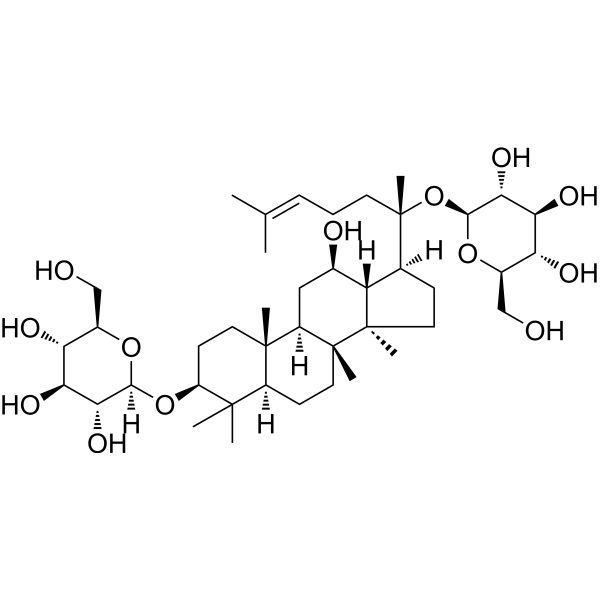
    Ginsenoside F2 is an orally active bioactive compound that participates in the regulation of metabolism and inflammation. Ginsenoside F2 promotes the phosphorylation of AMPK and ACC, binds to PPARγ, inhibits the phosphorylation of MAPK, activates the PI3K/AKT/GSK-3β pathway, reduces GLRX expression, and regulates lipid metabolism. Ginsenoside F2 reduces ROS production and MDA levels, restores SOD activity in cells, and alleviates oxidative stress. Ginsenoside F2 induces cell apoptosis (Apoptosis) and increases the number of cleaved caspase-3-positive cells. Ginsenoside F2 reduces body weight gain, adipose tissue weight and serum lipid levels in obese mice, and activates the hepatic AMPK signaling pathway and the expression of antioxidant enzymes. Ginsenoside F2 alleviates atopic dermatitis in mice by inhibiting inflammation and reshaping the gut microbiota . Ginsenoside F2 is applicable to research related to insulin resistance, obesity, atopic dermatitis, liver cancer, glioblastoma and glioma .
    Ginsenoside F2
  • HY-N0772
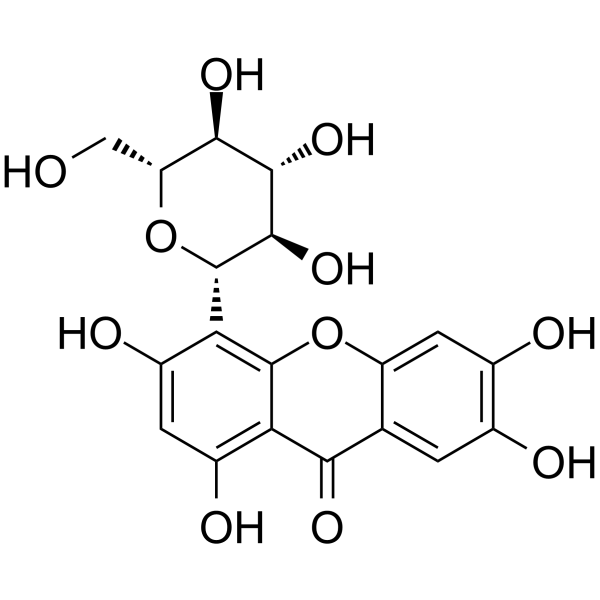
    Isomangiferin
    4 Publications Verification

    VEGFR NOD-like Receptor (NLR) NF-κB Bacterial AMPK Acetyl-CoA Carboxylase Apoptosis Reactive Oxygen Species (ROS) HSV Drug Derivative Infection Metabolic Disease Inflammation/Immunology Cancer
    Isomangiferin is an orally active xanthone C-glucoside, and its chemical structure is similar to Mangiferin (HY-N0290). Isomangiferin is an effective VEGFR-2 kinase inhibitor, which can induces cell apoptosis, inhibit the growth, metastasis and angiogenesis of breast cancer. Isomangiferin exerts anti-inflammatory effects by inhibiting the HMGB1/NLRP3/NF-κB signaling pathway, thereby improving the renal function indicators of diabetic mice. Isomangiferin exhibits inhibitory effects on various bacteria and herpes simplex virus type 1 (HSV-1). Isomangiferin promotes the migration and osteogenic differentiation of bone marrow mesenchymal stem cells (BMSCs) and reduces cell apoptosis and the production of ROS by activating the AMPK/ACC pathway, thereby facilitating fracture healing .
    Isomangiferin
  • HY-N0853A
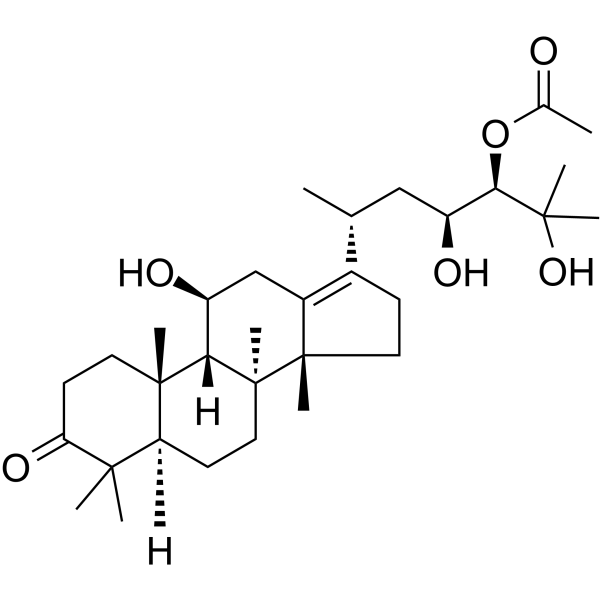
    Alisol A 24-acetate
    1 Publications Verification

    Alisol A 24-monoacetate; Alisol A monoacetate

    AMPK Carnitine Palmitoyltransferase (CPT) Acyltransferase Fatty Acid Synthase (FASN) Acetyl-CoA Carboxylase Bcl-2 Family PPAR Nuclear Factor of activated T Cells (NFAT) PI3K Akt PKA ERK Apoptosis Autophagy Cardiovascular Disease Infection Neurological Disease Metabolic Disease Endocrinology
    Alisol A 24-acetate (Alisol A monoacetate) is an orally active derivative of protostane-type tetracyclic triterpenoid. Alisol A 24-acetate upregulates the expression of adiponectin, AMPKα, CPT1, and ACOX1; downregulates the expression of SREBP-1c, ACC, FAS, Bcl-2, Bcl-xl, PPAR-γ, perilipin A, and NFATc1; inhibits the activity of PI3K/Akt/mTOR and HMGR; and activates the PKA and ERK signaling pathways. Alisol A 24-acetate regulates cell apoptosis (apoptosis), autophagy (Autophagy, hepatic lipid accumulation, inflammatory response, neuroprotection, MRSA membrane integrity, and osteoclast differentiation. Alisol A 24-acetate can be used in research related to non-alcoholic fatty liver disease, nephrotoxicity, obesity, global cerebral ischemia-reperfusion injury, bacterial infection, and osteoporosis .
    Alisol A 24-acetate
  • HY-124609

    AMPK Acetyl-CoA Carboxylase Neurological Disease
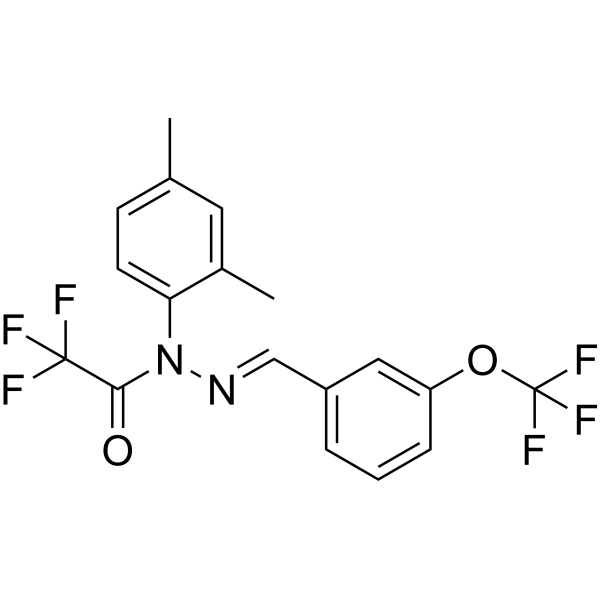
    CAD031 is an orally active AMPK/ACC1 signaling pathway activator and a derivative of the Alzheimer's disease (AD) targeted agent J147 (HY-13779) (more active than J147 in human neural stem cell assays). CAD031 can cross the blood-brain barrier, activate AMPK and inhibit ACC1, thereby increasing ac-CoA levels, improving mitochondrial function and reducing free fatty acid synthesis. CAD031 has neuroprotective, neurogenesis-promoting and memory-improving activities and can be used in the study of Alzheimer's disease and aging-related neurodegenerative diseases. CAD031 effectively enhances the memory of mice, improves dendritic structure, and stimulates cell division in the germinal zone of the brain of elderly mice .
    CAD031
  • HY-N10612

    AMPK PPAR TRP Channel Mitochondrial Metabolism Metabolic Disease Cancer
    Petasin inhibits adipogenesis in cell 3T3-F442A with an IC50 of 0.95 μM. Petasin inhibits the expression of lipid synthesis factors ACC1, FAS and SCD1 by inhibiting transcription factors PPARγ and C/EBPα, as well as targeting TRPA1 and TRPV1 channels . Petasin inhibits mitochondrial complex I, thereby inhibiting tumor growth and metastasis. Petasin activates AMPK signaling pathway, participating in regulation of glucose and lipid metabolism. Petasin is orally active .
    Petasin
  • HY-N3055

    Apoptosis AMPK Platelet-activating Factor Receptor (PAFR) Caspase Neurological Disease Metabolic Disease Cancer
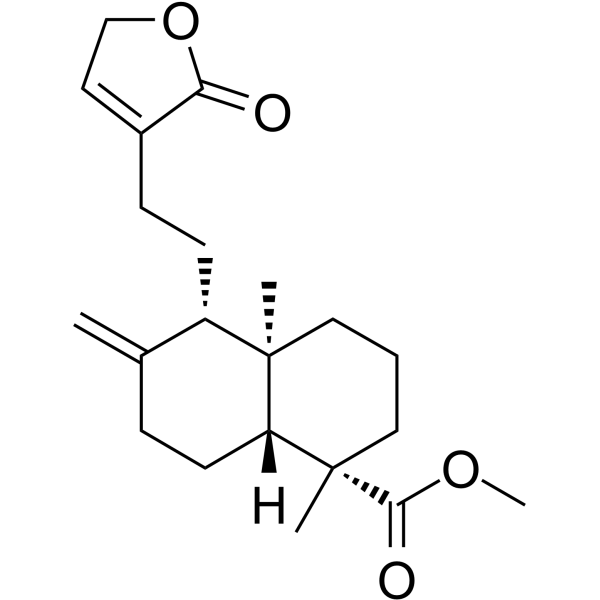
    Pinusolide is an AMPK activator and PAF receptor antagonist. Pinusolide activates AMPK, phosphorylates ACC, enhances IRS-1 tyrosine phosphorylation, boosts glucose uptake, and modulates insulin signaling. Pinusolide inhibits caspase-3/7 activation, intracellular calcium elevation, reactive oxygen species overproduction, lipid peroxidation, and tumor cell proliferation. Pinusolide stabilizes superoxide dismutase activity, reduces apoptotic hallmarks, induces mitochondrial pathway apoptosis, and triggers DNA fragmentation. Pinusolide can be used for the research of type 2 diabetes, neurodegenerative diseases, acute lymphoblastic leukemia, acute myeloid leukemia, and Burkitt lymphoma .
    Pinusolide
  • HY-N0772R

    Reference Standards VEGFR NF-κB NOD-like Receptor (NLR) AMPK Acetyl-CoA Carboxylase Apoptosis Reactive Oxygen Species (ROS) HSV Drug Derivative Infection Metabolic Disease Inflammation/Immunology Cancer
    Isomangiferin (Standard) is the analytical standard of Isomangiferin (HY-N0772). This product is intended for research and analytical applications. Isomangiferin is an orally active xanthone C-glucoside, and its chemical structure is similar to Mangiferin (HY-N0290). Isomangiferin is an effective VEGFR-2 kinase inhibitor, which can induces cell apoptosis, inhibit the growth, metastasis and angiogenesis of breast cancer. Isomangiferin exerts anti-inflammatory effects by inhibiting the HMGB1/NLRP3/NF-κB signaling pathway, thereby improving the renal function indicators of diabetic mice. Isomangiferin exhibits inhibitory effects on various bacteria and herpes simplex virus type 1 (HSV-1). Isomangiferin promotes the migration and osteogenic differentiation of bone marrow mesenchymal stem cells (BMSCs) and reduces cell apoptosis and the production of ROS by activating the AMPK/ACC pathway, thereby facilitating fracture healing.
    Isomangiferin (Standard)

Inquiry Online

Your information is safe with us. * Required Fields.

Salutation


Country or Region *

Applicant Name *


Organization Name *

Department *


Email Address *


Product Name *

Cat. No.


Requested quantity *

Phone Number *


Remarks

Inquiry Online

Inquiry Information

Product Name:
Cat. No.:
Quantity:
MCE Japan Authorized Agent:

