



Ginsenoside F2

Based on 1 Customer Validation
Ginsenoside F2 is an orally active bioactive compound that participates in the regulation of metabolism and inflammation. Ginsenoside F2 promotes the phosphorylation of AMPK and ACC, binds to PPARγ, inhibits the phosphorylation of MAPK, activates the PI3K/AKT/GSK-3β pathway, reduces GLRX expression, and regulates lipid metabolism. Ginsenoside F2 reduces ROS production and MDA levels, restores SOD activity in cells, and alleviates oxidative stress. Ginsenoside F2 induces cell apoptosis (Apoptosis) and increases the number of cleaved caspase-3-positive cells. Ginsenoside F2 reduces body weight gain, adipose tissue weight and serum lipid levels in obese mice, and activates the hepatic AMPK signaling pathway and the expression of antioxidant enzymes. Ginsenoside F2 alleviates atopic dermatitis in mice by inhibiting inflammation and reshaping the gut microbiota. Ginsenoside F2 is applicable to research related to insulin resistance, obesity, atopic dermatitis, liver cancer, glioblastoma and glioma.
商品は「研究用試薬」です。人や動物の医療用・臨床診断用・食品用の製品ではありません。
研究用途以外に使用した場合、当社は一切の責任を負いかねます。
- 純度 : 99.92%
- CAS 番号: 62025-49-4
- 分子式: C42H72O13
- 分子量:785.01
-
保管条件:Powder -20°C, 3 years , 4°C, 2 years ; In solvent -80°C, 6 months , -20°C, 1 month

To place orders, for customer services and technical support, please contact: MedChemExpress USA
Tel: 609-228-6898 E-mail: [email protected] [email protected]


-
 生物活性
生物活性
-
化学情報
-
溶剤 & 溶解度
- プロトコル
- 純度とドキュメンテーション
- 参考文献
-
 Help & FAQs


-
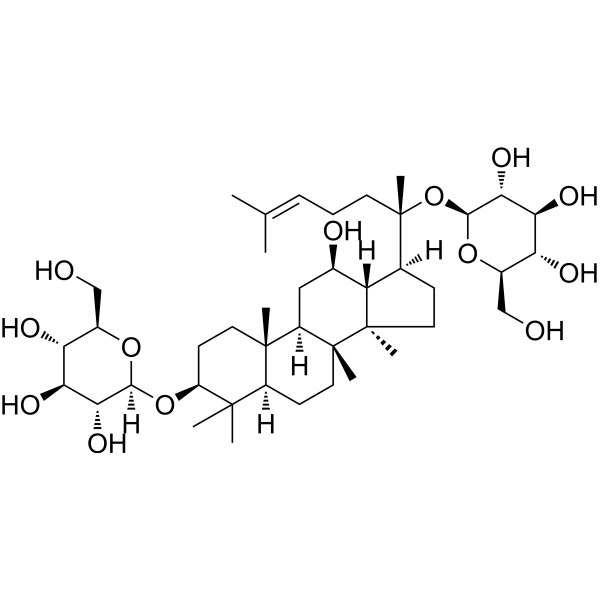
HY-N0605
Ginsenoside Rh2Caspase Activator -
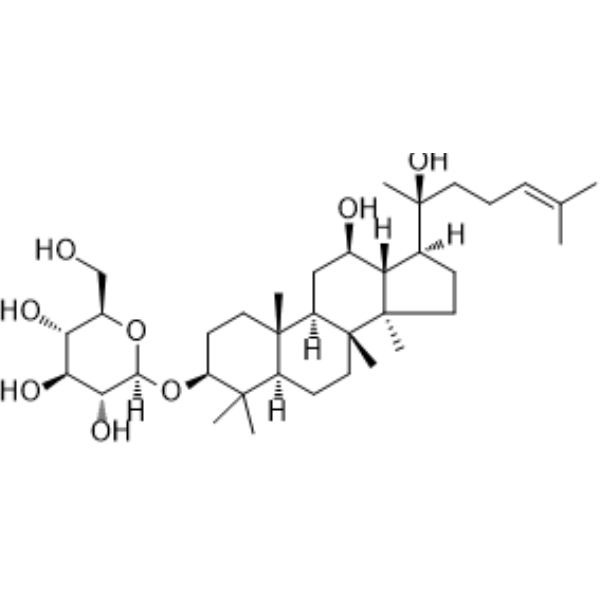
HY-N0043
Ginsenoside RdCytochrome P450 Inhibitor -
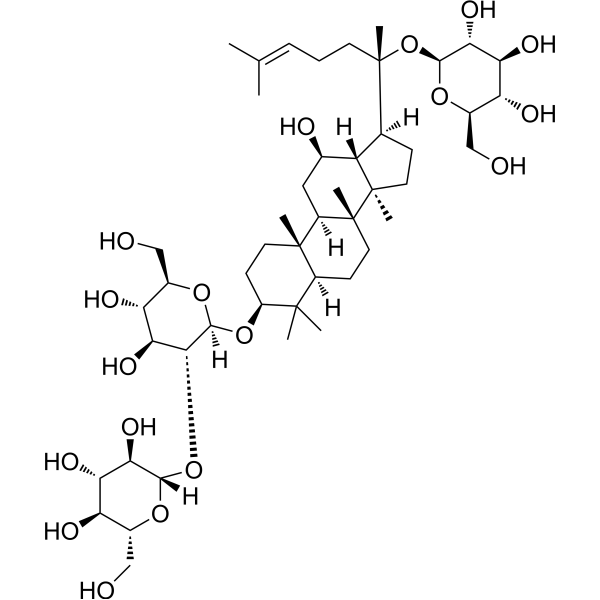
HY-N0039
Ginsenoside Rb1Autophagy Inducer -
HY-18085
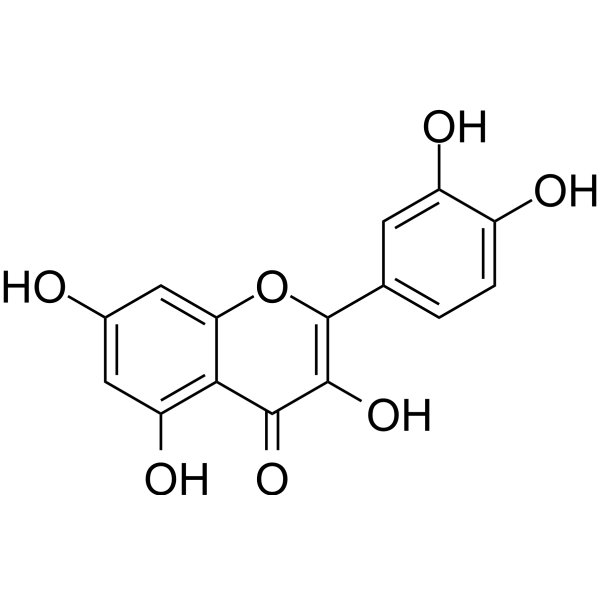
QuercetinFlavonoid Antioxidant -
HY-N0603
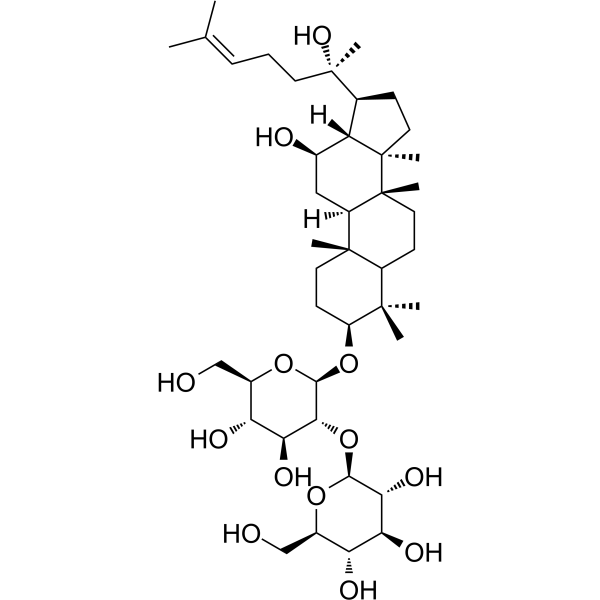
20(S)-Ginsenoside Rg3Sodium Channel Inhibitor -
HY-N0904
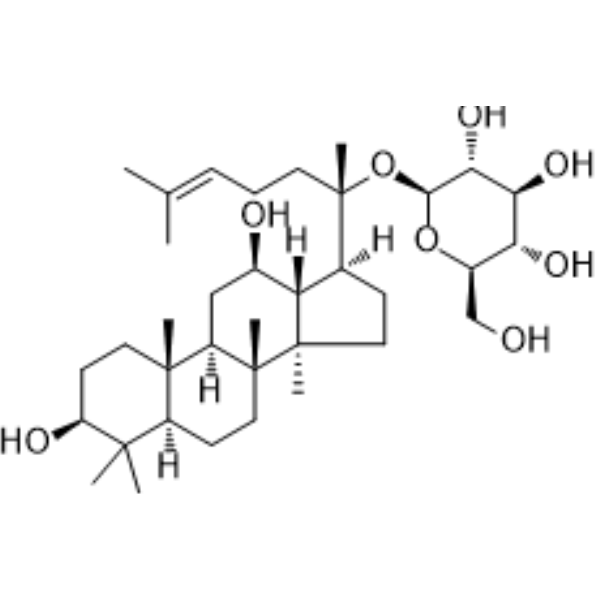
Ginsenoside C-KNO Synthase/COX Inhibitor -
HY-N0044
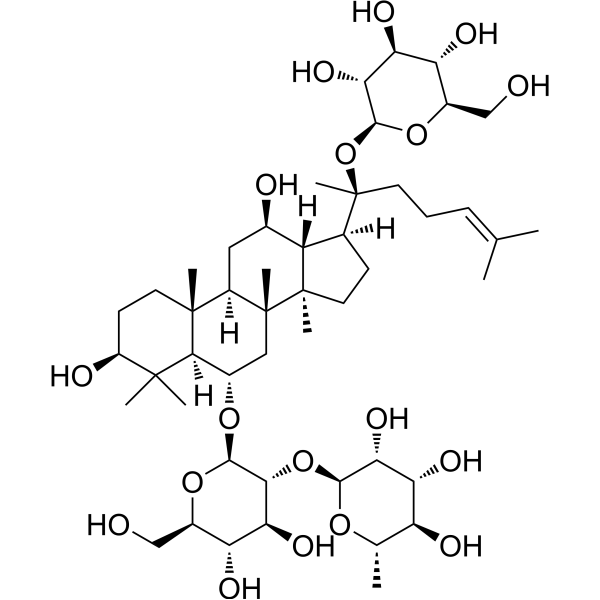
Ginsenoside ReEndogenous Metabolite -

HY-125848R
Ginsenoside F2 (Standard)Autophagy Inducer -
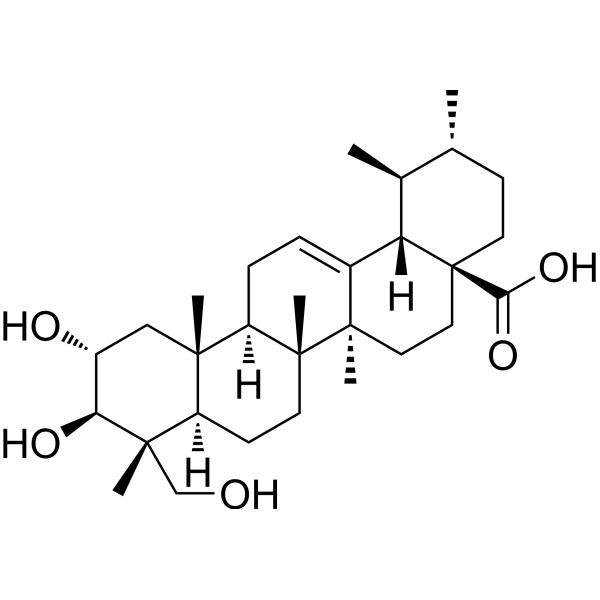
HY-N0194
Asiatic acidApoptosis Inducer -
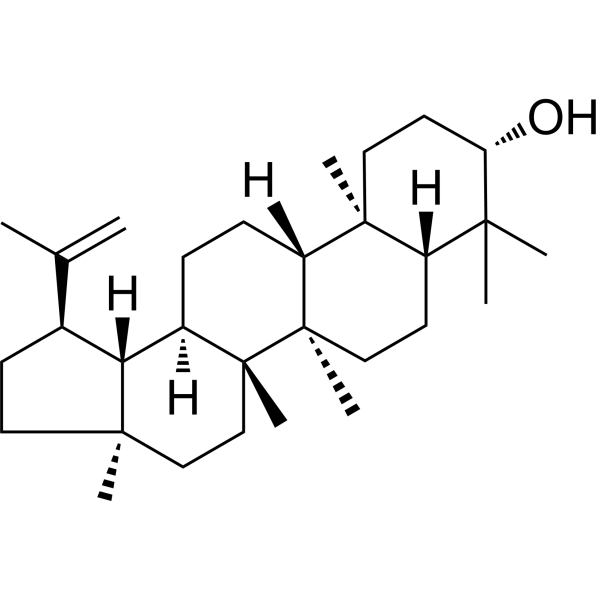
HY-N0790
LupeolAndrogen Receptor Inhibitor -

HY-N0194R
Asiatic acid (Standard)Apoptosis Inducer -
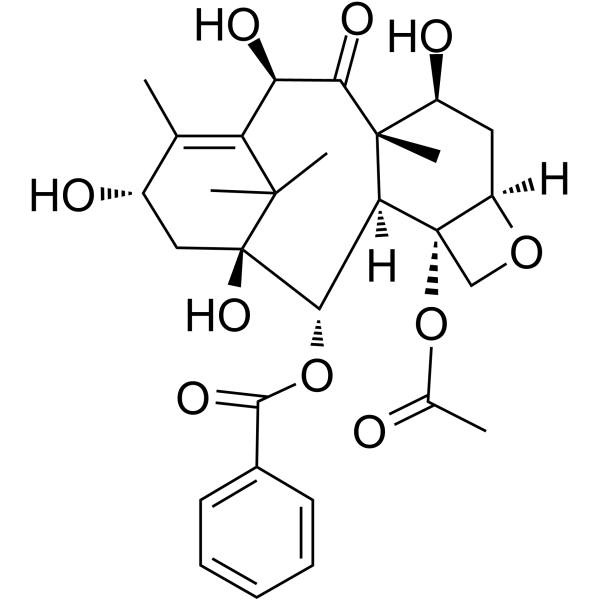
HY-16565
10-Deacetylbaccatin IIIIntermediate


生物活性
製品説明
体外実験
Ginsenoside F2 (12.5-100 μM; 2-8 days) inhibits the differentiation of 3T3-L1 cells and reduces lipid accumulation[1].
Ginsenoside F2 (100 μM; during differentiation treatment) alters the expression of adipogenesis-related genes in MDI-induced differentiated 3T3-L1 preadipocytes, including upregulating the expression of Grin2d, Pik3cd, MMP9 and Hhip, downregulating the expression of key adipogenic genes such as PPARγ, FASN and ACC, and promoting mitochondrial biogenesis in cells[1].
Ginsenoside F2 (100 μM; 15-180 min) activates the AMPK pathway by increasing the phosphorylation levels of AMPK and ACC in 3T3-L1 preadipocytes[1].
Ginsenoside F2 (100 μM; 24 h) significantly reduces the viability of IR-HepG2 cells[3].
Ginsenoside F2 (12.5-50 μM; 12 h) dose-dependently promotes glucose uptake in IR-HepG2 cells[3].
Ginsenoside F2 (12.5-50 μM; 12 h) dose-dependently upregulates the mRNA expression of GLUT-2 and GLUT-4 in IR-HepG2 cells, and inhibits gluconeogenesis by reducing the mRNA expression of PEPCK and G6Pase[3].
Ginsenoside F2 (12.5-50 μM; 12 h) alleviates oxidative stress in IR-HepG2 cells by reducing ROS production and MDA levels, as well as restoring SOD activity[3].
Ginsenoside F2 (12.5-50 μM; 12 h) promotes glycogen synthesis and increases glycogen content in IR-HepG2 cells, activates the PI3K/AKT/GSK-3β signaling pathway, and elevates the phosphorylation levels of PDK1, AKT and GSK-3β[3].
Ginsenoside F2 (12.5-50 μM; 12 h) dose-dependently inhibits the activation of the MAPK signaling pathway and suppresses the nuclear translocation of NF-κB p65 in high glucose-induced IR-HepG2 cells[3].
Ginsenoside F2 (80 μM; 24 h) induces apoptosis and increases the number of cleaved caspase-3-positive cells in human glioblastoma cell lines U373 and Hs683[4].
Ginsenoside F2 (80 μM; 24 h) induces DNA damage in human glioblastoma cell lines U373 and Hs683, and increases the signal intensity of γH2AX[4].
Ginsenoside F2 (80 μM; 24 h) impairs mitochondrial function in human glioblastoma cell lines U373 and Hs683, which is specifically characterized by a significant decrease in mitochondrial membrane potential[4].
Ginsenoside F2 (20-80 μM; 24 h) upregulates the mRNA expression of p21 and downregulates the mRNA expression of GLRX in a concentration-dependent manner in human glioblastoma cell lines U373 and Hs683[4].
Ginsenoside F2 (20-80 μM; 24 h) inhibits mitochondrial respiration and ATP production in human glioblastoma U373 and Hs683 cells, impairs mitochondrial function, and significantly reduces mitochondrial membrane potential and intracellular NAD+ levels[4].
Ginsenoside F2 (20-80 μM; 24 h) disrupts the intracellular redox balance in human glioblastoma cell lines U373 and Hs683, and reduces the GSH/GSSG ratio[4].
Ginsenoside F2 (20-80 μM; 24 h treatment) induces energy stress in human glioblastoma cell lines U373 and Hs683, which is characterized by a concentration-dependent increase in phosphorylated AMPK levels[4].
MedChemExpress (MCE) has not independently confirmed the accuracy of these methods. They are for reference only.
-
Cell Line:3T3-L1 preadipocytes
-
Concentration:12.5-100 μM (basic DMEM medium); 12.5-100 μM (MDI medium)
-
Incubation Time:48 h (basic DMEM medium); 48 h (MDI medium)
-
Result:Showed no effect on cell viability in basic DMEM medium at all tested concentrations.
Significantly reduced cell viability in MDI medium at 100 μM compared to the MDI-only group.
-
Cell Line:3T3-L1 preadipocytes
-
Concentration:100 μM
-
Incubation Time:15, 30, 60, 180 min
-
Result:Enhanced the phosphorylation of AMPK and ACC in cells incubated for >30 min. Showed that co-treatment with the AMPK inhibitor compound C did not reduce Ginsenoside F2-induced AMPK phosphorylation.
-
Cell Line:IR-HepG2 cells
-
Concentration:0, 12.5, 25, 50 100 μM
-
Incubation Time:24 h
-
Result:Significantly reduced viability of IR-HepG2 cells at 100 μM.
-
Cell Line:IR-HepG2 cells
-
Concentration:12.5, 25, 50 μM
-
Incubation Time:12 h
-
Result:Enhanced the fluorescent intensity of 2-NBDG.
-
Cell Line:IR-HepG2 cells
-
Concentration:12.5, 25, 50 μM
-
Incubation Time:12 h
-
Result:Upregulated mRNA levels of GLUT-2 and GLUT-4 in a dose-dependent manner. Downregulated mRNA levels of PEPCK and G6Pase in a dose-dependent manner.
-
Cell Line:IR-HepG2 cells
-
Concentration:12.5, 25, 50 μM
-
Incubation Time:12 h
-
Result:Increased phosphorylation of PDK1, AKT, and GSK-3β in a dose-dependent manner. Reversed the high glucose-induced suppression of PDK1, AKT, and GSK-3β phosphorylation.
Resulted in GSK-3β phosphorylation levels exceeding those of the normal control group at 50 μM.、
-
Cell Line:U373 , Hs683 cell
-
Concentration:80 μM
-
Incubation Time:24 h
-
Result:Significantly increased the percentage of cleaved caspase-3-positive cells.\n
Significantly increased relative γH2AX fluorescence signal intensities.\n
Significantly reduced relative TMRE fluorescence signal intensities.
-
Cell Line:U373 , Hs683 cell
-
Concentration:20, 40, 80 μM
-
Incubation Time:24 h
-
Result:Increased relative p21 mRNA expression. Downregulated relative GLRX mRNA expression.
-
Cell Line:U373 , Hs683 cell
-
Concentration:20, 40, 80 μM
-
Incubation Time:24 h
-
Result:Increased relative phosphorylated AMPK band intensities in a concentration-dependent manner in both cell lines.
体内実験
Ginsenoside F2 (50 mg/kg; p.o.; daily administration; 27 days) significantly alleviates Dermatophagoides farinae extract-induced atopic dermatitis in BALB/c mice by suppressing cutaneous and systemic inflammation, reshaping the gut microbiota to enrich propionate-producing bacteria, and increasing propionate levels in feces and serum[2].
MedChemExpress (MCE) has not independently confirmed the accuracy of these methods. They are for reference only.
-
Animal Model:C57BL/6J (male, 4 weeks old, initial weight 20 g, high-fat diet-induced obesity)[1]
-
Dosage:50 mg/kg; 100 mg/kg
-
Administration:i.g.; daily; 4 weeks
-
Result:Increased body weight and decreased epididymal, perirenal, and mesenteric adipose tissue weight and body fat percentage.
Decreased serum total cholesterol, triglyceride, and aspartate aminotransferase levels in mice at the 100 mg/kg dose.
Decreased adipocyte volume in epididymal adipose tissue in mice at both doses.
Increased mRNA expression of antioxidant enzymes (including SOD1, SOD2, and GSH-Px) in the liver of mice at the 100 mg/kg dose.
Decreased mRNA expression of adipogenesis-related genes (including PPARγ, FASN, and Adipoq) in the liver of mice at the 100 mg/kg dose.
Increased hepatic AMPK and ACC phosphorylation levels in the 100 mg/kg dose group.
-
Animal Model:BALB/c (female, 4 weeks old, SPF conditions)[2]
-
Dosage:50 mg/kg
-
Administration:i.g.; daily; 27 days
-
Result:Improved atopic dermatitis-like skin inflammation and ear tissue thickening, reducing the thickness of the epidermis and dermis in the ear tissue, and decreasing the infiltration of eosinophils and mast cells.
Decreased serum immunoglobulin E (IgE) levels and reduced serum concentrations of IFN-γ, TNF-α, IL-6, IL-31, IL-17A, and CCL2.
Downregulated the mRNA expression of inflammatory cytokines IFN-γ, TNF-α, IL-6, IL-31, IL-17A, and CCL2 in the ear tissue.
Inhibited the expression of NF-κB protein in the ear tissue and increased the expression of IκB-α protein.
Altered the gut microbiota composition (α-diversity indicators showed no significant change, but β-diversity characteristics were significantly altered).
Increased the abundance of Parabacteroides goldsteinii and Lactobacillus plantarum in the gut.
Increases the concentration of propionic acid in feces and serum, and also increases the concentrations of isobutyric acid, monomethylbutyric acid, and isovaleric acid in feces.
Decreases the serum levels of various medium-chain and long-chain fatty acids.
- Western Blot
- RNA extraction experimental
- Annexin V plus membrane-impermeant dye apoptosis staining
- ROS/oxidative-stress fluorescent staining
- Research Protocol for Microbiome Analysis
- Research Protocol for Inflammation-related Diseases
- Liver Cancer Modeling
- Research Protocol for Metabolic Diseases
- Kinase activity and phosphorylation assays
- Detection of Apoptosis
- TUNEL staining for apoptotic DNA fragmentation
- Large-size fat particle sorting
- Research Protocol for Endocrine Diseases
- TPA/Croton Oil Ear Edema and Dermatitis
- Apoptosis Solutions
- Protocol for Kinase activity and phosphorylation assays


化学情報
-
CAS 番号 62025-49-4
-
性状 Solid
-
分子量 785.01
-
分子式 C42H72O13
-
Color White to off-white
-
SMILES
C[C@@]([C@@]12C)(CC[C@@]3([H])C4(C)C)[C@@](C[C@@H](O)[C@]1([H])[C@]([C@@](CC/C=C(C)/C)(C)O[C@@H]([C@@H]([C@@H](O)[C@@H]5O)O)O[C@@H]5CO)([H])CC2)([H])[C@]3(CC[C@@H]4O[C@]([C@@H]([C@@H](O)[C@@H]6O)O)([H])O[C@@H]6CO)C
-
Structure Classification
-
Initial Source
-
輸送条件
Room temperature in continental US; may vary elsewhere.
-
保管条件
Powder -20°C 3 years 4°C 2 years In solvent -80°C 6 months -20°C 1 month


溶剤 & 溶解度
体外:
DMSO : 50 mg/mL (63.69 mM; Need ultrasonic; Hygroscopic DMSO has a significant impact on the solubility of product, please use newly opened DMSO)
Please refer to the solubility information to select the appropriate solvent. Once prepared, please aliquot and store the solution to prevent product inactivation from repeated freeze-thaw cycles.
Storage method and period of stock solution: -80°C, 6 months; -20°C, 1 month. When stored at -80°C, please use it within 6 months. When stored at -20°C, please use it within 1 month.
Please refer to the solubility information to select the appropriate solvent. Once prepared, please aliquot and store the solution to prevent product inactivation from repeated freeze-thaw cycles.
Storage method and period of stock solution: -80°C, 6 months; -20°C, 1 month. When stored at -80°C, please use it within 6 months. When stored at -20°C, please use it within 1 month.
濃度 (開始) × 体積 (開始) = 濃度 (終了) × 体積 (終了)
体内:
Select the appropriate dissolution method based on your experimental animal and administration route.
- For the following dissolution methods, please ensure to first prepare a clear stock solution using an In Vitro approach and then sequentially add co-solvents:
- To ensure reliable experimental results, the clarified stock solution can be appropriately stored based on storage conditions. As for the working solution for In Vivo experiments, it is recommended to prepare freshly and use it on the same day.
- The percentages shown for the solvents indicate their volumetric ratio in the final prepared solution. If precipitation or phase separation occurs during preparation, heat and/or sonication can be used to aid dissolution.
Add each solvent one by one: 10% DMSO 40% PEG300 5% Tween-80 45% Saline
Solubility: ≥ 2.5 mg/mL (3.18 mM); Clear solution
This protocol yields a clear solution of ≥ 2.5 mg/mL (saturation unknown).
Taking 1 mL working solution as an example, add 100 μL DMSO stock solution (25.0 mg/mL) to 400 μL PEG300, and mix evenly; then add 50 μL Tween-80 and mix evenly; then add 450 μL Saline to adjust the volume to 1 mL.
Preparation of Saline: Dissolve 0.9 g sodium chloride in ddH₂O and dilute to 100 mL to obtain a clear Saline solution.
Add each solvent one by one: 10% DMSO 90% (20% SBE-β-CD in Saline)
Solubility: ≥ 2.5 mg/mL (3.18 mM); Clear solution
This protocol yields a clear solution of ≥ 2.5 mg/mL (saturation unknown).
Taking 1 mL working solution as an example, add 100 μL DMSO stock solution (25.0 mg/mL) to 900 μL 20% SBE-β-CD in Saline, and mix evenly.
Preparation of 20% SBE-β-CD in Saline (4°C, storage for one week): 2 g SBE-β-CD powder is dissolved in 10 mL Saline, completely dissolve until clear.
In Vivo Dissolution Calculator
Please enter the basic information of animal experiments:
-
-
-
-
Recommended: Prepare an additional quantity of animals to account for potential losses during experiments.
Please enter your animal formula composition:
-
%DMSO +
Recommended: Keep the proportion of DMSO in working solution below 2% if your animal is weak.
-
%+
-
+%Tween-80 + +
-
%Saline +
The co-solvents required include: DMSO, . All of co-solvents are available by MedChemExpress (MCE). , Tween 80. All of co-solvents are available by MedChemExpress (MCE).
Working solution concentration: 0.22 mg/mL
Method for preparing stock solution: mg drug dissolved in μL DMSO. Stock solution concentration: mg/mL.
1. Take μL DMSO stock solution;
2. Add μL .
μL , mix evenly;
3. Then add μL Tween 80, mix evenly;
4. Then add μL
Please ensure that the stock solution in the first step is dissolved to a clear state, and add co-solvents in sequence. You can use ultrasonic heating (ultrasonic cleaner, recommended frequency 20-40 kHz), vortexing, etc. to assist dissolution.


純度とドキュメンテーション
-
データシート (293 KB)
-
SDS (396 KB)
- English - EN (396 KB)
- Français - FR (396 KB)
- Deutsch - DE (396 KB)
- Norwegian - NO (396 KB)
- Español - ES (396 KB)
- Swedish - SV (396 KB)
- Italian - IT (396 KB)
- Korean - KR (396 KB)
- Portuguese - PT (396 KB)
-
取扱説明書 (2659 KB)
参考文献
[1]. Zhou J, et al. Ginsenoside F2 Suppresses Adipogenesis in 3T3-L1 Cells and Obesity in Mice via the AMPK Pathway. J Agric Food Chem. 2021;69(32):9299-9312. [Content Brief]
[2]. Li D, et al. Ginsenoside F2-Mediated Intestinal Microbiota and Its Metabolite Propionic Acid Positively Impact the Gut-Skin Axis in Atopic Dermatitis Mice. J Agric Food Chem. 2024;72(1):339-350. [Content Brief]
[3]. Han S, et al. Ginsenoside F2 enhances glucose metabolism by modulating insulin signal transduction in human hepatocarcinoma cells. J Ginseng Res. 2023;47(3):420-428. [Content Brief]
[4]. Kim TJ, et al. Ginsenoside F2 induces cellular toxicity to glioblastoma through the impairment of mitochondrial function. Phytomedicine. 2021;83:153483. [Content Brief]


Complete Stock Solution Preparation Table
Please refer to the solubility information to select the appropriate solvent. Once prepared, please aliquot and store the solution to prevent product inactivation from repeated freeze-thaw cycles.
Storage method and period of stock solution: -80°C, 6 months; -20°C, 1 month. When stored at -80°C, please use it within 6 months. When stored at -20°C, please use it within 1 month.
| Optional Solvent | Concentration Solvent Mass | 1 mg | 5 mg | 10 mg | 25 mg |
|---|---|---|---|---|---|
| DMSO | 1 mM | 1.2739 mL | 6.3693 mL | 12.7387 mL | 31.8467 mL |
| 5 mM | 0.2548 mL | 1.2739 mL | 2.5477 mL | 6.3693 mL | |
| 10 mM | 0.1274 mL | 0.6369 mL | 1.2739 mL | 3.1847 mL | |
| 15 mM | 0.0849 mL | 0.4246 mL | 0.8492 mL | 2.1231 mL | |
| 20 mM | 0.0637 mL | 0.3185 mL | 0.6369 mL | 1.5923 mL | |
| 25 mM | 0.0510 mL | 0.2548 mL | 0.5095 mL | 1.2739 mL | |
| 30 mM | 0.0425 mL | 0.2123 mL | 0.4246 mL | 1.0616 mL | |
| 40 mM | 0.0318 mL | 0.1592 mL | 0.3185 mL | 0.7962 mL | |
| 50 mM | 0.0255 mL | 0.1274 mL | 0.2548 mL | 0.6369 mL | |
| 60 mM | 0.0212 mL | 0.1062 mL | 0.2123 mL | 0.5308 mL |


Ginsenoside F2 関連分類
HY-125848 関連分類
 Powered by Bioz
Keywords
- Ginsenoside F2
- 62025-49-4
- Ginsenoside F 2
- Ginsenoside F-2
- Apoptosis
- AMPK
- PPAR
- p38 MAPK
- PI3K
- Akt
- GSK-3
- Reactive Oxygen Species (ROS)
- SOD
- Caspase
- 3T3-L1 preadipocytes
- IR-HepG2 cell
- U373 cell
- Hs683 cell
- C57BL/6J mice
- BALB/c mice
- insulin resistance
- obesity
- atopic dermatitis
- liver cancer
- glioblastoma
- glioma
- Inhibitor
- inhibitor
- inhibit