
Search Result
Results for "
Adenine-d
" in MedChemExpress (MCE) Product Catalog:
16
Biochemical Assay Reagents
53
Isotope-Labeled Compounds
| Cat. No. |
Product Name |
Target |
Research Areas |
Chemical Structure |
-
- HY-B0152
-
|
|
DNA/RNA Synthesis
Endogenous Metabolite
|
Infection
Cancer
|
|
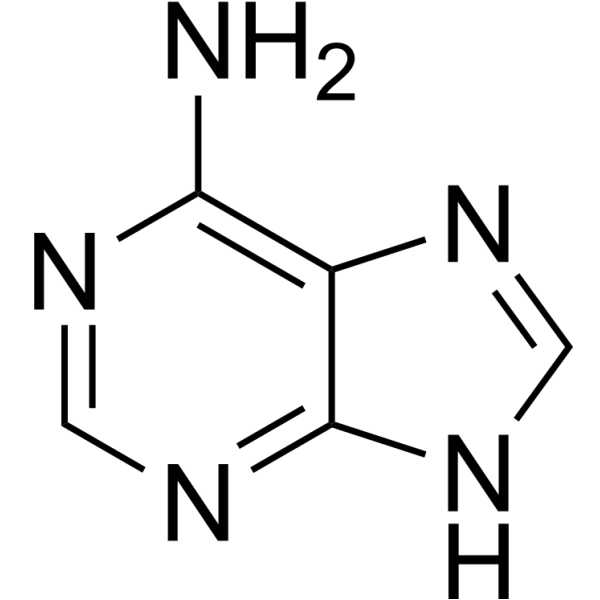
Adenine (6-Aminopurine), a purine, is one of the four nucleobases in the nucleic acid of DNA.
Adenine acts as a chemical component of DNA and RNA. Adenine also plays an important role in biochemistry involved in cellular respiration, the form of both ATP and the cofactors (NAD and FAD), and protein synthesis .
|
-
-
- HY-B1654
-
|
FAD
|
Endogenous Metabolite
|
Cardiovascular Disease
|
|
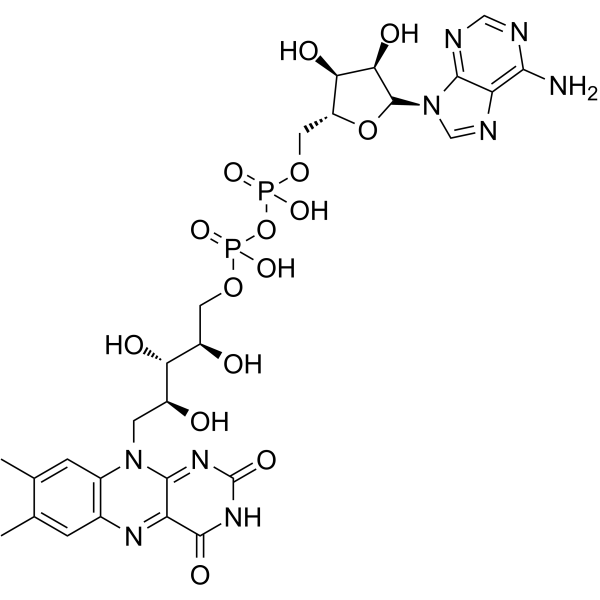
Flavin adenine dinucleotide (FAD) is a redox cofactor, more specifically a prosthetic group of a protein, involved in several important enzymatic reactions in metabolism.
|
-
-
- HY-B0456
-
|
Vitamin B2; E101
|
Environmental Pollutants
Endogenous Metabolite
Bacterial
|
Metabolic Disease
Cancer
|
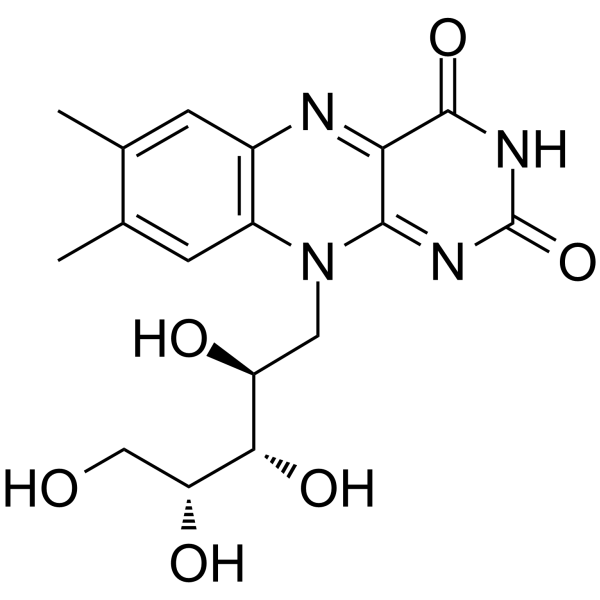
Riboflavin, an orally active and easily absorbed micronutrient, is a precursor of flavin mononucleotide (FMN) and flavin adenine dinucleotide (FAD), which serve as coenzymes for numerous enzymatic reactions and perform key metabolic functions by mediating the transfer of electrons in biological oxidation-reduction reaction .
|
-
-
- HY-B0445A
-
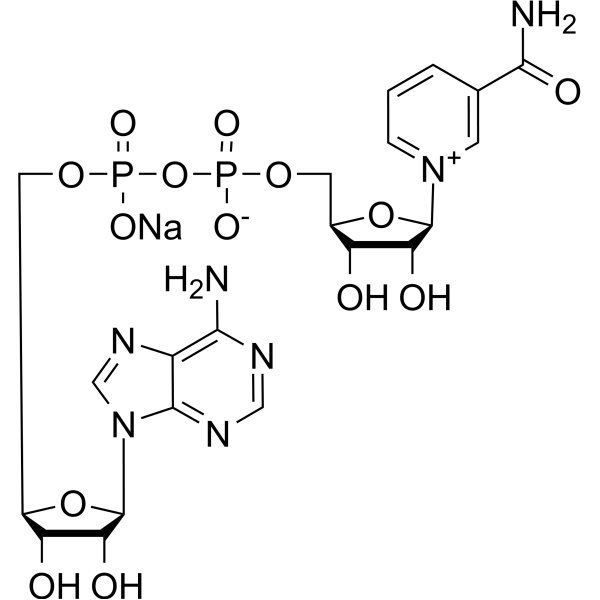
NAD sodium
Maximum Cited Publications
45 Publications Verification
β-DPN sodium; β-NAD sodium; β-Nicotinamide Adenine Dinucleotide sodium
|
Endogenous Metabolite
|
Metabolic Disease
|
|
NAD sodium is an orally effective cofactor and homeostatic regulator. NAD sodium can be reduced to β-nicotinamide adenine dinucleotide (NADH) during coupling with reactions that oxidize organic substrates. NAD sodium can be converted to β-nicotinamide adenine dinucleotide (NADH) and passes to the inside of mitochondria, which indirectly generates ATP. NAD sodium can be used for the research of non-alcoholic fatty liver disease, obesity, and glucose intolerance .
|
-
-
- HY-B1654A
-
|
FAD disodium salt; FAD-Na2
|
Endogenous Metabolite
|
Cardiovascular Disease
|
|
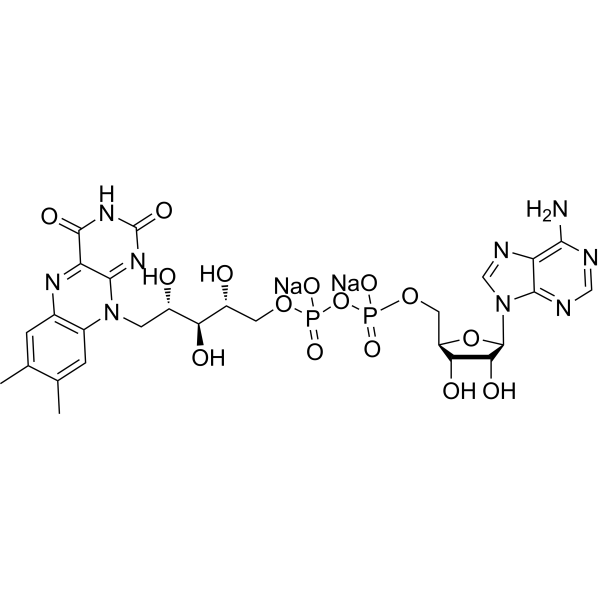
Flavin adenine dinucleotide (FAD) disodium salt is a redox cofactor, more specifically a prosthetic group of a protein, involved in several important enzymatic reactions in metabolism.
|
-
-
- HY-N0160
-
|
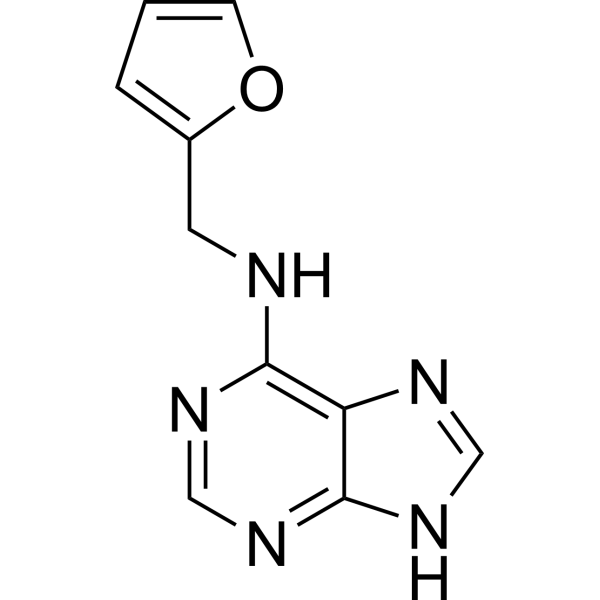
6-FurfurylAdenine; N6-FurfurylAdenine
|
Environmental Pollutants
SOD
|
Neurological Disease
|
|
Kinetin (N6-furfuryladenine) belongs to the family of N6-substituted adenine derivatives known as cytokinins, which are plant hormones involved in cell division, differentiation and other physiological processes. Kinetin has anti-aging effects .
|
-
-
- HY-136406
-
|
|
ATP Synthase
|
Infection
Cancer
|
|
Bongkrekic acid is a mitochondrial toxin secreted by the bacteria Pseudomonas cocovenenans . Bongkrekic acid specific ligand for mitochondrial adenine nucleotide translocase (ANT) rather than the electron transport chain. Bongkrekic acid has to cross the mitochondrial inner membrane to produce its inhibitory effect on ADP/ATP transport .
|
-
-
- HY-113432
-
|
2PY
|
Endogenous Metabolite
PARP
|
Metabolic Disease
|
|
Nudifloramide (2PY) is one of the end products of nicotinamide-adenine dinucleotide (NAD) degradation. Nudifloramide significantly inhibits poly(ADP-ribose) polymerase (PARP-1) activity in vitro .
|
-
-
- HY-B0152S1
-
|
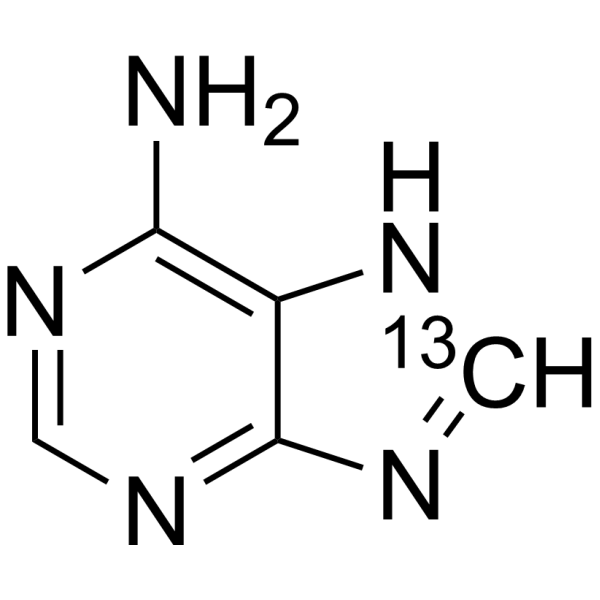
Adenine-8-C13; 9H-Purin-6-amine-8-13C
|
DNA/RNA Synthesis
Endogenous Metabolite
|
Cancer
|
|
Adenine- 13C is the 13C labeled Adenine . Adenine (6-Aminopurine), a purine, is one of the four nucleobases in the nucleic acid of DNA. Adenine acts as a chemical component of DNA and RNA. Adenine also plays an important role in biochemistry involved in cellular respiration, the form of both ATP and the cofactors (NAD and FAD), and protein synthesis .
|
-
-
- HY-B0152B
-
|
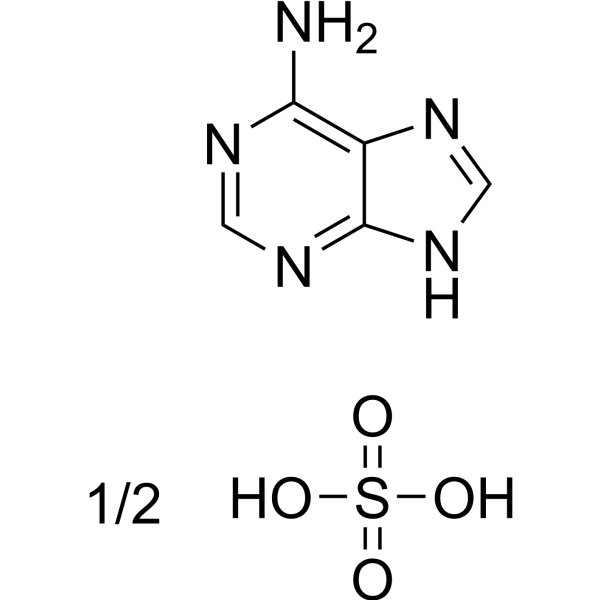
6-Aminopurine hemisulfate; Vitamin B4 hemisulfate
|
DNA/RNA Synthesis
Endogenous Metabolite
|
Cancer
|
|
Adenine hemisulfate (6-Aminopurine hemisulfate), a purine, is one of the four nucleobases in the nucleic acid of DNA. Adenine hemisulfate acts as a chemical component of DNA and RNA. Adenine hemisulfate also plays an important role in biochemistry involved in cellular respiration, the form of both ATP and the cofactors (NAD and FAD), and protein synthesis .
|
-
-
- HY-P2804
-
|
GADPH; G3PDH; Glyceraldehyde phosphate dehydrogenase
|
Endogenous Metabolite
|
Others
|
|
Glyceraldehyde phosphate dehydrogenase (EC 1.2.1.12) is the target of anti-thymocyte and anti-apoptotic agents. Glyceraldehyde phosphate dehydrogenase catalyzes the chain oxidation of reduced nicotinamide adenine dinucleotide by perhydroxyl radicals .
|
-
-
- HY-W018326
-
|
|
DNA/RNA Synthesis
|
Cancer
|
|
Temozolomide acid is a carboxylic acid derivative of Temozolomide (HY-17364) with anticancer activity. Temozolomide is a DNA alkylating agent, methylating the guanine and adenine bases of DNA, causing breaks in DNA double strand, cell cycle arrest, and eventually cell death. Temozolomide acid is promising for research of glioblastoma and brain cancer .
|
-
-
- HY-P3185
-
|
|
Biochemical Assay Reagents
|
Metabolic Disease
|
|
Beta-galactose dehydrogenase is a selective catalyst for β-galactose. Under pH 8.6 conditions, beta-galactose dehydrogenase catalyzes the oxidation of β-galactose, produced by the hydrolysis of lactose by β-galactosidase, with nicotinamide adenine dinucleotide (NAD) to produce reduced nicotinamide adenine dinucleotide (NADH). Beta-galactose dehydrogenase specifically mediates this oxidation reaction for the quantitative detection of the substrate, used in the analysis of lactose concentration in samples such as breast milk .
|
-
-
- HY-113472
-
|
|
Drug Metabolite
|
Others
|
|
N-Methyl-4-pyridone-3-carboxamide (compound 4PY) is a final product of nicotinamide adenine dinucleotide (NAD) degradation .
|
-
-
- HY-B0228S11
-
|
Adenine riboside-15N5; D-Adenosine-15N5
|
Isotope-Labeled Compounds
|
Cancer
|
|
Adenosine- 15N5 (Adenine riboside- 15N5; D-Adenosine- 15N5) is the 15N labled Adenosine (HY-B0228). Adenosine (Adenine riboside), a ubiquitous endogenous autacoid, acts through the enrollment of four G protein-coupled receptors: A1, A2A, A2B, and A3. Adenosine affects almost all aspects of cellular physiology, including neuronal activity, vascular function, platelet aggregation, and blood cell regulation .
|
-
-
- HY-W011552
-
|
|
Endogenous Metabolite
|
Cardiovascular Disease
|
|
2'-O-Methyladenosine, a methylated adenine residue is found in urine of normals as well as in urine of adenosine deaminase (ADA) deficient patients. 2'-O-Methyladenosine exhibits unique hypotensive activities .
|
-
-
- HY-41461
-
|
5-Aminoimidazole-4-carboxamide; AICA
|
Endogenous Metabolite
|
Others
|
|
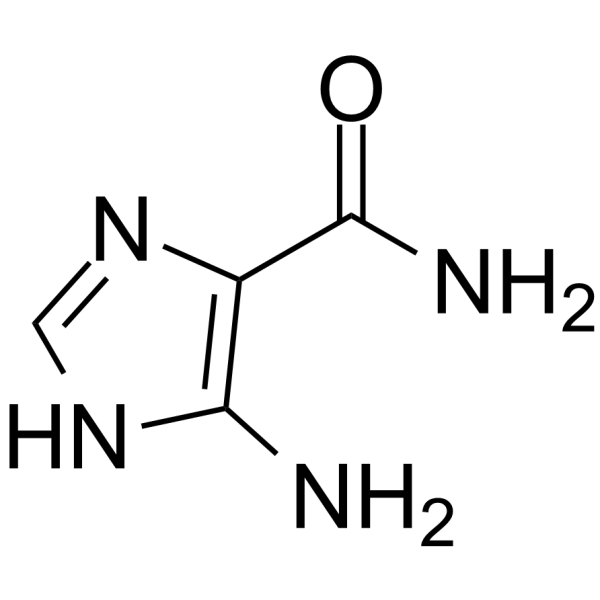
5-Amino-3H-imidazole-4-Carboxamide (5-Aminoimidazole-4-carboxamide; AICA) is an important precursor for the synthesis of purines in general and of the nucleobases adenine and guanine in particular .
|
-
-
- HY-B0152A
-
|
6-Aminopurine hydrochloride; Vitamin B4 hydrochloride
|
DNA/RNA Synthesis
Endogenous Metabolite
|
Cancer
|
|
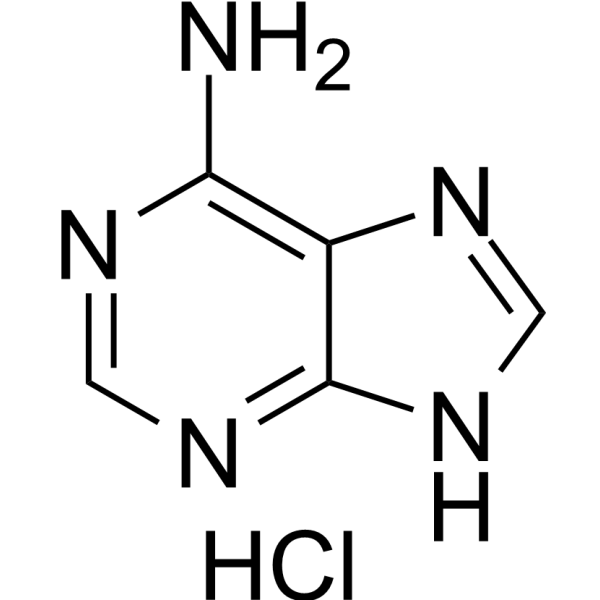
Adenine hydrochloride (6-Aminopurine hydrochloride), a purine, is one of the four nucleobases in the nucleic acid of DNA. Adenine hydrochloride acts as a chemical component of DNA and RNA. Adenine hydrochloride also plays an important role in biochemistry involved in cellular respiration, the form of both ATP and the cofactors (NAD and FAD), and protein synthesis .
|
-
-
- HY-131924
-
|
Thio-NAD
|
Biochemical Assay Reagents
|
Others
|
|
Thionicotinamide adenine dinucleotide (Thio-NAD) is a thione-modified analog of the coenzyme nicotinamide adenine dinucleotide (NAD +). Thionicotinamide adenine dinucleotide can replace NAD + in enzymatic reactions and shift the absorption peak to 405 nM, enabling sensitive, real-time kinetic detection of enzyme activity, which is particularly suitable for high-sensitivity diagnostic cyclic detection systems .
|
-
-
- HY-B0228S13
-
-
-
- HY-104017
-
-
-
- HY-113303
-
|
|
Endogenous Metabolite
|
Neurological Disease
Cancer
|
|
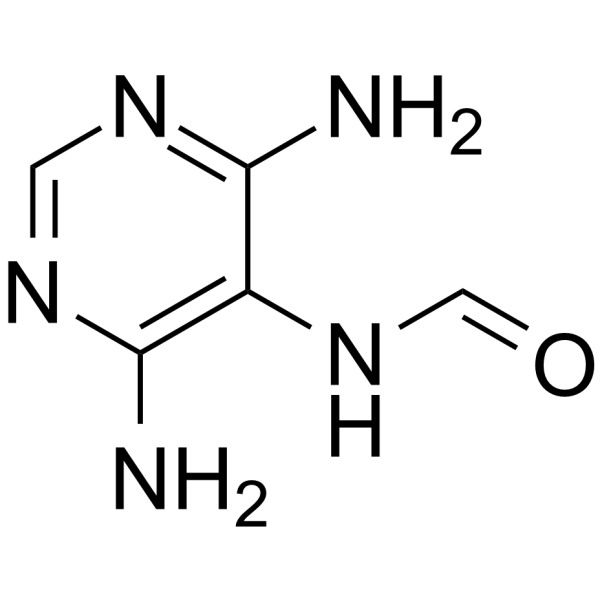
FAPy-adenine is an oxidized DNA base. Fapy-adenine shows an increased trend levels in the Alzheimer's disease brain. Oxidized nucleosides are biochemical markers for tumors, aging, and neurodegenerative diseases .
|
-
-
- HY-B0228S6
-
-
-
- HY-W008129
-
|
|
Drug Intermediate
Bacterial
|
Infection
|
|
H-D-cis-Hyp-OH is a proline derivative and also a substrate of cis-4-hydroxy-D-proline dehydrogenase from Sinorhizobium meliloti. H-D-cis-Hyp-OH serves as a starting material for the synthesis of conformationally constrained pyrrolidine PNA adenine monomers .
|
-
-
- HY-B0152S
-
|
6-Aminopurine-d1; Vitamin B4-d1
|
DNA/RNA Synthesis
Endogenous Metabolite
|
Cancer
|
|
Adenine-d is the deuterium labeled Adenine. Adenine (6-Aminopurine), a purine, is one of the four nucleobases in the nucleic acid of DNA. Adenine acts as a chemical component of DNA and RNA. Adenine also plays an important role in biochemistry involved in cellular respiration, the form of both ATP and the cofactors (NAD and FAD), and protein synthesis .
|
-
-
- HY-131485
-
|
3-APAD, 90%; 3-Acetylpyridine NAD, 90%
|
Lactate Dehydrogenase
|
Metabolic Disease
|
|
3-Acetylpyridine adenine dinucleotide, 90% is an analog of nicotinamide adenine dinucleotide (NAD). 33-Acetylpyridine adenine dinucleotide, 90% collaboratively inhibits Lactate Dehydrogenase (LDH) with bisulfite .
|
-
-
- HY-B1654S
-
|
FAD-13C5 ammonium
|
Isotope-Labeled Compounds
Endogenous Metabolite
|
Cardiovascular Disease
|
|
Flavin adenine dinucleotide- 13C5 (FAD- 13C5) ammonium is 13C labeled Flavin adenine dinucleotide (HY-B1654). Flavin adenine dinucleotide (FAD) is a redox cofactor, more specifically a prosthetic group of a protein, involved in several important enzymatic reactions in metabolism.
|
-
-
- HY-N6666
-
|
|
HSV
Antibiotic
|
Infection
|
|
Vidarabine monohydrate is an adenine arabinoside. Vidarabine monohydrate an antiviral agent which is active against herpes simplex viruses (HSV) and varicella zoster viruses .
|
-
-
- HY-154924
-
-
-
- HY-16386
-
|
|
Mitochondrial Metabolism
|
Cancer
|
|
PENAO is a potent tumour cell mitochondrial toxin. PENAO inactivates tumor cell mitochondria by targeting inner-membrane adenine nucleotide transferase .
|
-
-
- HY-41461A
-
|
5-Aminoimidazole-4-carboxamide hydrochloride; AICA hydrochloride
|
Endogenous Metabolite
|
Others
|
|
5-Amino-3H-imidazole-4-Carboxamide (AICA) hydrochloride is an important precursor for the synthesis of purines in general and of the nucleobases adenine and guanine in particular .
|
-
-
- HY-N9941
-
|
|
Endogenous Metabolite
|
Metabolic Disease
|
|
2,8-Dihydroxyadenine, an endogenous metabolite, can cause the formation of urinary crystals and kidney stones. 2,8-Dihydroxyadenine can be used to diagnose adenine phosphoribosyltransferase (APRT) deficiency .
|
-
-
- HY-P2987
-
-
-
- HY-B0445B
-
|
α-Nicotinamide Adenine Dinucleotide
|
Mitochondrial Metabolism
Endogenous Metabolite
|
Metabolic Disease
|
|
α-NAD (α-Nicotinamide Adenine Dinucleotide) serves as a substrate for reninase, functions as an analog of β-NAD, affects the kinetics of NAD-dependent enzymes, and also plays a critical role as a cofactor in mitochondrial redox reactions .
|
-
-
- HY-B0152R
-
|
|
Reference Standards
DNA/RNA Synthesis
Endogenous Metabolite
|
Cancer
|
|
Adenine (Standard) is the analytical standard of Adenine. This product is intended for research and analytical applications. Adenine (6-Aminopurine), a purine, is one of the four nucleobases in the nucleic acid of DNA. Adenine acts as a chemical component of DNA and RNA. Adenine also plays an important role in biochemistry involved in cellular respiration, the form of both ATP and the cofactors (NAD and FAD), and protein synthesis .
|
-
-
- HY-B0152S4
-
|
6-Aminopurine-15N5; Vitamin B4-15N5
|
Isotope-Labeled Compounds
DNA/RNA Synthesis
Endogenous Metabolite
|
Cancer
|
|
Adenine- 15N5 (6-Aminopurine- 15N5; Vitamin B4- 15N5) is 15N labeled Adenine (HY-B0152). Adenine (6-Aminopurine), a purine, is one of the four nucleobases in the nucleic acid of DNA.
Adenine acts as a chemical component of DNA and RNA. Adenine also plays an important role in biochemistry involved in cellular respiration, the form of both ATP and the cofactors (NAD and FAD), and protein synthesis.
|
-
-
- HY-B1654R
-
|
FAD (Standard)
|
Reference Standards
Endogenous Metabolite
|
Cardiovascular Disease
|
|
Flavin adenine dinucleotide (Standard) is the analytical standard of Flavin adenine dinucleotide. This product is intended for research and analytical applications. Flavin adenine dinucleotide (FAD) is a redox cofactor, more specifically a prosthetic group of a protein, involved in several important enzymatic reactions in metabolism.
|
-
-
- HY-147342
-
|
|
Drug Metabolite
IMPDH
|
Cancer
|
|
β-Benzamide adenine dinucleotide is a biologically active metabolite of benzamide riboside. β-Benzamide adenine dinucleotide is a competitive inhibitor of human NAD kinase with a Ki value of 90 μM, and inhibits human IMPDH with IC50 values of 0.787 μM and 0.884 μM for type I and type II, respectively. β-Benzamide adenine dinucleotide exhibits inhibitory activities against lactate dehydrogenase, glutamate dehydrogenase, and malate dehydrogenase. β-Benzamide adenine dinucleotide can be used for the study of chronic myelogenous leukemia .
|
-
-
- HY-W436424
-
|
|
DNA/RNA Synthesis
|
Infection
|
|
DMA-IN-1 is a DNA adenine methyltransferase (DAM) inhibitor, IC50: 48 μM. DMA-IN-1 inhibits Caulobacter growth with an MIC of 35 μM .
|
-
-
- HY-16386A
-
|
|
Mitochondrial Metabolism
|
Cancer
|
|
PENAO TFA is the trifluoroacetic acid of PENAO (HY-16386). PENAO is a potent tumour cell mitochondrial toxin. PENAO inactivates tumor cell mitochondria by targeting inner-membrane adenine nucleotide transferase .
|
-
-
- HY-134266
-
|
8-Bromoadenosine 5'-monophosphate; 8-Bromoadenylic acid
|
Endogenous Metabolite
|
Cardiovascular Disease
|
|
8-Bromo-AMP (8-Bromoadenosine 5'-monophosphate) is a membrane permeable cAMP analogue. 8-Bromo-AMP can improve the ability of the heart to recover from ischemia and reperfusion by increasing the levels of ATP, ADP, and total adenine nucleotides .
|
-
-
- HY-W250163
-
|
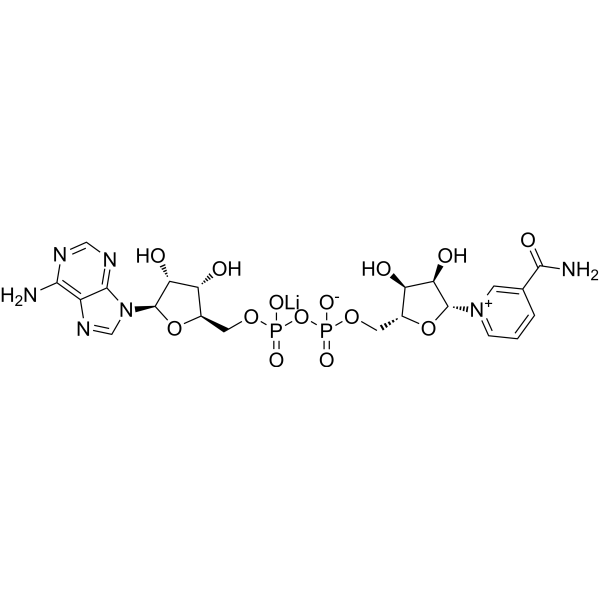
β-DPN lithium; β-NAD lithium; β-Nicotinamide Adenine Dinucleotide lithium
|
Biochemical Assay Reagents
|
Metabolic Disease
|
|
NAD+ lithium (β-DPN lithium) is a lithium salt of nicotinamide adenine dinucleotide. NAD+ is a coenzyme in the REDOX reaction. NAD+ can directly or indirectly affect several key cellular functions, including metabolic pathways, DNA repair, chromatin remodeling, cell aging, and immune cell function .
|
-
-
- HY-113432S
-
|
|
Endogenous Metabolite
PARP
|
Metabolic Disease
|
|
Nudifloramide-d3 (2PY-d3) is the deuterium labeled Nudifloramide. Nudifloramide (2PY) is one of the end products of nicotinamide-adenine dinucleotide (NAD) degradation. Nudifloramide significantly inhibits poly(ADP-ribose) polymerase (PARP-1) activity in vitro .
|
-
-
- HY-W015213
-
|
|
Endogenous Metabolite
DNA/RNA Synthesis
|
Metabolic Disease
|
|
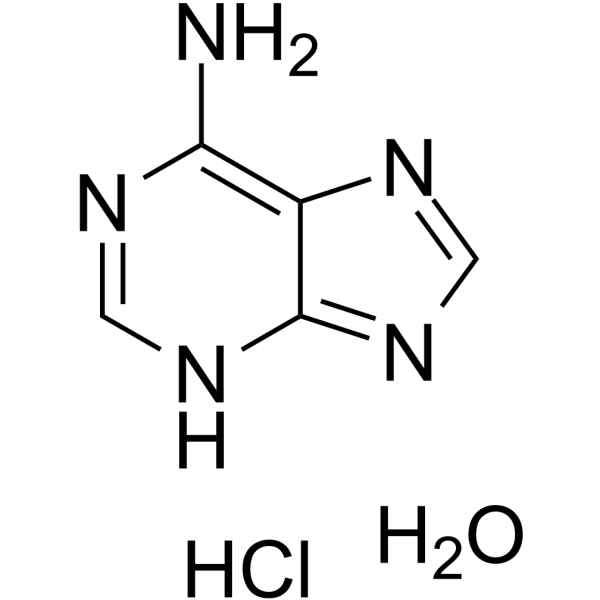
Adenine monohydrochloride hemihydrate is a hydrochloride derivative of Adenine. Adenine (6-Aminopurine), a purine, is one of the four nucleobases in the nucleic acid of DNA. Adenine acts as a chemical component of DNA and RNA. Adenine also plays an important role in biochemistry involved in cellular respiration, the form of both ATP and the cofactors (NAD and FAD), and protein synthesis .
|
-
-
- HY-B0152S3
-
|
6-Aminopurine-13C5; Vitamin B4-13C5
|
Isotope-Labeled Compounds
DNA/RNA Synthesis
Endogenous Metabolite
|
Cancer
|
|
Adenine- 13C5 (6-Aminopurine- 13C5; Vitamin B4- 13C5) is 13C-labeled Adenine (HY-B0152). Adenine (6-Aminopurine), a purine, is one of the four nucleobases in the nucleic acid of DNA.
Adenine acts as a chemical component of DNA and RNA. Adenine also plays an important role in biochemistry involved in cellular respiration, the form of both ATP and the cofactors (NAD and FAD), and protein synthesis.
|
-
-
- HY-W009632
-
|
6-Aminopurine phosphate
|
Biochemical Assay Reagents
|
Others
|
|
Adenine phosphate (6-Aminopurine phosphate) can stimulate leukocyte proliferation. Adenine phosphate is a kind of biological materials or organic compounds that are widely used in life science research .
|
-
-
- HY-E70406
-
|
CHDH-5
|
Endogenous Metabolite
|
Others
|
|
Cholesterol Dehydrogenase, Nocardia sp. is an enzyme that uses nicotinamide adenine dinucleotide/nicotinamide adenine dinucleotide phosphate (NAD(P)) as its cofactor in oxidizing cholesterol to form cholest-4-en-3-one. This enzyme oxidizes the hydroxyl group at the 3 position of the sterol ring to form a ketone.
|
-
-
- HY-W250156
-
|
|
Biochemical Assay Reagents
|
Others
|
|
3-Acetylpyridine adenine dinucleotide (disodium) is a biochemical reagent that can be used as a biological material or organic compound for life science related research.
|
-
-
- HY-B0228S12
-
-
-
- HY-116496
-
|
N7-MethylAdenine
|
DNA Alkylator/Crosslinker
|
Cancer
|
|
7-Methyladenine (N7-Methyladenine), a methylated analog of Adenine (HY-B0152), is a biomarker of DNA damage from exposure to methylating agents .
|
-
- HY-127130
-
|
|
Bcl-2 Family
Apoptosis
Fungal
Antibiotic
|
Infection
Cancer
|
|
Spicamycin, an adenine nucleoside antibiotic with antifungal and antitumor activities. Spicamycin is also a potent inducer of differentiation of myeloid leukemia cells. Spicamycin induces apoptosis in NB4 cells via down-regulation of Bcl-2 expression and modulation of PML protein .
|
-
- HY-113432R
-
|
2PY (Standard)
|
Reference Standards
Endogenous Metabolite
PARP
|
Metabolic Disease
|
|
Nudifloramide (Standard) is the analytical standard of Nudifloramide. This product is intended for research and analytical applications. Nudifloramide (2PY) is one of the end products of nicotinamide-adenine dinucleotide (NAD) degradation. Nudifloramide significantly inhibits poly(ADP-ribose) polymerase (PARP-1) activity in vitro .
|
-
- HY-B0152S7
-
|
6-Aminopurine-15N5 hydrochloride hydrate; Vitamin B4-15N5 hydrochloride hydrate
|
Isotope-Labeled Compounds
DNA/RNA Synthesis
|
Cancer
|
|
Adenine- 15N5 (6-Aminopurine- 15N5) hydrochloride hydrate is the 15N-labeled Adenine (HY-B0152). Adenine (6-Aminopurine), a purine, is one of the four nucleobases in the nucleic acid of DNA. Adenine acts as a chemical component of DNA and RNA. Adenine also plays an important role in biochemistry involved in cellular respiration, the form of both ATP and the cofactors (NAD and FAD), and protein synthesis .
|
-
- HY-103172
-
|
|
P2Y Receptor
|
Metabolic Disease
|
|
8-Aminoadenine is an adenine receptor 1 (rAde1R) inhibitor with a Ki of 6.51 μM in rat and 0.0341 μM in human. 8-Aminoadenine inhibits isoprenaline-induced cAMP accumulation and adenine uptake in astrocytoma cells expressing rAde1R. 8-Aminoadenine serves as a lead structure for the development of adenine receptor ligands to elucidate the functions of the adenine receptor family .
|
-
- HY-152672
-
-
- HY-B0445AR
-
|
β-DPN sodium (Standard); β-NAD sodium (Standard); β-Nicotinamide Adenine Dinucleotide sodium (Standard)
|
Endogenous Metabolite
Reference Standards
|
Metabolic Disease
|
|
NAD sodium (Standard) is the analytical standard of NAD sodium. This product is intended for research and analytical applications. NAD (β-Nicotinamide Adenine Dinucleotide) sodium is an analogue of NAD. NAD sodium can be reduced to β-nicotinamide adenine dinucleotide (NADH) during coupling with reactions which oxidize organic substrates. NAD sodium can be converted to β-nicotinamide adenine dinucleotide (NADH) and passes to the inside of mitochondria that indirectly generates ATP .
|
-
- HY-W250154
-
|
|
Endogenous Metabolite
|
Metabolic Disease
|
|
β-Nicotinamide adenine dinucleotide reduced dipotassium is an orally active reduced coenzyme. β-Nicotinamide adenine dinucleotide reduced dipotassium is a donor of ADP-ribose units in ADP-ribosylaton reactions and a precursor of cyclic ADP-ribose. β-Nicotinamide adenine dinucleotide reduced dipotassium plays a role as a regenerative electron donor in cellular energy metabolism, including glycolysis, β-oxidation and the tricarboxylic acid (TCA) cycle .
|
-
- HY-W076740
-
|
8-Bromo-9H-purin-6-amine
|
DNA/RNA Synthesis
Biochemical Assay Reagents
|
Others
|
|
8-Bromoadenine (8-Bromo-9H-purin-6-amine) is a DNA radiosensitizer that inhibits DNA single-strand break repair in cells. 8-Bromoadenine is a brominated derivative of adenine, and radioactive adenine can be prepared by replacing bromine with deuterium .
|
-
- HY-113767
-
|
|
DNA/RNA Synthesis
|
Metabolic Disease
|
|
Momordin II, an oleanane-type triterpene glycoside, is a ribosome inactivating protein. Momordin II inhibits cell-free protein synthesis, releases adenine from rat liver ribosomes and from DNA, and has no RNase activity .
|
-
- HY-103305
-
|
|
Fluorescent Dye
Calcium Channel
|
Others
|
|
cis-Ned19 is an irreversible nicotinic acid adenine dinucleotide phosphate (NAADP) antagonist. cis-Ned19 localizes to lysosomes and endolysosomal vesicles, stains two-pore calcium channels and fluorescently labels NAADP receptors (Ex/Em = 365/410 nm) .
|
-
- HY-W048487
-
|
N6-Benzoyl-7'-OH-Morpholino adenosine
|
Nucleoside Antimetabolite/Analog
|
Cancer
|
|
N6-Benzoyl-7’-OH-morpholino adenine is a purine nucleoside analog. Purine nucleoside analogs have broad antitumor activity targeting indolent lymphoid malignancies. Anticancer mechanisms in this process rely on inhibition of DNA synthesis, induction of apoptosis, etc .
|
-
- HY-W739665
-
-
- HY-B0152BR
-
|
6-Aminopurine hemisulfate (Standard); Vitamin B4 hemisulfate (Standard)
|
DNA/RNA Synthesis
Endogenous Metabolite
Reference Standards
|
Cancer
|
|
Adenine (hemisulfate) (Standard) is the analytical standard of Adenine (hemisulfate). This product is intended for research and analytical applications. Adenine hemisulfate (6-Aminopurine hemisulfate), a purine, is one of the four nucleobases in the nucleic acid of DNA. Adenine hemisulfate acts as a chemical component of DNA and RNA. Adenine hemisulfate also plays an important role in biochemistry involved in cellular respiration, the form of both ATP and the cofactors (NAD and FAD), and protein synthesis .
|
-
- HY-131485A
-
|
3-APAD, 95%; 3-Acetylpyridine NAD, 95%
|
Lactate Dehydrogenase
|
Metabolic Disease
|
|
3-Acetylpyridine adenine dinucleotide, 95% (3-APAD, 95%)is an analog of nicotinamide adenine dinucleotide (NAD). 33-Acetylpyridine adenine dinucleotide, 95% collaboratively inhibits Lactate Dehydrogenase (LDH) with bisulfite .
|
-
- HY-112690A
-
|
Remofovir mesylate
|
Cytochrome P450
|
Metabolic Disease
|
|
Pradefovir mesylate is a good substrate for liver CYP3A4. Pradefovir is converted to 9-(2-phosphonylmethoxyethyl)adenine (PMEA) in human liver microsomes with a Km of 60 μM.
|
-
- HY-177842
-
|
|
Liposome
|
Metabolic Disease
|
|
Liposomal NAD+ is a specialized delivery system that encapsulates NAD+ within tiny liposomes. These liposomes act as protective shells, enhancing the absorption and bioavailability of NAD+. NAD+ (β-Nicotinamide adenine dinucleotide), also known as Coenzym
|
-
- HY-B0228S8
-
-
- HY-148578
-
|
|
Bacterial
|
Infection
|
|
CamA-IN-1 is a Clostridioides difficile-specific DNA adenine methyltransferase (CamA) inhibitor. CamA-IN-1 has inhibitory for CamA with IC50 and Kd values of 0.4 μM and 0.2 μM, respectively. CamA-IN-1 can be used for the research of Clostridioides difficile infections (CDI) .
|
-
- HY-W698629
-
|
3-Ethyl Adenine-d5
|
Isotope-Labeled Compounds
|
Others
|
|
3-Ethyl-3H-purin-6-amine-d5 (3-Ethyl adenine-d5) is the deuterium labeled 3-Ethyl-3H-purin-6-amine (HY-W720432).
|
-
- HY-W747167
-
|
Phenyl hydrogen ((((R)-1-(6-amino-9H-purin-9-yl)propan-2-yl)oxy)methyl)phosphonate-d5
|
Isotope-Labeled Compounds
|
Others
|
|
[(R)-2-(Phenylphosphonomethoxy)propyl]adenine-d5 (Phenyl hydrogen ((((R)-1-(6-amino-9H-purin-9-yl)propan-2-yl)oxy)methyl)phosphonate-d5) is the deuterium labeled Phenyl hydrogen ((((R)-1-(6-amino-9H-purin-9-yl)propan-2-yl)oxy)methyl)phosphonate (HY-W004381).
|
-
- HY-W739514
-
-
- HY-W015213S
-
|
|
Isotope-Labeled Compounds
Endogenous Metabolite
DNA/RNA Synthesis
|
Metabolic Disease
|
|
Adenine monohydrochloride hemihydrate- 15N5 is the 15N labeled Adenine monohydrochloride hemihydrate (HY-W015213). Adenine monohydrochloride hemihydrate is a hydrochloride derivative of Adenine. Adenine (6-Aminopurine), a purine, is one of the four nucleobases in the nucleic acid of DNA. Adenine acts as a chemical component of DNA and RNA. Adenine also plays an important role in biochemistry involved in cellular respiration, the form of both ATP and the cofactors (NAD and FAD), and protein synthesis .
|
-
- HY-B0152AR
-
|
6-Aminopurine hydrochloride (Standard); Vitamin B4 hydrochloride (Standard)
|
Reference Standards
DNA/RNA Synthesis
Endogenous Metabolite
|
Cancer
|
|
Adenine (hydrochloride) (Standard) is the analytical standard of Adenine (hydrochloride). This product is intended for research and analytical applications. Adenine hydrochloride (6-Aminopurine hydrochloride), a purine, is one of the four nucleobases in the nucleic acid of DNA. Adenine hydrochloride acts as a chemical component of DNA and RNA. Adenine hydrochloride also plays an important role in biochemistry involved in cellular respiration, the form of both ATP and the cofactors (NAD and FAD), and protein synthesis[1][2][3].
|
-
- HY-113303R
-
|
|
Endogenous Metabolite
Reference Standards
|
Neurological Disease
Cancer
|
|
FAPy-adenine (Standard) is the analytical standard of FAPy-adenine. This product is intended for research and analytical applications. FAPy-adenine is an oxidized DNA base. Fapy-adenine shows an increased trend levels in the Alzheimer's disease brain. Oxidized nucleosides are biochemical markers for tumors, aging, and neurodegenerative diseases .
|
-
- HY-W712567
-
|
6-Aminopurine-15N5 hydrochloride; Vitamin B4-15N5 hydrochloride
|
Isotope-Labeled Compounds
|
Infection
Cancer
|
|
Adenine- 15N5 (6-Aminopurine- 15N5) hydrochloride is the 15N-labeled Adenine hydrochloride (HY-B0152A) . Adenine hydrochloride (6-Aminopurine hydrochloride), a purine, is one of the four nucleobases in the nucleic acid of DNA. Adenine hydrochloride acts as a chemical component of DNA and RNA. Adenine hydrochloride also plays an important role in biochemistry involved in cellular respiration, the form of both ATP and the cofactors (NAD and FAD), and protein synthesis.
|
-
- HY-E70582
-
|
|
Adenosine Deaminase
|
Others
|
|
E.coli tRNA adenosine deaminase is derived from E.coli and is an adenine deaminase that can deaminate adenine in single-stranded RNA (ssRNA, mainly the loop region within tRNA) or double-stranded RNA (dsRNA), but has no deamination activity on DNA. E.coli tRNA adenosine deaminase is a protein-modified mutant of adenine deaminase, which can efficiently deaminate adenine in ssDNA and can be applied to adenine base editors (ABE) and RNA m6A methylation sequencing .
|
-
- HY-W739664
-
-
- HY-B1654AR
-
|
FAD disodium salt (Standard); FAD-Na2 (Standard)
|
Reference Standards
Endogenous Metabolite
|
Cardiovascular Disease
|
|
Flavin adenine dinucleotide (disodium salt) (Standard) is the analytical standard of Flavin adenine dinucleotide (disodium salt). This product is intended for research and analytical applications. Flavin adenine dinucleotide (FAD) disodium salt is a redox cofactor, more specifically a prosthetic group of a protein, involved in several important enzymatic reactions in metabolism.
|
-
- HY-B0152S2
-
|
6-Aminopurine-13C5,15N5; Vitamin B4-13C5,15N5
|
Isotope-Labeled Compounds
DNA/RNA Synthesis
Endogenous Metabolite
|
Cancer
|
|
Adenine- 13C5,15C5 (6-Aminopurine- 13C5,15C5; Vitamin B4- 13C5,15C5) is 13C-labeled Adenine (HY-B0152). Adenine (6-Aminopurine), a purine, is one of the four nucleobases in the nucleic acid of DNA. Adenine acts as a chemical component of DNA and RNA. Adenine also plays an important role in biochemistry involved in cellular respiration, the form of both ATP and the cofactors (NAD and FAD), and protein synthesis.
|
-
- HY-E70605
-
|
|
DNA/RNA Synthesis
|
Others
|
|
Human alkyl adenine DNA glycosylase is a monomeric DNA glycosylase that corrects a broad range of alkylated and deaminated nucleobases to maintain genomic integrity .
|
-
- HY-W779021
-
-
- HY-171618
-
|
|
Nucleoside Antimetabolite/Analog
|
Others
|
|
Morpholino U subunit is one of the basic units that make up morpholino oligonucleotides. Morpholino U subunit can pair with adenine in the target RNA .
|
-
- HY-112690
-
|
|
Cytochrome P450
|
Metabolic Disease
|
|
Pradefovir is a good substrate for liver CYP3A4. Pradefovir is converted to 9-(2-phosphonylmethoxyethyl)adenine (PMEA) in human liver microsomes with a Km of 60 μM.
|
-
- HY-131041
-
|
|
Calcium Channel
|
Cardiovascular Disease
|
|
Ned-K is a nicotinic acid adenine dinucleotide phosphate (NAADP) antagonist. Ned-K is effective at dampening simulated ischaemia and reperfusion (sIR)-induced Ca 2+ oscillations in cardiomyocytes .
|
-
- HY-112103S
-
|
N6-(2-lsopentenyl)Adenine-d6; IsopentenylAdenine-d6
|
Isotope-Labeled Compounds
|
Others
|
|
6-(γ,γ-Dimethylallylamino)purine-d6 is the deuterium labeled 6-(γ,γ-Dimethylallylamino)purine (HY-112103). 6-(γ,γ-Dimethylallylamino)purine is a plant growth substance .
|
-
- HY-W777149
-
-
- HY-N6666R
-
|
|
Reference Standards
HSV
Antibiotic
|
Infection
|
|
Vidarabine (monohydrate) (Standard) is the analytical standard of Vidarabine (monohydrate). This product is intended for research and analytical applications. Vidarabine monohydrate is an adenine arabinoside. Vidarabine monohydrate an antiviral agent which is active against herpes simplex viruses (HSV) and varicella zoster viruses[1].
|
-
- HY-134318B
-
|
|
DNA/RNA Synthesis
|
Others
|
|
8-Azido-ADP (disodium) is a covalent-binding inhibitor of mitochondrial adenine nucleotide translocation. 8-Azido-ADP (disodium) causes irreversible inhibition of adenine nucleotide exchange in a light-dependent reaction. 8-Azido-ADP (disodium) inhibits the normal state 4 → 3 transitions of mitochondrial respiration induced by ADP . 8-Azido-ADP (disodium) is a click chemistry reagent, it contains an Azide group and can undergo copper-catalyzed azide-alkyne cycloaddition reaction (CuAAc) with molecules containing Alkyne groups. It can also undergo strain-promoted alkyne-azide cycloaddition (SPAAC) reactions with molecules containing DBCO or BCN groups.
|
-
- HY-B0228S7
-
-
- HY-156424
-
|
|
NADPH Oxidase
|
Inflammation/Immunology
|
|
NOX2-IN-1 (compound 10) is an inhibitor of nicotinamide adenine dinucleotide phosphate oxidase isoform 2 (NOX2). NOX2-IN-1 targets the p47phox p22phox protein protein interaction with favorable binding affinities and cellular activities .
|
-
- HY-W015213R
-
|
|
Endogenous Metabolite
Reference Standards
DNA/RNA Synthesis
|
Metabolic Disease
|
|
Adenine monohydrochloride hemihydrate (Standard) is the analytical standard of Adenine monohydrochloride hemihydrate (HY-W015213). This product is intended for research and analytical applications. Adenine monohydrochloride hemihydrate is a hydrochloride derivative of Adenine. Adenine (6-Aminopurine), a purine, is one of the four nucleobases in the nucleic acid of DNA. Adenine acts as a chemical component of DNA and RNA. Adenine also plays an important role in biochemistry involved in cellular respiration, the form of both ATP and the cofactors (NAD and FAD), and protein synthesis .
|
-
- HY-E71200
-
|
|
Biochemical Assay Reagents
|
Others
|
|
16S rRNA (adenine1408-N1)-Methyltransferase (EC 2.1.1.180) provides a panaminoglycoside-resistant nature through interference with the binding of aminoglycosides toward the A site of 16S rRNA through N1-methylation at position adenine1408.
|
-
- HY-E71200A
-
|
|
Biochemical Assay Reagents
|
Others
|
|
KsgA introduces the most highly conserved ribosomal RNA modification, the dimethylation of adenine1518 and adenine1519 in 16S rRNA. Strains lacking the methylase are resistant to kasugamycin.
|
-
- HY-W784623
-
|
|
Drug Intermediate
|
Others
|
|
Boc-PNA-A(Z)-OH is a Boc-protected peptide nucleic acid monomer with a benzyloxycarbonyl protecting group on the adenine base .
|
-
- HY-171416
-
|
|
Drug Derivative
|
Others
|
|
LCD36, a derivative of nicotinamide adenine dinucleotide (NAD), can be used for synthesis of PARP-1 tracers for positron emission tomography (PET) imaging of the enzyme activity of PARP-1 .
|
-
- HY-E70606
-
|
|
Biochemical Assay Reagents
|
Others
|
|
ATP sulfase, yeast is an ATP sulfatase. ATP sulfase, yeast catalyzes the activation of sulfate by transferring sulfate to the adenine monophosphate group of ATP to form adenosine-5'-phosphosulfate (APS) and pyrophosphate (PPi).
|
-
- HY-134392A
-
|
|
Nucleoside Antimetabolite/Analog
|
Others
|
|
6-Alkyne-NAD+ sodium is a nicotinamide adenine dinucleotide (NAD) analogue. 6-Alkyne-NAD+ sodium can be used as a fluorescent probe coupled with fluorescent labels for marking ADP-ribose polymerase substrate proteins .
|
-
- HY-P2889A
-
|
|
Endogenous Metabolite
|
Metabolic Disease
|
|
Pyranose Oxidase, E. coli (EC 1.1.3.10) catalyzes the oxidation of aldopyranoses at position C-2 to yield the corresponding 2-ketoaldoses. Pyranose Oxidase is a homotetrameric protein that contains covalently bound flavin adenine dinucleotide (FAD).
|
-
- HY-125863D
-
|
|
Endogenous Metabolite
|
Metabolic Disease
|
|
Glucose-6-phosphate dehydrogenase, Torula yeast (EC 1.1.1.49), is a cytoplasmic enzyme located in the pentose phosphate pathway, a metabolic pathway that provides reducing energy to cells (e.g., erythrocytes) by maintaining the level of the coenzyme nicotinamide adenine dinucleotide phosphate (NADPH).
|
-
- HY-111142
-
|
|
Others
|
Others
|
|
COR 32-24 is a compound that enters the brain through the purine transport system and has the activity of being transported by this system. The brain uptake index of COR 32-24 in rats decreases with the increase of the concentration of unlabeled compound, and its affinity for purine transporters is higher than that for adenine.
|
-
- HY-E71039
-
|
|
Biochemical Assay Reagents
|
Others
|
|
Chemically modified Glucose-6-phosphate Dehydrogenase, Leuconostoc mesenteroides is a cytosolic enzyme. Chemically modified Glucose-6-phosphate Dehydrogenase, Leuconostoc mesenteroides is in the pentose phosphate pathway, a metabolic pathway that supplies reducing energy to cells (such as erythrocytes) by maintaining the level of the co-enzyme nicotinamide adenine dinucleotide phosphate (NADPH) .
|
-
- HY-154132
-
|
|
Nucleoside Antimetabolite/Analog
|
Cancer
|
|
1-(b-D-Xylofuranosyl)-N6-(p-methoxybenzyl) adenine is a purine nucleoside analog. Purine nucleoside analogs have broad antitumor activity targeting indolent lymphoid malignancies. Anticancer mechanisms in this process rely on inhibition of DNA synthesis, induction of apoptosis, etc .
|
-
- HY-B0228S5
-
-
- HY-100973
-
|
ADP ribose
|
TRP Channel
Autophagy
|
Neurological Disease
Metabolic Disease
Cancer
|
|
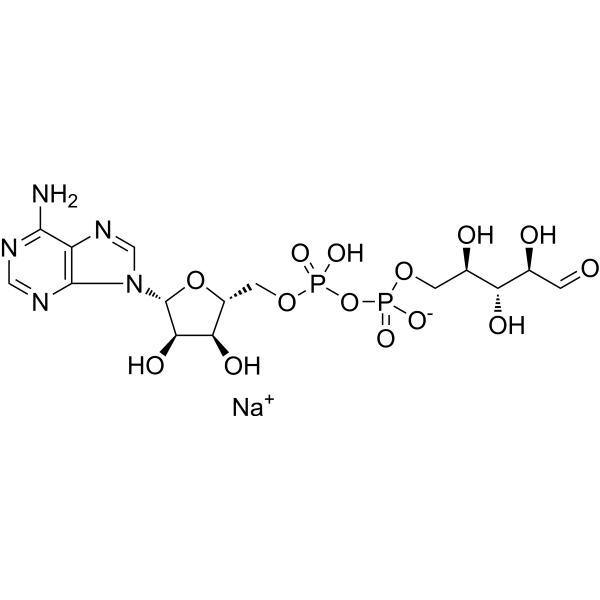
Adenosine 5′-diphosphoribose (ADP ribose) is a nicotinamide adenine nucleotide (NAD +) metabolite. Adenosine 5′-diphosphoribose is the most potent and primary intracellular Ca 2+-permeable cation TRPM2 channel activator. Adenosine 5′-diphosphoribose also can enhance autophagy .
|
-
- HY-164770
-
|
ApU
|
DNA/RNA Synthesis
|
Others
|
|
Adenosyl-(3′→5′)-uridine (ApU) is a nucleotide, which is composed of an adenine base and a uracil sugar molecule through a 3'-5' phosphodiester bond. Adenosyl-(3′→5′)-uridine (ApU) participates in the biological processes, such as gene expression regulation, signal transduction, and protein synthesis .
|
-
- HY-P2940
-
|
|
NAMPT
|
Inflammation/Immunology
|
|
NADase is an ectoenzyme/membrane-bound enzyme targeting nicotinamide adenine dinucleotide (NAD +). NADase regulates intracellular NAD + homeostasis by hydrolyzing NAD + into nicotinamide mononucleotide (NMN) and ADP-ribose. NADase is promising for research of autoimmune diseases (e.g., systemic sclerosis, systemic lupus erythematosus) and aging-related disorders .
|
-
- HY-134355
-
|
|
PARP
|
Others
|
|
ADPRP is an intranuclear enzyme whose main activity is to use NAD+ (nicotinamide adenine dinucleotide) as a substrate to add ADP-ribose units to chromatin-bound proteins, including the ADPRP enzyme itself. This process, called poly(ADP-ribosylation), is a post-translational modification that regulates the interaction between DNA and nuclear proteins .
|
-
- HY-100973A
-
|
ADP ribose sodium
|
TRP Channel
Autophagy
|
Metabolic Disease
Endocrinology
Cancer
|
|
Adenosine 5′-diphosphoribose sodium (ADP ribose sodium) is a nicotinamide adenine nucleotide (NAD +) metabolite. Adenosine 5′-diphosphoribose sodium is the most potent and primary intracellular Ca 2+-permeable cation TRPM2 channel activator. Adenosine 5′-diphosphoribose sodium also can enhance autophagy .
|
-
- HY-W357200
-
|
N-[9-(6-Hydroxymethyl-4-trityl-morpholin-2-yl)-9H-purin-6-yl]-benzamide
|
Nucleoside Antimetabolite/Analog
|
Cancer
|
|
N6-Benzoyl-7’-OH-N-trityl morpholino adenine is a purine nucleoside analog. Purine nucleoside analogs have broad antitumor activity targeting indolent lymphoid malignancies. Anticancer mechanisms in this process rely on inhibition of DNA synthesis, induction of apoptosis, etc .
|
-
- HY-W011548
-
|
|
Nucleoside Antimetabolite/Analog
|
Others
|
|
2-Aminoadenosine is a modified adenine base and adenosine analog that stabilizes RNA duplexes and enhances template-directed nucleotide condensation reactions. 2-Aminoadenosine forms three hydrogen bonds with uracil to increase the melting temperature of hybrid strands, thereby stabilizing uracil-containing RNA duplexes .
|
-
- HY-164770A
-
|
ApU sodium
|
DNA/RNA Synthesis
|
Others
|
|
Adenosyl-(3′→5′)-uridine (ApU) sodium is a nucleotide, which is composed of an adenine base and a uracil sugar molecule through a 3'-5' phosphodiester bond. Adenosyl-(3′→5′)-uridine (ApU) sodium participates in the biological processes, such as gene expression regulation, signal transduction, and protein synthesis .
|
-
- HY-134280
-
|
Nicotinamide 8-Br-hypoxanthine dinucleotide
|
Drug Derivative
|
Others
|
|
8-Br-NHD+ (Nicotinamide 8-Br-hypoxanthine dinucleotide) is a derivative of NAD+ (nicotinamide adenine dinucleotide) that acts as a potential substrate, competitive inhibitor or modulator of enzymes that interact with β-NAD+. 8-Br-NHD+ can be used to synthesize a cyclic ADP nucleotide (cADPR) analog .
|
-
- HY-171213
-
|
|
Toll-like Receptor (TLR)
|
Neurological Disease
|
|
NB-3 is a nicotinamide adenine dinucleotide (NAD) hydrolase SARM1 inhibitor. NB-3 intercepts NAD hydrolysis and undergoes covalent conjugation with the reaction product adenosine diphosphate ribose (ADPR). The resulting small-molecule ADPR adducts are highly potent and confer compelling neuroprotection in neurological injury .
|
-
- HY-B0228S14
-
|
Adenine riboside-d9; D-Adenosine-d9
|
Isotope-Labeled Compounds
|
Others
|
|
Adenosine-d9 is the deuterium labeled Adenosine. Adenosine (Adenine riboside), a ubiquitous endogenous autacoid, acts through the enrollment of four G protein-coupled receptors: A1, A2A, A2B, and A3. Adenosine affects almost all aspects of cellular physio .
|
-
- HY-B0228S2
-
-
- HY-159916
-
|
|
Toll-like Receptor (TLR)
|
Inflammation/Immunology
|
|
AYK004 is a TLR7/8 agonist that enhances immune responses by activating the TLR signaling pathway. AYK004 is an adenine derivative with a favorable hydrophilic-lipophilic balance, which improves the loading capacity and stability in immunoadjuvant systems such as liposomes, while reducing the side effects of the immunoadjuvant system in systemic immunity .
|
-
- HY-B0228S3
-
-
- HY-B0228S4
-
-
- HY-125863C
-
|
G6PD, Bacillus sp.
|
Endogenous Metabolite
|
Others
|
|
Glucose-6-phosphate dehydrogenase, Bacillus sp. catalyzes the conversion of glucose-6-phosphate into 6-phosphogluconolactone, and produces reduced nicotinamide adenine dinucleotide phosphate (NADPH) and ribose-5-phosphate in this process. Glucose-6-phosphate dehydrogenase, Bacillus sp. can be used in research about diabetic complications .
|
-
- HY-W714356
-
-
- HY-N0160R
-
|
6-FurfurylAdenine (Standard); N6-FurfurylAdenine (Standard)
|
SOD
Reference Standards
|
Neurological Disease
|
|
Kinetin (Standard) is the analytical standard of Kinetin. This product is intended for research and analytical applications. Kinetin (N6-furfuryladenine) belongs to the family of N6-substituted adenine derivatives known as cytokinins, which are plant hormones involved in cell division, differentiation and other physiological processes. Kinetin has anti-aging effects .
|
-
- HY-W665456
-
|
|
Drug Intermediate
|
Others
|
|
Fmoc‑PNA‑U‑OH is a peptide nucleic acid monomer that can be used for the synthesis of peptide nucleic acids (PNAs). Fmoc‑PNA‑U‑OH exhibits specific binding to adenine, resistance to enzymatic degradation, and strong hybridization properties. Fmoc‑PNA‑U‑OH can be applied in research fields such as gene diagnosis, molecular biology, and antisense therapy.
|
-
- HY-14374
-
|
CAY10618
|
NAMPT
Autophagy
|
Inflammation/Immunology
Cancer
|
|
GPP78 (CAY10618) is a potent Nampt inhibitor with an IC50 of 3.0 nM for nicotinamide adenine dinucleotide (NAD) depletion. GPP78 is cytotoxic to neuroblastoma cell line SH-SY5Y cells with an IC50 of 3.8 nM by inducing autophagy. GPP78 has anti-cancer and anti-inflammatory effects .
|
-
- HY-B0456R
-
|
Vitamin B2 (Standard); E101 (Standard)
|
Reference Standards
Endogenous Metabolite
Bacterial
|
Metabolic Disease
Cancer
|
Riboflavin (Standard) is the analytical standard of Riboflavin. This product is intended for research and analytical applications. Riboflavin, an orally active and easily absorbed micronutrient, is a precursor of flavin mononucleotide (FMN) and flavin adenine dinucleotide (FAD), which serve as coenzymes for numerous enzymatic reactions and perform key metabolic functions by mediating the transfer of electrons in biological oxidation-reduction reaction .
|
-
- HY-148172
-
|
|
HIV
HBV
Nucleoside Antimetabolite/Analog
|
Infection
|
|
L-Fd4A is an adenine derivative. L-Fd4A has anti-human immunodeficiency virus (HIV) (EC50=1.5 μM) and anti-hepatitis B virus (HBV) (EC50=1.7 μM) activity. L-Fd4A has low cytotoxicity .
|
-
- HY-W011552R
-
|
|
Reference Standards
Endogenous Metabolite
|
Cardiovascular Disease
|
|
2'-O-Methyladenosine (Standard) is the analytical standard of 2'-O-Methyladenosine. This product is intended for research and analytical applications. 2'-O-Methyladenosine, a methylated adenine residue is found in urine of normals as well as in urine of adenosine deaminase (ADA) deficient patients. 2'-O-Methyladenosine exhibits unique hypotensive activities .
|
-
- HY-W750643
-
|
5′-S-(3-Aminophenyl)-5′-thioadenosine
|
Phosphorylase
|
Cancer
|
|
m-APTA (5'-S-(3-aminophenyl)-5'-thioadenosine) is a selective chemoprotective agent targeting methylthioadenosine phosphorylase (MTAP). m-APTA can be converted into adenine, which is a crucial step in protecting normal cells from the toxicity of nucleobase analogues (NBA). m-APTA is promising for research of MTAP-deficient cancers .
|
-
- HY-W753672
-
|
|
Isotope-Labeled Compounds
|
Cardiovascular Disease
|
|
2'-O-Methyl Adenosine-d3 is deuterium labeled 2'-O-Methyl Adenosine. 2'-O-Methyl Adenosine, a methylated adenine residue is found in urine of normals as well as in urine of adenosine deaminase (ADA) deficient patients. 2'-O-Methyl Adenosine exhibits unique hypotensive activities .
|
-
- HY-B0228
-
-
- HY-136406S
-
|
|
Isotope-Labeled Compounds
ATP Synthase
|
Cancer
|
|
Bongkrekic acid- 13C28 is the 13C labeled Bongkrekic acid (HY-136406). Bongkrekic acid is a mitochondrial toxin secreted by the bacteria Pseudomonas cocovenenans. Bongkrekic acid specific ligand for mitochondrial adenine nucleotide translocase (ANT) rather than the electron transport chain. Bongkrekic acid has to cross the mitochondrial inner membrane to produce its inhibitory effect on ADP/ATP transport .
|
-
- HY-136602
-
|
|
Apoptosis
JNK
Caspase
|
Cancer
|
|
MT-21 is an Apoptosis inducer and adenine nucleotide translocase inhibitor. MT-21 induces Apoptosis by activating JNK via the Krs/MST protein. MT-21 activates caspase-3 via caspase-9. MT-21 induces the release of cytochrome c. MT-21 can be used in the research of tumors .
|
-
- HY-B0228S
-
-
- HY-113432S2
-
|
2PY-13C,d3
|
Isotope-Labeled Compounds
Endogenous Metabolite
PARP
|
Metabolic Disease
|
|
Nudifloramide- 13C,d3 (2PY- 13C,d3) is the 13C- and deuterium labeled Nudifloramide (HY-113432). Nudifloramide (2PY) is one of the end products of nicotinamide-adenine dinucleotide (NAD) degradation. Nudifloramide significantly inhibits poly(ADP-ribose) polymerase (PARP-1) activity in vitro .
|
-
- HY-B0456S5
-
|
Vitamin B2-d8 ; E101-d8
|
Isotope-Labeled Compounds
Bacterial
Endogenous Metabolite
|
Metabolic Disease
Cancer
|
Riboflavin-d8 (Vitamin B2-d8 ) is deuterium labeled Riboflavin. Riboflavin, an orally active and easily absorbed micronutrient, is a precursor of flavin mononucleotide (FMN) and flavin adenine dinucleotide (FAD), which serve as coenzymes for numerous enzymatic reactions and perform key metabolic functions by mediating the transfer of electrons in biological oxidation-reduction reaction .
|
-
- HY-123650
-
|
5'-p-Fluorosulfonylbenzoyladenosine
|
Biochemical Assay Reagents
|
Cancer
|
|
FSBA (5'-p-Fluorosulfonylbenzoyladenosine) hydrochloride is a covalent modifier and affinity labeling reagent for adenine nucleotide-binding proteins. FSBA hydrochloride covalently attaches to the nucleotide-binding sites of pyruvate kinase, glutamate dehydrogenase, and p56 lck, and to a lysine residue in the ATP-binding site of cAMP-dependent protein kinase, causing loss of enzymatic activity. FSBA hydrochloride can be used for the research of T lymphoma .
|
-
- HY-164523
-
|
|
Checkpoint Kinase (Chk)
|
Cancer
|
|
PV1162 is a selective Chk2 inhibitor with an IC50 of 0.29 nM. PV1162 inhibits ATP binding to Chk2 by targeting the gatekeeper-dependent hydrophobic pocket, which is specific to Chk2 and located behind the ATP-binding site (adenine-binding region), thereby inhibiting the phosphorylation activity of Chk2. PV1162 holds potential application value in the field of cancer therapy .
|
-
- HY-185488
-
|
|
DNA Alkylator/Crosslinker
ADC Payload
|
Cancer
|
|
seco-CBI dimer is a DNA alkylating agent and a prodrug of Duocarmycin, which can serve as a payload for synthesizing antibody-drug conjugates (ADCs). seco-CBI dimer binds to the minor groove of A-T-rich regions in DNA, alkylates the N3 position of adenine residues, and induces DNA strand breaks. seco-CBI dimer can be used in the research of non-Hodgkin's lymphoma .
|
-
- HY-132180A
-
|
|
ADC Payload
DNA/RNA Synthesis
|
Inflammation/Immunology
Cancer
|
|
Seco-DUBA hydrochloride is a DNA-targeting cytotoxic agent. Seco-DUBA hydrochloride binds to the minor groove of A-T-rich DNA regions, alkylates the adenine N3 residue, and undergoes spontaneous spirocyclization to generate active DUBA (HY-160969). Seco-DUBA hydrochloride exerts cytotoxic activity against human cancer cells. The reduced hydrophobicity of Seco-DUBA hydrochloride supports the development of antibody-drug conjugates .
|
-
- HY-129101
-
|
Eseroline fumarate
|
5-HT Receptor
|
Neurological Disease
|
|
(-)-Eseroline fumarate is a metabolic of Physostigmine (HY-N6608), an AChE inhibitor. (-)-Eseroline fumarate elicits a leakage of lactic acid dehydrogenase (LDH) from cancer cells. (-)-Eseroline fumarate also induces the release of adenine nucleotides and 5-hydroxytryptamine (5-HT) from neuronal cells, thus induce cell death. (-)-Eseroline fumarate inhibits the electrically evoked twitches of the mouse vas deferens and of the guinea-pig ileum .
|
-
- HY-116887
-
|
|
Endogenous Metabolite
Nucleoside Antimetabolite/Analog
DNA/RNA Synthesis
|
Cancer
|
|
N6-Methyladenine is a DNA epigenetic modification that involves the addition of a methyl group to the sixth position of adenine. N6-Methyladenine plays an important role in distinguishing host DNA from exogenous DNA and controls many biological functions, such as DNA replication, transcription, mismatch repair, and chromosome replication. N6-Methyladenine can be used for the kidney diseases .
|
-
- HY-12404
-
|
Diminazene diaceturate
|
Parasite
Angiotensin-converting Enzyme (ACE)
|
Infection
Inflammation/Immunology
|
|
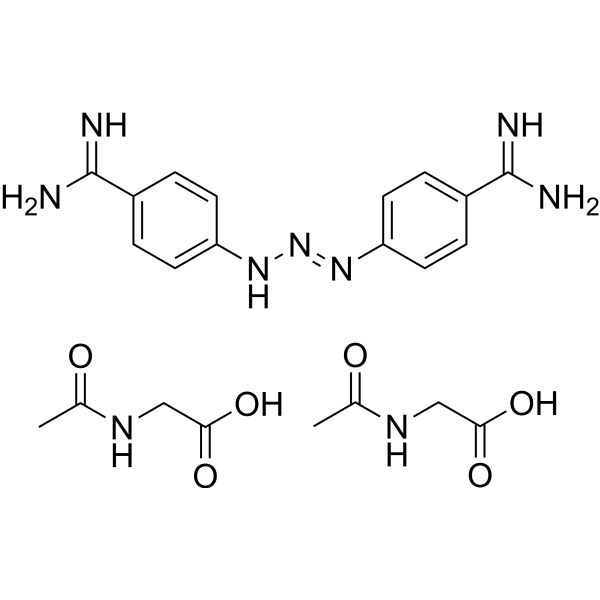
Diminazene aceturate (Diminazene diaceturate) is an anti-trypanosome agent for livestock. The main biochemical mechanism of the trypanocidal actions of Diminazene aceturate is by binding to trypanosomal kinetoplast DNA (kDNA) in a non-intercalative manner through specific interaction with sites rich in adenine-thymine base pairs. Diminazene aceturate is also an angiotensin-converting enzyme 2 (ACE2) activator and has strong and potent anti-inflammatory properties .
|
-
- HY-P11680
-
|
|
DNA/RNA Synthesis
|
Others
|
|
BOC-PNA-thioU(PMB)-OH is a peptide nucleic acid (PNA) monomer characterized by a PMB protecting group on its thiouracil, which enhances its binding affinity to adenine. BOC-PNA-thioU(PMB)-OH exhibits excellent resistance to enzymatic degradation and strong hybridization properties, making it valuable for applications in gene diagnosis, antisense therapy, and other molecular biology fields requiring higher binding strength and greater functionalization.
|
-
- HY-B0228S1
-
|
Adenine riboside-13C5; D-Adenosine-13C5
|
Apoptosis
Nucleoside Antimetabolite/Analog
Autophagy
Endogenous Metabolite
|
Cancer
|
|
Adenosine- 13C5 is the 13C labeled Adenosine . Adenosine (Adenine riboside), a ubiquitous endogenous autacoid, acts through the enrollment of four G protein-coupled receptors: A1, A2A, A2B, and A3. Adenosine affects almost all aspects of cellular physiology, including neuronal activity, vascular function, platelet aggregation, and blood cell regulation .
|
-
- HY-150508
-
MK-0159
1 Publications Verification
|
CD38
|
Cardiovascular Disease
Metabolic Disease
Inflammation/Immunology
|
|
MK-0159 is an orally active, potent and selective CD38 inhibitor, with IC50 values of 22, 3, and 70 nM for human, mouse and rat CD38, respectively. MK-0159 also shows good microsomal stability for human and rodent liver microsomes. MK-0159 increases NAD + (nicotinamide adenine dinucleotide) and reduces ADPR (adenosine diphosphate ribose) in whole blood and heart .
|
-
- HY-N12498
-
|
|
Antibiotic
Bacterial
|
Infection
|
|
Aureonuclemycin can be isolated from Staphylococcus aureus to obtain its biosynthetic gene cluster. Aureonuclemycin exists in two forms: Type A and Type B. Aureonuclemycin A is a nucleoside antibiotic that is structurally similar to herbicides and contains adenine. Aureonuclemycin B contains 5′-deoxyadenosine and exhibits antibacterial activity. Aureonuclemycin can be used in the research of bacterial leaf blight in rice, citrus canker, and bacterial leaf spot in rice. .
|
-
- HY-114570
-
|
NSC 286193; Riboxamide
|
Nucleoside Antimetabolite/Analog
Orthopoxvirus
|
Infection
Neurological Disease
Cancer
|
|
Tiazofurin (NSC 286193) is a synthetic nucleoside analogue with antineoplastic activity. Tiazofurin is anabolized intracellularly to tiazole-4-carboxamide adenine dinucleotide (TAD), a potent inhibitor of IMP dehydrogenase (IMPDH). Tiazofurin enhances the autosecretion of IL-6 in K562 cells. Tiazofurin also has anti-orthopoxvirus and anti-variola activities. Tiazofurin can be used for the study of leukemia and lung cancer .
|
-
- HY-151936
-
|
|
Bacterial
|
Infection
|
|
LmNADK1-IN-1 (compound MC1) is an inhibitor of nicotinamide adenine dinucleotide kinases (NADK1) from
L. monocytogenes with a Ki value of 54 nM. LmNADK1-IN-1 can be used for the research of bacterial infection . LmNADK1-IN-1 is a click chemistry reagent, it contains an Alkyne group and can undergo copper-catalyzed azide-alkyne cycloaddition (CuAAc) with molecules containing Azide groups.
|
-
- HY-152396
-
|
|
Nucleoside Antimetabolite/Analog
|
Cancer
|
|
1-(β-D-Xylofuranosyl)-N6-(m-methoxybenzyl)adenine is an adenosine analog. Adenosine analogs mostly act as smooth muscle vasodilators and have also been shown to inhibit cancer progression. Its popular products are adenosine phosphate, Acadesine (HY-13417), Clofarabine (HY-A0005), Fludarabine phosphate (HY-B0028) and Vidarabine (HY-B0277) .
|
-
- HY-152399
-
|
|
Nucleoside Antimetabolite/Analog
|
Cancer
|
|
1-(β-D-Xylofuranosyl)-N6-(m-trifluoromethylbenzyl)adenine is an adenosine analog. Adenosine analogs mostly act as smooth muscle vasodilators and have also been shown to inhibit cancer progression. Its popular products are adenosine phosphate, Acadesine (HY-13417), Clofarabine (HY-A0005), Fludarabine phosphate (HY-B0028) and Vidarabine (HY-B0277) .
|
-
- HY-152984
-
|
|
Nucleoside Antimetabolite/Analog
Phosphoramidites
|
Others
|
|
N6-Benzoyl-7'-O-DMT-morpholino adenine is an adenosine analog. Adenosine analogs mostly act as smooth muscle vasodilators and have also been shown to inhibit cancer progression. Its popular products are adenosine phosphate, Acadesine (HY-13417), Clofarabine (HY-A0005), Fludarabine phosphate (HY-B0028) and Vidarabine (HY-B0277) .
|
-
- HY-B0228R
-
|
Adenine riboside (Standard); D-Adenosine (Standard)
|
Reference Standards
Nucleoside Antimetabolite/Analog
Autophagy
Apoptosis
Endogenous Metabolite
|
Metabolic Disease
Cancer
|
|
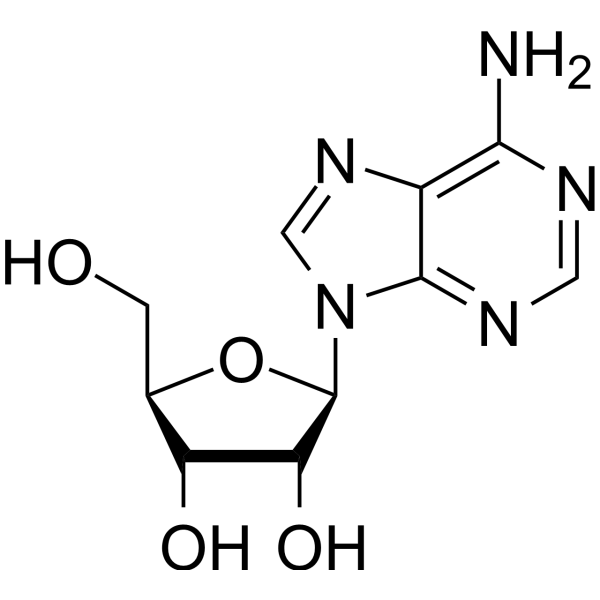
Adenosine (Standard) is the analytical standard of Adenosine. This product is intended for research and analytical applications. Adenosine (Adenine riboside), a ubiquitous endogenous autacoid, acts through the enrollment of four G protein-coupled receptors: A1, A2A, A2B, and A3. Adenosine affects almost all aspects of cellular physiology, including neuronal activity, vascular function, platelet aggregation, and blood cell regulation .
|
-
- HY-100973AR
-
|
ADP ribose sodium (Standard)
|
Reference Standards
TRP Channel
Autophagy
|
Metabolic Disease
Endocrinology
Cancer
|
|
Adenosine 5′-diphosphoribose (sodium) (Standard) is the analytical standard of Adenosine 5′-diphosphoribose (sodium). This product is intended for research and analytical applications. Adenosine 5′-diphosphoribose sodium (ADP ribose sodium) is a nicotinamide adenine nucleotide (NAD+) metabolite. Adenosine 5′-diphosphoribose sodium is the most potent and primary intracellular Ca2+-permeable cation TRPM2 channel activator. Adenosine 5′-diphosphoribose sodium also can enhance autophagy .
|
-
- HY-41461R
-
|
5-Aminoimidazole-4-carboxamide (Standard); AICA (Standard)
|
Reference Standards
Endogenous Metabolite
|
Others
|
|
5-Amino-3H-imidazole-4-Carboxamide (Standard) is the analytical standard of 5-Amino-3H-imidazole-4-Carboxamide. This product is intended for research and analytical applications. 5-Amino-3H-imidazole-4-Carboxamide (AICA) is an important precursor for the synthesis of purines in general and of the nucleobases adenine and guanine in particular.
|
-
- HY-135599
-
|
|
Bacterial
|
Infection
|
|
Lysine hydroxamate is an amino acid hydroxamate that inhibits the growth of Escherichia coli K-12. Of the other amino acid hydroxamates tested, only L-lysine hydroxamate reduced the growth rate. The inhibition of growth by L-serine hydroxamate could be rapidly reversed by adding L-serine to the bacterial culture or by removing the analog by filtration. This reversal was specific for L-serine. L-alanine, glycine, or adenine had no effect on the inhibited culture. There was no evidence for active transport of the analog.
|
-
- HY-104017R
-
|
|
Nucleoside Antimetabolite/Analog
Reference Standards
|
Others
|
|
DMT-2'-O-MOE-rA(Bz) phosphoramidite (Standard) is the analytical standard of DMT-2'-O-MOE-rA(Bz) phosphoramidite (HY-104017). This product is intended for research and analytical applications. DMT-2'-O-MOE-rA(Bz) phosphoramidite is an adenine nucleoside analog. DMT-2'-O-MOE-rA(Bz) phosphoramidite can be used in research on oligonucleotide synthesis .
|
-
- HY-N5134S1
-
|
5'-GMP-13C10 dilithium; 5'-guanosine monophosphate-13C10 dilithium
|
Isotope-Labeled Compounds
Endogenous Metabolite
|
Metabolic Disease
|
|
5'-Guanylic acid- 13C10 (5'-GMP- 13C10 dilithium; 5'-guanosine monophosphate- 13C10) dilithium is 13C-labeled 5'-Guanylic acid (HY-N5134). 5'-Guanylic acid (5'-GMP) is involved in several metabolic disorders, including the AICA-ribosiduria pathway, adenosine deaminase deficiency, adenine phosphoribosyltransferase deficiency (aprt), and the 2-hydroxyglutric aciduria pathway.
|
-
- HY-N5134S3
-
|
5'-GMP-d12 dilithium; 5'-guanosine monophosphate-d12 dilithium
|
Isotope-Labeled Compounds
Endogenous Metabolite
|
Metabolic Disease
|
|
5'-Guanylic acid-d12 (5'-GMP-d12 dilithium; 5'-guanosine monophosphate-d12) dilithium is deuterium labeled 5'-Guanylic acid (HY-N5134). 5'-Guanylic acid (5'-GMP) is involved in several metabolic disorders, including the AICA-ribosiduria pathway, adenosine deaminase deficiency, adenine phosphoribosyltransferase deficiency (aprt), and the 2-hydroxyglutric aciduria pathway.
|
-
- HY-W008129R
-
|
|
Reference Standards
Drug Intermediate
Bacterial
|
Infection
|
|
H-D-cis-Hyp-OH (Standard) is the analytical standard of H-D-cis-Hyp-OH. This product is used for research and analytical applications. H-D-cis-Hyp-OH is a proline derivative and also a substrate of the cis-4-hydroxy-D-proline dehydrogenase from the alfalfa rhizobium (Sinorhizobium meliloti). H-D-cis-Hyp-OH can be used as an initial raw material for the synthesis of conformationally restricted pyrrolidine PNA adenine monomers.
|
-
- HY-129379
-
|
|
ADC Payload
|
Cancer
|
|
DC0-NH2 is an effector moiety for ADC and a simplified analog of DC1 with better stability. DC0-NH2 is about 1000-fold more cytotoxic than commonly used anticancer agents (ex. Doxorubicin). DC0-NH2 can bind to the minor groove of DNA, followed by alkylation of adenine residues by its propabenzindole (CBI) component .
|
-
- HY-161712
-
|
|
IMPDH
|
Cancer
|
|
IMPDH-IN-4 is a derivative of N-pyridinylthiophene carboxamid that exhibits activity against peripheral nerve sheath carcinoma cells. IMPDH-IN-4 is metabolized by NAMPT and NMNAT1 to an adenine dinucleotide (AD) derivative, which is an NAD analog and can inhibit inosine monophosphate dehydrogenase (IMPDH), leading to the accumulation of inosine monophosphate (IMP) in cells. IMPDH-IN-4 has good blood-brain barrier permeability and can be used in the study of central and peripheral nervous system cancers .
|
-
- HY-N4104
-
|
Agaricinic Acid
|
Mitochondrial Metabolism
Bacterial
Calcium Channel
|
Infection
Metabolic Disease
|
|
Agaric acid (Agaricinic Acid) is an orally active inhibitor of adenine nucleotide translocase found in specific fungi. Agaric acid can inhibit the biofilm formation of various bacteria such as Salmonella. Agaric acid can also induce mitochondrial permeability transition, prompting mitochondria to release Ca 2+, disrupting the transmembrane potential, and causing mitochondrial swelling. In addition, Agaric acid can also inhibit citrate transport in liver mitochondria and participate in the inhibition of fatty acid synthesis, affecting multiple metabolic processes .
|
-
- HY-N5134S2
-
|
5'-GMP-15N5 dilithium; 5'-guanosine monophosphate-15N5 dilithium
|
Isotope-Labeled Compounds
Endogenous Metabolite
|
Metabolic Disease
|
|
5'-Guanylic acid- 15N5 (5'-GMP- 15N5 dilithium; 5'-guanosine monophosphate- 15N5) dilithium is 15N labeled 5'-Guanylic acid (HY-N5134). 5'-Guanylic acid (5'-GMP) is involved in several metabolic disorders, including the AICA-ribosiduria pathway, adenosine deaminase deficiency, adenine phosphoribosyltransferase deficiency (aprt), and the 2-hydroxyglutric aciduria pathway.
|
-
- HY-124828
-
CMLD-2
2 Publications Verification
|
HuR
|
Cancer
|
|
CMLD-2, an inhibitor of HuR-ARE interaction, competitively binds HuR protein disrupting its interaction with adenine-uridine rich elements (ARE)-containing mRNAs (Ki=350 nM). CMLD-2 induces apoptosis exhibits antitumor activity in different cancer cells as colon, pancreatic, thyroid and lung cancer cell lines. Hu antigen R (HuR) is an RNA binding protein, can regulate target mRNAs stability and translation .
|
-
- HY-N0165
-
|
|
HIV
Reverse Transcriptase
|
Cardiovascular Disease
Infection
Inflammation/Immunology
|
|
Methyl-Hesperidin is a glycoside compound. Methyl-Hesperidin has hypotensive, coronary dilating, smooth muscle relaxing, capillary stabilizing, choleretic, and anti-ulcer activities. Methyl-Hesperidin act as a competitive substrate to inhibit HIV-1 reverse transcriptase activity. Methyl-Hesperidin potentiates coronary dilating actions of adenine nucleotides and 3'-AMP, enhances depressant action on isolated atria, and prolongs adenosine- and ATP-induced heart block in guinea pigs .
|
-
- HY-186116A
-
|
|
Histone Demethylase
|
Neurological Disease
|
|
LSD1-IN-49 hydrochloride (Compound (±) 1) is an irreversible LSD1/KDM1A inhibitor with an IC50 of 29 nM against hLSD1. LSD1-IN-49 hydrochloride irreversibly inhibits the enzymatic activity of LSD1 by forming an adduct with flavin adenine dinucleotide (FAD) in the binding pocket of LSD1. LSD1-IN-49 hydrochloride is applicable to research related to schizophrenia, autism spectrum disorder and Huntington's disease .
|
-
- HY-B0228S9
-
|
|
Isotope-Labeled Compounds
Apoptosis
Nucleoside Antimetabolite/Analog
Autophagy
Endogenous Metabolite
|
Metabolic Disease
Cancer
|
|
Adenosine- 13C10, 15N5 is the 13C and 15N labeled Adenosine (HY-B0228) . Adenosine (Adenine riboside), a ubiquitous endogenous autacoid, acts through the enrollment of four G protein-coupled receptors: A1, A2A, A2B, and A3. Adenosine affects almost all aspects of cellular physiology, including neuronal activity, vascular function, platelet aggregation, and blood cell regulation .
|
-
- HY-W040329
-
|
|
Endogenous Metabolite
Nucleoside Antimetabolite/Analog
Caspase
Apoptosis
|
Metabolic Disease
Endocrinology
Cancer
|
|
2′-Deoxyadenosine is an adenine nucleoside that inhibits glucose-stimulated insulin release. 2′-Deoxyadenosine inhibits glucose-stimulated increases seen in islet cyclic AMP (cAMP) accumulation. 2'-Deoxyadenosine activates caspase-3 and promotes apoptosis. 2'-Deoxyadenosine inhibits the activity of S-adenosyl-L-homocysteine hydrolase (SAHH). 2'-Deoxyadenosine inhibits the growth of various cells. 2'-Deoxyadenosine has an anticancer effect on colon cancer .
|
-
- HY-186116
-
|
|
Histone Demethylase
|
Others
|
|
LSD1-IN-49 is a Lysine-specific demethylase 1 (LSD1/KDM1A) inhibitor with a human IC50 of 29 nM. LSD1-IN-49 irreversibly inhibits LSD1 enzyme activity by forming an adduct with the flavin adenine dinucleotide (FAD) cofactor of LSD1. LSD1-IN-49 can be used as a lead compound for the development of LSD1-targeted PET imaging agents for the brain .
|
-
- HY-182303
-
|
CATR
|
Methionine Adenosyltransferase (MAT)
|
Neurological Disease
|
|
Carboxyatractyloside (CATR) is a tight-binding inhibitor of adenine nucleotide translocase, and represents the major toxic component of Xanthium sibiricum. Carboxyatractyloside competes with ADP for binding to the translocase, blocks the translocation of ADP/ATP across the inner mitochondrial membrane, and thereby inhibits ADP-stimulated respiration. In the presence of Cyclosporin A (HY-B0579), Carboxyatractyloside still induces permeability transition in liver mitochondria of aged rats, exhibiting significant hepatotoxicity and nephrotoxicity. Carboxyatractyloside is widely used in studies related to hepatotoxicity, nephrotoxicity and Alzheimer's disease .
|
-
- HY-137672A
-
|
2',3'-cNADP+; β-Nicotinamide Adenine dinucleotide-2',3'-cyclic phosphate
|
Phosphodiesterase (PDE)
Calcium Channel
|
Neurological Disease
|
|
2',3'-Cyclic NADP disodium (2',3'-cNADP+; β-Nicotinamide adenine dinucleotide-2',3'-cyclic phosphate) is a substrate for 2',3'-cyclic nucleotide 3'-phosphodiesterase (CNP), an enzyme abundant in myelin. It has been used in a coupled enzyme assay to quantify CNP activity. 2',3'-Cyclic NADP disodium (5 μM) increases calcium overload-induced calcium release and prevents calcium-induced swelling in rat brain mitochondria.
|
-
- HY-109106A
-
|
SK-1403; AJT240; PLS240
|
CaSR
|
Endocrinology
|
|
Upacicalcet sodium is a non-peptide calcimimetic that acts as a CaSR agonist (EC50 = 10.8 nM). Upacicalcet sodium reduces serum intact parathyroid hormone (iPTH) and serum Ca 2+ levels, reducing hypocalcemia and gastrointestinal complications. Upacicalcet sodium sodium improves vascular calcification and bone disorders in the Adenine (HY-B0152)-induced secondary hyperparathyroidism (SHPT) rat model. Upacicalcet sodium sodium inhibits cortical pore formation and reduces bone fibrosis in rats with chronic kidney disease (CKD). Upacicalcet sodium is useful for studying SHPT .
|
-
- HY-41461AR
-
|
5-Aminoimidazole-4-carboxamide hydrochloride (Standard); AICA hydrochloride (Standard)
|
Reference Standards
Endogenous Metabolite
|
Others
|
|
5-Amino-3H-imidazole-4-carboxamide (hydrochloride) (Standard) is the analytical standard of 5-Amino-3H-imidazole-4-carboxamide hydrochloride (HY-41461A). This product is intended for research and analytical applications. 5-Amino-3H-imidazole-4-Carboxamide (AICA) hydrochloride is an important precursor for the synthesis of purines in general and of the nucleobases adenine and guanine in particular .
|
-
- HY-109106
-
|
SK-1403 free acid; AJT240 free acid; PLS240 free acid
|
CaSR
|
Endocrinology
|
|
Upacicalcet is a non-peptide calcimimetic that acts as a CaSR agonist (EC50 = 10.8 nM). Upacicalcet reduces serum intact parathyroid hormone (iPTH) and serum Ca2+ levels, reducing hypocalcemia and gastrointestinal complications. Upacicalcet improves vascular calcification and bone disorders in the Adenine (HY-B0152)-induced secondary hyperparathyroidism (SHPT) rat model. Upacicalcet inhibits cortical pore formation and reduces bone fibrosis in rats with chronic kidney disease (CKD). Upacicalcet is useful for studying SHPT .
|
-
- HY-W011683
-
|
|
Endogenous Metabolite
Nucleoside Antimetabolite/Analog
Caspase
Apoptosis
|
Metabolic Disease
Endocrinology
Cancer
|
|
2′-Deoxyadenosine monohydrate is an adenine nucleoside that inhibits glucose-stimulated insulin release. 2′-Deoxyadenosine monohydrate inhibits glucose-stimulated increases seen in islet cyclic AMP (cAMP) accumulation. 2'-Deoxyadenosine monohydrate activates caspase-3 and promotes apoptosis. 2'-Deoxyadenosine monohydrate inhibits the activity of S-adenosyl-L-homocysteine hydrolase (SAHH). 2'-Deoxyadenosine monohydrate inhibits the growth of various cells. 2'-Deoxyadenosine monohydrate has an anticancer effect on colon cancer .
|
-
- HY-12404R
-
|
Diminazene diaceturate (Standard)
|
Reference Standards
Parasite
Angiotensin-converting Enzyme (ACE)
|
Infection
Inflammation/Immunology
|
|
Diminazene (aceturate) (Standard) is the analytical standard of Diminazene (aceturate). This product is intended for research and analytical applications. Diminazene aceturate (Diminazene diaceturate) is an anti-trypanosome agent for livestock. The main biochemical mechanism of the trypanocidal actions of Diminazene aceturate is by binding to trypanosomal kinetoplast DNA (kDNA) in a non-intercalative manner through specific interaction with sites rich in adenine-thymine base pairs. Diminazene aceturate is also an angiotensin-converting enzyme 2 (ACE2) activator and has strong and potent anti-inflammatory properties .
|
-
- HY-175593
-
-
- HY-119413
-
|
|
Adenosine Receptor
|
Neurological Disease
|
|
9-Ethyladenine is a precursor of competitive antagonists of adenosine receptors (A1, A2, A3), with no significant inhibitory effect on adenine phosphoribosyltransferase (APRT). 9-Ethyladenine derivatives have high affinity and selectivity for A1 (Ki=27 nM), A2A (Ki=46 nM), and A3 (Ki=86 nM) receptors. 9-Ethyladenine does not inhibit brain APRT activity, can be used in the study of adenosine receptor-related diseases (such as nervous system diseases) models .
|
-
- HY-NP186
-
|
|
Biochemical Assay Reagents
|
Cancer
|
|
Helix pomatia Agglutinin is a N-acetylgalactosamine (GalNAc) binding lectin, found in the reproductive gland of a Roman snail. Helix pomatia Agglutinin binds with high affinity (kD = 1.9-2.4 μM) steroid hormones: testosterone and progesterone. Helix pomatia Agglutinin interacts with adenine (kD = 5.4 μM) and arylaminonaphthalene sulfonate TNS (kD = 12 μM). Helix pomatia Agglutinin is commonly used for characterizing, imaging, or targeting glycoconjugates, and is also a very useful tool for glycomics analysis . Helix pomatia Agglutinin can be used for cancer prognosis study .
|
-
- HY-172919
-
|
|
Phosphodiesterase (PDE)
NAMPT
Apoptosis
|
Cancer
|
|
PDEδ/NAMPT IN-1 (Compound 17d) is a dual inhibitor targeting phosphodiesterase 6 (PDE6) (KD=0.410 nM) and nicotinamide phosphoribosyl transferase (NAMPT) (IC50=2.21 nM). PDEδ/NAMPT IN-1 blocks KRAS-related signal transduction and interferes with the synthesis of nicotinamide adenine dinucleotide (NAD +), inducing apoptosis in KRAS mutant pancreatic cancer cells. PDEδ/NAMPT IN-1 is promising for research of KRAS mutant pancreatic cancer .
|
-
- HY-W1119950
-
|
|
Nucleoside Antimetabolite/Analog
DNA/RNA Synthesis
|
Others
|
|
3'-NH-Tr-2',3'-DMF-ddA-5'-CE-Phosphoramidite is an adenine nucleotide monomer precursor used in solid-phase synthesis of oligonucleotides, particularly modified oligonucleotides, such as those with DNA chain end modifications. 3'-NH-Tr-2',3'-DMF-ddA-5'-CE-Phosphoramidite, with trityl (Tr), cyanoethyl (CE), and dimethylformamidine (DMF) protecting groups, is a ddNTP adenosine nucleoside useful in applications such as solid-phase oligonucleotide synthesis, probe design, and chain-termination sequencing .
|
-
- HY-109106B
-
|
(Rac)-SK-1403 free acid; (Rac)-AJT240 free acid; (Rac)-PLS240 free acid
|
CaSR
|
Endocrinology
|
|
(Rac)-Upacicalcet is the racemate of Upacicalcet (HY-109106). Upacicalcet is a non-peptide calcimimetic that acts as a CaSR agonist (EC50 = 10.8 nM). Upacicalcet reduces serum intact parathyroid hormone (iPTH) and serum Ca2+ levels, reducing hypocalcemia and gastrointestinal complications. Upacicalcet improves vascular calcification and bone disorders in the Adenine (HY-B0152)-induced secondary hyperparathyroidism (SHPT) rat model. Upacicalcet inhibits cortical pore formation and reduces bone fibrosis in rats with chronic kidney disease (CKD). Upacicalcet is useful for studying SHPT .
|
-
- HY-E70989A
-
|
|
Biochemical Assay Reagents
|
Metabolic Disease
|
|
D-Fructose Dehydrogenase, Gluconobacter industrius (EC 1.1.99.11) is a heterotrimeric membrane-bound enzyme commonly seen in various Gluconobacter sp. especially in Gluconobacter japonicus (Gluconobacter industrius) .D-Fructose Dehydrogenase consists of subunits I (67kDa), II (51 kDa), and III (20 kDa) and catalyzes the oxidation of D-fructose to produce 5-keto-D-fructose. D-Fructose Dehydrogenase is a flavoprotein-cytochrome c complex with subunits I and II covalently bound to flavin adenine dinucleotide (FAD) and heme C as prosthetic groups, respectively.
|
-
- HY-N4104R
-
|
Agaricinic Acid (Standard)
|
Reference Standards
Mitochondrial Metabolism
Bacterial
Calcium Channel
|
Infection
Metabolic Disease
|
|
Agaric acid (Standard) (Agaricinic Acid (Standard)) is the analytical standard of Agaric acid (HY-N4104). This product is intended for research and analytical applications. Agaric acid (Agaricinic Acid) is an orally active inhibitor of adenine nucleotide translocase found in specific fungi. Agaric acid can inhibit the biofilm formation of various bacteria such as Salmonella. Agaric acid can also induce mitochondrial permeability transition, prompting mitochondria to release Ca 2+, disrupting the transmembrane potential, and causing mitochondrial swelling. In addition, Agaric acid can also inhibit citrate transport in liver mitochondria and participate in the inhibition of fatty acid synthesis, affecting multiple metabolic processes.
|
-
- HY-E70989
-
|
|
Biochemical Assay Reagents
|
Metabolic Disease
|
|
D-Fructose Dehydrogenase, Gluconobacter industrius (EC 1.1.99.11) is a heterotrimeric membrane-bound enzyme commonly seen in various Gluconobacter sp. especially in Gluconobacter japonicus (Gluconobacter industrius) .D-Fructose Dehydrogenase consists of subunits I (67kDa), II (51 kDa), and III (20 kDa) and catalyzes the oxidation of D-fructose to produce 5-keto-D-fructose. D-Fructose Dehydrogenase is a flavoprotein-cytochrome c complex with subunits I and II covalently bound to flavin adenine dinucleotide (FAD) and heme C as prosthetic groups, respectively.
|
-
- HY-N5134S5
-
|
5'-GMP-13C10,15N5 dilithium; 5'-guanosine monophosphate-13C10,15N5 dilithium
|
Isotope-Labeled Compounds
Endogenous Metabolite
|
Metabolic Disease
|
|
5'-Guanylic acid- 13C10, 15N5 (5'-GMP- 13C10, 15N5 dilithium; 5'-guanosine monophosphate- 13C10, 15N5) dilithium is 13C and 15N-labeled 5'-Guanylic acid (HY-N5134). 5'-Guanylic acid (5'-GMP) is involved in several metabolic disorders, including the AICA-ribosiduria pathway, adenosine deaminase deficiency, adenine phosphoribosyltransferase deficiency (aprt), and the 2-hydroxyglutric aciduria pathway.
|
-
- HY-N0165R
-
|
|
Reference Standards
HIV
Reverse Transcriptase
|
Cardiovascular Disease
Infection
Inflammation/Immunology
|
|
Methyl-Hesperidin (Standard) is the analytical standard of Methyl-Hesperidin (HY-N0165). This product is intended for research and analytical applications. Methyl-Hesperidin is a glycoside compound. Methyl-Hesperidin has hypotensive, coronary dilating, smooth muscle relaxing, capillary stabilizing, choleretic, and anti-ulcer activities. Methyl-Hesperidin act as a competitive substrate to inhibit HIV-1 reverse transcriptase activity. Methyl-Hesperidin potentiates coronary dilating actions of adenine nucleotides and 3'-AMP, enhances depressant action on isolated atria, and prolongs adenosine- and ATP-induced heart block in guinea pigs .
|
-
- HY-W540123
-
|
|
Biochemical Assay Reagents
|
Cancer
|
Fmoc-PNA-A(Bhoc)-OH is a protected peptide nucleic acid (PNA) monomer carrying an adenine base. Fmoc-PNA-A(Bhoc)-OH contains Fmoc and benzhydryloxycarbonyl (Bhoc) protecting groups, and serves as a standard building block designed specifically for solid-phase PNA synthesis. Fmoc-PNA-A(Bhoc)-OH can be efficiently used to synthesize PNA-based sequence-specific hybridization probes. These probes have broad applications in molecular biology research; for example, they can be used in HER2-expressing tumor-related studies, providing tools for disease diagnosis and mechanism exploration .
|
-
- HY-E70410
-
|
NAD+ Synthetase; Nicotinamide Adenine dinucleotide synthetase
|
Endogenous Metabolite
|
Neurological Disease
Metabolic Disease
Cancer
|
|
NAD synthetase is responsible for the final step in the synthesis of nicotinamide adenine dinucleotide (NAD). The Km values for NAD, ATP, and ammonia of NAD synthetase from Escherichia coli are 200 μM, 11 μM, and 0.65 μM, respectively, while the Km values for NAD, ATP, and ammonia of NAD synthetase from yeast are 170 μM, 190 μM, and 64 μM, respectively. NAD synthetase can be used for enzymatic assays to determine ATP, ammonia, urea, or creatinine, and is also suitable for enzymatic cycling methods. Additionally, NAD synthetase holds potential for research into metabolic diseases, cancer, aging, and neurodegenerative diseases .
|
-
- HY-W778207
-
|
|
Isotope-Labeled Compounds
|
Others
|
|
2'-Deoxyadenosine- 13C5 monohydrate is the 13C labeled isotope of '-Deoxyadenosine monohydrate (HY-W040329). 2′-Deoxyadenosine is an adenine nucleoside that inhibits glucose-stimulated insulin release. 2′-Deoxyadenosine inhibits glucose-stimulated increases seen in islet cyclic AMP (cAMP) accumulation. 2'-Deoxyadenosine activates caspase-3 and promotes apoptosis. 2'-Deoxyadenosine inhibits the activity of S-adenosyl-L-homocysteine hydrolase (SAHH). 2'-Deoxyadenosine inhibits the growth of various cells. 2'-Deoxyadenosine has an anticancer effect on colon cancer .
|
-
- HY-W745905
-
|
|
Isotope-Labeled Compounds
Apoptosis
Nucleoside Antimetabolite/Analog
Caspase
Endogenous Metabolite
|
Metabolic Disease
Endocrinology
Cancer
|
|
2'-Deoxyadenosine- 15N1 is the 15N-labeled 2'-Deoxyadenosine (HY-W040329). 2′-Deoxyadenosine is an adenine nucleoside that inhibits glucose-stimulated insulin release. 2′-Deoxyadenosine inhibits glucose-stimulated increases seen in islet cyclic AMP (cAMP) accumulation. 2'-Deoxyadenosine activates caspase-3 and promotes apoptosis. 2'-Deoxyadenosine inhibits the activity of S-adenosyl-L-homocysteine hydrolase (SAHH). 2'-Deoxyadenosine inhibits the growth of various cells. 2'-Deoxyadenosine has an anticancer effect on colon cancer .
|
-
- HY-W011683S7
-
|
|
Isotope-Labeled Compounds
Endogenous Metabolite
Nucleoside Antimetabolite/Analog
Caspase
Apoptosis
|
Metabolic Disease
Endocrinology
Cancer
|
|
2'-Deoxyadenosine monohydrate- 15N5 is the 15N labeled 2'-Deoxyadenosine monohydrate (HY-W011683) . 2′-Deoxyadenosine monohydrate is an adenine nucleoside that inhibits glucose-stimulated insulin release. 2′-Deoxyadenosine monohydrate inhibits glucose-stimulated increases seen in islet cyclic AMP (cAMP) accumulation. 2'-Deoxyadenosine monohydrate activates caspase-3 and promotes apoptosis. 2'-Deoxyadenosine monohydrate inhibits the activity of S-adenosyl-L-homocysteine hydrolase (SAHH). 2'-Deoxyadenosine monohydrate inhibits the growth of various cells. 2'-Deoxyadenosine monohydrate has an anticancer effect on colon cancer .
|
-
- HY-W011683S3
-
|
|
Isotope-Labeled Compounds
Endogenous Metabolite
Nucleoside Antimetabolite/Analog
Caspase
Apoptosis
|
Metabolic Disease
Endocrinology
Cancer
|
|
2'-Deoxyadenosine monohydrate-5′- 13C is the 13C labeled 2'-Deoxyadenosine monohydrate (HY-W011683) . 2′-Deoxyadenosine monohydrate is an adenine nucleoside that inhibits glucose-stimulated insulin release. 2′-Deoxyadenosine monohydrate inhibits glucose-stimulated increases seen in islet cyclic AMP (cAMP) accumulation. 2'-Deoxyadenosine monohydrate activates caspase-3 and promotes apoptosis. 2'-Deoxyadenosine monohydrate inhibits the activity of S-adenosyl-L-homocysteine hydrolase (SAHH). 2'-Deoxyadenosine monohydrate inhibits the growth of various cells. 2'-Deoxyadenosine monohydrate has an anticancer effect on colon cancer .
|
-
- HY-N5134S4
-
|
5'-GMP-15N5,d12 dilithium; 5'-guanosine monophosphate-15N5,d12 dilithium
|
Isotope-Labeled Compounds
Endogenous Metabolite
|
Metabolic Disease
|
|
5'-Guanylic acid- 15N5,d12 (5'-GMP- 15N5,d12 dilithium; 5'-guanosine monophosphate- 15N5,d12) dilithium is deuterium and 15N labeled 5'-Guanylic acid (HY-N5134). 5'-Guanylic acid (5'-GMP) is involved in several metabolic disorders, including the AICA-ribosiduria pathway, adenosine deaminase deficiency, adenine phosphoribosyltransferase deficiency (aprt), and the 2-hydroxyglutric aciduria pathway.
|
-
- HY-W011683S
-
|
|
Isotope-Labeled Compounds
Endogenous Metabolite
Nucleoside Antimetabolite/Analog
Caspase
Apoptosis
|
Metabolic Disease
Endocrinology
Cancer
|
|
2'-Deoxyadenosine monohydrate-1′- 13C is the 13C labeled 2'-Deoxyadenosine monohydrate (HY-W011683) . 2′-Deoxyadenosine monohydrate is an adenine nucleoside that inhibits glucose-stimulated insulin release. 2′-Deoxyadenosine monohydrate inhibits glucose-stimulated increases seen in islet cyclic AMP (cAMP) accumulation. 2'-Deoxyadenosine monohydrate activates caspase-3 and promotes apoptosis. 2'-Deoxyadenosine monohydrate inhibits the activity of S-adenosyl-L-homocysteine hydrolase (SAHH). 2'-Deoxyadenosine monohydrate inhibits the growth of various cells. 2'-Deoxyadenosine monohydrate has an anticancer effect on colon cancer .
|
-
- HY-185494
-
|
|
Drug-Linker Conjugates for ADC
DNA Alkylator/Crosslinker
|
Cancer
|
|
Mal-Val-Lys-PAB-CBI-PBD dimer is a Drug-Linker Conjugates for ADC. Mal-Val-Lys-PAB-CBI-PBD dimer consists of the ADC Cytotoxin CBI-PBD dimer and a linker Mal-Val-Lys-PAB. Mal-Val-Lys-PAB-CBI-PBD dimer exhibits alkylating activity at A-T-rich DNA minor groove adenine residues, disrupting DNA integrity. Mal-Val-Lys-PAB-CBI-PBD dimer induces cancer cell growth inhibition and cellular death. Mal-Val-Lys-PAB-CBI-PBD dimer can be used for the research of cancer .
|
-
- HY-W040329R
-
|
|
Reference Standards
Endogenous Metabolite
Nucleoside Antimetabolite/Analog
Caspase
Apoptosis
|
Metabolic Disease
Endocrinology
Cancer
|
|
2'-Deoxyadenosine (Standard) is the analytical standard of 2'-Deoxyadenosine (HY-W040329). This product is intended for research and analytical applications. 2′-Deoxyadenosine is an adenine nucleoside that inhibits glucose-stimulated insulin release. 2′-Deoxyadenosine inhibits glucose-stimulated increases seen in islet cyclic AMP (cAMP) accumulation. 2'-Deoxyadenosine activates caspase-3 and promotes apoptosis. 2'-Deoxyadenosine inhibits the activity of S-adenosyl-L-homocysteine hydrolase (SAHH). 2'-Deoxyadenosine inhibits the growth of various cells. 2'-Deoxyadenosine has an anticancer effect on colon cancer .
|
-
- HY-W011683R
-
|
|
Reference Standards
Endogenous Metabolite
Nucleoside Antimetabolite/Analog
Caspase
Apoptosis
|
Metabolic Disease
Endocrinology
Cancer
|
|
2'-Deoxyadenosine monohydrate (Standard) is the analytical standard of 2'-Deoxyadenosine monohydrate ((HY-W011683). This product is intended for research and analytical applications. 2′-Deoxyadenosine monohydrate is an adenine nucleoside that inhibits glucose-stimulated insulin release. 2′-Deoxyadenosine monohydrate inhibits glucose-stimulated increases seen in islet cyclic AMP (cAMP) accumulation. 2'-Deoxyadenosine monohydrate activates caspase-3 and promotes apoptosis. 2'-Deoxyadenosine monohydrate inhibits the activity of S-adenosyl-L-homocysteine hydrolase (SAHH). 2'-Deoxyadenosine monohydrate inhibits the growth of various cells. 2'-Deoxyadenosine monohydrate has an anticancer effect on colon cancer .
|
-
- HY-W011683S1
-
|
|
Isotope-Labeled Compounds
Endogenous Metabolite
Nucleoside Antimetabolite/Analog
Caspase
Apoptosis
|
Metabolic Disease
Endocrinology
Cancer
|
|
2'-Deoxyadenosine monohydrate-2′- 13C is the 13C labeled 2'-Deoxyadenosine monohydrate(HY-W011683) . 2′-Deoxyadenosine monohydrate is an adenine nucleoside that inhibits glucose-stimulated insulin release. 2′-Deoxyadenosine monohydrate inhibits glucose-stimulated increases seen in islet cyclic AMP (cAMP) accumulation. 2'-Deoxyadenosine monohydrate activates caspase-3 and promotes apoptosis. 2'-Deoxyadenosine monohydrate inhibits the activity of S-adenosyl-L-homocysteine hydrolase (SAHH). 2'-Deoxyadenosine monohydrate inhibits the growth of various cells. 2'-Deoxyadenosine monohydrate has an anticancer effect on colon cancer .
|
-
- HY-W040329S1
-
|
|
Isotope-Labeled Compounds
Endogenous Metabolite
Nucleoside Antimetabolite/Analog
Caspase
Apoptosis
|
Metabolic Disease
Endocrinology
Cancer
|
|
2'-Deoxyadenosine- 13C10 is 13C-labeled 2'-Deoxyadenosine (HY-W040329) . 2′-Deoxyadenosine is an adenine nucleoside that inhibits glucose-stimulated insulin release. 2′-Deoxyadenosine inhibits glucose-stimulated increases seen in islet cyclic AMP (cAMP) accumulation. 2'-Deoxyadenosine activates caspase-3 and promotes apoptosis. 2'-Deoxyadenosine inhibits the activity of S-adenosyl-L-homocysteine hydrolase (SAHH). 2'-Deoxyadenosine inhibits the growth of various cells. 2'-Deoxyadenosine has an anticancer effect on colon cancer .
|
-
- HY-W040329S
-
|
|
Isotope-Labeled Compounds
Endogenous Metabolite
Nucleoside Antimetabolite/Analog
Caspase
Apoptosis
|
Metabolic Disease
Endocrinology
Cancer
|
|
2'-Deoxyadenosine- 13C10, 15N5 is 13C and 15N-labeled 2'-Deoxyadenosine (HY-W040329) . 2′-Deoxyadenosine is an adenine nucleoside that inhibits glucose-stimulated insulin release. 2′-Deoxyadenosine inhibits glucose-stimulated increases seen in islet cyclic AMP (cAMP) accumulation. 2'-Deoxyadenosine activates caspase-3 and promotes apoptosis. 2'-Deoxyadenosine inhibits the activity of S-adenosyl-L-homocysteine hydrolase (SAHH). 2'-Deoxyadenosine inhibits the growth of various cells. 2'-Deoxyadenosine has an anticancer effect on colon cancer .
|
-
- HY-W011683S6
-
|
|
Isotope-Labeled Compounds
Endogenous Metabolite
Nucleoside Antimetabolite/Analog
Caspase
Apoptosis
|
Metabolic Disease
Endocrinology
Cancer
|
|
2'-Deoxyadenosine monohydrate- 13C10, 15N5 is the 13C and 15N labeled 2'-Deoxyadenosine monohydrate (HY-W011683) . 2′-Deoxyadenosine monohydrate is an adenine nucleoside that inhibits glucose-stimulated insulin release. 2′-Deoxyadenosine monohydrate inhibits glucose-stimulated increases seen in islet cyclic AMP (cAMP) accumulation. 2'-Deoxyadenosine monohydrate activates caspase-3 and promotes apoptosis. 2'-Deoxyadenosine monohydrate inhibits the activity of S-adenosyl-L-homocysteine hydrolase (SAHH). 2'-Deoxyadenosine monohydrate inhibits the growth of various cells. 2'-Deoxyadenosine monohydrate has an anticancer effect on colon cancer .
|
-
- HY-186105
-
|
|
NAMPT
|
Neurological Disease
|
|
P7C3-S243 is a brain-penetrant P7C3 class of neuroprotective agent. P7C3-S243 augments synthesis of nicotinamide adenine dinucleotide through activation of the metabolic enzyme nicotinamide phosphoribosyltransferase. P7C3-S243 shows potent neuroprotective efficacy in parkinson’s disease mice models. P7C3-S243 can be used for the research of parkinson’s disease .
|
-
- HY-W011683S2
-
|
|
Isotope-Labeled Compounds
Endogenous Metabolite
Nucleoside Antimetabolite/Analog
Caspase
Apoptosis
|
Metabolic Disease
Endocrinology
Cancer
|
|
2'-Deoxyadenosine monohydrate-3′- 13C is the 13C labeled 2'-Deoxyadenosine monohydrate (HY-W011683) adenine nucleoside that inhibits glucose-stimulated insulin release. 2′-Deoxyadenosine monohydrate inhibits glucose-stimulated increases seen in islet cyclic AMP (cAMP) accumulation. 2'-Deoxyadenosine monohydrate activates caspase-3 and promotes apoptosis. 2'-Deoxyadenosine monohydrate inhibits the activity of S-adenosyl-L-homocysteine hydrolase (SAHH). 2'-Deoxyadenosine monohydrate inhibits the growth of various cells. 2'-Deoxyadenosine monohydrate has an anticancer effect on colon cancer>
|
-
- HY-W040329S3
-
|
|
Isotope-Labeled Compounds
Endogenous Metabolite
Nucleoside Antimetabolite/Analog
Caspase
Apoptosis
|
Metabolic Disease
Endocrinology
Cancer
|
|
2'-Deoxyadenosine- 15N5,d13 is deuterium and 15N labeled 2'-Deoxyadenosine (HY-W040329) . 2′-Deoxyadenosine is an adenine nucleoside that inhibits glucose-stimulated insulin release. 2′-Deoxyadenosine inhibits glucose-stimulated increases seen in islet cyclic AMP (cAMP) accumulation. 2'-Deoxyadenosine activates caspase-3 and promotes apoptosis. 2'-Deoxyadenosine inhibits the activity of S-adenosyl-L-homocysteine hydrolase (SAHH). 2'-Deoxyadenosine inhibits the growth of various cells. 2'-Deoxyadenosine has an anticancer effect on colon cancer .
|
-
- HY-12455
-
|
|
ADC Payload
Antibiotic
DNA Alkylator/Crosslinker
Apoptosis
Caspase
|
Cancer
|
|
Duocarmycin A is an antitumor antibiotic and DNA alkylating agent with broad-spectrum antibacterial activity, which can serve as a payload for synthesizing antibody-drug conjugates (ADCs). Duocarmycin A selectively binds to the AT-rich minor groove of DNA, forms covalent adducts by alkylating the adenine N3 residue, thereby disrupting DNA structure and inhibiting its replication and transcription. Duocarmycin A induces apoptosis, sub-G1 phase accumulation and chromatin condensation, reduces the levels of pro-caspase-3/9, and induces p53-independent p21 expression. Duocarmycin A is widely used in the research of various malignancies, including leukemia, sarcoma, glioblastoma, as well as multiple solid tumor models such as lung cancer, breast cancer, and colorectal cancer .
|
-
- HY-177787A
-
|
|
Nucleoside Antimetabolite/Analog
|
Others
|
2'-Deoxy-N-methyl-AMP ammonium is an N6-substituted adenine nucleotide derivative and a glycosyl donor. On one hand, 2'-Deoxy-N-methyl-AMP ammonium acts as a specific substrate for N6-methyl-AMP aminohydrolase, and it is catalytically converted to dIMP to participate in the nucleotide metabolic cycle. On the other hand, 2'-Deoxy-N-methyl-AMP ammonium also serves as a guanosine diphosphate (GDP)-linked fucose derivative donor, driving site-specific glycoconjugation of proteins under the mediation of α-1,3-fucosyltransferase. 2'-Deoxy-N-methyl-AMP ammonium is an important molecular tool for investigating the mechanisms of nucleotide modification and protein glycosylation .
|
-
- HY-181542
-
|
|
Aldose Reductase
|
Cancer
|
|
SG-55 is a selective, noncompetitive and orally active AKR1C3 inhibitor with an IC50 of 5 nM and a Ki of 10 nM. SG-55 shows >2000-fold selectivity for AKR1C3 over AKR1C1, AKR1C2, and AKR1C4 (> 10 μM). SG-55 increases the ratio of reduced/oxidized nicotinamide adenine dinucleotide phosphate (NADPH/NADP +), decreases the ratio of reduced/oxidized glutathione (GSH/GSSG), and induces DNA double-strand breaks. SG-55 can overcome Osimertinib (HY-15772) resistance mediated by EGFR C797S triple mutation in non-small cell lung cancer (NSCLC) .
|
-
- HY-164090
-
|
|
P2Y Receptor
|
Cardiovascular Disease
|
|
Adenosine 3'-phosphate 5'-phosphosulfate, an adenine nucleotide derivative, is a selective P2Y1 antagonist with no effect on P2Y2, P2Y4, or P2Y6 receptors. Adenosine 3'-phosphate 5'-phosphosulfate can competitive inhibit ADP-induced platelet aggregation, as well as the ability of ADP to cause shape change and increases in Ca 2+ in platelets, but had no effect on the inhibition of stimulated adenylate cyclase by ADP. Adenosine 3'-phosphate 5'-phosphosulfate is a co-substrate used for the sulfonation of glycans. Adenosine 3'-phosphate 5'-phosphosulfate can be used for Golgi-resident PAP-specific 3'-phosphatase-coupled sulfotransferase assays, which as donor substrate to transfer a sulfonate group .
|
-
- HY-N9422
-
|
|
P2Y Receptor
|
Cardiovascular Disease
|
|
Adenosine 3'-phosphate 5'-phosphosulfate triethylamine, an adenine nucleotide derivative, is a selective P2Y1 antagonist with no effect on P2Y2, P2Y4, or P2Y6 receptors. Adenosine 3'-phosphate 5'-phosphosulfate triethylamine can competitive inhibit ADP-induced platelet aggregation, as well as the ability of ADP to cause shape change and increases in Ca 2+ in platelets, but had no effect on the inhibition of stimulated adenylate cyclase by ADP. Adenosine 3'-phosphate 5'-phosphosulfate triethylamine is a co-substrate used for the sulfonation of glycans. Adenosine 3'-phosphate 5'-phosphosulfate triethylamine can be used for Golgi-resident PAP-specific 3'-phosphatase-coupled sulfotransferase assays, which as donor substrate to transfer a sulfonate group .
|
-
- HY-W010918R
-
|
Adenosine diphosphate (Standard); ADP (Standard)
|
Reference Standards
Endogenous Metabolite
|
Others
|
|
Adenosine 5'-diphosphate (Standard) is the analytical standard of Adenosine 5'-diphosphate. This product is intended for research and analytical applications. Adenosine 5'-diphosphate (Adenosine diphosphate) is a nucleoside diphosphate. Adenosine 5'-diphosphate is the product of ATP dephosphorylation by ATPases. Adenosine 5'-diphosphate induces human platelet aggregation and inhibits stimulated adenylate cyclase by an action at P2T-purinoceptors.
In Vitro: Adenosine 5'-diphosphate consists of the pyrophosphate group, the pentose sugar ribose, and the nucleobase adenine. Adenosine 5'-diphosphate is the product of ATP dephosphorylation by ATPases. ADP is converted back to ATP by ATP synthases. ATP is an important energy transfer molecule in cells. Adenosine 5'-diphosphate is utilized in a wide number of cellular processes, including respiration, biosynthetic reactions, motility, and cell division.
|
-
- HY-W250153
-
|
|
P2Y Receptor
|
Cardiovascular Disease
|
|
Adenosine 3'-phosphate 5'-phosphosulfate lithium, an adenine nucleotide derivative, is a selective P2Y1 antagonist with no effect on P2Y2, P2Y4, or P2Y6 receptors. Adenosine 3'-phosphate 5'-phosphosulfate lithium can competitive inhibit ADP-induced platelet aggregation, as well as the ability of ADP to cause shape change and increases in Ca 2+ in platelets, but had no effect on the inhibition of stimulated adenylate cyclase by ADP. Adenosine 3'-phosphate 5'-phosphosulfate lithium is a co-substrate used for the sulfonation of glycans. Adenosine 3'-phosphate 5'-phosphosulfate lithium can be used for Golgi-resident PAP-specific 3'-phosphatase-coupled sulfotransferase assays, which as donor substrate to transfer a sulfonate group .
|
-
- HY-W250153A
-
|
|
P2Y Receptor
|
Cardiovascular Disease
|
|
Adenosine 3'-phosphate 5'-phosphosulfate lithium hydrate, an adenine nucleotide derivative, is a selective P2Y1 antagonist with no effect on P2Y2, P2Y4, or P2Y6 receptors. Adenosine 3'-phosphate 5'-phosphosulfate lithium hydrate can competitive inhibit ADP-induced platelet aggregation, as well as the ability of ADP to cause shape change and increases in Ca 2+ in platelets, but had no effect on the inhibition of stimulated adenylate cyclase by ADP. Adenosine 3'-phosphate 5'-phosphosulfate lithium hydrate is a co-substrate used for the sulfonation of glycans. Adenosine 3'-phosphate 5'-phosphosulfate lithium hydrate can be used for Golgi-resident PAP-specific 3'-phosphatase-coupled sulfotransferase assays, which as donor substrate to transfer a sulfonate group .
|
-
- HY-137325A
-
|
|
Calcium Channel
|
Metabolic Disease
|
|
2-Chloro-ATP sodium (2-Chloro ATP) is an adenine nucleotide and an analog of ATP. It is an antagonist of the purinergic P2Y1 receptor and inhibits intracellular calcium mobilization induced by ADP (HY-W010918) in Jurkat cells expressing the human receptor (Ki=2.3 μM). 2-Chloro-ATP sodium is an agonist of the purinergic P2X receptor and induces inward currents in HEK293 cells expressing human bladder smooth muscle or rat PC12 forms of the receptor (EC50=0.5 and 2.5 μM). 2-Chloro-ATP sodium induces relaxation of precontracted guinea pig cecal strips in a concentration-dependent manner. 2-Chloro-ATP sodium has been used to study the substrate specificity of cyclic nucleotide-dependent protein kinases such as protein kinase A (PKA) and PKG.
|
-
- HY-112817
-
|
8-Oxo-Deoxyguanosine triphosphate
|
Apoptosis
|
Cardiovascular Disease
Neurological Disease
Cancer
|
|
8-Oxo-dGTP (8-Oxo-Deoxyguanosine triphosphate) is an oxidized guanine nucleotide formed by ROS-mediated oxidative modification of dGTP, and it also serves as a key substrate for 8-oxo-dGTP pyrophosphohydrolases (such as hMTH1 and E. coli MutT). 8-Oxo-dGTP acts as a DNA mutagen, inserts into nascent DNA and pairs with adenine and cytosine, inducing A:T to C:G transversion mutations. Furthermore, 8-Oxo-dGTP causes oxidative DNA base modification, strand breakage and S-phase arrest, and ultimately triggers AIF-mediated apoptosis and promotes spontaneous carcinogenesis in mth1-deficient mice. Accumulation of 8-Oxo-dGTP in cells induces genomic instability, but it exhibits a tumor-suppressive effect that reduces tumor incidence in mouse models instead. 8-Oxo-dGTP is widely used in studies related to spontaneous carcinogenesis, Parkinson's disease, Alzheimer's disease, heart failure and tumor mechanisms .
|
-
- HY-142104
-
|
2-Chlorotrityl Chloride Resin (100-200 mesh,1% DVB,0.4-3.0mmol/g)
|
Drug Intermediate
|
Cancer
|
|
2-CTC Resin (100-200 mesh,1% DVB,0.4-3.0mmol/g) is a solid-phase synthesis carrier that has been used to study metabolic disorders in prostate cancer cells. 2-CTC Resin (100-200 mesh,1% DVB,0.4-3.0mmol/g) can be used as a reaction solution of terminal residues and adenine nucleotides to form cyclic peptides. 2-CTC Resin (100-200 mesh,1% DVB,0.4-3.0mmol/g) can prevent racemization during the incorporation of the first protected amino acid and minimized diketopiperazine formation. 2-CTC Resin (100-200 mesh,1% DVB,0.4-3.0mmol/g) is one of the most commonly used and versatile resins available for large-scale production of peptides .
|
-
- HY-W011725
-
|
m6dA
|
Nucleoside Antimetabolite/Analog
Mitochondrial Metabolism
DNA/RNA Synthesis
|
Neurological Disease
Cancer
|
|
N-6-Methyl-2-deoxyadenosine (m6dA) is an adenine nucleoside analogue. N-6-Methyl-2-deoxyadenosine targets nuclear processes and DNA replication machineries including WER, SATB1, TFAM, Jumu, SSBP1, DNA polymerase η and phage polymerase Gp90 exo −. N-6-Methyl-2-deoxyadenosine acts as a multifunctional epigenetic regulator that modulates transcription, DNA damage response, cell cycle, transposon silencing, stress adaptation, epigenetic crosstalk, and nucleosome organization in both prokaryotes and eukaryotes. N-6-Methyl-2-deoxyadenosine regulates mitochondrial epigenetic inheritance and is required for fear extinction memory in mice. N-6-Methyl-2-deoxyadenosine exhibits dysregulated levels in cancers. N-6-Methyl-2-deoxyadenosine can be used for the research of glioblastoma, triple negative breast cancer, and conditioned fear (fear extinction impairment) .
|
-
- HY-112817A
-
|
8-Oxo-Deoxyguanosine triphosphate trisodium
|
Apoptosis
|
Others
|
|
8-Oxo-dGTP (8-Oxo-Deoxyguanosine triphosphate) trisodium solution (100mM) is an oxidized guanine nucleotide formed by ROS-mediated oxidative modification of dGTP, and it also serves as a key substrate for 8-oxo-dGTP pyrophosphohydrolases (such as hMTH1 and E. coli MutT). 8-Oxo-dGTP trisodium solution (100mM) acts as a DNA mutagen, inserts into nascent DNA and pairs with adenine and cytosine, inducing A:T to C:G transversion mutations. Furthermore, 8-Oxo-dGTP trisodium solution (100mM) causes oxidative DNA base modification, strand breakage and S-phase arrest, and ultimately triggers AIF-mediated apoptosis and promotes spontaneous carcinogenesis in mth1-deficient mice. Accumulation of 8-Oxo-dGTP trisodium solution (100mM) in cells induces genomic instability, but it exhibits a tumor-suppressive effect that reduces tumor incidence in mouse models instead. 8-Oxo-dGTP trisodium solution (100mM) is widely used in studies related to spontaneous carcinogenesis, Parkinson's disease, Alzheimer's disease, heart failure and tumor mechanisms .
|
-
| Cat. No. |
Product Name |
Type |
-
- HY-B0445A
-
NAD sodium
Maximum Cited Publications
45 Publications Verification
β-DPN sodium; β-NAD sodium; β-Nicotinamide Adenine Dinucleotide sodium
|
Biochemical Assay Reagents
|
|
NAD sodium is an orally effective cofactor and homeostatic regulator. NAD sodium can be reduced to β-nicotinamide adenine dinucleotide (NADH) during coupling with reactions that oxidize organic substrates. NAD sodium can be converted to β-nicotinamide adenine dinucleotide (NADH) and passes to the inside of mitochondria, which indirectly generates ATP. NAD sodium can be used for the research of non-alcoholic fatty liver disease, obesity, and glucose intolerance .
|
-
- HY-W250153
-
|
|
Biochemical Assay Reagents
|
|
Adenosine 3'-phosphate 5'-phosphosulfate lithium, an adenine nucleotide derivative, is a selective P2Y1 antagonist with no effect on P2Y2, P2Y4, or P2Y6 receptors. Adenosine 3'-phosphate 5'-phosphosulfate lithium can competitive inhibit ADP-induced platelet aggregation, as well as the ability of ADP to cause shape change and increases in Ca 2+ in platelets, but had no effect on the inhibition of stimulated adenylate cyclase by ADP. Adenosine 3'-phosphate 5'-phosphosulfate lithium is a co-substrate used for the sulfonation of glycans. Adenosine 3'-phosphate 5'-phosphosulfate lithium can be used for Golgi-resident PAP-specific 3'-phosphatase-coupled sulfotransferase assays, which as donor substrate to transfer a sulfonate group .
|
-
- HY-131485
-
|
3-APAD, 90%; 3-Acetylpyridine NAD, 90%
|
Biochemical Assay Reagents
|
|
3-Acetylpyridine adenine dinucleotide, 90% is an analog of nicotinamide adenine dinucleotide (NAD). 33-Acetylpyridine adenine dinucleotide, 90% collaboratively inhibits Lactate Dehydrogenase (LDH) with bisulfite .
|
-
- HY-154924
-
|
S-NADP
|
Biochemical Assay Reagents
|
|
Thio-NADP (S-NADP) is a nicotinic acid adenine dinucleotide phosphate (NAADP) inhibitor. Thio-NADP activates partial Ca 2+ release .
|
-
- HY-41461A
-
|
5-Aminoimidazole-4-carboxamide hydrochloride; AICA hydrochloride
|
Biochemical Assay Reagents
|
|
5-Amino-3H-imidazole-4-Carboxamide (AICA) hydrochloride is an important precursor for the synthesis of purines in general and of the nucleobases adenine and guanine in particular .
|
-
- HY-W250163
-
|
β-DPN lithium; β-NAD lithium; β-Nicotinamide Adenine Dinucleotide lithium
|
Biochemical Assay Reagents
|
|
NAD+ lithium (β-DPN lithium) is a lithium salt of nicotinamide adenine dinucleotide. NAD+ is a coenzyme in the REDOX reaction. NAD+ can directly or indirectly affect several key cellular functions, including metabolic pathways, DNA repair, chromatin remodeling, cell aging, and immune cell function .
|
-
- HY-W009632
-
|
6-Aminopurine phosphate
|
Biochemical Assay Reagents
|
|
Adenine phosphate (6-Aminopurine phosphate) can stimulate leukocyte proliferation. Adenine phosphate is a kind of biological materials or organic compounds that are widely used in life science research .
|
-
- HY-W250156
-
|
|
Biochemical Assay Reagents
|
|
3-Acetylpyridine adenine dinucleotide (disodium) is a biochemical reagent that can be used as a biological material or organic compound for life science related research.
|
-
- HY-B0445AR
-
|
β-DPN sodium (Standard); β-NAD sodium (Standard); β-Nicotinamide Adenine Dinucleotide sodium (Standard)
|
Biochemical Assay Reagents
|
|
NAD sodium (Standard) is the analytical standard of NAD sodium. This product is intended for research and analytical applications. NAD (β-Nicotinamide Adenine Dinucleotide) sodium is an analogue of NAD. NAD sodium can be reduced to β-nicotinamide adenine dinucleotide (NADH) during coupling with reactions which oxidize organic substrates. NAD sodium can be converted to β-nicotinamide adenine dinucleotide (NADH) and passes to the inside of mitochondria that indirectly generates ATP .
|
-
- HY-W250154
-
|
|
Biochemical Assay Reagents
|
|
β-Nicotinamide adenine dinucleotide reduced dipotassium is an orally active reduced coenzyme. β-Nicotinamide adenine dinucleotide reduced dipotassium is a donor of ADP-ribose units in ADP-ribosylaton reactions and a precursor of cyclic ADP-ribose. β-Nicotinamide adenine dinucleotide reduced dipotassium plays a role as a regenerative electron donor in cellular energy metabolism, including glycolysis, β-oxidation and the tricarboxylic acid (TCA) cycle .
|
-
- HY-W076740
-
|
8-Bromo-9H-purin-6-amine
|
Biochemical Assay Reagents
|
|
8-Bromoadenine (8-Bromo-9H-purin-6-amine) is a DNA radiosensitizer that inhibits DNA single-strand break repair in cells. 8-Bromoadenine is a brominated derivative of adenine, and radioactive adenine can be prepared by replacing bromine with deuterium .
|
-
- HY-131485A
-
|
3-APAD, 95%; 3-Acetylpyridine NAD, 95%
|
Biochemical Assay Reagents
|
|
3-Acetylpyridine adenine dinucleotide, 95% (3-APAD, 95%)is an analog of nicotinamide adenine dinucleotide (NAD). 33-Acetylpyridine adenine dinucleotide, 95% collaboratively inhibits Lactate Dehydrogenase (LDH) with bisulfite .
|
-
- HY-W250153A
-
|
|
Biochemical Assay Reagents
|
|
Adenosine 3'-phosphate 5'-phosphosulfate lithium hydrate, an adenine nucleotide derivative, is a selective P2Y1 antagonist with no effect on P2Y2, P2Y4, or P2Y6 receptors. Adenosine 3'-phosphate 5'-phosphosulfate lithium hydrate can competitive inhibit ADP-induced platelet aggregation, as well as the ability of ADP to cause shape change and increases in Ca 2+ in platelets, but had no effect on the inhibition of stimulated adenylate cyclase by ADP. Adenosine 3'-phosphate 5'-phosphosulfate lithium hydrate is a co-substrate used for the sulfonation of glycans. Adenosine 3'-phosphate 5'-phosphosulfate lithium hydrate can be used for Golgi-resident PAP-specific 3'-phosphatase-coupled sulfotransferase assays, which as donor substrate to transfer a sulfonate group .
|
-
- HY-41461AR
-
|
5-Aminoimidazole-4-carboxamide hydrochloride (Standard); AICA hydrochloride (Standard)
|
Biochemical Assay Reagents
|
|
5-Amino-3H-imidazole-4-carboxamide (hydrochloride) (Standard) is the analytical standard of 5-Amino-3H-imidazole-4-carboxamide hydrochloride (HY-41461A). This product is intended for research and analytical applications. 5-Amino-3H-imidazole-4-Carboxamide (AICA) hydrochloride is an important precursor for the synthesis of purines in general and of the nucleobases adenine and guanine in particular .
|
-
- HY-NP186
-
|
|
Biochemical Assay Reagents
|
|
Helix pomatia Agglutinin is a N-acetylgalactosamine (GalNAc) binding lectin, found in the reproductive gland of a Roman snail. Helix pomatia Agglutinin binds with high affinity (kD = 1.9-2.4 μM) steroid hormones: testosterone and progesterone. Helix pomatia Agglutinin interacts with adenine (kD = 5.4 μM) and arylaminonaphthalene sulfonate TNS (kD = 12 μM). Helix pomatia Agglutinin is commonly used for characterizing, imaging, or targeting glycoconjugates, and is also a very useful tool for glycomics analysis . Helix pomatia Agglutinin can be used for cancer prognosis study .
|
-
- HY-E70215
-
|
|
Biochemical Assay Reagents
|
|
TaqI Methyltransferase is a methyltransferase that modifies the adenine residue (N6) of the sequence TCGA .
|
| Cat. No. |
Product Name |
Target |
Research Area |
-
- HY-W784623
-
|
|
Drug Intermediate
|
Others
|
|
Boc-PNA-A(Z)-OH is a Boc-protected peptide nucleic acid monomer with a benzyloxycarbonyl protecting group on the adenine base .
|
-
- HY-W665456
-
|
|
Drug Intermediate
|
Others
|
|
Fmoc‑PNA‑U‑OH is a peptide nucleic acid monomer that can be used for the synthesis of peptide nucleic acids (PNAs). Fmoc‑PNA‑U‑OH exhibits specific binding to adenine, resistance to enzymatic degradation, and strong hybridization properties. Fmoc‑PNA‑U‑OH can be applied in research fields such as gene diagnosis, molecular biology, and antisense therapy.
|
-
- HY-P11680
-
|
|
DNA/RNA Synthesis
|
Others
|
|
BOC-PNA-thioU(PMB)-OH is a peptide nucleic acid (PNA) monomer characterized by a PMB protecting group on its thiouracil, which enhances its binding affinity to adenine. BOC-PNA-thioU(PMB)-OH exhibits excellent resistance to enzymatic degradation and strong hybridization properties, making it valuable for applications in gene diagnosis, antisense therapy, and other molecular biology fields requiring higher binding strength and greater functionalization.
|
-
- HY-W540123
-
|
|
Biochemical Assay Reagents
|
Cancer
|
Fmoc-PNA-A(Bhoc)-OH is a protected peptide nucleic acid (PNA) monomer carrying an adenine base. Fmoc-PNA-A(Bhoc)-OH contains Fmoc and benzhydryloxycarbonyl (Bhoc) protecting groups, and serves as a standard building block designed specifically for solid-phase PNA synthesis. Fmoc-PNA-A(Bhoc)-OH can be efficiently used to synthesize PNA-based sequence-specific hybridization probes. These probes have broad applications in molecular biology research; for example, they can be used in HER2-expressing tumor-related studies, providing tools for disease diagnosis and mechanism exploration .
|
| Cat. No. |
Product Name |
Category |
Target |
Chemical Structure |
-
- HY-B0228
-
-
-
- HY-B0152
-
-
-
- HY-B1654
-
-
-
- HY-B0456
-
-
-
- HY-B1654A
-
-
-
- HY-N0160
-
-
-
- HY-W040329
-
-
-
- HY-113432
-
-
-
- HY-B0152B
-
-
-
- HY-41461
-
-
-
- HY-N0165
-
-
-
- HY-W011683
-
-
-
- HY-B0152A
-
-
-
- HY-B0228R
-
-
-
- HY-N4104
-
-
-
- HY-113303
-
-
-
- HY-W008129
-
-
-
- HY-119413
-
-
-
- HY-41461A
-
|
5-Aminoimidazole-4-carboxamide hydrochloride; AICA hydrochloride
|
Microorganisms
Source Classification
|
Endogenous Metabolite
|
|
5-Amino-3H-imidazole-4-Carboxamide (AICA) hydrochloride is an important precursor for the synthesis of purines in general and of the nucleobases adenine and guanine in particular .
|
-
-
- HY-N9941
-
-
-
- HY-B0456R
-
-
-
- HY-116887
-
-
-
- HY-112817
-
|
8-Oxo-Deoxyguanosine triphosphate
|
Microorganisms
Source Classification
|
Apoptosis
|
|
8-Oxo-dGTP (8-Oxo-Deoxyguanosine triphosphate) is an oxidized guanine nucleotide formed by ROS-mediated oxidative modification of dGTP, and it also serves as a key substrate for 8-oxo-dGTP pyrophosphohydrolases (such as hMTH1 and E. coli MutT). 8-Oxo-dGTP acts as a DNA mutagen, inserts into nascent DNA and pairs with adenine and cytosine, inducing A:T to C:G transversion mutations. Furthermore, 8-Oxo-dGTP causes oxidative DNA base modification, strand breakage and S-phase arrest, and ultimately triggers AIF-mediated apoptosis and promotes spontaneous carcinogenesis in mth1-deficient mice. Accumulation of 8-Oxo-dGTP in cells induces genomic instability, but it exhibits a tumor-suppressive effect that reduces tumor incidence in mouse models instead. 8-Oxo-dGTP is widely used in studies related to spontaneous carcinogenesis, Parkinson's disease, Alzheimer's disease, heart failure and tumor mechanisms .
|
-
-
- HY-B0152R
-
-
-
- HY-B1654R
-
-
-
- HY-W040329R
-
-
-
- HY-W010918R
-
-
-
- HY-W015213
-
-
-
- HY-113432R
-
-
-
- HY-N0160R
-
|
6-FurfurylAdenine (Standard); N6-FurfurylAdenine (Standard)
|
Structural Classification
Natural Products
other families
Plants
Source Classification
|
SOD
Reference Standards
|
|
Kinetin (Standard) is the analytical standard of Kinetin. This product is intended for research and analytical applications. Kinetin (N6-furfuryladenine) belongs to the family of N6-substituted adenine derivatives known as cytokinins, which are plant hormones involved in cell division, differentiation and other physiological processes. Kinetin has anti-aging effects .
|
-
-
- HY-W250154
-
-
-
- HY-113767
-
-
-
- HY-W011552R
-
-
-
- HY-B0152BR
-
|
6-Aminopurine hemisulfate (Standard); Vitamin B4 hemisulfate (Standard)
|
Structural Classification
Natural Products
Endogenous metabolite
Source Classification
|
DNA/RNA Synthesis
Endogenous Metabolite
Reference Standards
|
|
Adenine (hemisulfate) (Standard) is the analytical standard of Adenine (hemisulfate). This product is intended for research and analytical applications. Adenine hemisulfate (6-Aminopurine hemisulfate), a purine, is one of the four nucleobases in the nucleic acid of DNA. Adenine hemisulfate acts as a chemical component of DNA and RNA. Adenine hemisulfate also plays an important role in biochemistry involved in cellular respiration, the form of both ATP and the cofactors (NAD and FAD), and protein synthesis .
|
-
-
- HY-N12498
-
|
|
Microorganisms
Antibiotics
Other Antibiotics
Source Classification
|
Antibiotic
Bacterial
|
|
Aureonuclemycin can be isolated from Staphylococcus aureus to obtain its biosynthetic gene cluster. Aureonuclemycin exists in two forms: Type A and Type B. Aureonuclemycin A is a nucleoside antibiotic that is structurally similar to herbicides and contains adenine. Aureonuclemycin B contains 5′-deoxyadenosine and exhibits antibacterial activity. Aureonuclemycin can be used in the research of bacterial leaf blight in rice, citrus canker, and bacterial leaf spot in rice. .
|
-
-
- HY-B0152AR
-
|
6-Aminopurine hydrochloride (Standard); Vitamin B4 hydrochloride (Standard)
|
Structural Classification
Natural Products
Endogenous metabolite
Source Classification
|
Reference Standards
DNA/RNA Synthesis
Endogenous Metabolite
|
|
Adenine (hydrochloride) (Standard) is the analytical standard of Adenine (hydrochloride). This product is intended for research and analytical applications. Adenine hydrochloride (6-Aminopurine hydrochloride), a purine, is one of the four nucleobases in the nucleic acid of DNA. Adenine hydrochloride acts as a chemical component of DNA and RNA. Adenine hydrochloride also plays an important role in biochemistry involved in cellular respiration, the form of both ATP and the cofactors (NAD and FAD), and protein synthesis[1][2][3].
|
-
-
- HY-113303R
-
-
-
- HY-B1654AR
-
-
-
- HY-41461R
-
-
-
- HY-W008129R
-
-
-
- HY-41461AR
-
|
5-Aminoimidazole-4-carboxamide hydrochloride (Standard); AICA hydrochloride (Standard)
|
Microorganisms
Source Classification
|
Reference Standards
Endogenous Metabolite
|
|
5-Amino-3H-imidazole-4-carboxamide (hydrochloride) (Standard) is the analytical standard of 5-Amino-3H-imidazole-4-carboxamide hydrochloride (HY-41461A). This product is intended for research and analytical applications. 5-Amino-3H-imidazole-4-Carboxamide (AICA) hydrochloride is an important precursor for the synthesis of purines in general and of the nucleobases adenine and guanine in particular .
|
-
-
- HY-N4104R
-
|
Agaricinic Acid (Standard)
|
Structural Classification
Microorganisms
Ketones, Aldehydes, Acids
Plants
Source Classification
|
Reference Standards
Mitochondrial Metabolism
Bacterial
Calcium Channel
|
|
Agaric acid (Standard) (Agaricinic Acid (Standard)) is the analytical standard of Agaric acid (HY-N4104). This product is intended for research and analytical applications. Agaric acid (Agaricinic Acid) is an orally active inhibitor of adenine nucleotide translocase found in specific fungi. Agaric acid can inhibit the biofilm formation of various bacteria such as Salmonella. Agaric acid can also induce mitochondrial permeability transition, prompting mitochondria to release Ca 2+, disrupting the transmembrane potential, and causing mitochondrial swelling. In addition, Agaric acid can also inhibit citrate transport in liver mitochondria and participate in the inhibition of fatty acid synthesis, affecting multiple metabolic processes.
|
-
-
- HY-W011683R
-
|
|
Natural Products
Microorganisms
Source Classification
|
Reference Standards
Endogenous Metabolite
Nucleoside Antimetabolite/Analog
Caspase
Apoptosis
|
|
2'-Deoxyadenosine monohydrate (Standard) is the analytical standard of 2'-Deoxyadenosine monohydrate ((HY-W011683). This product is intended for research and analytical applications. 2′-Deoxyadenosine monohydrate is an adenine nucleoside that inhibits glucose-stimulated insulin release. 2′-Deoxyadenosine monohydrate inhibits glucose-stimulated increases seen in islet cyclic AMP (cAMP) accumulation. 2'-Deoxyadenosine monohydrate activates caspase-3 and promotes apoptosis. 2'-Deoxyadenosine monohydrate inhibits the activity of S-adenosyl-L-homocysteine hydrolase (SAHH). 2'-Deoxyadenosine monohydrate inhibits the growth of various cells. 2'-Deoxyadenosine monohydrate has an anticancer effect on colon cancer .
|
-
-
- HY-W015213R
-
|
|
Structural Classification
Natural Products
Endogenous metabolite
Source Classification
|
Endogenous Metabolite
Reference Standards
DNA/RNA Synthesis
|
|
Adenine monohydrochloride hemihydrate (Standard) is the analytical standard of Adenine monohydrochloride hemihydrate (HY-W015213). This product is intended for research and analytical applications. Adenine monohydrochloride hemihydrate is a hydrochloride derivative of Adenine. Adenine (6-Aminopurine), a purine, is one of the four nucleobases in the nucleic acid of DNA. Adenine acts as a chemical component of DNA and RNA. Adenine also plays an important role in biochemistry involved in cellular respiration, the form of both ATP and the cofactors (NAD and FAD), and protein synthesis .
|
-
-
- HY-N0165R
-
|
|
Structural Classification
Flavonoids
other families
Flavonones
Phenols
Polyphenols
Plants
Source Classification
|
Reference Standards
HIV
Reverse Transcriptase
|
|
Methyl-Hesperidin (Standard) is the analytical standard of Methyl-Hesperidin (HY-N0165). This product is intended for research and analytical applications. Methyl-Hesperidin is a glycoside compound. Methyl-Hesperidin has hypotensive, coronary dilating, smooth muscle relaxing, capillary stabilizing, choleretic, and anti-ulcer activities. Methyl-Hesperidin act as a competitive substrate to inhibit HIV-1 reverse transcriptase activity. Methyl-Hesperidin potentiates coronary dilating actions of adenine nucleotides and 3'-AMP, enhances depressant action on isolated atria, and prolongs adenosine- and ATP-induced heart block in guinea pigs .
|
-
| Cat. No. |
Product Name |
Chemical Structure |
-
- HY-B0152S1
-
2 Publications Verification
|
|
Adenine- 13C is the 13C labeled Adenine . Adenine (6-Aminopurine), a purine, is one of the four nucleobases in the nucleic acid of DNA. Adenine acts as a chemical component of DNA and RNA. Adenine also plays an important role in biochemistry involved in cellular respiration, the form of both ATP and the cofactors (NAD and FAD), and protein synthesis .
|
-
-
- HY-B0228S11
-
|
|
|
Adenosine- 15N5 (Adenine riboside- 15N5; D-Adenosine- 15N5) is the 15N labled Adenosine (HY-B0228). Adenosine (Adenine riboside), a ubiquitous endogenous autacoid, acts through the enrollment of four G protein-coupled receptors: A1, A2A, A2B, and A3. Adenosine affects almost all aspects of cellular physiology, including neuronal activity, vascular function, platelet aggregation, and blood cell regulation .
|
-
-
- HY-B0228S1
-
|
|
|
Adenosine- 13C5 is the 13C labeled Adenosine . Adenosine (Adenine riboside), a ubiquitous endogenous autacoid, acts through the enrollment of four G protein-coupled receptors: A1, A2A, A2B, and A3. Adenosine affects almost all aspects of cellular physiology, including neuronal activity, vascular function, platelet aggregation, and blood cell regulation .
|
-
-
- HY-B0228S13
-
|
|
|
Adenosine- 13C10 (Adenine riboside- 13C10; D-Adenosine- 13C10) is 13C-labeled Adenosine (HY-B0228). Adenosine (Adenine riboside), a ubiquitous endogenous autacoid, acts through the enrollment of four G protein-coupled receptors: A1, A2A, A2B, and A3. Adenosine affects almost all aspects of cellular physiology, including neuronal activity, vascular function, platelet aggregation, and blood cell regulation.
|
-
-
- HY-B0228S9
-
|
|
|
Adenosine- 13C10, 15N5 is the 13C and 15N labeled Adenosine (HY-B0228) . Adenosine (Adenine riboside), a ubiquitous endogenous autacoid, acts through the enrollment of four G protein-coupled receptors: A1, A2A, A2B, and A3. Adenosine affects almost all aspects of cellular physiology, including neuronal activity, vascular function, platelet aggregation, and blood cell regulation .
|
-
-
- HY-B0228S6
-
|
|
|
Adenosine-d2 is the deuterium labeled Adenosine. Adenosine (Adenine riboside), a ubiquitous endogenous autacoid, acts through the enrollment of four G protein-coupled receptors: A1, A2A, A2B, and A3. Adenosine affects almost all aspects of cellular physio
|
-
-
- HY-B0152S
-
|
|
|
Adenine-d is the deuterium labeled Adenine. Adenine (6-Aminopurine), a purine, is one of the four nucleobases in the nucleic acid of DNA. Adenine acts as a chemical component of DNA and RNA. Adenine also plays an important role in biochemistry involved in cellular respiration, the form of both ATP and the cofactors (NAD and FAD), and protein synthesis .
|
-
-
- HY-B1654S
-
|
|
|
Flavin adenine dinucleotide- 13C5 (FAD- 13C5) ammonium is 13C labeled Flavin adenine dinucleotide (HY-B1654). Flavin adenine dinucleotide (FAD) is a redox cofactor, more specifically a prosthetic group of a protein, involved in several important enzymatic reactions in metabolism.
|
-
-
- HY-B0228S4
-
|
|
|
Adenosine-1′- 13C is the 13C labeled Adenosine. Adenosine (Adenine riboside), a ubiquitous endogenous autacoid, acts through the enrollment of four G protein-coupled receptors: A1, A2A, A2B, and A3. Adenosine affects almost all aspects of cellular physiolo
|
-
-
- HY-B0228S
-
|
|
|
Adenosine-d is the deuterium labeled Adenosine. Adenosine (Adenine riboside), a ubiquitous endogenous autacoid, acts through the enrollment of four G protein-coupled receptors: A1, A2A, A2B, and A3. Adenosine affects almost all aspects of cellular physiology, including neuronal activity, vascular function, platelet aggregation, and blood cell regulation .
|
-
-
- HY-B0152S4
-
|
|
|
Adenine- 15N5 (6-Aminopurine- 15N5; Vitamin B4- 15N5) is 15N labeled Adenine (HY-B0152). Adenine (6-Aminopurine), a purine, is one of the four nucleobases in the nucleic acid of DNA.
Adenine acts as a chemical component of DNA and RNA. Adenine also plays an important role in biochemistry involved in cellular respiration, the form of both ATP and the cofactors (NAD and FAD), and protein synthesis.
|
-
-
- HY-113432S
-
|
|
|
Nudifloramide-d3 (2PY-d3) is the deuterium labeled Nudifloramide. Nudifloramide (2PY) is one of the end products of nicotinamide-adenine dinucleotide (NAD) degradation. Nudifloramide significantly inhibits poly(ADP-ribose) polymerase (PARP-1) activity in vitro .
|
-
-
- HY-B0228S5
-
|
|
|
Adenosine- 13C is the 13C labeled Adenosine. Adenosine (Adenine riboside), a ubiquitous endogenous autacoid, acts through the enrollment of four G protein-coupled receptors: A1, A2A, A2B, and A3. Adenosine affects almost all aspects of cellular physiology,
|
-
-
- HY-B0152S3
-
|
|
|
Adenine- 13C5 (6-Aminopurine- 13C5; Vitamin B4- 13C5) is 13C-labeled Adenine (HY-B0152). Adenine (6-Aminopurine), a purine, is one of the four nucleobases in the nucleic acid of DNA.
Adenine acts as a chemical component of DNA and RNA. Adenine also plays an important role in biochemistry involved in cellular respiration, the form of both ATP and the cofactors (NAD and FAD), and protein synthesis.
|
-
-
- HY-B0228S12
-
|
|
|
Adenosine-d13 (Adenine riboside-d13; D-Adenosine-d13) is deuterium labeled Adenosine (HY-B0228). Adenosine (Adenine riboside), a ubiquitous endogenous autacoid, acts through the enrollment of four G protein-coupled receptors: A1, A2A, A2B, and A3. Adenosine affects almost all aspects of cellular physiology, including neuronal activity, vascular function, platelet aggregation, and blood cell regulation.
|
-
-
- HY-W714356
-
|
|
|
N-6-Methyl-2-deoxyadenosine-d3 is the deuterium labeled N-6-Methyl-2-deoxyadenosine (HY-W011725). N-6-Methyl-2-deoxyadenosine is an adenine nucleoside analogue .
|
-
-
- HY-W040329S1
-
|
|
|
2'-Deoxyadenosine- 13C10 is 13C-labeled 2'-Deoxyadenosine (HY-W040329) . 2′-Deoxyadenosine is an adenine nucleoside that inhibits glucose-stimulated insulin release. 2′-Deoxyadenosine inhibits glucose-stimulated increases seen in islet cyclic AMP (cAMP) accumulation. 2'-Deoxyadenosine activates caspase-3 and promotes apoptosis. 2'-Deoxyadenosine inhibits the activity of S-adenosyl-L-homocysteine hydrolase (SAHH). 2'-Deoxyadenosine inhibits the growth of various cells. 2'-Deoxyadenosine has an anticancer effect on colon cancer .
|
-
-
- HY-B0152S7
-
|
|
|
Adenine- 15N5 (6-Aminopurine- 15N5) hydrochloride hydrate is the 15N-labeled Adenine (HY-B0152). Adenine (6-Aminopurine), a purine, is one of the four nucleobases in the nucleic acid of DNA. Adenine acts as a chemical component of DNA and RNA. Adenine also plays an important role in biochemistry involved in cellular respiration, the form of both ATP and the cofactors (NAD and FAD), and protein synthesis .
|
-
-
- HY-136406S
-
1 Publications Verification
|
|
Bongkrekic acid- 13C28 is the 13C labeled Bongkrekic acid (HY-136406). Bongkrekic acid is a mitochondrial toxin secreted by the bacteria Pseudomonas cocovenenans. Bongkrekic acid specific ligand for mitochondrial adenine nucleotide translocase (ANT) rather than the electron transport chain. Bongkrekic acid has to cross the mitochondrial inner membrane to produce its inhibitory effect on ADP/ATP transport .
|
-
-
- HY-B0456S5
-
|
|
Riboflavin-d8 (Vitamin B2-d8 ) is deuterium labeled Riboflavin. Riboflavin, an orally active and easily absorbed micronutrient, is a precursor of flavin mononucleotide (FMN) and flavin adenine dinucleotide (FAD), which serve as coenzymes for numerous enzymatic reactions and perform key metabolic functions by mediating the transfer of electrons in biological oxidation-reduction reaction .
|
-
-
- HY-N5134S5
-
|
|
|
5'-Guanylic acid- 13C10, 15N5 (5'-GMP- 13C10, 15N5 dilithium; 5'-guanosine monophosphate- 13C10, 15N5) dilithium is 13C and 15N-labeled 5'-Guanylic acid (HY-N5134). 5'-Guanylic acid (5'-GMP) is involved in several metabolic disorders, including the AICA-ribosiduria pathway, adenosine deaminase deficiency, adenine phosphoribosyltransferase deficiency (aprt), and the 2-hydroxyglutric aciduria pathway.
|
-
-
- HY-W011683S6
-
|
|
|
2'-Deoxyadenosine monohydrate- 13C10, 15N5 is the 13C and 15N labeled 2'-Deoxyadenosine monohydrate (HY-W011683) . 2′-Deoxyadenosine monohydrate is an adenine nucleoside that inhibits glucose-stimulated insulin release. 2′-Deoxyadenosine monohydrate inhibits glucose-stimulated increases seen in islet cyclic AMP (cAMP) accumulation. 2'-Deoxyadenosine monohydrate activates caspase-3 and promotes apoptosis. 2'-Deoxyadenosine monohydrate inhibits the activity of S-adenosyl-L-homocysteine hydrolase (SAHH). 2'-Deoxyadenosine monohydrate inhibits the growth of various cells. 2'-Deoxyadenosine monohydrate has an anticancer effect on colon cancer .
|
-
-
- HY-W739665
-
|
|
|
9-(2-Hydroxypropyl)adenine-d6 is the deuterium labeled 9-(2-Hydroxypropyl)adenine (HY-W751009).
|
-
-
- HY-B0228S8
-
|
|
|
Adenosine-d-2 is the deuterium labeled Adenosine. Adenosine (Adenine riboside), a ubiquitous endogenous autacoid, acts through the enrollment of four G protein-coupled receptors: A1, A2A, A2B, and A3. Adenosine affects almost all aspects of cellular phys
|
-
-
- HY-B0228S14
-
|
|
|
Adenosine-d9 is the deuterium labeled Adenosine. Adenosine (Adenine riboside), a ubiquitous endogenous autacoid, acts through the enrollment of four G protein-coupled receptors: A1, A2A, A2B, and A3. Adenosine affects almost all aspects of cellular physio .
|
-
-
- HY-B0228S2
-
|
|
|
Adenosine-2′- 13C is the 13C labeled Adenosine. Adenosine (Adenine riboside), a ubiquitous endogenous autacoid, acts through the enrollment of four G protein-coupled receptors: A1, A2A, A2B, and A3. Adenosine affects almost all aspects of cellular physiolo
|
-
-
- HY-W698629
-
|
|
|
3-Ethyl-3H-purin-6-amine-d5 (3-Ethyl adenine-d5) is the deuterium labeled 3-Ethyl-3H-purin-6-amine (HY-W720432).
|
-
-
- HY-W011683S3
-
|
|
|
2'-Deoxyadenosine monohydrate-5′- 13C is the 13C labeled 2'-Deoxyadenosine monohydrate (HY-W011683) . 2′-Deoxyadenosine monohydrate is an adenine nucleoside that inhibits glucose-stimulated insulin release. 2′-Deoxyadenosine monohydrate inhibits glucose-stimulated increases seen in islet cyclic AMP (cAMP) accumulation. 2'-Deoxyadenosine monohydrate activates caspase-3 and promotes apoptosis. 2'-Deoxyadenosine monohydrate inhibits the activity of S-adenosyl-L-homocysteine hydrolase (SAHH). 2'-Deoxyadenosine monohydrate inhibits the growth of various cells. 2'-Deoxyadenosine monohydrate has an anticancer effect on colon cancer .
|
-
-
- HY-W011683S
-
|
|
|
2'-Deoxyadenosine monohydrate-1′- 13C is the 13C labeled 2'-Deoxyadenosine monohydrate (HY-W011683) . 2′-Deoxyadenosine monohydrate is an adenine nucleoside that inhibits glucose-stimulated insulin release. 2′-Deoxyadenosine monohydrate inhibits glucose-stimulated increases seen in islet cyclic AMP (cAMP) accumulation. 2'-Deoxyadenosine monohydrate activates caspase-3 and promotes apoptosis. 2'-Deoxyadenosine monohydrate inhibits the activity of S-adenosyl-L-homocysteine hydrolase (SAHH). 2'-Deoxyadenosine monohydrate inhibits the growth of various cells. 2'-Deoxyadenosine monohydrate has an anticancer effect on colon cancer .
|
-
-
- HY-W747167
-
|
|
|
[(R)-2-(Phenylphosphonomethoxy)propyl]adenine-d5 (Phenyl hydrogen ((((R)-1-(6-amino-9H-purin-9-yl)propan-2-yl)oxy)methyl)phosphonate-d5) is the deuterium labeled Phenyl hydrogen ((((R)-1-(6-amino-9H-purin-9-yl)propan-2-yl)oxy)methyl)phosphonate (HY-W004381).
|
-
-
- HY-W739514
-
|
|
|
9-Methyl Adenine-d3 is the deuterium labeled 9-Methyladenine (HY-131117).
|
-
-
- HY-W015213S
-
|
|
|
Adenine monohydrochloride hemihydrate- 15N5 is the 15N labeled Adenine monohydrochloride hemihydrate (HY-W015213). Adenine monohydrochloride hemihydrate is a hydrochloride derivative of Adenine. Adenine (6-Aminopurine), a purine, is one of the four nucleobases in the nucleic acid of DNA. Adenine acts as a chemical component of DNA and RNA. Adenine also plays an important role in biochemistry involved in cellular respiration, the form of both ATP and the cofactors (NAD and FAD), and protein synthesis .
|
-
-
- HY-W712567
-
|
|
|
Adenine- 15N5 (6-Aminopurine- 15N5) hydrochloride is the 15N-labeled Adenine hydrochloride (HY-B0152A) . Adenine hydrochloride (6-Aminopurine hydrochloride), a purine, is one of the four nucleobases in the nucleic acid of DNA. Adenine hydrochloride acts as a chemical component of DNA and RNA. Adenine hydrochloride also plays an important role in biochemistry involved in cellular respiration, the form of both ATP and the cofactors (NAD and FAD), and protein synthesis.
|
-
-
- HY-W739664
-
|
|
|
9-[2-(Diethylphosphonomethoxy)propyl-d6] adenine is the deuterium labeled 9-[2-(Diethylphosphonomethoxy)propyl] adenine.
|
-
-
- HY-B0152S2
-
|
|
|
Adenine- 13C5,15C5 (6-Aminopurine- 13C5,15C5; Vitamin B4- 13C5,15C5) is 13C-labeled Adenine (HY-B0152). Adenine (6-Aminopurine), a purine, is one of the four nucleobases in the nucleic acid of DNA. Adenine acts as a chemical component of DNA and RNA. Adenine also plays an important role in biochemistry involved in cellular respiration, the form of both ATP and the cofactors (NAD and FAD), and protein synthesis.
|
-
-
- HY-W779021
-
|
|
|
Adenosine- 15N (Adenine riboside- 15N) is 15N labeled Adenosine. Adenosine (Adenine riboside), a ubiquitous endogenous autacoid, acts through the enrollment of four G protein-coupled receptors: A1, A2A, A2B, and A3. Adenosine affects almost all aspects of cellular physiology, including neuronal activity, vascular function, platelet aggregation, and blood cell regulation .
|
-
-
- HY-112103S
-
|
|
|
6-(γ,γ-Dimethylallylamino)purine-d6 is the deuterium labeled 6-(γ,γ-Dimethylallylamino)purine (HY-112103). 6-(γ,γ-Dimethylallylamino)purine is a plant growth substance .
|
-
-
- HY-W777149
-
|
|
|
[2-(6-Amino-9H-purin-9-yl)ethanol-d4 is the deuterium labeled 9-(2-Hydroxyethyl)adenine (HY-W105677).
|
-
-
- HY-B0228S7
-
|
|
|
Adenosine-d-1 is the deuterium labeled Adenosine. Adenosine (Adenine riboside), a ubiquitous endogenous autacoid, acts through the enrollment of four G protein-coupled receptors: A1, A2A, A2B, and A3. Adenosine affects almost all aspects of cellular phys
|
-
-
- HY-B0228S3
-
|
|
|
Adenosine-3′- 13C is the 13C labeled Adenosine. Adenosine (Adenine riboside), a ubiquitous endogenous autacoid, acts through the enrollment of four G protein-coupled receptors: A1, A2A, A2B, and A3. Adenosine affects almost all aspects of cellular physiolo
|
-
-
- HY-W753672
-
|
|
|
2'-O-Methyl Adenosine-d3 is deuterium labeled 2'-O-Methyl Adenosine. 2'-O-Methyl Adenosine, a methylated adenine residue is found in urine of normals as well as in urine of adenosine deaminase (ADA) deficient patients. 2'-O-Methyl Adenosine exhibits unique hypotensive activities .
|
-
-
- HY-N5134S2
-
|
|
|
5'-Guanylic acid- 15N5 (5'-GMP- 15N5 dilithium; 5'-guanosine monophosphate- 15N5) dilithium is 15N labeled 5'-Guanylic acid (HY-N5134). 5'-Guanylic acid (5'-GMP) is involved in several metabolic disorders, including the AICA-ribosiduria pathway, adenosine deaminase deficiency, adenine phosphoribosyltransferase deficiency (aprt), and the 2-hydroxyglutric aciduria pathway.
|
-
-
- HY-N5134S1
-
|
|
|
5'-Guanylic acid- 13C10 (5'-GMP- 13C10 dilithium; 5'-guanosine monophosphate- 13C10) dilithium is 13C-labeled 5'-Guanylic acid (HY-N5134). 5'-Guanylic acid (5'-GMP) is involved in several metabolic disorders, including the AICA-ribosiduria pathway, adenosine deaminase deficiency, adenine phosphoribosyltransferase deficiency (aprt), and the 2-hydroxyglutric aciduria pathway.
|
-
-
- HY-N5134S3
-
|
|
|
5'-Guanylic acid-d12 (5'-GMP-d12 dilithium; 5'-guanosine monophosphate-d12) dilithium is deuterium labeled 5'-Guanylic acid (HY-N5134). 5'-Guanylic acid (5'-GMP) is involved in several metabolic disorders, including the AICA-ribosiduria pathway, adenosine deaminase deficiency, adenine phosphoribosyltransferase deficiency (aprt), and the 2-hydroxyglutric aciduria pathway.
|
-
-
- HY-W778207
-
|
|
|
2'-Deoxyadenosine- 13C5 monohydrate is the 13C labeled isotope of '-Deoxyadenosine monohydrate (HY-W040329). 2′-Deoxyadenosine is an adenine nucleoside that inhibits glucose-stimulated insulin release. 2′-Deoxyadenosine inhibits glucose-stimulated increases seen in islet cyclic AMP (cAMP) accumulation. 2'-Deoxyadenosine activates caspase-3 and promotes apoptosis. 2'-Deoxyadenosine inhibits the activity of S-adenosyl-L-homocysteine hydrolase (SAHH). 2'-Deoxyadenosine inhibits the growth of various cells. 2'-Deoxyadenosine has an anticancer effect on colon cancer .
|
-
-
- HY-W745905
-
|
|
|
2'-Deoxyadenosine- 15N1 is the 15N-labeled 2'-Deoxyadenosine (HY-W040329). 2′-Deoxyadenosine is an adenine nucleoside that inhibits glucose-stimulated insulin release. 2′-Deoxyadenosine inhibits glucose-stimulated increases seen in islet cyclic AMP (cAMP) accumulation. 2'-Deoxyadenosine activates caspase-3 and promotes apoptosis. 2'-Deoxyadenosine inhibits the activity of S-adenosyl-L-homocysteine hydrolase (SAHH). 2'-Deoxyadenosine inhibits the growth of various cells. 2'-Deoxyadenosine has an anticancer effect on colon cancer .
|
-
-
- HY-W011683S7
-
|
|
|
2'-Deoxyadenosine monohydrate- 15N5 is the 15N labeled 2'-Deoxyadenosine monohydrate (HY-W011683) . 2′-Deoxyadenosine monohydrate is an adenine nucleoside that inhibits glucose-stimulated insulin release. 2′-Deoxyadenosine monohydrate inhibits glucose-stimulated increases seen in islet cyclic AMP (cAMP) accumulation. 2'-Deoxyadenosine monohydrate activates caspase-3 and promotes apoptosis. 2'-Deoxyadenosine monohydrate inhibits the activity of S-adenosyl-L-homocysteine hydrolase (SAHH). 2'-Deoxyadenosine monohydrate inhibits the growth of various cells. 2'-Deoxyadenosine monohydrate has an anticancer effect on colon cancer .
|
-
-
- HY-N5134S4
-
|
|
|
5'-Guanylic acid- 15N5,d12 (5'-GMP- 15N5,d12 dilithium; 5'-guanosine monophosphate- 15N5,d12) dilithium is deuterium and 15N labeled 5'-Guanylic acid (HY-N5134). 5'-Guanylic acid (5'-GMP) is involved in several metabolic disorders, including the AICA-ribosiduria pathway, adenosine deaminase deficiency, adenine phosphoribosyltransferase deficiency (aprt), and the 2-hydroxyglutric aciduria pathway.
|
-
-
- HY-W011683S1
-
|
|
|
2'-Deoxyadenosine monohydrate-2′- 13C is the 13C labeled 2'-Deoxyadenosine monohydrate(HY-W011683) . 2′-Deoxyadenosine monohydrate is an adenine nucleoside that inhibits glucose-stimulated insulin release. 2′-Deoxyadenosine monohydrate inhibits glucose-stimulated increases seen in islet cyclic AMP (cAMP) accumulation. 2'-Deoxyadenosine monohydrate activates caspase-3 and promotes apoptosis. 2'-Deoxyadenosine monohydrate inhibits the activity of S-adenosyl-L-homocysteine hydrolase (SAHH). 2'-Deoxyadenosine monohydrate inhibits the growth of various cells. 2'-Deoxyadenosine monohydrate has an anticancer effect on colon cancer .
|
-
-
- HY-W040329S
-
|
|
|
2'-Deoxyadenosine- 13C10, 15N5 is 13C and 15N-labeled 2'-Deoxyadenosine (HY-W040329) . 2′-Deoxyadenosine is an adenine nucleoside that inhibits glucose-stimulated insulin release. 2′-Deoxyadenosine inhibits glucose-stimulated increases seen in islet cyclic AMP (cAMP) accumulation. 2'-Deoxyadenosine activates caspase-3 and promotes apoptosis. 2'-Deoxyadenosine inhibits the activity of S-adenosyl-L-homocysteine hydrolase (SAHH). 2'-Deoxyadenosine inhibits the growth of various cells. 2'-Deoxyadenosine has an anticancer effect on colon cancer .
|
-
- HY-W011683S2
-
|
|
|
2'-Deoxyadenosine monohydrate-3′- 13C is the 13C labeled 2'-Deoxyadenosine monohydrate (HY-W011683) adenine nucleoside that inhibits glucose-stimulated insulin release. 2′-Deoxyadenosine monohydrate inhibits glucose-stimulated increases seen in islet cyclic AMP (cAMP) accumulation. 2'-Deoxyadenosine monohydrate activates caspase-3 and promotes apoptosis. 2'-Deoxyadenosine monohydrate inhibits the activity of S-adenosyl-L-homocysteine hydrolase (SAHH). 2'-Deoxyadenosine monohydrate inhibits the growth of various cells. 2'-Deoxyadenosine monohydrate has an anticancer effect on colon cancer>
|
-
- HY-W040329S3
-
|
|
|
2'-Deoxyadenosine- 15N5,d13 is deuterium and 15N labeled 2'-Deoxyadenosine (HY-W040329) . 2′-Deoxyadenosine is an adenine nucleoside that inhibits glucose-stimulated insulin release. 2′-Deoxyadenosine inhibits glucose-stimulated increases seen in islet cyclic AMP (cAMP) accumulation. 2'-Deoxyadenosine activates caspase-3 and promotes apoptosis. 2'-Deoxyadenosine inhibits the activity of S-adenosyl-L-homocysteine hydrolase (SAHH). 2'-Deoxyadenosine inhibits the growth of various cells. 2'-Deoxyadenosine has an anticancer effect on colon cancer .
|
-
- HY-113432S2
-
|
|
|
Nudifloramide- 13C,d3 (2PY- 13C,d3) is the 13C- and deuterium labeled Nudifloramide (HY-113432). Nudifloramide (2PY) is one of the end products of nicotinamide-adenine dinucleotide (NAD) degradation. Nudifloramide significantly inhibits poly(ADP-ribose) polymerase (PARP-1) activity in vitro .
|
-
| Cat. No. |
Product Name |
|
Classification |
-
- HY-134318B
-
|
|
|
Azide
|
|
8-Azido-ADP (disodium) is a covalent-binding inhibitor of mitochondrial adenine nucleotide translocation. 8-Azido-ADP (disodium) causes irreversible inhibition of adenine nucleotide exchange in a light-dependent reaction. 8-Azido-ADP (disodium) inhibits the normal state 4 → 3 transitions of mitochondrial respiration induced by ADP . 8-Azido-ADP (disodium) is a click chemistry reagent, it contains an Azide group and can undergo copper-catalyzed azide-alkyne cycloaddition reaction (CuAAc) with molecules containing Alkyne groups. It can also undergo strain-promoted alkyne-azide cycloaddition (SPAAC) reactions with molecules containing DBCO or BCN groups.
|
| Cat. No. |
Product Name |
|
Classification |
-
- HY-B0152
-
|
|
|
Freeze-drying Protective Agents
|
|
Adenine (6-Aminopurine), a purine, is one of the four nucleobases in the nucleic acid of DNA.
Adenine acts as a chemical component of DNA and RNA. Adenine also plays an important role in biochemistry involved in cellular respiration, the form of both ATP and the cofactors (NAD and FAD), and protein synthesis .
|
-
- HY-W040329
-
|
|
|
Nucleoside Analogs
Adenosine
|
|
2′-Deoxyadenosine is an adenine nucleoside that inhibits glucose-stimulated insulin release. 2′-Deoxyadenosine inhibits glucose-stimulated increases seen in islet cyclic AMP (cAMP) accumulation. 2'-Deoxyadenosine activates caspase-3 and promotes apoptosis. 2'-Deoxyadenosine inhibits the activity of S-adenosyl-L-homocysteine hydrolase (SAHH). 2'-Deoxyadenosine inhibits the growth of various cells. 2'-Deoxyadenosine has an anticancer effect on colon cancer .
|
-
- HY-100973
-
|
ADP ribose
|
|
Nucleotide Analogs
Adenine Nucleotide
|
|
Adenosine 5′-diphosphoribose (ADP ribose) is a nicotinamide adenine nucleotide (NAD +) metabolite. Adenosine 5′-diphosphoribose is the most potent and primary intracellular Ca 2+-permeable cation TRPM2 channel activator. Adenosine 5′-diphosphoribose also can enhance autophagy .
|
-
- HY-W011725
-
|
m6dA
|
|
Nucleoside Analogs
Adenosine
|
|
N-6-Methyl-2-deoxyadenosine (m6dA) is an adenine nucleoside analogue. N-6-Methyl-2-deoxyadenosine targets nuclear processes and DNA replication machineries including WER, SATB1, TFAM, Jumu, SSBP1, DNA polymerase η and phage polymerase Gp90 exo −. N-6-Methyl-2-deoxyadenosine acts as a multifunctional epigenetic regulator that modulates transcription, DNA damage response, cell cycle, transposon silencing, stress adaptation, epigenetic crosstalk, and nucleosome organization in both prokaryotes and eukaryotes. N-6-Methyl-2-deoxyadenosine regulates mitochondrial epigenetic inheritance and is required for fear extinction memory in mice. N-6-Methyl-2-deoxyadenosine exhibits dysregulated levels in cancers. N-6-Methyl-2-deoxyadenosine can be used for the research of glioblastoma, triple negative breast cancer, and conditioned fear (fear extinction impairment) .
|
-
- HY-W011552
-
|
|
|
Nucleoside Analogs
Adenosine
|
|
2'-O-Methyladenosine, a methylated adenine residue is found in urine of normals as well as in urine of adenosine deaminase (ADA) deficient patients. 2'-O-Methyladenosine exhibits unique hypotensive activities .
|
-
- HY-W011683
-
|
|
|
Nucleoside Analogs
Adenosine
|
|
2′-Deoxyadenosine monohydrate is an adenine nucleoside that inhibits glucose-stimulated insulin release. 2′-Deoxyadenosine monohydrate inhibits glucose-stimulated increases seen in islet cyclic AMP (cAMP) accumulation. 2'-Deoxyadenosine monohydrate activates caspase-3 and promotes apoptosis. 2'-Deoxyadenosine monohydrate inhibits the activity of S-adenosyl-L-homocysteine hydrolase (SAHH). 2'-Deoxyadenosine monohydrate inhibits the growth of various cells. 2'-Deoxyadenosine monohydrate has an anticancer effect on colon cancer .
|
-
- HY-104017
-
|
|
|
Phosphoramidites
Adenine
|
|
DMT-2'-O-MOE-rA(Bz) phosphoramidite is an adenine nucleoside analog. DMT-2'-O-MOE-rA(Bz) phosphoramidite can be used in research on oligonucleotide synthesis .
|
-
- HY-W011548
-
|
|
|
Nucleoside Analogs
Adenosine
|
|
2-Aminoadenosine is a modified adenine base and adenosine analog that stabilizes RNA duplexes and enhances template-directed nucleotide condensation reactions. 2-Aminoadenosine forms three hydrogen bonds with uracil to increase the melting temperature of hybrid strands, thereby stabilizing uracil-containing RNA duplexes .
|
-
- HY-W250153
-
|
|
|
Nucleotide Analogs
Adenine Nucleotide
|
|
Adenosine 3'-phosphate 5'-phosphosulfate lithium, an adenine nucleotide derivative, is a selective P2Y1 antagonist with no effect on P2Y2, P2Y4, or P2Y6 receptors. Adenosine 3'-phosphate 5'-phosphosulfate lithium can competitive inhibit ADP-induced platelet aggregation, as well as the ability of ADP to cause shape change and increases in Ca 2+ in platelets, but had no effect on the inhibition of stimulated adenylate cyclase by ADP. Adenosine 3'-phosphate 5'-phosphosulfate lithium is a co-substrate used for the sulfonation of glycans. Adenosine 3'-phosphate 5'-phosphosulfate lithium can be used for Golgi-resident PAP-specific 3'-phosphatase-coupled sulfotransferase assays, which as donor substrate to transfer a sulfonate group .
|
-
- HY-164090
-
|
|
|
Nucleotide Analogs
Adenine Nucleotide
|
|
Adenosine 3'-phosphate 5'-phosphosulfate, an adenine nucleotide derivative, is a selective P2Y1 antagonist with no effect on P2Y2, P2Y4, or P2Y6 receptors. Adenosine 3'-phosphate 5'-phosphosulfate can competitive inhibit ADP-induced platelet aggregation, as well as the ability of ADP to cause shape change and increases in Ca 2+ in platelets, but had no effect on the inhibition of stimulated adenylate cyclase by ADP. Adenosine 3'-phosphate 5'-phosphosulfate is a co-substrate used for the sulfonation of glycans. Adenosine 3'-phosphate 5'-phosphosulfate can be used for Golgi-resident PAP-specific 3'-phosphatase-coupled sulfotransferase assays, which as donor substrate to transfer a sulfonate group .
|
-
- HY-148172
-
|
|
|
Nucleoside Analogs
Adenosine
|
|
L-Fd4A is an adenine derivative. L-Fd4A has anti-human immunodeficiency virus (HIV) (EC50=1.5 μM) and anti-hepatitis B virus (HBV) (EC50=1.7 μM) activity. L-Fd4A has low cytotoxicity .
|
-
- HY-152672
-
|
|
|
Nucleoside Analogs
Adenosine
|
|
9-(β-D-Xylofuranosyl)adenine is an adenosine analogue. 9-(β-D-Xylofuranosyl)adenine shows antitumor and antiviral activity .
|
-
- HY-177842
-
|
|
|
Liposome
|
|
Liposomal NAD+ is a specialized delivery system that encapsulates NAD+ within tiny liposomes. These liposomes act as protective shells, enhancing the absorption and bioavailability of NAD+. NAD+ (β-Nicotinamide adenine dinucleotide), also known as Coenzym
|
-
- HY-164770
-
|
ApU
|
|
Nucleoside Analogs
Uridine
|
|
Adenosyl-(3′→5′)-uridine (ApU) is a nucleotide, which is composed of an adenine base and a uracil sugar molecule through a 3'-5' phosphodiester bond. Adenosyl-(3′→5′)-uridine (ApU) participates in the biological processes, such as gene expression regulation, signal transduction, and protein synthesis .
|
-
- HY-177787A
-
|
|
|
Nucleotide Analogs
|
2'-Deoxy-N-methyl-AMP ammonium is an N6-substituted adenine nucleotide derivative and a glycosyl donor. On one hand, 2'-Deoxy-N-methyl-AMP ammonium acts as a specific substrate for N6-methyl-AMP aminohydrolase, and it is catalytically converted to dIMP to participate in the nucleotide metabolic cycle. On the other hand, 2'-Deoxy-N-methyl-AMP ammonium also serves as a guanosine diphosphate (GDP)-linked fucose derivative donor, driving site-specific glycoconjugation of proteins under the mediation of α-1,3-fucosyltransferase. 2'-Deoxy-N-methyl-AMP ammonium is an important molecular tool for investigating the mechanisms of nucleotide modification and protein glycosylation .
|
-
- HY-W250153A
-
|
|
|
Nucleotide Analogs
Adenine Nucleotide
|
|
Adenosine 3'-phosphate 5'-phosphosulfate lithium hydrate, an adenine nucleotide derivative, is a selective P2Y1 antagonist with no effect on P2Y2, P2Y4, or P2Y6 receptors. Adenosine 3'-phosphate 5'-phosphosulfate lithium hydrate can competitive inhibit ADP-induced platelet aggregation, as well as the ability of ADP to cause shape change and increases in Ca 2+ in platelets, but had no effect on the inhibition of stimulated adenylate cyclase by ADP. Adenosine 3'-phosphate 5'-phosphosulfate lithium hydrate is a co-substrate used for the sulfonation of glycans. Adenosine 3'-phosphate 5'-phosphosulfate lithium hydrate can be used for Golgi-resident PAP-specific 3'-phosphatase-coupled sulfotransferase assays, which as donor substrate to transfer a sulfonate group .
|
-
- HY-154132
-
|
|
|
Nucleoside Analogs
Adenosine
|
|
1-(b-D-Xylofuranosyl)-N6-(p-methoxybenzyl) adenine is a purine nucleoside analog. Purine nucleoside analogs have broad antitumor activity targeting indolent lymphoid malignancies. Anticancer mechanisms in this process rely on inhibition of DNA synthesis, induction of apoptosis, etc .
|
-
- HY-152396
-
|
|
|
Nucleoside Analogs
Adenosine
|
|
1-(β-D-Xylofuranosyl)-N6-(m-methoxybenzyl)adenine is an adenosine analog. Adenosine analogs mostly act as smooth muscle vasodilators and have also been shown to inhibit cancer progression. Its popular products are adenosine phosphate, Acadesine (HY-13417), Clofarabine (HY-A0005), Fludarabine phosphate (HY-B0028) and Vidarabine (HY-B0277) .
|
-
- HY-152399
-
|
|
|
Nucleoside Analogs
Adenosine
|
|
1-(β-D-Xylofuranosyl)-N6-(m-trifluoromethylbenzyl)adenine is an adenosine analog. Adenosine analogs mostly act as smooth muscle vasodilators and have also been shown to inhibit cancer progression. Its popular products are adenosine phosphate, Acadesine (HY-13417), Clofarabine (HY-A0005), Fludarabine phosphate (HY-B0028) and Vidarabine (HY-B0277) .
|
-
- HY-152984
-
|
|
|
Phosphoramidites
Adenine
|
|
N6-Benzoyl-7'-O-DMT-morpholino adenine is an adenosine analog. Adenosine analogs mostly act as smooth muscle vasodilators and have also been shown to inhibit cancer progression. Its popular products are adenosine phosphate, Acadesine (HY-13417), Clofarabine (HY-A0005), Fludarabine phosphate (HY-B0028) and Vidarabine (HY-B0277) .
|
-
- HY-112817A
-
|
8-Oxo-Deoxyguanosine triphosphate trisodium
|
|
Nucleotide Analogs
Guanine Nucleotide
|
|
8-Oxo-dGTP (8-Oxo-Deoxyguanosine triphosphate) trisodium solution (100mM) is an oxidized guanine nucleotide formed by ROS-mediated oxidative modification of dGTP, and it also serves as a key substrate for 8-oxo-dGTP pyrophosphohydrolases (such as hMTH1 and E. coli MutT). 8-Oxo-dGTP trisodium solution (100mM) acts as a DNA mutagen, inserts into nascent DNA and pairs with adenine and cytosine, inducing A:T to C:G transversion mutations. Furthermore, 8-Oxo-dGTP trisodium solution (100mM) causes oxidative DNA base modification, strand breakage and S-phase arrest, and ultimately triggers AIF-mediated apoptosis and promotes spontaneous carcinogenesis in mth1-deficient mice. Accumulation of 8-Oxo-dGTP trisodium solution (100mM) in cells induces genomic instability, but it exhibits a tumor-suppressive effect that reduces tumor incidence in mouse models instead. 8-Oxo-dGTP trisodium solution (100mM) is widely used in studies related to spontaneous carcinogenesis, Parkinson's disease, Alzheimer's disease, heart failure and tumor mechanisms .
|
Your information is safe with us. * Required Fields.
Inquiry Information
- Product Name:
- Cat. No.:
- Quantity:
- MCE Japan Authorized Agent:

