1. Search Result
Search Result
Pathways Recommended: Antibody-drug Conjugate/ADC Related
Results for "

Antiepileptic Drug

" in MedChemExpress (MCE) Product Catalog:

6

Inhibitors & Agonists

1

Fluorescent Dyes

Cat. No. Product Name Target Research Areas Chemical Structure
  • HY-155238

    GABA Receptor Neurological Disease
    E2730 is a noncompetitive but selective inhibitor of gamma-aminobutyric acid (GABA) transporter 1 (GAT1) with orally available and antiepileptic activity. E2730-mediated GAT1 inhibition is positively correlated with environmental GABA levels and selectively inhibits GAT1-mediated GABA uptake. E2730 (5-50 mg/kg; po) in rat amygdala ignition model, and in mouse cornea ignition (5-50 mg/kg), drug resistance 6Hz-44mA has demonstrated in vivo efficacy in models of psychomotor epilepsy (5-50 mg/kg), fragile X syndrome (2.5-300 mg/kg), and Dravet syndrome (10 mg/kg, 20 mg/kg) .
    E2730
  • HY-138058

    Others Neurological Disease
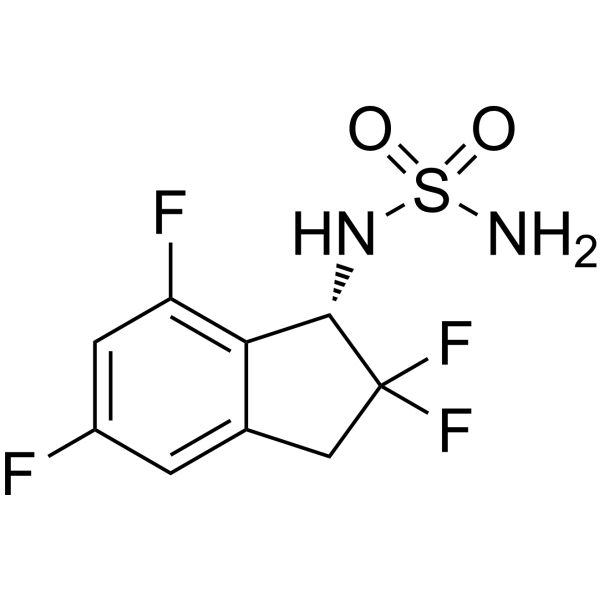
    AF-CX 921 is a strong antiepileptic drug .
    AF-CX 921
  • HY-107710

    iGluR Neurological Disease Inflammation/Immunology
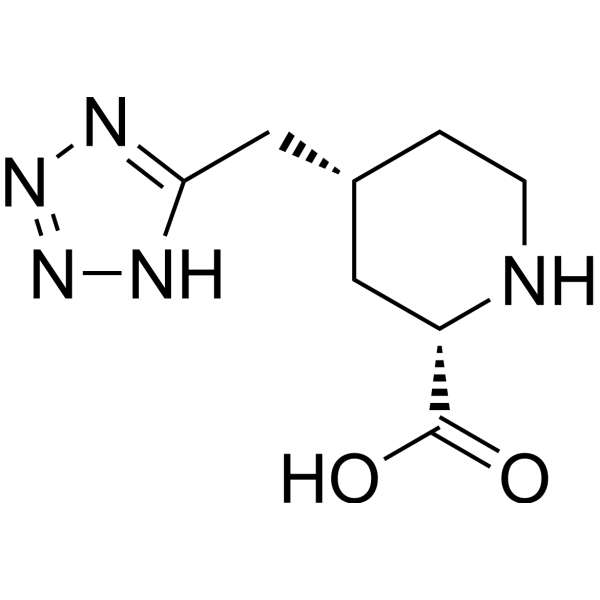
    LY 233053 is a potent and competitive NMDA-receptor antagonist with anticonvulsant and antiepileptic efficacy .
    LY 233053
  • HY-I0169R

    Reference Standards Drug Metabolite Neurological Disease
    (R)-Amino-N-benzyl-3-methoxypropionamide (Standard) is the analytical standard of (R)-Amino-N-benzyl-3-methoxypropionamide. This product is intended for research and analytical applications. (R)-Amino-N-benzyl-3-methoxypropionamide is a stable intermediate of Lacosamide (an antiepileptic drug) .
    (R)-Amino-N-benzyl-3-methoxypropionamide (Standard)
  • HY-123681

    Others Neurological Disease
    R 57720 is an antiepileptic agent that exhibits dose-dependent anticonvulsant activity across multiple postnatal rat age groups. R 57720 inhibits severe generalized tonic-clonic seizures induced by Pentylenetetrazol. R 57720 can be used for epilepsy research .
    R 57720
  • HY-D3224

    Fluorescent Dye Neurological Disease
    HCP is a two-photon fluorescent probe capable of crossing the blood-brain barrier, which is specifically designed for real-time detection of hypochlorous acid (HClO/ClO -) produced by myeloperoxidase (MPO). Chlorination of the quinoline skeleton of HCP generates HCP-Cl, which eliminates intramolecular charge transfer (ICT) quenching and thereby produces fluorescence. HCP is suitable for in vivo dynamic imaging of HClO in the brains of epileptic mice and high-throughput screening of antiepileptic drugs (HCP-Cl: Ex/Em = 800 nm/495 nm) .
    HCP

Inquiry Online

Your information is safe with us. * Required Fields.

Salutation


Country or Region *

Applicant Name *


Organization Name *

Department *


Email Address *


Product Name *

Cat. No.


Requested quantity *

Phone Number *


Remarks

Inquiry Online

Inquiry Information

Product Name:
Cat. No.:
Quantity:
MCE Japan Authorized Agent:

