





1. Search Result
Search Result
Results for "

Antigen peptide

" in MedChemExpress (MCE) Product Catalog:

95

Inhibitors & Agonists

1

Fluorescent Dyes

27

Biochemical Assay Reagents

85

Peptides

2

Inhibitory Antibodies

4

Natural
Products

14

Recombinant Proteins

1

Antibodies

9

Oligonucleotides

Cat. No. Product Name Target Research Area
  • HY-P1439
    RS 09
    Maximum Cited Publications
    18 Publications Verification

    Toll-like Receptor (TLR) NF-κB Inflammation/Immunology
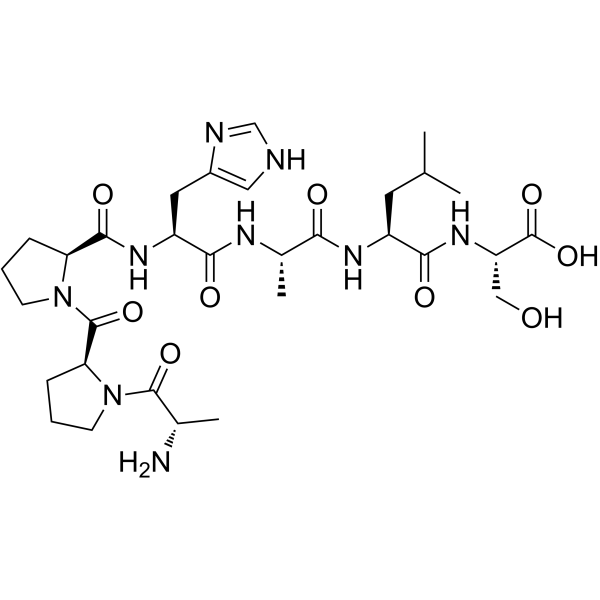
    RS 09 is an LPS (HY-D1056) peptide mimic and TLR4 agonist. RS 09 can bind to TLR-4 and activate NF-κB. RS 09 can function as an adjuvant in vivo, enhancing the antigen-specific immune response .
  • HY-P1745

    Insulin B chain (9-23)

    MHC Insulin Receptor IFNAR Inflammation/Immunology
    InsB (9-23) (Insulin B chain (9-23)) is an HLA-DQ8-restricted insulin B-chain peptide composed of amino acid residues 9-23. InsB (9-23) serves as a major MHC II class-restricted antigen. InsB (9-23) supports the recognition and activation of T cells, stimulates the secretion of IFN-γ and cytokines, and induces cross-reactive immune responses. InsB (9-23)-specific CD4 T cells can initiate diabetes . InsB (9-23) can be used in research related to type 1 diabetes and autoimmune diabetes .
  • HY-P2511

    Transmembrane Glycoprotein Metabolic Disease
    Insulin β Chain Peptide (15-23) is one of the earliest antigenic epitopes to which CD8 T-cells respond .
  • HY-P5623
    RVG
    1 Publications Verification

    RVG29; RDP; Rabies Virus Glycoprotein-29

    nAChR Interleukin Related Neurological Disease Inflammation/Immunology
    RVG (RVG29) is a blood-brain barrier-permeable peptide derived from rabies virus glycoprotein, which binds to the α-7 subunit of neuronal nicotinic acetylcholine receptor (AchR). RVG efficiently delivers drugs to nerve cells and antigen-presenting cells in a targeted manner, and enhances the efficiency of antigen presentation and drug delivery .
  • HY-P4076

    HIV DNA Alkylator/Crosslinker Infection
    MPG peptides, Pβ is an amphipathic cell-penetrating peptide. MPG peptides, Pβ consists of three components: the hydrophobic fusion sequence (GALFLGFLGAAGSTMGA) of HIV glycoprotein 41, a spacer domain (WSQP), and the nuclear localization signal (KKKRKV) of the large T antigen of Simian virus 40. MPG peptides, Pβ can form stable non-covalent complexes with nucleic acids (including DNA) through electrostatic interactions and improve their intracellular delivery. MPG peptides, Pβ can be used in studies of HIV-1-related immune responses .
  • HY-P0277

    CEA peptide

    Peptides Cancer
    Carcinoembryonic antigen peptide 1 (CEA peptide) is a carcinoembryonic antigen (CEA)-derived peptide. Carcinoembryonic antigen peptide 1 is a potential HLA-A*0201-restricted CTL epitope that can be used for the study of CTL-mediated epithelial-derived cancers .
  • HY-P11058

    OVAp

    MHC Cancer
    OVA(250-264) (OVAvac) (OVAp) is an antigen peptide that can be from ovalbumin (OVA) presented by the class I MHC molecule, H-2Kb. OVA(250-264) combined withαMSLN (anti-MSLN antibody) significantly induces antigen-specific CD8 + T cell generation and infiltration for enhancing antitumor efficacy in orthotopic pancreatic cancer mice model. OVA(250-264) can be used for neoantigen vaccine development in pancreatic cancer immunotherapy research .
  • HY-P5990

    PSMA Cancer
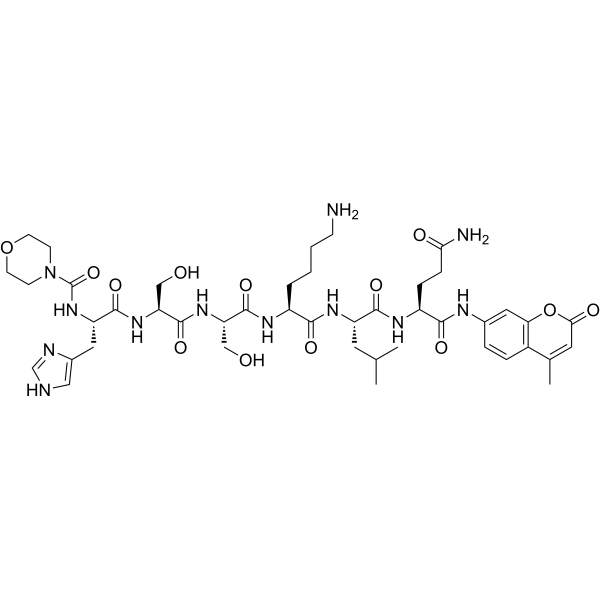
    Prostate Specific Antigen Substrate is a highly specific fluorescent peptide substrate can be used for measuring prostate-specific antigen (PSA) enzymatic activity .
  • HY-P3827

    Peptides Inflammation/Immunology
    Cys-Gly-Tyr-Gly-Pro-Lys-Lys-Lys-Arg-Lys-Val-Gly-Gly is a13-mer synthetic peptide containing seven amino acids homologous to SV40 T antigen. Cys-Gly-Tyr-Gly-Pro-Lys-Lys-Lys-Arg-Lys-Val-Gly-Gly is capable of inducing nuclear transport .
  • HY-P2494

    Peptides Inflammation/Immunology
    OVA 55-62 is a fragmented peptide of OVA (ovalbumin) antigen and can bind to the mouse MHC class I molecule, H2-Kb .
  • HY-P1826

    CD74 Inflammation/Immunology Cancer
    CLIP (86-100) is amino acids 86 to 100 fragment of class II-associated invariant chain peptide (CLIP). CLIP is a small self-peptide and cleavage product of the invariant chain that resides in the HLA-II antigen binding groove and is believed to play a critical role in the assembly and transport of MHC class II alphabetaIi complexes through its interaction with the class II peptide-binding site .
  • HY-P1439A
    RS 09 TFA
    Maximum Cited Publications
    18 Publications Verification

    Toll-like Receptor (TLR) NF-κB Inflammation/Immunology
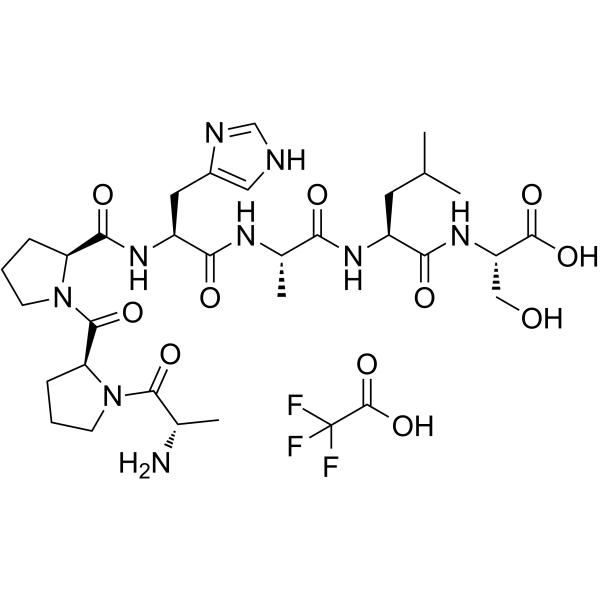
    RS 09 TFA is an LPS (HY-D1056) peptide mimic and TLR4 agonist. RS 09 TFA can bind to TLR-4 and activate NF-κB. RS 09 TFA can function as an adjuvant in vivo, enhancing the antigen-specific immune response .
  • HY-P10740

    Peptide-Drug Conjugates (PDCs) PSMA Folate Receptor (FR) Cancer
    CBP-1018 is a PDC (peptide-drug conjugate) formed by conjugating Monomethyl auristatin E (HY-15162) to a dual-targeting ligand of FLOR1/PSMA (prostate-specific membrane antigen) via a linker (HY-78738). CBP-1018 binds to FLOR1 and prostate-specific membrane antigen (PSMA). CBP-1018 is applicable to the research of solid tumors and metastatic castration-resistant prostate cancer .
  • HY-P1778A

    HPV Infection
    HPV16 E7 (86-93) TFA is a human leukocyte antigen (HLA)-A2.1 restricted HPV16 E7-derived peptide. HPV16 E7 (86-93) TFA is immunogenic in cervical carcinomas .
  • HY-P4155

    Biochemical Assay Reagents Inflammation/Immunology
    SSA antigenic peptide is an antigenic peptide of Sjögren's syndrome-related antigen A (SSA). SSA antigenic peptide can be used for the research of systemic lupus erythematosus .
  • HY-P2495A

    Biochemical Assay Reagents Inflammation/Immunology
    OVA (241-270) TFA, a non-specific cytotoxic T lymphocyte (CTL) peptide, is a fragmented peptide of OVA (ovalbumin) antigen .
  • HY-P5623B
    RVG TFA
    1 Publications Verification

    RVG29 TFA; RDP TFA; Rabies Virus Glycoprotein-29 TFA

    Bacterial Infection
    RVG TFA is a peptide derived from Rabies Virus Glycoprotein that binds to the α-7 subunit of nicotinic acetylcholine receptors (AchR) of neuronal cells. RVG enhances delivery of Mycobacterium tuberculosis antigens to antigen-presenting cells .
  • HY-P10664

    EBV Inflammation/Immunology
    EBV EBNA3B (416-424) is an HLA-A11-restricted peptide antigen derived from EBV EBNA3B protein .
  • HY-12523

    Peptides Others
    Peptide M is a synthetic amino acid (18 amino acids in length which correspond to the amino acid positions 303-322 of bovine S-antigen: DTNLASSTIIKEGIDKTV), is capable of inducing experimental autoimmune uveitis in monkeys and Hartley guinea pigs as well as Lewis rats .
  • HY-P2525

    MHC Inflammation/Immunology
    GAD65 (206-220) is glutamic acid decarboxylase (GAD) 65-derived peptide, corresponding to residues 180-188. GAD65 is presented to T cells in association with I-Ag7 MHC class II molecules and a major pancreatic antigens targeted by self-reactive T cells in type I diabetes mellitus .
  • HY-P10582A

    MHC Inflammation/Immunology
    SIYNFEKL TFA is a variant of major MHC class I-restricted epitope SIINFEKL. SIYNFEKL TFA is an antigenic peptide, that can stimulate specific T cells in experimental settings to study the competitive interaction between T cell. SIYNFEKL TFA exhibits low affinity for the OT-I T cell receptor (TCR), and can be used for detection of CD8+ T cells .
  • HY-P10581A

    MHC Inflammation/Immunology
    SIIVFEKL TFA is a variant of the major MHC class I-restricted epitope SIINFEKL. SIIVFEKL TFA is an antigenic peptide, that can stimulate specific T cells in experimental settings to study the competitive interaction between T cells. SIIVFEKL TFA exhibits low affinity for the OT-I T cell receptor (TCR), and can be used for detection of CD8+ T cells .
  • HY-P5396A

    Amino Acid Decarboxylase Others
    GAD65 (524-543) acetate is a biological active peptide with amino acids 524 to 543 fragment of glutamic acid decarboxylase 65 (GAD65). GAD65 (524-543) acetate is one of the first fragments of the islet antigen to induce proliferative T cell responses in the non-obese diabetic (NOD) mouse model of spontaneous autoimmune diabetes. GAD65 (524-543) acetate is a specific, possibly low affinity, stimulus for the spontaneously arising diabetogenic T cell clone BDC2.5. Immunization with GAD65 (524-543) acetate increases the susceptibility of the NOD mice to type 1 diabetes induced by the adoptive transfer of BDC2.5 T cells .
  • HY-P10994

    Eps8(327-335)

    EGFR IFNAR Interleukin Related TNF Receptor Complement System Apoptosis Inflammation/Immunology Cancer
    Eps8 peptide 327 is an HLA-A*2402-restricted peptide antigen derived from Eps8 protein. Eps8 peptide 327 has potent antitumor activity with significant cytotoxicity. Eps8 peptide 327 effectively inhibits cancer cells proliferation, induces apoptosis and disrupts EGFR signal pathway by inhibiting downstream signals (such as IL-2, TNF-α and IFN-γ) expression and the Eps8/EGFR interaction. Eps8 peptide 327 significantly inhibits tumor growth in HT-29 xenograft mcie models .
  • HY-P1813

    PSA-peptide

    Prostaglandin Receptor Cancer
    PSA1 (141-150), a prostate specific antigen 1 peptide, is used in the immunotherapy of cancer experiments .
  • HY-P10512

    Peptides Others
    BDC2.5 mimotope is a potent antigen-mimicking peptide that can activate CD4+ T cell populations that have the same antigen recognition properties as BDC2.5 cells. BDC2.5 mimotope can be used to study the prevention or treatment of type 1 diabetes by targeting specific T cell populations .
  • HY-P5488

    Peptides Others
    BDC2.5 Mimotope 1040-63 is a biological active peptide. (The TCR transgenic model (BDC2.5) mimitope was used in type 1 diabetes (T1D) study. T1D is an autoimmune disease in which T cells mediate damage to pancreatic islet b cells. T1D is caused by autoreactive T cell destruction of insulin-producing cells. BDC2.5 mimotope was utilized to support the study on antigen presentation of antigenic peptides to islet autoantigen-specific T cells.)
  • HY-P1917A

    Peptides Inflammation/Immunology
    Uty HY Peptide (246-254) TFA, derived from the ubiquitously transcribed tetratricopeptide repeat gene on the Y chromosome (UTY) protein as an H-Y epitope, H-YD b, is a male-specific transplantation antigen H-Y .
  • HY-P10503

    Peptides Cardiovascular Disease Others Inflammation/Immunology
    S2-16 is a synthetic peptide from the S2 region of cardiac myosin. S2-16 is a cryptic epitope that induces myocarditis in Lewis rats. A cryptic epitope is an epitope that is not recognized by antibodies or T cells after the animal is immunized with the intact antigen. S2-16 can be used to study the mechanism of autoimmune myocarditis .
  • HY-P3444

    PECAM-1

    SHP2 Bacterial Metabolic Disease Inflammation/Immunology
    CD31 (PECAM-1) is platelet endothelial cell adhesion molecule-1, serves as the endothelial cell-specific receptor of clostridium perfringens b-Toxin (CPB). CD31 is also an ER-MP12 antigen, acts as a linker between mechanical stress, metabolism and inflammation. CD31 peptide is able to sustain phosphorylation of the CD31 ITIM686 and of SHP2 and to inhibit TCR-induced T-cell activation - .
  • HY-P5972

    Peptides Cancer
    GRP20–29, frog is a 10-amino acid antigen peptide that can be isolated from Xenopus .
  • HY-P10686

    EGFR Cancer
    CH401 peptide is a HER2-derived antigen peptide. After being bound to the artificial viral capsid by a self-assembled β-cyclic peptide, CH401 peptide is encapsulated in a lipid bilayer containing the lipid adjuvant α-GalCer, and can be studied as a self-adjuvant anti-breast cancer vaccine candidate .
  • HY-P11299

    EBV Infection Neurological Disease Inflammation/Immunology
    EBNA-1 (386-405 aa) is a cross-reactive viral antigen peptide. EBNA-1 (386-405 aa) has a high molecular similarity to GlialCAM (370-389 aa) and it induces the production of cross-reactive antibodies that recognize both EBV antigens and glial cells in the central nervous system, thereby triggering autoimmune responses. EBNA-1 (386-405 aa) can used for Epstein-Barr virus (EBV) infection and multiple sclerosis (MS) research .
  • HY-P2495

    Biochemical Assay Reagents Cancer
    OVA (241-270), a non-specific cytotoxic T lymphocyte (CTL) peptide, is a fragmented peptide of OVA (ovalbumin) antigen .
  • HY-P11280

    Peptides Cancer
    PRAME peptide (425-433) is a peptide corresponding to amino acids 425-433 of PRAME (preferentially expressed antigen) in melanoma. PRAME peptide (425-433) can be used to stimulate human PRAME-specific CD8 + T cells .
  • HY-P1700

    TNF Receptor Cancer
    BCMA72-80 is a HLA-A2-specific B-cell maturation antigen (BCMA) peptide, with great affinity to HLA-A2, used in the research of multiple myeloma or other B-cell maturation antigen expressing tumors .
  • HY-P4050

    HBV Infection
    HBV Seq1 aa:18-27 is a hepatitis B virus (HBV) core antigen 18-27 peptide fragment .
  • HY-P1778

    HPV Infection
    HPV16 E7 (86-93) is a human leukocyte antigen (HLA)-A2.1 restricted HPV16 E7-derived peptide. HPV16 E7 (86-93) is immunogenic in cervical carcinomas .
  • HY-P11089

    MHC Cancer
    TP53 neoepitope is a high-affinity antigenic peptide targeting HLA-A. TP53 neoepitope can triggers CD8 + T cell-mediated killing of TP53-mutant tumor cells. TP53 neoepitope is promising for research of solid tumors harboring TP53 hotspot mutations (e.g., R175H, R273H) .
  • HY-P11122

    IFNAR Interleukin Related Inflammation/Immunology
    MSP-1 P2 is a synthetic peptide of merozoite surface protein-1 (MSP-1). MSP-1 P2 stimulates umbilical cord blood lymphocytes to produce IFN-γ and IL-13, and this immune response is primarily mediated by CD4+ T cells. MSP-1 P2 can be used as a specific antigen stimulus to detect T cell responses and cytokine levels .
  • HY-P10417

    Integrin IFNAR Cancer
    RTDLDSLRTYTL is an Alpha (v) beta (6) integrin (avb6) inhibitor with high affinity and specificity. RTDLDSLRTYTL binds to avb6 integrin, a peptide sequence that activates cytotoxicity and cytokine production in T cells, such as interferon-gamma. RTDLDSLRTYTL is designed through a chimeric T cell antigen receptor (CAR) so that T cells can be redirected to specifically recognize and attack tumor cells. RTDLDSLRTYTL can be used in the research of cancer immunotherapy and targeted drug development .
  • HY-P10947

    Epigenetic Reader Domain YAP Cancer
    MACTIDE-V is an orally active and selective peptide-drug conjugate targeting CD206. MACTIDE-V delivers Verteporfin (HY-B0146) to CD206 + tumor-associated macrophages (TAM) to inhibit the YAP/TAZ signaling pathway, prompting YAP exclusion from the nucleus, inducing TAM polarization toward an anti-tumoral phenotype with enhanced phagocytosis and antigen presentation, and boosting T cell infiltration and NK cell activity. MACTIDE-V suppresses primary tumor growth and lung metastasis in triple-negative breast cancer (TNBC) mouse models .
  • HY-P10775A

    MMP Cancer
    BT1769 acetate is a conjugate and antitumor agent targeting MT1-MMP, with a Kd value of 3.35 nM against human targets. BT1769 acetate exhibits favorable pharmacokinetic properties. BT1769 acetate specifically binds to MT1-MMP via its bicyclic peptide component, delivering the cytotoxic agent MMAE (HY-15162) to antigen-expressing cells. It effectively inhibits tumor growth, induces complete responses, and significantly prolongs event-free survival in osteosarcoma patient-derived xenograft models. BT1769 acetate shows extremely low activity in Ewing sarcoma models and can be used in osteosarcoma-related research .
  • HY-P4156

    mAChR Neurological Disease
    VLVNTFCDSCIPKTYWNLGY TFA is an antigenic peptide of M3 muscarinic receptor (M3R). VLVNTFCDSCIPKTYWNLGY TFA can be used in ELISA .
  • HY-P10496A

    Peptides Cancer
    MAGE-A1-derived peptide acetate is a short peptide sequence derived from MAGE-A1 protein. As a tumor-specific antigen, MAGE-A1-derived peptide acetate can be recognized and activated by cytotoxic T lymphocytes (CTLs), thereby generating an immune response to tumor cells expressing MAGE-A1. This immune response can lead to the lysis and death of tumor cells. MAGE-A1-derived peptide acetate can be used in the study of tumor immunity .
  • HY-P10496

    Peptides Cancer
    MAGE-A1-derived peptide is a short peptide sequence derived from MAGE-A1 protein. As a tumor-specific antigen, MAGE-A1-derived peptide can be recognized and activated by cytotoxic T lymphocytes (CTLs), thereby generating an immune response to tumor cells expressing MAGE-A1. This immune response can lead to the lysis and death of tumor cells. MAGE-A1-derived peptide can be used in the study of tumor immunity .
  • HY-P5930

    MDM2 32-46

    Ligands for E3 Ligase Cancer
    HOXB7 8–25 (MDM2 32-46) is an MDM2-derived peptide epitope and can elicit antigen-specifc and tumor-reactive CD4 + T cell responses .
  • HY-P5406

    SAINFEKL, OVA (257-264) Variant

    Peptides Others
    OVA-A2 Peptide (SAINFEKL, OVA (257-264) Variant) is a biological active peptide. (A2 peptide (SAINFEKL) is a (OVA) peptide (257-264) variant with antigenic effect.)
  • HY-P5304A

    Peptides Inflammation/Immunology
    RTQLLWTPAAPTAMA TFA is a peptide antigen,used for drug delivery in immune response .
  • HY-P10509

    CMV Infection
    IE1 peptide refers to an antigenic peptide encoded by the immediate early (IE) gene of mouse cytomegalovirus (mCMV). IE1 peptide is one of the key antigenic peptides expressed during mCMV infection, plays a role in transcriptional activation in the life cycle of mCMV, and is one of the earliest genes expressed in the viral replication cycle. IE1 peptide is an important target for CD8+ T cell response and can be used to study the host immune response to mCMV infection .

Inquiry Online

Your information is safe with us. * Required Fields.

Salutation


Country or Region *

Applicant Name *


Organization Name *

Department *


Email Address *


Product Name *

Cat. No.


Requested quantity *

Phone Number *


Remarks

Inquiry Online

Inquiry Information

Product Name:
Cat. No.:
Quantity:
MCE Japan Authorized Agent:

