
1. Search Result
Search Result
Pathways Recommended: Stem Cell/Wnt Cell Cycle/DNA Damage
Results for "

BC cells

" in MedChemExpress (MCE) Product Catalog:

42

Inhibitors & Agonists

3

Fluorescent Dye

1

Peptides

2

Inhibitory Antibodies

6

Natural
Products

2

Isotope-Labeled Compounds

1

Oligonucleotides

Cat. No. Product Name Target Research Areas Chemical Structure
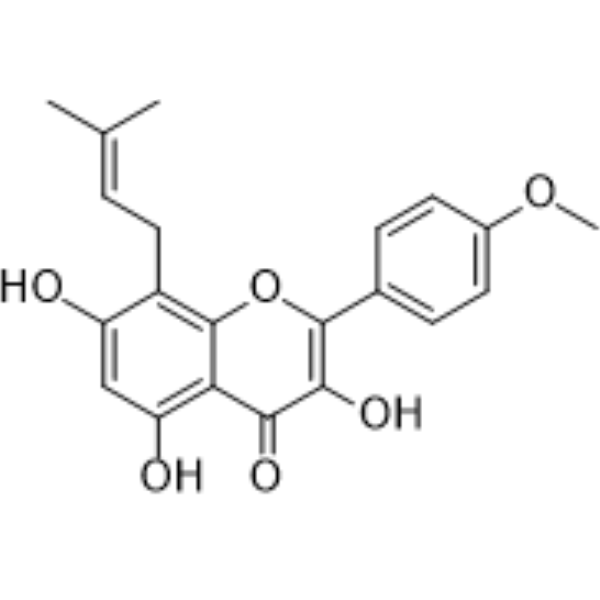
  • HY-N0678
    Icaritin
    5+ Cited Publications

    Anhydroicaritin

    JAK Autophagy Apoptosis Cancer
    Icaritin (Anhydroicaritin) is a prenylflavonoid derivative from Epimedium brevicornuMaxim. and potently inhibits proliferation of K562 cells (IC50 of 8 µM) and primary CML cells (IC50 of 13.4 µM for CML-CP and 18 µM for CML-BC). Icaritin can regulate MAPK/ERK/JNK and JAK2/STAT3 /AKT signalings, also enhances osteogenesis [3.
    Icaritin
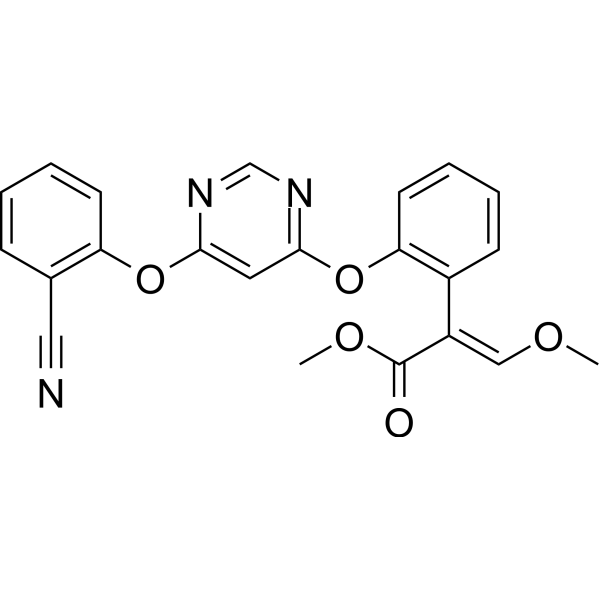
  • HY-B0849
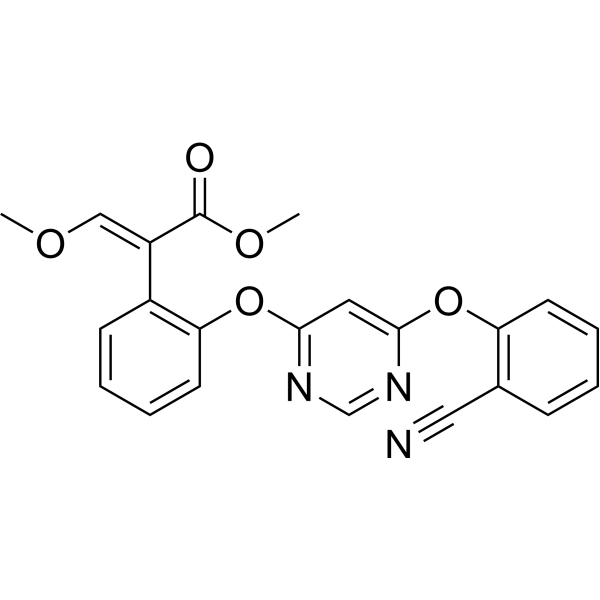
    Azoxystrobin
    3 Publications Verification

    Environmental Pollutants Reactive Oxygen Species (ROS) Fungal Apoptosis Bacterial Phosphatase Infection
    Azoxystrobin is an orally active, broad-spectrum β-methoxyacrylate fungicide. Azoxystrobin inhibits mitochondrial respiration by binding to the Qo site of the cytochrome bc1 complex and inhibiting electron transfer. Azoxystrobin induces the production of reactive oxygen species (ROS) and induces cell apoptosis .
    Azoxystrobin
  • HY-P10944

    NNS309

    FAP Inflammation/Immunology Cancer
    Unlabeled FXX489 (NNS309) is a fibroblast activation protein (FAP)-targeting ligand. Unlabeled FXX489 can be labeled with 68Ga and 177Lu and shows anticancer effects. Unlabeled FXX489 can be used for the study of pancreatic ductal adenocarcinoma (PDAC), non-small cell lung cancer (NSCLC), breast cancer (BC), and colorectal cancer (CRC) .
    Unlabeled FXX489
  • HY-N12257
    Antimycin A2
    2 Publications Verification

    Cytochrome P450 Reactive Oxygen Species (ROS) Apoptosis Infection Cancer
    Antimycin A2 is a selective inhibitor of the cytochrome b-c1 complex in the mitochondrial electron transport chain. Antimycin A2 disrupts mitochondrial membrane potential and produces reactive oxygen species (ROS) by inhibiting electron transfer between cytochrome b and c. Antimycin A2 has bactericidal and piscicidal activity, as well as tumor cell growth inhibitory effects, and can induce S-phase cell cycle arrest and apoptosis in HeLa cells. Antimycin A2 is suitable for research of cervical cancer and fisheries management. Antimycin A2 can be naturally isolated from the fermentation products of Streptomyces sp. strains .
    Antimycin A2
  • HY-136265
    BC-LI-0186
    1 Publications Verification

    Aminoacyl-tRNA Synthetase Cancer
    BC-LI-0186 is a potent and selective inhibitor of Leucyl-tRNA synthetase (LRS; LeuRS) and Ras-related GTP-binding protein D (RagD) interaction (IC50=46.11 nM). BC-LI-0186 competitively binds to the RagD interacting site of LRS (Kd=42.1 nM) and has on effects on LRS-Vps34, LRS-EPRS, RagB-RagD association, mTORC1 complex formation or the activities of 12 kinases. BC-LI-0186 can effectively suppress the activity of cancer-associated?MTOR?mutants and the growth of rapamycin-resistant cancer cells.?BC-LI-0186 is a promising agent for lung cancer research .
    BC-LI-0186
  • HY-108618
    BC11-38
    2 Publications Verification

    Phosphodiesterase (PDE) Endocrinology
    BC11-38 is a potent, selective, and biologically active PDE11 inhibitor, with IC50s of 0.28 µM and >100 µM for PDE11 and PDE1-10, respectively. BC11-38 elevates cAMP levels, PKA-mediated ATF-1 phosphorylation, and cortisol production in H295R cells .
    BC11-38
  • HY-P99395
    Talacotuzumab
    1 Publications Verification

    JNJ 56022473; CSL 362

    Interleukin Related Cancer
    Talacotuzumab (JNJ 56022473; CSL 362) is an IgG1-type fully humanized, CD123-neutralizing monoclonal antibody containing a modified Fc structure. Talacotuzumab has KDs of 0.43 nM, 188 nM, 46 nM, 16.8 nM for CD123, CD32b/c, CD16-158F, CD16-158V, respectively. Talacotuzumab inhibits IL-3 binding to CD123, antagonizing IL-3 signaling in target cells. Talacotuzumab has mutated the Fc region to increase affinity for CD16 (FcγRIIIa), thereby enhancing antibody-dependent cell-mediated cytotoxicity (ADCC). Talacotuzumab is highly effective in vivo reducing leukemic cell growth in acute myeloid leukemia (AML) xenograft mouse models .
    Talacotuzumab
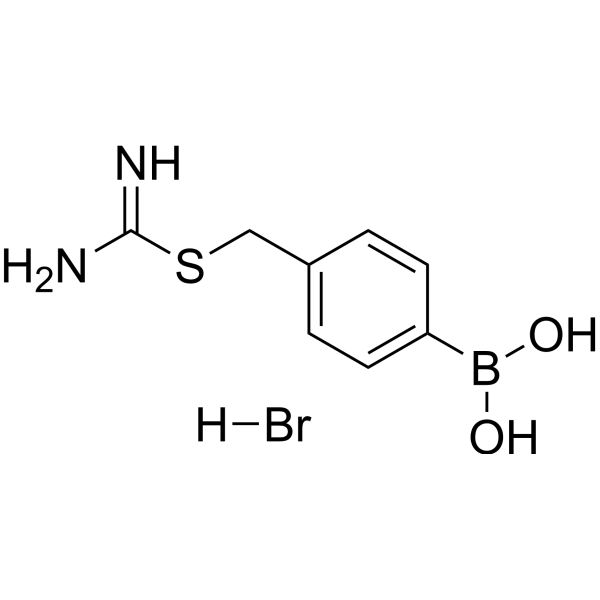
  • HY-108447

    Ser/Thr Protease SARS-CoV PAI-1 Infection Cancer
    BC-11 hydrobromide is a selective TMPRSS2 inhibitor (TMPRSS2 is a key host cellular factor for viral entry and SARS-CoV-2 pathogenesis), and a selective urokinase (uPA) inhibitor (IC50=8.2 μM). BC-11 hydrobromide is cytotoxic to triple-negative MDA-MB231 breast cancer cells. BC-11 hydrobromide is used in research on viral infections and cancer .
    BC-11 hydrobromide
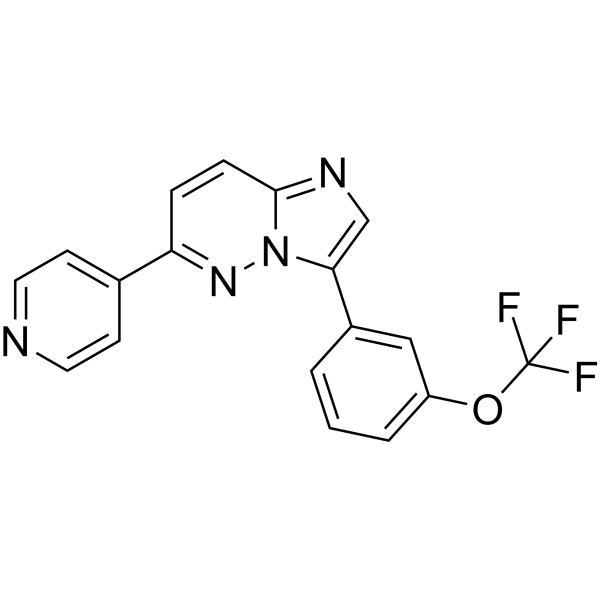
  • HY-153896
    LMTK3-IN-1
    1 Publications Verification

    c-Met/HGFR Cancer
    LMTK3-IN-1 (compound C28) is an ATP-competitive inhibitor of lemur tyrosine kinase 3 (LMTK3) (Kd=2.5 μM),that acts by degrading LMTK3 via the ubiquitin-proteasome pathway. LMTK3-IN-1 shows anticancer activity in a variety of cancer cell lines and in vivo BC mouse models. LMTK3-IN-1 induces apoptosis in BC cell lines at 10-20 μM .
    LMTK3-IN-1
  • HY-164995

    PROTACs Epigenetic Reader Domain Drug-Linker Conjugates for ADC Cancer
    L1BC8 (compound 13a) is a BRD4 PROTAC degrader with anticancer effects. L1BC8 is also a drug-linker conjugate for ADC that can be used for the synthesis of ADCs. The resulting BRD4-degrader antibody conjugates exhibit potent and antigen-dependent BRD4 degradation and antiproliferation activities in cell-based experiments. (Pink: BRD4 ligand (HY-129939); Blue: VHL ligand (HY-125845); Black: linker (HY-171663)) .
    L1BC8
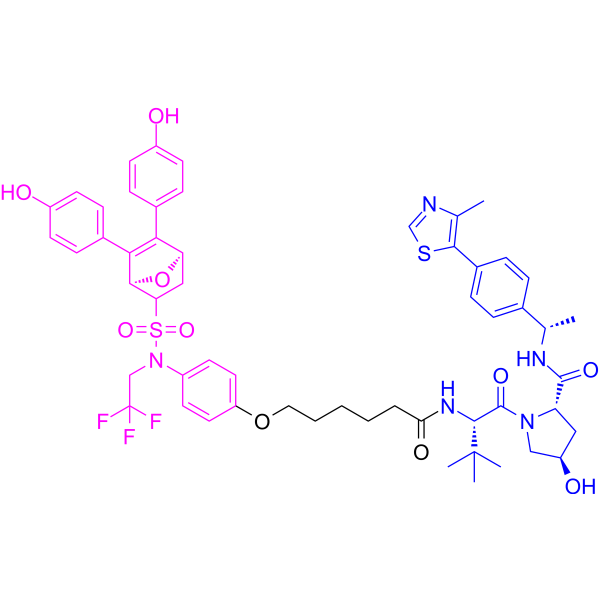
  • HY-149295

    PROTACs Estrogen Receptor/ERR Apoptosis Cancer
    PROTAC ERα Degrader-4 (Compound ZD12) is a highly potent and selectivePROTAC ERα degrader (Ki: 5.08 μM). PROTAC ERα Degrader-4 contains OBHSAs, linker and E3 ligase ligands. PROTAC ERα Degrader-4 shows excellent cell inhibitory and ERα degradation activity against Tamoxifen-sensitive and -resistant ER + breast cancer (BC) cells and ERα-mutated BC cells. PROTAC ERα Degrader-4 can induce apoptosis and can be used for cancer research.
    PROTAC ERα Degrader-4
  • HY-B0849R

    Reference Standards Fungal Reactive Oxygen Species (ROS) Apoptosis Infection
    Azoxystrobin (Standard) is the analytical standard of Azoxystrobin. This product is intended for research and analytical applications. Azoxystrobin is a broad-spectrum β-methoxyacrylate fungicide. Azoxystrobin inhibits mitochondrial respiration by binding to the Qo site of the cytochrome bc1 complex and inhibiting electron transfer. Azoxystrobin induces the production of reactive oxygen species (ROS) and induces cell apoptosis.
    Azoxystrobin (Standard)
  • HY-N8540

    Phosphoglycerate Kinase (PGK) Fungal Apoptosis Infection Cancer
    Ilicicolin H is a selective and non-ATP-competitive phosphoglycerate kinase 1 (PGK1) (IC50 = 9.02 μM) and mitochondrial cytochrome bc1 reductase (IC50 = 2-3 ng/mL) inhibitor. Ilicicolin H directly binds to PGK1 with KD of 60 μM .Ilicicolin H can inhibit cell proliferation and induce apoptosis. Ilicicolin H can inhibit the lactate production and glucose uptake of hepatocellular carcinoma (HCC) cells. Ilicicolin H has a broad antifungal spectrum including C. albicans, Cryptococcus and A. fumigatus. Ilicicolin H can be used for the researches of cancer and infection, such as hepatocellular carcinoma (HCC) and C. albicans infection .
    Ilicicolin H
  • HY-129087
    BC-​1258
    1 Publications Verification

    Apoptosis Cancer
    BC-1258,an F-box/LRR-repeat protein 2 (FBXL2) activator,can stabilize and upregulate FBXL2 levels. BC-1258 induces apoptosis of tumorigenic cells,and profoundly inhibits tumor formation in mice .
    BC-​1258
  • HY-179433

    PROTACs Androgen Receptor Estrogen Receptor/ERR Src Cancer
    PROTAC AR Degrader-12 is a highly efficient PROTAC targeting AR coactivator binding site (AR-CBS). PROTAC AR Degrader-12 induces AR degradation in a ubiquitin proteasome system (UPS) pathway-dependent manner. PROTAC AR Degrader-12 inhibits tumor cell growth by affecting DNA replication and cell division PROTAC AR Degrader-12 could not only effectively degrade AR, but also potently inhibit the proliferation of MCF-7 and multiple mutant or resistant BC cells. PROTAC AR Degrader-12 effectively blocked estrogen receptor α (ERα) signaling through a dual mechanism involving ERα protein downregulation and suppression of its transcriptional activity. PROTAC AR Degrader-12 significantly inhibits the mRNA expression of FOXA1, GREB1, SRC, and PELP1. PROTAC AR Degrader-12 can be used for the study of breast cancer .
    PROTAC AR Degrader-12
  • HY-119288

    NSC 45382

    Proteasome Cancer
    BC-23 (NSC 45382) is a proteasome inhibitor. BC-23 exhibits good inhibition of CT-L activity of the proteasome and is selective for malignant over normal cells .
    BC-23
  • HY-N15953

    Drug Metabolite Cancer
    27-Hydroxy oncosterone is a metabolite that inhibits breast cancer (BC) cell proliferation and blocks oncosterone and 27-Hydroxycholesterol (HY-N2371)-induced proliferation in BC cells .
    27-Hydroxy oncosterone
  • HY-162886

    JNK Reactive Oxygen Species (ROS) Cancer
    BSO-07 is a ROS/JNK activator with significant anticancer effects, having an IC50 value of 24.81 μM against human breast cancer (BC) cells. BSO-07 induces apoptosis (Apoptosis) and paraptosis by activating JNK and increasing ROS levels, including enhancing the expression of apoptosis-associated proteins such as PARP, Bax, phosphorylated p53, ATF4, and CHOP, while decreasing the levels of anti-apoptotic proteins like Bcl-2, Bcl-xL, and Survivin. BSO-07 holds promise for research in the field of breast cancer .
    BSO-07
  • HY-124635

    Phosphodiesterase (PDE) Apoptosis Inflammation/Immunology Cancer
    BC-54 is a selective inhibitor of enzymes from the cAMP-specific PDE4 and PDE7 families. BC-54 displays potent anti-inflammatory properties and can induce cancer cells apoptosis. BC-54 can be used for the researches of cancer and inflammation, such as chronic lymphocytic leukemia .
    BC-54
  • HY-126640

    Parasite Infection Cancer
    Phomoxanthone A is a xanthone dimer, which can be isolated from Phomopsis. Phomoxanthone A exhibits antimalarial and antitubercular activities against Plasmodium falciparum (K1, multidrug-resistant strain, IC50 is 0.11 µg/mL) and Mycobacterium tuberculosis (H37Ra strain, MIC is 0.50 µg/mL). Phomoxanthone A exhibits cytotoxicity in cells KB, BC-1 and Vero, IC50 is 0.99, 0.51 and 1.4 µg/mL, respectively .
    Phomoxanthone A
  • HY-N0678R

    Anhydroicaritin (Standard)

    JAK Reference Standards Autophagy Apoptosis Cancer
    Icaritin (Standard) is the analytical standard of Icaritin. This product is intended for research and analytical applications. Icaritin (Anhydroicaritin) is a prenylflavonoid derivative from Epimedium brevicornuMaxim. and potently inhibits proliferation of K562 cells (IC50 of 8 μM) and primary CML cells (IC50 of 13.4 μM for CML-CP and 18 μM for CML-BC). Icaritin can regulate MAPK/ERK/JNK and JAK2/STAT3 /AKT signalings, also enhances osteogenesis [3.
    Icaritin (Standard)
  • HY-P991403

    TNF Receptor Cancer
    BC011 is a human monoclonal antibody (mAb) targeting TNFRSF1B. BC011 promotes CD8+T cell proliferation and depletes Treg cells, thereby increasing the proportion of effector T cells in the tumor microenvironment. BC011 can be used in tumor Immunity research.
    BC011
  • HY-134937

    Phosphodiesterase (PDE) Neurological Disease Inflammation/Immunology
    BC8-15 is a PDE inhibitor with IC50 values of 0.28, 0.22, and 6.46 µM for inhibiting PDE8A, PDE4A, and PDE7A, respectively. BC8-15 can enhance steroidogenesis in mouse Leydig cells .
    BC8-15
  • HY-18814

    WGB-BC-15

    Bcr-Abl Cancer
    WB-BC-15 (WGB-BC-15) is a c-Abl kinase inhibitor. WB-BC-15 can increase radiation-induced germ-cell apoptosis, with EC50 of 10.5 μM .
    WB-BC-15
  • HY-D2960

    CLIP-OG

    Fluorescent Dye Others
    BC-OG is an oregon green labeled CLIP tag fluorescent probe. BC-OG can be used for labeling CLIP-tag fusion protein in cells .
    BC-OG
  • HY-D2953

    CLIP-CPY

    Fluorescent Dye Others
    BC-CPY is a CLIP-tagged probe based on the pyridine-benzoanthrone (CPY) fluorophore (Ex/Em: 580 nm/610 nm). BC-CPY has excellent cell membrane permeability, enabling deep imaging, low phototoxicity and high signal-to-noise ratio. BC-CPY can be used for super-resolution microscopy imaging of living cells .
    BC-CPY
  • HY-169994

    CDK Epigenetic Reader Domain Apoptosis DNA/RNA Synthesis Reactive Oxygen Species (ROS) Cancer
    BC13 is a CDK6/BRD4 inhibitor with the IC50 values of 234 nM and 36 nM for CDK6 and BRD4, respectively. BC13 shows antiproliferative activity and induces cell apoptosis and DNA damage. BC13 increases in ROS levels .
    BC13
  • HY-160049

    Nucleoside Antimetabolite/Analog Biochemical Assay Reagents Cancer
    BC15 aptamer sodium is an ssDNA aptamer targeting the intracellular protein hnRNP A1, which is highly expressed in cancerous liver tissue. BC15 aptamer sodium specifically recognizes breast cancer cells and can be used to detect cancer cells in other pathological types of breast cancer tissue .
    BC15 aptamer sodium
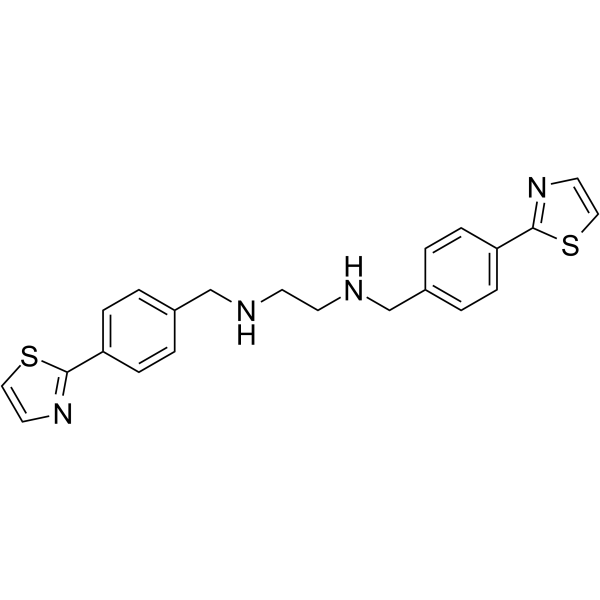
  • HY-116686

    Cytochrome P450 Fungal Infection
    Inz-1 is a potent and selective mitochondrial cytochrome bc1 inhibitor for yeast (IC50=8.092 μM) over humans (IC50=45.320 μM). Inz-1 reverses Fluconazole (HY-B0101) or other triazole antifungals’ resistance in the pathogenic fungus Candida albicans .
    Inz-1
  • HY-111231

    Androgen Receptor Cancer
    CH4933468 is a thiohydantoin derivative, shows androgen receptor (AR) pure antagonist activity in vitro. CH4933468 inhibits AR-mediated transactivation and proliferation of LNCaP and LNCaP-BC2 cells. CH4933468 can be used for castration-resistant prostate cancer (CRPC) research .
    CH4933468
  • HY-155807

    STAT JAK Apoptosis Cancer
    DPP is a Platinum(IV) complex, bearing pterostilbene-derived axial ligand. DPP inhibit the JAK2-STAT3 pathway in breast cancer (BC) cells with antiproliferative activity, and activates caspase-3 and cleaved poly ADP-ribose polymerase to induces apoptosis. DPP promotes the maturation and antigen presentation of dendritic cells, and exhibits in vivo safety .
    DPP
  • HY-B0849S

    Isotope-Labeled Compounds Fungal Reactive Oxygen Species (ROS) Apoptosis Infection
    Azoxystrobin-d4 is deuterium labeled Azoxystrobin. Azoxystrobin is a broad-spectrum β-methoxyacrylate fungicide. Azoxystrobin inhibits mitochondrial respiration by binding to the Qo site of the cytochrome bc1 complex and inhibiting electron transfer. Azoxystrobin induces the production of reactive oxygen species (ROS) and induces cell apoptosis.
    Azoxystrobin-d4
  • HY-B0849S1

    Isotope-Labeled Compounds Fungal Reactive Oxygen Species (ROS) Apoptosis Infection
    Azoxystrobin-d3 is deuterium labeled Azoxystrobin. Azoxystrobin is a broad-spectrum β-methoxyacrylate fungicide. Azoxystrobin inhibits mitochondrial respiration by binding to the Qo site of the cytochrome bc1 complex and inhibiting electron transfer. Azoxystrobin induces the production of reactive oxygen species (ROS) and induces cell apoptosis .
    Azoxystrobin-d3
  • HY-B0849A

    Fungal Reactive Oxygen Species (ROS) Apoptosis Bacterial Phosphatase Infection
    (Z)-Azoxystrobin is an enantiomer of Azoxystrobin. Azoxystrobin is an orally active, broad-spectrum β-methoxyacrylate fungicide. Azoxystrobin inhibits mitochondrial respiration by binding to the Qo site of the cytochrome bc1 complex and inhibiting electron transfer. Azoxystrobin induces the production of reactive oxygen species (ROS) and induces cell apoptosis .
    (Z)-Azoxystrobin
  • HY-121214R

    Reference Standards Fungal Mitochondrial Metabolism Apoptosis Reactive Oxygen Species (ROS) Infection Cardiovascular Disease
    Amisulbrom (Standard) is the analytical standard of Amisulbrom (HY-121214). Amisulbrom is a fungicide. Amisulbrom can inhibit the cytochrome-bc1 complex of the mitochondrial electron and induce mitochondrial dysfunction. Amisulbrom can induce cell apoptosis, ROS production and cause G2/M phase arrest. Amisulbrom shows cardiovascular toxicity to zebrafish. Amisulbrom can be used for the researches of infection and cardiovascular disease .
    Amisulbrom (Standard)
  • HY-155808

    STAT JAK Apoptosis COX Cancer
    STAT3-IN-18 (compound SPP) is a platinum (IV) complex with an axial ligand derived from sandalwood. STAT3-IN-18 inhibits the JAK2-STAT3 pathway in breast cancer (BC) cells, with anti-proliferative activity. STAT3-IN-18 activates caspase-3 and increases cleaved polyADP-ribose polymerase to induce apoptosis. STAT3-IN-18 promotes maturation and antigen presentation of dendritic cells and demonstrates safety in vivo.
    STAT3-IN-18
  • HY-176060

    Histamine Receptor Adrenergic Receptor 5-HT Receptor Cardiovascular Disease Cancer
    Platelet aggregation-IN-3 (Compound 5) is a ligand for H2 histamine receptors, α2(A,C)-adrenergic receptors (α2-AR), and 5-HT2(B,C) serotonin receptors. Platelet aggregation-IN-3 can inhibit platelet aggregation induced by ADP and collagen and can also modulate tumour cell-induced platelet aggregation (TCIPA). Platelet aggregation-IN-3 is promising for research of antiplatelet therapy in cardiovascular diseases and the prevention of cancer-related thrombosis and tumour metastasis .
    Platelet aggregation-IN-3
  • HY-108618R

    Reference Standards Phosphodiesterase (PDE) Endocrinology
    BC11-38 (Standard) is the analytical standard of BC11-38 (HY-108618). This product is intended for research and analytical applications. BC11-38 is a potent, selective, and biologically active PDE11 inhibitor, with IC50s of 0.28 µM and >100 µM for PDE11 and PDE1-10, respectively. BC11-38 elevates cAMP levels, PKA-mediated ATF-1 phosphorylation, and cortisol production in H295R cells .
    BC11-38 (Standard)
  • HY-D2959

    CLIP-DF

    Fluorescent Dye Others
    BC-DF is a diacetyl fluorescein labeled CLIP tag fluorescent probe. BC-DF can be used for labeling CLIP-tag fusion protein in cells .
    BC-DF
  • HY-182399

    Aminoacyl-tRNA Synthetase Cancer
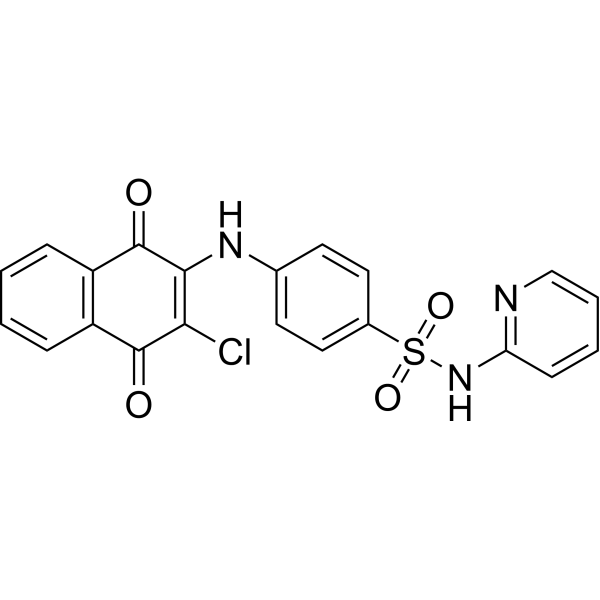
    BC-DXI-495 is a AIMP2-DX2 inhibitor. BC-DXI-495 disrupts the interaction of HSP70 and destabilizes DX2. BC-DXI-495 induces DX2 degradation via Siah1-mediated ubiquitination. BC-DXI-495 exerts tumor suppressive activity in cancer cells. BC-DXI-495 serves as a chemical probe to elucidate the mechanism of action of arylsulfonamide-based DX2 inhibitors. BC-DXI-495 can be used in lung cancer research .
    BC-DXI-495
  • HY-182711

    Bacterial Parasite Infection
    SCR0911 is an inhibitor of mycobacterial cytochrome bcc oxidase and Plasmodium falciparum cytochrome bc1. SCR0911 disrupts oxidative phosphorylation by binding to mycobacterial cytochrome bcc, binds to the Qi site of Plasmodium falciparum cytochrome bc1, inhibits mycobacterial cell growth and ATP synthesis, and exhibits broad-spectrum anti-mycobacterial and anti-malarial activities. SCR0911 can be used in research related to tuberculosis, malaria, and isolated persistent hypermethioninemia (iph) .
    SCR0911
  • HY-178724

    Fungal Bacterial Parasite Infection Cancer
    Mollicellin K is a depsidone that can be isolated from the fungus Chaetomium brasiliense. Mollicellin K exhibits antimicrobial activity against Myobacterium tuberculosis, antimalarial activity (IC50 = 1.2 μM) against Plasmodium falciparum as well as antifungal property (IC50 = 1.2 μM) against Candida albicans. Mollicellin K is cytotoxic against KB (IC50 = 1.9 μM), BC1 (IC50 = 6.8 μM), NCI-H187 (IC50 = 0.35 μM), and five cholangiocarcinoma cell lines. Mollicellin K also has an MIC of 12.5 μM for tuberculosis .
    Mollicellin K

Inquiry Online

Your information is safe with us. * Required Fields.

Salutation


Country or Region *

Applicant Name *


Organization Name *

Department *


Email Address *


Product Name *

Cat. No.


Requested quantity *

Phone Number *


Remarks

Inquiry Online

Inquiry Information

Product Name:
Cat. No.:
Quantity:
MCE Japan Authorized Agent:

