24 Results for "

Bacteroides fragilis

" in MedChemExpress (MCE) Product Catalog:
Products (24)

24 Results for "Bacteroides fragilis" in MCE Product Catalog:

3
3 Cited Publications
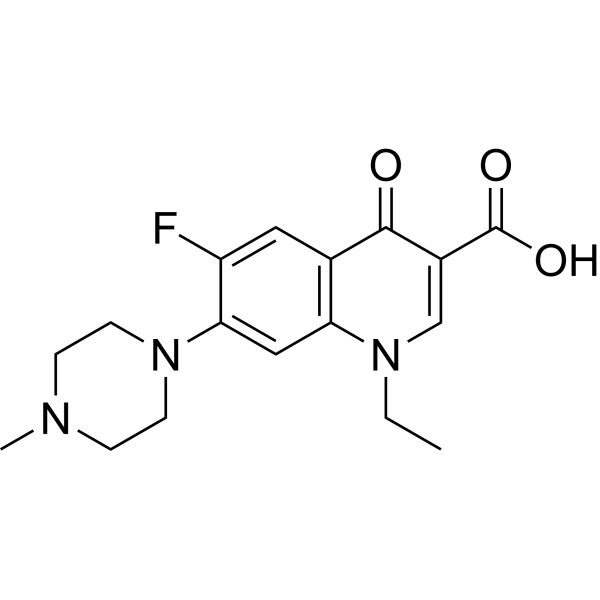
Cat. No.: HY-B0147
CAS No.: 70458-92-3
Synonyms: Pefloxacinium
Pefloxacin (Pefloxacinium) is a broad spectrum antibiotic. Pefloxacin blocks DNA replication by inhibiting DNA gyrase. Pefloxacin inhibits DNA relaxation catalyzed by topoisomerase I with an IC50 of 45 μg/mL. Pefloxacin exhibits antibacterial activity against Escherichia coli, Pseudomonas aeruginosa, and Bacteroides fragilis with MIC90s of 0.12, 4, and 16 mg/L, respectively. Pefloxacin has anti-Plasmodium yoelii infection activity. Pefloxacin increase UVA-induced edema and immunesuppression. Pefloxacin can be used for infection studies .
loading...
    loading...
3
3 Cited Publications
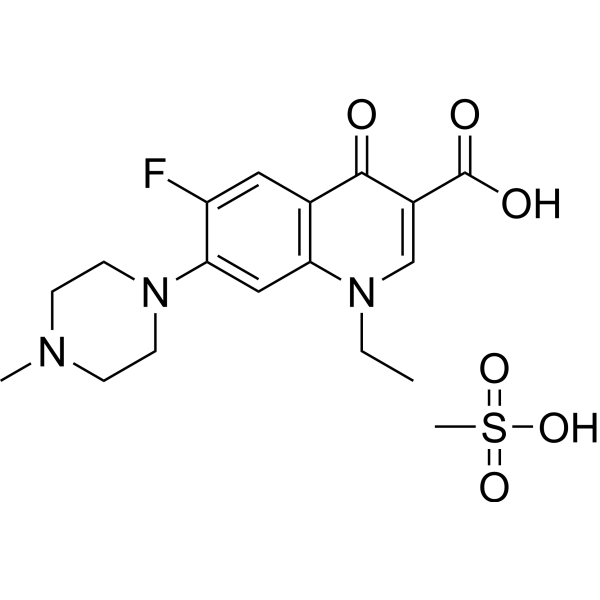
Cat. No.: HY-B0147A
CAS No.: 70458-95-6
Synonyms: Pefloxacinium mesylate
Pefloxacin (Pefloxacinium) mesylate is a broad spectrum antibiotic. Pefloxacin blocks DNA replication by inhibiting DNA gyrase. Pefloxacin mesylate inhibits DNA relaxation catalyzed by topoisomerase I with an IC50 of 45 μg/mL. Pefloxacin mesylate exhibits antibacterial activity against Escherichia coli, Pseudomonas aeruginosa, and Bacteroides fragilis with MIC90s of 0.12, 4, and 16 mg/L, respectively. Pefloxacin mesylate has anti-Plasmodium yoelii infection activity. Pefloxacin mesylate increase UVA-induced edema and immunesuppression. Pefloxacin mesylate can be used for infection studies .
loading...
    loading...
3
3 Cited Publications
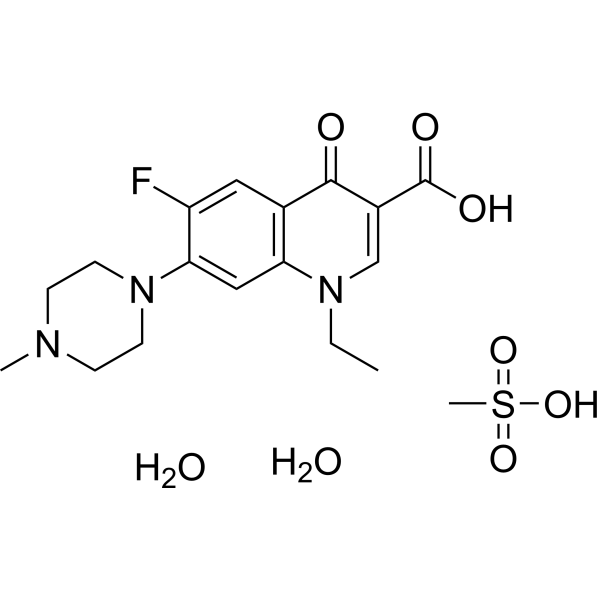
Cat. No.: HY-B0147B
CAS No.: 149676-40-4
Synonyms: Pefloxacinium mesylate dihydrate
Pefloxacin (Pefloxacinium) mesylate dihydrate is a broad spectrum antibiotic. Pefloxacin mesylate dihydrate blocks DNA replication by inhibiting DNA gyrase. Pefloxacin mesylate dihydrate inhibits DNA relaxation catalyzed by topoisomerase I with an IC50 of 45 μg/mL. Pefloxacin mesylate dihydrate exhibits antibacterial activity against Escherichia coli, Pseudomonas aeruginosa, and Bacteroides fragilis with MIC90s of 0.12, 4, and 16 mg/L, respectively. Pefloxacin mesylate dihydrate has anti-Plasmodium yoelii infection activity. Pefloxacin mesylate dihydrate increase UVA-induced edema and immunesuppression. Pefloxacin mesylate dihydrate can be used for infection studies .
loading...
    loading...
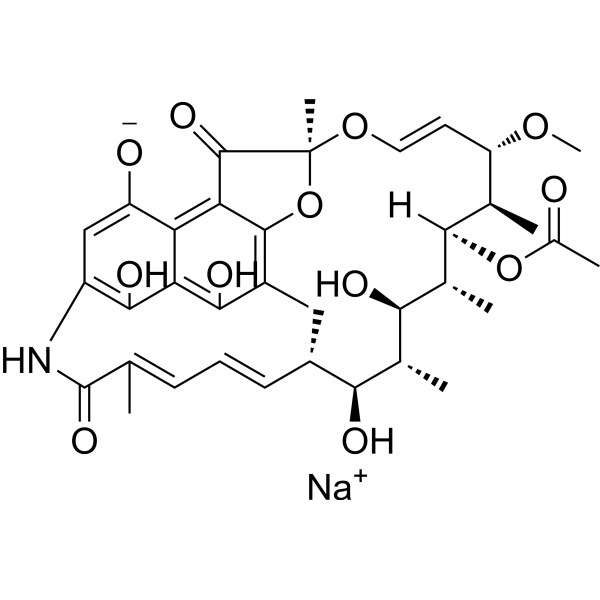
Cat. No.: HY-B1907
CAS No.: 14897-39-3
Synonyms: Rifamycin SV sodium
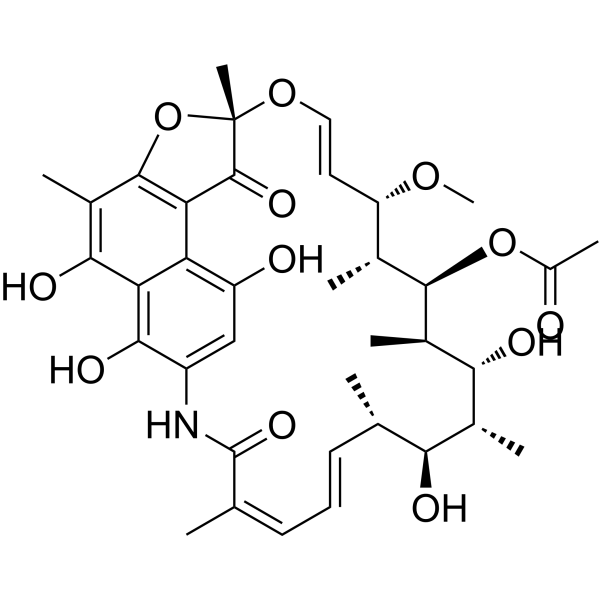
Rifamycin sodium (Rifamycin SV monosodium) is an orally active ansamycin antibiotic. Rifamycin sodium inhibits DNA-dependent RNA synthesis. Rifamycin sodium has antibacterial activity against Mycobacterium tuberculosis. Rifamycin sodium interferes with hepatic bile acid metabolism. Rifamycin sodium has anti-inflammatory effects. Rifamycin sodium can be used in the study of Mycobacterium tuberculosis, Bacteroides fragilis infection, and Lipopolysaccharide (HY-D1056B3)-induced inflammation .
loading...
    loading...
Cat. No.: HY-B1907A
CAS No.: 6998-60-3
Synonyms: Rifamycin SV
Research Areas:  

Infection

Rifamycin (Rifamycin SV) is an orally active ansamycin antibiotic. Rifamycin inhibits DNA-dependent RNA synthesis. Rifamycin has antibacterial activity against Mycobacterium tuberculosis. Rifamycin interferes with hepatic bile acid metabolism. Rifamycin has anti-inflammatory effects. Rifamycin can be used in the study of Mycobacterium tuberculosis, Bacteroides fragilis infection, and Lipopolysaccharide (HY-D1056B3)-induced inflammation .
loading...
    loading...
Cat. No.: HY-P2958
CAS No.: 37289-07-9
Synonyms: Bile salt hydrolase
Target:  

Acyltransferase

Research Areas:  

Inflammation/Immunology

Choloylglycine hydrolase (Bile salt hydrolase) is an important intestinal hydrolase. Choloylglycine hydrolase not only catalyzes the decomposition of conjugated bile acids into free bile acids and amino acids, but also exhibits amine N-acyltransferase activity, which re-links amino acids/amines to free bile acids (even conjugated bile acids) to produce bacterial bile acid amides. Choloylglycine hydrolase regulates the composition of the bile acid pool, intestinal mucosal barrier integrity, intestinal inflammatory responses, intestinal flora composition, host weight gain, circadian rhythm, and colonization resistance to Clostridioides difficile. Choloylglycine hydrolase can be used in the research of inflammatory bowel diseases, including ulcerative colitis and Crohn's disease .
loading...
    loading...
Cat. No.: HY-132177H
CAS No.: 9037-65-4
Research Areas:  

Others

exo-α-Fucosidase, Bacteroides fragilis (EC 3.2.1.51) is a glycoside hydrolase that would release free fucose .
loading...
    loading...
Cat. No.: HY-P11452
CAS No.: 1637464-75-5
Target:  

LDLR

Research Areas:  

Endocrinology

(KKEEE)3K is a kidney-targeting peptide. (KKEEE)3K enters renal tubular cells via megalin receptor-mediated endocytosis. (KKEEE)3K can be used in the research of renal drug delivery .
loading...
    loading...
Cat. No.: HY-159955
CAS No.: 931411-93-7
Target:  

Bacterial

Research Areas:  

Infection

DC-159a is an 8-methoxyfluoroquinolone with broad-spectrum antimicrobial activity, especially against Gram-positive pathogens. DC-159a against Peptostreptococcus, Clostridium difficile, and Bacteroides fragilis with MIC90 values of 0.5, 4, and 2 μg/mL, respectively .
loading...
    loading...
Cat. No.: HY-19428
CAS No.: 392659-38-0
Synonyms: RBx7644 free base
Target:  

Antibiotic Bacterial

Research Areas:  

Infection Cardiovascular Disease

Ranbezolid (RBx7644 free base) is an orally active, oxazolidinone antibiotic against Gram-positive and Gram-negative anaerobes including Staphylococcus aureus, Staphylococcus epidermidis and Bacteroides fragilis. Ranbezolid can inhibit the 50s ribosomal subunit with an IC50 of 17 μM for bacterial ribosomes. Ranbezolid interferes cell wall and lipid synthesis. Ranbezolid can rapidly kill bacteria, significantly reduce bacterial load, and has better cardiovascular safety. Ranbezolid can be used for the study of antibiotics for anaerobic bacteria .
loading...
    loading...
Cat. No.: HY-19428A
CAS No.: 392659-39-1
Synonyms: RBx-7644
Target:  

Antibiotic Bacterial

Research Areas:  

Infection Cardiovascular Disease

Ranbezolid (RBx7644 free base) is an orally active, oxazolidinone antibiotic against Gram-positive and Gram-negative anaerobes including Staphylococcus aureus, Staphylococcus epidermidis and Bacteroides fragilis. Ranbezolid can inhibit the 50s ribosomal subunit with an IC50 of 17 μM for bacterial ribosomes. Ranbezolid interferes cell wall and lipid synthesis. Ranbezolid can rapidly kill bacteria, significantly reduce bacterial load, and has better cardiovascular safety. Ranbezolid can be used for the study of antibiotics for anaerobic bacteria .
loading...
    loading...
Cat. No.: HY-105213
CAS No.: 127521-69-1
Synonyms: MC-352
Target:  

Antibiotic Bacterial

Research Areas:  

Infection

YM-17K (MC-352) is a macrolide antibiotic. YM-17K exhibits antimicrobial activity against Gram-positive bacteria, Gram-negative bacteria, and anaerobic bacteria. YM-17K exhibits stable activity in serum and is less affected by pH values .
loading...
    loading...
Cat. No.: HY-B2193E
Target:  

Endogenous Metabolite

Research Areas:  

Metabolic Disease

α-Amylase, Bacteroides fragilis (EC 3.2.1.1) is a protein enzyme that hydrolyses alpha bonds of large, alpha-linked polysaccharides, such as starch and glycogen, yielding glucose and maltose.
loading...
    loading...
Cat. No.: HY-P2858C
Target:  

Glycosidase

Research Areas:  

Metabolic Disease

β-Mannosidase, Bacteroides fragilis (EC 3.2.1.25), is the final exoglycosidase in the N-linked glycoprotein oligosaccharide catabolism pathway. β-Mannosidase catalyzes the following chemical reaction: hydrolysis of the terminal non-reducing β-D-mannose residue in β-D-mannoside.
loading...
    loading...
Cat. No.: HY-E71229
Research Areas:  

Others

α-Galactosidase 110A, Bacteroides fragilis (EC 3.2.1.-) is a glycoside hydrolase enzyme that hydrolyses the terminal alpha-galactosyl moieties from glycolipids and glycoproteins. It is encoded by the GLA gene. Two recombinant forms of alpha-galactosidase are called agalsidase alfa (INN) and agalsidase beta (INN) .
loading...
    loading...
Cat. No.: HY-P2775D
Target:  

Glycosidase

Research Areas:  

Metabolic Disease

β-Glucosidase, Bacteroides fragilis (EC 3.2.1.21), is a glucosidase that acts on the β1→4 glycosidic bond connecting two glucose molecules or glucose-substituted molecules (e.g., disaccharide cellobiose). β-Glucosidase is an exonuclease specific for a variety of β-D-glycosidic substrates. β-Glucosidase catalyzes the hydrolysis of the terminal non-reducing residues of β-D-glucosides, releasing glucose.
loading...
    loading...
Cat. No.: HY-B1907R
CAS No.: 14897-39-3
Synonyms: Rifamycin SV sodium (Standard)
Rifamycin (sodium) (Standard) is the analytical standard of Rifamycin (sodium). This product is intended for research and analytical applications. Rifamycin sodium (Rifamycin SV sodium) is an orally active ansamycin antibiotic. Rifamycin sodium inhibits DNA-dependent RNA synthesis. Rifamycin sodium has antibacterial activity against Mycobacterium tuberculosis. Rifamycin sodium interferes with hepatic bile acid metabolism. Rifamycin sodium has anti-inflammatory effects. Rifamycin sodium can be used in the study of Mycobacterium tuberculosis, Bacteroides fragilis infection, and Lipopolysaccharide (HY-D1056B3)-induced inflammation .
loading...
    loading...
Cat. No.: HY-B0147S
CAS No.: 1228182-51-1
Synonyms: Pefloxacinium-d5
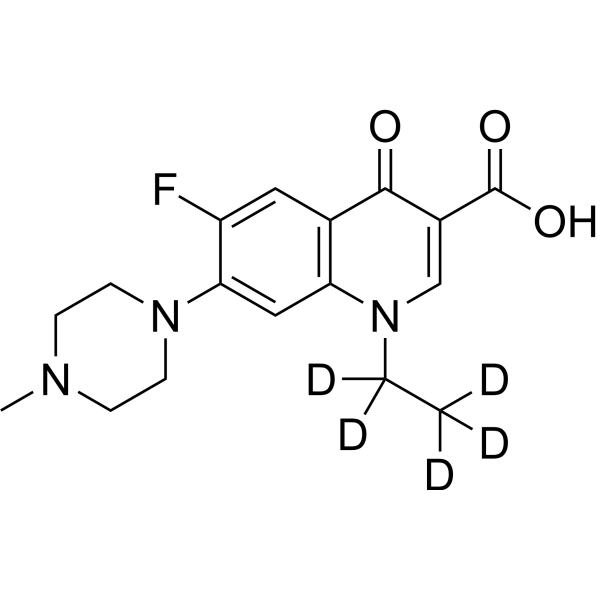
Pefloxacin-d5 (Pefloxacinium-d5) is the deuterium labeled Pefloxacin (HY-B0147). Pefloxacin (Pefloxacinium) is a broad spectrum antibiotic. Pefloxacin blocks DNA replication by inhibiting DNA gyrase. Pefloxacin inhibits DNA relaxation catalyzed by topoisomerase I with an IC50 of 45 μg/mL. Pefloxacin exhibits antibacterial activity against Escherichia coli, Pseudomonas aeruginosa, and Bacteroides fragilis with MIC90s of 0.12, 4, and 16 mg/L, respectively. Pefloxacin has anti-Plasmodium yoelii infection activity. Pefloxacin increase UVA-induced edema and immunesuppression. Pefloxacin can be used for infection studies .
loading...
    loading...
Cat. No.: HY-B0147S1
CAS No.: 2733455-58-6
Synonyms: Pefloxacinium-d3
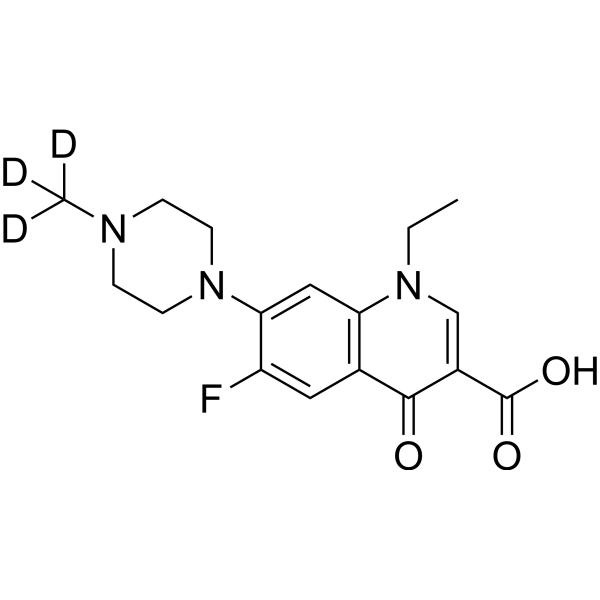
Pefloxacin-d3 (Pefloxacinium-d3) is the deuterium labeled Pefloxacin (HY-B0147). Pefloxacin (Pefloxacinium) is a broad spectrum antibiotic. Pefloxacin blocks DNA replication by inhibiting DNA gyrase. Pefloxacin inhibits DNA relaxation catalyzed by topoisomerase I with an IC50 of 45 μg/mL. Pefloxacin exhibits antibacterial activity against Escherichia coli, Pseudomonas aeruginosa, and Bacteroides fragilis with MIC90s of 0.12, 4, and 16 mg/L, respectively. Pefloxacin has anti-Plasmodium yoelii infection activity. Pefloxacin increase UVA-induced edema and immunesuppression. Pefloxacin can be used for infection studies .
loading...
    loading...
Cat. No.: HY-B0147AR
CAS No.: 70458-95-6
Synonyms: Pefloxacinium mesylate (Standard)
Pefloxacin mesylate (Standard) (Pefloxacinium mesylate (Standard)) is the analytical standard of Pefloxacin mesylate (HY-B0147A). This product is intended for research and analytical applications. Pefloxacin (Pefloxacinium) mesylate is a broad spectrum antibiotic. Pefloxacin blocks DNA replication by inhibiting DNA gyrase. Pefloxacin mesylate inhibits DNA relaxation catalyzed by topoisomerase I with an IC50 of 45 μg/mL. Pefloxacin mesylate exhibits antibacterial activity against Escherichia coli, Pseudomonas aeruginosa, and Bacteroides fragilis with MIC90s of 0.12, 4, and 16 mg/L, respectively. Pefloxacin mesylate has anti-Plasmodium yoelii infection activity. Pefloxacin mesylate increase UVA-induced edema and immunesuppression. Pefloxacin mesylate can be used for infection studies .
loading...
    loading...

