14 Results for "

COS-7 cell membranes

" in MedChemExpress (MCE) Product Catalog:
Products (14)

14 Results for "COS-7 cell membranes" in MCE Product Catalog:

8
8 Publications Verification
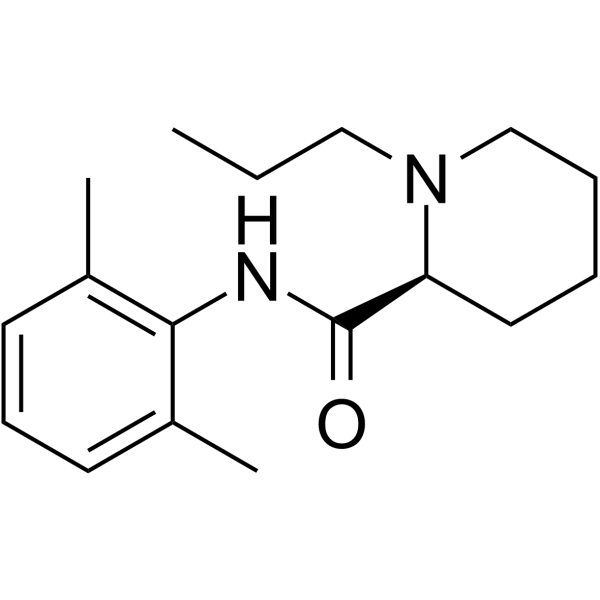
Cat. No.: HY-B0563
CAS No.: 84057-95-4
Ropivacain is a potent sodium channel blocker. Ropivacain blocks impulse conduction via reversible inhibition of sodium ion influx in nerve fibrese . Ropivacaine is also an inhibitor of K2P (two-pore domain potassium channel) TREK-1 with an IC50 of 402.7 μM in COS-7 cell's membrane . Ropivacaine is used for the research of neuropathic pain management .
loading...
    loading...
8
8 Publications Verification
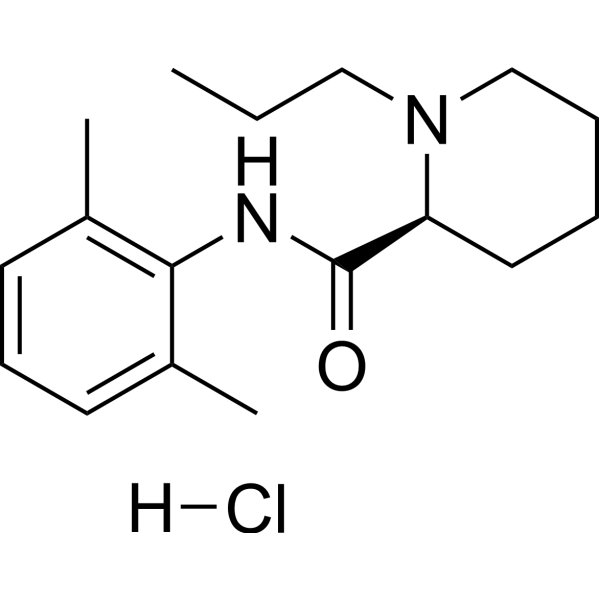
Cat. No.: HY-B0563B
CAS No.: 98717-15-8
Ropivacaine hydrochloride is a potent sodium channel blocker and blocks impulse conduction via reversible inhibition of sodium ion influx in nerve fibrese . Ropivacaine is also an inhibitor of K2P (two-pore domain potassium channel) TREK-1 with an IC50 of 402.7 μM in COS-7 cell's membrane . Ropivacaine is widely used for neuropathic pain management in vivo .
loading...
    loading...
8
8 Publications Verification
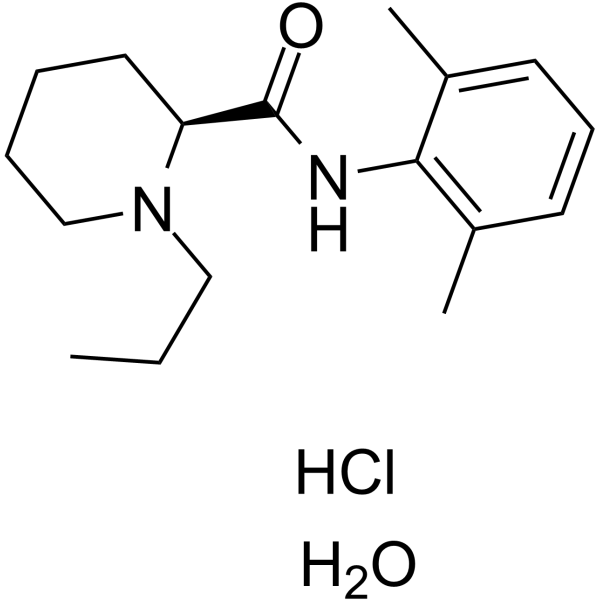
Cat. No.: HY-B0563A
CAS No.: 132112-35-7
Ropivacaine hydrochloride monohydrate is a potent sodium channel blocker and blocks impulse conduction via reversible inhibition of sodium ion influx in nerve fibrese . Ropivacaine is also an inhibitor of K2P (two-pore domain potassium channel) TREK-1 with an IC50 of 402.7 μM in COS-7 cell's membrane . Ropivacaine is widely used for regional anesthesia and neuropathic pain management in vivo .
loading...
    loading...
8
8 Publications Verification
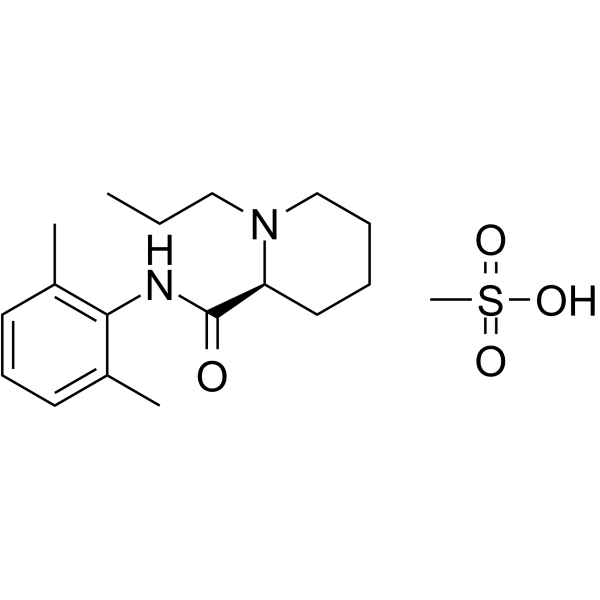
Cat. No.: HY-B0563C
CAS No.: 854056-07-8
Ropivacaine mesylate is a long-acting amide local anaesthetic agent for a spinal block and effectively blocks neuropathic pain. Ropivacaine blocks impulse conduction via reversible inhibition of sodium ion influx in nerve fibressup . Ropivacaine is also an inhibitor of K2P (two-pore domain potassium channel) TREK-1 with an IC50 of 402.7 μM in COS-7 cell's membrane .
loading...
    loading...
4
4 Cited Publications
Cat. No.: HY-B0735A
CAS No.: 67227-57-0
Synonyms: Fenoldopam methanesulfonate; SKF-82526 mesylate
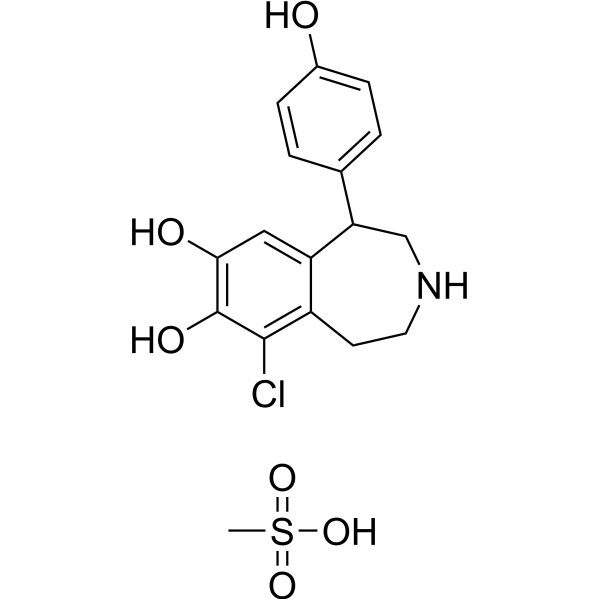
Fenoldopam (SKF-82526) mesylate is a selective dopamine D1 receptor agonist. Fenoldopam mesylate binds to rat D1B dopamine receptors (Kd = 11 nM) and human D1A receptors (Kd = 17 nM) in COS-7 cell membranes expressing the cloned receptors. Fenoldopam mesylate modulates dopamine receptor expression, induces vasorelaxation in vascular tissues, reverses glomerular hyperfiltration in rat models, increases intracellular cAMP levels, promotes DARPP-32 phosphorylation in small cell lung cancer (SCLC) cells, inhibits cytokine secretion, and downregulates T cell activation markers in activated human T cells. Fenoldopam mesylate can be used for research on hypertension, acute kidney injury, psoriasis, and small cell lung cancer .
loading...
    loading...
Cat. No.: HY-B0563S1
CAS No.: 684647-62-9
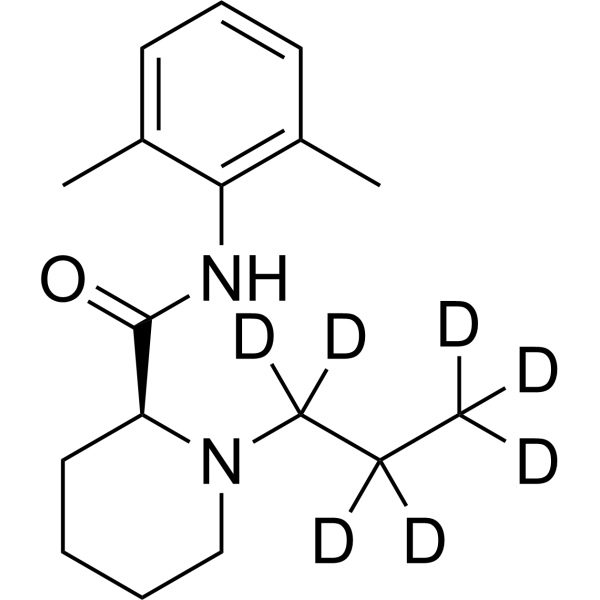
Ropivacaine-d7 is deuterium labeled Ropivacaine. Ropivacain is a potent?sodium channel?blocker. Ropivacain blocks impulse conduction via reversible inhibition of?sodium ion influx?in nerve fibrese . Ropivacaine is also an inhibitor of K2P (two-pore domain potassium channel) TREK-1 with an IC50 of 402.7 μM in COS-7 cell's membrane . Ropivacaine is used for the research of neuropathic pain?management .
loading...
    loading...
Cat. No.: HY-E70277
CAS No.: 71425-89-3
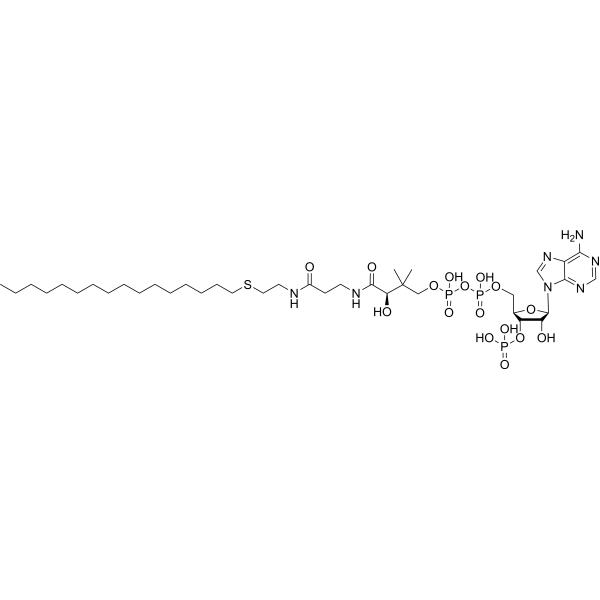
Hexadecyl-CoA is a non-hydrolyzable thioether analog of Palmitoyl-CoA. Hexadecyl-CoA competitively inhibits the acyl-CoA thioesterase activity of HNF-4α with a Ki of 0.3 μM, and inhibits DGAT2 activity with an IC50 of approximately 2 μM. Hexadecyl-CoA also inhibits ATGL activity and serves as a reference inhibitor for DGAT2 LC/MS enzyme activity assays. Hexadecyl-CoA can be used in studies related to lipid metabolism, triglyceride synthesis and lipolysis .
loading...
    loading...
Cat. No.: HY-B0735
CAS No.: 67227-56-9
Synonyms: SKF 82526
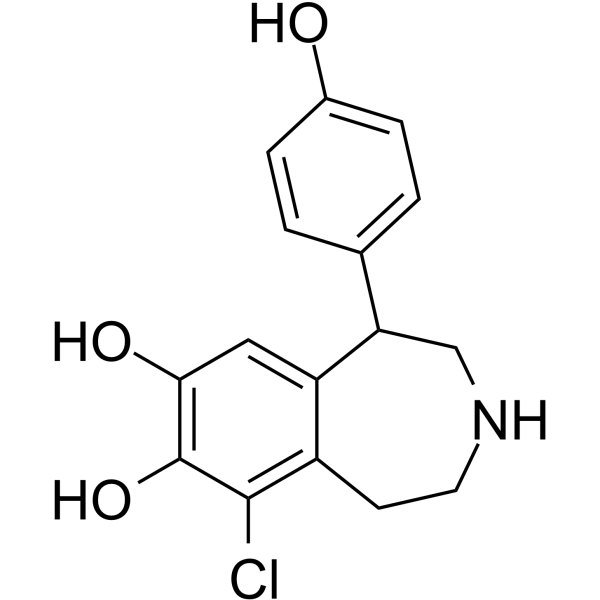
Fenoldopam (SKF-82526) is a selective dopamine D1 receptor agonist. Fenoldopam binds to rat D1B dopamine receptors (Kd = 11 nM) and human D1A receptors (Kd = 17 nM) in COS-7 cell membranes expressing the cloned receptors. Fenoldopam modulates dopamine receptor expression, induces vasorelaxation in vascular tissues, reverses glomerular hyperfiltration in rat models, increases intracellular cAMP levels, promotes DARPP-32 phosphorylation in small cell lung cancer (SCLC) cells, inhibits cytokine secretion, and downregulates T cell activation markers in activated human T cells. Fenoldopam can be used for research on hypertension, acute kidney injury, psoriasis, and small cell lung cancer .
loading...
    loading...
Cat. No.: HY-B0563R
CAS No.: 84057-95-4
Ropivacaine (Standard) is the analytical standard of Ropivacaine. This product is intended for research and analytical applications. Ropivacain is a potent sodium channel blocker. Ropivacain blocks impulse conduction via reversible inhibition of sodium ion influx in nerve fibrese . Ropivacaine is also an inhibitor of K2P (two-pore domain potassium channel) TREK-1 with an IC50 of 402.7 μM in COS-7 cell's membrane . Ropivacaine is used for the research of neuropathic pain management .
loading...
    loading...
Cat. No.: HY-B0563AR
CAS No.: 132112-35-7
Ropivacaine (hydrochloride monohydrate) (Standard) is the analytical standard of Ropivacaine (hydrochloride monohydrate). This product is intended for research and analytical applications. Ropivacaine hydrochloride monohydrate is a potent sodium channel blocker and blocks impulse conduction via reversible inhibition of sodium ion influx in nerve fibrese . Ropivacaine is also an inhibitor of K2P (two-pore domain potassium channel) TREK-1 with an IC50 of 402.7 μM in COS-7 cell's membrane . Ropivacaine is widely used for regional anesthesia and neuropathic pain management in vivo .
loading...
    loading...
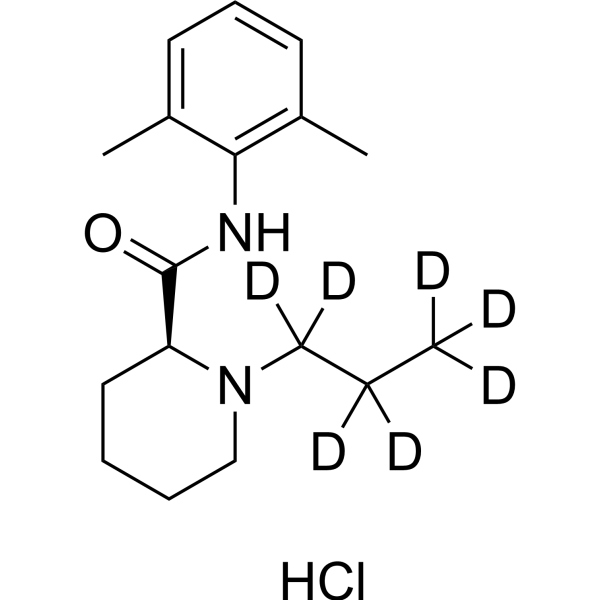
Cat. No.: HY-B0563BS
CAS No.: 1217667-10-1
Ropivacaine-d7 hydrochloride is a deuterium labeled Ropivacaine (hydrochloride) (HY-B0563B) . Ropivacaine hydrochloride is a potent sodium channel blocker and blocks impulse conduction via reversible inhibition of sodium ion influx in nerve fibrese . Ropivacaine is also an inhibitor of K2P (two-pore domain potassium channel) TREK-1 with an IC50 of 402.7 μM in COS-7 cell's membrane . Ropivacaine is widely used for neuropathic pain management in vivo .
loading...
    loading...
Cat. No.: HY-B0735AR
CAS No.: 67227-57-0
Synonyms: Fenoldopam methanesulfonate (Standard); SKF-82526 mesylate (Standard)
Fenoldopam mesylate (Standard) is the analytical standard of Fenoldopam mesylate (HY-B0735A). This product is intended for research and analytical applications. Fenoldopam (SKF-82526) mesylate is a selective dopamine D1 receptor agonist. Fenoldopam mesylate binds to rat D1B dopamine receptors (Kd = 11 nM) and human D1A receptors (Kd = 17 nM) in COS-7 cell membranes expressing the cloned receptors. Fenoldopam mesylate modulates dopamine receptor expression, induces vasorelaxation in vascular tissues, reverses glomerular hyperfiltration in rat models, increases intracellular cAMP levels, promotes DARPP-32 phosphorylation in small cell lung cancer (SCLC) cells, inhibits cytokine secretion, and downregulates T cell activation markers in activated human T cells. Fenoldopam mesylate can be used for research on hypertension, acute kidney injury, psoriasis, and small cell lung cancer.
loading...
    loading...
Cat. No.: HY-120580
CAS No.: 136668-50-3
Target:  

FLAP

Research Areas:  

Inflammation/Immunology

L 689037 is a leukotriene biosynthesis (LT) inhibitor and a 5-lipoxygenase-activating protein (FLAP) binder. [ 125I]-L 691,831 serves as a standard probe to precisely locate the key structural domains that determine the binding of inhibitors to FLAP. L 689037 can be used in the research of asthma and inflammatory bowel disease .
loading...
    loading...
Cat. No.: HY-E72112
Target:  

UGT

Research Areas:  

Cancer

Human UGT1A10 is a UDP-glucuronosyltransferase. UGT1A10 catalyzes the glucuronidation of Mycophenolic acid (HY-B0421). Human UGT1A10 mediates glucuronidation modification of 34 out of 42 tested bioflavonoids. Human UGT1A10 is applicable to relevant research on colorectal cancer .
loading...
    loading...
  • 1

