15 Results for "

Cartilage repair

" in MedChemExpress (MCE) Product Catalog:
Products (15)

15 Results for "Cartilage repair" in MCE Product Catalog:

33
33 Publications Verification
Cat. No.: HY-16268
CAS No.: 4727-31-5
Synonyms: KGN
Target:  

TGF-beta/Smad

Research Areas:  

Inflammation/Immunology

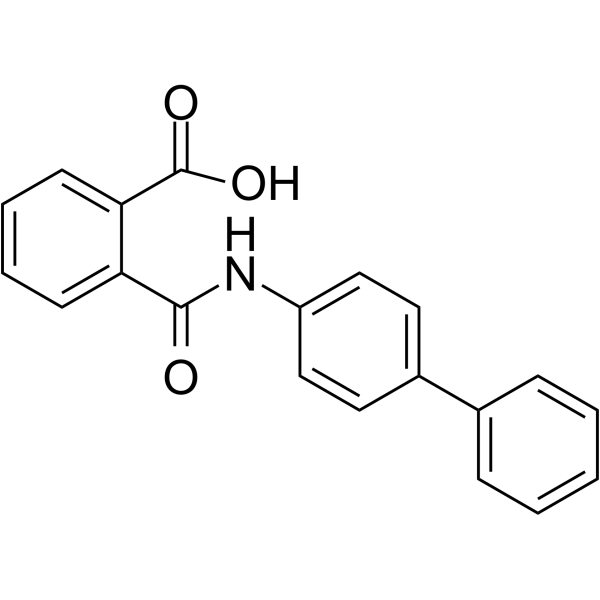
Kartogenin (KGN) is an inducer of chondrogenic tissue formation (EC50: 100 nM). Kartogenin induces chondrogenesis by binding to fibrin A, disrupting its interaction with the transcription factor core binding factor beta subunit (CBFβ), and by modulating the CBFβ-RUNX1 transcriptional program. Kartogenin also promotes tendon-bone junction (TBJ) wound healing by stimulating collagen synthesis. Kartogenin is widely used in cell-free therapy in the field of regeneration for cartilage regeneration and protection, tendon-bone healing, wound healing and limb development. Kartogenin promotes cartilage repair, coordinates limb development, and is also used in osteoarthritis (OA) research .
loading...
    loading...
33
33 Publications Verification
Cat. No.: HY-16268A
CAS No.: 1401168-39-5
Synonyms: KGN sodium
Target:  

TGF-beta/Smad

Research Areas:  

Inflammation/Immunology

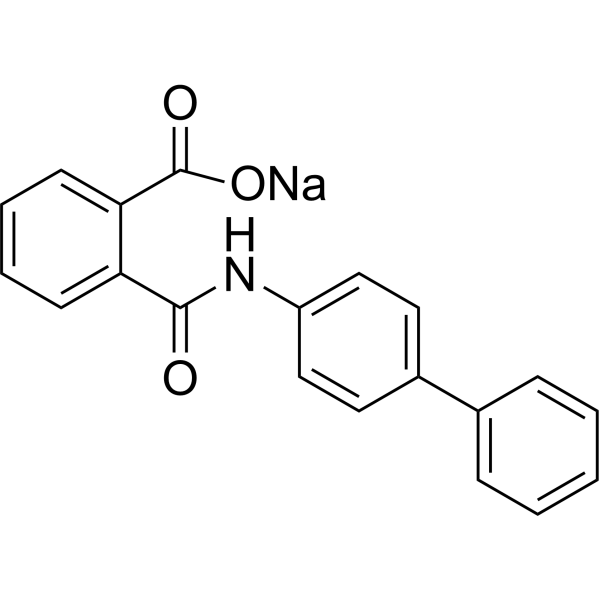
Kartogenin (KGN) sodium is an inducer of chondrogenic tissue formation (EC50: 100 nM). Kartogenin sodium induces chondrogenesis by binding to fibrin A, disrupting its interaction with the transcription factor core binding factor beta subunit (CBFβ), and by modulating the CBFβ-RUNX1 transcriptional program. Kartogenin sodium also promotes tendon-bone junction (TBJ) wound healing by stimulating collagen synthesis. Kartogenin sodium is widely used in cell-free therapy in the field of regeneration for cartilage regeneration and protection, tendon-bone healing, wound healing and limb development. Kartogenin sodium promotes cartilage repair, coordinates limb development, and is also used in osteoarthritis (OA) research .
loading...
    loading...
9
9 Cited Publications
Cat. No.: HY-114164F
CAS No.: 9002-04-4
Canine Thrombin is a Canine serine protease that plays a central role in blood coagulation. Canine Thrombin stimulates macrophages to polarize into a unique phenotype characterized by anti-inflammatory and pro-repair properties. Canine Thrombin activates PAR1, induces the production of MCP-1, MMP3 and VEGF in intervertebral discs, and causes degradation of the cartilage matrix and destruction of intervertebral disc structure. Canine Thrombin activity increases significantly in paraoxon-induced status epilepticus .
loading...
    loading...
5
5 Cited Publications
Cat. No.: HY-N2259
CAS No.: 19431-84-6
Synonyms: (+)-Curcumenol
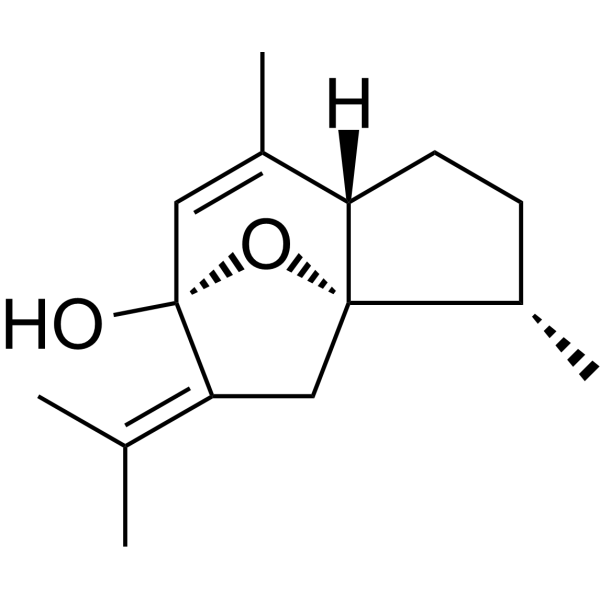
Curcumenol ((+)-Curcumenol) is a natural compound with oral efficacy, exhibiting an IC50 of 12.6 μM and a Ki of 10.8 μM against human CYP3A4. Curcumenol inhibits TNFα-induced phosphorylation/degradation of IκBα, phosphorylation/nuclear translocation of NF-κB p65, as well as the upregulation of MMP3, MMP9, MMP13, TRAF3, IL1RL1, TNFα and IL-1β. Curcumenol suppresses LPS-induced phosphorylation of Akt and p38 MAPK, as well as the production of pro-inflammatory mediators/proteins, and downregulates the SLC7A11/NF-κB/TGF-β pathway. Curcumenol binds to and inhibits the activation of Fyn and Lyn, blocks the function of downstream FcεRI signaling components, and reduces the release of allergic mediators/cytokines. Curcumenol upregulates the expression of KDM6B, and promotes chondrocyte proliferation and cartilage repair. Curcumenol induces ferroptosis and apoptosis, regulates the EMT process, and inhibits tumor growth and metastasis of triple-negative breast cancer. Curcumenol possesses anti-inflammatory, neuroprotective, antioxidant, antitumor, antiviral and hepatoprotective activities. Curcumenol can be used in research related to intervertebral disc degeneration, cancer, inflammation, central nervous system neurodegenerative diseases, allergic reactions and knee osteoarthritis .
loading...
    loading...
2
2 Cited Publications
Cat. No.: HY-114775
CAS No.: 108237-91-8
Purity:  99.92%
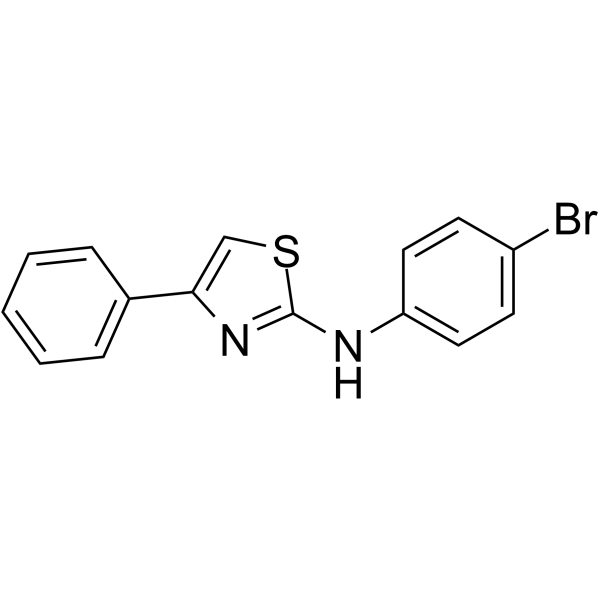
RCGD423 is a gp130 modulator, which prevents articular cartilage degeneration and promotes repair.
loading...
    loading...
1
1 Cited Publications
Cat. No.: HY-114164G
CAS No.: 9002-04-4
Murine Thrombin is a murine serine protease that plays a central role in blood coagulation. Murine Thrombin stimulates macrophages to polarize into a unique phenotype characterized by anti-inflammatory and pro-repair properties. Murine Thrombin activates PAR1, induces the production of MCP-1, MMP3 and VEGF in mouse intervertebral discs, and causes degradation of the cartilage matrix and destruction of intervertebral disc structure. Murine Thrombin activity increases significantly in paraoxon-induced status epilepticus .
loading...
    loading...
Cat. No.: HY-P2263
CAS No.: 800379-47-9
Target:  

Inhibitory Antibodies

Research Areas:  

Inflammation/Immunology

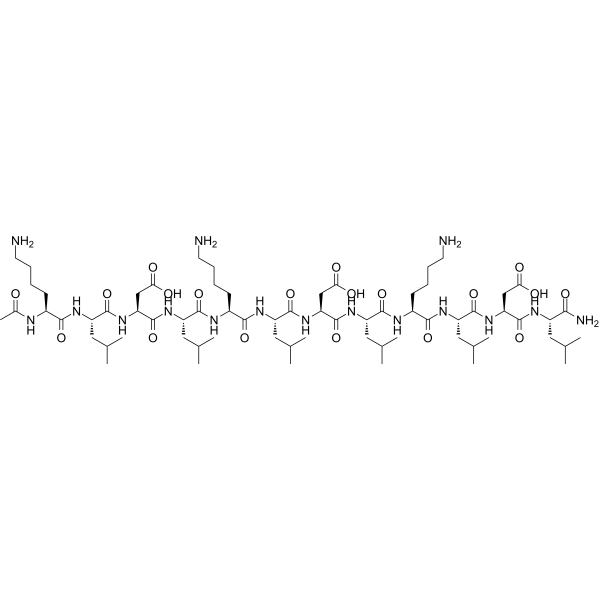
KLD-12 is a 12-residue self-assembling peptide that is used in tissue-engineering. KLD-12 combined with SDF-1 self-assembled polypeptide enhances chondrogenic differentiation of bone marrow stromal cells (BMSCs). KLD-12 hydrogel can fill full-thickness osteochondral defects in situ and improve cartilage repair .
loading...
    loading...
Cat. No.: HY-P2612
CAS No.: 199999-60-5
Research Areas:  

Inflammation/Immunology

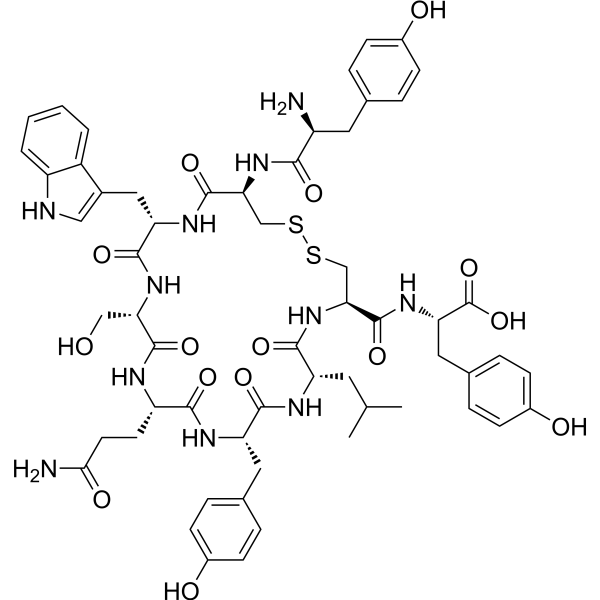
WP9QY is an inhibitor targeting TNFα and RANKL, which blocks the TNFα-TNFR1 interaction and inhibits TNFα-mediated apoptosis, cytotoxicity and bone destruction. WP9QY inhibits osteoclastogenesis and promotes osteoblast differentiation, induces chondrocyte proliferation and glycosaminoglycan production, and synergizes with TGF-β3 to promote chondrogenesis. WP9QY effectively repairs full-thickness articular cartilage defects in rabbits via intra-articular injection, and inhibits methylmercury-induced reduction of NeuN-positive cells in mouse brain slices. WP9QY can be applied to the research of diseases related to methylmercury-induced neuronal death, cartilage injury, osteoarthritis and bone loss .
loading...
    loading...
Cat. No.: HY-29347
CAS No.: 6701-17-3
Research Areas:  

Cardiovascular Disease

Ocrylate is a tissue adhesive that contains an 8-carbon alkyl cyanoacrylate in its structure. Ocrylate can be used in research on gastric fundal varices, bone and cartilage grafting, cerebrospinal fluid leakage repair, and skin closure. Additionally, the rapid polymerization property of Ocrylate makes it suitable for inhibiting vascular embolization .
loading...
    loading...
Cat. No.: HY-N2259R
CAS No.: 19431-84-6
Synonyms: (+)-Curcumenol (Standard)
Curcumenol (Standard) ((+)-Curcumenol (Standard)) is the analytical standard of Curcumenol (HY-N2259). This product is intended for research and analytical applications. Curcumenol ((+)-Curcumenol) is a natural compound with oral efficacy, exhibiting an IC50 of 12.6 μM and a Ki of 10.8 μM against human CYP3A4. Curcumenol inhibits TNFα-induced phosphorylation/degradation of IκBα, phosphorylation/nuclear translocation of NF-κB p65, as well as the upregulation of MMP3, MMP9, MMP13, TRAF3, IL1RL1, TNFα and IL-1β. Curcumenol suppresses LPS-induced phosphorylation of Akt and p38 MAPK, as well as the production of pro-inflammatory mediators/proteins, and downregulates the SLC7A11/NF-κB/TGF-β pathway. Curcumenol binds to and inhibits the activation of Fyn and Lyn, blocks the function of downstream FcεRI signaling components, and reduces the release of allergic mediators/cytokines. Curcumenol upregulates the expression of KDM6B, and promotes chondrocyte proliferation and cartilage repair. Curcumenol induces ferroptosis and apoptosis, regulates the EMT process, and inhibits tumor growth and metastasis of triple-negative breast cancer. Curcumenol possesses anti-inflammatory, neuroprotective, antioxidant, antitumor, antiviral and hepatoprotective activities. Curcumenol can be used in research related to intervertebral disc degeneration, cancer, inflammation, central nervous system neurodegenerative diseases, allergic reactions and knee osteoarthritis .
loading...
    loading...
Cat. No.: HY-P11349
CAS No.: 948889-16-5
Research Areas:  

Others

TG-Gln (a glutamine donor peptide with the sequence H-NQEQVSPLERCG-NH₂) is a substrate-type crosslinker targeting activated coagulation transglutaminase XIII (FXIIIa). TG-Gln is promising for research of angiogenesis induction, cartilage repair, and wound healing .
loading...
    loading...
Cat. No.: HY-P11065
CAS No.: 958236-89-0
Target:  

Inhibitory Antibodies

Research Areas:  

Others

RAD-SKP peptide is a self-assembling peptide. RAD-SKP peptide with decellularized cartilage matrix (DCM) can be used for synthesis of nanofiber hydrogel. RAD-SKP peptide can be used for cartilage repair research .
loading...
    loading...
Cat. No.: HY-P2263A
Target:  

Inhibitory Antibodies

Research Areas:  

Inflammation/Immunology

KLD-12 TFA is the TFA salt form of KLD-12 (HY-P2263). KLD-12 TFA is a self a 12-residue self-assembling peptide that is used in tissue-engineering. KLD-12 TFA combined with SDF-1 self-assembled polypeptide enhances chondrogenic differentiation of bone marrow stromal cells (BMSCs). KLD-12 TFA hydrogel can fill full-thickness osteochondral defects in situ and improve cartilage repair .
loading...
    loading...
Cat. No.: HY-P11641
Target:  

MMP

Research Areas:  

Inflammation/Immunology

GCRRGPLGLSLGKRRCG is an MMP13-specific substrate peptide cleaved by MMP13. GCRRGPLGLSLGKRRCG contributes to an MMP13-responsive hydrogel microsphere system that achieves intelligent and controllable drug release in osteoarthritis (OA), decelerates disease progression, and promotes articular cartilage repair. GCRRGPLGLSLGKRRCG can be used for the research of osteoarthritis .
loading...
    loading...
Cat. No.: HY-182884
Target:  

TNF Receptor

Research Areas:  

Inflammation/Immunology

TNF-α-IN-29 is an orally active and selective TNF-α inhibitor, with IC50 values of 123.0 nM against human targets, and a human Kd of 45.9 nM. TNF-α-IN-29 blocks TNF-α-TNFR1 protein-protein interactions and inhibits TNF-α-mediated inflammatory signaling pathways. TNF-α-IN-29 exhibits anti-inflammatory effects in a mouse model of collagen-induced arthritis and promotes articular cartilage repair. TNF-α-IN-29 can be used for the research of rheumatoid arthritis .
loading...
    loading...
  • 1

