1. Search Result
Search Result
Results for "

Clearwing moth,Borer,Cross attraction

" in MedChemExpress (MCE) Product Catalog:

33

Inhibitors & Agonists

1

Screening Libraries

2

Biochemical Assay Reagents

3

Peptides

18

Natural
Products

2

Isotope-Labeled Compounds

2

Oligonucleotides

Cat. No. Product Name Target Research Areas Chemical Structure
  • HY-P1902

    Apoptosis Cardiovascular Disease
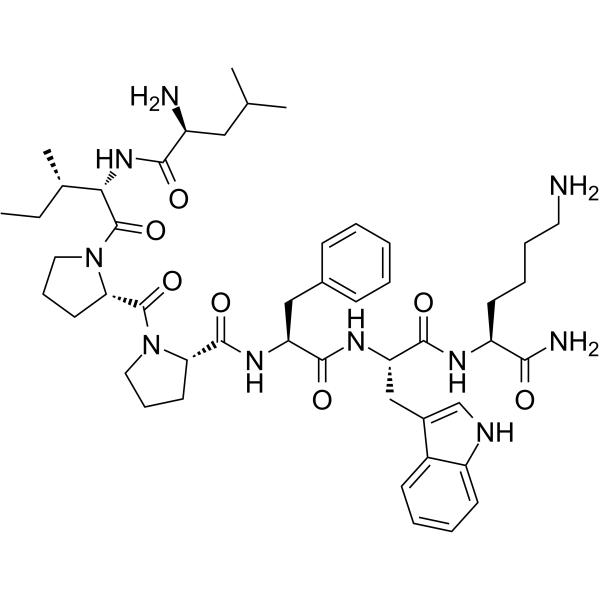
    Cardiotoxin Analog (CTX) IV (6-12) is a membrane active peptide that specifically targets negatively charged phospholipid membranes (such as phosphatidylserine and phosphatidylinositol). Cardiotoxin Analog (CTX) IV (6-12) was discovered in the venom of the Taiwan cobra. Cardiotoxin Analog (CTX) IV (6-12) is a chemically synthesized snake venom cardiotoxin that binds to cell membranes and embeds into lipid bilayers through hydrophobic interactions and electrostatic attraction, thereby destroying the stability of membrane structure. Cardiotoxin Analog (CTX) IV (6-12) can induce membrane lipid disorder and cell lysis, exhibiting hemolysis and cytotoxicity .
    Cardiotoxin Analog (CTX) IV (6-12)
  • HY-126437A
    Poly-L-lysine hydrochloride
    1 Publications Verification

    Bacterial Infection Inflammation/Immunology
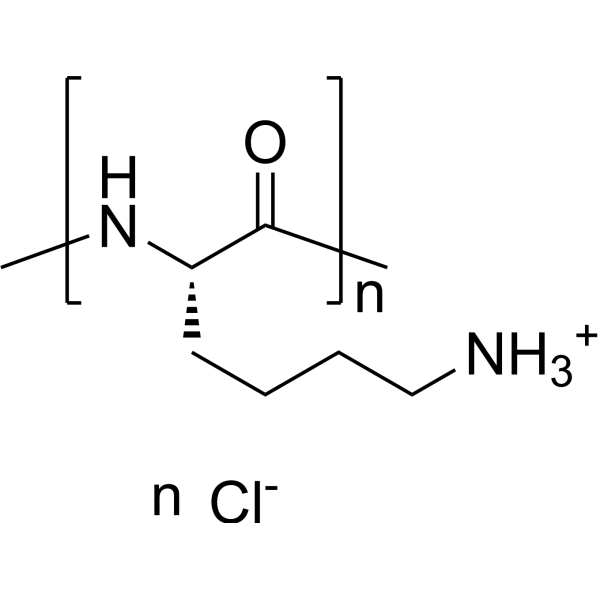
    Poly-L-lysine hydrochloride is a nonspecific attachment factor for cells useful in promoting cell adhesion to solid substrates by enhancing electrostatic interaction between negatively charged ions of the cell membrane and the culture surface. Poly-L-lysine hydrochloride is a strong-attraction regulator that promotes liquid-liquid phase separation (LLPS) at low concentrations but suppresses LLPS at high concentrations. Antibacterial cationic peptide. .
    Poly-L-lysine hydrochloride
  • HY-P1902A

    Apoptosis Cardiovascular Disease
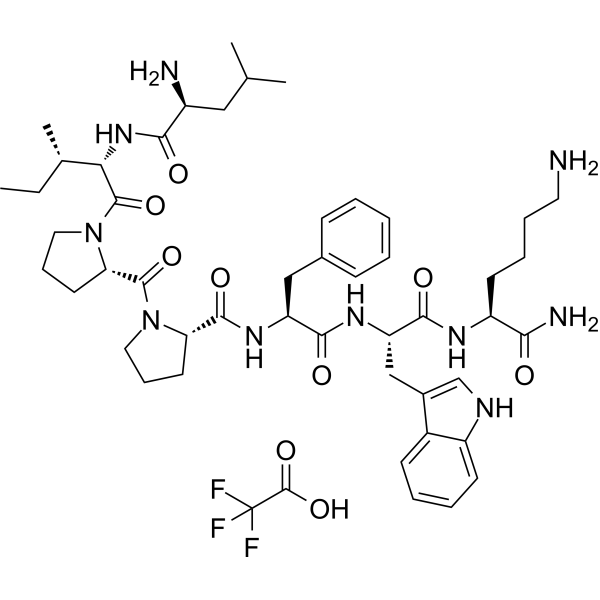
    Cardiotoxin Analog (CTX) IV (6-12) TFA is a membrane active peptide that specifically targets negatively charged phospholipid membranes (such as phosphatidylserine and phosphatidylinositol). Cardiotoxin Analog (CTX) IV (6-12) TFA was discovered in the venom of the Taiwan cobra. Cardiotoxin Analog (CTX) IV (6-12) TFA is a chemically synthesized snake venom cardiotoxin that binds to cell membranes and embeds into lipid bilayers through hydrophobic interactions and electrostatic attraction, thereby destroying the stability of membrane structure. Cardiotoxin Analog (CTX) IV (6-12) TFA can induce membrane lipid disorder and cell lysis, exhibiting hemolysis and cytotoxicity .
    Cardiotoxin Analog (CTX) IV (6-12) TFA
  • HY-Y0678
    1,3,5-Trimethoxybenzene
    1 Publications Verification

    TRIMETHYL PHLOROGLUCINOL

    Biochemical Assay Reagents Others
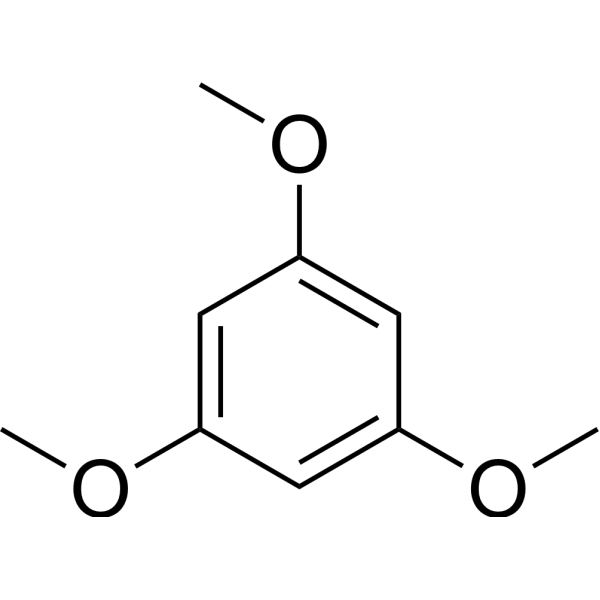
    1,3,5-Trimethoxybenzene (TRIMETHYL PHLOROGLUCINOL) is an electrophilic substitution reaction substrate targeting free chlorine (Cl +) and free bromine (Br +). 1,3,5-Trimethoxybenzene has highly selective electrophilic addition characteristics. By capturing halogens, it undergoes specific substitution reactions to generate stable halogenated products. 1,3,5-Trimethoxybenzene can not only quench residual oxidants, but also quantify the halogen concentration by detecting the product without affecting the stability of redox-sensitive disinfection byproducts (DBPs). 1,3,5-Trimethoxybenzene is mainly used in water quality testing and quantitative analysis of free chlorine/bromine in water. At the same time, in phytochemistry, it is a key component of rose fragrance and participates in the study of pollination attraction mechanism .
    1,3,5-Trimethoxybenzene
  • HY-W004292

    Undecyl alcohol

    Environmental Pollutants Drug Derivative Insecticide Infection
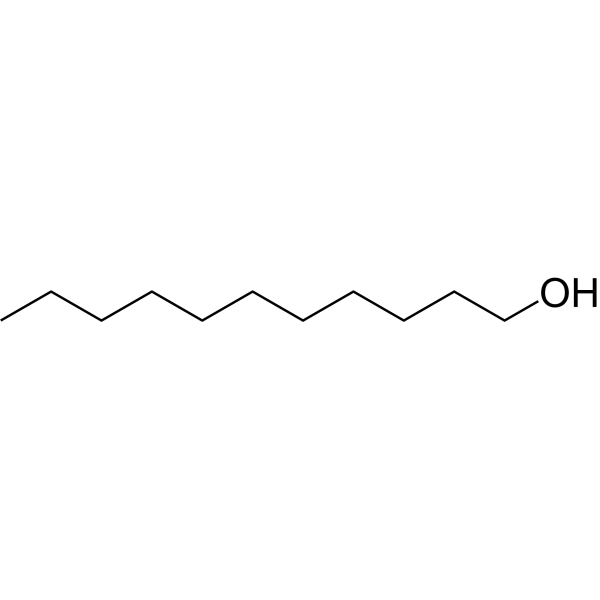
    1-Undecanol (Undecyl alcohol) is the main product generated from the degradation of 2-tridecanone by Pseudomonas bacteria isolated from the soil. 1-Undecanol can enhance the attraction of Grapholita molesta to sex pheromone traps .
    1-Undecanol
  • HY-Y1887

    Environmental Pollutants Biochemical Assay Reagents Insecticide Cardiovascular Disease Infection Inflammation/Immunology
    Cottonseed oil is an edible oil extracted from the seeds of cotton (Gossypium hirsutum). Its fatty acid composition includes 26-35% saturated fatty acids, 42-52% polyunsaturated fatty acids, and 18-24% monounsaturated fatty acids. Cottonseed oil is regarded as an Insecticide, as it is used to protect the trunks of apple trees from damage by the apple clearwing moth. Cottonseed oil possesses anti-inflammatory and cardioprotective properties. It also has extensive applications in many fields such as biofuels, animal husbandry, cosmetics, agriculture, and chemical industry .
    Cottonseed oil
  • HY-N6976

    Others Infection
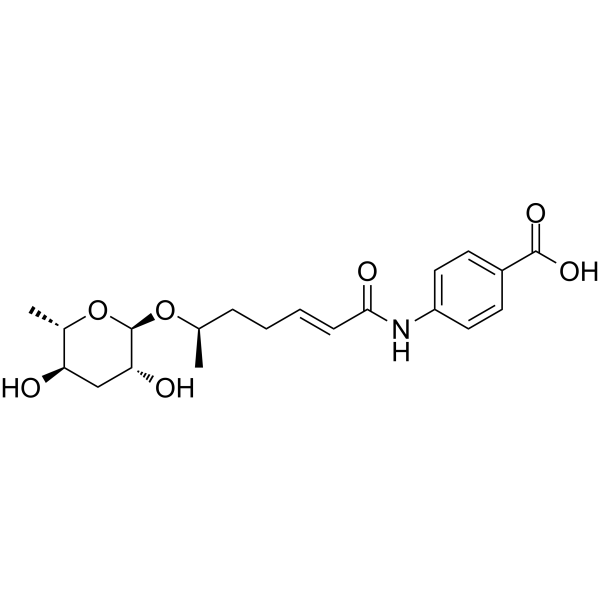
    Ascr#8 is an dauer-inducing ascaroside isolated from Caenorhabditis elegans, synergizes with ascr#2 and ascr#3, and strongly enhances male attraction .
    Ascr#8
  • HY-W780803

    Parasite Endocrinology
    (Z,E)-9,12-Tetradecadienol is a synthetic enhancer of male Ephestia cautella attraction .
    (Z,E)-9,12-Tetradecadienol
  • HY-P3350

    Bacterial Infection
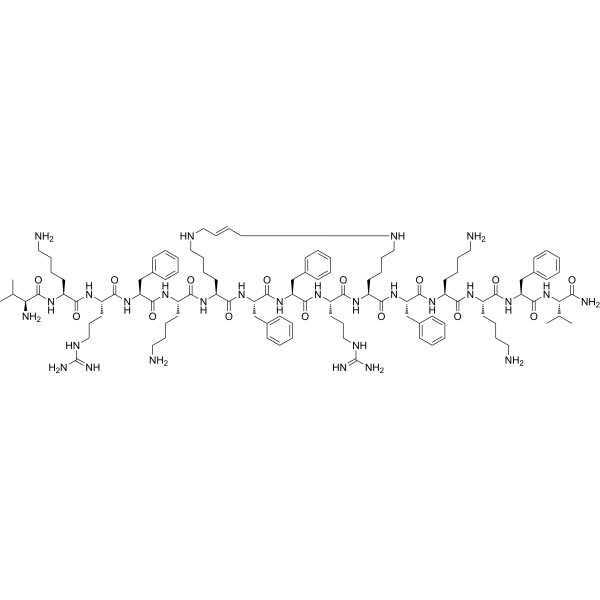
    LS-BF1 is a stable and low toxic cationic antimicrobial peptide. LS-BF1 displays broad spectrum of antibacterial activity, including the challenging ESKAPE pathogens, by cell membrane disruptive mechanism. LS-BF1 shows good in vivo efficacy for elimination of bacteria in a mouse infection model[1].
    LS-BF1
  • HY-23148

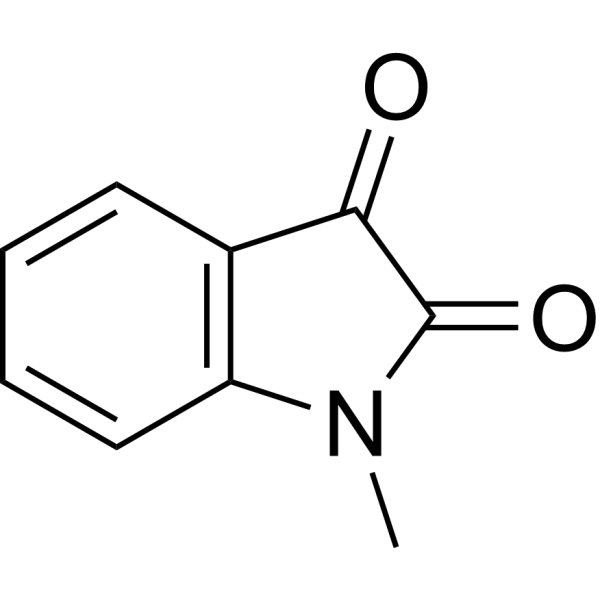
    N-Methylisatin

    Carboxylesterase (CES) Others
    1-Methylisatin is a potent and selective CE (carboxylesterases) inhibitor, with Kis of 38.2 and 5.38 μM for hiCE and hCE1, respectively. 1-Methylisatin interacts with Hb (human adult hemoglobin) by hydrophobic binding and electrostatic attraction. 1-Methylisatin can be used in the study of regulation of agent metabolism in vivo .
    1-Methylisatin
  • HY-W004292S

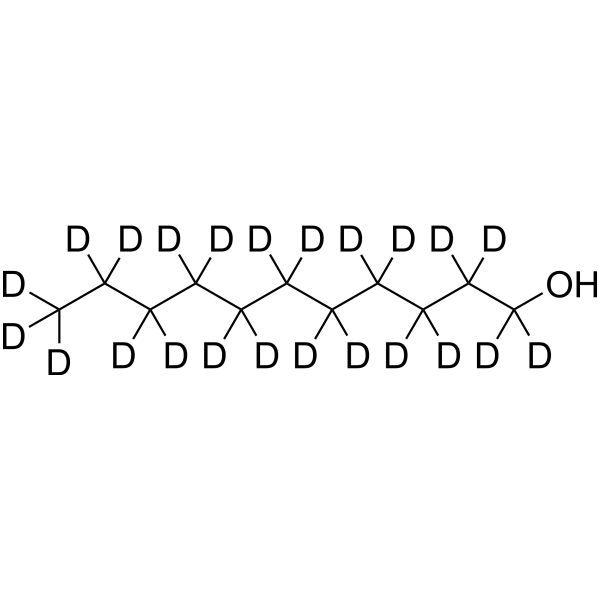
    Undecyl alcohol-d23

    Isotope-Labeled Compounds Drug Derivative Insecticide Infection
    1-Undecanol-d23 (Undecyl alcohol-d23) is the deuterium labeled 1-Undecanol (HY-W004292). 1-Undecanol (Undecyl alcohol) is the main product generated from the degradation of 2-tridecanone by Pseudomonas bacteria isolated from the soil. 1-Undecanol can enhance the attraction of Grapholita molesta to sex pheromone traps .
    1-Undecanol-d23
  • HY-Y0678R

    Reference Standards Biochemical Assay Reagents Others
    1,3,5-Trimethoxybenzene (TRIMETHYL PHLOROGLUCINOL) is an electrophilic substitution reaction substrate targeting free chlorine (Cl+) and free bromine (Br+). 1,3,5-Trimethoxybenzene has highly selective electrophilic addition characteristics. By capturing halogens, it undergoes specific substitution reactions to generate stable halogenated products. 1,3,5-Trimethoxybenzene can not only quench residual oxidants, but also quantify the halogen concentration by detecting the product without affecting the stability of redox-sensitive disinfection byproducts (DBPs). 1,3,5-Trimethoxybenzene is mainly used in water quality testing and quantitative analysis of free chlorine/bromine in water. At the same time, in phytochemistry, it is a key component of rose fragrance and participates in the study of pollination attraction mechanism .
    1,3,5-Trimethoxybenzene (Standard)
  • HY-W747088

    Sex Pheromone Endocrinology
    (2Z,13Z)-Octadecadienyl acetate is a female pheromone that attracts male clearwing moths and disrupts mating, isolated from Japanese persimmon clearwing moths (Synanthedon tenuis (Lepidoptera: Sesiidae)) .
    (2Z,13Z)-Octadecadienyl acetate
  • HY-24574

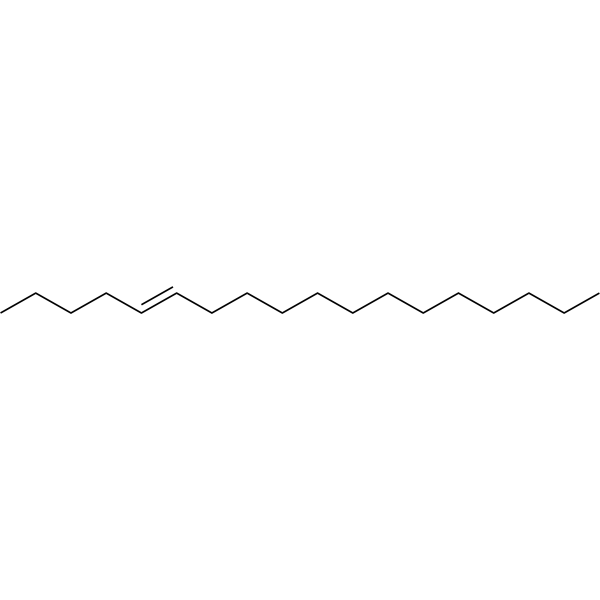
    (E)-Octadec-5-ene

    Others Endocrinology
    (E)-5-Octadecene ((E)-Octadec-5-ene) is a sex pheromone or a related chemical component. (E)-5-Octadecene has effect on destruction of sexual attraction of female moth of rice borers moth (Chilo suppressalis Walker) .
    (E)-5-Octadecene
  • HY-W243653

    Endogenous Metabolite Others
    11-Dodecenyl acetate is a insect sex pheromone, which is involved in attraction behavior of male moths .
    11-Dodecenyl acetate
  • HY-W747105

    Sex Pheromone Endocrinology
    (2E,13Z)-Octadecadienyl acetate is an insect sex pheromone capable of attracting clearwing moths (Synanthedon tipul(formis (Clerck)) or raspberry crown borers (Pennisetia marginata (Harris)). (2E,13Z)-Octadecadienyl acetate can induce strong responses in male antennae .
    (2E,13Z)-Octadecadienyl acetate
  • HY-W741191

    Endogenous Metabolite Endocrinology
    (2E,13Z)-Octadecadienal is an insect sex pheromone capable of attracting clearwing moths (Synanthedon tipulformis (Clerck)) or raspberry crown borers (Pennisetia marginata (Harris))). (2E,13Z)-Octadecadienal can be isolated from (2E,13Z)-Octadecadienyl acetate, which induces strong responses in male antennae .
    (2E,13Z)-Octadecadienal
  • HY-N6661R

    (-)-Verbenone (Standard)

    Reference Standards Others Infection
    Verbenone (Standard) is the analytical standard of Verbenone. This product is intended for research and analytical applications. Verbenone ((-)-Verbenone) is a natural terpene in leaves of the tree, Verbena officinalis . Verbenone has anti-aggregation pheromone and interrupts the attraction of bark beetles to their aggregation pheromones .
    Verbenone (Standard)
  • HY-W780787

    E3,Z13-18:Ac

    Insecticide Endocrinology
    (E,Z)-3,13-Octadecadienyl acetate (E3,Z13-18:Ac) is an insect sex pheromone that elicits attraction in male lesser peachtree borers (Lesser Peachtree Borer), which can be isolated from female lesser peachtree borers .
    (E,Z)-3,13-Octadecadienyl acetate
  • HY-W780790

    Sex Pheromone Others
    (Z,Z)-3,13-Octadecadienyl acetate is a compound that can be isolated from the pheromone gland extracts of female S. bicingulata moths. (Z,Z)-3,13-Octadecadienyl acetate is essential for attraction of male S. bicingulata moths. (Z,Z)-3,13-Octadecadienyl acetate can be used as bait to trap male moths .
    (Z,Z)-3,13-Octadecadienyl acetate
  • HY-W004292S1

    Undecyl alcohol-d4

    Isotope-Labeled Compounds Drug Derivative Insecticide Infection
    1-Undecanol-d4 (Undecyl alcohol-d4) is the deuterium labeled 1-Undecanol (HY-W004292). 1-Undecanol (Undecyl alcohol) is the main product generated from the degradation of 2-tridecanone by Pseudomonas bacteria isolated from the soil. 1-Undecanol can enhance the attraction of Grapholita molesta to sex pheromone traps .
    1-Undecanol-d4
  • HY-W004292R

    Undecyl alcohol (Standard)

    Drug Derivative Reference Standards Insecticide Infection
    1-Undecanol (Standard) (Undecyl alcohol (Standard)) is an analytical reference standard for 1-Undecanol (HY-W004292). This product is used for research and analytical applications. 1-Undecanol (Undecyl alcohol) is the main product generated from the degradation of 2-tridecanone by Pseudomonas bacteria isolated from the soil. 1-Undecanol can enhance the attraction of Grapholita molesta to sex pheromone traps .
    1-Undecanol (Standard)
  • HY-134111

    Sex Pheromone Others
    (Z)-9-Dodecenyl acetate is a monounsaturated dodecenyl acetate, EAG stimulant and attraction inhibitor. (Z)-9-Dodecenyl acetate elicits electroantennogram (EAG) responses in the antennae of male Choristoneura rosaceana.
    (Z)-9-Dodecenyl acetate
  • HY-N12896

    ENT-35163

    Others Endocrinology
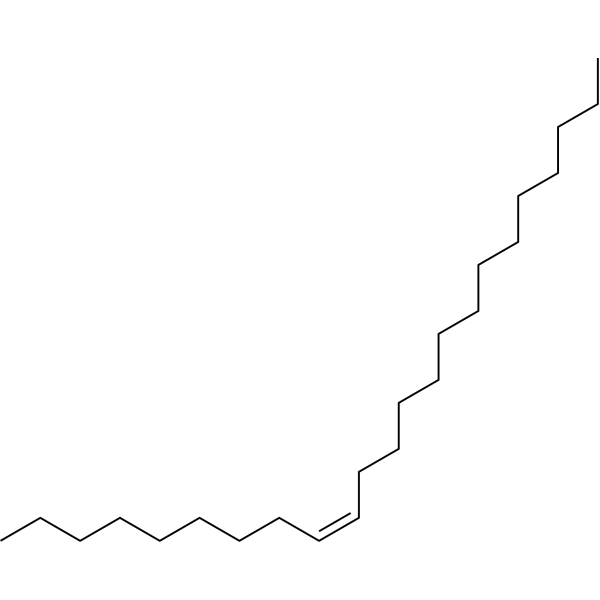
    (7Z)-7-Hexadecen-1-ol (ENT-35163) is a sex pheromone that inhibits male attraction, isolated from female Euxoa tessellata (Harris) .
    (7Z)-7-Hexadecen-1-ol
  • HY-W747104

    Others Endocrinology
    (9E)-Tetradecen-1-ol is a pheromone that has no significant sexual attraction when used alone and can be secreted from the abdomen of the female Bertha armyworm moth (Mamestra configurata (Walker)). Isolate in tip extract to get in isolate. Another pheromone (Z)-11-hexadecen-1-ol was also isolated at the same time. Only when the two pheromones are mixed do they show male attraction (the ratio of C16:C14 in the mixture is about 19:1). optimal) .
    (9E)-Tetradecen-1-ol
  • HY-W099803

    Environmental Pollutants Sex Pheromone Endocrinology
    (Z)-11-Hexadecenyl acetate is a component of insect sex pheromones, which elicits electroantennogram responses in male Plutella xylostella and induces their wing-fanning and claspers-exposing behaviors. (Z)-11-Hexadecenyl acetate also serves as a sex pheromone component of Spodoptera exigua and Chilo suppressalis. When used in combination with other pheromones, (Z)-11-Hexadecenyl acetate significantly enhances the attraction effect on male Tryporyza incertulas, and it exists in trace amounts in the eluate of the ovipositor of female Tryporyza incertulas. (Z)-11-Hexadecenyl acetate shows no attraction effect on male Cnaphalocrocis medinalis and exhibits species specificity .
    (Z)-11-Hexadecenyl acetate
  • HY-W674655

    Environmental Pollutants Others
    Heptyl butyrate is a pheromone and is an attractant for many wasp species. Heptyl butyrate elicits hovering and landing behavior in Vespula germanica wasps. Heptyl butyrate enhances attraction when applied to protein baits, increasing Vespula germanica wasps’ likelihood of landing on baits.Heptyl butyrate can be used for the research of invasive Vespula germanica wasp population management .
    Heptyl butyrate
  • HY-E71067

    Biochemical Assay Reagents Others
    (3R,6E)-Nerolidol synthase (EC 4.2.3.49) catalyses a step in the formation of (3E)-4,8-dimethylnona-1,3,7-triene, a key signal molecule in induced plant defense mediated by the attraction of enemies of herbivores.
    (3R,6E)-Nerolidol synthase
  • HY-E71070

    Biochemical Assay Reagents Others
    (3S,6E)-Nerolidol synthase (EC 4.2.3.48) catalyses a step in the formation of (3E)-4,8-dimethylnona-1,3,7-triene, a key signal molecule in induced plant defense mediated by the attraction of enemies of herbivores.
    (3S,6E)-Nerolidol synthase
  • HY-W1121912

    Drug Derivative Inflammation/Immunology
    Nerylformate is a terpenoid derivative secreted by American house dust mites (Dermatophagoides farinae) and European house dust mites (Dermatophagoides pteronyssinus). Nerylformate has a significant attraction effect on both male and female individuals of the two species of house dust mites. Nerylformate guides the mites to gather together to reduce dehydration and enhance defense. Nerylformate can be used for the research of immunology and inflammation, such as allergic rhinitis .
    Nerylformate
  • HY-W612164

    Drug Derivative Infection
    2-Methyl-3-phenylpropanal is a volatile aromatic compound found in the flowers of legume host plants such as cowpeas and lentils. 2-Methyl-3-phenylpropanal can specifically bind to the odor-binding protein MvitOBP3 of the bean pod moth and exert potential oviposition attraction activity. 2-Methyl-3-phenylpropanal can be used for pest control .
    2-Ethoxypropan-1-ol
  • HY-W108424

    Sex Pheromone Others
    (Z)-11-Tetradecenyl acetate is a sex pheromone component and attractant for male Euhyponomeutoides albithoracellus. (Z)-11-Tetradecenyl acetate elicits strong, consistent electrophysiological responses in male Euhyponomeutoides albithoracellus antennal receptors. (Z)-11-Tetradecenyl acetate attracts male Euhyponomeutoides albithoracellus when paired with (E)-11-tetradecenyl acetate, with highest attraction at specific E:Z isomer ratios. (Z)-11-Tetradecenyl acetate can be used for the research of sustainable pest control including monitoring and mating disruption .
    (Z)-11-Tetradecenyl acetate
  • HY-W036015

    Parasite Infection
    (Z)-7-Tetradecen-2-one acts as a species-specific nematicide. (Z)-7-Tetradecen-2-one induces terminal embryogenesis, morphological abnormalities, irreversible developmental arrest and increases eggshell permeability in *Pristionchus pacificus* embryos. (Z)-7-Tetradecen-2-one exerts olfactory attraction toward *Pristionchus pacificus*. (Z)-7-Tetradecen-2-one can be used to study the symbiotic relationship between hosts and nematodes .
    (Z)-7-Tetradecen-2-one

Inquiry Online

Your information is safe with us. * Required Fields.

Salutation


Country or Region *

Applicant Name *


Organization Name *

Department *


Email Address *


Product Name *

Cat. No.


Requested quantity *

Phone Number *


Remarks

Inquiry Online

Inquiry Information

Product Name:
Cat. No.:
Quantity:
MCE Japan Authorized Agent:

