



2058-74-4
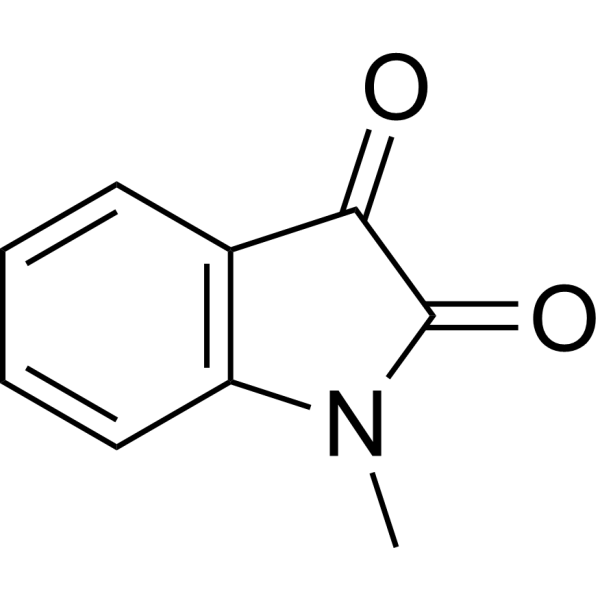
2058-74-4
Chemical Structure
1-Methylisatin
Synonym(s): N-Methylisatin
- CAS No.: 2058-74-4
- Formula:C9H7NO2
- Molecular Weight:161.16
IUPAC Name: 1-methylindoline-2,3-dione
InChIKey: VCYBVWFTGAZHGH-UHFFFAOYSA-N
SMILES: O=C1N(C)C2=C(C=CC=C2)C1=O
Biological Activity: 1-Methylisatin is a potent and selective CE (carboxylesterases) inhibitor, with Kis of 38.2 and 5.38 μM for hiCE and hCE1, respectively. 1-Methylisatin interacts with Hb (human adult hemoglobin) by hydrophobic binding and electrostatic attraction. 1-Methylisatin can be used in the study of regulation of agent metabolism in vivo[1][2].
| Cat. No. | Product Name | Purity | Description | Pricing | |||||||||||||||||||
|---|---|---|---|---|---|---|---|---|---|---|---|---|---|---|---|---|---|---|---|---|---|---|---|
|
|
1-Methylisatin | 99.37% | 1-Methylisatin is a potent and selective CE (carboxylesterases) inhibitor, with Kis of 38.2 and 5.38 μM for hiCE and hCE1, respectively. 1-Methylisatin interacts with Hb (human adult hemoglobin) by hydrophobic binding and electrostatic attraction. 1-Methylisatin can be used in the study of regulation of agent metabolism in vivo. | ||||||||||||||||||||
|
loading...
/
|
|||||||||||||||||||||||
Structural Analogs
-
Similarity Score 0.83
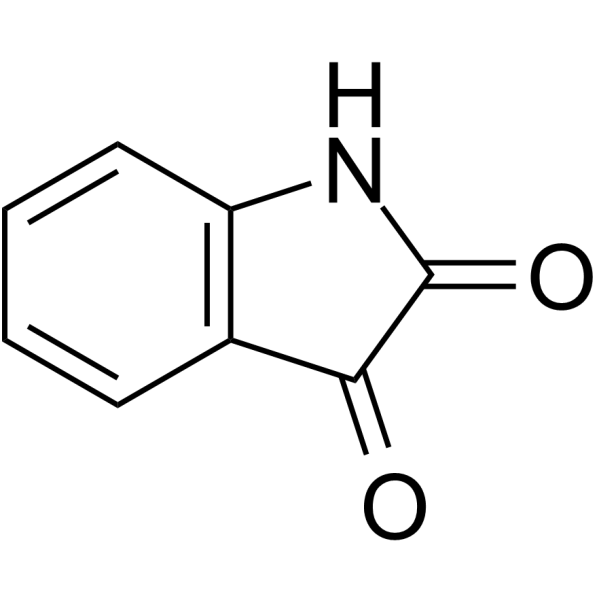 HY-Y0265Isatin
-
Similarity Score 0.81
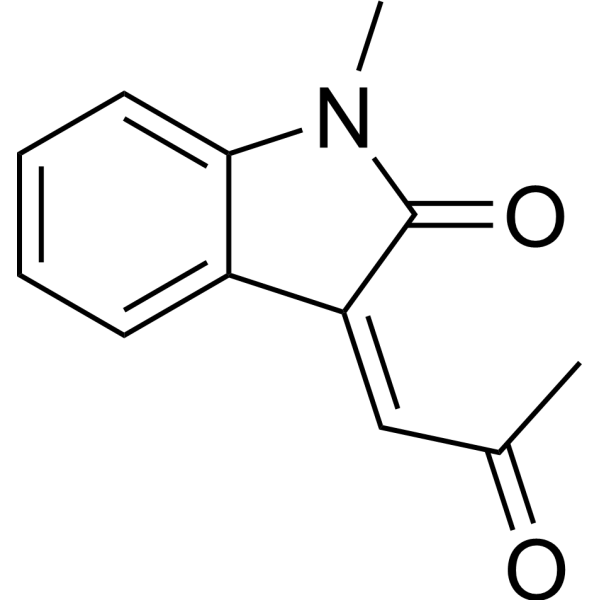 HY-121539Supercinnamaldehyde
-
Similarity Score 0.79
 HY-W0077197-Methylisatin
-
Similarity Score 0.77
 HY-Z0036RN-Acetyl-2-oxindole (Standard)
-
Similarity Score 0.74
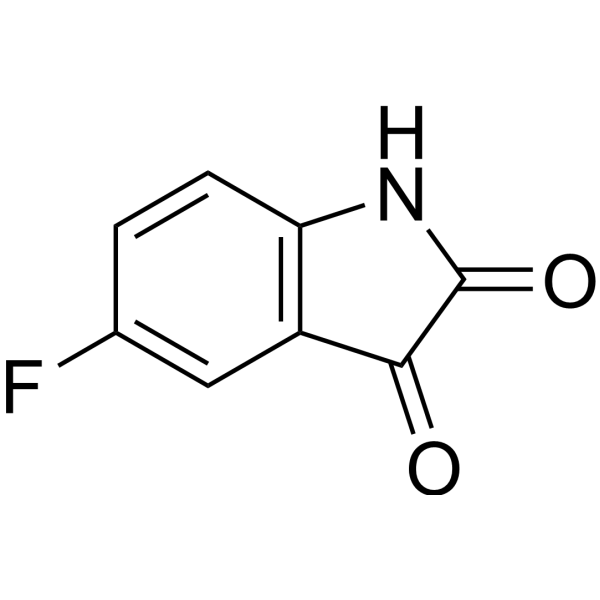 HY-W0075495-Fluoroisatin
-
Similarity Score 0.74
 HY-W0920676-Hydroxyisatin
-
Similarity Score 0.74
 HY-W0925495-Hydroxyisatin
-
Similarity Score 0.73
 HY-W0296006,7-Dimethylisatin
-
Similarity Score 0.72
 HY-115841Isatin-O
-

Explore the MedChemAI to find more analogs


References
- [1]. Hyatt JL, et al. Selective inhibition of carboxylesterases by isatins, indole-2,3-diones. J Med Chem. 2007 Apr 19;50(8):1876-85. [Content Brief]
- [2]. Mandal P, et al. Fluorescence spectroscopic characterization of the interaction of human adult hemoglobin and two isatins, 1-methylisatin and 1-phenylisatin: a comparative study. J Phys Chem B. 2009 Nov 12;113(45):14904-13. [Content Brief]



