
1. Search Result
Search Result
Results for "

Cytosolic

" in MedChemExpress (MCE) Product Catalog:

172

Inhibitors & Agonists

8

Fluorescent Dyes

12

Biochemical Assay Reagents

18

Peptides

1

Inhibitory Antibodies

24

Natural
Products

35

Recombinant Proteins

9

Isotope-Labeled Compounds

27

Antibodies

9

Oligonucleotides

Cat. No. Product Name Target Research Areas Chemical Structure
  • HY-100579
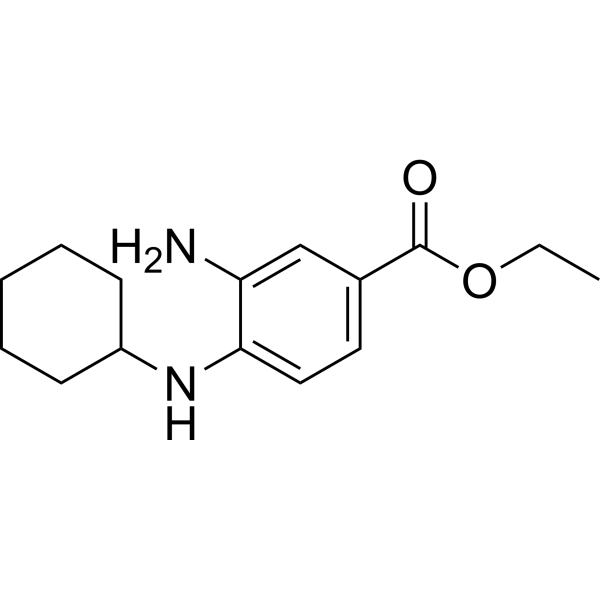
    Ferrostatin-1
    Maximum Cited Publications
    1548 Publications Verification

    Fer-1

    Ferroptosis Fungal Cancer
    Ferrostatin-1 (Fer-1), a potent and selective ferroptosis inhibitor, suppresses Erastin-induced ferroptosis in HT-1080 cells (EC50=60 nM). Ferrostatin-1, a synthetic antioxidant, acts via a reductive mechanism to prevent damage to membrane lipids and thereby inhibits cell death. Ferrostatin-1 exhibits antifungal activity .
    Ferrostatin-1
  • HY-12512
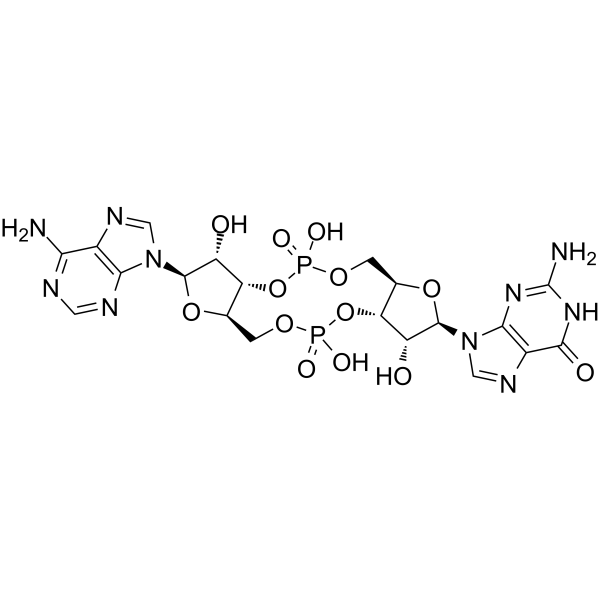
    cGAMP
    25+ Cited Publications

    Cyclic GMP-AMP; 3',3'-cGAMP

    STING Inflammation/Immunology
    cGAMP (Cyclic GMP-AMP) functions as an endogenous second messenger in metazoans and triggers interferon production in response to cytosolic DNA. cGAMP activates stimulator of interferon genes (STING), which activates a signaling cascade leading to the production of type I interferons and other immune mediators .
    cGAMP
  • HY-W019838
    D-Erythro-dihydrosphingosine
    1 Publications Verification

    Sphinganine (d18:0)

    Endogenous Metabolite Phospholipase Cancer
    D-Erythro-dihydrosphingosin directly inhibits cytosolic phospholipase A2α (cPLA2α) activity.
    D-Erythro-dihydrosphingosine
  • HY-113128A

    Endogenous Metabolite Metabolic Disease
    sn-Glycerol 3-phosphate lithium is an important intermediate in glycolysis and lipid metabolism. The cytosolic sn-Glycerol 3-phosphate dehydrogenase (GPDH) consumes NADH to generate sn-Glycerol 3-phosphate lithium from dihydroxyacetone phosphate (DHAP). Glyceroneogenesis is an important supplier of sn-Glycerol 3-phosphate lithium for lipid metabolism .
    sn-Glycerol 3-phosphate lithium
  • HY-125006
    TRi-1
    5 Publications Verification

    JNK p38 MAPK Cancer
    TRi-1 is a potent, specific and irreversible inhibitor of cytosolic thioredoxin reductase 1 (TXNRD1), with an IC50 of 12 nM. TRi-1 has little mitochondrial toxicity for anticancer therapy .
    TRi-1
  • HY-113128

    Endogenous Metabolite Metabolic Disease
    sn-Glycerol 3-phosphate is an important intermediate in glycolysis and lipid metabolism. The cytosolic sn-Glycerol 3-phosphate dehydrogenase (GPDH) consumes NADH to generate sn-Glycerol 3-phosphate from dihydroxyacetone phosphate (DHAP). Glyceroneogenesis is an important supplier of sn-Glycerol 3-phosphate for lipid metabolism .
    sn-Glycerol 3-phosphate
  • HY-10801
    CAY10650
    5+ Cited Publications

    Phospholipase Inflammation/Immunology
    CAY10650 is a highly potent cytosolic phospholipase A2α (cPLA2α) inhibitor with an IC50 value of 12 nM. CAY10650 suppresses lipid droplets formation and PGE2 secretion .
    CAY10650
  • HY-119287
    TSQ
    5 Publications Verification

    Fluorescent Dye Others
    TSQ is a cytosolic zinc ion fluorescence probe that is membrane permeable and can be used for intracellular imaging of zinc proteins (λmax ~470 nm). TSQ can combine with Zn 2+ in the presence of Ca 2+ and Mg 2+ to produce blue fluorescence (Ex/Em = 334/495 nm) .
    TSQ
  • HY-111376
    Pyrrophenone
    4 Publications Verification

    Phospholipase Cardiovascular Disease Inflammation/Immunology
    Pyrrophenone is a potent and specific cytosolic phospholipase A2α (cPLA2α) inhibitor with an IC50 value of 4.2 nM .
    Pyrrophenone
  • HY-115194
    Amastatin hydrochloride
    1 Publications Verification

    Aminopeptidase Bacterial Infection
    Amastatin hydrochloride is a slow, tight binding, competitive aminopeptidase (AP) inhibitor with Ki values of 0.26 nM, 30 nM, 52 nM for Aeromonas aminopeptidase, cytosolic leucine aminopeptidase, microsomal aminopeptidase .
    Amastatin hydrochloride
  • HY-110385
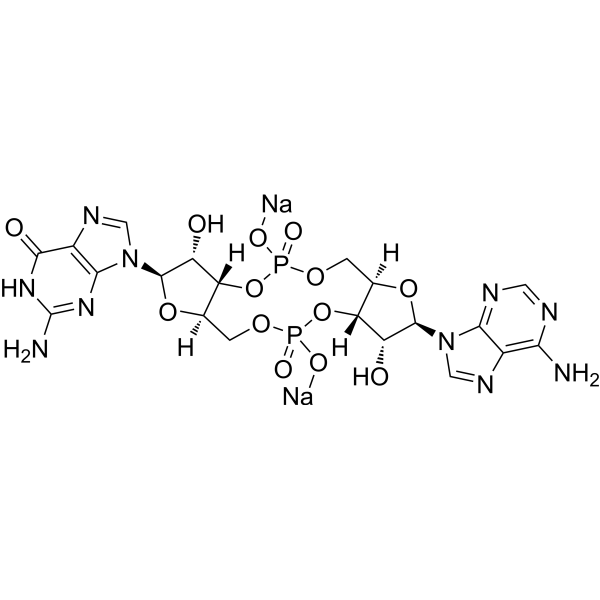
    cGAMP disodium
    Maximum Cited Publications
    26 Publications Verification

    Cyclic GMP-AMP disodium; 3',3'-cGAMP disodium

    STING Endogenous Metabolite Inflammation/Immunology
    cGAMP (Cyclic GMP-AMP) disodium functions as an endogenous second messenger in metazoans and triggers interferon production in response to cytosolic DNA. cGAMP diammonium activates stimulator of interferon genes (STING), which activates a signaling cascade leading to the production of type I interferons and other immune mediators .
    cGAMP disodium
  • HY-132301

    MCT4-IN-1

    Monocarboxylate Transporter Cancer
    MSC-4381 (MCT4-IN-1), a chemical probe, is an orally active and selective monocarboxylate transporter 4 (MCT4/SLC16A3) inhibitor with an IC50 of 77 nM and a Ki of 11 nM. MSC-4381 targets to the cytosolic domain of MCT4. MSC-4381 results in lactate efflux inhibition and reduction of cellular viability in MCT4 high expressing cells. MSC-4381 has the potential for MCT4 transporter inhibition research . MSC-4381 is a click chemistry reagent, it contains an Alkyne group and can undergo copper-catalyzed azide-alkyne cycloaddition (CuAAc) with molecules containing Azide groups.
    MSC-4381
  • HY-113284
    Succinyladenosine
    1 Publications Verification

    N6-Succinyl adenosine

    Endogenous Metabolite Metabolic Disease
    Succinyladenosine, the metabolic product of dephosphorylation of intracellular adenylosuccinic acid (S-AMP) by cytosolic 5-nucleotidase, is a biochemical marker of adenylosuccinase (ASL) deficiency .
    Succinyladenosine
  • HY-121970

    Phosphoglycerate Dehydrogenase (PHGDH) Reactive Oxygen Species (ROS) HIF/HIF Prolyl-Hydroxylase Metabolic Disease
    iGP-1 is a cell-permeable, selective mixed inhibitor of mitochondrial sn-glycerol-3-phosphate dehydrogenase (mGPDH), with IC50s of 6.3 μM and 13.6 μM for rat mGPDH activity and H2O2 production, respectively. iGP-1 specifically blocks the mitochondrial component of the glycerophosphate shuttle without affecting cytosolic GPDH. iGP-1 not only inhibits cell proliferation and glutaminolysis, and enhances glycolysis, but also significantly alters key cellular physiological processes such as apoptosis, ROS production, HIF-1α stability and mitochondrial membrane potential. iGP-1 remains active in neutrophil cultures under both normoxic and hypoxic conditions, and serves as an ideal probe for glycerol-3-phosphate metabolic mechanisms. iGP-1 has been applied to studies on prostate cancer and related metabolic pathways .
    iGP-1
  • HY-129225
    WRR139
    2 Publications Verification

    Keap1-Nrf2 Transglutaminase Cancer
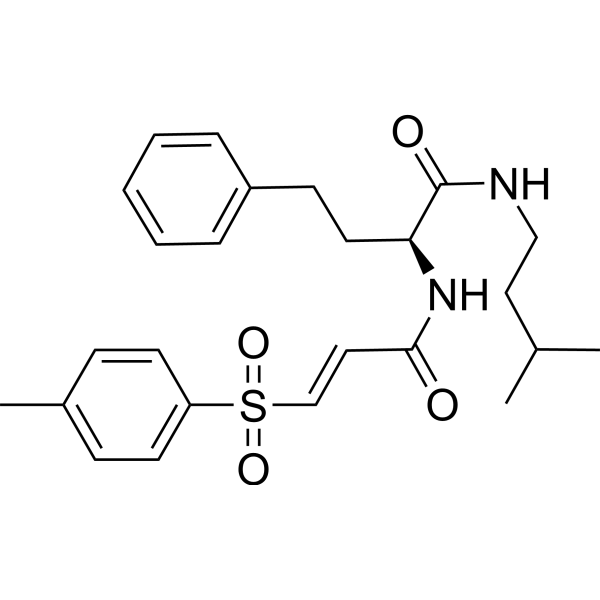
    WRR139 is a peptide vinyl sulfone involving in disease processes such as inflammation and cancer. WRR139 is also a cytosolic enzyme N-glycanase 1 (NGLY1) and Nrf1 inhibitor. WRR139 enhances Carfilzomib cytotoxicity against cancer cells .
    WRR139
  • HY-116044
    BCATc Inhibitor 2
    5+ Cited Publications

    Aminotransferases (Transaminases) Neurological Disease
    BCATc Inhibitor 2 is a selective branched-chain aminotransferase (BCAT) inhibitor for research of neurodegenerative diseases. The IC50s of 0.2 μM, 0.8 μM and 3.0 μM for rat cytosolic isoenzyme rBCATc, human cytosolic isoenzyme hBCATc and rat mitochondrial isoenzyme rBCATm, respectively. BCATc, also called BCAT1, is in the cytoplasm .
    BCATc Inhibitor 2
  • HY-18540
    KT109
    1 Publications Verification

    MAGL DAGL Metabolic Disease Inflammation/Immunology
    KT109 is a potent and an isoform-selective inhibitor of diacylglycerol lipase-β (DAGLβ) with an IC50 of 42 nM. KT109 has ~60-fold selectivity for DAGLβ over DAGLα. KT109 shows inhibitory activity against PLA2G7 (IC50=1 µM). KT109 shows negligible activity against FAAH, MGLL, ABHD11, and cytosolic phospholipase A2 (cPLA2 or PLA2G4A). KT109 perturbs a lipid network involved in macrophage inflammatory responses and lowers 2-Arachidonoylglycerol (HY-W011051), Arachidonic acid (HY-109590) and eicosanoids in mouse peritoneal macrophages .
    KT109
  • HY-N7395
    Cyclic ADP-​ribose
    1 Publications Verification

    cADPR

    Calcium Channel TRP Channel Endogenous Metabolite Infection Cardiovascular Disease Neurological Disease Inflammation/Immunology Endocrinology
    Cyclic ADP-ribose (cADPR) is a potent second messenger for calcium mobilization that is synthesized from NAD + by an ADP-ribosyl cyclase. Cyclic ADP-ribose increases cytosolic calcium mainly by Ryanodine receptor-mediated release from endoplasmic reticulum and also by extracellular influx through the opening of TRPM2 channels .
    Cyclic ADP-​ribose
  • HY-156214

    AP1867-PEG2-JQ1; AP-PEG2-JQ1

    Epigenetic Reader Domain Others
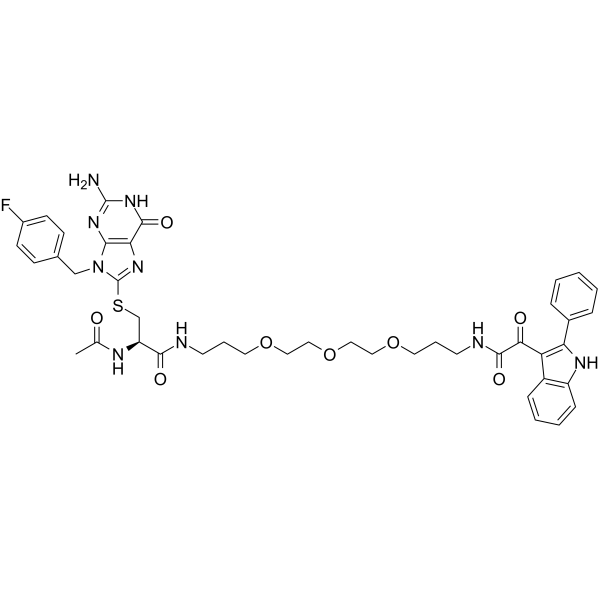
    NICE-01 (AP1867-PEG2-JQ1; AP-PEG2-JQ1) is a bifunctional compound that bind to proteins in separate cellular compartments that can induce nuclear import of cytosolic cargoes, using nuclear-localized bromodomain-containing protein 4 (BRD4) as a “carrier” for co-import and nuclear trapping of cytosolic proteins .
    NICE-01
  • HY-N1393

    NSC 3778; O-Methylsalicylic acid; Salicylic acid methyl ether

    Carbonic Anhydrase Phospholipase Cardiovascular Disease
    2-Methoxybenzoic acid (NSC 3778; O-Methylsalicylic acid; Salicylic acid methyl ether) is a natural compound with potential salicylate-like effect. 2-Methoxybenzoic acid inhibits carbonic anhydrase activity, elevates intraplatelet cyclic guanosine monophosphate level, and suppresses cytosolic phospholipase A2 phosphorylation. 2-Methoxybenzoic acid suppresses platelet reactivity, including decreased spreading, retraction, and aggregation in platelets. 2-Methoxybenzoic acid ameliorates arterial thrombosis in a dose-dependent manner without affecting normal hemostasis in mice. 2-Methoxybenzoic acid can be used for the research of arterial thrombosis .
    2-Methoxybenzoic acid
  • HY-W006230

    Cytochrome P450 Cancer
    Anthraflavic acid specifically inhibits the activity of cytochrome P-448 without affecting phenobarbital-induced cytochrome P-450 or NADPH-dependent cytochrome c reduction. Anthraflavic acid inhibits cytosolic metabolic pathways, blocks the microsomal and cytosolic activation of IQ, and reduces the metabolic activation level of Glu-P-I. Anthraflavic acid may exert anticancer activity by inhibiting the metabolic activation of chemical carcinogens. Anthraflavic acid is applicable to cancer-related research .
    Anthraflavic acid
  • HY-P3496
    Pep19-2.5
    1 Publications Verification

    Pyroptosis Inflammation/Immunology
    Pep19-2.5 is an synthetic and antitoxin peptide, blocks the intracellular endotoxin signaling cascade. Pep19-2.5 inhibits signaling of lipopeptides (LP) and lipopolysaccharides (LPS) mediated by transmembrane and cytosolic pattern recognition receptors (PRRs). The signaling cascades lead to inflammation and cell pyroptosis .
    Pep19-2.5
  • HY-134640
    AUTAC4
    4 Publications Verification

    AUTACs Mitophagy Neurological Disease Cancer
    AUTAC4 is a mitochondria-targeting autophagy-targeting chimera (AUTAC). AUTAC4 downregulates cytosolic proteins and promotes targeted mitochondrial turnover via mitophagy .
    AUTAC4
  • HY-120909

    HSP Apoptosis Cancer
    YK5 is a potent and selective Hsp70 inhibitor. YK5 selectively and tightly binds to the cytosolic Hsp70s in cancer cells. YK5 has biological activity partly by interfering with the formation of active oncogenic Hsp70/Hsp90/client protein complexes .
    YK5
  • HY-119019
    ASB14780
    1 Publications Verification

    Phosphatase Inflammation/Immunology
    ASB14780 is a 4-phenoxy derivative, the cytosolic Phospholipase A2α (cPLA2α) inhibitor, with an IC50 value of 20 nM .
    ASB14780
  • HY-112951
    ChX710
    4 Publications Verification

    STING Cancer
    ChX710 could prime the type I interferon response to cytosolic DNA, which induces the ISRE promoter sequence, specific cellular Interferon-Stimulated Genes (ISGs), and the phosphorylation of Interferon Regulatory Factor (IRF) 3.
    ChX710
  • HY-P1785

    Abltide

    Bcr-Abl Cancer
    Abl Cytosolic Substrate is a substrate for Abelson tyrosine kinase (Abl ). Abl Protein Tyrosine Kinase (AbI) is a truncated form of the v-AbI Protein Tyrosine Kinase, a partner in the Gag-Abl fusion protein of the Abelson murine leukemia virus .
    Abl Cytosolic Substrate
  • HY-14952

    PLA-695

    Phospholipase Inflammation/Immunology Cancer
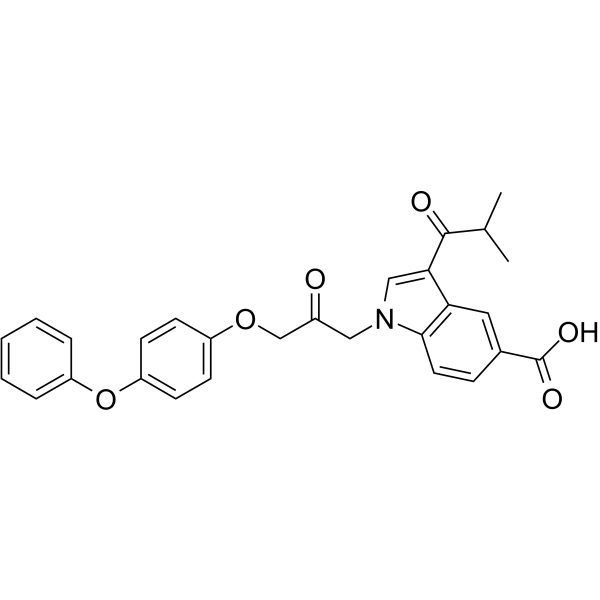
    Giripladib (PLA-695) is a indole-based inhibitor of cytosolic phospholipase A2 (cPLA2). Giripladib can be used for osteoarthritis and breast cancer research .
    Giripladib
  • HY-133705
    Geldanamycin-FITC
    1 Publications Verification

    HSP Others
    Geldanamycin-FITC, a Geldanamycin fluorescent probe, can be used in a fluorescence polarization assay for HSP90 inhibitors. Geldanamycin-FITC also can be used for detection of cell surface HSP90 (Ex/Em = 488/515 nm) .
    Geldanamycin-FITC
  • HY-N0742

    Others Others
    Absinthin is a structurally unique triterpene, and is responsible for the high bitter value of wormwood. Absinthin is an agonist of the bitter taste receptor hTAS2R46, which reduces cytosolic Ca 2+-rises induced by histamine by a receptor-specific mechanism mediated by hTAS2R46 .
    Absinthin
  • HY-128369

    Metanil Yellow

    Environmental Pollutants Cytochrome P450 Others
    Acid Yellow 36 (Metanil Yellow) is an azo dye and a pH indicator. Acid Yellow 36 changes its color from red at pH 1.2 to yellow at pH 2.3. Acid Yellow 36 is used in the leather, paper and textile industries. Acid Yellow 36 acts as a bifunctional inducer of specific isozymes of P-450 and cytosolic enzymes .
    Acid Yellow 36
  • HY-113128S

    Isotope-Labeled Compounds Endogenous Metabolite Metabolic Disease
    sn-Glycerol 3-phosphate- 13C3 disodium is the 13C-labeled sn-Glycerol 3-phosphate disodium. sn-Glycerol 3-phosphate disodium is produced by cytosolic glycerol 3-phosphate dehydrogenase pathway through the reduction of dihydroxyacetone phosphate using NADH formed during glycolysis .
    sn-Glycerol 3-phosphate-13C3 disodium
  • HY-116301

    Phospholipase Inflammation/Immunology
    CAY10502 is a potent, calcium-dependent cytosolic phospholipase A2 α (cPLA2α) inhibitor with an IC50 of 4.3 nM for isolated enzyme. CAY10502 can be used in the research of retinopathy and inflammatory diseases .
    CAY10502
  • HY-P2961

    Glutathione S-transferase Cancer
    Glutathione S-transferase is a phase II metabolic enzyme consisting of three superfamilies: cytosolic, mitochondrial, and microsomal. Glutathione S-transferase possesses various catalytic activities such as catalytic detoxification and thiol transfer, as well as chaperone function. GSTP1, a subtype of Glutathione S-transferase, is highly expressed in malignant tissues and serves as a tumor marker .
    Glutathione S-transferase
  • HY-158741

    APG-2 Acetoxymethyl ester

    Fluorescent Dye Potassium Channel Others
    IPG-2 AM (APG-2 Acetoxymethyl ester) is a membrane-permeant acetoxymethyl ester derivative and selective fluorescent potassium ion indicator. IPG-2 AM exhibits fluorescence increases proportional to extracellular potassium ion concentrations. IPG-2 AM enables real-time monitoring of cytosolic free potassium ion fluxes in human platelets and macrophages. IPG-2 AM can be used for the research of intracellular potassium concentration dynamics .
    IPG-2 AM
  • HY-128710

    2'-​Deoxy-​2'-​fluoro-​5-​Methyluridine

    Nucleoside Antimetabolite/Analog Cancer
    2'-Fluorothymidine (2'-Fluoro-2'-deoxythymidine) is a nucleoside analog and hCNT inhibitor, with an IC50 of 1.1 μM against hCNT1 and an IC50 of 9.7 μM against hCNT3. 2'-Fluorothymidine undergoes phosphorylation by cytosolic thymidine kinase (TK1) and mitochondrial thymidine kinase (TK2). 2'-Fluorothymidine acts as a backbone stabilizer in oligonucleotide synthesis and can also form radiolabeled candidates. 2'-Fluorothymidine is applicable in tumor-related research .
    2'-Fluorothymidine
  • HY-126789

    Biochemical Assay Reagents Metabolic Disease
    DM-Nitrophen is a photolabile caged calcium compound that acts as a calcium releaser. DM-Nitrophen binds Ca 2+ with high affinity and Mg 2+ with considerable affinity before photolysis. DM-Nitrophen releases Ca 2+ into the cytosol upon ultraviolet light irradiation. DM-Nitrophen induces calcium concentration pulses, triggers cytosolic calcium transients, promotes calcium-dependent exocytosis. DM-Nitrophen can be used for the research of calcium-dependent cellular processes .
    DM-Nitrophen
  • HY-W019838S

    Sphinganine (d18:0)-d7

    Isotope-Labeled Compounds Endogenous Metabolite Phospholipase Cancer
    D-Erythro-dihydrosphingosine-d7 is the deuterium labeled D-Erythro-dihydrosphingosine. D-Erythro-dihydrosphingosin directly inhibits cytosolic phospholipase A2α (cPLA2α) activity.
    D-Erythro-dihydrosphingosine-d7
  • HY-U00037

    PLA 725

    Phospholipase Inflammation/Immunology
    Ecopladib is a sub-micromolar inhibitor of cytosolic phospholipase A2α (cPLA2α), with IC50s of 0.15 μM and 0.11 μM in the GLU micelle and rat whole blood assays, respectively.
    Ecopladib
  • HY-105024

    Lipoxygenase COX Inflammation/Immunology
    FPL 62064 is a potent 5-lipoxygenase (5-LOX) and COX dual inhibitor, with IC50 values of 3.5 μM and 3.1 μM for RBL-1 cytosolic 5-lipoxygenase and prostaglandin synthetase (cyclooxygenase), respectively. FPL 62064 has potent anti-inflammatory activity .
    FPL 62064
  • HY-N7395A
    Cyclic ADP-​ribose ammonium
    1 Publications Verification

    cADPR ammonium

    Calcium Channel TRP Channel Endogenous Metabolite Infection Cardiovascular Disease Neurological Disease Inflammation/Immunology Endocrinology
    Cyclic ADP-ribose ammonium (cADPR ammonium) is a potent second messenger for calcium mobilization that is synthesized from NAD + by an ADP-ribosyl cyclase. Cyclic ADP-ribose ammonium increases cytosolic calcium mainly by Ryanodine receptor-mediated release from endoplasmic reticulum and also by extracellular influx through the opening of TRPM2 channels .
    Cyclic ADP-​ribose ammonium
  • HY-E70377

    Cu/Zn SOD

    SOD Inflammation/Immunology Cancer
    Cu/Zn Superoxide dismutase (Cu/Zn SOD; SOD1) is a cytosolic copper-zinc dimer form of superoxide dismutase enzyme. Cu/Zn Superoxide dismutase has oxygen radical enzymatic dismutation .
    Cu/Zn Superoxide dismutase
  • HY-110385A
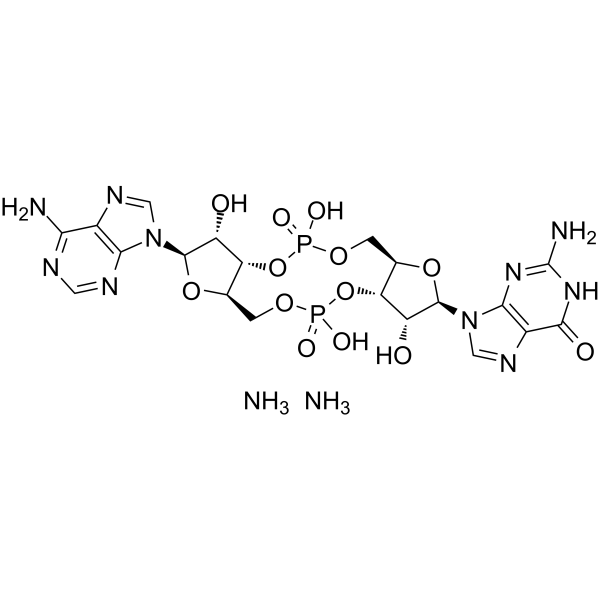
    cGAMP diammonium
    Maximum Cited Publications
    26 Publications Verification

    Cyclic GMP-AMP diammonium; 3',3'-cGAMP diammonium

    STING Endogenous Metabolite Inflammation/Immunology
    cGAMP (Cyclic GMP-AMP) diammonium functions as an endogenous second messenger in metazoans and triggers interferon production in response to cytosolic DNA. cGAMP diammonium activates stimulator of interferon genes (STING), which activates a signaling cascade leading to the production of type I interferons and other immune mediators .
    cGAMP diammonium
  • HY-146401

    CXCR Cancer
    CXCR4 antagonist 6 (compound 46) is a potent CXCR4 antagonist with an IC50 value of 79 nM. CXCR4 antagonist 6 inhibits CXCL12 induced cytosolic calcium flux (IC50 = 0.25 nM). CXCR4 antagonist 6 significantly mitigates CXCL12/CXCR4 mediated cell migration. CXCR4 antagonist 6 exhibits marked efficacy in a cancer metastasis model in mice .
    CXCR4 antagonist 6
  • HY-167015

    Liposome Others
    1O14 is an ionizable lipid. The ability of ionizable lipids to form unstable non-bilayer structures at acidic pH is key for endosomal escape and cytosolic delivery of RNA. 1O14 can be used in the preparation of liposomes .
    1O14
  • HY-P2999

    ENGase

    Endogenous Metabolite Others
    Endo-β-N-acetylglucosaminidase (ENGase) is cytosolic deglycosylating enzyme that hydrolyzes the N-linked oligosaccharides. Endo-β-N-acetylglucosaminidase can be used for glycan analysis on glycoproteins and preparation of precursors for glycosylated compounds, is often used in biochemical studies .
    Endo-β-N-acetylglucosaminidase
  • HY-177817

    RIG-I-like receptor (RLR) Infection
    CL9 sodium, a RIG-I-specific RNA aptamer, activates signaling pathways for IFNβ produciton and efficiently blocks viral replication. RIG-I is a cytosolic receptor for non-self RNA that mediates immune responses against viral infections through IFNα/β prod
    CL9 sodium
  • HY-167012

    Liposome Others
    306Oi9-cis2 is an ionizable lipid. The ability of ionizable lipids to form unstable non-bilayer structures at acidic pH is key for endosomal escape and cytosolic delivery of RNA. 306Oi9-cis2 can be used in the preparation of liposomes .
    306Oi9-cis2
  • HY-W654264

    Endogenous Metabolite Integrin Cardiovascular Disease
    2-Methylbutyrylcarnitine (chloride) is a gut microbial metabolite which binds to integrin α2β1 in platelets, potentiating cytosolic phospholipase A2 (cPLA2) activation and platelet hyperresponsiveness. 2-Methylbutyrylcarnitine (chloride) enhances platelet hyperreactivity and thrombus formation in mice. 2-Methylbutyrylcarnitine (chloride) is a branched-chain acylcarnitine .
    2-Methylbutyrylcarnitine chloride
  • HY-147225

    AUTACs Mitophagy Neurological Disease Metabolic Disease Cancer
    TSPO Ligand-Linker Conjugates 1 contains a ligand for translocator protein (TSPO) and a linker, which is used for the synthesis of mitochondria-targeting autophagy-targeting chimera (AUTAC). AUTAC can bind the TSPO on the outer mitochondrial membrane (OMM) of mitochondria and degrades impaired mitochondria and proteins via mitophagy, and improves mitochondrial activity. TSPO Ligand-Linker Conjugates 1 can be used in mitochondrial dysfunction related research, including neurodegenerative diseases, cancer, and diabetes .
    TSPO Ligand-Linker Conjugates 1

Inquiry Online

Your information is safe with us. * Required Fields.

Salutation


Country or Region *

Applicant Name *


Organization Name *

Department *


Email Address *


Product Name *

Cat. No.


Requested quantity *

Phone Number *


Remarks

Inquiry Online

Inquiry Information

Product Name:
Cat. No.:
Quantity:
MCE Japan Authorized Agent:

