1. Search Result
Search Result
Pathways Recommended: Cell Cycle/DNA Damage
Results for "

DNA/RNA

" in MedChemExpress (MCE) Product Catalog:

414

Inhibitors & Agonists

6

Screening Libraries

20

Fluorescent Dyes

25

Biochemical Assay Reagents

7

Peptides

9

MCE Kits

2

Inhibitory Antibodies

75

Natural
Products

2

Recombinant Proteins

56

Isotope-Labeled Compounds

5

Antibodies

4

Click Chemistry

46

Oligonucleotides

1

GMP Molecules

Cat. No. Product Name Target Research Areas Chemical Structure
  • HY-P1923
    L-Asparaginase
    10+ Cited Publications

    L-​ASNase

    Apoptosis DNA/RNA Synthesis Cancer
    L-Asparaginase (L-ASNase) is a deamidating enzyme that catalyses the hydrolysis of L-asparagine and L-glutamine, and can be used for the research of acute lymphoblastic leukemia. L-Asparaginase depletes L-asparagine from plasma resulting in inhibition of RNA and DNA synthesis with the subsequent blastic cell apoptosis .
    L-Asparaginase
  • HY-B1906
    Streptomycin
    45+ Cited Publications

    Agrept; Agrimycin; Streptomycin A

    Environmental Pollutants Antibiotic Bacterial Infection Neurological Disease
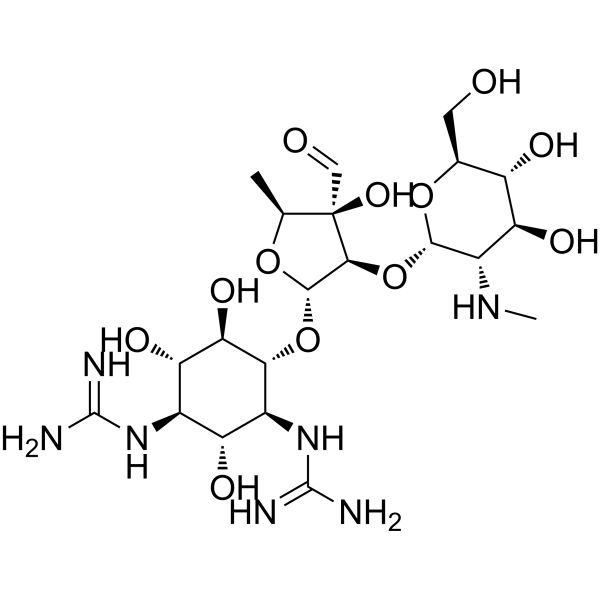
    Streptomycin (Agrept) is an effective antibiotic against M. tuberculosis, is used for the research of tuberculosis (TB). Streptomycin also is a bacteriocidal agent that can be used for the research of a number of bacterial infections. Streptomycin can bind strongly to nucleic acids, interferes and blocks protein synthesis while permitting continued RNA and DNA synthesis. Streptomycin, as a common antibiotic used in culture media, also is a blocker of stretch-activated and mechanosensitive ion channels in neurons and cardiac myocytes .
    Streptomycin
  • HY-129046
    RNase A, Bovine pancreas
    5 Publications Verification

    Ribonuclease A; EC 4.6.1.18; RNAse A

    Endonuclease DNA/RNA Synthesis Others
    RNase A (Bovine pancreatic RNase) is a widely used Endonuclease in DNA purification by specifically hydrolyzing cytosine or uracil residues of RNA. RNase A degrades the RNA in the RNA/DNA duplex. RNase A catalyses the breakdown of 3',5'-phosphodiester linkages of single stranded RNA. RNase A family members in organisms are tightly involved in various physiological and pathological processes including cell growth and development, proliferation, differentiation and migration. Dysregulation of RNase A activity or expression level is closely related to pancreatic, ovarian, bladder and thyroid cancer. RNase A has tumor cell-killing ability .
    RNase A, Bovine pancreas
  • HY-Y1055
    Guanine
    3 Publications Verification

    DNA/RNA Synthesis Endogenous Metabolite Infection Neurological Disease Cancer
    Guanine is one of the fundamental components of nucleic acids (DNA and RNA). Guanine is a purine derivative, consisting of a fused pyrimidine-imidazole ring system with conjugated double bonds. Guanine has the potential to serve as a large-capacity N pool. Guanine has cytotoxic, antinociceptive and neuroprotective effects .
    Guanine
  • HY-D2908

    Fluorescent Dye Others
    SYTO9 is a green fluorescent nucleic acid dye (Ex = 485 nm, Em = 498 nm (DNA)/501 nm (RNA)). SYTO9 can penetrate the intact cell membrane of viable bacteria. When the cell membrane is damaged (cell death), its rate of entry into cells increases, and it competes with propidium iodide (PI) (HY-D0815), another membrane-impermeable dye, for nucleic acid binding sites. SYTO9 is widely used in fluorescence microscopy, flow cytometry, and fluorometric assays in microbiology for bacterial counting, viability assessment, and cell imaging .
    SYTO9
  • HY-17025
    Rifabutin
    5+ Cited Publications

    Ansamycin; LM-427

    DNA/RNA Synthesis Bacterial Antibiotic Infection
    Rifabutin (Ansamycin) is a semisynthetic ansamycin antibiotic with potent antimycobacterial properties. Rifabutin inhibits DNA-dependent RNA polymerase.
    Rifabutin
  • HY-D1020
    7-Aminoactinomycin D
    5+ Cited Publications

    7-AAD

    DNA/RNA Synthesis Bacterial DNA Stain Antibiotic Infection Cancer
    7-Aminoactinomycin D (7-AAD) a cell-impermeant fluorescent DNA stain, is a potent RNA polymerase inhibitor. 7-Aminoactinomycin D selectively binds to GC regions of the DNA. 7-Aminoactinomycin D also has antibacterial effects .
    7-Aminoactinomycin D
  • HY-112680A

    G-quadruplex Neurological Disease
    Carboxy pyridostatin trifluoroacetate salt is a G-quadruplex ligand. Carboxy pyridostatin trifluoroacetate salt has a highly molecular specificity to RNA on DNA G4s and reduces ATF-5 protein. Carboxy pyridostatin trifluoroacetate salt reduces cell proliferation and hinders stress granule (SG) formation .
    Carboxy pyridostatin trifluoroacetate salt
  • HY-W008990
    Xanthosine 5'-monophosphate sodium salt
    1 Publications Verification

    5'-Xanthylic acid sodium salt

    DNA/RNA Synthesis Metabolic Disease
    Xanthosine 5'-monophosphate sodium salt (5'-Xanthylic acid sodium salt) is an intermediate in purine metabolism. Xanthosine 5'-monophosphate sodium salt can be used for genetic code, nucleic acid structure, and DNA, RNA and protein synthesis research .
    Xanthosine 5'-monophosphate sodium salt
  • HY-12484
    BMH-21
    10+ Cited Publications

    DNA/RNA Synthesis Cancer
    BMH-21 is a first-in-class DNA intercalator which inhibits RNA polymerase I (Pol I) transcription. BMH-21 possesses anticancer activity .
    BMH-21
  • HY-139912

    DNA Stain Biochemical Assay Reagents Others
    Biotin-aniline is a probe with substantially high reactivity towards RNA and DNA. Biotin-aniline is also a novel APEX2 substrate. Biotin-aniline can label proteins via miniSOG. Biotin-aniline emerges as more efficient probe for capturing subcellular transcriptome in living cells with high spatial specificity .
    Biotin-aniline
  • HY-13735
    Quinacrine
    5+ Cited Publications

    Acriquine

    Parasite Sodium Channel DNA Stain Apoptosis Aldehyde Oxidase (AO) Infection Neurological Disease Cancer
    Quinacrine (Acriquine) is an antimalarial and anti-cancer agent. Quinacrine also inhibits human aldehyde oxidase (IC50: 3.3 μM). Quinacrine has affinity for nucleic acids, and stains DNA and RNA in fixed cells (Ex/Em: 436/525 nm) .
    Quinacrine
  • HY-137067
    IMT1B
    5+ Cited Publications

    LDC203974

    DNA/RNA Synthesis Cancer
    IMT1B (LDC203974) is an orally active, noncompetitive and specific allosteric inhibitor of mitochondrial RNA polymerase (POLRMT) and inhibits mitochondrial DNA (mtDNA) expression. IMT1B has anti-tumour effects .
    IMT1B
  • HY-13585
    Carmustine
    5+ Cited Publications

    BCNU

    DNA Alkylator/Crosslinker Cancer
    Carmustine is an antitumor chemotherapeutic agent, which works by akylating DNA and RNA.
    Carmustine
  • HY-131160

    Serratia marcescens nuclease

    Biochemical Assay Reagents Inflammation/Immunology
    Serratia marcescens nuclease (EC 3.1.30.2) is a nonspecific nuclease. Serratia marcescens nuclease has broad utility due to its potent digestive activity toward both DNA and RNA .
    Nuclease, Serratia marcescens
  • HY-D0093
    Ethidium homodimer
    4 Publications Verification

    EthD-1

    DNA Stain Others
    Ethidium homodimer (EthD-1) is a high-affinity fluorescent nucleic acid dye commonly used to stain mammals, bacteria, yeast, and fungi. Ethidium homodimer binds to DNA or RNA, enhancing fluorescence more than 30 times. The Ethidium homodimer has a strong positive charge, so it cannot cross cell membranes and stain living cells; But the Ethidium homodimer can cross the disordered region of the dead cell membrane to reach the nucleus and embed the DNA double strand to produce red fluorescence. Therefore, Ethidium homodimer is a relatively sensitive nucleic acid stain that can accurately detect nucleic acids in solution or in decomposing cells. Ethidium homodimer binds DNA, Ex/Em=528/617 nm .
    Ethidium homodimer
  • HY-N2513
    β-Boswellic acid
    2 Publications Verification

    Lipoxygenase DNA/RNA Synthesis Cancer
    β-Boswellic acid is isolated from the gum resin of Boswellia serrata with anticancer, antioxidant activity, anti-inflammatory activity and anti-arthritic pain.β-Boswellic acid is an orally active nonreducing-type inhibitor of the 5-lipoxygenase (5-LO) product formation either interacting directly with the 5-LO or blocking its translocation. β-Boswellic acid inhibits the synthesis of DNA, RNA and protein in human leukemia HL-60 cells with IC50 values ranging from 0.6 to 7.1 μM. β-Boswellic acid is promising for research of diabetes, inflammatory and arthritic diseases .
    β-Boswellic acid
  • HY-164421

    G-quadruplex DNA/RNA Synthesis Cancer
    PhpC is a G-quadruplex (G4)-DNA/RNA disruptor. PhpC disrupts DNA and RNA G4 structures and promotes G4 helicase activity. PhpC effectively enhancing the activity of Taq polymerase. PhpC modulates G-quadruplexs (G4s) both in vitro and in cells .
    PhpC
  • HY-W001951

    Tetrakis(acetato)dirhodium(II); Rhodium(II) acetate dimer

    DNA/RNA Synthesis Cancer
    Dirhodium tetraacetate (Tetrakis (acetato) dirhodium (II)) is an anticancer agent. Dirhodium tetraacetate functionally inhibits the activities of DNA polymerase I and RNA polymerase. It also acts as a catalyst and can be used to construct rhodium-based artificial metalloenzymes .
    Dirhodium tetraacetate
  • HY-B0420A
    Moroxydine hydrochloride
    1 Publications Verification

    ABOB hydrochloride

    Influenza Virus HCV HSV Apoptosis Caspase Infection
    Moroxydine (ABOB) hydrochloride is a broad-spectrum agent with multi-antiviral activities against DNA and RNA viruses, including influenza virus, herpes simplex, varicella zoster, measles, mumps disease, hepatitis C virus, etc. Moroxydine hydrochloride exhibits excellent antiviral activity and shows low cytotoxicity to cells infected by dsRNA viruses (grass carp reovirus, GCRV) and large DNA viruses (giant salamander iridovirus, GSIV). Moroxydine hydrochloride blocks the GCRV-induced cytopathic effects and eliminates nucleocapsids in ctenopharyngodon idella kidney (CIK) cells to keep the normal morphological structure. Moroxydine hydrochloride significantly inhibits the apoptosis, the caspase 3 activity, Bax expression and down-regulates Bcl-2 levels .
    Moroxydine hydrochloride
  • HY-17026A

    dFdCTP

    Drug Metabolite DNA/RNA Synthesis Apoptosis Cancer
    Gemcitabine triphosphate (dFdCTP) is the active metabolite of Gemcitabine (HY-17026). The mechanism of Gemcitabine triphosphate cell-killing is its competition with cytidine triphosphate during DNA replication, which results in the inhibition of chain elongation. Gemcitabine triphosphate shows a Ki of 11.2 μM against DNA polymerase α and 14.4 μM against DNA polymerase ε. Gemcitabine triphosphate partially inhibits dCMP deaminase and acts as a substrate for DNA synthesis to incorporate into cellular DNA and RNA. Gemcitabine triphosphate disrupts DNA and RNA synthesis, arrests cell cycle in G0/G1 and S phases, triggers apoptosis, reduces tumor cell proliferation. Gemcitabine triphosphate can be used for the research of pancreatic cancer and non-small cell lung cancer .
    Gemcitabine triphosphate
  • HY-W008915

    CDP

    DNA/RNA Synthesis Metabolic Disease
    Cytidine 5'-diphosphate trisodium salt (CDP) is produced by the transfer of phosphoryl group from ATP to cytidine monophosphate (CMP) catalyzed by uridine monophosphate kinase (UMPK). Cytidine 5′-diphosphate can be used to produce Cytidine triphosphate (CTP) for synthesis of DNA and RNA .
    Cytidine 5'-diphosphate trisodium salt
  • HY-18407

    Nucleoside Antimetabolite/Analog Others
    N-Methylisatoic anhydride is a heteronucleoside anhydride derivative conjugated with biotin and a disulfide linker for specific 2'-OH acylation of RNA. Biotin-conjugated N-Methylisatoic anhydride can selectively capture RNA from a mixture of biological RNA and DNA .
    N-Methylisatoic anhydride
  • HY-113226
    Orotidine
    1 Publications Verification

    Endogenous Metabolite Others
    Orotidine, a nucleotide, is an intermediate in pyrimidine nucleotide biosynthesis in RNA and DNA. Orotidine is mainly found in bacteria, fungi and plants .
    Orotidine
  • HY-19743
    Triazavirin
    1 Publications Verification

    Nucleoside Antimetabolite/Analog Influenza Virus DNA/RNA Synthesis Infection
    Triazavirin is a nucleoside analogue of nucleic acid and an antiviral agent. Triazavirin works by inhibiting the synthesis of viral RNA and DNA and replication of genomic fragments. Triazavirin is also an effective protective agent on the transmission stage of influenza .
    Triazavirin
  • HY-D0841
    Guanidine thiocyanate
    3 Publications Verification

    Endogenous Metabolite Infection Cancer
    Guanidine thiocyanate is a strong protein denaturant and potent inhibitor of nucleases. Guanidinium thiocyanate is a nucleic acid protector in the extraction of DNA and RNA from cells. Guanidine thiocyanate is a common component of buffers used for nucleic acid extraction .
    Guanidine thiocyanate
  • HY-112680

    G-quadruplex Neurological Disease
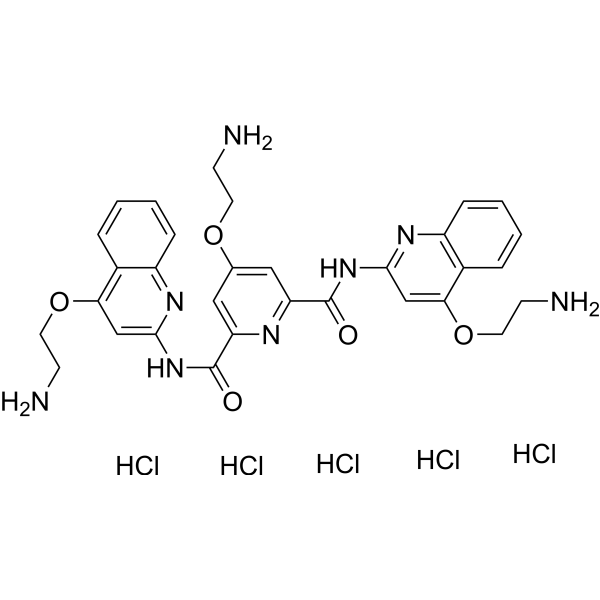
    Carboxypyridostatin is a G-quadruplex ligand. Carboxypyridostatin has a highly molecular specificity to RNA on DNA G4s and reduces ATF-5 protein. Carboxypyridostatin reduces cell proliferation and hinders stress granule (SG) formation .
    Carboxypyridostatin
  • HY-137697D

    HIV DNA/RNA Synthesis Nucleoside Antimetabolite/Analog Drug Metabolite HIV Protease Infection
    ddCTP trilithium solution (100 mM) is a chain-terminating dideoxynucleotide. ddCTP trilithium is a type of chain-terminating deoxynucleotide. ddCTP trilithium can be incorporated into the extension primer chain that lacks the 3'-hydroxyl group, thereby terminating primer extension, viral genome replication, and DNA synthesis. ddCTP trilithium can distinguish almost identical RNA through distinguishable extension products in primer extension inhibition experiments. ddCTP trilithium is the active metabolite of Zalcitabine (HY-17392), which can competitively inhibit HIV reverse transcriptase, terminate the synthesis of viral DNA chains, and thereby inhibit HIV replication .
    ddCTP trisodium solution (100 mM)
  • HY-23789

    2'-O-MOE-rG

    Nucleoside Antimetabolite/Analog DNA/RNA Synthesis Others
    2′-O-(2-Methoxyethyl)guanosine (2'-O-MOE-rG) is a 2'-O-methoxyethyl-modified nucleoside analogue and an important intermediate in the synthesis of nucleic acid drugs. 2′-O-(2-Methoxyethyl)guanosine neither effectively phosphorylated by cytosolic nucleoside kinases, nor are they incorporated into cellular DNA or RNA .
    2′-O-(2-Methoxyethyl)guanosine
  • HY-N8533

    DNA/RNA Synthesis Infection Cancer
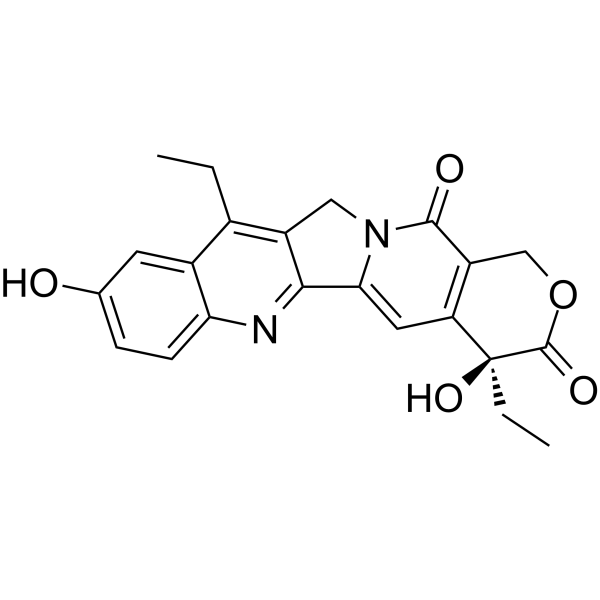
    Sodium Camptothecin is a plant alkaloid, with antitumor activity. Sodium Camptothecin is a reversible inhibitor of RNA synthesis. Sodium Camptothecin is an effective inhibitor of adenovirus replication. Sodium Camptothecin inhibits DNA synthesis and causes breaks in intracellular preformed viral DNA .
    Sodium Camptothecin
  • HY-128917

    DNA/RNA Synthesis Infection
    DNA31 is a potent RNA polymerase inhibitor .
    DNA31
  • HY-E70090

    DNA/RNA Synthesis Infection
    T7 RNA polymerase is a polymerase expressed by Escherichia coli from the RNA polymerase gene of T7 bacteriophage. T7 RNA polymerase is highly specific and involved in in vitro transcription (IVT) of mRNA. In the presence of Mg 2+, T7 RNA polymerase only uses the single-stranded or double-stranded DNA containing the T7 promoter sequence as a template, and uses NTP as a substrate to synthesize RNA complementary to the single-stranded DNA downstream of the promoter .
    T7 RNA polymerase
  • HY-W570884

    Phosphoramidites DNA/RNA Synthesis Others
    5-Me-dC(Ac) amidite is an acetyl (Ac)-modified nucleotide commonly used in the synthesis of modified oligonucleotides.
    5-Me-dC(Ac) amidite
  • HY-160957

    DNA/RNA Synthesis Others
    Cap A (Acetonitrile/Acetic Anhydride, 80/20 v/v) is a capping reagent that can be used in DNA/RNA synthesis .
    Cap A (Acetonitrile/Acetic Anhydride, 80/20 v/v)
  • HY-W013741

    Biochemical Assay Reagents DNA Alkylator/Crosslinker DNA/RNA Synthesis Others
    CME-carbodiimide is a nucleic acid modification reagent. CME-carbodiimide reacts specifically with uracil and guanine residues of RNA, as well as guanine and thymine residues of denatured DNA; it does not react with native DNA. Modification of DNA by CME-carbodiimide inhibits phosphodiester bond cleavage or DNA hydrolysis mediated by pancreatic ribonuclease, snake venom phosphodiesterase and deoxyribonuclease .
    CME-carbodiimide
  • HY-W041895

    Endogenous Metabolite DNA/RNA Synthesis Bacterial Infection
    DL-Glutamic acid is a racemic amino acid mixture and an antibacterial agent. DL-Glutamic acid reduces RNA and DNA levels, with a more significant effect on RNA. DL-Glutamic acid inhibits cell division of Rhodospirillum rubrum .
    DL-Glutamic acid
  • HY-137697

    Nucleoside Antimetabolite/Analog DNA/RNA Synthesis HIV Protease HIV Drug Metabolite Infection
    ddCTP is a type of chain-terminating deoxynucleotide. ddCTP can be incorporated into the extension primer chain that lacks the 3'-hydroxyl group, thereby terminating primer extension, viral genome replication, and DNA synthesis. ddCTP can distinguish almost identical RNA through distinguishable extension products in primer extension inhibition experiments. ddCTP is the active metabolite of Zalcitabine (HY-17392), which can competitively inhibit HIV reverse transcriptase, terminate the synthesis of viral DNA chains, and thereby inhibit HIV replication .
    ddCTP
  • HY-126327A

    Histone Methyltransferase Cancer
    UNC4976 TFA is a positive allosteric modulator (PAM) peptidomimetic of CBX7 chromodomain binding to nucleic acids. UNC4976 TFA simultaneously antagonizes H3K27me3-specific recruitment of CBX7 to target genes while increasing non-specific binding to DNA and RNA .
    UNC4976 TFA
  • HY-Y1055R

    Reference Standards DNA/RNA Synthesis Endogenous Metabolite Neurological Disease Cancer
    Guanine (Standard) is the analytical standard of Guanine (HY-Y1055). This product is intended for research and analytical applications. Guanine is one of the fundamental components of nucleic acids (DNA and RNA). Guanine is a purine derivative, consisting of a fused pyrimidine-imidazole ring system with conjugated double bonds. Guanine has the potential to serve as a large-capacity N pool. Guanine has cytotoxic, antinociceptive and neuroprotective effects .
    Guanine (Standard)
  • HY-B1906R

    Agrept (Standard); Agrimycin (Standard); Streptomycin A (Standard)

    Reference Standards Antibiotic Bacterial Infection Neurological Disease
    Streptomycin (Standard) is the analytical standard of Streptomycin. This product is intended for research and analytical applications. Streptomycin (Agrept) is an effective antibiotic against M. tuberculosis, is used for the research of tuberculosis (TB). Streptomycin also is a bacteriocidal agent that can be used for the research of a number of bacterial infections. Streptomycin can bind strongly to nucleic acids, interferes and blocks protein synthesis while permitting continued RNA and DNA synthesis. Streptomycin, as a common antibiotic used in culture media, also is a blocker of stretch-activated and mechanosensitive ion channels in neurons and cardiac myocytes .
    Streptomycin (Standard)
  • HY-W269306

    DNA/RNA Synthesis Influenza Virus Infection
    Bonaphthone is an antiviral agent with anti-DNA and -RNA viral activities .
    Bonaphthone
  • HY-138581

    Phosphoramidites DNA/RNA Synthesis Infection Cancer
    DMT-dA(PAc) Phosphoramidite is a dIPhosphoramidite and can be used for DNA or RNA synthesis.
    DMT-dA(PAc) Phosphoramidite
  • HY-138610

    Phosphoramidites DNA/RNA Synthesis Nucleoside Antimetabolite/Analog Infection Cancer
    5'-O-DMT-Bz-Rc is a modified nucleoside and can be used to synthesize DNA or RNA.
    5'-O-DMT-Bz-rC
  • HY-105387

    DNA/RNA Synthesis Bacterial Topoisomerase Infection Cancer
    Heliquinomycin is an inhibitor of DNA helicase (Ki: 6.8 μM) and inhibits DNA and RNA synthesis. Heliquinomycin is effective against Gram-positive bacteria strains. Heliquinomycin inhibits cancer cell growth .
    Heliquinomycin
  • HY-157916

    Aldehyde reactive probe

    Fluorescent Dye Others
    ARP (Aldehyde reactive probe) is an aldehyde-reactive probe . ARP specifically labels AP sites in DNA with biotin residues . ARP detects abasic sites induced by RNA oxidation . ARP is suitable for studies involving the quantification of AP sites, or the detection of other aldehyde-containing DNA damages and abasic sites induced by RNA oxidation .
    ARP
  • HY-W008915R

    CDP (Standard)

    Reference Standards DNA/RNA Synthesis Metabolic Disease
    Cytidine 5'-diphosphate (trisodium salt) (Standard) is the analytical standard of Cytidine 5'-diphosphate (trisodium salt). This product is intended for research and analytical applications. Cytidine 5'-diphosphate trisodium salt (CDP) is produced by the transfer of phosphoryl group from ATP to cytidine monophosphate (CMP) catalyzed by uridine monophosphate kinase (UMPK). Cytidine 5′-diphosphate can be used to produce Cytidine triphosphate (CTP) for synthesis of DNA and RNA[1][2].
    Cytidine 5'-diphosphate trisodium salt (Standard)
  • HY-106777
    Cyclopentenylcytosine
    1 Publications Verification

    CPEC; NSC 375575

    DNA/RNA Synthesis Nucleoside Antimetabolite/Analog Apoptosis Necroptosis Influenza Virus HSV Infection Cancer
    Cyclopentenylcytosine (CPEC), a carbocyclic nucleoside analog of cytosine, is a potent inhibitor of CTP synthetase and causes depletion of CTP and dCTP pools. Cyclopentenylcytosine shows broad-spectrum (both DNA and RNA viruses) antiviral activity. Cyclopentenyl cytosine increases Gemcitabine (HY-17026) radiosensitisation in human pancreatic cancer cells. Cyclopentenylcytosine shows effective antiviral activity in the Ad5/NZW rabbit ocular replication model and shows anti-tumor activity in various tumor xenografts model. Cyclopentenylcytosine can be used for the study of infection and cancer .
    Cyclopentenylcytosine
  • HY-179666

    Biochemical Assay Reagents Others
    5 M Ammonium acetate Buffer, Sterile is a sterile molecular biology reagent used for DNA/RNA ethanol precipitation, etc.
    5M Ammonium acetate Buffer,Sterile
  • HY-128897

    Drug-Linker Conjugates for ADC Cancer
    MC-VC-PABC-DNA31 is a agent-linker conjugate for ADC with potent antitumor activity by using DNA31 (a potent RNA polymerase inhibitor), linked via the ADC linker MC-VC-PABC.
    MC-VC-PABC-DNA31
  • HY-W704973

    DNA/RNA Synthesis Cancer
    F-ara-EdU is a low-toxic, highly stable probe for DNA synthesis that is used as a marker for cell proliferation and DNA replication by binding to DNA or RNA in cells. F-ara-EdU can also be used to detect the rate of DNA synthesis within cells, as well as to study the mechanisms of DNA repair and damage .
    F-ara-EdU

Inquiry Online

Your information is safe with us. * Required Fields.

Salutation


Country or Region *

Applicant Name *


Organization Name *

Department *


Email Address *


Product Name *

Cat. No.


Requested quantity *

Phone Number *


Remarks

Inquiry Online

Inquiry Information

Product Name:
Cat. No.:
Quantity:
MCE Japan Authorized Agent:

