Search Result
Results for "
Electrochemical synthesis
" in MedChemExpress (MCE) Product Catalog:
12
Biochemical Assay Reagents
3
Isotope-Labeled Compounds
| Cat. No. |
Product Name |
Target |
Research Areas |
Chemical Structure |
-
- HY-B1306
-
|
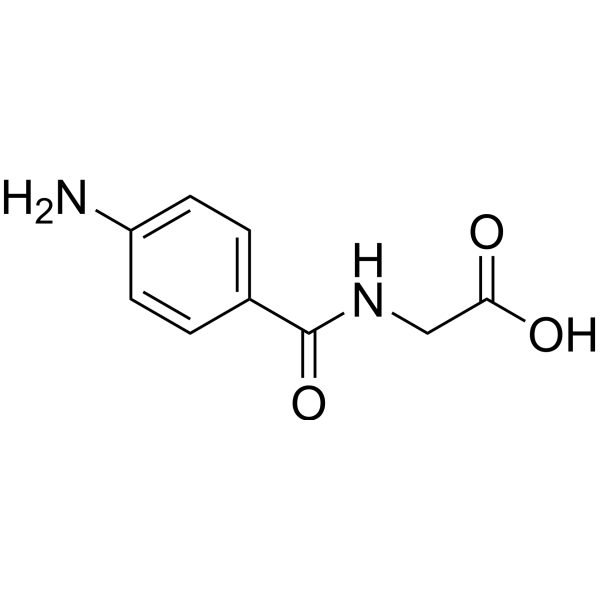
p-Aminohippuric acid
|
Others
|
Neurological Disease
Metabolic Disease
|
|
4-Aminohippuric acid (p-Aminohippuric acid) is a coordination ligand for metal ions (such as Cu 2+, Fe 3+, Hg 2+) and a functionalization reagent for nanomaterials. 4-Aminohippuric acid can coordinate with metal ions or modify the surface of materials such as carbon nanotubes and gold nanoparticles through amino and carboxyl groups. 4-Aminohippuric acid can form stable complexes with metal ions or participate in the synthesis of nanomaterials as a reducing agent/stabilizer, enriching metal ions or giving nanoparticles peroxidase-mimicking activity. 4-Aminohippuric acid can be used to construct highly sensitive electrochemical sensors or colorimetric sensors to detect and quantitatively analyze heavy metal ions such as copper, iron, and mercury in environmental water samples and biological samples. 4-Aminohippuric acid may also be a biomarker for attention-deficit/hyperactivity disorder (ADHD) .
|
-
-
- HY-34717
-
|
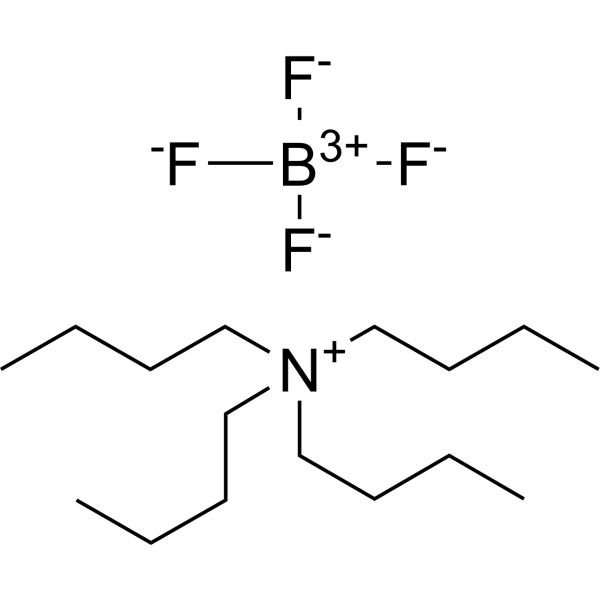
Tetra-n-butylammonium tetrafluoroborate
|
Biochemical Assay Reagents
|
Others
|
|
Tetrabutylammonium tetrafluoroborate is an inorganic salt commonly used in organic synthesis reactions and electrochemical applications. It is usually used as a catalyst or reagent, and is widely used in the field of organic synthesis, such as fluorination reaction, olefin addition and cyclization reaction, etc. In addition, it can also be used in electrochemical deposition and electroplating, and plays an important role in some electronic devices. Although it has no direct application in the medical field, it plays an important role in chemical research and industrial production.
|
-
-
- HY-P3003
-
-
-
- HY-W014408
-
|
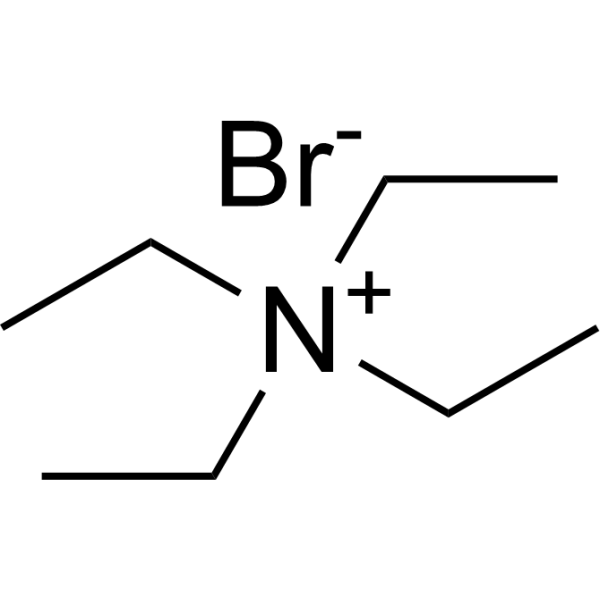
TEA bromide
|
Biochemical Assay Reagents
|
Others
|
|
Tetraethylammonium bromide is a quaternary ammonium salt consisting of a positively charged tetraethylammonium cation and a negatively charged bromide anion. This compound is commonly used as a phase transfer catalyst in organic chemical reactions, facilitating the transfer of reactants between immiscible phases. It can also be used as a reagent for the synthesis of various organic compounds, an electrolyte in electrochemical experiments, and a source of tetraethylammonium ions in biochemical and pharmacological research.
|
-
-
- HY-W014106
-
|
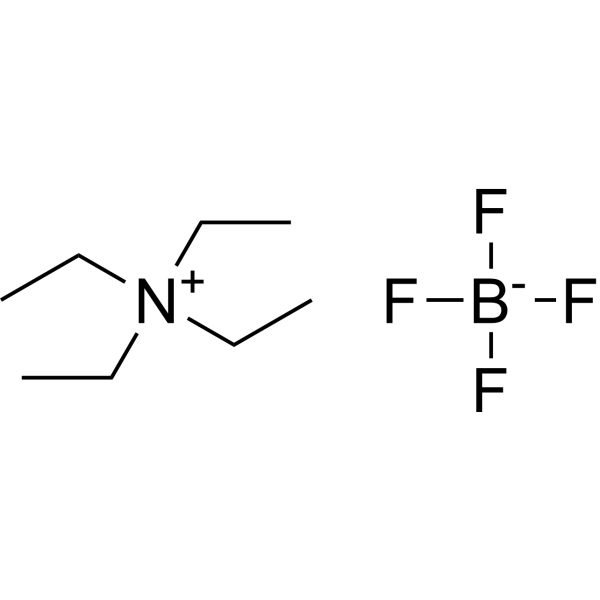
N,N,N-Triethylethanaminium tetrafluoroborate
|
Biochemical Assay Reagents
|
Others
|
|
Tetraethylammonium tetrafluoroborate is a quaternary ammonium salt consisting of a positively charged tetraethylammonium cation and a negatively charged tetrafluoroborate anion. This compound is commonly used as a phase transfer catalyst in organic chemical reactions, facilitating the transfer of reactants between immiscible phases. It can also be used as a reagent for the synthesis of various organic compounds, an electrolyte in electrochemical experiments, and a source of tetraethylammonium ions in biochemical and pharmacological research.
|
-
-
- HY-W111461
-
|
|
Biochemical Assay Reagents
|
Others
|
|
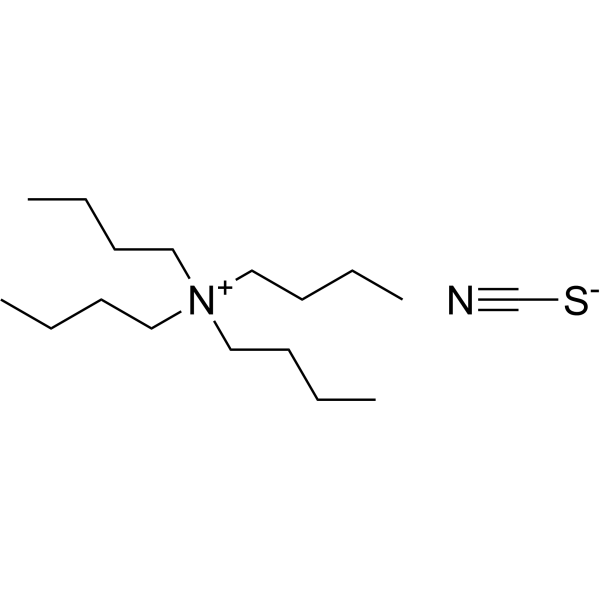
Tetrabutylammonium thiocyanateIt is a quaternary ammonium salt and belongs to the category of alkyl ammonium salts. This compound is widely used as a reagent in organic chemistry, especially for the synthesis of various organic compounds, including pharmaceuticals and agrochemicals. also, Tetrabutylammonium thiocyanateIt can also be used as an electrolyte in electrochemical devices and as a phase transfer catalyst in organic synthesis. Its unique chemical properties make it an important ingredient in a variety of industrial processes, including petrochemical refining and materials science.
|
-
-
- HY-W101255
-
|
MTEACl
|
Biochemical Assay Reagents
|
Others
|
|
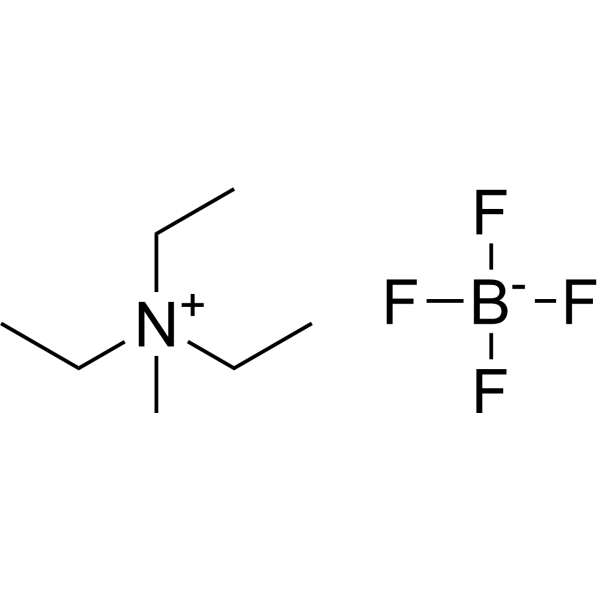
Triethylmethylammonium chloride is a quaternary ammonium salt belonging to the class of alkylammonium salts. This compound is widely used as a phase transfer catalyst in organic synthesis to facilitate the transfer of reactants between immiscible phases. In addition, it can be used as an electrolyte in electrochemical devices, a surfactant in emulsion polymerization, and a corrosion inhibitor. Its unique chemical properties make it an important ingredient in a variety of industrial applications, including pharmaceuticals, agrochemicals, and materials science.
|
-
-
- HY-W004547
-
|
4,4'-Diamino-2,2'-bipyridine
|
Biochemical Assay Reagents
|
Others
|
|
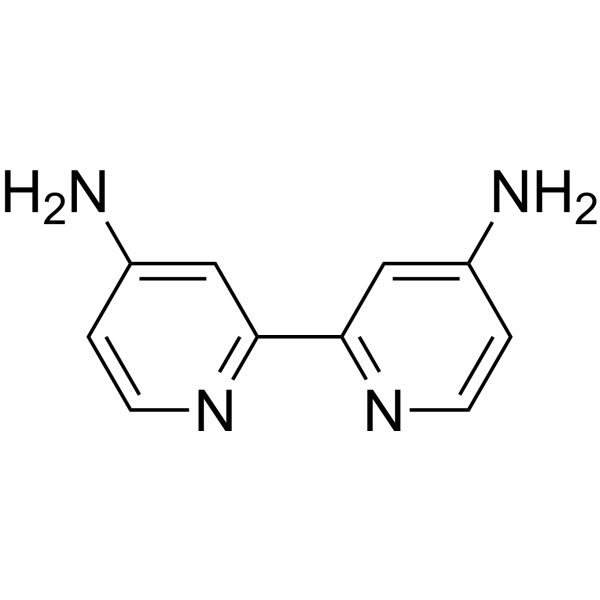
(NH2)2bpy (4,4'-Diamino-2,2'-bipyridine) is an organic compound commonly used as a catalyst and complexing reagent. It can form complexes with other metal ions or organic molecules, and can play a catalytic role in some organic synthesis reactions. In addition, this compound is also widely used in some chemical analysis and detection methods, such as in biological analysis and electrochemical analysis
|
-
-
- HY-P3003S
-
-
-
- HY-W099641
-
|
|
Biochemical Assay Reagents
|
Others
|
|
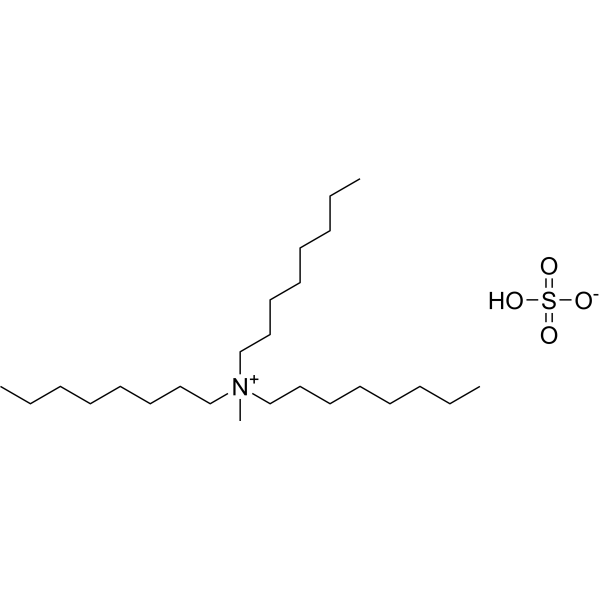
Methyltrioctylammonium hydrogen sulfate is a quaternary ammonium salt that is mainly used as an extraction solvent and a phase transfer catalyst in various chemical reactions. It is also used as an electrolyte in electrochemical devices such as batteries and fuel cells, and as a building block for the synthesis of pharmaceuticals and agrochemicals. MTOAHS are multifunctional compounds with many potential industrial applications due to their reactivity, stability, and ability to selectively extract certain compounds from mixtures.
|
-
-
- HY-W101253
-
|
|
Biochemical Assay Reagents
|
Others
|
|
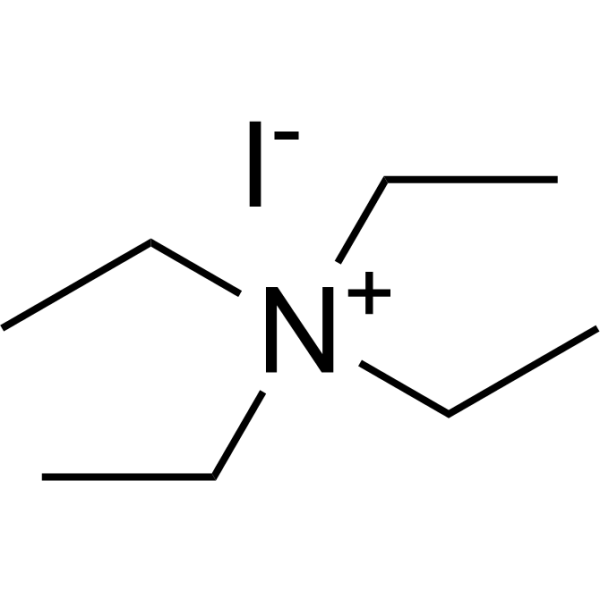
Tetraethylammonium (iodide) is a quaternary ammonium compound belonging to the class of alkylammonium salts. This compound is commonly used as a phase-transfer catalyst in organic synthesis because it facilitates the transfer of reactants between immiscible phases. It can also be used as an electrolyte in electrochemical devices and as a surfactant in detergent formulations. Its unique chemical properties make it an important ingredient in a variety of industrial applications, including pharmaceuticals, agrochemicals, and materials science.
|
-
-
- HY-B1306R
-
|
p-Aminohippuric acid (Standard)
|
Reference Standards
Biochemical Assay Reagents
|
Neurological Disease
Metabolic Disease
|
|
4-Aminohippuric acid (p-Aminohippuric acid) (Standard) is the analytical standard of 4-Aminohippuric acid (HY-B1306). This product is intended for research and analytical applications. 4-Aminohippuric acid (p-Aminohippuric acid) is a coordination ligand for metal ions (such as Cu 2+, Fe 3+, Hg 2+) and a functionalization reagent for nanomaterials. 4-Aminohippuric acid can coordinate with metal ions or modify the surface of materials such as carbon nanotubes and gold nanoparticles through amino and carboxyl groups. 4-Aminohippuric acid can form stable complexes with metal ions or participate in the synthesis of nanomaterials as a reducing agent/stabilizer, enriching metal ions or giving nanoparticles peroxidase-mimicking activity. 4-Aminohippuric acid can be used to construct highly sensitive electrochemical sensors or colorimetric sensors to detect and quantitatively analyze heavy metal ions such as copper, iron, and mercury in environmental water samples and biological samples. 4-Aminohippuric acid may also be a biomarker for attention-deficit/hyperactivity disorder (ADHD) .
|
-
-
- HY-W127671
-
|
|
Biochemical Assay Reagents
|
Others
|
|
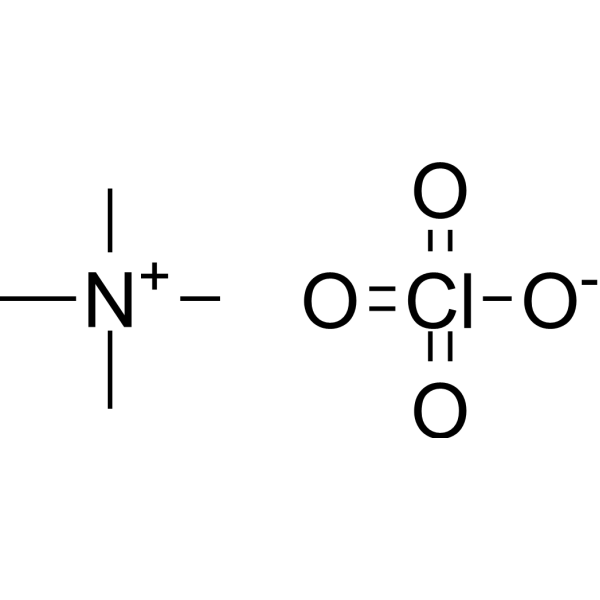
Tetramethylammonium perchlorate is used as an intermediate in organic and chemical synthesis. It is used as mobile phase in HPLC analysis and quantification of olanzapine, clozapine and N-desmethylclozapine. It acts as a supporting electrolyte in the electrochemical reduction of 1-bromodecane, 1-iodododecane, 2-iodooctane, and 2-bromooctane on a mercury cathode.
|
-
-
- HY-W040184
-
|
TMAHS
|
Biochemical Assay Reagents
|
Others
|
|
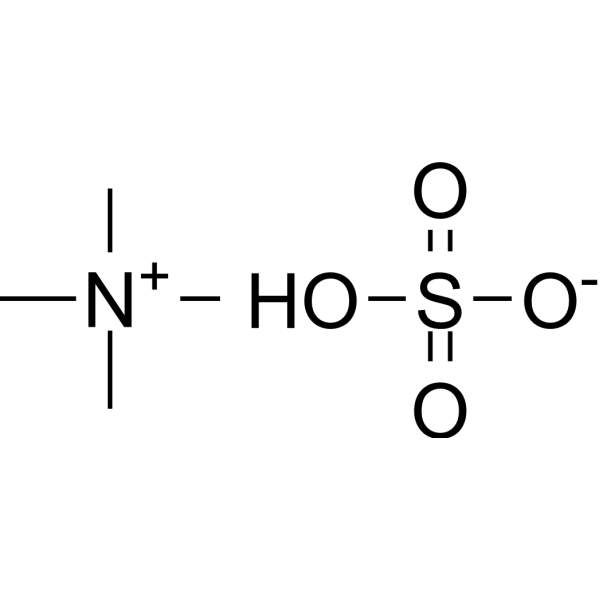
Tetramethylammonium hydrogensulfate, sometimes abbreviated as TMAHS, is a quaternary ammonium salt commonly used as a catalyst and phase transfer agent in chemical reactions, especially in organic synthesis. In addition, it is used as an electrolyte additive in electrochemical and rechargeable batteries. TMAHSs have also been investigated for their potential use in various applications such as wastewater treatment, gas separation, and fuel cells.
|
-
-
- HY-W014785
-
|
|
Drug Intermediate
|
Cancer
|
|
1,4-Diphenylbuta-1,3-diyne (Compound 2a) is a synthetic symmetrical 1,3-diene derivative. 1,4-Diphenylbuta-1,3-diyne exhibits significant selective anti-proliferative activity against HeLa cells. 1,4-Diphenylbuta-1,3-diyne can be utilized in cervical cancer research .
|
-
-
- HY-B1306S
-
|
p-Aminohippuric acid-d4
|
Biochemical Assay Reagents
|
Neurological Disease
Metabolic Disease
|
|
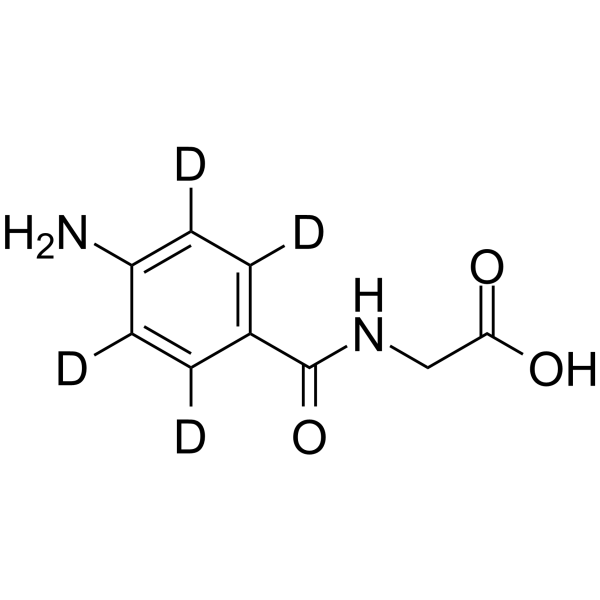
4-Aminohippuric acid-d4 (p-Aminohippuric acid-d4) is the deuterium labeled 4-Aminohippuric acid (HY-B1306). 4-Aminohippuric acid (p-Aminohippuric acid) is a coordination ligand for metal ions (such as Cu 2+, Fe 3+, Hg 2+) and a functionalization reagent for nanomaterials. 4-Aminohippuric acid can coordinate with metal ions or modify the surface of materials such as carbon nanotubes and gold nanoparticles through amino and carboxyl groups. 4-Aminohippuric acid can form stable complexes with metal ions or participate in the synthesis of nanomaterials as a reducing agent/stabilizer, enriching metal ions or giving nanoparticles peroxidase-mimicking activity. 4-Aminohippuric acid can be used to construct highly sensitive electrochemical sensors or colorimetric sensors to detect and quantitatively analyze heavy metal ions such as copper, iron, and mercury in environmental water samples and biological samples. 4-Aminohippuric acid may also be a biomarker for attention-deficit/hyperactivity disorder (ADHD) .
|
-
-
- HY-W101256
-
|
Triethylmethylammonium tetrafluoroborate
|
Biochemical Assay Reagents
|
Others
|
|
N,N-Diethyl-N-methylethanaminium tetrafluoroborate is a quaternary ammonium compound belonging to the class of alkylammonium salts. This compound is commonly used as a phase transfer catalyst in organic synthesis, facilitating the transfer of reactants between immiscible phases. Additionally, it is used as an electrolyte in electrochemical devices and as a surfactant in detergent formulations. Its unique chemical properties make it an important ingredient in a variety of industrial applications, including pharmaceuticals, agrochemicals, and materials science.
|
-
-
- HY-W075836
-
|
|
Biochemical Assay Reagents
|
Others
|
|
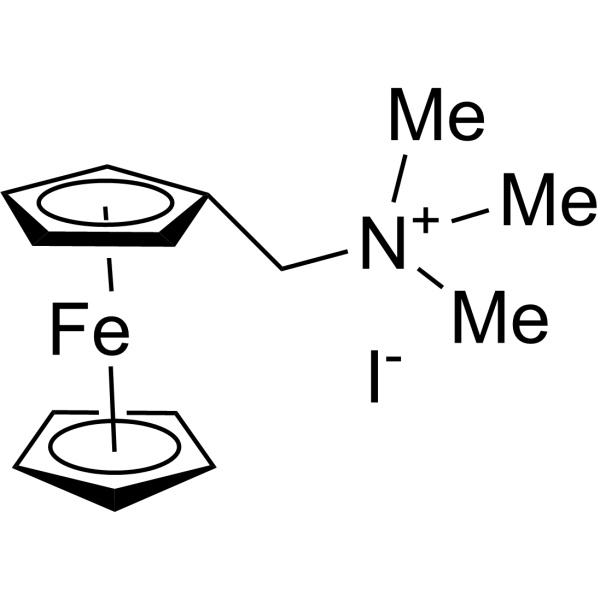
Ferrocenylmethyltrimethylammonium (iodide) is an organometallic salt consisting of a ferrocenyl group attached to a quaternary ammonium cation via a methylene bridge. Ferrocenylmethyltrimethylammonium (iodide) has been used as a catalyst and reagent in various organic reactions, including oxidation, reduction, and CH bond activation. In addition, it is also used as a precursor for the synthesis of other organometallic compounds and as a potential material for electrochemical applications.
|
-
-
- HY-W724370
-
|
TEA bromide-d20
|
Isotope-Labeled Compounds
Biochemical Assay Reagents
|
Others
|
|
Tetraethylammonium bromide-d20 (TEA bromide-d20) is the deuterium labeled Tetraethylammonium bromide (HY-W014408). Tetraethylammonium bromide is a quaternary ammonium salt consisting of a positively charged tetraethylammonium cation and a negatively charged bromide anion. This compound is commonly used as a phase transfer catalyst in organic chemical reactions, facilitating the transfer of reactants between immiscible phases. It can also be used as a reagent for the synthesis of various organic compounds, an electrolyte in electrochemical experiments, and a source of tetraethylammonium ions in biochemical and pharmacological research.
|
-
| Cat. No. |
Product Name |
Type |
-
- HY-34717
-
|
Tetra-n-butylammonium tetrafluoroborate
|
Biochemical Assay Reagents
|
|
Tetrabutylammonium tetrafluoroborate is an inorganic salt commonly used in organic synthesis reactions and electrochemical applications. It is usually used as a catalyst or reagent, and is widely used in the field of organic synthesis, such as fluorination reaction, olefin addition and cyclization reaction, etc. In addition, it can also be used in electrochemical deposition and electroplating, and plays an important role in some electronic devices. Although it has no direct application in the medical field, it plays an important role in chemical research and industrial production.
|
-
- HY-W014408
-
|
TEA bromide
|
Biochemical Assay Reagents
|
|
Tetraethylammonium bromide is a quaternary ammonium salt consisting of a positively charged tetraethylammonium cation and a negatively charged bromide anion. This compound is commonly used as a phase transfer catalyst in organic chemical reactions, facilitating the transfer of reactants between immiscible phases. It can also be used as a reagent for the synthesis of various organic compounds, an electrolyte in electrochemical experiments, and a source of tetraethylammonium ions in biochemical and pharmacological research.
|
-
- HY-W014106
-
|
N,N,N-Triethylethanaminium tetrafluoroborate
|
Biochemical Assay Reagents
|
|
Tetraethylammonium tetrafluoroborate is a quaternary ammonium salt consisting of a positively charged tetraethylammonium cation and a negatively charged tetrafluoroborate anion. This compound is commonly used as a phase transfer catalyst in organic chemical reactions, facilitating the transfer of reactants between immiscible phases. It can also be used as a reagent for the synthesis of various organic compounds, an electrolyte in electrochemical experiments, and a source of tetraethylammonium ions in biochemical and pharmacological research.
|
-
- HY-W111461
-
|
|
Biochemical Assay Reagents
|
|
Tetrabutylammonium thiocyanateIt is a quaternary ammonium salt and belongs to the category of alkyl ammonium salts. This compound is widely used as a reagent in organic chemistry, especially for the synthesis of various organic compounds, including pharmaceuticals and agrochemicals. also, Tetrabutylammonium thiocyanateIt can also be used as an electrolyte in electrochemical devices and as a phase transfer catalyst in organic synthesis. Its unique chemical properties make it an important ingredient in a variety of industrial processes, including petrochemical refining and materials science.
|
-
- HY-W101255
-
|
MTEACl
|
Biochemical Assay Reagents
|
|
Triethylmethylammonium chloride is a quaternary ammonium salt belonging to the class of alkylammonium salts. This compound is widely used as a phase transfer catalyst in organic synthesis to facilitate the transfer of reactants between immiscible phases. In addition, it can be used as an electrolyte in electrochemical devices, a surfactant in emulsion polymerization, and a corrosion inhibitor. Its unique chemical properties make it an important ingredient in a variety of industrial applications, including pharmaceuticals, agrochemicals, and materials science.
|
-
- HY-W004547
-
|
4,4'-Diamino-2,2'-bipyridine
|
Biochemical Assay Reagents
|
|
(NH2)2bpy (4,4'-Diamino-2,2'-bipyridine) is an organic compound commonly used as a catalyst and complexing reagent. It can form complexes with other metal ions or organic molecules, and can play a catalytic role in some organic synthesis reactions. In addition, this compound is also widely used in some chemical analysis and detection methods, such as in biological analysis and electrochemical analysis
|
-
- HY-W099641
-
|
|
Biochemical Assay Reagents
|
|
Methyltrioctylammonium hydrogen sulfate is a quaternary ammonium salt that is mainly used as an extraction solvent and a phase transfer catalyst in various chemical reactions. It is also used as an electrolyte in electrochemical devices such as batteries and fuel cells, and as a building block for the synthesis of pharmaceuticals and agrochemicals. MTOAHS are multifunctional compounds with many potential industrial applications due to their reactivity, stability, and ability to selectively extract certain compounds from mixtures.
|
-
- HY-W101253
-
|
|
Biochemical Assay Reagents
|
|
Tetraethylammonium (iodide) is a quaternary ammonium compound belonging to the class of alkylammonium salts. This compound is commonly used as a phase-transfer catalyst in organic synthesis because it facilitates the transfer of reactants between immiscible phases. It can also be used as an electrolyte in electrochemical devices and as a surfactant in detergent formulations. Its unique chemical properties make it an important ingredient in a variety of industrial applications, including pharmaceuticals, agrochemicals, and materials science.
|
-
- HY-W127671
-
|
|
Biochemical Assay Reagents
|
|
Tetramethylammonium perchlorate is used as an intermediate in organic and chemical synthesis. It is used as mobile phase in HPLC analysis and quantification of olanzapine, clozapine and N-desmethylclozapine. It acts as a supporting electrolyte in the electrochemical reduction of 1-bromodecane, 1-iodododecane, 2-iodooctane, and 2-bromooctane on a mercury cathode.
|
-
- HY-W040184
-
|
TMAHS
|
Biochemical Assay Reagents
|
|
Tetramethylammonium hydrogensulfate, sometimes abbreviated as TMAHS, is a quaternary ammonium salt commonly used as a catalyst and phase transfer agent in chemical reactions, especially in organic synthesis. In addition, it is used as an electrolyte additive in electrochemical and rechargeable batteries. TMAHSs have also been investigated for their potential use in various applications such as wastewater treatment, gas separation, and fuel cells.
|
-
- HY-W101256
-
|
Triethylmethylammonium tetrafluoroborate
|
Biochemical Assay Reagents
|
|
N,N-Diethyl-N-methylethanaminium tetrafluoroborate is a quaternary ammonium compound belonging to the class of alkylammonium salts. This compound is commonly used as a phase transfer catalyst in organic synthesis, facilitating the transfer of reactants between immiscible phases. Additionally, it is used as an electrolyte in electrochemical devices and as a surfactant in detergent formulations. Its unique chemical properties make it an important ingredient in a variety of industrial applications, including pharmaceuticals, agrochemicals, and materials science.
|
-
- HY-W075836
-
|
|
Biochemical Assay Reagents
|
|
Ferrocenylmethyltrimethylammonium (iodide) is an organometallic salt consisting of a ferrocenyl group attached to a quaternary ammonium cation via a methylene bridge. Ferrocenylmethyltrimethylammonium (iodide) has been used as a catalyst and reagent in various organic reactions, including oxidation, reduction, and CH bond activation. In addition, it is also used as a precursor for the synthesis of other organometallic compounds and as a potential material for electrochemical applications.
|
| Cat. No. |
Product Name |
Target |
Research Area |
| Cat. No. |
Product Name |
Category |
Target |
Chemical Structure |
-
- HY-B1306
-
|
p-Aminohippuric acid
|
Classification of Application Fields
Ketones, Aldehydes, Acids
Other Diseases
Endogenous metabolite
Disease Research Fields
Source Classification
|
Others
|
|
4-Aminohippuric acid (p-Aminohippuric acid) is a coordination ligand for metal ions (such as Cu 2+, Fe 3+, Hg 2+) and a functionalization reagent for nanomaterials. 4-Aminohippuric acid can coordinate with metal ions or modify the surface of materials such as carbon nanotubes and gold nanoparticles through amino and carboxyl groups. 4-Aminohippuric acid can form stable complexes with metal ions or participate in the synthesis of nanomaterials as a reducing agent/stabilizer, enriching metal ions or giving nanoparticles peroxidase-mimicking activity. 4-Aminohippuric acid can be used to construct highly sensitive electrochemical sensors or colorimetric sensors to detect and quantitatively analyze heavy metal ions such as copper, iron, and mercury in environmental water samples and biological samples. 4-Aminohippuric acid may also be a biomarker for attention-deficit/hyperactivity disorder (ADHD) .
|
-
-
- HY-P3003
-
|
|
Microorganisms
Source Classification
|
Potassium Channel
Apoptosis
Autophagy
Reactive Oxygen Species (ROS)
Mitochondrial Metabolism
|
|
Cereulide is an orally active, blood-brain barrier-permeable emetic toxin. Cereulide acts as a potassium ionophore that inserts into membranes, forms complexes with K +, and transports K + from the cytoplasm into the mitochondrial matrix. Cereulide disrupts the electrochemical gradient of the inner mitochondrial membrane, leading to mitochondrial swelling and dysfunction, uncoupling of oxidative phosphorylation, inhibition of ATP synthesis, ROS accumulation, and ultimately triggering apoptosis and autophagy. Cereulide exhibits multi-organ toxicity and can be used for research on emetic food poisoning .
|
-
-
- HY-B1306R
-
|
p-Aminohippuric acid (Standard)
|
Structural Classification
Ketones, Aldehydes, Acids
Endogenous metabolite
Source Classification
|
Reference Standards
Biochemical Assay Reagents
|
|
4-Aminohippuric acid (p-Aminohippuric acid) (Standard) is the analytical standard of 4-Aminohippuric acid (HY-B1306). This product is intended for research and analytical applications. 4-Aminohippuric acid (p-Aminohippuric acid) is a coordination ligand for metal ions (such as Cu 2+, Fe 3+, Hg 2+) and a functionalization reagent for nanomaterials. 4-Aminohippuric acid can coordinate with metal ions or modify the surface of materials such as carbon nanotubes and gold nanoparticles through amino and carboxyl groups. 4-Aminohippuric acid can form stable complexes with metal ions or participate in the synthesis of nanomaterials as a reducing agent/stabilizer, enriching metal ions or giving nanoparticles peroxidase-mimicking activity. 4-Aminohippuric acid can be used to construct highly sensitive electrochemical sensors or colorimetric sensors to detect and quantitatively analyze heavy metal ions such as copper, iron, and mercury in environmental water samples and biological samples. 4-Aminohippuric acid may also be a biomarker for attention-deficit/hyperactivity disorder (ADHD) .
|
-
| Cat. No. |
Product Name |
Chemical Structure |
-
- HY-P3003S
-
|
|
|
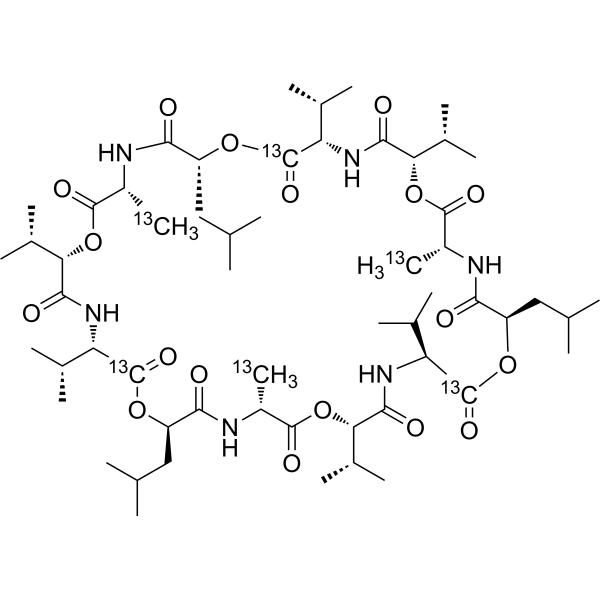
Cereulide- 13C6 is a deuterated form of Cereulide. Cereulide is an orally active, blood-brain barrier-permeable emetic toxin. Cereulide acts as a potassium ionophore that inserts into membranes, forms complexes with K +, and transports K + from the cytoplasm into the mitochondrial matrix. Cereulide disrupts the electrochemical gradient of the inner mitochondrial membrane, leading to mitochondrial swelling and dysfunction, uncoupling of oxidative phosphorylation, inhibition of ATP synthesis, ROS accumulation, and ultimately triggering apoptosis and autophagy. Cereulide exhibits multi-organ toxicity and can be used for research on emetic food poisoning.
|
-
-
- HY-B1306S
-
|
|
|
4-Aminohippuric acid-d4 (p-Aminohippuric acid-d4) is the deuterium labeled 4-Aminohippuric acid (HY-B1306). 4-Aminohippuric acid (p-Aminohippuric acid) is a coordination ligand for metal ions (such as Cu 2+, Fe 3+, Hg 2+) and a functionalization reagent for nanomaterials. 4-Aminohippuric acid can coordinate with metal ions or modify the surface of materials such as carbon nanotubes and gold nanoparticles through amino and carboxyl groups. 4-Aminohippuric acid can form stable complexes with metal ions or participate in the synthesis of nanomaterials as a reducing agent/stabilizer, enriching metal ions or giving nanoparticles peroxidase-mimicking activity. 4-Aminohippuric acid can be used to construct highly sensitive electrochemical sensors or colorimetric sensors to detect and quantitatively analyze heavy metal ions such as copper, iron, and mercury in environmental water samples and biological samples. 4-Aminohippuric acid may also be a biomarker for attention-deficit/hyperactivity disorder (ADHD) .
|
-
-
- HY-W724370
-
|
|
|
Tetraethylammonium bromide-d20 (TEA bromide-d20) is the deuterium labeled Tetraethylammonium bromide (HY-W014408). Tetraethylammonium bromide is a quaternary ammonium salt consisting of a positively charged tetraethylammonium cation and a negatively charged bromide anion. This compound is commonly used as a phase transfer catalyst in organic chemical reactions, facilitating the transfer of reactants between immiscible phases. It can also be used as a reagent for the synthesis of various organic compounds, an electrolyte in electrochemical experiments, and a source of tetraethylammonium ions in biochemical and pharmacological research.
|
-
Your information is safe with us. * Required Fields.
Inquiry Information
- Product Name:
- Cat. No.:
- Quantity:
- MCE Japan Authorized Agent:

