
1. Search Result
Search Result
Pathways Recommended: Stem Cell/Wnt Cell Cycle/DNA Damage
Results for "

Endothelial cell-cell junctions

" in MedChemExpress (MCE) Product Catalog:

950

Inhibitors & Agonists

6

Screening Libraries

17

Fluorescent Dye

43

Biochemical Assay Reagents

147

Peptides

5

MCE Kits

51

Inhibitory Antibodies

186

Natural
Products

118

Recombinant Proteins

38

Isotope-Labeled Compounds

55

Antibodies

33

Oligonucleotides

1

GMP Molecules

Targets Recommended:
Cat. No. Product Name Target Research Areas Chemical Structure
  • HY-13813
    Blebbistatin
    40+ Cited Publications

    Myosin Others
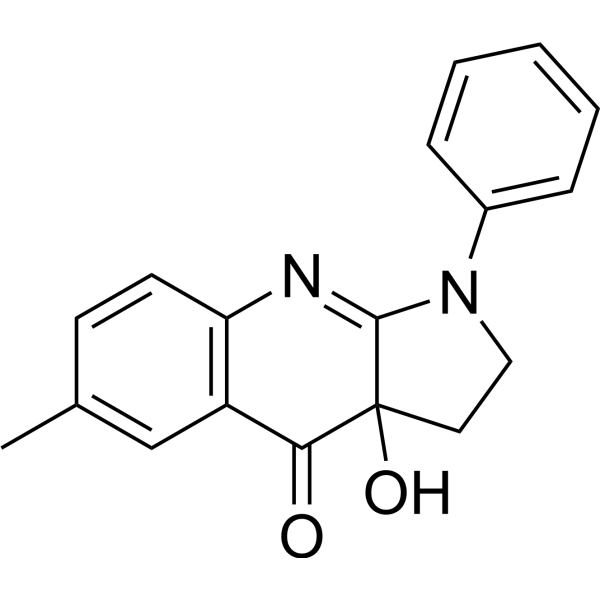
    Blebbistatin is a selective non-muscle myosin II (NMII) inhibitor, promotes directional migration of corneal endothelial cells (CECs) and accelerates wound healing, and better preserves cell junctional integrity and barrier function. Blebbistatin blocks cell migration .
    Blebbistatin
  • HY-101903
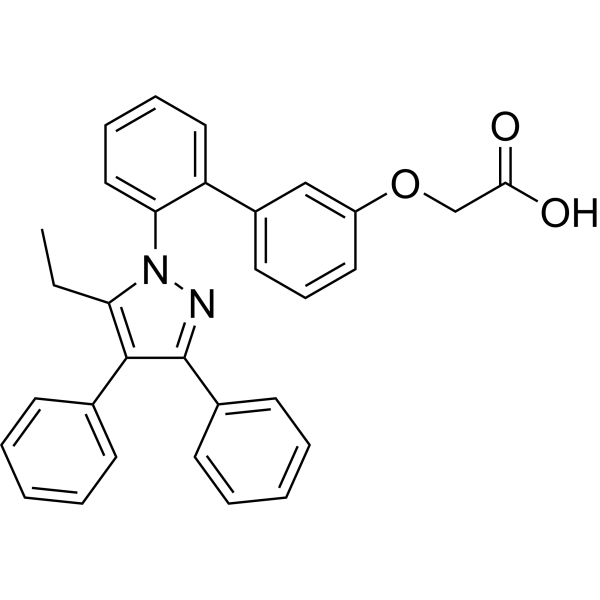
    BMS-309403
    20+ Cited Publications

    FABP Cardiovascular Disease Metabolic Disease
    BMS-309403 is a potent, orally active and selective adipocyte fatty acid binding protein (also known as FABP4, aP2) inhibitor with Kis of <2, 250, and 350 nM for FABP4, FABP3, and FABP5, respectively. BMS-309403 interacts with the fatty-acid-binding pocket within the interior of the protein and competitively inhibits the binding of endogenous fatty acids. BMS-309403 improves endothelial function in apolipoprotein E-deficient mice and in cultured human endothelial cells .
    BMS-309403
  • HY-N0194
    Asiatic acid
    4 Publications Verification

    Apoptosis Parasite Inflammation/Immunology Cancer
    Asiatic acid, a pentacyclic triterpene found in Centella asiatica (Centella asiatica), has anticancer activity. Asiatic acid induces apoptosis in melanoma cells and has barrier protective effects on human aortic endothelial cells (HAEC). Asiatic acid also has anti-inflammatory activity and inhibits tumor necrosis factor (TNF)-α-induced endothelial barrier dysfunction. Asiatic acid also inhibits NLRP3 inflammasome activation and NF-κB pathway, effectively inhibits inflammation in rats, and has neuroprotective effects in rat spinal cord injury (SCI) model .
    Asiatic acid
  • HY-113046
    5-Methyltetrahydrofolic acid
    5+ Cited Publications

    5-Methyl THF; 5-MTHF

    Endogenous Metabolite Cardiovascular Disease Metabolic Disease
    5-Methyltetrahydrofolic acid (5-Methyl THF) is the main circulating form of folic acid in the body and is involved in a variety of biochemical reactions. 5-Methyltetrahydrofolic acid regulates cardiovascular function by increasing the production of endothelin-1 (ET-1) in low-density lipoprotein-treated endothelial cells and can be used in the study of cardiovascular diseases .
    5-Methyltetrahydrofolic acid
  • HY-14946

    3,4-Diaminopyridine

    Potassium Channel Neurological Disease
    Amifampridine (3,4-Diaminopyridine) is an orally active, potent and cell permeable voltage-gated potassium (Kv) channel blocker (PCB). Amifampridine is efficacy in the reversal of BoNT/A (HY-P79153) intoxication. Amifampridine increases transmitter release from neuromuscular junctions (NMJs). Amifampridine can be used for Lambert-Eaton myasthenic syndrome (LEMS) research .
    Amifampridine
  • HY-114041
    Resolvin E1
    2 Publications Verification

    RvE1

    Endogenous Metabolite Inflammation/Immunology
    Resolvin E1 (RvE1), a potent endogenous pro-resolving mediator of inflammation, is derived from omega-3 fatty acid eicosapentaenoic acid (EPA). Resolvin E1 is endogenously biosynthesized from EPA in the presence of Aspirin during the spontaneous resolution phase of acute inflammation, where specific cell-cell interactions occur. Resolvin E1 possesses unique counterregulatory actions that inhibit polymorphonuclear leukocyte (PMN) transendothelial migration. Resolvin E1 also acts as a potent inhibitor of leukocyte infiltration, dendritic cell migration, and IL-12 production .
    Resolvin E1
  • HY-170230

    ECGS,Bovine

    Biochemical Assay Reagents Others
    Bovine Endothelial cell growth supplement, suitable for cell culture (ECGS, Bovine) is a culture medium supplement, endothelial cell growth supplement (ECGS), which promotes the proliferation of human saphenous vein endothelial cells (HSVEC) and human umbilical vein endothelial cells (HUVEC) .
    Bovine Endothelial cell growth supplement,suitable for cell culture
  • HY-P1940

    Cyclo(Tyr-Pro)

    Endogenous Metabolite Bacterial Fungal Infection Cancer
    Maculosin (Cyclo (Tyr-Pro)) is a host-specific phytotoxin for spotted knapweed from Alternaria alternata. Maculosin is a quorum-sensing molecule involved in cell-cell communication. Maculosin also acts as a signaling molecule regulating virulence gene expression. Maculosin shows antimicrobial, antifungal, antioxidant and anti-cancer properties .Maculosin (Cyclo (Tyr-Pro)) is a host-specific phytotoxin for spotted knapweed from Alternaria alternata. Maculosin is a quorum-sensing molecule involved in cell-cell communication. Maculosin also acts as a signaling molecule regulating virulence gene expression. Maculosin shows antimicrobial, antifungal, antioxidant and anti-cancer properties .
    Maculosin
  • HY-117275
    Meclofenamic acid
    5+ Cited Publications

    Meclofenamate

    Fat Mass and Obesity-associated Protein (FTO) Potassium Channel Gap Junction Protein Endogenous Metabolite Neurological Disease Metabolic Disease Inflammation/Immunology
    Meclofenamic acid (Meclofenamate) is a non-steroidal anti-inflammatory agent. Meclofenamic acid is a highly selective FTO (fat mass and obesity-associated) enzyme inhibitor. Meclofenamic acid competes with FTO binding for the m(6)A-containing nucleic acid. Meclofenamic acid is a non-selective gap-junction blocker. Meclofenamic acid inhibits hKv2.1 and hKv1.1, with IC50 values of 56.0 and 155.9 μM, respectively .
    Meclofenamic acid
  • HY-101903A
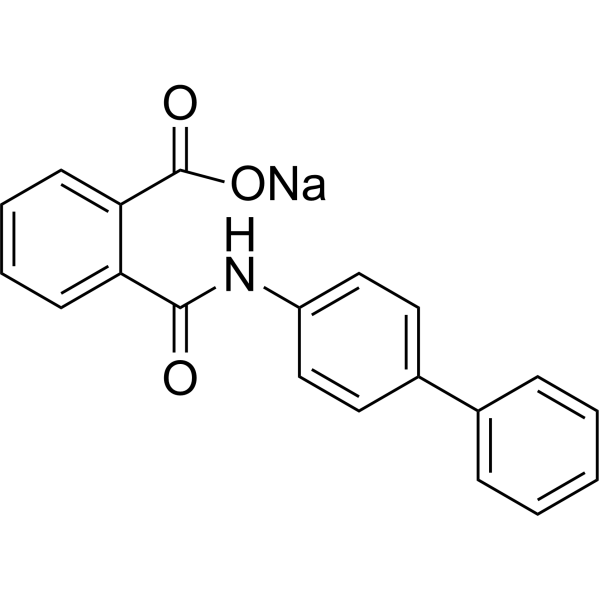
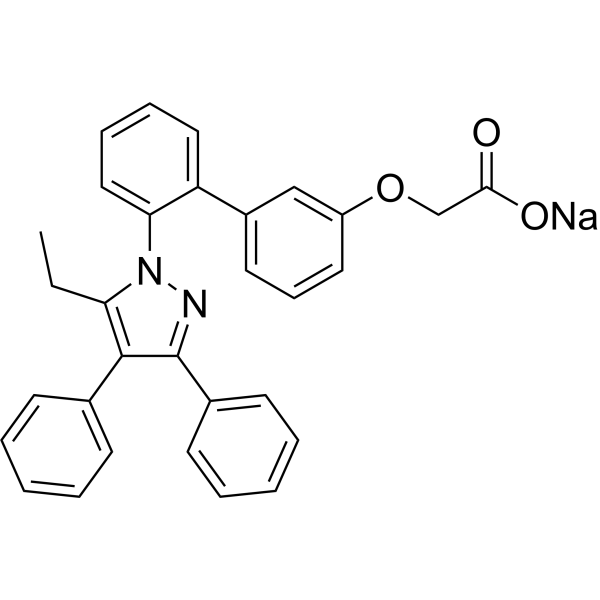
    BMS-309403 sodium
    20+ Cited Publications

    FABP Cardiovascular Disease Metabolic Disease
    BMS-309403 sodium is a potent, orally active, and selective adipocyte fatty acid binding protein (also known as FABP4, aP2) inhibitor, with Kis of <2, 250, and 350 nM for FABP4, FABP3, and FABP5, respectively. BMS-309403 sodium interacts with the fatty-acid-binding pocket within the interior of the protein and competitively inhibits the binding of endogenous fatty acids. BMS-309403 sodium improves endothelial function in apolipoprotein E-deficient mice and in cultured human endothelial cells .
    BMS-309403 sodium
  • HY-106225
    Rotigaptide
    1 Publications Verification

    ZP123

    Gap Junction Protein Cardiovascular Disease
    Rotigaptide (ZP123) is a novel and specific modulator of connexin 43 (Cx43). Rotigaptide prevents the uncoupling of Cx43-mediated gap junction communication and normalizes cell-to-cell communication during acute metabolic stress. Rotigaptide is a potent antiarrhythmic peptide (AAP) with improved stability and has the potential for the investigation of cardiac arrhythmias-specifically atrial fibrillation .
    Rotigaptide
  • HY-126666

    ADC Payload Inflammation/Immunology Cancer
    PNU-159682 carboxylic acid (Compound 53) is a potent ADCs cytotoxin and encodes a member of the C-type lectin/C-type lectin-like domain (CTL/CTLD) superfamily. PNU-159682 carboxylic acid has protein fold and diverse functions, such as cell adhesion, cell-cell signalling, glycoprotein turnover, and roles in inflammation and immune response .
    PNU-159682 carboxylic acid
  • HY-E70005K

    Proteasome Others
    Collagenase (Type A, animal free) is a proteolytic enzyme targeting collagen, capable of releasing corneal endothelial cells (CECs) without damaging cell junctions .
    Collagenase (Type A, animal free)
  • HY-E70005M

    Proteasome Others
    Collagenase (Type C, animal free) is a proteolytic enzyme targeting collagen, capable of releasing corneal endothelial cells (CECs) without damaging cell junctions .
    Collagenase (Type C, animal free)
  • HY-129997
    Luteolinidin chloride
    1 Publications Verification

    CD38 NADPH Oxidase Tyrosinase Cardiovascular Disease
    Luteolinidin chloride is a deoxyanthocyanidin isolated from the plant Sorghum bicolor with antioxidant activity. Luteolinidin chloride is a potent CD38 inhibitor (Ki=11.4 μM) and protects the heart from ischemia/reperfusion injury by preserving endothelial nitric oxide synthase (eNOS) function and preventing endothelial dysfunction. Luteolinidin chloride is also a competitive inhibitor of tyrosinase (IC50=3.7 μM) and blocks the production of melanin .
    Luteolinidin chloride
  • HY-P0132
    YIGSR
    1 Publications Verification

    Laminin Fragment 929-933

    NO Synthase Cancer
    YIGSR (Laminin Fragment 929-933) is a polypeptide that inhibits tumor growth and metastasis of leukemia cells. YIGSR specifically binds to the 67kDa laminin receptor and regulates the expression of eNOS in endothelial cells. YIGSR can be used in leukemia-related research .
    YIGSR
  • HY-E70005L

    Proteasome Others
    Collagenase (Type B, animal free) is a proteolytic enzyme targeting collagen, capable of releasing corneal endothelial cells (CECs) without damaging cell junctions .
    Collagenase (Type B, animal free)
  • HY-P10580

    Tie PI3K Akt Cadherin Claudin Cardiovascular Disease Infection Inflammation/Immunology
    Vasculotide is a blood-brain barrier (BBB)-penetrant Tie2 agonist. Vasculotide binds to a unique domain of Tie2, induces receptor clustering to drive phosphorylation, activates downstream PI3K/Akt and eNOS pathways, enhances inter-endothelial cell junctions (such as VE-cadherin and claudin-5), and inhibits inflammatory adhesion molecules, ultimately stabilizing the vascular endothelial barrier and reducing its permeability . Vasculotide alleviates pulmonary microvascular leakage and microcirculatory dysfunction caused by cardiopulmonary bypass, acts as an adjuvant radioprotective agent to reduce acute radiation dermatitis, and promotes BBB recovery after focused ultrasound (FUS). Combination of Vasculotide with antibiotics reduces lung injury .
    Vasculotide
  • HY-P99523

    AMG 199

    CD3 Cancer
    Vepsitamab (AMG 199) is a bispecific T-cell engager (HLE BiTE) that binds to MUC17 and CD3. Vepsitamab directs CD3-positive cells to target MUC17-positive cells. Vepsitamab induces cell activation and proliferation. Vepsitamab is applicable to research related to gastric cancer and gastroesophageal junction (g/gej) cancer .
    Vepsitamab
  • HY-125864C

    Biochemical Assay Reagents Cardiovascular Disease
    Porcine Fibrinogen is a coagulation protein, purified from porcine plasma with no plasminogen contained. Porcine Fibrinogen has excellent biocompatibility and does not induce aggregation of porcine platelets when in contact with porcine hepatocytes, aortic endothelial cells or hepatic sinusoidal endothelial cells. Porcine Fibrinogen is widely used in studies on the pathological mechanisms of cardiovascular diseases such as atherosclerosis and the development of related drugs .
    Porcine Fibrinogen
  • HY-101795
    Larixyl acetate
    2 Publications Verification

    TRP Channel HPV Autophagy Apoptosis PERK Akt Src Infection Cardiovascular Disease Neurological Disease
    Larixyl acetate is a potent and selective TRPC6 inhibitor with IC50 values of 0.58 μM and 6.83 μM against hTRPC6-YFP and hTRPC3-YFP, respectively. Larixyl acetate prevents HPV and is effective in protecting against traumatic brain injury-induced systemic endothelial dysfunction .
    Larixyl acetate
  • HY-N10534

    Lewis X

    Parasite Infection Inflammation/Immunology Cancer
    Lewis X trisaccharide (Lewis X, Le x) is a potent TH2 regulator, antagonizes LPS-induced IL-12 immune expression. Lewis X trisaccharide is a human histo-blood group antigen, plays an key role in cell-cell adhesion, and servers as a tumor marker. Lewis X trisaccharide is highly expressed in the outer membrane of the parasite, can be used for the immunology research of schistosomiasis .
    Lewis X trisaccharide
  • HY-W008956

    Microtubule/Tubulin DNA/RNA Synthesis Cardiovascular Disease Inflammation/Immunology
    Myoseverin is a microtubule-binding molecule and angiogenesis inhibitor. Myoseverin can induce the reversible fission of multinucleated myotubes into mononucleated fragments. In addition, Myoseverin exerts anti-angiogenic effects by inhibiting endothelial cell function and endothelial progenitor cell differentiation .
    Myoseverin
  • HY-136642

    Glucocorticoid Receptor Inflammation/Immunology
    Fluocinolone is a potent steroid with highly selective glucocorticoid receptor agonist activity. Fluocinolone stabilizes the blood-retinal barrier by enhancing endothelial tight junctions, inhibiting the VEGF pathway and inflammatory factors. Fluocinolone has high lipophilicity, enabling long-term sustained release in the vitreous. Fluocinolone is used in research related to dermatological diseases, diabetic macular edema, uveitis and oral lichen planus .
    Fluocinolone
  • HY-P99215

    Anti-EGFL7; RG 7414

    VEGFR Cancer
    Parsatuzumab (Anti-EGFL7; RG 7414) is a humanized monoclonal antibody, acts as an immunomodulator and binds to EGFL7. Parsatuzumab selectively blocks the interaction between EGFL7 and endothelial cells, potentially inhibiting vascular regrowth and reducing vascular endothelial growth factor (VEGF) inhibition .
    Parsatuzumab
  • HY-P3695

    FGFR Cancer
    VSPPLTLGQLLS is a small peptide FGFR3 inhibitor, peptide P3, inhibits FGFR3 phosphorylation. VSPPLTLGQLLS inhibits 9-cisRA-induced tracheal lymphangiogenesis and blocks lymphatic endothelial cell (LEC) proliferation, migration, and tubule formation .
    VSPPLTLGQLLS
  • HY-112911

    Lipase Cardiovascular Disease
    Endothelial lipase inhibitor-1 is a potent endothelial lipase inhibitor with an IC50 of 49 nM.
    Endothelial lipase inhibitor-1
  • HY-W007511

    Isohexanol; Isohexyl alcohol

    Drug Derivative Neurological Disease
    4-Methyl-1-pentanol is a volatile aroma component of red wine, which is often used in the production and blending of wine. 4-Methyl-1-pentanol can also be used as an alcohol antagonist to antagonize the effects of ethanol and 1-butanol on cell-cell adhesion, and is used in the study of fetal alcohol syndrome .
    4-Methyl-1-pentanol
  • HY-P10886

    Gap Junction Protein Claudin Inflammation/Immunology
    Zifogaptide is a gap junction protein channel regulator. Zifogaptide mimics the PDZ-binding motif at the C-terminal of Claudin C and competitively interferes with the interaction between Claudin–TJP1 (ZO-1) scaffold. Zifogaptide can promote epithelial cell migration, reduce scar formation, and accelerate wound healing. Zifogaptide can be used for radiation dermatitis, skin injuries, etc .
    Zifogaptide
  • HY-N0194R

    Reference Standards Apoptosis Parasite Inflammation/Immunology Cancer
    Asiatic acid (Standard) is the analytical standard of Asiatic acid. This product is intended for research and analytical applications. Asiatic acid, a pentacyclic triterpene found in Centella asiatica (Centella asiatica), has anticancer activity. Asiatic acid induces apoptosis in melanoma cells and has barrier protective effects on human aortic endothelial cells (HAEC). Asiatic acid also has anti-inflammatory activity and inhibits tumor necrosis factor (TNF)-α-induced endothelial barrier dysfunction. Asiatic acid also inhibits NLRP3 inflammasome activation and NF-κB pathway, effectively inhibits inflammation in rats, and has neuroprotective effects in rat spinal cord injury (SCI) model .
    Asiatic acid (Standard)
  • HY-P10586A

    MALP-2 TFA

    Toll-like Receptor (TLR) NO Synthase Cardiovascular Disease Metabolic Disease
    Macrophage-activating lipopeptide 2 TFA is an agonist of Toll like receptors TLR-2/TLR-6. Macrophage-activating lipopeptide-2 enhances endothelial nitric oxide synthase (eNOS) phosphorylation and endothelial cell release of NO, thereby improving vasodilation. Macrophage-activating lipopeptide-2 enhances endothelial adhesion of white blood cells and improve perfusion recovery and collateral growth in the hind limbs of hypercholesterolemic Apoe deficient mice undergoing experimental femoral artery ligation (FAL) .
    Macrophage-activating lipopeptide 2 TFA
  • HY-P4641

    Trp-Phe

    Angiotensin-converting Enzyme (ACE) Endothelin Receptor Cardiovascular Disease
    H-Trp-Phe-OH (Trp-Phe) is an ACE inhibitor and endothelial function regulator, with an ACE IC50 of 0.318 mg/mL. H-Trp-Phe-OH increases nitric oxide concentration, reduces endothelin-1 (ET-1) levels, and reverses norepinephrine-mediated endothelial cell dysfunction. H-Trp-Phe-OH exhibits antihypertensive activity. H-Trp-Phe-OH can be used in studies related to hypertension and atherosclerosis .
    H-Trp-Phe-OH
  • HY-B1588
    Carbenoxolone
    5+ Cited Publications

    Amyloid-β Gap Junction Protein Neurological Disease Metabolic Disease
    Carbenoxolone is a blood-brain barrier-permeable Pannexin1 inhibitor, gap junction (Gap junction) blocker, and β-amyloid 42 inhibitor. Carbenoxolone modulates voltage-gated currents of wild-type and mutant Panx1, and inhibits stimulus-activated Panx1 channel function. Carbenoxolone interacts with stable residues of β-amyloid 42 peptides, fibrils and oligomers, thereby inhibiting their aggregation. Carbenoxolone alleviates liver fibrosis. Carbenoxolone exerts neuroprotective and nootropic effects. Carbenoxolone can be used in studies related to Alzheimer's disease and liver fibrosis .
    Carbenoxolone
  • HY-P3318

    L-BOC2

    Leukotriene Receptor Inflammation/Immunology
    Boc-Phe-Leu-Phe-Leu-Phe (Boc-FLFLF) is a N-formyl peptide receptors (FPR) inhibitor. Boc-Phe-Leu-Phe-Leu-Phe abolishes the FMLP-induced release of peptide leukotrienes. Boc-Phe-Leu-Phe-Leu-Phe inhibits the sprouting of human umbilical vein endothelial cell (HUVEC) spheroids mediated by proliferative diabetic retinopathy (PDR) vitreous and vascular endothelial growth factor (VEGF) respectively in a three-dimensional fibrin gel. Boc-Phe-Leu-Phe-Leu-Phe inhibits the anti-inflammatory and antifibrotic effects of Ac2-26 (HY-P1098). Boc-Phe-Leu-Phe-Leu-Phe can be used for the study of immunology .
    Boc-Phe-Leu-Phe-Leu-Phe
  • HY-P10831

    VEGFR Cardiovascular Disease Cancer
    GNQWFI, an anti-Flt1 peptide, is a VEGFR1-specific antagonist. GNQWFI blocks the interaction of VEGFR1 with various VEGFR1 ligands, such as VEGFA, VEGFB, and placental growth factor (PIGF) and inhibits VEGF-induced endothelial cell migration and tube formation. GNQWFI is promising for research of cancer, asthma, and other ocular diseases .
    GNQWFI
  • HY-P10580A

    Cadherin Tie Claudin PI3K Akt Cardiovascular Disease Infection Inflammation/Immunology
    Vasculotide TFA is a blood-brain barrier (BBB)-penetrant Tie2 agonist. Vasculotide TFA binds to a unique domain of Tie2, induces receptor clustering to drive phosphorylation, activates downstream PI3K/Akt and eNOS pathways, enhances inter-endothelial cell junctions (such as VE-cadherin and claudin-5), and inhibits inflammatory adhesion molecules, ultimately stabilizing the vascular endothelial barrier and reducing its permeability . Vasculotide TFA alleviates pulmonary microvascular leakage and microcirculatory dysfunction caused by cardiopulmonary bypass, acts as an adjuvant radioprotective agent to reduce acute radiation dermatitis, and promotes BBB recovery after focused ultrasound (FUS). Combination of Vasculotide TFA with antibiotics reduces lung injury .
    Vasculotide TFA
  • HY-E70005O

    Proteasome Others
    Collagenase (Type A, filtered, animal free) is a proteolytic enzyme targeting collagen, capable of releasing corneal endothelial cells (CECs) without damaging cell junctions .
    Collagenase (Type A, filtered, animal free)
  • HY-111171

    SLx-2101

    Phosphodiesterase (PDE) Cardiovascular Disease
    KD-027 (SLx-2101) is a Phosphodiesterase 5 (PDE5) inhibitor. KD-027 can be used for endothelial dysfunction, and hypertension research .
    KD-027
  • HY-118622

    Others Others
    Isogentisin is a cell protector. Isogentisin can shield human umbilical vein endothelial cells (HUVEC) from cell death caused by H202 and UV exposure. Isogentisin can also prevent endothelial damage triggered by smoking by activating cell repair functions to promote cell survival .
    Isogentisin
  • HY-D1672

    Fluorescent Dye Neurological Disease
    TMR Biocytin is a polar tracer used in the research of cell-cell and cell-liposome fusions, as well as membrane permeability and cellular uptake during pinocytosis. TMR Biocytin can be detected using streptavidin, and is an effective neuronal tracer in live tissue (Ex=544 nm, Em=571 nm) .
    TMR Biocytin
  • HY-178522

    Cadherin Cancer
    BAS00093476 is an E-cadherin inhibitor. BAS00093476 exhibits inhibitory activity against E-cadherin-mediated cell-cell adhesion in human pancreatic tumor BxPC-3 cells. BAS00093476 can be applied to the research on the modulation of E-cadherin-mediated cell-cell adhesion in solid tumors expressing cadherins .
    BAS00093476
  • HY-P11197

    Gap Junction Protein Cancer
    ACT1 is a peptide that targets endogenous Cx43 by stabilizing its activity at gap junctions. ACT1 stabilizes gap junction intercellular communication in breast cancer cells. ACT1 enhances the activity of Tamoxifen (HY-13757A) and Lapatinib (HY-50898) in breast cancer. ACT1 can be used for breast cancer research .
    ACT1
  • HY-W243002

    Bacterial Infection
    Acetyl-L-homoserine lactone is a member of the family of N-acylated homoserine lactones (HSLs). Acetyl-L-homoserine lactone is a polar mediator of cell-cell interactions in bacterial biofilms .
    Acetyl-L-homoserine lactone
  • HY-P10586

    MALP-2

    Toll-like Receptor (TLR) NO Synthase Cardiovascular Disease
    Macrophage-activating lipopeptide 2 (MALP-2) is an agonist of Toll like receptors TLR-2/TLR-6. Macrophage-activating lipopeptide-2 can enhance endothelial nitric oxide synthase (eNOS) phosphorylation and endothelial cell release of NO, thereby improving vasodilation. Macrophage-activating lipopeptide-2 can enhance endothelial adhesion of white blood cells and improve perfusion recovery and collateral growth in the hind limbs of hypercholesterolemic Apoe deficient mice undergoing experimental femoral artery ligation (FAL) .
    Macrophage-activating lipopeptide 2
  • HY-108933

    VEGFR FGFR Cancer
    JK-P3 is a potent and pan VEGFR2 inhibitor, with IC50s of 7.83 μM, 27 μM and 5.18 μM for VEGFR2, FGFR1 and FGFR3, respectively. JK-P3 can inhibit VEGF-A-stimulated VEGFR2 activation and intracellular signalling, also inhibits endothelial monolayer wound closure and angiogenesis, as well as fibroblast growth factor receptor kinase activity in vitro. JK-P3 has anti-angiogenic activity .
    JK-P3
  • HY-P11150

    Biochemical Assay Reagents Others
    Human Histatin 1 is a histidine-rich peptide. Human Histatin 1can be isolated from saliva. Human Histatin 1 promotes cell-substrate and cell-cell adhesion .
    Human Histatin 1
  • HY-P11154

    Ac-SHAVSS-NH2

    Cadherin Others
    HAV peptide (Ac-SHAVSS-NH2) is a peptide containing His-Ala-Val. HAV peptide affects the E-cadherin signaling pathway. HAV peptide regulates intercellular junctions .
    HAV peptide
  • HY-106225R

    ZP123 (Standard)

    Reference Standards Gap Junction Protein Cardiovascular Disease
    Rotigaptide (Standard) is the analytical standard of Rotigaptide. This product is intended for research and analytical applications. Rotigaptide (ZP123) is a novel and specific modulator of connexin 43 (Cx43). Rotigaptide prevents the uncoupling of Cx43-mediated gap junction communication and normalizes cell-to-cell communication during acute metabolic stress. Rotigaptide is a potent antiarrhythmic peptide (AAP) with improved stability and has the potential for the investigation of cardiac arrhythmias-specifically?atrial fibrillation .
    Rotigaptide (Standard)
  • HY-P10675

    Biochemical Assay Reagents Metabolic Disease
    Peptide K is a self-assembling peptide fiber that can be used to prepare fibrous nanocomposite hydrogels. The fibrous nanocomposite hydrogels have a dynamic network that adapts to cells and enhances cell-matrix and cell-cell interactions, thus significantly promoting the mechanotransduction, metabolic energy, and osteogenesis of encapsulated stem cells .
    Peptide K
  • HY-14946A

    3,4-Diaminopyridine phosphate

    Potassium Channel Neurological Disease
    Amifampridine (3,4-Diaminopyridine) phosphate is an orally active, potent and cell permeable voltage-gated potassium (Kv) channel blocker (PCB). Amifampridine phosphate is efficacy in the reversal of BoNT/A (HY-P79153) intoxication. Amifampridine phosphate increases transmitter release from neuromuscular junctions (NMJs). Amifampridine phosphate can be used for Lambert-Eaton myasthenic syndrome (LEMS) research .
    Amifampridine phosphate

Inquiry Online

Your information is safe with us. * Required Fields.

Salutation


Country or Region *

Applicant Name *


Organization Name *

Department *


Email Address *


Product Name *

Cat. No.


Requested quantity *

Phone Number *


Remarks

Inquiry Online

Inquiry Information

Product Name:
Cat. No.:
Quantity:
MCE Japan Authorized Agent:

