1. Search Result
Search Result
Isoforms Recommended: FOXO3
Results for "

FOXO3

" in MedChemExpress (MCE) Product Catalog:

24

Inhibitors & Agonists

1

Peptides

4

Natural
Products

1

Recombinant Proteins

7

Antibodies

3

Oligonucleotides

Targets Recommended:
Cat. No. Product Name Target Research Areas Chemical Structure
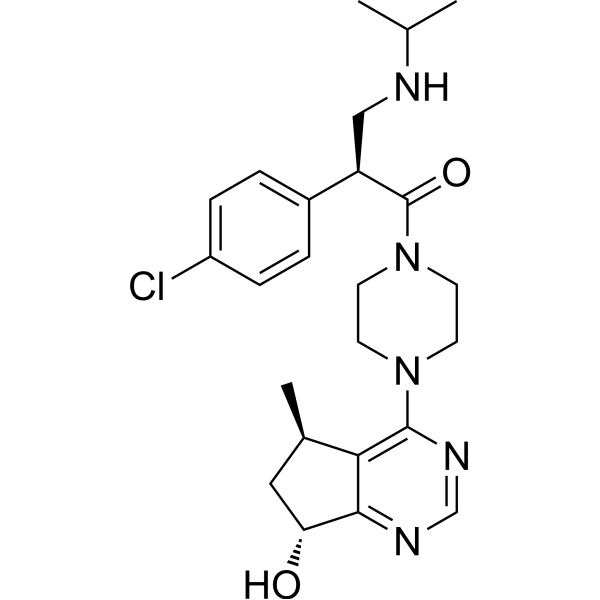
  • HY-15186
    Ipatasertib
    Maximum Cited Publications
    60 Publications Verification

    GDC-0068; RG7440

    Organoid Akt Apoptosis Cancer
    Ipatasertib (GDC-0068) is an orally active, highly selective and ATP-competitive pan-Akt inhibitor with IC50 values of 5, 18, 8 nM for Akt1/2/3, respectively. Ipatasertib synchronously activates FoxO3a and NF-κB through inhibition of Akt leading to p53-independent activation of PUMA. Ipatasertib also induces apoptosis in cancer cells and inhibits tumor growth in xenograft mouse models .
    Ipatasertib
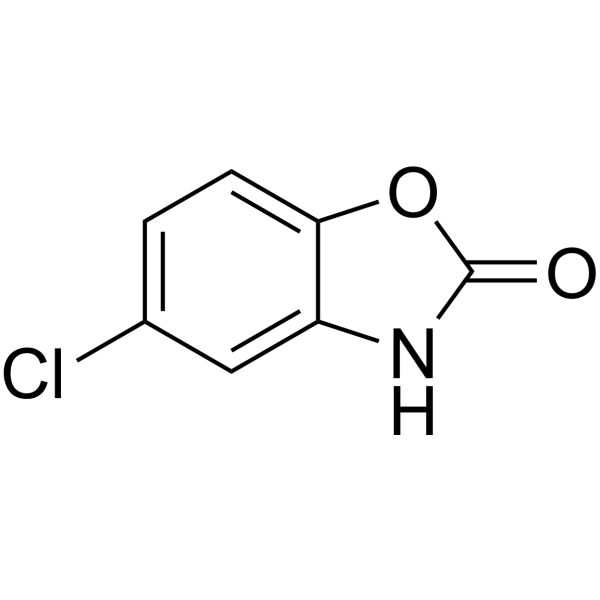
  • HY-B1462
    Chlorzoxazone
    3 Publications Verification

    Cytochrome P450 Potassium Channel FOXO Amyloid-β Neurological Disease Inflammation/Immunology
    Chlorzoxazone is a SK-type potassium channel activator. Chlorzoxazone modulates FOXO3 phosphorylation and . Chlorzoxazone enhances immunosuppression, attenuates vasoconstriction, attenuates cognitive deficits, and improves experimental autoimmune encephalomyelitis [3] .
    Chlorzoxazone
  • HY-16558
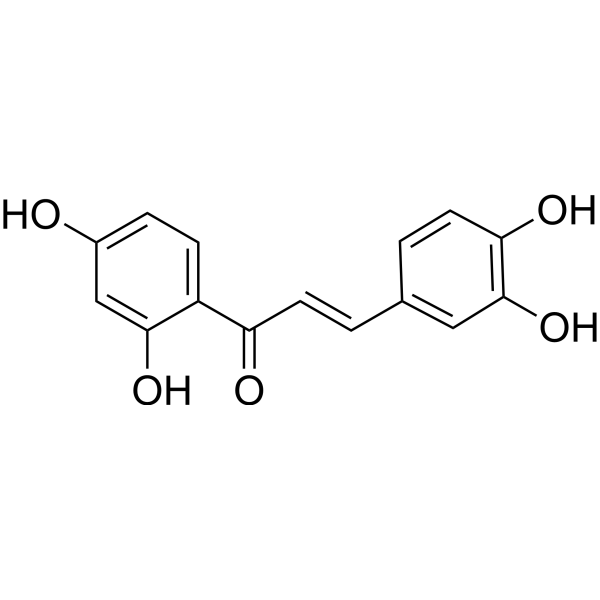
    Butein
    5+ Cited Publications

    2’,3,4,4’-tetrahydroxy Chalcone

    EGFR Autophagy Apoptosis Phosphodiesterase (PDE) Cancer
    Butein is a cAMP-specific PDE inhibitor with an IC50 of 10.4 μM for PDE4 . Butein is a specific protein tyrosine kinase inhibitor with IC50s of 16 and 65 μM for EGFR and p60 c-src in HepG2 cells . Butein sensitizes HeLa cells to Cisplatin through AKT and ERK/p38 MAPK pathways by targeting FoxO3a [3]. Butein is a SIRT1 activator (STAC).
    Butein
  • HY-154919
    DC-Y13-27
    4 Publications Verification

    YTHDF FOXO MMP Pyroptosis Interleukin Related Endocrinology Cancer
    DC-Y13-27 is a DC-Y13 derivative and YTHDF2 inhibitor (KD: 37.9 μM). DC-Y13-27 inhibits YTHDF2, restores FOXO3 and TIMP1 protein levels, and reduces MMP1/3/7/9 expression. DC-Y13-27 induces Pyroptosis and increases IL-1β secretion. DC-Y13-27 reduces intervertebral disc degeneration and enhances the response to radiotherapy in colon cancer and melanoma. DC-Y13-27 has antitumor activity against breast cancer [3].
    DC-Y13-27
  • HY-153347
    JY-2
    2 Publications Verification

    FOXO Metabolic Disease
    JY-2 is a moderately selective and orally active Forkhead transcription factor forkhead box O1 (FoxO1) inhibitor that inhibits FoxO1 transcriptional activity with an IC50 of 22 μM. JY-2 shows moderate inhibition against FoxO3a and FoxO4. JY-2 shows anti-diabetic activity .
    JY-2
  • HY-174806

    7-(β-D-Galactopyranosyloxy)-4-phenylchromen-2-one

    Mitophagy PINK1/Parkin Amyloid-β Neurological Disease
    Y040-7904 is a mitophagy activator. Y040-7904 enhances mitophagy by promoting mitochondria transport to autophagosomes and the fusion of autophagosomes with autolysosomes. Y040-7904 induces mitophagy through the SIRT1/FoxO3 pathway. Y040-7904 upregulates the levels of Parkin, PINK1, and LC3II/I. Y040-7904 reduces amyloid-β () accumulation in both in vitro and in vivo models of Alzheimer’s disease.
    Y040-7904
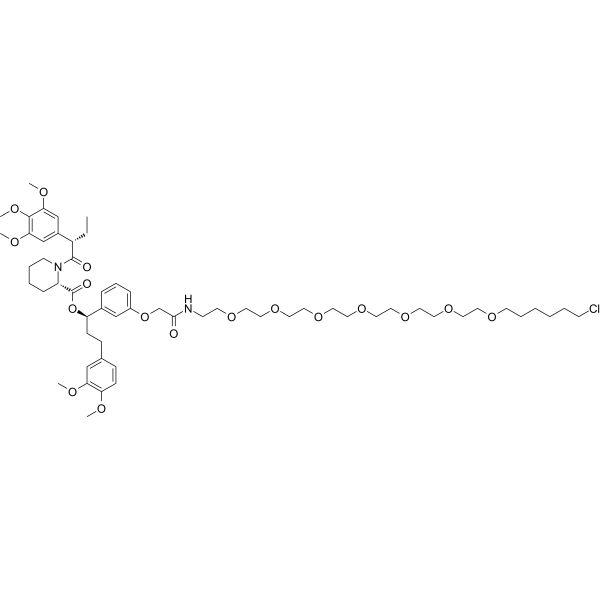
  • HY-145232
    PhosTAC7
    4 Publications Verification

    OGTAC-3

    PhosTACs Phosphatase Tau Protein Neurological Disease Cancer
    PhosTAC7 is a heterobifunctional molecule named as a Phosphorylation Targeting Chimera (PhosTAC). PhosTAC7 can dephosphorylate the PDCD4 protein, FOXO3a protein, and tau protein by recruiting serine/threonine protein phosphatase 2A (PP2A). PhosTAC7 offers the advantage of selectively modulating the phosphorylation state of individual target proteins, making it a promising tool for research in cancer and tau protein-related neurodegenerative diseases (Alzheimer's disease) .
    PhosTAC7
  • HY-RS05070

    Small Interfering RNA (siRNA) Others

    FOXO3 Human Pre-designed siRNA Set A contains three designed siRNAs for FOXO3 gene (Human), as well as a negative control, a positive control, and a FAM-labeled negative control.

    FOXO3 Human Pre-designed siRNA Set A
    FOXO3 Human Pre-designed siRNA Set A
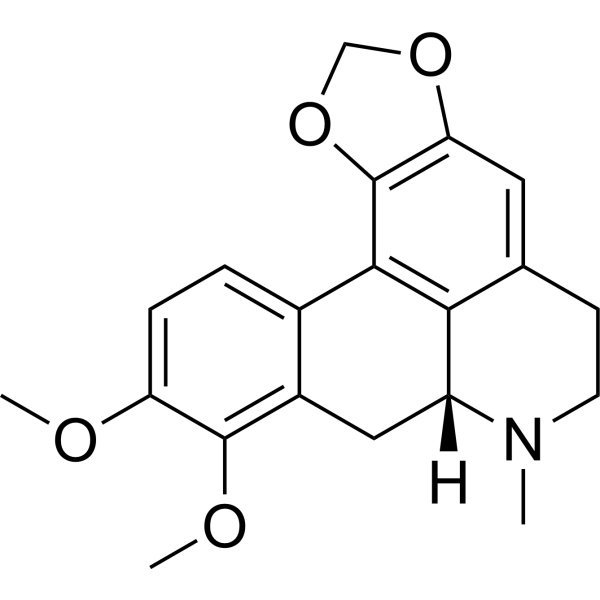
  • HY-N2255
    Crebanine
    4 Publications Verification

    Akt Apoptosis NF-κB Reactive Oxygen Species (ROS) p38 MAPK ERK Interleukin Related TNF Receptor NO Synthase nAChR Bacterial Cancer
    Crebanine is an isoquinoline-like alkaloid that can be derived from Stephania. Crebanine is an antagonist of the α7-nAChR with an IC50 of 19.1 μM. Crebanine suppresses the proliferation, migration, and invasion of cancer cells, triggers reactive oxygen species (ROS) burst, and promotes apoptosis. Crebanine inhibits the AKT/FoxO3a, NF-κB and MAPK signaling pathways. Crebanine attenuates NOX2 hyperactivation, exhibits antioxidant properties by reducing reactive oxygen species and peroxidation in microglia cells. Crebanine inhibits voltage-dependent Na + current in guinea-pig ventricular myocytes. Crebanine has high inhibitory activity against gram-positive animal pathogenic bacteria. Crebanine ameliorates ischemia-reperfusion brain damage in middle cerebral artery occlusion and reperfusion (MCAO/R) rats. Crebanine significantly improves Scopolamine (HY-N0296)-induced cognitive deficits in ICR mice. Crebanine can be used for the study of hepatocellular carcinoma (HCC), cerebral ischemia and Alzheimer's disease [3] .
    Crebanine
  • HY-148508

    PhosTACs Phosphatase Cancer
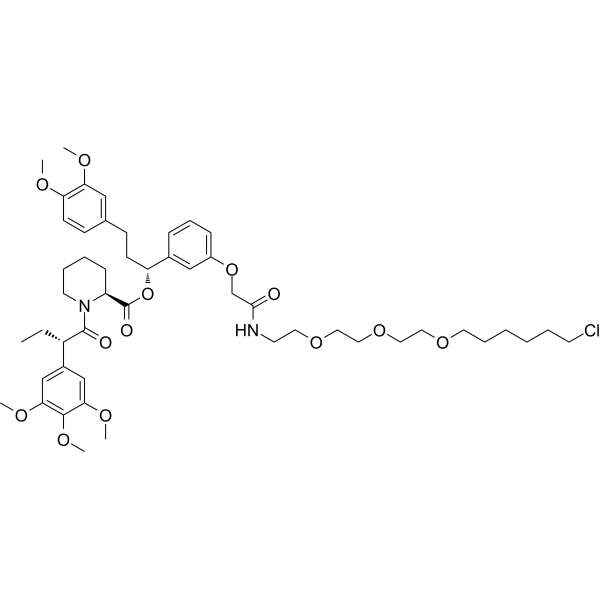
    PhosTAC3 is a phosphorylation targeting chimera (PhosTAC) molecule composed of a linker with three PEG groups. PhosTAC3 induces dephosphorylation of PDCD4 and FOXO3a .
    PhosTAC3
  • HY-176902

    ROCK Akt FOXO Apoptosis Cancer
    NSC126188 is a RhoB inducer. NSC126188 can induce apoptosis by inhibiting Akt/FoxO3 signaling. NSC126188 can be used for the research of cancer, such as prostate cancer .
    NSC126188
  • HY-142125

    Xanthine Oxidase Reactive Oxygen Species (ROS) Apoptosis Inflammation/Immunology Cancer
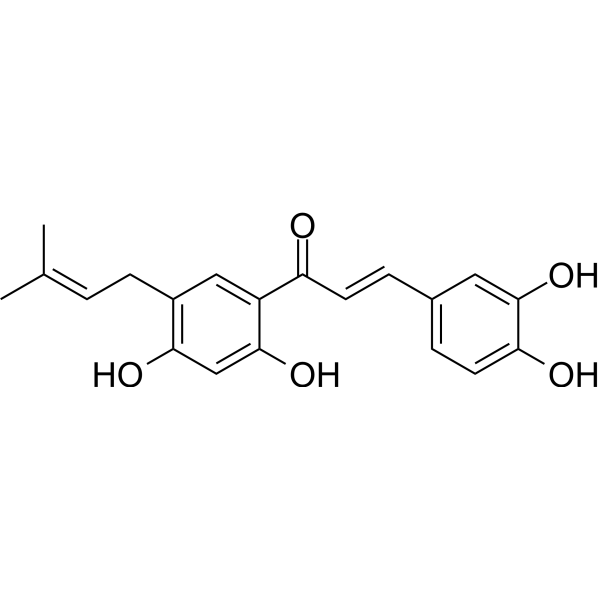
    Broussochalcone A is an antioxidant and an inhibitor of Xanthine Oxidase (IC50=2.21 μM), with free radical scavenging activity. Broussochalcone A inhibits iron-induced lipid peroxidation and nitric oxide synthesis in lipopolysaccharide (LPS) -activated macrophages. Broussochalcone A also induces Apoptosis of human renal carcinoma cells by increasing ROS levels and activating FOXO3 signaling pathways .
    Broussochalcone A
  • HY-148509

    PhosTACs Phosphatase Cancer
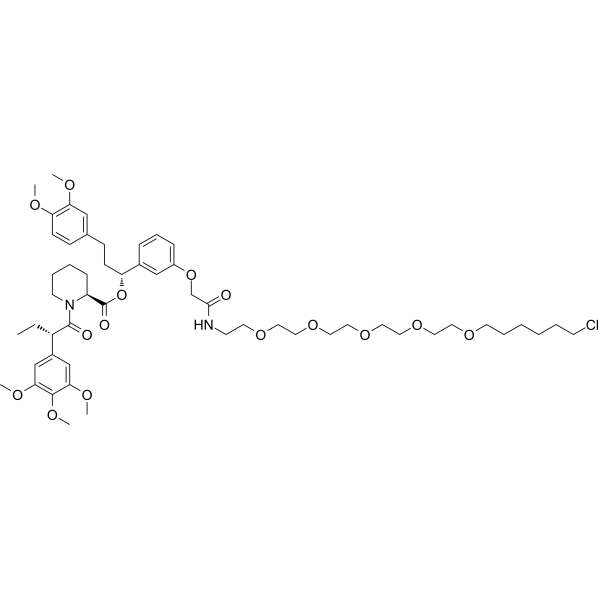
    PhosTAC5 is a phosphorylation targeting chimera (PhosTAC) molecule composed of a linker with fivePEG groups. PhosTAC5 induces dephosphorylation of PDCD4 and FOXO3a .
    PhosTAC5
  • HY-RS16632

    Small Interfering RNA (siRNA) Others

    Foxo3 Mouse Pre-designed siRNA Set A contains three designed siRNAs for Foxo3 gene (Mouse), as well as a negative control, a positive control, and a FAM-labeled negative control.

    Foxo3 Mouse Pre-designed siRNA Set A
    Foxo3 Mouse Pre-designed siRNA Set A
  • HY-RS23067

    Small Interfering RNA (siRNA) Others

    Foxo3 Rat Pre-designed siRNA Set A contains three designed siRNAs for Foxo3 gene (Rat), as well as a negative control, a positive control, and a FAM-labeled negative control.

    Foxo3 Rat Pre-designed siRNA Set A
    Foxo3 Rat Pre-designed siRNA Set A
  • HY-15615A
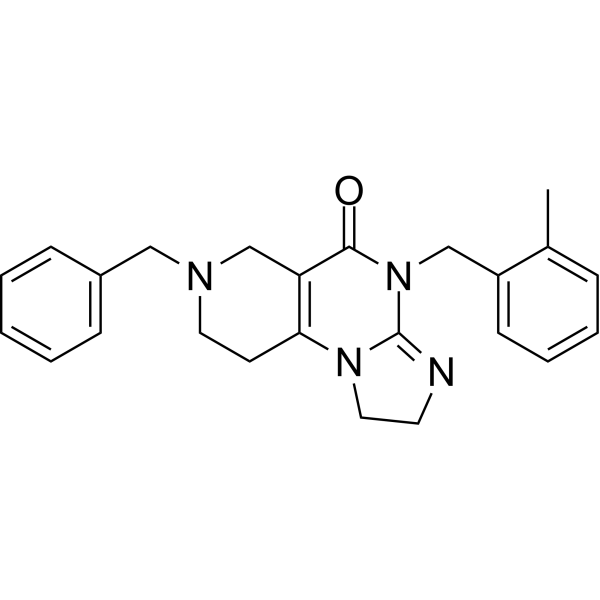
    Dordaviprone
    5+ Cited Publications

    TIC10; ONC-201

    TNF Receptor Apoptosis Cancer
    Dordaviprone (TIC10) is a potent, orally active, and stable tumor necrosis factor-related apoptosis-inducing ligand (TRAIL) inducer which acts by inhibiting Akt and ERK, consequently activating Foxo3a and significantly inducing cell surface TRAIL. Dordaviprone can cross the blood-brain barrier .
    Dordaviprone
  • HY-16558R

    2’,3,4,4’-tetrahydroxy Chalcone (Standard)

    Reference Standards EGFR Autophagy Apoptosis Phosphodiesterase (PDE) Cancer
    Butein (Standard) is the analytical standard of Butein. This product is intended for research and analytical applications. Butein is a cAMP-specific PDE inhibitor with an IC50 of 10.4 μM for PDE4 . Butein is a specific protein tyrosine kinase inhibitor with IC50s of 16 and 65 μM for EGFR and p60c-src in HepG2 cells . Butein sensitizes HeLa cells to Cisplatin through AKT and ERK/p38 MAPK pathways by targeting FoxO3a [3]. Butein is a SIRT1 activator (STAC).
    Butein (Standard)
  • HY-P5762A

    PNX-14 TFA

    Orphan GPCR Glutathione Peroxidase Ferroptosis ERK Toll-like Receptor (TLR) Sirtuin FOXO Akt PKA MyD88 Reactive Oxygen Species (ROS) Apoptosis NF-κB Cardiovascular Disease Neurological Disease Metabolic Disease Inflammation/Immunology
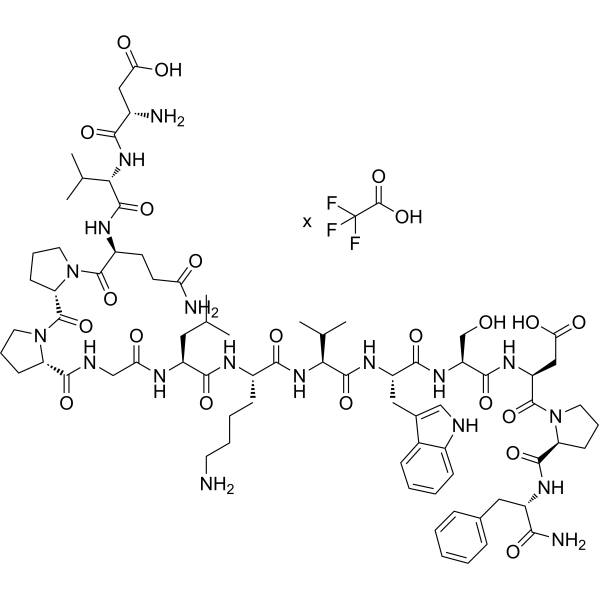
    Phoenixin-14 (PNX-14) TFA is an endogenous neuropeptide with multiple biological activities, and serves as the endogenous ligand of GPR173. Phoenixin-14 TFA reduces ROS production by inhibiting the HMGB1/TLR4/MyD88/NF-κB signaling axis, thereby exerting antioxidant and mitochondrial protective effects. Phoenixin-14 TFA inhibits FOXO3 phosphorylation by upregulating SIRT3 expression, suppresses apoptosis, and improves myocardial systolic/diastolic function. Phoenixin-14 TFA resists ferroptosis by activating the ATF4/SLC7A11/GPX4 axis; it activates ERK1/2 phosphorylation via GPR173. Phoenixin-14 TFA can be used in researches on neuroprotection, diabetes, cardiomyopathy, reproductive protection and so on [3] .
    Phoenixin-14 TFA
  • HY-162050

    Sirtuin Neurological Disease
    8AQ?Cu?5Iu is an activator of SIRT1. 8AQ?Cu?5Iu exhibits neuroprotective effects by modulating the SIRT1/3-FOXO3a signaling pathway. 8AQ?Cu?5Iu can used in study attenuating neurodegenerative diseases .
    8AQ−Cu−5Iu
  • HY-122894

    Drug Derivative Androgen Receptor Akt Apoptosis Cancer
    Ch-319 is a Triphenyltin (IV) carboxylate derivative. Ch-319 reduces androgen receptor expression, AKT and PRAS40 phosphorylation levels, and increases FOXO3a expression. Ch-319 increases Apoptosis. Ch-319 can be used in the research of prostate cancer .
    Ch-319
  • HY-15186C

    GDC-0068 tosylate; RG7440 tosylate

    Organoid Akt Apoptosis Cancer
    Ipatasertib (GDC-0068) tosylate is an orally active, highly selective and ATP-competitive pan-Akt inhibitor with IC50 values of 5, 18, 8 nM for Akt1/2/3, respectively. Ipatasertib tosylate synchronously activates FoxO3a and NF-κB through inhibition of Akt leading to p53-independent activation of PUMA. Ipatasertib tosylate also induces apoptosis in cancer cells and inhibits tumor growth in xenograft mouse models .
    Ipatasertib tosylate
  • HY-116604

    PD 139530

    PI3K Akt Cancer
    RLX (PD 139530) is a PI3K/Akt/FoxO3a signaling inhibitor, possessing significant therapeutic potential in experimental colon cancer. RLX can effectively modulate the tumor microenvironment, enhancing the efficacy of cancer immunotherapy. RLX demonstrates the ability to improve the retention time of therapeutic agents within the tumor microenvironment by utilizing advanced nanoparticle delivery systems. RLX can be integrated with various treatment modalities, such as chemotherapy and radiotherapy, to enhance overall tumor therapy effectiveness .
    RLX
  • HY-116604A

    PD 139530 hydrochloride

    PI3K Akt Cancer
    RLX (PD 139530) hydrochloride is the hydrochloride of RLX (HY-116604). RLX is a PI3K/Akt/FoxO3a signaling inhibitor, possessing significant therapeutic potential in experimental colon cancer. RLX can effectively modulate the tumor microenvironment, enhancing the efficacy of cancer immunotherapy. RLX demonstrates the ability to improve the retention time of therapeutic agents within the tumor microenvironment by utilizing advanced nanoparticle delivery systems. RLX can be integrated with various treatment modalities, such as chemotherapy and radiotherapy, to enhance overall tumor therapy effectiveness .
    RLX hydrochloride
  • HY-182469

    Lactate Dehydrogenase AMPK FOXO Interleukin Related Reactive Oxygen Species (ROS) TNF Receptor Bcl-2 Family Caspase Apoptosis Neurological Disease
    FuBIG is an iminoguanidine derivative with neuroprotective effects. FuBIGL inhibits L-LDH activation and reduces lactate production. FuBIGL exerts protective effects on inflammatory nerve cells, upregulates the expressions of AMPK, pAMPK and FOXO3, and activates the AMPK pathway in cells. FuBIG exerts anti-inflammatory effects by reducing pro-inflammatory cytokines (IL-6, IL-1β, TNF-α) and increasing the anti-inflammatory cytokine IL-10. FuBIG maintains mitochondrial membrane potential, alleviates mitochondrial dysfunction, reduces ROS production, and relieves oxidative stress. FuBIG upregulates Bcl-2, downregulates Bax and Caspase-3, and inhibits cell apoptosis (apoptosis). FuBIG improves metabolic disorders in diabetic mice, decreases the levels of LDL-C, ALT and AST, and increases HDL-C level simultaneously. FuBIG can be used in the research of diabetic neuroinflammation .
    FuBIG

Inquiry Online

Your information is safe with us. * Required Fields.

Salutation


Country or Region *

Applicant Name *


Organization Name *

Department *


Email Address *


Product Name *

Cat. No.


Requested quantity *

Phone Number *


Remarks

Inquiry Online

Inquiry Information

Product Name:
Cat. No.:
Quantity:
MCE Japan Authorized Agent:

