1. Search Result
Search Result
Pathways Recommended: GPCR/G Protein
Results for "

GPCR ligand

" in MedChemExpress (MCE) Product Catalog:

17

Inhibitors & Agonists

4

Screening Libraries

8

Peptides

1

Inhibitory Antibodies

3

Natural
Products

1

Isotope-Labeled Compounds

Cat. No. Product Name Target Research Areas Chemical Structure
  • HY-113962
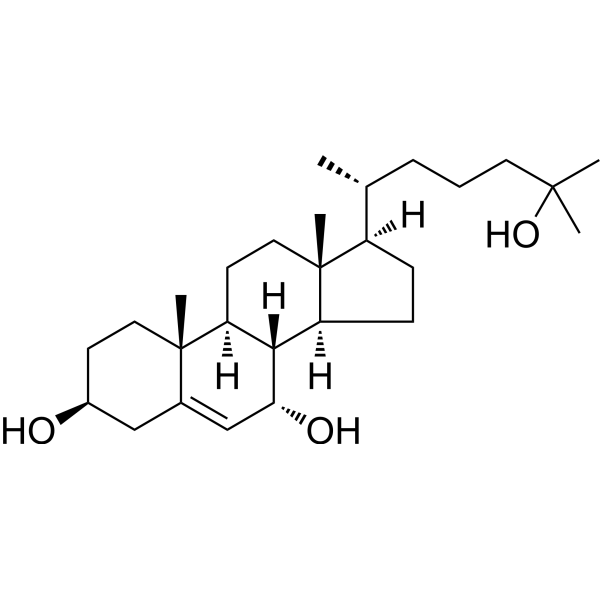
    7α,25-Dihydroxycholesterol
    3 Publications Verification

    7α,25-OHC

    EBI2/GPR183 Endogenous Metabolite Inflammation/Immunology
    7α, 25-dihydroxycholesterol (7α,25-OHC) is a potent and selective agonist and endogenous ligand of the orphan GPCR receptor EBI2 (GPR183). 7α, 25-dihydroxycholesterol is highly potent at activating EBI2 (EC50=140 pM; Kd=450 pM). 7α, 25-dihydroxycholesterol can serve as a chemokine directing migration of B cells, T cells and dendritic cells .
    7α,25-Dihydroxycholesterol
  • HY-B2132
    Tryptamine
    1 Publications Verification

    3-(2-Aminoethyl)indole~2-(3-Indolyl)ethylamine

    Endogenous Metabolite 5-HT Receptor Aryl Hydrocarbon Receptor Neurological Disease Metabolic Disease
    Tryptamine is a selective, blood-brain-penetrating 5-HT4 receptor agonist (EC50=1-3 mM) and an endogenous ligand of the aryl hydrocarbon receptor (AHR) (Kd=10-50 nM). Tryptamine promotes intestinal anion secretion and fluid transport by activating G protein-coupled receptors (GPCRs) and accelerates gastrointestinal motility. Tryptamine regulates Th17/Treg balance to inhibit neuroinflammation, competitively binds to 5-HT receptors to regulate central nervous system activity, and participates in temperature regulation and spinal reflex regulation as a neuromodulator. Tryptamine can be used to study intestinal motility disorders such as functional constipation, and has shown significant efficacy in multiple sclerosis models .
    Tryptamine
  • HY-P1125
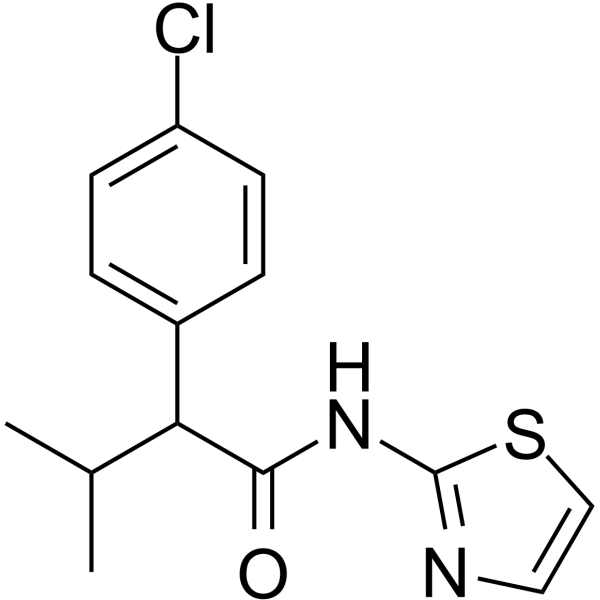
    4-CMTB
    Maximum Cited Publications
    6 Publications Verification

    Free Fatty Acid Receptor Others
    4-CMTB is a selective free fatty acid receptor 2 (FFA2/GPR43) agonist and a positive allosteric modulator (pEC50=6.38) .
    4-CMTB
  • HY-N15721

    Trp-CA

    Orphan GPCR GLP Receptor Metabolic Disease
    Tryptophan-cholic acid (Trp-CA) is a microbial amino acid-conjugated bile acid that acts as an endogenous ligand and agonist (EC50=9.6 μM) for the orphan G protein-coupled receptor (GPCR) MRGPRE (Mas-related G protein-coupled receptor family member E). Tryptophan-cholic acid is orally effective but has poor oral absorption and does not cross the blood-brain barrier. Tryptophan-cholic acid promotes the secretion of glucagon-like peptide GLP-1, thereby improving glucose tolerance in diabetic mice. Tryptophan-cholic acid improves glucose tolerance, promotes insulin secretion, and alleviates high-fat diet-induced hepatic steatosis without causing pruritus side effects. Tryptophan-cholic acid is primarily used in research on type 2 diabetes (T2D) .
    Tryptophan-cholic acid
  • HY-P3137

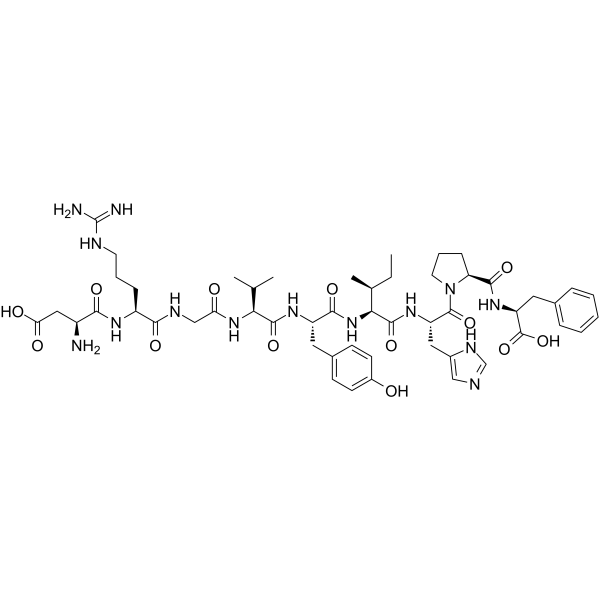
    Angiotensin Receptor Cardiovascular Disease
    TRV056 is a Gq-biased ligand of the angiotensin II receptor type 1 (AT1R). TRV056 is efficacious in stimulating cellular Gq-mediated signaling. TRV056 can be used to develop the Gq-biased AT1R agonists .
    TRV056
  • HY-P3136A

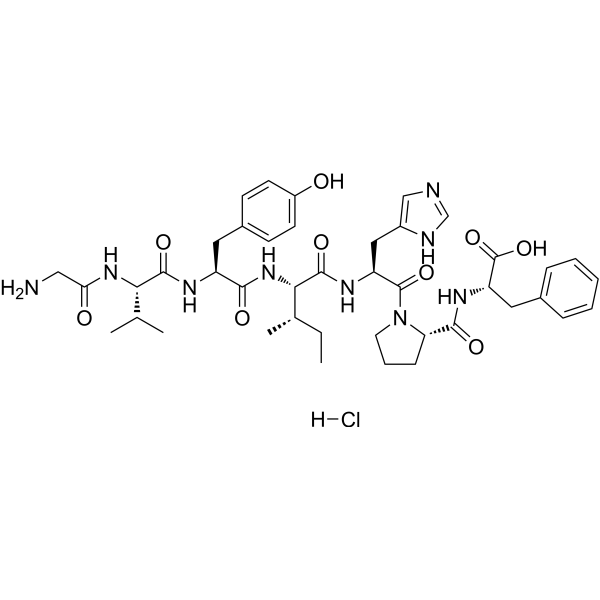
    TRV120055 hydrochloride

    Angiotensin Receptor Cardiovascular Disease
    TRV055 (TRV120055) hydrochloride is a G protein-biased agonist of angiotensin II type 1 receptors (AT1Rs). TRV055 hydrochloride induces fibroblast proliferation, overexpression of collagen I and α-SMA, and stress fibre formation in human cardiac fibroblasts. RV055 hydrochloride activates AT1 receptor/Gαq-mediated signaling pathways, upregulates TGF-β1 and p-ERK1/2. RV055 hydrochloride induces collagen secretion in adult rat myofibroblasts at a level comparable to Ang II. RV055 hydrochloride can be used to study the role of G protein-biased signaling of AT1Rs in regulating fibrotic responses [1]
    TRV055 hydrochloride
  • HY-113962S

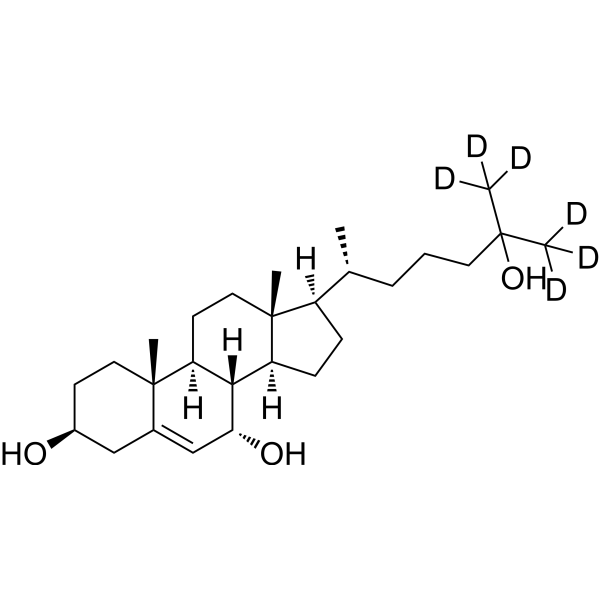
    7α,25-OHC-d6

    Isotope-Labeled Compounds EBI2/GPR183 Endogenous Metabolite Inflammation/Immunology
    7α,25-Dihydroxycholesterol-d6 is deuterium labeled 7α,25-Dihydroxycholesterol. 7α, 25-dihydroxycholesterol (7α,25-OHC) is a potent and selective agonist and endogenous ligand of the orphan GPCR receptor EBI2 (GPR183). 7α, 25-dihydroxycholesterol is highly
    7α,25-Dihydroxycholesterol-d6
  • HY-P10430

    Transmembrane Glycoprotein Neurological Disease
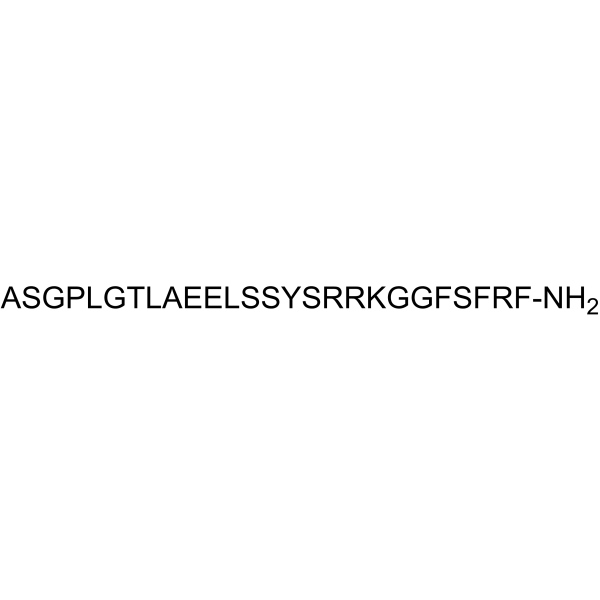
    Stalk peptide is a GPR110 activator. Stalk peptide is released from GPCR Autoproteolysis INducing domain by autocatalytic process and then Stalk peptide is inserted into the ligand-binding pocket of the receptor to activate the receptor. Stalk peptide can promote nerve growth and synaptic formation. Stalk peptide can be used to study neurodevelopmental and neurodegenerative diseases .
    Stalk peptide
  • HY-P10289A

    NPW30, rat acetate

    Neuropeptide B/W Receptor Neurological Disease
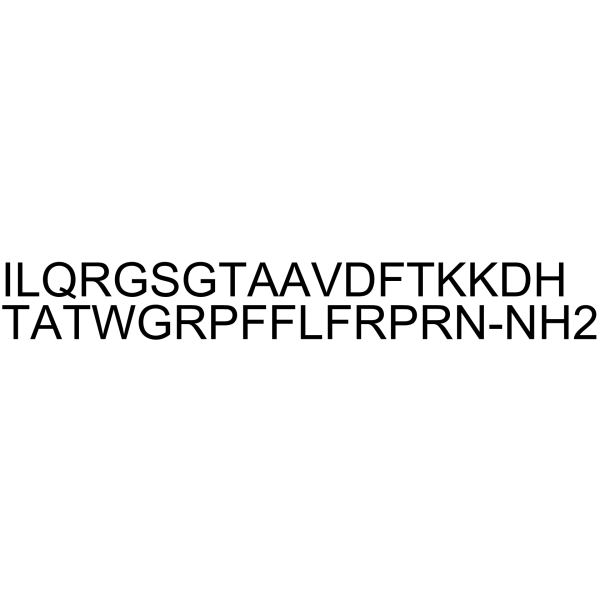
    Neuropeptide W-30 (rat) is an important stress mediator in the central nervous system that modulates the hypothalamus-pituitary-adrenal (HPA) axis and sympathetic outflow. Neuropeptide W-30 (rat) is an endogenous ligand for the two structurally related orphan G-protein-coupled receptors (GPCRs) GPR7 and GPR8. NPW-30 activates and binds to both GPR7 and GPR8 at similar effective doses .
    Neuropeptide W-30 (rat) acetate
  • HY-P10287

    NPW30, human

    Neuropeptide B/W Receptor Neurological Disease
    Neuropeptide W-30 (human) is an important stress mediator in the central nervous system that modulates the hypothalamus-pituitary-adrenal (HPA) axis and sympathetic outflow. Neuropeptide W-30 (human) is an endogenous ligand for the two structurally related orphan G-protein-coupled receptors (GPCRs) GPR7 and GPR8. Neuropeptide W-30 (human) activates and binds to both GPR7 and GPR8 at similar effective doses .
    Neuropeptide W-30 (human)
  • HY-P991540

    CCR Cancer
    AT008 is an anti-GPCR monoclonal antibody that blocks the binding of chemokine ligands to its cell surface receptor CCR4. AT008 can be studied in research for certain haematological and solid cancers.
    AT008
  • HY-P2472

    26RFa (mouse, rat)

    Metabolic Disease
    Orphan GPCR SP9155 agonist P550 (mouse, rat) (26RFa (mouse, rat)), a member of the RFamide peptide family with orexigenic effect, is the cognate ligand of the mouse orphan receptor GPR103, also designated SP9155 or AQ27 .
    Orphan GPCR SP9155 agonist P550 (mouse, rat)
  • HY-P5084

    Neuromedin U Receptor (NMUR) G protein-coupled Bile Acid Receptor 1 Neurological Disease
    Neuromedin S (human) is a neuropeptide that contains 33 amino acids. Neuromedin S (human)has been identified in the brain as an endogenous ligand for the orphan G-protein coupled receptor (GPCR) FM-4/TGR-1 and acts on the neuromedin U (NMU) receptor 2 (NMUR2) in the regulation of body weight homeostasis .
    Neuromedin S (human)
  • HY-400897

    Ligands for Target Protein for PROTAC EBI2/GPR183 Cancer
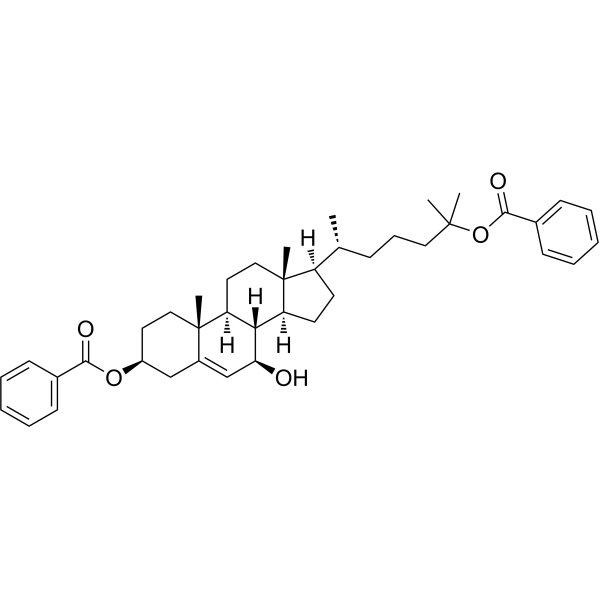
    7α,25-Dihydroxycholesterol intermediate-1 is an intermediate in the synthesis of 7α,25-Dihydroxycholesterol (HY-113962). 7α,25-Dihydroxycholesterol (7α,25-OHC) can be used as a ligand to target the orphan GPCR receptor EBI2 (GPR183). body, used to synthesize the corresponding PROTEACs .
    7α,25-Dihydroxycholesterol intermediate-1
  • HY-P10289

    NPW30, rat

    Neuropeptide B/W Receptor Neurological Disease
    Neuropeptide W-30 (rat) is an important stress mediator in the central nervous system that modulates the hypothalamus-pituitary-adrenal (HPA) axis and sympathetic outflow. Neuropeptide W-30 (rat) is an endogenous ligand for the two structurally related orphan G-protein-coupled receptors (GPCRs) GPR7 and GPR8. NPW-30 activates and binds to both GPR7 and GPR8 at similar effective doses .
    Neuropeptide W-30 (rat)
  • HY-101008

    Adrenergic Receptor G protein-coupled Bile Acid Receptor 1 Cardiovascular Disease
    3-MPPI (compound RN5) is a GPCR ligand with high selectivity for α1-adrenergic receptor, with a Ki value of 0.21 nM for α1-adrenergic receptor and 50 nM for 5-HT1A receptor. 3-MPPI modulates the α1-adrenergic receptor signaling cascade. 3-MPPI is applicable to research related to hypertension, stress-induced anxiety-like behavioral responses, and levodopa-induced dyskinesia .
    3-MPPI
  • HY-179606

    Transmembrane Glycoprotein Arrestin ERK Epigenetic Reader Domain Neurological Disease
    RWT9996 is a balanced GPR17 antagonist. RWT9996 has an inhibitory effect on G protein activation and β-arrestin-2 recruitment induced by MDL-29951. RWT9996 inhibits the phosphorylation of ERK/CREB and the accumulation of inositol phosphate (b IP1) induced by MDL-29951. RWT9996 can be used for the study of neurological diseases .
    RWT9996

Inquiry Online

Your information is safe with us. * Required Fields.

Salutation


Country or Region *

Applicant Name *


Organization Name *

Department *


Email Address *


Product Name *

Cat. No.


Requested quantity *

Phone Number *


Remarks

Inquiry Online

Inquiry Information

Product Name:
Cat. No.:
Quantity:
MCE Japan Authorized Agent:

