








1. Search Result
Search Result
Results for "

Glu-Glu-Leu

" in MedChemExpress (MCE) Product Catalog:

31

Inhibitors & Agonists

38

Peptides

1

Isotope-Labeled Compounds

Cat. No. Product Name Target Research Area
  • HY-P6306
    CS-6253
    1 Publications Verification

    Apolipoprotein Amyloid-β Neurological Disease Metabolic Disease
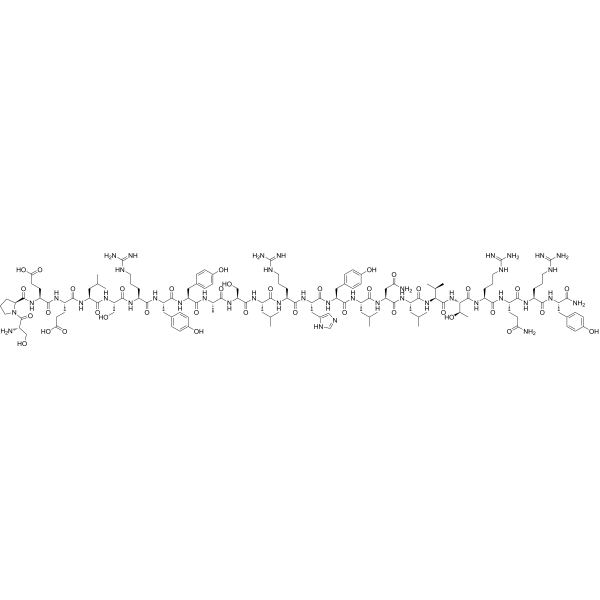
    CS-6253 is an agonist of ABCA1. CS-6253 can regulate lipoprotein metabolism, promote high-density lipoprotein biogenesis, and cellular cholesterol efflux. CS-6253 also has certain neuroprotective effects and can clear from the brain. CS-6253 can be used for research on cholesterol metabolism and diseases such as Alzheimer’s disease .
  • HY-P1514

    Neuropeptide Y Receptor Neurological Disease Metabolic Disease Endocrinology
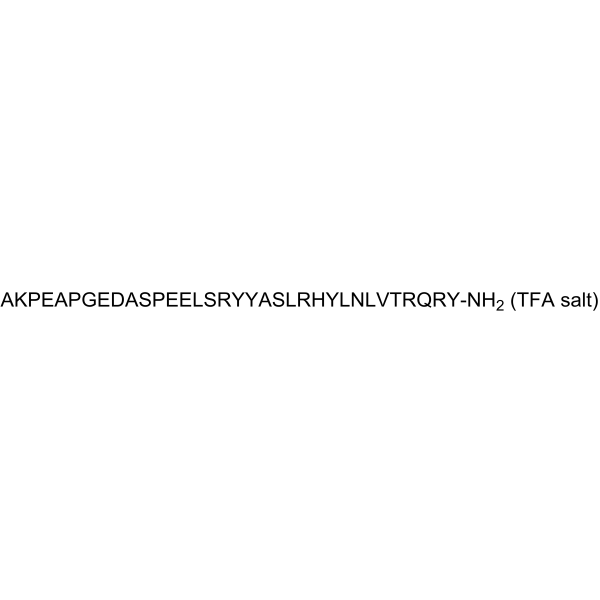
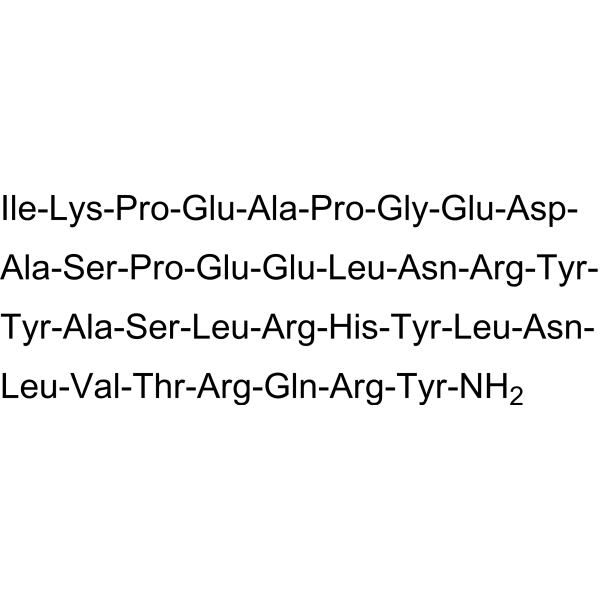
    Peptide YY (PYY) is a gut hormone that regulates appetite and inhibits pancreatic secretion. Peptide YY (PYY) can mediate its effects through the Neuropeptide Y receptors.
  • HY-P10000

    Neuropeptide Y Receptor Metabolic Disease
    Peptide YY (PYY) (3-36), Human is an endogenous appetite suppressing peptide. Peptide YY (PYY) (3-36), Human, a neuropeptide Y (NPY) Y2 receptor agonist, is a powerful inhibitor of intestinal secretion .
  • HY-P10531

    Peptides Others
    ALFA-tag is a small and stable α-helical structure composed of 15 amino acids. ALFA-tag is highly hydrophilic and can be placed at the N-terminus, C-terminus, or between two independently folded domains of the target protein without affecting the function of the protein. ALFA-tag is widely used as an epitope tag and is used for the detection and manipulation of proteins in living cells .
  • HY-P1242
    NEP(1-40)
    2 Publications Verification

    Transmembrane Glycoprotein Inflammation/Immunology
    NEP(1-40) is a Nogo-66 receptor (NgR) antagonist peptide, reversing the injury-induced shift in distribution of microglia morphologies by limiting myelin-based inhibition .
  • HY-P5100

    Peptides Others
    Glu-Glu-Leu is a polypeptide that can be found by peptide screening. Peptide screening is a research tool that pools active peptides primarily by immunoassay. Peptide screening can be used for protein interaction, functional analysis, epitope screening, especially in the field of agent research and development .
  • HY-P1081
    Acetyl-Calpastatin(184-210)(human)
    1 Publications Verification

    Proteasome Inflammation/Immunology
    Acetyl-Calpastatin(184-210)(human) is a potent, selective and reversible calpain inhibitor with Ki values of 0.2 nM and 6 μM for μ-calpain and cathepsin L, respectively .
  • HY-P1021A
    Peptide YY (PYY) (3-36), porcine TFA
    3 Publications Verification

    Neuropeptide Y Receptor Metabolic Disease
    Peptide YY (PYY) (3-36), porcine TFA is a gut hormone peptide that acts as a Y2 receptor agonist to reduce appetite .
  • HY-P11291A

    Neuropeptide Y Receptor Metabolic Disease
    NNC0165-1273 (TFA) is the trifluoroacetic acid of NNC0165-1273 (HY-P11291). NNC0165-1273 is an analog of gut hormone peptide YY (PYY3-36). NNC0165-1273 has a superior affinity for Y2 receptor over Y1, Y4, and Y5 receptor. NNC0165-1273 has a potent anorectic effect and significantly reduces nighttime and ghrelin-induced food intake by producing early satiety. NNC0165-1273 inhibits ghrelin-induced cFos expression in NPY/AgRP neurons. NNC0165-1273 can be used for antiobesity therapies research .
  • HY-P4557

    Peptides Others
    H-Phe-Leu-Glu-Glu-Leu-OH is a synthetic pentapeptide, which can be used as the substrate of vitamin K dependent carboxylase, and a glutamyl residue in the generated product is carboxylated .
  • HY-P6306A
    CS-6253 TFA
    1 Publications Verification

    Apolipoprotein Amyloid-β Neurological Disease Metabolic Disease
    CS-6253 TFA is an agonist of ABCA1. CS-6253 TFA can regulate lipoprotein metabolism, promote high-density lipoprotein biogenesis, and cellular cholesterol efflux. CS-6253 TFA also has certain neuroprotective effects and can clear from the brain. CS-6253 TFA can be used for research on cholesterol metabolism and diseases such as Alzheimer’s disease .
  • HY-P4805

    Neuropeptide Y Receptor Metabolic Disease
    Peptide YY (13-36) (canine, mouse, porcine, rat) is a Y2 receptor subtype agonist .
  • HY-P1021

    Neuropeptide Y Receptor Metabolic Disease
    Peptide YY (PYY) (3-36), porcine is a gut hormone peptide that acts as a Y2 receptor agonist to reduce appetite.
  • HY-P3877A

    Neuropeptide Y Receptor Neurological Disease
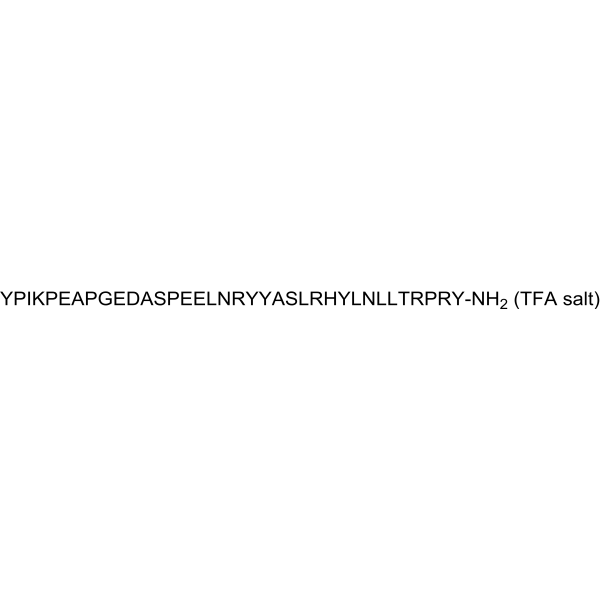
    (Leu31,Pro34)-Peptide YY (human) (TFA) is the TFA form of (Leu31,Pro34)-Peptide YY (human) (HY-P3877). (Leu31,Pro34)-Peptide YY (human) (TFA) is a Peptide YY (HY-P1514) derivative and is a potent and selective Y1 agonist with a KD of 1.0 nM .
  • HY-P3877

    Neuropeptide Y Receptor Neurological Disease
    (Leu31,Pro34)-Peptide YY (human) is a Peptide YY (HY-P1514) derivative and is a potent and selective Y1 agonist with a KD of 1.0 nM .
  • HY-P5754B

    Apoptosis Neurological Disease
    TAT-NEP1-40 acetate is a therapeutic candidate for axonal regeneration and functional recovery after stroke. TAT-NEP1-40 acetate can protect PC12 cells against oxygen and glucose deprivation (OGD) and promote neurite outgrowth. TAT-NEP1-40 acetate protects the brain against ischemia/reperfusion injury through inhibition of neuronal apoptosis. TAT-NEP1-40 acetate can be efficiently delivered into the rat brains .
  • HY-P2470

    PD-1/PD-L1 Cancer
    Human PD-L1 inhibitor II is a potent PD-L1 inhibitor with anti-cancer activity .
  • HY-P11130

    Akt ERK PI3K MEK Neurological Disease
    LQEQ-19 (mouse, rat) is a VGF derived peptide that exerts neuroprotective effects. LQEQ-19 (mouse, rat) activates the PI3K/Akt and MEK/ERK signaling pathways by promoting phosphorylation of Akt and ERK1/2. LQEQ-19 (mouse, rat) is commonly used in the study of neurological conditions .
  • HY-P5379

    Proteasome Others
    Calpastatin subdomain B is a biological active peptide. (inhibit calpain activity)
  • HY-P5754

    Apoptosis Neurological Disease
    TAT-NEP1-40 is a BBB-penatrable peptide. TAT-NEP1-40 protects PC12 cells against oxygen and glucose deprivation (OGD), and promotes neurite outgrowth. TAT-NEP1-40 also improves ischemia-induced neurologic outcomes by inhibiting cell apoptosis in ischemic brains. TAT-NEP1-40 can be used for research of CNS injuries, such as axonal regeneration and functional recovery after stroke .
  • HY-P10976

    SARS-CoV Infection
    Spike Glycoprotein (1147-1162) is a linear and broadly neutralizing peptide in the S2 protein of SARS-CoV-2. Spike Glycoprotein (1147-1162) is conserved across SARS-CoV, BatCoV RaTG13, SARS-CoV-2, and SARS-CoV-2 variants. Spike Glycoprotein (1147-1162)-targeting mAbs can neutralize both SARS-CoV-2 and SARS-CoV by preventing fusion between the virus and cell membrane. Spike Glycoprotein (1147-1162) can be used for universal vaccines against SARS-CoV-2 mutants research .
  • HY-P1114

    GSK-3 Neurological Disease
    2B-(SP) is a eIF2B-based substrate for glycogen synthase kinase-3 (GSK-3). 2B-(SP) is readily phosphorylated by both the α and β isoforms of GSK-3 .
  • HY-P1114A

    GSK-3 Cancer
    2B-(SP) TFA is a eIF2B-based substrate for glycogen synthase kinase-3 (GSK-3). 2B-(SP) TFA is readily phosphorylated by both the α and β isoforms of GSK-3 .
  • HY-P1343

    Peptides Others
    Frog 26RFa is a neuropeptide that can be isolated from frog brain. Frog 26RFa has pro-oxygen activity .
  • HY-P2472

    26RFa (mouse, rat)

    Metabolic Disease
    Orphan GPCR SP9155 agonist P550 (mouse, rat) (26RFa (mouse, rat)), a member of the RFamide peptide family with orexigenic effect, is the cognate ligand of the mouse orphan receptor GPR103, also designated SP9155 or AQ27 .
  • HY-P11351

    DNA/RNA Synthesis Cancer
    Precursor-HhH is a nucleic acid-binding peptide capable of non-specific interactions with RNA and double-stranded DNA (dsDNA). Precursor-HhH is promising for research of nucleic acid-targeted therapeutics .
  • HY-P1081A

    Proteasome Inflammation/Immunology
    Acetyl-Calpastatin(184-210)(human) TFA is a potent, selective and reversible calpain inhibitor with Ki values of 0.2 nM and 6 μM for µ-calpain and cathepsin L, respectively .
  • HY-P11192

    Peptides Metabolic Disease
    AQEE-30 (mouse, rat) is a VGF-derived neuropeptide. AQEE-30 (mouse, rat) can be upregulated upon high caloric feeding in rats. AQEE-30 (mouse, rat) can be used in obesity research .
  • HY-P11291

    Neuropeptide Y Receptor Endocrinology
    NNC0165-1273 is an analog of gut hormone peptide YY (PYY3-36). NNC0165-1273 has a superior affinity for Y2 receptor over Y1, Y4, and Y5 receptor. NNC0165-1273 has a potent anorectic effect and significantly reduces nighttime and ghrelin-induced food intake by producing early satiety. NNC0165-1273 inhibits ghrelin-induced cFos expression in NPY/AgRP neurons. NNC0165-1273 can be used for antiobesity therapies research .
  • HY-P1242B

    Drug Derivative Inflammation/Immunology
    NEP(1-40), N-terminal uncapped is a NEP(1-40) (HY-P1242) analog without the acetylation modification at the N-terminal. NEP(1-40) is a Nogo-66 receptor (NgR) antagonist peptide .
  • HY-P1242A

    Transmembrane Glycoprotein Inflammation/Immunology
    NEP(1-40) TFA is a Nogo-66 receptor (NgR) antagonist peptide, reversing the injury-induced shift in distribution of microglia morphologies by limiting myelin-based inhibition .
  • HY-P5754A

    Apoptosis Neurological Disease
    TAT-NEP1-40 TFA is a BBB-penatrable peptide. TAT-NEP1-40 TFA protects PC12 cells against oxygen and glucose deprivation (OGD), and promotes neurite outgrowth. TAT-NEP1-40 TFA also improves ischemia-induced neurologic outcomes by inhibiting cell apoptosis in ischemic brains. TAT-NEP1-40 TFA can be used for research of CNS injuries, such as axonal regeneration and functional recovery after stroke .
  • HY-P11092

    Endogenous Metabolite Neurological Disease
    TLQP-62 (mouse,rat) is a secreted C-terminal peptide that can be derived from protein VGF. TLQP-62 activates the BDNF-TrkB signaling pathway, inducing acute, transient phosphorylation of TrkB receptor and downstream CREB (Ser133) phosphorylation. TLQP-62 demonstrates excellent efficacy in promoting long-term fear memory formationin wild-type mice and reversing memory impairment in VGF heterozygous knock-out mice. TLQP-62 can be used for the study of memory-related neurological disorders (e.g., Alzheimer’s disease, frontotemporal dementia) .
  • HY-P11527S

    Isotope-Labeled Compounds Others
    AALQEELQLC-(Lys- 13C6, 15N2) TFA is the 13C- and 15N-labeled AALQEELQLC.
  • HY-P11573A

    Peptides Others
    β-LG (41-60) acetate is a peptide. β-LG (41-60) acetate can be produced by the tryptic hydrolysis of β-LG. β-LG (41-60) acetate has emulsifying properties .
  • HY-P11573

    Peptides Others
    β-LG (41-60) is a peptide. β-LG (41-60) can be produced by the tryptic hydrolysis of β-LG. β-LG (41-60) has emulsifying properties .
  • HY-P11665

    Amylin Receptor Metabolic Disease
    Batelintide is a dual amylin/calcitonin receptor agonist with antidiabetic effects .
  • HY-P11603

    Pyroptosis Inflammation/Immunology
    SK56 is a GSDMD-NT pore inhibitor. SK56 inhibits pyroptosis (Pyroptosis) and the release of pyroptosis-related cytokines in macrophages and human peripheral blood leukocytes. SK56 prevents extensive cell death in human alveolar organoids in an organoid-macrophage co-culture model. SK56 prevents death from infectious shock induced by LPS (HY-D1056) or cecal ligation and puncture in mice. SK56 can be used in studies related to sepsis .

Inquiry Online

Your information is safe with us. * Required Fields.

Salutation


Country or Region *

Applicant Name *


Organization Name *

Department *


Email Address *


Product Name *

Cat. No.


Requested quantity *

Phone Number *


Remarks

Inquiry Online

Inquiry Information

Product Name:
Cat. No.:
Quantity:
MCE Japan Authorized Agent:

