



Peptide YY (PYY) (3-36), porcine
Based on 3 publication(s) in Google Scholar
Peptide YY (PYY) (3-36), porcine is a gut hormone peptide that acts as a Y2 receptor agonist to reduce appetite.
For research use only. We do not sell to patients.
- CAS No.: 126339-09-1
- Formula: C176H272N52O54
- Molecular Weight:3980.42
-
Storage:
Please store the product under the recommended conditions in the Certificate of Analysis.

To place orders, for customer services and technical support, please contact: MedChemExpress USA
Tel: 609-228-6898 E-mail: [email protected] [email protected]


-
 Biological Activity
-
Chemical Information
-
Solvent & Solubility
- Protocol
- Purity & Documentation
- References
-
 Help & FAQs


-
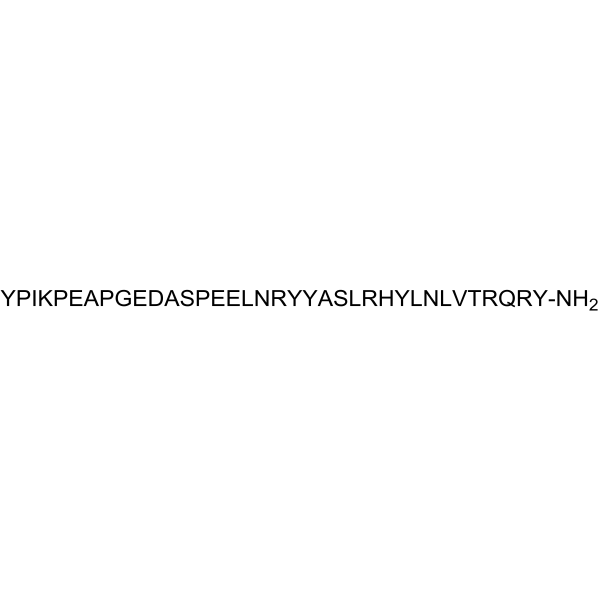
HY-P1514
Peptide YY (PYY), human -
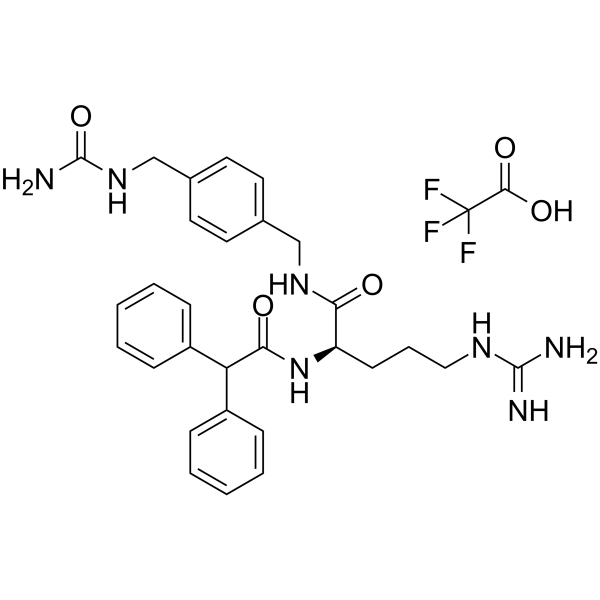
HY-107725
BIBO3304 -
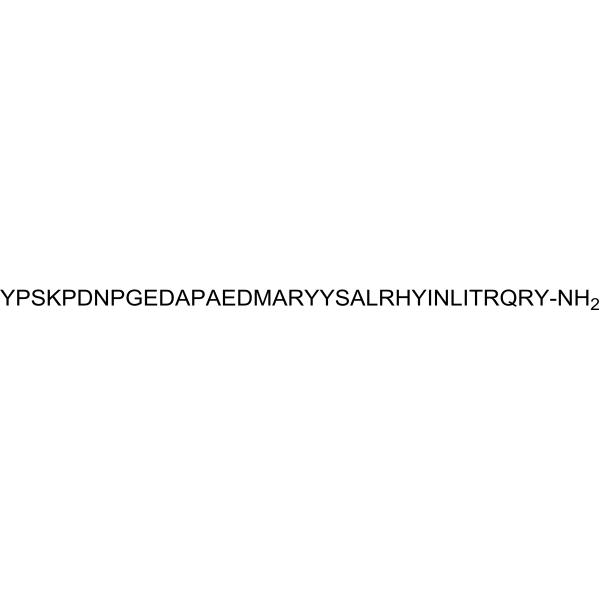
HY-P0198
Neuropeptide Y (human,rat,mouse) -
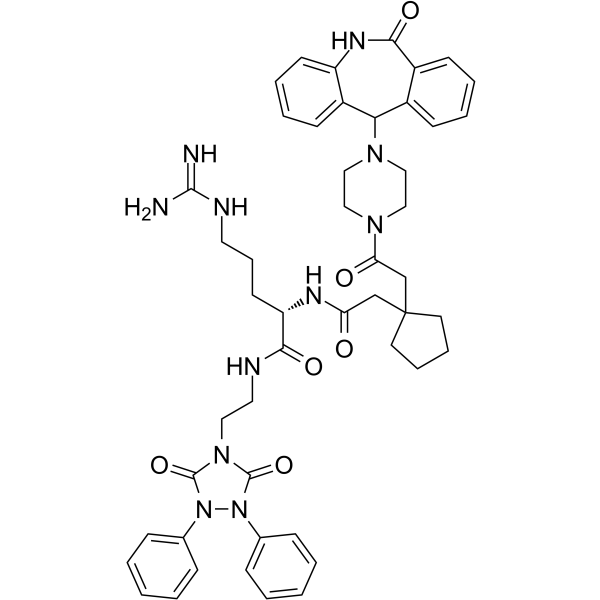
HY-101986
BIIE-0246 -
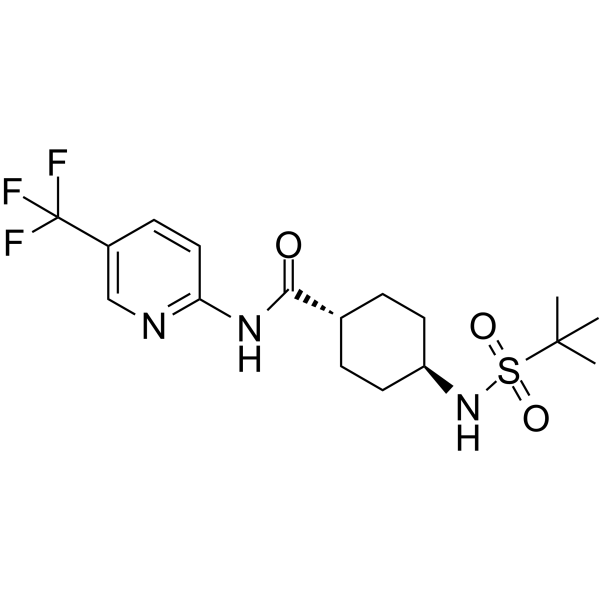
HY-14423
Velneperit -
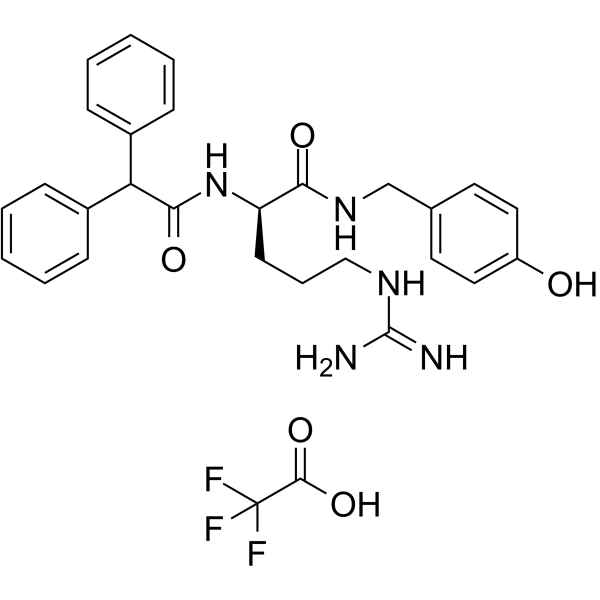
HY-107726
BIBP3226 TFA -
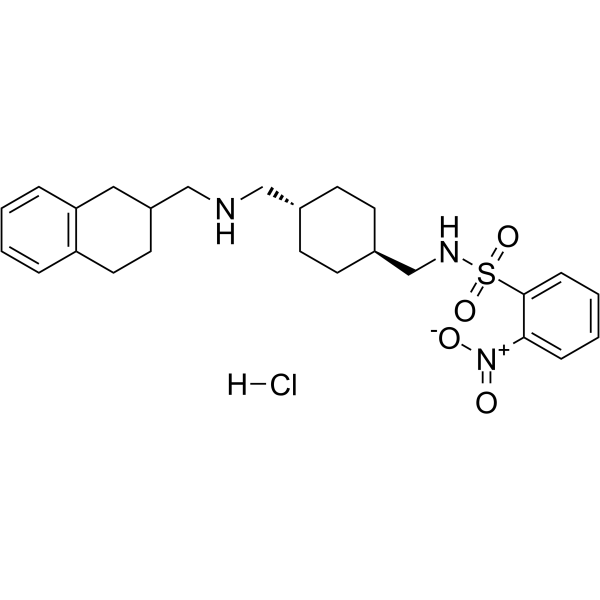
HY-107733
NTNCB hydrochloride -
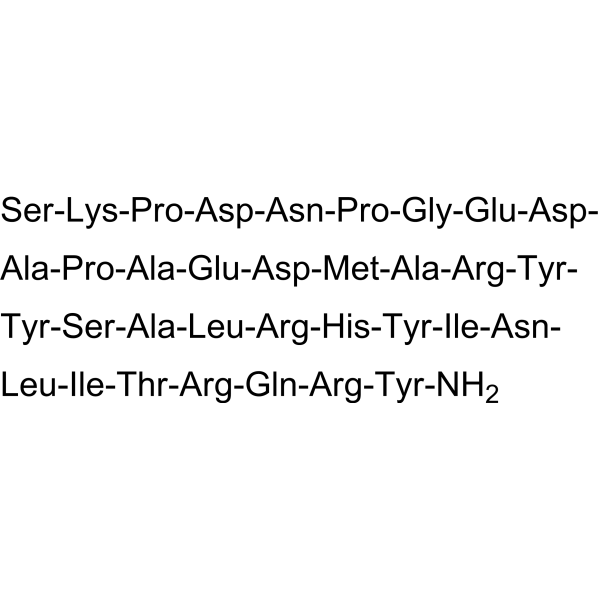
HY-P2543
Neuropeptide Y (3-36) (human, rat) -
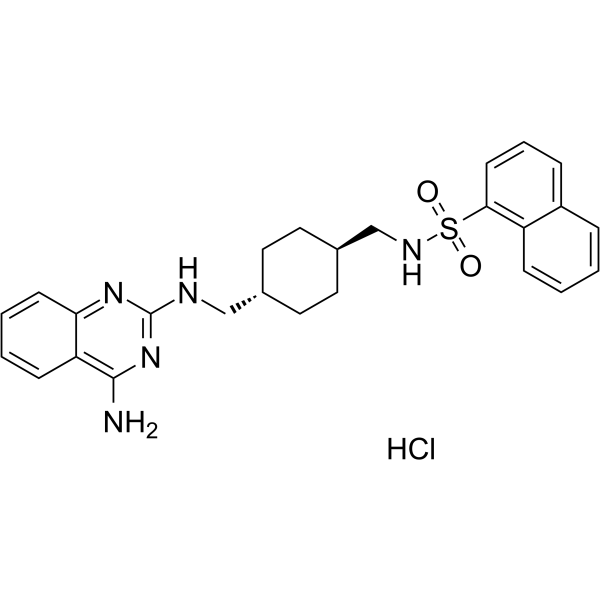
HY-107723
CGP71683 hydrochloride -
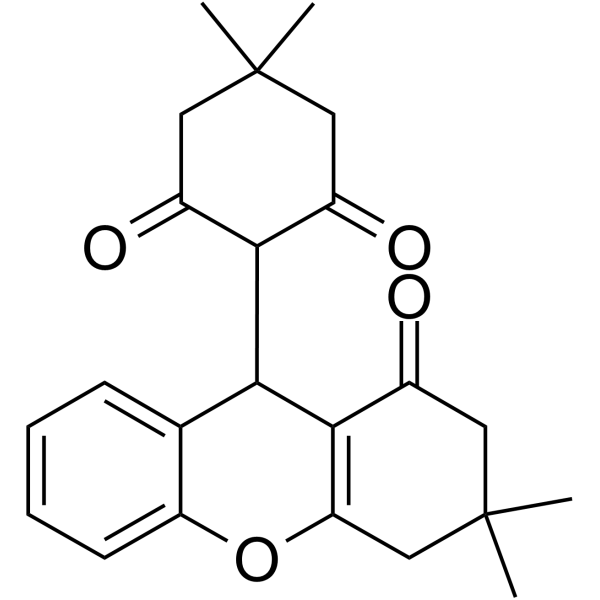
HY-107734
L 152804 -
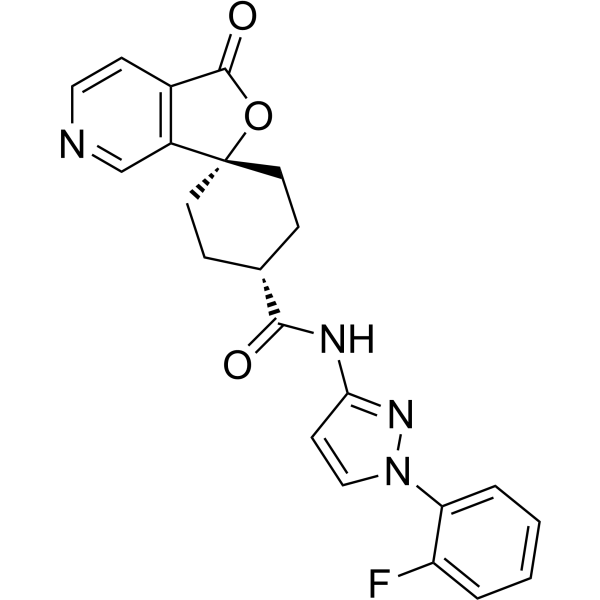
HY-15411
MK-0557 -
![[Leu31,Pro34]-Neuropeptide Y (porcine)](https://file.medchemexpress.com/product_pic/hy-p0208.gif)
HY-P0208
[Leu31,Pro34]-Neuropeptide Y (porcine)
Publications Citing Use of MedChemExpress (MCE) Peptide YY (PYY) (3-36), porcine
MoreAll Neuropeptide Y Receptor Isoforms
More

Biological Activity
Description
IC50 & Target
Y2 receptor[1]
In Vitro
Peptide YY (PYY) (3-36), porcine is a Y2 receptor agonist, generated via cleaving the first two amino acids at the N terminus of PYY1-36 by enzyme dipeptidyl peptidase-IV (DPP-IV), and can reduces food intake[1].
MedChemExpress (MCE) has not independently confirmed the accuracy of these methods. They are for reference only.
In Vivo
MedChemExpress (MCE) has not independently confirmed the accuracy of these methods. They are for reference only.


Chemical Information
-
CAS No. 126339-09-1
-
Molecular Weight 3980.42
-
Formula C176H272N52O54
-
Sequence
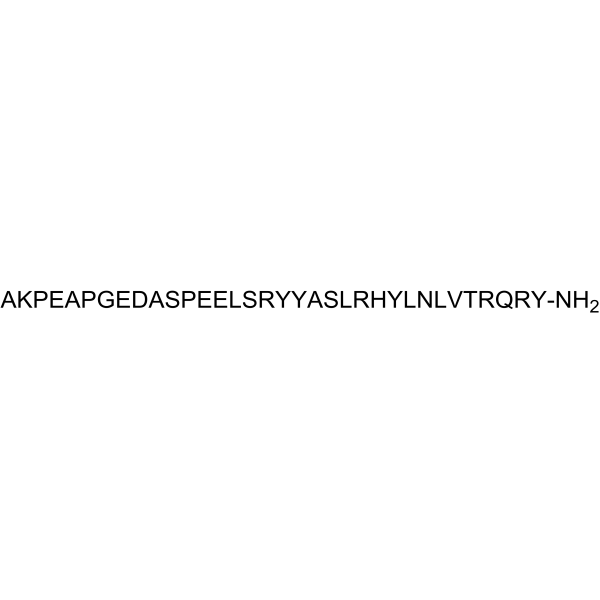
Ala-Lys-Pro-Glu-Ala-Pro-Gly-Glu-Asp-Ala-Ser-Pro-Glu-Glu-Leu-Ser-Arg-Tyr-Tyr-Ala-Ser-Leu-Arg-His-Tyr-Leu-Asn-Leu-Val-Thr-Arg-Gln-Arg-Tyr-NH2
-
Sequence Shortening
AKPEAPGEDASPEELSRYYASLRHYLNLVTRQRY-NH2
-
Shipping
Room temperature in continental US; may vary elsewhere.
-
Storage
Please store the product under the recommended conditions in the Certificate of Analysis.


Publications (3)
-
Journal Impact Factor
-
Most Recent
-
J Headache Pain
Neuropeptide Y in the medial habenula alleviates migraine-like behaviors through the Y1 receptor. [Abstract]2023 May 25;24(1):61. PMID: 37231359 -
J Pharm Biomed Anal
Analyzing proteolytic stability and metabolic hotspots of therapeutic peptides in two rodent pulmonary fluids. [Abstract]2023 Feb 5:224:115156. PMID: 36463768 -
J Pharm Biomed Anal
Automated high-throughput in vitro assays to identify metabolic hotspots and protease stability of structurally diverse, pharmacologically active peptides for inhalation. [Abstract]2022 Mar 20:211:114518. PMID: 35124452


Solvent & Solubility
In Vitro
H2O
Peptide Solubility and Storage Guidelines:
1. Calculate the length of the peptide.
2. Calculate the overall charge of the entire peptide according to the following table:
| Contents | Assign value | |
|---|---|---|
| Acidic amino acid | Asp (D), Glu (E), and the C-terminal -COOH. | -1 |
| Basic amino acid | Arg (R), Lys (K), His (H), and the N-terminal -NH2 | +1 |
| Neutral amino acid | Gly (G), Ala (A), Leu (L), Ile (I), Val (V), Cys (C), Met (M), Thr (T), Ser (S), Phe (F), Tyr (Y), Trp (W), Pro (P), Asn (N), Gln (Q) | 0 |
3. Recommended solution:
| Overall charge of peptide | Details |
|---|---|
| Negative (<0) |
1. Try to dissolve the peptide in water first. 2. If water fails, add NH4OH (<50 μL). 3. If the peptide still does not dissolve, add DMSO (50-100 μL) to solubilize the peptide. |
| Positive (>0) |
1. Try to dissolve the peptide in water first. 2. If water fails, try dissolving the peptide in a 10%-30% acetic acid solution. 3. If the peptide still does not dissolve, try dissolving the peptide in a small amount of DMSO. |
| Zero (=0) |
1. Try to dissolve the peptide in organic solvent (acetonitrile, methanol, etc.) first. 2. For very hydrophobic peptides, try dissolving the peptide in a small amount of DMSO, and then dilute the solution with water to the desired concentration. |

Protocol
Animal Administration[1]
Mice[1]
Mice are divided into four treatment groups and administered an injection (maximum volume, 100 μL, sc) of either: 1) saline (n = 10), 2) phosphoramidon (10 mg/kg) (n = 10), 3) PYY3-36 (50 nmol/kg) (n = 10), or 4) PYY3-36 (50 nmol/kg) and phosphoramidon (10 mg/kg) (n = 10). This dose of phosphoramidon inhibits NEP activity for 4 h. Body weight is measured at 0 and 24 h after injection. Food intake is measured at 1, 2, 3, 4, 8, and 24 h after injection[1].
MedChemExpress (MCE) has not independently confirmed the accuracy of these methods. They are for reference only.


Purity & Documentation
References

Calculators
Concentration (start) × Volume (start) = Concentration (final) × Volume (final)


Peptide YY (PYY) (3-36), porcine Related Classifications
HY-P1021 Related Classifications
 Powered by Bioz