1. Search Result
Search Result
Pathways Recommended: GPCR/G Protein
Results for "

Gly-Gly (Standard)

" in MedChemExpress (MCE) Product Catalog:

17

Inhibitors & Agonists

1

Biochemical Assay Reagents

1

Peptides

12

Natural
Products

Cat. No. Product Name Target Research Areas Chemical Structure
  • HY-17561R

    Geneticin sulfate (Standard); Antibiotic G-418 sulfate (Standard)

    Reference Standards Bacterial Antibiotic Infection
    G-418 (disulfate) (Standard) is the analytical standard of G-418 (disulfate). This product is intended for research and analytical applications. G-418 disulfate (Geneticin sulfate), is an aminoglycoside antibiotic, inhibits protein synthesis in eukaryotes and prokaryotes. G-418 disulfate is commonly used as a selective agent for eukaryotic cells[1].
    G-418 disulfate (Standard)
  • HY-D0889R

    Gly-Gly (Standard); H-Gly-Gly-OH (Standard)

    Reference Standards Endogenous Metabolite Metabolic Disease
    Glycylglycine (Standard) is the analytical standard of Glycylglycine (HY-D0889). This product is intended for research and analytical applications. Glycylglycine is a non-selective glycylglycine dipeptidase substrate and iNOS inhibitor. Glycylglycine can cross the cell membrane by passive diffusion and is hydrolyzed to glycine in the cell, participating in energy metabolism and antioxidant processes. Glycylglycine promotes spermatogonial stem cells (SSCs) proliferation, inhibits astrocyte overactivation and reduces nitric oxide (NO) release, while upregulating the expression of neurotrophic factors (such as PDGFA, FGF2, CNTF) to support nerve myelin repair. Glycylglycine can be used to study male reproductive biology (such as SSCs proliferation regulation) and neurodegenerative diseases (such as neuroprotective mechanisms in multiple sclerosis) .
    Glycylglycine (Standard)
  • HY-N0440R

    Reference Standards Influenza Virus NF-κB 5 alpha Reductase Keap1-Nrf2 Lactate Dehydrogenase Apoptosis Infection Neurological Disease Inflammation/Immunology Endocrinology Cancer
    Germacrone (Standard) is an analytical standard of Gemmacrone (HY-N0440). This product is intended for research and analytical applications. Germacrone (Standard) is a sesquiterpene compound with multiple biological activities. Germacrone (Standard) inhibits the H1N1 and H3N2 influenza A viruses and the influenza B virus. Germacrone (Standard) blocks the progressionof arthritis by regulating Th1/Th2 balance and inhibiting NF-κB signaling. Germacrone (Standard) can arrest the cell cycle at G0/G1 and G2/M phases and induce apoptosis in breast cancer cells. Germacrone (Standard) inhibits 5α-reductase and has anti-androgenic effect. Germacrone (Standard) has neuroprotective functions and can be used for the study of traumatic brain injury (TBI). Germacrone (Standard) also has antioxidant activity .
    Germacrone (Standard)
  • HY-B1271R

    G-28315 (Standard)

    Reference Standards Endogenous Metabolite Inflammation/Immunology
    Sulfinpyrazone (Standard) is the analytical standard of Sulfinpyrazone. This product is intended for research and analytical applications. Sulfinpyrazone (G-28315) is an orally active and potent uricosuric agent for chronic and intermittent gouty arthritis. Sulfinpyrazone has antithrombotic and platelet inhibitory effects .
    Sulfinpyrazone (Standard)
  • HY-N0837R

    NSC17821 (Standard); NSC23880 (Standard)

    Reference Standards PI3K Akt mTOR Autophagy Apoptosis Neurological Disease Metabolic Disease Cancer
    Veratramine (NSC17821; NSC23880) (Standard) is the analytical standard of Veratramine (HY-N0837). This product is intended for research and analytical applications. Veratramine (NSC17821; NSC23880) is an orally active inhibitor of the PI3K/Akt/mTOR signaling pathway and a SIGMAR1 modulator. Veratramine induces autophagic apoptosis of tumor cells, arrests the cell cycle at the G0/G1 phase, and inhibits epithelial-mesenchymal transition (EMT)-related proteins to reduce tumor migration. Veratramine reduces spinal cord and sciatic nerve pathological damage in a neuropathy model by inhibiting SIGMAR1 binding to NMDAR and phosphorylation of NMDAR Ser896. Veratramine has anti-tumor proliferation, apoptosis induction, anti-inflammatory and neuroprotective activities, and can be used in the study of cancers such as liver cancer and osteosarcoma, as well as diabetic peripheral neuropathy .
    Veratramine (Standard)
  • HY-W015236R

    TriGlycine (Standard)

    Biochemical Assay Reagents Reference Standards Others
    H-Gly-Gly-Gly-OH (Standard) is the analytical standard of H-Gly-Gly-Gly-OH. This product is intended for research and analytical applications. H-Gly-Gly-Gly-OH, also known as Triglycine, is a tripeptide composed of glycine, glycine and glycine, which are linked by peptide bonds. Often used as a model compound in the study of protein structure and function. Glycylglycylglycine also acts as a neurotransmitter in the central nervous system and has been shown to have antioxidant properties. Furthermore, it may have potential research roles in various diseases such as cancer, diabetes and neurodegenerative diseases.
    H-Gly-Gly-Gly-OH (Standard)
  • HY-17408R

    Compactin(Standard); ML236B (Standard)

    Reference Standards HMG-CoA Reductase (HMGCR) Bacterial Autophagy Apoptosis Antibiotic Infection Cardiovascular Disease Neurological Disease Metabolic Disease Cancer
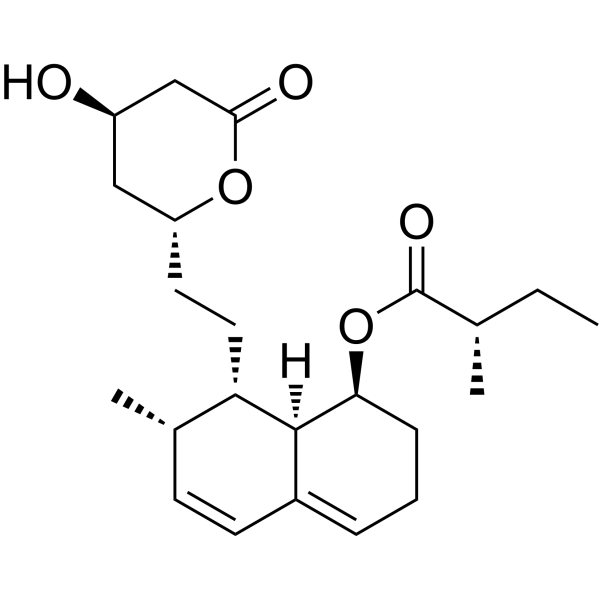
    Mevastatin (Standard) is the analytical standard of Mevastatin. This product is intended for research and analytical applications. Mevastatin (Compactin) is a first HMG-CoA reductase inhibitor that belongs to the statins class. Mevastatin is a lipid-lowering agent, and induces apoptosis, arrests cancer cells in G0/G1 phase. Mevastatin also increases endothelial nitric oxide synthase (eNOS) mRNA and protein levels. Mevastatin has antitumor activity and has the potential for cardiovascular diseases treatment .
    Mevastatin (Standard)
  • HY-N0711R

    Cymophenol (Standard)

    Reference Standards Notch Apoptosis Fungal Endogenous Metabolite Bacterial Infection Inflammation/Immunology Cancer
    Carvacrol (Standard) is the analytical standard of Carvacrol. This product is intended for research and analytical applications. Carvacrol is an orally active and blood-brain barrier-permeable monoterpenic phenol that can be extract from an abundant number of aromatic plants, including thyme and oregano, possessing antioxidant, antibacterial, antifungal, anticancer, anti-inflammatory, hepatoprotective, spasmolytic, and vasorelaxant properties. Carvacrol also causes cell cycle arrest in G0/G1, downregulates Notch-1, and Jagged-1, and induces apoptosis. Carvacrol is used in low concentrations as a food flavoring ingredient and preservative, as well as a fragrance ingredient in cosmetic formulations .
    Carvacrol (Standard)
  • HY-118700AR

    Guanidinobiotin hydrobromide (Standard)

    Reference Standards NO Synthase Neurological Disease
    H-Gly-Gly-Gly-OH (Standard) is the analytical standard of H-Gly-Gly-Gly-OH. This product is intended for research and analytical applications. H-Gly-Gly-Gly-OH, also known as Triglycine, is a tripeptide composed of glycine, glycine and glycine, which are linked by peptide bonds. Often used as a model compound in the study of protein structure and function. Glycylglycylglycine also acts as a neurotransmitter in the central nervous system and has been shown to have antioxidant properties. Furthermore, it may have potential research roles in various diseases such as cancer, diabetes and neurodegenerative diseases.
    2-Iminobiotin hydrobromide (Standard)
  • HY-135217R

    Apoptosis Reference Standards Cancer
    Apiole (Standard) is the analytical standard of Apiole. This product is intended for research and analytical applications. Apiole is an anti-tumor agent that induces apoptosis and inhibits human colon cancer cells by inducing G0/G1 cell cycle arrest. Apiole also significantly inhibited colon tumor development in an in vivo mouse xenograft model .
    Apiole (Standard)
  • HY-13680R

    Dian III (Standard); N-Methylisoindigotin (Standard); Natura-α (Standard)

    Apoptosis Reference Standards Cancer
    Meisoindigo (Standard) is the analytical standard of Meisoindigo. This product is intended for research and analytical applications. Meisoindigo (Dian III), a derivative of Indirubin (HY-N0117), halts the cell cycle at the G0/G1 phase and induces apoptosis in primary acute myeloid leukemia (AML) cells. Meisoindigo exhibits high antitumor activity .
    Meisoindigo (Standard)
  • HY-N2414R

    Reference Standards Reactive Oxygen Species (ROS) Necroptosis Pyroptosis Interleukin Related Caspase NOD-like Receptor (NLR) Inflammation/Immunology Cancer
    Periplogenin (Standard) is the analytical standard of Periplogenin (HY-N2414). Periplogenin is an orally active cardiac glycoside found in Cortex periplocae. Periplogenin can induce ROS production and necroptosis and cause G0/G1 phase arrest. Periplogenin can inhibit pyroptosis by regulating the NLRP3/Caspase-1/GSDMD signaling. Periplogenin suppresses growth of prostate carcinoma cells by docking to an ATP1A1 protein pocket and forming a hydrogen bond with T804. Periplogenin can be used for the researches of cancer, inflammation and immunology, such as prostate carcinoma, rheumatoid arthritis and psoriasis .
    Periplogenin (Standard)
  • HY-W014701R

    Reference Standards Aryl Hydrocarbon Receptor Cytochrome P450 Apoptosis Interleukin Related Neurological Disease Inflammation/Immunology Endocrinology
    1,4-Dihydroxy-2-naphthoic acid (Standard) is the analytical standard for 1,4-Dihydroxy-2-naphthoic acid (HY-W014701). 1,4-Dihydroxy-2-naphthoic acid is an orally active aryl hydrocarbon receptor (AhR) agonist and a bifidogenic growth stimulator. 1,4-Dihydroxy-2-naphthoic acid can improve the motor dysfunction in parkinson's disease (PD) model through AhR-dependent and -independent pathways. 1,4-Dihydroxy-2-naphthoic acid exerts anti-inflammatory effects by regulating the gut microbiota (such as promoting the proliferation of Bifidobacterium) and directly regulating the host immune system. 1,4-Dihydroxy-2-naphthoic acid induces apoptosis through G0/G1 cell cycle arrest in human keratinocyte to inhibit psoriasis .
    1,4-Dihydroxy-2-naphthoic acid (Standard)
  • HY-Y0106R

    Reference Standards mTOR Xanthine Oxidase Apoptosis Cardiovascular Disease Metabolic Disease Inflammation/Immunology
    2,6-Dihydroxyacetophenone (Standard) is the analytical standard of 2,6-Dihydroxyacetophenone (HY-Y0106). This product is intended for research and analytical applications. 2,6-Dihydroxyacetophenone, a polyphenolic derivative of Acetophenone (HY-Y0989), is an orally active mTOR inhibitor. 2,6-Dihydroxyacetophenone shows antioxidant activity. 2,6-Dihydroxyacetophenone inhibits cell growth and proliferation in CRC cells. 2,6-Dihydroxyacetophenone arrests at G0/G1 phase of cell cycle, induces apoptosis and suppresses cell migration in CRC cells. 2,6-Dihydroxyacetophenone inhibits xanthine oxidase (XOD) with an IC50 of 1.24 mM. 2,6-dihydroxyacetophenone improves uric acid metabolism in hyperuricemia mice, reduces plasma cholesterol in hypercholesterolemic rats, and inhibits lipid accumulation in HFD-induced obese mice. 2,6-Dihydroxyacetophenone can be used for the study of colorectal cancer (CRC), hyperuricemia and hypercholesterolemia .
    2,6-Dihydroxyacetophenone (Standard)
  • HY-107216R

    Reference Standards Estrogen Receptor/ERR Cancer
    G-1 (Standard) is the analytical standard of G-1 (HY-107216). This product is intended for research and analytical applications. G-1 is a nonsteroidal, high-affinity and selective agonist of GPR30 with a Ki of 11 nM.
    G-1 (Standard)
  • HY-103450R

    Reference Standards Estrogen Receptor/ERR Endocrinology Cancer
    G36 (Standard) is the analytical standard of G36 (HY-103450). This product is intended for research and analytical applications. G-36 is a cell-permeable nonsteroidal antagonist of the G protein-coupled estrogen receptor (GPER/GPR30), which selectively inhibits estrogen-mediated PI3K activation through GPER, rather than Erα. G-36 also inhibits estrogen-mediated calcium mobilization (IC50=112 nM). G-36 is promising for research in the field of cancer .
    G36 (Standard)
  • HY-N7844R

    Benzyladenosine (Standard)

    Apoptosis Adenosine Receptor Phytohormone Reference Standards Inflammation/Immunology Cancer
    N6-Benzyladenosine (Standard) (Benzyladenosine (Standard)) is the analytical standard of N6-Benzyladenosine (HY-N7844). This product is intended for research and analytical applications. N6-Benzyladenosine is an adenosine receptor agonist, has a cytoactive activity. N6-Benzyladenosine arrests cell cycle at G0/G1 phase and induces cell apoptosis. N6-Benzyladenosine also exerts inhibitory effect on T. gondii adenosine kinase and glioma - .
    N6-Benzyladenosine (Standard)

Inquiry Online

Your information is safe with us. * Required Fields.

Salutation


Country or Region *

Applicant Name *


Organization Name *

Department *


Email Address *


Product Name *

Cat. No.


Requested quantity *

Phone Number *


Remarks

Inquiry Online

Inquiry Information

Product Name:
Cat. No.:
Quantity:
MCE Japan Authorized Agent:

