1. Search Result
Search Result
Results for "

I/R

" in MedChemExpress (MCE) Product Catalog:

173

Inhibitors & Agonists

1

Screening Libraries

4

Fluorescent Dyes

1

Biochemical Assay Reagents

17

Peptides

4

Inhibitory Antibodies

17

Natural
Products

50

Recombinant Proteins

5

Isotope-Labeled Compounds

32

Antibodies

9

Click Chemistry

8

Oligonucleotides

Cat. No. Product Name Target Research Areas Chemical Structure
  • HY-N2466
    Melanotan I
    1 Publications Verification

    MT-I; [Nle4,D-Phe7]-α-MSH

    Melanocortin Receptor Neurological Disease Cancer
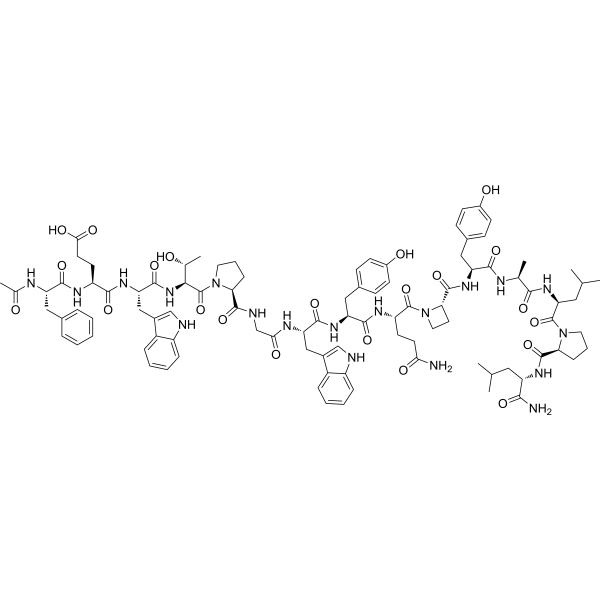
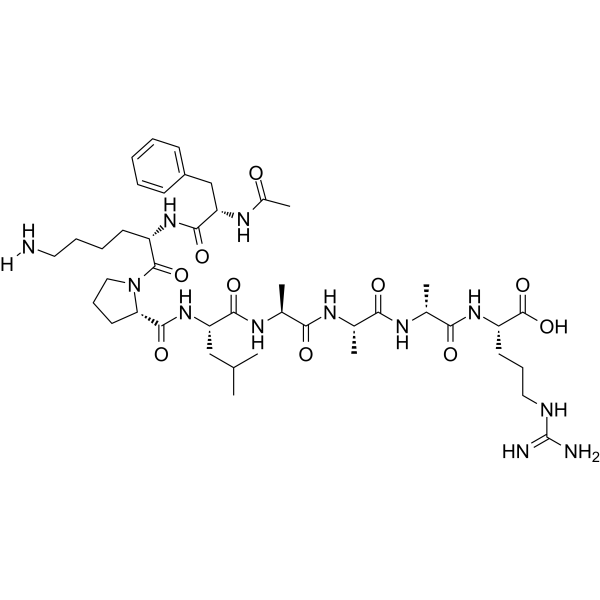
    Melanotan I is a potent non-selective melanocortin receptor (MCR) agonist. Melanotan I is a synthetic analogue of α-melanocyte stimulating hormone (α-MSH) that stimulates melanogenesis. Melanotan I can induce skin tanning by mimicking the actions of a-MSH on the melanocortin type 1 receptors (MC1R) of melanocytes. Melanotan I can be used for the research of sun-induced skin cancer, melanoma, inflammation and male erectile dysfunction .
    Melanotan I
  • HY-N0615
    Notoginsenoside R1
    2 Publications Verification

    Sanchinoside R1; Sanqi glucoside R1

    Amyloid-β Apoptosis Others
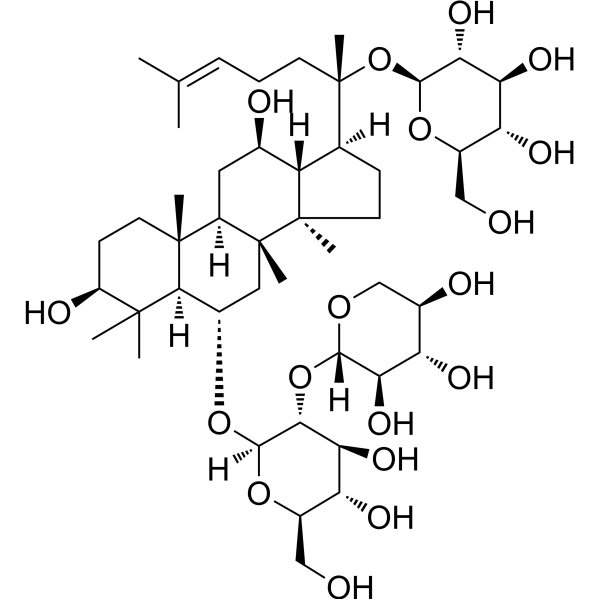
    Notoginsenoside R1 (Sanchinoside R1), a saponin, is isolated from P. notoginseng. Notoginsenoside R1 exhibits anti-oxidation, anti-inflammatory, anti-angiogenic, and anti-apoptosis activities. Notoginsenoside R1 provides cardioprotection against ischemia/reperfusion (I/R) injury. Notoginsenoside R1 also provides neuroprotection in H2O2-induced oxidative damage in PC12 cells .
    Notoginsenoside R1
  • HY-19969
    YM-90709
    1 Publications Verification

    Interleukin Related Inflammation/Immunology
    YM-90709 is a novel IL-5 inhibitor which selectively blocks the binding of IL-5 to the IL-5 receptor (IL-5R).YM-90709 potently inhibits the binding of [ 125I]-IL-5 to IL-5R on human peripheral eosinophils and eosinophilic HL-60 clone 15 cells with IC50 values of 1.0 and 0.57 μM .
    YM-90709
  • HY-107613
    R 59-022
    2 Publications Verification

    DKGI-I; Diacylglycerol kinase inhibitor I

    PKC 5-HT Receptor Inflammation/Immunology
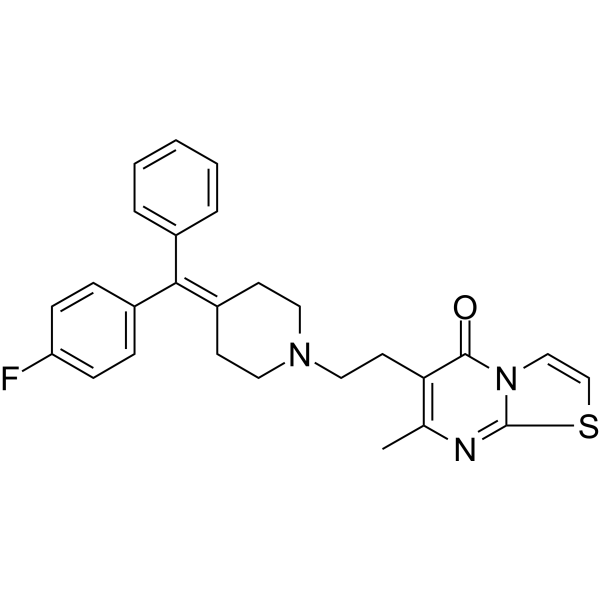
    R 59-022 (DKGI-I) is a DGK inhibitor (IC50: 2.8 µM). R 59-022 inhibits the phosphorylation of OAG to OAPA. R 59-022 is a 5-HT Receptor antagonist, and activates protein kinase C (PKC). R 59-022 potentiates thrombin-induced diacylglycerol production in platelets and inhibits phosphatidic acid production in neutrophils .
    R 59-022
  • HY-13631J

    (1R,9R)-DX8951f

    Drug Derivative Topoisomerase Apoptosis Cancer
    (1R,9R)-Exatecan mesylate ((1R,9R)-DX8951f) is a non-prodrug camptothecin derivative and a potent topoisomerase I inhibitor (IC50=0.975 μg/mL in mice and 0.82 μg/mL in humans). (1R,9R)-Exatecan mesylate blocks enzyme activity and induces apoptosis by stabilizing the enzyme-DNA cleavable complex. (1R,9R)-Exatecan mesylate not only effectively inhibits the proliferation of various malignant tumor cells and tumor growth, but also circumvents P-glycoprotein-mediated multidrug resistance. (1R,9R)-Exatecan mesylate is widely used in preclinical studies of multiple cancers including pancreatic cancer, lung cancer, breast cancer, and leukemia . The low-activity isomer of (1R,9R)-Exatecan mesylate is (1S,9R)-Exatecan mesylate (HY-13631I).
    (1R,9R)-Exatecan mesylate
  • HY-108355
    R59949
    1 Publications Verification

    PKC Cancer
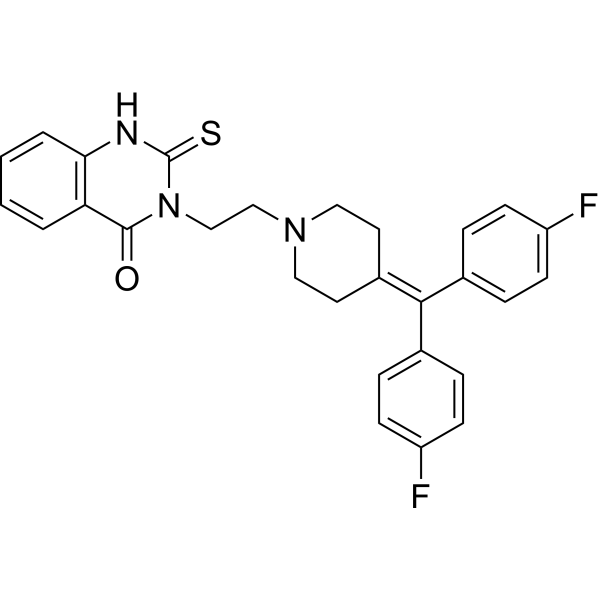
    R59949 is a pan diacylglycerol kinase (DGK) inhibitor with an IC50 of 300 nM. R59949 strongly inhibits the activity of type I DGK α and γ and moderately attenuates the activity of type II DGK θ and κ. R59949 activates protein kinase C (PKC) by enhancing the levels of the endogenous ligand diacyl glycerol .
    R59949
  • HY-101335

    mGluR Neurological Disease
    DCG-IV is a potent agonist of group II mGluRs with EC50s of 0.35 and 0.09 μM for mGlu2R and mGlu3R, reapectively. DCG-IV is also a competitive antagonist at group I (IC50: mGlu1R/5R=389/630 μM) and III receptors (IC50: mGlu4R/6R/7R/8R= 22.5/39.6/40.1/32 μM). DCG-IV has anticonvulsive and neuroprotective effects .
    DCG-IV
  • HY-107139

    Melanocortin Receptor Endocrinology
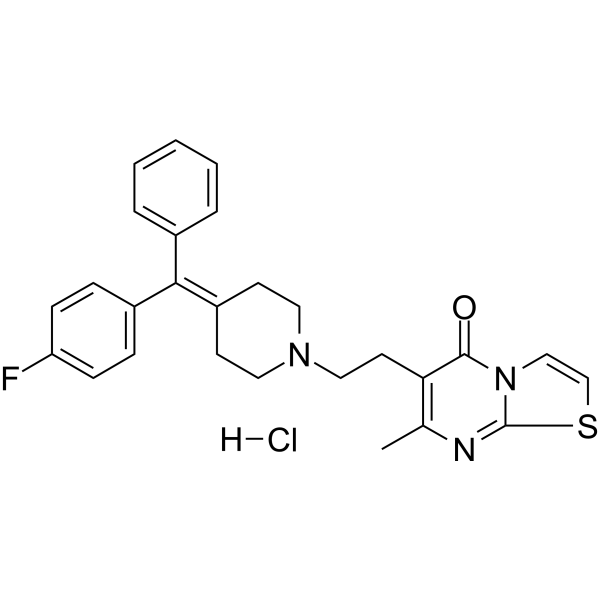
    JNJ-10229570 is an antagonist of melanocortin receptor 1 (MC1R) and melanocortin receptor 5 (MC5R), which inhibits sebaceous gland differentiation and the production of sebum-specific lipids. JNJ-10229570 inhibits the binding of 125I-NDP-α-MSH to cells expressing human MC1R and MC5R, with IC50 values of 270 nM and 200 nM, respectively.
    JNJ-10229570
  • HY-N0507

    TNF Receptor Interleukin Related Neurological Disease Inflammation/Immunology
    Rosavin, an orally bioactive phenylpropanoid from Rhodiola rosea L. (RRL), is an adaptogen that enhances the body’s response to environmental stress. Rosavin significantly influences bone tissue metabolism by inhibiting osteoclastogenesis and promoting osteoblast differentiation, also impacts various diseases, demonstrating antidepressant, adaptogenic, and anxiolytic effects in mouse models. Additionally, Rosavin improves survival, reducing intestinal damage in irradiated rats and Ischemia-reperfusion(I/R)-induced cerebral injury in vivo by regulating inflammation and oxidative stress, making it a promising candidate for research in radiation-induced intestinal injury, I/R-induced cerebral injury and osteoporosis .
    Rosavin
  • HY-13631I

    (1S,9R)-DX8951f

    Drug Derivative Topoisomerase Apoptosis Cancer
    (1S,9R)-Exatecan mesylate ((1S,9R)-DX8951f) is a non-prodrug camptothecin derivative and a topoisomerase I inhibitor (IC50=0.975 μg/mL in mice and 0.82 μg/mL in humans). (1S,9R)-Exatecan mesylate blocks enzyme activity and induces apoptosis by stabilizing the enzyme-DNA cleavable complex. (1S,9R)-Exatecan mesylate not only effectively inhibits the proliferation of various malignant tumor cells and tumor growth, but also circumvents P-glycoprotein-mediated multidrug resistance. (1S,9R)-Exatecan mesylate is widely used in preclinical studies of various cancers such as pancreatic cancer, lung cancer, breast cancer, and leukemia .
    The chiral isomer of (1S,9R)-Exatecan mesylate is (1R,9R)-Exatecan mesylate (HY-13631J).
    (1S,9R)-Exatecan mesylate
  • HY-N2541

    Taste Receptor mTOR Autophagy Apoptosis Metabolic Disease
    Gymnemic acid I is a bioactive triterpene saponin found in Gymnema sylvestre. Gymnemic acid I is an antisweetness inhibitor via human sweet receptor type 1 receptor 2 (T1R2) and T1R3. Gymnemic acid I is a ribosomal protein biosynthesis inhibitor. Gymnemic acid I has antidiabetic effects. Gymnema acid I induces autophagy-protected MIN-6 cells from apoptosis under high glucose stress by inhibiting the phosphorylation activity of mTOR .
    Gymnemic acid I
  • HY-B0374

    BDF5895

    Imidazoline Receptor Adrenergic Receptor LDLR Cardiovascular Disease Neurological Disease
    Moxonidine (BDF5895) is an orally active imidazoline type 1 receptor (I1-R) agonist. Moxonidine activates imidazoline I1 receptors and α2 adrenoceptors, affecting oxidized low-density lipoprotein uptake. Moxonidine reduces atherosclerotic lesions and lowers blood pressure. Moxonidine can be used in the study of hypertension, heart failure, and atherosclerosis .
    Moxonidine
  • HY-B0374A

    BDF5895 hydrochloride

    Imidazoline Receptor Adrenergic Receptor LDLR Cardiovascular Disease Neurological Disease
    Moxonidine (BDF5895) hydrochloride is an orally active imidazoline type 1 receptor (I1-R) agonist. Moxonidine hydrochloride activates imidazoline I1 receptors and α2 adrenoceptors, affecting oxidized low-density lipoprotein uptake. Moxonidine hydrochloride reduces atherosclerotic lesions and lowers blood pressure. Moxonidine hydrochloride can be used in the study of hypertension, heart failure, and atherosclerosis .
    Moxonidine hydrochloride
  • HY-P3226

    IGF-1R VEGFR Drug Derivative Cardiovascular Disease Neurological Disease
    JB-1, an IGF-I analog, is a selective IGF-I receptor inhibitor that does not interact with IGF-II. JB-1 competes with IGF-I for binding to IGF-1R and blocks receptor autophosphorylation. JB-1 increases the level of sVEGFR-1. JB-1 normalizes retinal abnormalities, including reducing retinal neovascularization. JB-1 is applicable to studies related to oxygen-induced retinopathy .
    JB-1
  • HY-148668A

    Drug-Linker Conjugates for ADC Topoisomerase Cancer
    MC-Gly-Gly-Phe-Gly-(R)-Cyclopropane-Exatecan is a agent-linker conjugates for ADC, consisting Exatecan (HY-13631). Exatecan is a DNA Topoisomerase I inhibitor (IC50=2.2 μM) .
    MC-Gly-Gly-Phe-Gly-(S)-Cyclopropane-Exatecan
  • HY-150700

    ERK Metabolic Disease
    RLX-33 is a potent, selective and blood-brain barrier (BBB) penetrant relaxin family peptide 3 (RXFP3) antagonist, also blocks relaxin-3-induced ERK1/2 phosphorylation, with IC50 values of 2.36 μM for RXFP3, 7.82 and 13.86 μM for ERK1 and ERK2 phosphorylation, respectively. RLX-33 can block the stimulation of food intake induced by the RXFP3-selective agonist R3/I5 in rats. RLX-33 can be used for the research of metabolic syndrome .
    RLX-33
  • HY-W002942

    1,2,3,4-Tetrahydroquinolin-8-ol; 8-hydroxy-1,2,3,4-tetrahydroquinoline

    Ferroptosis Reactive Oxygen Species (ROS) Inflammation/Immunology
    Ferroptosis-IN-21 is a ferroptosis inhibitor that protects against renal I/R injury by suppressing ferroptosis and directly scavenging peroxyl radicals. Ferroptosis-IN-21 displays broad-spectrum anti-ferroptotic efficacy across multiple inducers in renal tubular epithelial cells, with nanomolar potency and robust suppression of lipid Reactive Oxygen Species (ROS). Ferroptosis-IN-21 significantly ameliorates renal I/R injury in mice, reducing histological damage, functional impairment, and inflammatory cytokine expression, while decreasing lipid peroxidation biomarkers such as 4-hydroxynonenal. Ferroptosis-IN-12 can be used for research in the field of ferroptosis-targeted drug development .
    Ferroptosis-IN-21
  • HY-E70008

    Sirtuin Inflammation/Immunology
    Lumbokinase attenuates myocardial ischemia-reperfusion (I-R) injury through the activation of Sirt1 signaling, and thus enhances autophagic flux and reduces I-R-induced oxidative damage, inflammation and apoptosis .
    Lumbokinase
  • HY-146134

    Cannabinoid Receptor Neurological Disease Inflammation/Immunology
    PGN36 is a selective cannabinoid CB2 receptor (CB2R) antagonist with Kis of 0.09 µM and >40 µM for CB2R and CB1R, respectively. PGN36 abolishes the increase in collagen type I gene expression by the inducer of bone activity. PGN36 is able to cross the blood-brain barrier. PGN36 can be used for the study of frontotemporal dementia (FTD) .
    PGN36
  • HY-122578

    MDM-2/p53 Cancer
    P53R3 is a potent p53 reactivator and restores sequence-specific DNA binding of p53 hot spot mutants, including p53 R175H, p53 R248W and p53 R273H. P53R3 induces p53-dependent antiproliferative effects with much higher specificity than PRIMA-1. P53R3 enhances the recruitment of wild-type p53 and p53 M237I to several target gene promoters. P53R3 strongly enhances the mRNA, total protein and cell surface expression of the death receptor death receptor 5 (DR5). P53R3 is used for cancer research .
    P53R3
  • HY-12829
    SR-3306
    1 Publications Verification

    JNK Neurological Disease Metabolic Disease Inflammation/Immunology
    SR-3306 is a brain-penetrant and selective pan-JNK (JNK1/2/3) inhibitor. SR-3306 is a neuroprotective agent that can be used for the study of Parkinson's disease, ischemia/reperfusion (I/R) injury and obesity .
    SR-3306
  • HY-40041

    Biochemical Assay Reagents Drug Intermediate Cancer
    (R)-1-Boc-3-methyl-piperazine (Compound I3-1) is a chemical intermediate. (R)-1-Boc-3-methyl-piperazine can be used for the preparation of Compound I3. Compound I3 exhibits anticancer activity against colorectal adenocarcinoma with BRCA2 gene deletion .
    (R)-1-Boc-3-methyl-piperazine
  • HY-135680
    I-OMe-Tyrphostin AG 538
    1 Publications Verification

    I-OMe-AG 538

    IGF-1R Metabolic Disease Cancer
    I-OMe-Tyrphostin AG 538 (I-OMe-AG 538) is a specific inhibitor of IGF-1R (insulin-like growth factor-1 receptor tyrosine kinase). I-OMe-Tyrphostin AG 538 inhibits IGF-1R-mediated signaling and is preferentially cytotoxic to nutrient-deprived PANC1 cells.?I-OMe-Tyrphostin AG 538 is an ATP-competitive inhibitor of phosphatidylinositol-5-phosphate 4-kinase α (PI5P4Kα), with an IC50?of 1 μM .
    I-OMe-Tyrphostin AG 538
  • HY-161727

    P2Y Receptor NOD-like Receptor (NLR) Inflammation/Immunology
    P2Y14R antagonist 1 (compound I-17) is a selective P2Y14R antagonist with an IC50 of 0.6 nM. It exhibits potent P2Y14R antagonistic activity, both in vitro and in vivo efficacy, and favorable pharmacokinetic profiles. P2Y14R antagonist 1 reduces the release of inflammatory factors and cell pyroptosis through the NOD-like receptor family pyrin domain-containing 3 (NLRP3)/gasdermin D (GSDMD) signaling pathway. P2Y14R antagonist 1 holds promise for research in the field of acute gouty arthritis .
    P2Y14R antagonist 1
  • HY-100904
    RX 801077 hydrochloride
    1 Publications Verification

    2 BFI

    Imidazoline Receptor Neurological Disease Inflammation/Immunology
    RX 801077 hydrochloride (2 BFI) is a selective imidazoline I2 receptor (I2R) agonist with a Ki value of 70.1 nM. RX 801077 hydrochlorideshows anti-inflammation and neuroprotection. RX 801077 hydrochloride has the potential for the research of traumatic brain injury (TBI) .
    RX 801077 hydrochloride
  • HY-103078

    HIV Reverse Transcriptase Infection
    I-XW-053 is a specific anti-HIV-1 capsid inhibitor (IC50=164.2 μM). By binding to the CA NTD-NTD hexamerization interface and the R173 region of CTD (Kd=66.3 μM), I-XW-053 disrupts capsid function and reduces polymerization levels. I-XW-053 effectively blocks HIV-1 uncoating, inhibits reverse transcription and early replication, and exhibits broad-spectrum activity against primary HIV-1 isolates in peripheral blood mononuclear cells. I-XW-053 can be widely used in studies related to HIV-1 infection .
    I-XW-053
  • HY-107613A
    R 59-022 hydrochloride
    2 Publications Verification

    DKGI-I hydrochloride; Diacylglycerol kinase inhibitor I hydrochloride

    PKC 5-HT Receptor Infection Inflammation/Immunology Cancer
    R 59-022 (DKGI-I) hydrochloride is a DGK inhibitor (IC50: 2.8 µM). R 59-022 hydrochloride inhibits the phosphorylation of OAG to OAPA. R 59-022 hydrochloride is a 5-HT Receptor antagonist, and activates protein kinase C (PKC). R 59-022 hydrochloride potentiates thrombin-induced diacylglycerol production in platelets and inhibits phosphatidic acid production in neutrophils .
    R 59-022 hydrochloride
  • HY-15481

    Insulin Receptor Metabolic Disease Endocrinology
    KU14R is a new I(3)-R antagonist, which selectively blocks the insulin secretory response to imidazolines.
    KU14R
  • HY-N2466A
    Melanotan I acetate
    1 Publications Verification

    MT-I acetate; [Nle4,D-Phe7]-α-MSH acetate

    Melanocortin Receptor Cancer
    Melanotan I acetate is a potent non-selective melanocortin receptor (MCR) agonist. Melanotan I acetate is a synthetic analogue of α-melanocyte stimulating hormone (α-MSH) that stimulates melanogenesis. Melanotan I acetate can induce skin tanning by mimicking the actions of a-MSH on the melanocortin type 1 receptors (MC1R) of melanocytes. Melanotan I acetate can be used for sunlight-induced skin cancers research .
    Melanotan I acetate
  • HY-129721

    Ponceau MX; Xylidine ponceau 2R; C.I. 16150

    Biochemical Assay Reagents Others
    Acid Red 26 is a biochemical reagent that can be used as a biological material or organic compound for life science related research.
    Acid Red 26
  • HY-110114
    Gue1654
    1 Publications Verification

    Orphan GPCR Others
    Gue1654 is a modulator of OXE-R. Gue1654 inhibits Gβγ but not Gα signaling triggered upon activation of Gα(i)-βγ by the chemoattractant receptor OXE-R. Gue1654 does not interfere nonspecifically with signaling directly at or downstream of Gβγ .
    Gue1654
  • HY-P4109

    NT21MP; V1 peptide

    CXCR Inflammation/Immunology Cancer
    vMIP-II (1-21) (NT21MP) is an inhibitor of CXCR4. vMIP-II (1-21) interacts broadly with CC and CXC chemokine receptors. vMIP-II (1-21) inhibits CXCR4 by competing with 125I-SDF-1R for binding sites (IC50=190 nM) .
    vMIP-II  (1-21)
  • HY-W110884

    Biochemical Assay Reagents Others
    Eriochrome cyanine R indicator (C.I. 43820) is a biochemical reagent that can be used as a biological material or organic compound for life science related research.
    Eriochrome cyanine R indicator (C.I. 43820)
  • HY-P10951

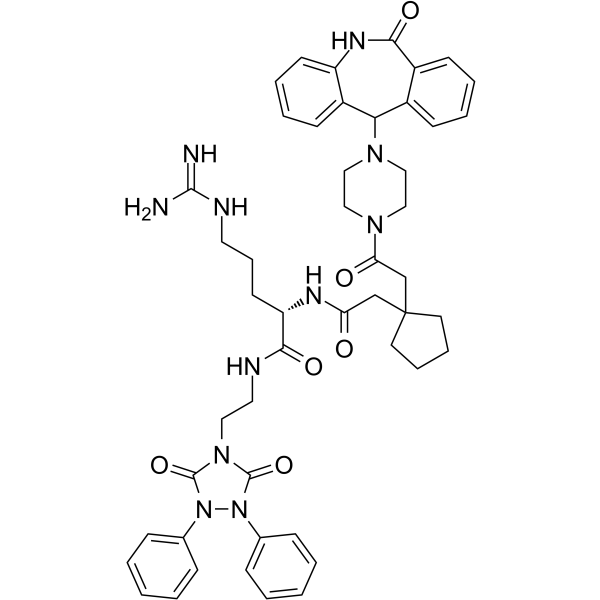
    (R)-PSMA I&T; (R)-PNT-2002

    PSMA Cancer
    Zadavotide guraxetan (PSMA I&T; PNT-2002) is a prostate-specific membrane antigen (PSMA) inhibitor. Zadavotide guraxetan has antitumor activity and can be used in prostate cancer-targeted research .
    (R)-Zadavotide guraxetan
  • HY-RS06847

    Small Interfering RNA (siRNA) Others

    Insr Mouse Pre-designed siRNA Set A contains three designed siRNAs for Insr gene (Mouse), as well as a negative control, a positive control, and a FAM-labeled negative control.

    Insr Mouse Pre-designed siRNA Set A
    Insr Mouse Pre-designed siRNA Set A
  • HY-13631T

    (1R,9S)-DX8951f

    Drug Derivative ADC Payload Topoisomerase Cancer
    (1R,9S)-Exatecan (DX8951f) is the (1R,9S) stereoisomer of Exatecan (HY-13631). Exatecan (DX-8951) is a DNA topoisomerase I inhibitor, with an IC50 of 2.2 μM (0.975 μg/mL), and can be used in cancer research .
    (1R,9S)-Exatecan
  • HY-100617A

    (RS)-4-Carboxyphenylglycine

    mGluR Others
    (RS)-4CPG ((RS)-4-Carboxyphenylglycine) is a type I metabotropic glutamate receptor antagonist with activity in blocking LTP induction. In mice lacking IP3R1, (RS)-4CPG (500μM) nearly blocked long-term potentiation (LTP) induced by type I metabotropic glutamate receptor activation, with LTP of 117.6±1.7% (n = 8) in IP3R1(-/-) mice and 116.9±1.8% (n = 5) in IP3R1(+/+) mice.
    (RS)-4CPG
  • HY-152157

    HIV Infection
    HIV-1 inhibitor-52 is a potent broad-spectrum HIV-1 activity inhibitor with EC50s of 1.6 nM-6.4 nM for WT HIV-1, HIV-1 V370A, HIV-1 ΔV370, HIV-1 V362I/V370A, HIV-1 T332S/V362I/prR41G, HIV-1 A326T/V362I/V370A, HIV-1 R361K/V362I/L363M .
    HIV-1 inhibitor-52
  • HY-P990143

    LDLR Others
    Anti-Mouse/Rat/Bovine VLDL-R Antibody (IgG-6A6) is an anti-mouse/rat/bovine VLDL-R IgG1 monoclonal antibody. Anti-Mouse/Rat/Bovine VLDL-R Antibody (IgG-6A6) can specifically recognize VLDLR type-I and type-II expressed in CHO cells. Anti-Mouse/Rat/Bovine VLDL-R Antibody (IgG-6A6) can be used to detect the expression of VLDLR in different cells and tissues. Anti-Mouse/Rat/Bovine VLDL-R Antibody (IgG-6A6) often used in western blot experiments .
    Anti-Mouse/Rat/Bovine VLDL-R Antibody (IgG-6A6)
  • HY-103078A

    HIV Reverse Transcriptase Infection
    I-XW-053 sodium is a specific anti-HIV-1 capsid inhibitor (IC50=164.2 μM). By binding to the CA NTD-NTD hexamerization interface and the R173 region of CTD (Kd=66.3 μM), I-XW-053 sodium disrupts capsid function and reduces polymerization levels. I-XW-053 sodium effectively blocks HIV-1 uncoating, inhibits reverse transcription and early replication, and exhibits broad-spectrum activity against primary HIV-1 isolates in peripheral blood mononuclear cells. I-XW-053 sodium can be widely used in studies related to HIV-1 infection .
    I-XW-053 sodium
  • HY-112134A

    AP-1 Cancer
    (R)-CSN5i-3 is the (R)-enantiomer of CSN5i-3. CSN5i-3 is a potent, selective and orally available inhibitor of CSN5 .
    (R)-CSN5i-3
  • HY-162436

    GLP Receptor Metabolic Disease
    GLP-1R agonist 21 (Compound I-134) is an agonist for glucagon-like peptide-1 receptor (GLP-1 receptor), with EC50 of 0.0104 nM .
    GLP-1R agonist 21
  • HY-162437

    GLP Receptor Metabolic Disease
    GLP-1R agonist 22 (Compound I-135) is an agonist for glucagon-like peptide-1 receptor (GLP-1 receptor), with EC50 of 0.0165 nM .
    GLP-1R agonist 22
  • HY-162435

    GLP Receptor Metabolic Disease
    GLP-1R agonist 20 (Compound I-132) is an agonist for glucagon-like peptide-1 receptor (GLP-1 receptor), with EC50 of 0.0162 nM .
    GLP-1R agonist 20
  • HY-153156

    Oxidative Phosphorylation Cancer
    R419 is a Complex I inhibitor. R419 has anti-cancer activity against liver cancer .
    R419
  • HY-177622

    IGF-1R Metabolic Disease
    Cibrigirsen is an antisense oligonucleotide targeted to the insulin-like growth factor I receptor(IGF-1R).
    Cibrigirsen
  • HY-13631N

    (9R)-DX8951f

    Drug Derivative ADC Payload Topoisomerase Cancer
    (9R)-Exatecan (DX8951f) is the (1R,9S) stereoisomer of Exatecan (HY-13631). Exatecan (DX-8951) is a DNA topoisomerase I inhibitor, with an IC50 of 2.2 μM (0.975 μg/mL), and can be used in cancer research.
    (9R)-Exatecan
  • HY-D0314

    Sudan R

    Fluorescent Dye
    Solvent Red 1 (C.I.) is a red dye. Its series of products, such as Solvent orange 60 (HY-D1177), has been used in dyeing applications of plastic materials.
    Solvent Red 1 (C.I.)
  • HY-B0374S

    Isotope-Labeled Compounds Imidazoline Receptor Adrenergic Receptor LDLR Cardiovascular Disease Neurological Disease
    Moxonidine-d4 (BDF5895-d4) is the deuterium labeled Moxonidine (HY-B0374). Moxonidine (BDF5895) is an orally active imidazoline type 1 receptor (I1-R) agonist. Moxonidine activates imidazoline I1 receptors and α2 adrenoceptors, affecting oxidized low-density lipoprotein uptake. Moxonidine reduces atherosclerotic lesions and lowers blood pressure. Moxonidine can be used in the study of hypertension, heart failure, and atherosclerosis .
    Moxonidine-d4
  • HY-161951

    Protoporphyrinogen IX oxidase Others
    PPO-IN-15 (compound (R)-I-5) is a protoporphyrinogen IX oxidase (PPO) inhibitor that is effective against resistant weeds and safer in wheat and rice .
    PPO-IN-15

Inquiry Online

Your information is safe with us. * Required Fields.

Salutation


Country or Region *

Applicant Name *


Organization Name *

Department *


Email Address *


Product Name *

Cat. No.


Requested quantity *

Phone Number *


Remarks

Inquiry Online

Inquiry Information

Product Name:
Cat. No.:
Quantity:
MCE Japan Authorized Agent:

