1. Search Result
Search Result
Results for "

Jeko-1

" in MedChemExpress (MCE) Product Catalog:

25

Inhibitors & Agonists

1

Inhibitory Antibodies

1

Natural
Products

Cat. No. Product Name Target Research Areas Chemical Structure
  • HY-136250

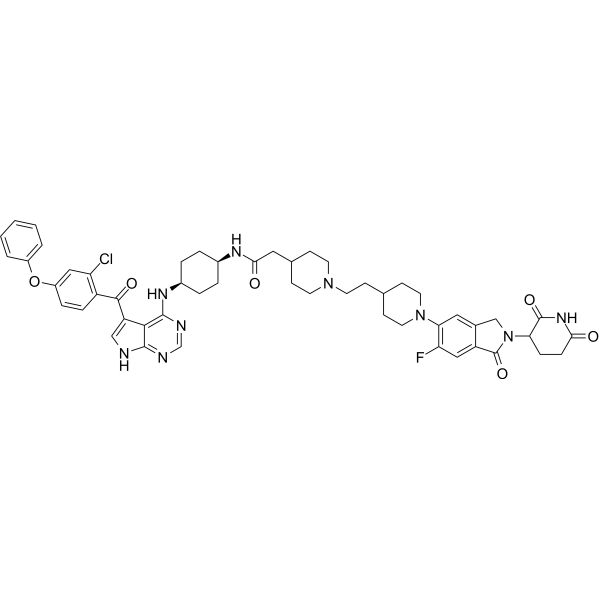
    PROTACs CDK Cancer
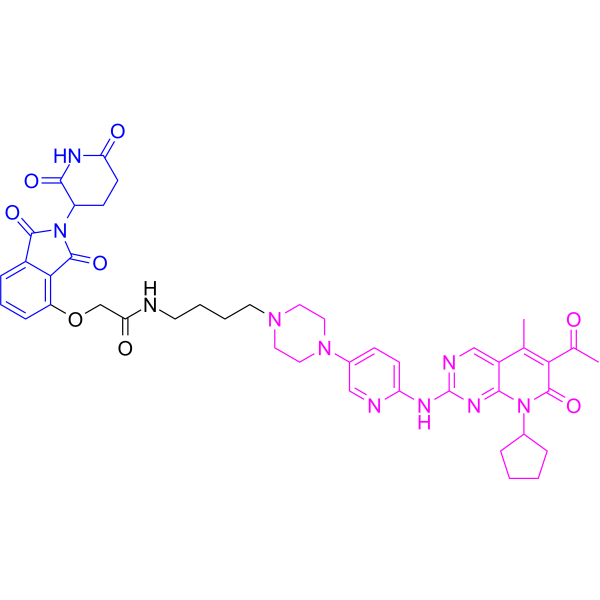
    BSJ-03-204 is a PROTAC connected by ligands for Cereblon and CDK. BSJ-03-204 is a potent and selective Palbociclib-based CDK4/6 dual degrader (PROTAC), with IC50s of 26.9 nM and 10.4 nM for CDK4/D1 and CDK6/D1, respectively. BSJ-03-204 does not induce IKZF1/3 degradation and has anti-cancer activity [1].
    BSJ-03-204
  • HY-148369

    PROTACs Deubiquitinase Apoptosis MDM-2/p53 Cancer
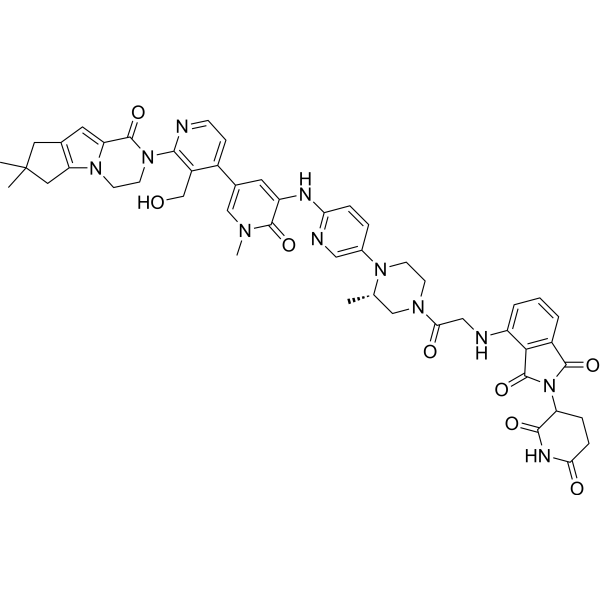
    U7D-1 is a first-in-class potent and selective USP7 (ubiquitin-specific protease 7) PROTAC degrader, with a DC50 of 33 nM in RS4;11 cells. U7D-1 shows anticancer activity. U7D-1 induces apoptosis in Jeko-1 cells [1].
    U7D-1
  • HY-N6744

    Apoptosis Endogenous Metabolite Fungal Parasite Arp2/3 Complex Infection Cancer
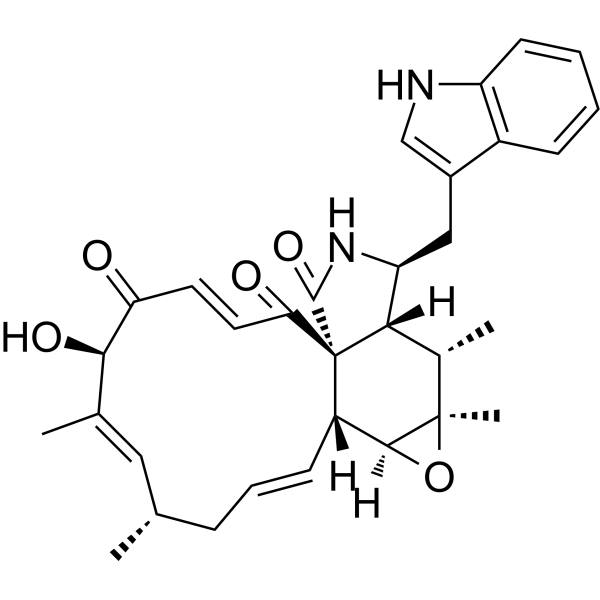
    Chaetoglobosin A is a secondary metabolite and nematicide. Chaetoglobosin A is produced by Penicillium aquamarinium. Chaetoglobosin A targets Filamentous actin in cells, thereby inducing cell cycle arrest, and inhibiting membrane ruffle formation and cell migration. Chaetoglobosin A preferentially induces Apoptosis in chronic lymphocytic leukemia cells. Chaetoglobosin A induces dose- and time-dependent death in J2 larvae of the southern root-knot nematode (Meloidogyne incognita). Chaetoglobosin A can be used in studies related to root-knot nematode disease and chronic lymphocytic leukemia [1] .
    Chaetoglobosin A
  • HY-149669

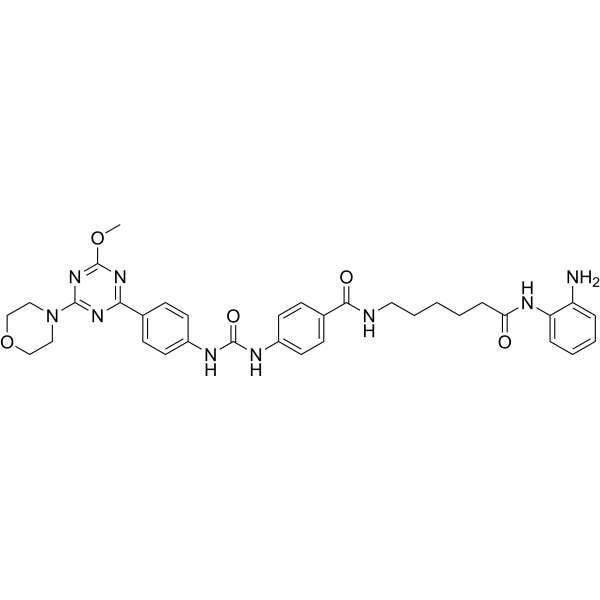
    PI3K HDAC Apoptosis Cancer
    PH14 is a dual PI3K/HDAC inhibitor with IC50 values of 20.3 nM and 24.5 nM for PI3Kα and HDAC3, respectively. PH14 has antiproliferative activity and also induces apoptosis in Jeko-1 cells. PH14 can be used in cancer research, such as lymphoma [1].
    PH14
  • HY-154860

    PROTACs Btk Apoptosis Caspase Bcl-2 Family NF-κB Akt Inflammation/Immunology Cancer
    PTD10 is a selective and potent BTK PROTAC degrader (DC50 = 0.5 nM, KD = 2.28 nM). PTD10 can recruit cereblon (CRBN) E3 ligase and form a ternary complex with BTK, thereby mediating the ubiquitination and proteasome-dependent degradation of BTK. PTD10 inhibits cancer cells proliferation, and induces cell apoptosis via activation of the caspase-dependent pathway and mitochondrial pathway. PTD10 potently inhibits the BCR, AKT and NF-κB signaling pathway. PTD10 can be used for researches of B-cell malignancies and autoimmune disease [1].
    PTD10
  • HY-W338346

    Drug Derivative Interleukin Related TNF Receptor Polo-like Kinase (PLK) Inflammation/Immunology Cancer
    Salicylate choline is an orally active derivative of Aspirin (acetylsalicylic acid) (HY-14654). Salicylate choline significantly reduces IL-1β, IL-6, TNF-α and IL-10 levels in cells. Salicylate choline enhances the anti-tumor activity of the CRM1 inhibitor Selinexor (KPT-330) (HY-17536) through inducing S-phase cell cycle arrest and impairing DNA damage repair. Salicylate choline combined with Selinexor demonstrates excellent anti-tumor efficacy in mice xenograft model harboring JeKo-1 cells. Salicylate choline can be used for the study of rheumatic diseases, inflammation and cancer [1] .
    Salicylate choline
  • HY-136250A

    PROTACs CDK Cancer
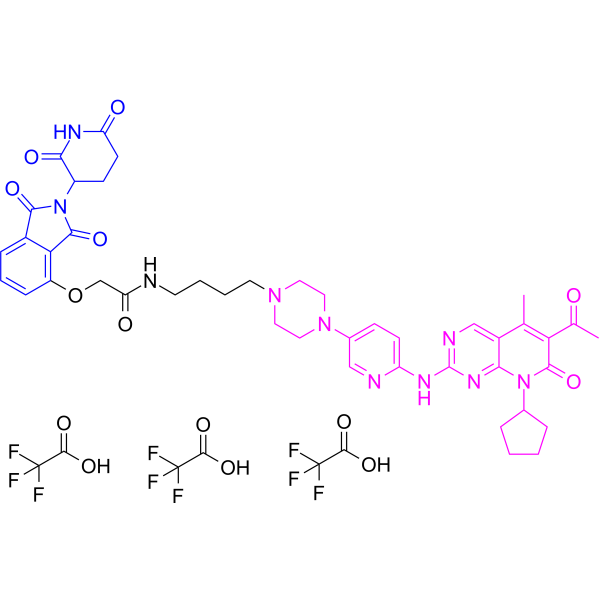
    BSJ-03-204 triTFA is a PROTAC connected by ligands for Cereblon and CDK. BSJ-03-204 triTFA is a potent and selective Palbociclib-based CDK4/6 dual degrader (PROTAC), with IC50s of 26.9 nM and 10.4 nM for CDK4/D1 and CDK6/D1, respectively. BSJ-03-204 triTFA does not induce IKZF1/3 degradation and has anti-cancer activity [1].
    BSJ-03-204 triTFA
  • HY-136531

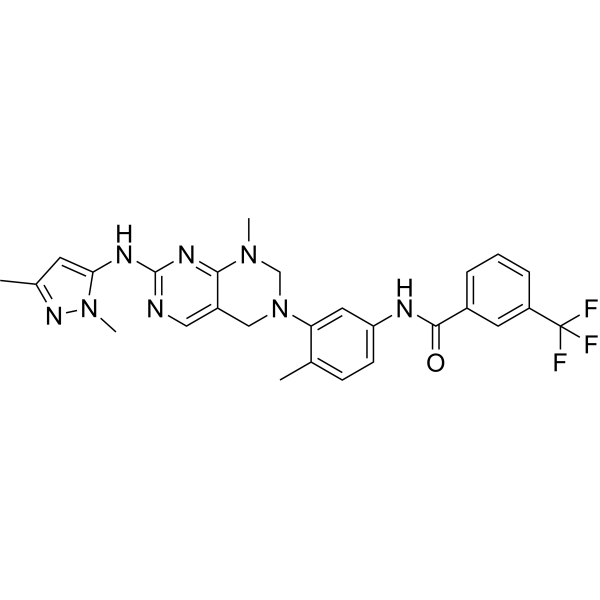
    Btk Apoptosis Cancer
    XMU-MP-3 is a potent non-covalent BTK inhibitor with IC50s of 10.7 nM and 17.0 nM for BTK WT and BTK C481S mutation in the presence of 10 μM ATP, respectively. XMU-MP-3 also induces apoptosis [1].
    XMU-MP-3
  • HY-163856

    Apoptosis DNA/RNA Synthesis CDK Cancer
    CDK7-IN-30 (Compound 22) is a CDK7 inhibitor (IC50 = 7.21 nM) that effectively inhibits the phosphorylation of RNA Polymerase II and CDK2. CDK7-IN-30 CDK7-IN-30 can induce cell apoptosis and has anti-cancer activity and can be used in cancer research [1].
    CDK7-IN-30
  • HY-155072

    PROTACs Btk Cancer
    PROTAC BTK degraders-5(compound 3e) is a selective BTK PROTAC degrader with a DC50 value of 7.0 nM in JeKo-1 cells. PROTAC BTK degraders-5 has no off-target effect on degrading CRBN neosubstates. PROTAC BTK degraders-5 has anti-proliferation effect on various lymphoma tumor cells and can be used in chronic lymphoid malignancies research (Blue: E3 ligand (HY-W440230), Black: linker HY-168297;Pink:BKT inhibitor (HY-150898)) 1.
    PROTAC BTK Degrader-5
  • HY-173125

    PROTACs Btk Cancer
    FDU73 is a highly effective and selective BTK PROTAC degrader with a DC50 of 2.9 nM (in JeKo-1 cells). FDU73 can inhibit the proliferation of tumor cells and exhibits anti-tumor activity [1]. (Pink: BTK ligand-14 (HY-173126); Black: Linker (HY-168297); Blue: E3 ligase ligand 59 (HY-173378); E3 ligase ligand+Linker (HY-173127))
    FDU73
  • HY-174396

    PI3K HDAC Bcl-2 Family Caspase Reactive Oxygen Species (ROS) Apoptosis Histone Methyltransferase Microtubule/Tubulin Cancer
    PI3Kδ/HDAC6-IN-1 (Compound 22E) is an orally active and dual inhibitor of PI3Kδ and HDAC6 with IC50 values of 2.4 nM and 6.2 nM, respectively. PI3Kδ/HDAC6-IN-1 exhibits potent antiproliferative effects on non-Hodgkin lymphoma (NHL) cells and possesses in vivo antitumor activity without significant toxicity. PI3Kδ/HDAC6-IN-1 arrests the cell cycle at the G0/G1 phase and induces apoptosis. PI3Kδ/HDAC6-IN-1 blocks the PI3K/AKT/mTOR signaling pathway and increases the acetylation levels of α-tubulin and histone H3 [1].
    PI3Kδ/HDAC6-IN-1
  • HY-151961

    Btk FLT3 Cancer
    RSH-7 is a potent BTK and FLT3 inhibitor with IC50s of 47, 12 nM, respectively. RSH-7 induces apoptosis and shows antiproliferative activities. RSH-7 inhibits BTK and FLT3 signaling and shows anti-tumor activity [1].
    RSH-7
  • HY-156016

    HDAC Cancer
    HDAC/CD13-IN-1 (Compound 12) is a HDAC/CD13 inhibitor (IC50: 0.34 μM for hCD13, 0.53 μM for porcine CD13, 0.03, 0.06, 0.02 μM for HDAC1/2/3). HDAC/CD13-IN-1 inhibits MV4-11, K562, Jeko-1, and HL60 cell proliferation (IC50: 0.25-2.04 μM). HDAC/CD13-IN-1 induces cancer cell apoptosis. HDAC/CD13-IN-1 has anti-metastasis and anti-invasion efficacy [1].
    HDAC/CD13-IN-1
  • HY-172889

    PI3K HDAC Apoptosis mTOR Akt Cancer
    PI3K/HDAC-IN-4 (Compound 31f) is a PI3K/HDAC dual inhibitor (IC50: 0.2μM). PI3K/HDAC-IN-4 shows high selectivity for HDAC1-3 (IC50 values of 75.5 nM, 70.9 nM, and 1.9 nM, respectively). PI3K/HDAC-IN-4 is a potent PIK3 inhibitor with IC50 values of 2.5 nM, 80.5 nM, 10.0 nM, and 57.2 nM for PI3Kα, β, δ, and γ, respectively. PI3K/HDAC-IN-4 significantly induces tumor cell apoptosis by simultaneously inhibiting the PI3K/AKT/mTOR signaling pathway and HDAC1-3. PI3K/HDAC-IN-4 exhibits potent antiproliferative activity in a variety of tumor cell lines (e.g., MV4-11, Jeko-1, HL60, and MCF-7, with IC50 values of 0.2, 0.9, 0.8, and 1.5 μM, respectively). PI3K/HDAC-IN-4 can be used in the study of lymphoma and leukemia [1].
    PI3K/HDAC-IN-4
  • HY-178733

    CDK Apoptosis Cancer
    A-1592668 is a selective CDK9 inhibitor. A-1592668 induces Apoptosis. A-1592668 plus Venetoclax (HY-15531) co-treatment inhibits the growth of Jeko-1 tumors [1].
    A-1592668
  • HY-148585

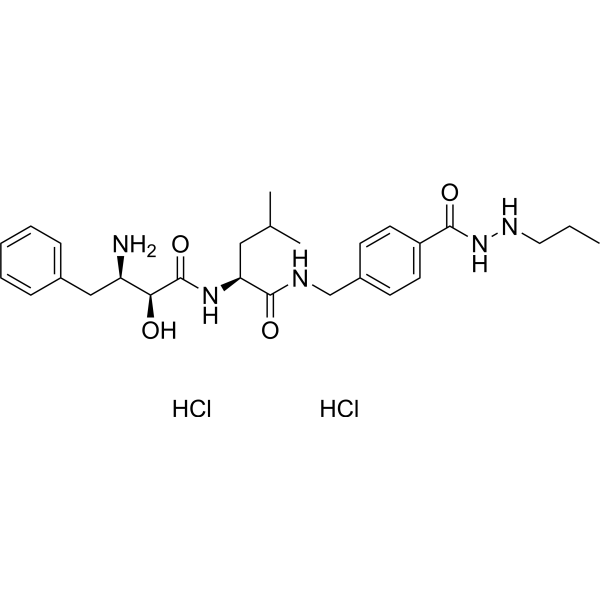
    Btk Cancer
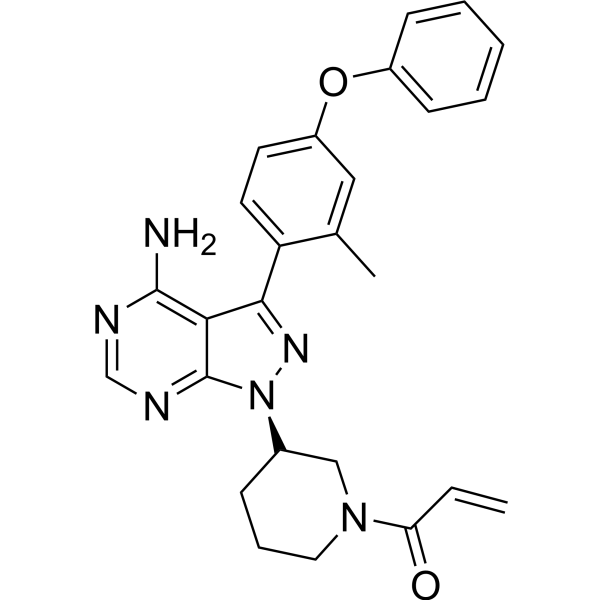
    BTK-IN-22 is a BTK inhibitor (IC50: 0.9 nM). BTK-IN-22 also inhibits BLX and BMX with IC50s of 1.4 and 1.2 nM respectively. BTK-IN-22 shows improved kinase selectivity compared to Ibrutinib (HY-10997) [1]
    BTK-IN-22
  • HY-148594

    Btk Cancer
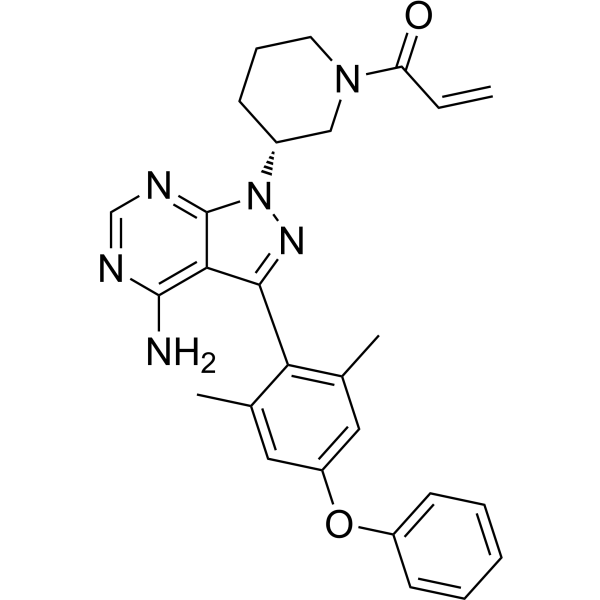
    BTK-IN-23 is a BTK inhibitor (IC50: 12.8 nM). BTK-IN-23 also inhibits BLX and BMX with IC50s of 35.6 and 5.7 nM respectively. BTK-IN-23 shows improved kinase selectivity compared to Ibrutinib (HY-10997) [1].
    BTK-IN-23
  • HY-139449

    CDK Cancer
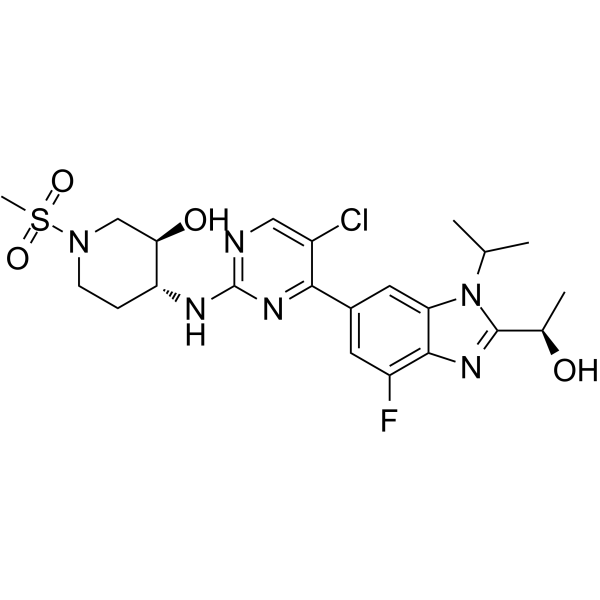
    CDK4/6-IN-5 is a potent CDK4 and CDK6 inhibitor with Kis of 0.2 and 4.4 nM for CDK4/Cyclin D1 and CDK6/Cyclin D3, respectively [1]. (from patent WO2019207463A1 example A93).
    CDK4/6-IN-5
  • HY-147754

    Btk JAK Inflammation/Immunology
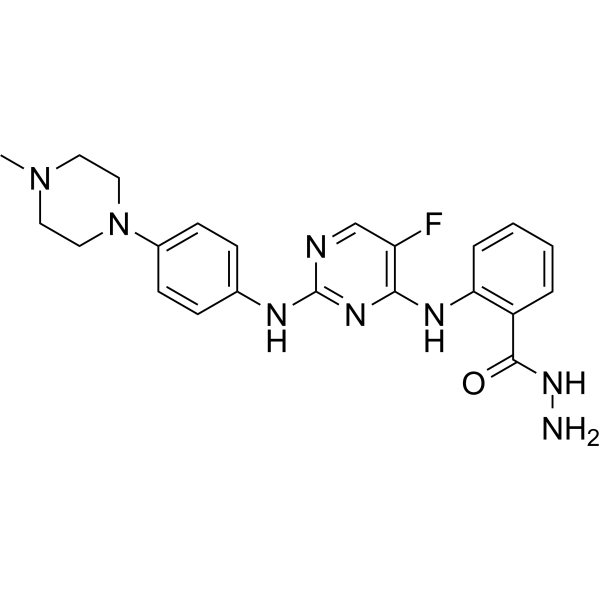
    JAK3/BTK-IN-6 (compound 14h) is a potent BTK and JAK3 dual inhibitor, with IC50 values of 0.6 and 0.4 nM, respectively. JAK3/BTK-IN-6 shows good metabolic stability in human liver microsome. JAK3/BTK-IN-6 can be used for hematological and immune diseases research [1].
    JAK3/BTK-IN-6
  • HY-181086

    FLT3 HDAC Apoptosis Reactive Oxygen Species (ROS) Cancer
    FLT3/HDAC-IN-3 is a dual inhibitor of FLT3 and HDAC. FLT3/HDAC-IN-3 potently inhibits FLT3 (IC50 = 14 nM), HDAC1 (IC50 = 27 nM), HDAC6 (IC50 = 20 nM), and FLT3 D853Y (IC50 = 55 nM), exhibits weak activity against HDAC8, and shows no activity against HDAC4. FLT3/HDAC-IN-3 possesses kinase selectivity, plasma stability, and stability in human liver microsomes. FLT3/HDAC-IN-3 demonstrates anti-proliferative effects in a variety of hematological malignancy cell lines. FLT3/HDAC-IN-3 shows efficacy in the Jeko-1 xenograft model without observed significant toxicity. FLT3/HDAC-IN-3 can be used in the study of hematological malignancies [1].
    FLT3/HDAC-IN-3
  • HY-183770

    Akt PI3K Epigenetic Reader Domain c-Myc Cancer
    LCI40 is an orally active dual PI3K/BRD4 inhibitor (PI3Kα IC50 = 0.071 μM, PI3Kβ IC50 = 0.17 μM, PI3Kγ IC50 = 0.66 μM, PI3Kδ IC50 = 0.072 μM, BRD4 BD1 IC50 = 0.19 μM, and BRD4 BD2 IC50 = 1.88 μM. LCI40 inhibits phosphorylation of pAKT (S473) and suppresses c-MYC levels in mantle cell lymphoma cells. LCI40 displays immunomodulatory capacity with minimal toxicity to normal mouse immune cells. LCI40 can be used for the research of mantle cell lymphoma [1].
    LCI40
  • HY-177109

    ROR Drug-Linker Conjugates for ADC Cancer
    BL20-MMAE is an antibody-drug conjugate targeting ROR1, which is formed by conjugating an anti-ROR1 antibody with the Auristatin payload MMAE (HY-15162) via a BL20 linker [1].
    BL20-MMAE
  • HY-P992376

    NBE-002 Antibody

    ROR Cancer
    huXBR1-402 (NBE-002 Antibody) is a high-affinity (Kd=5.8 nM) humanized chimeric rabbit/human monoclonal antibody that targets ROR1. huXBR1-402 specifically binds to the Ig/Fz domain epitope of human ROR1, directly inhibits the proliferation of ROR1-positive tumor cells and induces apoptosis of leukemia cells (apoptosis) [1] .
    huXBR1-402
  • HY-183031

    Drug-Linker Conjugates for ADC Cancer
    BrAA-glycine-BG-PAB-Exatecan (Compound LD-11) is an Drug-Linker Conjugates for ADC, consisting of Exatecan (HY-13631) and a linker. BrAA-glycine-BG-PAB-Exatecan can be conjugated with anti-ROR1 antibodies to form an ADC [1].
    BrAA-glycine-BG-PAB-Exatecan

Inquiry Online

Your information is safe with us. * Required Fields.

Salutation


Country or Region *

Applicant Name *


Organization Name *

Department *


Email Address *


Product Name *

Cat. No.


Requested quantity *

Phone Number *


Remarks

Inquiry Online

Inquiry Information

Product Name:
Cat. No.:
Quantity:
MCE Japan Authorized Agent:

