48 Results for "

L-Homoserine lactone

" in MedChemExpress (MCE) Product Catalog:
Products (48)

48 Results for "L-Homoserine lactone" in MCE Product Catalog:

3
3 Cited Publications
Cat. No.: HY-114816
CAS No.: 67605-85-0
Purity:  98.77%
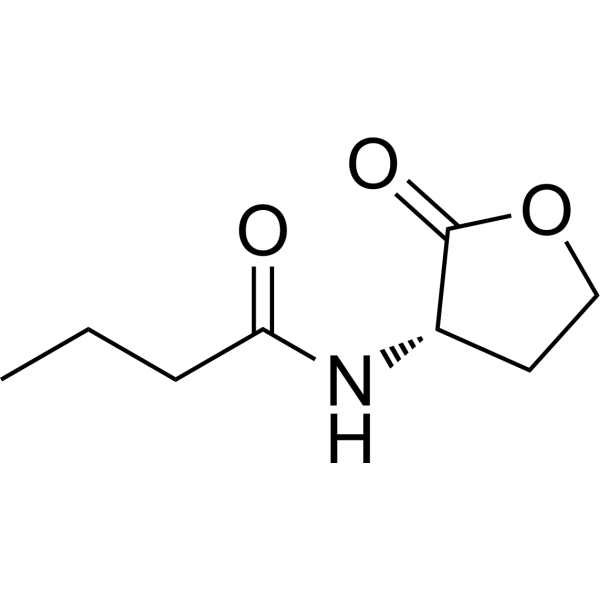
Synonyms: C4-HSL; N-Butyryl-L-Homoserine lactone
Target:  

ADC Linkers Bacterial

Research Areas:  

Infection Inflammation/Immunology

N-Butanoyl-L-homoserine lactone (C4-HSL) is a cleavable ADC linker used in the synthesis of antibody-drug conjugates (ADCs). N-Butanoyl-L-homoserine lactone has antibacterial activity and is used in antibacterial biofilm . N-Butanoyl-L-homoserine lactone aptamers blocks qurom sensing and inhibits biofilm formation in Pseudomonas aeruginosa .
loading...
    loading...
2
2 Cited Publications
Cat. No.: HY-114544A
CAS No.: 168982-69-2
Purity:  ≥98.0%
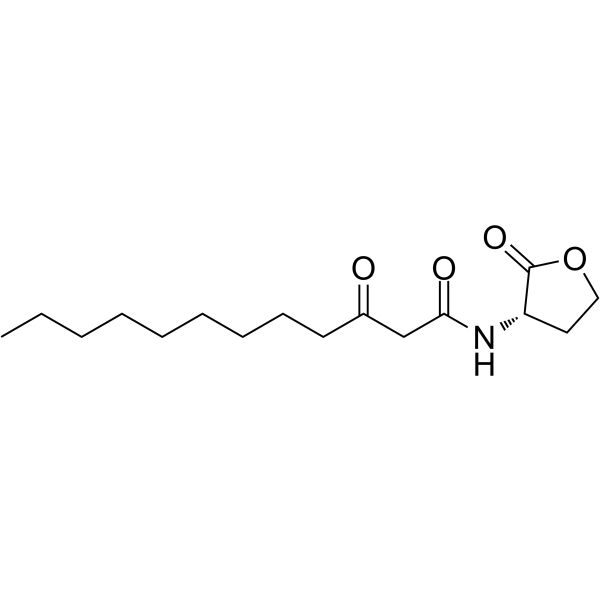
Synonyms: OdDHL
N-3-oxo-dodecanoyl-L-Homoserine lactone (3-oxo-C12-HSL) is a bacterial quorum-sensing signaling molecule produced by P. aeruginosa and strains of the B. cepacia complex .Quorum sensing is a regulatory system used by bacteria for controlling gene expression in response to increasing cell density.N-3-oxo-dodecanoyl-L-Homoserine lactone induces the production of IL-8 in 16HBE human bronchial epithelial cells .
loading...
    loading...
1
1 Cited Publications
Cat. No.: HY-118697
CAS No.: 137173-46-7
Purity:  ≥98.0%
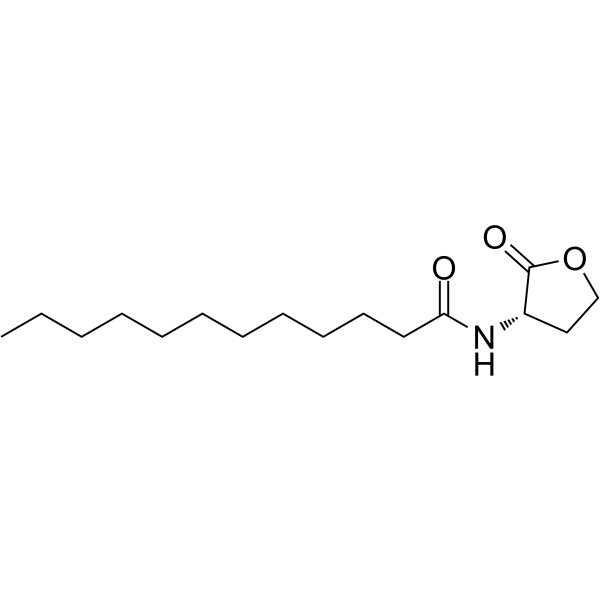
Synonyms: C12-HSL
Target:  

Bacterial

Research Areas:  

Infection

N-dodecanoyl-L-Homoserine lactone (C12-HSL) is a quorum sensing (QS) signaling molecule. N-dodecanoyl-L-Homoserine lactone (C12-HSL) aptamers blocks qurom sensing and inhibits biofilm formation in Pseudomonas aeruginosa .
loading...
    loading...
Cat. No.: HY-133685
CAS No.: 147852-83-3
Purity:  98.82%
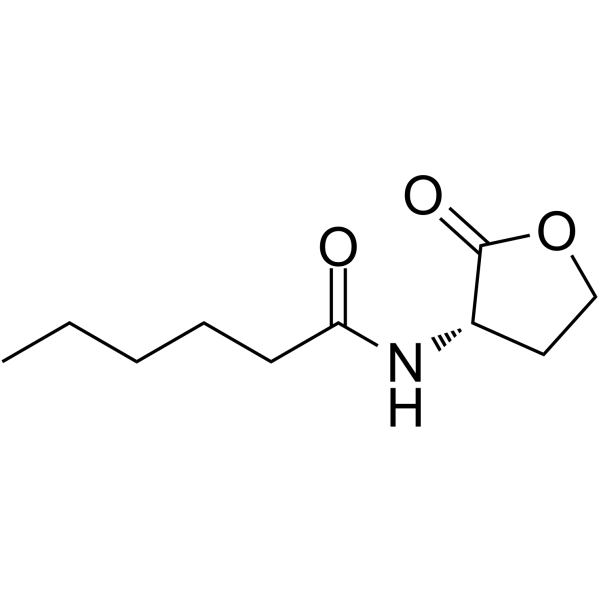
Synonyms: C6-HSL
Target:  

Bacterial

Research Areas:  

Infection Metabolic Disease

N-Hexanoyl-L-homoserine lactone is a short-chained N-acyl homoserine lactone (AHL). N-hexanoyl-L-homoserine lactone is also a mediator of bacterial quorum-sensing regulation. N-hexanoyl-L-homoserine lactone promotes lipid accumulation in algae. AHL is an intercellular communication signal molecule in the quorum sensing system of Gram-negative bacteria and a medium for mediating information exchange between eukaryotic plants and prokaryotic bacteria. AHL can affect bacteria activities, such as biofilm formation, pigment synthesis, and antibiotic synthesis .
loading...
    loading...
Cat. No.: HY-W008806
CAS No.: 143537-62-6
Synonyms: OHHL; N-(3-Oxohexanoyl)Homoserine lactone
Target:  

Bacterial

Research Areas:  

Infection Inflammation/Immunology

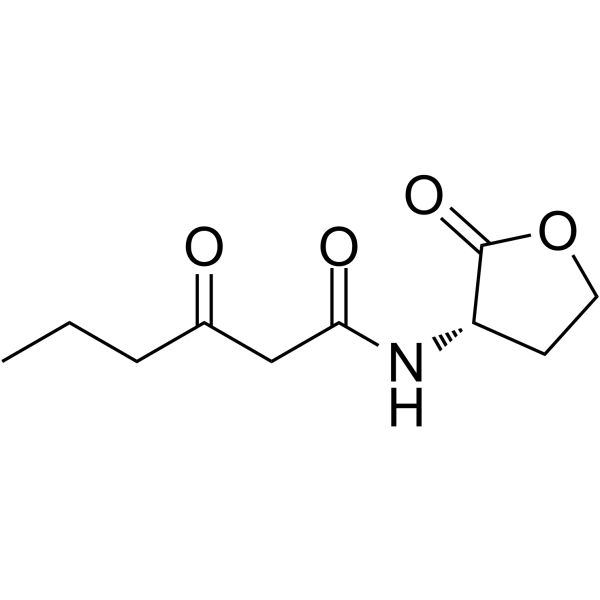
N-(3-Oxohexanoyl)-L-homoserine lactone (OHHL; N-(3-Oxohexanoyl)homoserine lactone) is a specific agonist of LuxR-type transcription factor CarR with a Kd of 1.8 μM. N-(3-Oxohexanoyl)-L-homoserine lactone activates CarR by inducing protein multimerization, promoting its binding to target DNA sequences in the carR-carA intergenic region, thereby upregulating the transcription of carbapenem biosynthesis genes. N-(3-Oxohexanoyl)-L-homoserine lactone acts as a quorum sensing signal molecule, enabling bacteria to coordinate the production of carbapenem antibiotics in a cell density-dependent manner. N-(3-Oxohexanoyl)-L-homoserine lactone is used to study bacterial quorum sensing mechanisms, especially the secondary metabolism and virulence factor regulatory pathways of Erwinia carotovora and Yersinia enterocolitica .
loading...
    loading...
Cat. No.: HY-136409
CAS No.: 177315-87-6
Purity:  99.43%
Synonyms: C10-HSL
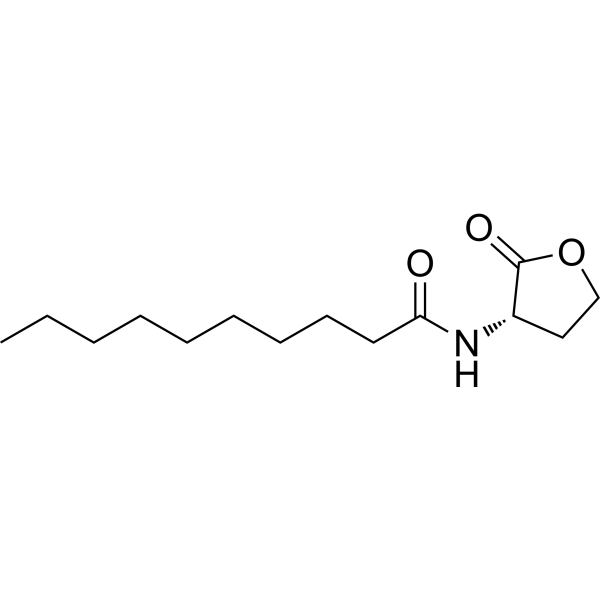
N-decanoyl-L-homoserine lactone (C10-HSL) is a N-acyl-homoserine lactone (AHL) N-decanoyl-L-homoserine lactone can inhibit primary root growth in Arabidopsis. N-decanoyl-L-homoserine lactone triggers a transient and immediate increase in the concentrations of cytosolic free Ca 2+ and reactive oxygen species (ROS), increases the activity of mitogen-activated protein kinase 6 (MPK6), and induces nitric oxide (NO) production in Arabidopsis roots .
loading...
    loading...
Cat. No.: HY-124237A
CAS No.: 147852-84-4
Purity:  99.58%
Synonyms: C8-HSL
Target:  

Bacterial

Research Areas:  

Infection Inflammation/Immunology

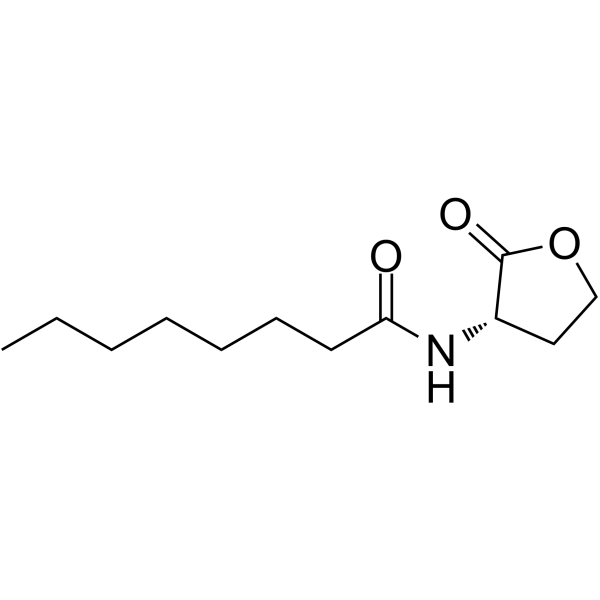
N-Octanoyl-L-homoserine lactone (C8-HSL) is an autoinducer. It mainly serves as a key inter- and intra-species communication medium or "signal molecule" in Gram-negative bacteria. N-Octanoyl-L-homoserine lactone microparticles exhibit adjuvant potential when used in combination with various particulate vaccines .
loading...
    loading...
Cat. No.: HY-W015800
CAS No.: 2185-03-7
Target:  

Drug Intermediate

Research Areas:  

Others

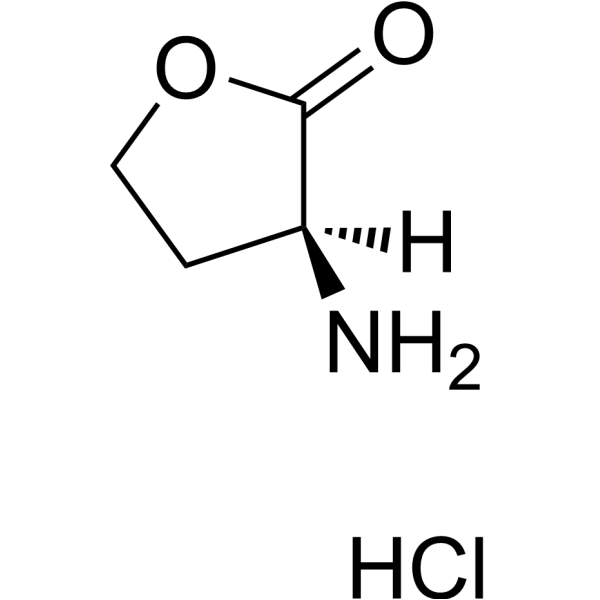
L-Homoserine lactone hydrochloride is the core structural unit of the bacterial quorum-sensing signal molecule N-acyl-L-homoserine lactone (AHLs). As an important intermediate, L-Homoserine lactone hydrochloride acylated derivatives have potent immunosuppressive activity .
loading...
    loading...
Cat. No.: HY-108700
CAS No.: 147795-39-9
Purity:  98.05%
Target:  

SOD

Research Areas:  

Infection

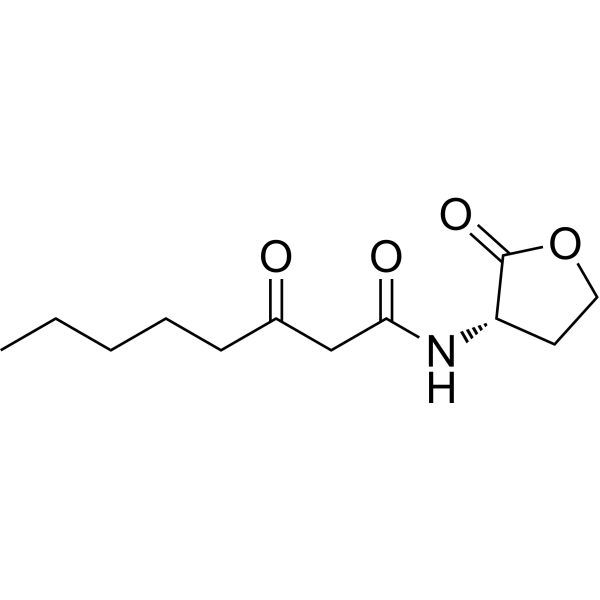
N-3-Oxo-octanoyl-L-homoserine lactone, a quorum-sensing signal, is an Agrobacterium autoinducer .
loading...
    loading...
Cat. No.: HY-114816R
CAS No.: 67605-85-0
Synonyms: C4-HSL (Standard); N-Butyryl-L-Homoserine lactone (Standard)
N-Butanoyl-L-homoserine lactone (Standard) (C4-HSL (Standard)) is the analytical standard of N-Butanoyl-L-homoserine lactone (HY-114816). This product is intended for research and analytical applications. N-Butanoyl-L-homoserine lactone (C4-HSL) is a cleavable ADC linker used in the synthesis of antibody-drug conjugates (ADCs). N-Butanoyl-L-homoserine lactone has antibacterial activity and is used in antibacterial biofilm. N-Butanoyl-L-homoserine lactone aptamers blocks qurom sensing and inhibits biofilm formation in Pseudomonas aeruginosa.
loading...
    loading...
Cat. No.: HY-158730
CAS No.: 1325550-06-8
Purity:  99.87%
Synonyms: 3-OH-C4-HSL; N-3-Hydroxybutanoyl-L-Homoserine lactone; N-3-Hydroxybutyryl-L-HSL
Target:  

Bacterial

Research Areas:  

Infection

N-3-Hydroxybutyryl-L-homoserine lactone (3-OH-C4-HSL) is an acyl-homoserine lactone, that can be isolated from Vibrionaceae. N-3-Hydroxybutyryl-L-homoserine lactone is a signaling molecule that is involved in bacterial quorum sensing (QS). N-3-Hydroxybutyryl-L-homoserine lactone senses the density of bacterial population, regulates the cellular process, such as bioluminescence, biofilm formation, and exo-enzyme production .
loading...
    loading...
Cat. No.: HY-134560
CAS No.: 147795-40-2
Purity:  99.62%
Synonyms: 3-Oxo-C10-HSL
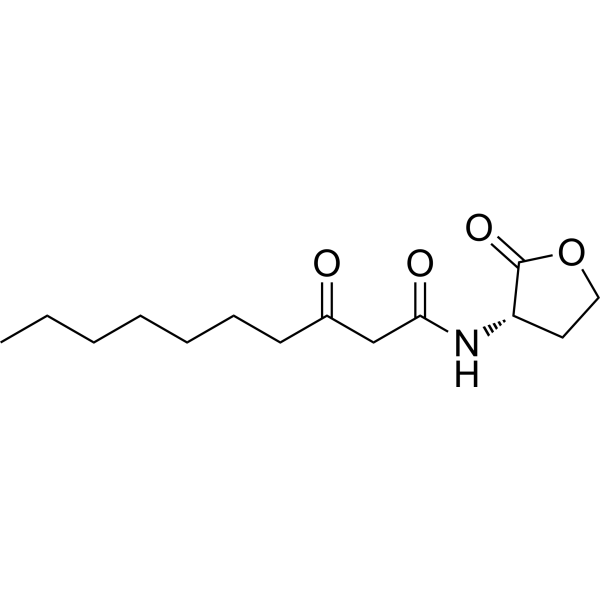
N-(3-Oxodecanoyl)-L-homoserine lactone (3-Oxo-C10-HSL) is a bacterial signaling molecule with quorum-sensing agonistic activity and competitive antagonistic activity against short-chain AHLs. N-(3-Oxodecanoyl)-L-homoserine lactone binds to VanR to form a complex, activates the transcription of the vanI gene, and establishes an autoregulatory loop for its own synthesis. N-(3-Oxodecanoyl)-L-homoserine lactone inhibits the synthesis of violacein induced by short-chain AHLs. N-(3-Oxodecanoyl)-L-homoserine lactone serves as the sole carbon and nitrogen source for Rhodococcus erythropolis W2 and can be completely degraded. N-(3-Oxodecanoyl)-L-homoserine lactone can be used in studies related to bacterial infections .
loading...
    loading...
Cat. No.: HY-W685561
CAS No.: 216596-70-2
Synonyms: N-(3-Oxooctanoyl)-l-Homoserine lactone
Target:  

Sex Pheromone

Research Areas:  

Infection

3-Oxo-C8-HSL (N-(3-Oxooctanoyl)-l-homoserine lactone) is an autoinducer pheromone. 3-Oxo-C8-HSL is a TraR-regulated promoter. 3-Oxo-C8-HSL significantly stimulates tra gene expression .
loading...
    loading...
Cat. No.: HY-136409R
CAS No.: 177315-87-6
Synonyms: C10-HSL (Standard)
Formoterol (hemifumarate hydrate) (Standard) is the analytical standard of Formoterol (hemifumarate hydrate). This product is intended for research and analytical applications. Formoterol hemifumarate hydrate is a selective, long-acting beta 2-adrenoceptor agonist. Formoterol is a bronchodilator used for the research of the asthma and chronic obstructive pulmonary disease (COPD). Formoterol hemifumarate hydrate induces mitochondrial biogenesis and promotes cognitive recovery after traumatic brain injury .
loading...
    loading...
Cat. No.: HY-W243002
CAS No.: 51524-71-1
Target:  

Bacterial

Research Areas:  

Infection

Acetyl-L-homoserine lactone is a member of the family of N-acylated homoserine lactones (HSLs). Acetyl-L-homoserine lactone is a polar mediator of cell-cell interactions in bacterial biofilms .
loading...
    loading...
Cat. No.: HY-133684
CAS No.: 202284-87-5
Purity:  99.63%
Target:  

Bacterial

Research Areas:  

Infection

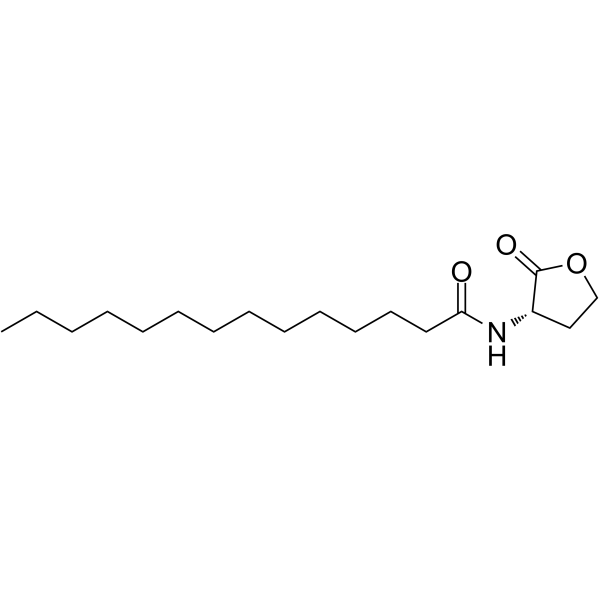
N-Tetradecanoyl-L-homoserine lactone is a short-chained N-acyl homoserine lactone (AHL). Diatoms are frequently found in association with Proteobacteria, many members of which employ cell-to-cell communication via AHLs in aquatic habitats .
loading...
    loading...
Cat. No.: HY-W127393
CAS No.: 177158-21-3
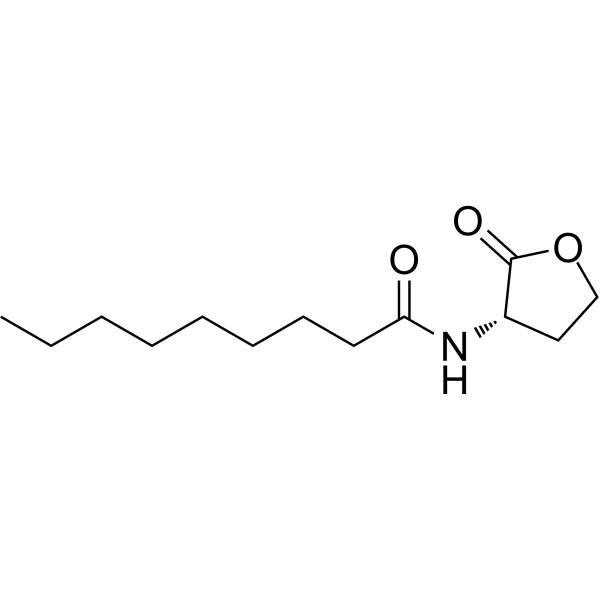
Quorum sensing is a regulatory system used by bacteria to control gene expression in response to increased cell density. This regulatory process manifests itself in a variety of phenotypes, including biofilm formation and virulence factor production. Coordinated gene expression is achieved through the production, release and detection of small diffusible signaling molecules called autoinducers. N-acylated homoserine lactones (AHLs) comprise a class of such autoinducers, each of which generally consists of a fatty acid coupled to a homoserine lactone (HSL). Modulation of bacterial quorum-sensing signaling systems to suppress pathogenesis represents a new approach to antimicrobial research for infectious diseases. AHLs differ in acyl length (C4-C18), C3 substitution (hydrogen, hydroxyl, or oxo group), and the presence or absence of one or more carbon-carbon double bonds in the fatty acid chain. These differences confer signaling specificity through the affinity of the LuxR family of transcriptional regulators. C9-HSL is a rare odd-numbered acyl carbon chain produced by wild-type Erwinia carotovora strain SCC 3193 grown in nutrient-rich Luria-Bertani broth (LB) medium.
loading...
    loading...
Cat. No.: HY-133684R
CAS No.: 202284-87-5
Research Areas:  

Infection

N-Tetradecanoyl-L-homoserine lactone (Standard) is the analytical standard of N-Tetradecanoyl-L-homoserine lactone (HY-133684). This product is intended for research and analytical applications. N-Tetradecanoyl-L-homoserine lactone is a short-chained N-acyl homoserine lactone (AHL). Diatoms are frequently found in association with Proteobacteria, many members of which employ cell-to-cell communication via AHLs in aquatic habitats.
loading...
    loading...
Cat. No.: HY-141641
CAS No.: 148433-21-0
Synonyms: HSL
Target:  

Bacterial

Research Areas:  

Infection

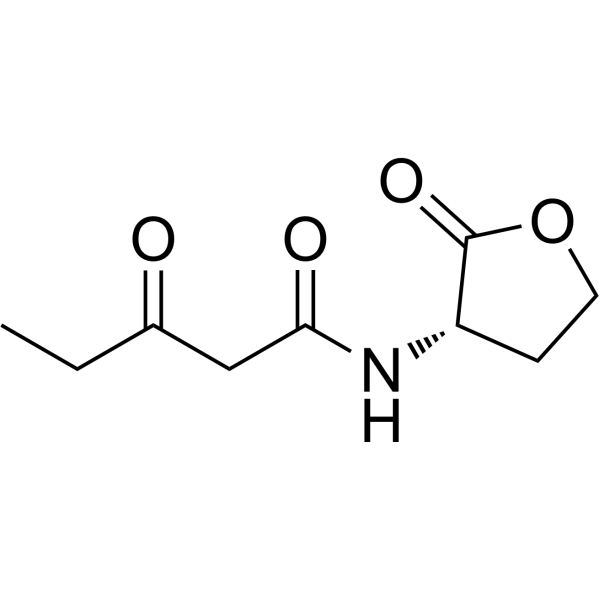
N-(3-Oxopentanoyl)-L-homoserine lactone is an autoinducer, a kind of chemical signal molecule which passively diffuses across the bacterial envelope and accumulates intracellularly at high bacterial densities. It may bind to a protein related to the LuxR protein of V. fischeri and causes cell density-dependent gene expression. N-(3-Oxopentanoyl)-L-homoserine can be used for research of quorum sensing .
loading...
    loading...
Cat. No.: HY-118697R
CAS No.: 137173-46-7
Synonyms: C12-HSL (Standard)
Research Areas:  

Infection

N-dodecanoyl-L-Homoserine lactone (Standard) (C12-HSL (Standard)) is the analytical standard of N-dodecanoyl-L-Homoserine lactone (HY-118697). This product is intended for research and analytical applications. N-dodecanoyl-L-Homoserine lactone (C12-HSL) is a quorum sensing (QS) signaling molecule. N-dodecanoyl-L-Homoserine lactone (C12-HSL) aptamers blocks qurom sensing and inhibits biofilm formation in Pseudomonas aeruginosa.
loading...
    loading...

