
12 Results for "

Lipophilic group

" in MedChemExpress (MCE) Product Catalog:
Products (12)

12 Results for "Lipophilic group" in MCE Product Catalog:

22
22 Cited Publications
Cat. No.: HY-125746
CAS No.: 878557-19-8
Purity:  99.77%
Target:  

Fluorescent Dye

Research Areas:  

Metabolic Disease

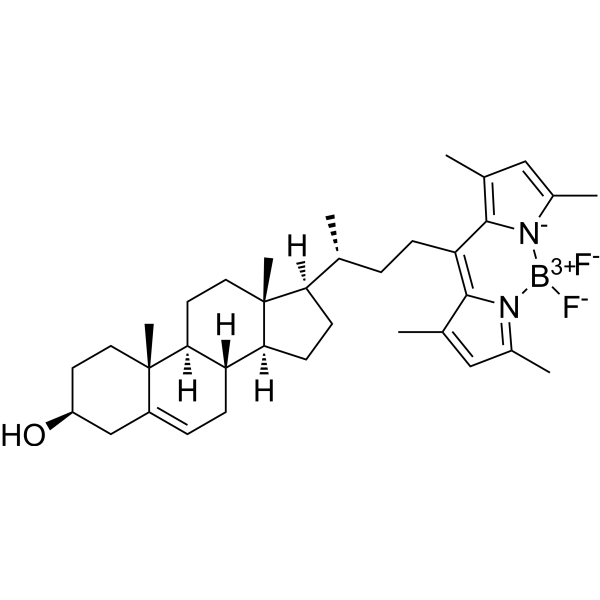
BODIPY-cholesterol is an intrinsically lipophilic, and cell-permeable analog of cholesterol with a fluorescent BODIPY group. BODIPY-cholesterol can be used to monitor sterol uptake and inter-organelle sterol flux in cells. (Excitation/Emission: 505/515 nm) .
loading...
    loading...
Cat. No.: HY-117401
CAS No.: 107827-77-0
Purity:  99.32%
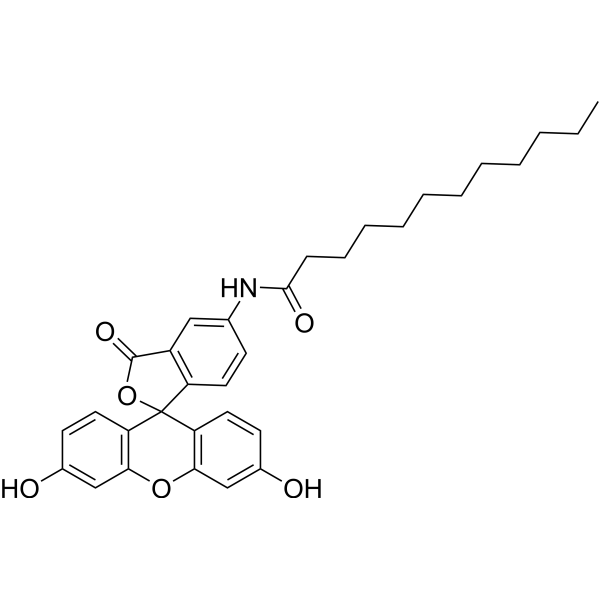
5-Dodecanoylaminofluorescein is an amphipathic (amphoteric) fluorescent probe (Ex/Em = 485 nm/515-535 nm), which consists of a hydrophilic fluorescein core and a hydrophobic dodecanoyl group (C12 fatty acid chain) linked by an amide bond. 5-Dodecanoylaminofluorescein is mainly used as an interface-localized radical trapping/indicator probe. Dodecanoylaminofluorescein can be used for the determination of the antioxidant properties of emulsions, or can serve as a lipophilic drug model for the study of passive skin penetration when encapsulated in tyrosine-derived nanospheres .
loading...
    loading...
Cat. No.: HY-DY1029
CAS No.: 878557-19-8
Target:  

Fluorescent Dye

Research Areas:  

Others

BODIPY-cholesterol (solution) is an intrinsically lipophilic, and cell-permeable analog of cholesterol with a fluorescent BODIPY group. BODIPY-cholesterol can be used to monitor sterol uptake and inter-organelle sterol flux in cells. (Excitation/Emission: 505/515 nm) .
Solvent and concentration: DMSO: 1 mM
loading...
    loading...
Cat. No.: HY-W250181
CAS No.: 148616-91-5
Synonyms: Octyl β-D-thiomaltopyranoside
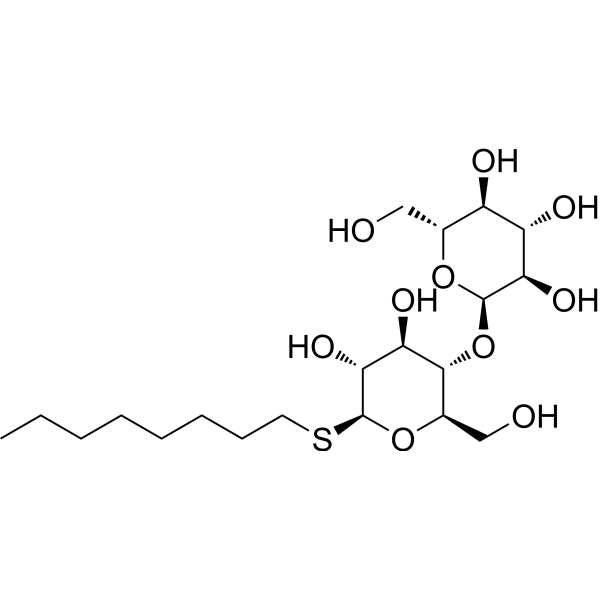
Octyl thiomaltoside (OTM) is a nonionic detergent commonly used in the purification and crystallization of membrane proteins. It belongs to the family of maltoside detergents and has a hydrophilic head group and a lipophilic tail group, enabling it to interact with water-soluble and membrane-bound proteins. OTMs are known for their ability to solubilize integral membrane proteins without disrupting their structure or function, making them an invaluable tool in biochemical and biophysical research. In addition to protein research, OTMs are used in a variety of other applications, including drug delivery systems, nanotechnology, and diagnostic analysis.
loading...
    loading...
Cat. No.: HY-106368
CAS No.: 132245-57-9
Synonyms: NS-126
Research Areas:  

Inflammation/Immunology

Dexamethasone cipecilate (NS-126) is a corticosteroid whose local efficacy and durability have been enhanced by the introduction of a lipophilic functional group. Dexamethasone cipecilate can be used as a nasal spray and is applicable in rhinitis research .
loading...
    loading...
Cat. No.: HY-143641
CAS No.: 2401013-08-7
Target:  

Others

Research Areas:  

Cancer

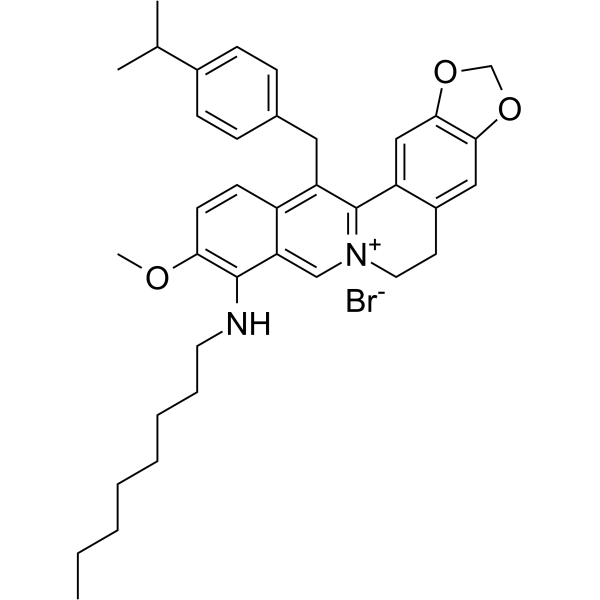
Anticancer agent 25 is an anticancer agent. Anticancer agent 25 can arrest the cell cycle at the G1 phase, and significantly inhibit tumor cell colony forming and migration even at low concentrations. Anticancer agent 25 can significantly induce cytoplasmic vacuolation. Anticancer agent 25 can be used for the study of prostate cancer, breast cancer, and colon cancer .
loading...
    loading...
Cat. No.: HY-W440902
Research Areas:  

Others

DSPE-PEG3400-IA is an iodoacetyll PEG lipid. The polymer can form lipid bilayer or micelles spontaneoulsy in water. The lipophilic tails can be used to encapsulate hydrophobic therapeutic agents while the hydrophilic head can be used to encapuslate hydrophilic drugs/nutrient, such as antibody, mRNA/DNA. The iodoacetyl group is reactive with thiol to produce a thioether linkage.
loading...
    loading...
Cat. No.: HY-W127487
CAS No.: 479050-96-9
Quorum sensing is a regulatory system used by bacteria to control gene expression in response to increased cell density. This regulatory process manifests itself in a variety of phenotypes, including biofilm formation and virulence factor production. Coordinated gene expression is achieved through the production, release and detection of small diffusible signaling molecules called autoinducers. N-acylated homoserine lactones (AHLs) comprise a class of such autoinducers, each of which generally consists of a fatty acid coupled to a homoserine lactone (HSL). Modulation of bacterial quorum-sensing signaling systems to suppress pathogenesis represents a new approach to antimicrobial research for infectious diseases. AHLs differ in acyl length (C4-C18), C3 substitution (hydrogen, hydroxyl, or oxo group), and the presence or absence of one or more carbon-carbon double bonds in the fatty acid chain. These differences confer signaling specificity through the affinity of the LuxR family of transcriptional regulators. C18-HSL, one of four lipophilic long acyl side chain AHLs produced by the LuxI AHL synthase homolog SinI, is involved in quorum-sensing signaling in strains of Rhizobium meliloti (a nitrogen-fixing bacterial symbiont of the legume M. sativa) . C18-HSL and other hydrophobic AHLs tend to localize in the relatively lipophilic environment of bacterial cells and cannot diffuse freely across the cell membrane. Long-chain N-acyl homoserine lactones can be exported from cells by efflux pumps, or can be transported between communicating cells by extracellular outer membrane vesicles.
loading...
    loading...
Cat. No.: HY-D3424
Target:  

Fluorescent Dye

Research Areas:  

Others

AM3-25 is a lipophilic styrene fluorescent dye commonly used as a fixable probe for nerve endings and cell membranes. AM3‑25 bears an amino group at its hydrophilic end, enabling it to cross‑link with proteins during formaldehyde or glutaraldehyde fixation and thereby immobilizing the stained label.
loading...
    loading...
Cat. No.: HY-185585
CAS No.: 303983-00-8
Target:  

Drug Intermediate

Research Areas:  

Cancer

JNJ-27548547, Mitomycin C (HY-13316) prodrug, is a Mitomycin C and lipophilic group conjugate. JNJ-27548547 undergoes thiolytic cleavage of its dithiobenzyl linker in the presence of reducing agents to release active substance Mitomycin C. JNJ-27548547 is formulated into pegylated liposomes (PL-MLP) with high antitumor activity in mice models .
loading...
    loading...
Cat. No.: HY-186296
CAS No.: 59000-66-7
Target:  

Acyltransferase

Research Areas:  

Metabolic Disease

Cholestanol stearate serves as a substrate for plasma lecithin:cholesterol acyltransferase (LCAT), with an esterification rate of approximately 70% that of cholesterol. Cholestanol stearate contains both hydrophilic and lipophilic groups, and its components are related to the structural substances of natural products. Cholestanol stearate can be used in studies related to cerebrotendinous xanthomatosis and familial lecithin:cholesterol acyltransferase deficiency .
loading...
    loading...
Cat. No.: HY-L928
7,106 compounds

G protein-coupled receptors (GPCRs) are membrane proteins in humans and one of the most important targets in drug discovery. Approximately 35% of launched drugs are targeted GPCRs, making them a crucial class of targets in drug discovery.

The orthosteric site of a GPCR is its endogenous ligand’s (such as neurotransmitters or hormones) binding site. This site plays a central role in signal transduction. Small molecules binding to this site typically contain a protonatable amino group, enabling the formation of salt bridges or hydrogen bonds with acidic residues in the binding pocket. In contrast, the allosteric site does not directly initiate signaling but modulates the signal intensity of the GPCR by altering or stabilizing the conformation of the orthosteric site. Small molecules binding to the allosteric site often contain multiple aromatic rings to occupy hydrophobic pockets and achieve their functional effects.

MCE has collected over 7,106 reported bioactive molecules targeting GPCRs, covering Class A, B, and C GPCRs. These small molecules were subjected to AI representation to extract 2D and 3D features. Subsequently, we do screening by AI score based on similarity to identify molecules in diversity library highly similar to the reported bioactive molecules in both 2D and 3D, with a threshold greater than 0.7. Further screening based on cLogP was applied to select molecules with good lipophilicity, which facilitates the binding of small molecules to GPCRs. This diversity library can be widely applied to the discovery of compounds targeting GPCR proteins.

  • 1

