12 Results for "

MAPK+p38

" in MedChemExpress (MCE) Product Catalog:
Products (12)

12 Results for "MAPK+p38" in MCE Product Catalog:

21
21 Publications Verification
Cat. No.: HY-N0484
CAS No.: 2586-96-1
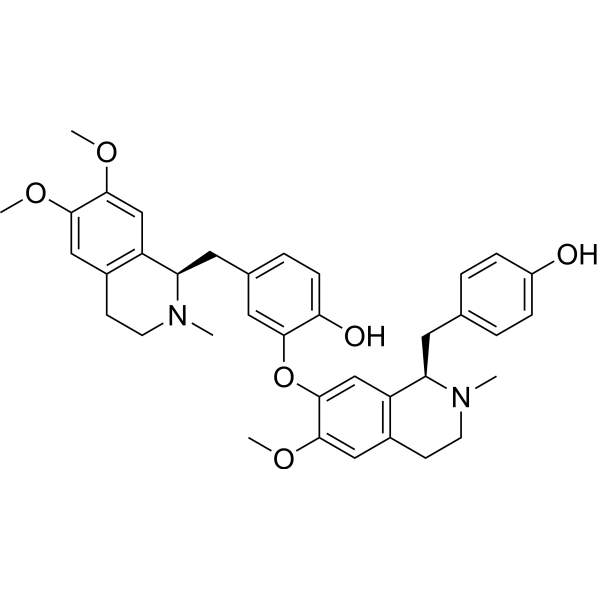
Liensinine is a bisbenzylisoquinoline alkaloid. By inhibiting the PI3K/AKT and JNK/p38-MAPK signaling pathways, Liensinine suppresses autophagy and apoptosis, clears , and exerts anti-inflammatory, antioxidant and neuroprotective effects. Liensinine activates AMPK and inhibits the expression of HIF-1α and VEGF, thereby suppressing angiogenesis. Liensinine exerts anti-tumor effects through ROS-mediated inhibition of the JAK2/STAT3 signaling pathway. Liensinine can be used for the research of diseases such as Alzheimer's disease, hepatocellular carcinoma, osteosarcoma, sepsis-induced organ injury and stroke .
loading...
    loading...
21
21 Publications Verification
Cat. No.: HY-N5014
CAS No.: 2385-63-9
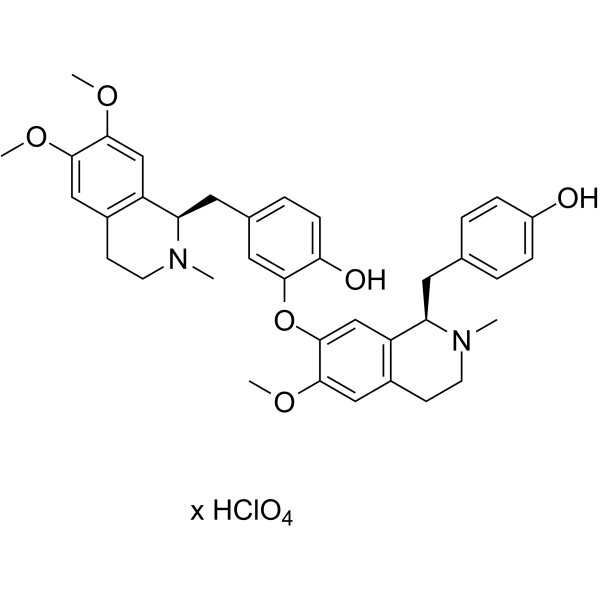
Liensinine perchlorate is a bisbenzylisoquinoline alkaloid. By inhibiting the PI3K/AKT and JNK/p38-MAPK signaling pathways, Liensinine perchlorate suppresses autophagy and apoptosis, clears , and exerts anti-inflammatory, antioxidant and neuroprotective effects. Liensinine perchlorate activates AMPK and inhibits the expression of HIF-1α and VEGF, thereby suppressing angiogenesis. Liensinine perchlorate exerts anti-tumor effects through ROS-mediated inhibition of the JAK2/STAT3 signaling pathway. Liensinine perchlorate can be used for the research of diseases such as Alzheimer's disease, hepatocellular carcinoma, osteosarcoma, sepsis-induced organ injury and stroke .
loading...
    loading...
2
2 Cited Publications
Cat. No.: HY-158426
CAS No.: 500271-63-6
Purity:  99.70%
Target:  

Sirtuin

Research Areas:  

Cardiovascular Disease

2-APQC is an orally active and selective agonist of Sirtuin-3 (SIRT3) (Kd=2.756 μM), antagonizes Isoproterenol/ISO (HY-B0468)-induced cytotoxicity. 2-APQC activates the SIRT3-PYCR1 axis to enhance mitochondrial proline metabolism and inhibit the ROS-p38MAPK pathway by inhibiting signaling pathways such as mTOR-p70S6K, JNK, and TGF-β/Smad3. 2-APQC also activates the AMPK-Parkin axis to alleviate myocardial hypertrophy and fibrosis and protect cardiac function. 2-APQC can be used in the study of heart failure .
loading...
    loading...
2
2 Cited Publications
Cat. No.: HY-N2406
CAS No.: 1078-61-1
Synonyms: 3,4-Dihydroxy-benzenepropanoic acid
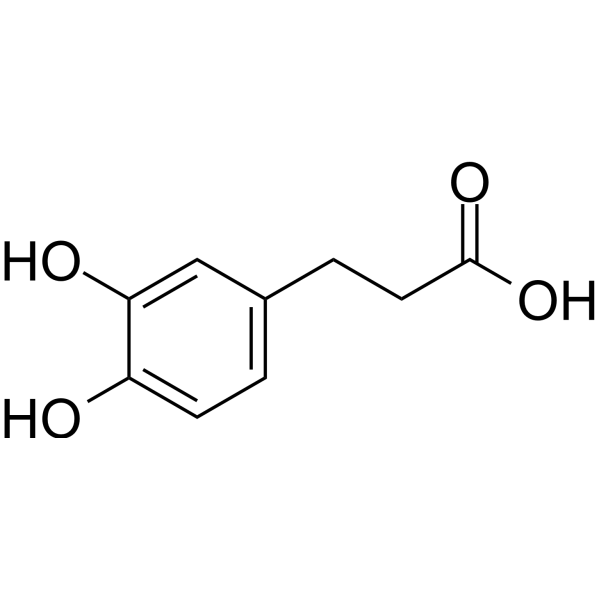
Dihydrocaffeic acid is a microbial metabolite of flavonoids. Dihydrocaffeic acid scavenges intracellular ROS and increases nitric oxide synthase activity. Dihydrocaffeic acid reduces phosphorylation of MAPK p38 and prevent UVB-induced skin damage. Dihydrocaffeic acid has antioxidant, anti-inflammatory and anti-cartilage degradation activities .
loading...
    loading...
1
1 Cited Publications
Cat. No.: HY-N0481
CAS No.: 6812-81-3
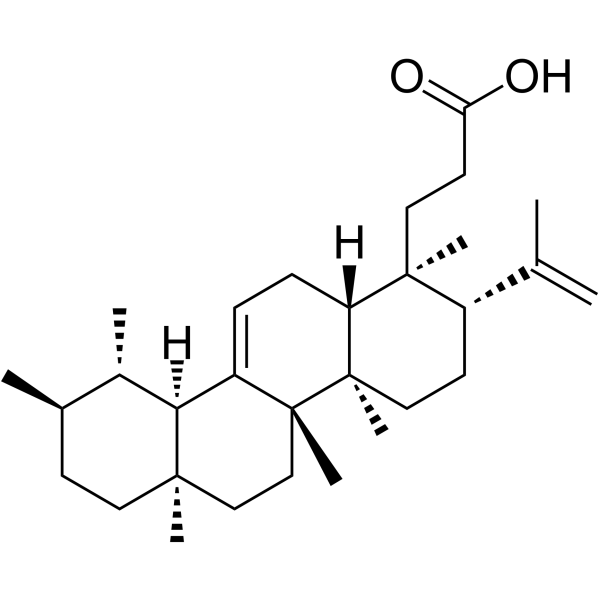
Roburic acid acts as an anti-inflammatory, anti-tumor and osteoclastogenesis inhibitor, with a Ki of 7.066 μM against human TNF, an IC50 of 9 μM against human COX-2, and an IC50 of 5 μM against ovine COX-1. Roburic acid reduces the production of inflammatory mediators such as NO and IL-6 in macrophages by inhibiting the NF-κB and MAPK (p38/JNK) pathways. By competitively inhibiting the TNF-TNF-R1 interaction, Roburic acid blocks the downstream NF-κB signaling pathway, thereby inducing cell cycle arrest and apoptosis in cancer cells. Roburic acid specifically inhibits osteoclastogenesis and bone resorption by suppressing the RANKL/TRAF6/NF-κB/NFATc1 axis. Roburic acid can be used in research related to osteolytic diseases such as osteoporosis, colorectal cancer and inflammatory diseases .
loading...
    loading...
1
1 Cited Publications
Cat. No.: HY-P80776A
Synonyms: p38 (phospho T180 + Y182); p-p38 (phospho T180 + Y182); p38 (phospho T180/Y182); CSAID Binding Protein 1; CSAID binding protein; CSAID-binding protein; Csaids binding protein; CSBP 1; CSBP 2; CSBP; CSBP1; CSBP2; CSPB 1; CSPB1; Cytokine suppressive anti inflammatory drug binding protein; Cytokine suppressive anti-inflammatory drug-binding protein; EXIP; MAP kinase 14; MAP kinase MXI2; MAP kinase p38 alpha; MAPK 14; MAPK14; MAX interacting protein 2; MAX-interacting protein 2; Mitogen Activated Protein Kinase 14; Mitogen activated protein kinase p38 alpha; Mitogen-activated protein kinase 14; Mitogen-activated protein kinase p38 alpha; MK14_HUMAN; Mxi 2; Mxi2; p38 ALPHA; p38; p38 MAP kinase; p38 MAPK; p38 mitogen activated protein kinase; p38ALPHA; p38alpha Exip; PRKM14; PRKM15; RK; SAPK 2A; SAPK2A; Stress Activated Protein Kinase 2A.

Host:  

Rabbit

Application:  

WB, IHC-P, FC, ICC/IF, ELISA

Reactivity:  

Human, Mouse

loading...
    loading...
Cat. No.: HY-116626
CAS No.: 380623-76-7
Purity:  99.77%
Target:  

NF-κB p38 MAPK MMP

Research Areas:  

Cancer

SM-7368 is a potent NF-kB inhibitor that targets downstream of MAPK p38 activation . SM-7368 inhibits TNF-α-induced MMP-9 upregulation. SM-7368 can be used for the research of chemotherapies targeting TNF-α-mediated tumor invasion and metastasis .
loading...
    loading...
Cat. No.: HY-12144
CAS No.: 136982-36-0
Research Areas:  

Neurological Disease

CP-99994 is a Tachykinin neurokinin 1 (NK-1) receptor antagonist with a Ki of 0.25 nM. CP-99994 prevents colorectal sensitization in the context of visceral hypersensitivity. CP-99994 reduces colorectal hypersensitivity induced by acetic acid injections in a model of bladder-colon cross-sensitization. CP-99994 hydrochloride attenuates the neuroglial interactions and MAPK-p38 phosphorylation associated with visceral hypersensitivity .
loading...
    loading...
Cat. No.: HY-N10009
CAS No.: 19275-49-1
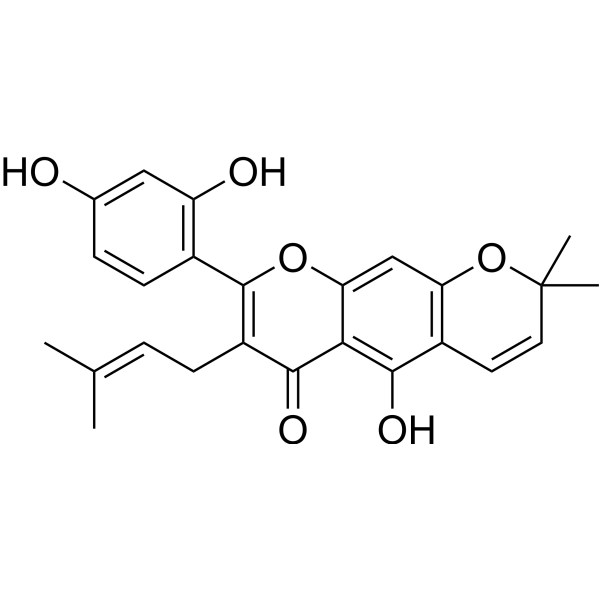
Cudraflavone B is a prenylated flavonoid with anti-inflammatory and anti-tumor properties. Cudraflavone B is also a dual inhibitor of COX-1 and COX-2. Cudraflavone B blocks the translocation of nuclear factor κB (NF-κB) from the cytoplasm to the nucleus in macrophages. Thus, Cudraflavone B inhibits tumor necrosis factor α (TNFα) gene expression and secretion. Cudraflavone B also triggers the mitochondrial apoptotic pathway, activates NF-κB, the MAPK p38, and ERK, and induced the expression of SIRT1. Thus Cudraflavone B inhibits the growth of human oral squamous cell carcinoma cells .
loading...
    loading...
Cat. No.: HY-12145
CAS No.: 145148-39-6
CP-99994 hydrochloride is a Tachykinin neurokinin 1 (NK-1) receptor antagonist with a Ki of 0.25 nM. CP-99994 hydrochloride prevents colorectal sensitization in the context of visceral hypersensitivity. CP-99994 hydrochloride reduces colorectal hypersensitivity induced by acetic acid injections in a model of bladder-colon cross-sensitization. CP-99994 hydrochloride attenuates the neuroglial interactions and MAPK-p38 phosphorylation associated with visceral hypersensitivity .
loading...
    loading...
Cat. No.: HY-N0484R
CAS No.: 2586-96-1
Liensinine (Standard) is the analytical standard of Liensinine (HY-N0484). This product is intended for research and analytical applications. Liensinine is a bisbenzylisoquinoline alkaloid. By inhibiting the PI3K/AKT and JNK/p38-MAPK signaling pathways, Liensinine suppresses autophagy and apoptosis, clears , and exerts anti-inflammatory, antioxidant and neuroprotective effects. Liensinine activates AMPK and inhibits the expression of HIF-1α and VEGF, thereby suppressing angiogenesis. Liensinine exerts anti-tumor effects through ROS-mediated inhibition of the JAK2/STAT3 signaling pathway. Liensinine can be used for the research of diseases such as Alzheimer's disease, hepatocellular carcinoma, osteosarcoma, sepsis-induced organ injury and stroke .
loading...
    loading...
Cat. No.: HY-N0481R
CAS No.: 6812-81-3
Roburic acid (Standard) is the analytical standard of Roburic acid. This product is intended for research and analytical applications. Roburic acid acts as an anti-inflammatory, anti-tumor and osteoclastogenesis inhibitor, with a Ki of 7.066 μM against human TNF, an IC50 of 9 μM against human COX-2, and an IC50 of 5 μM against ovine COX-1. Roburic acid reduces the production of inflammatory mediators such as NO and IL-6 in macrophages by inhibiting the NF-κB and MAPK (p38/JNK) pathways. By competitively inhibiting the TNF-TNF-R1 interaction, Roburic acid blocks the downstream NF-κB signaling pathway, thereby inducing cell cycle arrest and apoptosis in cancer cells. Roburic acid specifically inhibits osteoclastogenesis and bone resorption by suppressing the RANKL/TRAF6/NF-κB/NFATc1 axis. Roburic acid can be used in research related to osteolytic diseases such as osteoporosis, colorectal cancer and inflammatory diseases.
loading...
    loading...
  • 1

