16 Results for "

Macrophage uptake

" in MedChemExpress (MCE) Product Catalog:
Products (16)

16 Results for "Macrophage uptake" in MCE Product Catalog:

20
20 Cited Publications
Cat. No.: HY-138300
CAS No.: 1849616-42-7
Purity:  99.93%
Research Areas:  

Others

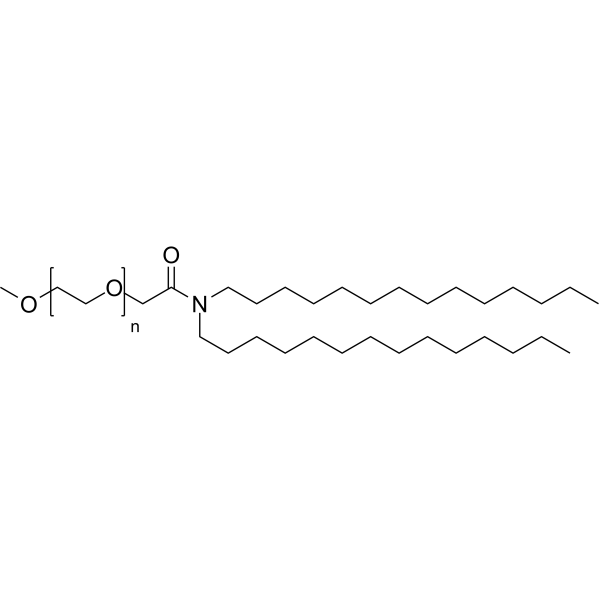
ALC-0159 presents highly mobile surface PEG chains in a dense brush-like conformation, which can form a hydrophilic barrier, reduce non-specific protein adsorption and macrophage uptake, improve colloidal stability, prolong in vivo circulation time, and affect the cellular uptake of LNPs. ALC-0159 dissociates from the surface of mRNA-LNPs under long-term mechanical oscillation stress, thereby reducing steric hindrance, inducing mRNA-LNP fusion, increasing particle size, and releasing unencapsulated mRNA .
loading...
    loading...
Cat. No.: HY-128525
CAS No.: 28384-96-5
Purity:  98.82%
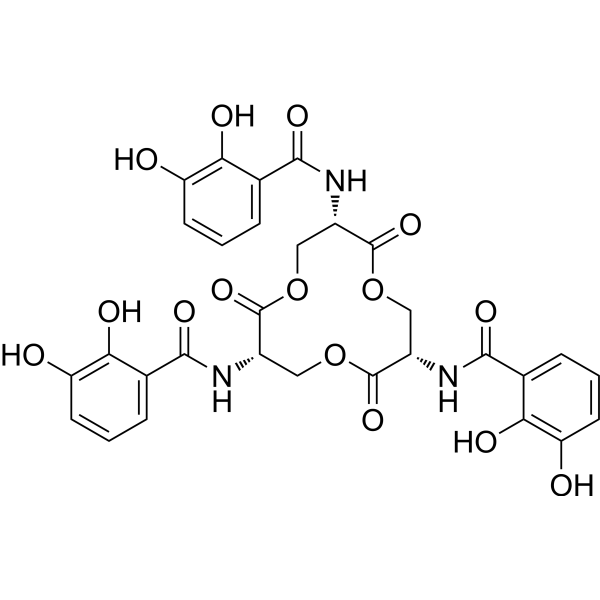
Enterobactin is a siderophore produced by Gram-negative bacteria and has an extremely high affinity for iron. During the process of Salmonella typhimurium infecting macrophages, Enterobactin can not only help bacteria uptake iron but also reduce the antibacterial activity of macrophages. In addition, Enterobactin is also involved in the oxidative stress response of Escherichia coli. Enterobactin can be hydrolyzed by Fes in the cell and exert antioxidant effects by scavenging free radicals .
loading...
    loading...
Cat. No.: HY-126213
CAS No.: 326589-90-6
Purity:  ≥99.0%
Synonyms: 18:1 Lyso-PS
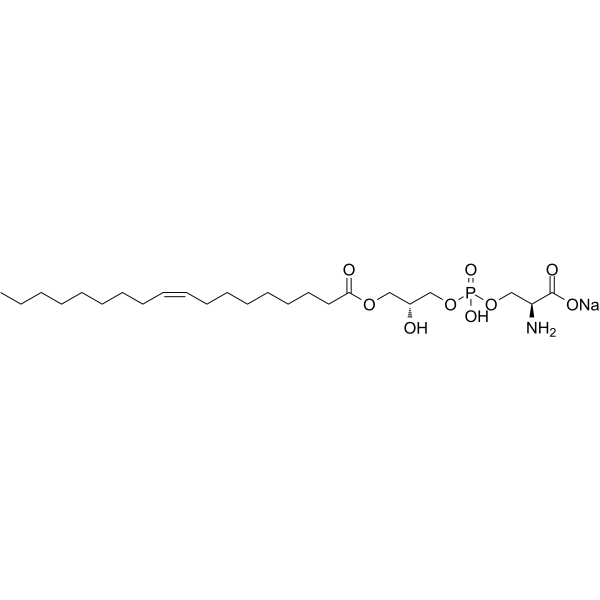
Oleoyl-2-hydroxy-sn-glycero-3-phospho-L-serine sodium (18:1 Lyso-PS) is a modified PS product generated following NADPH oxidase activation and Lyso-PS signal transduction. 1-Oleoyl-2-hydroxy-sn-glycero-3-phospho-L-serine sodium signals through macrophage G2A to enhance the phagocytic uptake of PS-dependent apoptotic (apoptosis) neutrophils and PS-exposed activated neutrophils. 1-Oleoyl-2-hydroxy-sn-glycero-3-phospho-L-serine sodium enhances macrophage phagocytic uptake of apoptotic cells, carboxylate-modified microspheres, and PS-exposed non-apoptotic activated neutrophils. 1-Oleoyl-2-hydroxy-sn-glycero-3-phospho-L-serine sodium serves as an acyl acceptor substrate for the lysophosphatidyltransferase At1g78690p to generate diacylphosphatidylserine. 1-Oleoyl-2-hydroxy-sn-glycero-3-phospho-L-serine sodium reduces the secretion of IL-8 and decreases the proportion of viable colon cancer cells. 1-Oleoyl-2-hydroxy-sn-glycero-3-phospho-L-serine sodium is applicable to studies on peritonitis and inflammatory bowel disease .
loading...
    loading...
Cat. No.: HY-172279A
Target:  

Liposome

Research Areas:  

Cancer

DSPE-PEG2000-TAT is a cell-penetrating peptide-modified PEGylated phospholipid conjugate and cellular uptake enhancer. DSPE-PEG2000-TAT forms via conjugation of Cys-TAT to DSPE-PEG2000-Mal. DSPE-PEG2000-TAT enhances liposomal cellular uptake and siRNA transfection efficiency in glomerular mesangial and macrophage cells. DSPE-PEG2000-TAT can be used for drug delivery .
loading...
    loading...
Cat. No.: HY-113870
CAS No.: 108708-22-1
Purity:  98.7%
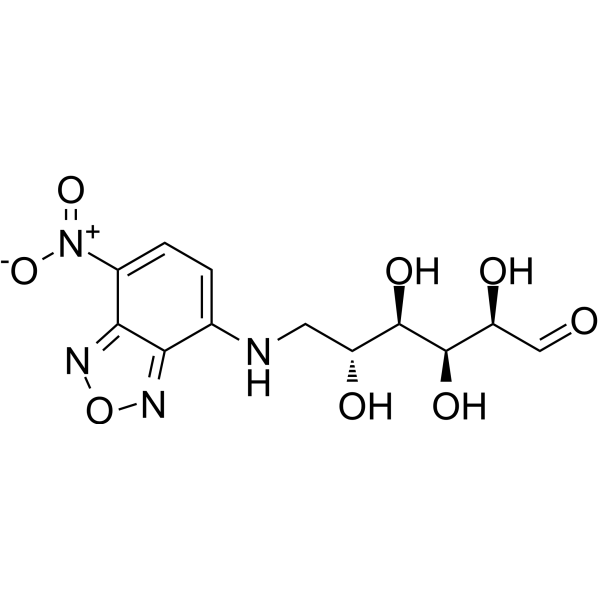
6-NBDG is a fluorescent glucose analogue, it can be used for fluorescence imaging and monitoring glucose transport and uptake. 6-NBDG can be used as a fluorescent probe for detecting macrophage-rich atherosclerotic plaques .
loading...
    loading...
Cat. No.: HY-113884A
CAS No.: 18104-45-5
Purity:  ≥99.0%
Synonyms: (±)-13-HODE
Target:  

Endogenous Metabolite

Research Areas:  

Inflammation/Immunology Cancer

(±)-Coriolic acid ((±)-13-HODE) is one of the two racemic monohydroxy fatty acids produced by non-enzymatic oxidation of linoleic acid. (±)-Coriolic acid induces TNF production in macrophages and upregulates Scavenger Receptor, thereby promoting the uptake of oxidized low-density lipoprotein. (±)-Coriolic acid induces the expression of cell adhesion molecules in endothelial cells. (±)-Coriolic acid can be used in research on psoriasis, atherosclerosis, and triple-negative breast cancer .
loading...
    loading...
Cat. No.: HY-D2794A
Target:  

Fluorescent Dye

Research Areas:  

Cancer

FITC-PEG1000-NH2 is a non-membrane-permeable fluorescent dye, which is a fluorescently labeled polyethylene glycol derivative with an amine terminal group. FITC-PEG1000-NH2 cannot enter cancer cells, and can be used to prepare FITC-loaded solid lipid nanoparticles for macrophage uptake studies. FITC-PEG1000-NH2 can also be used to label polymers for cell uptake studies .
loading...
    loading...
Cat. No.: HY-135477
CAS No.: 204130-08-5
Target:  

Phosphatase Bacterial

Research Areas:  

Infection

RWJ-60475 is a cell-permeable tyrosine phosphatase inhibitor with an IC50 of 3.3 μM. RWJ-60475, by inhibiting the activity of CD45/CD148 phosphatase, interferes with the phagocytic function of macrophages, thereby blocking the invasion of Legionella pneumophila into host cells and the transport of effector proteins. RWJ-60475 significantly reduces the uptake of bacterial particles by macrophages. RWJ-60475 can be used in the research of anti-infection targeting host factors .
loading...
    loading...
Cat. No.: HY-135520
CAS No.: 79390-81-1
Synonyms: Man3Lys2
Research Areas:  

Others

Trimannosyldilysine (Man3Lys2) is a mannosyl glycopeptide that can be coupled to human placental p-glucocerebrosidase to enhance macrophage uptake .
loading...
    loading...
Cat. No.: HY-N2894
CAS No.: 112501-42-5
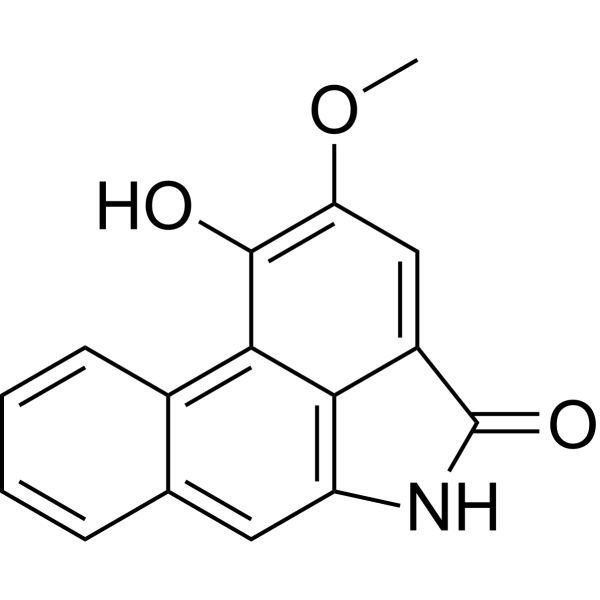
Piperolactam A is a natural product that can be isolated from root of Piper betle. Piperolactam A exhibits promising leishmanicidal action against wild type and drug resistant strains of Leishmania donovani .
loading...
    loading...
Cat. No.: HY-128525R
CAS No.: 28384-96-5
Enterobactin (Standard) is the analytical standard of Enterobactin. This product is intended for research and analytical applications. Enterobactin is a siderophore produced by Gram-negative bacteria and has an extremely high affinity for iron. During the process of Salmonella typhimurium infecting macrophages, Enterobactin can not only help bacteria uptake iron but also reduce the antibacterial activity of macrophages. In addition, Enterobactin is also involved in the oxidative stress response of Escherichia coli. Enterobactin can be hydrolyzed by Fes in the cell and exert antioxidant effects by scavenging free radicals .
loading...
    loading...
Cat. No.: HY-172632
Resolvin D3 methyl ester is a methyl ester version of Resolvin D3 that may act as a lipophilic prodrug form which can alter its distribution and pharmacokinetic properties. Resolvin D3 is a potent immunoresolvent. Resolvin D3 can reduce neutrophil infiltration in vivo. Resolvin D3 can be produced in murine inflammatory exudates and human macrophages. Resolvin D3 can activate the human RvD1 and RvD5. Resolvin D3 is a potent enhancer of the uptake of apoptotic neutrophils by macrophages as well as a stimulator of IL-10 .
loading...
    loading...
Cat. No.: HY-W010713
CAS No.: 2669-65-0
Synonyms: Fimaporfin free base
Target:  

Photosensitizer

Research Areas:  

Cancer

Meso-tetraphenylchlorin (TPCS2a) is a photosensitizer with poor water solubility, which limits its use in the blood circulation. However, TPCS2a@NPs nanoparticles can be prepared based on polylactic-co-polyethylene glycol acid (PLGA) polymer core loaded with TPCS2. Such nanoparticles can be coated with mesenchymal stem cell-derived plasma membranes (mMSCs) to form mMSC-TPCS2a@NPs, which prolongs blood circulation time and improves tumor targeting ability. Compared with uncoated TPCS2a@NPs, mMSC-TPCS2a@NPs can reduce macrophage uptake by 54% to 70% under different conditions. Both nanoparticle forms are effectively accumulated in MCF7 and MDA-MB-231 breast cancer cells, while uptake in normal breast epithelial cells MCF10A is significantly lower .
loading...
    loading...
Cat. No.: HY-18542
CAS No.: 1402612-58-1
KT195 is a serine hydrolase inhibitor that targets ABHD6 (IC50 = 10 nM) and ABHD2, with no significant activity against DAGLβ. KT195 inhibits endoplasmic reticulum calcium release and mitochondrial calcium uptake by targeting ABHD2, thereby blocking A23187 (HY-N6687) and H2O2-induced necrotic cell death and apoptosis. By inhibiting ABHD6 activity, KT195 significantly induces 2-AG accumulation in Neuro2A cells and reduces IL-1β secretion in lipopolysaccharide-treated macrophages. KT195 has been used as a negative control probe for DAGLβ and can be applied in studies of ABHD6 and ABHD2 in calcium signaling, lipid metabolism, neuronal function, and inflammatory .
loading...
    loading...
  • 1

