
25 Results for "

Mental disease

" in MedChemExpress (MCE) Product Catalog:
Products (25)

25 Results for "Mental disease" in MCE Product Catalog:

47
47 Publications Verification
Cat. No.: HY-W010625
CAS No.: 867-55-0
Lithium 2-hydroxypropanoate is a lithium salt. Lithium 2-hydroxypropanoate has immunomodulatory activity (slightly enhancing PHA (HY-N7038)-induced lymphocyte proliferation). Lithium 2-hydroxypropanoate can be used in antioxidant activity assays. Lithium 2-hydroxypropanoate can be used in the research of mental diseases .
loading...
    loading...
3
3 Cited Publications
Cat. No.: HY-A0077
CAS No.: 58-39-9
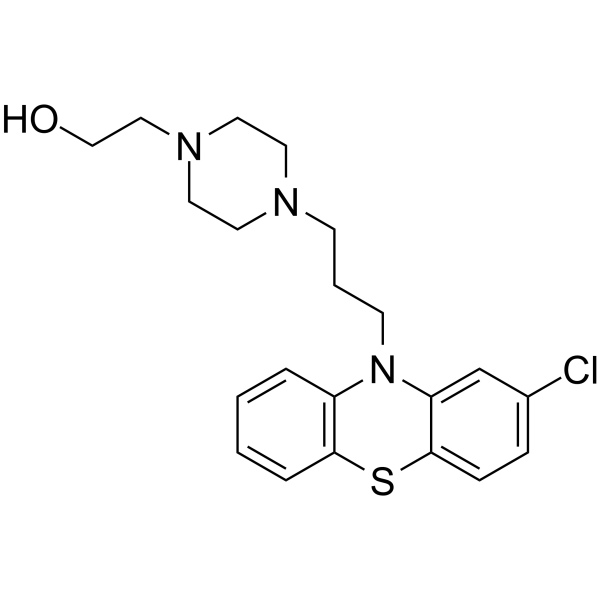
Perphenazine is an orally active dopamine receptor and histamine-1 receptor antagonist, with Ki values of 0.56 nM (D2), 0.43 nM (D3), 6 nM (5-HT2A), respectively. Perphenazine also binds to Alpha-1A adrenergic receptor. Perphenazine inhibits cancer cell proliferation, and induces apoptosis. Perphenazine can be used in the research of mental disease, cancer, inflammation .
loading...
    loading...
2
2 Cited Publications
Cat. No.: HY-136379
CAS No.: 1222513-26-9
Purity:  99.84%
Synonyms: Cdc42-IN-1
Target:  

Ras

Research Areas:  

Cancer

CID44216842 (Cdc42-IN-1) is a potent Cdc42-selective guanine nucleotide binding lead inhibitor. The EC50s for Cdc42 WT and Cdc42Q61L mutant are 1.0 and 1.2 μM in GTP binding assay, respectively. The EC50s for Cdc42 WT and Cdc42Q61L mutant are 0.3 and 0.5 μM in GDP binding assay, respectively. Use as a molecular probe .
loading...
    loading...
Cat. No.: HY-132806
CAS No.: 2230009-48-8
Purity:  99.93%
Synonyms: RG-7816; RO-7017773
Target:  

GABA Receptor

Research Areas:  

Neurological Disease

Alogabat is a positive allosteric modulator (PAM) and agonist (Ki <100 nM) of the GABAA α5 receptor, targeting the α5β3γ2 subunit with a Ki of 8.7 nM. Alogabat increases the expression level of α5β3γ2 in oocytes (1.97-fold). GABAA has been implicated in cognitive impairment associated with central nervous system (CNS) disorders, brain cancer (including brain tumors such as medulloblastoma), and can be used in the study of mild cognitive impairment (MCI), amnestic MCI (aMCI), age-associated memory impairment (AAMI), age-related cognitive decline (ARCD), dementia, Alzheimer's disease (AD), prodromal AD, post-traumatic stress disorder (PTSD), schizophrenia, bipolar disorder, amyotrophic lateral sclerosis (ALS), cognitive impairment associated with cancer treatment, mental retardation, Parkinson's disease (PD), autism spectrum disorder, fragile X, Rett syndrome, obsessive-compulsive behavior, and substance addiction .
loading...
    loading...
Cat. No.: HY-100703
CAS No.: 1893-33-0
Purity:  99.89%
Synonyms: Floropipamide; McN-JR 3345; R 3345
Research Areas:  

Neurological Disease

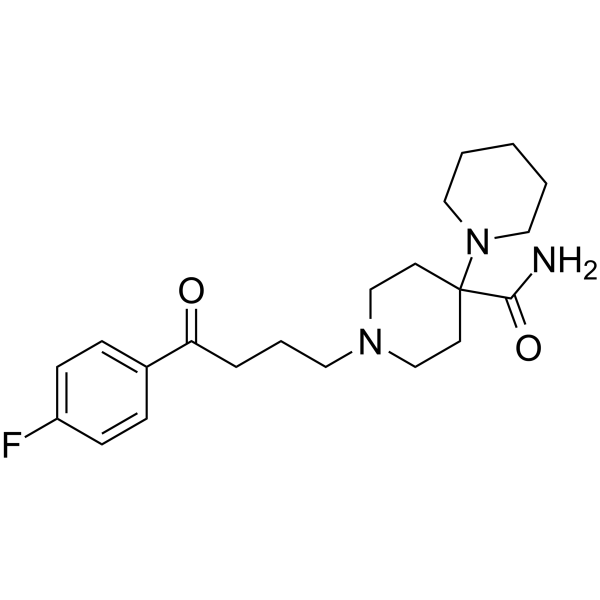
Pipamperone (Floropipamide) is a butyrophenone derivative and high-affinity antagonist of 5-HT2A receptor (pKi=8.2) and D4 receptor (pKi=8.0). Pipamperone is also a low-affinity antagonist of D2 receptor (pKi=6.7). Pipamperone affects neurotransmitter functions and exerts antipsychotic activity. Pipamperone is used in the research of mental disorders such as autism-related behavioral disorders and Alzheimer's disease .
loading...
    loading...
Cat. No.: HY-P2283
CAS No.: 186359-67-1
Target:  

Amyloid-β

Research Areas:  

Neurological Disease

β-Amyloid (1-37) (human) correlates moderately with Mini-Mental State Examination (MMSE) scores in Alzheimer disease. β-Amyloid (1-37) (human) possesses an added diagnostic value .
loading...
    loading...
Cat. No.: HY-143721
CAS No.: 2671028-06-9
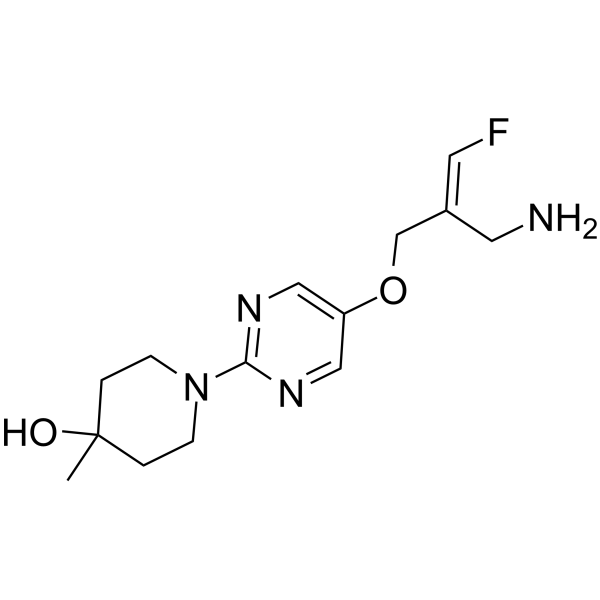
SSAO inhibitor-2 is a selective semicarbazide-sensitive amine oxidase (SSAO/VAP-1) inhibitor with an IC50 of < 10 nM. SSAO inhibitor-2 can be used for the research of inflammation diseases, diabetes and diabetes-related diseases, mental disorders, pain-related diseases, ischemic diseases, vascular diseases, ocular diseases, fibrosis, neuroinflammatory diseases, cancer, and tissue transplant rejection .
loading...
    loading...
Cat. No.: HY-14753
CAS No.: 861151-12-4
Rosonabant is a selective antagonist for cannabinoid receptor (CB1 receptor), which reduces body weight and improves improves the risk of obesity-related cardiovascular metabolic diseases. Rosonabant exhibits adverse side effect, such as nausea and mental disorder .
loading...
    loading...
Cat. No.: HY-162070
CAS No.: 742116-45-6
Research Areas:  

Neurological Disease Cancer

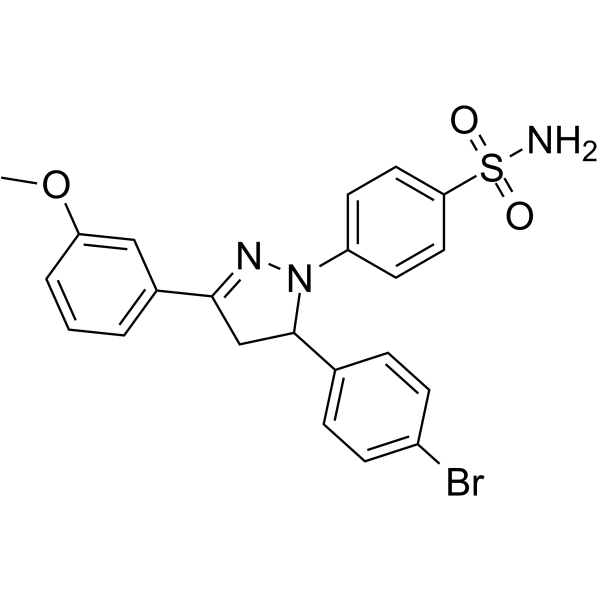
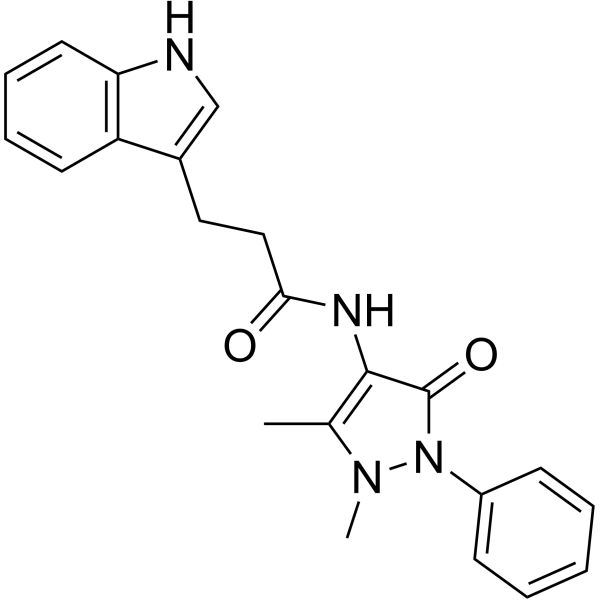
CCK antagonist 1 (compound 3d) is a CCK antagonist with IC50s of 1.1 μM and 4 μM for CCK1 and CCK2, respectively. CCK antagonist 1 can be used for research of cancer and mental disease .
loading...
    loading...
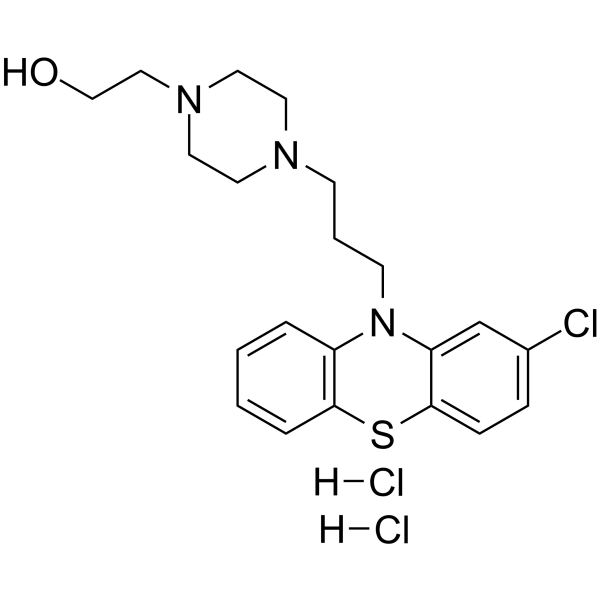
Cat. No.: HY-A0077A
CAS No.: 2015-28-3
Perphenazine dihydrochloride is an orally active dopamine receptor and histamine-1 receptor antagonist, with Ki values of 0.56 nM (D2), 0.43 nM (D3), 6 nM (5-HT2A), respectively. Perphenazine dihydrochloride also binds to Alpha-1A adrenergic receptor. Perphenazine dihydrochloride inhibits cancer cell proliferation, and induces apoptosis. Perphenazine dihydrochloride can be used in the research of mental disease, cancer, inflammation .
loading...
    loading...
Cat. No.: HY-177313
CAS No.: 235760-14-2
Synonyms: NVP-AAG 561
Target:  

CFTR

Research Areas:  

Neurological Disease

AAG561 is a corticotropin-releasing factor receptor 1 (CRF1) antagonist. AAG561 can be used for the study of the underlying emotion dysregulation of a mental disease or disorder .
loading...
    loading...
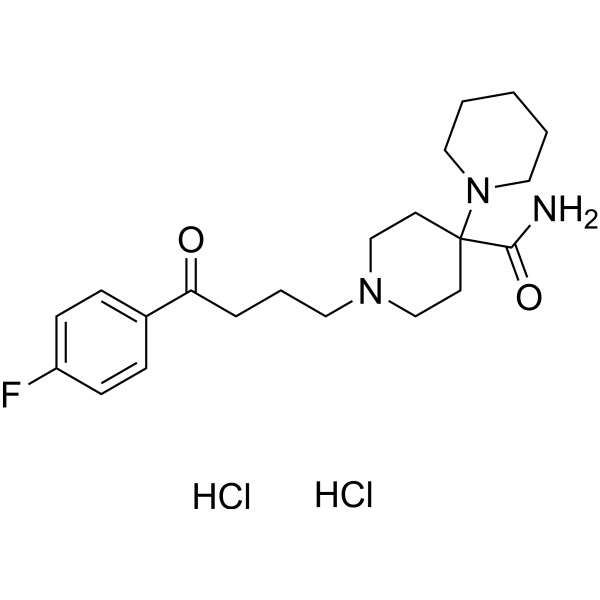
Cat. No.: HY-100703A
CAS No.: 2448-68-2
Synonyms: Floropipamide dihydrochloride; McN-JR 3345 dihydrochloride; R 3345 dihydrochloride
Research Areas:  

Neurological Disease

Pipamperone dihydrochloride (Floropipamide dihydrochloride) is a butyrophenone derivative and high-affinity antagonist of 5-HT2A receptor (pKi=8.2) and D4 receptor (pKi=8.0). Pipamperone dihydrochloride is also a low-affinity antagonist of D2 receptor (pKi=6.7). Pipamperone dihydrochloride affects neurotransmitter functions and exerts antipsychotic activity. Pipamperone dihydrochloride is used in the research of mental disorders such as autism-related behavioral disorders and Alzheimer's disease .
loading...
    loading...
Cat. No.: HY-149704
CAS No.: 2640109-42-6
Target:  

mAChR

Research Areas:  

Neurological Disease

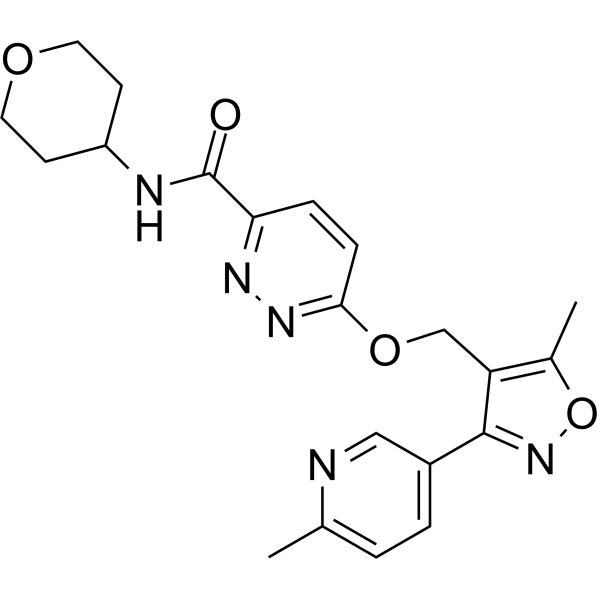
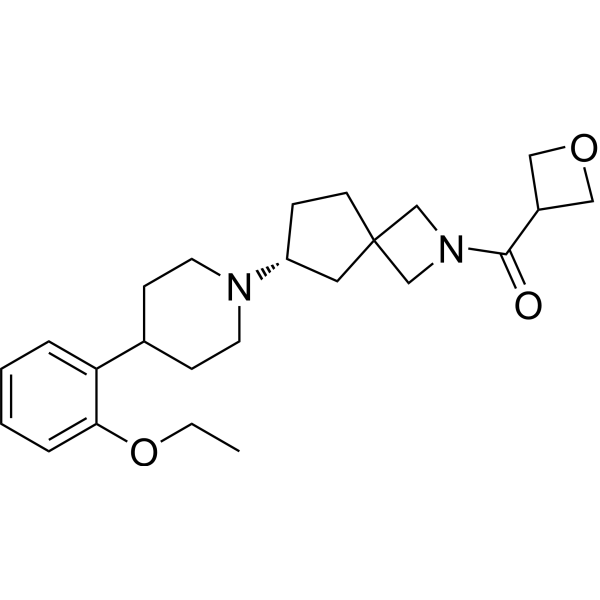
M1/M2/M4 muscarinic agonist 1 (Compound 42) is a muscarinic M4/M1/M2 agonist with EC50 values of 6.5, 26 and 210 nM for M4/M1/M2, respectively. M1/M2/M4 muscarinic agonist 1 can be used for research on mental diseases, such as schizophrenia, delusion, etc .
loading...
    loading...
Cat. No.: HY-A0077R
CAS No.: 58-39-9
Perphenazine (Standard) is the analytical standard of Perphenazine. This product is intended for research and analytical applications. Perphenazine is an orally active dopamine receptor and histamine-1 receptor antagonist, with Ki values of 0.56 nM (D2), 0.43 nM (D3), 6 nM (5-HT2A), respectively. Perphenazine also binds to Alpha-1A adrenergic receptor. Perphenazine inhibits cancer cell proliferation, and induces apoptosis. Perphenazine can be used in the research of mental disease, cancer, inflammation .
loading...
    loading...
Cat. No.: HY-149702
Target:  

mAChR

Research Areas:  

Neurological Disease

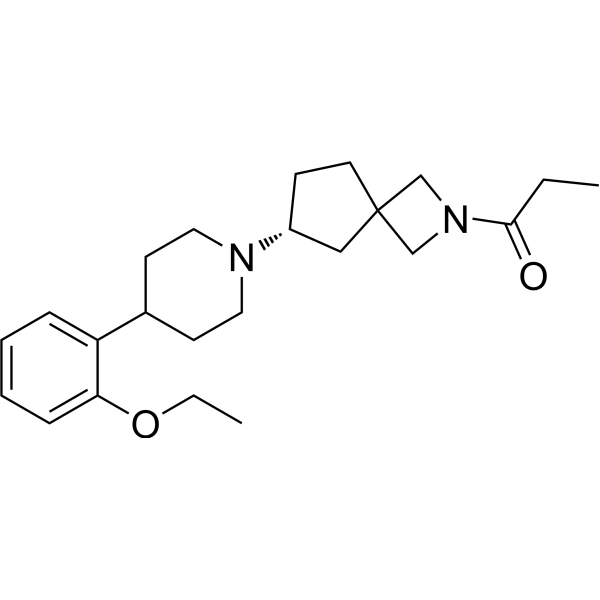
M1/M4 muscarinic agonist 1 (compound 41) is a selective muscarinic M4/M1 agonist with EC50 values of 14 and 55 nM for M4 and M1, respectively. M1/M4 muscarinic agonist 1 can be used for research on mental diseases, such as schizophrenia, delusional disorder, etc .
loading...
    loading...
Cat. No.: HY-A0077S2
CAS No.: 1261432-36-3
Perphenazine-d6 (fumarate) is a deuterated labeled Perphenazine . Perphenazine is an orally active dopamine receptor and histamine-1 receptor antagonist, with Ki values of 0.56 nM (D2), 0.43 nM (D3), 6 nM (5-HT2A), respectively. Perphenazine also binds to Alpha-1A adrenergic receptor. Perphenazine inhibits cancer cell proliferation, and induces apoptosis. Perphenazine can be used in the research of mental disease, cancer, inflammation .
loading...
    loading...
Cat. No.: HY-100703R
CAS No.: 1893-33-0
Synonyms: Floropipamide (Standard); McN-JR 3345 (Standard); R 3345 (Standard)
Pipamperone (Standard) is the analytical standard of Pipamperone (HY-100703). This product is intended for research and analytical applications. Pipamperone (Floropipamide) is a butyrophenone derivative and high-affinity antagonist of 5-HT2A receptor (pKi=8.2) and D4 receptor (pKi=8.0). Pipamperone is also a low-affinity antagonist of D2 receptor (pKi=6.7). Pipamperone affects neurotransmitter functions and exerts antipsychotic activity. Pipamperone is used in the research of mental disorders such as autism-related behavioral disorders and Alzheimer's disease .
loading...
    loading...
Cat. No.: HY-100703S
Synonyms: Floropipamide-d10 dihydrochloride; McN-JR 3345-d10 dihydrochloride; R 3345-d10 dihydrochloride
Pipamperone-d10 (Floropipamide-d10) dihydrochloride is a deuterated Pipamperone dihydrochloride (HY-100703A). Pipamperone dihydrochloride (Floropipamide dihydrochloride) is a butyrophenone derivative and high-affinity antagonist of 5-HT2A receptor (pKi=8.2) and D4 receptor (pKi=8.0). Pipamperone dihydrochloride is also a low-affinity antagonist of D2 receptor (pKi=6.7). Pipamperone dihydrochloride affects neurotransmitter functions and exerts antipsychotic activity. Pipamperone dihydrochloride is used in the research of mental disorders such as autism-related behavioral disorders and Alzheimer's disease .
loading...
    loading...
Cat. No.: HY-186056
CAS No.: 3080808-83-6
Target:  

HCN Channel

Research Areas:  

Neurological Disease

HCN2-IN-3 is an orally active HCN2 inhibitor. HCN2-IN-3 inhibits the activity of HCN2 ion channels. HCN2-IN-3 is applicable to research related to pain, tinnitus, central nervous system diseases, mental illnesses and mood disorders .
loading...
    loading...
Cat. No.: HY-L028
1,170 compounds

The blood-brain barrier (BBB) is the complex network of brain microvessels. It protects the brain from the external bloodstream environment and supplies the brain with the required nutrients for normal function. However, blood-brain barrier is also the obstacle to deliver beneficial drugs to treat CNS (central nervous system) diseases or brain tumors, as it has the least permeable capillaries in the entire body due to physical barriers (tight junctions). Therefore, it is crucial to discover drugs which can cross this barrier for the treatment of brain-based diseases, such as Alzheimer’s disease (AD), Parkinson’s disease (PD) and epilepsy.

MCE offers a unique collection of 1,170 compounds with confirmed CNS-Penetrant property. It’s a useful tool for the discovery of drugs used for brain diseases, such as brain tumors, mental disorders, and neurodegenerative diseases.

