1. Search Result
Search Result
Results for "

Microtubule

" in MedChemExpress (MCE) Product Catalog:

583

Inhibitors & Agonists

2

Screening Libraries

12

Fluorescent Dyes

4

Biochemical Assay Reagents

13

Peptides

1

MCE Kits

21

Inhibitory Antibodies

78

Natural
Products

32

Recombinant Proteins

26

Isotope-Labeled Compounds

39

Antibodies

7

Click Chemistry

1

GMP Molecules

Cat. No. Product Name Target Research Areas Chemical Structure
  • HY-13442
    Eribulin
    5+ Cited Publications

    B1939; E7389; ER-086526

    Microtubule/Tubulin Apoptosis ADC Payload Cancer
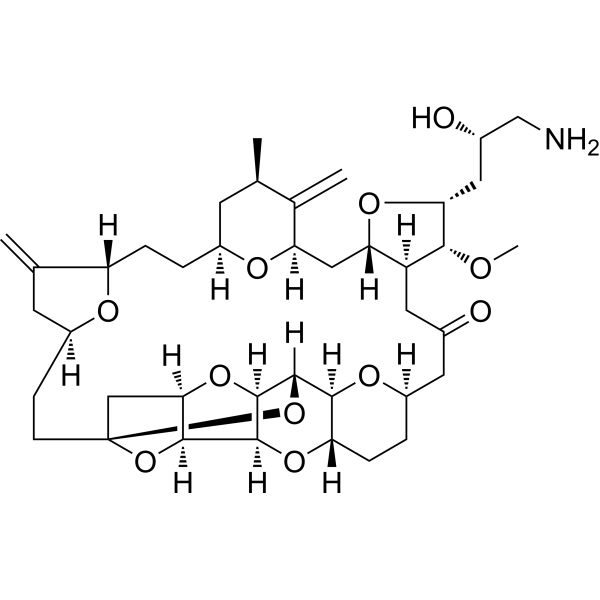
    Eribulin (E7389) is a microtubule targeting agent that is used for the research of metastatic breast cancer. Eribulin inhibits the proliferation of cancer cells by binding microtubule proteins and microtubules.
    Eribulin
  • HY-13442A
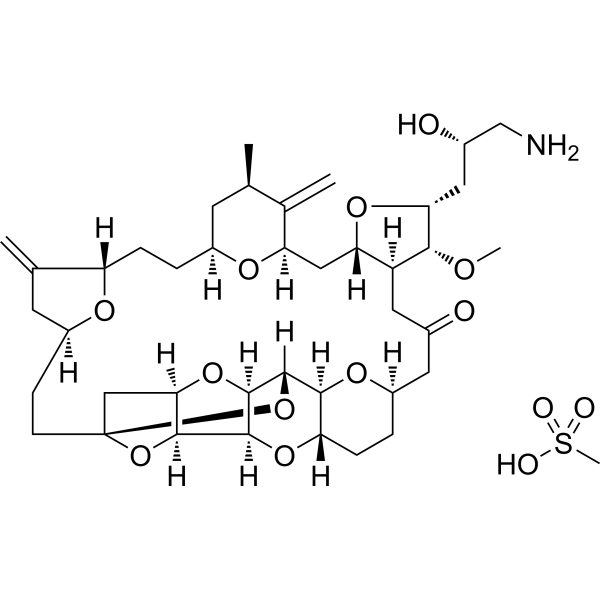
    Eribulin mesylate
    5+ Cited Publications

    B1939 mesylate; E7389 mesylate; ER-086526 mesylate

    Microtubule/Tubulin Apoptosis Cancer
    Eribulin mesylate is an inhibitor for microtubule. Eribulin mesylate inhibits the proliferation of cancer cell LM8 and Dunn, inhibits the cell migration of LM8, arrests the cell cycle at G2/M phase, and induces apoptosis in LM8. Eribulin mesylate exhibits antitumor efficacy in mouse model .
    Eribulin mesylate
  • HY-15583

    ADC Payload Microtubule/Tubulin Cancer
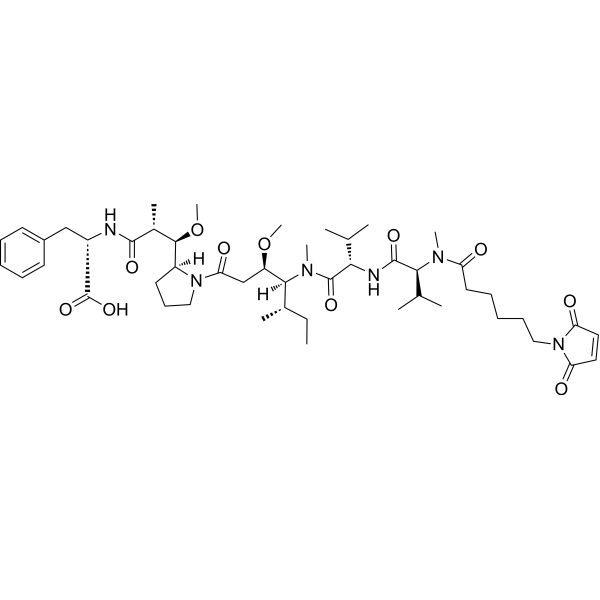
    Auristatin F is a potent cytotoxin in antibo-conjugated agents and an analogue of MMAF. Auristatin F is a potent microtubule inhibitor and vascular damaging agent (VDA). Auristatin F inhibits cell division by preventing tubulin aggregation.Auristatin F can be used in antibody-drug conjugates (ADC) .
    Auristatin F
  • HY-128870

    Drug-Linker Conjugates for ADC Cancer
    Mal-PEG2-VCP-Eribulin consists the ADCs linker (Mal-PEG2-VCP) and Eribulin (HY-13442). Eribulin is a mechanistically unique microtubule inhibitor and Eribulin inhibits the proliferation of cancer cells by binding microtubule proteins and microtubules. Mal-PEG2-VCP-Eribulin is an Eribulin-based agent for antibody conjugates .
    Mal-PEG2-VCP-Eribulin
  • HY-B0294
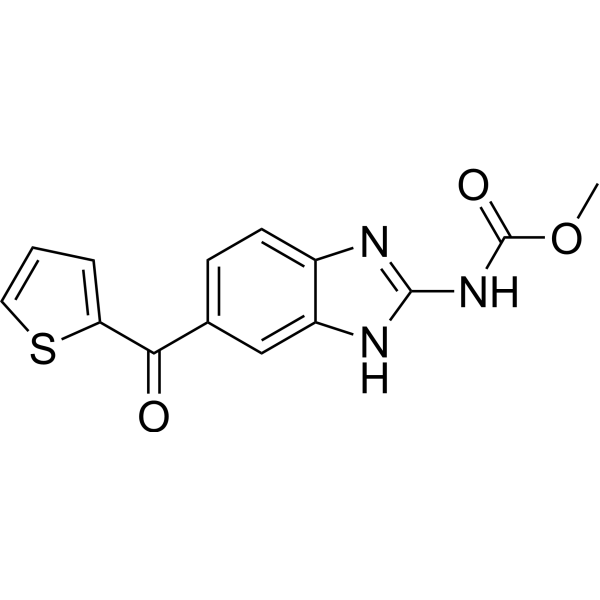
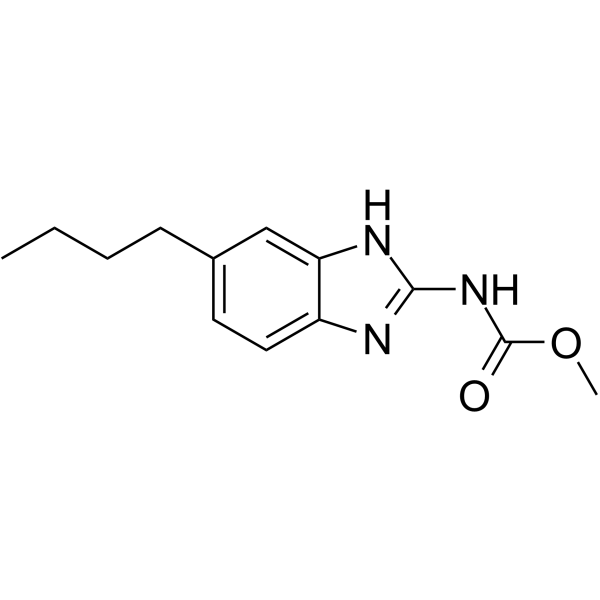
    Flubendazole
    5+ Cited Publications

    Parasite Microtubule/Tubulin STAT MDM-2/p53 Apoptosis Autophagy Infection Cancer
    Flubendazole is an anthelmintic drug based on altering microtubule structure, inhibition of tubulin polymerization and disruption of microtubule function. Flubendazole induces apoptosis in human colorectal cancer (CRC) by blocking the STAT3 signaling axis and activation of autophagy. Flubendazole induces P53 expression and reduced Cyclin B1 and p-cdc2 expression. Flubendazole is an antitumor agent. Flubendazole can be used for worm and intestinal parasites .
    Flubendazole
  • HY-B0018
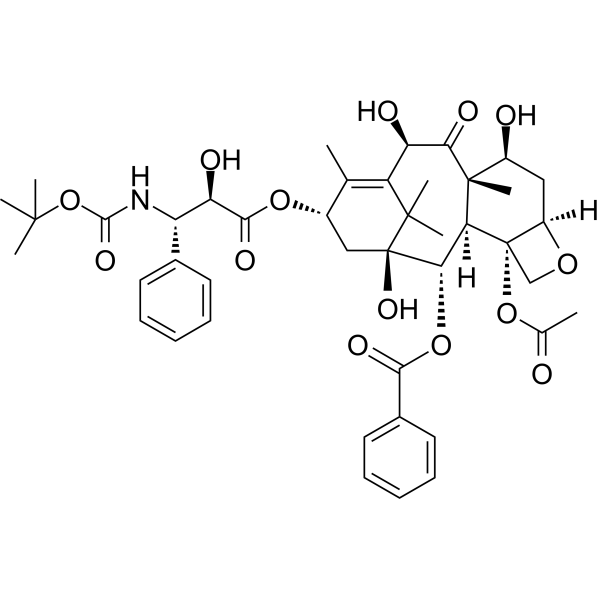
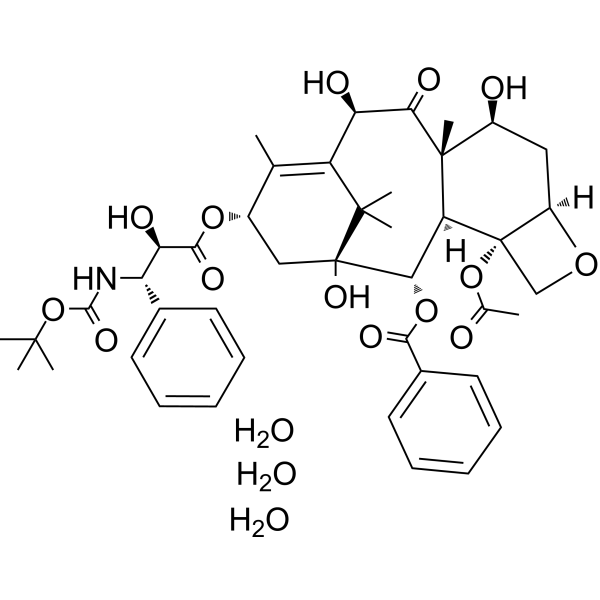
    10-Acetyl docetaxel
    2 Publications Verification

    PNU-101383

    ADC Payload Cancer
    10-Acetyl docetaxel (PNU-101383) is an analog of Docetaxel (HY-B0011), with anticancer activity. 10-Acetyl docetaxel is a microtubule disassembly inhibitor, with antimitotic activity .
    10-Acetyl docetaxel
  • HY-13627
    Estramustine phosphate sodium
    1 Publications Verification

    Apoptosis Microtubule/Tubulin Mitosis Inflammation/Immunology Endocrinology Cancer
    Estramustine phosphate sodium, an estradiol analog, is an orally active antimicrotubule chemotherapy agent. Estramustine phosphate sodium depolymerises microtubules by binding to microtubule associated proteins (MAPs) and/or to tubulin. Estramustine phosphate sodium can interfere mitosis, trigger cell death and induce apoptosis, which can be used for the research of cancer like prostate cancer .
    Estramustine phosphate sodium
  • HY-B0413
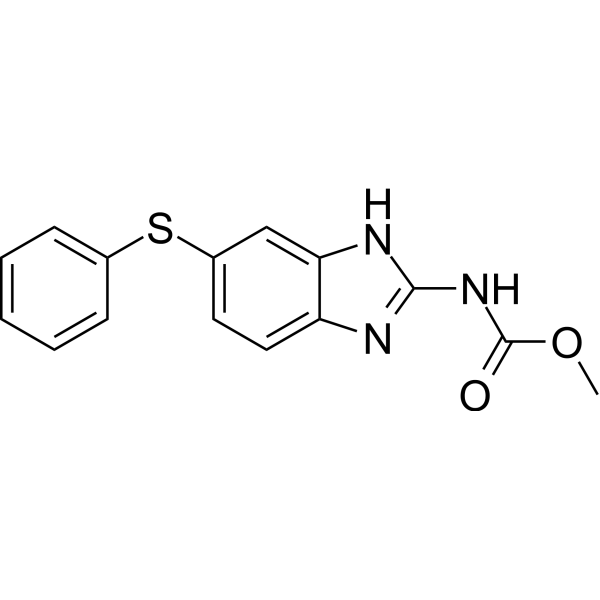
    Fenbendazole
    5+ Cited Publications

    Parasite HIF/HIF Prolyl-Hydroxylase Microtubule/Tubulin Antibiotic Infection Cancer
    Fenbendazole is an orally active benzimidazole anthelmintic agent, with a broad antiparasitic range. Fenbendazole is a microtubule destabilizing agent and acts on helminthes primarily by binding to tubulin and disrupting the tubulin microtubule equilibrium. Fenbendazole stabilizes the transcriptional activator HIF-1α. Fenbendazole possesses an efficient anti-proliferative activity and induces apoptosis. Fenbendazole causes cell-cycle arrest and mitotic cell death, and has antitumor activity in mice xenografted with wild-type p53 .
    Fenbendazole
  • HY-129126
    NC9
    1 Publications Verification

    Cbz-Lys(Acr)-PEG2-dansyl

    Glutaminase Microtubule/Tubulin Others
    NC9 (Cbz-Lys(Acr)-PEG2-dansyl) is an irreversible transglutaminase (TG) inhibitor. NC9 inhibits osteoblast differentiation and mineralization. NC9 destabilizes microtubules. NC9 can be used for the research of osteoblast differentiation .
    NC9
  • HY-P4808

    Amyloid-β Autophagy Neurological Disease
    PHF6 (VQIVYK) is a self-assembly sequence capable of initiating the full-length tau protein aggregation and is mapped to the third microtubule-binding repeat region of the tau protein .
    PHF6
  • HY-107753

    Ras Inflammation/Immunology Cancer
    XRP44X inhibits Ras-induced transcription activation with the IC50 of 10 nM. XRP44X inhibits activation of the Ras-Erk-1/2 pathway by FGF-2 . XRP44X is an inhibitor of Ras/Erk activation of Elk3 that also affects microtubules .
    XRP44X
  • HY-16062

    Kinesin Cancer
    ARQ 621 is an allosteric, potent and selective inhibitor of Eg5, a microtubule-based ATPase motor protein involved in cell division. Anti-tumor activity . ARQ 621 is a kinesin inhibitor . ARQ 621 is a click chemistry reagent, it contains an Alkyne group and can undergo copper-catalyzed azide-alkyne cycloaddition (CuAAc) with molecules containing Azide groups.
    ARQ 621
  • HY-131873

    Dynamin Infection
    Dynapyrazole A is a specific inhibitor of microtubule dynamin that specifically inhibits the ATPase activity of microtubule-stimulated dynamin without blocking microtubule-independent basal activity .
    Dynapyrazole-A
  • HY-110208
    BRD9876
    1 Publications Verification

    Kinesin Microtubule/Tubulin Cancer
    BRD9876 is the “rigor” inhibitor that locks kinesin-5 (Eg5) in a state with enhanced microtubules (MTs) binding, leading to bundling and stabilization of MTs. BRD9876 interacts with the tyrosine 104 residue that is part of the α4-α6 allosteric binding pocket. BRD9876 specifically targets microtubule-bound Eg5 and selectively inhibits myeloma over CD34 cells. BRD9876 has the potential for multiple myeloma (MM) research .
    BRD9876
  • HY-126899

    Microtubule/Tubulin Cancer
    TPI-287, a blood-brain barrier-permeable microtubule stabilizer, can significantly reduce metastatic colonization of breast cancer in the brain .
    TPI-287
  • HY-100504

    Microtubule/Tubulin ADC Payload Cancer
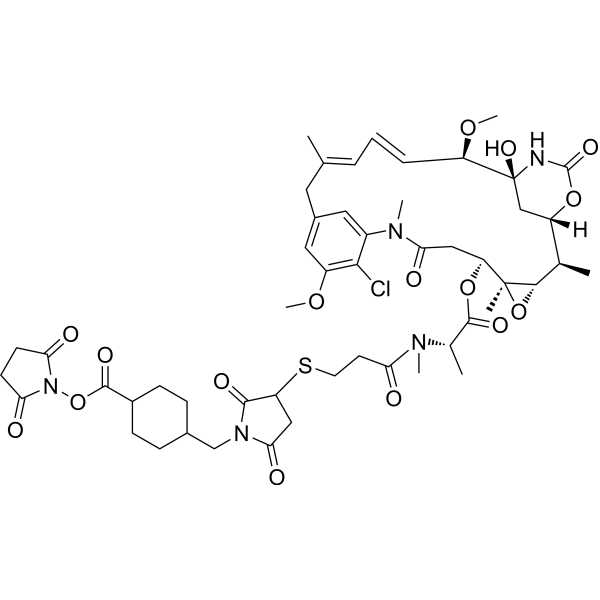
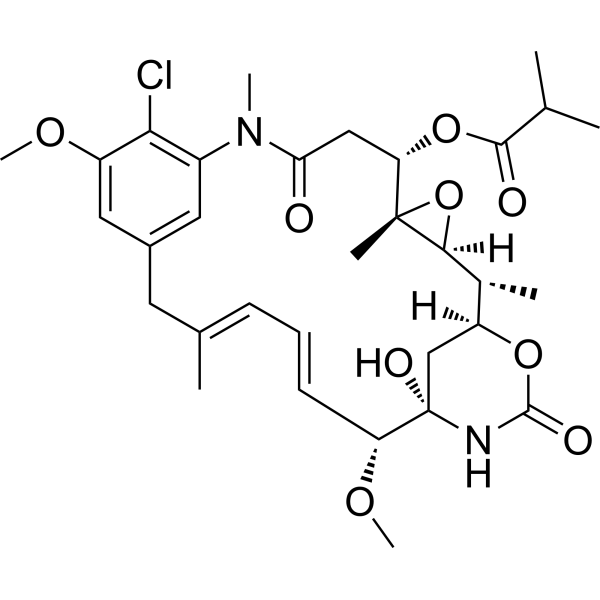
    S-methyl DM1 is a thiomethyl derivative of Maytansine. S-methyl DM1 binds to tubulin with a Kd of 0.93 μM and inhibts microtubule polymerization. S-methyl DM1 potently suppresses microtubule dynamic instability and has anticancer effects .
    S-methyl DM1
  • HY-W014240
    Chlorpropham
    1 Publications Verification

    Environmental Pollutants Herbicide Others
    Chlorpropham is a carbamate herbicide and plant growth regulator. Chlorpropham inhibits mitosis and cell division by interfering with the organisation of the spindle microtubules .
    Chlorpropham
  • HY-P4808A

    Amyloid-β Autophagy Neurological Disease
    PHF6 (VQIVYK) TFA is a self-assembly sequence capable of initiating the full-length tau protein aggregation. PHF6 TFA is mapped to the third microtubule-binding repeat region of the tau protein .
    PHF6 TFA
  • HY-B1740

    Microtubule/Tubulin Neurological Disease
    Pregnenolone acetate (compound #43), a nonmetabolized Pregnenolone (HY-B0151) analog, can promote neurite extension and induce a change in growth cone morphology in primary cultures of cerebellar granule neurons. Pregnenolone acetate, a neurosteroid, increases microtubule polymerization. Pregnenolone acetate has the potential for neurodevelopmental diseases research .
    Pregnenolone acetate
  • HY-176540

    Microtubule/Tubulin Neurological Disease
    Microtubule stabilizer-1 (compound 69) is a brain-penetrant microtubule (MT) stabilizer. Microtubule stabilizer-1 increases acetylated α-tubulin (AcTub) levels and prevents the characteristic loss of neuronal MTs that is observed after incubation with Okadaic acid (HY-N6785). Microtubule stabilizer-1 can be used for the study of Alzheimer’s disease (AD) and related neurodegenerative tauopathies .
    Microtubule stabilizer-1
  • HY-118143

    Endogenous Metabolite Others
    AG-1801, a nitrobenzopyridine derivative, is a tyrosine phosphorylation inhibitor. AG-1801 can induce the disintegration of the microtubule network in living cells, and does not inhibit microtubule polymerization in vitro. AG-1801 can be used for the study of microtubule-related signaling pathways .
    AG-1801
  • HY-111935

    Microtubule/Tubulin Neurological Disease
    3,3'-Diethyl-9-methylthiacarbocyanine iodide is a cyanine dye, also a tau aggregation inhibitor, with an IC50 value of 0.28 μM for tau. 3,3'-Diethyl-9-methylthiacarbocyanine iodide can cause misfunction of the microtubule cytoskeleton. 3,3'-Diethyl-9-methylthiacarbocyanine iodide can be used for researching Alzheimer’s disease .
    3,3'-Diethyl-9-methylthiacarbocyanine iodide
  • HY-13656

    KOS-1803

    Microtubule/Tubulin Cancer
    Isofludelone (KOS-1803) is a potential microtubule stabilizer for the study of solid tumors. Isofludelone has antitumor activity .
    Isofludelone
  • HY-I0834

    Microtubule/Tubulin Cancer
    (S)-3-(4-(2-Chloro-5-iodobenzyl)phenoxy)tetrahydrofuran (compound 2d), a halogenated Phenstatin analog, is a microtubule destabilizing agent. (S)-3-(4-(2-Chloro-5-iodobenzyl)phenoxy)tetrahydrofuran shows anticancer activities .
    (S)-3-(4-(2-Chloro-5-iodobenzyl)phenoxy)tetrahydrofuran
  • HY-B0294R

    Reference Standards Parasite Microtubule/Tubulin STAT MDM-2/p53 Apoptosis Autophagy Infection Cancer
    Flubendazole (Standard) is the analytical standard of Flubendazole. This product is intended for research and analytical applications. Flubendazole is an anthelmintic drug based on altering microtubule structure, inhibition of tubulin polymerization and disruption of microtubule function. Flubendazole induces apoptosis in human colorectal cancer (CRC) by blocking the STAT3 signaling axis and activation of autophagy. Flubendazole induces P53 expression and reduced Cyclin B1 and p-cdc2 expression. Flubendazole is an antitumor agent. Flubendazole can be used for worm and intestinal parasites .
    Flubendazole (Standard)
  • HY-177541

    Drug-Linker Conjugates for ADC Microtubule/Tubulin Cancer
    Ledadotin is a drug-linker conjugate for ADC. Ledadotin consists of a Microtubule inhibitor (Auristatin F-hydroxypropylamide) (HY-P5191) and a linker (BCN-PEG2-Gly-NH-tri(βAla-GGGG-Ser(mPEG8)-βAla-γGlu-Ala)) (HY-177562). Ledadotin can be used for synthesis of ADC Emiltatug ledadotin (HY-177542) .
    Ledadotin
  • HY-177549

    Drug Derivative ADC Payload Microtubule/Tubulin Apoptosis Cancer
    Fmoc-PEG6-VCP-Eribulin is the derivative of Eribulin (HY-13442). Eribulin (E7389) is a microtubule targeting agent that is used for the research of metastatic breast cancer. Eribulin inhibits the proliferation of cancer cells by binding microtubule proteins and microtubules .
    Fmoc-PEG6-VCP-Eribulin
  • HY-14934

    STA 5312

    Microtubule/Tubulin Cancer
    Rosabulin (STA 5312) is a potent and orally active microtubule inhibitor that inhibits microtubule assembly. Rosabulin has broad-spectrum anti-tumor activity .
    Rosabulin
  • HY-163737

    Microtubule/Tubulin Cancer
    ST-401, a microtubule-targeting agent (MTA), is a brain-penetrant microtubule (MT) assembly inhibitor. ST-401 disrupts microtubule (MT) function through gentle and reverisible reduction in MT assembly that triggers mitotic delay and cell death in interphase. ST-401 shows a potent antitumor activity .
    ST-401
  • HY-D2341

    Fluorescent Dye Cancer
    6FC-GABA-Taxol is a fluorescent probe with cell permeability, which is formed by connecting 6FC to the anticancer drug Taxol (HY-B0015) via γ-aminobutyric acid (GABA). 6FC-GABA-Taxol can bind to microtubules in living cells and image them through confocal microscopy. Additionally, 6FC-GABA-Taxol enables the quantification of microtubule binding using flow cytometry without the addition of efflux inhibitors .
    6FC-GABA-Taxol
  • HY-N1171

    Taxinin B

    Microtubule/Tubulin Cancer
    Taxinine B is a taxoid that can be isolated from Japanese Yew Taxus Cuspid. Taxinine B inhibits CaCl2-induced depolymerization of microtubule. Taxinine B is useful for overcoming multidrug resistance in tumor cells .
    Taxinine B
  • HY-14815

    Combretastatin A4 phosphate

    Apoptosis Microtubule/Tubulin Cancer
    Fosbretabulin (Combretastatin A4 phosphate) is a vascular disruptor with antitumor activity against atypical thyroid carcinoma (ATC) cell lines and xenografts. Fosbretabulin inhibits tumor growth by inhibiting microtubule polymerization, inducing apoptosis, and suppressing angiogenesis in tumors .
    Fosbretabulin
  • HY-120921

    RH-7281

    Fungal Microtubule/Tubulin Infection
    Zoxamide (RH-7281) is an oomycete Fungicide and covalent β-tubulin inhibitor. RH-7281 inhibits the assembly of tubulin into microtubules in vitro. Zoxamide binds covalently to β-tubulin, disrupting microtubule assembly and the cytoskeleton. Zoxamide blocks nuclear division in germinated hyphae of Phytophthora capsici and inhibits hyphal growth of Phytophthora capsici .
    Zoxamide
  • HY-178973

    Microtubule/Tubulin Cancer
    Microtubule-IN-13 (Compound FB2) is a microtubule inhibitor. Microtubule-IN-13 interferes with microtubule dynamics, leading to defects in the mitotic spindle and persistent mitotic arrest. Microtubule-IN-13 exhibits potent cytotoxicity against multiple cancer cell lines (IC50 = 0.3-2.7 μM). Microtubule-IN-13 can be used for cancer research .
    Microtubule-IN-13
  • HY-159891

    Microtubule/Tubulin Apoptosis Caspase Cancer
    Microtubule destabilizing agent-2 (Compound 21) is an orally active and selective antitumor compound targeting microtubule protein. Microtubule destabilizing agent-2 destabilizes microtubule proteins and inhibits microtubule polymers. Microtubule destabilizing agent-2 arrests the G0/G1 phase in human tumor cells. Microtubule destabilizing agent-2 induces Apoptosis by activating the cascade pathway of caspases. Microtubule destabilizing agent-2 has anti-inflammatory activity, as inhibiting TNF-α and IL-6 in vitro. Microtubule destabilizing agent-2 reduces tumors growth in xenograft mice .
    Microtubule destabilizing agent-2
  • HY-155647

    Microtubule/Tubulin Cancer
    Microtubule stabilizing agent-1 (compound 3l) is a Paclitaxel derivative that efficiently promotes tubulin polymerization. Microtubule stabilizing agent-1 shows antitumor efficacy .
    Microtubule stabilizing agent-1
  • HY-139981

    Microtubule/Tubulin Cancer
    Microtubule destabilizing agent-1 (Compound 12b) acts as a microtubule destabilizing agent (MDA) based on hydroxamic acid, could serve as a potential MDA for further investigation. Microtubule destabilizing agent-1 shows favorable metabolism stability, high bioavailability, and potent antitumor activity .
    Microtubule destabilizing agent-1
  • HY-145828

    Microtubule/Tubulin Ferroptosis Cancer
    Microtubule inhibitor 2 is a potent and selective, orally active microtubule inhibitor. Microtubule inhibitor 2 triggers cell death through ferroptosis . Microtubule inhibitor 2 shows antitumor activity .
    Microtubule inhibitor 2
  • HY-161075

    Microtubule/Tubulin Ferroptosis Cancer
    Microtubule inhibitor 8 (MP-HJ-1b) is a potent inhibitor of microtubule. Microtubule inhibitor 8 triggers cell death through ferroptosis. Microtubule inhibitor 8 has anti-tumor effect .
    Microtubule inhibitor 8
  • HY-147727

    Microtubule/Tubulin Cancer
    Microtubule inhibitor 6 (compound 17o) is a potent microtubule inhibitor. Microtubule inhibitor 6 shows cytotoxicity with IC50s of 14.0, 6.6, 7.0 nM for NCI-H460, BxPC-3, HT-29 cells, respectively. Microtubule inhibitor 6 efficiently inhibits microtubule polymerization .
    Microtubule inhibitor 6
  • HY-147726

    Microtubule/Tubulin Cancer
    Microtubule inhibitor 5 (compound 17f) is a potent microtubule inhibitor. Microtubule inhibitor 5 shows cytotoxicity with an IC50 value of 154.5 nM for NCI-H460 cells. Microtubule inhibitor 5 shows good cell permeability .
    Microtubule inhibitor 5
  • HY-161734

    Microtubule/Tubulin Cancer
    Microtubule inhibitor 11 (compound 33) is a microtubule inhibitor with a mechanism of action similar to colchicine (HY-N0282). Microtubule inhibitor 11 can be used in cancer-related research .
    Microtubule inhibitor 11
  • HY-147725

    Microtubule/Tubulin Cancer
    Microtubule inhibitor 4 (compound 2) is a potent microtubule inhibitor. Microtubule inhibitor 4 shows cytotoxicity with IC50s of 4.0, 3.2, 2.1 nM for NCI-H460, BxPC-3, HT-29 cells, respectively. Microtubule inhibitor 4 shows the inhibition of tubulin polymerization .
    Microtubule inhibitor 4
  • HY-114313

    Microtubule/Tubulin Cancer
    Microtubule inhibitor 1 is an antitumor agent with microtubule polymerization inhibitory activity, with an IC50 value of 9-16 nM in cancer cells .
    Microtubule inhibitor 1
  • HY-168714

    Microtubule/Tubulin Apoptosis Cancer
    Microtubule inhibitor 12 (Compound 2k) is an inhibitor for microtubule polymerization with an IC50 of 22.23 μM. Microtubule inhibitor 12 arrests the cell cycle of B16-F10 at G2/M phase, induces apoptosis in B16-F10, and inhibits cell migration. Microtubule inhibitor 12 inhibits the proliferation of cancer cells B16-f10, A549, HepG2 and MCF-7, with IC50s of 0.098, 0.135, 0.109, and 0.259 μM, respectively. Microtubule inhibitor 12 exhibits antitumor efficacy in mouse model .
    Microtubule inhibitor 12
  • HY-161145

    EGFR Apoptosis Microtubule/Tubulin Cancer
    EGFR/microtubule-IN-1 (Compound 10c) is a dual inhibitor targeting EGFR and tubulin. The IC50 for inhibiting EGFR is 10.66 nM. EGFR/microtubule-IN-1 can reduce the phosphorylation levels of EGFR, AKT and ERK, hinder tubulin polymerization, and induce apoptosis .
    EGFR/microtubule-IN-1
  • HY-161153

    Apoptosis Cancer
    Microtubule inhibitor 9 (Compound O-7) is a 2-Aryl-1H-benzo [d] imidazole derivative with in vitro anticancer activity. Microtubule inhibitor 9 can induce cell cycle arrest at the G2/M phase and early apoptosis. Microtubule inhibitor 9 inhibits cancer cell migration by inhibiting wound healing and colony formation .
    Microtubule inhibitor 9
  • HY-121908

    ATP Synthase Cancer
    FCPT, an ATP competitive inhibitor, induces a tight-binding of kinesin-5 onto microtubules and induced loss of microtubules selectively at the poles of Xenopus extract spindles without altering microtubule dynamics .
    FCPT
  • HY-P0181

    Tau Protein Neurological Disease
    Microtubule-associated protein tau (26-44) is a synthetic peptide chain with an amine group attached to glutamine and an carboxyl group attached to lysine.
    Microtubule-associated protein tau (26-44)
  • HY-117841

    Microtubule/Tubulin Cancer
    T900607 is an anti-tumor agent and targets microtubule polymerization .
    T900607

Inquiry Online

Your information is safe with us. * Required Fields.

Salutation


Country or Region *

Applicant Name *


Organization Name *

Department *


Email Address *


Product Name *

Cat. No.


Requested quantity *

Phone Number *


Remarks

Inquiry Online

Inquiry Information

Product Name:
Cat. No.:
Quantity:
MCE Japan Authorized Agent:

