



Ansamitocin P-3
Based on 9 publication(s) in Google Scholar
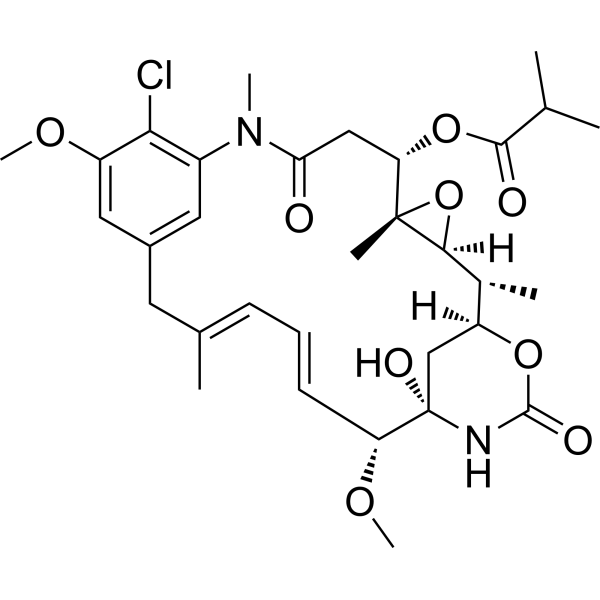
Ansamitocin P-3 (Antibiotic C 15003P3) is a microtubule inhibitor. Ansamitocin P-3 is a macrocyclic antitumor antibiotic.
For research use only. We do not sell to patients.
- Purity : 98.0%
- CAS No.: 66584-72-3
- Formula: C32H43ClN2O9
- Molecular Weight:635.14
-
Storage:Powder -20°C, 3 years , 4°C, 2 years ; In solvent -80°C, 2 years , -20°C, 1 year

To place orders, for customer services and technical support, please contact: MedChemExpress USA
Tel: 609-228-6898 E-mail: [email protected] [email protected]


-
 Biological Activity
-
Chemical Information
-
Solvent & Solubility
- Purity & Documentation
- References
-
 Help & FAQs


-
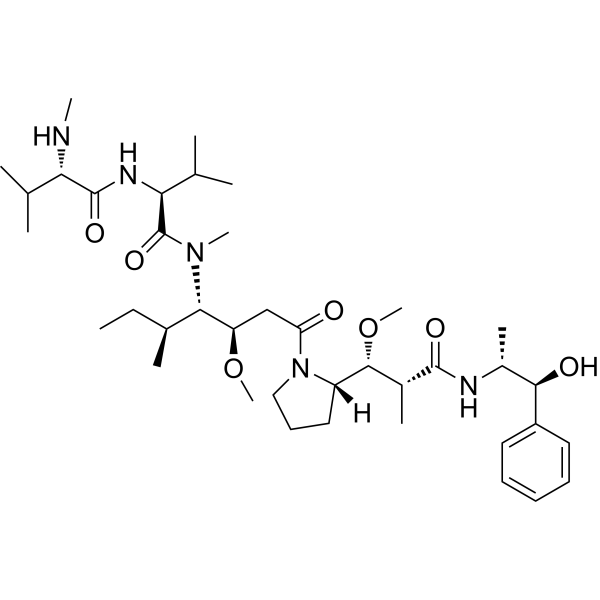
HY-15162
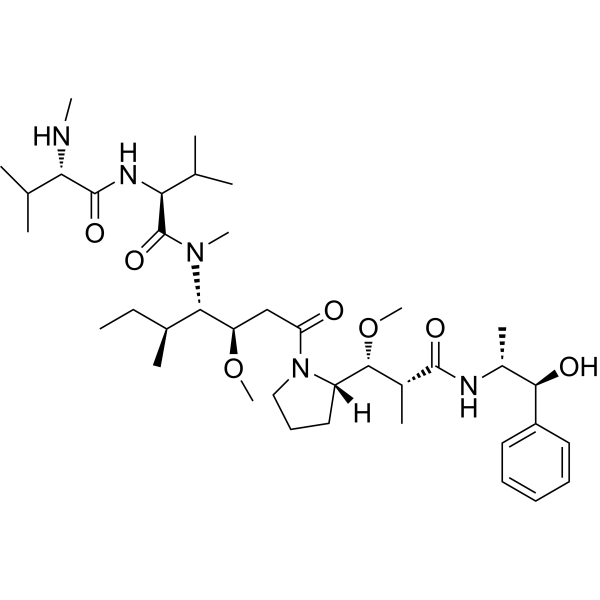
Monomethyl auristatin EAntimitotic Agent -
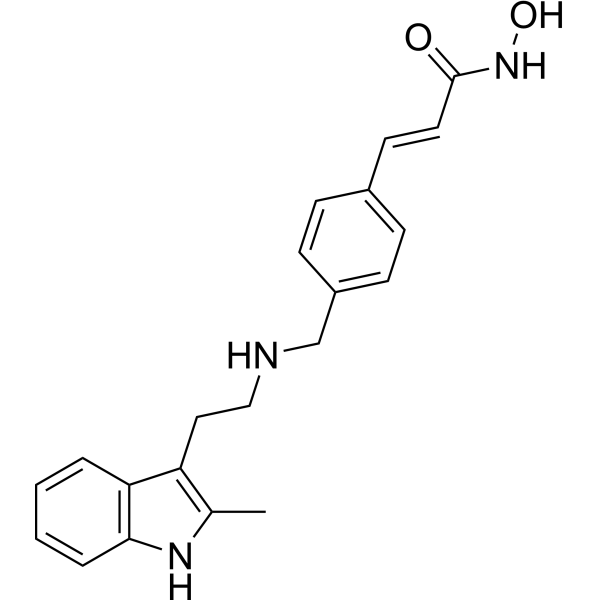
HY-10224
PanobinostatHDAC Inhibitor -
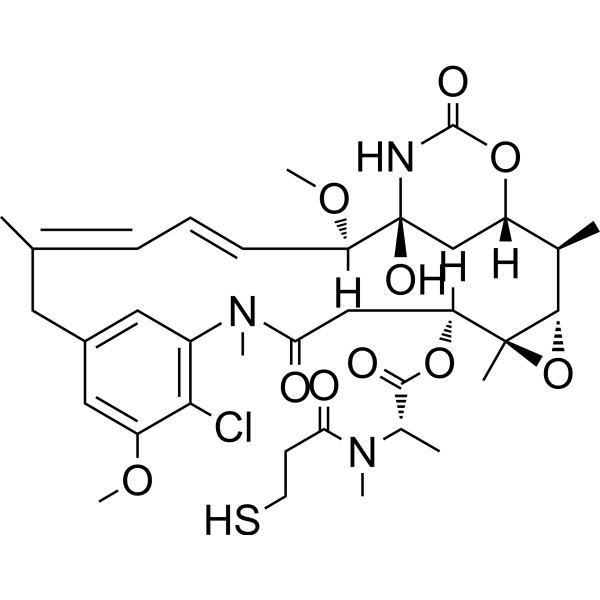
HY-19792
MertansineMicrotubule-Targeted Cytotoxin -
HY-13780
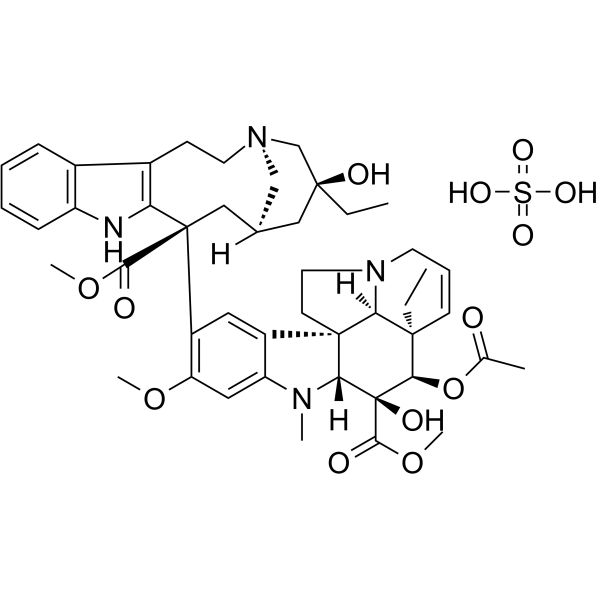
Vinblastine sulfatenAChR Inhibitor -
HY-19609
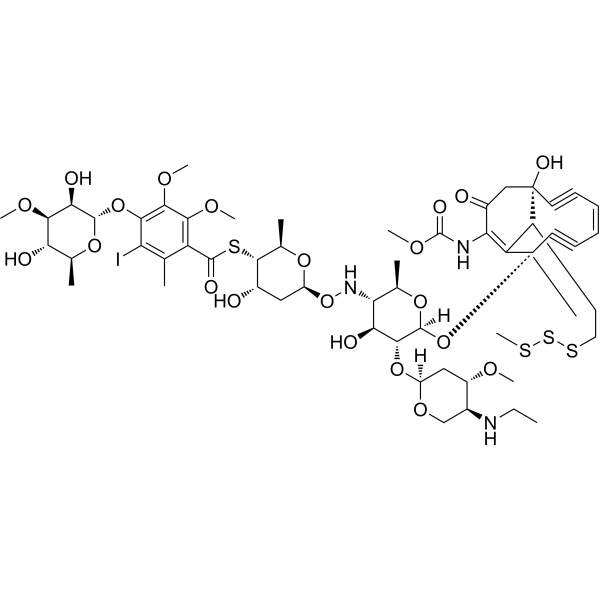
CalicheamicinDNA-binding ADC Cytotoxin -
HY-K0301
Cell Counting Kit-8 -

HY-15162R
Monomethyl auristatin E (Standard)Analytical Standard -
HY-15162G
Monomethyl auristatin E (GMP)GMP-Grade MMAE -

HY-15739R
Ansamitocin P-3 (Standard)Bacterial Inhibitor -
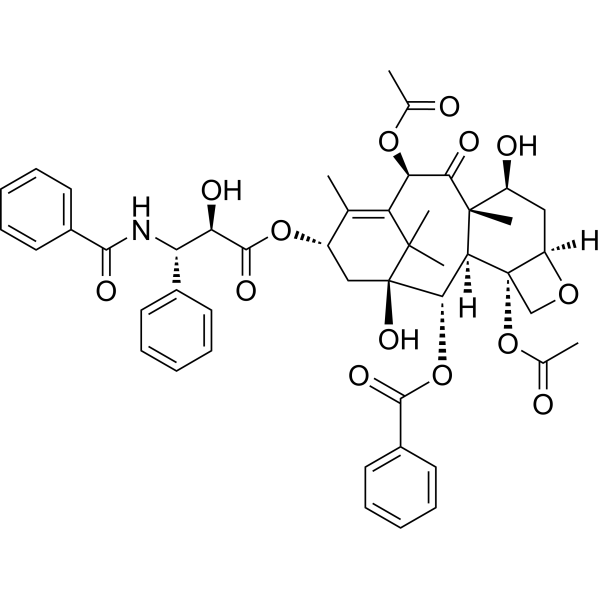
HY-B0015
PaclitaxelAntitumor Agent -
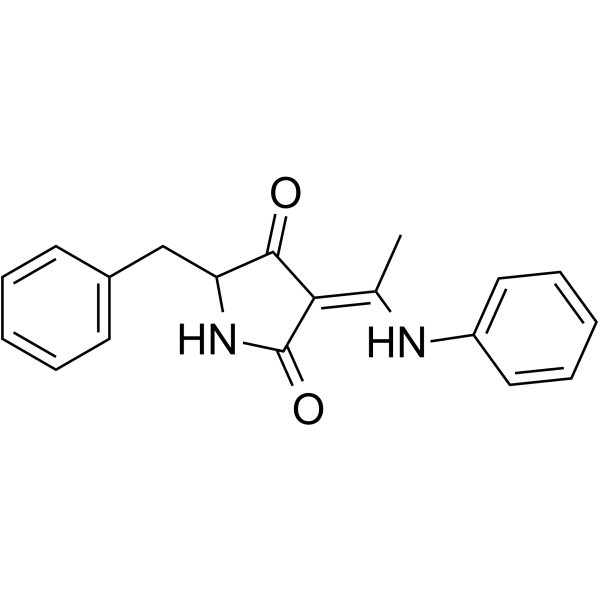
HY-119357
TN-16Tubulin Inhibitor -
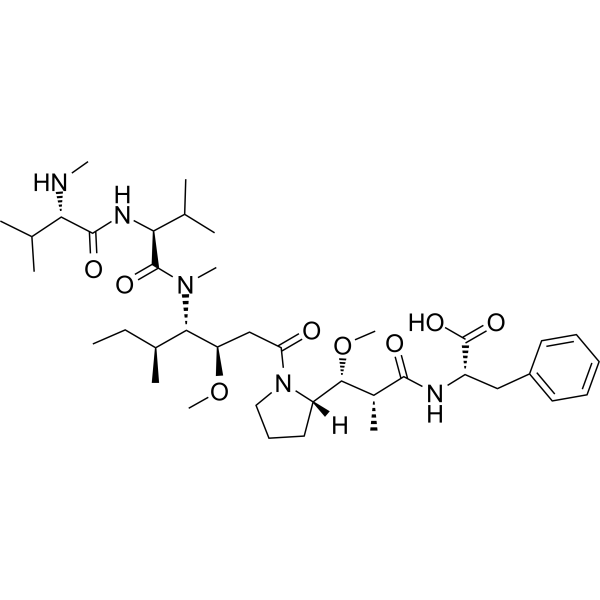
HY-15579
MMAFTubulin Inhibitor
Publications Citing Use of MedChemExpress (MCE) Ansamitocin P-3
More- Acta Pharm Sin B. 2021 Dec;11(12):4020-4031. [Abstract]
- Clin Transl Med. 2026 Apr;16(4):e70651. [Abstract]
- Cancer Immunol Res. 2023 May 3;11(5):583-599. [Abstract]
- J Pharm Biomed Anal. 2017 Apr 15:137:170-177. [Abstract]
- Patent. US20250319195A1.
- Arch Cancer Res. 2023 Jan 30.
- Health Science Journal. August 31, 2021.
- Health Sci J. (2021): 1-8.
- Health Sci J. (2021): 1-7.
 Customer Validation & Images

-
Cell Proliferation/Viability Assay
All Antibiotic Isoforms
More

Biological Activity
Description
IC50 & Target
|
Maytansinoids |
In Vitro
Ansamitocin P-3 (Antibiotic C 15003P3) potently inhibits the proliferation of MCF-7, HeLa, EMT-6/AR1 and MDA-MB-231 cells in culture with a half-maximal inhibitory concentration of 20±3, 50±0.5, 140±17, and 150±1.1 pM, respectively. Further, Ansamitocin P3 is found to bind to purified tubulin in vitro with a dissociation constant (Kd) of 1.3±0.7 μM. The binding of Ansamitocin P3 induces conformational changes in tubulin. Ansamitocin P3 inhibits the proliferation of MCF-7, HeLa, EMT-6/AR1 and MDA-MB-231 cells in culture in a concentration dependent manner. Flow cytometric analysis of PI-stained cells suggests that Ansamitocin P3 inhibits the cell cycle progression of MCF-7 cells in G2/M phase. For example, 26, 50 and 70% of the cells are found to be in G2/M phase in the absence and presence of 50 and 100 pM Ansamitocin P3, respectively[2].
MedChemExpress (MCE) has not independently confirmed the accuracy of these methods. They are for reference only. .


Chemical Information
-
CAS No. 66584-72-3
-
Appearance Solid
-
Molecular Weight 635.14
-
Formula C32H43ClN2O9
-
Color White to off-white
-
SMILES
ClC1=C(N(C)C(C[C@H](OC(C(C)C)=O)[C@@](O2)(C)[C@]2([H])[C@H](C)[C@]3([H])C[C@](NC(O3)=O)(O)[C@H](OC)/C=C/C=C(C)/C4)=O)C=C4C=C1OC
-
Synonyms
Antibiotic C 15003P3; Maytansinol isobutyrate
-
Structure Classification
-
Initial Source
Actinosynnema pretiosum
-
Shipping
Room temperature in continental US; may vary elsewhere.
-
Storage
Powder -20°C 3 years 4°C 2 years In solvent -80°C 2 years -20°C 1 year


Publications (9)
-
Journal Impact Factor
-
Most Recent
-
Acta Pharm Sin B
Target-responsive subcellular catabolism analysis for early-stage antibody-drug conjugates screening and assessment. [Abstract]2021 Dec;11(12):4020-4031. PMID: 35024323 -
Clin Transl Med
Mechanism of Gzma-mediated GEF-H1 activation in intestinal epithelial cells leading to intestinal barrier dysfunction in sepsis. [Abstract]2026 Apr;16(4):e70651. PMID: 41943423 -
Cancer Immunol Res
Discovery of podofilox as a potent cGAMP-STING signaling enhancer with antitumor activity. [Abstract]2023 May 3;11(5):583-599. PMID: 36921097 -
J Pharm Biomed Anal
LC-MS/MS method for the simultaneous determination of Lys-MCC-DM1, MCC-DM1 and DM1 as potential intracellular catabolites of the antibody-drug conjugate trastuzumab emtansine (T-DM1). [Abstract]2017 Apr 15:137:170-177. PMID: 28131055 -
-
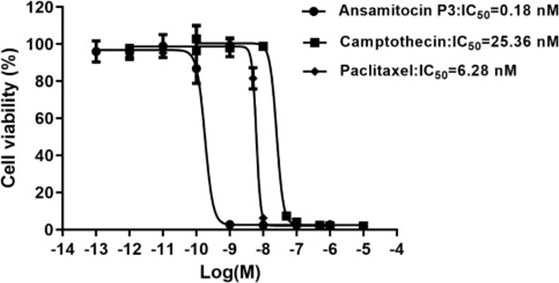
Ansamitocin P-3 purchased from MedChemExpress. Usage Cited in: Arch Cancer Res. 2023 Jan 30.
Ansamitocin P-3 (AP3; 10-6 -10-13 M; 72 h) demonstrates a strong antitumor activity and an inhibitory of proliferation (IC50 = 0.18 nM) in U937 cells.
-
-
-


Solvent & Solubility
In Vitro:
DMSO : ≥ 100 mg/mL (157.44 mM; Hygroscopic DMSO has a significant impact on the solubility of product, please use newly opened DMSO)
* "≥" means soluble, but saturation unknown.
Please refer to the solubility information to select the appropriate solvent. Once prepared, please aliquot and store the solution to prevent product inactivation from repeated freeze-thaw cycles.
Storage method and period of stock solution: -80°C, 2 years; -20°C, 1 year. When stored at -80°C, please use it within 2 years. When stored at -20°C, please use it within 1 year.
Please refer to the solubility information to select the appropriate solvent. Once prepared, please aliquot and store the solution to prevent product inactivation from repeated freeze-thaw cycles.
Storage method and period of stock solution: -80°C, 2 years; -20°C, 1 year. When stored at -80°C, please use it within 2 years. When stored at -20°C, please use it within 1 year.
Concentration (start) × Volume (start) = Concentration (final) × Volume (final)
In Vivo:
Select the appropriate dissolution method based on your experimental animal and administration route.
- For the following dissolution methods, please ensure to first prepare a clear stock solution using an In Vitro approach and then sequentially add co-solvents:
- To ensure reliable experimental results, the clarified stock solution can be appropriately stored based on storage conditions. As for the working solution for In Vivo experiments, it is recommended to prepare freshly and use it on the same day.
- The percentages shown for the solvents indicate their volumetric ratio in the final prepared solution. If precipitation or phase separation occurs during preparation, heat and/or sonication can be used to aid dissolution.
Add each solvent one by one: 10% DMSO 40% PEG300 5% Tween-80 45% Saline
Solubility: ≥ 2.5 mg/mL (3.94 mM); Clear solution
This protocol yields a clear solution of ≥ 2.5 mg/mL (saturation unknown).
Taking 1 mL working solution as an example, add 100 μL DMSO stock solution (25.0 mg/mL) to 400 μL PEG300, and mix evenly; then add 50 μL Tween-80 and mix evenly; then add 450 μL Saline to adjust the volume to 1 mL.
Preparation of Saline: Dissolve 0.9 g sodium chloride in ddH₂O and dilute to 100 mL to obtain a clear Saline solution.
Add each solvent one by one: 10% DMSO 90% (20% SBE-β-CD in Saline)
Solubility: 2.5 mg/mL (3.94 mM); Suspended solution; Need ultrasonic
This protocol yields a suspended solution of 2.5 mg/mL. Suspended solution can be used for oral and intraperitoneal injection.
Taking 1 mL working solution as an example, add 100 μL DMSO stock solution (25.0 mg/mL) to 900 μL 20% SBE-β-CD in Saline, and mix evenly.
Preparation of 20% SBE-β-CD in Saline (4°C, storage for one week): 2 g SBE-β-CD powder is dissolved in 10 mL Saline, completely dissolve until clear.
In Vivo Dissolution Calculator
Please enter the basic information of animal experiments:
-
-
-
-
Recommended: Prepare an additional quantity of animals to account for potential losses during experiments.
Please enter your animal formula composition:
-
%DMSO +
Recommended: Keep the proportion of DMSO in working solution below 2% if your animal is weak.
-
%+
-
+%Tween-80 + +
-
%Saline +
The co-solvents required include: DMSO, . All of co-solvents are available by MedChemExpress (MCE). , Tween 80. All of co-solvents are available by MedChemExpress (MCE).
Working solution concentration: 0.22 mg/mL
Method for preparing stock solution: mg drug dissolved in μL DMSO. Stock solution concentration: mg/mL.
1. Take μL DMSO stock solution;
2. Add μL .
μL , mix evenly;
3. Then add μL Tween 80, mix evenly;
4. Then add μL
Please ensure that the stock solution in the first step is dissolved to a clear state, and add co-solvents in sequence. You can use ultrasonic heating (ultrasonic cleaner, recommended frequency 20-40 kHz), vortexing, etc. to assist dissolution.


Purity & Documentation
-
Data Sheet (283 KB)
-
SDS (394 KB)
- English - EN (394 KB)
- Français - FR (394 KB)
- Deutsch - DE (394 KB)
- Norwegian - NO (394 KB)
- Español - ES (394 KB)
- Swedish - SV (394 KB)
- Italian - IT (394 KB)
- Korean - KR (394 KB)
- Portuguese - PT (394 KB)
-
Handling Instructions (2659 KB)
References
[1]. Kiso T, et al. Screening for microtubule-disrupting antifungal agents by using a mitotic-arrest mutant of Aspergillus nidulans and novel action of phenylalanine derivatives accompanying tubulin loss. Antimicrob Agents Chemother. 2004 May;48(5):1739-48 [Content Brief]
[2]. Venghateri JB, et al. Ansamitocin P3 depolymerizes microtubules and induces apoptosis by binding to tubulin at thevinblastine site. PLoS One. 2013 Oct 4;8(10):e75182. [Content Brief]


Complete Stock Solution Preparation Table
Please refer to the solubility information to select the appropriate solvent. Once prepared, please aliquot and store the solution to prevent product inactivation from repeated freeze-thaw cycles.
Storage method and period of stock solution: -80°C, 2 years; -20°C, 1 year. When stored at -80°C, please use it within 2 years. When stored at -20°C, please use it within 1 year.
| Optional Solvent | Concentration Solvent Mass | 1 mg | 5 mg | 10 mg | 25 mg |
|---|---|---|---|---|---|
| DMSO | 1 mM | 1.5744 mL | 7.8722 mL | 15.7444 mL | 39.3611 mL |
| 5 mM | 0.3149 mL | 1.5744 mL | 3.1489 mL | 7.8722 mL | |
| 10 mM | 0.1574 mL | 0.7872 mL | 1.5744 mL | 3.9361 mL | |
| 15 mM | 0.1050 mL | 0.5248 mL | 1.0496 mL | 2.6241 mL | |
| 20 mM | 0.0787 mL | 0.3936 mL | 0.7872 mL | 1.9681 mL | |
| 25 mM | 0.0630 mL | 0.3149 mL | 0.6298 mL | 1.5744 mL | |
| 30 mM | 0.0525 mL | 0.2624 mL | 0.5248 mL | 1.3120 mL | |
| 40 mM | 0.0394 mL | 0.1968 mL | 0.3936 mL | 0.9840 mL | |
| 50 mM | 0.0315 mL | 0.1574 mL | 0.3149 mL | 0.7872 mL | |
| 60 mM | 0.0262 mL | 0.1312 mL | 0.2624 mL | 0.6560 mL | |
| 80 mM | 0.0197 mL | 0.0984 mL | 0.1968 mL | 0.4920 mL | |
| 100 mM | 0.0157 mL | 0.0787 mL | 0.1574 mL | 0.3936 mL |


Ansamitocin P-3 Related Classifications
HY-15739 Related Classifications
 Powered by Bioz