Search Result
Results for "
N-methyl
" in MedChemExpress (MCE) Product Catalog:
4
Biochemical Assay Reagents
95
Isotope-Labeled Compounds
| Cat. No. |
Product Name |
Target |
Research Areas |
Chemical Structure |
-
- HY-17551
-
NMDA
Maximum Cited Publications
29 Publications Verification
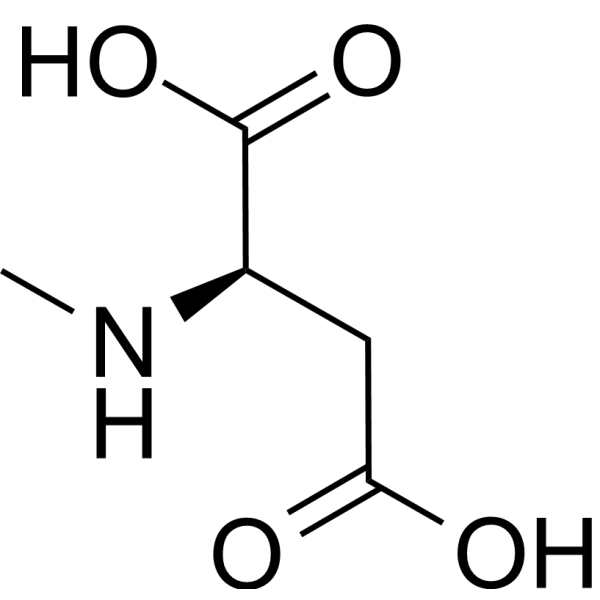
N-methyl-D-aspartic acid
|
iGluR
Endogenous Metabolite
|
Neurological Disease
|
|
NMDA is a specific agonist for NMDA receptor mimicking the action of glutamate, the neurotransmitter which normally acts at that receptor.
|
-
-
- HY-W089645
-
|
N-methyl-n-trimethylsilyltrifluoroacetamide
|
Biochemical Assay Reagents
|
Cancer
|
|
2,2,2-Trifluoro-N-methyl-N-(trimethylsilyl)acetamide (N-Methyl-n-trimethylsilyltrifluoroacetamide) is an ester product commonly used for silylation reactions in analyticalchemistry. 2,2,2-Trifluoro-N-methyl-N-(trimethylsilyl)acetamide can be used in the derivatization step of metabolomics analysis with gas chromatography/mass spectrometry (GC/MS) or as a derivatization reagent in GC with flame ionization detection analysis. 2,2,2-Trifluoro-N-methyl-N-(trimethylsilyl)acetamide can be used in research for studying Tamoxifen (HY-13757A) resistant breast cancer cells and other disease pathways .
|
-
-
- HY-113472
-
|
|
Drug Metabolite
|
Others
|
|
N-Methyl-4-pyridone-3-carboxamide (compound 4PY) is a final product of nicotinamide adenine dinucleotide (NAD) degradation .
|
-
-
- HY-21754
-
|
N-methyl-L-proline
|
Others
|
Others
|
|
Hygric acid (N-Methyl-L-proline) is a proline analog that is found in bergamot, various citrus juices, and alfalfa seedlings .
|
-
-
- HY-144147S
-
-
-
- HY-20561
-
-
-
- HY-W015424
-
-
-
- HY-111054A
-
|
MDCG sodium
|
Endogenous Metabolite
|
Others
|
|
N-methyl-N-dithiocarboxyglucamine (MDCG) sodium mobilizes and promotes excretion of metallothionein-bound 109Cd in mouse model. N-methyl-N-dithiocarboxyglucamine significantly lowers the Cd content of both the liver and kidney, which is organs most susceptible to Cd-induced toxicity .
|
-
-
- HY-W017500
-
|
|
iGluR
|
Neurological Disease
|
|
N-Methyl-DL-aspartic acid is a glutamate analogue and a NMDA receptor agonist and can be used for neurological diseases research .
|
-
-
- HY-B0926B
-
|
N-methyl-D-glucamine diatrizoate
|
Biochemical Assay Reagents
|
Metabolic Disease
|
|
Diatrizoate meglumine (N-Methyl-D-glucamine diatrizoate) is an orally active, water-soluble, poorly absorbable iodinated contrast agent. Diatrizoate meglumine is widely used as an adjuvant for radiological diagnosis and can also be applied to studies of small bowel obstruction in non-malignant conditions .
|
-
-
- HY-W010591
-
-
-
- HY-137773
-
|
|
Drug Metabolite
|
Cancer
|
|
N-Methyl pemetrexed is an impurity of Pemetrexed. Pemetrexed is an antifolate cytotoxic agent that can be used for the research of cancer .
|
-
-
- HY-W054223
-
|
|
Parasite
|
Others
|
|
N-Methyl lactam (Compound 3b), a peramiue analogue, has feeding-deterrent activity against adult weevils .
|
-
-
- HY-40352B
-
|
|
Drug Intermediate
|
Others
|
|
N-Methyl-N-((3R,4R)-4-methylpiperidin-3-yl)-7H-pyrrolo[2,3-d]pyrimidin-4-amine dihydrochloride is a drug intermediate for synthesis of various active compounds.
|
-
-
- HY-40352
-
|
|
Drug Intermediate
|
Others
|
|
N-Methyl-N-((3R,4R)-4-methylpiperidin-3-yl)-7H-pyrrolo[2,3-d]pyrimidin-4-amine is a drug intermediate for synthesis of various active compounds.
|
-
-
- HY-131466
-
|
|
Drug Metabolite
|
Others
|
|
N-Methyl Palbociclib is an impurity of Palbociclib (HY-50767). Palbociclib (PD 0332991) is an orally active selective CDK4 and CDK6 inhibitor.
|
-
-
- HY-W018626
-
|
N-methyl-4-piperidinol
|
Biochemical Assay Reagents
|
Others
|
|
1-Methylpiperidin-4-ol is a biochemical reagent that can be used as a biological material or organic compound for life science related research.
|
-
-
- HY-W010366
-
-
-
- HY-135412
-
|
|
Sodium Channel
|
Neurological Disease
|
|
N-Methyl Duloxetine hydrochloride is an analgesic. N-Methyl Duloxetine (hydrochloride) elicits both tonic and use-dependent block of neuronal Na + channels .
|
-
-
- HY-W663740
-
|
MNP; MeNP; N-methyl-N'-nitrosopiperazine
|
Biochemical Assay Reagents
|
Others
|
|
1-Methyl-4-nitrosopiperazine (MNP; MeNP;N-Methyl-N'-nitrosopiperazine) is a potential impurity in sartans, non-steroidal anti-inflammatory drugs (NSAIDs), and thiazide diuretics .
|
-
-
- HY-W769362
-
-
-
- HY-132485S
-
|
|
Isotope-Labeled Compounds
|
Others
|
|
N-Methyl Pantoprazole-d3 (Mixture of 1 and 3 isomers) is the deuterium labeled N-Methyl Pantoprazole (Mixture of 1 and 3 isomers) .
|
-
-
- HY-W354635
-
-
-
- HY-W131494S
-
-
-
- HY-143822S
-
-
-
- HY-111054
-
|
MDCG
|
Endogenous Metabolite
|
Inflammation/Immunology
|
|
N-methyl-N-dithiocarboxyglucamine (MDCG) mobilizes and promotes excretion of metallothione-bound 109Cd. N-methyl-N-dithiocarboxyglucamine shows effects on acute and chronic Cd intoxication .
|
-
-
- HY-Y0544S
-
-
-
- HY-168426
-
-
-
- HY-W923640
-
|
N-methyltryptophan
|
Drug Derivative
|
Others
|
|
N-Methyl-DL-tryptophan (N-Methyltryptophan) is a DL-tryptophan (HY-W012480) derivative with activity to stabilize tryptophan against degradation during acid hydrolysis of protein fibres .
|
-
-
- HY-172078
-
-
-
- HY-W001239S
-
-
-
- HY-W001239S1
-
-
-
- HY-132476S
-
-
-
- HY-131459S
-
-
-
- HY-131459S1
-
-
-
- HY-W704306
-
-
-
- HY-131466R
-
|
|
Reference Standards
Drug Metabolite
|
Others
|
|
Hydroxyurea (Standard) is the analytical standard of Hydroxyurea. This product is intended for research and analytical applications. Hydroxyurea is a cell apoptosis inducer that inhibit DNA synthesis through inhibition of ribonucleotide reductase. Hydroxyurea shows anti-orthopoxvirus activity.
|
-
-
- HY-CE01595
-
-
-
- HY-Z0132
-
-
-
- HY-W741635
-
|
N-methyl moxifloxacin hydrochloride
|
Drug Intermediate
|
Others
|
|
Moxifloxacin impurity 8 (N-Methyl moxifloxacin hydrochloride) is an impurity of Moxifloxacin.
|
-
-
- HY-113472S
-
-
-
- HY-W014537R
-
|
|
Reference Standards
|
|
|
N-Methyl-1-(naphthalen-1-yl)methanamine hydrochloride (Standard) is the analytical standard of N-Methyl-1-(naphthalen-1-yl)methanamine hydrochloride. This product is intended for research and analytical applications.
|
-
-
- HY-114946
-
-
-
- HY-W699583
-
-
-
- HY-W017453R
-
|
methyl(3-phenylpropyl)amine (Standard)
|
Reference Standards
|
|
|
N-Methyl-3-phenylpropan-1-amine (Standard) is the analytical standard of N-Methyl-3-phenylpropan-1-amine. This product is intended for research and analytical applications.
|
-
-
- HY-W091169
-
|
2-((methylamino)methyl)phenol hydrochloride
|
Reactive Oxygen Species (ROS)
|
Cardiovascular Disease
Inflammation/Immunology
|
|
N-Methyl-2-HOBA (2-((Methylamino)methyl)phenol) hydrochloride is a methylated form of the isoketal scavenger 2-HOBA (HY-34350). N-Methyl-2-HOBA hydrochloride can be used as a negative control for the activity of 2-HOBA in a mouse model of hypertension .
|
-
-
- HY-U00090
-
|
MOR 14; N-methyl-1-deoxynojirimycin; N-methylmoranolin
|
Glycosidase
|
Metabolic Disease
|
|
N-Methylmoranoline (MOR 14) is an α-glucosidase inhibitor.
|
-
-
- HY-W710425
-
-
-
- HY-W756073
-
-
-
- HY-142283CS
-
|
|
EGFR
|
Cancer
|
|
N-Methyl-dosimertinib-d5 is the deuterium labeled of N-Methyl-dosimertinib.
|
-
- HY-W740373
-
|
N-methyl-4-piperidinol-d4
|
Isotope-Labeled Compounds
Biochemical Assay Reagents
|
Others
|
|
1-Methylpiperidin-4-ol-d4 (N-Methyl-4-piperidinol-d4) is the deuterium labeled 1-Methylpiperidin-4-ol (HY-W018626). 1-Methylpiperidin-4-ol is a biochemical reagent that can be used as a biological material or organic compound for life science related research.
|
-
- HY-141040
-
|
|
PROTAC Linkers
|
Cancer
|
|
N-methyl-N'-methyl-O-(m-PEG4)-O'-(acid-PEG5)-Cy5 is a PEG-based PROTAC linker that can be used in the synthesis of PROTACs .
|
-
- HY-141032
-
|
|
PROTAC Linkers
|
Cancer
|
|
N-methyl-N'-methyl-O-(m-PEG4)-O'-(propargyl-PEG4)-Cy3 is a PEG-based PROTAC linker that can be used in the synthesis of PROTACs . N-methyl-N'-methyl-O-(m-PEG4)-O'-(propargyl-PEG4)-Cy3 is a click chemistry reagent, it contains an Alkyne group and can undergo copper-catalyzed azide-alkyne cycloaddition (CuAAc) with molecules containing Azide groups.
|
-
- HY-141052
-
|
|
PROTAC Linkers
|
Cancer
|
|
N-methyl-N'-methyl-O-(m-PEG4)-O'-(propargyl-PEG4)-Cy5 is a PEG-based PROTAC linker that can be used in the synthesis of PROTACs . N-methyl-N'-methyl-O-(m-PEG4)-O'-(propargyl-PEG4)-Cy5 is a click chemistry reagent, it contains an Alkyne group and can undergo copper-catalyzed azide-alkyne cycloaddition (CuAAc) with molecules containing Azide groups.
|
-
- HY-20561A
-
-
- HY-W704014
-
|
N-methyl-N-nitroso-1-dodecanamine-d5
|
Isotope-Labeled Compounds
|
Others
|
|
N-Nitroso-N-methyl-N-dodecylamine-d5 (N-Methyl-N-nitroso-1-dodecanamine-d5) is the deuterium labeled N-Methyl-N-nitroso-1-dodecanamine (HY-W899995).
|
-
- HY-W089645S
-
-
- HY-W725046
-
-
- HY-141067
-
|
|
PROTAC Linkers
|
Cancer
|
|
N-methyl-N'-methyl-O-(m-PEG4)-O'-(azide-PEG4)-Cy5 is a PEG-based PROTAC linker that can be used in the synthesis of PROTACs . N-methyl-N'-methyl-O-(m-PEG4)-O'-(azide-PEG4)-Cy5 is a click chemistry reagent, it contains an Azide group and can undergo copper-catalyzed azide-alkyne cycloaddition reaction (CuAAc) with molecules containing Alkyne groups. It can also undergo strain-promoted alkyne-azide cycloaddition (SPAAC) reactions with molecules containing DBCO or BCN groups.
|
-
- HY-141031
-
|
|
PROTAC Linkers
|
Cancer
|
|
N-Methyl-N'-methyl-O-(m-PEG4)-O'-(azide-PEG4)-Cy3 is a PEG-based PROTAC linker that can be used in the synthesis of PROTACs . N-Methyl-N'-methyl-O-(m-PEG4)-O'-(azide-PEG4)-Cy3 is a click chemistry reagent, it contains an Azide group and can undergo copper-catalyzed azide-alkyne cycloaddition reaction (CuAAc) with molecules containing Alkyne groups. It can also undergo strain-promoted alkyne-azide cycloaddition (SPAAC) reactions with molecules containing DBCO or BCN groups.
|
-
- HY-W047901
-
-
- HY-W142140
-
|
N-methylvaline
|
Amino Acid Derivatives
|
Others
|
|
N-Methyl-DL-valine is a valine derivant, is metabolized to cysteine, alanine, tyrosine, tryptophan, citric acid, and succinic acid in the sprout. N-Methyl-DL-valine involves in the modification of monomethyl auristatin F (MMAF), an anti-tubulin agent, makes it hydrophobic functionalization and increases cell permeability .
|
-
- HY-W015424R
-
-
- HY-W142140A
-
|
N-methylvaline hydrochloride
|
Amino Acid Derivatives
|
Cancer
|
|
N-Methyl-DL-valine (N-Methylvaline) hydrochloride is a valine derivant, is metabolized to cysteine, alanine, tyrosine, tryptophan, citric acid, and succinic acid in the sprout. N-Methyl-DL-valine hydrochloride involves in the modification of monomethyl auristatin F (MMAF), an anti-tubulin agent, makes it hydrophobic functionalization and increases cell permeability .
|
-
- HY-W017500R
-
-
- HY-W665796
-
|
|
Drug Derivative
|
Cancer
|
|
N-Methyl-N-nitroso-2-propanamine is an N-nitrosamine, which induces tumor formation in mice .
|
-
- HY-W015813S
-
-
- HY-140510
-
|
|
PROTAC Linkers
|
Cancer
|
|
N-Methyl-N-(t-Boc)-PEG4-acid is a PEG-based PROTAC linker that can be used in the synthesis of PROTACs .
|
-
- HY-141049
-
|
|
PROTAC Linkers
|
Cancer
|
|
N-methyl-N'-(propargyl-PEG4)-Cy5 (chloride) is a PEG-based PROTAC linker that can be used in the synthesis of PROTACs . N-methyl-N'-(propargyl-PEG4)-Cy5 is a click chemistry reagent, it contains an Alkyne group and can undergo copper-catalyzed azide-alkyne cycloaddition (CuAAc) with molecules containing Azide groups.
|
-
- HY-141072
-
|
|
PROTAC Linkers
|
Cancer
|
|
N-Methyl-N'-(hydroxy-PEG2)-Cy5 is a PEG-based PROTAC linker that can be used in the synthesis of PROTACs .
|
-
- HY-W250410
-
|
|
ADC Linker
|
Cancer
|
|
N-Methyl-N-[(3-methyldithio)-1-oxopropyl]-L-alanine is a PEGn linker for antibody-drug-conjugation (ADC).
|
-
- HY-140010
-
|
|
PROTAC Linkers
|
Cancer
|
|
N-methyl-N'-(azide-PEG3)-Cy3 is a PEG-based PROTAC linker that can be used in the synthesis of PROTACs . N-methyl-N'-(azide-PEG3)-Cy3 is a click chemistry reagent, it contains an Azide group and can undergo copper-catalyzed azide-alkyne cycloaddition reaction (CuAAc) with molecules containing Alkyne groups. It can also undergo strain-promoted alkyne-azide cycloaddition (SPAAC) reactions with molecules containing DBCO or BCN groups.
|
-
- HY-141062
-
|
|
PROTAC Linkers
|
Cancer
|
|
N-Methyl-N'-(azido-PEG2-C5)-Cy5 is a PEG-based PROTAC linker that can be used in the synthesis of PROTACs . N-Methyl-N'-(azido-PEG2-C5)-Cy5 is a click chemistry reagent, it contains an Azide group and can undergo copper-catalyzed azide-alkyne cycloaddition reaction (CuAAc) with molecules containing Alkyne groups. It can also undergo strain-promoted alkyne-azide cycloaddition (SPAAC) reactions with molecules containing DBCO or BCN groups.
|
-
- HY-W751082
-
-
- HY-Z0132R
-
|
|
Reference Standards
|
|
|
N-Methyl-3-nitroaniline (Standard) is the analytical standard of N-Methyl-3-nitroaniline. This product is intended for research and analytical applications.
|
-
- HY-23317
-
|
|
Parasite
|
Infection
|
|
N-Methyl-4-(8-phenoxyoctoxy) aniline (Compound 3568) is an anti-schistosomal agent. N-Methyl-4-(8-phenoxyoctoxy) aniline exhibits definite anti-Schistosoma mansoni activity in mouse models, but has high acute toxicity. N-Methyl-4-(8-phenoxyoctoxy) aniline can be used in studies related to schistosomiasis .
|
-
- HY-N1019
-
|
N-methyl-11-hydroxyrankinidine
|
Others
|
Others
|
|
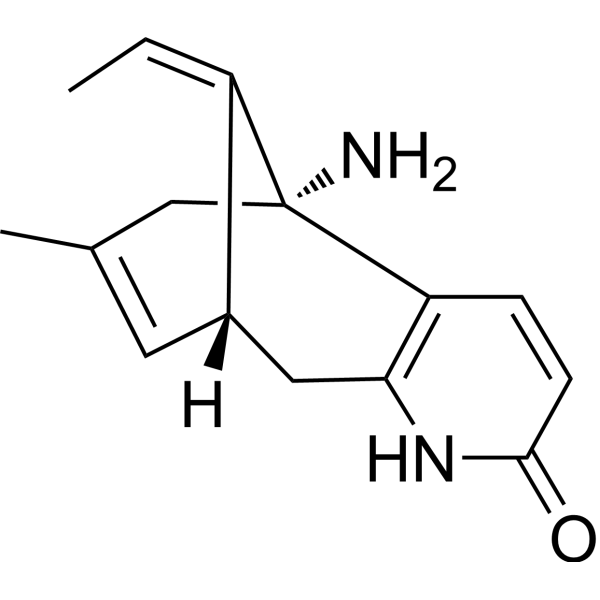
11-Hydroxyhumantenine is an alkaloid compound isolated from the EtOH extract of the stems of Gelsemium elegans .
|
-
- HY-113472R
-
|
|
Reference Standards
Drug Metabolite
|
Others
|
|
3-Methyladenine (Standard) is the analytical standard of 3-Methyladenine. This product is intended for research and analytical applications. 3-Methyladenine (3-MA) is a PI3K inhibitor. 3-Methyladenine is a widely used inhibitor of autophagy via its inhibitory effect on class III PI3K .
|
-
- HY-W659059
-
-
- HY-W716736
-
-
- HY-W007897
-
|
N-methyl-1-naphthylmethylamine
|
Drug Intermediate
|
Others
|
|
Terbinafine impurity 1 (N-Methyl-1-naphthylmethylamine) is an impurity of Terbinafine.
|
-
- HY-W587979
-
|
3'-Hydroxy-N-methylcoclaurine hydrochloride
|
Drug Intermediate
|
Others
|
|
N-Methyl-3'-hydroxycoclaurine (3'-Hydroxy-N-methylcoclaurine) hydrochloride is a Coclaurine (HY-N3610) impurity.
|
-
- HY-W719355
-
-
- HY-W012615S
-
|
N-methyl-4-anisidine-d3
|
Isotope-Labeled Compounds
|
Others
|
|
4-Methoxy-N-methylaniline-d3 (N-Methyl-4-anisidine-d3) is the deuterium labeled 4-Methoxy-N-methylaniline.
|
-
- HY-W715570
-
|
|
MOFs
|
Others
|
|
N-Methyl-2-(pyridin-4-yl)-N-(2-(pyridin-4-yl)ethyl)ethan-1-amine is a metal-organic framework (MOF).
|
-
- HY-CE01594
-
-
- HY-CE01593
-
-
- HY-W074886
-
|
|
Biochemical Assay Reagents
|
Others
|
|
N-Methyl-N-tetradecanoylglycine is a rectal absorption promoter. N-Methyl-N-tetradecanoylglycine enhances rectal absorption of antibiotics .
|
-
- HY-W342316
-
-
- HY-W154327
-
|
|
Biochemical Assay Reagents
|
Others
|
|
N-Methyl-L-norleucine is a biochemical reagent that can be used as a biological material or organic compound for life science related research.
|
-
- HY-W586820
-
|
|
Ligands for E3 Ligase
|
Cancer
|
|
N-Methyl-desamino lenalidomide-NH2 is an E3 ubiquitin ligase cereblon (CRBN) ligand used to recruit the cereblon protein. N-Methyl-desamino lenalidomide-NH2 can be linked to a target protein ligand via a linker to form a PROTAC.
|
-
- HY-W702094
-
-
- HY-W939881
-
-
- HY-W611494
-
|
|
MOFs
|
Others
|
|
N-Methyl-N-(pyridin-4-yl)isonicotinamide is a metal-organic framework (MOF).
|
-
- HY-178428S
-
-
- HY-W042164S
-
-
- HY-40352R
-
|
|
Reference Standards
|
|
|
N-methyl-N-((3R,4R)-4-methylpiperidin-3-yl)-7H-pyrrolo[2,3-d]pyrimidin-4-amine (Standard) is the analytical standard of N-methyl-N-((3R,4R)-4-methylpiperidin-3-yl)-7H-pyrrolo[2,3-d]pyrimidin-4-amine. This product is intended for research and analytical applications.
|
-
- HY-W726845
-
|
MNP-d11; MeNP-d11; N-methyl-N'-nitrosopiperazine-d11
|
Isotope-Labeled Compounds
Biochemical Assay Reagents
|
Others
|
|
1-Methyl-4-nitrosopiperazine-d11 (MNP-d11) is the deuterium labeled 1-Methyl-4-nitrosopiperazine (HY-W663740). 1-Methyl-4-nitrosopiperazine (MNP; MeNP;N-Methyl-N'-nitrosopiperazine) is a potential impurity in sartans, non-steroidal anti-inflammatory drugs (NSAIDs), and thiazide diuretics .
|
-
- HY-W611602
-
|
N-Me-His-OH hydrochloride
|
|
|
|
|
-
- HY-W012849R
-
|
N-methyl-m-toluidine (Standard)
|
Reference Standards
|
|
|
N,3-Dimethylaniline (Standard) is the analytical standard of N,3-Dimethylaniline. This product is intended for research and analytical applications.
|
-
- HY-W703869
-
|
N-methylserotonin oxalate; 5-Hydroxy-N-methyl tryptamine oxalate
|
Drug Metabolite
|
Neurological Disease
|
|
5-Hydroxy NMT (N-Methylserotonin) oxalate is a metabolite of 5-HT and belongs to the tryptamine class of compounds. Elevated levels of 5-Hydroxy NMT oxalate in plasma are associated with cocaine addiction .
|
-
- HY-W076490
-
|
IPO 4328; N-methyl-N'-phenylurea; 1-methyl-3-phenylurea
|
Herbicide
|
Others
|
|
Defenuron (IPO 4328) is a herbicide for controlling undesirable grasses and broad-leaved plants in a variety of crops .
|
-
- HY-79009R
-
|
N-methyl-3-phenyl-3-hydroxypropylamine (Standard)
|
Reference Standards
|
|
|
α-[2-(Methylamino)ethyl]benzenemethanol (Standard) is the analytical standard of α-[2-(Methylamino)ethyl]benzenemethanol. This product is intended for research and analytical applications.
|
-
- HY-158806
-
|
3,4-Dihydroxymethamphetamine TFA; N-methyl-α-methyldopamine TFA; HHMA TFA
|
Drug Derivative
|
Neurological Disease
|
|
3,4-DHMA (3,4-Dihydroxymethamphetamine) TFA is an active metabolite of 3,4-MDMA .
|
-
- HY-101037
-
|
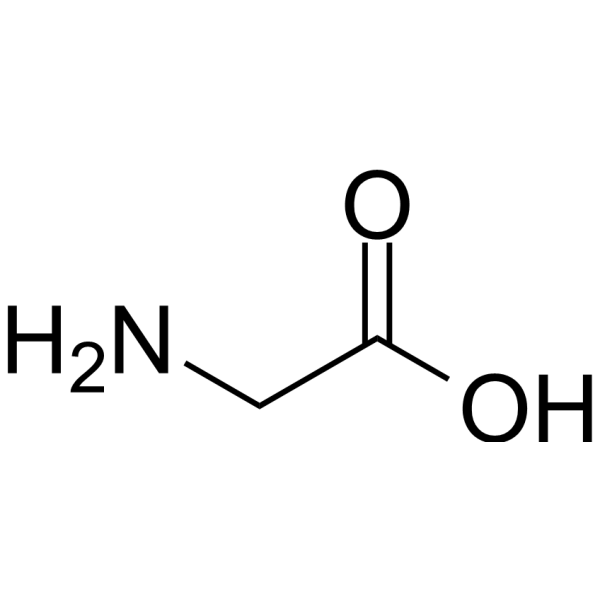
N-methylglycine; Sarcosin
|
Endogenous Metabolite
GlyT
|
Cancer
|
|
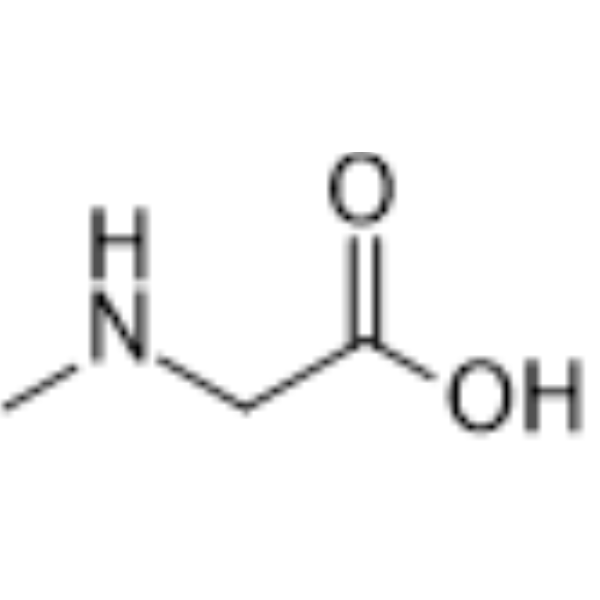
Sarcosine (N-Methylglycine), an endogenous amino acid, is a competitive glycine transporter type I (GlyT1) inhibitor and N-methyl-D-aspartate (NMDA) receptor co-agonist. Sarcosine increases the glycine concentration, resulting in an indirect potentiation of the NMDA receptor. Sarcosine is commonly used for the research of schizophrenia .
|
-
- HY-Y1275S1
-
|
NMP-d3; N-methyl-2-pyrrolidone-d3
|
Isotope-Labeled Compounds
|
Others
|
|
N-Methylpyrrolidone-d3 is the deuterium labeled N-Methylpyrrolidone . N-Methylpyrrolidone (1-Methyl-2-pyrrolidinone), a five-membered cyclic amide, is an organic polar solvent. N-Methylpyrrolidone is extensively used in the manufacture of adhesives, paints, fuels, and pharmaceuticals .
|
-
- HY-101037S1
-
|
N-methylglycine-d3; Sarcosin-d3
|
Isotope-Labeled Compounds
Endogenous Metabolite
GlyT
|
Cancer
|
|
Sarcosine-d3 is the deuterium labeled Sarcosine. Sarcosine (N-Methylglycine), an endogenous amino acid, is a competitive glycine transporter type I (GlyT1) inhibitor and N-methyl-D-aspartate (NMDA) receptor co-agonist. Sarcosine increases the glycine concentration, resulting in an indirect potentiation of the NMDA receptor. Sarcosine is commonly used for the research of schizophrenia .
|
-
- HY-101037S
-
|
N-methylglycine-15N; Sarcosin-15N
|
Endogenous Metabolite
GlyT
|
Cancer
|
|
Sarcosine- 15N is the 15N-labeled Sarcosine. Sarcosine (N-Methylglycine), an endogenous amino acid, is a competitive glycine transporter type I (GlyT1) inhibitor and N-methyl-D-aspartate (NMDA) receptor co-agonist. Sarcosine increases the glycine concentration, resulting in an indirect potentiation of the NMDA receptor. Sarcosine is commonly used for the research of schizophrenia .
|
-
- HY-101037R
-
|
N-methylglycine (Standard); Sarcosin (Standard)
|
Reference Standards
Endogenous Metabolite
GlyT
|
Cancer
|
|
Sarcosine (Standard) is the analytical standard of Sarcosine. This product is intended for research and analytical applications. Sarcosine (N-Methylglycine), an endogenous amino acid, is a competitive glycine transporter type I (GlyT1) inhibitor and N-methyl-D-aspartate (NMDA) receptor co-agonist. Sarcosine increases the glycine concentration, resulting in an indirect potentiation of the NMDA receptor. Sarcosine is commonly used for the research of schizophrenia .
|
-
- HY-134110
-
|
|
Endogenous Metabolite
|
Metabolic Disease
|
|
Anandamide (AEA) is an endogenous cannabinoid that binds to both central cannabinoid (CB1) and peripheral cannabinoid (CB2) receptors. The biological actions of AEA are terminated by cellular uptake and hydrolysis of the amide bond by the enzyme fatty acid amide hydrolase. Arachidonoyl-N-methyl amide is an analog of anandamide that binds to the human central cannabinoid (CB1) receptor with a Ki of 60 nM. It inhibits rat glial gap junction cell-cell communication 100% at a concentration of 50 μM.
|
-
- HY-W748519
-
|
N-methylglycine-13C3; Sarcosin-13C3
|
Isotope-Labeled Compounds
GlyT
Endogenous Metabolite
|
Cancer
|
|
Sarcosine- 13C3 (N-Methylglycine- 13C3; Sarcosin- 13C3) is the 13C-labeled Sarcosine (HY-101037). Sarcosine (N-Methylglycine), an endogenous amino acid, is a competitive glycine transporter type I (GlyT1) inhibitor and N-methyl-D-aspartate (NMDA) receptor co-agonist. Sarcosine increases the glycine concentration, resulting in an indirect potentiation of the NMDA receptor. Sarcosine is commonly used for the research of schizophrenia .
|
-
- HY-Z19620
-
|
Azilsartan medoxomil N-methyl impurity
|
Drug Intermediate
|
Others
|
|
Azilsartan impurity 15 (Azilsartan medoxomil N-methyl impurity) is an impurity of Azilsartan.
|
-
- HY-E70339
-
|
|
Endogenous Metabolite
|
Others
|
|
Phenylethanolamine N-methyl transferase, bovine is a biocatalyst and a key enzyme in new biocatalyst technology. Enzyme engineering focuses on enhancing enzyme reaction kinetics, substrate selectivity, and activity under harsh conditions such as low or high pH. By introducing stimulus responsiveness to these enzyme modifications, dynamic control of activity is also possible .
|
-
- HY-E70341
-
|
|
Endogenous Metabolite
|
Others
|
|
Histamine N-methyl transferase, rat is a biocatalyst and a key enzyme in new biocatalyst technology. Enzyme engineering focuses on enhancing enzyme reaction kinetics, substrate selectivity, and activity under harsh conditions such as low or high pH. By introducing stimulus responsiveness to these enzyme modifications, dynamic control of activity is also possible .
|
-
- HY-Z19643
-
|
Duloxetine N-methyl (R)-isomer oxalate
|
Drug Intermediate
|
Others
|
|
Duloxetine impurity 5 oxalate (Duloxetine N-methyl (R)-isomer oxalate) is an impurity of Duloxetine oxalate.
|
-
- HY-Z3474A
-
|
Duloxetine N-methyl 3-thiophene isomer oxalate
|
Drug Intermediate
|
Others
|
|
Duloxetine impurity 4 oxalate (Duloxetine N-methyl 3-thiophene isomer oxalate) is an impurity of Duloxetine oxalate.
|
-
- HY-B1213AS
-
-
- HY-151869S
-
-
- HY-177787
-
|
|
Biochemical Assay Reagents
|
Infection
Cancer
|
|
2'-Deoxy-N-methyl-AMP is a highly efficient substrate for N6-methyl-AMP aminohydrolase. 2'-Deoxy-N-methyl-AMP has high catalytic efficiency. 2'-Deoxy-N-methyl-AMP can be used for research on cancer and viral infections .
|
-
- HY-186120A
-
|
|
Amino Acid Derivatives
|
Cancer
|
|
N-(Aminoiminomethyl)-N-methyl-L-alanine is an Amino acid analog. N-(Aminoiminomethyl)-N-methyl-L-alanine can be used in cancer-related research .
|
-
- HY-132628S
-
|
|
Isotope-Labeled Compounds
|
Others
|
|
(Rac)-trans-N-Methyl Sertraline-d6 (hydrochloride) is the deuterium labeled (Rac)-trans-N-Methyl Sertraline hydrochloride .
|
-
- HY-19391
-
-
- HY-W745474
-
-
- HY-175125
-
-
- HY-W112935
-
|
Nickel(II) meso -tetra(N-methyl-4-pyridyl)porphine tetrachloride
|
MOFs
|
Others
|
|
Ni(ii) meso-?tetra(n-?methyl-?4-?pyridyl) porphine tetrachloride(Nickel(II) meso -tetra(N-methyl-4-pyridyl)porphine tetrachloride) is a metal-organic framework (MOF).
|
-
- HY-143854S
-
-
- HY-W018864
-
|
|
Biochemical Assay Reagents
|
Others
|
|
Tris(dibenzylideneacetonyl)bis-palladium is a catalyst that catalyzes the coupling reaction of N-methyl-2-pyrrolidinone (NMP) .
|
-
- HY-41063
-
|
|
ADC Linker
|
Cancer
|
|
N-Boc-N-methyl-D-Valinol is an ADC linker with BOC protecting group.
|
-
- HY-41064
-
|
|
ADC Linker
|
Cancer
|
|
N-Boc-N-methyl-D-Valaldehyde is an ADC linker with a BOC protecting group.
|
-
- HY-177787A
-
|
|
Nucleoside Antimetabolite/Analog
|
Others
|
2'-Deoxy-N-methyl-AMP ammonium is an N6-substituted adenine nucleotide derivative and a glycosyl donor. On one hand, 2'-Deoxy-N-methyl-AMP ammonium acts as a specific substrate for N6-methyl-AMP aminohydrolase, and it is catalytically converted to dIMP to participate in the nucleotide metabolic cycle. On the other hand, 2'-Deoxy-N-methyl-AMP ammonium also serves as a guanosine diphosphate (GDP)-linked fucose derivative donor, driving site-specific glycoconjugation of proteins under the mediation of α-1,3-fucosyltransferase. 2'-Deoxy-N-methyl-AMP ammonium is an important molecular tool for investigating the mechanisms of nucleotide modification and protein glycosylation .
|
-
- HY-W011722
-
-
- HY-W048839
-
-
- HY-W035914
-
-
- HY-W049802
-
|
|
Complement System
|
Inflammation/Immunology
|
|
N-((Allyloxy)carbonyl)-N-methyl-L-alanine is a Alanine derivative. N-((Allyloxy)carbonyl)-N-methyl-L-alanine can be used for the synthesis of inhibitors of complement factor D. Complement factor D inhibitors can be used in the research of immune system related disease .
|
-
- HY-W009535
-
-
- HY-Y1856
-
-
- HY-107277
-
|
|
Others
|
Others
|
|
Hapepunine is a N-methyl-22,26-epiminochole stene, that can be isaolated from the aerial parts of Fritillaria camtschatcensis .
|
-
- HY-W679891
-
|
|
Drug Derivative
|
Cancer
|
|
N-Nitroso-N-methyl-4-aminobutyric acid is a tobacco-specific nitrosamine carcinogen .
|
-
- HY-186120
-
|
|
Amino Acid Derivatives
|
Cancer
|
|
N-(Aminoiminomethyl)-N-methyl-D-alanine is an amino acid derivative that can be used in the research of cancer .
|
-
- HY-146716S
-
|
|
Isotope-Labeled Compounds
|
Others
|
|
N-Acetyl-S-(N-methyl-carbamoyl)-L-cysteine-d3 (dicyclohexylamine) is the deuterium labeled N-Acetyl-S-(N-methyl-carbamoyl)-L-cysteine.
|
-
- HY-153059
-
-
- HY-W065053
-
|
|
Amino Acid Derivatives
|
Others
|
|
trans-N-Methyl-4-methoxyproline is a natural product that can be isolated from the stems of Petiveria alliacea and is also a Proline derivative .
|
-
- HY-W758392
-
-
- HY-Z0085
-
|
|
Drug Intermediate
|
Others
|
|
2-Chloro-N-methyl-N-(4-nitrophenyl)acetamide is a synthetic intermediate useful for pharmaceutical synthesis.
|
-
- HY-W700565
-
-
- HY-W102175
-
|
|
PROTAC Linkers
|
Cancer
|
|
N-Boc-N-methyl-3-chloro-1-propanamine is a PROTAC linker that can be used in the synthesis of PROTACs.
|
-
- HY-W715511
-
|
Demethyl-vardenafil
|
Phosphodiesterase (PDE)
|
Others
|
|
N-Desethyl-N-methyl vardenafil (Demethyl-vardenafil), an analog of Vardenafil (HY-B0442), is a PDE5 inhibitor with an IC50 value of 0.14 μM .
|
-
- HY-59252
-
|
|
PROTAC Linkers
|
Cancer
|
|
tert-Butyl N-methyl-N-(piperidin-4-ylmethyl)carbamate is a PROTAC linker that can be used in the synthesis of PROTACs.
|
-
- HY-W613883
-
|
|
PROTAC Linkers
|
Cancer
|
|
tert-Butyl N-methyl-N-[4-(methylamino)butyl]carbamate is a PROTAC linker that can be used in the synthesis of PROTACs.
|
-
- HY-W610234
-
|
|
MOFs
|
Others
|
|
2'-Methoxy-n-methyl-[4,4'-bipyridin]-2-amine is a metal-organic framework (MOF).
|
-
- HY-Y0626S
-
|
Ethanehydrazonic acid-d3
|
Isotope-Labeled Compounds
|
Others
|
|
Acetohydrazide-d3 (Ethanehydrazonic acid-d3) is deuterium labeled Acetohydrazide. Acethydrazide is an organic building that undergo catalytic hydrogenation to produce N′-methyl acethydrazide (MAH) .
|
-
- HY-B0949S
-
|
|
Isotope-Labeled Compounds
Cholinesterase (ChE)
|
Neurological Disease
|
|
Protriptyline (N-methyl-d3) (hydrochloride) is the deuterium labeled Protriptyline hydrochloride. Protriptyline hydrochloride is a tricyclic antidepressant (TCA), specifically a secondary amine, for the treatment of depression and ADHD. Unique among the TCAs, protriptyline tends to be energizing instead of sedating, used for narcolepsy to achieve a wakefulness-promoting effect .
|
-
- HY-N18901
-
|
|
Endogenous Metabolite
|
Metabolic Disease
|
|
3-(2-Hydroxy-1-methyl-2-nitrosohydrazinyl)-N-methyl-1-propanamine is an endogenous metabolite. 3-(2-Hydroxy-1-methyl-2-nitrosohydrazinyl)-N-methyl-1-propanamine is significantly affected by low-dose citrus pectin .
|
-
- HY-W035378
-
|
|
ADC Linker
PROTAC Linkers
|
Cancer
|
|
Fmoc-N-methyl-PEG3-CH2CH2COOH is a cleavable ADC linker used in the synthesis of antibody-drug conjugates (ADCs). Fmoc-N-methyl-PEG3-CH2CH2COOH is also a PEG-based PROTAC linker that can be used in the synthesis of PROTACs .
|
-
- HY-W012000
-
|
Boc-N-Me-Ile-OH
|
Amino Acid Derivatives
|
Others
|
|
Boc-N-methyl-L-isoleucine (Boc-N-Me-Ile-OH) is a peptide products and can be used as a precursor in organic synthesis and pharmaceuticals .
|
-
- HY-W654252
-
|
|
Isotope-Labeled Compounds
|
Metabolic Disease
|
|
Linoleoyl Carnitine (N-methyl-d3) is the deuterium labeled Linoleyl carnitine (HY-113256). Linoleyl carnitine is an acylcarnitine used to study long-chain 3-hydroxyacyl-CoA dehydrogenase deficiency and fatty acid oxidation disorders in fibroblasts .
|
-
- HY-W098612
-
|
|
PROTAC Linkers
|
Cancer
|
|
Methyl N-(3-methoxy-3-oxopropyl)-N-methyl-beta-alaninate is a PROTAC linker that can be used in the synthesis of PROTACs.
|
-
- HY-34470
-
-
- HY-Z10179R
-
|
|
Reference Standards
|
|
|
(S)-N-methyl-3-(naphthalen-1-yloxy)-1-phenylpropan-1-amine hydrochloride (Standard) is the analytical standard of (S)-N-methyl-3-(naphthalen-1-yloxy)-1-phenylpropan-1-amine hydrochloride. This product is intended for research and analytical applications.
|
-
- HY-W099790
-
|
1-Butyl-1-methylpiperidinium Bromide
|
Biochemical Assay Reagents
|
Others
|
|
N-butyl-N-methyl-piperidinium bromide is a quaternary ammonium compound belonging to the class of piperidinium salts. N-butyl-N-methyl-piperidinium bromide is commonly used as a phase transfer catalyst in organic synthesis to transfer reactants between immiscible phases. It can also be used as a surfactant, corrosion inhibitor and antibacterial agent. Its unique chemical properties make it an important reagent in many different industries, including pharmaceuticals, agrochemicals, and materials science.
|
-
- HY-W755720
-
|
|
Isotope-Labeled Compounds
|
Others
|
|
Tiglyl Glycine- 13C2, 15N Methyl Ester is the 13C- and 15N-labeled Methyl (E)-(2-methylbut-2-enoyl)glycinate (HY-W702309).
|
-
- HY-W112959
-
|
Cot4MPyP
|
MOFs
|
Others
|
|
Tetrakis(N-?methyl-?4-?pyridinium)?porphine cobalt(Iii) complex (Cot4MPyP) is a metal-organic framework (MOF).
|
-
- HY-W036329
-
-
- HY-W198256
-
|
|
PROTAC Linkers
|
Cancer
|
|
Tert-butyl n-methyl-N-[2-(piperidin-4-yl)ethyl]carbamate is a PROTAC linker that can be used in the synthesis of PROTACs.
|
-
- HY-W011088
-
-
- HY-Z8616R
-
|
|
Reference Standards
|
|
|
3-(4-Chlorophenyl)-N-methyl-3-(pyridin-2-yl)propan-1-amine maleate (Chlorphenamine Impurity) (Standard) is the analytical standard of 3-(4-Chlorophenyl)-N-methyl-3-(pyridin-2-yl)propan-1-amine maleate (Chlorphenamine Impurity). This product is intended for research and analytical applications.
|
-
- HY-W036324
-
-
- HY-W036322
-
-
- HY-Z8724
-
|
|
Drug Intermediate
|
Others
|
|
(1S,cis)-4-(4-Chlorophenyl)-N-methyl-1,2,3,4-tetrahydronaphthalen-1-amine hydrochloride (Sertraline Impurity) is an impurity of (1S,cis)-4-(4-Chlorophenyl)-N-methyl-1,2,3,4-tetrahydronaphthalen-1-amine hydrochloride (Sertraline).
|
-
- HY-W082452S
-
|
|
Isotope-Labeled Compounds
|
Others
|
|
N-Boc-N-methoxy-N-methyl-L-phenyl-alaninamide-d5 is the deuterium labeled Picoxystrobin. Picoxystrobin is a primary strobilurin fungicide that is widely applied for plant disease control. Picoxystrobin inhibits mitochondrial respiration via blocking elect
|
-
- HY-W709196
-
|
2-Amino-N-methyl-DL-propanamide-d3
|
Isotope-Labeled Compounds
|
Others
|
|
DL-Alanine methylamide-d3 (2-Amino-N-methyl-DL-propanamide-d3) is the deuterium labeled DL-Alanine methylamide.
|
-
- HY-W142161
-
|
Fmoc-MeHis(Trt)-OH
|
Amino Acid Derivatives
|
Others
|
|
Fmoc-N-Me-His(Trt)-OH (Fmoc-MeHis(Trt)-OH) is an Amino acid derivative containing a carboxyl group. Fmoc-N-Me-His(Trt)-OH can be used for the synthesis of Fmoc-MeHis (Trt)-Leu-OH and N-methyl peptides .
|
-
- HY-170475
-
|
5-Methoxy-N-methyl-N-ethyltryptamine
|
5-HT Receptor
|
Neurological Disease
|
|
5-MeO-MET (5-Methoxy-N-methyl-N-ethyltryptamine) is a 5-methoxytryptamines compound. 5-MeO-MET is the agonist of 5-HT1A and 5-HT2A. 5-MeO-MET can inhibit the movement of mice and has a sedative effect .
|
-
- HY-123421
-
|
|
Histamine Receptor
|
Metabolic Disease
|
|
UK-9040, a derivative of the antihistamine Triprolidine (HY-B1808), is an orally active inhibitor of gastric secretory. UK-9040 reduces gastric acid, pepsin, and volume output in response to
food, Insulin (HY-P0035), Histamine (HY-B1204), N-methyl histamine, and Pentagastrin (HY-A0261) .
|
-
- HY-W749598
-
|
3-Pyridinecarboxamide, N-methoxy-N-methyl-13C6
|
Isotope-Labeled Compounds
|
Others
|
|
N-Methoxy-N-methylnicotinamide- 13C6 (3-Pyridinecarboxamide, N-methoxy-N-methyl- 13C6) is the 13C-labeled N-methoxy-N-methylnicotinamide (HY-W051270).
|
-
- HY-118796
-
|
4-HO-MET; 4-Hydroxy-N-methyl-N-ethyltryptamine
|
5-HT Receptor
Serotonin Transporter
|
Neurological Disease
|
|
4-Hydroxy MET (4-HO-MET; 4-Hydroxy-N-methyl-N-ethyltryptamine) is a synthetic tryptamine psychoactive substance. 4-Hydroxy MET is a partial 5-HT2A receptor agonist, a serotonin transporter inhibitor and weak norepinephrine transporter inhibitor. 4-Hydroxy MET affects emotional, motoric, and cognitive functions via serotonergic hallucinogenic activity .
|
-
- HY-W705818
-
|
Propanamide, 3,3'-dithiobis[n-methyl-d6
|
Isotope-Labeled Compounds
|
Others
|
|
N,N'-Dimethyl-3,3'-dithiodipropionamide-d6 (Propanamide, 3,3'-dithiobis[n-methyl-d6) is the deuterium labeled N,N'-Dimethyl-3,3'-Dithiodipropionamide (HY-W045680).
|
-
- HY-W112288
-
|
Tetrakis(N-methyl-4-pyridinium)yl-porphine iron(III) complex
|
MOFs
|
Others
|
|
5,10,15,20-Tetra (1-methyl-4-pyridyl) porphyrin iron (Tetrakis(N-methyl-4-pyridinium)yl-porphine iron(III) complex) is a metal-organic framework (MOF).
|
-
- HY-79417
-
|
Carbamic acid, [(1S)-1-[(methoxymethylamino)carbonyl]-3-methylbutyl]-, 1,1-dimethylethyl ester (9CI); Carbamic acid, [1-[(methoxymethylamino)carbonyl]-3-methylbutyl]-, 1,1-dimethylethyl ester, (S)-
|
Amino Acid Derivatives
|
Others
|
|
(S)-N-Methyl-N-methoxy-2-(tert-butoxycarbonylamino)-4-methylpentanamide is a leucine derivative .
|
-
- HY-W714797
-
|
|
Isotope-Labeled Compounds
|
Others
|
|
Nintedanib demethyl-O-glucuronic acid-d3 is the deuterium labeled (2R,3R,4R,5S,6S)-3,4,5-Trihydroxy-6-(((Z)-3-(((4-(N-methyl-2-(4-methylpiperazin-1-yl)acetamido)phenyl)amino)(phenyl)methylene)-2-oxoindoline-6-carbonyl)oxy)tetrahydro-2H-pyran-2-carboxylic acid (HY-W712456).
|
-
- HY-126938
-
-
- HY-119419
-
-
- HY-119419R
-
|
|
Reference Standards
Cholinesterase (ChE)
Parasite
|
Neurological Disease
|
|
Pirimicarb (Standard) is the analytical standard of Pirimicarb. This product is intended for research and analytical applications. Pirimicarb is a fast-acting selective carbamate insecticide on a wide range of crops including cereals, sugar beet, potatoes, fruits and vegetables. Pirimicarb is an AChE inhibitor and an acaricide .
|
-
- HY-Z0138R
-
|
|
Reference Standards
|
|
|
N-Methyl-N-(4-nitrophenyl)acetamide (Nintedanib Impurity) (Standard) is the analytical standard of N-Methyl-N-(4-nitrophenyl)acetamide (Nintedanib Impurity). This product is intended for research and analytical applications.
|
-
- HY-154487
-
|
|
Biochemical Assay Reagents
|
Neurological Disease
|
|
Glycerol dioleate is a lipid capable of forming Lyotropic Liquid Crystal (LLC). When formulated with phosphatidylcholine and exposed to aqueous media, glycerol dioleate constructs an inverted hexagonal (HII) phase structure with sustained-release properties. The in-situ forming gel prepared by optimizing glycerol dioleate with phosphatidylcholine and N-methyl-2-pyrrolidone enables stable release of Risperidone (HY-11018) for up to 60 days in vitro and in vivo. Glycerol dioleate causes minimal side effects in rabbits, making it an ideal carrier component for the development of antischizophrenia agents .Note: Lyotropic liquid crystals (Lyotropic Liquid Crystal, LLC) are ordered fluid phases self-assembled by amphipathic molecules (e.g., lipids, surfactants) in solvents (usually water) at specific concentrations .
|
-
- HY-119776
-
-
- HY-123655
-
|
|
iGluR
|
Neurological Disease
|
|
Fenazinel dihydrochloride, an N-methyl-D-aspartate (NMDA) receptor antagonist, shows promise as a potential treatment for ischemic stroke.
|
-
- HY-15410A
-
|
|
iGluR
|
Others
|
|
Gacyclidine hydrochloride, a non competitive N-methyl-D-aspartate (NMDA) antagonist, can be used in the study of spinal cord injuries .
|
-
- HY-15410
-
|
|
iGluR
|
Others
|
|
Gacyclidine, a non competitive N-methyl-D-aspartate (NMDA) antagonist, can be used in the study of spinal cord injuries .
|
-
- HY-101353
-
|
(-)-LY 235959
|
iGluR
|
Neurological Disease
|
|
LY 235959 is a competitive N-methyl-D-aspartate (NMDA)-receptor antagonist. LY 235959 potentiates the anticonvulsant action of antiepileptics .
|
-
- HY-N2311
-
|
(RS)-Ibotenic acid; DL-Ibotenic acid
|
iGluR
|
Neurological Disease
|
|
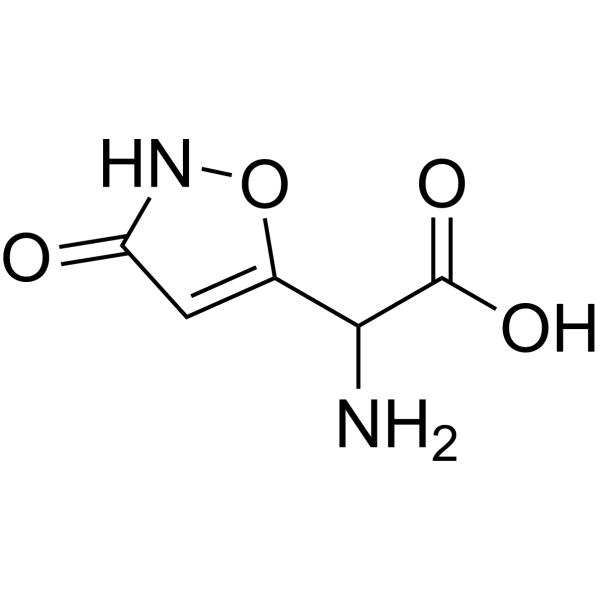
Ibotenic acid has agonist activity at both the N-methyl-D-aspartate (NMDA) and trans-ACPD or metabolotropic quisqualate (Qm) receptor sites.
|
-
- HY-141505
-
|
1-N-methyl-4-mercaptohistidine disulfide
|
ATP Synthase
|
Metabolic Disease
|
|
Ovothiol A disulfide is an inhibitor of light-triggered CF1 ATPase activity .
|
-
- HY-B0184A
-
|
W-554 hydrate; ADD-03055 hydrate
|
iGluR
|
Neurological Disease
|
|
Felbamate hydrate (W-554 hydrate) is a potent nonsedative anticonvulsant whose clinical effect may be related to the inhibition of N-methyl-D-aspartate (NMDA) .
|
-
- HY-B0184
-
|
W-554; ADD-03055
|
iGluR
|
Neurological Disease
|
|
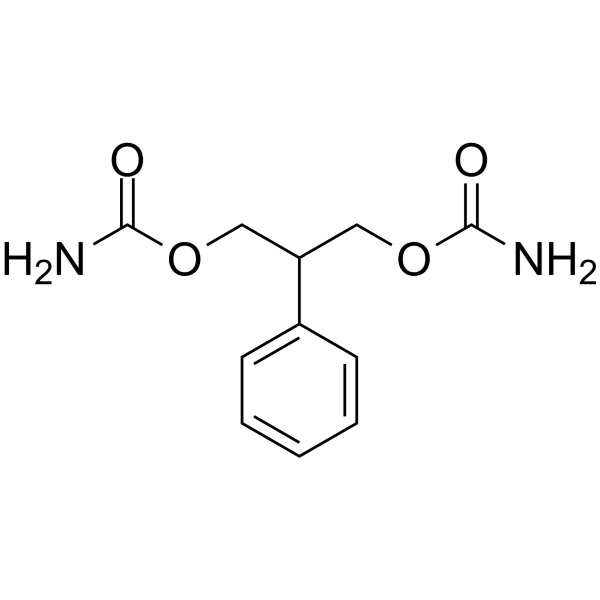
Felbamate (W-554) is a potent nonsedative anticonvulsant whose clinical effect may be related to the inhibition of N-methyl-D-aspartate (NMDA).
|
-
- HY-134124
-
|
|
Reactive Oxygen Species (ROS)
|
Metabolic Disease
|
|
Glutathione ethyl ester is a cell-permeable GSH donor and provides an efficient supply of GSH to the oocyte. Glutathione ethyl ester shows positive effect on the in vitro production of embryos by enhancement of the antioxidative defense .
|
-
- HY-139580
-
|
CAD-9303
|
iGluR
|
Neurological Disease
|
|
Plazinemdor (CAD-9303) is a positive allosteric modulator of N-methyl-D-aspartate (NMDA) receptors, which is used in the research of neurological diseases .
|
-
- HY-W654331
-
|
2,3-Pyridinedicarboxylic Acid-13C3,15N
|
Isotope-Labeled Compounds
iGluR
Endogenous Metabolite
|
Inflammation/Immunology
|
|
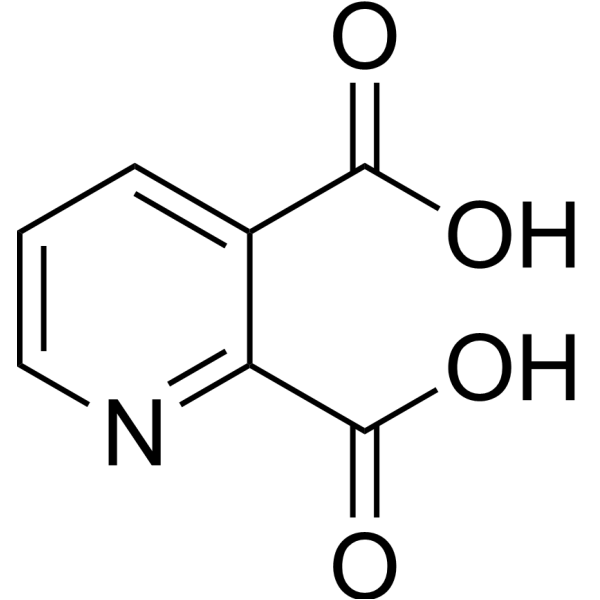
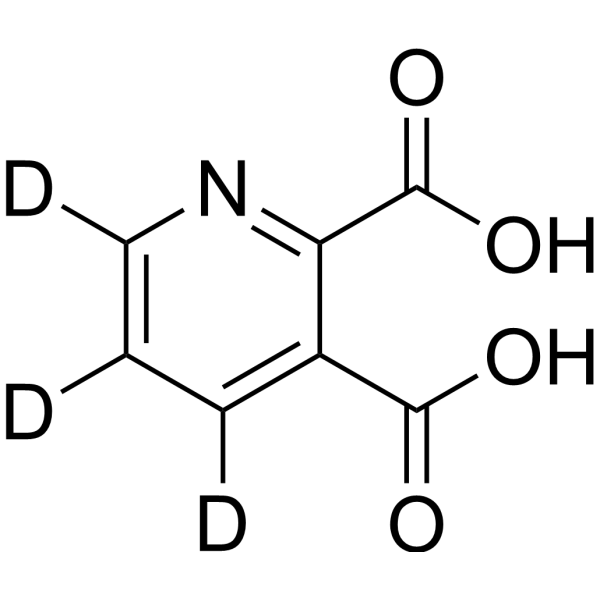
Quinolinic acid- 13C3, 15N (2,3-Pyridinedicarboxylic Acid- 13C3, 15N) is the 13C- and 15N-labeled Quinolinic acid (HY-100807). Quinolinic acid is an endogenous N-methyl-D-aspartate (NMDA) receptor agonist synthesized from L-tryptophan via the kynurenine pathway and thereby has the potential of mediating N-methyl-D-aspartate neuronal damage and dysfunction .
|
-
- HY-100667
-
UBP608
1 Publications Verification
|
iGluR
|
Neurological Disease
|
|
UBP608 is a potent N-Methyl-D-aspartate receptors (NMDARs) negative allosteric modulator. UBP608 has the potential for the research of neurological disorders .
|
-
- HY-177127
-
|
|
iGluR
|
Neurological Disease
|
|
Satoprodil (example 2) is a potent N-methyl-D-aspartate (NMDA) receptor negative allosteric modulator with an IC50 value of 123 nM for NR2B .
|
-
- HY-N2370R
-
|
|
Reference Standards
iGluR
LXR
|
Neurological Disease
|
|
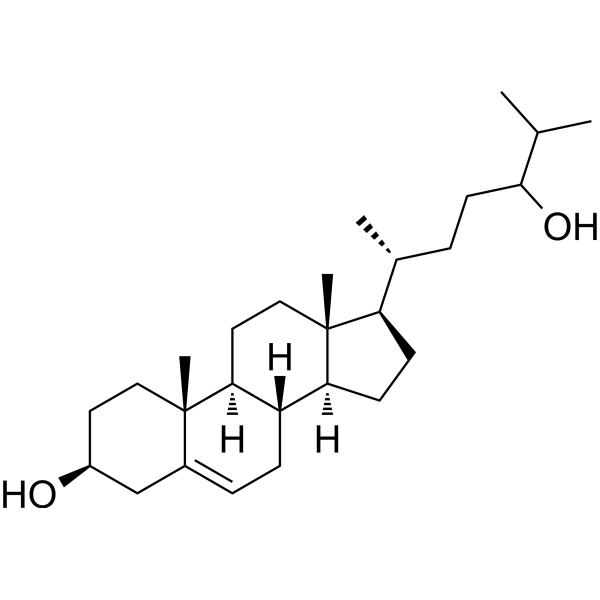
24-Hydroxycholesterol is a natural sterol, which serves as a positive allosteric modulator of N-Methyl-d-Aspartate (NMDA) receptorsR, and a potent activator of the transcription factors LXR.
|
-
- HY-N2370
-
|
|
iGluR
LXR
|
Neurological Disease
|
|
24-Hydroxycholesterol is a natural sterol, which serves as a positive allosteric modulator of N-Methyl-d-Aspartate (NMDA) receptorsR, and a potent activator of the transcription factors LXR.
|
-
- HY-P10828
-
|
|
Virus Protease
|
Infection
Inflammation/Immunology
|
|
MAPI is a polypeptide irreversible 3C cysteine protease (SV3CP) inhibitor. MAPI inhibits SV3CP by covalently binding its C-terminal Michael-acceptor extension to the active site thiol of SV3CP Cys 139. MAPI is promising for research of noroviruses infection .
|
-
- HY-W724221
-
|
|
iGluR
|
Neurological Disease
|
|
3-Methoxyeticyclidine hydrochloride is a phencyclidine-type compound that has binding affinity for the N-methyl-D-aspartate receptor. 3-Methoxyeticyclidine hydrochloride has a certain degree of toxicity .
|
-
- HY-B0591
-
|
|
iGluR
|
Neurological Disease
|
|
Memantine is an orally active, noncompetitive N-methyl-D-aspartate receptor (NMDAR) antagonist. Memantine can be used for the research of moderate-to-severe Alzheimer's disease (AD) .
|
-
- HY-114550
-
|
|
iGluR
|
Neurological Disease
|
|
LY339434 is a potent and selective agonist for the hydrochloride receptor GluR5. LY339434 affects the rapid death of neurons through n-methyl-D-aspartate (NMDA) receptors .
|
-
- HY-109164
-
|
AGN-241751; GATE-251
|
iGluR
|
Neurological Disease
|
|
Zelquistinel (AGN-241751) is the orally active N-methyl-D-aspartate (NMDA) receptor partial agonist used for the research of depression, anxiety and other related psychiatric disorders .
|
-
- HY-107702
-
|
|
iGluR
|
Neurological Disease
|
|
CGP 37849 is a potent, competitive and orally active N-methyl-D-aspartate (NMDA) receptor antagonist. CGP 37849 is an anticonvulsant in rodents and has antidepressant and anxiolytic-like effects .
|
-
- HY-107040
-
|
NSC 288020; CL-1848C
|
iGluR
|
Others
|
|
Etoxadrol (CL-1848C) is a potent, high-affinity N-methyl-D-aspartic acid (NMDA) antagonist. Etoxadrol is used in the anaesthetic and anaesthesia research community to suppress or relieve pain .
|
-
- HY-W835175
-
|
|
iGluR
|
Neurological Disease
|
|
Neramexane hydrochloride is an oral N-methyl-D-aspartate (NMDA) receptor antagonist, as a potential neuroprotectant for various central nervous system disorders, including Alzheimer's disease, and for the potential study of drug and alcohol dependence, and pain.
|
-
- HY-138973
-
|
|
iGluR
|
Neurological Disease
|
|
Neramexane is an oral N-methyl-D-aspartate (NMDA) receptor antagonist, as a potential neuroprotectant for various central nervous system disorders, including Alzheimer's disease, and for the potential treatment of drug and alcohol dependence, and pain.
|
-
- HY-15084A
-
|
(-)-MK-801 maleate
|
iGluR
|
Neurological Disease
|
|
(-)-Dizocilpine maleate ((-)-MK-801 maleate) is a less active (-)-enantiomer of Dizocilpine. (-)-Dizocilpine maleate is a selective and non-competitive N-methyl-D-aspartate (NMDA) receptor antagonist with a Ki of 211.7 nM. (-)-Dizocilpine maleate has antidepressant effects .
|
-
- HY-106441A
-
|
MK-0657; CERC-301
|
iGluR
|
Neurological Disease
|
|
Rislenemdaz (CERC-301) is an orally bioavailable and selective N-methyl-D-aspartate (NMDA) receptor subunit 2B (GluN2B) antagonist with Ki and IC 50 of 8.1 nM and 3.6 nM, respectively.
|
-
- HY-Y0966S10
-
|
|
Isotope-Labeled Compounds
Endogenous Metabolite
iGluR
|
Cancer
|
|
Glycine-d3 is the deuterium labeled Glycine. Glycine is an inhibitory neurotransmitter in the CNS and also acts as a co-agonist along with glutamate, facilitating an excitatory potential at the glutaminergic N-methyl-D-aspartic acid (NMDA) receptors.
|
-
- HY-Y0966S8
-
|
|
Endogenous Metabolite
iGluR
|
Neurological Disease
|
|
Glycine-d5 is the deuterium labeled Glycine. Glycine is an inhibitory neurotransmitter in the CNS and also acts as a co-agonist along with glutamate, facilitating an excitatory potential at the glutaminergic N-methyl-D-aspartic acid (NMDA) receptors.
|
-
- HY-105236
-
|
(Rac)-CI-977 free base
|
Opioid Receptor
|
Neurological Disease
|
|
(Rac)-Enadoline ((Rac)-CI-977 free base) is a selective K-opioid receptor agonist that stereoselectively antagonizes clonic seizures induced by slow intravenous injection of N-methyl-DL-aspartate in mice .
|
-
- HY-Y0966S1
-
-
- HY-15786
-
|
|
iGluR
|
Neurological Disease
|
|
SGE-201 is an allosteric modulator of N-methyl-D-aspartate receptors (NMDARs), demonstrating significant neuroprotective effects by enhancing NMDAR-mediated responses while differing in action among various blockers in neuronal networks.
|
-
- HY-W587773R
-
|
|
Reference Standards
|
|
|
Monodesmethylchlorpheniramine (Standard) is the analytical standard of Monodesmethylchlorpheniramine. This product is intended for research and analytical applications.
|
-
- HY-N0368S
-
|
|
Apoptosis
iGluR
Endogenous Metabolite
|
Cancer
|
|
Linalool-d3 is the deuterium labeled Linalool . Linalool is natural monoterpene in essential olis of coriander, acts as a competitive antagonist of Nmethyl d-aspartate (NMDA) receptor, with anti-tumor, anti-cardiotoxicity activity .Linalool is a PPARα ligand that reduces plasma TG levels and rewires the hepatic transcriptome and plasma metabolome .
|
-
- HY-138973A
-
|
|
iGluR
nAChR
|
Neurological Disease
|
|
Neramexane mesylate is an α9α10 cholinergic nicotinic receptors and N-methyl-D-aspartate receptors(NMDA) antagonist. Neramexane mesylate can improve moderate to severe tinnitus, and also shows neuroprotective effects .
|
-
- HY-B0184S1
-
|
Felbamyl-d5; Felbatol-d5; Taloxa-d5
|
iGluR
|
Neurological Disease
|
|
Felbamate-d5 is the deuterium labeled Felbamate . Felbamate (W-554) is a potent nonsedative anticonvulsant whose clinical effect may be related to the inhibition of N-methyl-D-aspartate (NMDA) .
|
-
- HY-B0184R
-
|
W-554 (Standard); ADD-03055 (Standard)
|
Reference Standards
iGluR
|
Neurological Disease
|
|
Felbamate (Standard) is the analytical standard of Felbamate. This product is intended for research and analytical applications. Felbamate (W-554) is a potent nonsedative anticonvulsant whose clinical effect may be related to the inhibition of N-methyl-D-aspartate (NMDA).
|
-
- HY-P1108A
-
|
|
CRFR
|
Neurological Disease
Inflammation/Immunology
|
Astressin 2B TFA is a blood-brain barrier-impermeable, highly selective CRFR2 antagonist (rCRFR2, IC50=0.57 nM). Astressin 2B TFA blocks the protective effects mediated by CRFR2, thereby exacerbating indomethacin (HY-14397)-induced hemorrhagic intestinal injury in rats. Astressin 2B TFA reverses the protective effects of Urocortin 1 against intestinal hypermotility, bacterial invasion and upregulation of inflammatory mediators. Astressin 2B TFA also blocks the anxiogenic effect of Urocortin 2 and attenuates stress-induced anxiety-related behaviors. In the Clostridioides difficile toxin A (C. difficile toxin A)-mediated enteritis model, Astressin 2B TFA mimics the phenotype of CRFR2-deficient mice, significantly exacerbating intestinal epithelial damage, edema, neutrophil migration and the expression of multiple proinflammatory cytokines. Astressin 2B TFA is an important tool molecule for investigating the intestinal protective mechanisms of CRFR2 .
|
-
- HY-P1108
-
|
|
CRFR
|
Neurological Disease
Inflammation/Immunology
|
Astressin 2B is a blood-brain barrier-impermeable, highly selective CRFR2 antagonist (rCRFR2, IC50=0.57 nM). Astressin 2B blocks the protective effects mediated by CRFR2, thereby exacerbating indomethacin (HY-14397)-induced hemorrhagic intestinal injury in rats. Astressin 2B reverses the protective effects of Urocortin 1 against intestinal hypermotility, bacterial invasion and upregulation of inflammatory mediators. Astressin 2B also blocks the anxiogenic effect of Urocortin 2 and attenuates stress-induced anxiety-related behaviors. In the Clostridioides difficile toxin A (C. difficile toxin A)-mediated enteritis model, Astressin 2B mimics the phenotype of CRFR2-deficient mice, significantly exacerbating intestinal epithelial damage, edema, neutrophil migration and the expression of multiple proinflammatory cytokines. Astressin 2B is an important tool molecule for investigating the intestinal protective mechanisms of CRFR2 .
|
-
- HY-107694
-
|
(Rac)-MK-801
|
iGluR
|
Others
|
|
(Rac)-Dizocilpine ((Rac)-MK-801) is the racemate of Dizocilpine (HY-15084B). Dizocilpine (MK-801), a potent anticonvulsant, is a selective and non-competitive N-methyl-D-aspartate (NMDA) receptor antagonist .
|
-
- HY-Y0966S3
-
-
- HY-Y0966S
-
|
|
Endogenous Metabolite
iGluR
|
Neurological Disease
|
|
Glycine- 15N is the 15N-labeled Glycine. Glycine is an inhibitory neurotransmitter in the CNS and also acts as a co-agonist along with glutamate, facilitating an excitatory potential at the glutaminergic N-methyl-D-aspartic acid (NMDA) receptors .
|
-
- HY-N0368R
-
|
|
Reference Standards
iGluR
Apoptosis
Endogenous Metabolite
|
Cardiovascular Disease
Cancer
|
|
Linalool (Standard) is the analytical standard of Linalool. This product is intended for research and analytical applications. Linalool is natural monoterpene in essential olis of coriander, acts as a competitive antagonist of Nmethyl d-aspartate (NMDA) receptor, with anti-tumor, anti-cardiotoxicity activity .Linalool is a PPARα ligand that reduces plasma TG levels and rewires the hepatic transcriptome and plasma metabolome .
|
-
- HY-Y0966S2
-
|
|
Endogenous Metabolite
iGluR
|
Neurological Disease
|
|
Glycine-2- 13C is the 13C-labeled Glycine. Glycine is an inhibitory neurotransmitter in the CNS and also acts as a co-agonist along with glutamate, facilitating an excitatory potential at the glutaminergic N-methyl-D-aspartic acid (NMDA) receptors.
|
-
- HY-B0591S
-
|
|
Isotope-Labeled Compounds
iGluR
|
Neurological Disease
|
|
Memantine-d3 (hydrochloride) is deuterium labeled Memantine. Memantine is an orally active, noncompetitive N-methyl-D-aspartate receptor (NMDAR) antagonist. Memantine can be used for the research of moderate-to-severe Alzheimer's disease (AD) .
|
-
- HY-Y0966S4
-
|
|
Endogenous Metabolite
iGluR
|
Neurological Disease
|
|
Glycine-1- 13C is the 13C-labeled Glycine. Glycine is an inhibitory neurotransmitter in the CNS and also acts as a co-agonist along with glutamate, facilitating an excitatory potential at the glutaminergic N-methyl-D-aspartic acid (NMDA) receptors.
|
-
- HY-P7060
-
|
TPPT
|
iGluR
|
Neurological Disease
|
|
NT 13 (TPPT) is a tetrapeptide having the amino acid sequence L-threonyl-L-prolyl-L-prolyl-L-threonine amide. NT 13 is a partial N-methyl-D-aspartate receptor (NMDAR) agonist used in the study of depression, anxiety, and other related diseases.
|
-
- HY-10711A
-
|
(R)-NFPS hydrochloride
|
GlyT
|
Neurological Disease
|
|
ALX-5407 ((R)-NFPS) hydrochloride is a selective and orally active glycine transporter GlyT1 inhibitor with an IC50 value of 3 nM. ALX-5407 hydrochloride can be used the research of N-methyl-D-aspartate-receptor function and schizophrenia .
|
-
- HY-10711
-
|
(R)-NFPS
|
GlyT
|
Neurological Disease
|
|
ALX-5407 ((R)-NFPS) is a selective and orally active glycine transporter GlyT1 inhibitor with an IC50 value of 3 nM. ALX-5407 can be used the research of N-methyl-D-aspartate-receptor function and schizophrenia .
|
-
- HY-127039
-
|
|
Ser/Thr Protease
DNA/RNA Synthesis
|
Metabolic Disease
Cancer
|
|
Antipain is a protease inhibitor isolated from Actinomycetes. Antipain inhibits N-methyl-N'-nitro-N-nitrosoguanidine (MNNG)-induced transformation and increases chromosomal aberrations. Antipain restricts uterine DNA synthesis and function in mice .
|
-
- HY-127034
-
|
|
Ser/Thr Protease
DNA/RNA Synthesis
|
Metabolic Disease
Cancer
|
|
Antipain dihydrochloride is a protease inhibitor isolated from Actinomycetes. Antipain dihydrochloride inhibits N-methyl-N'-nitro-N-nitrosoguanidine (MNNG)-induced transformation and increases chromosomal aberrations. Antipain dihydrochloride restricts uterine DNA synthesis and function in mice .
|
-
- HY-B0184S
-
|
|
iGluR
|
Neurological Disease
|
|
Felbamate-d4 (W-554-d4) is the deuterium labeled Felbamate. Felbamate (W-554) is a potent anticonvulsant whose clinical effect may be related to the inhibition of N-methyl-D-aspartate (NMDA).
|
-
- HY-B1487
-
|
Tricyclamol hydrochloride; (±)-Procyclidine hydrochloride
|
iGluR
mAChR
|
Neurological Disease
|
|
Procyclidine (Tricyclamol, (±)-Procyclidine) hydrochloride , an anticholinergic agent, is a muscarinic receptor antagonist that also has the properties of an N-methyl-D-aspartate (NMDA) antagonist. Procyclidine hydrochloride can be used in studies of Parkinson's disease and related psychiatric disorders such as Soman-induced epilepsy .
|
-
- HY-171979
-
|
|
iGluR
|
Neurological Disease
|
|
Fluorolintane exhibits high affinity for N-methyl-D-aspartate (NMDA) receptors with a Ki of 87.92 nM. Fluorolintane inhibits prepulse inhibition in rats. Fluorolintane also inhibits NMDA receptor-induced field excitatory postsynaptic potentials in rat hippocampal slices .
|
-
- HY-B1487A
-
|
Tricyclamol; (±)-Procyclidine
|
mAChR
iGluR
|
Neurological Disease
|
|
Procyclidine (Tricyclamol; (±)-Procyclidine), an anticholinergic agent, is a muscarinic receptor antagonist that also has the properties of an N-methyl-D-aspartate (NMDA) antagonist. Procyclidine can be used in studies of Parkinson's disease and related psychiatric disorders such as Soman-induced epilepsy .
|
-
- HY-I0364R
-
|
|
Reference Standards
|
|
|
2-Chloro-N-methyl-N-((3R,4R)-4-methylpiperidin-3-yl)-7H-pyrrolo[2,3-d]pyrimidin-4-amine (Standard) is the analytical standard of 2-Chloro-N-methyl-N-((3R,4R)-4-methylpiperidin-3-yl)-7H-pyrrolo[2,3-d]pyrimidin-4-amine. This product is intended for research and analytical applications.
|
-
- HY-Y0966S9
-
-
- HY-106408A
-
|
Salfaprodil; Neu2000 potassium
|
iGluR
|
Neurological Disease
|
|
Nelonemdaz (Salfaprodil) potassium is an NR2B-selective and uncompetitive antagonist of N-methyl-D-aspartate (NMDA). Nelonemdaz potassium is also a free radical scavenger. Nelonemdaz potassium has excellent neuroprotection against NMDA- and free radical-induced cell death .
|
-
- HY-136299B
-
|
FUT-187 trifluoroacetate
|
iGluR
|
Neurological Disease
|
|
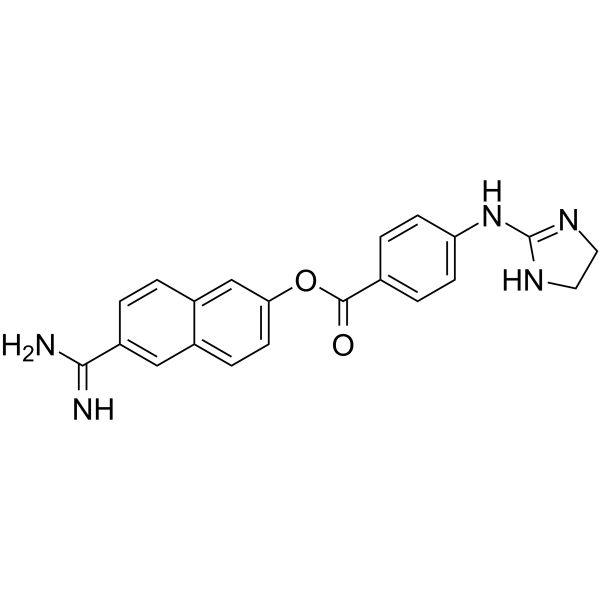
Sepimostat (FUT-187) trifluoroacetate exhibits neuroprotective activity via NR2B N-methyl-D-aspartate receptor antagonism at the Ifenprodil-binding site of the NR2B subunit. Sepimostat trifluoroacetate inhibits the Ifenprodil binding with a Ki value of 27.7 μM .
|
-
- HY-N11061
-
|
|
iGluR
|
Neurological Disease
|
|
Withaphysalin D is a selective antagonist against the N-methyl-D-aspartate receptor (NMDAR) containing GluN2B. Withaphysalin D can be isolated from water lilies and has neuroprotective properties. Withaphysalin D is able to cross the blood-brain barrier .
|
-
- HY-Y0966S6
-
|
|
Endogenous Metabolite
iGluR
|
Neurological Disease
|
|
Glycine- 13C2, 15N is the 13C- and 15N-labeled Glycine. Glycine is an inhibitory neurotransmitter in the CNS and also acts as a co-agonist along with glutamate, facilitating an excitatory potential at the glutaminergic N-methyl-D-aspartic acid (NMDA) receptors.
|
-
- HY-139048A
-
|
|
iGluR
|
Neurological Disease
|
|
Fluoroethylnormemantine hydrochloride, a derivative of Memantine, is an antagonist of the N-methyl-D-aspartate (NMDA) receptor. [ 18F]-Fluoroethylnormemantine hydrochloride can be used as a positron emission tomography (PET) tracer. Fluoroethylnormemantine hydrochloride exhibits anti-amnesic, neuroprotective, antidepressant-like and fear-attenuating effects .
|
-
- HY-156634
-
|
NYX-783
|
iGluR
|
Neurological Disease
|
|
Risevistinel (NYX-783) is a positive allosteric modulator of N-methyl-D-aspartate (NMDA) receptor. Nevadistinel can be used to inhibit cognitive impairment associated with neurodegenerative diseases, such as mild cognitive impairment, mild Alzheimer's disease, Parkinson's disease, Lewy body disease .
|
-
- HY-139048
-
|
|
iGluR
|
Neurological Disease
|
|
Fluoroethylnormemantine, a derivative of Memantine, is an antagonist of the N-methyl-D-aspartate (NMDA) receptor. [ 18F]-Fluoroethylnormemantine can be used as a positron emission tomography (PET) tracer. Fluoroethylnormemantine exhibits anti-amnesic, neuroprotective, antidepressant-like and fear-attenuating effects .
|
-
- HY-41239
-
|
|
Drug Intermediate
|
Others
|
|
1-Bromo-3,5-dimethyladamantane is an intermediate for Memantine (HY-B0591). Memantine is an orally active, noncompetitive N-methyl-D-aspartate receptor (NMDAR) antagonist. Memantine can be used for the research of moderate-to-severe Alzheimer's disease (AD).
|
-
- HY-Y0966S7
-
-
- HY-101229
-
|
|
iGluR
|
Neurological Disease
|
|
(2R,3R)-Chlorpheg is a week antagonist of L-homocysteic acid (L-HCA) induced depolarization.(2R,3R)-Chlorpheg also is a weak N-methyl-D-aspartate (NMDA) antagonist .
|
-
- HY-P1293
-
|
|
iGluR
|
Neurological Disease
|
|
Conantokin G, a 17-amino-acid peptide, is a potent, selective and competitive antagonist of N-methyl-D-aspartate (NMDA) receptors. Conantokin G inhibits NMDA-evoked currents in murine cortical neurons with an IC50 of 480 nM. Conantokin G has neuroprotective properties .
|
-
- HY-107703
-
|
|
iGluR
|
Neurological Disease
|
|
CGP 39551 is a potent, orally active, competitive N-methyl-D-aspartate (NMDA) receptor antagonist with potent anticonvulsant activity . CGP 39551 shows measurable inhibitory activity at both L-[ 3H]-glutamate (Ki=8.4 μM) .
|
-
- HY-Y0966S5
-
-
- HY-W101655R
-
-
- HY-105627A
-
|
CI-572 hydrochloride
|
GABA Receptor
iGluR
|
Cardiovascular Disease
|
|
Profadol (CI-572) hydrochloride is a potent analgesic agent. Profadol is a µ-opioid receptor (MOR) agonist. Profadol hydrochloride activates the γ-aminobutyric acid (GABA) receptors and inhibits the N-methyl-D-aspartate (NMDA) receptor. Profadol increases the mRNA and protein expression of MOR .
|
-
- HY-109097
-
|
SP-8203
|
MMP
iGluR
|
Neurological Disease
Inflammation/Immunology
Cancer
|
|
Otaplimastat (SP-8203), a matrix metalloproteinase (MMP) inhibitor, blocks N-methyl-D-aspartate (NMDA) receptor-mediated excitotoxicity in a competitive manner. Otaplimastat also exhibits anti-oxidant activity. Otaplimastat can be used for the research of brain ischemic injury .
|
-
- HY-100714C
-
|
2-APV sodium; DL-2-Amino-5-phosphonovaleric acid sodium
|
iGluR
|
Neurological Disease
Inflammation/Immunology
|
|
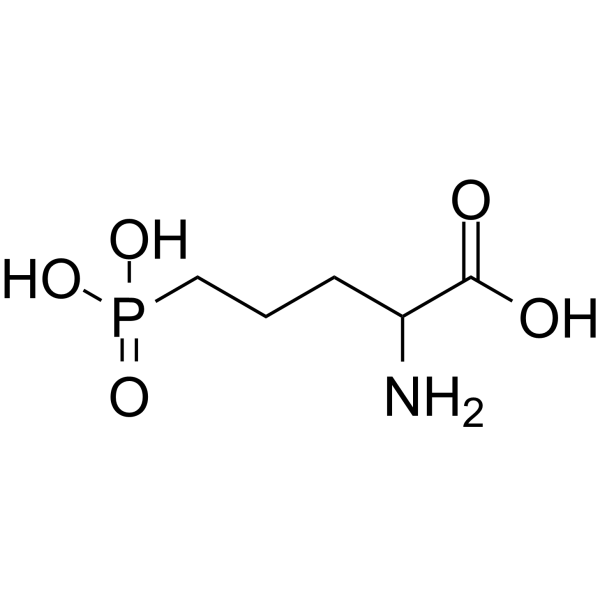
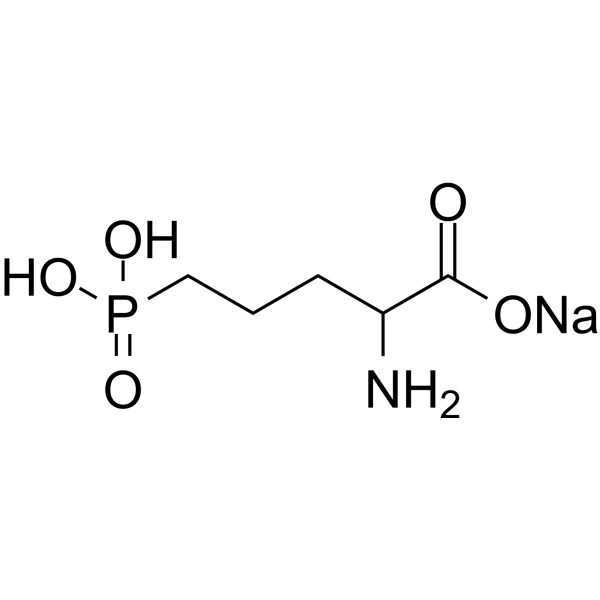
DL-AP5 (2-APV) sodium is a competitive NMDA (N-methyl-D-aspartate) receptor antagonist. DL-AP5 sodium shows significantly antinociceptive activity. DL-AP5 sodium specifically blocks on channels in the rabbit retina .
|
-
- HY-106408
-
|
Salfaprodil free base; Neu2000
|
iGluR
|
Neurological Disease
|
|
Nelonemdaz (Salfaprodil free base) is an NR2B-selective and uncompetitive antagonist of N-methyl-D-aspartate (NMDA). Nelonemdaz is also a free radical scavenger. Nelonemdaz has excellent neuroprotection against NMDA- and free radical-induced cell death .
|
-
- HY-P3990
-
|
|
VEGFR
Autophagy
Apoptosis
|
Cancer
|
|
Coibamide A, an N-methyl-stabilized cytotoxic depsipeptide, shows potent antiproliferative activity. Coibamide A induces autophagosome accumulation via an mTOR-independent mechanism. Coibamide A induces apoptosis. Coibamide A inhibits VEGFA/VEGFR2 expression and suppresses tumor growth in glioblastoma xenografts .
|
-
- HY-136299A
-
|
FUT-187
|
iGluR
|
Neurological Disease
|
|
Sepimostat dimethanesulfonate (FUT-187) exhibits neuroprotective activity via NR2B N-methyl-D-aspartate receptor antagonism at the Ifenprodil-binding site of the NR2B subunit. Sepimostat dimethanesulfonate inhibits the Ifenprodil binding with a Ki value of 27.7 µM .
|
-
- HY-107031
-
|
19560 RP
|
iGluR
|
Others
|
|
Metapramine (19560 RP) is an antidepressant agent, belonging to the class of tricyclic compounds . Metapramine inhibits norepinephrine reuptake, without affecting the reuptake of serotonin or dopamine . Metapramine is a low-affinity antagonist of the N-methyl-D-aspartic acid (NMDA) receptor complex channel .
|
-
- HY-100714
-
DL-AP5
3 Publications Verification
2-APV; DL-2-Amino-5-phosphonovaleric acid
|
iGluR
|
Neurological Disease
Inflammation/Immunology
|
|
DL-AP5 (2-APV) is a competitive NMDA (N-methyl-D-aspartate) receptor antagonist. DL-AP5 shows significantly antinociceptive activity. DL-AP5 specifically blocks on channels in the rabbit retina .
|
-
- HY-100667R
-
|
|
iGluR
Reference Standards
|
Neurological Disease
|
|
UBP608 (Standard) is the analytical standard of UBP608 (HY-100667). This product is intended for research and analytical applications. UBP608 is a potent N-Methyl-D-aspartate receptors (NMDARs) negative allosteric modulator. UBP608 has the potential for the research of neurological disorders .
|
-
- HY-136299
-
|
FUT-187 free base
|
iGluR
|
Neurological Disease
|
|
Sepimostat (FUT-187 free base) exhibits neuroprotective activity via NR2B N-methyl-D-aspartate receptor antagonism at the Ifenprodil-binding site of the NR2B subunit. Sepimostat inhibits the Ifenprodil binding with a Ki value of 27.7?μM .
|
-
- HY-P5911
-
|
|
iGluR
|
Inflammation/Immunology
|
|
GluN1 (359-378) is an anti-N-methyl-D-aspartate
receptor (NMDAR) peptide. GluN1 (359-378) can cross the blood-brain barrier.
GluN1 (359-378) can be used to study anti-NMDAR encephalitis therapy targeting
the immune system .
|
-
- HY-156626
-
|
NYX-458; NYX-3054
|
iGluR
|
Neurological Disease
|
|
Nevadistinel (NYX-458; NYX-3054) is a positive allosteric modulator of N-methyl-D-aspartate (NMDA) receptor. Nevadistinel can be used to inhibit cognitive impairment associated with neurodegenerative diseases, such as mild cognitive impairment, mild Alzheimer's disease, Parkinson's disease, Lewy body disease .
|
-
- HY-P1293A
-
|
|
iGluR
|
Neurological Disease
|
|
Conantokin G TFA, a 17-amino-acid peptide, is a potent, selective and competitive antagonist of N-methyl-D-aspartate (NMDA) receptors. Conantokin G TFA inhibits NMDA-evoked currents in murine cortical neurons with an IC50 of 480 nM. Conantokin G TFA has neuroprotective properties .
|
-
- HY-101178
-
|
|
iGluR
|
Neurological Disease
|
|
L-689560 is a potent N-methyl-D-aspartate (NMDA) receptor antagonist at the GluN1 glycine binding site. L-689560 is widely used as a radiolabeled ligand in binding studies and used for study the roles of NMDA receptors in normal neurological processes as well as in diseases .
|
-
- HY-W008235
-
|
|
Amino Acid Derivatives
Drug Intermediate
|
Cancer
|
|
Fmoc-N-Me-Ala-OH is an Fmoc-protected N-methyl-L-alanine and also a building block for solid-phase peptide synthesis. As a building block, Fmoc-N-Me-Ala-OH is used to synthesize peptidomimetic antagonists of XIAP BIR3 derived from Smac/DIABLO .
|
-
- HY-100714D
-
|
2-APV lithium; DL-2-Amino-5-phosphonovaleric acid lithium
|
iGluR
|
Neurological Disease
Inflammation/Immunology
|
|
DL-AP5 (2-APV) lithium is a competitive NMDA (N-methyl-D-aspartate) receptor antagonist. DL-AP5 lithium shows significantly antinociceptive activity. DL-AP5 lithium specifically blocks on channels in the rabbit retina .
|
-
- HY-109097A
-
|
SP-8203 hydrochloride
|
MMP
iGluR
|
Cardiovascular Disease
Neurological Disease
|
|
Otaplimastat (SP-8203) hydrobromide, a matrix metalloproteinase (MMP) inhibitor, blocks N-methyl-D-aspartate (NMDA) receptor-mediated excitotoxicity in a competitive manner. Otaplimastat hydrobromide also exhibits anti-oxidant activity. Otaplimastat hydrobromide can be used for the research of brain ischemic injury .
|
-
- HY-P3679
-
|
|
Neuropeptide Y Receptor
|
Neurological Disease
|
|
Neuropeptide Y (1-24) (human) is a neuropeptide with potencies in inhibiting the electricity stimulated twitch response of rat vas deferens. Neuropeptide Y (1-24) (human) stimulates N-methyl-D-aspartate (NMDA)-induced neuronal activation in the rat CA3 region of the dorsal hippocampus in vivo .
|
-
- HY-Y0966S11
-
|
|
iGluR
Endogenous Metabolite
|
Neurological Disease
|
|
Glycine- 13C2, 15N,d2 is the deuterium, 13C and 15N labeled Glycine . Glycine is an inhibitory neurotransmitter in the CNS and also acts as a co-agonist along with glutamate, facilitating an excitatory potential at the glutaminergic N-methyl-D-aspartic acid (NMDA) receptors .
|
-
- HY-106441AR
-
|
MK-0657 (Standard); CERC-301 (Standard)
|
Reference Standards
iGluR
|
Neurological Disease
|
|
Rislenemdaz (Standard) is the analytical standard of Rislenemdaz (HY-106441A). This product is intended for research and analytical applications. Rislenemdaz (CERC-301) is an orally bioavailable and selective N-methyl-D-aspartate (NMDA) receptor subunit 2B (GluN2B) antagonist with Ki and IC 50 of 8.1 nM and 3.6 nM, respectively.
|
-
- HY-130592
-
|
C48/80 trihydrochloride
|
Phospholipase
|
Neurological Disease
|
|
Compound 48/80 trihydrochloride (C48/80 trihydrochloride) is a mixture of condensation products of N-methyl-p-methoxyphenethylamine with formaldehyde. Compound 48/80 trihydrochloride is also a histamine releaser and a mast cell degranulator. Compound 48/80 inhibits phosphatidylinositol-specific phospholipase C activity from human platelets .
|
-
- HY-100807
-
-
- HY-100807S
-
-
- HY-100807R
-
-
- HY-B1487R
-
|
Tricyclamol hydrochloride (Standard); (±)-Procyclidine hydrochloride (Standard)
|
Reference Standards
iGluR
mAChR
|
Neurological Disease
|
|
Procyclidine (hydrochloride) (Standard) is the analytical standard of Procyclidine (hydrochloride). This product is intended for research and analytical applications. Procyclidine (Tricyclamol, (±)-Procyclidine) hydrochloride , an anticholinergic agent, is a muscarinic receptor antagonist that also has the properties of an N-methyl-D-aspartate (NMDA) antagonist. Procyclidine hydrochloride can be used in studies of Parkinson's disease and related psychiatric disorders such as Soman-induced epilepsy .
|
-
- HY-15086
-
|
CGS 19755
|
iGluR
|
Neurological Disease
|
|
Selfotel (CGS 19755) is a selective and competitive antagonist at N-methyl-D-aspartate (NMDA)-preferring receptor. CGS 19755 inhibits the binding of [3H]-3-(2-carboxypiperazin-4-yl)propyl-1-phosphonic acid to NMDA-type receptors with an IC50 of 50 nM .
|
-
- HY-P1287
-
|
|
iGluR
|
Neurological Disease
|
|
Conantokin-T is a γ-carboxyglutamate-containing, N-methyl-D-aspartate (NMDA) antagonist peptidewith an IC50 value of 2 μM. Conantokin-T inhibits NMDA receptor-mediated calcium influx in central nervous system neurons. Conantokin-T can be purified from the venom of the fish-hunting cone snail, Conus tulipa .
|
-
- HY-124779A
-
|
(S)-GEA 654 hydrochloride; (S)-A03 hydrochloride
|
Serotonin Transporter
|
Neurological Disease
|
|
(S)-Alaproclate ((S)-A03) hydrochloride is a potent selective serotonin reuptake inhibitor (SSRI), which is used as an antidepressant agent. (S)-Alaproclate (hydrochloride) also produces a potent block of N-methyl-d-aspartate (NMDA) receptor currents in hippocampal neurons (IC50=1.1 μM) with a potent blocker of K + currents .
|
-
- HY-100807S1
-
-
- HY-N6704
-
|
|
ERK
Apoptosis
|
Cancer
|
|
Enniatin A1 isolated from Fusarium mycotoxins is a cyclic hexadepsipeptide consisting of alternating D-α-hydroxyisovaleric acids and N-methyl-L-amino acids. Enniatin A1 possesses anticarcinogenic properties by induction of apoptosis and disruption of ERK signalling pathway. Enniatin A1 inhibits ACAT with an IC50 of 49 μM in rat liver microsomes .
|
-
- HY-B1487S1
-
|
Tricyclamol-d5; (±)-Procyclidine-d5
|
Isotope-Labeled Compounds
iGluR
mAChR
|
Neurological Disease
|
|
Procyclidine-d5 (Tricyclamol-d5) is deuterium labeled Procyclidine (hydrochloride). Procyclidine (Tricyclamol, (±)-Procyclidine) hydrochloride , an anticholinergic agent, is a muscarinic receptor antagonist that also has the properties of an N-methyl-D-aspartate (NMDA) antagonist. Procyclidine hydrochloride can be used in studies of Parkinson's disease and related psychiatric disorders such as Soman-induced epilepsy .
|
-
- HY-W067986R
-
|
6-Hydroxy-N-methyl-2-methyl-1-benzofuran-3-carboxamide (Standard)
|
Reference Standards
|
|
|
6-Hydroxy-N,2-dimethylbenzofuran-3-carboxamide (Standard) is the analytical standard of 6-Hydroxy-N,2-dimethylbenzofuran-3-carboxamide. This product is intended for research and analytical applications.
|
-
- HY-153129
-
|
|
Prostaglandin Receptor
|
Endocrinology
|
|
EP2 receptor antagonist-2 (CID891729) is an antagonist of EP2 receptor. EP2 receptor antagonist-2 inhibits the EP2 receptor activation induced by PGE2. EP2 receptor antagonist-2 also suppresses lactate dehydrogenase (LDH) release induced by N-methyl-D-aspartate (NMDA) .
|
-
- HY-136299R
-
|
FUT-187 free base (Standard)
|
iGluR
Reference Standards
|
Neurological Disease
|
|
Sepimostat (Standard) is the analytical standard of Sepimostat. This product is intended for research and analytical applications. Sepimostat (FUT-187 free base) exhibits neuroprotective activity via NR2B N-methyl-D-aspartate receptor antagonism at the Ifenprodil-binding site of the NR2B subunit. Sepimostat inhibits the Ifenprodil binding with a Ki value of 27.7 μM .
|
-
- HY-114753
-
|
CR-2249; XY-2401
|
iGluR
|
Neurological Disease
|
|
Neboglamine (CR-2249; XY-2401) is a modulator for N-methyl-D-aspartate (NMDA) receptor. Neboglamine increases the levels of fos-like immunoreactivity (FLI)-positive cells in the prefrontal cortex, nucleus accumbens, and lateral septal nucleus in rat models, .restores NMDA (HY-17551) -mediated neurotransmitter release, and inhibits phencyclidine-induced hyperlocomotion .
|
-
- HY-B0340
-
|
DM9384; DZL-221
|
nAChR
iGluR
mGluR
PKC
GABA Receptor
Calcium Channel
|
Neurological Disease
|
|
Nefiracetam is a cognition-enhancing agent. Nefiracetam is an activator of nAChR, N-methyl-D-aspartate receptor (NMDAR), mGluR5, PKC, gamma-aminobutyric acid (GABA), and N/L-type Ca 2+ channels. Nefiracetam promotes neuroplasticity and enhances neuroprotection. Nefiracetam can be used in Alzheimer's disease, epilepsy, and cerebral ischemia research .
|
-
- HY-W882667
-
|
|
iGluR
|
Neurological Disease
|
|
Pregn-5-en-3β-ol, a steroid compound, when formulated as the biscarboxylic acid hemiesters along with androst-5-en-3β-ol, serves as a potent positive allosteric modulator of NMDA (N-methyl-D-aspartate) receptors, making it applicable for research into psychiatric disorders .
|
-
- HY-P2592
-
-
- HY-106408AR
-
|
Salfaprodil (Standard); Neu2000 potassium (Standard)
|
Reference Standards
iGluR
|
Neurological Disease
|
|
Nelonemdaz potassium (Standard) is the analytical standard of Nelonemdaz potassium (HY-106408A). This product is intended for research and analytical applications. Nelonemdaz (Salfaprodil) potassium is an NR2B-selective and uncompetitive antagonist of N-methyl-D-aspartate (NMDA). Nelonemdaz potassium is also a free radical scavenger. Nelonemdaz potassium has excellent neuroprotection against NMDA- and free radical-induced cell death .
|
-
- HY-W700581
-
|
|
Isotope-Labeled Compounds
Biochemical Assay Reagents
|
Others
|
|
1-(Methyl-d3)-4-nitrosopiperazine is the deuterium labeled 1-Methyl-4-nitrosopiperazine (HY-W663740). 1-Methyl-4-nitrosopiperazine (MNP; MeNP;N-Methyl-N'-nitrosopiperazine) is a potential impurity in sartans, non-steroidal anti-inflammatory drugs (NSAIDs), and thiazide diuretics .
|
-
- HY-117483
-
|
|
iGluR
|
Neurological Disease
|
|
Gly-Pro-Glu is a neuroactive peptide with a potent action on acetylcholine release. Gly-Pro-Glu is the N-terminal tripeptide of insulin-like growth factor-I. Gly-Pro-Glu inhibits glutamate binds to N-methyl-D-aspartate (NMDA) receptor with an IC50 value of 14.7 μM. Gly-Pro-Glu can be used for the research of neuroprotection .
|
-
- HY-W416548S
-
|
|
Isotope-Labeled Compounds
Biochemical Assay Reagents
|
Others
|
|
1-Methyl-4-nitro piperazine-d11 is the deuterium labeled 1-Methyl-4-nitro piperazine. 1-Methyl-4-nitrosopiperazine (MNP; MeNP;N-Methyl-N'-nitrosopiperazine) is a potential impurity in sartans, non-steroidal anti-inflammatory drugs (NSAIDs), and thiazide diuretics .
|
-
- HY-100822
-
|
(+)-HA-966
|
iGluR
|
Neurological Disease
|
|
(R)-(+)-HA-966 ((+)-HA-966) is a partial agonist/antagonist of glycine site of the N-methyl-D-aspartate (NMDA) receptor complex. (R)-(+)-HA-966 selectively blocks the activation of the mesolimbic dopamine system by amphetamine . (R)-(+)-HA-966 can cross the blood-brain barrier and has the potential for neuropathic and acute pain .
|
-
- HY-B0340R
-
|
DM9384 (Standard); DZL-221 (Standard)
|
Reference Standards
nAChR
iGluR
mGluR
PKC
GABA Receptor
Calcium Channel
|
Neurological Disease
|
|
Nefiracetam (Standard) is a cognition-enhancing agent. Nefiracetam is an activator of nAChR, N-methyl-D-aspartate receptor (NMDAR), mGluR5, PKC, gamma-aminobutyric acid (GABA), and N/L-type Ca 2+ channels. Nefiracetam promotes neuroplasticity and enhances neuroprotection. Nefiracetam can be used in Alzheimer's disease, epilepsy, and cerebral ischemia research .
|
-
- HY-100807S2
-
-
- HY-G0021
-
|
Norclozapine; Desmethylclozapine; Normethylclozapine
|
mAChR
Opioid Receptor
Drug Metabolite
Virus Protease
|
Infection
|
|
N-Desmethylclozapine is a major active metabolite of the atypical antipsychotic agent Clozapine. N-Desmethylclozapine is a potent, allosteric and partial M1 receptors agonist (EC50=115 nM) and is able to potentiate hippocampal N-methyl-d-aspartate (NMDA) receptor currents through M1 receptor activation. N-Desmethylclozapine is also a δ-opioid agonist .
|
-
- HY-17387
-
|
Huperzine A
|
Cholinesterase (ChE)
iGluR
|
Infection
Neurological Disease
Inflammation/Immunology
|
|
(-)-Huperzine A (Huperzine A) is an alkaloid isolated from Huperzia serrata, with neuroprotective activity. (-)-Huperzine A is a potent, highly specific, reversible and blood-brain barrier penetrant inhibitor of acetylcholinesterase (AChE), with an IC50 of 82 nM. (-)-Huperzine A also is non-competitive antagonist of N-methyl-D-aspartate glutamate (NMDA) receptor. (-)-Huperzine A is developed for the research of neurodegenerative diseases, including Alzheimer’s disease .
|
-
- HY-W001601
-
|
|
iGluR
|
Neurological Disease
|
|
Budipine is an anti-parkinson agent. Budipine also is a substrate of P-glycoprotein (P-gp), is mediated the uptake into the brain by P-gp. Budipine also is N-methyl-d-aspartate (NMDA) antagonist, and has indirect dopaminergic effects through an improved dopamine release, the inhibition of monoamine oxidase type B (MAO-B). Budipine can be used for the research of CNS disorders include Parkinson disease .
|
-
- HY-106408R
-
|
Salfaprodil free base (Standard); Neu2000 (Standard)
|
Reference Standards
iGluR
|
Neurological Disease
|
|
Nelonemdaz (Standard) is the analytical standard of Nelonemdaz (HY-106408). This product is intended for research and analytical applications. Nelonemdaz (Salfaprodil free base) is an NR2B-selective and uncompetitive antagonist of N-methyl-D-aspartate (NMDA). Nelonemdaz is also a free radical scavenger. Nelonemdaz has excellent neuroprotection against NMDA- and free radical-induced cell death .
|
-
- HY-Y0966R
-
|
|
Reference Standards
Endogenous Metabolite
iGluR
VEGFR
|
Neurological Disease
|
|
Glycine (Standard) is the analytical standard of Glycine. This product is intended for research and analytical applications. Glycine is an inhibitory neurotransmitter in the CNS and also acts as a co-agonist along with glutamate, facilitating an excitatory potential at the glutaminergic N-methyl-D-aspartic acid (NMDA) receptors. Glycine is orally active. Glycine can be used to study cell protection, cancer, neurological diseases, and angiogenesis .
|
-
- HY-W001601A
-
|
|
iGluR
|
Neurological Disease
|
|
Budipine hydrochloride is an anti-parkinson agent. Budipine hydrochloride also is a substrate of P-glycoprotein (P-gp), is mediated the uptake into the brain by P-gp. Budipine hydrochloride also is N-methyl-d-aspartate (NMDA) antagonist, and has indirect dopaminergic effects through an improved dopamine release, the inhibition of monoamine oxidase type B (MAO-B). Budipine hydrochloride can be used for the research of CNS disorders include Parkinson disease .
|
-
- HY-149308
-
|
|
Macrophage migration inhibitory factor (MIF)
|
Infection
|
|
MKA031 (compound 6y) is a non-competitive MIF inhibitor with an IC50 value of 1.7 μM. MKA031 (compound 6y) interferes with MIF/AIF interaction, MIF nuclear translocation, and N-methyl-N'-nitro-N-nitrosoguanidine (MNNG)-induced dependent cell death. MKA031 can be used in the study of chronic hepatitis C virus infection .
|
-
- HY-P10143
-
|
Ac-Pro-Leu-Gly-[(S)-2-mercapto-4-methyl-pentanoyl]-Leu-Gly-OEt
|
MMP
|
Others
|
|
MMP-2/MMP-9 Substrate (Ac-Pro-Leu-Gly-[(S)-2-mercapto-4-methyl-pentanoyl]-Leu-Gly-OEt) is a synthetic chromogenic polypeptide substrate whose core structure mimics the cleavage sites of MMP-2 and MMP-9 (gelatinase A and B) in collagen. After being hydrolyzed by collagenase, MMP-2/MMP-9 Substrate reacts with 4,4'-dithiodipyridine or Ellman's Reagent via its thiol fragment to produce a product with ultraviolet absorption properties .
|
-
- HY-100811
-
|
7-CKA
|
iGluR
|
Neurological Disease
|
|
7-Chlorokynurenic acid (7-CKA) is a potent and selective antagonist of the glycine B coagonist site of the N-methyl-D-aspartate (NMDA) receptor (IC50=0.56 μM). 7-Chlorokynurenic acid is also a potent inhibitor of the reuptake of glutamate into synaptic vesicles with a Ki of 0.59 μM. 7-Chlorokynurenic acid has potent antinociceptive actions after neuraxial delivery .
|
-
- HY-100714R
-
|
2-APV (Standard); DL-2-Amino-5-phosphonovaleric acid (Standard)
|
Reference Standards
iGluR
|
Neurological Disease
Inflammation/Immunology
|
|
DL-AP5 (Standard) is the analytical standard of DL-AP5. This product is intended for research and analytical applications. DL-AP5 (2-APV) is a competitive NMDA (N-methyl-D-aspartate) receptor antagonist. DL-AP5 shows significantly antinociceptive activity. DL-AP5 specifically blocks on channels in the rabbit retina .
|
-
- HY-100811A
-
|
7-CKA sodium salt
|
iGluR
|
Neurological Disease
|
|
7-Chlorokynurenic acid sodium salt (7-CKA sodium salt) is a potent and selective antagonist of the glycine B coagonist site of the N-methyl-D-aspartate (NMDA) receptor (IC50=0.56 μM). 7-Chlorokynurenic acid sodium salt is also a potent inhibitor of the reuptake of glutamate into synaptic vesicles with a Ki of 0.59 μM. 7-Chlorokynurenic acid sodium salt has potent antinociceptive actions after neuraxial delivery .
|
-
- HY-W008558
-
|
|
Amino Acid Derivatives
|
Others
|
|
Fmoc-N-Me-Leu-OH is an N-Fmoc-N-methyl amino acid that can be used in peptide coupling reactions. Fmoc-N-Me-Leu-OH is primarily used as a standard building block in solid-phase peptide synthesis (SPPS) to introduce N-methylleucine residues into peptide chains, thereby enhancing the enzymatic stability, altering conformational flexibility, and modifying the biological activity of the target peptide .
|
-
- HY-100714CR
-
|
2-APV sodium (Standard); DL-2-Amino-5-phosphonovaleric acid sodium (Standard)
|
Reference Standards
iGluR
|
Neurological Disease
Inflammation/Immunology
|
|
DL-AP5 (sodium) (Standard) is the analytical standard of DL-AP5 (sodium). This product is intended for research and analytical applications. DL-AP5 (2-APV) sodium is a competitive NMDA (N-methyl-D-aspartate) receptor antagonist. DL-AP5 sodium shows significantly antinociceptive activity. DL-AP5 sodium specifically blocks on channels in the rabbit retina .
|
-
- HY-41051
-
|
N-tert-Butoxycarbonyl-N-methyl-L-valine; N-tert-Butoxycarbonyl-N-methylvaline
|
Amino Acid Derivatives
|
Others
|
|
(2S)-2-[[(tert-Butoxy)carbonyl](methyl)amino]-3-methylbutanoic acid is a valine derivative .
|
-
- HY-P3066
-
|
d(CH2)5Tyr(Et)VAVP
|
Vasopressin Receptor
|
Metabolic Disease
|
|
SKF 100398 (d(CH2)5Tyr(Et)VAVP), an arginine vasopressin (AVP) analogue, is a specific antagonist of the antidiuretic effect of exogenous and endogenous AVP .
|
-
- HY-17388
-
|
|
Drug Isomer
Cholinesterase (ChE)
iGluR
|
Neurological Disease
|
|
(±)-Huperzine A is the racemate of (-)-Huperzine A (HY-17387). (-)-Huperzine A is an alkaloid isolated from Huperzia serrata, with neuroprotective activity. (-)-Huperzine A is a potent, highly specific, reversible and blood-brain barrier penetrant inhibitor of acetylcholinesterase (AChE), with an IC50 of 82 nM. (-)-Huperzine A also is non-competitive antagonist of N-methyl-D-aspartate glutamate (NMDA) receptor. (-)-Huperzine A is developed for the research of neurodegenerative diseases, including Alzheimer’s disease .
|
-
- HY-Y0966
-
-
- HY-P0221B
-
|
|
PACAP Receptor
|
Endocrinology
|
|
PACAP (1-38) free acid TFA is an endogenous neuropeptide. PACAP (1-38) free acid TFA potently stimulates antral motility and somatostatin secretion, inhibits the secretion of gastrin and stimulates the release of vasoactive intestinal polypeptide, gastrin releasing peptide and substance P. PACAP (1-38) free acid TFA also enhances N-methyl-D-aspartate receptor function and expression of brain-derived neurotrophic factor through RACK1 .
|
-
- HY-118758
-
|
γ-Kainic acid-glutamic acid
|
Sodium Channel
|
Neurological Disease
|
|
γ-Kainylglutamic acid (γ-Kainic acid-glutamic acid), a dipeptide derived from kainic and L-Glutamic acids, is a selective antagonist of amino acid induced neuroexcitation with anticonvulsant properties. γ-Kainylglutamic acid inhibits the stimulation of Na + fluxes induced in brain slices by the neuroexcitant N-methyl-D-aspartic acid. γ-Kainylglutamic acid is also effective in protecting mice from picrotoxin-induced convulsions with an EC50 value of 0.17 μmol .
|
-
- HY-G0021S
-
|
Norclozapine-d8; Desmethylclozapine-d8; Normethylclozapine-d8
|
mAChR
Opioid Receptor
Drug Metabolite
Virus Protease
|
Infection
|
|
N-Desmethylclozapine-d8 is the deuterium labeled N-Desmethylclozapine. N-Desmethylclozapine is a major active metabolite of the atypical antipsychotic agent Clozapine. N-Desmethylclozapine is a potent, allosteric and partial M1 receptors agonist (EC50=115 nM) and is able to potentiate hippocampal N-methyl-d-aspartate (NMDA) receptor currents through M1 receptor activation. N-Desmethylclozapine is also a δ-opioid agonist .
|
-
- HY-W001601R
-
|
|
Reference Standards
iGluR
|
Neurological Disease
|
|
Budipine (Standard) is the analytical standard of Budipine. This product is intended for research and analytical applications. Budipine is an anti-parkinson agent. Budipine also is a substrate of P-glycoprotein (P-gp), is mediated the uptake into the brain by P-gp. Budipine also is N-methyl-d-aspartate (NMDA) antagonist, and has indirect dopaminergic effects through an improved dopamine release, the inhibition of monoamine oxidase type B (MAO-B). Budipine can be used for the research of CNS disorders include Parkinson disease .
|
-
- HY-G0021S1
-
|
Norclozapine-d8 hydrochloride; Desmethylclozapine-d8 hydrochloride; Normethylclozapine-d8 hydrochloride
|
mAChR
Opioid Receptor
Drug Metabolite
Virus Protease
|
Infection
|
|
N-Desmethylclozapine-d8 (hydrochloride) is the deuterium labeled N-Desmethylclozapine hydrochloride. N-Desmethylclozapine hydrochloride is a major active metabolite of the atypical antipsychotic agent Clozapine. N-Desmethylclozapine hydrochloride is a potent, allosteric and partial M1 receptors agonist (EC50=115 nM) and is able to potentiate hippocampal N-methyl-d-aspartate (NMDA) receptor currents through M1 receptor activation. N-Desmethylclozapine hydrochloride is also a δ-opioid agonist .
|
-
- HY-118077
-
|
|
Others
|
Others
|
|
RE 11775 (m-tert-butylphenyl-N-methyl-N-(phenylthio) carbonate) is a new carbonate ester with unusually high toxicity to mosquito larvae. Laboratory and field evaluations have shown that it has potential for use in controlling sensitive and organophosphate-resistant larval and adult stages of Aedes nigromaculis (Ludlow). Preliminary studies also suggest that RE 11775 may also be useful for controlling sensitive and organophosphate-resistant Culex spccies. This new carbonate ester is relatively safe, with no adverse effects found in current testing.
|
-
- HY-G0021R
-
|
Norclozapine (Standard); Desmethylclozapine (Standard); Normethylclozapine (Standard)
|
Reference Standards
mAChR
Opioid Receptor
Drug Metabolite
Virus Protease
|
Infection
|
|
N-Desmethylclozapine (Standard) is the analytical standard of N-Desmethylclozapine. This product is intended for research and analytical applications. N-Desmethylclozapine is a major active metabolite of the atypical antipsychotic agent Clozapine. N-Desmethylclozapine is a potent, allosteric and partial M1 receptors agonist (EC50=115 nM) and is able to potentiate hippocampal N-methyl-d-aspartate (NMDA) receptor currents through M1 receptor activation. N-Desmethylclozapine is also a δ-opioid agonist .
|
-
- HY-N0215
-
|
(S)-2-Amino-3-phenylpropionic acid
|
Calcium Channel
iGluR
Endogenous Metabolite
Ligands for E3 Ligase
|
Metabolic Disease
Cancer
|
|
L-Phenylalanine ((S)-2-Amino-3-phenylpropionic acid) is an essential amino acid isolated from Escherichia coli. L-Phenylalanine is a α2δ subunit of voltage-dependent Ca + channels antagonist with a Ki of 980 nM. L-phenylalanine is a competitive antagonist for the glycine- and glutamate-binding sites of N-methyl-D-aspartate receptors (NMDARs) (KB of 573 μM ) and non-NMDARs, respectively. L-Phenylalanine is widely used in the production of food flavors and pharmaceuticals .
|
-
- HY-17387S1
-
|
Huperzine A-d4
|
iGluR
Cholinesterase (ChE)
Apoptosis
Isotope-Labeled Compounds
|
Neurological Disease
|
|
(-)-Huperzine A-d4 hydrochloride is deuterated labeled (-)-Huperzine A (HY-17387). (-)-Huperzine A (Huperzine A) is an alkaloid isolated from Huperzia serrata, with neuroprotective activity. (-)-Huperzine A is a potent, highly specific, reversible and blood-brain barrier penetrant inhibitor of acetylcholinesterase (AChE), with an IC50 of 82 nM. (-)-Huperzine A also is non-competitive antagonist of N-methyl-D-aspartate glutamate (NMDA) receptor. (-)-Huperzine A is developed for the research of neurodegenerative diseases, including Alzheimer’s disease .
|
-
- HY-N0215S6
-
|
2-Amino-3-phenylpropionic acid-d5 hydrochloride
|
Isotope-Labeled Compounds
Calcium Channel
iGluR
Endogenous Metabolite
|
Metabolic Disease
|
|
DL-Phenylalanine-d5 (hydrochloride) is the deuterium labeled DL-Phenylalanine hydrochloride. L-Phenylalanine hydrochloride is an essential amino acid isolated from Escherichia coli. L-Phenylalanine hydrochloride is a α2δ subunit of voltage-dependent Ca+ channels antagonist with a Ki of 980 nM. L-phenylalanine hydrochloride is a competitive antagonist for the glycine- and glutamate-binding sites of N-methyl-D-aspartate receptors (NMDARs) (KB of 573 μM ) and non-NMDARs, respectively. L-Phenylalanine hydrochloride is widely used in the production of food flavors and pharmaceuticals .
|
-
- HY-N6704S
-
|
|
Isotope-Labeled Compounds
ERK
Apoptosis
|
Cancer
|
|
Enniatin A1- 13C35 is the 13C-labeled Enniatin A1 (HY-N6704). Enniatin A1 isolated from Fusarium mycotoxins is a cyclic hexadepsipeptide consisting of alternating D-α-hydroxyisovaleric acids and N-methyl-L-amino acids. Enniatin A1 possesses anticarcinogenic properties by induction of apoptosis and disruption of ERK signalling pathway. Enniatin A1 inhibits ACAT with an IC50 of 49 μM in rat liver microsomes .
|
-
- HY-125628
-
|
|
Endogenous Metabolite
|
Infection
|
|
Kahalalide A is an anti-mycobacterial compound with antimicrobial activity. Kahalalide A is derived from the marine mollusk Elysia rufescens. Kahalalide A has attracted extensive attention in natural product research due to its potential medicinal value .
|
-
- HY-100811AR
-
|
7-CKA sodium salt (Standard)
|
Reference Standards
iGluR
|
Neurological Disease
|
|
7-Chlorokynurenic acid (sodium salt) (Standard) is the analytical standard of 7-Chlorokynurenic acid (sodium salt). This product is intended for research and analytical applications. 7-Chlorokynurenic acid sodium salt (7-CKA sodium salt) is a potent and selective antagonist of the glycine B coagonist site of the N-methyl-D-aspartate (NMDA) receptor (IC50=0.56 μM). 7-Chlorokynurenic acid sodium salt is also a potent inhibitor of the reuptake of glutamate into synaptic vesicles with a Ki of 0.59 μM. 7-Chlorokynurenic acid sodium salt has potent antinociceptive actions after neuraxial delivery .
|
-
- HY-100811R
-
|
7-CKA (Standard)
|
Reference Standards
iGluR
|
Neurological Disease
|
|
7-Chlorokynurenic acid (Standard) is the analytical standard of 7-Chlorokynurenic acid. This product is intended for research and analytical applications. 7-Chlorokynurenic acid (7-CKA) is a potent and selective antagonist of the glycine B coagonist site of the N-methyl-D-aspartate (NMDA) receptor (IC50=0.56 μM). 7-Chlorokynurenic acid is also a potent inhibitor of the reuptake of glutamate into synaptic vesicles with a Ki of 0.59 μM. 7-Chlorokynurenic acid has potent antinociceptive actions after neuraxial delivery .
|
-
- HY-100822R
-
|
(+)-HA-966 (Standard)
|
iGluR
Reference Standards
|
Neurological Disease
|
|
(R)-(+)-HA-966 (Standard) is the analytical standard of (R)-(+)-HA-966 (HY-100822). This product is intended for research and analytical applications. (R)-(+)-HA-966 ((+)-HA-966) is a partial agonist/antagonist of glycine site of the N-methyl-D-aspartate (NMDA) receptor complex. (R)-(+)-HA-966 selectively blocks the activation of the mesolimbic dopamine system by amphetamine . (R)-(+)-HA-966 can cross the blood-brain barrier and has the potential for neuropathic and acute pain .
|
-
- HY-148825
-
-
- HY-N0215S
-
|
(S)-2-Amino-3-phenylpropionic acid-d7
|
Isotope-Labeled Compounds
Calcium Channel
iGluR
Endogenous Metabolite
|
Metabolic Disease
|
|
L-Phenylalanine-d7 is the deuterium labeled L-Phenylalanine. L-Phenylalanine ((S)-2-Amino-3-phenylpropionic acid) is an essential amino acid isolated from Escherichia coli. L-Phenylalanine is a α2δ subunit of voltage-dependent Ca+ channels antagonist with a Ki of 980 nM. L-phenylalanine is a competitive antagonist for the glycine- and glutamate-binding sites of N-methyl-D-aspartate receptors (NMDARs) (KB of 573 μM ) and non-NMDARs, respectively. L-Phenylalanine is widely used in the production of food flavors and pharmaceuticals .
|
-
- HY-N0215S1
-
|
(S)-2-Amino-3-phenylpropionic acid-d8
|
Calcium Channel
iGluR
Endogenous Metabolite
|
Metabolic Disease
|
|
L-Phenylalanine-d8 is the deuterium labeled L-Phenylalanine. L-Phenylalanine ((S)-2-Amino-3-phenylpropionic acid) is an essential amino acid isolated from Escherichia coli. L-Phenylalanine is a α2δ subunit of voltage-dependent Ca+ channels antagonist with a Ki of 980 nM. L-phenylalanine is a competitive antagonist for the glycine- and glutamate-binding sites of N-methyl-D-aspartate receptors (NMDARs) (KB of 573 μM ) and non-NMDARs, respectively. L-Phenylalanine is widely used in the production of food flavors and pharmaceuticals .
|
-
- HY-N0215S13
-
|
(S)-2-Amino-3-phenylpropionic acid-d1
|
Isotope-Labeled Compounds
Calcium Channel
iGluR
Endogenous Metabolite
|
Metabolic Disease
|
|
L-Phenylalanine-d is the deuterium labeled L-Phenylalanine. L-Phenylalanine ((S)-2-Amino-3-phenylpropionic acid) is an essential amino acid isolated from Escherichia coli. L-Phenylalanine is a α2δ subunit of voltage-dependent Ca+ channels antagonist with a Ki of 980 nM. L-phenylalanine is a competitive antagonist for the glycine- and glutamate-binding sites of N-methyl-D-aspartate receptors (NMDARs) (KB of 573 μM ) and non-NMDARs, respectively. L-Phenylalanine is widely used in the production of food flavors and pharmaceuticals .
|
-
- HY-N0215S3
-
|
(S)-2-Amino-3-phenylpropionic acid-d2
|
Calcium Channel
iGluR
Endogenous Metabolite
|
Metabolic Disease
|
|
L-Phenylalanine-d2 is the deuterium labeled L-Phenylalanine. L-Phenylalanine ((S)-2-Amino-3-phenylpropionic acid) is an essential amino acid isolated from Escherichia coli. L-Phenylalanine is a α2δ subunit of voltage-dependent Ca+ channels antagonist with a Ki of 980 nM. L-phenylalanine is a competitive antagonist for the glycine- and glutamate-binding sites of N-methyl-D-aspartate receptors (NMDARs) (KB of 573 μM ) and non-NMDARs, respectively. L-Phenylalanine is widely used in the production of food flavors and pharmaceuticals .
|
-
- HY-N0215S12
-
|
(S)-2-Amino-3-phenylpropionic acid-d5
|
Calcium Channel
iGluR
Endogenous Metabolite
|
Metabolic Disease
|
|
L-Phenylalanine-d5 is the deuterium labeled L-Phenylalanine. L-Phenylalanine ((S)-2-Amino-3-phenylpropionic acid) is an essential amino acid isolated from Escherichia coli. L-Phenylalanine is a α2δ subunit of voltage-dependent Ca+ channels antagonist with a Ki of 980 nM. L-phenylalanine is a competitive antagonist for the glycine- and glutamate-binding sites of N-methyl-D-aspartate receptors (NMDARs) (KB of 573 μM ) and non-NMDARs, respectively. L-Phenylalanine is widely used in the production of food flavors and pharmaceuticals .
|
-
- HY-P10272
-
|
PTG-300
|
Ferroportin
|
Others
|
|
Rusfertide is a peptide mimetic of natural hepcidin, which targets and degrades ferroportin, reduces serum iron and transferrin-saturation, and thus regulates the production of red blood cells. Rusfertide ameliorates the polycythemia vera, β-thalassemia and hereditary hemochromatosis .
|
-
- HY-79271
-
|
Butanamide, 2-amino-N,3,3-trimethyl-, (S)-; (S)-2-Amino-N-methyl-3,3-dimethylbutanamide; L-tert-Leucine methylamide; L-tert-Leucine-N-methylamide
|
Amino Acid Derivatives
|
Others
|
|
S-tert-Leucine N-methylamide is a leucine derivative .
|
-
- HY-A0248AS1
-
|
|
Isotope-Labeled Compounds
Bacterial
|
Infection
|
|
Polymyxin B1-D-Leu-d7 TFA is the deuterium labeled Polymyxin B1 (HY-A0248A). Polymyxin B1 is a potent antimicrobial lipopeptide first derived from Bacilus polymyxa. Polymyxin B1 is the major component in Polymyxin B (HY-A0248). Polymyxin B1 can induce lysis of bacterial cells through interaction with their membranes. Polymyxin B1 has the potential for multidrug-resistant Gram-negative bacterial infections treatment .
|
-
- HY-A0248A
-
|
|
Bacterial
|
Infection
|
|
Polymyxin B1 is a potent antimicrobial lipopeptide first derived from Bacilus polymyxa. Polymyxin B1 is the major component in Polymyxin B (HY-A0248). Polymyxin B1 can induce lysis of bacterial cells through interaction with their membranes. Polymyxin B1 has the potential for multidrug-resistant Gram-negative bacterial infections treatment .
|
-
- HY-A0248AS
-
|
|
Isotope-Labeled Compounds
Bacterial
|
Infection
|
|
Polymyxin B1-d7 TFA is the deuterium labeled Polymyxin B1 TFA (HY-A0248A). Polymyxin B1 is a potent antimicrobial lipopeptide first derived from Bacilus polymyxa. Polymyxin B1 is the major component in Polymyxin B (HY-A0248). Polymyxin B1 can induce lysis of bacterial cells through interaction with their membranes. Polymyxin B1 has the potential for multidrug-resistant Gram-negative bacterial infections treatment .
|
-
- HY-N0215S7
-
|
(S)-2-Amino-3-phenylpropionic acid-3-13C
|
Calcium Channel
iGluR
Endogenous Metabolite
|
Metabolic Disease
|
|
L-Phenylalanine-3- 13C is the 13C-labeled L-Phenylalanine. L-Phenylalanine ((S)-2-Amino-3-phenylpropionic acid) is an essential amino acid isolated from Escherichia coli. L-Phenylalanine is a α2δ subunit of voltage-dependent Ca+ channels antagonist with a Ki of 980 nM. L-phenylalanine is a competitive antagonist for the glycine- and glutamate-binding sites of N-methyl-D-aspartate receptors (NMDARs) (KB of 573 μM ) and non-NMDARs, respectively. L-Phenylalanine is widely used in the production of food flavors and pharmaceuticals .
|
-
- HY-178251S
-
|
|
Isotope-Labeled Compounds
Calcium Channel
iGluR
Endogenous Metabolite
|
Metabolic Disease
Cancer
|
|
L-Phenylalanine-d is the deuterium labeled L-Phenylalanine (HY-N0215). L-Phenylalanine ((S)-2-Amino-3-phenylpropionic acid) is an essential amino acid isolated from Escherichia coli. L-Phenylalanine is a α2δ subunit of voltage-dependent Ca 2+ channels antagonist with a Ki of 980 nM. L-phenylalanine is a competitive antagonist for the glycine- and glutamate-binding sites of N-methyl-D-aspartate receptors (NMDARs) (KB of 573 μM ) and non-NMDARs, respectively. L-Phenylalanine is widely used in the production of food flavors and pharmaceuticals .
|
-
- HY-100839
-
|
D,L-(tetrazol-5-yl)glycine; LY 285265
|
iGluR
|
Neurological Disease
|
|
(RS)-(Tetrazol-5-yl)glycine (D,L-(tetrazol-5-yl)glycine) is a highly potent and selective N-methyl-D-aspartate (NMDA) receptor agonist . (RS)-(Tetrazol-5-yl)glycine has EC50s of 99 nM, 1.7 μM for GluN1/GluN2D and GluN1/GluN2A, respectively . (RS)-(Tetrazol-5-yl)glycine induces seizure responses and Fos in mice .
|
-
- HY-N0215R
-
|
(S)-2-Amino-3-phenylpropionic acid (Standard)
|
Reference Standards
Calcium Channel
iGluR
Endogenous Metabolite
|
Metabolic Disease
|
|
L-Phenylalanine (Standard) is the analytical standard of L-Phenylalanine. This product is intended for research and analytical applications. L-Phenylalanine ((S)-2-Amino-3-phenylpropionic acid) is an essential amino acid isolated from Escherichia coli. L-Phenylalanine is a α2δ subunit of voltage-dependent Ca+ channels antagonist with a Ki of 980 nM. L-phenylalanine is a competitive antagonist for the glycine- and glutamate-binding sites of N-methyl-D-aspartate receptors (NMDARs) (KB of 573 μM ) and non-NMDARs, respectively. L-Phenylalanine is widely used in the production of food flavors and pharmaceuticals .
|
-
- HY-N0215S5
-
|
(S)-2-Amino-3-phenylpropionic acid-15N
|
Isotope-Labeled Compounds
Calcium Channel
iGluR
Endogenous Metabolite
|
Metabolic Disease
|
|
L-Phenylalanine- 15N is the 15N-labeled L-Phenylalanine. L-Phenylalanine ((S)-2-Amino-3-phenylpropionic acid) is an essential amino acid isolated from Escherichia coli. L-Phenylalanine is a α2δ subunit of voltage-dependent Ca+ channels antagonist with a Ki of 980 nM. L-phenylalanine is a competitive antagonist for the glycine- and glutamate-binding sites of N-methyl-D-aspartate receptors (NMDARs) (KB of 573 μM ) and non-NMDARs, respectively. L-Phenylalanine is widely used in the production of food flavors and pharmaceuticals .
|
-
- HY-100458
-
|
|
NO Synthase
|
Neurological Disease
|
|
SCR-4026 is a neuroprotective agent with blood-brain barrier penetration ability. SCR-4026 exerts neuroprotective effects by disrupting the interaction between neuronal nNOS and PSD9, with an IC50 of 6.3 μM. SCR-4026 alleviates N-methyl-D-aspartate (NMDA)-induced excitotoxic damage in primary cortical neurons, and also protects neurons in the oxygen-glucose deprivation (OGD) model. SCR-4026 can reduce the cerebral infarct volume in the rat middle cerebral artery occlusion (MCAO) reperfusion model. SCR-4026 can be used for the study of stroke .
|
-
- HY-161211
-
|
|
17β-HSD
iGluR
|
Metabolic Disease
|
|
HSD17B13-IN-7 (compound 1), a fluorophenol-containing compound, is a potent HSD17B13 inhibitor with IC50s of 0.18 μM and 0.25 μM β-estradiol and Leukotriene B4 as substrates, respectively. HSD17B13-IN-7 is a potent N-methyl-D-aspartate (NMDA) NR2B receptor antagonist. HSD17B13-IN-7 has the potential for non-alcoholic fatty liver disease research .
|
-
- HY-N0215S2
-
|
(S)-2-Amino-3-phenylpropionic acid-13C
|
Isotope-Labeled Compounds
Calcium Channel
iGluR
Endogenous Metabolite
|
Metabolic Disease
|
|
L-Phenylalanine- 13C is the 13C-labeled L-Phenylalanine. L-Phenylalanine ((S)-2-Amino-3-phenylpropionic acid) is an essential amino acid isolated from Escherichia coli. L-Phenylalanine is a α2δ subunit of voltage-dependent Ca+ channels antagonist with a Ki of 980 nM. L-phenylalanine is a competitive antagonist for the glycine- and glutamate-binding sites of N-methyl-D-aspartate receptors (NMDARs) (KB of 573 μM ) and non-NMDARs, respectively. L-Phenylalanine is widely used in the production of food flavors and pharmaceuticals .
|
-
- HY-N0215S8
-
|
(S)-2-Amino-3-phenylpropionic acid-13C6
|
Isotope-Labeled Compounds
Calcium Channel
iGluR
Endogenous Metabolite
|
Metabolic Disease
|
|
L-Phenylalanine- 13C6 is the 13C-labeled L-Phenylalanine. L-Phenylalanine ((S)-2-Amino-3-phenylpropionic acid) is an essential amino acid isolated from Escherichia coli. L-Phenylalanine is a α2δ subunit of voltage-dependent Ca+ channels antagonist with a Ki of 980 nM. L-phenylalanine is a competitive antagonist for the glycine- and glutamate-binding sites of N-methyl-D-aspartate receptors (NMDARs) (KB of 573 μM ) and non-NMDARs, respectively. L-Phenylalanine is widely used in the production of food flavors and pharmaceuticals .
|
-
- HY-N0215S10
-
|
(S)-2-Amino-3-phenylpropionic acid-13C9
|
Isotope-Labeled Compounds
Calcium Channel
iGluR
Endogenous Metabolite
|
Metabolic Disease
|
|
L-Phenylalanine- 13C9 is the 13C-labeled L-Phenylalanine. L-Phenylalanine ((S)-2-Amino-3-phenylpropionic acid) is an essential amino acid isolated from Escherichia coli. L-Phenylalanine is a α2δ subunit of voltage-dependent Ca+ channels antagonist with a Ki of 980 nM. L-phenylalanine is a competitive antagonist for the glycine- and glutamate-binding sites of N-methyl-D-aspartate receptors (NMDARs) (KB of 573 μM ) and non-NMDARs, respectively. L-Phenylalanine is widely used in the production of food flavors and pharmaceuticals .
|
-
- HY-119886
-
|
|
iGluR
|
Neurological Disease
|
BMS-986169 is an inhibitor of the glutamate N-methyl-D-aspartate 2B receptor (GluN2B). BMS-986169 has a high binding affinity for the allosteric regulatory site of the GluN2B subunit, with a Ki value of 4.03-6.3 nM. BMS-986169 can inhibit the function of GluN2B receptors in Xenopus oocytes, with an IC50 value of 24.1 nM. BMS-986169 can also inhibit the activity of the hERG channel, with an IC50 value of 28.4 μM. BMS-986169 can be used in research on treatment-resistant depression .
|
-
- HY-N0215S11
-
|
(S)-2-Amino-3-phenylpropionic acid-13C9,15N
|
Calcium Channel
iGluR
Endogenous Metabolite
|
Metabolic Disease
|
|
L-Phenylalanine- 13C9, 15N is the 13C- and 15N-labeled L-Phenylalanine. L-Phenylalanine ((S)-2-Amino-3-phenylpropionic acid) is an essential amino acid isolated from Escherichia coli. L-Phenylalanine is a α2δ subunit of voltage-dependent Ca+ channels antagonist with a Ki of 980 nM. L-phenylalanine is a competitive antagonist for the glycine- and glutamate-binding sites of N-methyl-D-aspartate receptors (NMDARs) (KB of 573 μM ) and non-NMDARs, respectively. L-Phenylalanine is widely used in the production of food flavors and pharmaceuticals .
|
-
- HY-N0215S14
-
|
(S)-2-Amino-3-phenylpropionic acid-15N,d8
|
Isotope-Labeled Compounds
Calcium Channel
iGluR
Endogenous Metabolite
|
Metabolic Disease
|
|
L-Phenylalanine- 15N,d8 is the deuterium and 15N-labeled L-Phenylalanine. L-Phenylalanine ((S)-2-Amino-3-phenylpropionic acid) is an essential amino acid isolated from Escherichia coli. L-Phenylalanine is a α2δ subunit of voltage-dependent Ca2+ channels antagonist with a Ki of 980 nM. L-phenylalanine is a competitive antagonist for the glycine- and glutamate-binding sites of N-methyl-D-aspartate receptors (NMDARs) (KB of 573 μM ) and non-NMDARs, respectively. L-Phenylalanine is widely used in the production of food flavors and pharmaceuticals .
|
-
- HY-N0215S9
-
|
(S)-2-Amino-3-phenylpropionic acid-13C9,15N,d8
|
Isotope-Labeled Compounds
Calcium Channel
iGluR
Endogenous Metabolite
|
Metabolic Disease
|
|
L-Phenylalanine- 13C9, 15N,d8 is the deuterium, 13C-, and 15-labeled L-Phenylalanine. L-Phenylalanine ((S)-2-Amino-3-phenylpropionic acid) is an essential amino acid isolated from Escherichia coli. L-Phenylalanine is a α2δ subunit of voltage-dependent Ca+ channels antagonist with a Ki of 980 nM. L-phenylalanine is a competitive antagonist for the glycine- and glutamate-binding sites of N-methyl-D-aspartate receptors (NMDARs) (KB of 573 μM ) and non-NMDARs, respectively. L-Phenylalanine is widely used in the production of food flavors and pharmaceuticals .
|
-
- HY-155811
-
|
|
iGluR
|
Neurological Disease
|
|
DQP-997-74 (compound 2i) is a selective negative allosteric modulator of N-methyl-d-aspartate receptor (NMDAR), specifically targeting GluN2C/D (IC50: 0.069 μM and 0.035 μM), with blood-brain barrier penetrability. Where DQP refers to dihydroquinoline-pyrazoline. DQP-997-74 acts synergistically with the agonist glutamate to exhibit time-dependent enhanced potency in inhibiting hypersynchronous activity driven by high-frequency excitatory synaptic transmission. DQP-997-74 reduces the number of epileptogenesis in a murine model of tuberous sclerosis complex (TSC)-induced epilepsy. DQP-997-74 can be used for research on NMDAR-related neurological diseases .
|
-
- HY-P10563
-
|
BHV-1100
|
CD38
|
Cancer
|
|
Noraramtide (BHV-1100) is an antibody recruitment molecule. Noraramtide can specifically bind to CD38 molecules to recruit natural killer (NK) cells. Noraramtide enhances the ability of NK cells to kill tumor cells through antibody-dependent cellular cytotoxicity (ADCC). This mechanism allows NK cells to more effectively recognize and eliminate tumor cells while avoiding mutual killing between NK cells. Noraramtide can be used for the study of autologous cancer immunity .
|
-
| Cat. No. |
Product Name |
Type |
-
- HY-W018864
-
|
|
Biochemical Assay Reagents
|
|
Tris(dibenzylideneacetonyl)bis-palladium is a catalyst that catalyzes the coupling reaction of N-methyl-2-pyrrolidinone (NMP) .
|
-
- HY-B0926B
-
|
N-methyl-D-glucamine diatrizoate
|
Biochemical Assay Reagents
|
|
Diatrizoate meglumine (N-Methyl-D-glucamine diatrizoate) is an orally active, water-soluble, poorly absorbable iodinated contrast agent. Diatrizoate meglumine is widely used as an adjuvant for radiological diagnosis and can also be applied to studies of small bowel obstruction in non-malignant conditions .
|
-
- HY-W018626
-
|
N-methyl-4-piperidinol
|
Biochemical Assay Reagents
|
|
1-Methylpiperidin-4-ol is a biochemical reagent that can be used as a biological material or organic compound for life science related research.
|
-
- HY-W099790
-
|
1-Butyl-1-methylpiperidinium Bromide
|
Biochemical Assay Reagents
|
|
N-butyl-N-methyl-piperidinium bromide is a quaternary ammonium compound belonging to the class of piperidinium salts. N-butyl-N-methyl-piperidinium bromide is commonly used as a phase transfer catalyst in organic synthesis to transfer reactants between immiscible phases. It can also be used as a surfactant, corrosion inhibitor and antibacterial agent. Its unique chemical properties make it an important reagent in many different industries, including pharmaceuticals, agrochemicals, and materials science.
|
| Cat. No. |
Product Name |
Target |
Research Area |
-
- HY-134124
-
|
|
Reactive Oxygen Species (ROS)
|
Metabolic Disease
|
|
Glutathione ethyl ester is a cell-permeable GSH donor and provides an efficient supply of GSH to the oocyte. Glutathione ethyl ester shows positive effect on the in vitro production of embryos by enhancement of the antioxidative defense .
|
-
- HY-P10272
-
|
PTG-300
|
Ferroportin
|
Others
|
|
Rusfertide is a peptide mimetic of natural hepcidin, which targets and degrades ferroportin, reduces serum iron and transferrin-saturation, and thus regulates the production of red blood cells. Rusfertide ameliorates the polycythemia vera, β-thalassemia and hereditary hemochromatosis .
|
-
- HY-A0248A
-
|
|
Bacterial
|
Infection
|
|
Polymyxin B1 is a potent antimicrobial lipopeptide first derived from Bacilus polymyxa. Polymyxin B1 is the major component in Polymyxin B (HY-A0248). Polymyxin B1 can induce lysis of bacterial cells through interaction with their membranes. Polymyxin B1 has the potential for multidrug-resistant Gram-negative bacterial infections treatment .
|
-
- HY-P1108A
-
|
|
CRFR
|
Neurological Disease
Inflammation/Immunology
|
Astressin 2B TFA is a blood-brain barrier-impermeable, highly selective CRFR2 antagonist (rCRFR2, IC50=0.57 nM). Astressin 2B TFA blocks the protective effects mediated by CRFR2, thereby exacerbating indomethacin (HY-14397)-induced hemorrhagic intestinal injury in rats. Astressin 2B TFA reverses the protective effects of Urocortin 1 against intestinal hypermotility, bacterial invasion and upregulation of inflammatory mediators. Astressin 2B TFA also blocks the anxiogenic effect of Urocortin 2 and attenuates stress-induced anxiety-related behaviors. In the Clostridioides difficile toxin A (C. difficile toxin A)-mediated enteritis model, Astressin 2B TFA mimics the phenotype of CRFR2-deficient mice, significantly exacerbating intestinal epithelial damage, edema, neutrophil migration and the expression of multiple proinflammatory cytokines. Astressin 2B TFA is an important tool molecule for investigating the intestinal protective mechanisms of CRFR2 .
|
-
- HY-P1108
-
|
|
CRFR
|
Neurological Disease
Inflammation/Immunology
|
Astressin 2B is a blood-brain barrier-impermeable, highly selective CRFR2 antagonist (rCRFR2, IC50=0.57 nM). Astressin 2B blocks the protective effects mediated by CRFR2, thereby exacerbating indomethacin (HY-14397)-induced hemorrhagic intestinal injury in rats. Astressin 2B reverses the protective effects of Urocortin 1 against intestinal hypermotility, bacterial invasion and upregulation of inflammatory mediators. Astressin 2B also blocks the anxiogenic effect of Urocortin 2 and attenuates stress-induced anxiety-related behaviors. In the Clostridioides difficile toxin A (C. difficile toxin A)-mediated enteritis model, Astressin 2B mimics the phenotype of CRFR2-deficient mice, significantly exacerbating intestinal epithelial damage, edema, neutrophil migration and the expression of multiple proinflammatory cytokines. Astressin 2B is an important tool molecule for investigating the intestinal protective mechanisms of CRFR2 .
|
-
- HY-20561
-
-
- HY-W015424
-
-
- HY-W036322
-
-
- HY-117483
-
|
|
iGluR
|
Neurological Disease
|
|
Gly-Pro-Glu is a neuroactive peptide with a potent action on acetylcholine release. Gly-Pro-Glu is the N-terminal tripeptide of insulin-like growth factor-I. Gly-Pro-Glu inhibits glutamate binds to N-methyl-D-aspartate (NMDA) receptor with an IC50 value of 14.7 μM. Gly-Pro-Glu can be used for the research of neuroprotection .
|
-
- HY-W011088
-
-
- HY-W010591
-
-
- HY-P3990
-
|
|
VEGFR
Autophagy
Apoptosis
|
Cancer
|
|
Coibamide A, an N-methyl-stabilized cytotoxic depsipeptide, shows potent antiproliferative activity. Coibamide A induces autophagosome accumulation via an mTOR-independent mechanism. Coibamide A induces apoptosis. Coibamide A inhibits VEGFA/VEGFR2 expression and suppresses tumor growth in glioblastoma xenografts .
|
-
- HY-P5911
-
|
|
iGluR
|
Inflammation/Immunology
|
|
GluN1 (359-378) is an anti-N-methyl-D-aspartate
receptor (NMDAR) peptide. GluN1 (359-378) can cross the blood-brain barrier.
GluN1 (359-378) can be used to study anti-NMDAR encephalitis therapy targeting
the immune system .
|
-
- HY-W012000
-
|
Boc-N-Me-Ile-OH
|
Amino Acid Derivatives
|
Others
|
|
Boc-N-methyl-L-isoleucine (Boc-N-Me-Ile-OH) is a peptide products and can be used as a precursor in organic synthesis and pharmaceuticals .
|
-
- HY-34470
-
-
- HY-W142161
-
|
Fmoc-MeHis(Trt)-OH
|
Amino Acid Derivatives
|
Others
|
|
Fmoc-N-Me-His(Trt)-OH (Fmoc-MeHis(Trt)-OH) is an Amino acid derivative containing a carboxyl group. Fmoc-N-Me-His(Trt)-OH can be used for the synthesis of Fmoc-MeHis (Trt)-Leu-OH and N-methyl peptides .
|
-
- HY-P10143
-
|
Ac-Pro-Leu-Gly-[(S)-2-mercapto-4-methyl-pentanoyl]-Leu-Gly-OEt
|
MMP
|
Others
|
|
MMP-2/MMP-9 Substrate (Ac-Pro-Leu-Gly-[(S)-2-mercapto-4-methyl-pentanoyl]-Leu-Gly-OEt) is a synthetic chromogenic polypeptide substrate whose core structure mimics the cleavage sites of MMP-2 and MMP-9 (gelatinase A and B) in collagen. After being hydrolyzed by collagenase, MMP-2/MMP-9 Substrate reacts with 4,4'-dithiodipyridine or Ellman's Reagent via its thiol fragment to produce a product with ultraviolet absorption properties .
|
-
- HY-41051
-
|
N-tert-Butoxycarbonyl-N-methyl-L-valine; N-tert-Butoxycarbonyl-N-methylvaline
|
Amino Acid Derivatives
|
Others
|
|
(2S)-2-[[(tert-Butoxy)carbonyl](methyl)amino]-3-methylbutanoic acid is a valine derivative .
|
-
- HY-A0248AS
-
|
|
Isotope-Labeled Compounds
Bacterial
|
Infection
|
|
Polymyxin B1-d7 TFA is the deuterium labeled Polymyxin B1 TFA (HY-A0248A). Polymyxin B1 is a potent antimicrobial lipopeptide first derived from Bacilus polymyxa. Polymyxin B1 is the major component in Polymyxin B (HY-A0248). Polymyxin B1 can induce lysis of bacterial cells through interaction with their membranes. Polymyxin B1 has the potential for multidrug-resistant Gram-negative bacterial infections treatment .
|
-
- HY-W011722
-
-
- HY-P10563
-
|
BHV-1100
|
CD38
|
Cancer
|
|
Noraramtide (BHV-1100) is an antibody recruitment molecule. Noraramtide can specifically bind to CD38 molecules to recruit natural killer (NK) cells. Noraramtide enhances the ability of NK cells to kill tumor cells through antibody-dependent cellular cytotoxicity (ADCC). This mechanism allows NK cells to more effectively recognize and eliminate tumor cells while avoiding mutual killing between NK cells. Noraramtide can be used for the study of autologous cancer immunity .
|
-
- HY-W010366
-
-
- HY-W048839
-
-
- HY-P1287
-
|
|
iGluR
|
Neurological Disease
|
|
Conantokin-T is a γ-carboxyglutamate-containing, N-methyl-D-aspartate (NMDA) antagonist peptidewith an IC50 value of 2 μM. Conantokin-T inhibits NMDA receptor-mediated calcium influx in central nervous system neurons. Conantokin-T can be purified from the venom of the fish-hunting cone snail, Conus tulipa .
|
-
- HY-P3066
-
|
d(CH2)5Tyr(Et)VAVP
|
Vasopressin Receptor
|
Metabolic Disease
|
|
SKF 100398 (d(CH2)5Tyr(Et)VAVP), an arginine vasopressin (AVP) analogue, is a specific antagonist of the antidiuretic effect of exogenous and endogenous AVP .
|
-
- HY-W009535
-
-
- HY-Y1856
-
-
- HY-W036324
-
-
- HY-P10828
-
|
|
Virus Protease
|
Infection
Inflammation/Immunology
|
|
MAPI is a polypeptide irreversible 3C cysteine protease (SV3CP) inhibitor. MAPI inhibits SV3CP by covalently binding its C-terminal Michael-acceptor extension to the active site thiol of SV3CP Cys 139. MAPI is promising for research of noroviruses infection .
|
-
- HY-P1293
-
|
|
iGluR
|
Neurological Disease
|
|
Conantokin G, a 17-amino-acid peptide, is a potent, selective and competitive antagonist of N-methyl-D-aspartate (NMDA) receptors. Conantokin G inhibits NMDA-evoked currents in murine cortical neurons with an IC50 of 480 nM. Conantokin G has neuroprotective properties .
|
-
- HY-79271
-
|
Butanamide, 2-amino-N,3,3-trimethyl-, (S)-; (S)-2-Amino-N-methyl-3,3-dimethylbutanamide; L-tert-Leucine methylamide; L-tert-Leucine-N-methylamide
|
Amino Acid Derivatives
|
Others
|
|
S-tert-Leucine N-methylamide is a leucine derivative .
|
-
- HY-20561A
-
-
- HY-W047901
-
-
- HY-W142140
-
|
N-methylvaline
|
Amino Acid Derivatives
|
Others
|
|
N-Methyl-DL-valine is a valine derivant, is metabolized to cysteine, alanine, tyrosine, tryptophan, citric acid, and succinic acid in the sprout. N-Methyl-DL-valine involves in the modification of monomethyl auristatin F (MMAF), an anti-tubulin agent, makes it hydrophobic functionalization and increases cell permeability .
|
-
- HY-W015424R
-
-
- HY-W035914
-
-
- HY-W049802
-
|
|
Complement System
|
Inflammation/Immunology
|
|
N-((Allyloxy)carbonyl)-N-methyl-L-alanine is a Alanine derivative. N-((Allyloxy)carbonyl)-N-methyl-L-alanine can be used for the synthesis of inhibitors of complement factor D. Complement factor D inhibitors can be used in the research of immune system related disease .
|
-
- HY-W065053
-
|
|
Amino Acid Derivatives
|
Others
|
|
trans-N-Methyl-4-methoxyproline is a natural product that can be isolated from the stems of Petiveria alliacea and is also a Proline derivative .
|
-
- HY-W036329
-
-
- HY-79417
-
|
Carbamic acid, [(1S)-1-[(methoxymethylamino)carbonyl]-3-methylbutyl]-, 1,1-dimethylethyl ester (9CI); Carbamic acid, [1-[(methoxymethylamino)carbonyl]-3-methylbutyl]-, 1,1-dimethylethyl ester, (S)-
|
Amino Acid Derivatives
|
Others
|
|
(S)-N-Methyl-N-methoxy-2-(tert-butoxycarbonylamino)-4-methylpentanamide is a leucine derivative .
|
-
- HY-P5514
-
|
Amylin (22-27) [NMeG24, NMeI26], human (IAPP)
|
Peptides
|
Others
|
|
NF(N-Me)GA(N-Me)IL is a biological active peptide. (This amino acids 22 to 27 fragment is a modification of the human islet amyloid polypeptide hIAPP (NFGAIL) with N-methylation of the amide bonds at G24 and I26. The introduction of two N-methyl rests in the amyloid-core-containing sequence NFGAIL converts this amyloidogenic and cytotoxic sequence into non-amyloidogenic and non-cytotoxic peptide. The peptide is able to bind with high-affinity full-length hIAPP and to inhibit its fibrillogenesis.)
|
-
- HY-P4756
-
|
|
Peptides
|
Others
|
|
N-(2-Carbamoyl-ethyl)-Val-Leu-anilide is a polypeptide that can be found by peptide screening. Peptide screening is a research tool that pools active peptides primarily by immunoassay. Peptide screening can be used for protein interaction, functional analysis, epitope screening, especially in the field of agent research and development .
|
-
- HY-P7060
-
|
TPPT
|
iGluR
|
Neurological Disease
|
|
NT 13 (TPPT) is a tetrapeptide having the amino acid sequence L-threonyl-L-prolyl-L-prolyl-L-threonine amide. NT 13 is a partial N-methyl-D-aspartate receptor (NMDAR) agonist used in the study of depression, anxiety, and other related diseases.
|
-
- HY-P1293A
-
|
|
iGluR
|
Neurological Disease
|
|
Conantokin G TFA, a 17-amino-acid peptide, is a potent, selective and competitive antagonist of N-methyl-D-aspartate (NMDA) receptors. Conantokin G TFA inhibits NMDA-evoked currents in murine cortical neurons with an IC50 of 480 nM. Conantokin G TFA has neuroprotective properties .
|
-
- HY-P3679
-
|
|
Neuropeptide Y Receptor
|
Neurological Disease
|
|
Neuropeptide Y (1-24) (human) is a neuropeptide with potencies in inhibiting the electricity stimulated twitch response of rat vas deferens. Neuropeptide Y (1-24) (human) stimulates N-methyl-D-aspartate (NMDA)-induced neuronal activation in the rat CA3 region of the dorsal hippocampus in vivo .
|
-
- HY-P2592
-
-
- HY-P0221B
-
|
|
PACAP Receptor
|
Endocrinology
|
|
PACAP (1-38) free acid TFA is an endogenous neuropeptide. PACAP (1-38) free acid TFA potently stimulates antral motility and somatostatin secretion, inhibits the secretion of gastrin and stimulates the release of vasoactive intestinal polypeptide, gastrin releasing peptide and substance P. PACAP (1-38) free acid TFA also enhances N-methyl-D-aspartate receptor function and expression of brain-derived neurotrophic factor through RACK1 .
|
-
- HY-125628
-
|
|
Endogenous Metabolite
|
Infection
|
|
Kahalalide A is an anti-mycobacterial compound with antimicrobial activity. Kahalalide A is derived from the marine mollusk Elysia rufescens. Kahalalide A has attracted extensive attention in natural product research due to its potential medicinal value .
|
-
- HY-A0248AS1
-
|
|
Isotope-Labeled Compounds
Bacterial
|
Infection
|
|
Polymyxin B1-D-Leu-d7 TFA is the deuterium labeled Polymyxin B1 (HY-A0248A). Polymyxin B1 is a potent antimicrobial lipopeptide first derived from Bacilus polymyxa. Polymyxin B1 is the major component in Polymyxin B (HY-A0248). Polymyxin B1 can induce lysis of bacterial cells through interaction with their membranes. Polymyxin B1 has the potential for multidrug-resistant Gram-negative bacterial infections treatment .
|
| Cat. No. |
Product Name |
Category |
Target |
Chemical Structure |
| Cat. No. |
Product Name |
Chemical Structure |
-
- HY-Y0966S8
-
|
|
|
Glycine-d5 is the deuterium labeled Glycine. Glycine is an inhibitory neurotransmitter in the CNS and also acts as a co-agonist along with glutamate, facilitating an excitatory potential at the glutaminergic N-methyl-D-aspartic acid (NMDA) receptors.
|
-
-
- HY-N0215S12
-
1 Publications Verification
|
|
L-Phenylalanine-d5 is the deuterium labeled L-Phenylalanine. L-Phenylalanine ((S)-2-Amino-3-phenylpropionic acid) is an essential amino acid isolated from Escherichia coli. L-Phenylalanine is a α2δ subunit of voltage-dependent Ca+ channels antagonist with a Ki of 980 nM. L-phenylalanine is a competitive antagonist for the glycine- and glutamate-binding sites of N-methyl-D-aspartate receptors (NMDARs) (KB of 573 μM ) and non-NMDARs, respectively. L-Phenylalanine is widely used in the production of food flavors and pharmaceuticals .
|
-
-
- HY-100807S
-
2 Publications Verification
|
|
Quinolinic acid-d3 is the deuterium labeled Quinolinic acid. Quinolinic acid, an endogenous metabolite of tryptophan, is a N-methyl-D-aspartate receptor (NMDA receptor) agonist. Quinolinic acid increases glutamate efflux, induces the generation of ROS, activates nitric oxide synthase, produces excessive NO, leading to calcium ion influx and neuronal apoptosis.
|
-
-
- HY-N0215S1
-
1 Publications Verification
|
|
L-Phenylalanine-d8 is the deuterium labeled L-Phenylalanine. L-Phenylalanine ((S)-2-Amino-3-phenylpropionic acid) is an essential amino acid isolated from Escherichia coli. L-Phenylalanine is a α2δ subunit of voltage-dependent Ca+ channels antagonist with a Ki of 980 nM. L-phenylalanine is a competitive antagonist for the glycine- and glutamate-binding sites of N-methyl-D-aspartate receptors (NMDARs) (KB of 573 μM ) and non-NMDARs, respectively. L-Phenylalanine is widely used in the production of food flavors and pharmaceuticals .
|
-
-
- HY-N0215S8
-
1 Publications Verification
|
|
L-Phenylalanine- 13C6 is the 13C-labeled L-Phenylalanine. L-Phenylalanine ((S)-2-Amino-3-phenylpropionic acid) is an essential amino acid isolated from Escherichia coli. L-Phenylalanine is a α2δ subunit of voltage-dependent Ca+ channels antagonist with a Ki of 980 nM. L-phenylalanine is a competitive antagonist for the glycine- and glutamate-binding sites of N-methyl-D-aspartate receptors (NMDARs) (KB of 573 μM ) and non-NMDARs, respectively. L-Phenylalanine is widely used in the production of food flavors and pharmaceuticals .
|
-
-
- HY-Y0966S3
-
|
|
|
Glycine- 13C2 is the 13C-labeled Glycine. Glycine is an inhibitory neurotransmitter in the CNS and also acts as a co-agonist along with glutamate, facilitating an excitatory potential at the glutaminergic N-methyl-D-aspartic acid (NMDA) receptors.
|
-
-
- HY-144147S
-
|
|
|
N-Methyl Quinidine-d3 (iodide) is the deuterium labeled N-Methyl Quinidine iodide .
|
-
-
- HY-Y0966S1
-
|
|
|
Glycine-d2 is the deuterium labeled Glycine. Glycine is an inhibitory neurotransmitter in the CNS and also acts as a co-agonist along with glutamate, facilitating an excitatory potential at the glutaminergic N-methyl-D-aspartic acid (NMDA) receptors.
|
-
-
- HY-Y0966S
-
|
|
|
Glycine- 15N is the 15N-labeled Glycine. Glycine is an inhibitory neurotransmitter in the CNS and also acts as a co-agonist along with glutamate, facilitating an excitatory potential at the glutaminergic N-methyl-D-aspartic acid (NMDA) receptors .
|
-
-
- HY-N0368S
-
1 Publications Verification
|
|
Linalool-d3 is the deuterium labeled Linalool . Linalool is natural monoterpene in essential olis of coriander, acts as a competitive antagonist of Nmethyl d-aspartate (NMDA) receptor, with anti-tumor, anti-cardiotoxicity activity .Linalool is a PPARα ligand that reduces plasma TG levels and rewires the hepatic transcriptome and plasma metabolome .
|
-
-
- HY-Y0966S6
-
|
|
|
Glycine- 13C2, 15N is the 13C- and 15N-labeled Glycine. Glycine is an inhibitory neurotransmitter in the CNS and also acts as a co-agonist along with glutamate, facilitating an excitatory potential at the glutaminergic N-methyl-D-aspartic acid (NMDA) receptors.
|
-
-
- HY-101037S1
-
|
|
|
Sarcosine-d3 is the deuterium labeled Sarcosine. Sarcosine (N-Methylglycine), an endogenous amino acid, is a competitive glycine transporter type I (GlyT1) inhibitor and N-methyl-D-aspartate (NMDA) receptor co-agonist. Sarcosine increases the glycine concentration, resulting in an indirect potentiation of the NMDA receptor. Sarcosine is commonly used for the research of schizophrenia .
|
-
-
- HY-N0215S10
-
1 Publications Verification
|
|
L-Phenylalanine- 13C9 is the 13C-labeled L-Phenylalanine. L-Phenylalanine ((S)-2-Amino-3-phenylpropionic acid) is an essential amino acid isolated from Escherichia coli. L-Phenylalanine is a α2δ subunit of voltage-dependent Ca+ channels antagonist with a Ki of 980 nM. L-phenylalanine is a competitive antagonist for the glycine- and glutamate-binding sites of N-methyl-D-aspartate receptors (NMDARs) (KB of 573 μM ) and non-NMDARs, respectively. L-Phenylalanine is widely used in the production of food flavors and pharmaceuticals .
|
-
-
- HY-Y0966S10
-
|
|
|
Glycine-d3 is the deuterium labeled Glycine. Glycine is an inhibitory neurotransmitter in the CNS and also acts as a co-agonist along with glutamate, facilitating an excitatory potential at the glutaminergic N-methyl-D-aspartic acid (NMDA) receptors.
|
-
-
- HY-Y0966S2
-
|
|
|
Glycine-2- 13C is the 13C-labeled Glycine. Glycine is an inhibitory neurotransmitter in the CNS and also acts as a co-agonist along with glutamate, facilitating an excitatory potential at the glutaminergic N-methyl-D-aspartic acid (NMDA) receptors.
|
-
-
- HY-Y0966S4
-
|
|
|
Glycine-1- 13C is the 13C-labeled Glycine. Glycine is an inhibitory neurotransmitter in the CNS and also acts as a co-agonist along with glutamate, facilitating an excitatory potential at the glutaminergic N-methyl-D-aspartic acid (NMDA) receptors.
|
-
-
- HY-100807S2
-
|
|
|
Quinolinic acid-13C4, 15N is an isotopic labeled Quinolinic acid (HY-100807). Quinolinic acid, an endogenous metabolite of tryptophan, is a N-methyl-D-aspartate receptor (NMDA receptor) agonist. Quinolinic acid increases glutamate efflux, induces the generation of ROS, activates nitric oxide synthase, produces excessive NO, leading to calcium ion influx and neuronal apoptosis.
|
-
-
- HY-N0215S5
-
|
|
|
L-Phenylalanine- 15N is the 15N-labeled L-Phenylalanine. L-Phenylalanine ((S)-2-Amino-3-phenylpropionic acid) is an essential amino acid isolated from Escherichia coli. L-Phenylalanine is a α2δ subunit of voltage-dependent Ca+ channels antagonist with a Ki of 980 nM. L-phenylalanine is a competitive antagonist for the glycine- and glutamate-binding sites of N-methyl-D-aspartate receptors (NMDARs) (KB of 573 μM ) and non-NMDARs, respectively. L-Phenylalanine is widely used in the production of food flavors and pharmaceuticals .
|
-
-
- HY-N0215S11
-
|
|
|
L-Phenylalanine- 13C9, 15N is the 13C- and 15N-labeled L-Phenylalanine. L-Phenylalanine ((S)-2-Amino-3-phenylpropionic acid) is an essential amino acid isolated from Escherichia coli. L-Phenylalanine is a α2δ subunit of voltage-dependent Ca+ channels antagonist with a Ki of 980 nM. L-phenylalanine is a competitive antagonist for the glycine- and glutamate-binding sites of N-methyl-D-aspartate receptors (NMDARs) (KB of 573 μM ) and non-NMDARs, respectively. L-Phenylalanine is widely used in the production of food flavors and pharmaceuticals .
|
-
-
- HY-W654331
-
|
|
|
Quinolinic acid- 13C3, 15N (2,3-Pyridinedicarboxylic Acid- 13C3, 15N) is the 13C- and 15N-labeled Quinolinic acid (HY-100807). Quinolinic acid is an endogenous N-methyl-D-aspartate (NMDA) receptor agonist synthesized from L-tryptophan via the kynurenine pathway and thereby has the potential of mediating N-methyl-D-aspartate neuronal damage and dysfunction .
|
-
-
- HY-Y0966S7
-
|
|
|
Glycine-2- 13C, 15N is the 13C- and 15N-labeled Glycine. Glycine is an inhibitory neurotransmitter in the CNS and also acts as a co-agonist along with glutamate, facilitating an excitatory potential at the glutaminergic N-methyl-D-aspartic acid (NMDA) receptors.
|
-
-
- HY-N0215S3
-
|
|
|
L-Phenylalanine-d2 is the deuterium labeled L-Phenylalanine. L-Phenylalanine ((S)-2-Amino-3-phenylpropionic acid) is an essential amino acid isolated from Escherichia coli. L-Phenylalanine is a α2δ subunit of voltage-dependent Ca+ channels antagonist with a Ki of 980 nM. L-phenylalanine is a competitive antagonist for the glycine- and glutamate-binding sites of N-methyl-D-aspartate receptors (NMDARs) (KB of 573 μM ) and non-NMDARs, respectively. L-Phenylalanine is widely used in the production of food flavors and pharmaceuticals .
|
-
-
- HY-A0248AS
-
|
|
|
Polymyxin B1-d7 TFA is the deuterium labeled Polymyxin B1 TFA (HY-A0248A). Polymyxin B1 is a potent antimicrobial lipopeptide first derived from Bacilus polymyxa. Polymyxin B1 is the major component in Polymyxin B (HY-A0248). Polymyxin B1 can induce lysis of bacterial cells through interaction with their membranes. Polymyxin B1 has the potential for multidrug-resistant Gram-negative bacterial infections treatment .
|
-
-
- HY-N0215S7
-
1 Publications Verification
|
|
L-Phenylalanine-3- 13C is the 13C-labeled L-Phenylalanine. L-Phenylalanine ((S)-2-Amino-3-phenylpropionic acid) is an essential amino acid isolated from Escherichia coli. L-Phenylalanine is a α2δ subunit of voltage-dependent Ca+ channels antagonist with a Ki of 980 nM. L-phenylalanine is a competitive antagonist for the glycine- and glutamate-binding sites of N-methyl-D-aspartate receptors (NMDARs) (KB of 573 μM ) and non-NMDARs, respectively. L-Phenylalanine is widely used in the production of food flavors and pharmaceuticals .
|
-
-
- HY-100807S1
-
|
|
|
Quinolinic acid- 13C7 is the 13C labeled Quinolinic acid (HY-100807). Quinolinic acid, an endogenous metabolite of tryptophan, is a N-methyl-D-aspartate receptor (NMDA receptor) agonist. Quinolinic acid increases glutamate efflux, induces the generation of ROS, activates nitric oxide synthase, produces excessive NO, leading to calcium ion influx and neuronal apoptosis.
|
-
-
- HY-101037S
-
|
|
|
Sarcosine- 15N is the 15N-labeled Sarcosine. Sarcosine (N-Methylglycine), an endogenous amino acid, is a competitive glycine transporter type I (GlyT1) inhibitor and N-methyl-D-aspartate (NMDA) receptor co-agonist. Sarcosine increases the glycine concentration, resulting in an indirect potentiation of the NMDA receptor. Sarcosine is commonly used for the research of schizophrenia .
|
-
-
- HY-N0215S2
-
1 Publications Verification
|
|
L-Phenylalanine- 13C is the 13C-labeled L-Phenylalanine. L-Phenylalanine ((S)-2-Amino-3-phenylpropionic acid) is an essential amino acid isolated from Escherichia coli. L-Phenylalanine is a α2δ subunit of voltage-dependent Ca+ channels antagonist with a Ki of 980 nM. L-phenylalanine is a competitive antagonist for the glycine- and glutamate-binding sites of N-methyl-D-aspartate receptors (NMDARs) (KB of 573 μM ) and non-NMDARs, respectively. L-Phenylalanine is widely used in the production of food flavors and pharmaceuticals .
|
-
-
- HY-151869S
-
|
|
|
Benzenemethanamine,N-(methyl-d3)-,hydrochloride is the deuterium labeled Benzenemethanamine,N-(methyl)-,hydrochloride .
|
-
-
- HY-143854S
-
|
|
|
N-Nitroso-N-methyl-4-aminobutyric acid-d3 is the deuterium labeled N-Nitroso-N-methyl-4-aminobutyric acid .
|
-
-
- HY-W769362
-
|
|
|
N-Methyl Ticlopidine- 13C,d3 Iodide is the deuterium labeled and 13C-labeled N-Methyl Ticlopidine Iodide.
|
-
-
- HY-132485S
-
|
|
|
N-Methyl Pantoprazole-d3 (Mixture of 1 and 3 isomers) is the deuterium labeled N-Methyl Pantoprazole (Mixture of 1 and 3 isomers) .
|
-
-
- HY-G0021S1
-
|
|
|
N-Desmethylclozapine-d8 (hydrochloride) is the deuterium labeled N-Desmethylclozapine hydrochloride. N-Desmethylclozapine hydrochloride is a major active metabolite of the atypical antipsychotic agent Clozapine. N-Desmethylclozapine hydrochloride is a potent, allosteric and partial M1 receptors agonist (EC50=115 nM) and is able to potentiate hippocampal N-methyl-d-aspartate (NMDA) receptor currents through M1 receptor activation. N-Desmethylclozapine hydrochloride is also a δ-opioid agonist .
|
-
-
- HY-W131494S
-
|
|
|
(N)-Methyl omeprazole-d3 is the deuterium labeled (N)-Methyl omeprazole .
|
-
-
- HY-N0215S14
-
|
|
|
L-Phenylalanine- 15N,d8 is the deuterium and 15N-labeled L-Phenylalanine. L-Phenylalanine ((S)-2-Amino-3-phenylpropionic acid) is an essential amino acid isolated from Escherichia coli. L-Phenylalanine is a α2δ subunit of voltage-dependent Ca2+ channels antagonist with a Ki of 980 nM. L-phenylalanine is a competitive antagonist for the glycine- and glutamate-binding sites of N-methyl-D-aspartate receptors (NMDARs) (KB of 573 μM ) and non-NMDARs, respectively. L-Phenylalanine is widely used in the production of food flavors and pharmaceuticals .
|
-
-
- HY-143822S
-
|
|
|
N-Methyl-N’-nitrosopiperazine-d4 is the deuterium labeled N-Methyl-N’-nitrosopiperazine .
|
-
-
- HY-Y0544S
-
|
|
|
N-Methyl-N-nitrosotoluene-4-sulfonamide-d3 is the deuterium labeled N-Methyl-N-nitrosotoluene-4-sulfonamide .
|
-
-
- HY-W001239S
-
|
|
|
N-Methyl pyrrole-d3 is the deuterium labeled N-Methyl pyrrole .
|
-
-
- HY-W001239S1
-
|
|
|
N-Methyl pyrrole-d4 is the deuterium labeled N-Methyl pyrrole .
|
-
-
- HY-132476S
-
|
|
|
N-Methyl Gatifloxacin-d3 is the deuterium labeled N-Methyl Gatifloxacin .
|
-
-
- HY-131459S
-
|
|
|
N-Methyl Metribuzin-d3 is the deuterium labeled N-Methyl Metribuzin .
|
-
-
- HY-131459S1
-
|
|
|
N-Methyl Metribuzin-d3-1 is deuterium labeled N-Methyl Metribuzin .
|
-
-
- HY-W704306
-
|
|
|
N-Methyl mepivacaine-d6 iodide is the deuterium labeled N-Methyl mepivacaine iodide.
|
-
-
- HY-113472S
-
|
|
|
N-Methyl-4-pyridone-3-carboxamide-d3 is deuterium labeled N-Methyl-4-pyridone-3-carboxamide.
|
-
-
- HY-B1213AS
-
|
|
|
Trimipramine-d3 (N-methyl-d3) (maleate) is the deuterium labeled Trimipramine (N-methyl) maleate .
|
-
-
- HY-W699583
-
|
|
|
N-(Methyl-d3)-2-nitroaniline is the deuterium labeled N-Methyl-2-nitroaniline (HY-W878971).
|
-
-
- HY-W710425
-
|
|
|
N-(Methyl-d3)-5-nitroquinolin-6-amine is the deuterium labeled N-methyl-5-nitroquinolin-6-amine (HY-W334909).
|
-
-
- HY-Y1275S1
-
|
|
|
N-Methylpyrrolidone-d3 is the deuterium labeled N-Methylpyrrolidone . N-Methylpyrrolidone (1-Methyl-2-pyrrolidinone), a five-membered cyclic amide, is an organic polar solvent. N-Methylpyrrolidone is extensively used in the manufacture of adhesives, paints, fuels, and pharmaceuticals .
|
-
-
- HY-G0021S
-
|
|
|
N-Desmethylclozapine-d8 is the deuterium labeled N-Desmethylclozapine. N-Desmethylclozapine is a major active metabolite of the atypical antipsychotic agent Clozapine. N-Desmethylclozapine is a potent, allosteric and partial M1 receptors agonist (EC50=115 nM) and is able to potentiate hippocampal N-methyl-d-aspartate (NMDA) receptor currents through M1 receptor activation. N-Desmethylclozapine is also a δ-opioid agonist .
|
-
-
- HY-W748519
-
|
|
|
Sarcosine- 13C3 (N-Methylglycine- 13C3; Sarcosin- 13C3) is the 13C-labeled Sarcosine (HY-101037). Sarcosine (N-Methylglycine), an endogenous amino acid, is a competitive glycine transporter type I (GlyT1) inhibitor and N-methyl-D-aspartate (NMDA) receptor co-agonist. Sarcosine increases the glycine concentration, resulting in an indirect potentiation of the NMDA receptor. Sarcosine is commonly used for the research of schizophrenia .
|
-
-
- HY-N0215S6
-
|
|
|
DL-Phenylalanine-d5 (hydrochloride) is the deuterium labeled DL-Phenylalanine hydrochloride. L-Phenylalanine hydrochloride is an essential amino acid isolated from Escherichia coli. L-Phenylalanine hydrochloride is a α2δ subunit of voltage-dependent Ca+ channels antagonist with a Ki of 980 nM. L-phenylalanine hydrochloride is a competitive antagonist for the glycine- and glutamate-binding sites of N-methyl-D-aspartate receptors (NMDARs) (KB of 573 μM ) and non-NMDARs, respectively. L-Phenylalanine hydrochloride is widely used in the production of food flavors and pharmaceuticals .
|
-
- HY-178251S
-
|
|
|
L-Phenylalanine-d is the deuterium labeled L-Phenylalanine (HY-N0215). L-Phenylalanine ((S)-2-Amino-3-phenylpropionic acid) is an essential amino acid isolated from Escherichia coli. L-Phenylalanine is a α2δ subunit of voltage-dependent Ca 2+ channels antagonist with a Ki of 980 nM. L-phenylalanine is a competitive antagonist for the glycine- and glutamate-binding sites of N-methyl-D-aspartate receptors (NMDARs) (KB of 573 μM ) and non-NMDARs, respectively. L-Phenylalanine is widely used in the production of food flavors and pharmaceuticals .
|
-
- HY-W756073
-
|
|
|
N-(Methyl but-2-enoyl) amoxicillin-d4 is the deuterium labeled N-(Methyl but-2-enoyl) amoxicillin.
|
-
- HY-142283CS
-
|
|
|
N-Methyl-dosimertinib-d5 is the deuterium labeled of N-Methyl-dosimertinib.
|
-
- HY-W740373
-
|
|
|
1-Methylpiperidin-4-ol-d4 (N-Methyl-4-piperidinol-d4) is the deuterium labeled 1-Methylpiperidin-4-ol (HY-W018626). 1-Methylpiperidin-4-ol is a biochemical reagent that can be used as a biological material or organic compound for life science related research.
|
-
- HY-W704014
-
|
|
|
N-Nitroso-N-methyl-N-dodecylamine-d5 (N-Methyl-N-nitroso-1-dodecanamine-d5) is the deuterium labeled N-Methyl-N-nitroso-1-dodecanamine (HY-W899995).
|
-
- HY-W089645S
-
|
|
|
N-Methyl-N-(trimethylsilyl)trifluoroacetamide-d9 is the deuterium labeled N-Methyl-N-(trimethylsilyl)trifluoroacetamide .
|
-
- HY-W725046
-
|
|
|
N-Methyl-N-phenylnitrous amide-d5 is the deuterium labeled N-Methyl-N-phenylnitrous amide (HY-W015813).
|
-
- HY-W745474
-
|
|
|
5-Hydroxy-N-methyl-2-pyrrolidinone-d3 is the deuterium labeled 5-Hydroxy-N-methyl-2-pyrrolidinone.
|
-
- HY-146716S
-
|
|
|
N-Acetyl-S-(N-methyl-carbamoyl)-L-cysteine-d3 (dicyclohexylamine) is the deuterium labeled N-Acetyl-S-(N-methyl-carbamoyl)-L-cysteine.
|
-
- HY-W015813S
-
|
|
|
N-Methyl-N-phenylnitrous amide- 13C,d3, 15N is the deuterium, 13C and 15N labeled N-Methyl-N-phenylnitrous amide .
|
-
- HY-W758392
-
|
|
|
(±)-Ipratropium-d3 Bromide (N-methyl-d3) is the deuterium labeled (±)-Ipratropium Bromide.
|
-
- HY-W700565
-
|
|
|
(S)-N-Methyl pregabalin-d5 is the deuterium labeled (S)-5-Methyl-3-((methylamino)methyl)hexanoic acid (HY-W700564).
|
-
- HY-Y0626S
-
|
|
|
Acetohydrazide-d3 (Ethanehydrazonic acid-d3) is deuterium labeled Acetohydrazide. Acethydrazide is an organic building that undergo catalytic hydrogenation to produce N′-methyl acethydrazide (MAH) .
|
-
- HY-B0949S
-
|
|
|
Protriptyline (N-methyl-d3) (hydrochloride) is the deuterium labeled Protriptyline hydrochloride. Protriptyline hydrochloride is a tricyclic antidepressant (TCA), specifically a secondary amine, for the treatment of depression and ADHD. Unique among the TCAs, protriptyline tends to be energizing instead of sedating, used for narcolepsy to achieve a wakefulness-promoting effect .
|
-
- HY-W082452S
-
|
|
|
N-Boc-N-methoxy-N-methyl-L-phenyl-alaninamide-d5 is the deuterium labeled Picoxystrobin. Picoxystrobin is a primary strobilurin fungicide that is widely applied for plant disease control. Picoxystrobin inhibits mitochondrial respiration via blocking elect
|
-
- HY-W749598
-
|
|
|
N-Methoxy-N-methylnicotinamide- 13C6 (3-Pyridinecarboxamide, N-methoxy-N-methyl- 13C6) is the 13C-labeled N-methoxy-N-methylnicotinamide (HY-W051270).
|
-
- HY-W705818
-
|
|
|
N,N'-Dimethyl-3,3'-dithiodipropionamide-d6 (Propanamide, 3,3'-dithiobis[n-methyl-d6) is the deuterium labeled N,N'-Dimethyl-3,3'-Dithiodipropionamide (HY-W045680).
|
-
- HY-W751082
-
|
|
|
H-N-Me-Ala-OH- 13C,d3 (N-Methyl-L-alanine- 13C,d3) is the deuterium and 13C labeled H-N-Me-Ala-OH (HY-W015926). H-N-Me-Ala-OH is an alanine derivative .
|
-
- HY-W714797
-
|
|
|
Nintedanib demethyl-O-glucuronic acid-d3 is the deuterium labeled (2R,3R,4R,5S,6S)-3,4,5-Trihydroxy-6-(((Z)-3-(((4-(N-methyl-2-(4-methylpiperazin-1-yl)acetamido)phenyl)amino)(phenyl)methylene)-2-oxoindoline-6-carbonyl)oxy)tetrahydro-2H-pyran-2-carboxylic acid (HY-W712456).
|
-
- HY-W716736
-
|
|
|
N-(Methyl-d3)-N-tosylglycine is the deuterium labeled 2-(N-Methyl-4-methylbenzenesulfonamido)acetic acid (HY-W160958).
|
-
- HY-B0184S1
-
|
|
|
Felbamate-d5 is the deuterium labeled Felbamate . Felbamate (W-554) is a potent nonsedative anticonvulsant whose clinical effect may be related to the inhibition of N-methyl-D-aspartate (NMDA) .
|
-
- HY-B0591S
-
|
|
|
Memantine-d3 (hydrochloride) is deuterium labeled Memantine. Memantine is an orally active, noncompetitive N-methyl-D-aspartate receptor (NMDAR) antagonist. Memantine can be used for the research of moderate-to-severe Alzheimer's disease (AD) .
|
-
- HY-B0184S
-
|
|
|
Felbamate-d4 (W-554-d4) is the deuterium labeled Felbamate. Felbamate (W-554) is a potent anticonvulsant whose clinical effect may be related to the inhibition of N-methyl-D-aspartate (NMDA).
|
-
- HY-Y0966S9
-
|
|
|
Glycine- 15N,d2 is the deuterium and 15N-labeled Glycine. Glycine is an inhibitory neurotransmitter in the CNS and also acts as a co-agonist along with glutamate, facilitating an excitatory potential at the glutaminergic N-methyl-D-aspartic acid (NMDA) receptors.
|
-
- HY-Y0966S5
-
|
|
|
Glycine-1- 13C, 15N is the 13C- and 15N-labeled Glycine. Glycine is an inhibitory neurotransmitter in the CNS and also acts as a co-agonist along with glutamate, facilitating an excitatory potential at the glutaminergic N-methyl-D-aspartic acid (NMDA) receptors.
|
-
- HY-Y0966S11
-
|
|
|
Glycine- 13C2, 15N,d2 is the deuterium, 13C and 15N labeled Glycine . Glycine is an inhibitory neurotransmitter in the CNS and also acts as a co-agonist along with glutamate, facilitating an excitatory potential at the glutaminergic N-methyl-D-aspartic acid (NMDA) receptors .
|
-
- HY-W719355
-
|
|
|
N-(Methyl-d3)-1H-imidazole-1-carboxamide is the deuterium labeled N-Methyl-1H-imidazole-1-carboxamide (HY-W077637).
|
-
- HY-B1487S1
-
|
|
|
Procyclidine-d5 (Tricyclamol-d5) is deuterium labeled Procyclidine (hydrochloride). Procyclidine (Tricyclamol, (±)-Procyclidine) hydrochloride , an anticholinergic agent, is a muscarinic receptor antagonist that also has the properties of an N-methyl-D-aspartate (NMDA) antagonist. Procyclidine hydrochloride can be used in studies of Parkinson's disease and related psychiatric disorders such as Soman-induced epilepsy .
|
-
- HY-W700581
-
|
|
|
1-(Methyl-d3)-4-nitrosopiperazine is the deuterium labeled 1-Methyl-4-nitrosopiperazine (HY-W663740). 1-Methyl-4-nitrosopiperazine (MNP; MeNP;N-Methyl-N'-nitrosopiperazine) is a potential impurity in sartans, non-steroidal anti-inflammatory drugs (NSAIDs), and thiazide diuretics .
|
-
- HY-17387S1
-
|
|
|
(-)-Huperzine A-d4 hydrochloride is deuterated labeled (-)-Huperzine A (HY-17387). (-)-Huperzine A (Huperzine A) is an alkaloid isolated from Huperzia serrata, with neuroprotective activity. (-)-Huperzine A is a potent, highly specific, reversible and blood-brain barrier penetrant inhibitor of acetylcholinesterase (AChE), with an IC50 of 82 nM. (-)-Huperzine A also is non-competitive antagonist of N-methyl-D-aspartate glutamate (NMDA) receptor. (-)-Huperzine A is developed for the research of neurodegenerative diseases, including Alzheimer’s disease .
|
-
- HY-N0215S
-
|
|
|
L-Phenylalanine-d7 is the deuterium labeled L-Phenylalanine. L-Phenylalanine ((S)-2-Amino-3-phenylpropionic acid) is an essential amino acid isolated from Escherichia coli. L-Phenylalanine is a α2δ subunit of voltage-dependent Ca+ channels antagonist with a Ki of 980 nM. L-phenylalanine is a competitive antagonist for the glycine- and glutamate-binding sites of N-methyl-D-aspartate receptors (NMDARs) (KB of 573 μM ) and non-NMDARs, respectively. L-Phenylalanine is widely used in the production of food flavors and pharmaceuticals .
|
-
- HY-N0215S13
-
|
|
|
L-Phenylalanine-d is the deuterium labeled L-Phenylalanine. L-Phenylalanine ((S)-2-Amino-3-phenylpropionic acid) is an essential amino acid isolated from Escherichia coli. L-Phenylalanine is a α2δ subunit of voltage-dependent Ca+ channels antagonist with a Ki of 980 nM. L-phenylalanine is a competitive antagonist for the glycine- and glutamate-binding sites of N-methyl-D-aspartate receptors (NMDARs) (KB of 573 μM ) and non-NMDARs, respectively. L-Phenylalanine is widely used in the production of food flavors and pharmaceuticals .
|
-
- HY-N0215S9
-
|
|
|
L-Phenylalanine- 13C9, 15N,d8 is the deuterium, 13C-, and 15-labeled L-Phenylalanine. L-Phenylalanine ((S)-2-Amino-3-phenylpropionic acid) is an essential amino acid isolated from Escherichia coli. L-Phenylalanine is a α2δ subunit of voltage-dependent Ca+ channels antagonist with a Ki of 980 nM. L-phenylalanine is a competitive antagonist for the glycine- and glutamate-binding sites of N-methyl-D-aspartate receptors (NMDARs) (KB of 573 μM ) and non-NMDARs, respectively. L-Phenylalanine is widely used in the production of food flavors and pharmaceuticals .
|
-
- HY-W012615S
-
|
|
|
4-Methoxy-N-methylaniline-d3 (N-Methyl-4-anisidine-d3) is the deuterium labeled 4-Methoxy-N-methylaniline.
|
-
- HY-132628S
-
|
|
|
(Rac)-trans-N-Methyl Sertraline-d6 (hydrochloride) is the deuterium labeled (Rac)-trans-N-Methyl Sertraline hydrochloride .
|
-
- HY-W702094
-
|
|
|
N-Methyl-N-(3-oxopropyl)nitrous amide-d5 is the deuterium labeled N-Methyl-N-(3-oxopropyl)nitrous amide (HY-W701813).
|
-
- HY-178428S
-
|
|
|
N-Methyl-D-proline-d5 (1-methyl-D-Proline-d5) is the deuterium labeled N-Methyl-D-proline.
|
-
- HY-W654252
-
|
|
|
Linoleoyl Carnitine (N-methyl-d3) is the deuterium labeled Linoleyl carnitine (HY-113256). Linoleyl carnitine is an acylcarnitine used to study long-chain 3-hydroxyacyl-CoA dehydrogenase deficiency and fatty acid oxidation disorders in fibroblasts .
|
-
- HY-W755720
-
|
|
|
Tiglyl Glycine- 13C2, 15N Methyl Ester is the 13C- and 15N-labeled Methyl (E)-(2-methylbut-2-enoyl)glycinate (HY-W702309).
|
-
- HY-W042164S
-
|
|
|
N,4-Dimethylaniline-d3 (N-Methyl-p-toluidine-d3) is the deuterium labeled N,4-Dimethylaniline.
|
-
- HY-W709196
-
|
|
|
DL-Alanine methylamide-d3 (2-Amino-N-methyl-DL-propanamide-d3) is the deuterium labeled DL-Alanine methylamide.
|
-
- HY-W726845
-
|
|
|
1-Methyl-4-nitrosopiperazine-d11 (MNP-d11) is the deuterium labeled 1-Methyl-4-nitrosopiperazine (HY-W663740). 1-Methyl-4-nitrosopiperazine (MNP; MeNP;N-Methyl-N'-nitrosopiperazine) is a potential impurity in sartans, non-steroidal anti-inflammatory drugs (NSAIDs), and thiazide diuretics .
|
-
- HY-W416548S
-
|
|
|
1-Methyl-4-nitro piperazine-d11 is the deuterium labeled 1-Methyl-4-nitro piperazine. 1-Methyl-4-nitrosopiperazine (MNP; MeNP;N-Methyl-N'-nitrosopiperazine) is a potential impurity in sartans, non-steroidal anti-inflammatory drugs (NSAIDs), and thiazide diuretics .
|
-
- HY-N6704S
-
|
|
|
Enniatin A1- 13C35 is the 13C-labeled Enniatin A1 (HY-N6704). Enniatin A1 isolated from Fusarium mycotoxins is a cyclic hexadepsipeptide consisting of alternating D-α-hydroxyisovaleric acids and N-methyl-L-amino acids. Enniatin A1 possesses anticarcinogenic properties by induction of apoptosis and disruption of ERK signalling pathway. Enniatin A1 inhibits ACAT with an IC50 of 49 μM in rat liver microsomes .
|
-
- HY-A0248AS1
-
|
|
|
Polymyxin B1-D-Leu-d7 TFA is the deuterium labeled Polymyxin B1 (HY-A0248A). Polymyxin B1 is a potent antimicrobial lipopeptide first derived from Bacilus polymyxa. Polymyxin B1 is the major component in Polymyxin B (HY-A0248). Polymyxin B1 can induce lysis of bacterial cells through interaction with their membranes. Polymyxin B1 has the potential for multidrug-resistant Gram-negative bacterial infections treatment .
|
-
| Cat. No. |
Product Name |
|
Classification |
-
- HY-141032
-
|
|
|
PROTAC Synthesis
Alkynes
|
|
N-methyl-N'-methyl-O-(m-PEG4)-O'-(propargyl-PEG4)-Cy3 is a PEG-based PROTAC linker that can be used in the synthesis of PROTACs . N-methyl-N'-methyl-O-(m-PEG4)-O'-(propargyl-PEG4)-Cy3 is a click chemistry reagent, it contains an Alkyne group and can undergo copper-catalyzed azide-alkyne cycloaddition (CuAAc) with molecules containing Azide groups.
|
-
- HY-141052
-
|
|
|
PROTAC Synthesis
Alkynes
|
|
N-methyl-N'-methyl-O-(m-PEG4)-O'-(propargyl-PEG4)-Cy5 is a PEG-based PROTAC linker that can be used in the synthesis of PROTACs . N-methyl-N'-methyl-O-(m-PEG4)-O'-(propargyl-PEG4)-Cy5 is a click chemistry reagent, it contains an Alkyne group and can undergo copper-catalyzed azide-alkyne cycloaddition (CuAAc) with molecules containing Azide groups.
|
-
- HY-141067
-
|
|
|
PROTAC Synthesis
Azide
|
|
N-methyl-N'-methyl-O-(m-PEG4)-O'-(azide-PEG4)-Cy5 is a PEG-based PROTAC linker that can be used in the synthesis of PROTACs . N-methyl-N'-methyl-O-(m-PEG4)-O'-(azide-PEG4)-Cy5 is a click chemistry reagent, it contains an Azide group and can undergo copper-catalyzed azide-alkyne cycloaddition reaction (CuAAc) with molecules containing Alkyne groups. It can also undergo strain-promoted alkyne-azide cycloaddition (SPAAC) reactions with molecules containing DBCO or BCN groups.
|
-
- HY-141031
-
|
|
|
Azide
PROTAC Synthesis
|
|
N-Methyl-N'-methyl-O-(m-PEG4)-O'-(azide-PEG4)-Cy3 is a PEG-based PROTAC linker that can be used in the synthesis of PROTACs . N-Methyl-N'-methyl-O-(m-PEG4)-O'-(azide-PEG4)-Cy3 is a click chemistry reagent, it contains an Azide group and can undergo copper-catalyzed azide-alkyne cycloaddition reaction (CuAAc) with molecules containing Alkyne groups. It can also undergo strain-promoted alkyne-azide cycloaddition (SPAAC) reactions with molecules containing DBCO or BCN groups.
|
-
- HY-141049
-
|
|
|
PROTAC Synthesis
Alkynes
|
|
N-methyl-N'-(propargyl-PEG4)-Cy5 (chloride) is a PEG-based PROTAC linker that can be used in the synthesis of PROTACs . N-methyl-N'-(propargyl-PEG4)-Cy5 is a click chemistry reagent, it contains an Alkyne group and can undergo copper-catalyzed azide-alkyne cycloaddition (CuAAc) with molecules containing Azide groups.
|
-
- HY-140010
-
|
|
|
PROTAC Synthesis
Azide
|
|
N-methyl-N'-(azide-PEG3)-Cy3 is a PEG-based PROTAC linker that can be used in the synthesis of PROTACs . N-methyl-N'-(azide-PEG3)-Cy3 is a click chemistry reagent, it contains an Azide group and can undergo copper-catalyzed azide-alkyne cycloaddition reaction (CuAAc) with molecules containing Alkyne groups. It can also undergo strain-promoted alkyne-azide cycloaddition (SPAAC) reactions with molecules containing DBCO or BCN groups.
|
-
- HY-141062
-
|
|
|
Azide
PROTAC Synthesis
|
|
N-Methyl-N'-(azido-PEG2-C5)-Cy5 is a PEG-based PROTAC linker that can be used in the synthesis of PROTACs . N-Methyl-N'-(azido-PEG2-C5)-Cy5 is a click chemistry reagent, it contains an Azide group and can undergo copper-catalyzed azide-alkyne cycloaddition reaction (CuAAc) with molecules containing Alkyne groups. It can also undergo strain-promoted alkyne-azide cycloaddition (SPAAC) reactions with molecules containing DBCO or BCN groups.
|
| Cat. No. |
Product Name |
|
Classification |
-
- HY-Y0966
-
|
|
|
Fillers
|
|
Glycine is an inhibitory neurotransmitter in the CNS and also acts as a co-agonist along with glutamate, facilitating an excitatory potential at the glutaminergic N-methyl-D-aspartic acid (NMDA) receptors. Glycine is orally active. Glycine inhibits the membrane aggregation of NINJ1 and prevents plasma membrane rupture during cell death. Glycine can be used to study cell protection, cancer, neurological diseases, and angiogenesis .
|
-
- HY-154487
-
|
|
|
Solvents
|
|
Glycerol dioleate is a lipid capable of forming Lyotropic Liquid Crystal (LLC). When formulated with phosphatidylcholine and exposed to aqueous media, glycerol dioleate constructs an inverted hexagonal (HII) phase structure with sustained-release properties. The in-situ forming gel prepared by optimizing glycerol dioleate with phosphatidylcholine and N-methyl-2-pyrrolidone enables stable release of Risperidone (HY-11018) for up to 60 days in vitro and in vivo. Glycerol dioleate causes minimal side effects in rabbits, making it an ideal carrier component for the development of antischizophrenia agents .Note: Lyotropic liquid crystals (Lyotropic Liquid Crystal, LLC) are ordered fluid phases self-assembled by amphipathic molecules (e.g., lipids, surfactants) in solvents (usually water) at specific concentrations .
|
-
- HY-153059
-
-
- HY-177787A
-
|
|
|
Nucleotide Analogs
|
2'-Deoxy-N-methyl-AMP ammonium is an N6-substituted adenine nucleotide derivative and a glycosyl donor. On one hand, 2'-Deoxy-N-methyl-AMP ammonium acts as a specific substrate for N6-methyl-AMP aminohydrolase, and it is catalytically converted to dIMP to participate in the nucleotide metabolic cycle. On the other hand, 2'-Deoxy-N-methyl-AMP ammonium also serves as a guanosine diphosphate (GDP)-linked fucose derivative donor, driving site-specific glycoconjugation of proteins under the mediation of α-1,3-fucosyltransferase. 2'-Deoxy-N-methyl-AMP ammonium is an important molecular tool for investigating the mechanisms of nucleotide modification and protein glycosylation .
|
Your information is safe with us. * Required Fields.
Inquiry Information
- Product Name:
- Cat. No.:
- Quantity:
- MCE Japan Authorized Agent:

