1. Search Result
Search Result
Pathways Recommended: Stem Cell/Wnt Cell Cycle/DNA Damage
Results for "

NB4 cell

" in MedChemExpress (MCE) Product Catalog:

16

Inhibitors & Agonists

4

Natural
Products

Cat. No. Product Name Target Research Areas Chemical Structure
  • HY-N0176
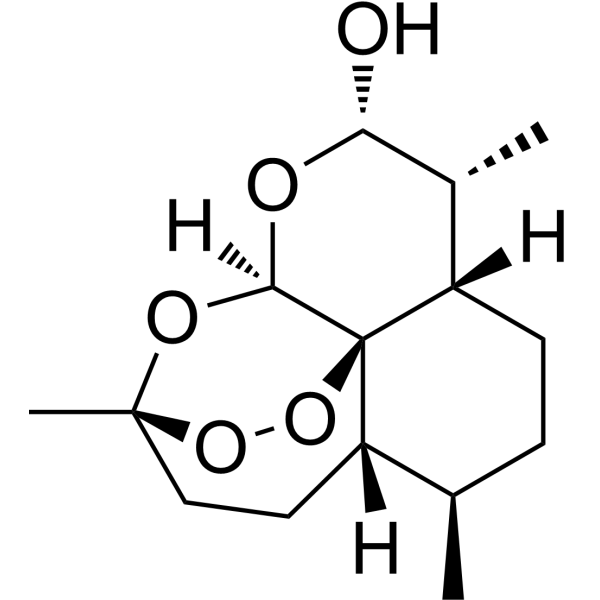
    Dihydroartemisinin
    40+ Cited Publications

    Dihydroqinghaosu; β-Dihydroartemisinin; Artenimol

    Parasite NF-κB Autophagy Reactive Oxygen Species (ROS) Drug Metabolite Infection Neurological Disease Metabolic Disease Inflammation/Immunology Cancer
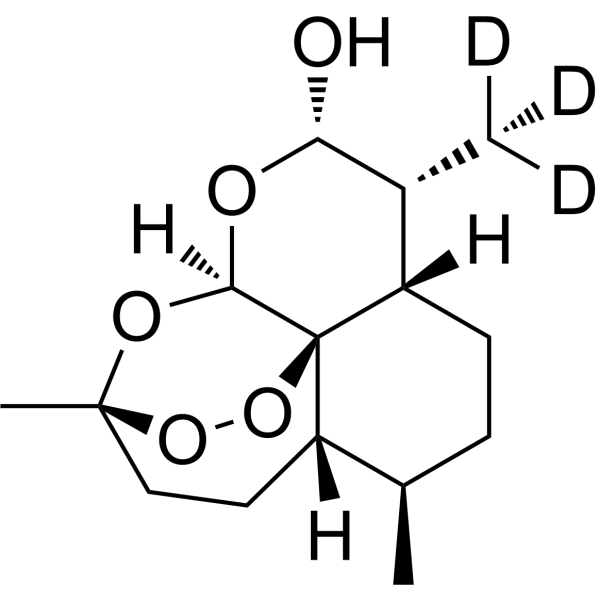
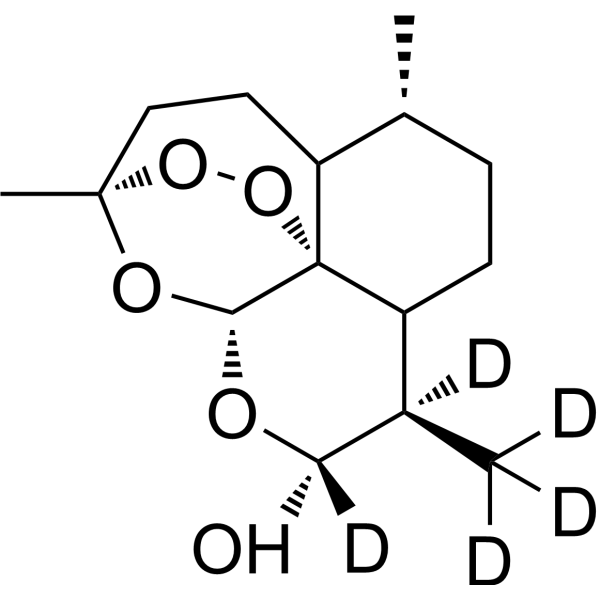
    Dihydroartemisinin is an orally active metabolite of rtemisinin (HY-B0094) and antimalarial agent. Dihydroartemisinin induces Autophagy by inhibiting NF-κB activation. Dihydroartemisinin promotes ROS accumulation. Dihydroartemisinin exhibits anticancer activity in esophageal cancer cells. Dihydroartemisinin shows schistosomicidal activity against juvenile and adult worms of Schistosoma japonicum, reduces worm burden, and displays antiparasitic activity. Dihydroartemisinin can be used in research related to multiple myeloma, promyelocytic leukemia, esophageal cancer, and Schistosoma japonicum infection .
    Dihydroartemisinin
  • HY-N0105
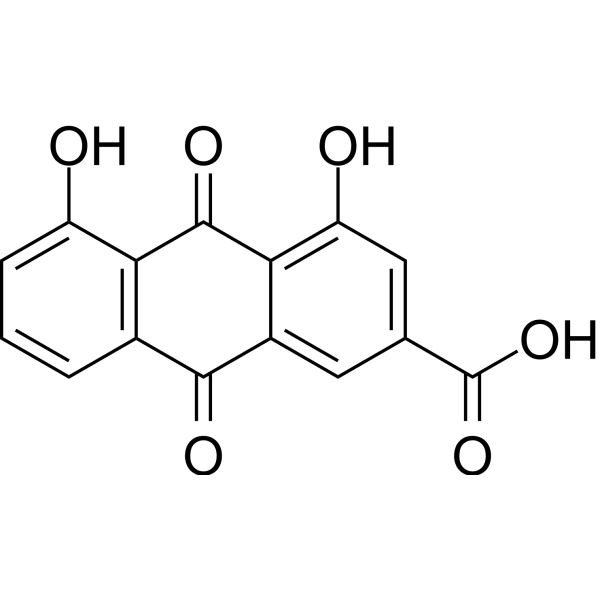
    Rhein
    15+ Cited Publications

    Rheic Acid; Rhubarb yellow; Monorhein

    Autophagy Reactive Oxygen Species (ROS) Bacterial Apoptosis Infection Inflammation/Immunology Cancer
    Rhein is an anthraquinone compound with anti-inflammatory, antioxidant, and anti-cancer effects [1] .
    Rhein
  • HY-14909
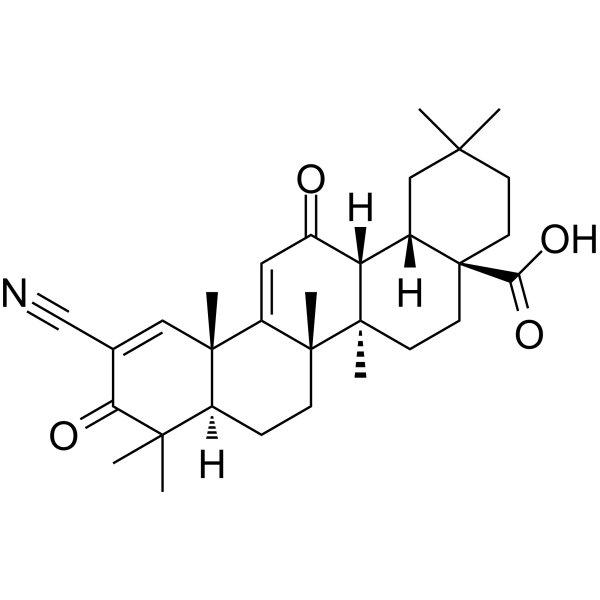
    Bardoxolone
    20+ Cited Publications

    CDDO; RTA 401

    Keap1-Nrf2 NF-κB SARS-CoV Apoptosis Reactive Oxygen Species (ROS) Glutathione Peroxidase Necroptosis Infection Neurological Disease Inflammation/Immunology Cancer
    Bardoxolone (CDDO; RTA 401) is a Nrf2 activator. Bardoxolone shows anti-SARS-CoV-2 3CLpro with IC50 of 27.99 μM. Bardoxolone activates the Nrf2 pathway and inhibits the NF-κB pathway. Bardoxolone can induce cells differentiation, apoptosis and shows antiproliferative activity against cancer cells. Bardoxolone can increase ROS and decrease intracellular GSH levels. Bardoxolone inhibits Z-VAD-FMK (HY-16658B)-induced necroptosis. Bardoxolone can be used for the research of cancer, inflammation and infection, such as SARS-CoV infection and glioblastoma .
    Bardoxolone
  • HY-19350
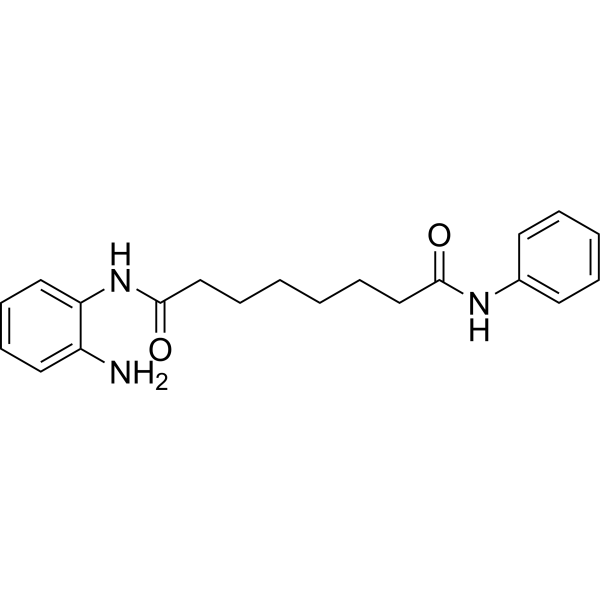
    BML-210
    2 Publications Verification

    HDAC Apoptosis Cancer
    BML-210 is a potent HDAC inhibitor. BML-210 can inhibit the HDAC4-VP16-driven reporter signal with an apparent IC50 of ∼5 µM. BML-210 has a specific disruptive effect on the HDAC4:MEF2 interaction. BML-210 causes an increase in the G0/G1 phase. BML-210 induces apoptosis and displays antitumour activities in orthotopic mammary tumours in mice .
    BML-210
  • HY-174979

    Fat Mass and Obesity-associated Protein (FTO) Apoptosis Inflammation/Immunology Cancer
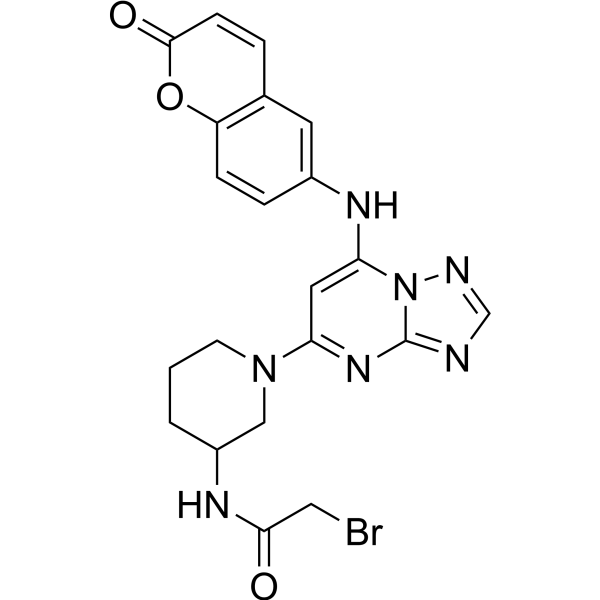
    Dac590 is an orally active and selective obesity-associated protein (FTO) inhibitor with an IC50 of 6.06 nM. Dac590 shows highly selective over ALKBH5 and ALKBH3. Dac590 suppresses oncogenic FTO signaling, induces myeloid differentiation, G1-phase cell cycle arrest, and apoptosis in acute myeloid leukemia (AML) cells. Dac590 inhibits xenograft tumor growth and prolongs survival in acute myeloid leukemia mouse models with no observed toxicity. Dac590 can be used for the research of AML .
    Dac590
  • HY-127130

    Bcl-2 Family Apoptosis Fungal Antibiotic Infection Cancer
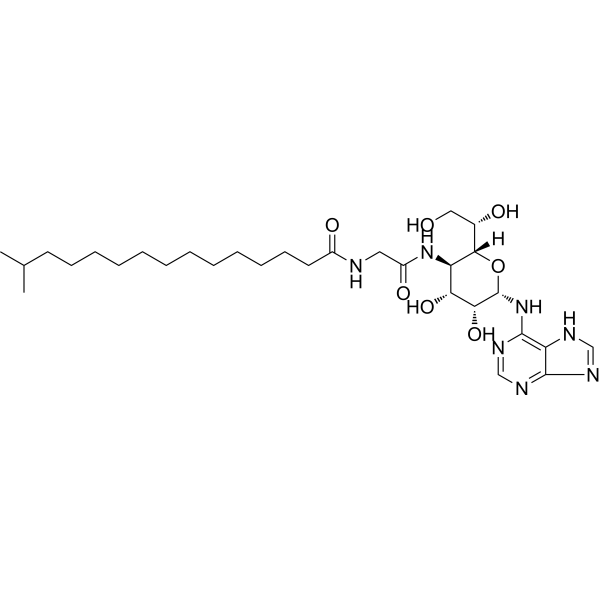
    Spicamycin, an adenine nucleoside antibiotic with antifungal and antitumor activities. Spicamycin is also a potent inducer of differentiation of myeloid leukemia cells. Spicamycin induces apoptosis in NB4 cells via down-regulation of Bcl-2 expression and modulation of PML protein .
    Spicamycin
  • HY-N10764

    Others Cancer
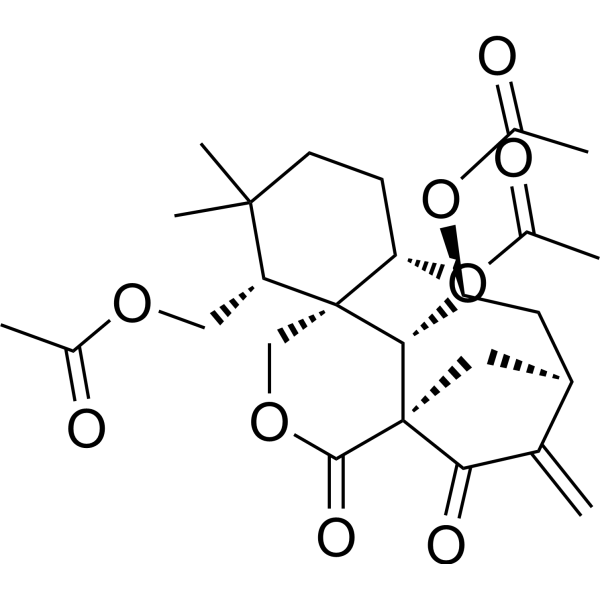
    Acetylexidonin is a diterpenoid compound with anti-inflammation and cancer activity. Acetylexidonin inhibits tumor cells with IC50s of 3.69 μM (NB4) and 26.22 μM (SHSY5Y), respectively .
    Acetylexidonin
  • HY-162658

    HDAC Apoptosis Cancer
    Leuxinostat is an inhibitor for HDAC with IC50 of 30 nM for hHDAC6. Leuxinostat inhibits the proliferation of cells THP1, K562, U937 and MEK1, induces apoptosis in leukemia cells NB4 and MOLT-4. Leuxinostat inhibits the expansion of hematopoietic stem cells and exhibits antileukemic activity in zebrafish models .
    Leuxinostat
  • HY-118761

    5,6-epoxy atRA; 5,6-epoxy RA

    RAR/RXR Metabolic Disease
    all-trans-5,6-epoxy Retinoic acid (5,6-epoxy RA) is an agonist of all isoforms of the retinoic acid receptor (RAR; EC50s=77, 35, and 4 nM for RARα, RARβ, and RARγ, respectively). 5,6-epoxy RA (1 μM) also induces growth arrest of MCF-7 and NB4 cells in vitro. It is a natural metabolite of all-trans retinoic acid, which is a metabolite of vitamin A.
    5,6-Epoxyretinoic acid
  • HY-W103792

    HDAC Cancer
    4-Phenylcinnamic acid is a weak HDAC2 inhiibitor (IC50 > 5 μM). 4-Phenylcinnamic acid has weak cell growth inhibition against tumor cells .
    4-Phenylcinnamic acid
  • HY-144755

    Histone Demethylase Cancer
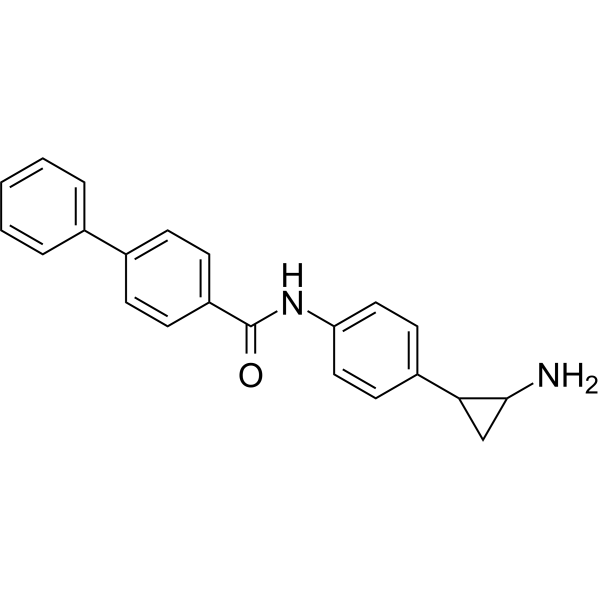
    MC2652 (compound 1a) is a potent LSD1 inhibitor. MC2652 displays high inhibiting effects in MV4-11 and NB4 leukaemia cells. MC2652 shows antiproliferative activity against prostate cancer LNCaP cells .
    MC2652
  • HY-172399

    Fat Mass and Obesity-associated Protein (FTO) Apoptosis Cancer
    FTO-IN-14 (Compound F97) is the inhibitor for the RNA demethylase Fat mass and obesity-associated protein FTO with IC50 of 0.45 μM. FTO-IN-14 regulates the protein expression of ASB2, RARA and MYC. FTO-IN-14 exhibits antiproliferative activity in AML cancer cells (IC50 for MOLM13, NB4, HEL, OCI-AML3, MV4-11 and MONOMAC6 is 0.7-5.5 μM), induces apoptosis in NB4 cell. FTO-IN-14 exhibits antitumor activity in mouse NB4 xenograft models .
    FTO-IN-14
  • HY-W965550

    Apoptosis Cancer
    Apoptosis inducer 40 is an apoptosis inducer. Apoptosis inducer 40 exhibits potent cytotoxic effects against jurkat and NB4 cells with IC50 values of 4.5 μM and 3.6μM. Apoptosis inducer 40 induces apoptosis and arrests cell cycle. Apoptosis inducer 40 can be used for the research of cancer, such as acute myeloid leukemia (AML) .
    Apoptosis inducer 40
  • HY-149522

    Bcl-2 Family Apoptosis Cancer
    BCL6-IN-10 (Compound WK499) is a BCL6 inhibitor. BCL6-IN-10 interrupts the binding of BCL6 to SMRT protein. BCL6-IN-10 induces cell apoptosis, cell cycle arrest and DNA damage. BCL6-IN-10 inhibits AML cell proliferation (IC50s: 0.91, 1.63, 1.026, 7.42, 0.87, 0.85μM for OCl-AML3, THP1, MOLM13, HL60, KG1, NB4 cell respectively) .
    WK499
  • HY-168483

    Apoptosis Fat Mass and Obesity-associated Protein (FTO) Cancer
    FTO-IN-13 (compound 8t) is a potent FTO inhibitor. FTO-IN-13 shows antiproliferative activity. FTO-IN-13 induces apoptosis. FTO-IN-13 decreases the protein expression of Bcl-2 and Caspase 3 active. FTO-IN-13 decreases MYC and CEBPA gene expression. FTO-IN-13 shows anticancer activity .
    FTO-IN-13
  • HY-N17074

    Others Cancer
    Ethyl (10E,12E)-9-oxooctadeca-10,12-dienoate is a conjugated ketonic fatty acid that can be found in the leaves of Vernicia fordii. Ethyl (10E,12E)-9-oxooctadeca-10,12-dienoate shows no significant cytotoxic activity against cancer cells .
    Ethyl (10E,12E)-9-oxooctadeca-10,12-dienoate

Inquiry Online

Your information is safe with us. * Required Fields.

Salutation


Country or Region *

Applicant Name *


Organization Name *

Department *


Email Address *


Product Name *

Cat. No.


Requested quantity *

Phone Number *


Remarks

Inquiry Online

Inquiry Information

Product Name:
Cat. No.:
Quantity:
MCE Japan Authorized Agent:

