



71939-50-9
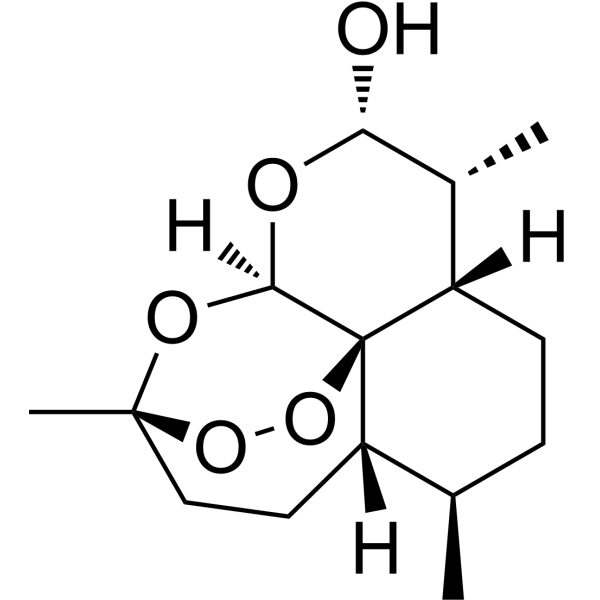
Chemical Structure
Dihydroartemisinin
Synonym(s): Dihydroqinghaosu; β-Dihydroartemisinin; Artenimol
- CAS No.: 71939-50-9
- Formula:C15H24O5
- Molecular Weight:284.35
IUPAC Name: (3R,5aS,6R,8aS,9R,10S,12R,12aR)-3,6,9-trimethyldecahydro-12H-3,12-epoxy[1,2]dioxepino[4,3-i]isochromen-10-ol
InChIKey: BJDCWCLMFKKGEE-ISOSDAIHSA-N
SMILES: O[C@@H]1[C@H](C)[C@]2([H])CC[C@@H](C)[C@]3([H])CC[C@@](O4)(C)OO[C@]32[C@]4([H])O1
Biological Activity: Dihydroartemisinin is an orally active metabolite of rtemisinin (HY-B0094) and antimalarial agent. Dihydroartemisinin induces Autophagy by inhibiting NF-κB activation. Dihydroartemisinin promotes ROS accumulation. Dihydroartemisinin exhibits anticancer activity in esophageal cancer cells. Dihydroartemisinin shows schistosomicidal activity against juvenile and adult worms of Schistosoma japonicum, reduces worm burden, and displays antiparasitic activity. Dihydroartemisinin can be used in research related to multiple myeloma, promyelocytic leukemia, esophageal cancer, and Schistosoma japonicum infection[1][2][3].
| Cat. No. | Product Name | Purity | Description | Pricing | |||||||||||||||||||
|---|---|---|---|---|---|---|---|---|---|---|---|---|---|---|---|---|---|---|---|---|---|---|---|
|
|
Dihydroartemisinin | 98.0% | Dihydroartemisinin is an orally active metabolite of rtemisinin (HY-B0094) and antimalarial agent. Dihydroartemisinin induces Autophagy by inhibiting NF-κB activation. Dihydroartemisinin promotes ROS accumulation. Dihydroartemisinin exhibits anticancer activity in esophageal cancer cells. Dihydroartemisinin shows schistosomicidal activity against juvenile and adult worms of Schistosoma japonicum, reduces worm burden, and displays antiparasitic activity. Dihydroartemisinin can be used in research related to multiple myeloma, promyelocytic leukemia, esophageal cancer, and Schistosoma japonicum infection. | ||||||||||||||||||||
|
loading...
/
|
|||||||||||||||||||||||
|
|
Dihydroartemisinin (Standard) | 97.83% | Dihydroartemisinin (Standard) (Dihydroqinghaosu (Standard); β-Dihydroartemisinin (Standard); Artenimol (Standard)) is the analytical standard of Dihydroartemisinin (HY-N0176). This product is intended for research and analytical applications. Dihydroartemisinin (Dihydroqinghaosu; β-Dihydroartemisinin; Artenimol) is an orally active metabolite of Artemisinin (HY-B0094) and an antimalarial agent. Dihydroartemisinin induces Autophagy by inhibiting NF-κB activation. Dihydroartemisinin inhibits CYP1A2 and CYP2C19. Dihydroartemisinin promotes ROS accumulation. Dihydroartemisinin exhibits anticancer activity in esophageal cancer cells. Dihydroartemisinin has schistosomicidal activity against schistosomula and adult worms of Schistosoma japonicum, reduces worm burden, and exhibits Antiparasitic activity. Dihydroartemisinin can be used in research related to multiple myeloma, promyelocytic leukemia, esophageal cancer, and Schistosoma japonicum infection. | ||||||||||||||||||||
|
loading...
/
|
|||||||||||||||||||||||
|
|
Dihydroartemisinin-d | Dihydroartemisinin-d (Dihydroqinghaosu-d; β-Dihydroartemisinin-d; Artenimol-d) is the deuterated-labeled Dihydroartemisinin (HY-N0176). Dihydroartemisinin (Dihydroqinghaosu; β-Dihydroartemisinin; Artenimol) is an orally active metabolite of Artemisinin (HY-B0094) and an antimalarial agent. Dihydroartemisinin induces Autophagy by inhibiting NF-κB activation. Dihydroartemisinin inhibits CYP1A2 and CYP2C19. Dihydroartemisinin promotes ROS accumulation. Dihydroartemisinin exhibits anticancer activity in esophageal cancer cells. Dihydroartemisinin has schistosomicidal activity against schistosomula and adult worms of Schistosoma japonicum, reduces worm burden, and exhibits Antiparasitic activity. Dihydroartemisinin can be used in research related to multiple myeloma, promyelocytic leukemia, esophageal cancer, and Schistosoma japonicum infection. | |||||||||||||||||||||
|
loading...
/
|
|||||||||||||||||||||||
|
|
Dihydroartemisinin-d5 | Dihydroartemisinin-d5 (Dihydroqinghaosu-d5; β-Dihydroartemisinin-d5; Artenimol-d5) is the deuterated-labeled Dihydroartemisinin (HY-N0176). Dihydroartemisinin (Dihydroqinghaosu; β-Dihydroartemisinin; Artenimol) is an orally active metabolite of Artemisinin (HY-B0094) and an antimalarial agent. Dihydroartemisinin induces Autophagy by inhibiting NF-κB activation. Dihydroartemisinin inhibits CYP1A2 and CYP2C19. Dihydroartemisinin promotes ROS accumulation. Dihydroartemisinin exhibits anticancer activity in esophageal cancer cells. Dihydroartemisinin has schistosomicidal activity against schistosomula and adult worms of Schistosoma japonicum, reduces worm burden, and exhibits Antiparasitic activity. Dihydroartemisinin can be used in research related to multiple myeloma, promyelocytic leukemia, esophageal cancer, and Schistosoma japonicum infection. | |||||||||||||||||||||
|
loading...
/
|
|||||||||||||||||||||||
|
|
Dihydroartemisinin-d3 | Dihydroartemisinin-d3 (Dihydroqinghaosu-d3; β-Dihydroartemisinin-d3; Artenimol-d3) is the deuterated-labeled Dihydroartemisinin (HY-N0176). Dihydroartemisinin (Dihydroqinghaosu; β-Dihydroartemisinin; Artenimol) is an orally active metabolite of Artemisinin (HY-B0094) and an antimalarial agent. Dihydroartemisinin induces Autophagy by inhibiting NF-κB activation. Dihydroartemisinin inhibits CYP1A2 and CYP2C19. Dihydroartemisinin promotes ROS accumulation. Dihydroartemisinin exhibits anticancer activity in esophageal cancer cells. Dihydroartemisinin has schistosomicidal activity against schistosomula and adult worms of Schistosoma japonicum, reduces worm burden, and exhibits Antiparasitic activity. Dihydroartemisinin can be used in research related to multiple myeloma, promyelocytic leukemia, esophageal cancer, and Schistosoma japonicum infection. | |||||||||||||||||||||
|
loading...
/
|
|||||||||||||||||||||||
|
|
Dihydroartemisinin-13C,d5 | Dihydroartemisinin-13C,d5 (Dihydroqinghaosu-13C,d5; β-Dihydroartemisinin-13C,d5; Artenimol-13C,d5) is the deuterated, 13C-labeled Dihydroartemisinin (HY-N0176). Dihydroartemisinin (Dihydroqinghaosu; β-Dihydroartemisinin; Artenimol) is an orally active metabolite of Artemisinin (HY-B0094) and an antimalarial agent. Dihydroartemisinin induces Autophagy by inhibiting NF-κB activation. Dihydroartemisinin inhibits CYP1A2 and CYP2C19. Dihydroartemisinin promotes ROS accumulation. Dihydroartemisinin exhibits anticancer activity in esophageal cancer cells. Dihydroartemisinin has schistosomicidal activity against schistosomula and adult worms of Schistosoma japonicum, reduces worm burden, and exhibits Antiparasitic activity. Dihydroartemisinin can be used in research related to multiple myeloma, promyelocytic leukemia, esophageal cancer, and Schistosoma japonicum infection. | |||||||||||||||||||||
|
loading...
/
|
|||||||||||||||||||||||
-
Similarity Score 1.00
 HY-W129233Dihydroartemisinin (mixture of α and β isomers)
-
Similarity Score 0.85
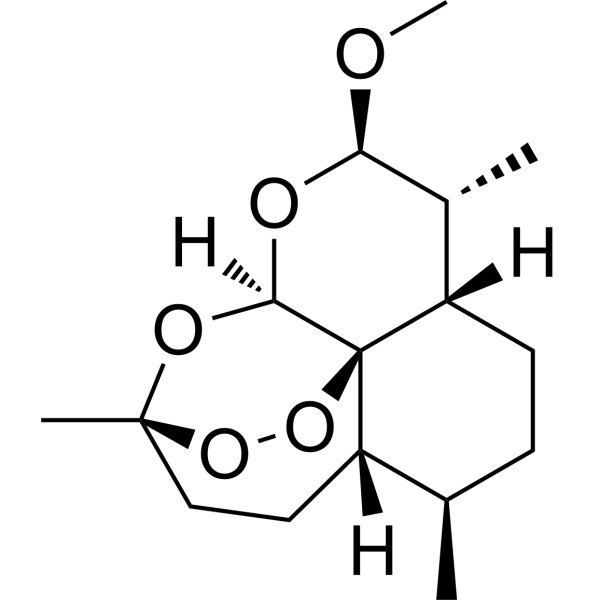 HY-137217α-Artemether
-
Similarity Score 0.85
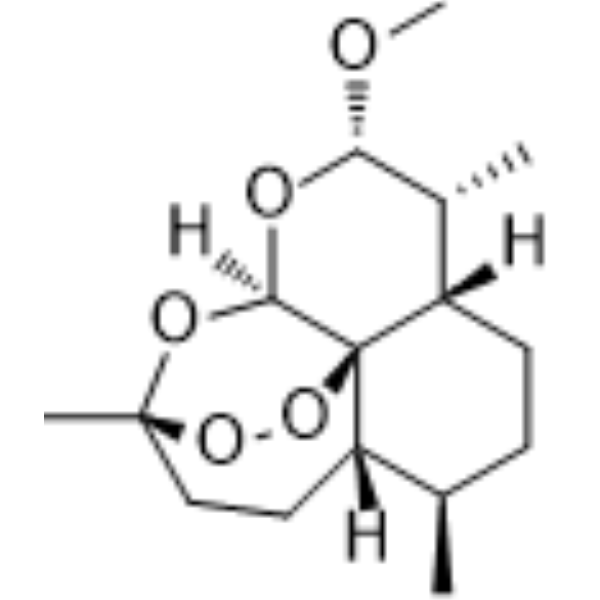 HY-N0402Artemether
-
Similarity Score 0.83
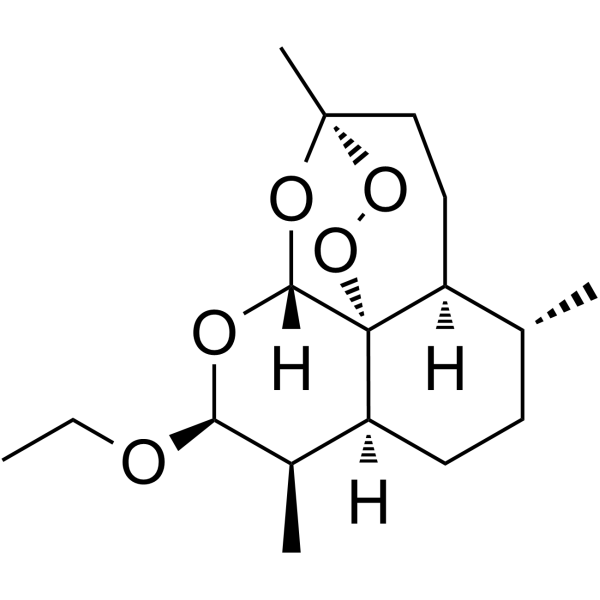 HY-B0770Artemotil
-
Similarity Score 0.80
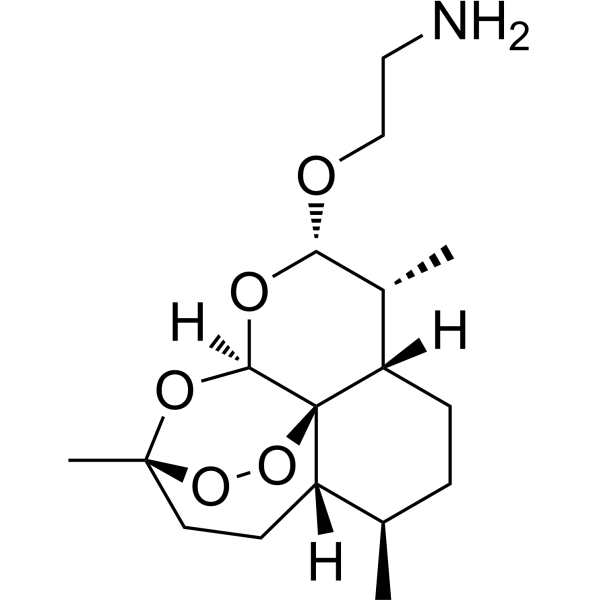 HY-137553β-Aminoarteether
-
Similarity Score 0.79
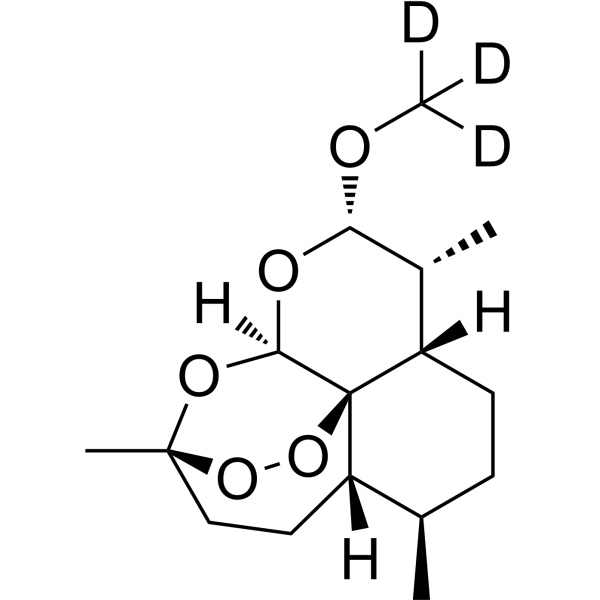 HY-N0402SArtemether-d3
-
Similarity Score 0.79
 HY-W703432α-Artemether-d3
-
Similarity Score 0.75
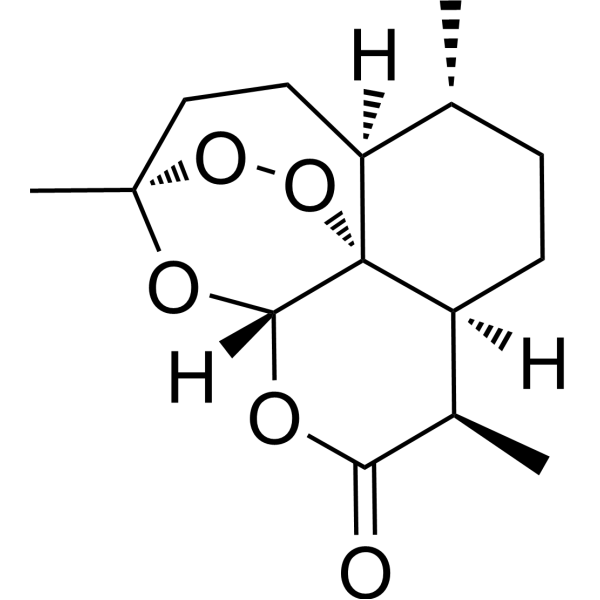 HY-B0094Artemisinin
-

Explore the MedChemAI to find more analogs


References
- [1]. Hu W, et al. Dihydroartemisinin induces autophagy by suppressing NF-κB activation. Cancer Lett. 2014;343(2):239-248. [Content Brief]
- [2]. Li YJ, et al. Dihydroartemisinin accentuates the anti-tumor effects of photodynamic therapy via inactivation of NF-κB in Eca109 and Ec9706 esophageal cancer cells. Cell Physiol Biochem. 2014;33(5):1527-1536. [Content Brief]
- [3]. Li HJ, et al. Dihydroartemisinin-praziquantel combinations and multiple doses of dihydroartemisinin in the treatment of Schistosoma japonicum in experimentally infected mice. Ann Trop Med Parasitol. 2011 Jun;105(4):329-33. [Content Brief]



