1. Search Result
Search Result
Results for "

Non-peptide blockers

" in MedChemExpress (MCE) Product Catalog:
Cat. No. Product Name Target Research Areas Chemical Structure
  • HY-103377
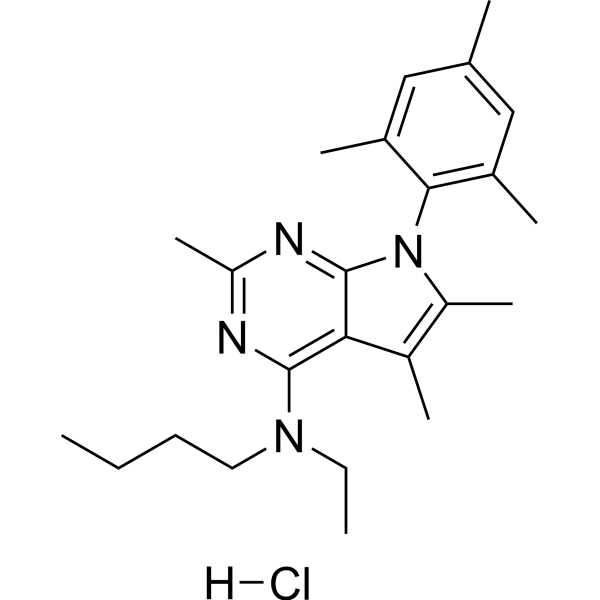
    Antalarmin hydrochloride
    5+ Cited Publications

    CRFR Inflammation/Immunology Endocrinology
    Antalarmin (hydrochloride) is an oral active non-peptide corticotropin-releasing hormone receptor 1 (CRHR1) antagonist with a Ki of 1 nM. Antalarmin hydrochloride suppresses CRH-induced ACTH secretion and blocks CRH and novelty induced anxiety-like behavior in animal models. Antalarmin hydrochloride produces anti-inflammatory effects in arthritis models, and suppresses stress-induced gastric ulceration related to irritable bowel syndrome .
    Antalarmin hydrochloride
  • HY-110155
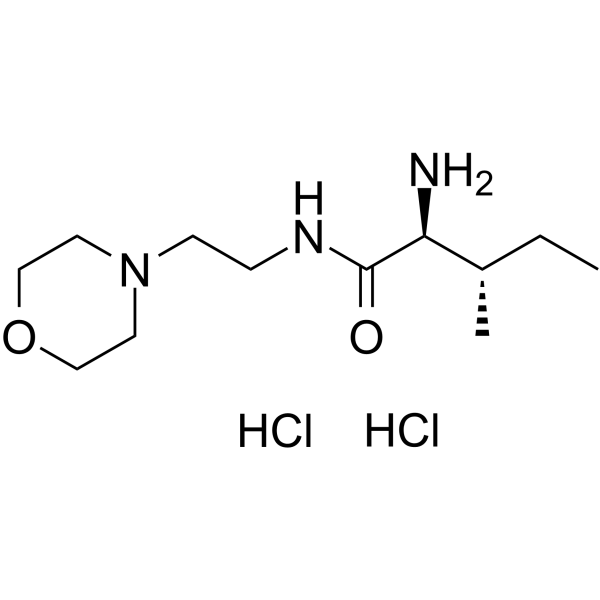
    LM11A-31 dihydrochloride
    Maximum Cited Publications
    7 Publications Verification

    Neurotensin Receptor Neurological Disease
    LM11A-31 dihydrochloride, a non-peptide p75 NTR (neurotrophin receptor p75) modulator, is an orally active and potent proNGF (nerve growth factor) antagonist. LM11A-31 dihydrochloride is an amino acid derivative with high blood-brain barrier permeability and blocks p75-mediated cell death. LM11A-31 dihydrochloride reverses cholinergic neurite dystrophy in Alzheimer's disease mouse models with mid- to late-stage disease progression .
    LM11A-31 dihydrochloride
  • HY-B1330
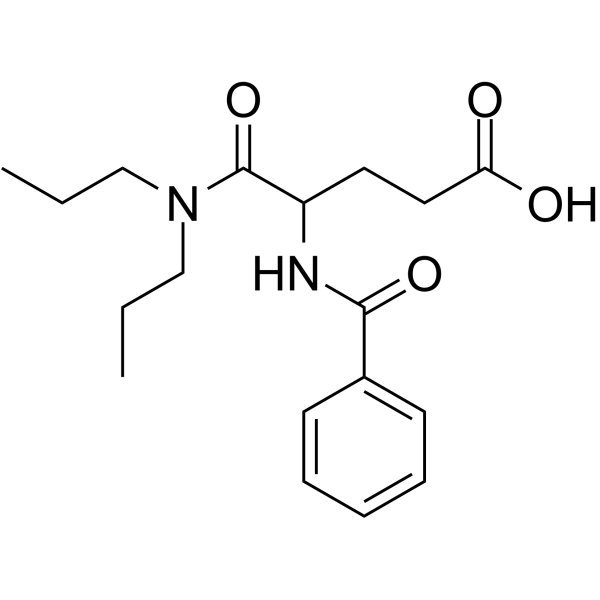
    Proglumide
    1 Publications Verification

    Cholecystokinin Receptor Neurological Disease Endocrinology Cancer
    Proglumide is a nonpeptide and orally active cholecystokinin (CCK)-A/B receptors antagonist. Proglumide selective blocks CCK’s effects in the central nervous system (CNS). Proglumide has ability to inhibit gastric secretion and to protect the gastroduodenal mucosa. Proglumide also has antiepileptic and antioxidant activities .
    Proglumide
  • HY-117088
    LM11A-31
    Maximum Cited Publications
    7 Publications Verification

    Neurokinin Receptor Neurological Disease
    LM11A-31, a non-peptide p75 NTR (neurotrophin receptor p75) modulator, is an orally active and potent proNGF (nerve growth factor) antagonist. LM11A-31 is an amino acid derivative with high blood-brain barrier permeability and blocks p75-mediated cell death. LM11A-31 reverses cholinergic neurite dystrophy in Alzheimer's disease mouse models with mid- to late-stage disease progression .
    LM11A-31
  • HY-50688
    SB-265610
    5+ Cited Publications

    CXCR Inflammation/Immunology
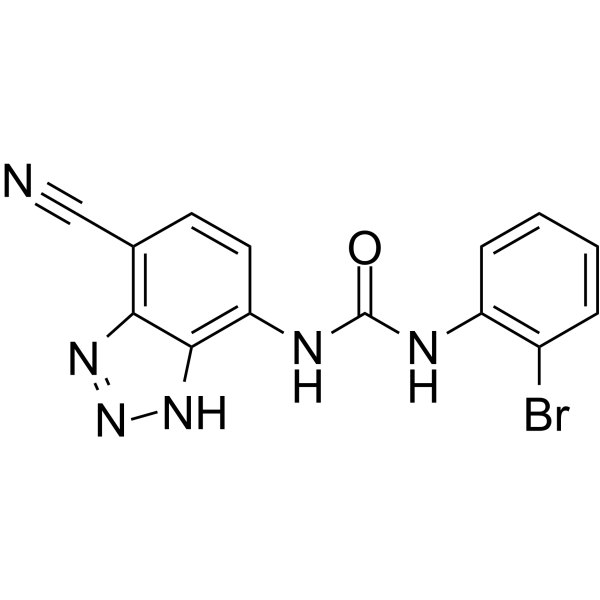
    SB-265610 is a selective, competitive, nonpeptide and allosteric CXCR2 antagonist. SB-265610 blocks rat cytokine-induced neutrophil chemoattractant-1 (CINC-1)-induced calcium mobilization and neutrophil chemotaxis with IC50s of 3.7 nM and 70 nM, respectively .
    SB-265610
  • HY-107664

    Neurotensin Receptor Neurological Disease
    SR 142948 is an orally active and selective non-peptide neurotensin receptor (NT) antagonist with IC50s of 1.19 nM, 0.32 nM, 3.96 nM in h-NTR1-CHO cells, HT-29 cells, and adult rat brain, respectively. SR 142948 antagonizes NT-induced inositol monophosphate formation in HT-29 cells with an IC50 of 3.9 nM. SR 142948 blocks hypothermia, analgesia and steering behavior induced by NT in vivo. SR 142948 shows blood-brain permeability and can be used in study of psychiatric disorders .
    SR 142948
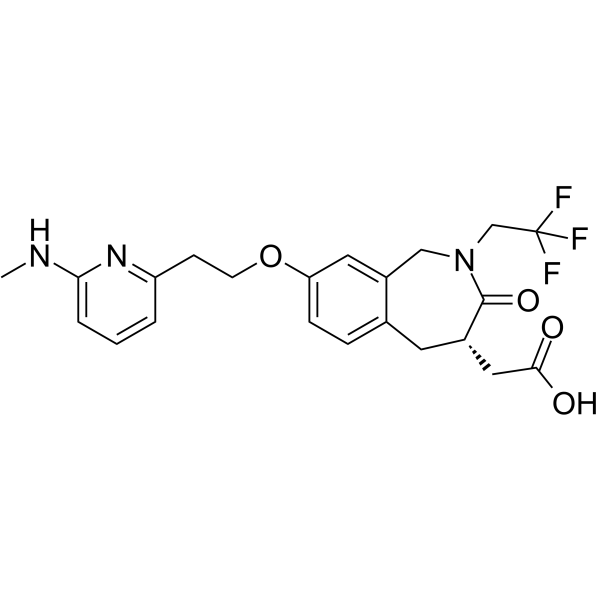
  • HY-19307

    Integrin Interleukin Related Cardiovascular Disease Inflammation/Immunology Endocrinology Cancer
    SB-273005 is an orally active non-peptide αvβ3 integrin antagonist with Ki values of 1.2 nM and 0.3 nM for αvβ3 and αvβ5, respectively. SB-273005 blocks the binding of integrins to the RGD sequence in the extracellular matrix. SB-273005 inhibits Rictor phosphorylation and reduces IL-10 secretion. SB-273005 inhibits inflammation, prevents bone loss, regulates vascular smooth muscle function, and reverses pregnancy-induced immune deviation. SB-273005 can be used in the study of rheumatoid arthritis, osteoporosis, and aneurysms. .
    SB-273005
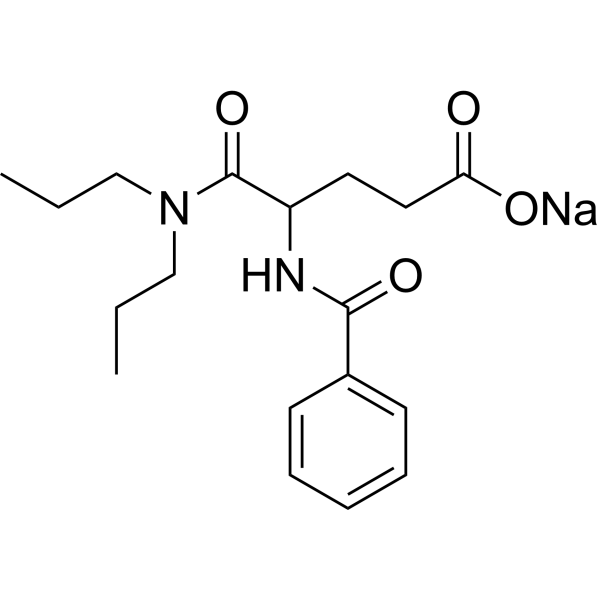
  • HY-103354
    Proglumide sodium
    1 Publications Verification

    Cholecystokinin Receptor Neurological Disease Endocrinology Cancer
    Proglumide sodium is a nonpeptide and orally active cholecystokinin (CCK)-A/B receptors antagonist. Proglumide sodium selective blocks CCK’s effects in the central nervous system (CNS). Proglumide sodium has ability to inhibit gastric secretion and to protect the gastroduodenal mucosa. Proglumide sodium also has antiepileptic and antioxidant activities .
    Proglumide sodium
  • HY-108574

    Potassium Channel HCN Channel Neurological Disease
    CP 339818 hydrochloride is a non-peptide Kv1.3 channel (IC50 = 200 nM) and Kv1.4 channel blocker. CP 339818 hydrochloride inhibits HCN channel with IC50s of 18.9 μM and 43.4 μM against HCN1 and HCN4 (high Cl -). CP 339818 hydrochloride has significantly weaker blocking effects on Kv1.1, Kv1.2, Kv1.5, Kv1.6, Kv3.1-4, and Kv4.2 channels. CP 339818 hydrochloride selectively blocked Kv1.3, thereby inhibiting the activation process of human T cells. CP 339818 hydrochloride can be used to study the physiological functions of HCN and Kv channels .
    CP 339818 hydrochloride
  • HY-108479

    SR140333

    Neurokinin Receptor Neurological Disease
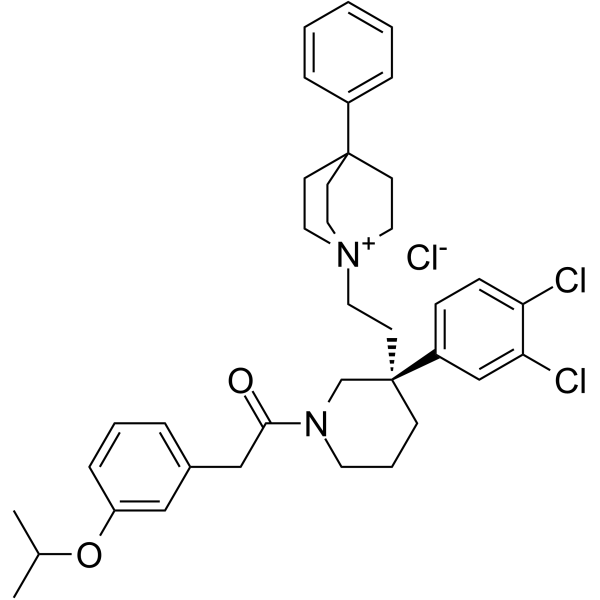
    Nolpitantium (SR140333) is a potent, selective, competitive, non-peptide tachykinin NK1 receptor antagonist. Nolpitantium blocks the activation of rat thalamic neurons after nociceptive stimulation .
    Nolpitantium
  • HY-19374

    GCGR Metabolic Disease
    BAY-27-9955 is an orally active non-peptide glucagon receptor antagonist. Bay 27-9955 competitively blocks the interaction of glucagon with the human glucagonreceptor at an IC50 value of 110 nM. BAY-27-9955 can be used for the study of type 2 diabetes .
    BAY-27-9955
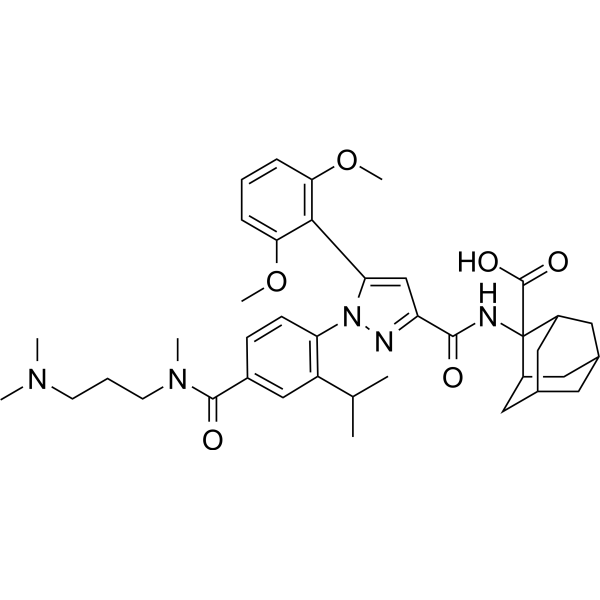
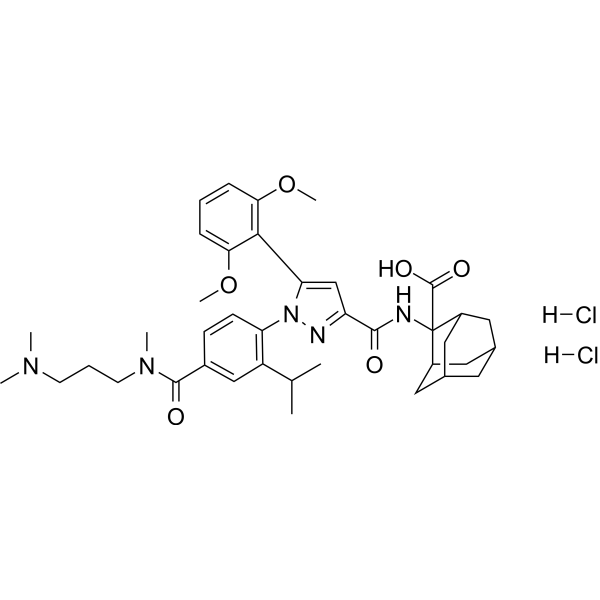
  • HY-107664A

    Neurotensin Receptor Neurological Disease
    SR 142948 dihydrochloride is an orally active and selective non-peptide neurotensin receptor (NT) antagonist with IC50s of 1.19 nM, 0.32 nM, 3.96 nM in h-NTR1-CHO cells, HT-29 cells, and adult rat brain, respectively. SR 142948 dihydrochloride antagonizes NT-induced inositol monophosphate formation in HT-29 cells with an IC50 of 3.9 nM. SR 142948 dihydrochloride blocks hypothermia, analgesia and steering behavior induced by NT in vivo. SR 142948 dihydrochloride shows blood-brain permeability and can be used in study of psychiatric disorders .
    SR 142948 dihydrochloride
  • HY-101428

    Calcium Channel Neurological Disease
    NS-638 is a small nonpeptide molecule with Ca 2+-channel blocking properties. K +-stimulated intracellular Ca 2+-elevation is blocked with an IC50 value of 3.4 μM.
    NS-638
  • HY-107664B

    Neurotensin Receptor Neurological Disease
    SR 142948 TFA is an orally active and selective non-peptide neurotensin receptor (NT) antagonist with IC50s of 1.19 nM, 0.32 nM, 3.96 nM in h-NTR1-CHO cells, HT-29 cells, and adult rat brain, respectively. SR 142948 TFA antagonizes NT-induced inositol monophosphate formation in HT-29 cells with an IC50 of 3.9 nM. SR 142948 TFA blocks hypothermia, analgesia and steering behavior induced by NT in vivo. SR 142948 TFA shows blood-brain permeability and can be used in study of psychiatric disorders .
    SR 142948 TFA
  • HY-10382

    Angiotensin Receptor Cardiovascular Disease
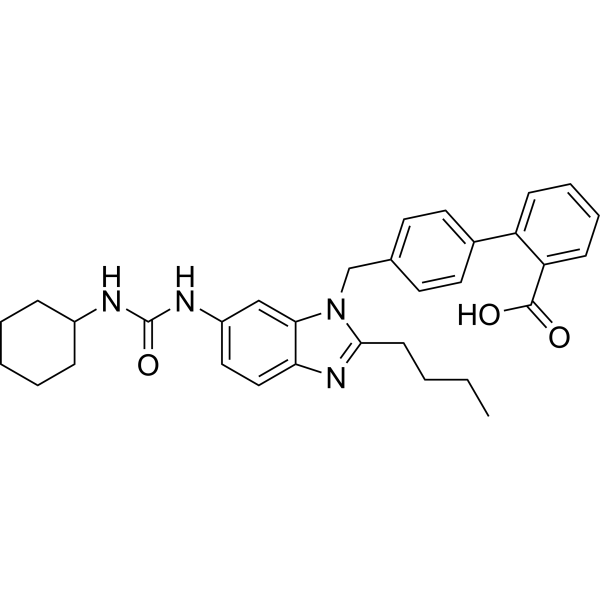
    EXP-6803 is a specific nonpeptide angiotensin II receptor antagonist with antihypertensive activity. EXP-6803 inhibits the contractile response to angiotensin II with a pA2 value of 7.20. EXP-6803 effectively blocks responses to angiotensin I and II while not affecting responses to bradykinin or acetylcholine in guinea pig ileum. EXP-6803 can be used for hypertension research .
    EXP-6803
  • HY-120308

    SR140603

    Neurokinin Receptor Neurological Disease
    (R)-Nolpitantium is the R-enantiomer of Nolpitantium (HY-108479). Nolpitantium (SR140333) is a potent, selective, competitive, non-peptide tachykinin NK1 receptor antagonist. Nolpitantium blocks the activation of rat thalamic neurons after nociceptive stimulation .
    (R)-Nolpitantium
  • HY-113730

    CXCR Others
    VUF5834 is a non-peptide chemokine receptor CXCR3 antagonist with non-competitive antagonistic and inverse agonistic activities. VUF5834 blocks the effects of CXCL10 and CXCL11 on human CXCR3, exhibits non-competitive antagonistic and inverse agonistic properties to CXCR3, and, except for TAK-779, has a slightly lower affinity for rodent CXCR3 than for primate CXCR3.
    VUF5834
  • HY-17012

    RPR 100893

    Neurokinin Receptor Inflammation/Immunology
    Dapitant (RPR 100893) is a non-peptide Substance P antagonist with high affinity for the human NK1 receptor. It belongs to the 7,7,4-trimethylperhydroisoindole class of compounds. Dapitant inhibits the binding of Substance P to NK1 receptors, thereby blocking its neurokinin-mediated effects. This novel antagonist represents a potential therapeutic option for conditions involving Substance P, such as neurogenic inflammation and pain modulation .
    Dapitant
  • HY-107758

    Prolyl Endopeptidase (PREP) Cancer
    Y-29794 oxalate is a selective, orally active and blood-brain barrier permeable non-peptide prolyl endopeptidase inhibitor. Y-29794 oxalate blocks the IRS1-AKT-mTORC1 pathway and inhibits tumor growth. Y-29794 oxalate is also effective in inhibiting the progression of Aβ-like deposition in the hippocampus of aging-accelerated mice (SAM) .
    Y-29794 oxalate
  • HY-103377R

    Reference Standards CRFR Inflammation/Immunology Endocrinology
    Antalarmin (hydrochloride) (Standard) is the analytical standard of Antalarmin (hydrochloride). This product is intended for research and analytical applications. Antalarmin (hydrochloride) is an oral active non-peptide corticotropin-releasing hormone receptor 1 (CRHR1) antagonist with a Ki of 1 nM. Antalarmin hydrochloride suppresses CRH-induced ACTH secretion and blocks CRH and novelty induced anxiety-like behavior in animal models. Antalarmin hydrochloride produces anti-inflammatory effects in arthritis models, and suppresses stress-induced gastric ulceration related to irritable bowel syndrome .
    Antalarmin hydrochloride (Standard)
  • HY-114540

    Potassium Channel HCN Channel Neurological Disease
    CP-339818 is a non-peptide Kv1.3 channel (IC50 = 200 nM) and Kv1.4 channel blocker. CP 339818 inhibits HCN channel with IC50s of 18.9 μM and 43.4 μM against HCN1 and HCN4 (high Cl -). CP-339818 has significantly weaker blocking effects on Kv1.1, Kv1.2, Kv1.5, Kv1.6, Kv3.1-4, and Kv4.2 channels. CP-339818 selectively blocked Kv1.3, thereby inhibiting the activation process of human T cells. CP-339818 can be used to study the physiological functions of HCN and Kv channels .
    CP-339818
  • HY-178928

    Potassium Channel Inflammation/Immunology
    KV1.3-IN-3 (Compound 13a) is a KV1.3 channel inhibitor. KV1.3-IN-3 decreases the Kv1.3 peak current amplitude by more than 80%. KV1.3-IN-3 exhibits excellent pharmacological properties and safety. KV1.3-IN-3 can be used for the study of autoimmunity disease .
    KV1.3-IN-3
  • HY-103354A

    Cholecystokinin Receptor Neurological Disease Endocrinology Cancer
    Proglumide hemicalcium is a nonpeptide and orally active cholecystokinin (CCK)-A/B receptors antagonist. Proglumide hemicalcium selective blocks CCK’s effects in the central nervous system (CNS). Proglumide hemicalcium has ability to inhibit gastric secretion and to protect the gastroduodenal mucosa. Proglumide hemicalcium also has antiepileptic and antioxidant activities .
    Proglumide hemicalcium
  • HY-103354R

    Reference Standards Cholecystokinin Receptor Neurological Disease Endocrinology Cancer
    Proglumide (sodium) (Standard) is the analytical standard of Proglumide (sodium). This product is intended for research and analytical applications. Proglumide sodium is a nonpeptide and orally active cholecystokinin (CCK)-A/B receptors antagonist. Proglumide sodium selective blocks CCK’s effects in the central nervous system (CNS). Proglumide sodium has ability to inhibit gastric secretion and to protect the gastroduodenal mucosa. Proglumide sodium also has antiepileptic and antioxidant activities .
    Proglumide sodium (Standard)
  • HY-B1330R

    Cholecystokinin Receptor Reference Standards Neurological Disease Endocrinology Cancer
    Proglumide (Standard) is the analytical standard of Proglumide. This product is intended for research and analytical applications. Proglumide is a nonpeptide and orally active cholecystokinin (CCK)-A/B receptors antagonist. Proglumide selective blocks CCK’s effects in the central nervous system (CNS). Proglumide has ability to inhibit gastric secretion and to protect the gastroduodenal mucosa. Proglumide also has antiepileptic and antioxidant activities .
    Proglumide (Standard)
  • HY-107664R

    Reference Standards Neurotensin Receptor Neurological Disease
    SR 142948 (Standard) is the analytical standard of SR 142948 (HY-107664). This product is intended for research and analytical applications. SR 142948 is an orally active and selective non-peptide neurotensin receptor (NT) antagonist with IC50s of 1.19 nM, 0.32 nM, 3.96 nM in h-NTR1-CHO cells, HT-29 cells, and adult rat brain, respectively. SR 142948 antagonizes NT-induced inositol monophosphate formation in HT-29 cells with an IC50 of 3.9 nM. SR 142948 blocks hypothermia, analgesia and steering behavior induced by NT in vivo. SR 142948 shows blood-brain permeability and can be used in study of psychiatric disorders .
    SR 142948 (Standard)

Inquiry Online

Your information is safe with us. * Required Fields.

Salutation


Country or Region *

Applicant Name *


Organization Name *

Department *


Email Address *


Product Name *

Cat. No.


Requested quantity *

Phone Number *


Remarks

Inquiry Online

Inquiry Information

Product Name:
Cat. No.:
Quantity:
MCE Japan Authorized Agent:

