
1. Search Result
Search Result
Results for "

Potassium hydrogen

" in MedChemExpress (MCE) Product Catalog:

489

Inhibitors & Agonists

23

Screening Libraries

31

Fluorescent Dyes

59

Biochemical Assay Reagents

13

Peptides

60

Natural
Products

31

Isotope-Labeled Compounds

2

Click Chemistry

16

Oligonucleotides

Cat. No. Product Name Target Research Areas Chemical Structure
  • HY-17459
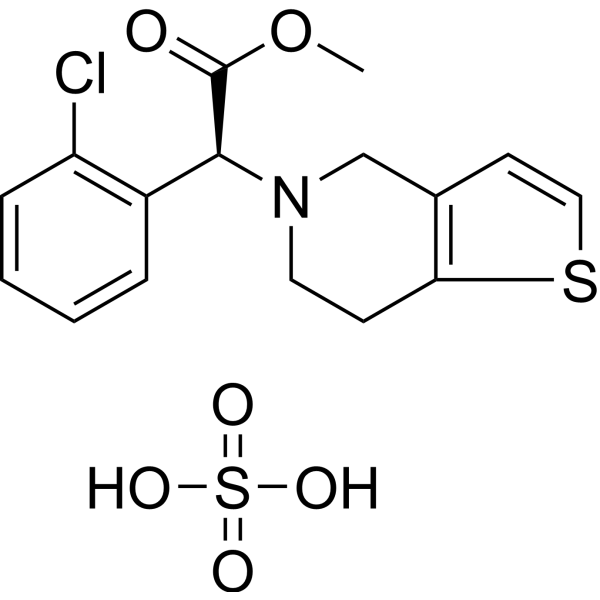
    Clopidogrel hydrogen sulfate
    25+ Cited Publications

    (S)-(+)-Clopidogrel bisulfate; (S)-(+)-Clopidogrel hydrogen sulfate

    Cytochrome P450 P2Y Receptor Cardiovascular Disease Cancer
    Clopidogrel hydrogen sulfate is an antiplatelet agent to prevent blood clots. Clopidogrel hydrogen sulfate inhibits CYP2B6 and CYP2C19 with IC50s of 18.2 nM and 524 nM, respectively . Clopidogrel hydrogen sulfate is a potent antithrombotic agent that inhibits ADP-induced platelet aggregation .Clopidogrel hydrogen sulfate also is an orally active P2Y(12) inhibitor .
    Clopidogrel hydrogen sulfate
  • HY-B1060
    Methylprednisolone succinate sodium
    2 Publications Verification

    Methylprednisolone hydrogen succinate sodium

    Glucocorticoid Receptor Infection Neurological Disease Inflammation/Immunology Cancer
    Methylprednisolone succinate (Methylprednisolone hydrogen succinate) sodium is a prodrug of Methylprednisolone (HY-B0260) and glucocorticoid with immunosuppressant and anti-inflammatory activity. Methylprednisolone succinate sodium binds cytosolic glucocorticoid receptors, translocates to nuclei, and modulates target gene transcription. Methylprednisolone succinate sodium alters Bax, Bcl-2, occludin, and ZO-1 expression; attenuates TLR4/NF-κB signaling; suppresses proinflammatory cytokine production and immune cell activation. Methylprednisolone succinate sodium can be used for the research of intracranial haemorrhage, rheumatoid arthritis, multiple sclerosis, preterminal cancer, inflammatory conditions, shock, immediate-type hypersensitivity, acute myocardial ischemia, hypoxic heart muscle damage, and traumatic spinal cord injury .
    Methylprednisolone succinate sodium
  • HY-W010800A

    Cholesterol hydrogen succinate Tris salt; CHS-Tris

    Biochemical Assay Reagents Topoisomerase DNA/RNA Synthesis Apoptosis Necroptosis Inflammation/Immunology Cancer
    Cholesterol hemisuccinate (Cholesterol hydrogen succinate) Tris salt is a compound with hepatoprotective and anticancer activity. Cholesterol hemisuccinate Tris salt inhibits Acetaminophen (AAP) (HY-66005) hepatotoxicity, and prevents AAP-induced hepatic apoptosis and necrosis. Cholesterol hemisuccinate Tris salt inhibits DNA polymerase and DNA topoisomerase to inhibit DNA replication and repair and cell division. Cholesterol hemisuccinate Tris salt inhibits tumor growth. Cholesterol hemisuccinate Tris salt can be used for buffer preparation .
    Cholesterol hemisuccinate Tris salt
  • HY-W251598C

    Sodium hydrogen carbonate for cell culture; Soda bicarbonate for cell culture

    Environmental Pollutants Bacterial Inflammation/Immunology Cancer
    Sodium bicarbonate, for cell culture (Sodium hydrogen carbonate for cell culture; Soda bicarbonate for cell culture) is an inorganic salt that is neutral to slightly alkaline and easily decomposes when exposed to moisture in the air. Sodium bicarbonate, for cell culture can maintain the pH of the culture medium, thereby affecting the expression of inducible nitric oxide synthase (iNOS) and nitric oxide (NO) production in macrophages and reversing the acidosis of the tumor microenvironment. Sodium bicarbonate is widely used in the fields of food, medicine, cosmetics, etc. Its main uses include buffers, flavoring agents, disinfectants, pharmaceuticals, and proton gradient regulators. Sodium bicarbonate is also commonly used as an antacid to inhibit gastrointestinal diseases, neutralize gastric acid, and reduce gastric discomfort .
    Sodium bicarbonate, for cell culture
  • HY-W019883
    Dipotassium hydrogen phosphate
    1 Publications Verification

    Environmental Pollutants Biochemical Assay Reagents Lipase Fungal Infection Metabolic Disease
    Dipotassium hydrogen phosphate is a salt. Dipotassium hydrogen phosphate can enhance the lipase production of Rhizopous oligosporous in neutral pH phosphate buffer. Dipotassium hydrogen phosphate can be used as a pharmaceutical excipient, such as a pH adjuster, a buffer .
    Dipotassium hydrogen phosphate
  • HY-Y0308E

    Disodium hydrogen phosphate, for cell culture

    Environmental Pollutants Biochemical Assay Reagents Others
    Sodium phosphate dibasic (Disodium hydrogen phosphate), for cell culture is a buffer and chelating agent. Sodium phosphate dibasic is used to adjust the pH of liquids. Sodium phosphate dibasic can be used in cell culture .
    Sodium phosphate dibasic, for cell culture
  • HY-B1900
    Methylprednisolone succinate
    2 Publications Verification

    Methylprednisolone hydrogen succinate

    Glucocorticoid Receptor Bacterial Toll-like Receptor (TLR) NF-κB Infection Neurological Disease Metabolic Disease Inflammation/Immunology Cancer
    Methylprednisolone succinate (Methylprednisolone hydrogen succinate) is a prodrug of Methylprednisolone (HY-B0260) and glucocorticoid with immunosuppressant and anti-inflammatory activity. Methylprednisolone succinate binds cytosolic glucocorticoid receptors, translocates to nuclei, and modulates target gene transcription. Methylprednisolone succinate alters Bax, Bcl-2, occludin, and ZO-1 expression; attenuates TLR4/NF-κB signaling; suppresses proinflammatory cytokine production and immune cell activation. Methylprednisolone succinate can be used for the research of intracranial haemorrhage, rheumatoid arthritis, multiple sclerosis, preterminal cancer, inflammatory conditions, shock, immediate-type hypersensitivity, acute myocardial ischemia, hypoxic heart muscle damage, and traumatic spinal cord injury .
    Methylprednisolone succinate
  • HY-W251598B

    Sodium hydrogen carbonate for molecular biology; Soda bicarbonate for molecular biology

    Bacterial NO Synthase Inflammation/Immunology Cancer
    Sodium bicarbonate, for molecular biology (Sodium hydrogen carbonate for molecular biolog; Soda bicarbonate for molecular biolog) is an inorganic salt. Sodium bicarbonate can maintain the pH of the culture medium, thereby affecting the expression of inducible nitric oxide synthase (iNOS) and nitric oxide (NO) production in macrophages and reversing the acidosis of the tumor microenvironment. Sodium bicarbonate is widely used in the fields of food, cosmetics, etc. Its main uses include buffers, flavoring agents, disinfectants, pharmaceuticals, and proton gradient regulators. Sodium bicarbonate is also commonly used as an antacid to inhibit gastrointestinal diseases, neutralize gastric acid, and reduce gastric discomfort .
    Sodium bicarbonate, for molecular biology
  • HY-15914

    DCHBS

    Fluorescent Dye Others
    DHBS (3, 5-dichloro-2-hydroxybenzenesulfonate) is used in conjunction with 4-aminoantipyrine (4-AAP) (HY-W100990) and hydrogen peroxide (H2O2) for chromogenic quantitation of peroxidase in coupled enzymatic reactions. Component of Trinder reagent for use with peroxidase to measure generation of hydrogen peroxide in automated systems .
    DHBS
  • HY-Y0308H

    Disodium hydrogen phosphate, for molecular biology

    Biochemical Assay Reagents Others
    Sodium phosphate dibasic (Disodium hydrogen phosphate), for molecular biology, is a type of phosphate salt that can be used in molecular biology research to prepare stable buffers free of RNase/DNase/protease .
    Sodium phosphate dibasic, for molecular biology
  • HY-Y1324

    Disodium hydrogen phosphate dodecahydrate; Disodium phosphate dodecahydrate

    Environmental Pollutants Biochemical Assay Reagents Endocrinology
    Phosphoric acid disodium dodecahydrate is an inorganic compound and food additive. Phosphoric acid disodium dodecahydrate promotes gel formation, improves food texture and thermal properties of materials. Phosphoric acid disodium dodecahydrate induces glomerular calcification. Phosphoric acid disodium dodecahydrate can be used in kidney disease research .
    Sodium phosphate dibasic dodecahydrate
  • HY-N0525
    Ethyl gallate
    2 Publications Verification

    Bacterial Metabolic Disease Cancer
    Ethyl gallate is a nonflavonoid phenolic compound and also a scavenger of hydrogen peroxide.
    Ethyl gallate
  • HY-W099547

    Liposome Others
    Dihexadecyl hydrogen phosphateIt is an organic compound belonging to phospholipids. It's often used as an emulsifier, which means it helps mix two substances together that don't usually mix well, such as oil and water. Dihexadecyl hydrogen phosphateIt has several applications in the food industry, especially in the production of processed foods where it improves texture and stability. Additionally, it has applications in the pharmaceutical industry where it can be used ain the generation of micelles, liposomes, and other types of artificial membranes.
    Dihexadecyl hydrogen phosphate
  • HY-W094710

    Sodium hydrogen diacetate

    Environmental Pollutants Bacterial Infection
    Sodium diacetate (Sodium hydrogen diacetate) is a multifunctional biochemical reagent with antibacterial (bacteria) and antifungal (fungi) activities. Sodium diacetate exerts its antimicrobial effect mainly by effectively penetrating the cell walls of microorganisms and interfering with enzyme interactions. Sodium diacetate inhibits the growth and survival of fungi such as Botrytis cinerea, as well as bacteria such as Listeria and Escherichia coli. Sodium diacetate inhibits the growth of endothelial cells. Sodium diacetate can be used in the synthesis of food preservatives, flavoring agents and pH control additives .
    Sodium diacetate
  • HY-76440

    Oxetan-3-one

    Biochemical Assay Reagents Others
    3-Oxetanone (Oxetan-3-one) is a four-membered cyclic ketone and strained cyclic ether derivative with measurable molecular g-value, magnetic susceptibility anisotropy and molecular quadrupole moment. 3-Oxetanone acts not only as a hydrogen bond acceptor, a tetrel donor and a weak hydrogen bond acceptor, but also forms a classic O-H···O hydrogen bond with H2O via the ether oxygen atom. Alternatively, it forms a C···O tetrel bond with formaldehyde using its carbonyl group as a tetrel donor, while acting as a proton acceptor to form a C-H···O weak hydrogen bond with formaldehyde. 3-Oxetanone can be used to prepare various oxetanes .
    3-Oxetanone
  • HY-N0913
    Manninotriose
    1 Publications Verification

    Antifolate Thymidylate Synthase Cancer
    Manninotriose is a binder of dihydrofolate reductase and thymidylate synthase. Manninotriose binds to dihydrofolate reductase via hydrogen bond formation with Arg28. Manninotriose binds to thymidylate synthase via hydrogen bond formation with Arg50. Manninotriose acts as a membrane protectant and helps improve stress tolerance. Manninotriose can be used in research related to acute lymphoblastic leukemia .
    Manninotriose
  • HY-W088069

    Biochemical Assay Reagents Others
    Dipotassium hydrogen phosphate trihydrate, which is commonly used as a buffer and source of phosphorus and potassium in various applications, such as fertilizers, food processing, and pharmaceuticals, in biochemistry and molecular biology, Dipotassium hydrogen phosphate trihydrate is used in the preparation of cell culture media And reagent buffer system, in addition, it has been used in analytical chemistry as a reagent for the determination of calcium and magnesium ions in water samples.
    Dipotassium hydrogen phosphate trihydrate
  • HY-Y0708

    Calcium phosphate dihydrate

    Biochemical Assay Reagents Others
    Calcium hydrogen phosphate dihydrate (Calcium phosphate dihydrate) can be found quite frequently in urinary calculi stones. Calcium hydrogen phosphate dihydrate can be used as an excipient, such as diluent, adsorbent. Pharmaceutical excipients, or pharmaceutical auxiliaries, refer to other chemical substances used in the pharmaceutical process other than pharmaceutical ingredients. Pharmaceutical excipients generally refer to inactive ingredients in pharmaceutical preparations, which can improve the stability, solubility and processability of pharmaceutical preparations. Pharmaceutical excipients also affect the absorption, distribution, metabolism, and elimination (ADME) processes of co-administered drugs .
    Calcium hydrogen phosphate dihydrate
  • HY-128442

    Phenyl hydrogen sulfate

    Endogenous Metabolite Metabolic Disease
    Phenyl sulfate is an orally active gut microbiota-derived metabolite. Phenyl sulfate induces albuminuria and podocyte damage in experimental models of diabetes. Phenyl sulfate can be used as a disease marker in diabetic kidney disease .
    Phenyl sulfate
  • HY-B1529
    Ammonium citrate dibasic, 99%
    5+ Cited Publications

    Ammonium hydrogencitrate, 99%; Diammonium hydrogen citrate, 99%

    Environmental Pollutants Endogenous Metabolite Biochemical Assay Reagents Apoptosis Others
    Ammonium citrate dibasic, 99% (Ammonium hydrogencitrate, 99%) can be used as the carbon source to prepare carbon quantum dots (CDs). Ammonium citrate dibasic, 99% is a buffering agent .
    Ammonium citrate dibasic, 99%
  • HY-148285

    Succinyl-coenzyme A; S-(hydrogen succinyl)coenzyme A

    Endogenous Metabolite Metabolic Disease
    Succinyl CoA (Succinyl-coenzyme A) is a pivotal intermediate metabolite in the tricarboxylic acid cycle and a key coenzyme A metabolite. Succinyl CoA is biosynthesized from α-ketoglutarate or propionyl-CoA. Succinyl CoA acts as a critical precursor and substrate for heme biosynthesis and gluconeogenesis. Succinyl CoA insufficiency caused by cobalamin deficiency is directly linked to growth retardation, impaired heme synthesis, tissue glycine accumulation and neurological abnormalities. Succinyl CoA can be used in research on metabolic, neurological, and hematological abnormalities (such as porphyria) caused by nutritional vitamin B12 deficiency (leading to a lack of Succinyl-Coenzyme A synthesis) .
    Succinyl CoA
  • HY-D0705

    hydrogen 4-aminoazobenzene-3,4'-disulphonate sodium salt

    Fluorescent Dye Others
    Acid Yellow 9 monosodium salt is an azo dye, degraded by Pseudomonas fluorescens as sole source of carbon, nitrogen and energy for the bacterium .
    Acid Yellow 9 monosodium salt
  • HY-P4280

    H-Arg-Tyr-OH

    Reactive Oxygen Species (ROS) Others
    Arg-Tyr is a dipeptide which has strong hydroxyl-radical and hydrogen-peroxide scavenging activity .
    Arg-Tyr
  • HY-W115775

    Biochemical Assay Reagents Others
    Potassium hydrogen oxalate is a kind of biological materials or organic compounds that are widely used in life science research .
    Potassium hydrogen oxalate
  • HY-B1900R
    Methylprednisolone succinate (Standard)
    1 Publications Verification

    Methylprednisolone hydrogen succinate (Standard)

    Reference Standards Glucocorticoid Receptor Bacterial Toll-like Receptor (TLR) NF-κB Metabolic Disease Inflammation/Immunology Cancer
    Methylprednisolone succinate (Standard) is the analytical standard of Methylprednisolone succinate (HY-B1900). This product is intended for research and analytical applications. Methylprednisolone succinate (Methylprednisolone hydrogen succinate) is a prodrug of Methylprednisolone (HY-B0260) and glucocorticoid with immunosuppressant and anti-inflammatory activity. Methylprednisolone succinate binds cytosolic glucocorticoid receptors, translocates to nuclei, and modulates target gene transcription. Methylprednisolone succinate alters Bax, Bcl-2, occludin, and ZO-1 expression; attenuates TLR4/NF-κB signaling; suppresses proinflammatory cytokine production and immune cell activation. Methylprednisolone succinate can be used for the research of intracranial haemorrhage, rheumatoid arthritis, multiple sclerosis, preterminal cancer, inflammatory conditions, shock, immediate-type hypersensitivity, acute myocardial ischemia, hypoxic heart muscle damage, and traumatic spinal cord injury .
    Methylprednisolone succinate (Standard)
  • HY-148682

    Glycyrrhetic acid 3-O-hydrogen sulfate

    OAT 11β-HSD Drug Metabolite Metabolic Disease Inflammation/Immunology
    18β-Glycyrrhetyl-3-O-sulfate (Glycyrrhetic acid 3-O-(hydrogen sulfate)) is a potent type 2 11β-hydroxysteroid dehydrogenase (11β-HSD2) inhibitor with an IC50 of 0.10 µM using rat kidney microsome. 18β-Glycyrrhetyl-3-O-sulfate is the major metabolite of Glycyrrhetinic acid (GA). 18β-Glycyrrhetyl-3-O-sulfate is the substrate of organic anion transporter (OAT) 1 and OAT3. 18β-Glycyrrhetyl-3-O-sulfate has anti-inflammatory effects and has the potential for pseudohyperaldosteronism research .
    18β-Glycyrrhetyl-3-O-sulfate
  • HY-Y1184C

    Potassium hydrogen carbonate, meets analytical specification of Ph. Eur., BP, USP, E501, 99.5%(T)

    Biochemical Assay Reagents Others
    Potassium bicarbonate (Potassium hydrogen carbonate) is a commonly used biochemical reagent. Potassium bicarbonate, meets analytical specification of Ph. Eur., BP, USP, E501, 99.5%(T) can be used as a biomaterial related to life science research .
    Potassium bicarbonate, meets analytical specification of Ph. Eur., BP, USP, E501, 99.5%(T)
  • HY-Y0308D

    Disodium hydrogen phosphate, meets analytical specification of Ph. Eur. BP USP FCC E339

    Biochemical Assay Reagents Endocrinology
    Sodium phosphate dibasic (Disodium hydrogen phosphate), meets analytical specification of Ph. Eur. BP USP FCC E339 is an inorganic dibasic phosphate that functions as an electrolyte supplement, a buffer carrier for injectable drugs, while also exhibiting nephrotoxicity. Sodium phosphate dibasic, meets analytical specification of Ph. Eur. BP USP FCC E339 induces extensive nephrotic syndrome-like changes, including systemic symptoms such as persistent proteinuria, lipemia, hypercholesterolemia, and anemia, and causes severe renal pathological alterations such as renal enlargement, glomerular calcification, podocyte injury, and tubulointerstitial lesions. Sodium phosphate dibasic, meets analytical specification of Ph. Eur. BP USP FCC E339 has the ability to induce phosphate-induced nephropathy and glomerular calcification, and can be widely used in studies on nephrotic syndrome and related renal pathological mechanisms .
    Sodium phosphate dibasic, meets analytical specification of Ph. Eur. BP USP FCC E339
  • HY-135849C

    Reactive Oxygen Species (ROS) Inflammation/Immunology Cancer
    Catalase, trichoderma reesei is a catalase derived from Trichoderma reesei. Catalase, trichoderma reesei dismutates hydrogen peroxide into oxygen and water, helping cells resist oxidative damage caused by hydrogen peroxide .
    Catalase, trichoderma reesei
  • HY-126474

    Reactive Oxygen Species (ROS) Inflammation/Immunology
    MitoB bromide is an exomarker of mitochondrial hydrogen peroxide. MitoB bromide is a mitochondria-targeted ratiometric probe, and can be used to measure levels of one major ROS, hydrogen peroxide, within living animals .
    MitoB bromide
  • HY-W094708C

    Disodium hydrogen phosphate dihydrate, for molecular biology

    Biochemical Assay Reagents Others
    Sodium phosphate dibasic dihydrate, for molecular biology is an inorganic salt compound. Sodium phosphate dibasic dihydrate, for molecular biology is commonly used in molecular biology experiments and can be used as a buffer, nutritional supplement, and detergent.
    Sodium phosphate dibasic dihydrate, for molecular biology
  • HY-W074953

    Biochemical Assay Reagents Others
    tert-Butyl Hydrogen Tetradecanedioate is a short linker featuring a carboxylic acid and a tert-butyl ester. Carboxylic acids can be reacted with alcohols or amines, while the tert-butyl ester can be selectively deprotected to allow for reactivity as a carboxylic acid to form esters or amides.
    tert-Butyl hydrogen tetradecanedioate
  • HY-W099641

    Biochemical Assay Reagents Others
    Methyltrioctylammonium hydrogen sulfate is a quaternary ammonium salt that is mainly used as an extraction solvent and a phase transfer catalyst in various chemical reactions. It is also used as an electrolyte in electrochemical devices such as batteries and fuel cells, and as a building block for the synthesis of pharmaceuticals and agrochemicals. MTOAHS are multifunctional compounds with many potential industrial applications due to their reactivity, stability, and ability to selectively extract certain compounds from mixtures.
    Methyltrioctylammonium hydrogen sulfate
  • HY-W111522

    di-Sodium hydrogen phosphite, 98%

    Biochemical Assay Reagents Others
    Sodium phosphite dibasic pentahydrate, 98% (di-Sodium hydrogen phosphite, 98%) is an inorganic phosphorus source and an alkali metal salt of phosphorous acid. Sodium phosphite dibasic pentahydrate, 98% acts as a catalyst for the butanetetracarboxylic acid-based crosslinking reaction of cotton cellulose .
    Sodium phosphite dibasic pentahydrate, 98%
  • HY-W336015

    (2R)-2,3-bis(heptadecanoyloxy)propyl hydrogen phosphate sodium

    Biochemical Assay Reagents Metabolic Disease
    1,2-Diheptadecanoyl-sn-glycero-3-phosphatidic acid (sodium) ((2R)-2,3-bis(heptadecanoyloxy)propyl hydrogen phosphate (sodium)) is an ester product.
    1,2-Diheptadecanoyl-sn-glycero-3-phosphatidic acid sodium
  • HY-Y0037

    Environmental Pollutants Biochemical Assay Reagents Others
    Potassium 2-carboxybenzoate is a biochemical reagent that can be used as a biological material or organic compound for life science related research.
    Potassium hydrogen phthalate
  • HY-W010283

    Biochemical Assay Reagents Others
    2,3-Dimethylindol is an organic liquid hydrogen carrier (LOHC). 2,3-Dimethylindol enables reversible hydrogen storage and release via catalytic hydrogenation/dehydrogenation reactions. 2,3-Dimethylindol is promising for research of clean energy storage .
    2,3-Dimethylindole
  • HY-W015003

    N-Ethylcarbazole

    Biochemical Assay Reagents Others
    9-Ethylcarbazole (N-Ethylcarbazole) serves as a hydrogen storage material. The introduction of nitrogen (N) into 9-ethylcarbazole can reduce the endothermic nature of the reaction and decrease the dehydrogenation temperature, thereby facilitating the process of hydrogen storage and release .
    9-Ethylcarbazole
  • HY-D1896

    Fluorescent Dye Others
    Chloride Ionophore IV is a thiourea type hydrogen bonding-based receptor. Chloride Ionophore IV is a chloride ionophore .
    Chloride Ionophore IV
  • HY-W068581

    Drug Intermediate Others
    (S)-3-Amino-2,2-dimethyl-4-oxoazetidin-1-yl hydrogen sulfate is a drug intermediate for synthesis of various active compounds.
    (S)-3-Amino-2,2-dimethyl-4-oxoazetidin-1-yl hydrogen sulfate
  • HY-132183

    Endogenous Metabolite Metabolic Disease
    Chloride peroxidase is a monomeric, heme-containing enzyme. Chloride peroxidase is capable of electrophilic chlorinations through the umpolung of chloride by oxidation with hydrogen peroxide .
    Chloride peroxidase
  • HY-W007345

    4-Fluoro-2-hydroxyaniline

    Biochemical Assay Reagents Others
    2-Amino-5-fluorophenol is an isomer of aminofluorophenol and also a HONO generator. 2-Amino-5-fluorophenol reacts with nitrogen dioxide (NO2) via two pathways to form nitrous acid (HONO): hydrogen abstraction from the hydroxyl group and hydrogen abstraction from the amino group, with both the amino and hydroxyl groups participating in the reaction in the transition state .
    2-Amino-5-fluorophenol
  • HY-W585821

    Biochemical Assay Reagents Others
    Bis(2,3-dibromopropyl) hydrogen phosphate is a flame retardant.
    Bis(2,3-dibromopropyl) hydrogen phosphate
  • HY-B2242B

    Calcium phosphate dibasic, 98%

    Biochemical Assay Reagents Others
    Calcium hydrogen phosphate, 98% is a biochemical reagent.
    Calcium hydrogen phosphate, 98%
  • HY-Y1184B

    Potassium hydrogen carbonate, 99.5%(T)

    Biochemical Assay Reagents Others
    Potassium bicarbonate, 99.5%(T) (Potassium hydrogen carbonate, 99.5%(T)) is a biologically active chemical .
    Potassium bicarbonate, 99.5%(T)
  • HY-W510032

    Monoethyl nonanedioate; Ethyl hydrogen azelaate

    Biochemical Assay Reagents Infection
    9-Ethoxy-9-oxononanoic acid is a C-11 fatty acid that has an ethyl ester group at the end of the saturated tail. The carboxylic acid can react with primary amine groups in the presence of activators (e.g. EDC, or HATU) to form a stable amide bond. Azelaic Acid Monoethyl Ester has antifungal activity against Cladosporium herbarum.
    9-Ethoxy-9-oxononanoic acid
  • HY-W035155

    Drug Intermediate Endogenous Metabolite
    (1,5-Cyclooctadiene)bis(methyldiphenylphosphine)iridium(I) hexafluorophosphate is a highly efficient catalyst with excellent hydrogenation activity. It can catalyze the reaction of hydrogen and organic substrates in various chemical reactions. This compound is often used to synthesize important chemical intermediates and compounds.
    (1,5-Cyclooctadiene)bis(methyldiphenylphosphine)iridium(I) hexafluorophosphate
  • HY-148682R

    Glycyrrhetic acid 3-O-hydrogen sulfate (Standard)

    OAT Reference Standards 11β-HSD Drug Metabolite Metabolic Disease Inflammation/Immunology
    (Z)-Methyl icos-11-enoate (Standard) is the analytical standard of (Z)-Methyl icos-11-enoate. This product is intended for research and analytical applications. (Z)-Methyl icos-11-enoate is a biochemical reagent that can be used as a biological material or organic compound for life science related research.
    18β-Glycyrrhetyl-3-O-sulfate (Standard)
  • HY-W025371

    Biochemical Assay Reagents Others
    Dihydrosinapyl alcohol, a natural product, can be obtained from lignocellulose by hydrogenation and hydrogenolysis .
    Dihydrosinapyl alcohol
  • HY-W585884

    Biochemical Assay Reagents Others
    Diisobutyl hydrogen phosphate is a flame retardant.
    Diisobutyl hydrogen phosphate

Inquiry Online

Your information is safe with us. * Required Fields.

Salutation


Country or Region *

Applicant Name *


Organization Name *

Department *


Email Address *


Product Name *

Cat. No.


Requested quantity *

Phone Number *


Remarks

Inquiry Online

Inquiry Information

Product Name:
Cat. No.:
Quantity:
MCE Japan Authorized Agent:

