1. Search Result
Search Result
Results for "

Protein Kinase C

" in MedChemExpress (MCE) Product Catalog:

329

Inhibitors & Agonists

2

Screening Libraries

3

Fluorescent Dyes

5

Biochemical Assay Reagents

51

Peptides

1

Inhibitory Antibodies

68

Natural
Products

128

Recombinant Proteins

17

Isotope-Labeled Compounds

159

Antibodies

1

Click Chemistry

8

Oligonucleotides

1

GMP Molecules

Cat. No. Product Name Target Research Areas Chemical Structure
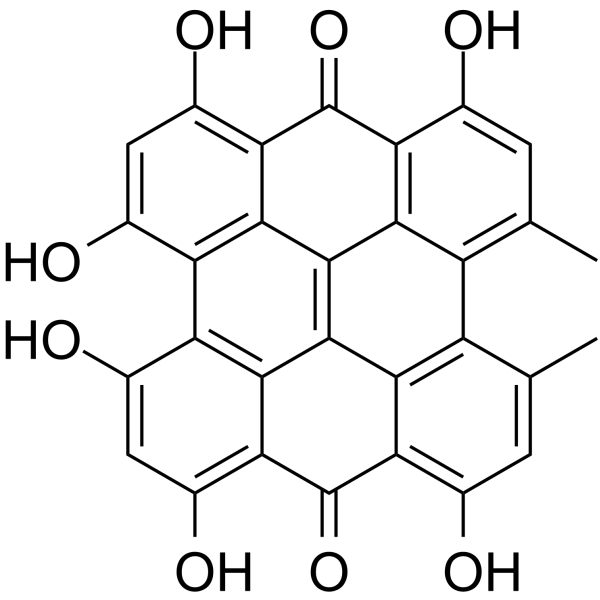
  • HY-N0453
    Hypericin
    5+ Cited Publications

    Apoptosis Influenza Virus Antibiotic Monoamine Oxidase PKC Cytochrome P450 Dopamine β-hydroxylase Reverse Transcriptase Telomerase Infection Neurological Disease Cancer
    Hypericin is a naturally occurring substance found in Hyperlcurn perforatum L. Hypericin is an inhibitor of PKC (protein kinase C), MAO (monoaminoxidase), dopamine-beta-hydroxylase, reverse transcriptase, telomerase and CYP (cytochrome P450). Hypericin shows antitumor, antiviral, antidepressive activities, and can induce apoptosis .
    Hypericin
  • HY-12359
    TPPB
    1 Publications Verification

    MARCKS PKC Neurological Disease
    TPPB is a cell-permeable benzolactam-derived protein kinase C (PKC) activator with a Ki of 11.9 nM.
    TPPB
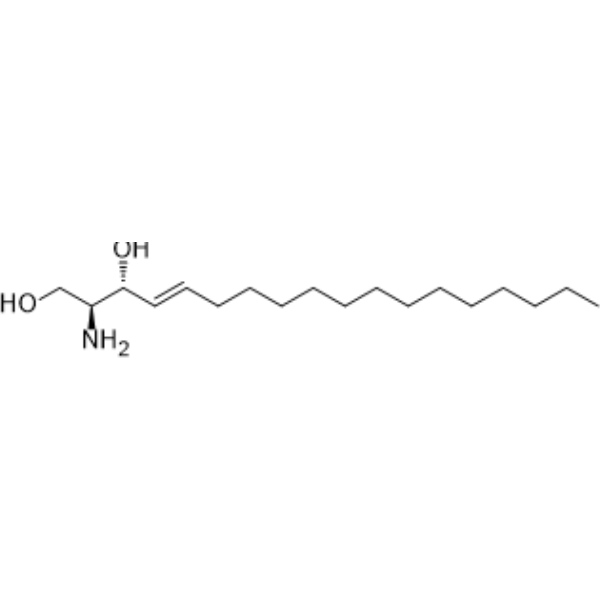
  • HY-101047
    D-erythro-Sphingosine
    4 Publications Verification

    Erythrosphingosine; erythro-C18-Sphingosine; trans-4-Sphingenine

    PKC Phosphatase Endogenous Metabolite Cancer
    D-erythro-Sphingosine (Erythrosphingosine) is a very potent activator of p32-kinase with an EC50 of 8 μM, and inhibits protein kinase C (PKC). D-erythro-Sphingosine (Erythrosphingosine) is also a PP2A activator .
    D-erythro-Sphingosine
  • HY-13977A
    PKR-IN-C16
    5+ Cited Publications

    Apoptosis Neurological Disease
    PKR-IN-C16 (Compound C16) is a specific double-stranded RNA-dependent protein kinase (PKR) inhibitor. PKR-IN-C16 shows promising neuroprotective properties and can rescue acute brain lesions .
    PKR-IN-C16
  • HY-10183
    Go6976
    10+ Cited Publications

    PKC Influenza Virus Cancer
    Go6976 is a Protein Kinase C (PKC) inhibitor, with an IC50 of 20 nM.
    Go6976
  • HY-12598A
    DHPG
    4 Publications Verification

    (RS)-3,5-DHPG

    mGluR Neurological Disease
    DHPG is the agonist for mGluR 1/5 (EC50 for mGluR 1 is 60 nM) that activates the phospholipase C (PLC) pathway, and leads ultimately to the activation of protein kinase C (PKC) .
    DHPG
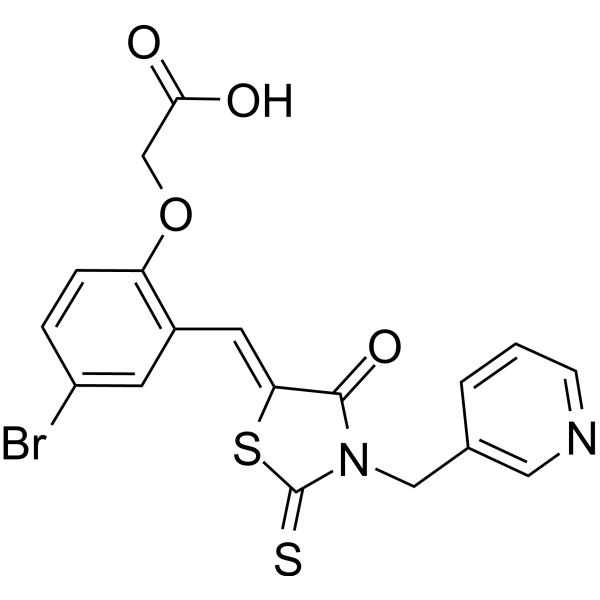
  • HY-112782

    PKC Inflammation/Immunology
    VTX-27 is a selective protein kinase C θ (PKC θ) inhibitor, with Kis of 0.08 nM and 16 nM for PKC θ and PKC δ.
    VTX-27
  • HY-N0699
    Daphnoretin
    3 Publications Verification

    Dephnoretin; Thymelol

    PKC Influenza Virus NOD-like Receptor (NLR) Apoptosis HBV JNK PI3K Akt CDK Caspase Bcl-2 Family Infection Inflammation/Immunology Cancer
    Daphnoretin (Dephnoretin; Thymelol) is a protein kinase C (PKC) activator that inhibits the expression of hepatitis B virus (HBV) surface antigen (HBsAg) and exhibits antiviral activity. Daphnoretin exerts its antitumor effects by inhibiting the activation of the PI3K/AKT signaling pathway and triggers the mitochondrial apoptosis pathway. Daphnoretin alleviates chondrocyte apoptosis and inflammatory responses by inhibiting endoplasmic reticulum stress and activation of the NLRP3 inflammasome. Daphnoretin regulates the differentiation and maturation of dendritic cells, inhibits their immunostimulatory function by downregulating the phosphorylation level of JNK, and thus exerts a protective effect in skin graft rejection .
    Daphnoretin
  • HY-P1821
    Myelin Basic Protein
    2 Publications Verification

    MHP4-14

    PKC Neurological Disease
    Myelin Basic Protein (MHP4-14), a synthetic peptide comprising residues 4-14 of myelin basic protein, is a very selective PKC substrate (Km=7 μM). Myelin Basic Protein is not phosphorylated by cyclic AMP-dependent protein kinase, casein kinases I and II, Ca 2+/calmodulin-dependent protein kinase II, or phosphorylase kinase, and can be routinely used for the assay of protein kinase C with low background in the crude tissue extracts .
    Myelin Basic Protein
  • HY-108136A
    Bisindolylmaleimide X hydrochloride
    2 Publications Verification

    BIM-X hydrochloride; Ro31-8425 hydrochloride

    PKC CDK Cardiovascular Disease Inflammation/Immunology Cancer
    Bisindolylmaleimide X hydrochloride(Ro 31-8425 hydrochloride, BIM-X hydrochloride) is a cell-penetrating PKC inhibitor. Bisindolylmaleimide X hydrochloride is a potent cyclin-dependent kinase 2 (CDK2) antagonist with an IC50 of 200 nM. Bisindolylmaleimide X hydrochloride inhibits the proliferation of CD4 T cells in vitro. Bisindolylmaleimide X hydrochloride inhibits eNOS-Ser1177 phosphorylation in human embryonic vein endothelial cells. Bisindolylmaleimide X hydrochloride can be used for research on the immune system and cardiovascular diseases .
    Bisindolylmaleimide X hydrochloride
  • HY-100984
    HA-100
    1 Publications Verification

    PKA PKC Myosin ROCK Cancer
    HA-100 is a potent protein kinase inhibitor, with IC50s of 4 μM, 8 μM, 12 μM and 240 μM for cGMP-dependent protein kinase (PKG), cAMP-dependent protein kinase (PKA), protein kinase C (PKC) and MLC-kinase, respectively. HA-100 also used as a ROCK inhibitor .
    HA-100
  • HY-123979
    ζ-Stat
    3 Publications Verification

    NSC37044

    PKC Apoptosis Cancer
    ζ-Stat (NSC37044) is a specific and atypical PKC-ζ inhibitor, with an IC50 of 5 μM. ζ-Stat can reduce melanoma cell lines proliferation and induce apoptosis, and has antitumor activity in vitro .
    ζ-Stat
  • HY-129624A
    Bisindolylmaleimide VIII acetate
    1 Publications Verification

    Ro 31-7549 acetate; Bis VIII acetate

    PKC Apoptosis Inflammation/Immunology Cancer
    Bisindolylmaleimide VIII acetate (Ro 31-7549 acetate) is a potent and selective protein kinase C (PKC) inhibitor with an IC50 of 158 nM for rat brain PKC. Bisindolylmaleimide VIII acetate has IC50s of 53, 195, 163, 213, and 175 nM for PKC-α, PKC-βI, PKC-βII, PKC-γ, PKC-ε, respectively . Bisindolylmaleimide VIII acetate facilitates Fas-mediated apoptosis and inhibits T cell-mediated autoimmune diseases .
    Bisindolylmaleimide VIII acetate
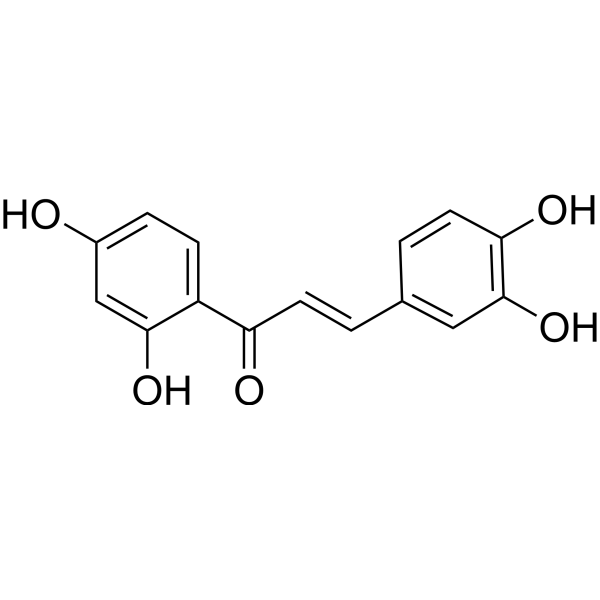
  • HY-100983

    PKC Cancer
    Protein kinase inhibitor H-7 dihydrochloride is a potent PKC (protein kinase C) inhibitor. At 100 μM, Protein kinase inhibitor H-7 dihydrochloride completely inhibits both TPA (skin tumour promoter, 12-O-tetradecanoylphorbol-13-acetate) and phospholipase C-induced ODC (ornithine decarboxylase) .
    Protein kinase inhibitor H-7 dihydrochloride
  • HY-105416
    Calphostin C
    2 Publications Verification

    UCN-1028C

    Antibiotic PKC Apoptosis Metabolic Disease Cancer
    Calphostin C is a highly selective PKC inhibitor (IC50=0.05 μM) and tumor apoptosis inducer. Calphostin C competitively binds to PKC and inhibits PKC-mediated phosphorylation signal transduction. Calphostin C restores Na+/K+ ATPase activity in the sciatic nerve of diabetic mice and improves neuropathy. Calphostin C can be used in the study of anti-tumor and diabetic complications .
    Calphostin C
  • HY-108262

    7-epi-Hydroxystaurosporine

    PKC PKA Cancer
    UCN-02 (7-epi-Hydroxystaurosporine) is a selective protein kinase C (PKC) inhibitor with a PKC IC50 value of 62 nM and a PKA IC50 value of 0.25 μM. UCN-02 can be produced by Streptomyces strain N-126. UCN-02 can be used for the research of breast carcinoma .
    UCN-02
  • HY-131900

    PKC Cancer
    Protein kinase inhibitor H-7 is a potent inhibitor of protein kinase C (PKC) and cyclic nucleotide dependent protein kinase, with a Ki of 6 μM for PKC .
    Protein kinase inhibitor H-7
  • HY-P1746
    Protein Kinase C (19-31)
    1 Publications Verification

    PKC (19-31)

    PKC Inflammation/Immunology
    Protein Kinase C (19-31), a peptide inhibitor of protein kinase C (PKC), derived from the pseudo-substrate regulatory domain of PKCa (residues 19-31), is used as protein kinase C substrate peptide for testing the protein kinase C activity .
    Protein Kinase C (19-31)
  • HY-W011297

    Arachidonic acid methyl ester

    PKC Metabolic Disease
    Methyl arachidonate is a protein kinase C activator and also an orally active substrate that undergoes esterase-mediated hydrolysis. Methyl arachidonate indirectly activates protein kinase C via eicosanoid metabolites generated through the arachidonic acid metabolic pathway, exerting effects via cyclooxygenase products at low concentrations and via lipoxygenase products at high concentrations. Methyl arachidonate can be used in studies related to lipodystrophy .
    Methyl arachidonate
  • HY-117393
    Bisindolylmaleimide III
    1 Publications Verification

    PKC Cancer
    Bisindolylmaleimide III is a potent and selective inhibitor of protein kinase C (PKC). Bisindolylmaleimide III selectively interacts with either PKCα or ribosomal S6 protein kinase 1 after activation of these kinases .
    Bisindolylmaleimide III
  • HY-123979A
    ζ-Stat trisodium
    3 Publications Verification

    NSC37044 trisodium

    PKC Apoptosis Cancer
    ζ-Stat trisodium (NSC37044 trisodium) is a specific and atypical PKC-ζ inhibitor, with an IC50 of 5 μM. ζ-Stat trisodium can reduce melanoma cell lines proliferation and induce apoptosis, and has antitumor activity in vitro .
    ζ-Stat trisodium
  • HY-168905

    Calmodulin Cancer
    SGC-CAMKK2-1, a chemical probe, is the selective, inhibitor for calcium/calmodulin-dependent protein kinase kinase 2 (CAMKK2) with an IC50 of 30 nM. SGC-CAMKK2-1 inhibits AMPK phosphorylation in cell C4-2 with an IC50 of 1.6 μM .
    SGC-CAMKK2-1
  • HY-P1821A
    Myelin basic protein (4-14) TFA
    2 Publications Verification

    MHP4-14 TFA

    PKC Neurological Disease
    Myelin Basic Protein (MHP4-14) TFA, a synthetic peptide comprising residues 4-14 of myelin basic protein, is a very selective PKC substrate (Km=7 μM). Myelin Basic Protein TFA is not phosphorylated by cyclic AMP-dependent protein kinase, casein kinases I and II, Ca 2+/calmodulin-dependent protein kinase II, or phosphorylase kinase, and can be routinely used for the assay of protein kinase C with low background in the crude tissue extracts .
    Myelin basic protein (4-14) TFA
  • HY-P3841

    PKC Others
    Protein Kinase C β Peptide is a peptide fragment of Protein Kinase Cβ. Protein Kinase Cβ is related with hyperglycemia decreases endothelium-derived nitric oxide. Inhibition of Protein kinase Cβ prevents the reduction in endothelium-dependent vasodilation induced by acute hyperglycemia .
    Protein Kinase C β Peptide
  • HY-P3838

    PKC Others
    Protein Kinase C γ Peptide is a peptide fragment of Protein Kinase Cγ. Protein Kinase Cγ is a protein causative for dominant ataxia, that can negatively regulate nuclear import of recessive-ataxia-related aprataxin .
    Protein Kinase C γ Peptide
  • HY-P1288

    PKC fragment (530-558)

    PKC Others
    Protein Kinase C (530-558), a peptide fragment of protein kinase C (PKC), is a potent PKC activator. Protein Kinase C (530-558) significantly inhibits osteoclastic bone resorption .
    Protein Kinase C (530-558)
  • HY-P3892

    PKC Inflammation/Immunology
    Protein Kinase C (19-35) Peptide is the PKC pseudosubstrate inhibitor/region. Protein Kinase C (19-35) Peptide possibly blocks the substrate-binding site in its kinase domain, makes the cytoplasmic form of PKC inactive .
    Protein Kinase C (19-35) Peptide
  • HY-P1088

    PKC Others
    [Ser25] Protein Kinase C (19-31) is a substrate of protein kinase C (PKC) (Km: 0.3 μM). [Ser25] Protein Kinase C (19-31) is derived from the pseudo-substrate regulatory domain of PKCα (19-31) with a Serine at position 25 replacing the wild-type Alanine .
    [Ser25] Protein Kinase C (19-31)
  • HY-P2673

    KRTLRR

    EGFR Others
    Lys-Arg-Thr-Leu-Arg-Arg (KRTLRR) is a hexapeptide. Lys-Arg-Thr-Leu-Arg-Arg is a substrate of protein kinase C from EGF receptor. Lys-Arg-Thr-Leu-Arg-Arg can be used to determine the activity of protein kinase C .
    Lys-Arg-Thr-Leu-Arg-Arg
  • HY-P1402

    PKC Others
    [Glu27]-PKC (19-36) is an inactive control for protein kinase C (PKC) (19-36). PKC (19-36) is a pseudosubstrate peptide inhibitor of protein kinase C, it may be responsible for maintaining the enzyme in the inactive form in the absence of allosteric activators such as phospholipids .
    [Glu27]-PKC (19-36)
  • HY-P3741

    PKC Neurological Disease
    [Ala9,10, Lys11,12] Glycogen Synthase (1-12) is a selective substrate for phosphorylation by protein kinase C (PKC). [Ala9,10, Lys11,12] Glycogen Synthase (1-12) can be used to determine the activity of protein kinase C .
    [Ala9,10, Lys11,12] Glycogen Synthase (1-12)
  • HY-133083
    BAY-474
    1 Publications Verification

    c-Met/HGFR Cancer
    BAY-474 is a tyrosine-protein kinase c-Met inhibitor. BAY-474 acts as an epigenetics probe .
    BAY-474
  • HY-P3940

    PKC Others
    Ac-MBP (4-14) Peptide is an acetylated MBP (4-14) peptide. MBP (4-14) Peptide is a very selective (protein kinase C) PKC substrate. Ac-MBP (4-14) Peptide can be used for PKC assay in extracts without prior purification to eliminate interfering protein kinases or phosphatases .
    Ac-MBP (4-14) Peptide
  • HY-P1401

    PKC Metabolic Disease
    Protein Kinase C (19-36) is a pseudosubstrate peptide inhibitor of protein kinase C (PKC), with an IC50 of 0.18 μM. Protein Kinase C (19-36) markedly attenuated vascular hyperproliferation and hypertrophy as well as glucose-induced suppression of natriuretic peptide receptor response .
    Protein Kinase C (19-36)
  • HY-P1803

    PKCε; PRKCE ; Peptide Epsilon

    PKC Neurological Disease Inflammation/Immunology Endocrinology
    Protein Kinase C Peptide Substrate is targeted to a specific cellular compartment in a manner dependent on second messengers and on specific adapter proteins in response to extracellular signals that activate G-protein-coupled receptors, tyrosine kinase receptors, or tyrosine kinase-coupled receptors. Protein Kinase C Peptide Substrate then regulates various physiological functions including the activation of nervous, endocrine, exocrine, inflammatory, and immune systems .
    Protein Kinase C Peptide Substrate
  • HY-E70658

    CDK Cancer
    CDK12 R722C/CycK Recombinant Human Active Protein Kinase is a cyclin-dependent kinase and regulates the expression of genes involved in DNA repair and is required for the maintenance of genomic stability .
    CDK12 R722C/CycK Recombinant Human Active Protein Kinase
  • HY-E70696

    EGFR Cancer
    EGFR is a driver of tumorigenesis. EGFR is mainly found in an auto-inhibited, dimerization-incompetent, state at the plasma membrane (PM). Ligand binding promotes receptor dimerization, which determines a series of structural rearrangements that are conveyed to the cytoplasmic domain allowing the formation of asymmetric dimers between the two juxtaposed catalytic domains. EGFR has multiple mutants. EGFR C797S/L858R Recombinant Human Active Protein Kinase is a recombinant EGFR C797S/L858R protein that can be used to study EGFR C797S/L858R-related functions .
    EGFR C797S/L858R Recombinant Human Active Protein Kinase
  • HY-12880

    Myosin PKA PKC ROCK Cancer
    HA-100 dihydrochloride is a potent protein kinase inhibitor, with IC50s of 4 μM, 8 μM, 12 μM and 240 μM for cGMP-dependent protein kinase (PKG), cAMP-dependent protein kinase (PKA), protein kinase C (PKC) and MLC-kinase, respectively. HA-100 dihydrochloride also used as a ROCK inhibitor .
    HA-100 dihydrochloride
  • HY-112384

    L-threo-dihydrosphingosine

    PKC Cancer
    Safingol is a lyso-sphingolipid PKC (protein kinase C ) inhibitor .
    Safingol
  • HY-101962

    Insulin Receptor Metabolic Disease
    HNMPA is a membrane impermeable insulin receptor tyrosine kinase inhibitor. HNMPA inhibits serine and tyrosine autophosphorylation by the human insulin receptor. HNMPA has no effect on protein kinase C or cyclic AMP-dependent protein kinase activities
    HNMPA
  • HY-165550

    C22-D-erythro-Sphingosine

    Apoptosis Caspase Mitochondrial Metabolism Bcl-2 Family Metabolic Disease
    Sphingosine (C22-D-erythro-Sphingosine) is a metabolite of sphingolipid and a pro-Apoptotic signaling messenger. Sphingosine induces apoptosis via Caspase-dependent, mitochondria-dependent and lysosomal affinity detergent pathways, downregulates Bcl-2 and Bcl-xL, and truncates Bid and Bax. Sphingosine is used for cancer research .
    Sphingosine
  • HY-E70660

    CDK Cancer
    CDK13/CycK Recombinant Human Active Protein Kinase is a RNA polymerase II C-terminal domain kinases. CDK13 interacts with the splicing factor SRSF1 and to regulate alternative splicing of HIV .
    CDK13/CycK Recombinant Human Active Protein Kinase
  • HY-129330

    PKC Others
    Sapintoxin D is a fluorescent phorbol ester that can be used to study the activation of protein kinase C (PKC). Sapintoxin D is a calcium-dependent PKC activator .
    Sapintoxin D
  • HY-P3764

    PKC Others
    Protein kinase C substrate is a substrate of Protein kinase C, can be used to detect protein. Protein kinase C is a key regulatory element in signal transduction and exerts its effects by catalysing specific substrate phosphorylation .
    Protein kinase C substrate
  • HY-P3842

    PKC Cancer
    Protein Kinase C (661-671) is a fragment peptide of β1 subspecies of protein kinase C (PKC). PKC plays a role in cellular growth control and tumor promotion .
    Protein Kinase C (661-671)
  • HY-P1289D

    PKC Others
    [Ala107]MBP(104-118) acetate is an noncompetitive peptide inhibitors of protein kinase C (PKC), with IC50s ranging from 46-145 μM .
    [Ala107]MBP(104-118) acetate
  • HY-P1289

    PKC Others
    [Ala113]MBP(104-118) is an noncompetitive peptide inhibitors of protein kinase C (PKC), with IC50s ranging from 28-62 μM .
    [Ala113]MBP(104-118)
  • HY-P1289A

    PKC Others
    [Ala107]MBP(104-118) is an noncompetitive peptide inhibitors of protein kinase C (PKC), with IC50s ranging from 46-145 μM .
    [Ala107]MBP(104-118)
  • HY-P1289C

    PKC Others
    [Ala113]MBP(104-118) TFA is an noncompetitive peptide inhibitors of protein kinase C (PKC), with IC50s ranging from 28-62 μM .
    [Ala113]MBP(104-118) TFA
  • HY-P1289B

    PKC Others
    [Ala107]MBP(104-118) TFA is an noncompetitive peptide inhibitors of protein kinase C (PKC), with IC50s ranging from 46-145 μM .
    [Ala107]MBP(104-118) TFA

Inquiry Online

Your information is safe with us. * Required Fields.

Salutation


Country or Region *

Applicant Name *


Organization Name *

Department *


Email Address *


Product Name *

Cat. No.


Requested quantity *

Phone Number *


Remarks

Inquiry Online

Inquiry Information

Product Name:
Cat. No.:
Quantity:
MCE Japan Authorized Agent:

