9 Results for "

RNA polymerase-IN-1

" in MedChemExpress (MCE) Product Catalog:
Products (9)

9 Results for "RNA polymerase-IN-1" in MCE Product Catalog:

Cat. No.: HY-163015
CAS No.: 2447106-74-1
Target:  

DNA/RNA Synthesis

Research Areas:  

Infection

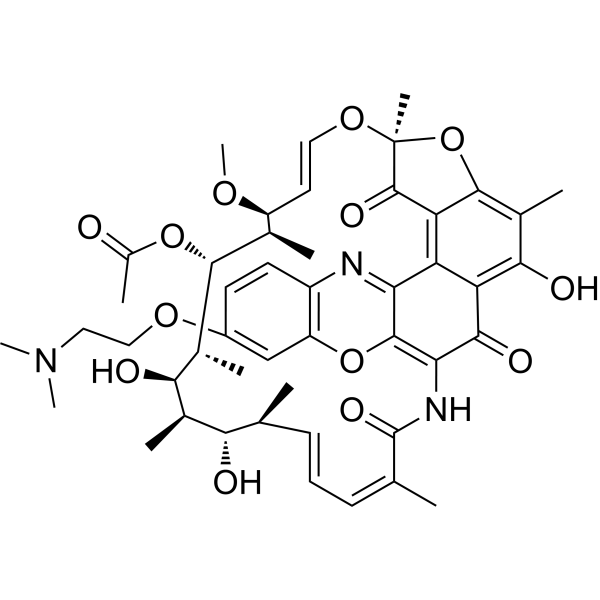
RNA polymerase-IN-1 (compound 4) is s DNA-dependent RNA polymerase inhibitor. RNA polymerase-IN-1 inhibits CYP isozymes .
loading...
    loading...
Cat. No.: HY-128917
CAS No.: 845626-57-5
Purity:  98.20%
Target:  

DNA/RNA Synthesis

Research Areas:  

Infection

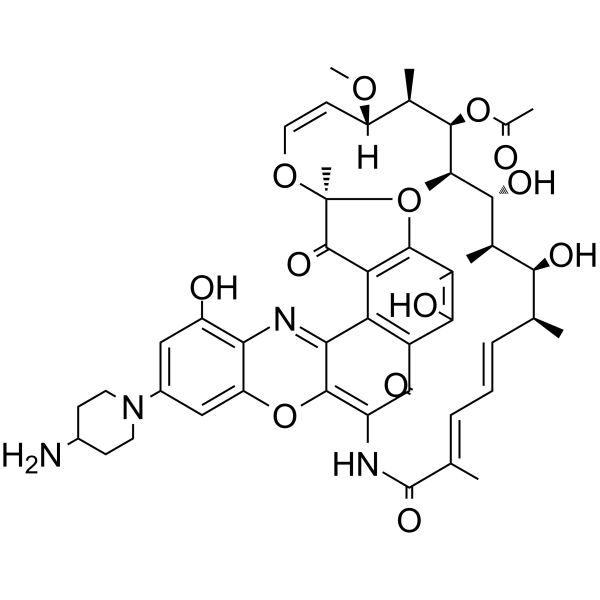
DNA31 is a potent RNA polymerase inhibitor .
loading...
    loading...
Cat. No.: HY-151829
CAS No.: 2616562-74-2
Target:  

ADC Linkers

Research Areas:  

Others

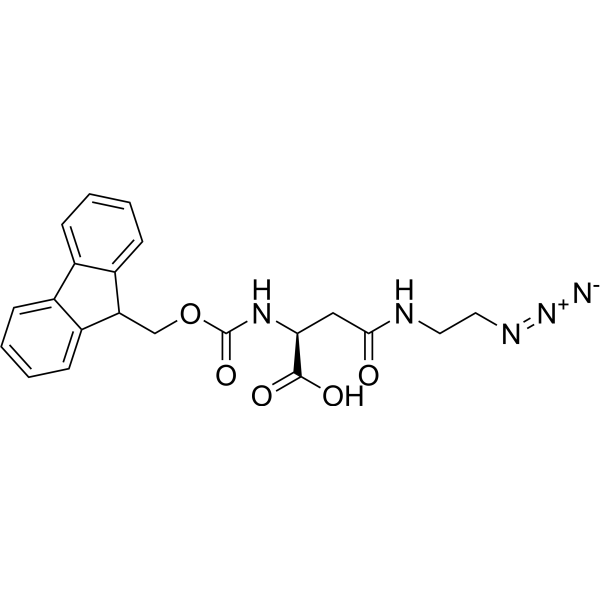
Fmoc-L-Asn(EDA-N3)-OH is a click chemistry reagent containing an azide group. This building block is reported in literature for the modification of Amanitin via Click Chemistry. Alpha-Amanitin is the deadliest member of the amatoxin peptide family produced by the death-cap mushroom A. phalloides. It is an orally available, rigid, bicyclic octapeptide and one of the most lethal known natural products (LD50 = 50-100 μg/kg) acting as highly selective allosteric inhibitor of the RNA polymerase II . It contains an azide group and can undergo copper-catalyzed azide-alkyne cycloaddition (CuAAc) with molecules containing alkyne groups. It can also undergo ring strain-promoted alkyne-azide cycloaddition (SPAAC) with molecules containing DBCO or BCN groups.
loading...
    loading...
Cat. No.: HY-150641
CAS No.: 3031561-92-6
Research Areas:  

Cancer

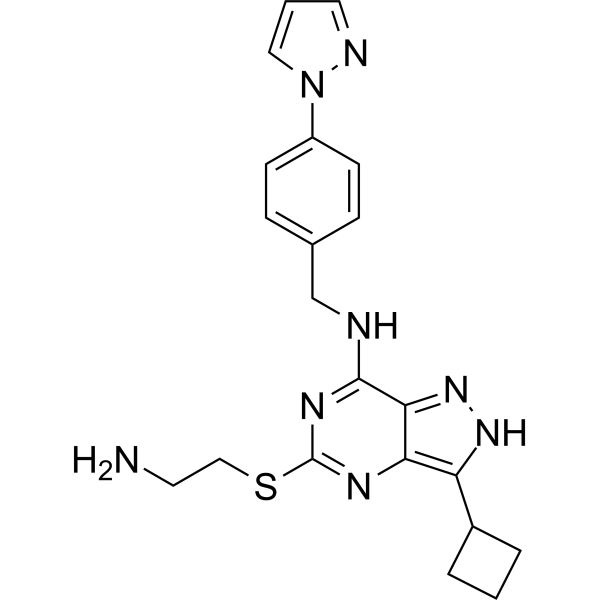
CDK-IN-9 (compound 24) is a potent CDK inhibitor, also as a molecular glue inducing an interaction between CDK12 and DDB1, with an IC50 values of 4 nM for CDK2/E. CDK-IN-9 leads to polyubiquitination of cyclin K and its subsequent degradation. CDK-IN-9 induce apoptosis through dephosphorylation of retinoblastoma protein and RNA polymerase II .
loading...
    loading...
Cat. No.: HY-131083
CAS No.: 21705-02-2
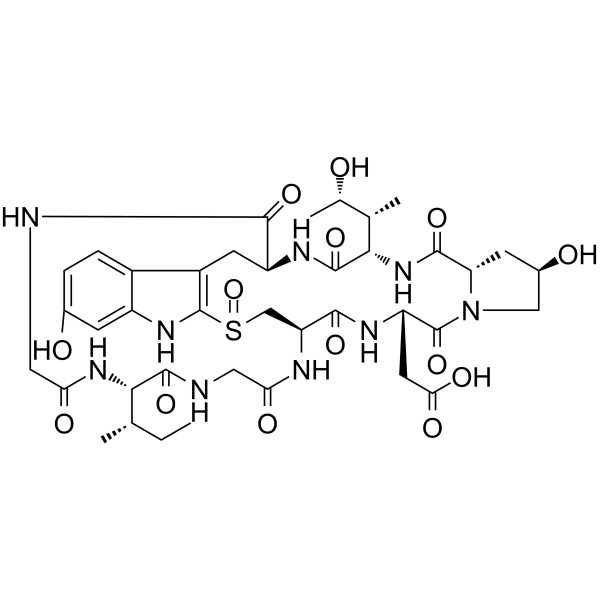
ε-Amanitin, a cyclic peptide isolated from a variety of mushroom species, potently binds to and inhibits the activity of RNA polymerase II .
loading...
    loading...
Cat. No.: HY-170440
CAS No.: 3049172-60-0
Target:  

Influenza Virus

Research Areas:  

Infection Inflammation/Immunology

ATV2301 is an orally active anti-influenza agent (EC50, H1N1 = 1.88 nM, H3N2 = 4.77 nM). ATV2301’s anti-influenza activity is due to its effects on polymerase acid protein (PA), nuclear protein (NP), and RNA-dependent RNA polymerase (RdRp) .
loading...
    loading...
Cat. No.: HY-149050
CAS No.: 2367587-02-6
Research Areas:  

Infection

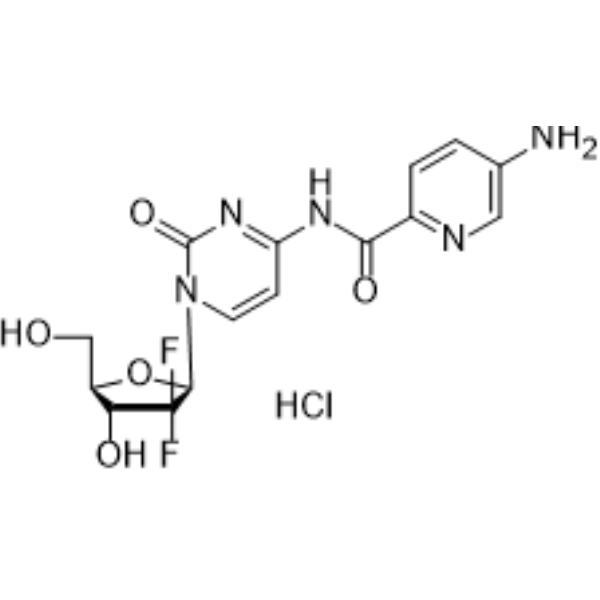
Viral polymerase-IN-1 hydrochloride, a Gemcitabine (HY-17026) derivative, potently inhibits influenza A and B viruses infection with IC90 values of 11.4-15.9 μM. Viral polymerase-IN-1 hydrochloride is active against SARS-CoV-2 infection. Viral polymerase-IN-1 hydrochloride suppresses influenza virus infection by affecting viral RNA replication/transcription in cells .
loading...
    loading...
Cat. No.: HY-105099R
CAS No.: 129791-92-0
Synonyms: KRM-1648 (Standard); ABI-1648 (Standard)
Rifalazil (Standard) is the analytical standard of Rifalazil. This product is intended for research and analytical applications. Rifalazil (KRM-1648; ABI-1648), a rifamycin derivative, inhibits the bacterial DNA-dependent RNA polymerase and kills bacterial cells by blocking off the β-subunit in RNA polymerase[1]. Rifalazil (KRM-1648; ABI-1648) is an antibiotic, exhibits high potency against mycobacteria, gram-positive bacteria, Helicobacter pylori, C. pneumoniae and C. trachomatis with MIC values from 0.00025 to 0.0025 μg/ml[3]. Rifalazil (KRM-1648; ABI-1648) has the potential for the treatment of Chlamydia infection, Clostridium difficile associated diarrhea (CDAD), and tuberculosis (TB)[2].
loading...
    loading...
Cat. No.: HY-188058
CAS No.: 208403-22-9
Research Areas:  

Others

Biotin-14-CTP is a modified cytidine triphosphate analog, as well as a non-terminating, non-processable nucleotide analog and labeling reagent. Biotin-14-CTP incorporates into nascent RNA strands during transcription elongation, enabling immunolabeling-based visualization of transcription sites. The incorporation of Biotin-14-CTP is inhibited by α-Amanitin (HY-19610), indicating that it can be utilized by RNA polymerase II .
loading...
    loading...

