Search Result
Results for "
Streptomyces
" in MedChemExpress (MCE) Product Catalog:
3
Biochemical Assay Reagents
12
Isotope-Labeled Compounds
| Cat. No. |
Product Name |
Target |
Research Areas |
Chemical Structure |
-
- HY-P2812
-
|
PLD
|
Phospholipase
|
Neurological Disease
Inflammation/Immunology
Endocrinology
Cancer
|
|
Phospholipase D, Streptomyces chromofuscus (PLD) is an enzyme of the phospholipase superfamily, which widely exists in bacteria, yeast, plants, animals and viruses, and is often used in biochemical research. Phospholipase D can catalyze the hydrolysis of phosphodiester bonds in glycerophospholipids to produce phosphatidic acid and soluble choline. Phospholipase D is involved in a variety of disease-related processes, including diabetes, atherogenesis, obesity, tumorigenesis, immune response, and neuroendocrine function .
|
-
-
- HY-N6686
-
|
Pristinamycin IIA; Ostreogrycin A
|
Bacterial
Antibiotic
|
Infection
|
|
Virginiamycin M1 (Pristinamycin IIA; Ostreogrycin A), produced by?Streptomyces virginiae, is an polyunsaturated macrocyclic lactone antibiotic and acts as a component of Virginiamycin (HY-112665) . Virginiamycin M1 alone is against Staphylococcus aureus with a MIC of 0.25 μg/mL.
|
-
-
- HY-E70131
-
|
Endo-β-N-acetylglucosaminidase H
|
Others
|
Metabolic Disease
|
|
Endo H, Streptomyces picatus (Endo-β-N-acetylglucosaminidase H), isolated from Streptomyces plicatus, hydrolyzes the central glycosidic bond of the β1, 4-di-N-acetylchitobiose core in asparagine-linked oligosaccharides .
|
-
-
- HY-P2797A
-
|
AMCase, Streptomyces griseus
|
Biochemical Assay Reagents
|
Others
|
|
Chitinase, Streptomyces griseus is a chitinase from Streptomyces griseus. Chitinase is a chitin-targeting enzyme with chitin hydrolysis activity. Chitinase inhibits chitin-induced innate type 2 inflammation in the lung. Chitinase augments chitin-free, allergen-induced Th2 inflammation. Chitinase mediates effector functions of IL-13 .
|
-
-
- HY-135498
-
|
|
Bacterial
|
Infection
|
|
Ferrioxamine E is a siderophore and bacterial growth regulator. Ferrioxamine E can chelate ferric iron, and promote the growth, morphological differentiation and antibiotic synthesis of Streptomyces tanashiensis .
|
-
-
- HY-B1812
-
|
1,2-Dimethoxybenzene
|
Environmental Pollutants
Cytochrome P450
|
Others
|
|
Veratrole (1,2-Dimethoxybenzene) is a key compound that widely exists in plants and attracts pollinators. The release of Veratrole has a circadian rhythm and plays an important role in plant reproduction, species differentiation, and interactions with pollinators. In addition, Veratrole can be demethylated by cytochrome P-450 in Streptomyces setonii .
|
-
-
- HY-P2936
-
|
|
Phospholipase
|
Cardiovascular Disease
Infection
|
|
Sphingomyelin phosphodiesterase, Streptomyces sp. is a sphingomyelin phosphodiesterase derived from the genus Streptomyces, which cleaves the phosphodiester bond of sphingomyelin. Sphingomyelin phosphodiesterase, Streptomyces sp. catalyzes the hydrolysis of sphingomyelin in micelles, synthetic substrates, erythrocyte ghost membranes and liposomes, as well as the hydrolysis of the substrate HNP. In the presence of Mg 2+ or Mn 2+ , Sphingomyelin phosphodiesterase, Streptomyces sp. induces hemolysis of bovine erythrocytes through the hydrolysis of membrane sphingomyelin .
|
-
-
- HY-108874
-
|
Levorin; Vanobid; Candimon
|
Antibiotic
Fungal
Bacterial
|
Infection
|
|
Candicidin is a polyene antifungal antibiotic agent and can be isolated from Streptomyces griseus or Actinomyces levoris .
|
-
-
- HY-N12787
-
|
|
Others
|
Others
|
|
T-Muurolol is a sesquiterpene and can be isolated from Streptomyces sp. M491 .
|
-
-
- HY-111331
-
|
|
Antibiotic
Hexokinase
Bacterial
|
Infection
|
|
Germicidin B is an antibiotic with bactericidal activity. Germicidin B inhibits hexokinase II with an IC50 of 25.16 μM. Germicidin B suppresses spore germination in Streptomyces. Germicidin B is applicable to studies on bacterial infections .
|
-
-
- HY-120809
-
|
|
Bacterial
Parasite
Antibiotic
|
Infection
|
|
Spiramycin III (SPMIII) is a main component of Spiramycin. Spiramycin (HY-100593) is a macrolide antibiotic produced by Streptomyces ambofaciens with against bacteria and Toxoplasma gondii activities, and also has antiparasitic effect .
|
-
-
- HY-124438
-
|
|
Antibiotic
Fungal
|
Infection
|
|
Herbicidin A is an adenosine-derived nucleoside antibiotic, but also is a herbicide against dicotyledonous plants. Herbicidin A can be isolated from Streptomyces scopuliridis M40 .
|
-
-
- HY-P3023A
-
|
|
Biochemical Assay Reagents
|
Others
|
|
Mutanolysin, streptomyces globisporus ATCC21553 (0.2 μm filtered) is an N-acetylmuramidase that can be used to prepare nucleic acids and intact ribosomal RNA from Gram-positive bacteria .
|
-
-
- HY-148218
-
|
N-[(6S)-6-Carboxy-6-(glycylamino)hexanoyl]-D-alanyl-D-alanine
|
Amino Acid Derivatives
|
Metabolic Disease
|
|
Glycyl-L-alpha-amino-epsilon-pimelyl-D-alanyl-D-alanine is a specific peptide substrate of Streptomyces R1 d-alanyl-d-alanine(dd)-peptidases .
|
-
-
- HY-125300
-
|
|
Fungal
Antibiotic
|
Cancer
|
|
Oligomycin E is a antitumor antibiotic that can be isolated from Streptomyces. Oligomycin E has significant antifungal activity, showing minimal inhibitory concentrations (MICs) values between 2 and 75μg/mL. Oligomycin E has strong antitumor activity against HeLa cells, with an IC50 of 0.014 μg/mL .
|
-
-
- HY-N8743
-
|
A 65190; Cyclo-(leucyl-prolyl)
|
Endogenous Metabolite
|
Cancer
|
|
Cyclo(Pro-Leu) (A 65190) is an active metabolite. Cyclo(Pro-Leu) can be isolated from Streptomyces sp. BM8. Cyclo(Pro-Leu) can be used for the research of cancer .
|
-
-
- HY-118331
-
|
PD 124895; CL-1957E
|
Antibiotic
|
Infection
Cancer
|
|
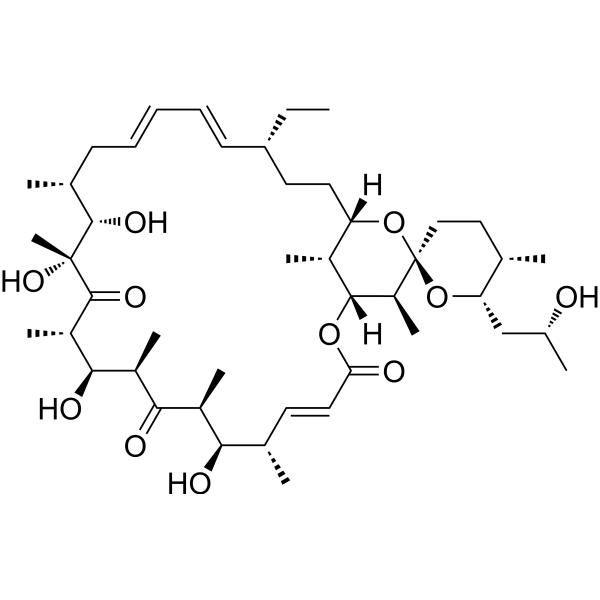
Kazusamycin B is an antibiotic that could be isolated from the fermentation broth of Streptomyces sp. No. 81-484. Kazusamycin B inhibits cell growth and arrests cell cycle at G1 phase. Kazusamycin B can be used in research of cancer .
|
-
-
- HY-W007704
-
|
|
Fungal
|
Infection
|
|
Methyl cyclohexanecarboxylate is a compound related to 2-cyclohexenylcarbonyl CoA. Methyl cyclohexanecarboxylate is produced during the incubation of 2-cyclohexenylcarbonyl CoA with cell-free extracts of Streptomyces collinus .
|
-
-
- HY-122306
-
|
Mycotrienin II
|
Antibiotic
Bacterial
|
Infection
Cancer
|
|
Ansatrienin B (Mycotrienin II) is an ansamycin antibiotic isolated from Streptomyces. Ansatrienin B is active against fungi and yeasts, but inactive against bacteria.Ansatrienin B displays antitumor antibiotic activity and can be used as an ADC Toxin .
|
-
-
- HY-N13017
-
-
-
- HY-129342
-
|
|
Antibiotic
|
Infection
|
|
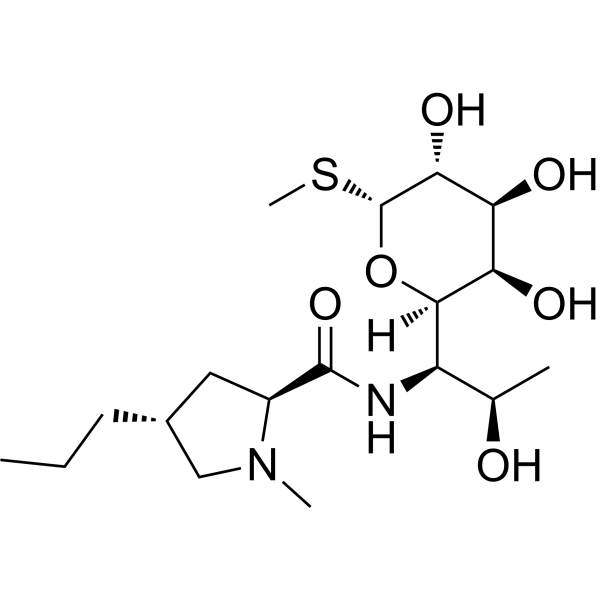
Lincomycin B is an antibiotic that can be isolated from Streptomyces lincolnensis .
|
-
-
- HY-N13149
-
-
-
- HY-126559
-
|
Mycotrienin I
|
Antibiotic
Fungal
|
Infection
|
|
Ansatrienin A is an antifungal antibiotic that can be isolated from Streptomyces collinus .
|
-
-
- HY-126571
-
|
|
Parasite
|
Infection
|
|
Virustomycin A is a nature product that could be isolated from Streptomyces. Virustomycin A has selective and potent antitrypanosomal activity .
|
-
-
- HY-122494
-
|
SF-1293
|
Bacterial
|
Infection
|
|
Bilanafos is a natural organic phosphine tripeptide antibiotic metabolized by Streptomyces hydroscopius or Streptomyces viridochromeogenes. Bialaphos has antimicrobial activity aganist Gram-negative and positive bacteria as well as some fungal plant diseases .
|
-
-
- HY-W747516
-
|
|
Antibiotic
|
Infection
Cancer
|
|
Butylcycloheptylprodigiosin is the secondary metabolite produced by some bacteria, such as Streptomyces. Butylcycloheptylprodigiosin is a red-pigmented antibiotic and exhibits cytotoxicity against cancer cell MCF-7 and HDF .
|
-
-
- HY-125631
-
-
-
- HY-P1720
-
|
|
Antibiotic
Bacterial
|
Infection
|
|
Telomycin is a calcium-dependent antibiotic, which can be produced by Streptomyces. Telomycin inhibits gram-positive bacteria, including multidrug-resistant (MDR) pathogens .
|
-
-
- HY-N12656
-
|
|
HSP
|
Cancer
|
|
Versipelostatin is a GRP78/Bip molecular chaperone down-regulator and can be isolated from the culture broth of
Streptomyces versipellis 4083-SVS6 .
|
-
-
- HY-125637
-
|
Aabomycin A2
|
Antibiotic
Fungal
ATP Synthase
|
Infection
|
|
Venturicidin B (Aabomycin A2) is a macrolide antibiotic isolated from Streptomyces sp., used as an antifungal agent, a potent inhibitor of the mitochondrial F0-ATP synthase complex .
|
-
-
- HY-121452
-
|
|
nAChR
Calcium Channel
|
Cancer
|
|
Migrastatin is a typical Fascin1 inhibitor. Migrastatin is isolated from a cultured broth of Streptomyces sp. MK929-43F1. Migrastatin inhibits tumor cell migration .
|
-
-
- HY-118169
-
|
|
Bacterial
|
Infection
|
|
A-Factor is an inducer of streptomycin biosynthesis in an inactive mutant of Streptomyces griseus. In addition, A-Factor can also induce spore formation during conidial development of Magnaporthe oryzae .
|
-
-
- HY-118893
-
|
|
Antibiotic
Bacterial
Fungal
Molecular Glues
|
Infection
Cancer
|
|
Asukamycin, a manumycin-type metabolite, could be isolated from Streptomyces nodosus subsp. asukaensis. Asukamycin is an antibiotic and has antimicrobial activity. Asukamycin inhibits growth of various tumor cell lines .
|
-
-
- HY-E70328
-
|
|
Endogenous Metabolite
|
Others
|
|
Alkalophilic Proteinase, Streptomyces sp is a biocatalyst and a key enzyme in new biocatalyst technology. Enzyme engineering focuses on enhancing enzyme reaction kinetics, substrate selectivity, and activity under harsh conditions such as low or high pH. By introducing stimulus responsiveness to these enzyme modifications, dynamic control of activity is also possible .
|
-
-
- HY-126602
-
|
|
Antibiotic
Fungal
|
Infection
|
|
Kinamycin B is an antibiotic found in Streptomyces murayamaensis of the genus Streptomyces that exhibits antifungal activity .
|
-
-
- HY-138223
-
|
|
Fungal
|
Infection
|
|
6-Prenylindole is an antifungal agent that can be isolated from Streptomyces .
|
-
-
- HY-120579
-
-
-
- HY-W491891
-
-
-
- HY-122397
-
-
-
- HY-N12900
-
|
Tryptophandehydrobutyrine diketopiperazine
|
Others
|
Others
|
|
TDD (Tryptophandehydrobutyrine diketopiperazine) is a mold metabolite and can be isolated from Streptomyces spectabilis .
|
-
-
- HY-110271
-
|
|
Antibiotic
|
Others
|
|
N-Acetylpuromycin is a inactive form of the antibiotic puromycin. N-Acetylpuromycin is the last intermediate of the puromycin antibiotic biosynthetic pathway in Streptomyces alboniger .
|
-
-
- HY-N12508
-
|
|
Bacterial
|
Infection
|
|
Meliponamycin A is an antimicrobial cyclodepsipeptide isolated from Streptomyces .
|
-
-
- HY-N11620
-
|
|
Proteasome
|
Others
|
|
Sadopeptins A is a nature product that could be isolated from Streptomyces sp. Sadopeptins A is a potent proteasome inhibitor .
|
-
-
- HY-119025
-
-
-
- HY-111264
-
|
|
Antibiotic
Bacterial
Fungal
|
Infection
|
|
Naphthomycin B is an antibiotic, which is initially isolated from Streptomyces sp. Naphthomycin B exhibits antimicrobial activities against gram positive bacteria and many fungis .
|
-
-
- HY-125653
-
|
|
Antibiotic
Bacterial
|
Infection
Cancer
|
|
Kapurimycin A2 is an antitumor antibiotic that can be found in the culture of Streptomyces sp.. Kapurimycin A2 is an active against bacteria, particularly Gram-positive organisms .
|
-
-
- HY-N11621
-
|
|
Proteasome
|
Others
|
|
Sadopeptins B is a nature product that could be isolated from Streptomyces sp. Sadopeptins B is a potent proteasome inhibitor .
|
-
-
- HY-125163
-
|
8-O-Methyltetrangomycin; 6-Deoxy-8-O-methylrabelomycin
|
Bacterial
Antibiotic
|
Infection
|
|
MM 47755 (8-O-Methyltetrangomycin; 6-Deoxy-8-O-methylrabelomycin) is an antibiotic with antibacterial activity. MM 47755 can be isolated from Streptomyces .
|
-
-
- HY-155953
-
|
|
Drug Isomer
|
Cancer
|
|
6-epi-COTC is a diastereoisomer of Streptomyces metabolite with a anti-cancer activitie .
|
-
-
- HY-N12897
-
|
|
Others
|
Others
|
|
JBIR-94 is a phenolic compound and can be isolated from Streptomyces. JBIR-94 has DPPH radical scavenging activity with an IC50 value of 11.4 μM .
|
-
- HY-112663
-
|
|
Antibiotic
|
Infection
|
|
Monazomycin is a polyene-like antibiotic produced by Streptomyces. Monazomycin molecular weight is about 1200 .
|
-
- HY-N13019
-
|
|
Antibiotic
|
Infection
|
|
Elmycin D is an antibiotic, which can be isolated from Streptomyces cellulosae ssp. griseoincarnatus .
|
-
- HY-125458
-
|
|
NO Synthase
|
Others
|
|
Iromycin A is a potent inhibitor of nitric oxide synthases (NO synthase) that can be isolated from Streptomyces sp. .
|
-
- HY-N12145
-
|
Ao58A; NSC 66645
|
Bacterial
|
Infection
Cancer
|
|
Streptimidone (Ao58A) is a bacterial metabolite found in Streptomyces. Streptimidone has antitumor activity .
|
-
- HY-118965
-
|
|
Antibiotic
|
Cancer
|
|
Alazopeptin is an anti-tumor compound that can be isolated from the culture medium of Streptomyces candidus var. azaticus. Alazopeptin can be used in the study of leukemia .
|
-
- HY-115367
-
|
|
Antibiotic
Bacterial
|
Infection
|
|
Aldgamycin G is a macrolide antibiotic active against Gram-positive bacteria and can be isolated from Streptomyces avidinii .
|
-
- HY-125410
-
|
|
Endogenous Metabolite
|
Infection
|
|
Promothiocin A is a thiopeptide with tipA promoter inducing activity. Promothiocin A can be extracted from Streptomyces sp. SF2741 .
|
-
- HY-125411
-
|
|
Endogenous Metabolite
|
Others
|
|
Berninamycin D is a cyclic peptide fungal metabolite isolated from ermentation of Streptomyces bernensis .
|
-
- HY-131557
-
|
|
Antibiotic
Bacterial
|
Infection
|
|
O-Deacetylravidomycin, a microbial metabolite discovered in Streptomyces, is an antibiotic. O-Deacetylravidomycin exhibits light-dependent antibacterial and anticancer activities .
|
-
- HY-153611
-
|
|
Biochemical Assay Reagents
|
Others
|
|
ARC12 is a secondary metabolism probe that modulates the production of Streptomyces coelicolor secondary metabolites. ARC12 reduces the production of germicidin .
|
-
- HY-N14989A
-
|
|
Dipeptidyl Peptidase
|
Others
|
|
Fluostatin A sodium is a dipeptidyl peptidaseIII inhibitor with an IC50 of 0.44 μg/mL. Fluostatin A can be extracted from Streptomyces sp. TA-3391 .
|
-
- HY-N14398
-
|
|
Bacterial
|
Infection
|
|
Sannamycin E is an aminoglycoside antibiotic. Sannamycin E can be found in Streptomyces sannanensis KC-7038. Sannamycin E has weak antibacterial activity against Gram-positive bacteria .
|
-
- HY-N14782
-
|
|
Antibiotic
Bacterial
|
Infection
Cancer
|
|
10-Decarbomethoxyaclacinomycin A is an anthracycline antibiotic can be produced by Streptomyces galilaeus MA144-Mlt mutant strain KE303. 10-Decarbomethoxyaclacinomycin A has antibacterial activities .
|
-
- HY-126780
-
|
|
Antibiotic
Fungal
|
Infection
|
|
Nikkomycin N is a nucleoside antibiotic, which is initially produced by Streptomyces tendae. Nikkomycin N exhibits fungicidal and insecticidal properties through inhibition of chitin synthesis .
|
-
- HY-125738
-
-
- HY-N14386
-
|
|
Bacterial
|
Infection
|
|
Istamycin Y0 is an aminoglycoside antibiotic. Istamycin Y0 can be found in Streptomyces tenjimariensis ATCC 31603. Istamycin Y0 has only weak antibacterial activity against a few bacteria .
|
-
- HY-129347
-
|
T-2636E
|
Antibiotic
Bacterial
|
Infection
|
|
Lankacyclinol A is an orally active antibiotic isolated from Streptomyces rochei. Lankacyclinol A has broad-spectrum antimicrobial activity against both Gram-positive and Gram-negative bacteria. Lankacyclinol A exhibits low toxicity in mice .
|
-
- HY-120316
-
|
|
Parasite
|
Infection
|
|
AB3127-C is an anti-mite agent that can be isolated from Streptomyces platensis AB3217. AB3127-C exerts a protection coefficient of 90% at a concentration of 100 μg/mL .
|
-
- HY-N15179
-
|
|
Antibiotic
Bacterial
|
Infection
|
|
Minosaminomycin is an antibiotic containing myo-inosamine that can be extracted from Streptomyces No. MA514A1. Minosaminomycin exerts antimicrobial activity against Mycobacterium smegrnatis ATCC 607 and Mycobacterium phlei (MIC= 1.56/6.25 mcg/mL) .
|
-
- HY-N12178
-
|
A 83094A; Omomycin
|
Antibiotic
Bacterial
Parasite
|
Infection
|
|
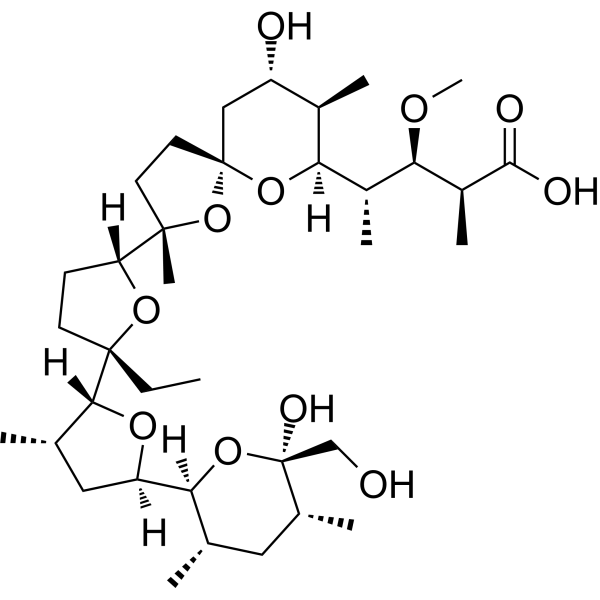
16-Deethylindanomycin (A 83094A) is an antibiotic, which can be produced by Streptomyces setonii. 16-Deethylindanomycin exhibits antimicrobial activities against gram-positive bacteria Staphylococcus spp. and Streptococcus with MIC of 2-4 µg/mL. 16-Deethylindanomycin exhibits anticoccidial activity against Eimeria tenella .
|
-
- HY-N14757
-
|
|
Endogenous Metabolite
|
Others
|
|
Hydantocidin is an adenylosuccinate synthetase inhibitor and a spiroribofuranose. Hydantocidin can be produced by Streptomyces hygroscopicus. Hydantocidin has strong herbicidal activity toward annual, biennial and perennial weeds .
|
-
- HY-N14922
-
|
|
Antibiotic
Bacterial
|
Infection
|
|
Nikkomycin Lx is an antibiotic that can be extracted from Streptomyces tendae TU901. Nikkomycin Lx exhibits anti-Candida Albicans activity and can be utilized in relevant research .
|
-
- HY-N14111
-
|
|
Bacterial
Fungal
|
Infection
|
|
Cuevaene A can be isolated from the strain of gdmAI-disrupted Streptomyces sp. LZ35 and. Cuevaene A displays moderate activity against Gram-positive bacteria (e.g., Bacillus subtilis strain ATCC 11060) and modest activity against fungi (e.g., Fusarium verticillioides strain S68 and Rhizoctonia solani strain GXE4) .
|
-
- HY-126812
-
-
- HY-N14923
-
|
|
Fungal
|
Infection
|
|
Nikkomycin Lz is a nucleoside peptide antifungal compound isolated from genetically engineered Streptomyces tendae TU901. Nikkomycin Lz has antifungal activity against Candida albicans .
|
-
- HY-136817
-
|
OM173-αA; Nanaomycin A methyl ester
|
Antibiotic
|
Infection
|
|
Nanaomycin αA (OM173-αA) is an antibiotic with antimicrobial activity. Nanaomycin αA can be isolated from a fermentation broth of Streptomyces hebeiensis derived from lichen .
|
-
- HY-N14112
-
|
|
Bacterial
Fungal
|
Infection
|
|
Cuevaene B can be isolated from the strain of gdmAI-disrupted Streptomyces sp. LZ35 and. Cuevaene B displays moderate activity against Gram-positive bacteria (e.g., Bacillus subtilis strain ATCC 11060) and modest activity against fungi (e.g., Fusarium verticillioides strain S68 and Rhizoctonia solani strain GXE4) .
|
-
- HY-125414
-
|
|
Antibiotic
Bacterial
|
Infection
|
|
Lydicamycin is an antibiotic isolated from the fermentation broth of an actinomycete strain identified as Streptomyces lydicus. Lydicamycin is active against Gram-positive bacteria and a certain yeast, but inactive against Gram-negative bacteria .
|
-
- HY-N11699
-
|
|
Glutathione S-transferase
|
Inflammation/Immunology
|
|
Bequinostatin A is a benzo[a]naphthacenequinone metabolite that can be isolated from Streptomyces sp. MI384-DF12. Bequinostatin A shows considerable inhibitory activity against human pi class glutathione S-transferase (GST pi) .
|
-
- HY-113945
-
|
|
Antibiotic
Bacterial
|
Infection
|
|
Abbeymycin is an antibiotic derived from the actinobacterium Streptomyces sp. AB-999F-52. Abbeymycin is a specifically acting antibiotic with antimicrobial activity, primarily targeting anaerobic bacteria. Abbeymycin is employed in research concerning antibiotic discovery and screening .
|
-
- HY-112541
-
|
|
Ras
Antibiotic
|
Cancer
|
|
21-Hydroxyoligomycin A is a potent inhibitor of K-Ras PM localization with an IC50 value of 4.82 nM. 21-Hydroxyoligomycin A has cytotoxicity and can be isolated from Streptomyces .
|
-
- HY-122341
-
|
FR 900840
|
Antibiotic
|
Cancer
|
|
Thrazarine (FR 900840) is an oncology antibiotic that can be produced by Streptomyces coerulescens MH802-fF5. Thrazarine directly inhibits DNA synthesis and tumor cell growth. Thrazarine can specifically induce lysis of tumor cells co-cultured with non-activated macrophages. Thrazarine is used in cancer research .
|
-
- HY-122292
-
|
|
Antibiotic
Bacterial
|
Infection
Inflammation/Immunology
|
|
Celastramycin A is an antibiotic isolated from Streptomyces MaB-QuH-8, which exhibits antimicrobial activity against series of gram-negative bacteria and mycobacteria, with MICs between 0.05-3.1 μg/ml . Celastramycin A exhibits immunosuppressing efficacy in ex vivo Drosophila through immune deficiency pathway (IC50 of 0.008 μg/ml), inhibits the immunoresponse in human innate immunity through TNF-α signaling, inhibits IL-8 production in HUEVCs with IC50 of 0.06 μg/ml .
|
-
- HY-P2859A
-
|
|
Biochemical Assay Reagents
|
Metabolic Disease
|
|
Chitosanase, Streptomyces griseus (EC 3.2.1.132) catalyzes the endohydrolysis of β (1,4) linkages between N-acetyl-D-glucosamine and D-glucosamine residues in partially deacetylated chitosan. Chitosanase, Streptomyces griseus (EC 3.2.1.132) is capable of hydrolyzing both chitosan and carboxymethyl cellulose.
|
-
- HY-E70915
-
-
- HY-E70940A
-
|
|
Endogenous Metabolite
|
Metabolic Disease
|
|
Sphingomyelinase, Streptomyces sp. (EC 3.1.4.12) is a hydrolase enzyme that is involved in sphingolipid metabolism reactions. Sphingomyelinase is a member of the DNase I superfamily of enzymes and is responsible for breaking sphingomyelin (SM) down into phosphocholine and ceramide.
|
-
- HY-E70933
-
|
|
Endogenous Metabolite
|
Metabolic Disease
|
|
Protease, Streptomyces griseus, exhibits broad substrate specificity. Its active site consists of one aspartic acid residue, one histidine residue, and one serine residue. Protease tends to hydrolyze the peptide bond on the carboxyl side of glutamate or aspartate.
|
-
- HY-E70936
-
|
|
Endogenous Metabolite
|
Metabolic Disease
|
|
Glycerokinase, Streptomyces canus (EC 2.7.1.30) is a phosphotransferase enzyme involved in triglycerides and glycerophospholipids synthesis. Glycerol kinase catalyzes tge MgATP-dependent phosphorylation of glycerol to produce sn-glycerol-3-phosphate and is the rate limiting enzyme in the utilization of glycerol.
|
-
- HY-108903B
-
|
|
Glycosidase
|
Metabolic Disease
|
|
Hyaluronidase, Streptomyces hyalurolyticus (EC 3.2.1.35) degrades hyaluronan and has been found to be inappropriately regulated during cancer progression. Hyaluronidase randomly cleaves β-N-acetylhexosamine-[1→4] glycosidic bonds in hyaluronic acid, chondroitin, and chondroitin sulfates.
|
-
- HY-E70934
-
|
|
Aminopeptidase
|
Metabolic Disease
|
|
Aminopeptidase I, Streptomyces griseus (EC 3.4.11.22), exhibits broad substrate specificity, capable of removing the N-terminal residues of most proteins, except when the penultimate residue is an imino acid. Aminopeptidase I contains two Zn 2+ binding sites.
|
-
- HY-E70935
-
|
|
Bacterial
|
Infection
|
|
Labiase, Streptomyces fulvissimus TU-6 is an enzyme preparation useful for the lysis of many Gram-positive bacteria such as Lactobacillus, Aerococcus and, Streptococcus. Labiase contains β-N-acetyl-D-glucosaminidase and lysozyme activity.
|
-
- HY-P2848B
-
|
|
Endogenous Metabolite
|
Metabolic Disease
|
|
Cholesterol Oxidase, Streptomyces sp. (EC 1.1.3.6) is a monomeric flavoprotein containing FAD that catalyzes the first step in cholesterol catabolism. This bifunctional enzyme oxidizes cholesterol to cholest-5-en-3-one in an FAD-requiring step, which is then isomerized to cholest-4-en-3-one with the release of H2O2.
|
-
- HY-P3029B
-
|
|
Phospholipase
|
Metabolic Disease
|
|
Phospholipase A2, Streptomyces violaceoruber (EC 3.1.1.4) hydrolyzes the β-ester bond of zwitterionic glycerophospholipids. Preferred substrates are phosphatidylcholine, phosphatidylethanolamine, and their plasmalogen analogues. Phosphatidylinositol and phosphatidylserine are also hydrolyzed. Phospholipase A2specifically recognizes the sn-2 acyl bond of phospholipids and catalytically hydrolyzes the bond releasing arachidonic acid and lysophospholipids.
|
-
- HY-E70587
-
|
|
DNA/RNA Synthesis
|
Others
|
|
exo-β-1,3-Xylosidase, Streptomyces sp. SWU10 (EC.3.2.1.72) is an endo-xylanase that degrade xylans to several xylooligosaccharides .
|
-
- HY-E71248
-
|
|
Biochemical Assay Reagents
|
Others
|
|
α-Rhamnosidase 78A, Streptomyces avermitilis (EC 3.2.1.40) is a thermostable Alpha-L-Rhamnosidase (Naringinase, RhamA) that catalyzes the cleavage of the bond between terminal L (+)-rhamnose and the aglycone of rhamnose-containing glycosides. The enzyme is very active on naringin but has also substantial activity with hesperidin as substrate.
|
-
- HY-P2858H
-
|
|
Biochemical Assay Reagents
|
Others
|
|
β-Mannosidase, Streptomyces coelicolor (EC 3.2.1.25) catalyses the following chemical reaction:Hydrolysis of terminal, non-reducing beta-D-mannose residues in beta-D-mannosides. This gene encodes a member of the glycosyl hydrolase 2 family. The encoded protein localizes to the lysosome where it is the final exoglycosidase in the pathway for N-linked glycoprotein oligosaccharide catabolism. Mutations in this gene are associated with beta-mannosidosis, a lysosomal storage disease that has a wide spectrum of neurological involvement.
|
-
- HY-N15188
-
-
- HY-N14765
-
|
Naphthgeranine A
|
Others
|
Inflammation/Immunology
|
|
7-Demethylnaphterpin (Naphthgeranine A) is a free radical scavenger that can be isolated from Streptomyces prunicolor .
|
-
- HY-N11897
-
|
|
Endogenous Metabolite
|
Infection
|
|
4-Hydroxycinnamide is a new bacterial metabolite. 4-Hydroxycinnamide can be isolated from Streptomyces sp. PU-KB10-4 .
|
-
- HY-E71048
-
-
- HY-N8502
-
|
|
Fluorescent Dye
|
Cancer
|
|
Urdamycin A (Compound 3b) is an angucycline antibiotic that can be isolated from Streptomyces fradiae. Urdamycin A is an orange indicator with a change of the color to ultramarine blue at pH 7.7. Urdamycin A has anticancer activity with IC50s of 2.4 and 0.55 μg/mL in proliferation and stem cell assays, respectively .
|
-
- HY-N6686R
-
|
Pristinamycin IIA (Standard); Ostreogrycin A (Standard)
|
Reference Standards
Bacterial
Antibiotic
|
Infection
|
|
Virginiamycin M1 (Standard) is the analytical standard of Virginiamycin M1. This product is intended for research and analytical applications. Virginiamycin M1 (Pristinamycin IIA; Ostreogrycin A), produced by?Streptomyces virginiae, is an polyunsaturated macrocyclic lactone antibiotic and acts as a component of Virginiamycin (HY-112665) . Virginiamycin M1 alone is against Staphylococcus aureus with a MIC of 0.25 μg/mL.
|
-
- HY-N11415
-
|
|
Antibiotic
Bacterial
|
Infection
|
|
Aurachin SS is a nature product that could be isolated from Streptomyces sp. NA04227. Aurachin SS is an antibiotic and has antibacterial activity .
|
-
- HY-N15375
-
|
|
Antibiotic
Fungal
Parasite
|
Infection
|
|
Trichomycin B is a polyene macrolide antibiotic that can be isolated from the fermentation products of Streptomyces hachijoensis. Trichomycin B exhibits antibacterial activity against fungi, yeasts, and trichomonas. Trichomycin B can be used in research on antifungal and anti-trichomoniasis infection .
|
-
- HY-N19219
-
|
|
Antibiotic
Endogenous Metabolite
Bacterial
|
Infection
Cancer
|
|
Wailupemycin F is an Antibiotic and anticancer agent. Wailupemycin F is isolated from the marine-derived Streptomyces maritimus. Wailupemycin F exhibits antibacterial activity against Micrococcus luteus with a MIC of 1.1 μM. Wailupemycin F shows anticancer activity against myeloma. When used in combination with enterocin, Wailupemycin F exerts synergistic antibacterial activity against Micrococcus luteus, doubling its potency. Wailupemycin F can be used in studies related to Micrococcus luteus infection .
|
-
- HY-N12231
-
|
|
Antibiotic
Bacterial
Lipoxygenase
|
Infection
Cancer
|
|
Carbazomycin B is a bacterial metabolite and can be isolated from Streptomyces. Carbazomycin B is an antifungal and antibacterial agent. Carbazomycin B inhibits 5-lipoxygenase (5-LO) activity in extract from RBL-1 cell with the IC50 Of 1.5 µM sup>[2]sup>[3]sup>[4].
|
-
- HY-N12257
-
|
|
Cytochrome P450
Reactive Oxygen Species (ROS)
Apoptosis
|
Infection
Cancer
|
|
Antimycin A2 is a selective inhibitor of the cytochrome b-c1 complex in the mitochondrial electron transport chain. Antimycin A2 disrupts mitochondrial membrane potential and produces reactive oxygen species (ROS) by inhibiting electron transfer between cytochrome b and c. Antimycin A2 has bactericidal and piscicidal activity, as well as tumor cell growth inhibitory effects, and can induce S-phase cell cycle arrest and apoptosis in HeLa cells. Antimycin A2 is suitable for research of cervical cancer and fisheries management. Antimycin A2 can be naturally isolated from the fermentation products of Streptomyces sp. strains .
|
-
- HY-134666A
-
|
|
Dipeptidyl Peptidase
Fungal
Bacterial
|
Infection
|
|
Dioctatin A hydrochloride is a metabolite of Streptomyces and an inhibitor of human dipeptidyl aminopeptidase II. Dioctatin A hydrochloride can inhibit aflatoxin production by Aspergillus parasiticus with an IC50 of 4.0 μM. Dioctatin A hydrochloride can reduce the mRNA levels of aflatoxin biosynthetic genes and the regulatory gene aflR, inhibit conidiation and decrease the mRNA level of the brlA gene, and also promote kojic acid production. In addition, Dioctatin A hydrochloride can inhibit sterigmatocystin production. Dioctatin A hydrochloride has pleiotropic regulatory effects on the production and differentiation of fungal secondary metabolites .
|
-
- HY-N8519
-
|
|
Bacterial
Fungal
Antibiotic
|
Infection
Cancer
|
|
Urdamycin B is an antibiotic that effectively inhibits fungi and bacteria. Urdamycin B also exhibits anti-proliferative activity against mouse leukemia cells L1210. Urdamycin B can be obtained from the metabolic products of Streptomyces fradiae. Urdamycin B can be used for research on cancer as well as bacterial and fungal infections .
|
-
- HY-B0220A
-
|
|
Antibiotic
Bacterial
DNA/RNA Synthesis
|
Infection
Cancer
|
|
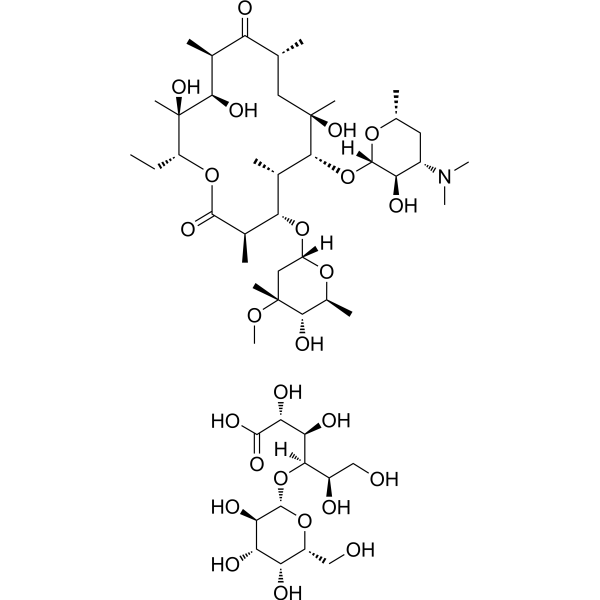
Erythromycin lactobionate is a macrolide antibiotic produced by actinomycete Streptomyces erythreus with a broad spectrum of antimicrobial activity. Erythromycin lactobionate binds to bacterial 50S ribosomal subunits and inhibits RNA-dependent protein synthesis by blockage of transpeptidation and/or translocation reactions, without affecting synthesis of nucleic acid [1][2]. Erythromycin lactobionate also exhibits antitumor and neuroprotective effect in different fields of research [3][4].
|
-
- HY-108875
-
|
|
Antibiotic
Bacterial
DNA/RNA Synthesis
|
Infection
Cancer
|
|
Erythromycin stearate is a macrolide antibiotic produced by actinomycete Streptomyces erythreus with a broad spectrum of antimicrobial activity. Erythromycin stearate binds to bacterial 50S ribosomal subunits and inhibits RNA-dependent protein synthesis by blockage of transpeptidation and/or translocation reactions, without affecting synthesis of nucleic acid [1][2]. Erythromycin stearate also exhibits antitumor and neuroprotective effect in different fields of research [3][4].
|
-
- HY-B0220C
-
|
|
Antibiotic
Bacterial
DNA/RNA Synthesis
|
Infection
Cancer
|
|
Erythromycin aspartate is a macrolide antibiotic produced by actinomycete?Streptomyces erythreus?with a broad spectrum of antimicrobial activity. Erythromycin aspartate binds to bacterial 50S ribosomal subunits and inhibits?RNA-dependent protein synthesis?by blockage of transpeptidation and/or translocation reactions, without affecting synthesis of nucleic acid [1][2]. Erythromycin aspartate also exhibits antitumor and neuroprotective effect in different fields of research [3][4].
|
-
- HY-B0220D
-
|
|
Bacterial
Antibiotic
DNA/RNA Synthesis
|
Infection
Cancer
|
|
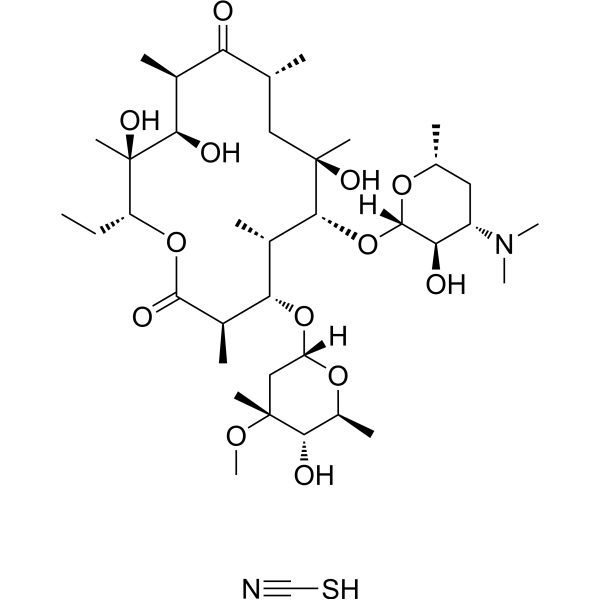
Erythromycin thiocyanate is a macrolide antibiotic produced by actinomycete Streptomyces erythreus with a broad spectrum of antimicrobial activity. Erythromycin thiocyanate binds to bacterial 50S ribosomal subunits and inhibits RNA-dependent protein synthesis by blockage of transpeptidation and/or translocation reactions, without affecting synthesis of nucleic acid [1][2]. Erythromycin thiocyanate also exhibits antitumor and neuroprotective effect in different fields of research [3][4].
|
-
- HY-B0220B
-
|
|
Antibiotic
Bacterial
|
Infection
Cancer
|
|
Erythromycin gluceptate is a macrolide antibiotic produced by actinomycete Streptomyces erythreus with a broad spectrum of antimicrobial activity. Erythromycin gluceptate binds to bacterial 50S ribosomal subunits and inhibits RNA-dependent protein synthesis by blockage of transpeptidation and/or translocation reactions, without affecting synthesis of nucleic acid [1][2]. Erythromycin gluceptate also exhibits antitumor and neuroprotective effect in different fields of research [3][4].
|
-
- HY-B0220E
-
|
|
Bacterial
Antibiotic
DNA/RNA Synthesis
|
Infection
Cancer
|
|
Erythromycin A dihydrate is a macrolide antibiotic produced by actinomycete Streptomyces erythreus with a broad spectrum of antimicrobial activity. Erythromycin A dihydrate binds to bacterial 50S ribosomal subunits and inhibits RNA-dependent protein synthesis by blockage of transpeptidation and/or translocation reactions, without affecting synthesis of nucleic acid [1][2]. Erythromycin A dihydrate also exhibits antitumor and neuroprotective effect in different fields of research [3][4].
|
-
- HY-B0220
-
|
|
Bacterial
Antibiotic
DNA/RNA Synthesis
|
Infection
Cancer
|
|
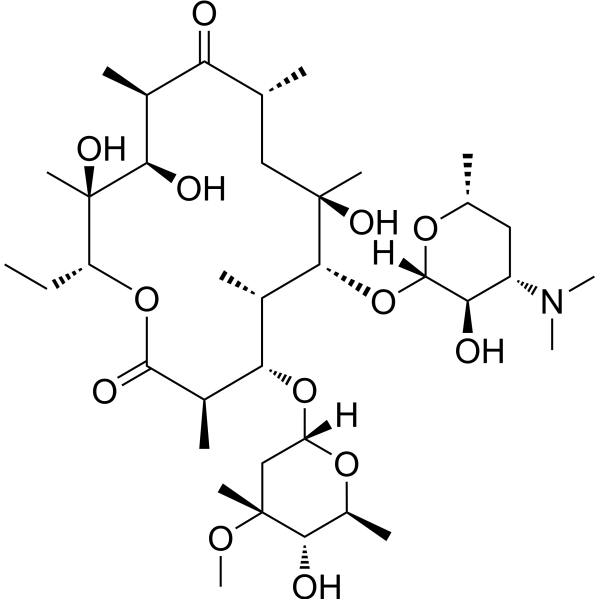
Erythromycin is a macrolide antibiotic produced by actinomycete?Streptomyces erythreus?with a broad spectrum of antimicrobial activity. Erythromycin binds to bacterial 50S ribosomal subunits and inhibits?RNA-dependent protein synthesis?by blockage of transpeptidation and/or translocation reactions, without affecting synthesis of nucleic acid [1][2]. Erythromycin also exhibits antitumor and neuroprotective effect in different fields of research [3][4].
|
-
- HY-B0220F
-
|
|
Bacterial
Antibiotic
DNA/RNA Synthesis
|
Infection
Cancer
|
|
Erythromycin glutamate is a macrolide antibiotic produced by actinomycete Streptomyces erythreus with a broad spectrum of antimicrobial activity. Erythromycin glutamate binds to bacterial 50S ribosomal subunits and inhibits RNA-dependent protein synthesis by blockage of transpeptidation and/or translocation reactions, without affecting synthesis of nucleic acid [1][2]. Erythromycin glutamate also exhibits antitumor and neuroprotective effect in different fields of research [3][4].
|
-
- HY-114648
-
|
|
Bacterial
|
Infection
Cancer
|
|
AJI-9561 is a benzoxazole derivative produced by Streptomyces sp. AJI-9561 exhibits cytotoxicity and antibacterial activity. AJI-9561 inhibits the proliferation of Jurkat T cells and mouse P388 leukemia cells, with its IC50 being 0.88 and 1.63 μM respectively. AJI-9561 can be used for research on anti-cancer and antibacterial properties .
|
-
- HY-129331
-
|
|
Antibiotic
Bacterial
Fungal
|
Infection
Cancer
|
|
Neothramycin A is an antibiotic, which can be isolated from Streptomyces. Neothramycin A exhibits board spectrum antimicrobial activity, inhibits Staphylococcus aureus, Klebsiella pneumoniae, Escherichia coli W677, and Saccharomyces cerevisia with MIC of 25-50 μg/mL. Neothramycin A exhibits antitumor efficacy against leukemia in mouse models .
|
-
- HY-113542
-
|
(+)-Blasticidin A
|
Bacterial
Antibiotic
Parasite
|
Infection
|
|
Blasticidin A is a tetraamide acid derivative antibiotic produced by Streptomyces griseochromogenes, as well as a selective inhibitor of aflatoxin production. Blasticidin A exhibits antimicrobial activity against yeast. Blasticidin A can be used in research related to aflatoxin contamination (infection by Aspergillus sp.) .
|
-
- HY-B0220R
-
|
|
Reference Standards
Bacterial
Antibiotic
DNA/RNA Synthesis
|
Infection
Cancer
|
|
Erythromycin (Standard) is the analytical standard of Erythromycin. This product is intended for research and analytical applications. Erythromycin is a macrolide antibiotic produced by actinomycete?Streptomyces erythreus?with a broad spectrum of antimicrobial activity. Erythromycin binds to bacterial 50S ribosomal subunits and inhibits?RNA-dependent protein synthesis?by blockage of transpeptidation and/or translocation reactions, without affecting synthesis of nucleic acid . Erythromycin also exhibits antitumor and neuroprotective effect in different fields of research .
|
-
- HY-119906
-
|
FW-04-806
|
HSP
Apoptosis
|
Cancer
|
|
Conglobatin (FW-04-806), a macrolide dilactone, is isolated from the culture of Streptomyces conglobatus. Conglobatin is an orally active Hsp90 inhibitor. Conglobatin can bind to the N-terminal domain of Hsp90 and disrupt Hsp90-Cdc37 complex formation. Conglobatin induces apoptosis in human breast cancer cells and esophageal squamous cell carcinoma cells, and exhibits antitumor activity in vivo .
|
-
- HY-B0220DR
-
|
|
Reference Standards
Bacterial
Antibiotic
DNA/RNA Synthesis
|
Infection
Cancer
|
|
Erythromycin (thiocyanate) (Standard) is the analytical standard of Erythromycin (thiocyanate). This product is intended for research and analytical applications. Erythromycin thiocyanate is a macrolide antibiotic produced by actinomycete Streptomyces erythreus with a broad spectrum of antimicrobial activity. Erythromycin thiocyanate binds to bacterial 50S ribosomal subunits and inhibits RNA-dependent protein synthesis by blockage of transpeptidation and/or translocation reactions, without affecting synthesis of nucleic acid[1][2]. Erythromycin thiocyanate also exhibits antitumor and neuroprotective effect in different fields of research[3][4].
|
-
- HY-130596
-
|
|
Antibiotic
Bacterial
|
Infection
Cancer
|
|
DC-86-M is an antibiotic, which can be isolated from Streptomyces luteogriseus. DC-86-M exhibits antibacterial activities against Bacillus subtilis, Staphylococcus aureus, Enterococcus faecalis, Vibrio anguillarum, and Proteus vulgaris, with MIC <1 μg/mL. DC-86-M exhibits antitumor activity against mouse sarcoma 180 with LD50 of 25 mg/kg .
|
-
- HY-N9666
-
|
|
Antibiotic
Bacterial
|
Infection
Cancer
|
|
Chromomycin A4, a major byproduct of Chromomycin A3 (HY-W040129)'s manufacture, is an antibiotic produced by Streptomyces griseus No. 7. Chromomycin A4 exhibits cancerostatic and antitumor activity. Chromomycin A4 shows strong growth inhibition against Gram-positive bacteria and and activity against tuberculous bacilli. Chromomycin A4 can be used for the research of bacterial infection .
|
-
- HY-N18360
-
|
Tunicamycin 17:1
|
Antibiotic
Bacterial
Fungal
|
Infection
|
|
Tunicamycin X (Tunicamycin 17:1) is a nucleoside Antibiotic. Tunicamycin X is isolated from Streptomyces xinghaiensis SCSIO S15077. Tunicamycin X acts as a growth inhibitor against bacteria and fungi. Tunicamycin X inhibits the growth of Bacillus thuringiensis strains. Tunicamycin X inhibits the growth of Candida albicans strains .
|
-
- HY-123887
-
-
- HY-N4301
-
|
|
Others
|
Others
|
|
Monensin B is a polyketide produced by Streptomyces cinnamonensis. Fermentations of Streptomyces cinnamonensis produce a mixture of Monensin A and Monensin B in a ratio dependent upon the relative concentrations of ethylmalonyl-CoA and methylmalonyl-CoA .
|
-
- HY-182496
-
|
|
Antibiotic
Bacterial
|
Infection
|
|
Kanchanamycin A is a 36-membered polyol macrolide antibiotic found in Streptomyces olivaceus Tü 4018, with high activity against Pseudomonas fluorescens, weak activity against Gram-positive bacteria and filamentous fungi, and no activity against yeasts. Kanchanamycin A inhibits growth of Pseudomonas fluorescens, Botrytis cinerea, Mucor miehei, Penicillium notatum, and Staphylococcus aureus. Kanchanamycin A is commonly used in the study of bacterial infections .
|
-
- HY-N15102
-
|
|
Others
|
Infection
|
|
Dihydromocimycin is found in the strain of Streptomyces namocissimus .
|
-
- HY-126735
-
|
|
Antibiotic
Bacterial
|
Infection
|
|
Saquayamycin D is an antibiotic, which can be isolated from Streptomyces nodosus culture broth. Saquayamycin D exhibits antibacterial activity against various gram-positive bacteria with MIC of 12.5-50 μg/mL. Saquayamycin D inhibits the proliferation of Doxorubicin (HY-15142)-sensitive P388/S and Doxorubicin-resistant P388/ADR with IC50 of 0.15 and 0.15 μg/mL .
|
-
- HY-N19290
-
|
|
Bacterial
|
Infection
|
|
Glenthmycin E is an antibacterial agent found in Australian sheep pasture-derived Streptomyces sp. CMB-PB041. Glenthmycin E inhibits growth of multiple bacterial and exhibits no detectable cytotoxicity to eukaryotic cells including fungal and human carcinoma cells. Glenthmycin E can be used for the research of bacterial infections .
|
-
- HY-N12655
-
|
|
Others
|
Others
|
|
Pladienolide A can be isolated from Streptomyces platensis .
|
-
- HY-N14319
-
-
- HY-N14483
-
|
|
Bacterial
|
Infection
|
|
Phenelfamycins C is an antibiotic. Phenelfamycins C can be found in Streptomyces violaceoniger AB 9991-80 and Streptomyces violaceoniger AB 1047T-33, each component of which has anti-eutrophic bacterial activity .
|
-
- HY-W102907
-
|
|
Endogenous Metabolite
Bacterial
|
Infection
|
|
Pyrrole-2-carboxamide (Compound 26) is a secondary metabolite. Pyrrole-2-carboxamide can be produced by two mangrove-derived actinomycetes Streptomyces sp. WHUA03072 and Streptomyces sp. WHUA03267 .
|
-
- HY-N14482
-
|
|
Bacterial
|
Infection
|
|
Phenelfamycins D is an antibiotic. Phenelfamycins D can be found in Streptomyces violaceoniger AB 9991-80 and Streptomyces violaceoniger AB 1047T-33, each component of which has anti-eutrophic bacterial activity .
|
-
- HY-131093
-
-
- HY-Y0531
-
|
Tricyclo[3.3.1.1~3,7~]decan-1-ol
|
Drug Intermediate
Bacterial
|
Infection
|
|
1-Adamantanol (Tricyclo[3.3.1.1~3,7~]decan-1-ol) is a hydroxylated derivative of Adamantane (HY-N2427). 1-Adamantanol serves as a substrate for regioselective hydroxylation reactions in Streptomyces strain SA8. 1-Adamantanol can form acrylate derivatives, which are used as photoresist layer materials .
|
-
- HY-N19311
-
|
|
Bacterial
|
Cancer
|
|
3,6-Bis(1-methylpropyl)-2(1H)-pyrazinone is an alkylated 2(1H)-pyrazinone derivative and cytotoxic agent found in the tunicate-derived actinomycete Streptomyces sp. Did-27.3,6-Bis(1-methylpropyl)-2(1H)-pyrazinone exhibits cytotoxic activity against cancer cells.3,6-Bis(1-methylpropyl)-2(1H)-pyrazinone can be used for the research of colorectal carcinoma, hepatocellular carcinoma, breast cancer .
|
-
- HY-N14615
-
-
- HY-N14966
-
|
|
Others
|
Others
|
|
Epithienamycin B is a natural product found in?Streptomyces olivaceus .
|
-
- HY-N15350
-
|
|
Fungal
Antibiotic
|
Infection
|
|
Demethylblasticidin S is an antifungal antibiotic that can be synthesized by Streptomyces griseochromogenes .
|
-
- HY-106338
-
|
|
Bacterial
ADC Payload
Parasite
|
Infection
Cancer
|
|
Polyketomycin is a tetracyclic quinone glycoside antibiotic isolated from Streptomyces sp. or Streptomyces diastatochromogenes. Polyketomycin inhibits growth of Gram-positive bacteria, and its MIC values is less than 0.2 µg/mL. Polyketomycin has antibacterial, anticancer, antimalarial activities .
|
-
- HY-N14508
-
|
Istamycin A3
|
Others
|
Others
|
|
2' -N-Formimidoylistamycin A (Istamycin A3) is found in Streptomyces tenjimariensis .
|
-
- HY-N14951
-
-
- HY-120009
-
-
- HY-135468
-
|
|
Antibiotic
|
Others
|
|
Boromycin is a compound isolated from is a compound isolated from Streptomyces antibioticus .
|
-
- HY-N14521
-
|
|
Others
|
Infection
|
|
Pacidamycin 5T is found in the strain of Streptomyces coeruleorubidus NRRL 18370 .
|
-
- HY-120585
-
-
- HY-N14162
-
-
- HY-108032
-
|
Pyrostatin A; 5-Hydroxyectoine
|
OGA
|
Metabolic Disease
|
|
Hydroxyectoin (Pyrostatin A) is a competitive inhibitor of GlcNAcase, with the Ki of 1.7 μM .
|
-
- HY-N12219
-
-
- HY-129291
-
|
AM 6201
|
Antibiotic
Bacterial
Fungal
|
Infection
Cancer
|
|
Reductiomycin is an antibiotic, which exhibits antimicrobial activity against gram positive bacteria and fungi. Reductiomycin exhibits antitumor activity .
|
-
- HY-114749
-
-
- HY-N14902
-
|
|
Antibiotic
Bacterial
|
Infection
|
|
Mimosamycin is an antibiotic. Mimosamycin has activity against mycobacteria and streptomyces resistant strains .
|
-
- HY-131098
-
|
|
Antibiotic
|
Infection
|
|
Enduracidin A is a major component of Enduracidin. Enduracidin is a polypeptide antibiotic produced by Streptomyces fungicides .
|
-
- HY-N7574
-
-
- HY-108993
-
|
SNA-8073A; Rubiginone A2
|
Others
|
Others
|
|
Fujianmycin B (SNA-8073A) is found in the strain of Streptomyces sp .
|
-
- HY-P2047
-
|
Antibiotic FR-900201
|
Antibiotic
Bacterial
|
Infection
|
|
Lavendomycin is a peptide antibiotic from Streptomyces. Lavendomycin inhibits Gram-positive bacteria .
|
-
- HY-N14800
-
-
- HY-N14397
-
-
- HY-121514
-
|
|
MMP
|
Others
|
Talopeptin is a metal protease inhibitor that can be produced by the streptomyces MK-23 .
|
-
- HY-N8360
-
|
|
Others
|
Others
|
|
Citromycin is a Phenols product that can be isolated from the cultures of two strains of Streptomyces. .
|
-
- HY-N14152
-
-
- HY-N14403
-
|
|
Cathepsin
|
Infection
|
|
6-Hydroxytetrangulol is a CPP32 protease inducer found in Streptomyces sp .
|
-
- HY-N14508A
-
|
Istamycin B3
|
Others
|
Others
|
|
2′′-N-Formimidoylistamycin B (Istamycin B3) is found in Streptomyces tenjimariensis .
|
-
- HY-W775100
-
|
|
Antibiotic
Bacterial
|
Infection
|
|
Spectinomycin sulfate is an aminocyclitol aminoglycoside antibiotic derived from Streptomyces spectabilis with bacteriostatic activity .
|
-
- HY-118367
-
-
- HY-131099
-
|
|
Antibiotic
|
Infection
|
|
Enduracidin B is a major component of Enduracidin. Enduracidin is a polypeptide antibiotic produced by Streptomyces fungicides .
|
-
- HY-N14778
-
|
|
Others
|
Others
|
|
N-Acetylisopenicillin N is isolated from the culture broth of Streptomyces tokunonensis sp. nov .
|
-
- HY-N14996
-
|
|
Bacterial
|
Infection
|
|
6-Deoxyparomomycin is found in the strain of Streptomyces rimosus forma paromomycinus with antibacterial activity .
|
-
- HY-132989
-
|
|
Biochemical Assay Reagents
Bacterial
|
Cardiovascular Disease
Infection
Inflammation/Immunology
|
|
Mal-Deferoxamine is a maleimide-functionalized trihydroxamate siderophore derivative that can be isolated from Streptomyces pilosus. Mal-Deferoxamine possesses highly specific Fe (III) chelating ability, and the stability of complexes formed between it and non-Fe (III) metal ions is significantly lower. Mal-Deferoxamine exhibits growth inhibitory effects against Gram-positive bacteria, but shows no obvious inhibitory activity against Gram-negative bacteria (MIC>50 μM). Mal-Deferoxamine is mainly suitable for scientific research in hematology and related fields .
|
-
- HY-N15078
-
|
|
Herbicide
|
Others
|
|
4-Chlorothreonine is found in the strain of Streptomyces sp. OH-5093 with herbicidal activity .
|
-
- HY-N14811
-
|
|
Others
|
Others
|
|
Gibbestatin C is found in the strain of Streptomyces sp. C39. Gibbestatin C is a bioactive substance .
|
-
- HY-119246
-
-
- HY-121061
-
|
|
Others
|
Infection
|
|
Abikoviromycin is an inhibitor of polyketide synthase PKS1 of C. lagenarium and can be isolated from Streptomyces .
|
-
- HY-127007
-
|
|
Antibiotic
|
Infection
|
|
Okilactomycin is a lactone group antibiotic isolated from the culture filtrate of a strain of actinomycetes (Streptomyces species) .
|
-
- HY-125503
-
|
|
Others
|
Others
|
|
Jadomycin B is an angucyclic natural product found in Streptomyces venezuelae ISP5230 (ATCC10712) .
|
-
- HY-N14700
-
-
- HY-N14711
-
|
|
Antibiotic
Bacterial
|
Infection
|
|
Himalomycin A is an anthraquinone antibiotic with strong activity against Staphylococcus aureus, Escherichia coli and Streptomyces vuridochromogenes .
|
-
- HY-N14877
-
|
|
Fungal
|
Infection
|
|
Enactin Ia is found in the strain of Streptomyces roseoviridis. Enactin Ia has only weak antifungal activity.
|
-
- HY-131054
-
-
- HY-126935
-
|
|
Others
|
Others
|
|
Ansatrienin A3, also known as Mycotrienin, is a minor component of the ansamycin complex produced by Streptomyces collinus.
|
-
- HY-122777
-
|
|
Bacterial
|
Infection
|
|
γ-Rubromycin is a natural product from Streptomyces. γ-Rubromycin has antibacterial activity .
|
-
- HY-N14246
-
-
- HY-W588257
-
-
- HY-N14878
-
|
|
Fungal
|
Infection
|
|
Enactin Ib is found in the strain of Streptomyces roseoviridis. Enactin Ib has only weak antifungal activity .
|
-
- HY-N13975
-
|
|
Others
|
Cancer
|
|
Belactosin A is found in the strain of Streptomyces sp. that inhibits HeLa S3 cells with the IC50 of 51 μM .
|
-
- HY-N14712
-
-
- HY-125546
-
|
|
Antibiotic
|
Infection
|
|
Erythromycin C is an antibiotic. Erythromycin C could be isolated from the fermentation process of the penicillium Streptomyces erythreus .
|
-
- HY-N14219
-
|
|
Fungal
|
Infection
|
|
Enactin Va is found in the strain of Streptomyces roseoviridis. Enactin Va has only weak antifungal activity .
|
-
- HY-125560
-
-
- HY-126708
-
|
|
ADC Payload
Antibiotic
|
Infection
|
|
Luisol A, an aromatic tetraol, is a major metabolite of an estuarine marine actinomycete of the genus Streptomyces. Luisol A, is an anthraquinone antibiotic analog .
|
-
- HY-N13976
-
|
|
Others
|
Cancer
|
|
Belactosin C is found in the strain of Streptomyces sp. that inhibits HeLa S3 cells with the IC50 of 200 μM .
|
-
- HY-125617
-
|
|
Antibiotic
Bacterial
|
Infection
|
|
α-Lipomycin is an acyclic polyene antibiotic isolated from the gram-positive bacterium Streptomyces aureofaciens Tü117 .
|
-
- HY-N15015
-
|
|
Phosphatase
|
Metabolic Disease
|
|
Dephostatin is a competitive protein tyrosine phosphatase (PTP) inhibitor that can be isolated from Streptomyces spp., with activity in the micromolar range .
|
-
- HY-203464A
-
|
|
Amino Acid Derivatives
|
Others
|
|
2-Amino-4-(2-aminoethoxy)butanoic acid dihydrochloride is an amino acid derivative that can be isolated from Streptomyces .
|
-
- HY-N15080
-
-
- HY-N14317
-
|
|
Others
|
Metabolic Disease
|
|
Feigrisolide A is a lactone found in Streptomyces griseus. Feigrisolide A has moderate inhibitory activity of 3α-hydroxysterol dehydrogenase .
|
-
- HY-N16423
-
|
|
Endogenous Metabolite
|
Others
|
|
Metenaticin A (Compound 8), a polyketide, is a microbial secondary metabolite. Metenaticin A can be isolated from Streptomyces violaceoruber TU22 .
|
-
- HY-N7218
-
-
- HY-B1174A
-
|
Kanamycin B sulfate
|
Bacterial
Antibiotic
|
Infection
|
|
Bekanamycin (Kanamycin B) sulfate is a minor component of the kanamycin complex, an aminoglycoside antibiotic isolated from Streptomyces kanamyceticus, with antibacterial activity .
|
-
- HY-N7242
-
|
|
Antibiotic
|
Infection
|
|
Plicacetin is a crystalline antibiotic isolated from the fermentation broth of Streptomyces actinomycetes and is structurally similar to Amicetin (HY-120383) and Bamicetin. .
|
-
- HY-169856
-
|
|
Fungal
|
Infection
|
|
Pradimicin L is a homologue of pradimicin A (HY-132191) that can be isolated from the new type of Streptomyces madurensis, and it has antifungal activity .
|
-
- HY-N14281
-
|
|
Antibiotic
Bacterial
|
Infection
|
|
Himalomycin B is an anthraquinone antibiotic. Himalomycin B has strong activity against Staphylococcus aureus, Escherichia coli and Streptomyces vuridochromogenes .
|
-
- HY-121295
-
|
|
Bacterial
|
Infection
|
|
Roseoflavin, a natural pigment originally isolated from Streptomyces davawensis, is an antimetabolite analog of Riboflavin and flavin mononucleotide that has antimicrobial properties .
|
-
- HY-N15367
-
|
|
Endogenous Metabolite
|
Infection
|
|
Aklaviketone is a bacterial metabolite found in strain S 383 of Streptomyces galilaeus. Aklaviketone can be used in the biosynthetic pathway of anthracycline antibiotics .
|
-
- HY-N13915
-
-
- HY-B1174
-
|
Kanamycin B
|
Antibiotic
Bacterial
|
Infection
|
|
Bekanamycin (Kanamycin B) is an aminoglycoside antibiotic produced by Streptomyces kanamyceticus, against an array of Gram-positive and Gram-negative bacterial strain .
|
-
- HY-117738
-
|
|
Aminopeptidase
sFRP-1
|
Others
|
|
Benarthin is a catechol-type siderophore isolated from the marine actinomycete Streptomyces YM5-799 that exhibits iron-chelating properties .
|
-
- HY-N14509
-
|
|
Fungal
|
Infection
|
|
Queenslandon has moderate anti-streptomyces, penicillium, Penicillium, Aspergillus fumigatus, aspergillus flavus and other fungal activities. And it has no effect on bacteria .
|
-
- HY-113795
-
|
|
Antibiotic
Bacterial
|
Infection
|
|
Aldgamycin E is a neutral macrolide antibiotic that can be derived from culture filtrates of Streptomyces lavendulae. Aldgamycin E has antibacterial activity .
|
-
- HY-N14191
-
|
|
Antibiotic
Bacterial
Fungal
|
Infection
|
|
Malonylniphimycin is a macrolide antibiotic found in Streptomyces str. hygroscopicus B-7. Malonylniphimycin is resistant to Gram-positive bacteria, fungi and yeasts .
|
-
- HY-N14321
-
|
|
Others
|
Metabolic Disease
|
|
Feigrisolide D is a lactone found in Streptomyces griseus. Feigrisolide D has moderate inhibitory activity of 3α-hydroxysterol dehydrogenase .
|
-
- HY-133199
-
-
- HY-117740
-
|
|
Others
|
Others
|
|
Heronamide C is a polyketide macrolactam isolated from marine Streptomyces that has the activity of producing reversible non-cytotoxic effects on mammalian cell morphology.
|
-
- HY-108549
-
|
Omuralide; β-Clastolactacystin
|
Proteasome
|
Cancer
|
|
Clasto-Lactacystin β-lactone, a natural active metabolite of lactacystin, which is a metabolite of Streptomyces, acts as an irreversible 20S proteasome inhibitor.
|
-
- HY-N14661
-
|
|
Bacterial
|
Infection
|
|
Granaticinic acid is a quinone antibiotic. Granaticinic acid can be found in Streptomyces thermoviolaceus NT1. Granaticinic acid has anti-gram-positive bacterial activity .
|
-
- HY-116306
-
|
|
Aminopeptidase
|
Others
|
|
Probestin is a potent aminopeptidase N (APN) inhibitor produced by Streptomyces cyanogens MH663-2F6 .
|
-
- HY-114158A
-
|
Pronase (Activity ≥ 4000 U/mg)
|
Others
|
Others
|
|
Pronase E (Activity ≥ 4000 U/mg) is a mixture of proteolytic enzymes that is obtained from Streptomyces griseus and could digest protein into individual amino acids .
|
-
- HY-125306
-
|
|
Others
|
Others
|
|
Rotihibin A is a novel plant growth regulator isolated from Streptomyces spp., which has the activity of inhibiting the growth of various plants without lethal activity.
|
-
- HY-W295873
-
|
|
Bacterial
|
Infection
Cancer
|
|
Cyclo(Phe-Gly) is a cyclodipeptides with antimicrobial and anticancer activities, isolated from broth culture of endophytic Streptomyces YIM 64018 associated with Paraboea sinensis .
|
-
- HY-U00097
-
|
|
Fungal
|
Infection
Cancer
|
|
L-4-Oxalysine hydrochloride is a natural product isolated from the culture media of Streptomyces roseovirdofuscus in China which has shown antitumor activities.
|
-
- HY-W754718
-
|
|
Others
|
Cancer
|
|
Azepinomycin is found in the strain of Streptomyces toyokaensis MF71803. Azepinomycin can inhibit guanine deaminase (IC50 of 4.9 μM) and tumor cell .
|
-
- HY-117260
-
-
- HY-N14363
-
-
- HY-N13962
-
|
|
Bacterial
Fungal
|
Infection
|
|
Bagremycin A is found in the strain of Streptomyce sp. Tu 4128. Bagremycin A has weak activity against Gram-positive bacteria, Saccharomyces cerevisiae and Candida albicans .
|
-
- HY-114158
-
|
Pronase (Activity ≥ 7000 U/g)
|
Others
|
Others
|
|
Pronase E (Activity ≥ 7000 U/g) is a mixture of proteolytic enzymes that is obtained from Streptomyces griseus and could digest protein into individual amino acids .
|
-
- HY-N16458
-
|
|
Drug Intermediate
|
Infection
|
|
FI-3 is a polycyclic tetramate macrolactam biosynthetic intermediate found in Streptomyces sp. SPB78. FI-3 is promising for research of antibiotics .
|
-
- HY-N15181
-
|
|
Dipeptidyl Peptidase
|
Infection
|
|
Fluostatin B is a dipeptidyl peptidase 3 (DPP-3) inhibitor with an IC50 value of 24 µg/mL. Fluostatin B is a fluorenone, which is found in Streptomyces .
|
-
- HY-137911
-
|
|
Bacterial
|
Infection
Cancer
|
|
Sparsomycin is a metabolite of the bacterium Streptomyces sparsogenes. Sparsomycin inhibits protein synthesis in both eukaryotic cells and bacteria. Sparsomycin inhibits the translation extension of ribosome PTC .
|
-
- HY-111525
-
|
|
Oxidative Phosphorylation
Bacterial
Antibiotic
|
Infection
|
|
Monactin is a mactrotetralide antibiotic and a non-selective ionophore for monovalent cations, including potassium, sodium, and lithium. Monactin is isolated from Streptomyces and has antiproliferative activity .
|
-
- HY-B0221A
-
-
- HY-N12660
-
|
|
Bacterial
|
Infection
|
|
Quorum sensing-IN-4 (compound 2) is a quorum sensing inhibitor, and can be isolated from Thailand mangrove-derived Streptomyces strain, OUCMDZ-5511 .
|
-
- HY-106302
-
|
Moli1901; Lancovutide
|
Bacterial
|
Infection
Inflammation/Immunology
|
|
Duramycin (Moli1901) is a lantibiotic derived from Streptomyces cinnamoneuma. Duramycin also is a antimicrobial peptide. Duramycin can be used for the research of cystic fibrosis (CF) .
|
-
- HY-N14113
-
|
|
Insecticide
|
Infection
|
|
Cytosaminomycin D is an anticoccidial agent that can be isolated from Streptomyces sp. Cytosaminomycin D shows anticoccidial activity at 2.5 μg/mL with a 100% inhibition rate .
|
-
- HY-125731
-
-
- HY-121136A
-
|
|
Antibiotic
Bacterial
|
Infection
|
|
Chartreusin sodium is an antibiotic that is active against certain Gram-positive organisms and mycobacteria. Chartreusin is also active against the Micrococcus fiyogenes v. aureus phage .
|
-
- HY-129077
-
|
|
Drug Intermediate
|
Infection
|
|
FR179642 is a key intermediate in the synthesis of the echinocandin antifungal Micafungin . FR179642 is the cyclic peptide nucleus of the echinocandin-like antifungal lipopeptide FR901379 .
|
-
- HY-114585A
-
|
|
Glutathione S-transferase
|
Others
|
|
Sperabillin A (dihydrochloride)is new inhibitors ofglutathione S-transferaseisolated from the culture broth ofStreptomyces sp .
|
-
- HY-15377
-
|
|
GABA Receptor
|
Neurological Disease
|
|
DL-Gabaculine hydrochloride is a neurotoxin that irreversibly inhibits bacterial pyridoxal phosphate linked γ-aminobutyric acid-α-ketoglutaric acid transaminase with a Ki of 2.86 μM .
|
-
- HY-121136
-
|
|
Antibiotic
Bacterial
|
Infection
|
|
Chartreusin is an antibiotic that is active against certain Gram-positive organisms and mycobacteria. Chartreusin is also active against the Micrococcus fiyogenes v. aureus phage .
|
-
- HY-129077R
-
|
|
Reference Standards
Drug Intermediate
|
Infection
|
|
FR179642 (Standard) is the analytical standard of FR179642. This product is intended for research and analytical applications. FR179642 is a key intermediate in the synthesis of the echinocandin antifungal Micafungin[1]. FR179642 is the cyclic peptide nucleus of the echinocandin-like antifungal lipopeptide FR901379[2].
|
-
- HY-B1921
-
|
Midecamycin acetate; Ponsinomycin
|
Bacterial
|
Infection
|
|
Miocamycin (Midecamycin acetate) is a derivative of midecamycin (HY-B1908), a macrolide antibiotic that can be isolated from a culture broth of Streptomyces mycarofaciens. Miocamycin has antibacterial properties .
|
-
- HY-E71319
-
|
|
Biochemical Assay Reagents
|
Others
|
|
β-Methylphenylalanine transaminase (EC 2.6.1.107) requires pyridoxal phosphate. Isolated from the bacterium Streptomyces hygroscopicus NRRL3085. It is involved in the biosynthesis of the glycopeptide antibiotic mannopeptimycin.
|
-
- HY-N9753
-
|
|
Others
|
|
|
Tsukubamycin B is discovered from Streptomyces tsukubaensis and exhibits immunosuppressive activity by inhibiting T-cell activation. Tsukubamycin B can be used for immune rejection reaction research .
|
-
- HY-100528
-
|
Nanchangmycin A
|
Bacterial
Antibiotic
Flavivirus
|
Infection
|
|
Nanchangmycin, a polyether antibiotic produced by Streptomyces nanchangensis NS3226, inhibits gram-positive bacteria . Nanchangmycin is a broad spectrum antiviral active against Zika virus .
|
-
- HY-N13963
-
|
|
Bacterial
Fungal
|
Infection
|
|
Bagremycin B is found in the strain of Streptomyce sp. Tu 4128. Bagremycin B has weak activity against Gram-positive bacteria, Saccharomyces cerevisiae and Candida albicans .
|
-
- HY-156069
-
|
|
COMT
|
Neurological Disease
Cancer
|
|
Methylspinazarin is a potent inhibitor of catechol O-methyltransferase (COMT, IC50 = 0.8 μg/ml) that can be isolated from Streptomyces. Methylspinazarin is selective for COMT over tyrosine hydroxylase .
|
-
- HY-N13018
-
|
(3Z,6E)-1-N-Methylalbonoursin
|
Endogenous Metabolite
|
Others
|
|
M145724 ((3Z,6E)-1-N-Methylalbonoursin) is a metabolite, which can be isolated from Streptomyces albus .
|
-
- HY-119736
-
|
|
Others
|
Others
|
|
Leptolstatin is an inhibitor of the progression of G1 and G2 phases of the mammalian cell cycle. Leptolstatin can be extracted from the fermentation broth of Streptomyces sp. SAM1595 .
|
-
- HY-N11756
-
|
|
Bacterial
|
Infection
|
|
Linearmycin A is a polyene antibiotic that has been found in Streptomyces. It is active against the bacteria S. aureus and E. coli (MICs=3.1 and 1.6 μg/disc, respectively), the fungi S. cerevisiae and C. albicans (MICs=0.1 and 1.6 μg/disc, respectively), and the plant pathogenic fungus A. niger in disc assays (MIC=0.2 μg/disc). Linearmycin A induces lysis and degradation of B. subtilis as a component of Streptomyces Mg1 extract.
|
-
- HY-W048303
-
|
|
Antibiotic
|
Infection
Cancer
|
|
L-Azatyrosine is an antitumor antibiotic isolated from Streptomyces chibaensis. L-Azatyrosine can restore normal phenotypic behavior to transformed cells bearing oncogenic Ras genes .
|
-
- HY-125633
-
|
|
Antibiotic
Bacterial
|
Infection
Cancer
|
|
Kapurimycin A3 is an antitumor and antibacterial antibiotic. Kapurimycin A3 has DNA binding and breakage activity. Kapurimycin A3 can be isolated from Streptomyces .
|
-
- HY-N15069
-
|
TM-531B
|
Antibiotic
Bacterial
|
Infection
|
|
4'-O-Demethyldianemycin (TM-531B) is a polyether antibiotic found in Streptomyces hygroscopicus TM-531. Activity against Gram-positive bacteria .
|
-
- HY-136943
-
|
|
Antibiotic
Parasite
Bacterial
|
Infection
|
|
K-41 is an orally active antibiotic. K-41 can be obtained from Streptomyces hygroscopicus. K-41 has antibacterial and antiplasmodial activity .
|
-
- HY-N11778
-
|
|
Bacterial
|
Infection
|
|
Bequinostatin C is a naphthoquinone originally isolated from Streptomyces and a glutathione S-transferase pi 1 (GSTP1) inhibitor (IC50=40 μg/mL for human GSTP1).
|
-
- HY-N15670
-
|
TNM A
|
Apoptosis
|
Cancer
|
|
Tiancimycin A (TNM A) is an anticancer agent. Tiancimycin A induces rapid DNA damage, cell cycle arrest, and apoptosis. Tiancimycin A can be isolated from Streptomyces sp. CB03234 .
|
-
- HY-16589
-
-
- HY-N13949
-
|
|
Antibiotic
Bacterial
|
Infection
|
|
Seitomycin is an anthraquinone antibiotic. Seitomycin has moderate activity against Gram-positive bacteria such as Staphylococcus aureus and Bacillus subtilis, Gram-negative bacteria such as Escherichia coli and green Streptomyces chlorophyllus .
|
-
- HY-100528A
-
|
Nanchangmycin free acid
|
Bacterial
Antibiotic
Flavivirus
|
Infection
|
|
Dianemycin (Nanchangmycin free acid), a polyether antibiotic produced by Streptomyces nanchangensis NS3226, inhibits gram-positive bacteria . Nanchangmycin is a broad spectrum antiviral active against Zika virus .
|
-
- HY-W415818
-
|
|
Adenosine Deaminase
Antibiotic
|
Cancer
|
|
Oxanosine is an antibiotic isolated from the streptomyces MG265-CF34, which has anti-tumor activity. Oxanosine is also a substrate for adenosine deaminase .
|
-
- HY-N12258
-
|
|
Antibiotic
Bacterial
|
Infection
|
|
Aranciamycin A is an anthracyclic antibiotic and can be isolated from Streptomyces. Aranciamycin A shows antibacterial activity against M. bovis and B. subtilis with the MIC values of 30 and 7.5 µM, respectively .
|
-
- HY-114938
-
|
|
Antibiotic
Bacterial
|
Infection
|
|
Fumaramidmycin is an antibiotic found in Streptomyces kurssanovii NR-7GG1. Fumaramidmycin shows an antimicrobial activity against both Gram-positive and Gram-negative bacteria .
|
-
- HY-118992
-
|
X 5108; Goldinomycin
|
Antibiotic
Bacterial
|
Infection
|
|
Aurodox (X 5108) is an antibiotic obtained from a streptomyces variant, Aurodox can against a number of gram-positive bacteria. Aurodox shows a very low toxicity in mice and promoted poultry growth .
|
-
- HY-N14993
-
|
|
Others
|
Cancer
|
|
3'-Deoxytalopiericidin is found in the strain of Streptomyces sp.DO-100. 3'-Deoxytalopiericidin inhibited the activity of 26 cell in rectal cancer than L1210 cell in leukemia .
|
-
- HY-N15054
-
|
|
Drug Derivative
|
Cancer
|
|
17-O-Demethylgeldanamycin is a secondary metabolite that can be isolated from Streptomyces. 17-O-Demethylgeldanamycin exhibits cytotoxicity against a variety of tumor cells and has anti-tumor activity .
|
-
- HY-129558
-
|
|
HCV
|
Infection
Cancer
|
|
UK-1 is a cytotoxic metabolite from Streptomyces sp. 517-02 and exerts a wide spectrum of potent anticancer activities . UK-1 also inhibits HCV replication .
|
-
- HY-N14601
-
|
|
Bacterial
|
Cancer
|
|
Respinomycin A1 is an antibiotic. Respinomycin A1 can be found in Streptomyces sp. RK-483. Respinomycin A1 causes the differentiation of leukemic K-562 cells .
|
-
- HY-113561
-
|
LL-AF283α
|
Antibiotic
Bacterial
|
Infection
|
|
Biphenomycin A (LL-AF283α) is a cyclic peptide antibiotic that can be found in Streptomyces griseorubiginosus 43708. It has antibacterial activity and can be used in research in the field of anti-infection .
|
-
- HY-N6783
-
|
|
Fungal
Antibiotic
|
Infection
|
|
Oligomycin C is a macrolide antibiotic produced by Streptomyces strains. Oligomycin C exhibits a strong activity against Aspergillus niger, Alternaria alternata, Botrytis cinerea and Phytophthora capsici but no activity toward bacteria .
|
-
- HY-122062R
-
|
|
Insecticide
Reference Standards
|
Others
|
|
Erythromycin C (Standard) is the analytical standard of Erythromycin C. This product is intended for research and analytical applications. Erythromycin C is an antibiotic. Erythromycin C could be isolated from the fermentation process of the penicillium Streptomyces erythreus .
|
-
- HY-130993
-
|
|
Parasite
|
Infection
|
|
Isatropolone A, a natural product containing a 1,5-diketone moiety, is reisolated from Streptomyces Gö66. Isatropolone A shows potent activity against Leishmania donovani with an IC50 of 0.5 μM .
|
-
- HY-126569
-
|
|
Antibiotic
Bacterial
|
Infection
|
|
Efrotomycin is an orally active antibiotic. Efrotomycin can be isolated from the Streptomyces Lactamdurans. Efrotomycin has insignificant effect on Salmonella typhimurium quantity, duration, shedding rate, and antimicrobial susceptibility in infected pigs .
|
-
- HY-122328
-
|
|
Antibiotic
Bacterial
|
Infection
|
|
Flambamycin is an antibiotic found in Streptomyces hygroscopicus DS 23230 strain, active against Gram-positive and Gram-negative cocci and some Gram-positive rods. Flambamycin can be used in research on antibiotic screening .
|
-
- HY-129623R
-
|
|
Reference Standards
Endogenous Metabolite
|
Metabolic Disease
|
|
Nigericin (sodium salt) (Standard) is the analytical standard of Nigericin (sodium salt). This product is intended for research and analytical applications. Nigericin sodium salt is an antibiotic from Streptomyces hygroscopicus that works by acting as an H+, K+, and Pb2+ ionophore, a NLRP3 activator .
|
-
- HY-W016480
-
|
|
Drug Intermediate
|
Infection
Metabolic Disease
|
|
4-Amino-L-phenylalanine is a metabolic intermediate. 4-Amino-L-phenylalanine can be used in the production of Chloramphenicol (HY-B0239) and Pristinamycin I in Streptomyces venezuelae and S. pristinaespiralis, respectively .
|
-
- HY-125546R
-
|
|
Reference Standards
Antibiotic
|
Infection
|
|
Erythromycin C (Standard) is the analytical standard of Erythromycin C. This product is intended for research and analytical applications. Erythromycin C is an antibiotic. Erythromycin C could be isolated from the fermentation process of the penicillium Streptomyces erythreus .
|
-
- HY-N6737
-
|
|
Bacterial
Antibiotic
|
Infection
|
|
Aureothricin is a dithiolopyrrolone (DTP) antibiotic first isolated from Streptomyces and exhibits relatively broad-spectrum antibiotic activity. Aureothricin can inhibit adhesion of human umbilical vein endothelial cells (HUVECs) to vitronectin .
|
-
- HY-121325
-
|
|
Parasite
|
Infection
|
|
Fervenulin has nematicidal activity and inhibits egg hatch and J2 mortality of M. incognita with MICs of 30 μg/mL and 120 μg/mL, respectively .
|
-
- HY-113627
-
|
|
Antibiotic
Bacterial
Apoptosis
|
Infection
Inflammation/Immunology
Cancer
|
|
Undecylprodigiosin, a member of the family of prodiginines, is a potent antibiotic. Undecylprodigiosin can selectively induce apoptosis in human breast carcinoma cells independent of p53. Undecylprodigiosin shows immunosuppressive, anticancer properties and antimicrobial activities .
|
-
- HY-N14350
-
|
|
Bacterial
|
|
|
Hydroxychlorothricin is an antibiotic of the chlorothricin group. Hydroxychlorothricin can be found in Streptomyces sp. K818. Hydroxychlorothricin has anti-tumor effect and can prolong the survival period of ICR mice inoculated with Ehrlich cancer cells .
|
-
- HY-116446
-
|
|
Microtubule/Tubulin
|
Cancer
|
|
Pironetin is an α/β unsaturated lactone isolated from Streptomyces species. Pironetin binds to α-tubulin and is a potent inhibitor of microtubule polymerization, and has cell cycle arrest and antitumor activity .
|
-
- HY-124431
-
|
|
Antibiotic
Bacterial
Parasite
|
Infection
|
|
Kikumycin A is an antibiotic, which can be generated from Streptomyces. Kikumycin A exhibits antibacterial activity against Gram-positive and Gram-negative bacteria. Kikumycin A exhibits antitrichomonal activity, with MIC of 25 μg/mL for Trichomonas foetus .
|
-
- HY-133093
-
|
PKF118-774
|
Parasite
β-catenin
|
Infection
Cancer
|
|
Murayaquinone (PKF118-774) is a β-catenin/Tcf4 complex inhibitor with an IC50 of 2.4 μM. Murayaquinone is a nematicidal agent found in Streptomyces sp. AN140557 .
|
-
- HY-123436
-
|
|
Antibiotic
Bacterial
|
Infection
|
|
Sarubicin B is an active product that can be isolated from the culture filtrate of a Streptomyces strain JA 2861. Sarubicin B is a quinone antibiotic that inhibit Gram-positive bacteria and not active against Gram-negative microorganisms .
|
-
- HY-P3119
-
|
Desotamide A
|
Bacterial
Antibiotic
|
Infection
|
|
Desotamide is a cyclic hexapeptide antibiotic originally isolated from Streptomyces. It is active against S. aureus, S. pneumoniae, and methicillin-resistant S. epidermidis (MRSE; MICs=16, 12.5, and 32 μg/mL, respectively).
|
-
- HY-N14365
-
|
|
Bacterial
|
Infection
|
|
Sannamycin J is an aminoglycoside antibiotic. Sannamycin J can be found in Streptomyces sannanensis sp. KC-7038. Sannamycin J has weak antibacterial activity against Gram-positive bacteria and Gram-negative bacteria .
|
-
- HY-B1174R
-
|
Kanamycin B (Standard)
|
Reference Standards
Antibiotic
Bacterial
|
Infection
|
|
Bekanamycin (Standard) is the analytical standard of Bekanamycin. This product is intended for research and analytical applications. Bekanamycin (Kanamycin B) is an aminoglycoside antibiotic produced by Streptomyces kanamyceticus, against an array of Gram-positive and Gram-negative bacterial strain .
|
-
- HY-W016586
-
|
AT-125; U-42126
|
Parasite
γ-Glutamyl Transferase (GGT)
|
Infection
Cancer
|
|
Acivicin (AT-125), a natural product produced by Streptomyces sviceus is a γ-glutamyl transpeptidase (GGT) inhibitor. Acivicin can across the blood-brain barrier and has anti-cancer, anti-parasitic properties .
|
-
- HY-P2206
-
|
|
Bacterial
Antibiotic
|
Infection
|
|
Zelkovamycin is a cyclic peptide antibiotic originally isolated from Streptomyces. It inhibits growth of X. oryzae, P. oryzae, S. aureus, and A. laidlawii in a concentration-dependent manner when used at concentrations ranging from 0.01 to 300 μg/mL.
|
-
- HY-P2020
-
|
|
Bacterial
|
Infection
|
|
Berninamycin A is a cyclic thiopeptide antibiotic first isolated from S. bernensis. It inhibits protein biosynthesis in Gram positive bacteria through binding with ribosomal subunits. Cyclic thiopeptide antibiotics, including berninamycin A, induce the transcriptional activator TipA in Streptomyces.
|
-
- HY-136897
-
|
|
Endogenous Metabolite
Insecticide
Parasite
|
Infection
|
|
Avermectin A2b (Compound A2b) is an avermectin. Avermectins are produced during the fermentation of the actinomycete Streptomyces avermitilis. Avermectins possess anthelmintic and insecticidal properties, and are commonly used as insecticides for the control of pests and parasitic worms .
|
-
- HY-N13154
-
|
|
Antibiotic
Fungal
|
Infection
|
|
Malolactomycin C (compound 1) is a macrolide antifungal antibiotic isolated from Streptomyces strain KP-3144. Malolactomycin C is an effective inhibitor of Botrytis cinerea and thus controls a variety of plant diseases including gray mold .
|
-
- HY-108191
-
|
Antibiotic 273a1α
|
Bacterial
Antibiotic
|
Infection
|
|
Paldimycin A (Antibiotic 273a1α) is an antibiotic derived from Streptomyces paulus, primarily targeting Gram-positive bacteria. Paldimycin A exerts its antibacterial effects by interfering with bacterial protein synthesis and cell membrane function .
|
-
- HY-W016586A
-
|
AT-125 hydrochloride; U-42126 hydrochloride
|
Parasite
|
Infection
Cancer
|
|
Acivicin hydrochloride (AT-125 hydrochloride), a natural product produced by Streptomyces sviceus, is a γ-glutamyl transpeptidase (GGT) inhibitor. Acivicin hydrochloride can across the blood-brain barrier and has anti-cancer, anti-parasitic properties .
|
-
- HY-111320
-
|
|
Bacterial
Antibiotic
|
Cancer
|
|
Chrysomycin B is an antibiotic isolated from a strain of Streptomyces. Chrysomycin B causes DNA damage in the human lung adenocarcinoma A549 cell line and inhibits topoisomerase II. Chrysomycin B suppresses the growth of transplantable tumors in mice.
|
-
- HY-N13897
-
|
|
Antibiotic
Bacterial
|
Infection
Cardiovascular Disease
|
|
Avidinorubicin is an antibiotic found in Streptomyces avidinii, exhibiting activity against both Gram-positive and Gram-negative bacteria. Additionally, Avidinorubicin inhibits thrombin (HY-114164)-induced platelet aggregation, with an IC50 of 7.9 μM .
|
-
- HY-N10605
-
|
|
SARS-CoV
Influenza Virus
|
Infection
|
|
Maniwamycin E is a maniwamycin derivative isolated from the culture extract of thermotolerant Streptomyces sp. JA74. Maniwamycin E shows antiviral activity against SARS-CoV-2 and influenza (H1N1) virus .
|
-
- HY-N15028
-
|
|
Antibiotic
Bacterial
|
Infection
Inflammation/Immunology
|
|
Depsidomycin is an immunomodulatory antibiotic with immunosuppressive activity that can be isolated from the culture broth of Streptomyces lavendofoliae MI951-62F2. Depsidomycin primarily exhibits antibacterial activity against Gram-positive bacteria .
|
-
- HY-N14763
-
|
|
Antibiotic
Fungal
|
Infection
|
|
3'-O-Decarbamoylirumamycin is a 20-membered macrolide antibiotic produced by Streptomyces subflavus subsp.Irumaensis . 3'-O-Decarbamoylirumamycin has certain inhibitory effect on plant pathogenic fungi such as Piricularia oryzae, and Sclerotinia cinerea .
|
-
- HY-W653999
-
-
- HY-E71066
-
|
|
Biochemical Assay Reagents
|
Others
|
|
(3R,6E)-Nerolidol synthase (EC 1.13.11.80) , characterized from bacteria Streptomyces toyocaensis and Amycolatopsis orientalis, is involved in the biosynthesis of (3,5-dihydroxyphenyl) glycine, a component of the glycopeptide antibiotic vancomycin.
|
-
- HY-N14318
-
|
|
Fungal
|
Infection
|
|
Feigrisolide B is a lactone found in Streptomyces griseus. Feigrisolide B has the activity of resisting Sporobolomyces ochreata and inhibiting CoxsacKie virus B3. Feigrisolide B also has moderate inhibitory activity of 3α-hydroxysterol dehydrogenase .
|
-
- HY-119604
-
|
|
Antibiotic
Bacterial
|
Infection
|
|
Cafamycin is a polyether antibiotic active against gram-positive bacteria, including Staphylococcus aureus. Cafamycin also demonstrates insecticidal and antiprotozoal activities. Cafamycin is isolated from the culture fluid of Streptomyces sp., an organism producing the anthracycline antibiotic galtamycin .
|
-
- HY-111903
-
|
|
Bacterial
|
Infection
|
|
Levomecol (Chloramphenicol), made up of Chloramphenicol, Methyluracil, is a broad-spectrum antibiotic that is derived from the bacterium Streptomyces venezuelae. Levomecol (Chloramphenicol)) stops bacterial growth by binding to the bacterial ribosome (blocking peptidyl transferase) and inhibiting protein synthesis .
|
-
- HY-125747
-
|
Actinomycin V (purity≥85%)
|
Bacterial
Antibiotic
Apoptosis
|
Infection
Cancer
|
|
Actinomycin X2 (Actinomycin V), produced by many Streptomyces sp., shows strong inhibition of MRSA with a minimum inhibitory concentration (MIC) value of 0.25 μg/mL. Actinomycin X2 can be used for cancer and bacterial infection .
|
-
- HY-125731R
-
|
|
Reference Standards
Endogenous Metabolite
STAT
Autophagy
|
Inflammation/Immunology
Cancer
|
|
Glycodeoxycholic Acid (Standard) is the analytical standard of Glycodeoxycholic Acid. This product is intended for research and analytical applications. Glycodeoxycholic Acid is a natural product found in Streptomyces nigricans, Trypanosoma brucei and C. elegans. Glycodeoxycholic Acid induces hepatocyte necrosis and autophagy in patients with obstructive cholestasis .
|
-
- HY-N14134
-
|
|
Antibiotic
Bacterial
|
Infection
|
|
Deoxyfrenolicin is a quinone antibiotic that can be isolated from the fermentation broth of the Streptomyces roseofulvus strain AM-3867. Deoxyfrenolicin belongs to the frenolicin class of antibiotics. Deoxyfrenolicin exhibits antibacterial activity in vitro and can effectively inhibit the activity of Mycoplasma gallisepticum .
|
-
- HY-100593
-
|
Rovamycin
|
Bacterial
Parasite
Antibiotic
|
Infection
|
|
Spiramycin (Rovamycin) is a macrolide antibiotic produced by Streptomyces ambofaciens with against bacteria and Toxoplasma gondii activities, and also has antiparasitic effect. Spiramycin is composed of a 16-member lactone ring, on which three sugars (mycaminose, forosamine, and mycarose) are attached .
|
-
- HY-132271
-
|
|
Endogenous Metabolite
|
Others
|
|
Chloramphenicol 1-acetate (Compound Ⅲ) is a microbial transformation product of Chloramphenicol (HY-B0239) by Streptomyces coelicolor. Chloramphenicol 1-acetate is the major product of Chloramphenicol acetyltransferase I (CATI) by regioselective acetylation of C21 hydroxy groups in steroids .
|
-
- HY-N15420
-
|
|
Antibiotic
Bacterial
|
Infection
|
|
Leucomycin A7 is a member of the leucomycin complex that can be isolated from Streptomyces kitasatoensis. Leucomycin A7 has antibacterial activity and has strong inhibitory effects on the growth of Gram-positive bacteria, but weak inhibitory effects on Gram-negative bacteria .
|
-
- HY-14366
-
|
|
Antibiotic
Bacterial
|
Infection
|
|
Antibiotic A-338533, an antibiotic, can be isolated from Streptomyces strain. Antibiotic A-338533 has anti-bacterial activity against Staphylococcus aureus, Mycoplasma gallisepticum with MIC values of 2 μg/mL and ≤1.56 μg/mL, respectively .
|
-
- HY-N12322
-
|
|
Antibiotic
Bacterial
|
Infection
|
|
Dihydrotetrodecamycin is an antibiotic that can be isolated from the fermentation broth of Streptomyces nashvillensis MJ885-mF8. Dihydrotetrodecamycin has MIC values of 50 mg/mL against both Pasteurella piscicida sp. 639 and P. piscicida sp. 6356 .
|
-
- HY-E71174
-
|
|
Biochemical Assay Reagents
|
Others
|
|
10-Deoxymethynolide desosaminyltransferase (EC 2.4.1.277) is the glycosyltransferase responsible for the attachment of dTDP-D-desosamine to 10-Deoxymethynolide or narbonolide during the biosynthesis of methymycin, neomethymycin, narbomycin, and pikromycin in the bacterium Streptomyces venezuelae. Activity requires an additional protein partner, DesVIII.
|
-
- HY-129337
-
|
|
Antibiotic
Fungal
Apoptosis
|
Infection
Cancer
|
|
Reveromycin A, a benzoquinoid antibiotic isolated from the genus Streptomyces, is a selective inhibitor of protein synthesis in eukaryotic cells. Reveromycin A inhibits bone resorption by inducing apoptosis specifically in osteoclasts. Reveromycin A has antiproliferative activity against tumor cell lines and antifungal activity .
|
-
- HY-N14747
-
|
|
Bacterial
|
Infection
|
|
Elloramycin has weak activity against Gram-positive bacteria, streptomycete and L-1210 leukemic cells, but has no effect on mouse leukemic P388 cells in vivo, and also has a strong inhibition of Streptomyces (including the production of bacteria themselves) activity .
|
-
- HY-N5208
-
|
|
Others
|
Cancer
|
|
YM-216391 is an antitumor cyclic peptide that can be isolated from the cultured mycelium of Streptomyces nobilis JCM 4274. YM-216391 exhibits potent cytotoxic activity against a variety of human cancer cell lines and can be used in anticancer research .
|
-
- HY-N14558
-
|
|
Others
|
Neurological Disease
|
|
3',8-Dihydroxy-4',6,7-trimethoxyisoflavone is found in the strain of Streptomyces sp. 3',8-Dihydroxy-4',6,7-trimethoxyisoflavone is a catechole-O-methyltransferase inhibitor (IC50 is 0.2 g/mL) .
|
-
- HY-156047
-
|
|
Endogenous Metabolite
|
Others
|
|
Oasomycin B, a member of the desertomycin family, is a polyketide. Oasomycin B can be isolated from Streptomyces sp. Oasomycin B, lacking the positively charged amino moiety, has no significant antibacterial activity and fails to induce Orsellinic acid (HY-N3126) production in A. nidulans .
|
-
- HY-16589R
-
|
MCH 32 (Standard)
|
Reference Standards
ATP Synthase
Fungal
Antibiotic
|
Infection
Cancer
|
|
Oligomycin A (Standard) is the analytical standard of Oligomycin A. This product is intended for research and analytical applications. Oligomycin A (MCH 32), created by Streptomyces, acts as a mitochondrial F0F1-ATPase inhibitor, with a Ki of 1 μM; Oligomycin A shows anti-fungal activity.
|
-
- HY-B0133
-
|
Pimaricin
|
Environmental Pollutants
Antibiotic
Endogenous Metabolite
Fungal
Bacterial
|
Infection
|
|
Natamycin (Pimaricin) is a macrolide antibiotic agent produced by several Streptomyces strains. Natamycin inhibits the growth of fungi via inhibition of amino acid and glucose transport across the plasma membrane. Natamycin is a food preservative, an antifungal agent in agriculture, and is widely used for fungal keratitis research .
|
-
- HY-159666
-
|
|
Antibiotic
Fungal
|
Infection
|
|
Nystatin A1 is a polyene macrolide antifungal antibiotic that can be isolated from Streptomyces noursei. Nystatin A1 binds to ergosterol on the fungal cell membrane, increasing the permeability of the cell membrane and causing leakage of cell contents, thereby inhibiting the growth and reproduction of fungi .
|
-
- HY-100593A
-
|
Rovamycin (hexanedioate)
|
Parasite
Antibiotic
Bacterial
|
Infection
|
|
Spiramycin hexanedioate (Rovamycin) is a macrolide antibiotic produced by Streptomyces ambofaciens with against bacteria and Toxoplasma gondii activities, and also has antiparasitic effect. Spiramycin hexanedioate is composed of a 16-member lactone ring, on which three sugars (mycaminose, forosamine, and mycarose) are attached .
|
-
- HY-107486
-
|
Multhiomycin; RP 9671
|
Bacterial
Antibiotic
|
Infection
|
|
Nosiheptide (Multhiomycin), a thiopeptide antibiotic produced by Streptomyces actuosus, inhibits bacterial protein synthesis and bears a unique indole side ring system and regiospecific hydroxyl groups on the characteristic macrocyclic core. Nosiheptide has been widely used as a feed additive for animal growth .
|
-
- HY-100528R
-
|
Nanchangmycin A (Standard)
|
Reference Standards
Bacterial
Antibiotic
Flavivirus
|
Infection
|
|
Nanchangmycin (Standard) is the analytical standard of Nanchangmycin. This product is intended for research and analytical applications. Nanchangmycin, a polyether antibiotic produced by Streptomyces nanchangensis NS3226, inhibits gram-positive bacteria[1]. Nanchangmycin is a broad spectrum antiviral active against Zika virus[2].
|
-
- HY-N6795
-
|
|
CRM1
HIV
Antibiotic
|
Infection
|
|
Leptomycin A, a Streptomyces metabolite, is an inhibitor of CRM1 (exportin 1) that blocks CRM1 interaction with nuclear export signals, preventing the nuclear export of a broad range of proteins. Leptomycin A suppresses HIV-1 replication. Less potent than Leptomycin B .
|
-
- HY-126771
-
|
Chr-A
|
Antibiotic
Bacterial
Akt
GSK-3
β-catenin
c-Myc
|
Infection
Cancer
|
|
Chrysomycin A (Chr-A), an antibiotic, can be obtained from Streptomyces. Chrysomycin A exhibits antitumor and anti-tuberculous and MRSA activities. As for glioblastoma, Chrysomycin A inhibits the proliferation, migration, and invasion of cancer cells through the Akt/GSK-3β/β-catenin signaling pathway .
|
-
- HY-125576
-
|
|
Bacterial
|
Infection
|
|
Griselimycin is a cyclic lipopeptide produced by Streptomyces. Griselimycin specifically binds to the sliding clamp of bacterial DNA polymerase and does not interact with human PCNA. Griselimycin exhibits potent antibacterial activity against Mycobacterium tuberculosis (including drug-resistant strains) and a variety of Gram-negative bacteria .
|
-
- HY-16933
-
|
NSC-153353; SDX-102
|
Antibiotic
DNA/RNA Synthesis
|
Infection
Cancer
|
|
L-Alanosine (NSC-153353), an antibiotic from Streptomyces alanosinicus, has antineoplastic activity. L-Alanosine (NSC-153353) inhibits adenylosuccinate synthetase, which converts inosine monophospate (IMP) into adenylosuccinate. L-Alanosine is the inhibitor for methylthioadenosine phosphorylase (MTAP) .
|
-
- HY-163113
-
|
|
Endogenous Metabolite
|
Cancer
|
|
Anticancer agent 180 (compound 4) is a secondary metabolite present in fungal strains and extracted through physical interaction with Streptomyces sp. Anticancer agent 180 has potential anti-tumor activity and can inhibit the migration of MDA-MB-231 breast cancer cells .
|
-
- HY-123325
-
|
|
Antibiotic
Bacterial
|
Infection
Cancer
|
|
Kapurimycin A1 is an anbitiotic that can be isolated from Streptomyces. Kapurimycin A1 has a significant inhibitory effect on Gram-positive bacteria, exhibits cytotoxicity to cultured mammalian cells, and shows strong antitumor activity against the mouse leukemia P388 cell line .
|
-
- HY-N15042
-
|
|
Fungal
|
Infection
|
|
9-Hydroxyoudemansin A is an antibiotic. 9-Hydroxyoudemansin A has antifungal activity, has an MIC of 12.5 μg/mL against ochre-like yeast, and is resistant to fungi such as Candida albicans, Crimson Yeast, Penicillium and Streptomyces with MICs are all> 50 μg/mL. No anti-bacterial effect .
|
-
- HY-N14663
-
|
Dihydrodeoxygriseolic acid
|
Bacterial
|
Infection
|
|
Griseolic acid C (Dihydrodeoxygriseolic acid) is an antibiotic. Griseolic acid C can be found in Streptomyces griseoaurantiacus SANK43894. Griseolic acid C has the activity of inhibiting cyclic adenosine monophosphate (cAMP) phosphodiesterase [EC 3.1.4.17] with an IC50 of 0.12 μM (extracted from rat brain) .
|
-
- HY-N7112
-
|
Kitasamycin
|
Bacterial
Antibiotic
|
Infection
|
|
Leucomycin (Kitasamycin) is an orally active macrolide antibiotic produced by Streptomyces kitasatoensis. Leucomycin has broad-spectrum antibacterial activities against gram-positive and gram-negative bacteria, mycoplasma, leptospira, spirochaetes, rickettsiae and some larger viruses .
|
-
- HY-N14959
-
|
|
Antibiotic
Bacterial
|
Infection
Cancer
|
|
Deacetylravidomycin N-oxide is an antibiotic that can be produced by Streptomyces ravidus S50905. Deacetylravidomycin N-oxide is active against Gram-positive bacteria but inactive against Gram-negative bacteria. Deacetylravidomycin N-oxide has antitumor activity against P388 leukemia and methamphetamine A fibrosarcoma .
|
-
- HY-W250315
-
|
pectate sodium
|
Glycosidase
Bacterial
Endogenous Metabolite
|
Others
|
|
Polypectate sodium is a major component of cell wall polysaccharides (pectins) and is used as a carbon source and inducer of polygalacturonase. Polypectate sodium can also be used to evaluate alkaline active and alkaline stable pectate lyases from Streptomyces spp. and to study the optimization of polygalacturonase production from Xanthophyllum spp. and reaction conditions .
|
-
- HY-13434
-
|
SQ23377
|
Calcium Channel
PKC
Bacterial
Apoptosis
Antibiotic
|
Infection
Cancer
|
|
Ionomycin (SQ23377) is a potent, selective calcium ionophore and an antibiotic produced by Streptomyces conglobatus. Ionomycin (SQ23377) is highly specific for divalent cations (Ca>Mg>Sr=Ba). Ionomycin (SQ23377) promotes apoptosis. Ionomycin also induces the activation of protein kinase C (PKC) .
|
-
- HY-W295873R
-
|
|
Bacterial
Reference Standards
|
Infection
Cancer
|
|
Cyclo(Phe-Gly) (Standard) is the analytical standard of Cyclo(Phe-Gly) (HY-W295873). This product is intended for research and analytical applications. Cyclo(Phe-Gly) is a cyclodipeptides with antimicrobial and anticancer activities, isolated from broth culture of endophytic Streptomyces YIM 64018 associated with Paraboea sinensis .
|
-
- HY-N4302
-
|
Monensin A
|
Exosomes
Bacterial
Apoptosis
Antibiotic
Parasite
Na+/H+ Exchanger (NHE)
Fungal
Wnt
|
Infection
Cancer
|
|
Monensin (Monensin A), an orally active antibiotic, is an ionophore that mediates Na +/H + exchange. Monensin is a potent Wnt signaling inhibitor. Monensin causes a marked enlargement of the multivesicular bodies (MVBs) and regulates exosome secretion. Monensin can be used for bacterial, fungal, and parasitic infections research, and shows anticancer effects .
|
-
- HY-N12600
-
|
|
Bacterial
|
Infection
|
|
Thiolopyrrolone A (compound 1) exhibits antibacterial activities against BCG, M. tuberculosis and S. aureus with minimum inhibitory concentrations (MIC) of 10, 10 and 100 μg/mL, respectively .
|
-
- HY-N14161
-
|
|
Thymidylate Synthase
Apoptosis
|
Cancer
|
|
Diazaquinomycin A (DAQA), a diaza-anthracene antibiotic, is a thymidylate synthase inhibitor. Diazaquinomycin A (DAQA) induces DNA damage, cell cycle arrest, and apoptosis through cleaved-PARP .
|
-
- HY-117963
-
|
|
Antibiotic
|
Infection
|
|
Lincosamine is a lincosamide antibiotic with activity that inhibits bacterial growth. Lincosamine is primarily produced by Streptomyces lincolnensis. Lincosamine has shown efficacy in combating certain bacterial infections, especially against Klebsiella pneumoniae. Lincosamine ranked among 14 other antimicrobial compounds in its activity against Klebsiella pneumoniae in a test .
|
-
- HY-N14756
-
|
|
Antibiotic
Bacterial
|
Infection
|
|
6"'-Deamino-6"'-hydroxyneomycin B is an aminoglycosyl antibiotic that can be produced by Streptomyces fradiae UC 75 and is active against both Gram-positive and Gram-negative bacteria. 6"'-Deamino-6"'-hydroxyneomycin B can be used as an intermediate in the biosynthesis of neomycin .
|
-
- HY-105846
-
|
|
DNA/RNA Synthesis
Bacterial
Antibiotic
|
Cancer
|
|
Nogalamycin is an anthracyclinone antibiotic. Nogalamycin is a potent antibiotic against Gram-positive bacteria, also has cytotoxicity against certain tumor cells. Nogalamycin is produced by Streptomyces nogalater var. Nogalater. Nogalamycin selectively inhibits RNA synthesis after binding to DNA template. Nogalamycin can be used for researching anticancer .
|
-
- HY-123095
-
|
JBIR 100
|
Antibiotic
Bacterial
Proton Pump
|
Infection
Inflammation/Immunology
Endocrinology
|
|
TS 155-2 (JBIR 100), an antimicrobial agent, is a Bafilomycin analogue and an antibiotic. TS 155-2 can be isolated from a culture of Streptomyces sp. TS 155-2 inhibits V-ATPase activity. V-ATPase is correlated with an increasing number of diseases such as osteopetrosis, male infertility and renal acidosis .
|
-
- HY-N15005
-
|
|
Others
|
Neurological Disease
|
|
Espicufolin is a neuroprotective substance that can be found in Streptomyces sp:cu39. Espicufolin can inhibit glutamate toxicity, thereby reducing or overcoming cerebral ischemic damage, with a toxicity EC50 value of 40 nM for N18-RE-105 cells. Espicufolin can be used in the study of neurodegenerative diseases .
|
-
- HY-167843
-
|
|
Akt
Autophagy
PTEN
Amyloid-β
Antibiotic
Bacterial
Fungal
|
Infection
Neurological Disease
|
|
Alborixin is a polycyclic polyether ionophore Antibiotic. Alborixin is isolated from cultures of Streptomyces albus. Alborixin induces Autophagy via PTEN-mediated inhibition of the AKT pathway, thereby clearing Amyloid-β. Alborixin exhibits activity against Gram-positive bacteria and fungi. Alborixin can be used in the research of Alzheimer's disease .
|
-
- HY-B0856
-
|
|
Fungal
Tyrosinase
Antibiotic
|
Infection
|
|
Validamycin A, a fungicidal, is an agricultural antibiotic. Validamycin A is originally isolated from Streptomyces hygroscopicus var. limoneus. Validamycin A inhibits the growth of A. flavus, with a MIC of 1?μg/mL . Validamycin A shows potent inhibitory activity against trehalase of Rhizoctonia solani, with an IC50 of 72 μM . Validamycin A is a reversible tyrosinase inhibitor, with a Ki of 5.893 mM .
|
-
- HY-172745
-
|
|
Others
|
Cancer
|
|
Conglobatin B1 is a compound that can be isolated from Australian Streptomyces MST-91080. Conglobatin B1 is cytotoxic to the NS-1 myeloma cell line with an IC50 of 0.084 μg/mL, but has low toxicity to NFF human fibroblasts. Conglobatin B1 can be used in the study of cancer .
|
-
- HY-19828
-
|
GEX1A
|
DNA/RNA Synthesis
|
Cancer
|
|
Herboxidiene (GEX1A) is a potent phytotoxic polyketide from Streptomyces sp. A7847 with a diverse range of activities, including herbicidal, anti-cholesterol, anti-tumor effects. Herboxidiene inhibits the pre-mRNA splicing process by binding to spliceosome-associated protein (SAP) 155, a subunit of SF3b, in the splicesome .
|
-
- HY-121071
-
|
|
Bacterial
Nucleoside Antimetabolite/Analog
Antibiotic
|
Infection
|
|
Ascamycin is a 5'-O-sulfonamide ribonucleoside antibiotic produced by Streptomyces sp. JCM9888. Ascamycin has a selective antibacterial activity against Xanthomonas species with MIC values of 0.4 μg/mL, 12.5 μg/mL and 12.5 μg/mL for Xanthomonas citri, Xanthomonas oryzae and Mycobacterium phlei, respectively .
|
-
- HY-E71109
-
|
|
Biochemical Assay Reagents
|
Others
|
|
(S)-2-Hydroxypropylphosphonic acid epoxidase (EC 1.11.1.23) is the last enzyme in the biosynthetic pathway of fosfomycin, a broad-spectrum antibiotic produced by certain Streptomyces species. Contains non heme iron that forms a iron (IV)-oxo (ferryl) complex with hydrogen peroxide, which functions as a proton abstractor from the substrate.
|
-
- HY-W016586AR
-
|
AT-125 hydrochloride (Standard); U-42126 hydrochloride (Standard)
|
Reference Standards
Parasite
γ-Glutamyl Transferase (GGT)
|
Infection
Cancer
|
|
Acivicin (hydrochloride) (Standard) is the analytical standard of Acivicin (hydrochloride). This product is intended for research and analytical applications. Acivicin hydrochloride (AT-125 hydrochloride), a natural product produced by Streptomyces sviceus, is a γ-glutamyl transpeptidase (GGT) inhibitor. Acivicin hydrochloride can across the blood-brain barrier and has anti-cancer, anti-parasitic properties[1][2].
|
-
- HY-B0220S
-
|
|
Bacterial
Antibiotic
|
Infection
|
|
Erythromycin-d6 is the deuterium labeled Erythromycin. Erythromycin is a macrolide antibiotic produced by actinomycete?Streptomyces erythreus?with a broad spectrum of antimicrobial activity. Erythromycin acts by binding to bacterial 50S ribosomal subunits and inhibits?RNA-dependent protein synthesis?by blockage of transpeptidation and/or translocation reactions, without affecting synthesis of nucleic acid .
|
-
- HY-111333
-
|
Dioxapyrrolomycin; LL-F42248α; AL-R2081
|
Bacterial
|
Infection
|
|
Pyrroxamycin is a novel antibiotic produced by Streptomyces, whose chemical structure was determined by chemical properties and X-ray crystallography and 13C NMR spectroscopy analysis. It is active against Gram-positive bacteria and dermatophytes. In this paper, the authors discuss the taxonomy, fermentation, isolation, physicochemical properties, chemical structure, and biological activity of the strain producing Pyrroxamycin.
|
-
- HY-N7232
-
|
|
Reverse Transcriptase
|
Infection
|
|
Limochromin is a pigment produced by Streptomyces limosus that strongly inhibits the reverse transcriptase of avian myeloid leukemia virus (AMV). The inhibitory activity of limochromin is not affected by changes in the concentration of template-primer, substrate or carrier protein, but its inhibitory effect is significantly reduced when the concentration of AMV reverse transcriptase increases. Limochromin can be used to develop antiviral treatments .
|
-
- HY-B0956A
-
|
Aminosidine
|
Bacterial
Parasite
Endogenous Metabolite
|
Infection
|
|
Paromomycin (Aminosidine) is an orally active broad-spectrum aminoglycoside aminocyclitol. Paromomycin is produced by Streptomyces riomosus var. Paromomycinus. Paromomycin binding induces local conformational changes in the 16S rRNA A-site. Paromomycin exhibits inhibitory activity against C. parvum. Paromomycin can be used in research related to leishmaniasis, amoebiasis and cryptosporidiosis .
|
-
- HY-N7538
-
|
|
Bacterial
|
Infection
|
|
Dealanylalahopcin is an antimicrobial agent that can be isolated from the culture filtrate of Streptomyces leucoderma subsp. ochraceus. Dealanylalahopcin can also be synthesized by enzymatic hydrolysis of alahopcin by microbial α-amino acid ester hydrolases. Dealanylalahopcin has weak antimicrobial activity against Gram-positive and Gram-negative bacteria and exhibits moderate inhibition of collagen prolyl hydroxylase .
|
-
- HY-P1709
-
|
|
Bacterial
|
Infection
|
|
Protactin is a pentapeptide lactone produced by Streptomyces cucumeris strain L703-4 (ATCC 53784) with significant antioxidant properties. Protactin can be converted to actinomycin Zp by ferrocyanide oxidation. Actinomycin Zp exhibits potent antibacterial activity in vitro and has significant antitumor effects against P-388 leukemia in a mouse model .
|
-
- HY-W399940
-
|
|
Antibiotic
Influenza Virus
Drug Intermediate
|
Infection
|
|
Actiphenol is an antibiotic against coxsackievirus B3 and influenza A virus (IC50s = 14.37 and 34.4 µg/mL, respectively). Actiphenol is also an aromatic ketone that exhibits weak eukaryotic translation inhibiton activity, which is found in Streptomyces species. Actiphenol can be used as a key intermediate to synthesize Cycloheximide (HY-12320) .
|
-
- HY-N15349
-
|
|
Others
|
Cancer
|
|
Nocapyrone Q is a polyketide compound discovered in the karst cave mold Streptomyces sp. FD-2-6. At a dose of 100 μM, Nocapyrone Q exhibits inhibitory activity against human hepatocellular carcinoma HepG2 cells and human cervical cancer HeLa cells. Nocapyrone Q holds potential for research in the field of cancer therapy .
|
-
- HY-N14758
-
|
|
Antibiotic
Bacterial
|
Infection
|
|
6"'-Deamino-6"'-hydroxyparomomycin I is an amino glycosyl antibiotic that can be produced by Streptomyces rimosus forma paromomycinus A67 15. It is active against both Gram-positive and Gram-negative bacteria. 6"'-Deamino-6"'-hydroxyparomomycin I can be used as an intermediate in the biosynthesis of paromomycin .
|
-
- HY-N6707
-
|
WS 1228A; FR 900190
|
ACSL Family
Parasite
|
Infection
Cardiovascular Disease
|
|
Triacsin C (WS 1228A), is an orally active and intracellular long-chain acyl-CoA synthetases (ACSL) inhibitor, which can be isolated from Streptomyces aureofaciens. Triacsin C inhibits TAG accumulation into lipid droplets (LD) by suppressing ACSL activity . Triacsin C exhibits highly inhibitory effect against rotavirus replication .
|
-
- HY-B0519B
-
|
|
Bacterial
Antibiotic
|
Infection
|
|
Tylosin phosphate is a macrolide antibiotic found naturally as a fermentation product of Streptomyces fradiae. Tylosin tartrate exerts potent antimicrobial activity against Gram-positive bacteria. Tylosin phosphate is widely used as a feed additive for promoting animal growth. Tylosin phosphate is used for veterinary purposes against bacterial dysentery and respiratory diseases in poultry, pigs and cattle .
|
-
- HY-W747504
-
|
Dihydroherbimycin A
|
Antibiotic
Reactive Oxygen Species (ROS)
|
Infection
Cancer
|
|
TAN-420E (Dihydroherbimycin A) is an antibiotic, that can be isolated from the fermentation product of Streptomyces hygroscopicus. TAN-420E exhibits cytotoxicity in cancer cells P-388 and KB. TAN-420E scavenges DPPH free radicals with an IC50 of 1.3 μM .
|
-
- HY-W050151
-
|
|
Bacterial
DNA/RNA Synthesis
|
Infection
|
|
2,5-Di-tert-butyl-1,4-benzoquinone is a potent antibacterial agent that defends the emerging antibacterial resistance, which is found in marine Streptomyces sp. VITVSK1. 2,5-Di-tert-butyl-1,4-benzoquinone is also a potent inhibitor of RNA polymerase .
|
-
- HY-B0519A
-
Tylosin
1 Publications Verification
|
Bacterial
Antibiotic
|
Infection
|
|
Tylosin (Tylosin A) is a macrolide antibiotic found naturally as a fermentation product of Streptomyces fradiae. Tylosin exerts potent antimicrobial activity against Gram-positive bacteria. Tylosin is widely used as a feed additive for promoting animal growth. Tylosin is used for veterinary purposes against bacterial dysentery and respiratory diseases in poultry, pigs and cattle .
|
-
- HY-137971
-
|
|
Ras
|
Cancer
|
|
(±)-Spiro-oxanthromicin A (Compound 4), a polyketide, is a K-Ras inhibitor with an IC50 of 26.7 μM. (±)-Spiro-oxanthromicin A can be isolated from soil-derived Streptomyces sp. (±)-Spiro-oxanthromicin A can mislocalize oncogenic mutant K-Ras from the plasma membrane of intact MDCK cells. (±)-Spiro-oxanthromicin A can be used for cancers research .
|
-
- HY-N12740
-
|
|
MEK
ERK
|
Others
|
|
Napyradiomycin B4 is a Napyradiomycin derivative, which inhibits the RANKL-induced MEK-ERK signaling pathway. Napyradiomycin B4 attenuates osteoclastogenesis and prevents alveolar bone destruction in experimental periodontitis .
|
-
- HY-134914
-
|
|
Antibiotic
Parasite
|
Infection
|
|
Fosmidomycin is an orally active antibiotic, which exhibits antimalarial activity through inhibition of 1-deoxy-D-xylulose 5-phosphate reductoisomerase (DOXP reductoisomerase). Fosmidomycin inhibits P. falciparum strains 3D7, HB3, Dd2 and A2, with IC50s of 150, 71, 170 and 150 ng/mL, respectively. Fosmidomycin exhibits synergistic effect with Clindamycin (HY-B1455), and ameliorates malaria in mouse model .
|
-
- HY-13434A
-
|
SQ23377 calcium
|
Calcium Channel
PKC
Bacterial
Apoptosis
Antibiotic
|
Infection
Cancer
|
|
Ionomycin calcium (SQ23377 calcium) is a potent, selective calcium ionophore and an antibiotic produced by Streptomyces conglobatus. Ionomycin calcium (SQ23377 calcium) is highly specific for divalent cations (Ca>Mg>Sr=Ba). Ionomycin (SQ23377) promotes apoptosis. Ionomycin calcium (SQ23377 calcium) also induces the activation of protein kinase C (PKC) .
|
-
- HY-N12400
-
|
|
Bacterial
|
Infection
|
|
10-Methyldodec-2-en-4-olide is a antibacterial agent and can be isolated from Streptomyces. 10-Methyldodec-2-en-4-olide shows antibacterial activity against B. cinerea, the yeast S. cerevisiae, bacteria S. aureus, and M. luteus .
|
-
- HY-107486R
-
|
Multhiomycin (Standard); RP 9671 (Standard)
|
Reference Standards
Bacterial
Antibiotic
|
Infection
|
|
Nosiheptide (Standard) is the analytical standard of Nosiheptide. This product is intended for research and analytical applications. Nosiheptide (Multhiomycin), a thiopeptide antibiotic produced by Streptomyces actuosus, inhibits bacterial protein synthesis and bears a unique indole side ring system and regiospecific hydroxyl groups on the characteristic macrocyclic core. Nosiheptide has been widely used as a feed additive for animal growth .
|
-
- HY-B0133R
-
|
Pimaricin (Standard)
|
Reference Standards
Fungal
Endogenous Metabolite
Antibiotic
Bacterial
|
Infection
|
|
Natamycin (Standard) is the analytical standard of Natamycin. This product is intended for research and analytical applications. Natamycin (Pimaricin) is a macrolide antibiotic agent produced by several Streptomyces strains. Natamycin inhibits the growth of fungi via inhibition of amino acid and glucose transport across the plasma membrane. Natamycin is a food preservative, an antifungal agent in agriculture, and is widely used for fungal keratitis research .
|
-
- HY-B1812S3
-
|
1,2-Dimethoxybenzene-d6
|
Isotope-Labeled Compounds
Cytochrome P450
|
Others
|
|
Veratrole-d6 is the deuterium labeled Veratrole. Veratrole (1,2-Dimethoxybenzene) is a key compound that widely exists in plants and attracts pollinators. The release of Veratrole has a circadian rhythm and plays an important role in plant reproduction, species differentiation, and interactions with pollinators. In addition, Veratrole can be demethylated by cytochrome P-450 in Streptomyces setonii .
|
-
- HY-116926
-
|
|
Antibiotic
Bacterial
DNA/RNA Synthesis
Topoisomerase
Apoptosis
|
Infection
Cancer
|
|
Deoxynybomycin is an antibiotic, that can be isolated from Streptomyces, and antibacterial activity against Staphylococcus aureus. Deoxynybomycin is the inhibitor for DNA gyrase and Topoisomerase I. Deoxynybomycin induces expression of p21/WAF1, exhibits cytotoxicity and induces apoptosis in cancer cells Saos-2, TMK-1, and THP-1 .
|
-
- HY-107767
-
|
DC 81
|
Antibiotic
Apoptosis
DNA/RNA Synthesis
|
Cancer
|
|
Antibiotic DC 81 (DC 81), an antitumor antibiotic produced by Streptomyces species, is a PBD (pyrrolo[2,1-c][1,4]benzodiazepine). Antibiotic DC 81 is potent inhibitor of nucleic acid synthesis. Antibiotic DC 81 can recognize and bind to specific sequences of DNA and form a labile covalent adduct .
|
-
- HY-B1812S
-
|
1,2-Dimethoxybenzene-d4
|
Isotope-Labeled Compounds
Cytochrome P450
|
Others
|
|
Veratrole-d4 is the deuterium labeled Veratrole. Veratrole (1,2-Dimethoxybenzene) is a key compound that widely exists in plants and attracts pollinators. The release of Veratrole has a circadian rhythm and plays an important role in plant reproduction, species differentiation, and interactions with pollinators. In addition, Veratrole can be demethylated by cytochrome P-450 in Streptomyces setonii .
|
-
- HY-B1812S1
-
|
1,2-Dimethoxybenzene-d2
|
Isotope-Labeled Compounds
Cytochrome P450
|
Others
|
|
Veratrole-d2 is the deuterium labeled Veratrole. Veratrole (1,2-Dimethoxybenzene) is a key compound that widely exists in plants and attracts pollinators. The release of Veratrole has a circadian rhythm and plays an important role in plant reproduction, species differentiation, and interactions with pollinators. In addition, Veratrole can be demethylated by cytochrome P-450 in Streptomyces setonii .
|
-
- HY-B1812S2
-
|
1,2-Dimethoxybenzene-d10
|
Isotope-Labeled Compounds
Cytochrome P450
|
Others
|
|
Veratrole-d10 is the deuterium labeled Veratrole. Veratrole (1,2-Dimethoxybenzene) is a key compound that widely exists in plants and attracts pollinators. The release of Veratrole has a circadian rhythm and plays an important role in plant reproduction, species differentiation, and interactions with pollinators. In addition, Veratrole can be demethylated by cytochrome P-450 in Streptomyces setonii .
|
-
- HY-108262
-
|
7-epi-Hydroxystaurosporine
|
PKC
PKA
|
Cancer
|
|
UCN-02 (7-epi-Hydroxystaurosporine) is a selective protein kinase C (PKC) inhibitor with a PKC IC50 value of 62 nM and a PKA IC50 value of 0.25 μM. UCN-02 can be produced by Streptomyces strain N-126. UCN-02 can be used for the research of breast carcinoma .
|
-
- HY-130173
-
|
|
Bacterial
Fungal
Na+/K+ ATPase
Apoptosis
Antibiotic
|
Infection
Cancer
|
|
Bafilomycin C1 is a macrolide antibiotic isolated from Streptomyces sp. Bafilomycin C1 is a potent, specific and reversible inhibitor of vacuolar-type H +-ATPases (V-ATPases). Bafilomycin C1 inhibits growth of gram-positive bacteria and fungi . Bafilomycin C1 induces cell apoptosis and can be used for the study of hepatocellular carcinoma (HCC) .
|
-
- HY-E70573
-
|
|
Biochemical Assay Reagents
|
Others
|
|
Endo SH is a fusion protein of Endo S (from Streptococcus pyogenes) and Endo H (from Streptomyces plicatus), expressed in Escherichia coli. Endo SH can cleave the chitobiose core structure of high mannose, complex and some hybrid oligosaccharides in N-glycoproteins, remove N-linked high mannose in glycoproteins, and can completely replace Endo S and Endo H.
|
-
- HY-B0519
-
|
|
Bacterial
Antibiotic
|
Infection
|
|
Tylosin tartrate is a macrolide antibiotic found naturally as a fermentation product of Streptomyces fradiae. Tylosin tartrate exerts potent antimicrobial activity against Gram-positive bacteria. Tylosin tartrate is widely used as a feed additive for promoting animal growth. Tylosin tartrate is used for veterinary purposes against bacterial dysentery and respiratory diseases in poultry, pigs and cattle .
|
-
- HY-105751
-
|
Kalamycin; U-19718
|
Antibiotic
Bacterial
Beta-lactamase
Fungal
|
Infection
|
|
Kalafungin is an antibiotic, antimicrobial agent and a β-lactamase inhibitor from marine Streptomyces, with IC50 of 225.37 μM. Kalafungin destroys cell membranes. Kalafungin shows inhibitory activities against a variety of pathogenic fungi, yeasts, protozoa, gram-positive bacteria (such as S. aureus ATCC 33591 and S. aureus ATCC 23591), and, to a lesser extent, gram-negative bacteria .
|
-
- HY-B0220S1
-
|
|
Isotope-Labeled Compounds
Bacterial
Antibiotic
|
Infection
|
|
Erythromycin- 13C,d3 is the 13C- and deuterium labeled Erythromycin. Erythromycin is a macrolide antibiotic produced by actinomycete?Streptomyces erythreus?with a broad spectrum of antimicrobial activity. Erythromycin acts by binding to bacterial 50S ribosomal subunits and inhibits?RNA-dependent protein synthesis?by blockage of transpeptidation and/or translocation reactions, without affecting synthesis of nucleic acid .
|
-
- HY-A0279
-
|
Pristinamycine
|
Bacterial
Antibiotic
|
Infection
|
|
Pristinamycin, produced by Streptomyces pristinaespiralis, is an orally active streptogramin-like antibiotic consisting of two chemically unrelated components: Pristinamycin I (PI) and Pristinamycin II (PII). Pristinamycin is highly active against many antibiotic-resistant pathogens, particularly Gram-positive bacteria, including Methicillin-resistant Staphylococcus aureus (MRSA), Vancomycin-resistant S. aureus (VRSA) and Enterococcus faecium (VREF) .
|
-
- HY-163775
-
|
|
MyD88
NF-κB
|
Inflammation/Immunology
|
|
Anti-inflammatory agent 88 (compound 6) is a carbazole derivative with anti-inflammatory activity found in marine Streptomyces. It exerts its anti-inflammatory effect by inhibiting pro-inflammatory factors and enhancing the expression of anti-inflammatory factors in the Myd88/Nf-κB pathway. Anti-inflammatory agent 88 can be used for the development of anti-inflammatory drugs .
|
-
- HY-117818
-
|
Antibiotic DC 116
|
Antibiotic
|
Cancer
|
|
Sapurimycin is an antitumor antibiotic isolated from Streptomyces DO-116 and belongs to the capramycin family. Sapurimycin exhibits potent activity against Gram-positive bacteria and exhibits significant antitumor effects against leukemia P388 and sarcoma 180 in mouse models. In vitro studies have shown that Sapurimycin can induce single-strand breaks in supercoiled plasmid DNA .
|
-
- HY-W004261
-
|
|
Endogenous Metabolite
Interleukin Related
Ser/Thr Protease
Thrombin
|
Others
|
|
Nonadecanoic acid is a 19-carbon long saturated fatty acid. Nonadecanoic acid is the major constituent of the substance secreted by Rhinotermes marginalis. Nonadecanoic acid can be isolated from several sources, including fungus, plant, and marine sponge. Nonadecanoic acid exhibits inhibitory effects on fibrinolysis and plasmin activity. Nonadecanoic acid produced from Streptomyces is an anti-tumor agent and inhibits IL-12 production .
|
-
- HY-B1916
-
|
Spiramycin B; Spiramycin II; Foromacidin B
|
Antibiotic
Bacterial
Parasite
|
Infection
|
|
Acetylspiramycin (Spiramycin B) is an effective oral macrolide antibiotic produced by Streptomyces, It can inhibit the splenic lymphocyte transformation induced by phytohemagglutinin (PHA), LPS (HY-D1056) and antigen, reduce the procoagulant activity of macrophages, have good antibacterial effect on gram-positive bacteria, and is also an effective antigenic insect agent, which can be used to fight parasitic infection .
|
-
- HY-100126
-
|
7-Deazaadenosine
|
Bacterial
DNA/RNA Synthesis
Influenza Virus
Antibiotic
|
Infection
|
|
Tubercidin (7-Deazaadenosine) is an antibiotic obtained from Streptomyces tubercidicus. Tubercidin inhibits the growth of Streptococcus faecalis (8043) with an IC50 of 0.02 μM . Tubercidin inhibits polymerases by incorporating DNA or RNA, thereby inhibiting DNA replication, RNA and protein synthesis . Tubercidin is a weak inhibitor of adenosine phosphorylase, and interferes with the phosphorylation of adenosine and AMP . Tubercidin has antiviral activity .
|
-
- HY-121333
-
|
|
Antibiotic
Wnt
β-catenin
Bacterial
|
Infection
Neurological Disease
Cancer
|
|
Dinactin, an antibiotic ionophore produced by Streptomyces species, as an effective small molecule targeting Wnt/β-catenin signaling pathway in cancer cells. Dinactin shows marked inhibition of HCT-116 cell growth with an IC50 of 1.1 μM. Dinactin shows anti-proliferative activity against the cancer cells in apoptosis-independent manner. Dinactin is also an effective agent for the research of neuropathic pain .
|
-
- HY-B0519AS
-
|
|
Isotope-Labeled Compounds
Bacterial
Antibiotic
|
Infection
|
|
Tylosin-d3 is the deuterium labeled Tylosin. Tylosin (Tylosin A) is a macrolide antibiotic found naturally as a fermentation product of Streptomyces fradiae. Tylosin exerts potent antimicrobial activity against Gram-positive bacteria. Tylosin is widely used as a feed additive for promoting animal growth. Tylosin is used for veterinary purposes against bacterial dysentery and respiratory diseases in poultry, pigs and cattle .
|
-
- HY-B1812R
-
|
1,2-Dimethoxybenzene (Standard)
|
Reference Standards
Cytochrome P450
|
Others
|
|
Veratrole (Standard) is the analytical standard of Veratrole. This product is intended for research and analytical applications. Veratrole (1,2-Dimethoxybenzene) is a key compound that widely exists in plants and attracts pollinators. The release of Veratrole has a circadian rhythm and plays an important role in plant reproduction, species differentiation, and interactions with pollinators. In addition, Veratrole can be demethylated by cytochrome P-450 in Streptomyces setonii .
|
-
- HY-N14056
-
|
|
Bacterial
|
Infection
Cancer
|
|
Chrolactomycin is found in the strain of Streptomyces sp. 569N-3. The IC50 of Chrolactomycin for ACHN, A431, McF-7 and T24 cells are 1.2 μM, 1.6 μM, 0.69 μM and 0.45 μM, respectively. Chrolactomycin has only anti-Gram-positive bacteria activity with the MIC of 5.2-10.4 μg/mL .
|
-
- HY-120721
-
|
|
Lipoxygenase
|
Cancer
|
|
Lagunamycin is a 5-lipoxygenase inhibitor isolated from the culture medium of Streptomyces sp. AA0310. Lagunamycin has a significant inhibitory activity against rat 5-lipoxygenase with an IC50 value of 6.08 μM. Lagunamycin can effectively inhibit 5-lipoxygenase without causing lipid peroxidation, indicating that it has an effective inhibitory effect without causing side effects.
|
-
- HY-105463
-
|
|
Antibiotic
Bacterial
|
Infection
Cancer
|
|
Saptomycin D is an antibiotic with antitumor activity isolated from the Streptomyces sp. HP530 strain. Saptomycin D exhibits potent inhibitory effects against Gram-positive bacteria, while demonstrating weaker inhibitory activities against certain Gram-negative bacteria and yeasts. Saptomycin D also displays remarkable antitumor properties. Saptomycin D is applicable in research within the field of oncology .
|
-
- HY-114798
-
-
- HY-B1812S4
-
|
1,2-Dimethoxybenzene-d2-1
|
Isotope-Labeled Compounds
Cytochrome P450
|
Others
|
|
Veratrole-d2-1 is the deuterium labeled Veratrole (HY-B1812). Veratrole (1,2-Dimethoxybenzene) is a key compound that widely exists in plants and attracts pollinators. The release of Veratrole has a circadian rhythm and plays an important role in plant reproduction, species differentiation, and interactions with pollinators. In addition, Veratrole can be demethylated by cytochrome P-450 in Streptomyces setonii .
|
-
- HY-164041
-
|
|
PKC
|
Others
|
|
Staurosporine-Boc, a natural product isolated from the actinomyces Streptomyces staurosporeus, is a potent non-selective inhibitor of protein kinase. Staurosporine-Boc inhibits a variety of protein kinases, including protein kinase C (PKC), tyrosine kinase, and serine/threonine kinase. Because of its broad inhibition profile, Staurosporine-Boc is widely used as a tool compound in biological research, especially when studying cell signaling pathways .
|
-
- HY-18979
-
|
|
Flavivirus
Dengue Virus
|
Infection
Cancer
|
|
Lactimidomycin is a glutarimide-containing compound isolated from Streptomyces. Lactimidomycin is a potent inhibitor of eukaryotic translation elongation. Lactimidomycin has a potent antiproliferative effect on tumor cell lines and selectively inhibit protein translation. Lactimidomycin inhibits protein synthesis with an IC50 value of 37.82 nM. Lactimidomycin is also a potent and non-toxic inhibitor of dengue virus 2 and other RNA viruses. Anticancer and antiviral activities .
|
-
- HY-130423
-
|
|
Insecticide
|
Infection
|
|
Milbemycin A3 is a 16-membered macrocyclic lactone compound found in the soil bacterium Saccharopolyspora hygroscopicus subsp. aureolacrimosus. Milbemycin A3 enhances the opening of glutamate- and GABA-gated chloride channels and exhibits insecticidal activity. Milbemycin A3 can be used in insect resistance-related research .
|
-
- HY-N16374
-
|
|
Antibiotic
Bacterial
Fungal
|
Infection
Cancer
|
|
Mazethramycin B (Compound II) is an antitumor antibiotic. Mazethramycin B can be isolated from the Streptomyces thioluteusM ME561-L4. Mazethramycin B has a broad-spectrum antimicrobial activity (such as MICs of 1.56 and 6.25 μg/mL for the bacteria Bacillus subtilis PCI 219 and the fungus Candida pseudotropicalis, resepectively). Mazethramycin B significantly increases survival in L1210 leukemia mice model .
|
-
- HY-N16437
-
|
|
Parasite
|
Infection
|
|
Panowamycin A is an isochroman compound that can be produced by Streptomyces sp. K07-0010. Panowamycin A exhibits antitrypanosomal activity against the Trypanosoma brucei brucei GUTat 3.1 strain (IC50: 0.40 μg/mL). Panowamycin A shows weak cytotoxicity towards human fetal lung fibroblast MRC-5 cells (IC50: 2.95 μg/mL). Panowamycin A can be used for research in the field of antitrypanosomal studies .
|
-
- HY-100381
-
|
|
Potassium Channel
NOD-like Receptor (NLR)
Bacterial
Antibiotic
Pyroptosis
Wnt
β-catenin
|
Infection
Cancer
|
|
Nigericin sodium salt is an antibiotic derived from Streptomyces hygroscopicus that act as a K +/H + ionophore, promoting K +/H + exchange across mitochondrial membranes. Nigericin sodium salt is a NLRP3 activator. Nigericin sodium salt shows promising anti-cancer activities through decreasing intracellular pH (pHi), and inactivation of Wnt/β-catenin signals. Nigericin sodium salt induces pyroptosis through caspase 1/GSDMD in TNBC .
|
-
- HY-B0519AR
-
|
|
Reference Standards
Bacterial
Antibiotic
|
Infection
|
|
Tylosin (Standard) is the analytical standard of Tylosin. This product is intended for research and analytical applications. Tylosin (Tylosin A) is a macrolide antibiotic found naturally as a fermentation product of Streptomyces fradiae. Tylosin exerts potent antimicrobial activity against Gram-positive bacteria. Tylosin is widely used as a feed additive for promoting animal growth. Tylosin is used for veterinary purposes against bacterial dysentery and respiratory diseases in poultry, pigs and cattle .
|
-
- HY-B0519BR
-
|
|
Reference Standards
Bacterial
Antibiotic
|
Infection
|
|
Tylosin (phosphate) (Standard) is the analytical standard of Tylosin (phosphate). This product is intended for research and analytical applications. Tylosin phosphate is a macrolide antibiotic found naturally as a fermentation product of Streptomyces fradiae. Tylosin tartrate exerts potent antimicrobial activity against Gram-positive bacteria. Tylosin phosphate is widely used as a feed additive for promoting animal growth. Tylosin phosphate is used for veterinary purposes against bacterial dysentery and respiratory diseases in poultry, pigs and cattle .
|
-
- HY-N6738
-
|
|
Antibiotic
Bacterial
Fungal
Proton Pump
|
Infection
Neurological Disease
|
|
Bafilomycin B1 is a macrolide antibiotic that can be isolated from mycelium of Streptomyces gresuis. Bafilomycin B1 is neuroprotective against Chloroquine (HY-17589A)-induced death. Bafilomycin B1 is a structural analog of Bafilomycin A1 and has the ability to inhibit V-ATPase. Bafilomycin B1 inhibits significantly the oxidized low density lipoprotein (LDL)-induced accumulation of lipid droplets .
|
-
- HY-W060074
-
|
|
Endogenous Metabolite
Bacterial
Tyrosinase
PERK
|
Infection
Endocrinology
|
|
1-Acetyl-β-carboline is a metabolite of Streptomyces kasugaensis and antibacterial agent. 1-Acetyl-β-carboline increases tyrosinase activity, reduces ERK phosphorylation. 1-Acetyl-β-carboline exhibits antibacterial activity against methicillin-resistant Staphylococcus aureus (MRSA) strains with MICs ranging from 128 to 256 ug/mL. 1-Acetyl-β-carboline increases the melanin .
|
-
- HY-B0220S2
-
|
|
Bacterial
DNA/RNA Synthesis
Antibiotic
|
Infection
|
|
Erythromycin-d3 is the deuterium labeled Erythromycin . Erythromycin is a macrolide antibiotic produced by actinomycete Streptomyces erythreus with a broad spectrum of antimicrobial activity. Erythromycin binds to bacterial 50S ribosomal subunits and inhibits RNA-dependent protein synthesis by blockage of transpeptidation and/or translocation reactions, without affecting synthesis of nucleic acid. Erythromycin also exhibits antitumor and neuroprotective effect in different fields of research .
|
-
- HY-127019
-
Nigericin
Maximum Cited Publications
221 Publications Verification
|
Potassium Channel
NOD-like Receptor (NLR)
Bacterial
Antibiotic
Pyroptosis
Wnt
β-catenin
|
Infection
Cancer
|
|
Nigericin is an antibiotic derived from Streptomyces hygroscopicus that act as a K +/H + ionophore, promoting K +/H + exchange across mitochondrial membranes. Nigericin is a NLRP3 activator. Nigericin shows promising anti-cancer activities through decreasing intracellular pH (pHi), and inactivation of Wnt/β-catenin signals. Nigericin induces pyroptosis through caspase 1/GSDMD in TNBC .
|
-
- HY-N6680
-
|
|
Bacterial
Antibiotic
|
Infection
|
|
Virginiamycin S1 is a cyclic hexadepsipeptide antibiotic, inhibits bacterial protein synthesis at the level of aminoacyl-tRNA binding and peptide bond formation. Virginiamycin S1 belongs to the type B compounds in the streptogramin family and is produced by Streptomyces virginiae, shows a strong bactericidal activity against a wide range of Gram-positive bacteria. Virginiamycin S1 together with virginiamycin M1 is more effective in treat multidrug-resistant bacterial infections [1][2].
|
-
- HY-N16437A
-
|
|
Parasite
|
Infection
|
|
Panowamycin B is an isochroman compound that can be produced by Streptomyces sp. K07-0010. Panowamycin B exhibits antitrypanosomal activity against the Trypanosoma brucei brucei GUTat 3.1 strain (IC50: 3.30 μg/mL). Panowamycin B shows weak cytotoxicity towards human fetal lung fibroblast MRC-5 cells (IC50: 13 μg/mL). Panowamycin B can be used for research in the field of antitrypanosomal studies .
|
-
- HY-103248
-
|
Vengicide
|
IRE1
Fungal
Antibiotic
Apoptosis
CDK
|
Infection
Cancer
|
|
Toyocamycin (Vengicide) is an adenosine analog produced by Streptomyces diastatochromogenes, acts as an XBP1 inhibitor. Toyocamycin blocks RNA synthesis and ribosome function, and induces apoptosis. Toyocamycin affects IRE1α-XBP1 pathway, and inhibits XBP1 mRNA cleavage with an IC50 value of 80 nM with affecting IRE1α auto-phosphorylation. Toyocamycin specifically inhibits CDK9 with an IC50 value of 79 nM .
|
-
- HY-125066
-
|
|
Bacterial
|
Infection
|
|
Reveromycin B is a spiroketal bacterial metabolite originally isolated from Streptomyces. It inhibits EGF-induced mitogenic activity in Balb/MK cells (IC50=6 μg/mL) and exhibits pH-dependent antifungal activity against C. albicans (MICs=15.6 and >500 μg/mL at pH 3.0 and 7.4, respectively). Unlike reveromycin A and reveromycin C, reveromycin B does not inhibit proliferation of KB and K562 cells.
|
-
- HY-N14776
-
|
|
Antibiotic
Bacterial
|
Infection
Cancer
|
|
11-Demethyltomaymycin is an antibiotic. 11-Demethyltomaymycin has antiviral activity against Escherichia coli T1 and T3 phages and antibacterial activity against Gram-positive bacteria. In addition, 11-Demethyltomaymycin is cytotoxic to leukemia L1210 cells .
|
-
- HY-P2070
-
|
|
Bacterial
|
Infection
|
|
Aspartocin D is an analogue of Amphomycin (HY-P3078). Aspartocin D shows antimicrobial activities against Gram-positive bacteria .
|
-
- HY-B0519R
-
|
|
Reference Standards
Bacterial
Antibiotic
|
Infection
|
|
Tylosin (tartrate) (Standard) is the analytical standard of Tylosin (tartrate). This product is intended for research and analytical applications. Tylosin tartrate is a macrolide antibiotic found naturally as a fermentation product of Streptomyces fradiae. Tylosin tartrate exerts potent antimicrobial activity against Gram-positive bacteria. Tylosin tartrate is widely used as a feed additive for promoting animal growth. Tylosin tartrate is used for veterinary purposes against bacterial dysentery and respiratory diseases in poultry, pigs and cattle .
|
-
- HY-W747507
-
|
|
Bacterial
|
Infection
|
|
Reveromycin D is a bacterial metabolite originally isolated from Streptomyces. It inhibits EGF-induced mitogenic activity in Balb/MK cells and has pH-dependent antifungal activity against C. albicans (MICs=2 and >500 μg/mL at pH 3 and 7.4, respectively).2 Reveromycin D also inhibits proliferation of KB and K562 cells (IC50s=1.6 and 1.3 μg/mL, respectively).
|
-
- HY-N11615R
-
|
|
Others
Reference Standards
|
Others
|
|
Tylosin (tartrate) (Standard) is the analytical standard of Tylosin (tartrate). This product is intended for research and analytical applications. Tylosin tartrate is a macrolide antibiotic found naturally as a fermentation product of Streptomyces fradiae. Tylosin tartrate exerts potent antimicrobial activity against Gram-positive bacteria. Tylosin tartrate is widely used as a feed additive for promoting animal growth. Tylosin tartrate is used for veterinary purposes against bacterial dysentery and respiratory diseases in poultry, pigs and cattle .
|
-
- HY-P1708
-
|
BRN 537924; NSC 657143
|
Bacterial
|
Infection
|
|
Enopeptin A, originally isolated from a culture broth of Streptomyces sp. RK-1051, is a depsipeptide antibiotic that contains two unusual amino acids (N-methylalanine and 4-methylproline) and features a pentaenone side chain. It is effective against Gram-positive bacteria, including methicillin-resistant S. aureus (MIC=25 μg/mL), and Gram-negative bacteria, including mutant forms of E. coli and P. aeruginosa (MICs=200 μg/mL); however, it is not inhibitory to fungi.
|
-
- HY-178398S
-
|
|
Isotope-Labeled Compounds
Ser/Thr Protease
Interleukin Related
Thrombin
Endogenous Metabolite
|
Others
|
|
Nonadecanoic acid-d3 is the deuterium labeled Nonadecanoic acid (HY-W004261). Nonadecanoic acid is a 19-carbon long saturated fatty acid. Nonadecanoic acid is the major constituent of the substance secreted by Rhinotermes marginalis. Nonadecanoic acid can be isolated from several sources, including fungus, plant, and marine sponge. Nonadecanoic acid exhibits inhibitory effects on fibrinolysis and plasmin activity. Nonadecanoic acid produced from Streptomyces is an anti-tumor agent and inhibits IL-12 production .
|
-
- HY-W004261R
-
|
|
Reference Standards
Endogenous Metabolite
Interleukin Related
Ser/Thr Protease
Thrombin
|
Others
|
|
Nonadecanoic acid (Standard) is the analytical standard of Nonadecanoic acid. This product is intended for research and analytical applications. Nonadecanoic acid is a 19-carbon long saturated fatty acid. Nonadecanoic acid is the major constituent of the substance secreted by Rhinotermes marginalis. Nonadecanoic acid can be isolated from several sources, including fungus, plant, and marine sponge. Nonadecanoic acid exhibits inhibitory effects on fibrinolysis and plasmin activity. Nonadecanoic acid produced from Streptomyces is an anti-tumor agent and inhibits IL-12 production .
|
-
- HY-B0277
-
|
Ara-A; Adenine Arabinoside; 9-β-D-Arabinofuranosyladenine
|
Apoptosis
Fungal
Reactive Oxygen Species (ROS)
EBV
HSV
Antibiotic
DNA/RNA Synthesis
Drug Metabolite
|
Infection
Cancer
|
|
Vidarabine (Ara-A) is a nucleoside antibiotic isolated from Streptomyces, and a metabolite of Vidarabine phosphate (HY-B0277A). Vidarabine selectively inhibits viral DNA polymerase and cellular ribonucleotide reductase, thereby blocking viral replication. Vidarabine phosphate also exhibits antifungal activity, induces late-stage cellular apoptosis, and causes cell cycle arrest. Vidarabine phosphate can be used in research related to severe chronic active Epstein-Barr virus (EBV) infection, herpes infection, and candidiasis .
|
-
- HY-100126R
-
|
7-Deazaadenosine (Standard)
|
Reference Standards
Bacterial
DNA/RNA Synthesis
Influenza Virus
Antibiotic
|
Infection
|
|
Tubercidin (Standard) is the analytical standard of Tubercidin. This product is intended for research and analytical applications. Tubercidin (7-Deazaadenosine) is an antibiotic obtained from Streptomyces tubercidicus. Tubercidin inhibits the growth of Streptococcus faecalis (8043) with an IC50 of 0.02 μM[1]. Tubercidin inhibits polymerases by incorporating DNA or RNA, thereby inhibiting DNA replication, RNA and protein synthesis[2]. Tubercidin is a weak inhibitor of adenosine phosphorylase, and interferes with the phosphorylation of adenosine and AMP[1]. Tubercidin has antiviral activity[2].
|
-
- HY-N15587
-
|
Gostatine
|
Aminotransferases (Transaminases)
|
Metabolic Disease
|
|
Gostatin is an inhibitor of aspartate aminotransferase (GOT). Gostatin is found in Streptomyces sumanensis nov. sp. NK-23. Gostatin has a strong inhibitory effect on pig heart GOT, a weak inhibitory effect on wheat germ GOT and GPT, and no significant effect on glutamate dehydrogenase and glutamine synthetase. The inhibitory mechanism of gostatin is similar to substrate competitive inhibition, and aspartate has a protective effect on its inhibitory effect. Gostatin can be used to study the catalytic mechanism of GOT and its role in nitrogen metabolism .
|
-
- HY-100381R
-
|
|
Reference Standards
Potassium Channel
NOD-like Receptor (NLR)
Bacterial
Antibiotic
Pyroptosis
Wnt
β-catenin
|
Infection
Cancer
|
|
Nigericin (sodium salt) (Standard) is the analytical standard of Nigericin (sodium salt). This product is intended for research and analytical applications. Nigericin sodium salt is an antibiotic derived from Streptomyces hygroscopicus that act as a K +/H + ionophore, promoting K +/H + exchange across mitochondrial membranes. Nigericin sodium salt is a NLRP3 activator. Nigericin sodium salt shows promising anti-cancer activities through decreasing intracellular pH (pHi), and inactivation of Wnt/β-catenin signals. Nigericin sodium salt induces pyroptosis through caspase 1/GSDMD in TNBC .
|
-
- HY-B1916R
-
|
Spiramycin B (Standard); Spiramycin II (Standard); Foromacidin B (Standard)
|
Reference Standards
Antibiotic
Bacterial
Parasite
|
Infection
|
|
Acetylspiramycin (Standard) is the analytical standard of Acetylspiramycin. This product is intended for research and analytical applications. Acetylspiramycin (Spiramycin B) is an effective oral macrolide antibiotic produced by Streptomyces, It can inhibit the splenic lymphocyte transformation induced by phytohemagglutinin (PHA), LPS (HY-D1056) and antigen, reduce the procoagulant activity of macrophages, have good antibacterial effect on gram-positive bacteria, and is also an effective antigenic insect agent, which can be used to fight parasitic infection[1][2][3][4].
|
-
- HY-N14924
-
|
|
Bacterial
|
Infection
|
|
Oganomycin GA is Streptomyces str. oganonensis Y-G 19Z and Oganomycin A is produced when p-hydroxycinnamate sodium salt is added to the fermentation medium. Under the action of D-amino acid oxidase, A generates glutaryl derivative, GA; A and GA were converted to B and GB by acid hydrolysis to remove sulfate esters. The effect of B on d-amino acid oxidase was also changed to GB. A and B were more stable than A and B of cemycin, and had stronger effect against Gram-positive and Gram-negative bacteria than Gram-positive bacteria .
|
-
- HY-B0220H
-
|
|
DNA/RNA Synthesis
Bacterial
Antibiotic
|
Infection
|
|
Erythromycin hydrochloride is a protein synthesis inhibitor with activity against the growth of both Gram-negative and Gram-positive bacteria. Erythromycin hydrochloride is commonly used in biomedicine to inhibit diseases caused by bacterial infections. Erythromycin hydrochloride is also involved in the inhibition of mammalian mRNA splicing. The application range of erythromycin hydrochloride includes respiratory tract infections, skin infections, and other infections caused by sensitive bacteria .
|
-
- HY-N6680R
-
|
|
Reference Standards
Bacterial
Antibiotic
|
Infection
|
|
Virginiamycin S1 (Standard) is the analytical standard of Virginiamycin S1. This product is intended for research and analytical applications. Virginiamycin S1 is a cyclic hexadepsipeptide antibiotic, inhibits bacterial protein synthesis at the level of aminoacyl-tRNA binding and peptide bond formation. Virginiamycin S1 belongs to the type B compounds in the streptogramin family and is produced by Streptomyces virginiae, shows a strong bactericidal activity against a wide range of Gram-positive bacteria. Virginiamycin S1 together with virginiamycin M1 is more effective in treat multidrug-resistant bacterial infections .
|
-
- HY-N8470
-
|
NSC 204855; U 40615
|
Bacterial
|
Infection
|
|
Steffimycin B is an anthracycline bacterial metabolite originally isolated from Streptomyces. It binds to DNA, preferentially intercalating at sites containing cytosine and guanine.2 Steffimycin B is cytotoxic to MCF-7, KB, NCI-H187, and Vero cells (IC50s=3.5, 6.75, 3.28, and 10.5 μM, respectively). It is active against M. tuberculosis (MIC=5.2 nM), B. cereus (MIC=1.56 μg/mL), and P. falciparum (IC50=2.19 μM).
|
-
- HY-N6742
-
|
Treponemycin
|
CDK
Parasite
Apoptosis
Antibiotic
|
Infection
|
|
Borrelidin (Treponemycin) is a bacterial and eukaryal threonyl-tRNA synthetase inhibitor which is a nitrile-containing macrolide antibiotic isolated from Streptomyces rochei . Borrelidin is an inhibitor of Cdc28/Cln2 of the budding yeast, with an IC50 of 24 μM . Borrelidin is a potent angiogenesis inhibitor, with an IC50 of 0.8 nM. Borrelidin induces apoptosis in the tube-forming cells . Borrelidin has strong antimalarial activities, with IC50s of 1.9 nM and 1.8 nM against K1 and FCR3 strains of Plasmodium falciparum, respectively .
|
-
- HY-N14926
-
|
|
Bacterial
|
Infection
|
|
Oganomycin GB is Streptomyces str. oganonensis Y-G 19Z and Oganomycin A is produced when p-hydroxycinnamate sodium salt is added to the fermentation medium. Under the action of D-amino acid oxidase, A generates glutaryl derivative, GA; A and GA were converted to B and GB by acid hydrolysis to remove sulfate esters. The effect of B on d-amino acid oxidase was also changed to GB. A and B were more stable than A and B of cemycin, and had stronger effect against Gram-positive and Gram-negative bacteria than Gram-positive bacteria. The antibacterial activity of A and B was higher than that of GA and GB .
|
-
- HY-B0277R
-
|
Ara-A (Standard); Adenine Arabinoside (Standard); 9-β-D-Arabinofuranosyladenine (Standard)
|
Reference Standards
Apoptosis
Fungal
Reactive Oxygen Species (ROS)
EBV
HSV
Antibiotic
DNA/RNA Synthesis
Drug Metabolite
|
Infection
|
|
Vidarabine (Ara-A) (Standard) is the analytical standard of Vidarabine. This product is intended for research and analytical applications. Vidarabine is a nucleoside antibiotic isolated from Streptomyces, and a metabolite of Vidarabine phosphate (HY-B0277A). Vidarabine selectively inhibits viral DNA polymerase and cellular ribonucleotide reductase, thereby blocking viral replication. Vidarabine phosphate also exhibits antifungal activity, induces late-stage cellular apoptosis, and causes cell cycle arrest. Vidarabine phosphate can be used in research related to severe chronic active Epstein-Barr virus (EBV) infection, herpes infection, and candidiasis .
|
-
- HY-124509
-
|
|
Bacterial
|
Infection
|
|
Pyrocoll is a bacterial metabolite originally isolated from Streptomyces. It inhibits the growth of A. aurescens, A. globiformis, A. oxydans, A. pascens, and R. erythropolis bacteria (MICs=10, 1, 10, 3, and 10 μg/mL, respectively) and HMO2, HepG2, and MCF-7 cancer cells (GI50s=0.28, 0.42, and 2.2 μg/mL, respectively) in vitro. Pyrocoll is also active against P. falciparum and T. rhodesiense (IC50s=1.19 and 1.97 μg/mL, respectively).
|
-
- HY-127020
-
|
|
Bacterial
|
Infection
|
|
Deoxyenterocin is a bacterial metabolite originally isolated from Streptomyces that has diverse biological activities, including antibiotic, antiviral, and antioxidant properties. It inhibits the growth of S. lutea, S. aureus, K. pneumoniae, and V. percolans in vitro when used at a concentration of 500 μg/mL. Deoxyenterocin (50 μg/mL) inhibits the cytopathic effect of influenza A H1N1 virus by 60.6% in vitro. It also prevents hydrogen peroxide-induced decreases in glutathione (GSH) levels and in the mitochondrial membrane potential in mouse primary cortical neuronal cultures when used at a concentration of 1 μM.
|
-
- HY-125322
-
|
|
Bacterial
|
Infection
|
|
Reveromycin C is a polyketide originally isolated from Streptomyces that has antifungal activity against C. albicans (MICs=2.0 and >500 μg/mL at pH 3 and 7.4, respectively). Reveromycin C inhibits EGF-induced mitogenic activity in the Balb/MK mouse epidermal cell line. It also reverses the morphology of sarcoma-virus-transformed NRK rat kidney cells (EC50=1.58 μg/mL) and inhibits proliferation of KB cells and K562 human chronic myelogenous leukemia cells (IC50=2.0 μg/mL for both).
|
-
- HY-121473
-
|
|
Antibiotic
Bacterial
Fungal
Parasite
|
Infection
|
|
Aklavin is a structural analog of Aclacinomycin A (HY-N2306) produced by Streptomyces strain A 1165. Aklavin possesses Z-DNA-inducing and stabilizing activities, along with antibiotic, anti-phage and broad-spectrum antimicrobial activities. Aklavin inhibits the proliferation of various viruses (such as influenza virus and poliovirus) and interferes with their nucleoprotein synthesis, while also exhibiting inhibitory effects on staphylococci, mycobacteria and specific fungi. Aklavin blocks phage-induced bacterial lysis by regulating host-parasite interactions. Aklavin shows specific toxicity to fertilized eggs and mice, and does not alter the splicing of the SMN2 gene .
|
-
- HY-N10470
-
|
Pingyangmycin
|
Antibiotic
DNA/RNA Synthesis
Apoptosis
Dynamin
PINK1/Parkin
Mitophagy
|
Infection
Cancer
|
|
Bleomycin A5 (Pingyangmycin) is a glycopeptide antibiotic with multiple biological activities, which can be isolated from Streptomyces. Bleomycin A5 exerts cytotoxic effects by binding to Fe 2+ to form a complex, inducing single-strand and double-strand DNA breaks, and inhibiting DNA replication. Bleomycin A5 inhibits Drp1-mediated mitochondrial fission and suppresses PINK1/Parkin pathway-mediated mitophagy, ultimately triggering mitochondria-mediated cellular apoptosis. Bleomycin A5 can be used in cancer research .
|
-
- HY-125918
-
|
Pingyangmycin hydrochloride
|
Antibiotic
DNA/RNA Synthesis
Apoptosis
Dynamin
PINK1/Parkin
Mitophagy
|
Infection
Cancer
|
|
Bleomycin A5 (Pingyangmycin) hydrochloride is a glycopeptide antibiotic with multiple biological activities, which can be isolated from Streptomyces. Bleomycin A5 hydrochloride exerts cytotoxic effects by binding to Fe 2+ to form a complex, inducing single-strand and double-strand DNA breaks, and inhibiting DNA replication. Bleomycin A5 hydrochloride inhibits Drp1-mediated mitochondrial fission and suppresses PINK1/Parkin pathway-mediated mitophagy, ultimately triggering mitochondria-mediated cellular apoptosis. Bleomycin A5 hydrochloride can be used in cancer research .
|
-
- HY-W250308
-
|
Epsilon-polylysine (MW 3800-4200); ε-Polylysine (MW 3800-4200); ε-PL (MW 3800-4200)
|
Bacterial
|
Others
|
|
Epsilon-polylysine is an antimicrobial peptide that can be produced by bacteria such as Streptomyces. Epsilon-polylysine inhibits the growth of microorganisms such as bacteria, yeasts and molds and is therefore often used as a green food additive and preservative in various food and beverage products. Epsilon-polylysine has a variety of properties, including thermal stability, resistance to acidic conditions, and broad-spectrum antimicrobial activity. Epsilon-polylysine can be loaded on other materials to form nanoparticles or form nanofiber membranes for targeted delivery to exert sustained antibacterial efficacy. Epsilon-polylysine is also used as a liposome stabilizer .
|
-
- HY-134090
-
|
Antibiotic TS 885; NSC 248958
|
Bacterial
VSV
|
Infection
|
|
9-Methylstreptimidone is a microbial metabolite originally isolated from Streptomyces sp. S-885 that has antifungal and antiviral activities. It is active against several fungi, including S. sake, S. fragilis, R. rubra, T. rubra, and C. albidus (MICs=4-20 μg/mL) and has antiviral activity against poliovirus, vesicular stomatitis virus (VSV), and Newcastle disease virus (NDV) in vitro (MIC=0.02 μg/mL for all). 9-Methylstreptimidone increases survival in mouse models of infection with influenza A2 (H2N2) or C. albicans when administered prior to infection.
|
-
- HY-137261
-
-
- HY-N6712
-
|
Acetopyrrothin
|
Antibiotic
Bacterial
Deubiquitinase
NOD-like Receptor (NLR)
DNA/RNA Synthesis
Pyroptosis
HMG-CoA Reductase (HMGCR)
|
Infection
Cardiovascular Disease
Cancer
|
|
Thiolutin (Acetopyrrothin) is a sulfur-containing antibiotic, which is a potent inhibitor of bacterial and yeast RNA polymerases. Thiolutin can be produced by Streptomyces. Thiolutin inhibits AMSH (IC50 = 4 μM) and Rpn11 (IC50 = 0.53 μM). Thiolutin is a dual inhibitor of BRCC36 and the NLRP3 inflammasome, exhibiting anti-inflammatory effects. Thiolutin effectively suppresses the interaction between BRCC36 and HMGCR, leading to the inhibition of HCC growth. Thiolutin attenuates pyroptosis and NLRP3 inflammasome activation. Thiolutin markedly alleviates renal injury and inflammatory process in IgAN. Thiolutin is an anti-angiogenic compound which can ease Doxorubicin-induced cardiotoxicity (DOXIC) [1][2][3][4][5].
|
-
- HY-Y0531S
-
|
Tricyclo[3.3.1.1~3,7~]decan-1-ol-d15
|
Isotope-Labeled Compounds
Drug Intermediate
Bacterial
|
Infection
|
|
1-Adamantanol-d15 (Tricyclo[3.3.1.1~3,7~]decan-1-ol-d15) is the deuterium labeled 1-Adamantanol (HY-Y0531). 1-Adamantanol (Tricyclo[3.3.1.1~3,7~]decan-1-ol) is a hydroxylated derivative of Adamantane (HY-N2427). 1-Adamantanol serves as a substrate for regioselective hydroxylation reactions in Streptomyces strain SA8. 1-Adamantanol can form acrylate derivatives, which are used as photoresist layer materials .
|
-
- HY-N8504
-
|
NSC 260179; Spectinabilin
|
Bacterial
|
Infection
|
|
Neoaureothin is a bacterial metabolite that has been found in Streptomyces. It is an androgen receptor (AR) antagonist that inhibits binding of dihydrotestosterone (DHT) to ARs (IC50=13 μM) and inhibits DHT-induced expression of prostate-specific antigen in LNCaP cells (IC50=1.75 nM). Neoaureothin is cytotoxic to A549, HCT116, and HepG2 cells (IC50s=34.3, 47, and 37.2 μg/mL, respectively). It also has nematocidal activity against the pine wood nematode B. xylophilus (LC50=0.84 μg/mL) and increases survival of P. densiflora trees inoculated with B. xylophilus.
|
-
- HY-N19847
-
-
- HY-125048
-
|
229-B; Streptothricin D
|
Bacterial
|
Infection
|
|
Racemomycin B (229-B; Streptothricin D), the main component from Streptomyces lavendulae OP-2, is a streptothricin antibiotic containing three β-lysine groups. RM-B exhibits antimicrobial activity against plant pathogenic microorganisms and effectively inhibits the growth of Brassica rapa L. roots at 50 ppm. RM-B showed a minimum inhibitory concentration (MIC) of 0.4 μg/ml against Pseudomonas syringae pv. tabaci IFO-3508 and a MIC range of 0.1-2.0 μg/ml against six strains of Fusarium oxysporum, showing stronger antimicrobial activity than RM-A and RM-C. The biological activity of racemomycin compounds increases with the increase in the number of β-lysine groups.
|
-
- HY-N16377
-
|
|
Others
|
Cancer
|
|
1-Butyl-3,5,8-trihydroxy-9,10-anthracenedione (Compound 2) is an anthraquinone analog. 1-Butyl-3,5,8-trihydroxy-9,10-anthracenedione can be isolated from soil Actinomycete Streptomyces. 1-Butyl-3,5,8-trihydroxy-9,10-anthracenedione has potent cytotoxicity against HepG2, A875, BGC-823 and MCF-7 cells with IC50s of 2.29, 4.90, 0.99 and 1.66 μg/mL, respectively. 1-Butyl-3,5,8-trihydroxy-9,10-anthracenedione has an antitumor activity .
|
-
- HY-N6712R
-
|
Acetopyrrothin (Standard)
|
Reference Standards
Antibiotic
Bacterial
Deubiquitinase
NOD-like Receptor (NLR)
DNA/RNA Synthesis
Pyroptosis
HMG-CoA Reductase (HMGCR)
|
Cardiovascular Disease
Inflammation/Immunology
Cancer
|
|
Thromycin (Standard) is the analytical standard of thromycin (Acetopyrrothin) (HY-N6712). Thiolutin is a sulfur-containing antibiotic, which is a potent inhibitor of bacterial and yeast RNA polymerases. Thiolutin can be produced by Streptomyces. Thiolutin inhibits AMSH (IC50 = 4 μM) and Rpn11 (IC50 = 0.53 μM). Thiolutin is a dual inhibitor of BRCC36 and the NLRP3 inflammasome, exhibiting anti-inflammatory effects. Thiolutin effectively suppresses the interaction between BRCC36 and HMGCR, leading to the inhibition of HCC growth. Thiolutin attenuates pyroptosis and NLRP3 inflammasome activation. Thiolutin markedly alleviates renal injury and inflammatory process in IgAN. Thiolutin is an anti-angiogenic compound which can ease Doxorubicin (HY-15142A)-induced cardiotoxicity (DOXIC) [1][2][3][4][5].
|
-
- HY-131130
-
|
|
Bacterial
Drug Isomer
|
Infection
|
|
Neomycin C is an impurity of Neomycin (HY-150520) and a stereoisomer of Neomycin B (HY-17624). Neomycin C exerts in vitro antimicrobial activity against Staphylococcus epidermidis and Staphylococcus aureus. Neomycin C can be used for the research of bacterial infection .
|
-
- HY-P3023
-
|
|
Bacterial
TNF Receptor
|
Infection
Metabolic Disease
Inflammation/Immunology
|
|
Mutanolysin is a bacteriolytic agent. Mutanolysin is a muralytic enzyme that can prevent hepatic injury. Mutanolysin can digest the cell wall of S. mutans BHT and shows antibacterial activity. Mutanolysin reduces TNF-α production in isolated Kupffer cells stimulated with peptidoglycan-polysaccharide (PG-APS). Mutanolysin can be used for the researches of infection, inflammation and hepatic injury .
|
-
- HY-N19226
-
|
|
Endogenous Metabolite
|
Infection
|
|
1,1,3-Tris (3-indolyl) butane is an indole alkaloid. It is isolated from North Sea bacteria closely related to Vibrio parahaemolyticus. 1,1,3-Tris (3-indolyl) butane shows no activity against a variety of bacteria and fungi .
|
-
- HY-126813
-
|
|
Antibiotic
Fungal
|
Infection
|
|
Concanamycin C is a macrolide antibiotic with inhibitory activity against certain fungi and yeasts, but no activity against bacteria. Concanamycin C inhibits the proliferation of mouse splenic lymphocytes. Concanamycin C exhibits acute toxicity in ddY mice. Concanamycin C can be used in studies related to fungal infections and yeast infections .
|
-
- HY-W988754
-
|
|
Herbicide
|
Others
|
|
O-(2,4-Dichlorophenyl) O-methyl isopropylphosphoramidothioate (Zytron) is a herbicide. At conventional application doses, Zytron exerts no adverse effects on molds, actinomycetes or soil bacteria in field plots or model systems. Zytron can be degraded by Aspergillus clavatus .
|
-
- HY-N14664
-
|
|
Antibiotic
Bacterial
|
Infection
|
|
Actithiazic acid is a thiazolidinone antibiotic that targets biotin synthase. Actithiazic acid interferes with essential bacterial metabolism by inhibiting the final step of biotin synthesis (conversion of desthiobiotin to biotin, IC50 = 0.45 μM). Actithiazic acid can be used in studies related to mycobacterial infections .
|
-
- HY-108874A
-
|
Levorin (≥50%); Vanobid (≥50%); Candimon (≥50%)
|
Antibiotic
Fungal
|
Infection
|
|
Candicidin (≥50%) (Levorin (≥50%)) is an Antifungal antibiotic. Candicidin (≥50%) exhibits potent antifungal activity against yeasts and yeast-like fungi, such as Candida albicans and Saccharomyces cerevisiae. Low concentrations of Candicidin (≥50%) do not adversely affect pea seed germination .
|
-
- HY-W047478
-
|
NSC 10154
|
Fungal
Interleukin Related
|
Infection
Inflammation/Immunology
Cancer
|
|
3-Methylcarbazole (NSC 10154) is a carbazole alkaloid with an IC50 of 25 μg/mL against human fibrosarcoma cells. 3-Methylcarbazole inhibits mycelial growth and conidial germination of a variety of phytopathogenic fungi. 3-Methylcarbazole exhibits anti-inflammatory and antitumor activities. 3-Methylcarbazole can be used in studies related to fibrosarcoma, phytopathogenic fungal infections and inflammatory diseases .
|
-
- HY-138185
-
|
SF 2738A
|
Bacterial
Apoptosis
|
Cancer
|
|
Collismycin A is a bacterial metabolite originally isolated from Streptomyces that has diverse biological activities, including antibacterial, antiproliferative, and neuroprotective properties. It is active against a variety of bacteria (MICs=6.25 and 100 μg/mL) and fungi (MICs=12.5-100 μg/mL). It inhibits proliferation of A549 lung, HCT116 colon, and HeLa cervical cancer cells (IC50s=0.3, 0.6, and 0.3 μM, respectively) and NIH373 fibroblasts (IC50=56.6 μM) but not MDA-MD-231 breast cancer cells (IC50=>100 μM). Collismycin A forms a complex with Fe(II) and Fe(III) at a 2:1 ratio, and the addition of iron ions inhibits the antiproliferative effect of collismycin A on HeLa cells, an effect that does not occur with the addition of zinc, manganese, copper, or magnesium ions.3 Collismycin A (1 μM) prevents apoptosis in the brain region of zebrafish larvae in a model of neuronal cell death induced by all-trans retinoic acid.
|
-
- HY-143456
-
|
|
NO Synthase
|
Inflammation/Immunology
|
|
Anti-inflammatory agent 18 (compound 3b) shows NO inhibitory activity, with an IC50 of 15.94 μM. Anti-inflammatory agent 18 inhibits HMGB1-induced later inflammation. Anti-inflammatory agent 18 can be used for the research of later inflammation diseases such as coronavirus diseases (COVID-19) and sepsis, etc .
|
-
- HY-143457
-
|
|
NO Synthase
|
Inflammation/Immunology
|
|
Anti-inflammatory agent 19 (compound 2b) shows NO inhibitory activity, with an IC50 of 36.00 μM. Anti-inflammatory agent 19 inhibits HMGB1-induced later inflammation. Anti-inflammatory agent 19 can be used for the research of later inflammation diseases such as coronavirus diseases (COVID-19) and sepsis, etc .
|
-
- HY-117660
-
|
U-10149
|
Antibiotic
Bacterial
DNA/RNA Synthesis
|
Infection
Metabolic Disease
|
|
Lincomycin (U-10149) is an orally active lincosamide antibiotic. Lincomycin binds to the ribosomes of Gram-positive bacteria to inhibit protein synthesis. Lincomycin can inhibit chloroplast translation, disrupt chloroplast integrity, and activate chloroplast-to-nucleus retrograde signaling in Arabidopsis thaliana seedlings. Lincomycin induces alterations in lipid profiles and liver injury, disrupts blood glucose and insulin levels, and increases growth rate in mice .
|
-
- HY-135751
-
|
|
Antibiotic
Bacterial
DNA/RNA Synthesis
|
Infection
Cancer
|
|
Holomycin is an antibiotic with dithiolopyrrolone structure. Holomycin can inhibit bacterial RNA synthesis. Holomycin has antitumor activity. Holomycin can be used for the research of bacterial infection .
|
-
- HY-122955
-
|
|
Fungal
|
Infection
|
|
Xanthobaccin A is a potent antimicrobial agent that can be isolated from the culture fluid of Stenotrophomonas sp. strain SB-K88. Xanthobaccin A exhibits activity against fungi, induces zoospore immobilization and lysis, inhibits mycelial growth. Xanthobaccin A can be used for the research of beet damping-off disease, bacterial and fungal infection .
|
-
- HY-182535
-
|
|
Antibiotic
Bacterial
|
Infection
|
|
Tuberactinomycin-O is a peptide antibiotic belonging to the tuberactinomycin family. Tuberactinomycin-O inhibits the growth of various bacteria, including Staphylococcus aureus, Escherichia coli, Pseudomonas aeruginosa and Mycobacterium ATCC 607. Tuberactinomycin-O exhibits acute toxicity in male mice when administered intravenously. Tuberactinomycin-O can be used in the research of tuberculosis .
|
-
- HY-118834
-
|
Lyngbyatoxin A
|
PKC
|
Inflammation/Immunology
Cancer
|
|
Teleocidin A1 (Lyngbyatoxin A) is a PKC activator with a Ki value of 0.11 nM for binding to the PKCδ-C1B peptide. Teleocidin A1 exhibits anticancer activity against cervical cancer and leukemia. Teleocidin A1 can induce seaweed dermatitis, food poisoning and local skin toxicity. Teleocidin A1 can be used in studies related to cervical cancer, seaweed dermatitis and food poisoning .
|
-
| Cat. No. |
Product Name |
Type |
-
- HY-W250308
-
|
Epsilon-polylysine (MW 3800-4200); ε-Polylysine (MW 3800-4200); ε-PL (MW 3800-4200)
|
Biochemical Assay Reagents
|
|
Epsilon-polylysine is an antimicrobial peptide that can be produced by bacteria such as Streptomyces. Epsilon-polylysine inhibits the growth of microorganisms such as bacteria, yeasts and molds and is therefore often used as a green food additive and preservative in various food and beverage products. Epsilon-polylysine has a variety of properties, including thermal stability, resistance to acidic conditions, and broad-spectrum antimicrobial activity. Epsilon-polylysine can be loaded on other materials to form nanoparticles or form nanofiber membranes for targeted delivery to exert sustained antibacterial efficacy. Epsilon-polylysine is also used as a liposome stabilizer .
|
-
- HY-Y0531
-
|
Tricyclo[3.3.1.1~3,7~]decan-1-ol
|
Biochemical Assay Reagents
|
|
1-Adamantanol (Tricyclo[3.3.1.1~3,7~]decan-1-ol) is a hydroxylated derivative of Adamantane (HY-N2427). 1-Adamantanol serves as a substrate for regioselective hydroxylation reactions in Streptomyces strain SA8. 1-Adamantanol can form acrylate derivatives, which are used as photoresist layer materials .
|
-
- HY-131557
-
|
|
Biochemical Assay Reagents
|
|
O-Deacetylravidomycin, a microbial metabolite discovered in Streptomyces, is an antibiotic. O-Deacetylravidomycin exhibits light-dependent antibacterial and anticancer activities .
|
| Cat. No. |
Product Name |
Target |
Research Area |
-
- HY-125747
-
|
Actinomycin V (purity≥85%)
|
Bacterial
Antibiotic
Apoptosis
|
Infection
Cancer
|
|
Actinomycin X2 (Actinomycin V), produced by many Streptomyces sp., shows strong inhibition of MRSA with a minimum inhibitory concentration (MIC) value of 0.25 μg/mL. Actinomycin X2 can be used for cancer and bacterial infection .
|
-
- HY-129077
-
|
|
Drug Intermediate
|
Infection
|
|
FR179642 is a key intermediate in the synthesis of the echinocandin antifungal Micafungin . FR179642 is the cyclic peptide nucleus of the echinocandin-like antifungal lipopeptide FR901379 .
|
-
- HY-125576
-
|
|
Bacterial
|
Infection
|
|
Griselimycin is a cyclic lipopeptide produced by Streptomyces. Griselimycin specifically binds to the sliding clamp of bacterial DNA polymerase and does not interact with human PCNA. Griselimycin exhibits potent antibacterial activity against Mycobacterium tuberculosis (including drug-resistant strains) and a variety of Gram-negative bacteria .
|
-
- HY-P2206
-
|
|
Bacterial
Antibiotic
|
Infection
|
|
Zelkovamycin is a cyclic peptide antibiotic originally isolated from Streptomyces. It inhibits growth of X. oryzae, P. oryzae, S. aureus, and A. laidlawii in a concentration-dependent manner when used at concentrations ranging from 0.01 to 300 μg/mL.
|
-
- HY-148218
-
|
N-[(6S)-6-Carboxy-6-(glycylamino)hexanoyl]-D-alanyl-D-alanine
|
Amino Acid Derivatives
|
Metabolic Disease
|
|
Glycyl-L-alpha-amino-epsilon-pimelyl-D-alanyl-D-alanine is a specific peptide substrate of Streptomyces R1 d-alanyl-d-alanine(dd)-peptidases .
|
-
- HY-122494
-
|
SF-1293
|
Bacterial
|
Infection
|
|
Bilanafos is a natural organic phosphine tripeptide antibiotic metabolized by Streptomyces hydroscopius or Streptomyces viridochromeogenes. Bialaphos has antimicrobial activity aganist Gram-negative and positive bacteria as well as some fungal plant diseases .
|
-
- HY-P1720
-
|
|
Antibiotic
Bacterial
|
Infection
|
|
Telomycin is a calcium-dependent antibiotic, which can be produced by Streptomyces. Telomycin inhibits gram-positive bacteria, including multidrug-resistant (MDR) pathogens .
|
-
- HY-P2047
-
|
Antibiotic FR-900201
|
Antibiotic
Bacterial
|
Infection
|
|
Lavendomycin is a peptide antibiotic from Streptomyces. Lavendomycin inhibits Gram-positive bacteria .
|
-
- HY-P3119
-
|
Desotamide A
|
Bacterial
Antibiotic
|
Infection
|
|
Desotamide is a cyclic hexapeptide antibiotic originally isolated from Streptomyces. It is active against S. aureus, S. pneumoniae, and methicillin-resistant S. epidermidis (MRSE; MICs=16, 12.5, and 32 μg/mL, respectively).
|
-
- HY-P2020
-
|
|
Bacterial
|
Infection
|
|
Berninamycin A is a cyclic thiopeptide antibiotic first isolated from S. bernensis. It inhibits protein biosynthesis in Gram positive bacteria through binding with ribosomal subunits. Cyclic thiopeptide antibiotics, including berninamycin A, induce the transcriptional activator TipA in Streptomyces.
|
-
- HY-P1709
-
|
|
Bacterial
|
Infection
|
|
Protactin is a pentapeptide lactone produced by Streptomyces cucumeris strain L703-4 (ATCC 53784) with significant antioxidant properties. Protactin can be converted to actinomycin Zp by ferrocyanide oxidation. Actinomycin Zp exhibits potent antibacterial activity in vitro and has significant antitumor effects against P-388 leukemia in a mouse model .
|
-
- HY-P2070
-
|
|
Bacterial
|
Infection
|
|
Aspartocin D is an analogue of Amphomycin (HY-P3078). Aspartocin D shows antimicrobial activities against Gram-positive bacteria .
|
-
- HY-N11615R
-
|
|
Peptides
Reference Standards
|
Others
|
|
Tylosin (tartrate) (Standard) is the analytical standard of Tylosin (tartrate). This product is intended for research and analytical applications. Tylosin tartrate is a macrolide antibiotic found naturally as a fermentation product of Streptomyces fradiae. Tylosin tartrate exerts potent antimicrobial activity against Gram-positive bacteria. Tylosin tartrate is widely used as a feed additive for promoting animal growth. Tylosin tartrate is used for veterinary purposes against bacterial dysentery and respiratory diseases in poultry, pigs and cattle .
|
-
- HY-182259
-
|
|
Peptides
|
Cancer
|
|
Montanastatin is an antitumor agent that can be isolated from the terrestrial actinomycete Streptomyces anulatus. Montanastatin inhibits the growth of various cancer cells. Montanastatin can be used in research related to lymphocytic leukemia, ovarian cancer, brain cancer, renal cancer, lung cancer, colon cancer and melanoma .
|
-
- HY-129077R
-
|
|
Reference Standards
Drug Intermediate
|
Infection
|
|
FR179642 (Standard) is the analytical standard of FR179642. This product is intended for research and analytical applications. FR179642 is a key intermediate in the synthesis of the echinocandin antifungal Micafungin[1]. FR179642 is the cyclic peptide nucleus of the echinocandin-like antifungal lipopeptide FR901379[2].
|
-
- HY-K1055
-
|
|
|
Kanamycin sulfate is an aminoglycoside antibiotic purified from Streptomyces kanamyceticus. It acts by binding to the 30S subunit of the bacterial ribosome and inhibiting protein synthesis in susceptible bacteria.
|
-
- HY-K1057
-
Maximum Cited Publications
65 Publications Verification
|
|
Puromycin is an aminonucleoside antibiotic produced by Streptomyces alboniger. It inhibits protein synthesis by disrupting peptide transfer on ribosomes, causing premature chain termination during translation. It can kill most gram-positive bacteria and various animal or insect cells.
|
-
- HY-K1054
-
3 Publications Verification
|
|
MCE Blasticidin S, Sterile (10 mg/mL) is a filtered and sterilized antibiotic solution that can be used directly in cell culture. Blasticidin S is a peptidyl nucleoside antibiotic isolated from Streptomyces griseochromogenes. It acts by blocking hydrolysis of peptidyl-tRNA induced by release factors and inhibits peptide bond formation.
|
-
- HY-K1052
-
2 Publications Verification
|
|
MCE Amphotericin B, Sterile (250 μg/mL) is a filtered and sterilized antibiotic solution that can be used directly in cell culture. Amphotericin B is a polyene antifungal antibiotic produced by Streptomyces nodosus. It can bind with sterols to form transmembrane channels, resulting in the leakage of intracellular substances, thus inhibiting fungal and yeast contamination.
|
-
- HY-K1051
-
1 Publications Verification
|
|
MCE Hygromycin B, Sterile (50 mg/mL) is a filtered and sterilized antibiotic solution that can be used directly in cell culture.Hygromycin B is an aminoglycosidic antibiotic purified from Streptomyces hygroscopicus. It acts by binding to the 70S subunit of the bacterial ribosome and inhibiting protein synthesis, leading to the death of bacteria, fungi and mammalian cells.
|
| Cat. No. |
Product Name |
Category |
Target |
Chemical Structure |
-
- HY-B0220
-
-
-
- HY-N6686
-
-
-
- HY-N12257
-
|
|
Structural Classification
Monophenols
Microorganisms
Phenols
Source Classification
|
Cytochrome P450
Reactive Oxygen Species (ROS)
Apoptosis
|
|
Antimycin A2 is a selective inhibitor of the cytochrome b-c1 complex in the mitochondrial electron transport chain. Antimycin A2 disrupts mitochondrial membrane potential and produces reactive oxygen species (ROS) by inhibiting electron transfer between cytochrome b and c. Antimycin A2 has bactericidal and piscicidal activity, as well as tumor cell growth inhibitory effects, and can induce S-phase cell cycle arrest and apoptosis in HeLa cells. Antimycin A2 is suitable for research of cervical cancer and fisheries management. Antimycin A2 can be naturally isolated from the fermentation products of Streptomyces sp. strains .
|
-
-
- HY-B0220D
-
-
-
- HY-B1812
-
-
-
- HY-N4301
-
-
-
- HY-119906
-
-
-
- HY-N12787
-
-
-
- HY-111331
-
-
-
- HY-120809
-
-
-
- HY-N8502
-
|
|
Microorganisms
Antibiotics
Source Classification
|
Fluorescent Dye
|
|
Urdamycin A (Compound 3b) is an angucycline antibiotic that can be isolated from Streptomyces fradiae. Urdamycin A is an orange indicator with a change of the color to ultramarine blue at pH 7.7. Urdamycin A has anticancer activity with IC50s of 2.4 and 0.55 μg/mL in proliferation and stem cell assays, respectively .
|
-
-
- HY-125300
-
|
|
Natural Products
Microorganisms
Source Classification
|
Fungal
Antibiotic
|
|
Oligomycin E is a antitumor antibiotic that can be isolated from Streptomyces. Oligomycin E has significant antifungal activity, showing minimal inhibitory concentrations (MICs) values between 2 and 75μg/mL. Oligomycin E has strong antitumor activity against HeLa cells, with an IC50 of 0.014 μg/mL .
|
-
-
- HY-N8743
-
-
-
- HY-W007704
-
-
-
- HY-N12655
-
-
-
- HY-120009
-
-
-
- HY-108032
-
-
-
- HY-N13017
-
-
-
- HY-N13149
-
-
-
- HY-126559
-
-
-
- HY-126571
-
-
-
- HY-W747516
-
-
-
- HY-N12656
-
-
-
- HY-121452
-
-
-
- HY-118893
-
-
-
- HY-N8519
-
-
-
- HY-129331
-
|
|
Microorganisms
Antibiotics
Source Classification
|
Antibiotic
Bacterial
Fungal
|
|
Neothramycin A is an antibiotic, which can be isolated from Streptomyces. Neothramycin A exhibits board spectrum antimicrobial activity, inhibits Staphylococcus aureus, Klebsiella pneumoniae, Escherichia coli W677, and Saccharomyces cerevisia with MIC of 25-50 μg/mL. Neothramycin A exhibits antitumor efficacy against leukemia in mouse models .
|
-
-
- HY-B0220R
-
-
-
- HY-106338
-
-
-
- HY-126602
-
-
-
- HY-W491891
-
-
-
- HY-122397
-
-
-
- HY-N12900
-
-
-
- HY-N12508
-
-
-
- HY-N11620
-
-
-
- HY-111264
-
-
-
- HY-125653
-
-
-
- HY-N11621
-
-
-
- HY-125163
-
-
-
- HY-N12897
-
-
-
- HY-112663
-
-
-
- HY-N13019
-
-
-
- HY-125458
-
-
-
- HY-N12145
-
-
-
- HY-115367
-
-
-
- HY-125410
-
-
-
- HY-125411
-
-
-
- HY-N14398
-
-
-
- HY-N14782
-
-
-
- HY-126780
-
-
- HY-125738
-
-
- HY-N14386
-
-
- HY-129347
-
-
- HY-N15179
-
-
- HY-N12178
-
-
- HY-N14757
-
-
- HY-N14922
-
-
- HY-N14111
-
|
|
Microorganisms
Antibiotics
Other Antibiotics
Source Classification
|
Bacterial
Fungal
|
|
Cuevaene A can be isolated from the strain of gdmAI-disrupted Streptomyces sp. LZ35 and. Cuevaene A displays moderate activity against Gram-positive bacteria (e.g., Bacillus subtilis strain ATCC 11060) and modest activity against fungi (e.g., Fusarium verticillioides strain S68 and Rhizoctonia solani strain GXE4) .
|
-
- HY-126812
-
-
- HY-N14923
-
-
- HY-136817
-
-
- HY-N14112
-
|
|
Microorganisms
Antibiotics
Other Antibiotics
Source Classification
|
Bacterial
Fungal
|
|
Cuevaene B can be isolated from the strain of gdmAI-disrupted Streptomyces sp. LZ35 and. Cuevaene B displays moderate activity against Gram-positive bacteria (e.g., Bacillus subtilis strain ATCC 11060) and modest activity against fungi (e.g., Fusarium verticillioides strain S68 and Rhizoctonia solani strain GXE4) .
|
-
- HY-N11699
-
-
- HY-113945
-
-
- HY-112541
-
-
- HY-122341
-
|
FR 900840
|
Microorganisms
Ketones, Aldehydes, Acids
Source Classification
|
Antibiotic
|
|
Thrazarine (FR 900840) is an oncology antibiotic that can be produced by Streptomyces coerulescens MH802-fF5. Thrazarine directly inhibits DNA synthesis and tumor cell growth. Thrazarine can specifically induce lysis of tumor cells co-cultured with non-activated macrophages. Thrazarine is used in cancer research .
|
-
- HY-122292
-
|
|
Animals
Antibiotics
Source Classification
|
Antibiotic
Bacterial
|
|
Celastramycin A is an antibiotic isolated from Streptomyces MaB-QuH-8, which exhibits antimicrobial activity against series of gram-negative bacteria and mycobacteria, with MICs between 0.05-3.1 μg/ml . Celastramycin A exhibits immunosuppressing efficacy in ex vivo Drosophila through immune deficiency pathway (IC50 of 0.008 μg/ml), inhibits the immunoresponse in human innate immunity through TNF-α signaling, inhibits IL-8 production in HUEVCs with IC50 of 0.06 μg/ml .
|
-
- HY-N6686R
-
-
- HY-N11415
-
-
- HY-N15375
-
|
|
Microorganisms
Antibiotics
Source Classification
|
Antibiotic
Fungal
Parasite
|
|
Trichomycin B is a polyene macrolide antibiotic that can be isolated from the fermentation products of Streptomyces hachijoensis. Trichomycin B exhibits antibacterial activity against fungi, yeasts, and trichomonas. Trichomycin B can be used in research on antifungal and anti-trichomoniasis infection .
|
-
- HY-N12231
-
-
- HY-B0220DR
-
-
- HY-130596
-
-
- HY-123887
-
-
- HY-N14615
-
-
- HY-N15350
-
-
- HY-N14951
-
-
- HY-N14162
-
-
- HY-N12219
-
-
- HY-129291
-
-
- HY-114749
-
-
- HY-N14902
-
-
- HY-N7574
-
-
- HY-N15188
-
-
- HY-N14765
-
-
- HY-N11897
-
-
- HY-N19219
-
|
|
Structural Classification
Monophenols
Microorganisms
Phenols
Source Classification
|
Antibiotic
Endogenous Metabolite
Bacterial
|
|
Wailupemycin F is an Antibiotic and anticancer agent. Wailupemycin F is isolated from the marine-derived Streptomyces maritimus. Wailupemycin F exhibits antibacterial activity against Micrococcus luteus with a MIC of 1.1 μM. Wailupemycin F shows anticancer activity against myeloma. When used in combination with enterocin, Wailupemycin F exerts synergistic antibacterial activity against Micrococcus luteus, doubling its potency. Wailupemycin F can be used in studies related to Micrococcus luteus infection .
|
-
- HY-N9666
-
|
|
Structural Classification
Microorganisms
Antibiotics
Source Classification
|
Antibiotic
Bacterial
|
|
Chromomycin A4, a major byproduct of Chromomycin A3 (HY-W040129)'s manufacture, is an antibiotic produced by Streptomyces griseus No. 7. Chromomycin A4 exhibits cancerostatic and antitumor activity. Chromomycin A4 shows strong growth inhibition against Gram-positive bacteria and and activity against tuberculous bacilli. Chromomycin A4 can be used for the research of bacterial infection .
|
-
- HY-N18360
-
-
- HY-182496
-
|
|
Structural Classification
Microorganisms
Ketones, Aldehydes, Acids
Source Classification
|
Antibiotic
Bacterial
|
|
Kanchanamycin A is a 36-membered polyol macrolide antibiotic found in Streptomyces olivaceus Tü 4018, with high activity against Pseudomonas fluorescens, weak activity against Gram-positive bacteria and filamentous fungi, and no activity against yeasts. Kanchanamycin A inhibits growth of Pseudomonas fluorescens, Botrytis cinerea, Mucor miehei, Penicillium notatum, and Staphylococcus aureus. Kanchanamycin A is commonly used in the study of bacterial infections .
|
-
- HY-N15102
-
-
- HY-N19290
-
-
- HY-N14319
-
-
- HY-N14483
-
-
- HY-N14482
-
-
- HY-N19311
-
|
|
Structural Classification
Alkaloids
Microorganisms
Other Alkaloids
Source Classification
|
Bacterial
|
|
3,6-Bis(1-methylpropyl)-2(1H)-pyrazinone is an alkylated 2(1H)-pyrazinone derivative and cytotoxic agent found in the tunicate-derived actinomycete Streptomyces sp. Did-27.3,6-Bis(1-methylpropyl)-2(1H)-pyrazinone exhibits cytotoxic activity against cancer cells.3,6-Bis(1-methylpropyl)-2(1H)-pyrazinone can be used for the research of colorectal carcinoma, hepatocellular carcinoma, breast cancer .
|
-
- HY-N14966
-
-
- HY-N14508
-
-
- HY-N14521
-
-
- HY-108993
-
-
- HY-N14800
-
-
- HY-N14397
-
-
- HY-N8360
-
-
- HY-N14152
-
-
- HY-N14403
-
-
- HY-N14508A
-
-
- HY-W775100
-
-
- HY-118367
-
-
- HY-N14778
-
-
- HY-N14996
-
-
- HY-N15078
-
-
- HY-N14811
-
-
- HY-119246
-
-
- HY-121061
-
-
- HY-127007
-
-
- HY-125503
-
-
- HY-N14700
-
-
- HY-N14711
-
-
- HY-N14877
-
-
- HY-126935
-
-
- HY-122777
-
-
- HY-N14246
-
-
- HY-N14878
-
-
- HY-N13975
-
-
- HY-N14712
-
-
- HY-125546
-
-
- HY-N14219
-
-
- HY-125560
-
-
- HY-126708
-
-
- HY-N13976
-
-
- HY-N15015
-
-
- HY-N15080
-
-
- HY-N14317
-
-
- HY-N16423
-
-
- HY-N7218
-
-
- HY-N7242
-
-
- HY-169856
-
-
- HY-N14281
-
-
- HY-N15367
-
-
- HY-N13915
-
-
- HY-B1174
-
-
- HY-N14509
-
-
- HY-113795
-
-
- HY-N14191
-
-
- HY-N14321
-
-
- HY-133199
-
-
- HY-117740
-
-
- HY-108549
-
-
- HY-N14661
-
-
- HY-116306
-
-
- HY-114158A
-
-
- HY-125306
-
-
- HY-W295873
-
-
- HY-W754718
-
-
- HY-117260
-
-
- HY-N14363
-
-
- HY-N13962
-
-
- HY-114158
-
-
- HY-N16458
-
-
- HY-N15181
-
-
- HY-111525
-
-
- HY-B0221A
-
-
- HY-N12660
-
-
- HY-106302
-
-
- HY-N14113
-
-
- HY-125731
-
-
- HY-121136A
-
-
- HY-129077
-
-
- HY-114585A
-
-
- HY-121136
-
-
- HY-129077R
-
-
- HY-N9753
-
-
- HY-100528
-
-
- HY-N13963
-
-
- HY-N13018
-
-
- HY-119736
-
-
- HY-N11756
-
|
|
Microorganisms
Ketones, Aldehydes, Acids
Source Classification
|
Bacterial
|
|
Linearmycin A is a polyene antibiotic that has been found in Streptomyces. It is active against the bacteria S. aureus and E. coli (MICs=3.1 and 1.6 μg/disc, respectively), the fungi S. cerevisiae and C. albicans (MICs=0.1 and 1.6 μg/disc, respectively), and the plant pathogenic fungus A. niger in disc assays (MIC=0.2 μg/disc). Linearmycin A induces lysis and degradation of B. subtilis as a component of Streptomyces Mg1 extract.
|
-
- HY-W048303
-
-
- HY-125633
-
-
- HY-N15069
-
-
- HY-136943
-
-
- HY-N11778
-
-
- HY-N15670
-
-
- HY-16589
-
-
- HY-N13949
-
-
- HY-100528A
-
-
- HY-N12258
-
-
- HY-114938
-
-
- HY-118992
-
-
- HY-N14993
-
-
- HY-N15054
-
-
- HY-N14601
-
-
- HY-113561
-
-
- HY-N6783
-
-
- HY-130993
-
-
- HY-122328
-
-
- HY-129623R
-
-
- HY-W016480
-
-
- HY-125546R
-
-
- HY-N6737
-
-
- HY-113627
-
-
- HY-N14350
-
-
- HY-123436
-
-
- HY-N14365
-
-
- HY-B1174R
-
-
- HY-W016586
-
-
- HY-136897
-
-
- HY-N13154
-
-
- HY-108191
-
-
- HY-W016586A
-
-
- HY-N13897
-
-
- HY-N10605
-
-
- HY-N15028
-
-
- HY-N14763
-
-
- HY-N14318
-
-
- HY-119604
-
-
- HY-111903
-
-
- HY-125731R
-
-
- HY-N14134
-
|
|
Microorganisms
Antibiotics
Other Antibiotics
Source Classification
|
Antibiotic
Bacterial
|
|
Deoxyfrenolicin is a quinone antibiotic that can be isolated from the fermentation broth of the Streptomyces roseofulvus strain AM-3867. Deoxyfrenolicin belongs to the frenolicin class of antibiotics. Deoxyfrenolicin exhibits antibacterial activity in vitro and can effectively inhibit the activity of Mycoplasma gallisepticum .
|
-
- HY-100593
-
-
- HY-132271
-
|
|
Natural Products
Microorganisms
Source Classification
|
Endogenous Metabolite
|
|
Chloramphenicol 1-acetate (Compound Ⅲ) is a microbial transformation product of Chloramphenicol (HY-B0239) by Streptomyces coelicolor. Chloramphenicol 1-acetate is the major product of Chloramphenicol acetyltransferase I (CATI) by regioselective acetylation of C21 hydroxy groups in steroids .
|
-
- HY-N15420
-
|
|
Microorganisms
Antibiotics
Source Classification
|
Antibiotic
Bacterial
|
|
Leucomycin A7 is a member of the leucomycin complex that can be isolated from Streptomyces kitasatoensis. Leucomycin A7 has antibacterial activity and has strong inhibitory effects on the growth of Gram-positive bacteria, but weak inhibitory effects on Gram-negative bacteria .
|
-
- HY-N12322
-
-
- HY-129337
-
-
- HY-N14747
-
-
- HY-N5208
-
|
|
Natural Products
Microorganisms
Source Classification
|
Others
|
|
YM-216391 is an antitumor cyclic peptide that can be isolated from the cultured mycelium of Streptomyces nobilis JCM 4274. YM-216391 exhibits potent cytotoxic activity against a variety of human cancer cell lines and can be used in anticancer research .
|
-
- HY-N14558
-
-
- HY-156047
-
|
|
Natural Products
Microorganisms
Source Classification
|
Endogenous Metabolite
|
|
Oasomycin B, a member of the desertomycin family, is a polyketide. Oasomycin B can be isolated from Streptomyces sp. Oasomycin B, lacking the positively charged amino moiety, has no significant antibacterial activity and fails to induce Orsellinic acid (HY-N3126) production in A. nidulans .
|
-
- HY-16589R
-
-
- HY-B0133
-
-
- HY-107486
-
-
- HY-100528R
-
-
- HY-N6795
-
-
- HY-163113
-
|
|
Microorganisms
Phenols
Source Classification
|
Endogenous Metabolite
|
|
Anticancer agent 180 (compound 4) is a secondary metabolite present in fungal strains and extracted through physical interaction with Streptomyces sp. Anticancer agent 180 has potential anti-tumor activity and can inhibit the migration of MDA-MB-231 breast cancer cells .
|
-
- HY-123325
-
-
- HY-N15042
-
|
|
Microorganisms
Antibiotics
Other Antibiotics
Source Classification
|
Fungal
|
|
9-Hydroxyoudemansin A is an antibiotic. 9-Hydroxyoudemansin A has antifungal activity, has an MIC of 12.5 μg/mL against ochre-like yeast, and is resistant to fungi such as Candida albicans, Crimson Yeast, Penicillium and Streptomyces with MICs are all> 50 μg/mL. No anti-bacterial effect .
|
-
- HY-N14663
-
|
Dihydrodeoxygriseolic acid
|
Microorganisms
Ketones, Aldehydes, Acids
Source Classification
|
Bacterial
|
|
Griseolic acid C (Dihydrodeoxygriseolic acid) is an antibiotic. Griseolic acid C can be found in Streptomyces griseoaurantiacus SANK43894. Griseolic acid C has the activity of inhibiting cyclic adenosine monophosphate (cAMP) phosphodiesterase [EC 3.1.4.17] with an IC50 of 0.12 μM (extracted from rat brain) .
|
-
- HY-N7112
-
-
- HY-N14959
-
|
|
Natural Products
Microorganisms
Source Classification
|
Antibiotic
Bacterial
|
|
Deacetylravidomycin N-oxide is an antibiotic that can be produced by Streptomyces ravidus S50905. Deacetylravidomycin N-oxide is active against Gram-positive bacteria but inactive against Gram-negative bacteria. Deacetylravidomycin N-oxide has antitumor activity against P388 leukemia and methamphetamine A fibrosarcoma .
|
-
- HY-W250315
-
-
- HY-13434
-
-
- HY-W295873R
-
-
- HY-N4302
-
-
- HY-N12600
-
-
- HY-N14161
-
-
- HY-N14756
-
|
|
Natural Products
Microorganisms
Source Classification
|
Antibiotic
Bacterial
|
|
6"'-Deamino-6"'-hydroxyneomycin B is an aminoglycosyl antibiotic that can be produced by Streptomyces fradiae UC 75 and is active against both Gram-positive and Gram-negative bacteria. 6"'-Deamino-6"'-hydroxyneomycin B can be used as an intermediate in the biosynthesis of neomycin .
|
-
- HY-123095
-
-
- HY-N15005
-
|
|
Monophenols
Microorganisms
Phenols
Source Classification
|
Others
|
|
Espicufolin is a neuroprotective substance that can be found in Streptomyces sp:cu39. Espicufolin can inhibit glutamate toxicity, thereby reducing or overcoming cerebral ischemic damage, with a toxicity EC50 value of 40 nM for N18-RE-105 cells. Espicufolin can be used in the study of neurodegenerative diseases .
|
-
- HY-167843
-
-
- HY-B0856
-
-
- HY-172745
-
|
|
Natural Products
Microorganisms
Source Classification
|
Others
|
|
Conglobatin B1 is a compound that can be isolated from Australian Streptomyces MST-91080. Conglobatin B1 is cytotoxic to the NS-1 myeloma cell line with an IC50 of 0.084 μg/mL, but has low toxicity to NFF human fibroblasts. Conglobatin B1 can be used in the study of cancer .
|
-
- HY-19828
-
-
- HY-121071
-
-
- HY-W016586AR
-
-
- HY-111333
-
|
Dioxapyrrolomycin; LL-F42248α; AL-R2081
|
Microorganisms
Antibiotics
Source Classification
|
Bacterial
|
|
Pyrroxamycin is a novel antibiotic produced by Streptomyces, whose chemical structure was determined by chemical properties and X-ray crystallography and 13C NMR spectroscopy analysis. It is active against Gram-positive bacteria and dermatophytes. In this paper, the authors discuss the taxonomy, fermentation, isolation, physicochemical properties, chemical structure, and biological activity of the strain producing Pyrroxamycin.
|
-
- HY-N7232
-
|
|
Structural Classification
Natural Products
Microorganisms
Source Classification
|
Reverse Transcriptase
|
|
Limochromin is a pigment produced by Streptomyces limosus that strongly inhibits the reverse transcriptase of avian myeloid leukemia virus (AMV). The inhibitory activity of limochromin is not affected by changes in the concentration of template-primer, substrate or carrier protein, but its inhibitory effect is significantly reduced when the concentration of AMV reverse transcriptase increases. Limochromin can be used to develop antiviral treatments .
|
-
- HY-B0956A
-
-
- HY-N7538
-
|
|
Microorganisms
Ketones, Aldehydes, Acids
Source Classification
|
Bacterial
|
|
Dealanylalahopcin is an antimicrobial agent that can be isolated from the culture filtrate of Streptomyces leucoderma subsp. ochraceus. Dealanylalahopcin can also be synthesized by enzymatic hydrolysis of alahopcin by microbial α-amino acid ester hydrolases. Dealanylalahopcin has weak antimicrobial activity against Gram-positive and Gram-negative bacteria and exhibits moderate inhibition of collagen prolyl hydroxylase .
|
-
- HY-P1709
-
|
|
Microorganisms
Antibiotics
Other Antibiotics
Source Classification
|
Bacterial
|
|
Protactin is a pentapeptide lactone produced by Streptomyces cucumeris strain L703-4 (ATCC 53784) with significant antioxidant properties. Protactin can be converted to actinomycin Zp by ferrocyanide oxidation. Actinomycin Zp exhibits potent antibacterial activity in vitro and has significant antitumor effects against P-388 leukemia in a mouse model .
|
-
- HY-W399940
-
-
- HY-N15349
-
|
|
Natural Products
Microorganisms
Source Classification
|
Others
|
|
Nocapyrone Q is a polyketide compound discovered in the karst cave mold Streptomyces sp. FD-2-6. At a dose of 100 μM, Nocapyrone Q exhibits inhibitory activity against human hepatocellular carcinoma HepG2 cells and human cervical cancer HeLa cells. Nocapyrone Q holds potential for research in the field of cancer therapy .
|
-
- HY-N14758
-
|
|
Natural Products
Microorganisms
Source Classification
|
Antibiotic
Bacterial
|
|
6"'-Deamino-6"'-hydroxyparomomycin I is an amino glycosyl antibiotic that can be produced by Streptomyces rimosus forma paromomycinus A67 15. It is active against both Gram-positive and Gram-negative bacteria. 6"'-Deamino-6"'-hydroxyparomomycin I can be used as an intermediate in the biosynthesis of paromomycin .
|
-
- HY-N6707
-
-
- HY-B0519B
-
-
- HY-W747504
-
-
- HY-B0519A
-
-
- HY-137971
-
|
|
Microorganisms
Ketones, Aldehydes, Acids
Source Classification
|
Ras
|
|
(±)-Spiro-oxanthromicin A (Compound 4), a polyketide, is a K-Ras inhibitor with an IC50 of 26.7 μM. (±)-Spiro-oxanthromicin A can be isolated from soil-derived Streptomyces sp. (±)-Spiro-oxanthromicin A can mislocalize oncogenic mutant K-Ras from the plasma membrane of intact MDCK cells. (±)-Spiro-oxanthromicin A can be used for cancers research .
|
-
- HY-N12740
-
-
- HY-134914
-
|
|
Microorganisms
Antibiotics
Other Antibiotics
Source Classification
|
Antibiotic
Parasite
|
|
Fosmidomycin is an orally active antibiotic, which exhibits antimalarial activity through inhibition of 1-deoxy-D-xylulose 5-phosphate reductoisomerase (DOXP reductoisomerase). Fosmidomycin inhibits P. falciparum strains 3D7, HB3, Dd2 and A2, with IC50s of 150, 71, 170 and 150 ng/mL, respectively. Fosmidomycin exhibits synergistic effect with Clindamycin (HY-B1455), and ameliorates malaria in mouse model .
|
-
- HY-13434A
-
-
- HY-N12400
-
-
- HY-107486R
-
-
- HY-B0133R
-
-
- HY-108262
-
-
- HY-130173
-
-
- HY-B0519
-
-
- HY-105751
-
|
Kalamycin; U-19718
|
Microorganisms
Antibiotics
Other Antibiotics
Source Classification
|
Antibiotic
Bacterial
Beta-lactamase
Fungal
|
|
Kalafungin is an antibiotic, antimicrobial agent and a β-lactamase inhibitor from marine Streptomyces, with IC50 of 225.37 μM. Kalafungin destroys cell membranes. Kalafungin shows inhibitory activities against a variety of pathogenic fungi, yeasts, protozoa, gram-positive bacteria (such as S. aureus ATCC 33591 and S. aureus ATCC 23591), and, to a lesser extent, gram-negative bacteria .
|
-
- HY-A0279
-
-
- HY-117818
-
|
Antibiotic DC 116
|
Microorganisms
Antibiotics
Disease Research
Anticancer
Source Classification
|
Antibiotic
|
|
Sapurimycin is an antitumor antibiotic isolated from Streptomyces DO-116 and belongs to the capramycin family. Sapurimycin exhibits potent activity against Gram-positive bacteria and exhibits significant antitumor effects against leukemia P388 and sarcoma 180 in mouse models. In vitro studies have shown that Sapurimycin can induce single-strand breaks in supercoiled plasmid DNA .
|
-
- HY-W004261
-
-
- HY-100126
-
-
- HY-B1812R
-
-
- HY-N14056
-
|
|
Natural Products
Microorganisms
Source Classification
|
Bacterial
|
|
Chrolactomycin is found in the strain of Streptomyces sp. 569N-3. The IC50 of Chrolactomycin for ACHN, A431, McF-7 and T24 cells are 1.2 μM, 1.6 μM, 0.69 μM and 0.45 μM, respectively. Chrolactomycin has only anti-Gram-positive bacteria activity with the MIC of 5.2-10.4 μg/mL .
|
-
- HY-120721
-
|
|
Natural Products
Microorganisms
Source Classification
|
Lipoxygenase
|
|
Lagunamycin is a 5-lipoxygenase inhibitor isolated from the culture medium of Streptomyces sp. AA0310. Lagunamycin has a significant inhibitory activity against rat 5-lipoxygenase with an IC50 value of 6.08 μM. Lagunamycin can effectively inhibit 5-lipoxygenase without causing lipid peroxidation, indicating that it has an effective inhibitory effect without causing side effects.
|
-
- HY-105463
-
|
|
Quinones
Structural Classification
Microorganisms
Anthraquinones
Source Classification
|
Antibiotic
Bacterial
|
|
Saptomycin D is an antibiotic with antitumor activity isolated from the Streptomyces sp. HP530 strain. Saptomycin D exhibits potent inhibitory effects against Gram-positive bacteria, while demonstrating weaker inhibitory activities against certain Gram-negative bacteria and yeasts. Saptomycin D also displays remarkable antitumor properties. Saptomycin D is applicable in research within the field of oncology .
|
-
- HY-114798
-
-
- HY-18979
-
-
- HY-N16374
-
|
|
Microorganisms
Antibiotics
Source Classification
|
Antibiotic
Bacterial
Fungal
|
|
Mazethramycin B (Compound II) is an antitumor antibiotic. Mazethramycin B can be isolated from the Streptomyces thioluteusM ME561-L4. Mazethramycin B has a broad-spectrum antimicrobial activity (such as MICs of 1.56 and 6.25 μg/mL for the bacteria Bacillus subtilis PCI 219 and the fungus Candida pseudotropicalis, resepectively). Mazethramycin B significantly increases survival in L1210 leukemia mice model .
|
-
- HY-N16437
-
|
|
Natural Products
Microorganisms
Source Classification
|
Parasite
|
|
Panowamycin A is an isochroman compound that can be produced by Streptomyces sp. K07-0010. Panowamycin A exhibits antitrypanosomal activity against the Trypanosoma brucei brucei GUTat 3.1 strain (IC50: 0.40 μg/mL). Panowamycin A shows weak cytotoxicity towards human fetal lung fibroblast MRC-5 cells (IC50: 2.95 μg/mL). Panowamycin A can be used for research in the field of antitrypanosomal studies .
|
-
- HY-100381
-
-
- HY-B0519AR
-
-
- HY-B0519BR
-
-
- HY-N6738
-
-
- HY-W060074
-
-
- HY-N6680
-
-
- HY-N16437A
-
|
|
Natural Products
Microorganisms
Source Classification
|
Parasite
|
|
Panowamycin B is an isochroman compound that can be produced by Streptomyces sp. K07-0010. Panowamycin B exhibits antitrypanosomal activity against the Trypanosoma brucei brucei GUTat 3.1 strain (IC50: 3.30 μg/mL). Panowamycin B shows weak cytotoxicity towards human fetal lung fibroblast MRC-5 cells (IC50: 13 μg/mL). Panowamycin B can be used for research in the field of antitrypanosomal studies .
|
-
- HY-103248
-
-
- HY-N14776
-
-
- HY-B0519R
-
-
- HY-N11615R
-
|
|
Alkaloids
Microorganisms
Other Alkaloids
Source Classification
|
Others
Reference Standards
|
|
Tylosin (tartrate) (Standard) is the analytical standard of Tylosin (tartrate). This product is intended for research and analytical applications. Tylosin tartrate is a macrolide antibiotic found naturally as a fermentation product of Streptomyces fradiae. Tylosin tartrate exerts potent antimicrobial activity against Gram-positive bacteria. Tylosin tartrate is widely used as a feed additive for promoting animal growth. Tylosin tartrate is used for veterinary purposes against bacterial dysentery and respiratory diseases in poultry, pigs and cattle .
|
-
- HY-W004261R
-
-
- HY-B0277
-
-
- HY-100126R
-
-
- HY-N15587
-
|
Gostatine
|
Structural Classification
Microorganisms
Ketones, Aldehydes, Acids
Source Classification
|
Aminotransferases (Transaminases)
|
|
Gostatin is an inhibitor of aspartate aminotransferase (GOT). Gostatin is found in Streptomyces sumanensis nov. sp. NK-23. Gostatin has a strong inhibitory effect on pig heart GOT, a weak inhibitory effect on wheat germ GOT and GPT, and no significant effect on glutamate dehydrogenase and glutamine synthetase. The inhibitory mechanism of gostatin is similar to substrate competitive inhibition, and aspartate has a protective effect on its inhibitory effect. Gostatin can be used to study the catalytic mechanism of GOT and its role in nitrogen metabolism .
|
-
- HY-100381R
-
-
- HY-N14924
-
|
|
Microorganisms
Ketones, Aldehydes, Acids
Source Classification
|
Bacterial
|
|
Oganomycin GA is Streptomyces str. oganonensis Y-G 19Z and Oganomycin A is produced when p-hydroxycinnamate sodium salt is added to the fermentation medium. Under the action of D-amino acid oxidase, A generates glutaryl derivative, GA; A and GA were converted to B and GB by acid hydrolysis to remove sulfate esters. The effect of B on d-amino acid oxidase was also changed to GB. A and B were more stable than A and B of cemycin, and had stronger effect against Gram-positive and Gram-negative bacteria than Gram-positive bacteria .
|
-
- HY-N6680R
-
|
|
Microorganisms
Macrolide Antibiotics
Antibiotics
Antibacterial
Disease Research
Source Classification
|
Reference Standards
Bacterial
Antibiotic
|
|
Virginiamycin S1 (Standard) is the analytical standard of Virginiamycin S1. This product is intended for research and analytical applications. Virginiamycin S1 is a cyclic hexadepsipeptide antibiotic, inhibits bacterial protein synthesis at the level of aminoacyl-tRNA binding and peptide bond formation. Virginiamycin S1 belongs to the type B compounds in the streptogramin family and is produced by Streptomyces virginiae, shows a strong bactericidal activity against a wide range of Gram-positive bacteria. Virginiamycin S1 together with virginiamycin M1 is more effective in treat multidrug-resistant bacterial infections .
|
-
- HY-N6742
-
-
- HY-N14926
-
|
|
Natural Products
Microorganisms
Ketones, Aldehydes, Acids
Source Classification
|
Bacterial
|
|
Oganomycin GB is Streptomyces str. oganonensis Y-G 19Z and Oganomycin A is produced when p-hydroxycinnamate sodium salt is added to the fermentation medium. Under the action of D-amino acid oxidase, A generates glutaryl derivative, GA; A and GA were converted to B and GB by acid hydrolysis to remove sulfate esters. The effect of B on d-amino acid oxidase was also changed to GB. A and B were more stable than A and B of cemycin, and had stronger effect against Gram-positive and Gram-negative bacteria than Gram-positive bacteria. The antibacterial activity of A and B was higher than that of GA and GB .
|
-
- HY-B0277R
-
-
- HY-N10470
-
-
- HY-125918
-
|
Pingyangmycin hydrochloride
|
Structural Classification
Microorganisms
Antibiotics
Source Classification
|
Antibiotic
DNA/RNA Synthesis
Apoptosis
Dynamin
PINK1/Parkin
Mitophagy
|
|
Bleomycin A5 (Pingyangmycin) hydrochloride is a glycopeptide antibiotic with multiple biological activities, which can be isolated from Streptomyces. Bleomycin A5 hydrochloride exerts cytotoxic effects by binding to Fe 2+ to form a complex, inducing single-strand and double-strand DNA breaks, and inhibiting DNA replication. Bleomycin A5 hydrochloride inhibits Drp1-mediated mitochondrial fission and suppresses PINK1/Parkin pathway-mediated mitophagy, ultimately triggering mitochondria-mediated cellular apoptosis. Bleomycin A5 hydrochloride can be used in cancer research .
|
-
- HY-N6712
-
-
- HY-N19847
-
-
- HY-125048
-
|
229-B; Streptothricin D
|
Natural Products
Microorganisms
Source Classification
|
Bacterial
|
|
Racemomycin B (229-B; Streptothricin D), the main component from Streptomyces lavendulae OP-2, is a streptothricin antibiotic containing three β-lysine groups. RM-B exhibits antimicrobial activity against plant pathogenic microorganisms and effectively inhibits the growth of Brassica rapa L. roots at 50 ppm. RM-B showed a minimum inhibitory concentration (MIC) of 0.4 μg/ml against Pseudomonas syringae pv. tabaci IFO-3508 and a MIC range of 0.1-2.0 μg/ml against six strains of Fusarium oxysporum, showing stronger antimicrobial activity than RM-A and RM-C. The biological activity of racemomycin compounds increases with the increase in the number of β-lysine groups.
|
-
- HY-N16377
-
|
|
Quinones
Microorganisms
Anthraquinones
Source Classification
|
Others
|
|
1-Butyl-3,5,8-trihydroxy-9,10-anthracenedione (Compound 2) is an anthraquinone analog. 1-Butyl-3,5,8-trihydroxy-9,10-anthracenedione can be isolated from soil Actinomycete Streptomyces. 1-Butyl-3,5,8-trihydroxy-9,10-anthracenedione has potent cytotoxicity against HepG2, A875, BGC-823 and MCF-7 cells with IC50s of 2.29, 4.90, 0.99 and 1.66 μg/mL, respectively. 1-Butyl-3,5,8-trihydroxy-9,10-anthracenedione has an antitumor activity .
|
-
- HY-N6712R
-
-
- HY-N19226
-
-
- HY-126813
-
-
- HY-N14664
-
-
- HY-W047478
-
-
- HY-117660
-
-
- HY-122955
-
-
- HY-118834
-
-
| Cat. No. |
Compare |
Product Name |
Species |
Source |
Image |
Compare Products
|
| Products |
|
| Cat. No. |
|
| Species |
|
| Source |
|
| Tag |
|
| Accession |
|
| Gene ID |
|
| Molecular Weight |
|
| Purity |
|
| Endotoxin Level |
|
| Biological Activity |
|
| Appearance |
|
| Formulation |
|
| Storage & Stability |
|
| Shipping |
|
| Free Sample |
Yes
No
|
| Size |
* This product has been "discontinued".
Optimized version of product available:
|
| Cat. No. |
Product Name |
Chemical Structure |
-
- HY-B0220S1
-
|
|
|
Erythromycin- 13C,d3 is the 13C- and deuterium labeled Erythromycin. Erythromycin is a macrolide antibiotic produced by actinomycete?Streptomyces erythreus?with a broad spectrum of antimicrobial activity. Erythromycin acts by binding to bacterial 50S ribosomal subunits and inhibits?RNA-dependent protein synthesis?by blockage of transpeptidation and/or translocation reactions, without affecting synthesis of nucleic acid .
|
-
-
- HY-B0519AS
-
|
|
|
Tylosin-d3 is the deuterium labeled Tylosin. Tylosin (Tylosin A) is a macrolide antibiotic found naturally as a fermentation product of Streptomyces fradiae. Tylosin exerts potent antimicrobial activity against Gram-positive bacteria. Tylosin is widely used as a feed additive for promoting animal growth. Tylosin is used for veterinary purposes against bacterial dysentery and respiratory diseases in poultry, pigs and cattle .
|
-
-
- HY-B0220S2
-
|
|
|
Erythromycin-d3 is the deuterium labeled Erythromycin . Erythromycin is a macrolide antibiotic produced by actinomycete Streptomyces erythreus with a broad spectrum of antimicrobial activity. Erythromycin binds to bacterial 50S ribosomal subunits and inhibits RNA-dependent protein synthesis by blockage of transpeptidation and/or translocation reactions, without affecting synthesis of nucleic acid. Erythromycin also exhibits antitumor and neuroprotective effect in different fields of research .
|
-
-
- HY-B1812S3
-
|
|
|
Veratrole-d6 is the deuterium labeled Veratrole. Veratrole (1,2-Dimethoxybenzene) is a key compound that widely exists in plants and attracts pollinators. The release of Veratrole has a circadian rhythm and plays an important role in plant reproduction, species differentiation, and interactions with pollinators. In addition, Veratrole can be demethylated by cytochrome P-450 in Streptomyces setonii .
|
-
-
- HY-B1812S
-
|
|
|
Veratrole-d4 is the deuterium labeled Veratrole. Veratrole (1,2-Dimethoxybenzene) is a key compound that widely exists in plants and attracts pollinators. The release of Veratrole has a circadian rhythm and plays an important role in plant reproduction, species differentiation, and interactions with pollinators. In addition, Veratrole can be demethylated by cytochrome P-450 in Streptomyces setonii .
|
-
-
- HY-B1812S1
-
|
|
|
Veratrole-d2 is the deuterium labeled Veratrole. Veratrole (1,2-Dimethoxybenzene) is a key compound that widely exists in plants and attracts pollinators. The release of Veratrole has a circadian rhythm and plays an important role in plant reproduction, species differentiation, and interactions with pollinators. In addition, Veratrole can be demethylated by cytochrome P-450 in Streptomyces setonii .
|
-
-
- HY-W653999
-
|
|
|
Glycodeoxycholic acid-d5 is deuterium labeled Glycodeoxycholic Acid. Glycodeoxycholic Acid is a natural product found in Streptomyces nigricans, Trypanosoma brucei and C. elegans. Glycodeoxycholic Acid induces hepatocyte necrosis and autophagy in patients with obstructive cholestasis .
|
-
-
- HY-B0220S
-
|
|
|
Erythromycin-d6 is the deuterium labeled Erythromycin. Erythromycin is a macrolide antibiotic produced by actinomycete?Streptomyces erythreus?with a broad spectrum of antimicrobial activity. Erythromycin acts by binding to bacterial 50S ribosomal subunits and inhibits?RNA-dependent protein synthesis?by blockage of transpeptidation and/or translocation reactions, without affecting synthesis of nucleic acid .
|
-
-
- HY-B1812S2
-
|
|
|
Veratrole-d10 is the deuterium labeled Veratrole. Veratrole (1,2-Dimethoxybenzene) is a key compound that widely exists in plants and attracts pollinators. The release of Veratrole has a circadian rhythm and plays an important role in plant reproduction, species differentiation, and interactions with pollinators. In addition, Veratrole can be demethylated by cytochrome P-450 in Streptomyces setonii .
|
-
-
- HY-B1812S4
-
|
|
|
Veratrole-d2-1 is the deuterium labeled Veratrole (HY-B1812). Veratrole (1,2-Dimethoxybenzene) is a key compound that widely exists in plants and attracts pollinators. The release of Veratrole has a circadian rhythm and plays an important role in plant reproduction, species differentiation, and interactions with pollinators. In addition, Veratrole can be demethylated by cytochrome P-450 in Streptomyces setonii .
|
-
-
- HY-178398S
-
|
|
|
Nonadecanoic acid-d3 is the deuterium labeled Nonadecanoic acid (HY-W004261). Nonadecanoic acid is a 19-carbon long saturated fatty acid. Nonadecanoic acid is the major constituent of the substance secreted by Rhinotermes marginalis. Nonadecanoic acid can be isolated from several sources, including fungus, plant, and marine sponge. Nonadecanoic acid exhibits inhibitory effects on fibrinolysis and plasmin activity. Nonadecanoic acid produced from Streptomyces is an anti-tumor agent and inhibits IL-12 production .
|
-
-
- HY-Y0531S
-
|
|
|
1-Adamantanol-d15 (Tricyclo[3.3.1.1~3,7~]decan-1-ol-d15) is the deuterium labeled 1-Adamantanol (HY-Y0531). 1-Adamantanol (Tricyclo[3.3.1.1~3,7~]decan-1-ol) is a hydroxylated derivative of Adamantane (HY-N2427). 1-Adamantanol serves as a substrate for regioselective hydroxylation reactions in Streptomyces strain SA8. 1-Adamantanol can form acrylate derivatives, which are used as photoresist layer materials .
|
-
| Cat. No. |
Product Name |
|
Classification |
-
- HY-118965
-
|
|
|
Azide
|
|
Alazopeptin is an anti-tumor compound that can be isolated from the culture medium of Streptomyces candidus var. azaticus. Alazopeptin can be used in the study of leukemia .
|
Your information is safe with us. * Required Fields.
Inquiry Information
- Product Name:
- Cat. No.:
- Quantity:
- MCE Japan Authorized Agent:

